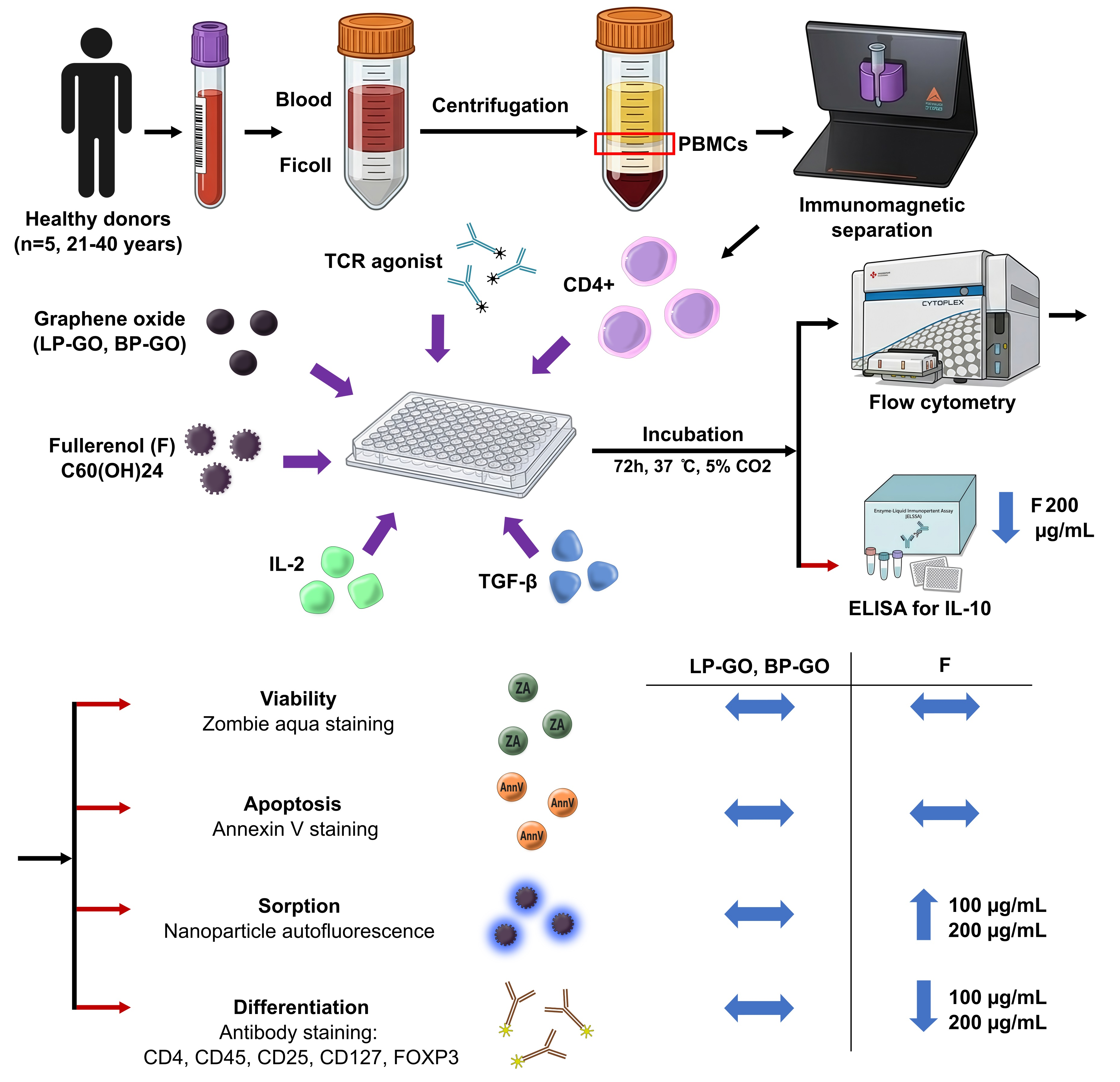
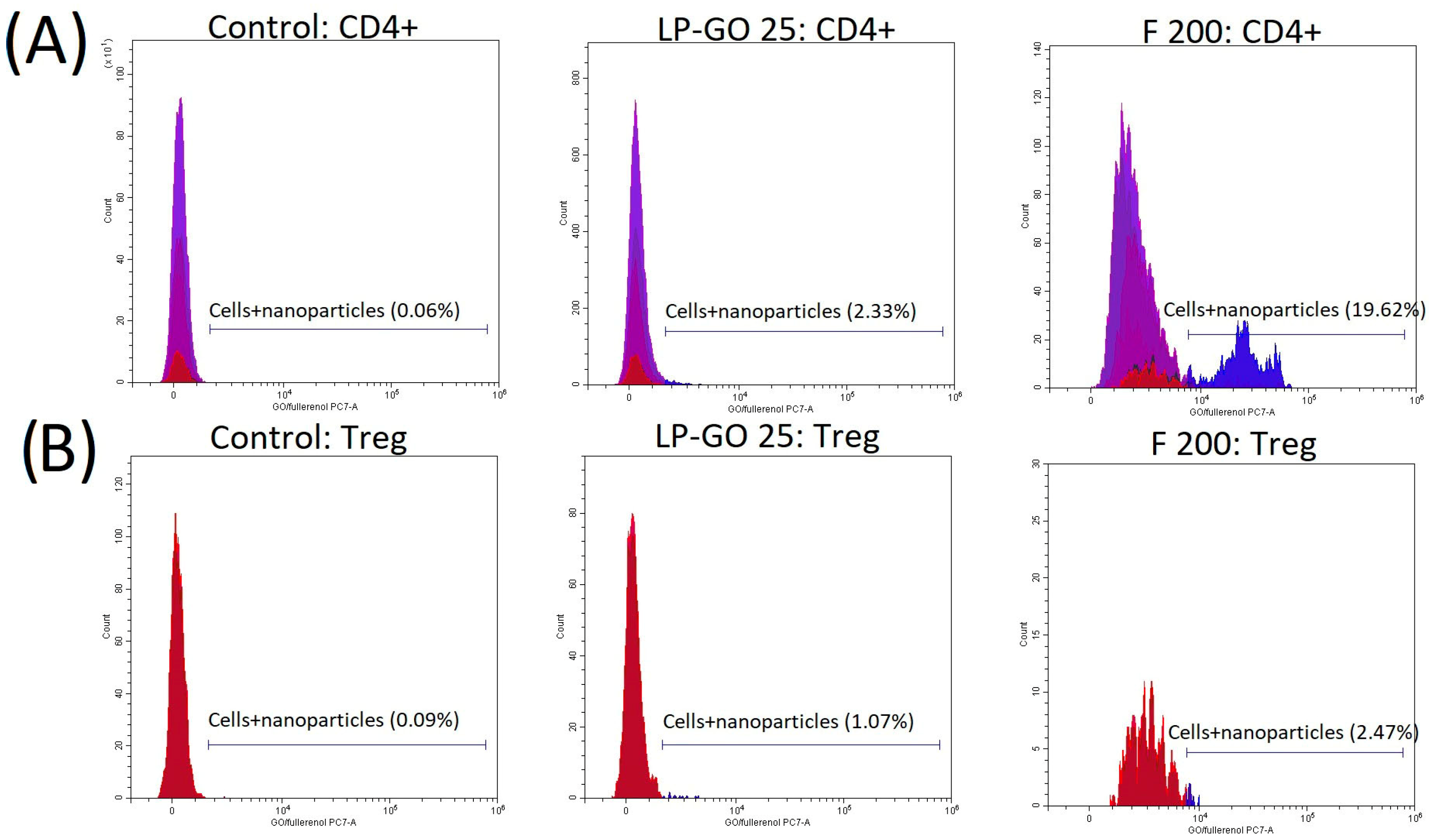
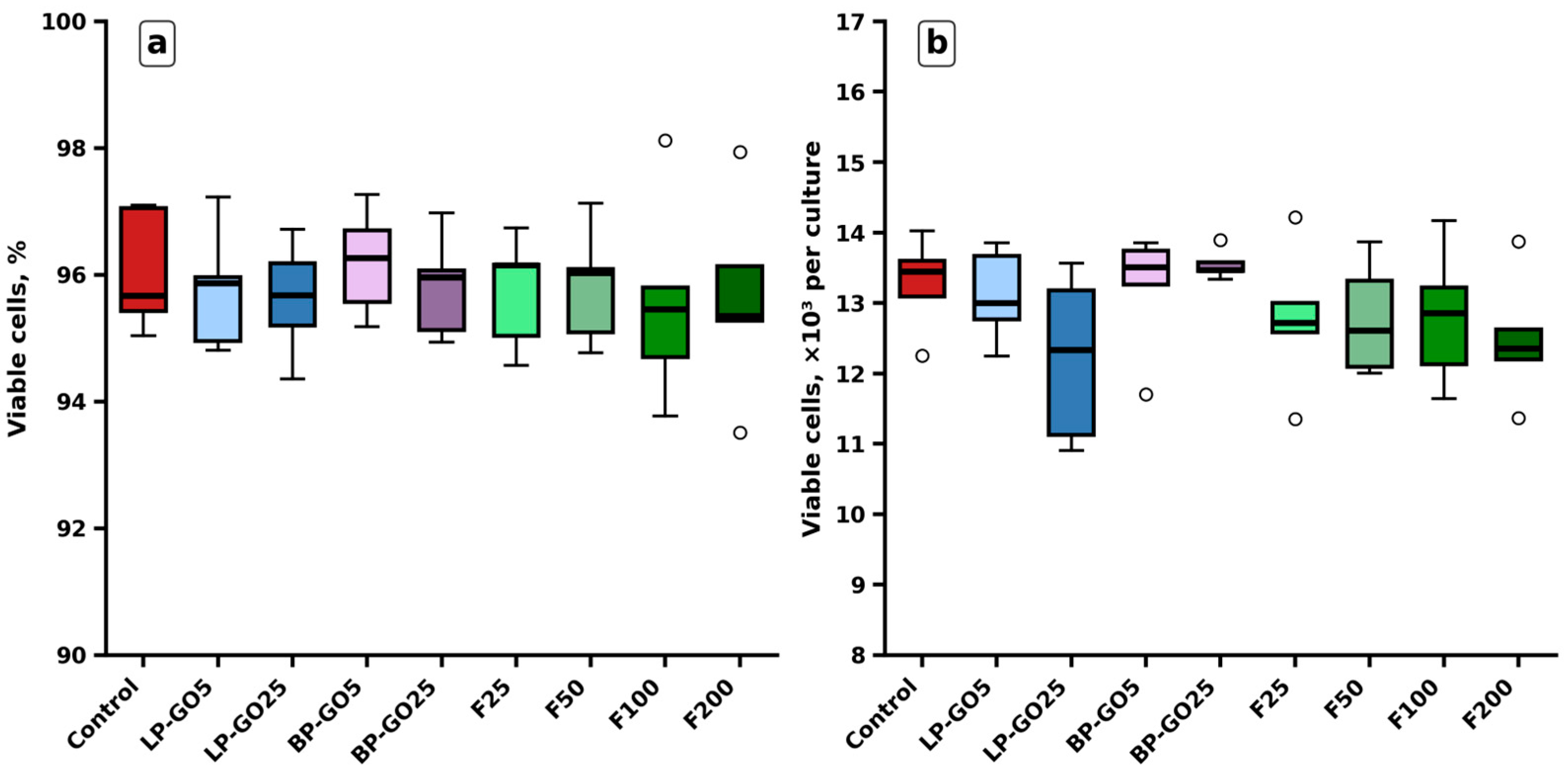
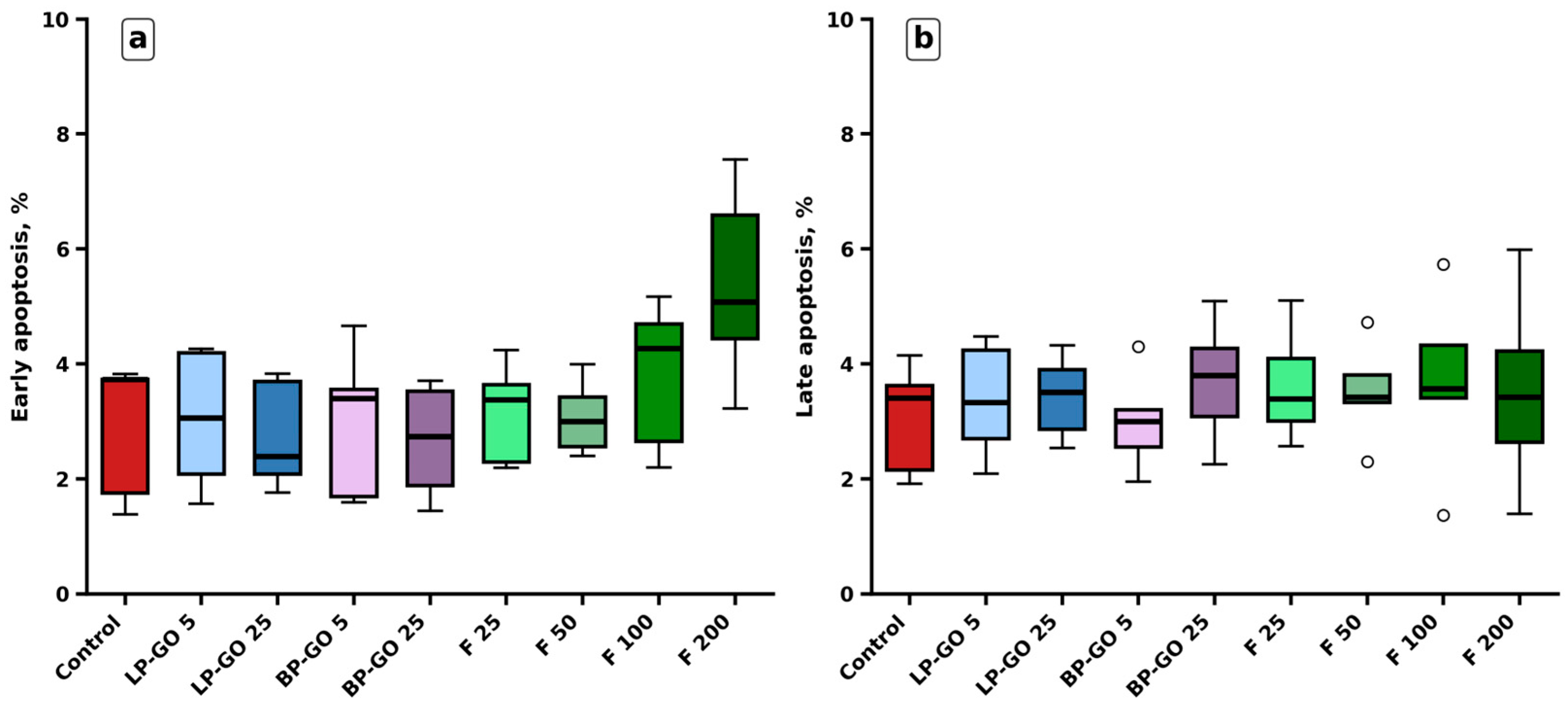
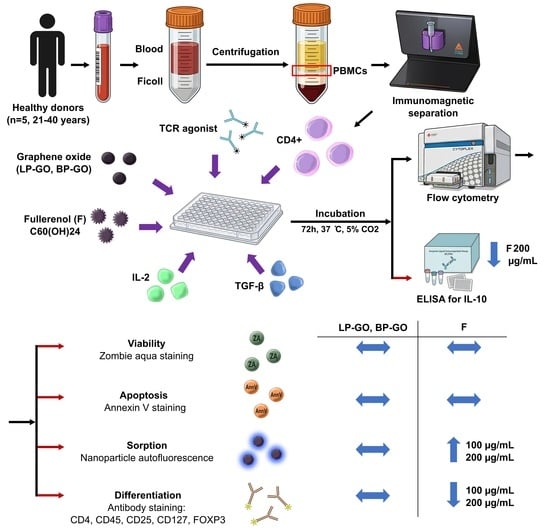
A Study of the Direct Effect of Pegylated Graphene Oxide Nanoparticles and Fullerenol C60(OH)24 on the Differentiation of Regulatory T Cells In Vitro

 ,
,  , , , ,
  and
and Abstract
Share and Cite
Zamorina, S.; Usanina, D.; Devyatova, K.; Bochkova, M.; Nikitina, M.; Rayev, M.; Timganova, V. A Study of the Direct Effect of Pegylated Graphene Oxide Nanoparticles and Fullerenol C60(OH)24 on the Differentiation of Regulatory T Cells In Vitro. Nanomaterials 2026, 16, 667. https://doi.org/10.3390/nano16110667
Zamorina S, Usanina D, Devyatova K, Bochkova M, Nikitina M, Rayev M, Timganova V. A Study of the Direct Effect of Pegylated Graphene Oxide Nanoparticles and Fullerenol C60(OH)24 on the Differentiation of Regulatory T Cells In Vitro. Nanomaterials. 2026; 16(11):667. https://doi.org/10.3390/nano16110667
Chicago/Turabian StyleZamorina, Svetlana, Darya Usanina, Kseniya Devyatova, Maria Bochkova, Maria Nikitina, Mikhail Rayev, and Valeria Timganova. 2026. "A Study of the Direct Effect of Pegylated Graphene Oxide Nanoparticles and Fullerenol C60(OH)24 on the Differentiation of Regulatory T Cells In Vitro" Nanomaterials 16, no. 11: 667. https://doi.org/10.3390/nano16110667
APA StyleZamorina, S., Usanina, D., Devyatova, K., Bochkova, M., Nikitina, M., Rayev, M., & Timganova, V. (2026). A Study of the Direct Effect of Pegylated Graphene Oxide Nanoparticles and Fullerenol C60(OH)24 on the Differentiation of Regulatory T Cells In Vitro. Nanomaterials, 16(11), 667. https://doi.org/10.3390/nano16110667