Review

Current Landscape of Micro-LED Display Industrialization

1
Department of Photonics, College of Electrical and Computer Engineering, National Yang Ming Chiao Tung University, Hsinchu 30010, Taiwan
2
AUO Corporation, No. 1, Li-Hsin Rd. 2, Hsinchu 300094, Taiwan
3
Center for Emergent Functional Matter Science, National Yang Ming Chiao Tung University, Hsinchu 30010, Taiwan
4
Semiconductor Research Center, Hon Hai Research Institute, Taipei 11492, Taiwan
*
Authors to whom correspondence should be addressed.
Nanomaterials 2025, 15(9), 693; https://doi.org/10.3390/nano15090693
Submission received: 23 February 2025 / Revised: 23 April 2025 / Accepted: 25 April 2025 / Published: 4 May 2025
(This article belongs to the Special Issue Quantum Dots and Micro-LED Display, 3rd Edition)

Abstract

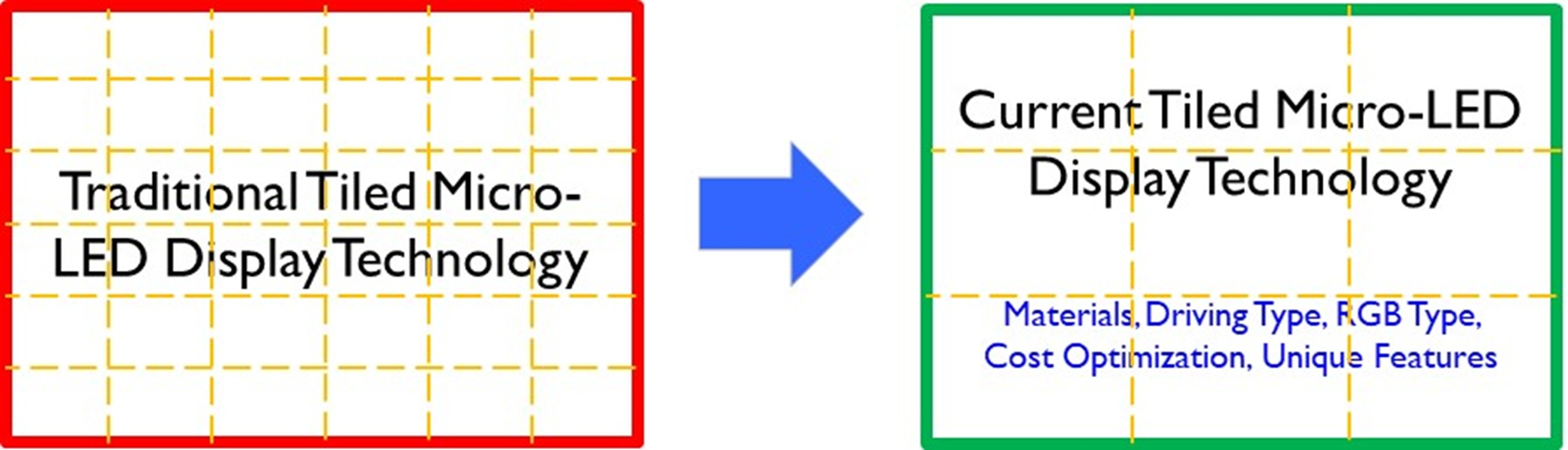
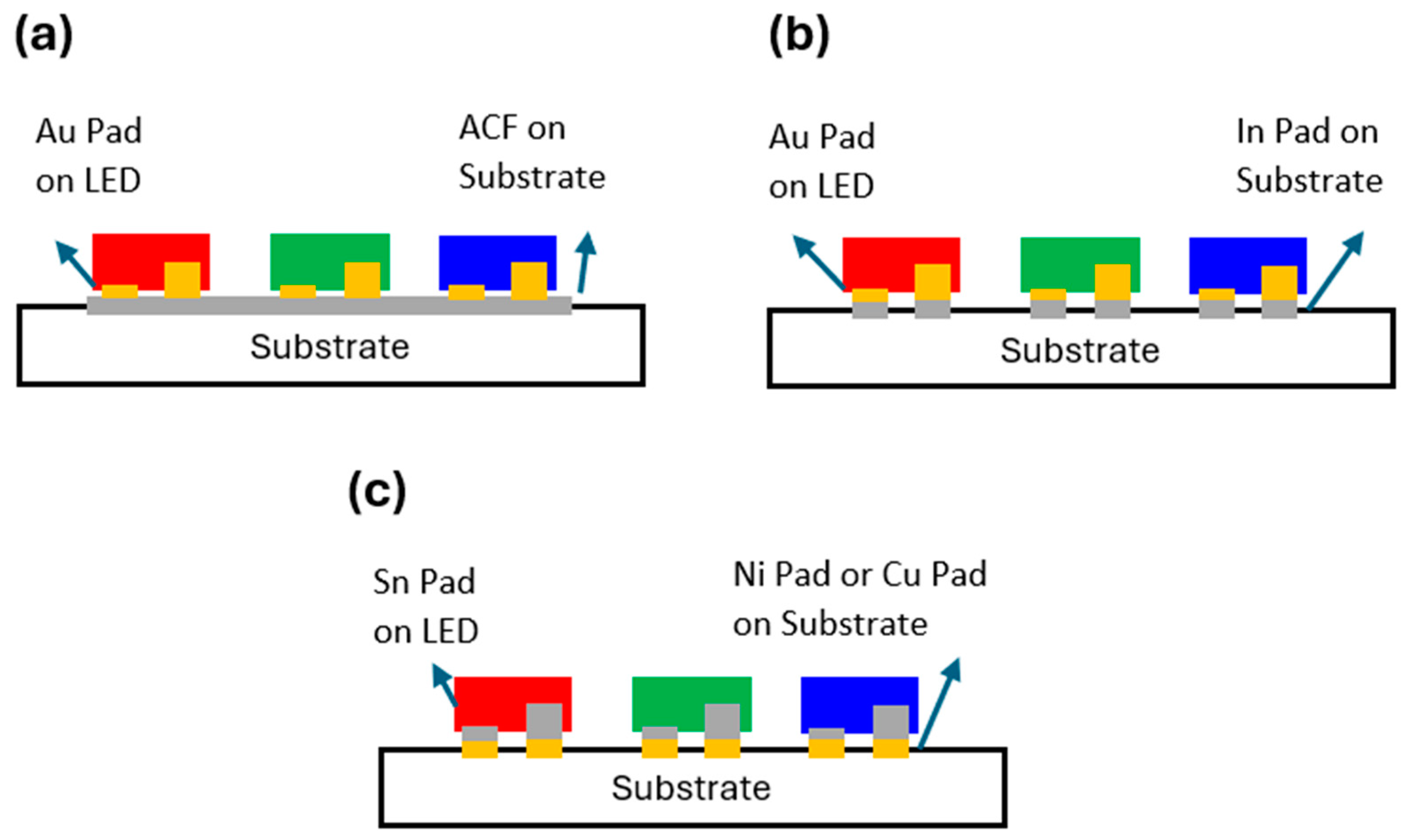
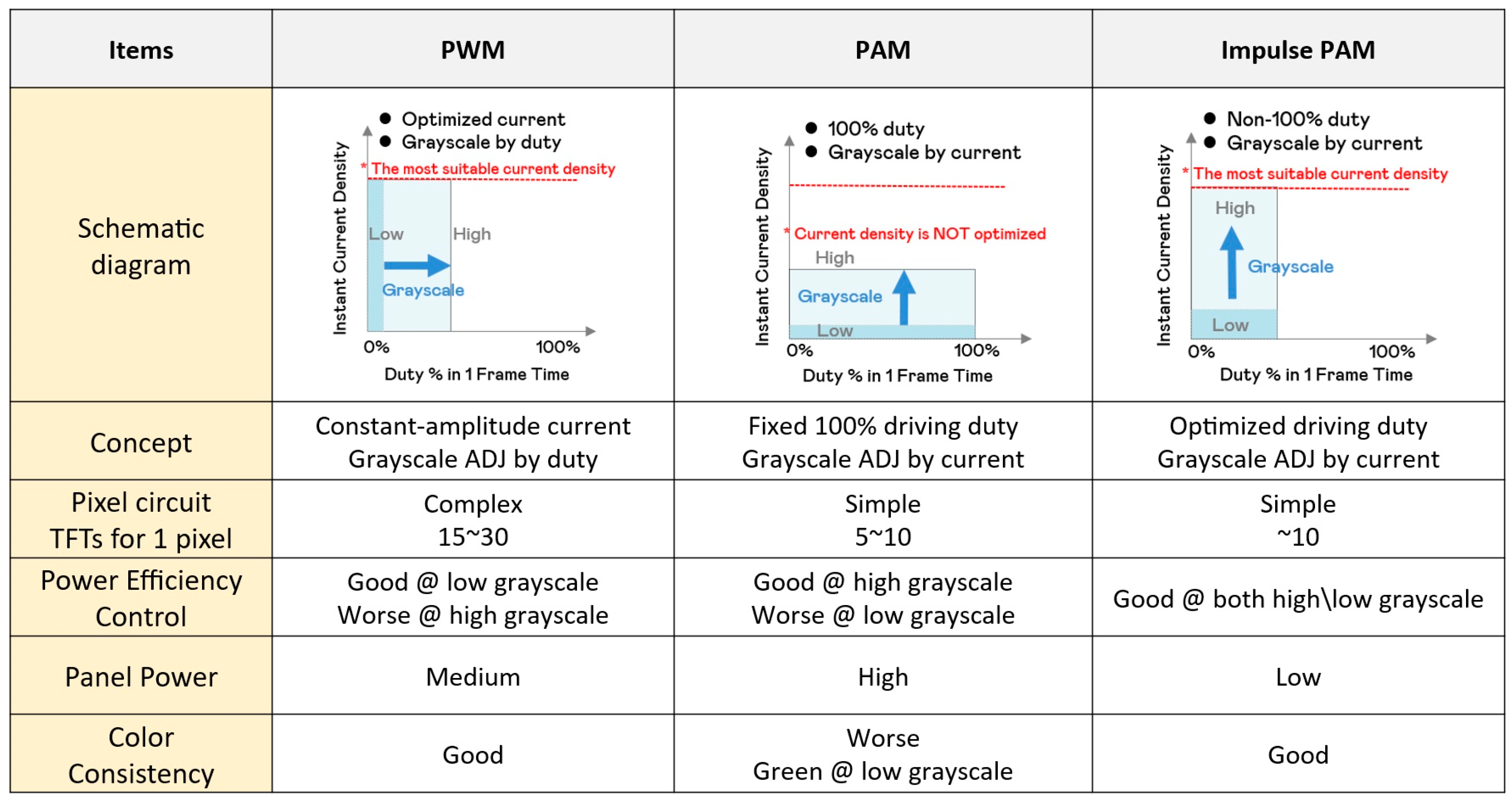
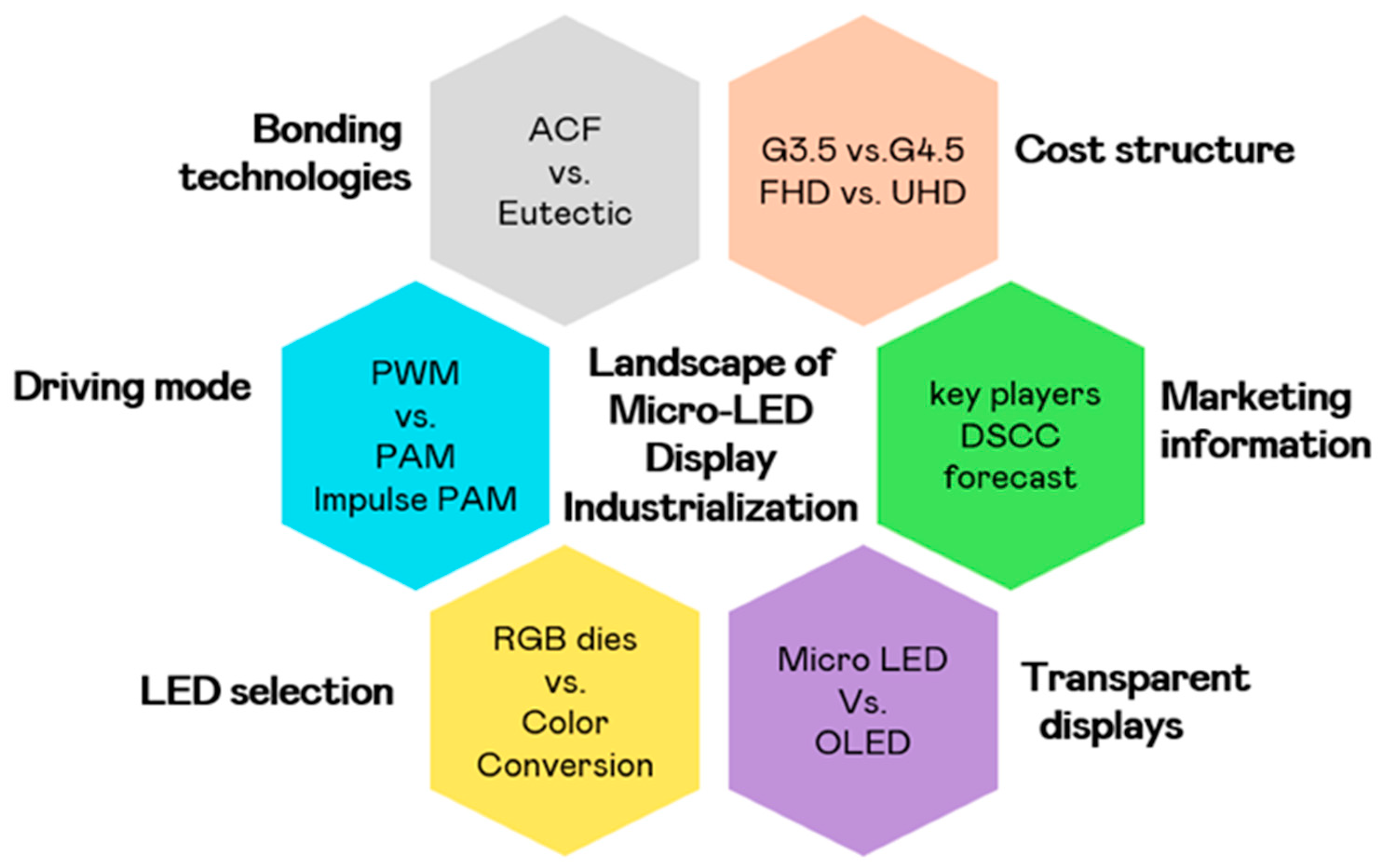
Micro-LED display technology has emerged as a significant area of interest, with numerous research teams globally approaching it from various disciplines. Concurrently, several enterprises have initiated production or plan to invest in equipment manufacturing. However, the industry currently lacks standardized production processes for Micro-LED displays. This is largely due to major manufacturers adapting their equipment and material choices to suit their specific product applications. Nevertheless, advancements in recent years and developments within the supply chain reveal a gradual convergence of technology across the sector. This review paper aims to provide an investment and cost analysis perspective of the current industrial landscape of Micro-LED technology. It examines key aspects such as the selection of bonding materials, differences in driving modes, considerations for native RGB versus color conversion, strategies for cost optimization, market information and unique differentiation features of Micro-LED displays. To make this paper accessible to a broader audience, including those outside the electronics industry, key technical processes are described with clear explanations and the relevant context.
Keywords: Micro-LED; bonding materials; pulse-width modulation (PWM); pulse-amplitude modulation (PAM); color conversion; cost reduction; transparent display Micro-LED; bonding materials; pulse-width modulation (PWM); pulse-amplitude modulation (PAM); color conversion; cost reduction; transparent display
Graphical Abstract