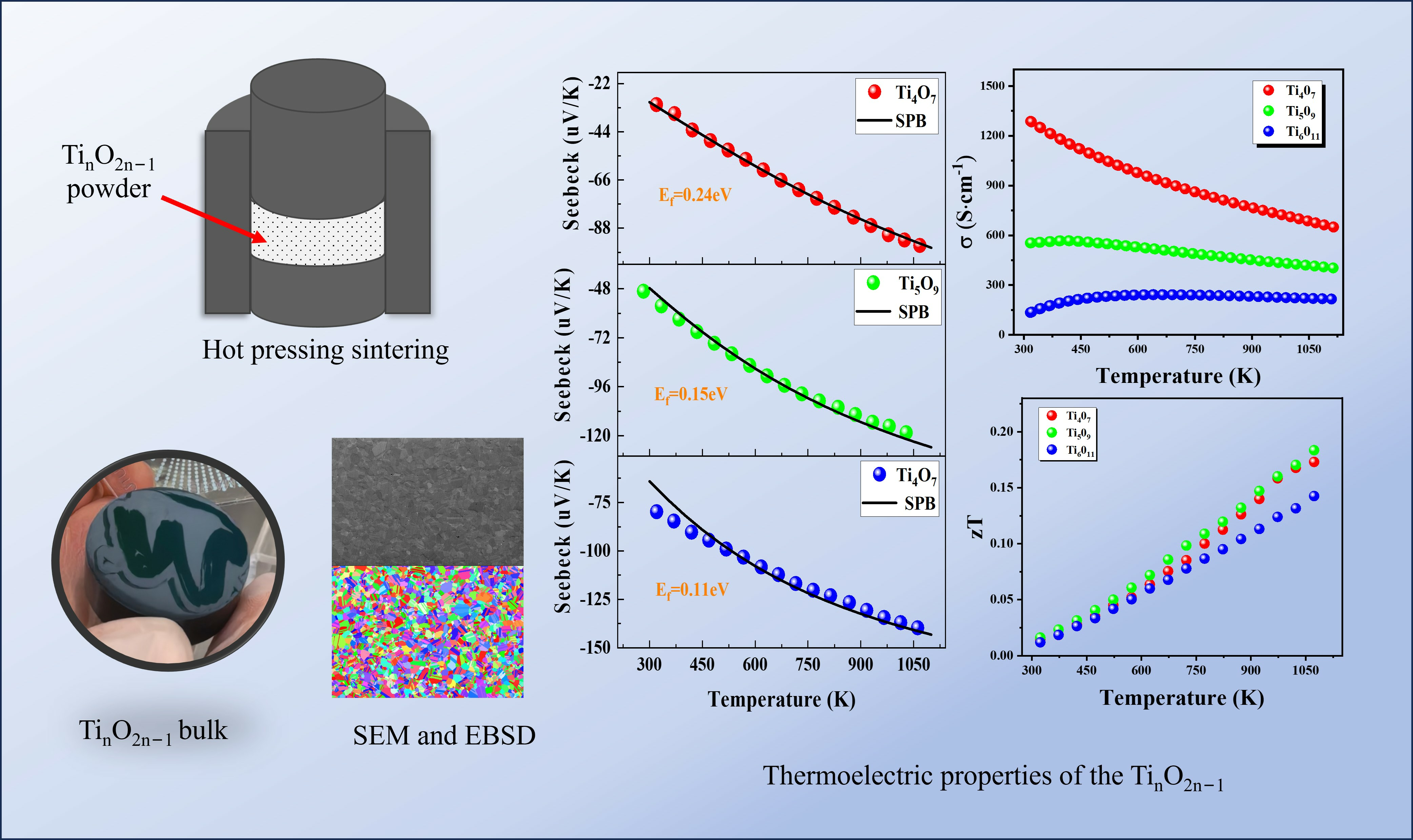
Oxygen Vacancy in Magnéli Phases and Its Effect on Thermoelectric Performances

 , ,
, , Abstract
Share and Cite
Guan, Z.; Feng, C.; Song, H.; Yang, L.; Wang, X.; Liu, H.; Zhang, J.; Wei, F.; Yuan, X.; Yang, H.; et al. Oxygen Vacancy in Magnéli Phases and Its Effect on Thermoelectric Performances. Nanomaterials 2025, 15, 684. https://doi.org/10.3390/nano15090684
Guan Z, Feng C, Song H, Yang L, Wang X, Liu H, Zhang J, Wei F, Yuan X, Yang H, et al. Oxygen Vacancy in Magnéli Phases and Its Effect on Thermoelectric Performances. Nanomaterials. 2025; 15(9):684. https://doi.org/10.3390/nano15090684
Chicago/Turabian StyleGuan, Zhou, Chuangshi Feng, Hongquan Song, Lingxu Yang, Xin Wang, Huijun Liu, Jiawei Zhang, Fanqian Wei, Xin Yuan, Hengyong Yang, and et al. 2025. "Oxygen Vacancy in Magnéli Phases and Its Effect on Thermoelectric Performances" Nanomaterials 15, no. 9: 684. https://doi.org/10.3390/nano15090684
APA StyleGuan, Z., Feng, C., Song, H., Yang, L., Wang, X., Liu, H., Zhang, J., Wei, F., Yuan, X., Yang, H., Tang, Y., & Zhang, F. (2025). Oxygen Vacancy in Magnéli Phases and Its Effect on Thermoelectric Performances. Nanomaterials, 15(9), 684. https://doi.org/10.3390/nano15090684