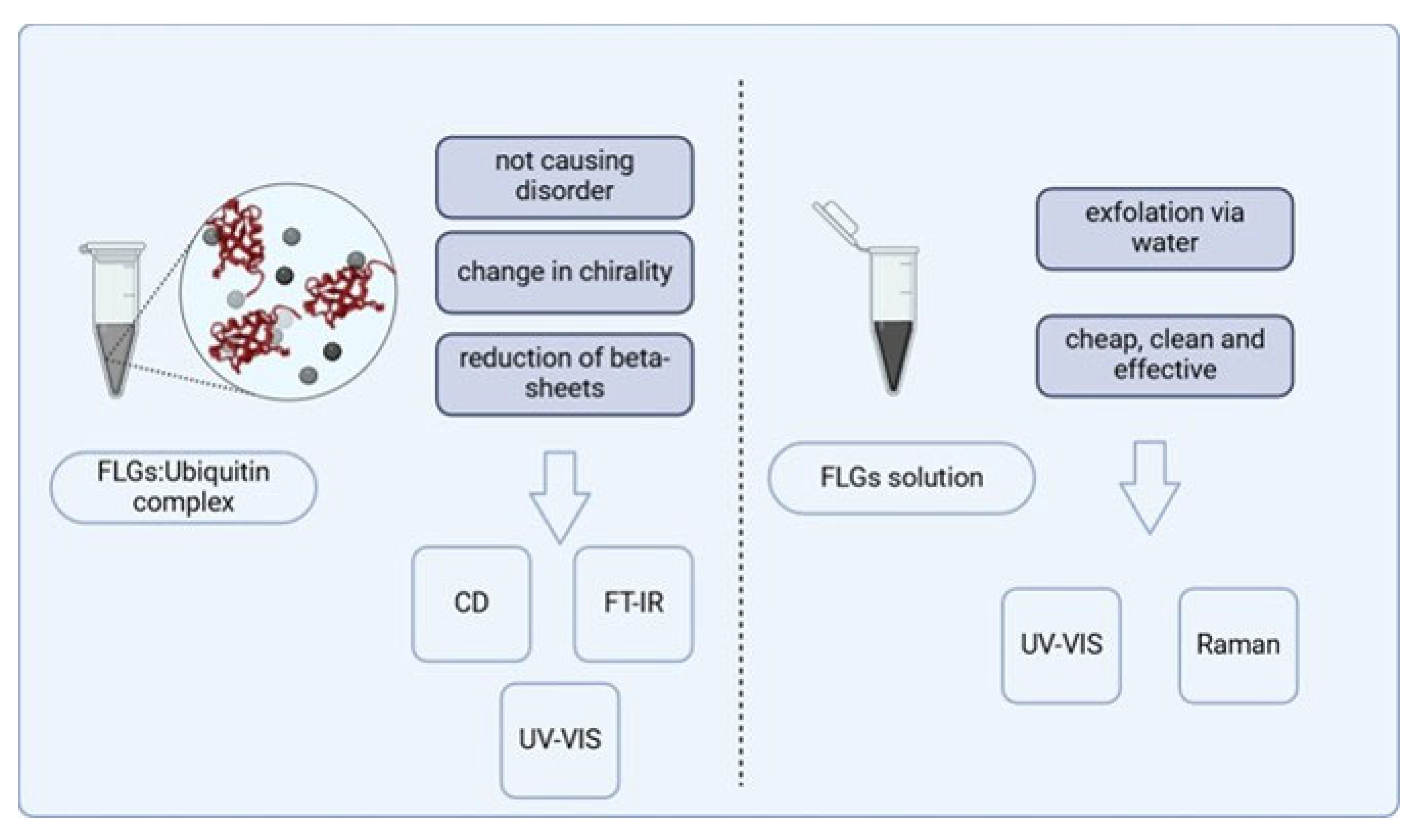
Investigation of Few-Layer Graphene–Ubiquitin Interactions with Optical Spectroscopy Techniques



Abstract
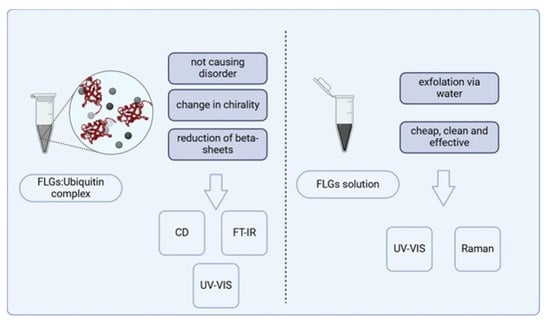
1. Introduction
2. Materials and Methods
2.1. Samples
2.2. Ultrasonic Exfoliation of FLG in Water
2.3. Confocal Raman Microspectroscopy
2.4. Attenuated Total Reflection Fourier Transform–Infrared Spectroscopy (ATR FT-IR)
2.5. UV-Vis Spectroscopy
2.6. Circular Dichroism (CD) Spectroscopy
3. Results and Discussion
3.1. Characterization of HOPG and FLG
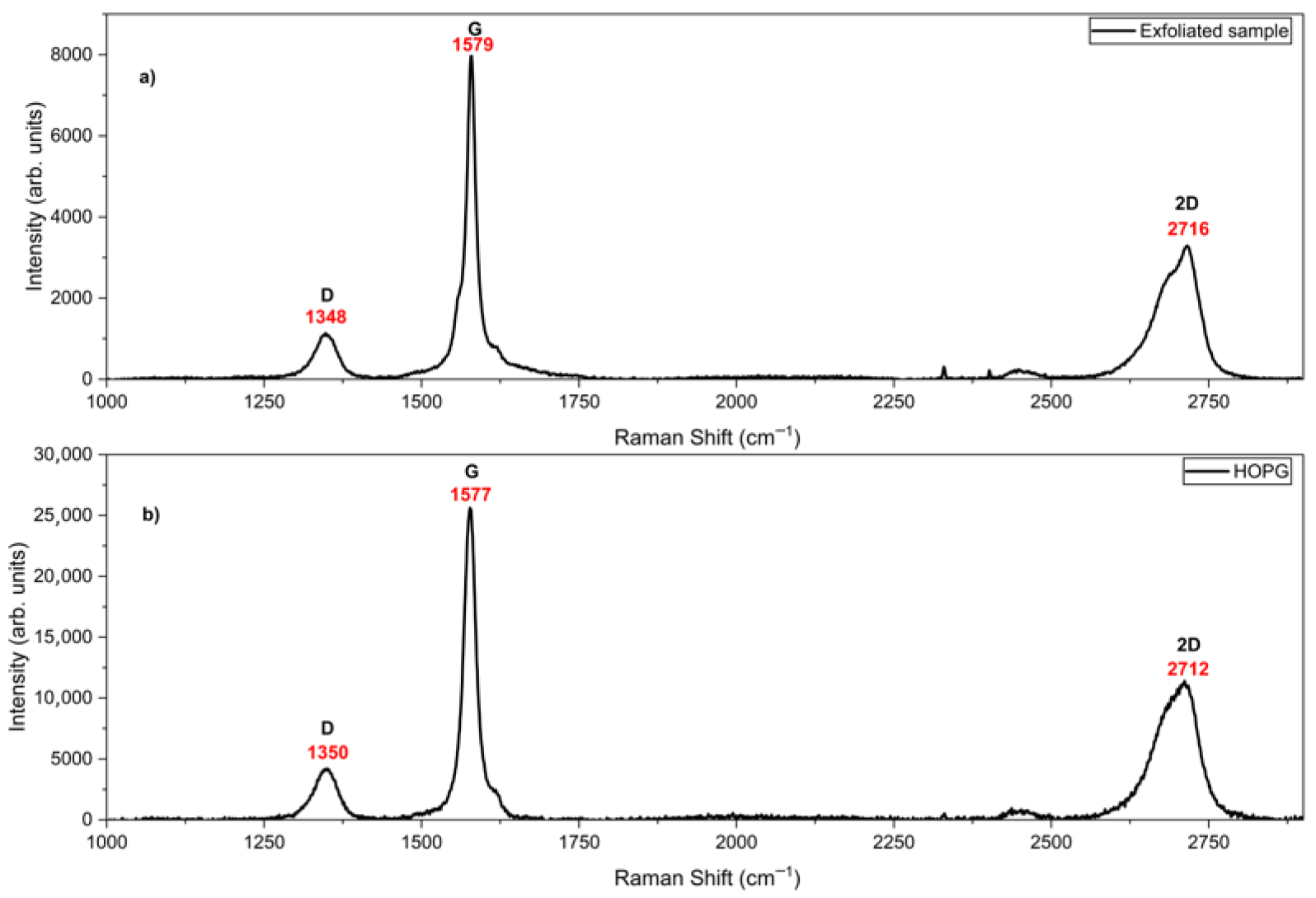
3.1.1. Raman Spectroscopy Reveals the Structural Integrity of Few-Layer Graphene Structures
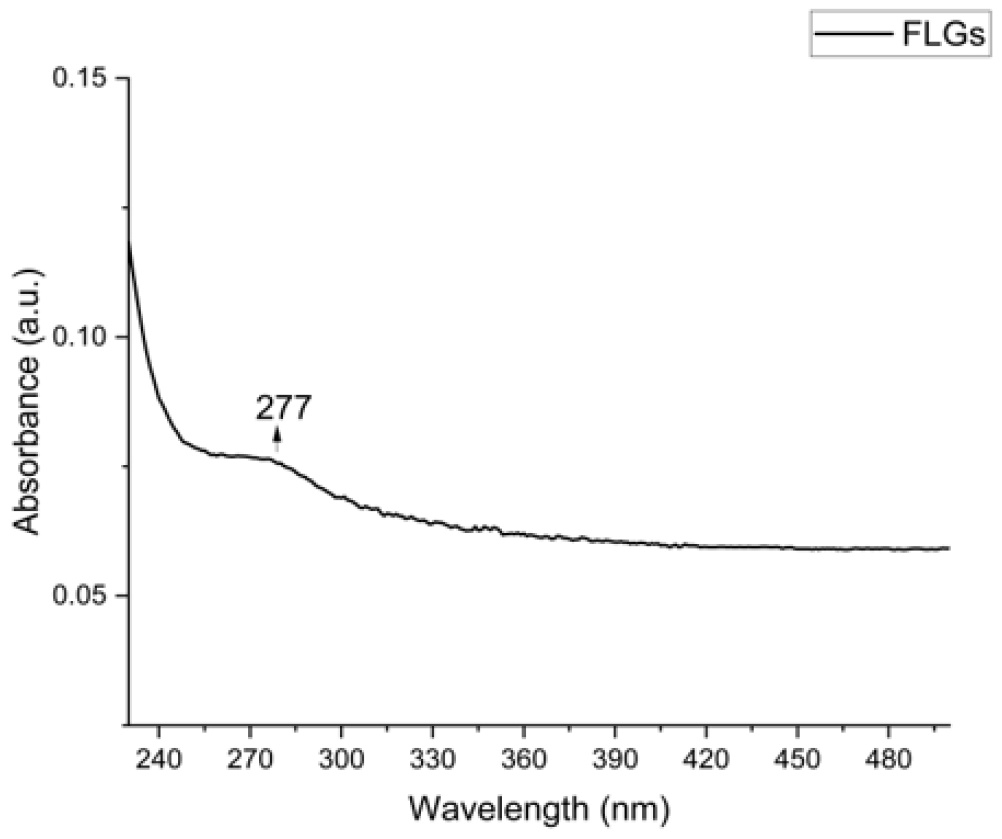
3.1.2. UV-Vis Absorption Analysis Confirming Non-Oxidized FLG Formation
3.2. The FLG–Ubiquitin Interactions
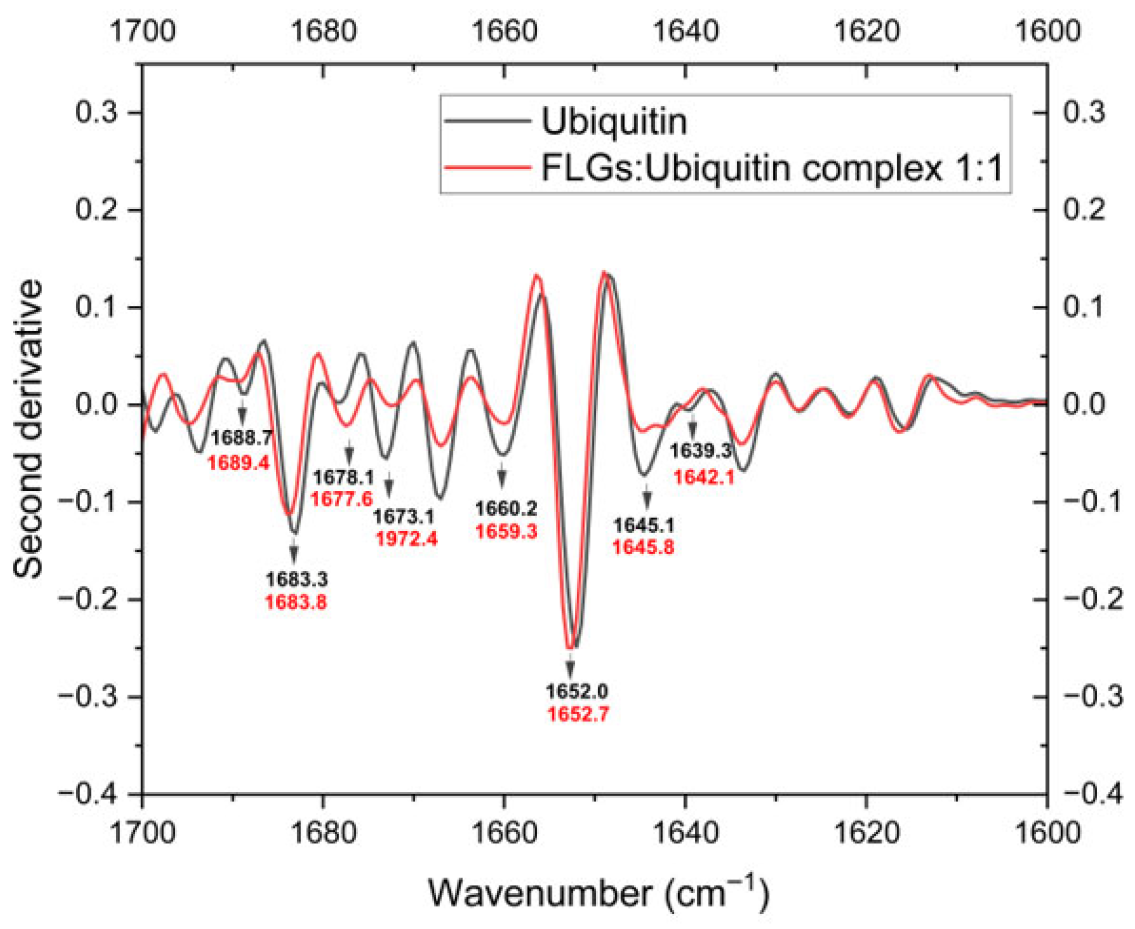
3.2.1. FT-IR Spectroscopic Analysis Reveals FLG-Induced Conformational Changes in Ubiquitin
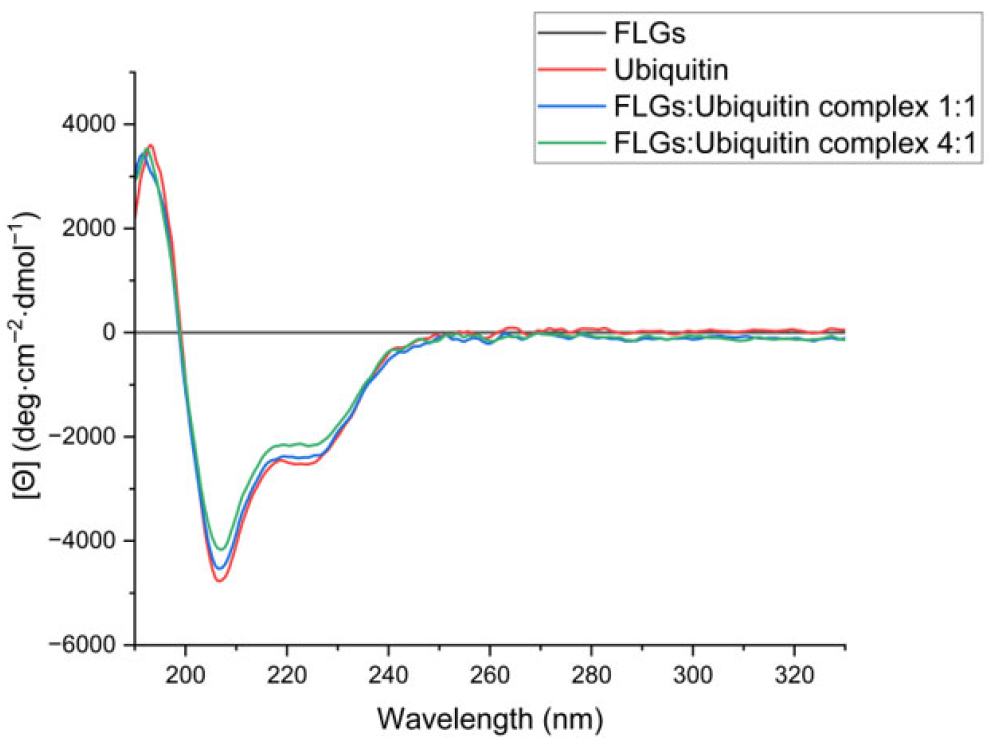
3.2.2. CD Analysis Unveils FLG-Induced Conformational and Chirality Changes in Ubiquitin
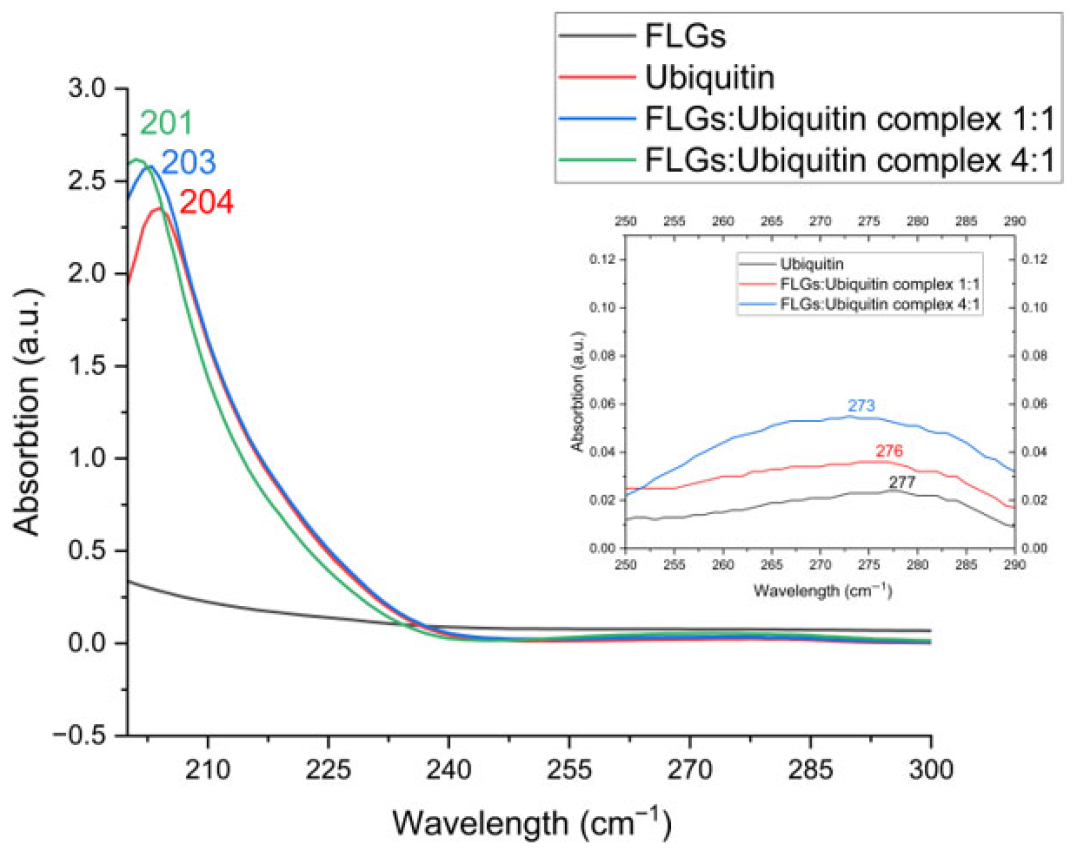
3.2.3. UV-Vis Spectroscopic Characterization of FLG-Induced Aromatic Micro-Environmental Changes in Ubiquitin
4. Conclusions
Author Contributions
Funding
Data Availability Statement
Acknowledgments
Conflicts of Interest
Abbreviations
| FLG | Few-layer graphene |
| ATR FT-IR | Attenuated total reflection Fourier transform–infrared spectroscopy |
| CD | Circular dichroism |
| LPE | Liquid-phase exfoliation |
| UV-Vis | UV-Vis, ultraviolet–visible |
References
- Wang, M.; Fu, C.; Liu, X.; Lin, Z.; Yang, N.; Yu, S. Probing the mechanism of plasma protein adsorption on Au and Ag nanoparticles with FT-IR spectroscopy. Nanoscale 2015, 7, 15191–15196. [Google Scholar] [CrossRef] [PubMed]
- Wang, Y.; Di, S.; Yu, J.; Wang, L.; Li, Z. Recent advances of graphene-biomacromolecule nanocomposites in medical applications. J. Mater. Chem. B 2022, 11, 500–518. [Google Scholar] [CrossRef] [PubMed]
- Giri, K.; Shameer, K.; Zimmermann, M.T.; Saha, S.; Chakraborty, P.K.; Sharma, A.; Arvizo, R.R.; Madden, B.J.; McCormick, D.J.; Kocher, J.P.A.; et al. Understanding protein-nanoparticle interaction: A new gateway to disease therapeutics. Bioconjug. Chem. 2014, 25, 1078–1090. [Google Scholar] [CrossRef] [PubMed]
- Gunawan, C.; Lim, M.; Marquis, C.P.; Amal, R. Nanoparticle–protein corona complexes govern the biological fates and functions of nanoparticles. J. Mater. Chem. B 2014, 2, 2060–2083. [Google Scholar] [CrossRef]
- Durán, N.; Silveira, C.P.; Durán, M.; Martinez, D.S.T. Silver nanoparticle protein corona and toxicity: A mini-review. J. Nanobiotechnol. 2015, 13, 55. [Google Scholar] [CrossRef]
- Ou, L.; Song, B.; Liang, H.; Liu, J.; Feng, X.; Deng, B.; Sun, T.; Shao, L. Toxicity of graphene-family nanoparticles: A general review of the origins and mechanisms. Part. Fibre Toxicol. 2016, 13, 57. [Google Scholar] [CrossRef]
- Lynch, I.; Dawson, K.A. Protein–Nanoparticle Interactions. In Nano-Enabled Medical Applications, 1st ed.; Jenny Stanford Publishing: Singapore, 2020; pp. 231–250. [Google Scholar] [CrossRef]
- Peña-Bahamonde, J.; Nguyen, H.N.; Fanourakis, S.K.; Rodrigues, D.F. Recent advances in graphene-based biosensor technology with applications in life sciences. J. Nanobiotechnol. 2018, 16, 1–17. [Google Scholar] [CrossRef]
- Gostaviceanu, A.; Gavrilaș, S.; Copolovici, L.; Copolovici, D.M. Graphene-Oxide Peptide-Containing Materials for Biomedical Applications. Int. J. Mol. Sci. 2024, 25, 10174. [Google Scholar] [CrossRef]
- Hu, J.; Wang, D.; Yurtsever, A.; Watanabe, S.; Sun, L. Nanopipette-Based Probe Deciphering Nanoscale Charge Distribution of Graphene Layers Affecting Peptide Binding and Assembling. Anal. Chem. 2025, 97, 21106–21112. [Google Scholar] [CrossRef]
- Malik, S.A.; Mohanta, Z.; Srivastava, C.; Atreya, H.S. Modulation of protein–graphene oxide interactions with varying degrees of oxidation. Nanoscale Adv. 2020, 2, 1904–1912. [Google Scholar] [CrossRef]
- Mondal, S.; Thirupathi, R.; Rao, L.P.; Atreya, H.S. Unraveling the dynamic nature of protein–graphene oxide interactions. RSC Adv. 2016, 6, 52539–52548. [Google Scholar] [CrossRef]
- Fang, G.; Luan, B.; Ge, C.; Chong, Y.; Dong, X.; Guo, J.; Tang, C.; Zhou, R. Understanding the graphene quantum dots-ubiquitin interaction by identifying the interaction sites. Carbon 2017, 121, 285–291. [Google Scholar] [CrossRef]
- Zheng, S.; Wei, Y.; Lin, Y.; Wei, T. Graphic contrastive learning analyses of discontinuous molecular dynamics simulations: Study of protein folding upon adsorption. Appl. Phys. Lett. 2023, 122, 253701. [Google Scholar] [CrossRef]
- Ding, F.; Radic, S.; Chen, R.; Chen, P.; Geitner, N.K.; Brown, J.M.; Ke, P.C. Direct observation of a single nanoparticle–ubiquitin corona formation. Nanoscale 2013, 5, 9162–9169. [Google Scholar] [CrossRef]
- Mahmoudi, M.; Lynch, I.; Ejtehadi, M.R.; Monopoli, M.P.; Bombelli, F.B.; Laurent, S. Protein-nanoparticle interactions: Opportunities and challenges. Chem. Rev. 2011, 111, 5610–5637. [Google Scholar] [CrossRef]
- Calzolai, L.; Franchini, F.; Gilliland, D.; Rossi, F. Protein-nanoparticle interaction: Identification of the ubiquitin-gold nanoparticle interaction site. Nano Lett. 2010, 10, 3101–3105. [Google Scholar] [CrossRef]
- Boulos, S.P.; Davis, T.A.; Yang, J.A.; Lohse, S.E.; Alkilany, A.M.; Holland, L.A.; Murphy, C.J. Nanoparticle-protein interactions: A thermodynamic and kinetic study of the adsorption of bovine serum albumin to gold nanoparticle surfaces. Langmuir 2013, 29, 14984–14996. [Google Scholar] [CrossRef]
- Jenson, J.; Goldstein, G.; Breslow, E. Physical-Chemical Properties of Ubiquitin. Biochim. Biophys. Acta 1980, 624, 378–385. [Google Scholar] [CrossRef]
- Agrata, R.; Komander, D. Ubiquitin—A structural perspective. Mol. Cell 2025, 85, 323–346. [Google Scholar] [CrossRef]
- Moosa, A.; Abed, M. Graphene preparation and graphite exfoliation. Turk. J. Chem. 2021, 45, 493–519. [Google Scholar] [CrossRef]
- Zhou, M.; Tian, T.; Li, X.; Sun, X.; Zhang, J.; Cui, P.; Tang, J.; Qin, L.-C. Production of Graphene by Liquid-Phase Exfoliation of Intercalated Graphite. Int. J. Electrochem. Sci 2014, 9, 810–820. [Google Scholar] [CrossRef]
- Chen, L.; Meng, Y. Liquid-phase exfoliation of fluorinated graphite to produce high-quality graphene sheets. J. Vac. Sci. Technol. B 2019, 37. [Google Scholar] [CrossRef]
- Ciesielski, A.; Samorì, P. Graphene via sonication assisted liquid-phase exfoliation. Chem. Soc. Rev. 2013, 43, 381–398. [Google Scholar] [CrossRef] [PubMed]
- Silva, D.L.; Campos, J.L.E.; Fernandes, T.F.D.; Rocha, J.N.; Machado, L.R.P.; Soares, E.M.; Miquita, D.R.; Miranda, H.; Rabelo, C.; Vilela Neto, O.P.; et al. Raman spectroscopy analysis of number of layers in mass-produced graphene flakes. Carbon 2020, 161, 181–189. [Google Scholar] [CrossRef]
- Adochitei, A.; Drochioiu, G. Rapid Characterization of Peptide Secondary Structure by FT-IR Spectroscopy. Rev. Roum. Chim 2011, 56, 783–791. [Google Scholar]
- Güler, G.; Vorob’Ev, M.M.; Vogel, V.; Mäntele, W. Proteolytically-induced changes of secondary structural protein conformation of bovine serum albumin monitored by Fourier transform infrared (FT-IR) and UV-circular dichroism spectroscopy. Spectrochim. Acta Part A Mol. Biomol. Spectrosc. 2016, 161, 8–18. [Google Scholar] [CrossRef]
- Öztoprak, N.; Vorob’ev, M.M.; Yagmurcukardes, M.; Güler, G. Biophysical Characterization of Temperature-Dependent Structural Modifications in β-Lactoglobulin during Tryptic Hydrolysis. Optim. Sci. J. 2024, 1, 8–19. [Google Scholar] [CrossRef]
- Micsonai, A.; Wien, F.; Kernya, L.; Lee, Y.H.; Goto, Y.; Réfrégiers, M.; Kardos, J. Accurate secondary structure prediction and fold recognition for circular dichroism spectroscopy. Proc. Natl. Acad. Sci. USA 2015, 112, E3095–E3103. [Google Scholar] [CrossRef]
- Güler, G.; Džafić, E.; Vorob’ev, M.M.; Vogel, V.; Mäntele, W. Real time observation of proteolysis with Fourier transform infrared (FT-IR) and UV-circular dichroism spectroscopy: Watching a protease eat a protein. Spectrochim. Acta Part A Mol. Biomol. Spectrosc. 2011, 79, 104–111. [Google Scholar] [CrossRef]
- Sreerama, N.; Woody, R.W. Estimation of Protein Secondary Structure from Circular Dichroism Spectra: Comparison of CONTIN, SELCON, and CDSSTR Methods with an Expanded Reference Set. Anal. Biochem. 2000, 287, 252–260. [Google Scholar] [CrossRef] [PubMed]
- Martin, S.R.; Schilstra, M.J. Circular Dichroism and Its Application to the Study of Biomolecules. Methods Cell Biol. 2008, 84, 263–293. [Google Scholar] [CrossRef] [PubMed]
- Wang, Y.; Ni, Y. Combination of UV–vis spectroscopy and chemometrics to understand protein–nanomaterial conjugate: A case study on human serum albumin and gold nanoparticles. Talanta 2014, 119, 320–330. [Google Scholar] [CrossRef] [PubMed]
- Cedervall, T.; Lynch, I.; Lindman, S.; Berggård, T.; Thulin, E.; Nilsson, H.; Dawson, K.A.; Linse, S. Understanding the nanoparticle-protein corona using methods to quntify exchange rates and affinities of proteins for nanoparticles. Proc. Natl. Acad. Sci. USA 2007, 104, 2050–2055. [Google Scholar] [CrossRef]
- Sapsford, K.E.; Tyner, K.M.; Dair, B.J.; Deschamps, J.R.; Medintz, I.L. Analyzing nanomaterial bioconjugates: A review of current and emerging purification and characterization techniques. Anal. Chem. 2011, 83, 4453–4488. [Google Scholar] [CrossRef]
- Greenfield, N.J. Using circular dichroism spectra to estimate protein secondary structure. Nat. Protoc. 2007, 1, 2876–2890. [Google Scholar] [CrossRef]
- Tyurnina, A.V.; Tzanakis, I.; Morton, J.; Mi, J.; Porfyrakis, K.; Maciejewska, B.M.; Grobert, N.; Eskin, D.G. Ultrasonic exfoliation of graphene in water: A key parameter study. Carbon 2020, 168, 737–747. [Google Scholar] [CrossRef]
- Sreerama, N.; Venyaminov, S.Y.U.; Woody, R.W. Estimation of the number of alpha-helical and beta-strand segments in proteins using circular dichroism spectroscopy. Protein Sci. A Publ. Protein Soc. 1999, 8, 370–380. [Google Scholar] [CrossRef]
- Hu, K.; Brambilla, L.; Sartori, P.; Moscheni, C.; Perrotta, C.; Zema, L.; Bertarelli, C.; Castiglioni, C. Development of Tailored Graphene Nanoparticles: Preparation, Sorting and Structure Assessment by Complementary Techniques. Molecules 2023, 28, 565. [Google Scholar] [CrossRef]
- Qian, M.; Zhou, Y.S.; Gao, Y.; Park, J.B.; Feng, T.; Huang, S.M.; Sun, Z.; Jiang, L.; Lu, Y.F. Formation of graphene sheets through laser exfoliation of highly ordered pyrolytic graphite. Appl. Phys. Lett. 2011, 98, 173108. [Google Scholar] [CrossRef]
- Papanai, G.S.; Sharma, I.; Gupta, B.K. Probing number of layers and quality assessment of mechanically exfoliated gr aphene via Raman fingerprint. Mater. Today Commun. 2020, 22, 100795. [Google Scholar] [CrossRef]
- Wang, Z.S.; Zhang, R.; Zhang, Z.D.; Huang, Z.H.; Liu, C.S.; Fu, D.J.; Liu, J.R. Raman spectroscopy of few-layer graphene prepared by C2–C6 cluster ion implantation. Nucl. Instrum. Methods Phys. Res. Sect. B Beam Interact. Mater. At. 2013, 307, 40–42. [Google Scholar] [CrossRef]
- Lai, Q.; Zhu, S.; Luo, X.; Zou, M.; Huang, S. Ultraviolet-visible spectroscopy of graphene oxides. AIP Adv. 2012, 2, 32146. [Google Scholar] [CrossRef]
- Çiplak, Z.; Yildiz, N.; Cąlimli, A. Investigation of Graphene/Ag Nanocomposites Synthesis Parameters for Two Different Synthesis Methods. Fuller. Nanotub. Carbon Nanostruct 2015, 23, 361–370. [Google Scholar] [CrossRef]
- Yang, H.; Yang, S.; Kong, J.; Dong, A.; Yu, S. Obtaining information about protein secondary structures in aqueous solution using Fourier transform IR spectroscopy. Nat. Protoc. 2015, 10, 382–396. [Google Scholar] [CrossRef]
- Barth, A. Infrared spectroscopy of proteins. Biochim. Biophys. Acta 2007, 1767, 1073–1101. [Google Scholar] [CrossRef]
- Li, S.; Peng, Z.; Leblanc, R.M. Method to Determine Protein Concentration in the Protein-Nanoparticle Conjugates Aqueous Solution Using Circular Dichroism Spectroscopy. Anal. Chem. 2015, 87, 6455–6459. [Google Scholar] [CrossRef]
- Vijay-Kumar, S.; Bugg, C.E.; Wilkinson, K.D.; Cook, W.J. Three-dimensional structure of ubiquitin at 2.8 A resolution. Proc. Natl. Acad. Sci. USA 1985, 82, 3582–3585. [Google Scholar] [CrossRef]
- Antosiewicz, J.M.; David, S. UV-Vis spectroscopy of tyrosine side-groups in studies of protein structure. Part 2: Selected applications. Biophys. Rev. 2016, 8, 163–177. [Google Scholar] [CrossRef]
- Rosenheck, K.; Doty, P. The far ultraviolet absorption spectra of polypeptide and protein solutions and their dependence on conformation. Proc. Natl. Acad. Sci. USA 1961, 47, 1775–1785. [Google Scholar] [CrossRef]
- Akyüz, E.; Vorob’ev, M.M.; Güler, G. Biophysical assessment of protein stability in ethanol-stressed environments via UV absorption and fluorescence spectroscopies. Biophys. Chem. 2026, 329, 107538. [Google Scholar] [CrossRef]
- Li, D.; Zhang, W.; Yu, X.; Wang, Z.; Su, Z.; Wei, G. When biomolecules meet graphene: From molecular level interactions to material design and applications. Nanoscale 2016, 8, 19491–19509. [Google Scholar] [CrossRef]



Disclaimer/Publisher’s Note: The statements, opinions and data contained in all publications are solely those of the individual author(s) and contributor(s) and not of MDPI and/or the editor(s). MDPI and/or the editor(s) disclaim responsibility for any injury to people or property resulting from any ideas, methods, instructions or products referred to in the content. |
© 2025 by the authors. Licensee MDPI, Basel, Switzerland. This article is an open access article distributed under the terms and conditions of the Creative Commons Attribution (CC BY) license (https://creativecommons.org/licenses/by/4.0/).
Share and Cite
Gencay, B.; Güler, G. Investigation of Few-Layer Graphene–Ubiquitin Interactions with Optical Spectroscopy Techniques. Nanomaterials 2025, 15, 1873. https://doi.org/10.3390/nano15241873
Gencay B, Güler G. Investigation of Few-Layer Graphene–Ubiquitin Interactions with Optical Spectroscopy Techniques. Nanomaterials. 2025; 15(24):1873. https://doi.org/10.3390/nano15241873
Chicago/Turabian StyleGencay, Burcu, and Günnur Güler. 2025. "Investigation of Few-Layer Graphene–Ubiquitin Interactions with Optical Spectroscopy Techniques" Nanomaterials 15, no. 24: 1873. https://doi.org/10.3390/nano15241873
APA StyleGencay, B., & Güler, G. (2025). Investigation of Few-Layer Graphene–Ubiquitin Interactions with Optical Spectroscopy Techniques. Nanomaterials, 15(24), 1873. https://doi.org/10.3390/nano15241873