Article

Construction of Ternary Ce Metal–Organic Framework/Bi/BiOCl Heterojunction towards Optimized Photocatalytic Performance


Shandong Provincial Key Laboratory of Molecular Engineering, School of Chemistry and Chemical Engineering, Qilu University of Technology (Shandong Academy of Sciences), Jinan 250353, China
*
Authors to whom correspondence should be addressed.
Nanomaterials 2024, 14(16), 1352; https://doi.org/10.3390/nano14161352
Submission received: 24 July 2024 / Revised: 7 August 2024 / Accepted: 12 August 2024 / Published: 15 August 2024

Abstract

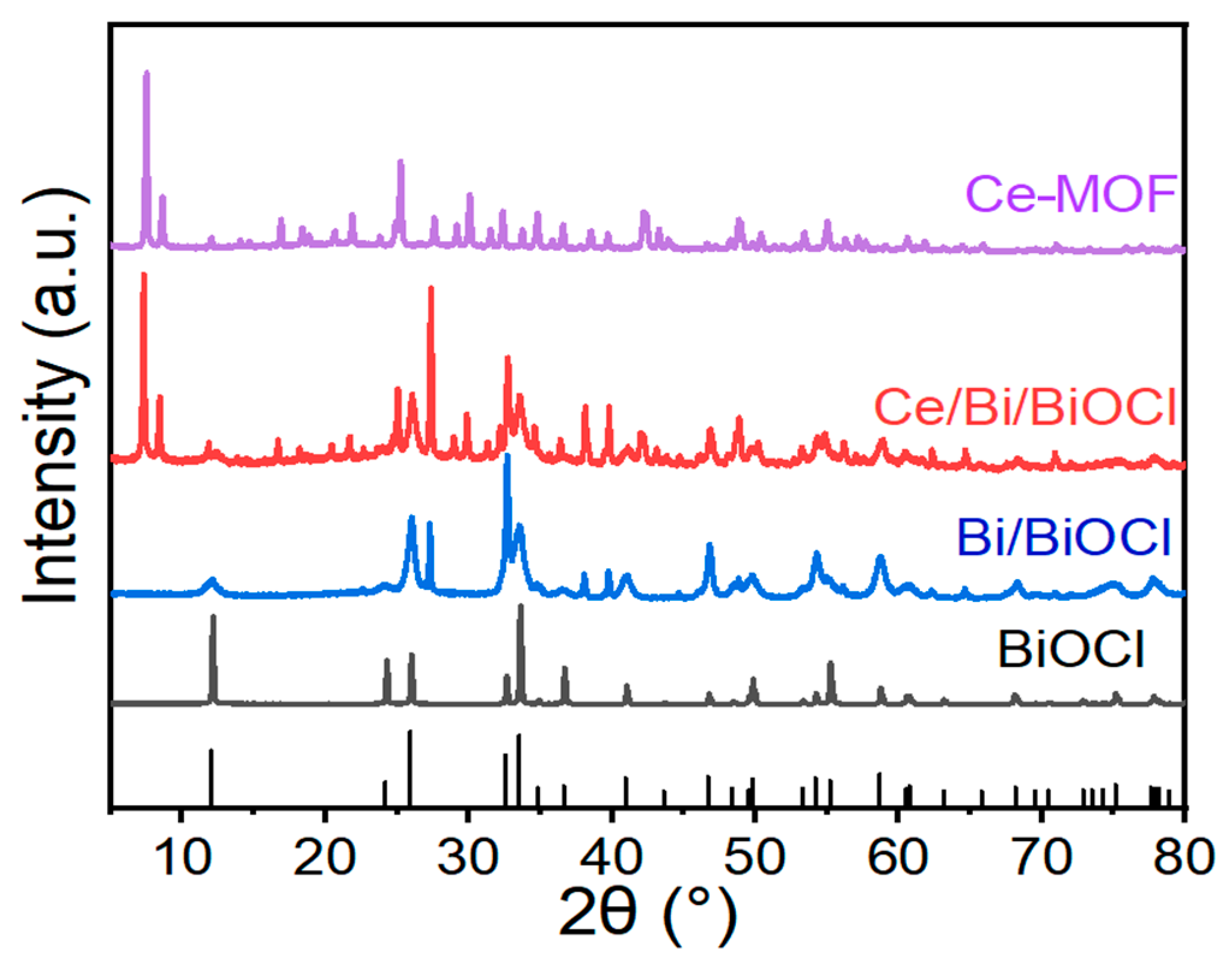
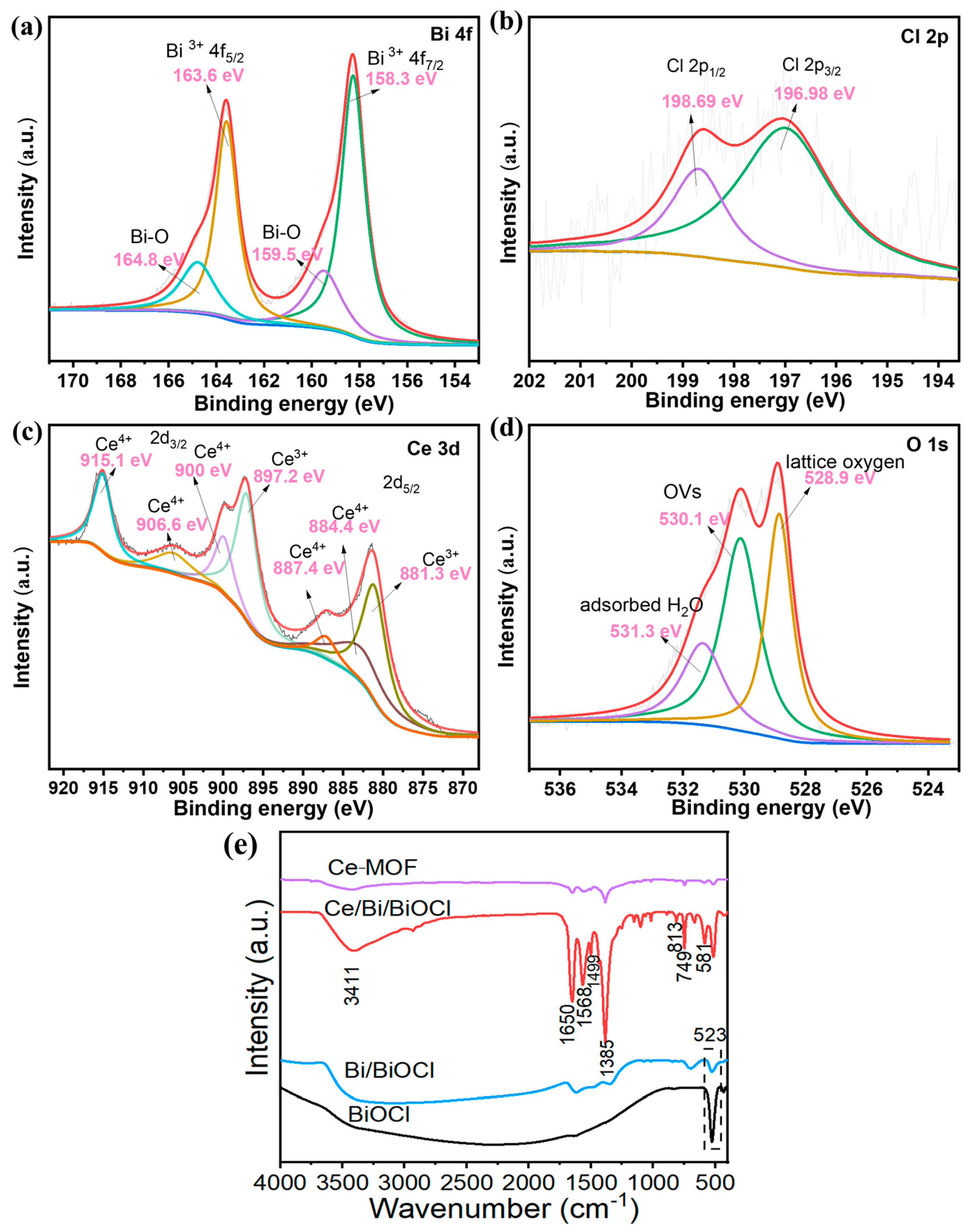
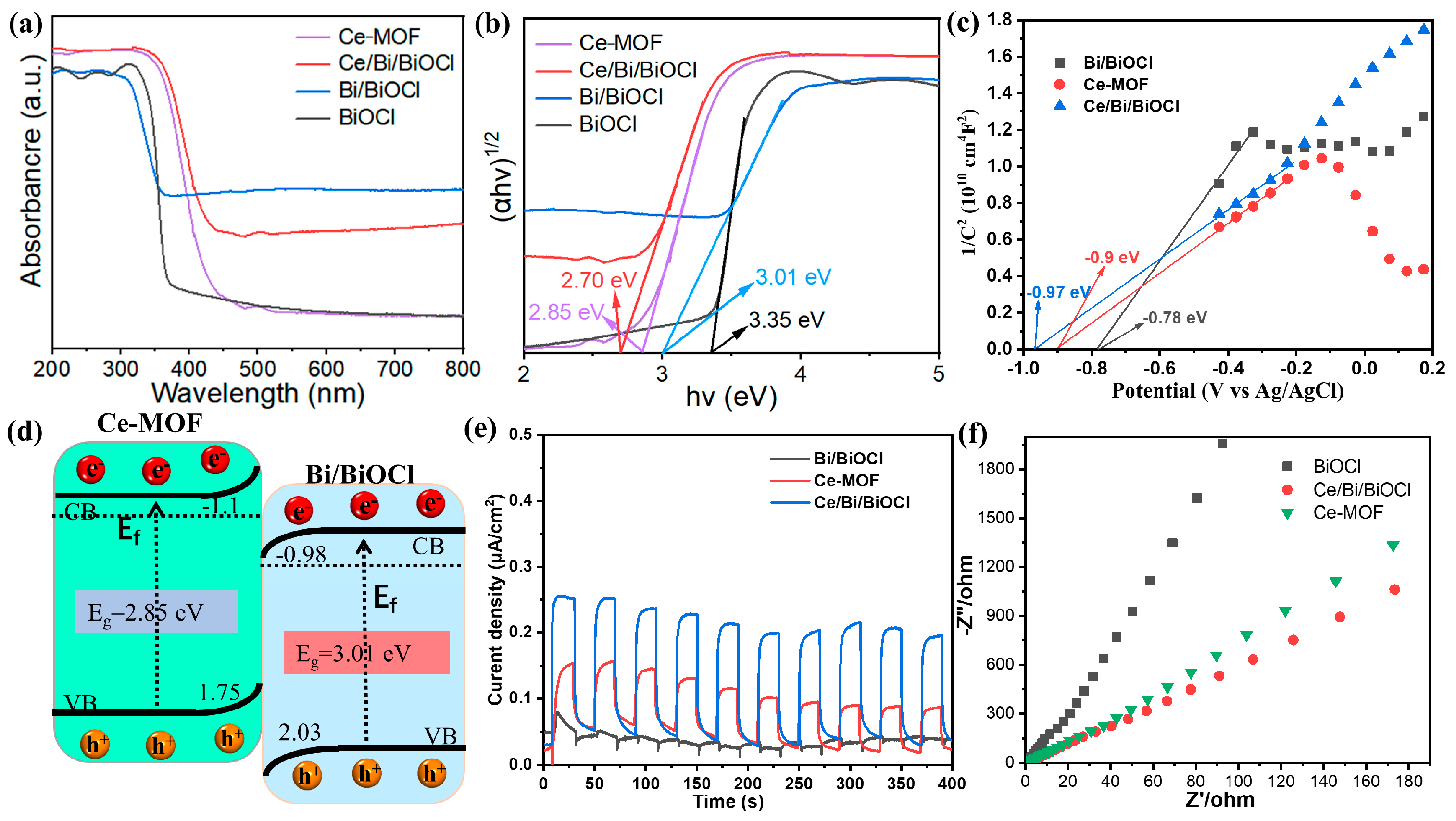
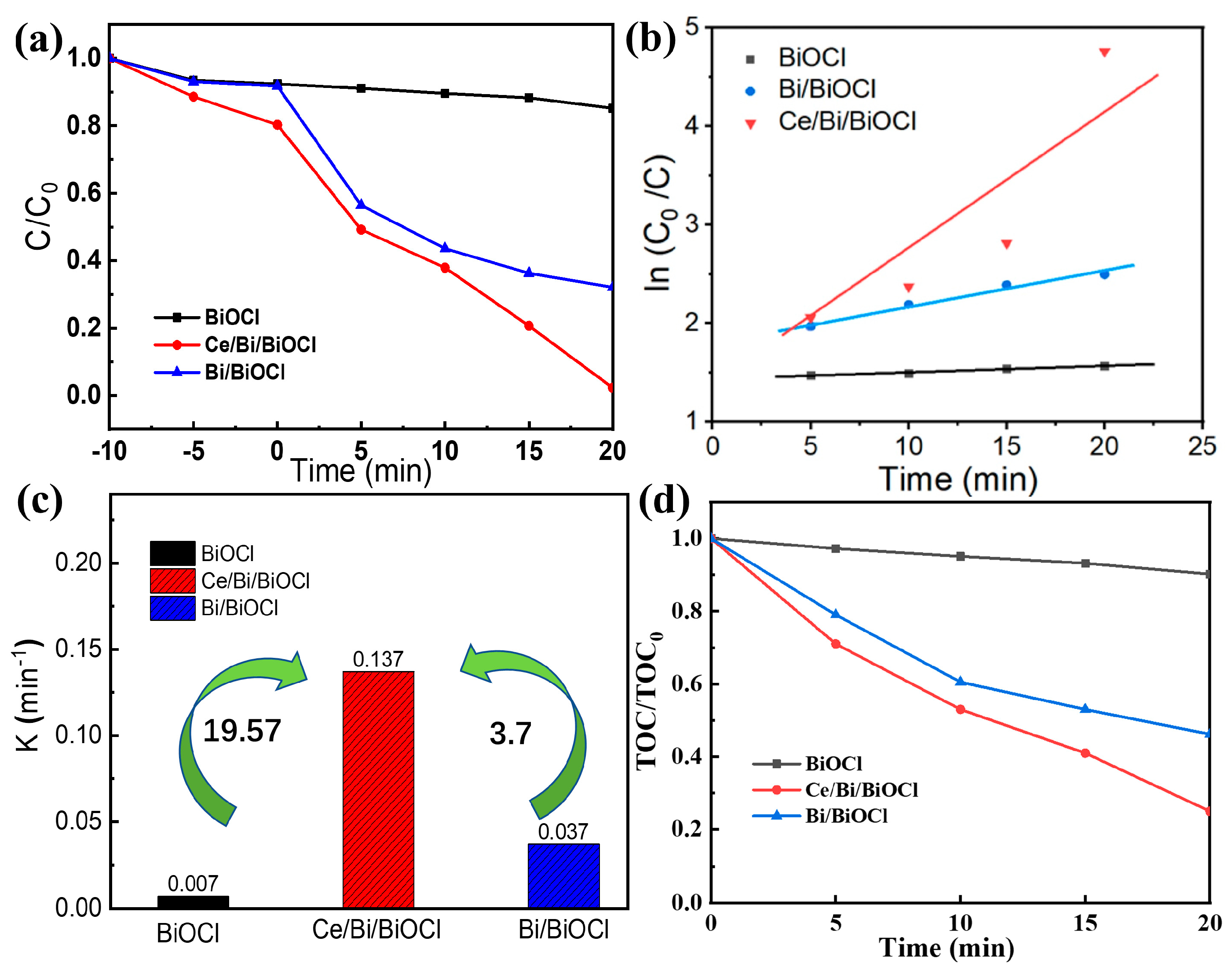
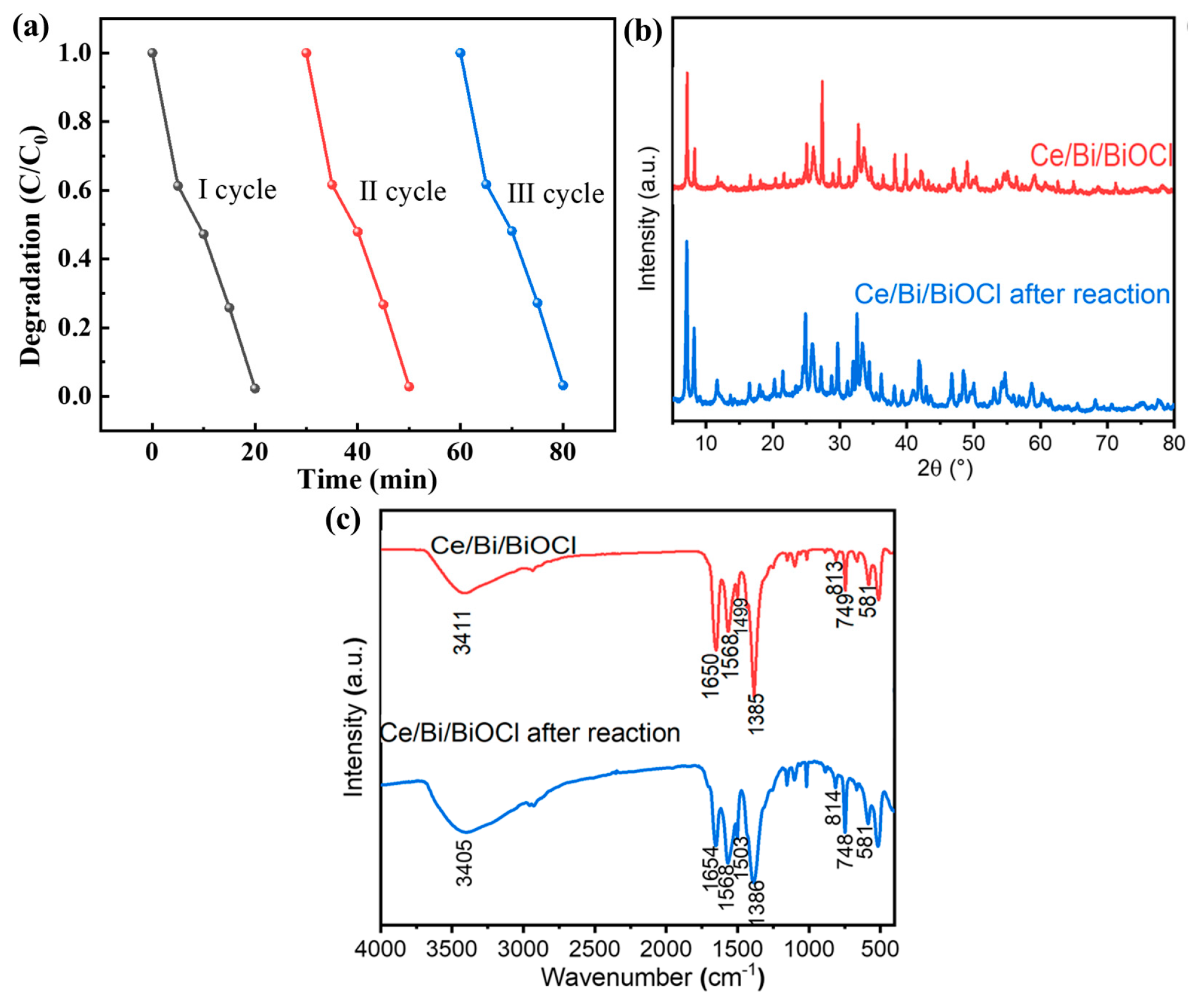
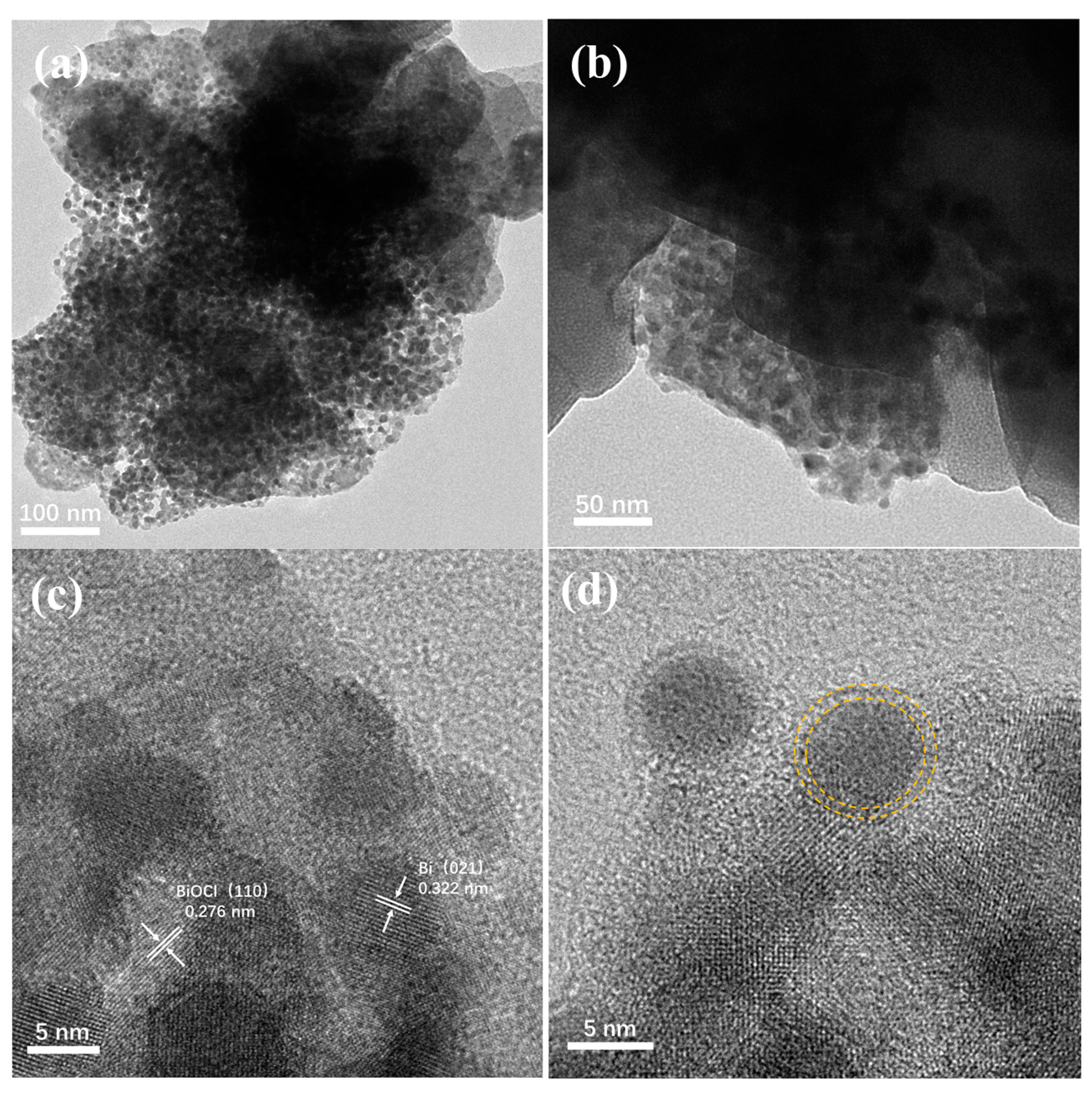
Photocatalysis is the most promising green approach to solve antibiotic pollution in water, but the actual treatment effect is limited by photocatalytic activity. Herein, Bi and BiOCl were loaded onto the surface of Ce-MOF (metal–organic framework) using an electrostatic adsorption method, and a special ternary heterojunction of Ce/Bi/BiOCl was successfully prepared as a photocatalyst for the degradation of tetracycline (TC). FTIR demonstrated that the obtained photocatalyst contains functional groups such as -COOH belonging to Ce-MOF and characteristic crystal planes of Bi and BiOCl, indicating the successful construction of a ternary photocatalyst. The results of UV–vis absorption spectra confirm that the band gap of Ce/Bi/BiOCl heterojunction is reduced from 3.35 eV to 2.7 eV, resulting in an enhanced light absorption capability in the visible light region. The special ternary heterojunction constructed by Ce-MOF, Bi, and BiOCl could achieve a narrow band gap and reasonable band structure, thereby enhancing the separation of photogenerated charges. Consequently, the photocatalytic performance of the Ce/Bi/BiOCl ternary heterojunction was significantly enhanced compared to Ce-MOF, Bi, and BiOCl. Therefore, Ce/Bi/BiOCl can achieve a photocatalytic degradation rate of 97.7% within 20 min, which is much better than Bi (14.8%) and BiOCl (67.9%). This work successfully constructed MOF-based ternary photocatalysts and revealed the relationship between ternary heterojunctions and photocatalytic activity. This provides inspiration for constructing other heterogeneous catalysts for use in the field of photocatalysis.
Keywords: photocatalysis; ternary heterojunction; BiOCl; Ce-MOF photocatalysis; ternary heterojunction; BiOCl; Ce-MOF