Article

A Design Strategy for Surface Nanostructures to Realize Sensitive Refractive-Index Optical Sensors


Research Center for Electronic and Optical Materials, National Institute for Materials Science (NIMS), 1-1 Namiki, Tsukuba 305-0044, Japan
Nanomaterials 2023, 13(24), 3081; https://doi.org/10.3390/nano13243081
Submission received: 1 November 2023 / Revised: 28 November 2023 / Accepted: 1 December 2023 / Published: 5 December 2023
(This article belongs to the Special Issue Functional Nanomaterials for Sensing and Detection (2nd Edition))

Abstract

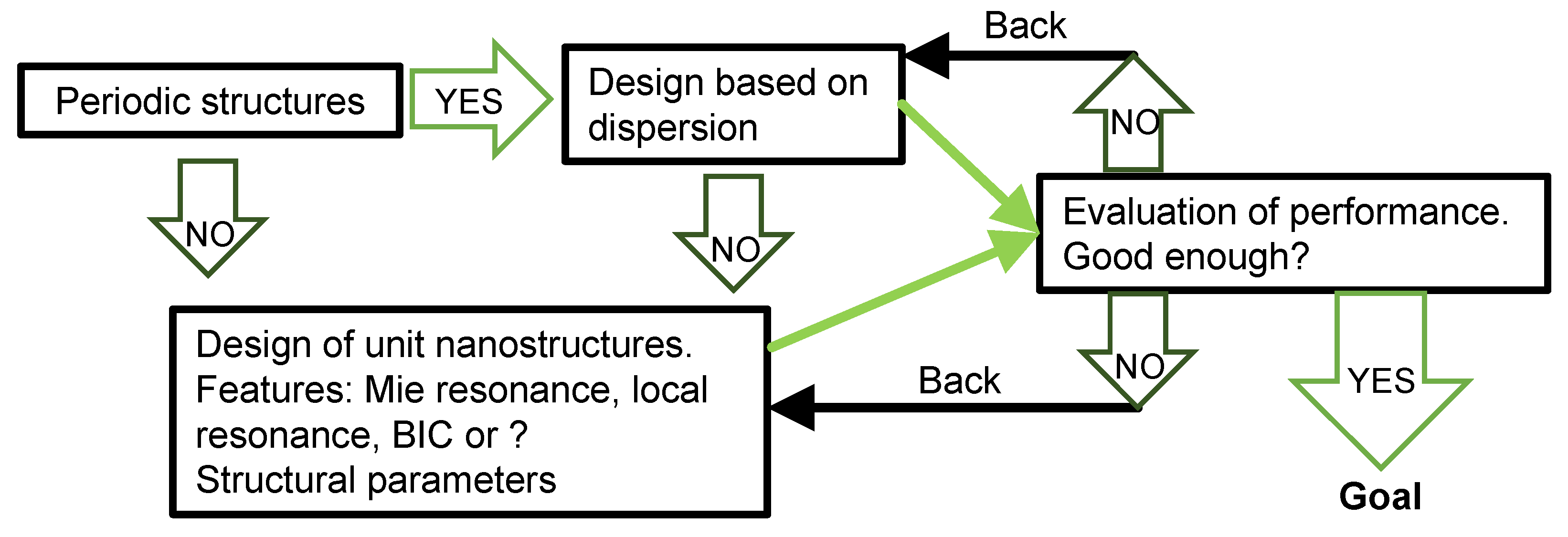
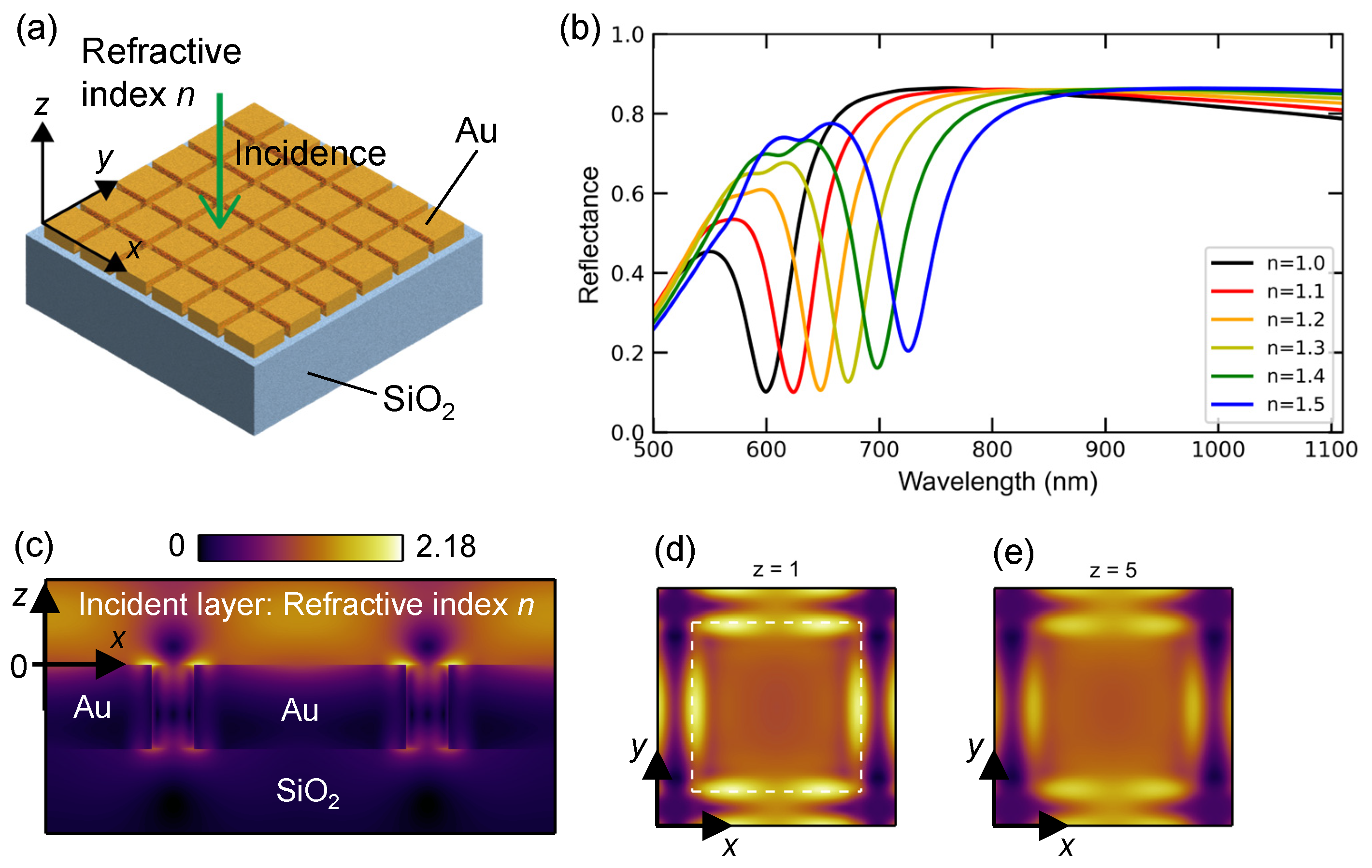
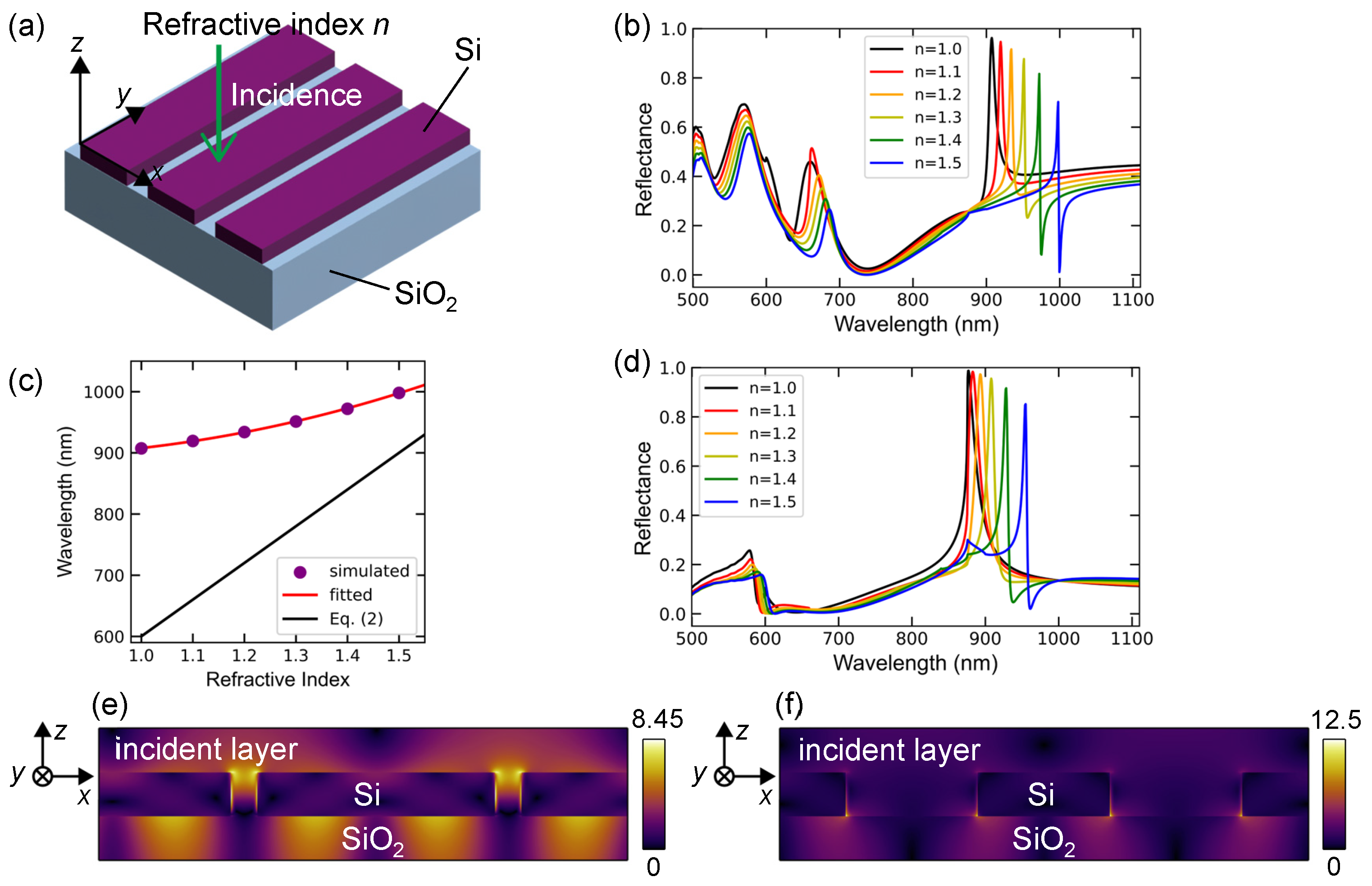
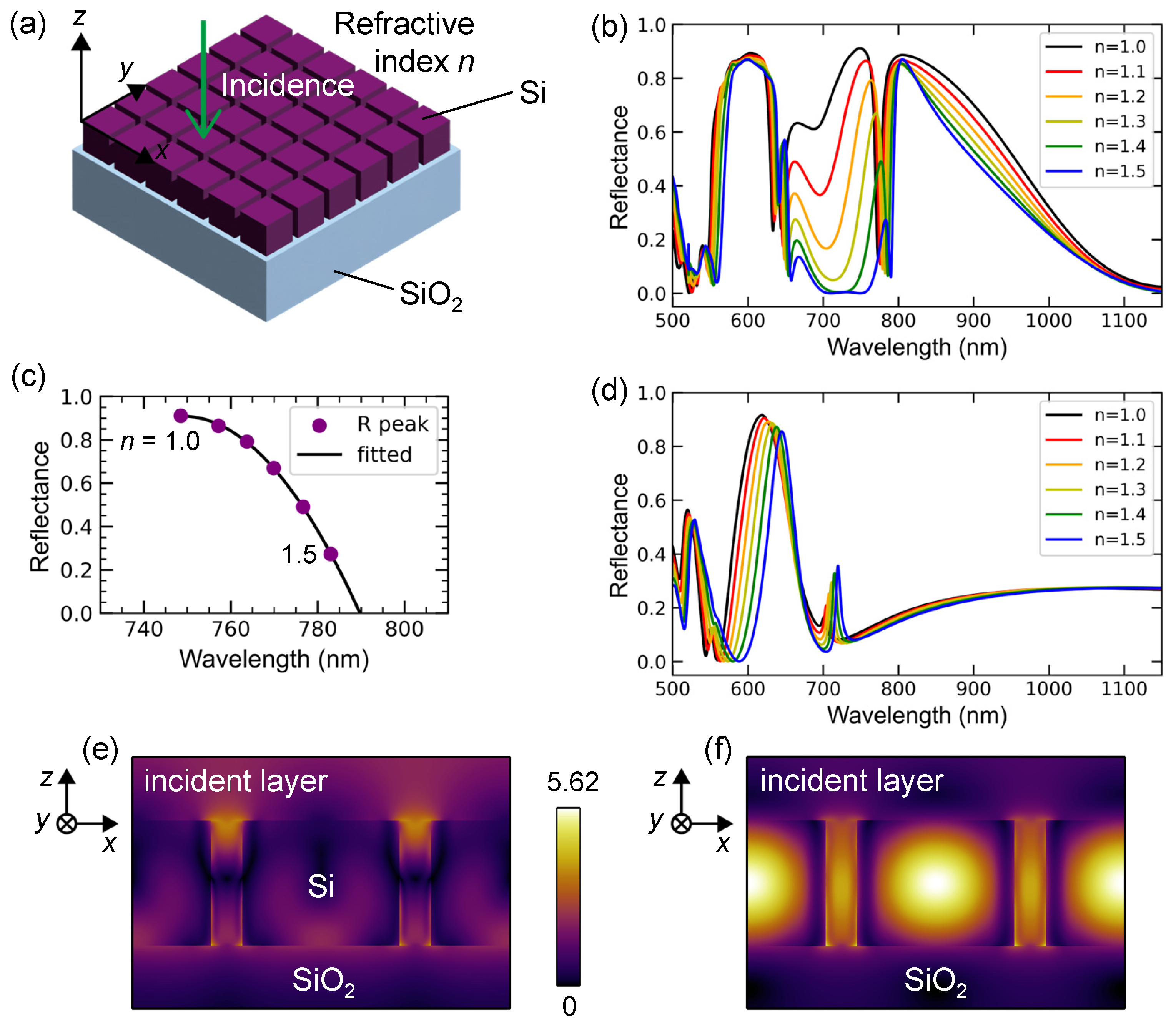
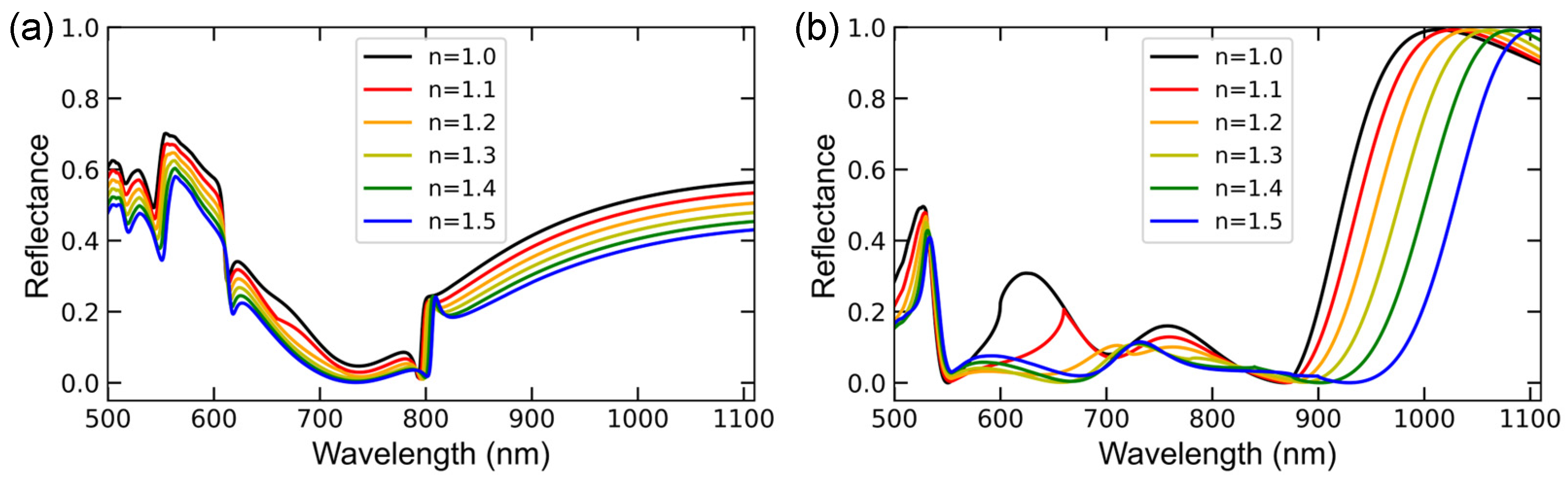
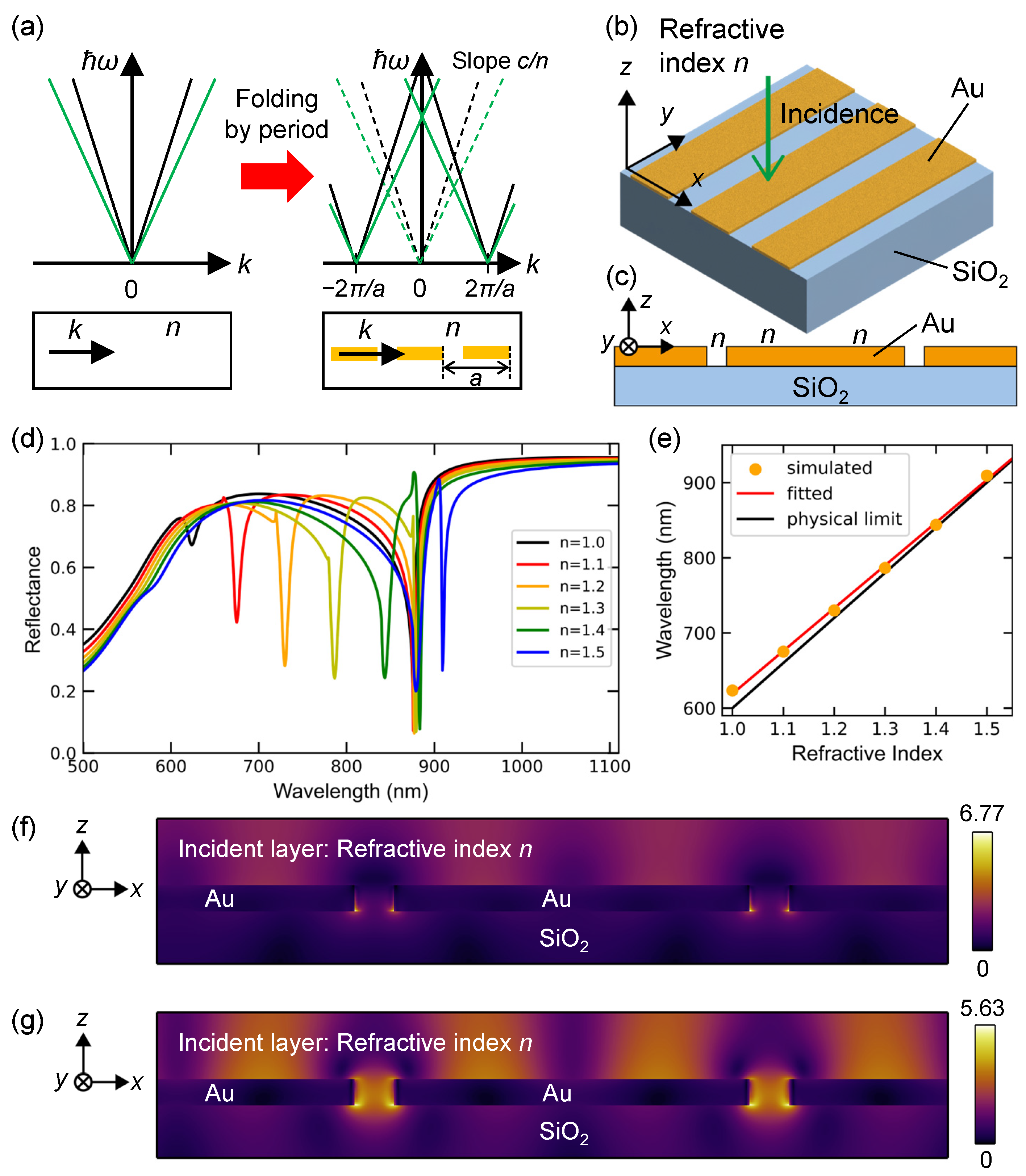
Refractive-index optical sensors have been extensively studied. Originally, they were surface plasmon resonance sensors using only a flat gold film. Currently, to develop practically useful label-free optical sensors, numerous proposals for refractive index sensors have been made using various nanostructures composed of metals and dielectrics. In this study, we explored a rational design strategy for sensors using surface nanostructures comprising metals or dielectrics. Optical responses, such as reflection and transmission, and resonant electromagnetic fields were computed using a numerical method of rigorous coupled-wave analysis combined with a scattering-matrix algorithm. As a result, good performance that almost reached the physical limit was achieved using a plasmonic surface lattice structure. Furthermore, to precisely trace the refractive-index change, a scheme using two physical quantities, resonant wavelength and reflection amplitude, was found to be valid for a 2D silicon metasurface.
Keywords: optical sensors; refractive index; label-free; surface nanostructures; surface lattice; metasurfaces; plasmons; dielectric resonances optical sensors; refractive index; label-free; surface nanostructures; surface lattice; metasurfaces; plasmons; dielectric resonances