Article

Nano-AgCu Alloy on Wood Surface for Mold Resistance
1
State Forestry and Grassland Administration Key Laboratory of Silviculture in Down-Stream Areas of the Yellow River, College of Forestry, Shandong Agricultural University, Taian 271018, China
2
Solmont Technology Wuxi Co., Ltd., 228 Linghu Blvd., Tian’an Tech Park, A1-602, Xinwu District, Wuxi 214135, China
*
Authors to whom correspondence should be addressed.
These authors contributed equally to this work.
Nanomaterials 2022, 12(7), 1192; https://doi.org/10.3390/nano12071192
Submission received: 12 February 2022 / Revised: 23 March 2022 / Accepted: 24 March 2022 / Published: 2 April 2022

Abstract

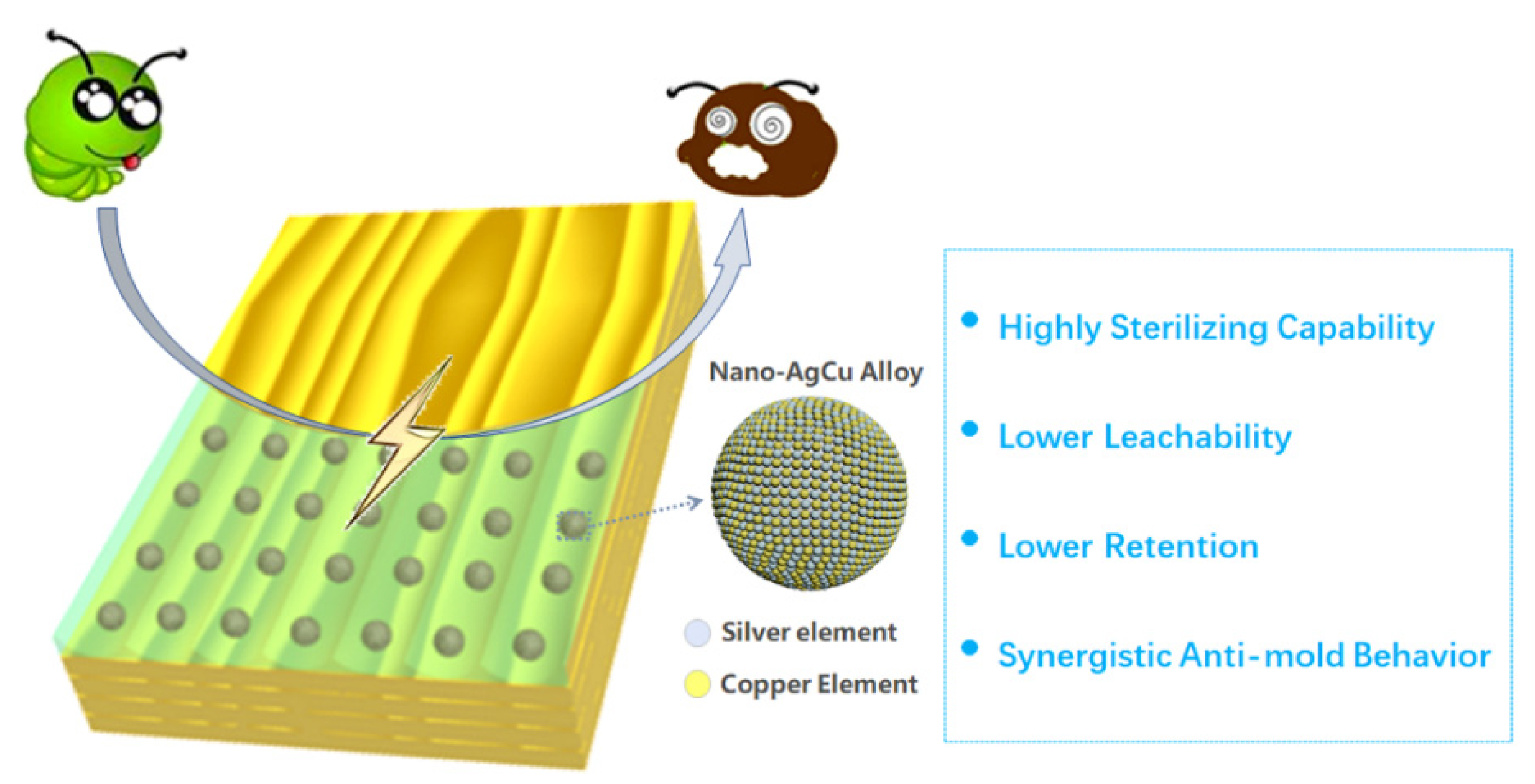
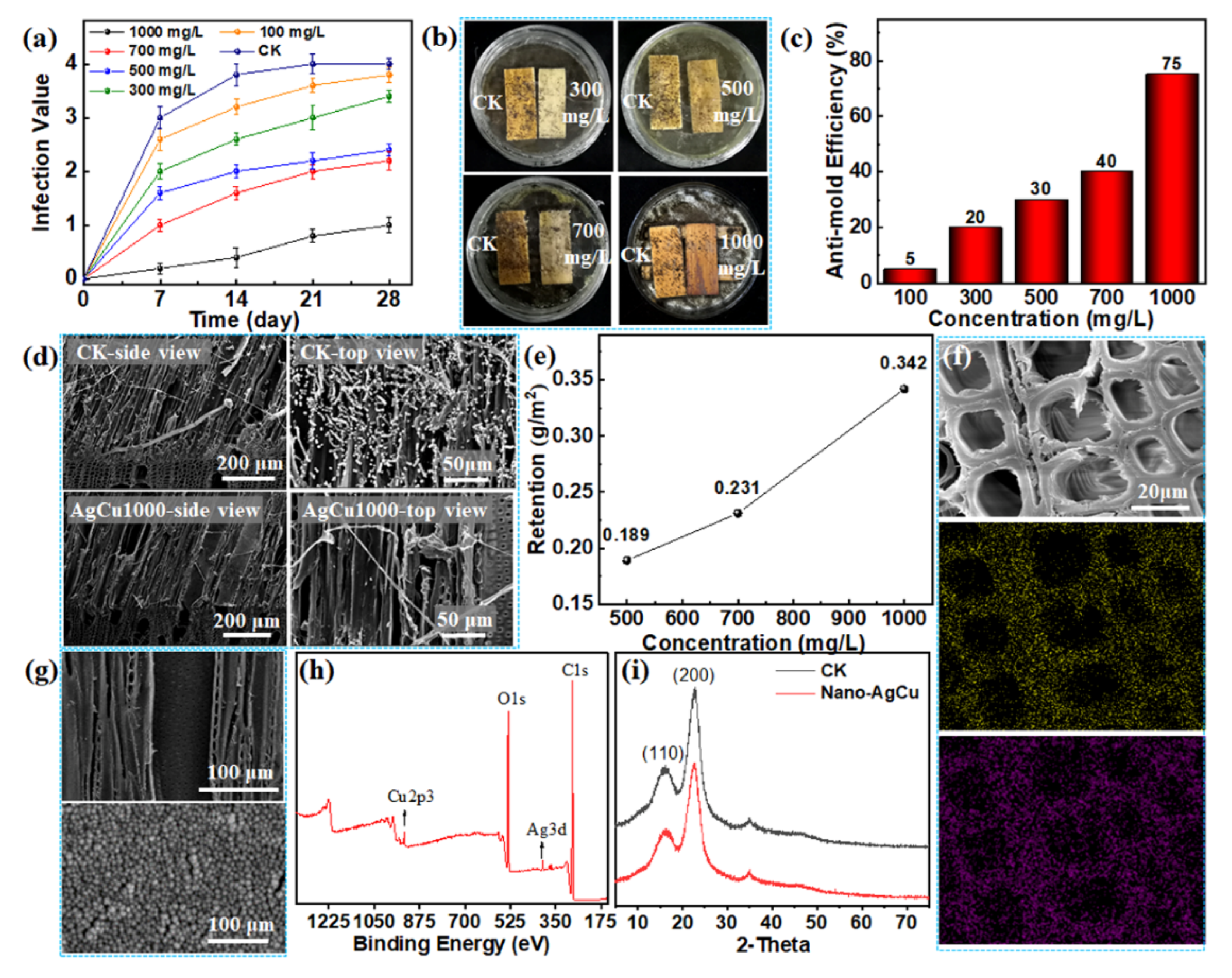
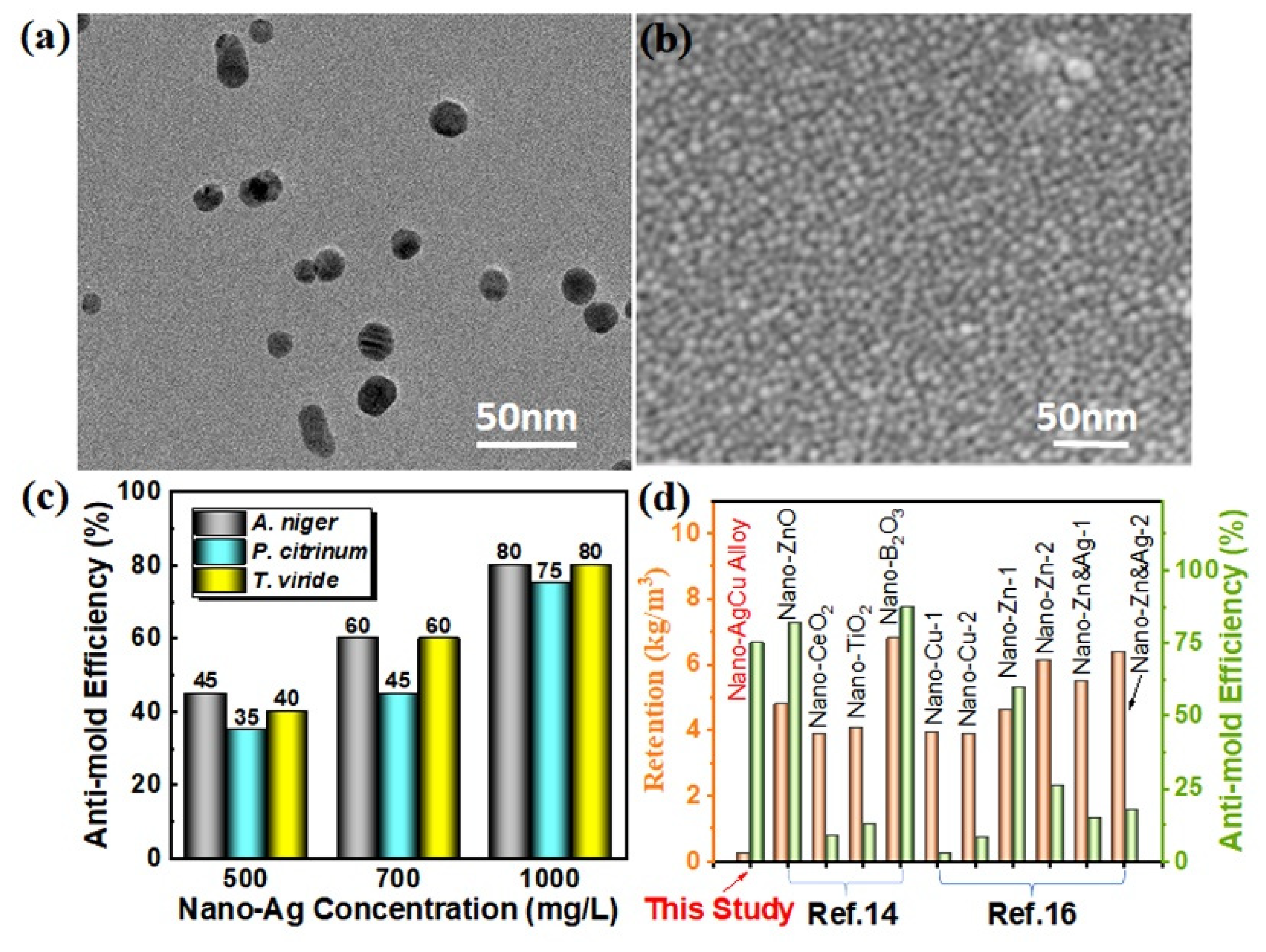
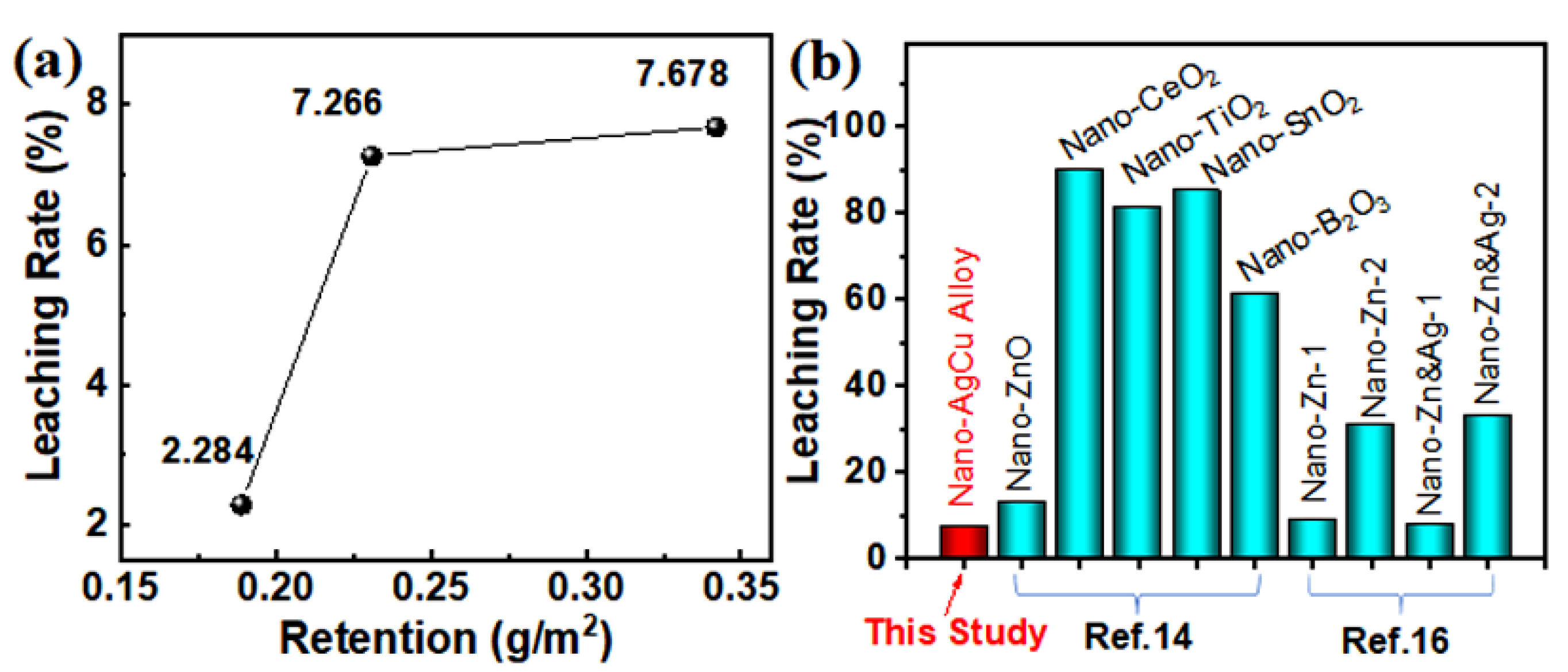
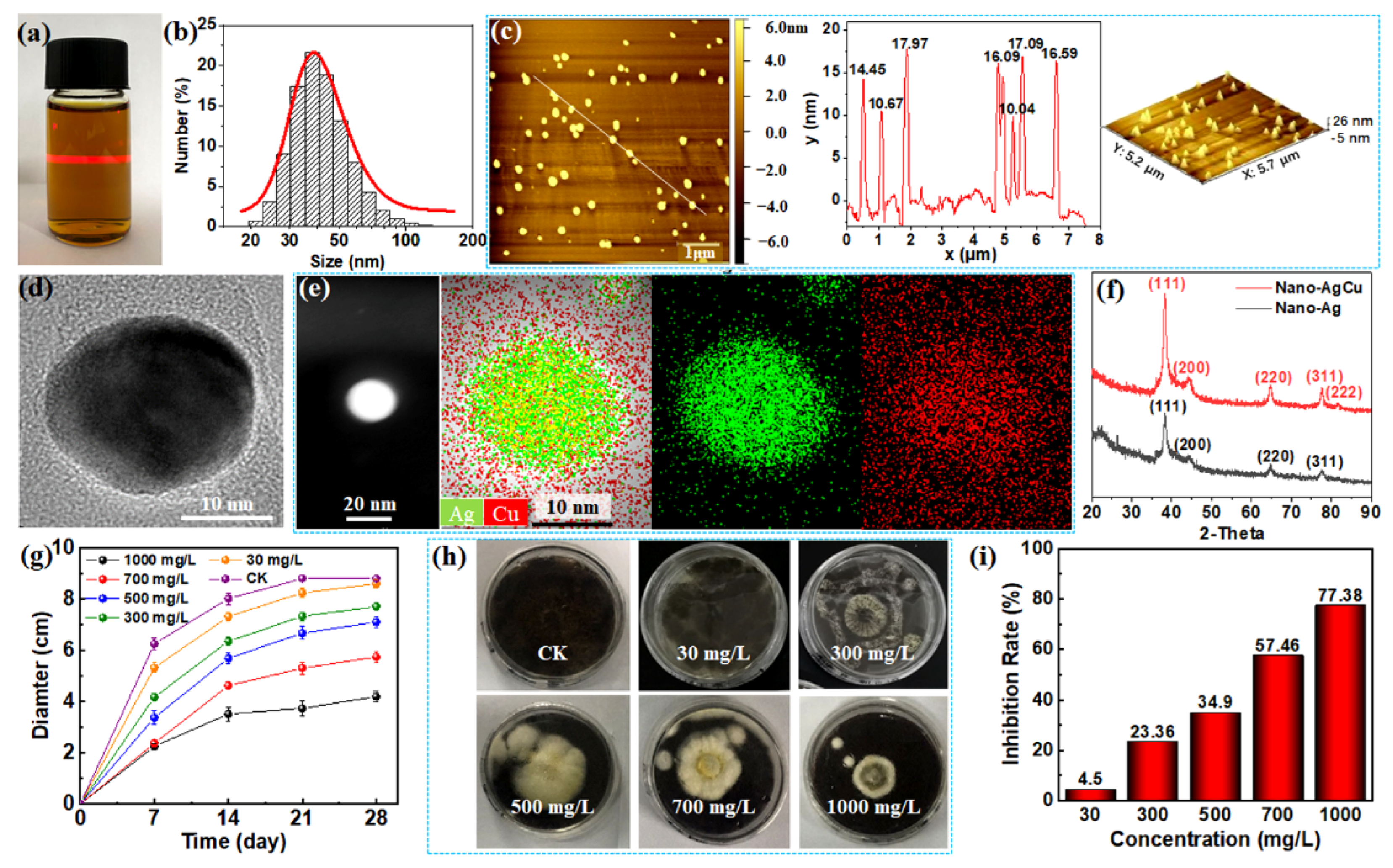
The mold infection of wood reduces the quality of its surface and potentially endangers human health. One category of the most popular mold inhibitors on the market is water-soluble fungicides. However, easy leaching due to ionic forms is a problem, which reduces the effectiveness of their antimicrobial action, as well as causing environmental pollution. Interestingly, nanometer-sized sterilizing agents present strong permeability and highly fungicidal behavior, and they are not easily leached, due to the unique nanoscale effect, and they have become alternative candidates as marketable anti-mold agents for wood protection. In this study, we first designed and explored a nanoscale alloy (nano silver–copper alloy, nano-AgCu) to treat wood surfaces for mold growth resistance. The results showed that three molds, i.e., Aspergillus niger, Penicillium citrinum and Trichoderma viride, mainly grew on the surface of wood within a depth of 100 μm; and that the nano-AgCu alloy with a particle size of ~15 nm presented improved retention and anti-mold efficiency at a nanomaterial concentration on the wood surface. Its leaching rate increased non-linearly with the increase in nano-AgCu retention and then it showed a gradually decreasing trend. When the concentration reached 1000 mg/L, the nano-AgCu alloy uniformly distributed on the wood surface in a monodispersed state and exhibited a lower retention of 0.342 g/m2, with an anti-mold efficiency of more than 75% and a leaching rate of only 7.678%. Such results positioned 1000 mg/L as the toxic threshold concentration of nano-AgCu against the three molds. This study can provide a scientific basis for the analysis of the anti-mold mechanisms of nano-AgCu alloy on wood surfaces and guide the application of nano-metal alloy materials in the field of wood antimicrobials.
Keywords: wood; nanoscale alloy; mold resistance; protection efficiency; leaching rate wood; nanoscale alloy; mold resistance; protection efficiency; leaching rate