Article

Plasma-Engineered N-CoOx Nanowire Array as a Bifunctional Electrode for Supercapacitor and Electrocatalysis


Key Laboratory of Liquid-Solid Structural Evolution and Processing of Materials of Ministry of Education, School of Materials Science and Engineering, Shandong University, Jinan 250061, China
*
Author to whom correspondence should be addressed.
Nanomaterials 2022, 12(17), 2984; https://doi.org/10.3390/nano12172984
Submission received: 10 August 2022 / Revised: 25 August 2022 / Accepted: 27 August 2022 / Published: 29 August 2022

Abstract

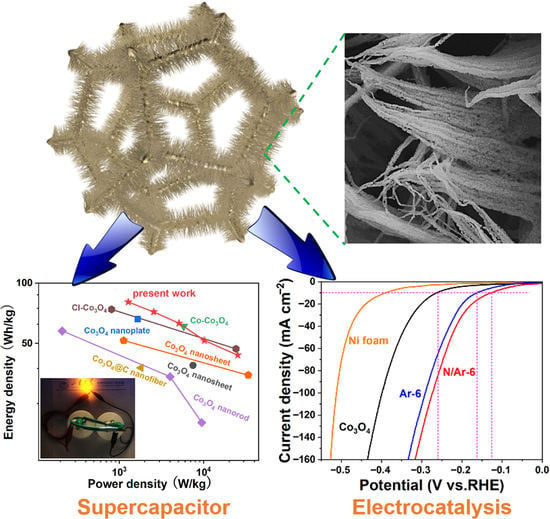
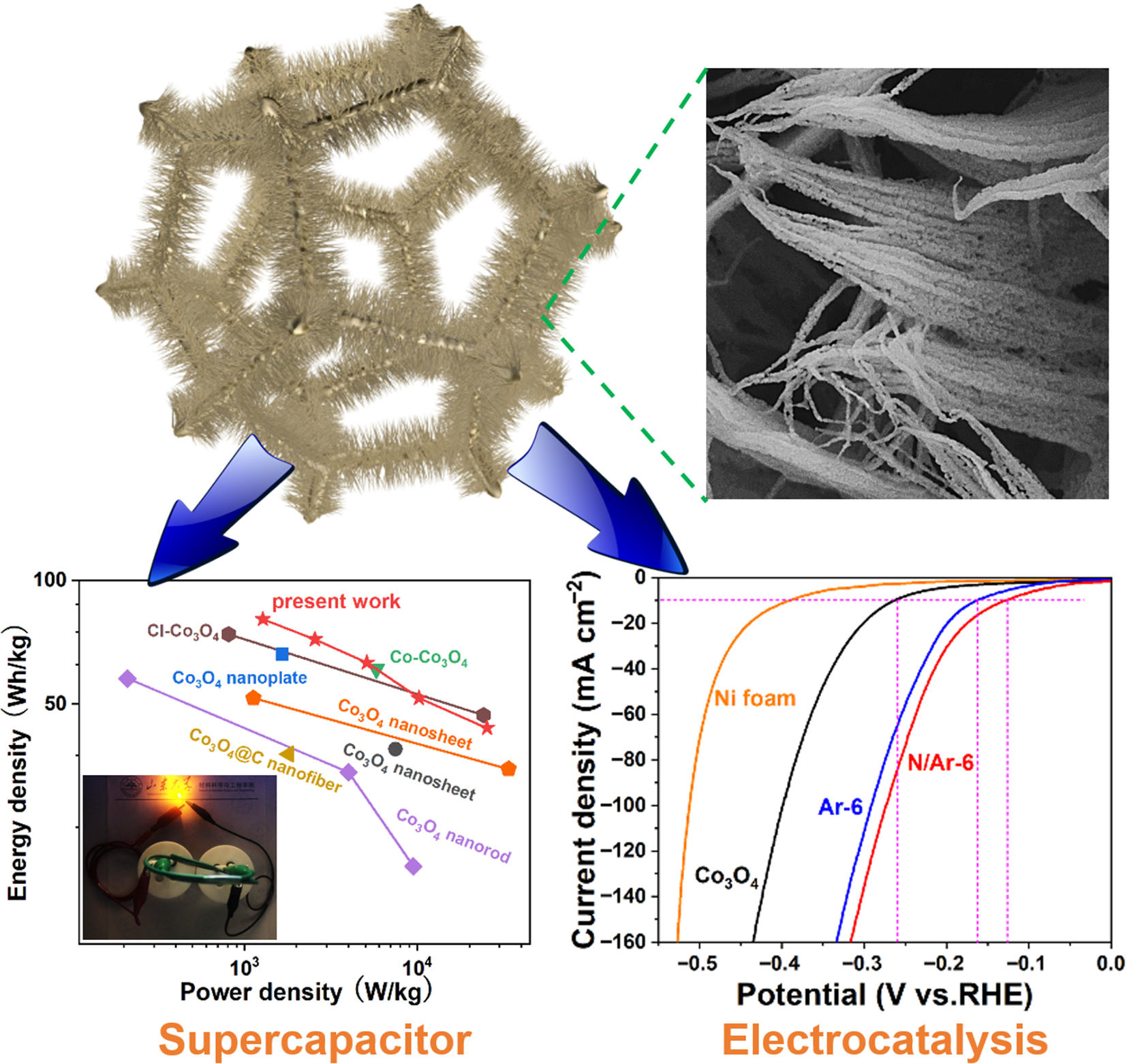
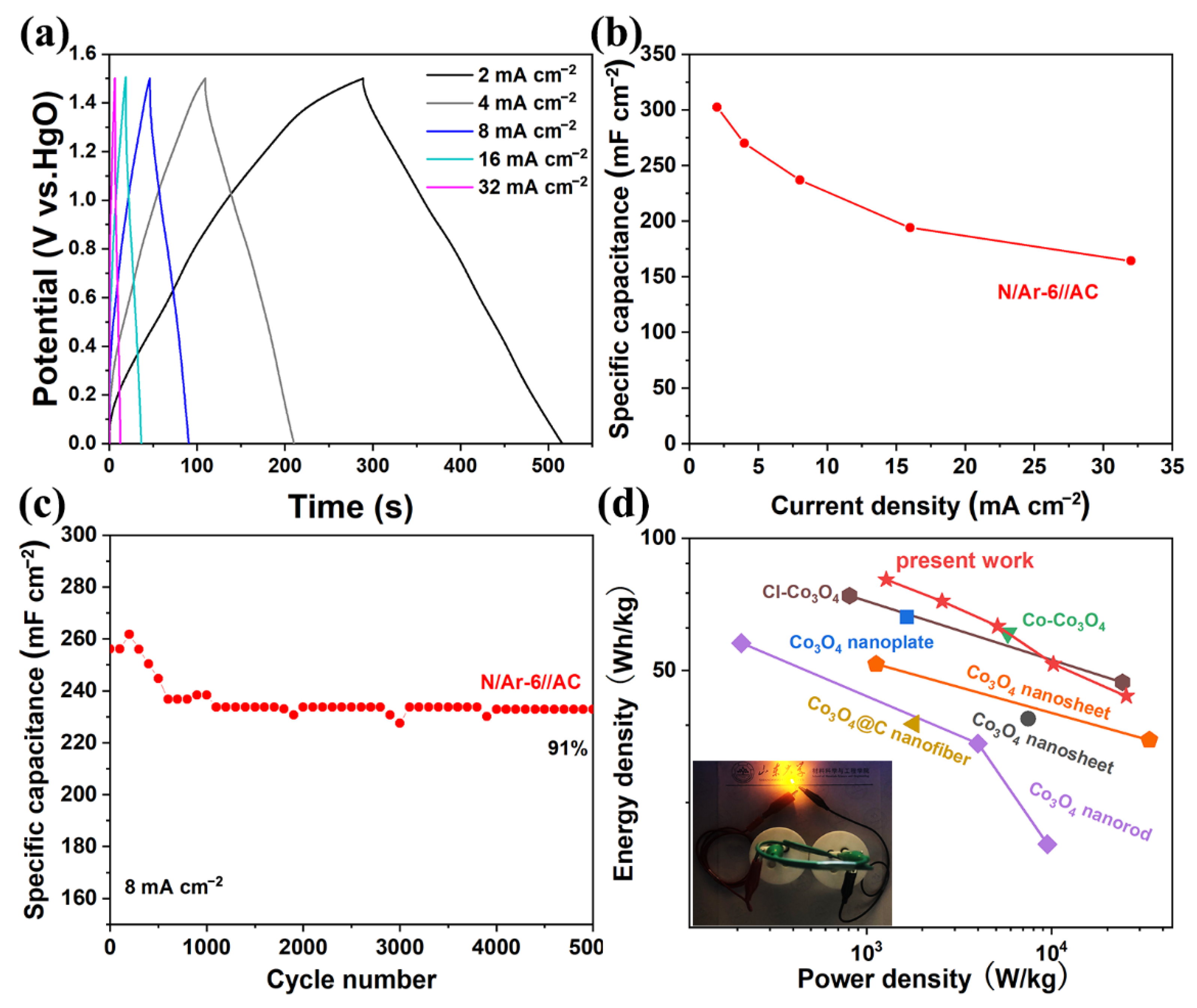
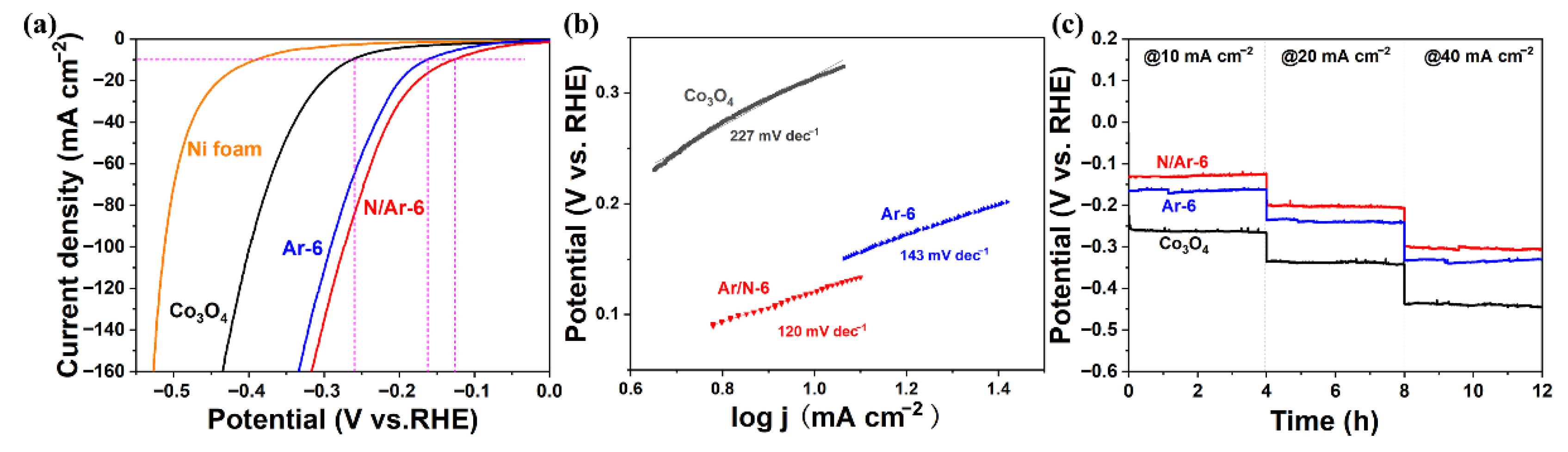
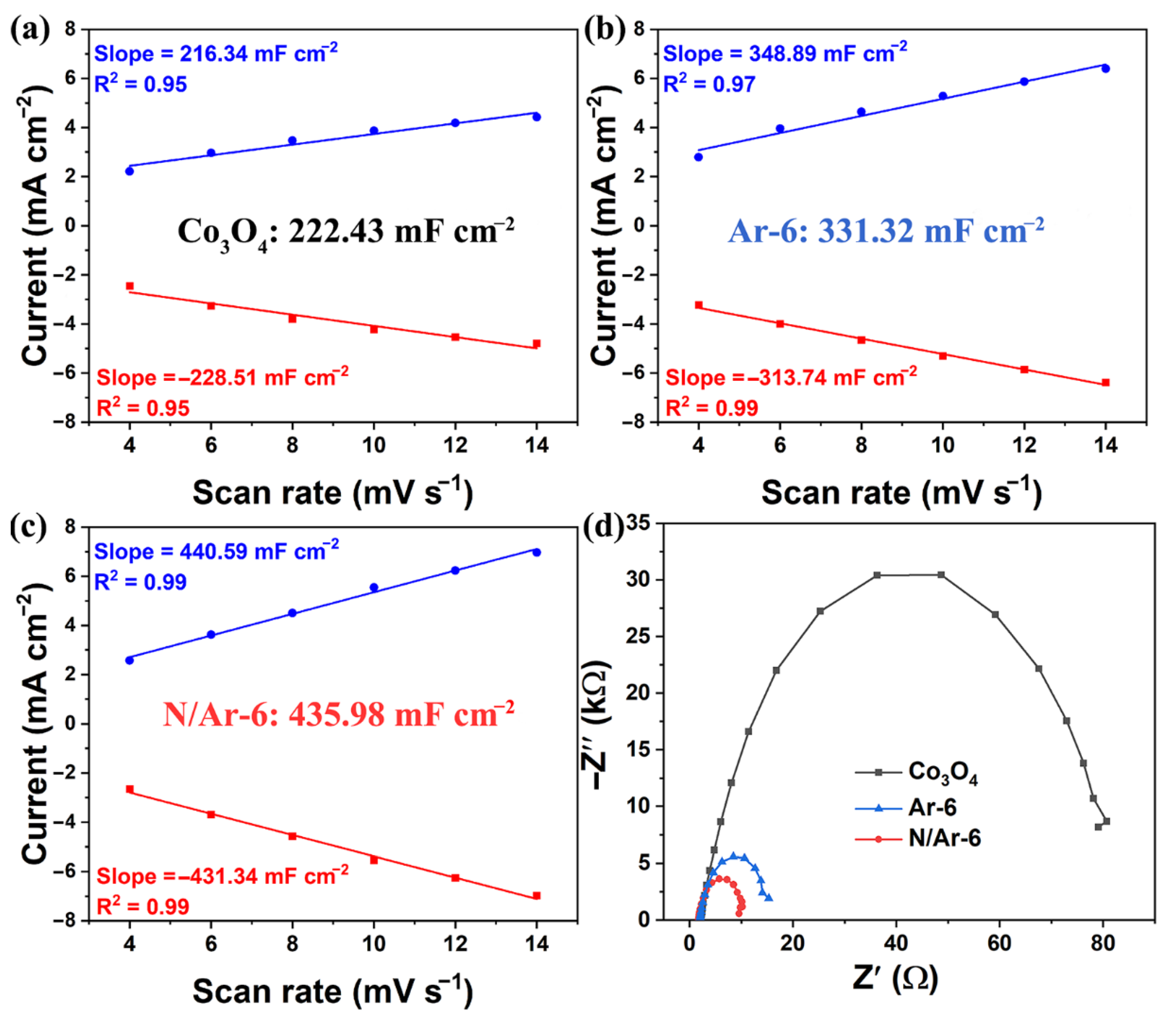
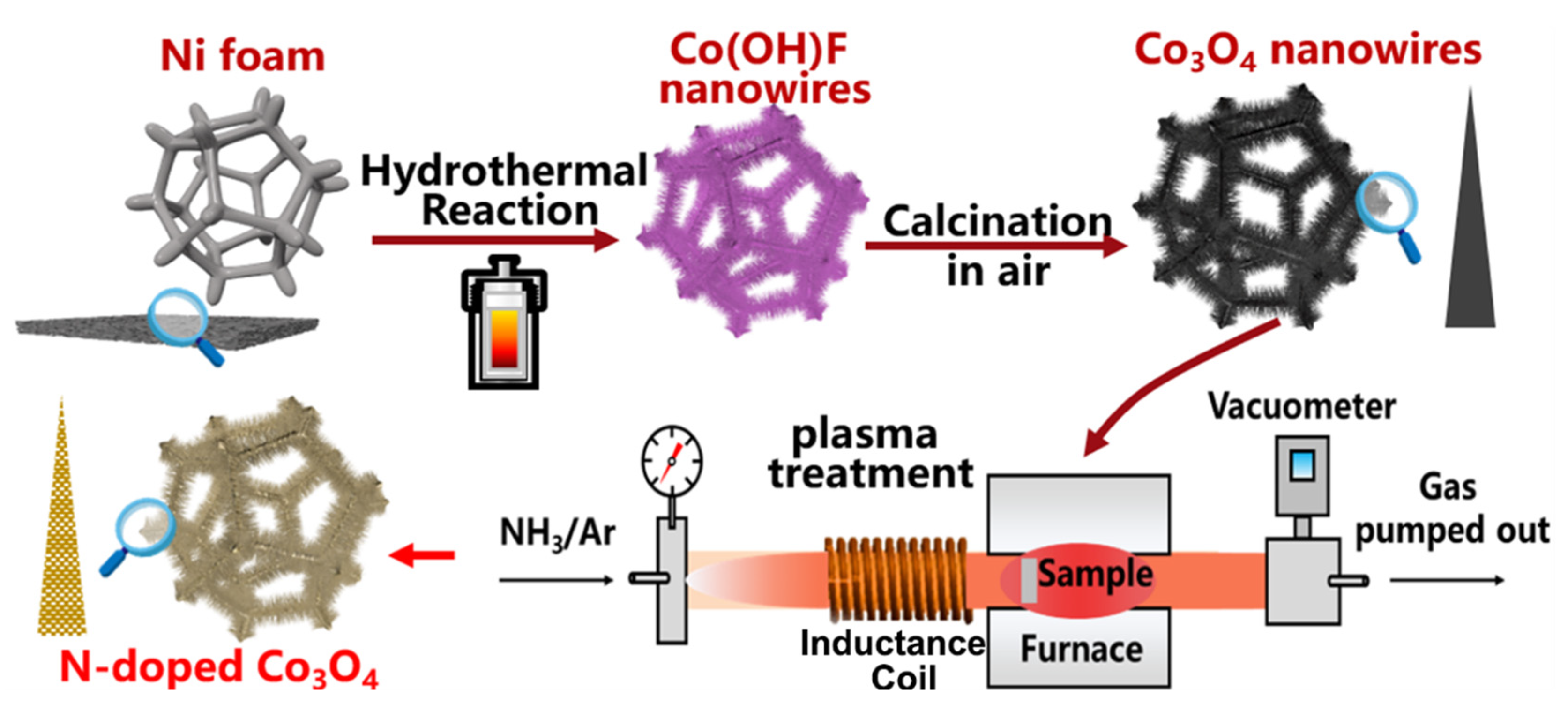
Surface engineering has achieved great success in enhancing the electrochemical activity of Co3O4. However, the previously reported methods always involve high-temperature calcination processes which are prone to induce agglomeration of the nanostructure, leading to the attenuation of performance. In this work, Co3O4 nanowires were successfully modified by a low-temperature NH3/Ar plasma treatment, which simultaneously generated a porous structure and efficient nitrogen doping with no agglomeration. The modified N-CoOx electrode exhibited remarkable performance due to the synergistic effect of the porous structure and nitrogen doping, which provided additional active sites for faradic transitions and improved charge transfer characteristics. The electrode achieved excellent supercapacitive performance with a maximum specific capacitance of 2862 mF/cm2 and superior cycling retention. Furthermore, the assembled asymmetric supercapacitor (N-CoOx//AC) device exhibited an extended potential window of 1.5 V, a maximum specific energy of 80.5 Wh/kg, and a maximum specific power of 25.4 kW/kg with 91% capacity retention after 5000 charge–discharge cycles. Moreover, boosted hydrogen evolution reaction performance was also confirmed by the low overpotential (126 mV) and long-term stability. This work enlightens prospective research on the plasma-enhanced surface engineering strategies.
Keywords: plasma; nitrogen doping; Co3O4; supercapacitor; electrocatalysis plasma; nitrogen doping; Co3O4; supercapacitor; electrocatalysis
Graphical Abstract