Article

Interactive Effects of Biosynthesized Nanocomposites and Their Antimicrobial and Cytotoxic Potentials

1
Microbiology Department, Faculty of Science, Ain Shams University, Cairo 11566, Egypt
2
Agricultural Microbiology Department, National Research Centre, 33 El-Bohouth Street, (Former El-Tahrir Street) Dokki, Giza 12622, Egypt
3
Microbiology Department, The Regional Center for Mycology and Biotechnology, Al-Azhar University, Cairo 11651, Egypt
*
Author to whom correspondence should be addressed.
Nanomaterials 2021, 11(4), 903; https://doi.org/10.3390/nano11040903
Submission received: 1 March 2021 / Revised: 26 March 2021 / Accepted: 27 March 2021 / Published: 1 April 2021

Abstract

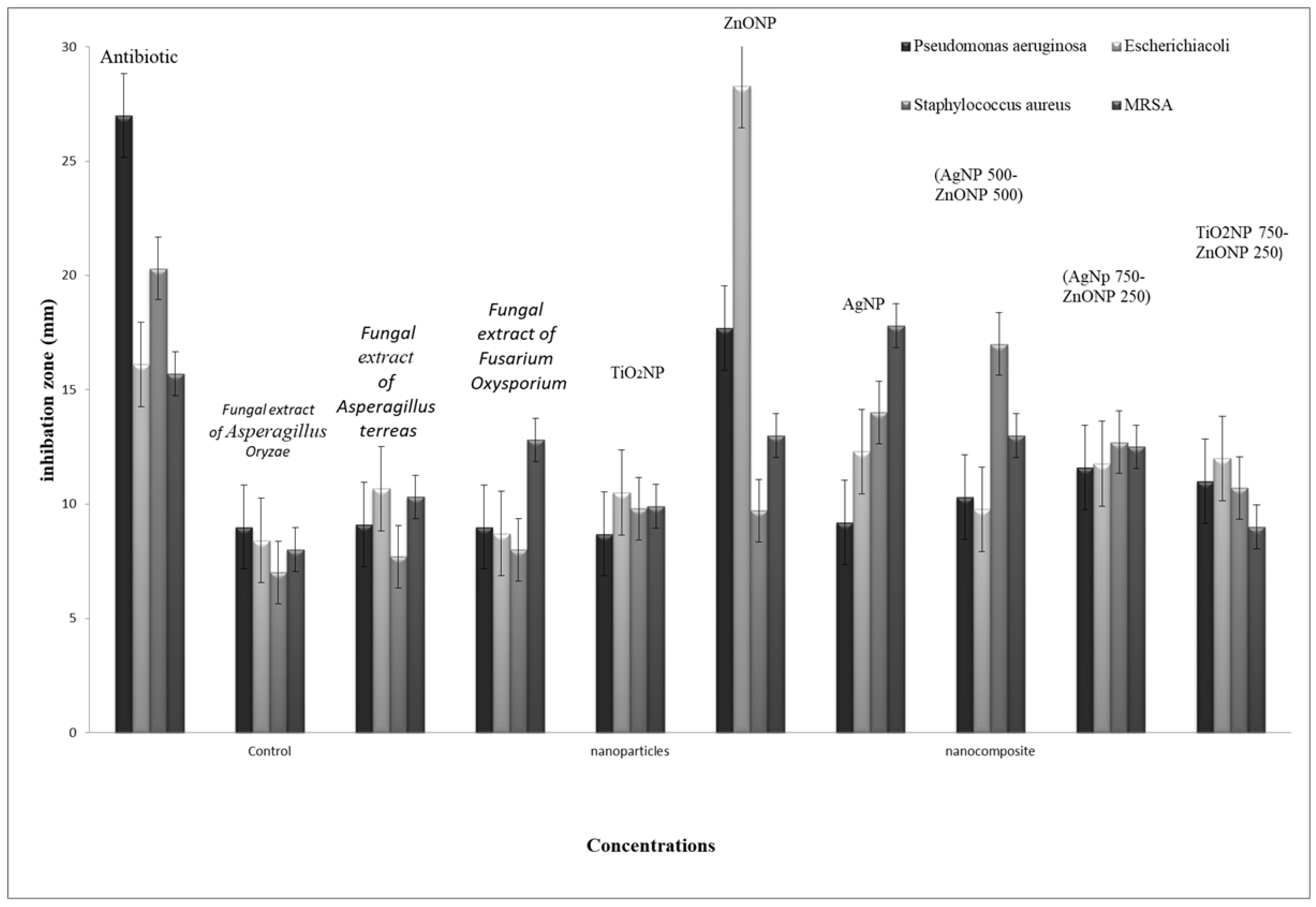
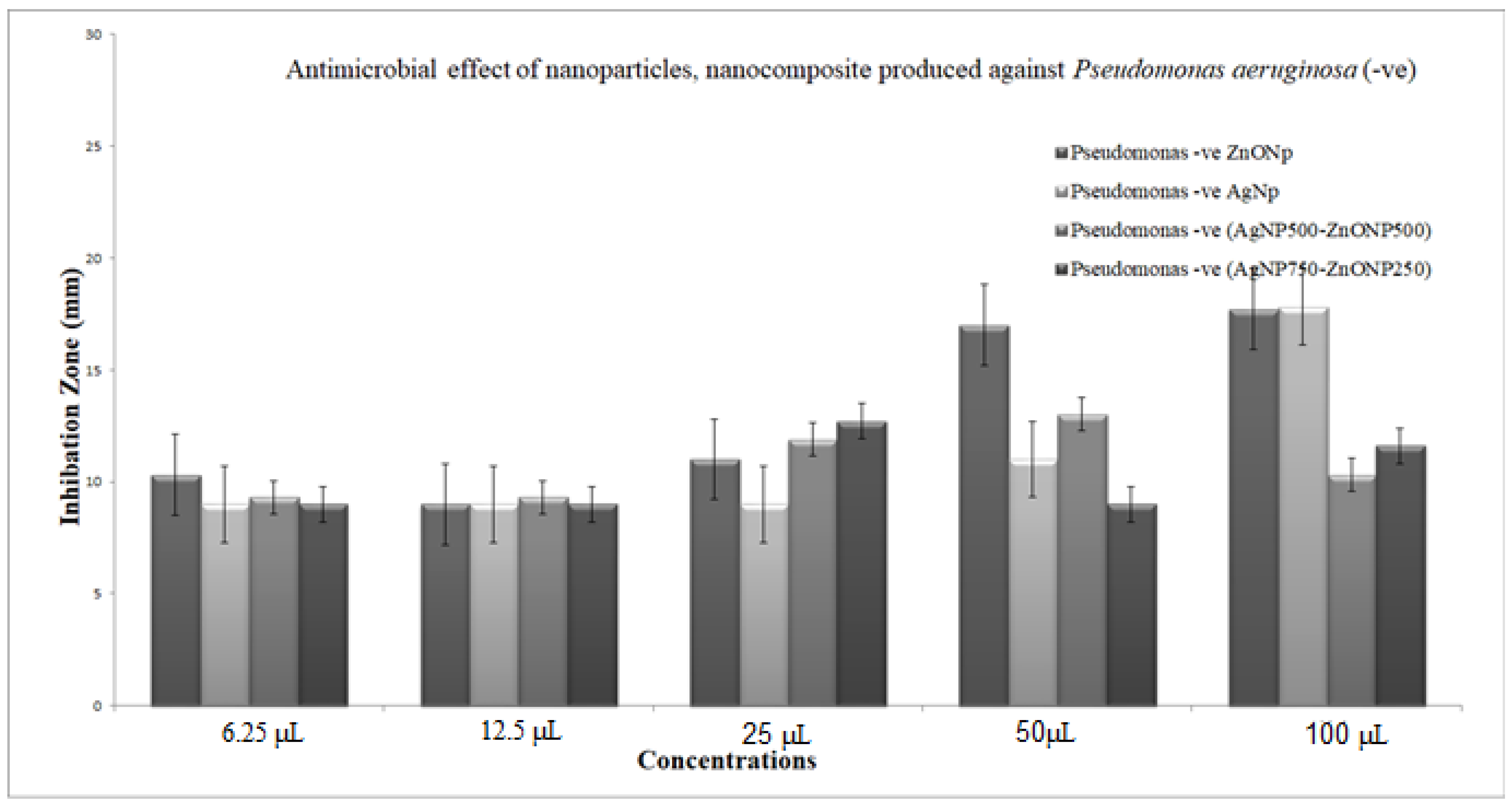
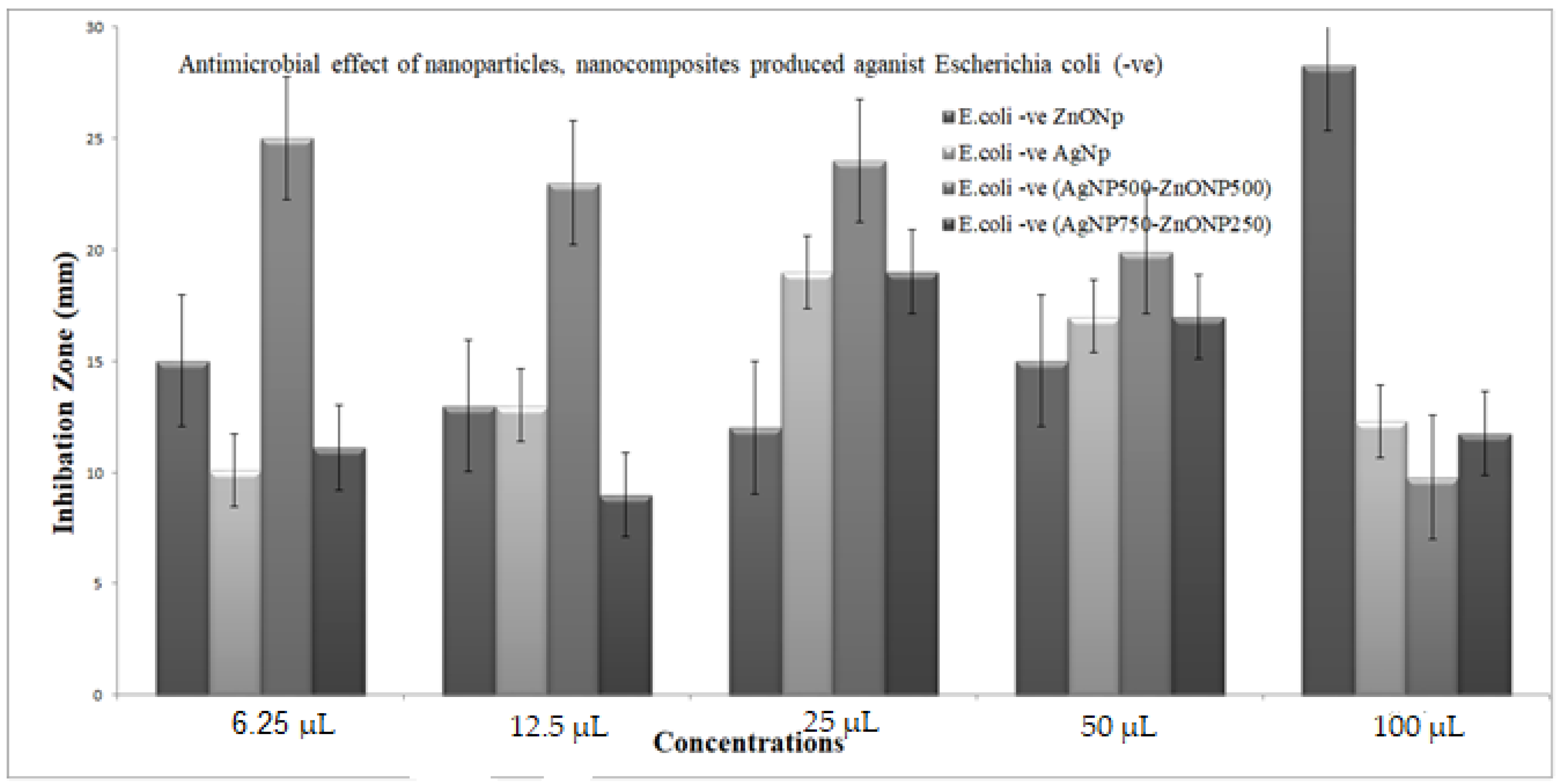
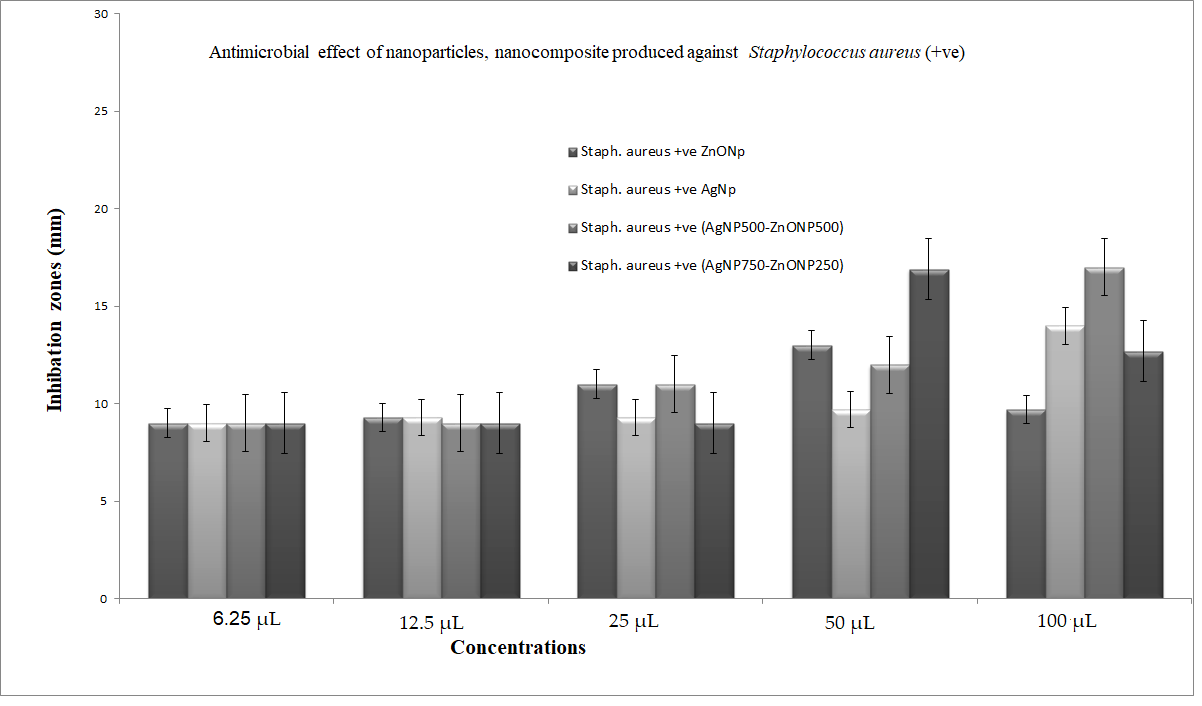
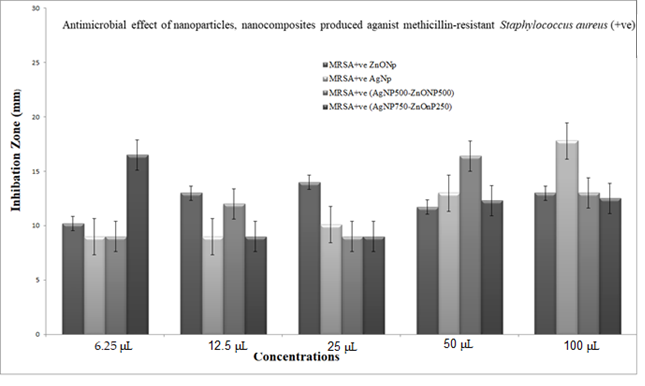
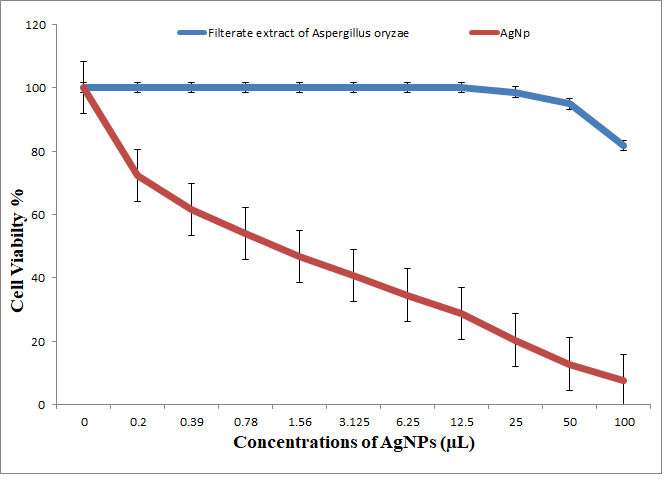
The present study investigated the biosynthesis of silver (AgNPs), zinc oxide (ZnONPs) and titanium dioxide (TiO2NPs) nanoparticles using Aspergillusoryzae, Aspergillusterreus and Fusariumoxysporum. Nanocomposites (NCs) were successfully synthesized by mixing nanoparticles using a Sonic Vibra-Cell VC/VCX processor. A number of analytical techniques were used to characterize the synthesized biological metal nanoparticles. Several experiments tested biologically synthesized metal nanoparticles and nanocomposites against two types of human pathogenic bacteria, including Gram-positive Staphylococcus aureus and methicillin-resistant Staphylococcus aureus (MRSA), and Gram-negative Escherichia coli and Pseudomonasaeruginosa. Additionally, the antitumor activity in HCT-116 cells (colonic carcinoma) was also evaluated. Significant antimicrobial effects of various synthesized forms of nanoparticles and nanocomposites against E. coli and P. aeruginosa bacteria were detected. Various synthesized biogenic forms of nanoparticles and nanocomposite (9.0 to 29 mm in diameter) had high antibacterial activity and high antitumor activity against HCT-116 cells (colonic carcinoma) with IC50 values of 0.7–100 µg/mL. Biosynthesized NPs are considered an alternative to large-scale biosynthesized metallic nanoparticles and nanocomposites, are simple and cost effective, and provide stable nanomaterials.
Keywords: nanoparticles (NPs); metal nanocomposites (MNPCs); human pathogenic bacteria; antibacterial; antitumor; HCT-116 cells (colonic carcinoma) nanoparticles (NPs); metal nanocomposites (MNPCs); human pathogenic bacteria; antibacterial; antitumor; HCT-116 cells (colonic carcinoma)