Article

Highly Sensitive and Stable Copper-Based SERS Chips Prepared by a Chemical Reduction Method
School of Chemistry and Chemical Engineering, Huazhong University of Science and Technology, Wuhan 430074, China
*
Author to whom correspondence should be addressed.
Nanomaterials 2021, 11(10), 2770; https://doi.org/10.3390/nano11102770
Submission received: 17 September 2021 / Revised: 2 October 2021 / Accepted: 12 October 2021 / Published: 19 October 2021
(This article belongs to the Special Issue Application of SERS for Nanomaterials)

Abstract

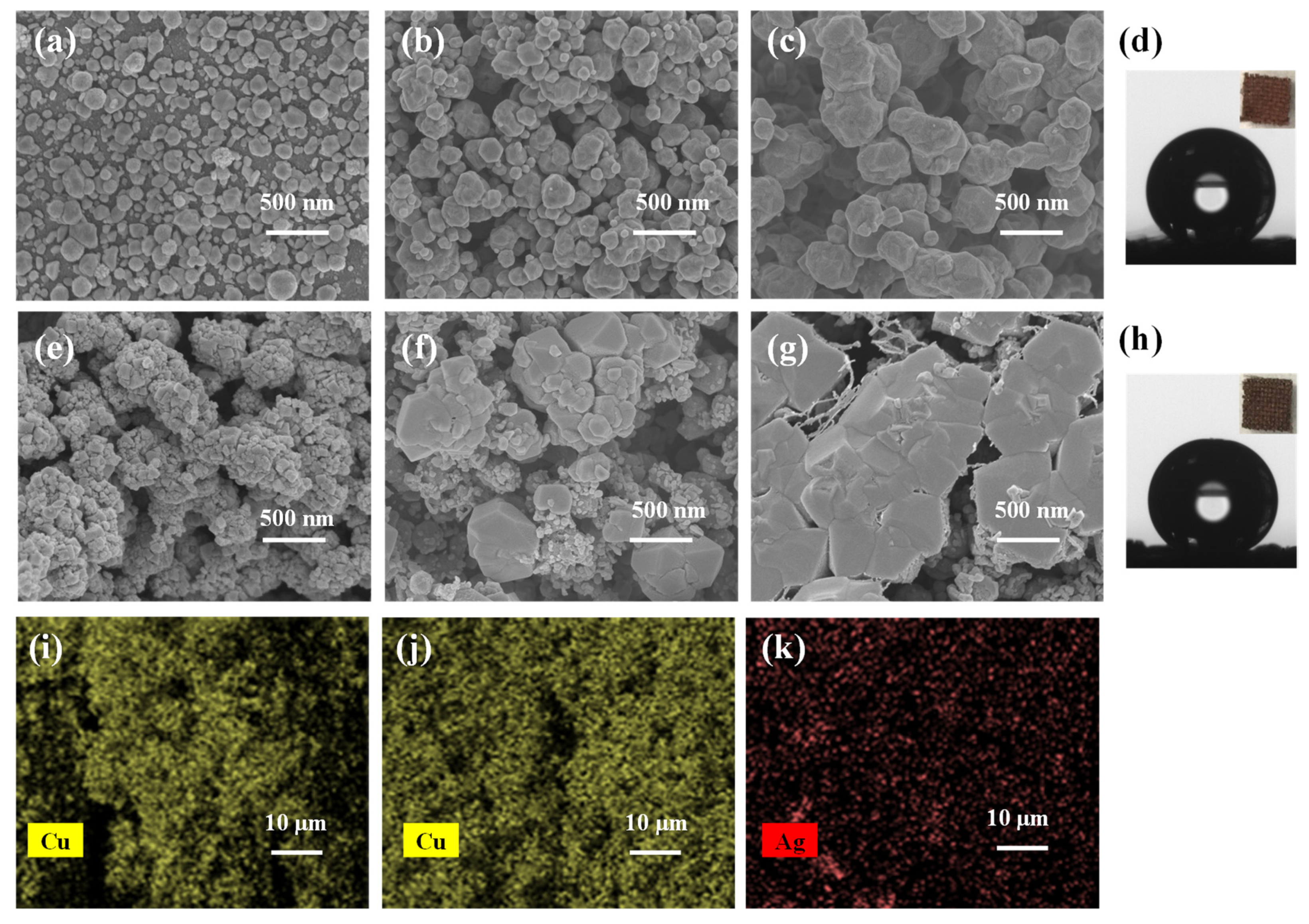
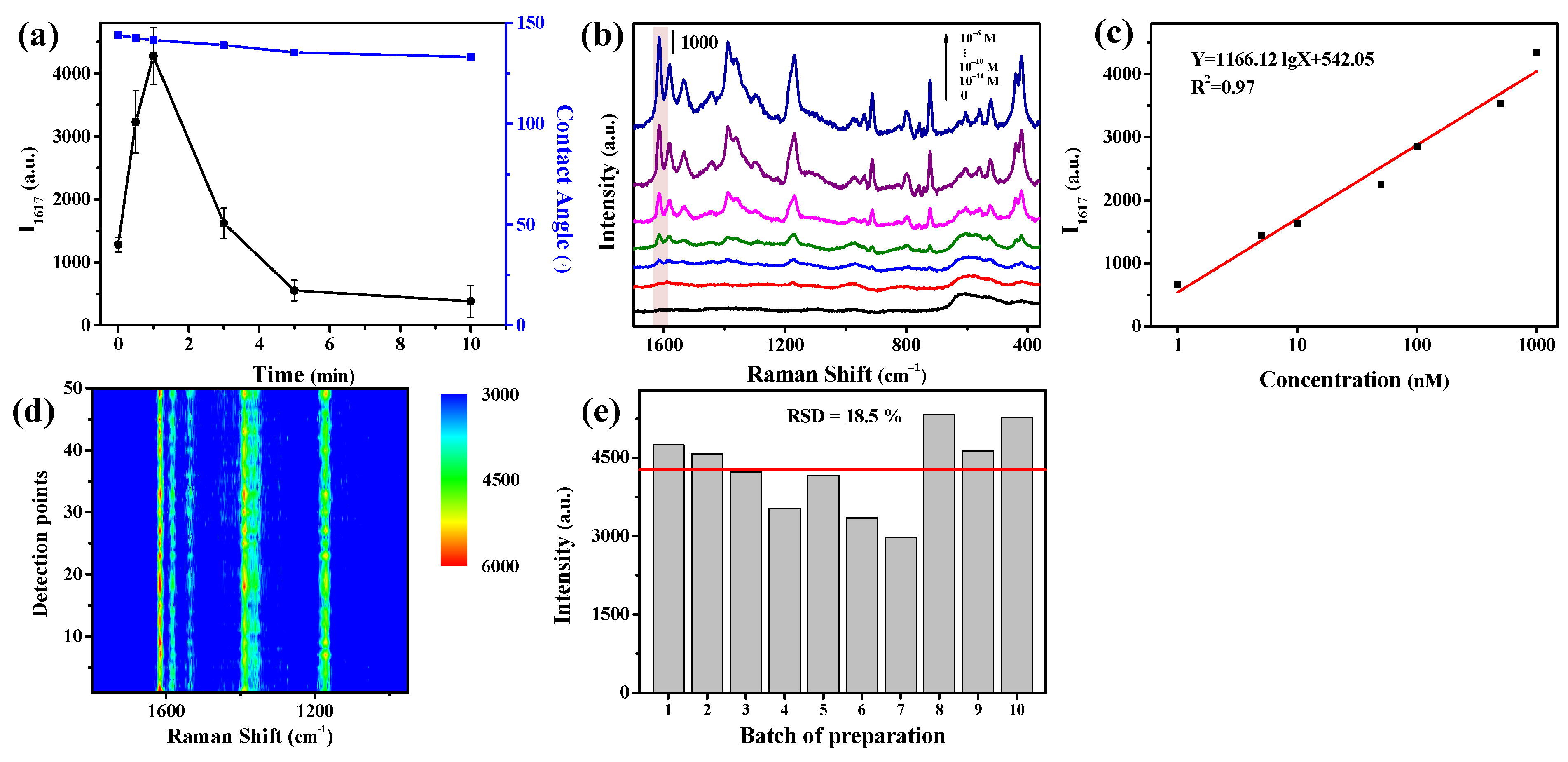
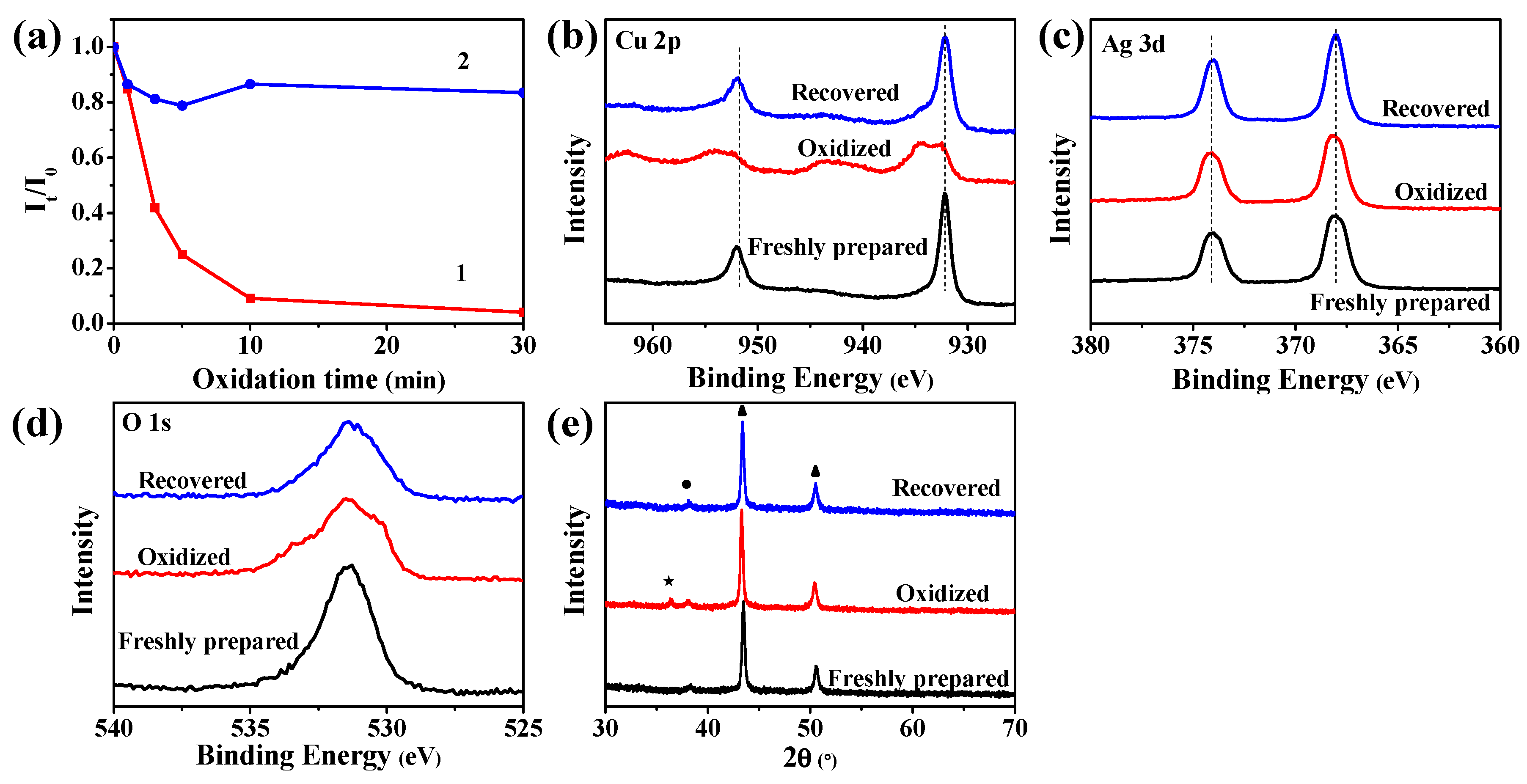
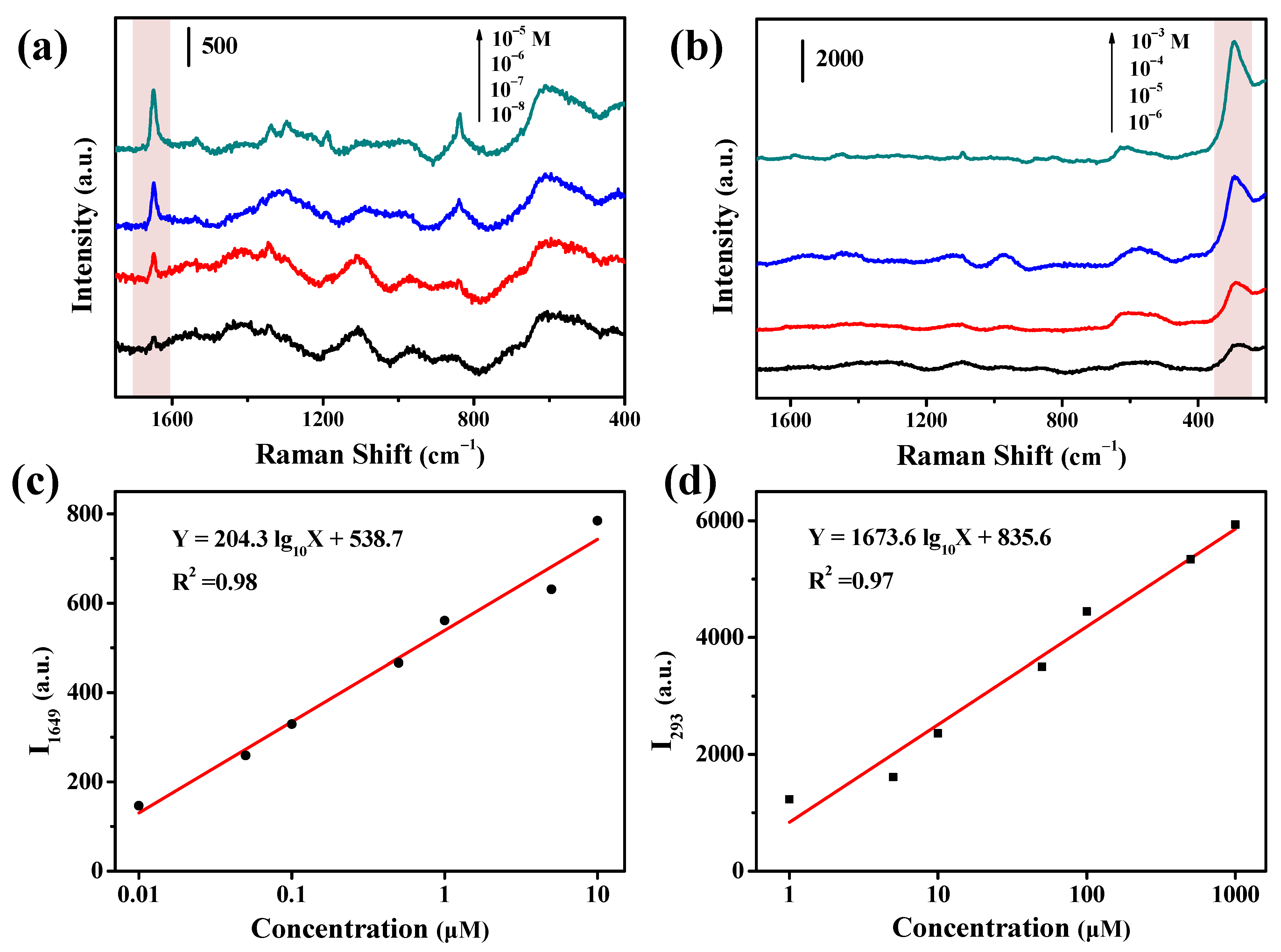
Cu chips are cheaper than Ag and Au chips for practical SERS applications. However, copper substrates generally have weak SERS enhancement effects and poor stability. In the present work, Cu-based SERS chips with high sensitivity and stability were developed by a chemical reduction method. In the preparation process, Cu NPs were densely deposited onto fabric supports. The as-prepared Cu-coated fabric was hydrophobic with fairly good SERS performance. The Cu-coated fabric was able to be used as a SERS chip to detect crystal violet, and it exhibited an enhancement factor of 2.0 × 10⁶ and gave a limit of detection (LOD) as low as 10–8 M. The hydrophobicity of the Cu membrane on the fabric is favorable to cleaning background interference signals and promoting the stability of Cu NPs to environment oxidation. However, this Cu SERS chip was still poor in its long-term stability. The SERS intensity on the chip was decreased to 18% of the original one after it was stored in air for 60 days. A simple introduction of Ag onto the clean Cu surface was achieved by a replacement reaction to further enhance the SERS performances of the Cu chips. The Ag-modified Cu chips showed an increase of the enhancement factor to 7.6 × 10⁶ due to the plasmonic coupling between Cu and Ag in nanoscale, and decreased the LOD of CV to 10–11 M by three orders of magnitude. Owing to the additional protection of Ag shell, the SERS intensity of the Cu-Ag chip after a two-month storing maintained 80% of the original intensity. The Cu-Ag SERS chips were also applied to detect other organics, and showing wide linearity range and low LOD values for the quantitative detection.
Keywords: surface-enhanced Raman scattering; copper; SERS chip; chemical reduction; hydrophobicity surface-enhanced Raman scattering; copper; SERS chip; chemical reduction; hydrophobicity