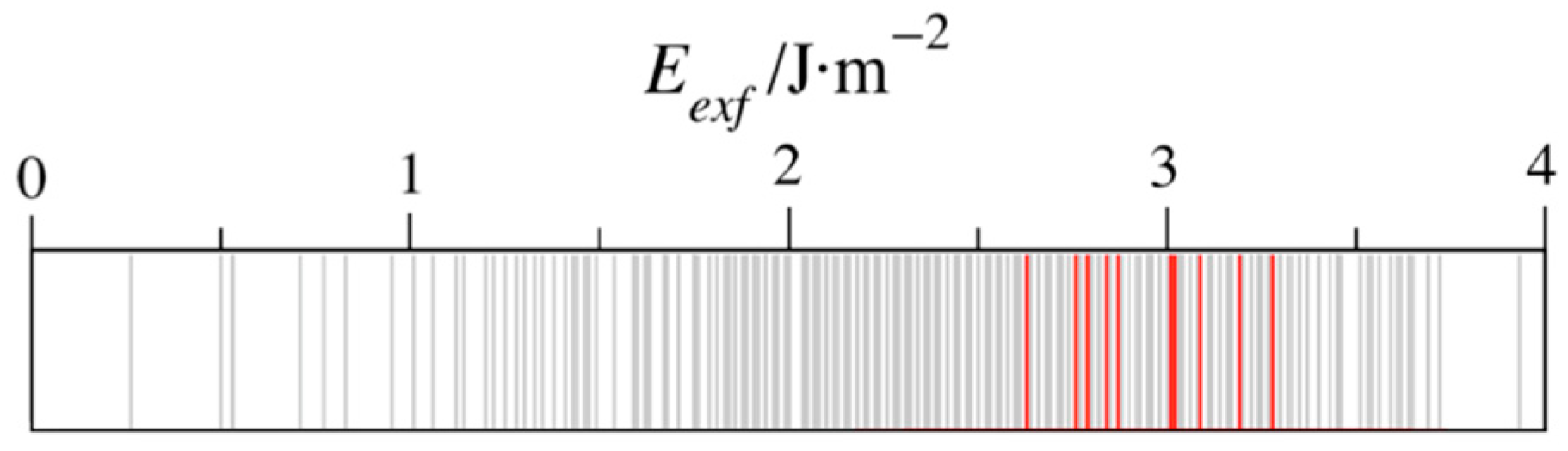
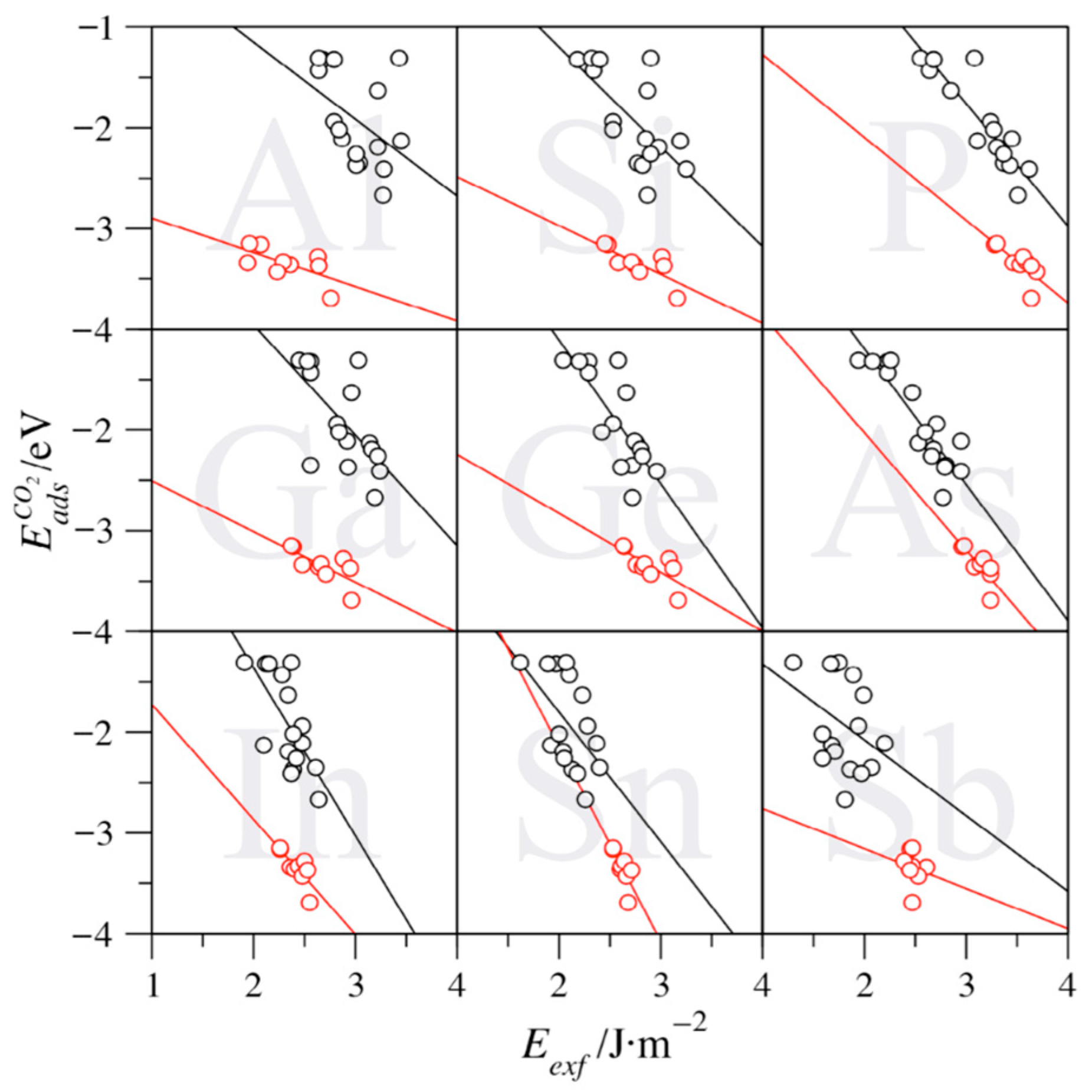
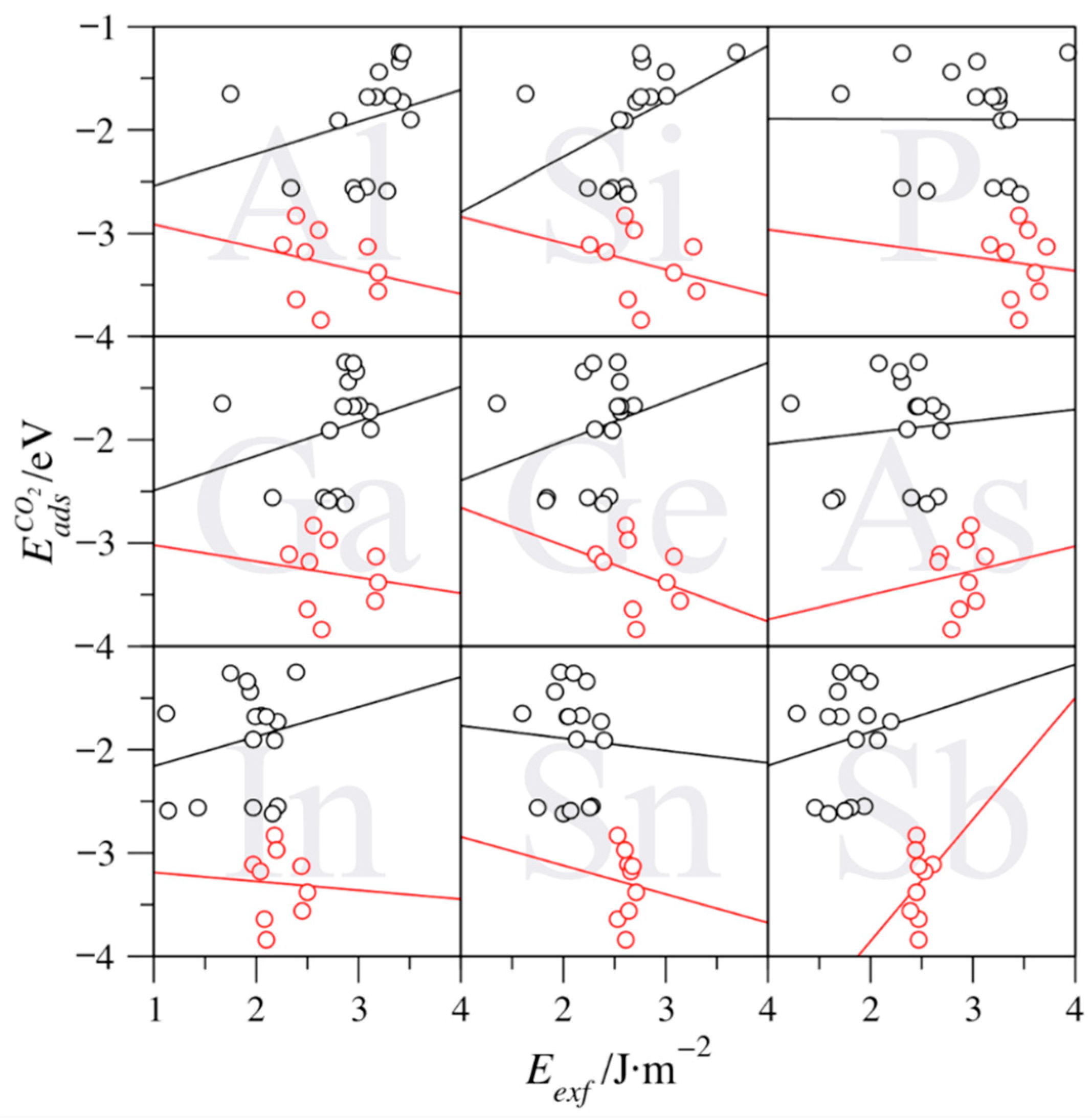
Exfoliation Energy as a Descriptor of MXenes Synthesizability and Surface Chemical Activity




Abstract
Share and Cite
Dolz, D.; Morales-García, Á.; Viñes, F.; Illas, F. Exfoliation Energy as a Descriptor of MXenes Synthesizability and Surface Chemical Activity. Nanomaterials 2021, 11, 127. https://doi.org/10.3390/nano11010127
Dolz D, Morales-García Á, Viñes F, Illas F. Exfoliation Energy as a Descriptor of MXenes Synthesizability and Surface Chemical Activity. Nanomaterials. 2021; 11(1):127. https://doi.org/10.3390/nano11010127
Chicago/Turabian StyleDolz, Daniel, Ángel Morales-García, Francesc Viñes, and Francesc Illas. 2021. "Exfoliation Energy as a Descriptor of MXenes Synthesizability and Surface Chemical Activity" Nanomaterials 11, no. 1: 127. https://doi.org/10.3390/nano11010127
APA StyleDolz, D., Morales-García, Á., Viñes, F., & Illas, F. (2021). Exfoliation Energy as a Descriptor of MXenes Synthesizability and Surface Chemical Activity. Nanomaterials, 11(1), 127. https://doi.org/10.3390/nano11010127