Review

In Vitro and In Vivo Models for Evaluating the Oral Toxicity of Nanomedicines


Center for Diagnostics and Therapeutics, Digestive Disease Research Group, Institute for Biomedical Sciences, Petite Science Center, Suite 754, 100 Piedmont Ave SE, Georgia State University, Atlanta, GA 30303, USA
*
Author to whom correspondence should be addressed.
Nanomaterials 2020, 10(11), 2177; https://doi.org/10.3390/nano10112177
Submission received: 3 October 2020 / Revised: 29 October 2020 / Accepted: 29 October 2020 / Published: 31 October 2020
(This article belongs to the Special Issue Advances in Nanotoxicology)

Abstract

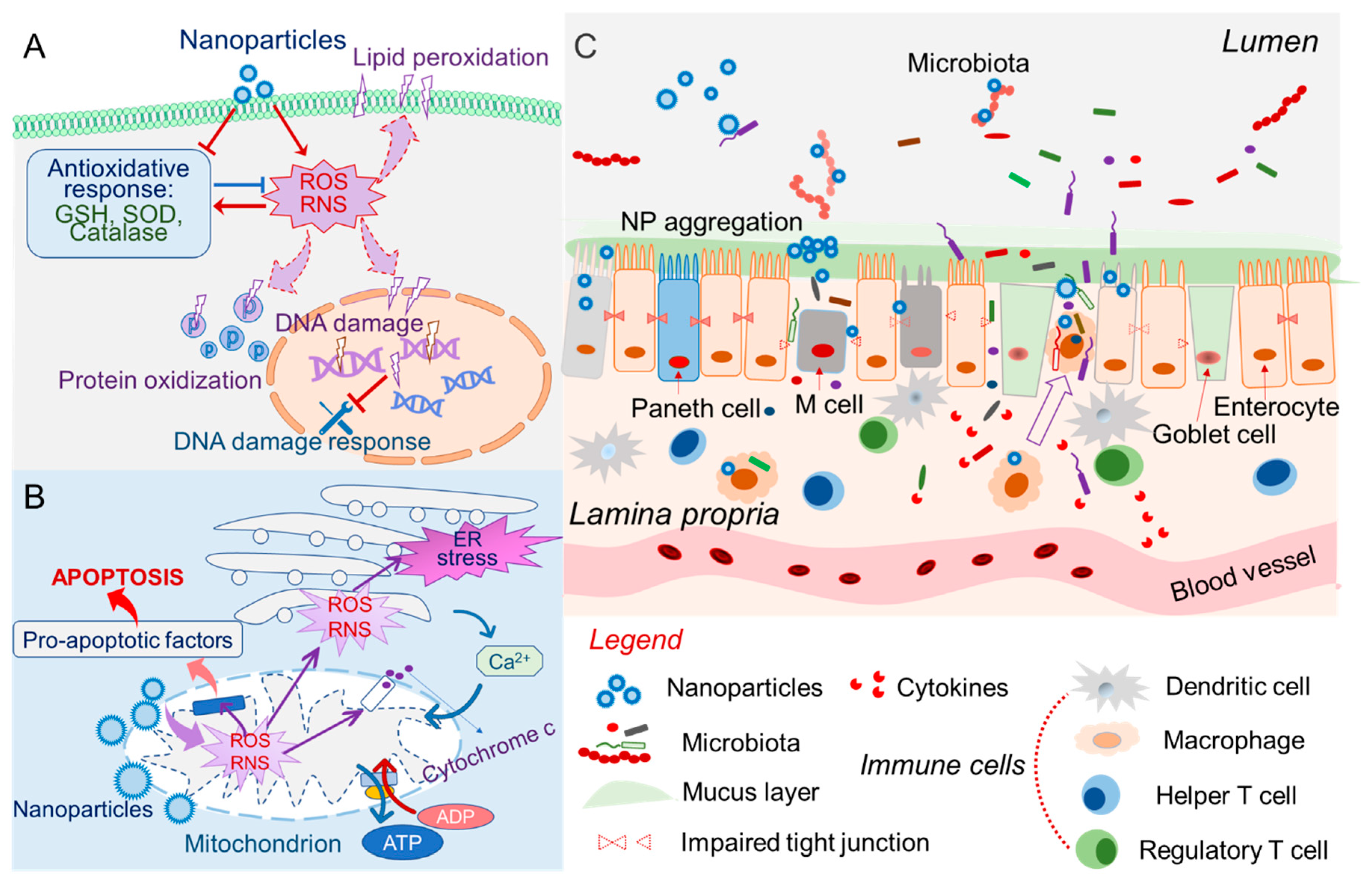
Toxicity studies for conventional oral drug formulations are standardized and well documented, as required by the guidelines of administrative agencies such as the US Food & Drug Administration (FDA), the European Medicines Agency (EMA) or European Medicines Evaluation Agency (EMEA), and the Japanese Pharmaceuticals and Medical Devices Agency (PMDA). Researchers tend to extrapolate these standardized protocols to evaluate nanoformulations (NFs) because standard nanotoxicity protocols are still lacking in nonclinical studies for testing orally delivered NFs. However, such strategies have generated many inconsistent results because they do not account for the specific physicochemical properties of nanomedicines. Due to their tiny size, accumulated surface charge and tension, sizeable surface-area-to-volume ratio, and high chemical/structural complexity, orally delivered NFs may generate severe topical toxicities to the gastrointestinal tract and metabolic organs, including the liver and kidney. Such toxicities involve immune responses that reflect different mechanisms than those triggered by conventional formulations. Herein, we briefly analyze the potential oral toxicity mechanisms of NFs and describe recently reported in vitro and in vivo models that attempt to address the specific oral toxicity of nanomedicines. We also discuss approaches that may be used to develop nontoxic NFs for oral drug delivery.
Keywords: nanomedicine; oral toxicity; in vitro model; in vivo model; digestive diseases nanomedicine; oral toxicity; in vitro model; in vivo model; digestive diseases