Article

Perceptual Evaluation of 3D-Printed Typodont Teeth with Comparable Cutting Forces

by
Alexander Jon Cresswell-Boyes
1,2,*,
Aylin Baysan
3 and
Graham Roy Davis
2
1
Peninsula Dental School, University of Plymouth, Plymouth PL4 8AA, UK
2
Dental Physical Sciences Unit, Centre for Oral Bioengineering, Institute of Dentistry, Barts and the London School of Medicine and Dentistry, Queen Mary University of London, London E1 4NS, UK
3
Centre for Oral Bioengineering, Institute of Dentistry, Barts and the London School of Medicine and Dentistry, Queen Mary University of London, London E1 2AD, UK
*
Author to whom correspondence should be addressed.
J. Funct. Biomater. 2026, 17(9), 471; https://doi.org/10.3390/jfb17090471
Submission received: 23 July 2026 / Revised: 1 September 2026 / Accepted: 8 September 2026 / Published: 17 September 2026

Abstract

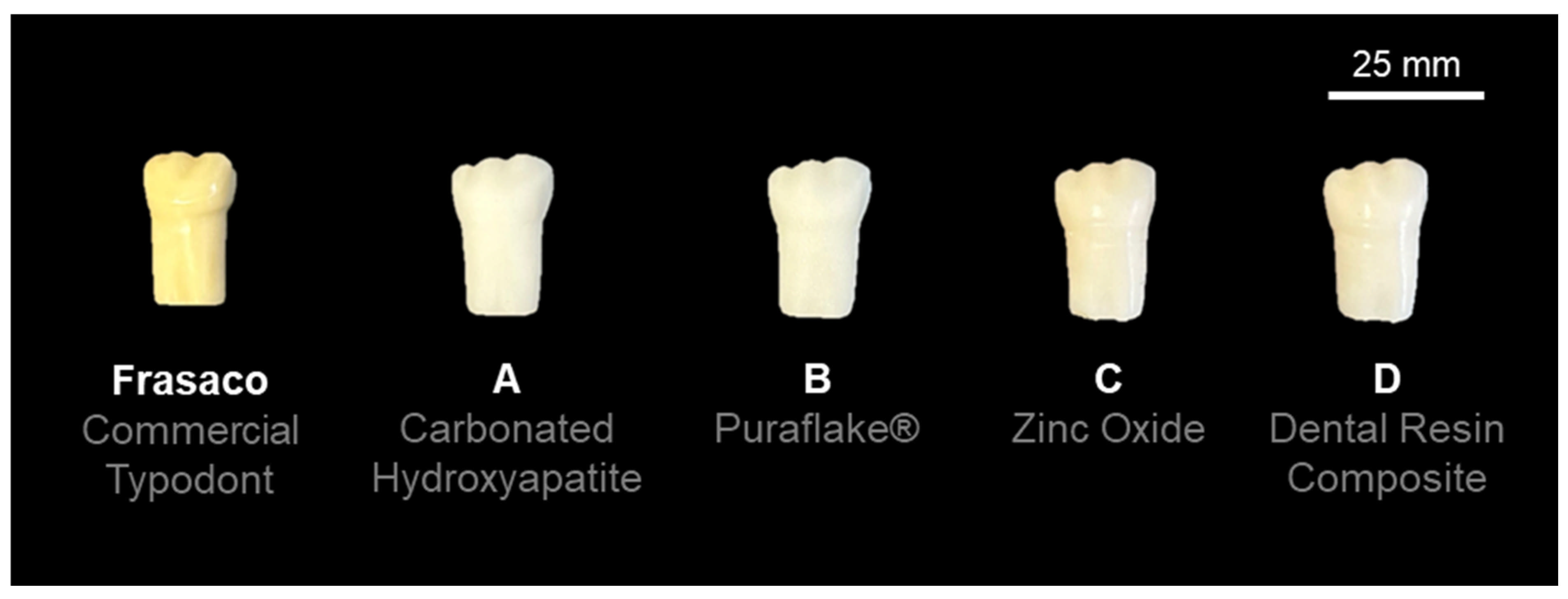
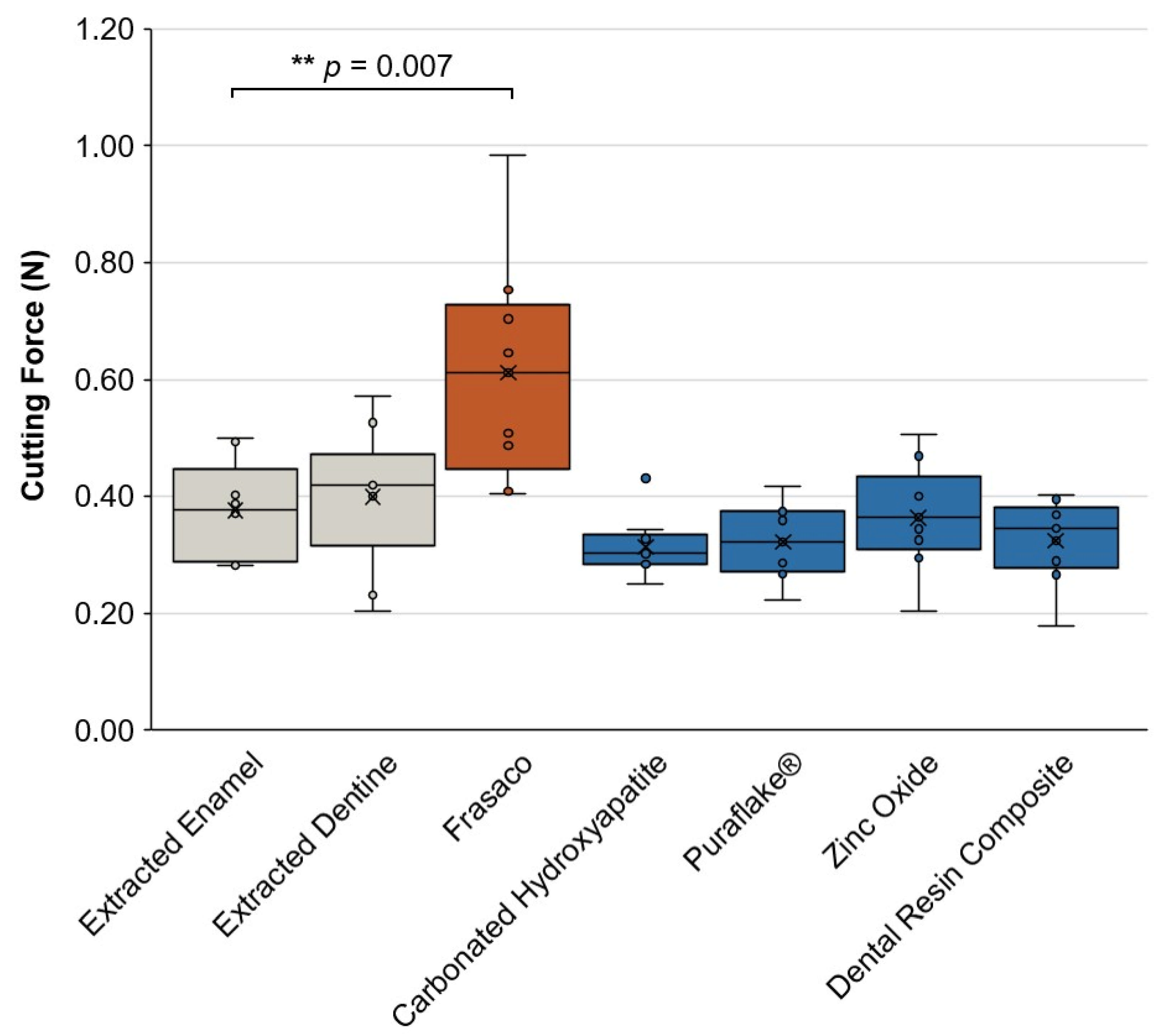
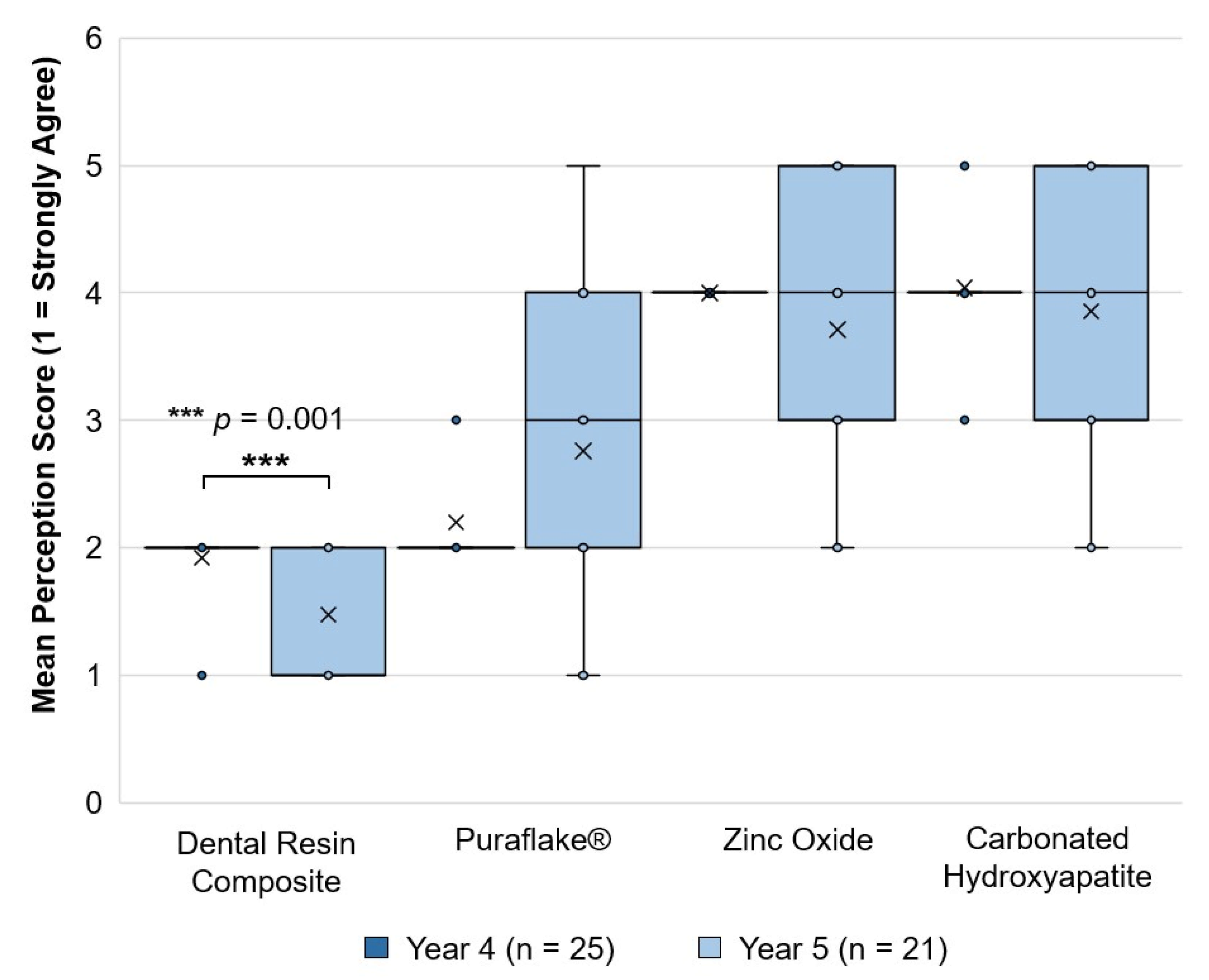
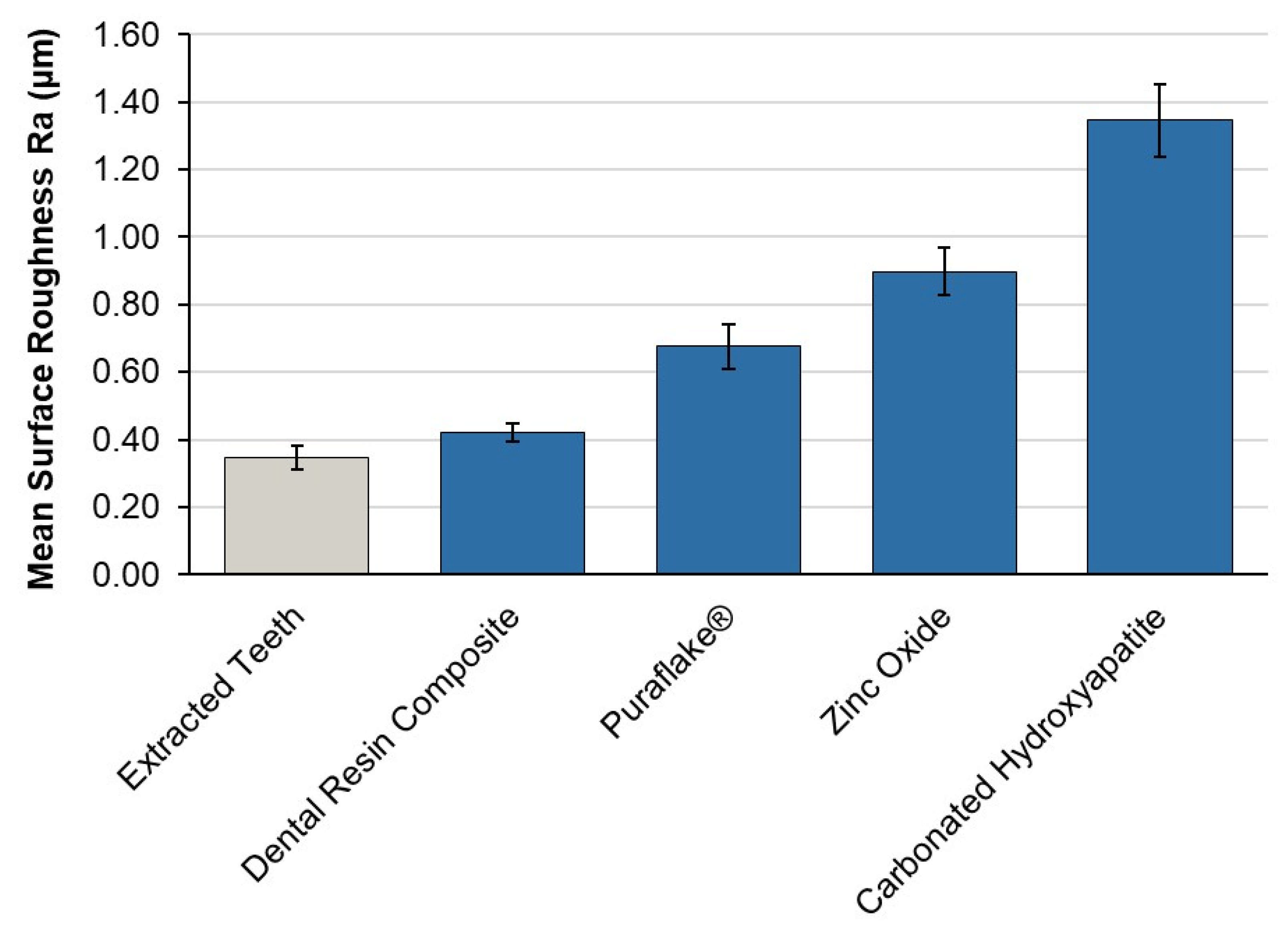
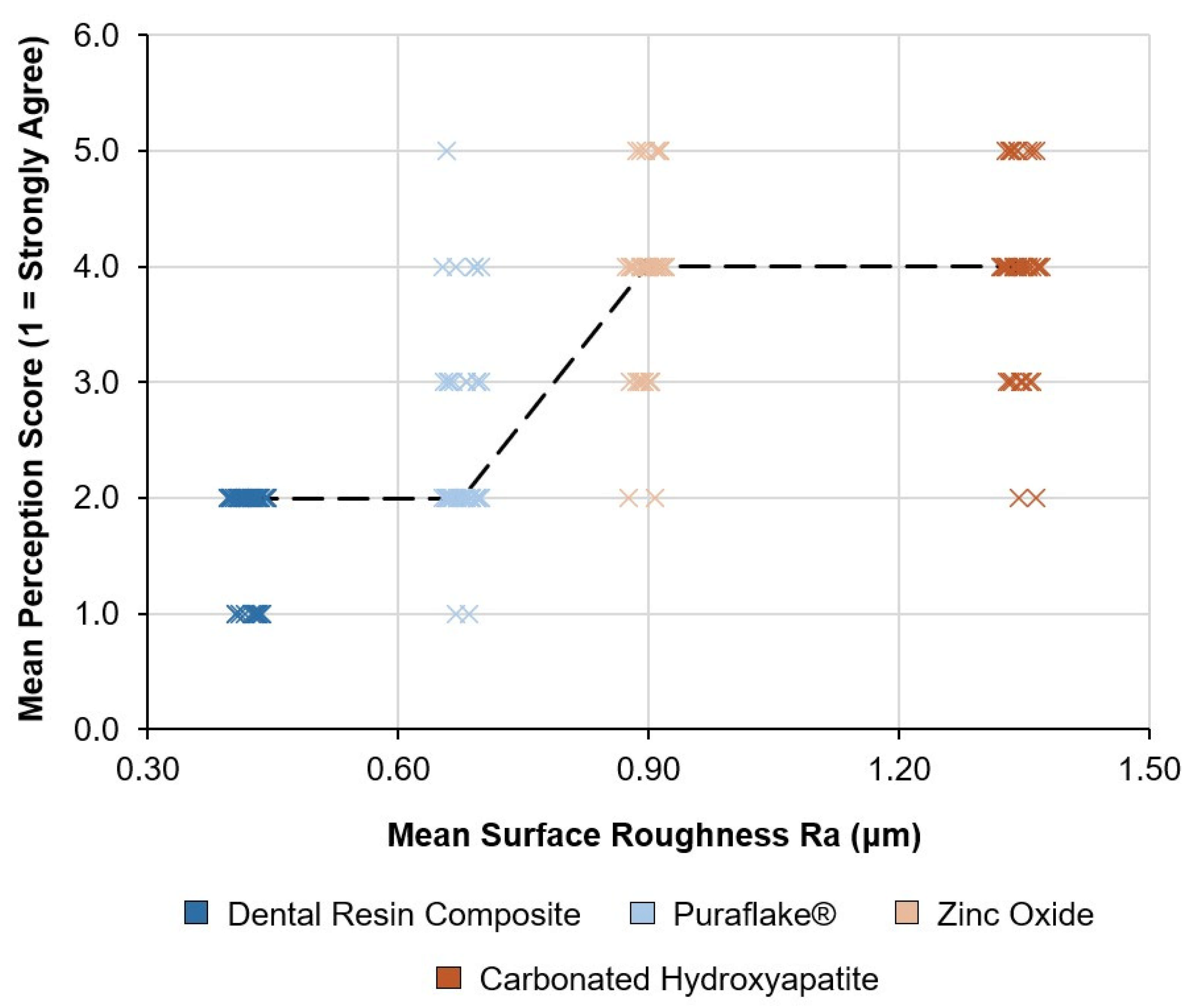
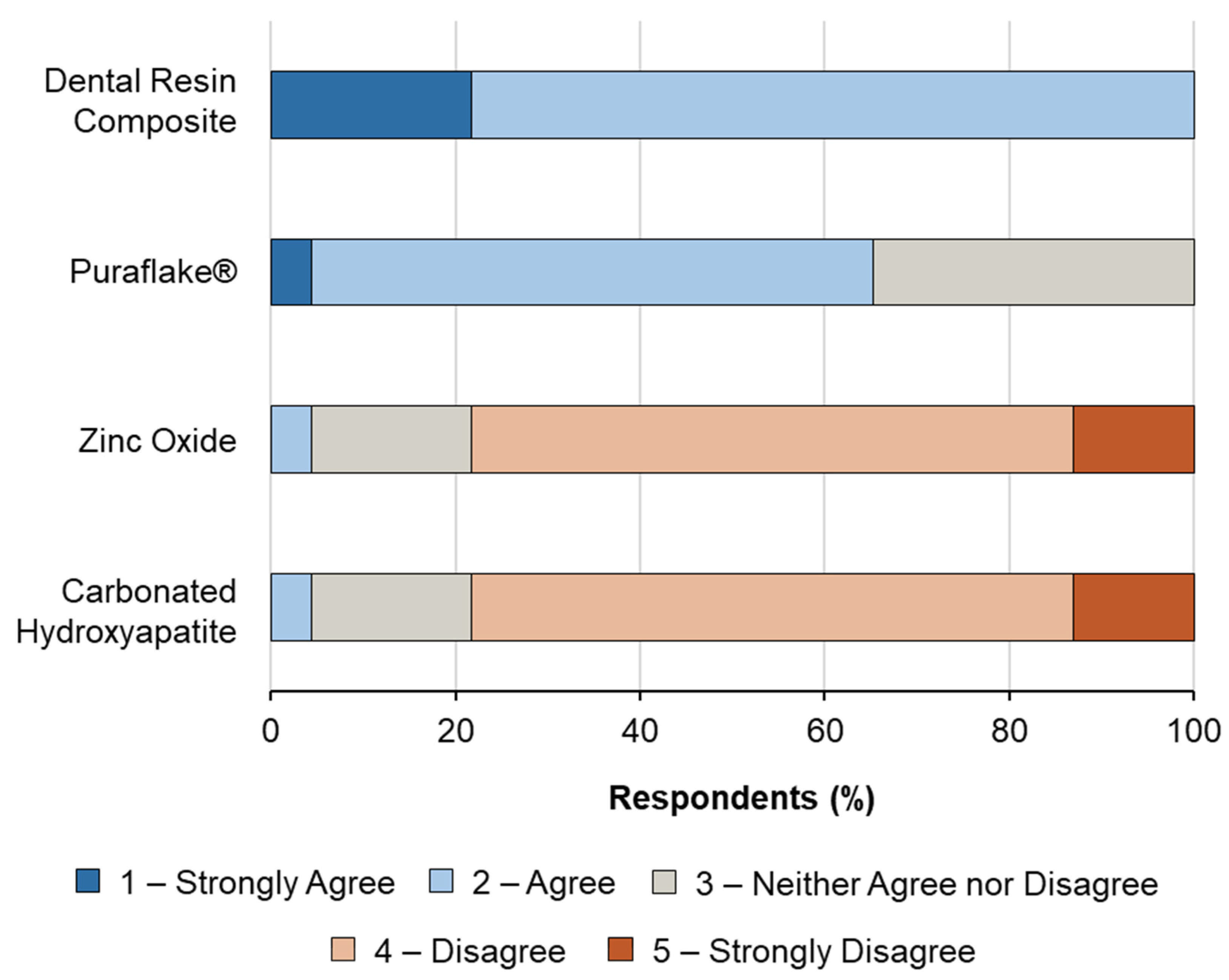
Background: Pre-clinical training in endodontics relies heavily on typodont teeth to develop operative skills before patient care, but conventional polymer-based typodonts differ from human teeth in their cutting response, requiring greater force and producing an unrealistic cutting experience that often dissatisfies students. Methods: This study evaluated four alternative 3D-printed typodont materials—15 wt.% carbonated hydroxyapatite, 15 wt.% Puraflake® (glass flake filler), 15 wt.% zinc oxide, and a urethane/triethylene glycol dimethacrylate resin composite—based on their cutting force, post-cut surface roughness, and perceived cutting feel relative to extracted enamel, assessed via a five-point Likert scale questionnaire completed by 46 (n = 46) fourth- and fifth-year dental students. Results: No statistically significant differences in cutting force were detected between the four printed materials and extracted enamel, a finding confirmed using formal two one-sided equivalence testing (TOST); larger confirmatory studies would allow this equivalence to be established with greater statistical precision. Perception scores differed significantly between materials, and fifth-year students rated the dental resin composite significantly more favourably than fourth-year students, with only the composite effect surviving stringent Bonferroni correction across all four material comparisons, underscoring the reliability of this specific finding. Post-cut surface roughness showed a strong, statistically robust monotonic association with perception scores at the individual-respondent level (Page’s L trend test, n = 46, p < 0.001), suggesting that surface behaviour during material removal may contribute to perceived haptic similarity. Conclusions: Matching cutting force alone does not guarantee perceptual equivalence. Among the materials tested, the dental resin composite most closely approximated extracted-enamel surface roughness, received the most favourable and consistent perception scores, and is recommended as the preferred material for pre-clinical typodont fabrication where accessible. These 3D-printed typodonts offer a standardised, openly documented alternative to commercial typodonts for pre-clinical training, with digital models and manufacturing workflows openly available via an institutional platform (TactiTooth).
Keywords: dental education; 3D printing; simulation-based education; typodont; haptics; surface roughness dental education; 3D printing; simulation-based education; typodont; haptics; surface roughness