

The Effect of Er:YAG Laser Biomodification of the Implant Site Surface on Osseointegration: A Randomized Controlled Clinical Study

Abstract
1. Introduction
1.1. Methods of Implant Site Preparation
1.2. Rationale for the Combined Approach
1.3. Implant Stability and Resonance Frequency Analysis
1.4. Aim and Hypothesis
2. Materials and Methods
2.1. Study Design and Ethics
2.2. Participants
2.2.1. Inclusion Criteria
2.2.2. Exclusion Criteria
2.2.3. Sample Size and Allocation
2.3. Clinical and Paraclinical Examinations
2.4. Surgical Protocols
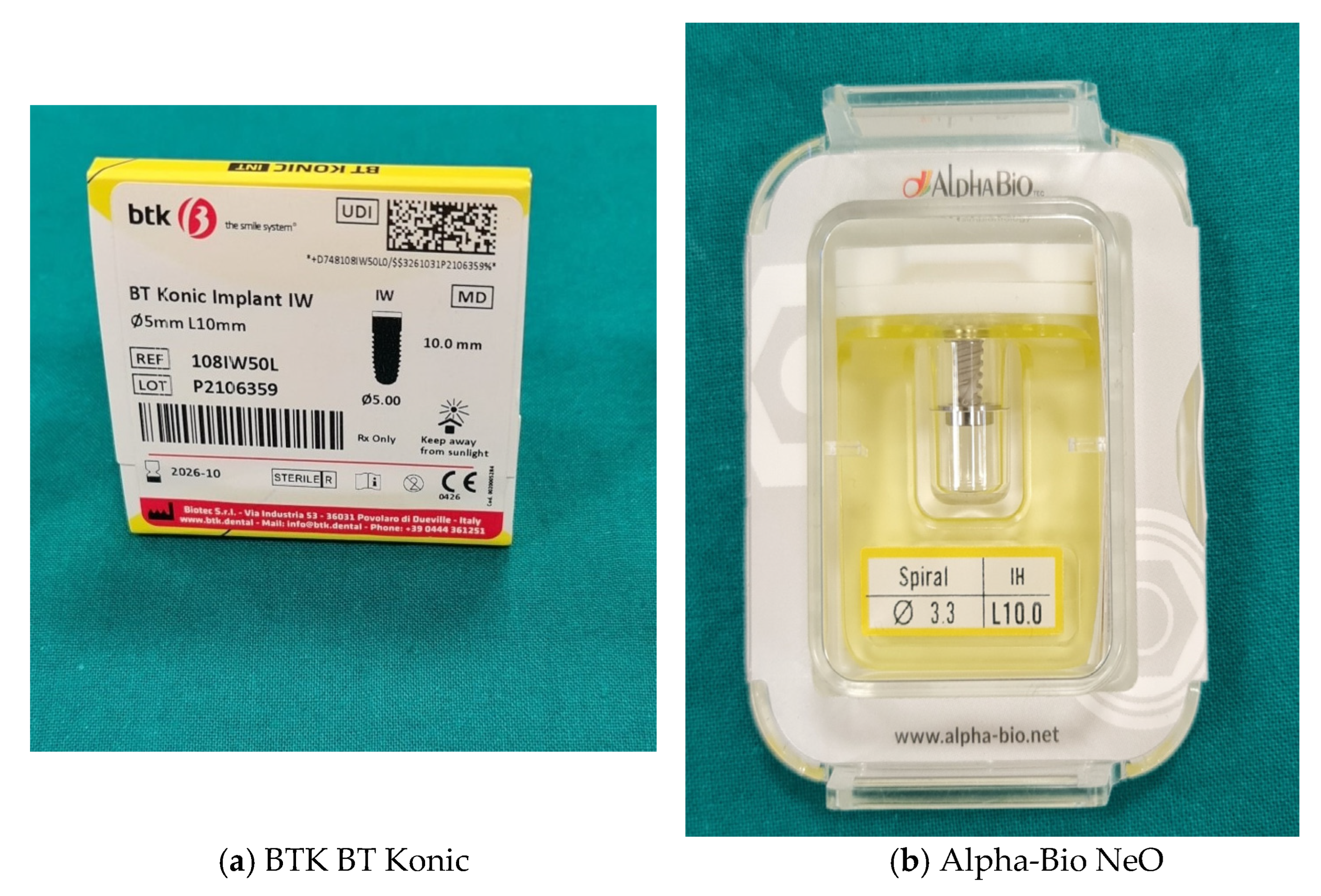
2.4.1. Implants and Operating Setup
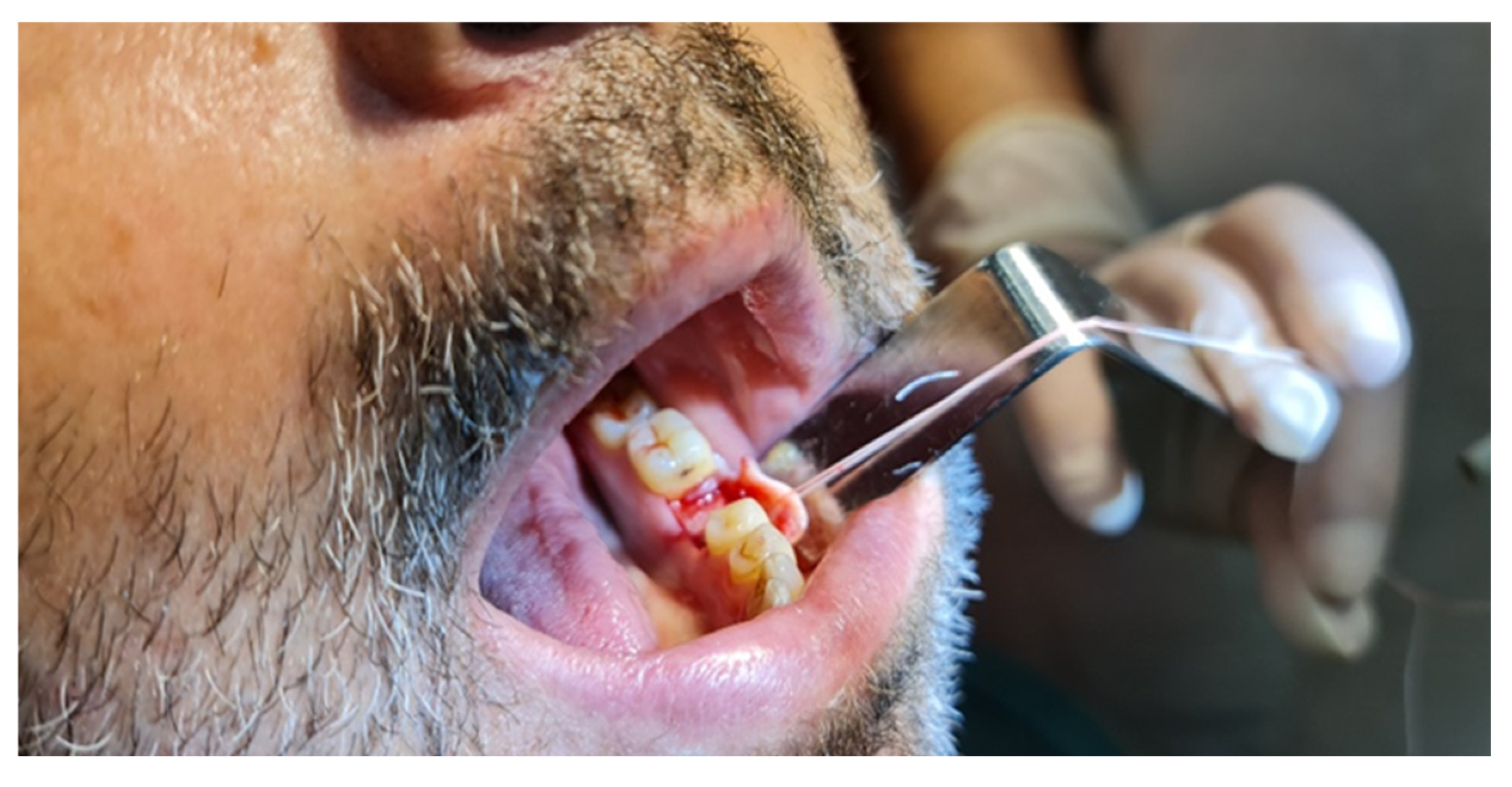
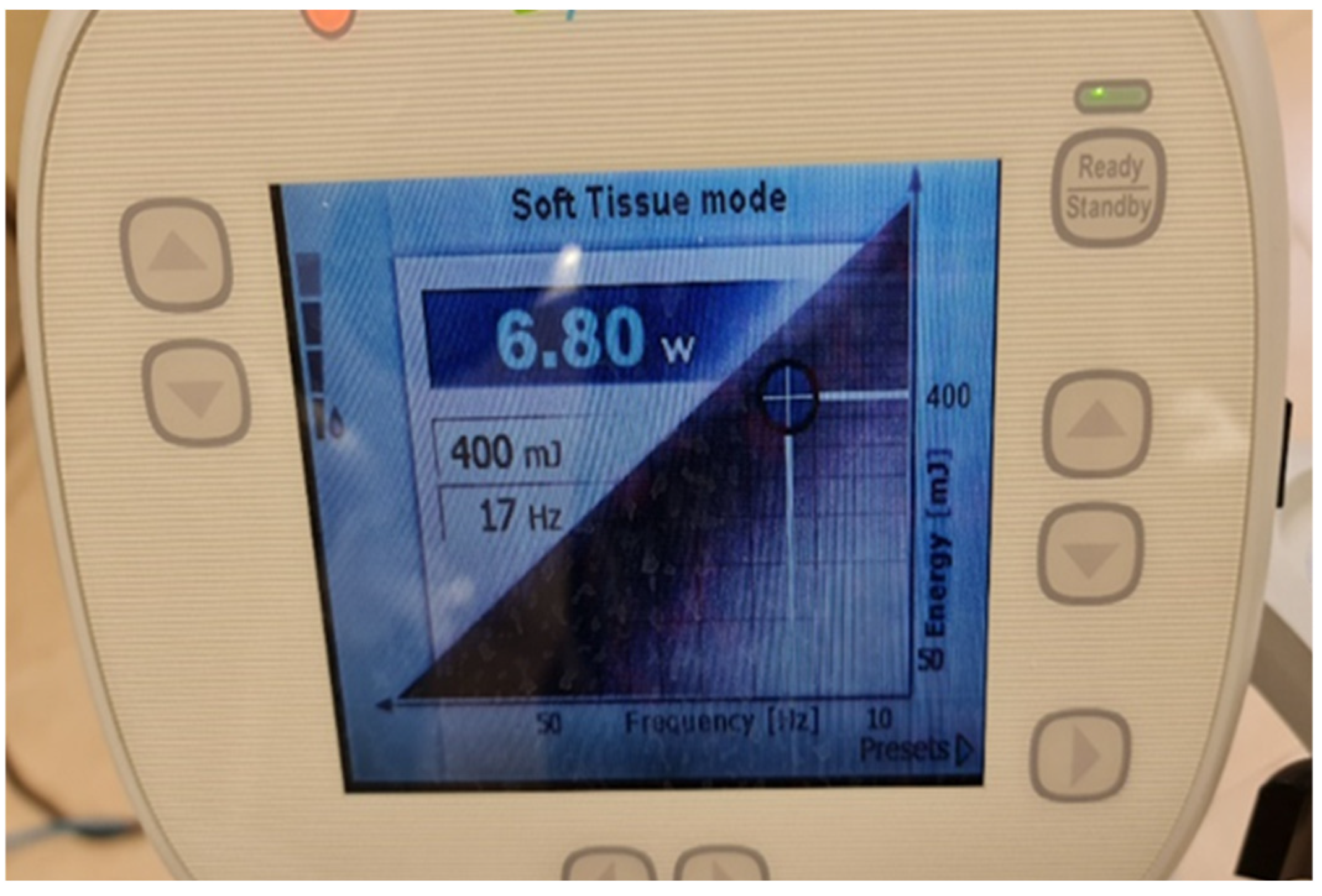
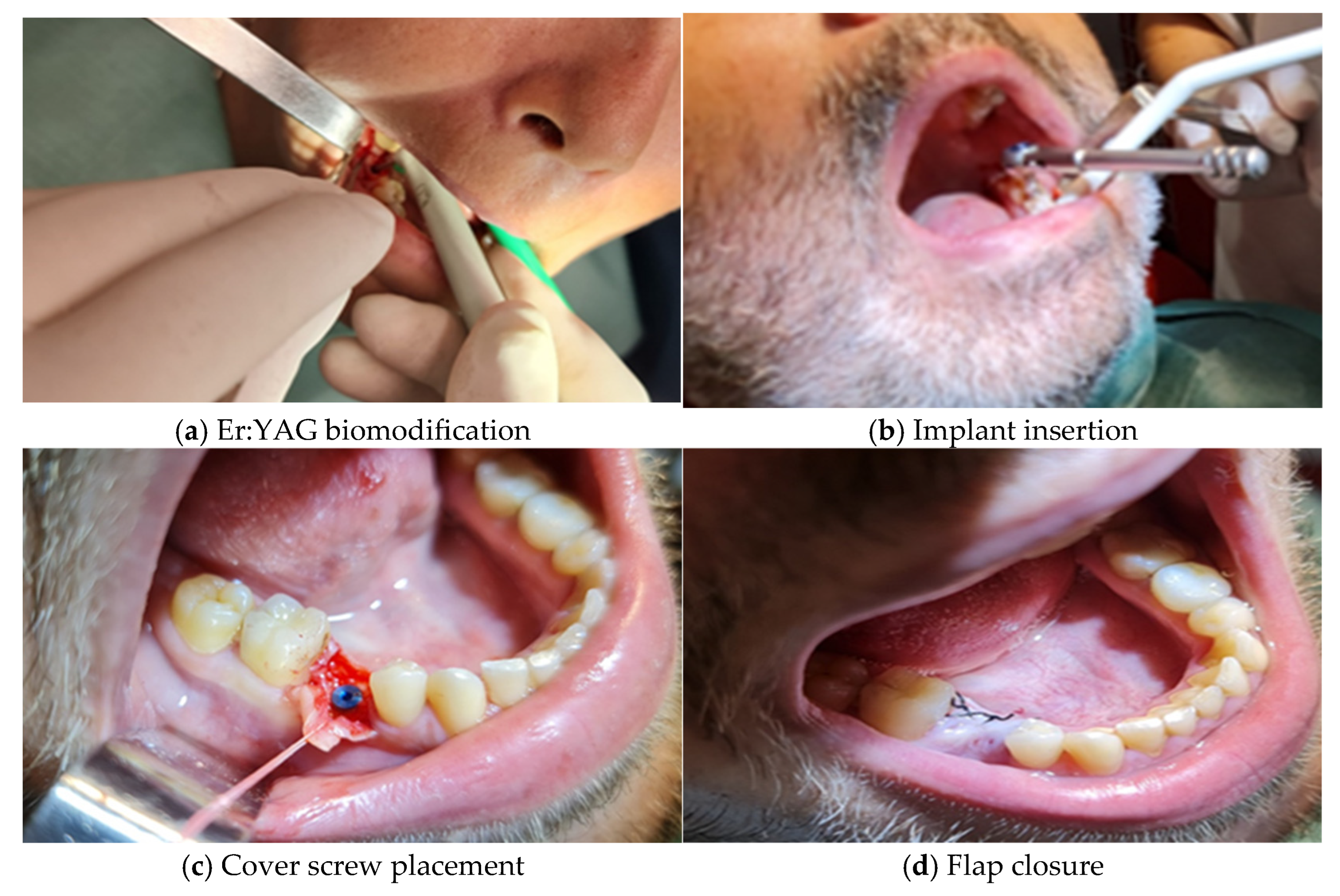
2.4.2. Case Group: Rotary Osteotomy + Er:YAG Laser Biomodification
2.4.3. Control Group: Conventional Rotary Osteotomy Alone
2.4.4. Subtask 2: Open (Single-Stage) Protocol
2.5. Resonance Frequency Analysis
2.6. Statistical Analysis
3. Results
3.1. Patient Characteristics
3.2. Implant Stability—Vestibulo-Oral Direction
3.3. Implant Stability—Mesiodistal Direction
3.4. Distribution of Stability Categories (ISQ ≥ 70)
3.5. Graphical Summary of Stability Dynamics
4. Discussion
4.1. Strengths and Limitations
4.2. Clinical Implications and Translational Outlook
5. Conclusions
6. Patents
Author Contributions
Funding
Institutional Review Board Statement
Informed Consent Statement
Data Availability Statement
Acknowledgments
Conflicts of Interest
References
- Linkow, L.I.; Dorfman, J.D. Implantology in dentistry. A brief historical perspective. N. Y. State Dent. J. 1991, 57, 31–35. [Google Scholar]
- Adell, R. Tissue integrated prostheses in clinical dentistry. Int. Dent. J. 1985, 35, 259–265. [Google Scholar]
- Brånemark, P.I. (Ed.) Introduction to osseointegration. In Tissue Integrated Prostheses: Osseointegration in Clinical Dentistry, 1st ed.; Quintessence Publishing Co.: Chicago, IL, USA, 1985; pp. 11–76. [Google Scholar]
- Zarb, G.; Albrektsson, T. Osseointegration: A requiem for the periodontal ligament. Int. J. Periodont. Restor. Dent. 1991, 11, 88–91. [Google Scholar]
- Albrektsson, T.; Brånemark, P.-I.; Hansson, H.-A.; Lindström, J. Osseointegrated titanium implants: Requirements for ensuring a long-lasting, direct bone-to-implant anchorage in man. Acta Orthop. Scand. 1981, 52, 155–170. [Google Scholar] [CrossRef]
- Misch, C.E. Bone character: Second vital implant criterion. Dent. Today 1988, 7, 39–40. [Google Scholar]
- Lekholm, U.; Zarb, G.A. Patient selection and preparation. In Tissue Integrated Prostheses: Osseointegration in Clinical Dentistry; Brånemark, P.I., Zarb, G.A., Albrektsson, T., Eds.; Quintessence Publishing Co.: Chicago, IL, USA, 1985; pp. 199–209. [Google Scholar]
- Osman, R.B.; Swain, M.V. A Critical Review of Dental Implant Materials with an Emphasis on Titanium versus Zirconia. Materials 2015, 8, 932–958. [Google Scholar] [CrossRef] [PubMed]
- Saini, M.; Singh, Y.; Arora, P.; Arora, V.; Jain, K. Implant biomaterials: A comprehensive review. World J. Clin. Cases 2015, 3, 52–57. [Google Scholar] [CrossRef] [PubMed]
- Niinomi, M. Recent research and development in titanium alloys for biomedical applications and healthcare goods. Sci. Technol. Adv. Mater. 2003, 4, 445–454. [Google Scholar] [CrossRef]
- Pandey, C.; Rokaya, D.; Bhattarai, B.P. Contemporary Concepts in Osseointegration of Dental Implants: A Review. BioMed Res. Int. 2022, 2022, 6170452. [Google Scholar] [CrossRef]
- Gehrke, S.A.; Treichel, T.L.E.; Aramburú Júnior, J.; de Aza, P.N.; Prados-Frutos, J.C. Effects of the technique and drill design used during the osteotomy on the thermal and histological stimulation. Sci. Rep. 2020, 10, 20737. [Google Scholar] [CrossRef]
- Gehrke, S.A.; Aramburu Junior, J.S.; Perez-Albacete Martinez, C.; Ramirez Fernandez, M.P.; Mate Sanchez de Val, J.E.; Calvo-Guirado, J.L. The influence of drill length and irrigation system on heat production during osteotomy preparation for dental implants: An ex vivo study. Clin. Oral Implants Res. 2018, 29, 772–778. [Google Scholar] [CrossRef]
- Eriksson, A.R.; Albrektsson, T. Assessment of bone viability after heat trauma. Scand. J. Plast. Reconstr. Surg. 1984, 18, 261–268. [Google Scholar] [CrossRef]
- Sasaki, K.M.; Aoki, A.; Ichinose, S.; Yoshino, T.; Yamada, S.; Ishikawa, I. Scanning electron microscopy and Fourier transformed infrared spectroscopy analysis of bone removal using Er:YAG and CO2 lasers. J. Periodontol. 2002, 73, 643–652. [Google Scholar] [CrossRef] [PubMed]
- Mishra, S.K.; Chowdhary, R. Heat generated by dental implant drills during osteotomy—A review: Heat generated by dental implant drills. J. Indian Prosthodont. Soc. 2014, 14, 131–143. [Google Scholar]
- Eriksson, R.A.; Adell, R. Temperatures during drilling for the placement of implants using the osseointegration technique. J. Oral Maxillofac. Surg. 1986, 44, 4–7. [Google Scholar] [CrossRef] [PubMed]
- Strbac, G.D.; Giannis, K.; Unger, E.; Mittlböck, M.; Vasak, C.; Watzek, G.; Zechner, W. Drilling- and withdrawing-related thermal changes during implant site osteotomies. Clin. Implant Dent. Relat. Res. 2015, 17, 32–43. [Google Scholar] [CrossRef] [PubMed]
- Augustin, G.; Davila, S.; Mihoci, K.; Udiljak, T.; Vedrina, D.S.; Antabak, A. Thermal osteonecrosis and bone drilling parameters revisited. Arch. Orthop. Trauma Surg. 2008, 128, 71–77. [Google Scholar] [CrossRef]
- Schwarz, F.; Sahm, N.; Becker, J. Combined surgical therapy of advanced peri-implantitis lesions with concomitant soft tissue volume augmentation. A case series. Clin. Oral Implants Res. 2014, 25, 132–136. [Google Scholar] [CrossRef]
- Vercellotti, T. Technological characteristics and clinical indications of piezoelectric bone surgery. Minerva Stomatol. 2004, 53, 207–214. [Google Scholar]
- Stubinger, S. Advances in bone surgery: The Er:YAG laser in oral surgery and implant dentistry. Clin. Cosmet. Investig. Dent. 2010, 2, 47–62. [Google Scholar] [CrossRef]
- Pavlikova, G.; Foltan, R.; Horka, M.; Hanzelka, T.; Borunska, H.; Sedy, J. Piezosurgery in oral and maxillofacial surgery. Int. J. Oral Maxillofac. Surg. 2011, 40, 451–457. [Google Scholar] [CrossRef]
- Stacchi, C.; Bassi, F.; Troiano, G.; Rapani, A.; Lombardi, T.; Jokstad, A.; Sennerby, L.; Schierano, G. Piezoelectric bone surgery for implant site preparation compared with conventional drilling techniques: A systematic review, meta-analysis and trial sequential analysis. Int. J. Oral Implantol. 2020, 13, 141–158. [Google Scholar]
- Preti, G.; Martinasso, G.; Peirone, B.; Navone, R.; Manzella, C.; Muzio, G.; Russo, C.; Canuto, R.A.; Schierano, G. Cytokines and growth factors involved in the osseointegration of oral titanium implants positioned using piezoelectric bone surgery vs conventional rotary instruments. J. Periodontol. 2007, 78, 716–722. [Google Scholar]
- Vercellotti, T.; Crovace, A.; Palermo, A.; Molfetta, L. The piezoelectric osteotomy in orthopedics: Clinical and histological evaluations (pilot study in anaimals). Mediterr. J. Surg. Med. 2001, 9, 89–95. [Google Scholar]
- Robiony, M.; Polini, F.; Costa, F.; Politi, M. Ultrasonic bone cutting for surgically assisted rapid maxillary expansion (SARME) under local anaesthesia. Int. J. Oral Maxillofac. Surg. 2007, 36, 267–269. [Google Scholar] [CrossRef]
- Aoki, A.; Mizutani, K.; Schwarz, F.; Sculean, A.; Yukna, R.A.; Takasaki, A.A.; Romanos, G.E.; Taniguchi, Y.; Sasaki, K.M.; Zeredo, J.L.; et al. Periodontal and peri-implant wound healing following laser therapy. Periodontology 2000 2015, 68, 217–269. [Google Scholar]
- Schwarz, F.; Aoki, A.; Sculean, A.; Becker, J. The impact of laser application on periodontal and peri-implant wound healing. Periodontology 2000 2009, 51, 79–86. [Google Scholar] [CrossRef]
- Schwarz, F.; Olivier, W.; Herten, M.; Sager, M.; Chaker, A.; Becker, J. Influence of implant bed preparation using an Er:YAG laser on the osseointegration of titanium implants: A histomorphometrical study in dogs. J. Clin. Periodontol. 2007, 34, 273–281. [Google Scholar] [CrossRef]
- Lewandrowski, K.U.; Lorente, C.; Schomacker, K.T.; Flotte, T.J.; Wilkes, J.W.; Deutsch, T.F. Use of the Er:YAG laser for improved plating in maxillofacial surgery: Comparison of bone healing in laser and drill osteotomies. Lasers Surg. Med. 1996, 19, 40–45. [Google Scholar] [CrossRef]
- Pourzarandian, A.; Watanabe, H.; Aoki, A.; Ichinose, S.; Sasaki, K.M.; Nitta, H.; Ishikawa, I. Histological and TEM examination of early stages of bone healing after Er:YAG laser irradiation. Photomed. Laser Surg. 2004, 22, 342–350. [Google Scholar] [CrossRef]
- Kesler, G.; Romanos, G.; Koren, R. Use of Er:YAG laser to improve osseointegration of titanium alloy implants—A comparison of bone healing. Int. J. Oral Maxillofac. Implants 2006, 21, 375–379. [Google Scholar]
- Seymen, G.; Turgut, Z.; Berk, G.; Bodur, A. Implant Bed Preparation with an Er, Cr: YSGG Laser Using Stereolithographic Surgical Guide. J. Lasers Med. Sci. 2013, 4, 25–32. [Google Scholar]
- Stubinger, S.; Nuss, K.; Pongratz, M.; Price, J.; Sader, R.; Zeilhofer, H.F.; von Rechenberg, B. Comparison of Er:YAG laser, piezoelectric, and drill osteotomy for dental implant site preparation: A biomechanical and histological analysis in sheep. Lasers Surg. Med. 2010, 42, 652–661. [Google Scholar] [CrossRef]
- Kanazirski, N.; Vladova, D.; Neychev, D.; Raycheva, R.; Kanazirska, P. Effect of Er:YAG Laser Exposure on the Amorphous Smear Layer in the Marginal Zone of the Osteotomy Site for Placement of Dental Screw Implants: A Histomorphological Study. J. Funct. Biomater. 2023, 14, 376. [Google Scholar] [CrossRef]
- Kanazirski, N.; Neychev, D.; Raycheva, R.; Zahariev, N. Laser biomodification of the bone bed surface for placement of spiral dental implants: A study based on scanning electron microscopy. Folia Med. 2023, 65, 993–999. [Google Scholar] [CrossRef]
- Meredith, N. Assessment of implant stability as a prognostic determinant. Int. J. Prosthodont. 1998, 11, 491–501. [Google Scholar]
- Hao, C.P.; Cao, N.J.; Zhu, Y.H.; Wang, W. The osseointegration and stability of dental implants with different surface treatments in animal models: A network meta-analysis. Sci. Rep. 2021, 11, 13849. [Google Scholar] [CrossRef]
- Swami, V.; Vijayaraghavan, V.; Swami, V. Current trends to measure implant stability. J. Indian Prosthodont. Soc. 2016, 16, 124–130. [Google Scholar] [CrossRef]
- Vollmer, A.; Saravi, B.; Lang, G.; Adolphs, N.; Hazard, D.; Giers, V.; Stoll, P. Factors Influencing Primary and Secondary Implant Stability—A Retrospective Cohort Study with 582 Implants in 272 Patients. Appl. Sci. 2020, 10, 8084. [Google Scholar] [CrossRef]
- Sachdeva, A.; Dhawan, P.; Sindwani, S. Assessment of Implant Stability: Methods and Recent Advances. Br. J. Med. Med. Res. 2016, 12, 1–10. [Google Scholar] [CrossRef]
- Balshi, S.F.; Allen, F.D.; Wolfinger, G.J.; Balshi, T.J. A Resonance Frequency Analysis Assessment of Maxillary and Mandibular Immediately Loaded Implants. Int. J. Oral Maxillofac. Implants 2005, 20, 584–594. [Google Scholar]
- Staedt, H.; Kämmerer, P.W.; Goetze, E.; Thiem, D.G.E.; Al-Nawas, B.; Heimes, D. Implant primary stability depending on protocol and insertion mode—An ex vivo study. Int. J. Implant Dent. 2020, 6, 49. [Google Scholar] [CrossRef]
- Rabel, A.; Kohler, S.G.; Schmidt-Westhausen, A.M. Clinical study on the primary stability of two dental implant systems with resonance frequency analysis. Clin. Oral Investig. 2007, 11, 257–265. [Google Scholar] [CrossRef] [PubMed]
- Yeo, I.S. Reality of dental implant surface modification: A short literature review. Open Biomed. Eng. J. 2014, 8, 114–119. [Google Scholar] [CrossRef] [PubMed]
- Al-Sabbagh, M.; Eldomiaty, W.; Khabbaz, Y. Can Osseointegration Be Achieved Without Primary Stability? Dent. Clin. N. Am. 2019, 63, 461–473. [Google Scholar] [CrossRef]
- Jemat, A.; Ghazali, M.J.; Razali, M.; Otsuka, Y. Surface Modifications and Their Effects on Titanium Dental Implants. BioMed Res. Int. 2015, 2015, 791725. [Google Scholar] [CrossRef] [PubMed]
- Yeo, I.L. Modifications of Dental Implant Surfaces at the Micro- and Nano-Level for Enhanced Osseointegration. Materials 2019, 13, 89. [Google Scholar] [CrossRef]
- Sul, Y.T.; Johansson, C.B.; Röser, K.; Albrektsson, T. Qualitative and quantitative observations of bone tissue reactions to anodised implants. Biomaterials 2002, 23, 1809–1817. [Google Scholar] [CrossRef]
- de Barros, R.R.; Novaes, A.B., Jr.; Korn, P.; Queiroz, A.; de Almeida, A.L.; Hintze, V.; Scharnweber, D.; Bierbaum, S.; Stadlinger, B. Bone Formation in a Local Defect around Dental Implants Coated with Extracellular Matrix Components. Clin. Implant Dent. Relat. Res. 2015, 17, 742–757. [Google Scholar] [CrossRef]
- Terheyden, H.; Lang, N.P.; Bierbaum, S.; Stadlinger, B. Osseointegration—Communication of cells. Clin. Oral Implants Res. 2012, 23, 1127–1135. [Google Scholar] [CrossRef]
- Gupta, G. Implant Stability Quotient (ISQ): A Reliable Guide for Implant Treatment. In Current Concepts in Dental Implantology—From Science to Clinical Research; IntechOpen: London, UK, 2022. [Google Scholar] [CrossRef]
- Kasemo, B.; Lausmaa, J. Surface science aspects on inorganic biomaterials. CRC Crit. Rev. Biocompat. 1986, 2, 335–380. [Google Scholar]
- Cohen, J. Statistical Power Analysis for the Behavioral Sciences, 2nd ed.; Lawrence Erlbaum Associates: Hillsdale, NJ, USA, 1988; pp. 19–74. [Google Scholar]
- Lakens, D. Calculating and reporting effect sizes to facilitate cumulative science: A practical primer for t-tests and ANOVAs. Front. Psychol. 2013, 4, 863. [Google Scholar] [CrossRef]
- Faul, F.; Erdfelder, E.; Lang, A.-G.; Buchner, A. G*Power 3: A flexible statistical power analysis program for the social, behavioral, and biomedical sciences. Behav. Res. Methods 2007, 39, 175–191. [Google Scholar] [CrossRef]
- Hopewell, S.; Hirst, A.; Collins, G.S.; Altman, D.G.; Moher, D.; Schulz, K.F.; Tunn, R.; Aggarwal, R.; Berkwits, M.; Berlin, J.A.; et al. CONSORT 2025 Statement: Updated guideline for reporting parallel group randomised trials. BMJ 2025, 388, e081123. [Google Scholar] [CrossRef]
- Joos, G. Theoretical Physics, 3rd ed.; Dover Publications: New York, NY, USA, 1987; pp. 50–51. [Google Scholar]
- Barfeie, A.; Wilson, J.; Rees, J. Implant surface characteristics and their effect on osseointegration. Br. Dent. J. 2015, 218, E9. [Google Scholar] [CrossRef]
- Peev, S. Dental Implantology, 1st ed.; Ever-Penov, N., Ed.; Medical University: Sofia, Bulgaria, 2023; pp. 40–41. [Google Scholar]
- Berglundh, T.; Abrahamsson, I.; Lang, N.P.; Lindhe, J. De novo alveolar bone formation adjacent to endosseous implants. Clin. Oral Implants Res. 2003, 14, 251–262. [Google Scholar] [CrossRef]
- Ivanova, V.; Chenchev, I.; Zlatev, S.; Mijiritsky, E. Correlation between Primary, Secondary Stability, Bone Density, Percentage of Vital Bone Formation and Implant Size. Int. J. Environ. Res. Public Health 2021, 18, 6994. [Google Scholar] [CrossRef]
- Leucht, P.; Kim, J.B.; Wazen, R.; Currey, J.A.; Nanci, A.; Brunski, J.B.; Helms, J.A. Effect of mechanical stimuli on skeletal regeneration around implants. Bone 2007, 40, 919–930. [Google Scholar] [CrossRef] [PubMed]
- Jimbo, R.; Tovar, N.; Anchieta, R.B.; Machado, L.S.; Marin, C.; Teixeira, H.S.; Coelho, P.G. The combined effects of undersized drilling and implant macrogeometry on bone healing around dental implants: An experimental study. Int. J. Oral Maxillofac. Surg. 2014, 43, 1269–1275. [Google Scholar] [CrossRef] [PubMed]
- Irandoust, S.; Müftü, S. The interplay between bone healing and remodeling around dental implants. Sci. Rep. 2020, 10, 4335. [Google Scholar] [CrossRef] [PubMed]
- Perio, D.N. Periodontal Bone Regeneration and the Er,Cr:YSGG Laser: A Case Report. Open Dent. J. 2013, 7, 16–19. [Google Scholar] [CrossRef] [PubMed]
- Romanos, G.E.; Gutknecht, N.; Dieter, S.; Schwarz, F.; Crespi, R.; Sculean, A. Laser wavelengths and oral implantology. Lasers Med. Sci. 2009, 24, 961–970. [Google Scholar] [CrossRef]
- O’Donnell, R.J.; Deutsch, T.F.; Flotte, R.J.; Lorente, C.A.; Tomford, W.W.; Mankin, H.J.; Schomacker, K.T. Effect of Er:YAG laser holes on osteoinduction in demineralized rat calvarial allografts. J. Orthop. Res. 1996, 14, 108–113. [Google Scholar] [CrossRef]
- Stadlinger, B.; Ferguson, S.J.; Eckelt, U.; Mai, R.; Lode, A.T.; Loukota, R.; Schlottig, F. Biomechanical evaluation of a titanium implant surface conditioned by a hydroxide ion solution. Br. J. Oral Maxillofac. Surg. 2012, 50, 74–79. [Google Scholar] [CrossRef]
- Tettamanti, L.; Andrisani, C.; Bassi, M.A.; Vinci, R.; Silvestre-Rangil, J.; Tagliabue, A. Immediate loading implants: Review of the critical aspects. Oral Implantol. 2017, 10, 129–139. [Google Scholar] [CrossRef]
- Mello, C.C.; Lemos, C.A.; Verri, F.R.; dos Santos, D.M.; Goiato, M.C.; Pellizzer, E.P. Immediate implant placement into fresh extraction sockets versus delayed implants into healed sockets: A systematic review and meta-analysis. Int. J. Oral Maxillofac. Surg. 2017, 46, 1162–1177. [Google Scholar] [CrossRef]
- Sierra-Rebolledo, A.; Allais-Leon, M.; Maurette-O’Brien, P.; Gay-Escoda, C. Primary Apical Stability of Tapered Implants Through Reduction of Final Drilling Dimensions in Different Bone Density Models: A Biomechanical Study. Implant Dent. 2016, 25, 775–782. [Google Scholar] [CrossRef]
- Chou, H.Y.; Müftü, S. Simulation of peri-implant bone healing due to immediate loading in dental implant treatments. J. Biomech. 2013, 46, 871–878. [Google Scholar] [CrossRef]
- Stanford, C.M. Surface modifications of dental implants. Aust. Dent. J. 2008, 53, 26–33. [Google Scholar] [CrossRef] [PubMed]
- Kligman, S.; Ren, Z.; Chung, C.H.; Perillo, M.A.; Chang, Y.C.; Koo, H.; Zheng, Z.; Li, C. The Impact of Dental Implant Surface Modifications on Osseointegration and Biofilm Formation. J. Clin. Med. 2021, 10, 1641. [Google Scholar] [CrossRef] [PubMed]
- Stadelmann, W.K.; Digenis, A.G.; Tobin, G.R. Physiology and healing dynamics of chronic cutaneous wounds. Am. J. Surg. 1998, 176, 26–38. [Google Scholar] [CrossRef]
- Fage, S.W.; Muris, J.; Jakobsen, S.S.; Thyssen, J.P. Titanium: A review on exposure, release, penetration, allergy, epidemiology, and clinical reactivity. Contact Dermat. 2016, 74, 323–345. [Google Scholar] [CrossRef]
- Klinger, M.M.; Rahemtulla, F.; Prince, C.W.; Lucas, L.C.; Lemons, J.E. Proteoglycans at the bone-implant interface. Crit. Rev. Oral Biol. Med. 1998, 9, 449–463. [Google Scholar] [CrossRef]
- Ponzetti, M.; Rucci, N. Osteoblast Differentiation and Signaling: Established Concepts and Emerging Topics. Int. J. Mol. Sci. 2021, 22, 6651. [Google Scholar] [CrossRef]
- Brånemark, P.I.; Adell, R.; Albrektsson, T.; Lekholm, U.; Lundkvist, S.; Rockler, B. Osseointegrated titanium fixtures in the treatment of edentulousness. Biomaterials 1983, 4, 25–28. [Google Scholar] [CrossRef]
- Kim, J.M.; Lin, C.; Stavre, Z.; Greenblatt, M.B.; Shim, J.H. Osteoblast-Osteoclast Communication and Bone Homeostasis. Cells 2020, 9, 2073. [Google Scholar] [CrossRef]
- Bornstein, M.M.; Scarfe, W.C.; Vaughn, V.M.; Jacobs, R. Cone beam computed tomography in implant dentistry: A systematic review focusing on guidelines, indications, and radiation dose risks. Int. J. Oral Maxillofac. Implants 2014, 29, 55–77. [Google Scholar] [CrossRef]
- Trombelli, L.; Farina, R.; Tomasi, C.; Vignoletti, F.; Paolantoni, G.; Giordano, F.; Ortenai, L.; Simonelli, A. Factors affecting radiographic marginal bone resorption at dental implants in function for at least 5 years: A multicenter retrospective study. Clin. Oral Implants Res. 2024, 35, 1406–1417. [Google Scholar] [CrossRef]
- Chrcanovic, B.R.; Albrektsson, T.; Wennerberg, A. Reasons for failures of oral implants. J. Oral Rehabil. 2014, 41, 443–476. [Google Scholar]
- Mangano, F.G.; Mangano, C.; Ricci, M.; Sammons, R.L.; Shibli, J.A.; Piattelli, A. Esthetic evaluation of single-tooth Morse taper connection implants placed in fresh extraction sockets or healed sites. J. Oral Implantol. 2013, 39, 172–181. [Google Scholar] [CrossRef]
- Mishra, S.; Chowdhary, R. PEEK materials as an alternative to titanium in dental implants: A systematic review. Clin. Implant Dent. Relat. Res. 2019, 21, 208–222. [Google Scholar] [CrossRef]
- Rahmitasari, F.; Ishida, Y.; Kurahashi, K.; Matsuda, T.; Watanabe, M.; Ichikawa, T. PEEK with Reinforced Materials and Modifications for Dental Implant Applications. Dent. J. 2017, 5, 35. [Google Scholar] [CrossRef]
- Wadhwani, C.P.K.; Schoenbaum, T.; King, K.E.; Chung, K.H. Techniques to Optimize Color Esthetics, Bonding, and peri-implant Tissue Health with Titanium Implant Abutments. Compend. Contin. Educ. Dent. 2018, 39, 110–119. [Google Scholar]
- Caggiano, M.; D’Ambrosio, F.; Acerra, A.; Giudice, D.; Giordano, F. Biomechanical Implications of Mandibular Flexion on Implant-Supported Full-Arch Rehabilitations: A Systematic Literature Review. J. Clin. Med. 2023, 12, 5302. [Google Scholar] [CrossRef]



| # | Inclusion Criteria | Exclusion Criteria |
|---|---|---|
| 1 | Age ≥ 18 years | Insufficient bone volume or density |
| 2 | Good general health; no severe systemic conditions | Active malignancy |
| 3 | Previously extracted mandibular premolar(s) or molar(s) (≥6 months prior) | Osteoporosis or previous radiotherapy to the jaws |
| 4 | Sufficient bone volume (premolar area); implant diameter ≤ 4.2 mm, length ≤ 11.5 mm; no augmentation required | Bisphosphonate, immunosuppressive, anticoagulant, or antiplatelet therapy |
| 5 | D2 or D3 bone density (Misch classification) on CBCT | Titanium hypersensitivity; pregnancy |
| 6 | Written informed consent provided | Active inflammatory disease of the oral cavity; mental illness; heavy smoking; significant family burden of implant failure |
| Parameter | Bone Biomodification (Cases, Subtasks 1 and 2) | Soft-Tissue Cap Excision (Cases, Subtask 2 Only) |
|---|---|---|
| Device | LiteTouch (Light Instruments Ltd., Yokneam, Israel) | LiteTouch (Light Instruments Ltd., Yokneam, Israel) |
| Wavelength (λ) | 2940 nm | 2940 nm |
| Program | Granulation Tissue Ablation Non-contact | Soft-tissue cutting |
| Pulse energy | 400 mJ | 200 mJ |
| Pulse frequency | 17 Hz | 35 Hz |
| Output power | 6.80 W | 7.00 W |
| Pulse duration | Pulsed (factory program) | Pulsed (factory program) |
| Water spray level | 6 | 5–6 |
| Tip | AS 7631 (X) Side-Firing, 1.3 × 19 mm | Crystal tip, 0.4 × 17 mm |
| Working mode | Non-contact | Contact |
| Working distance | ≈1–2 mm from bone surface | Direct contact |
| Application time | 2–3 min per quadrant (vestibular/oral) | Until full cap excision |
| Cooling | External, integrated water spray | External, integrated water spray |
| Variable | Statistic | Overall (N = 90) | Cases (n = 45) | Controls (n = 45) | p-Value |
|---|---|---|---|---|---|
| Number of patients | N | 90 | 45 | 45 | — |
| Age, years | Mean ± SE | 50.99 ± 1.353 | 51.20 ± 1.92 | 50.78 ± 1.93 | 0.874 a |
| Range (min–max) | 21–77 | 23–76 | 21–77 | — | |
| Sex | Male, n (%) | 47 (52.22) | 24 (53.33) | 23 (51.11) | 0.830 b |
| Female, n (%) | 43 (47.78) | 21 (46.67) | 22 (48.89) | — | |
| Bone density (Misch) | D2, n (%) | 52 (57.78) | 27 (60.00) | 25 (55.56) | 0.657 b |
| D3, n (%) | 38 (42.22) | 18 (40.00) | 20 (44.44) | — |
| Time Point | Group | N | Mean | SE | SD | Mode | Min | Max |
|---|---|---|---|---|---|---|---|---|
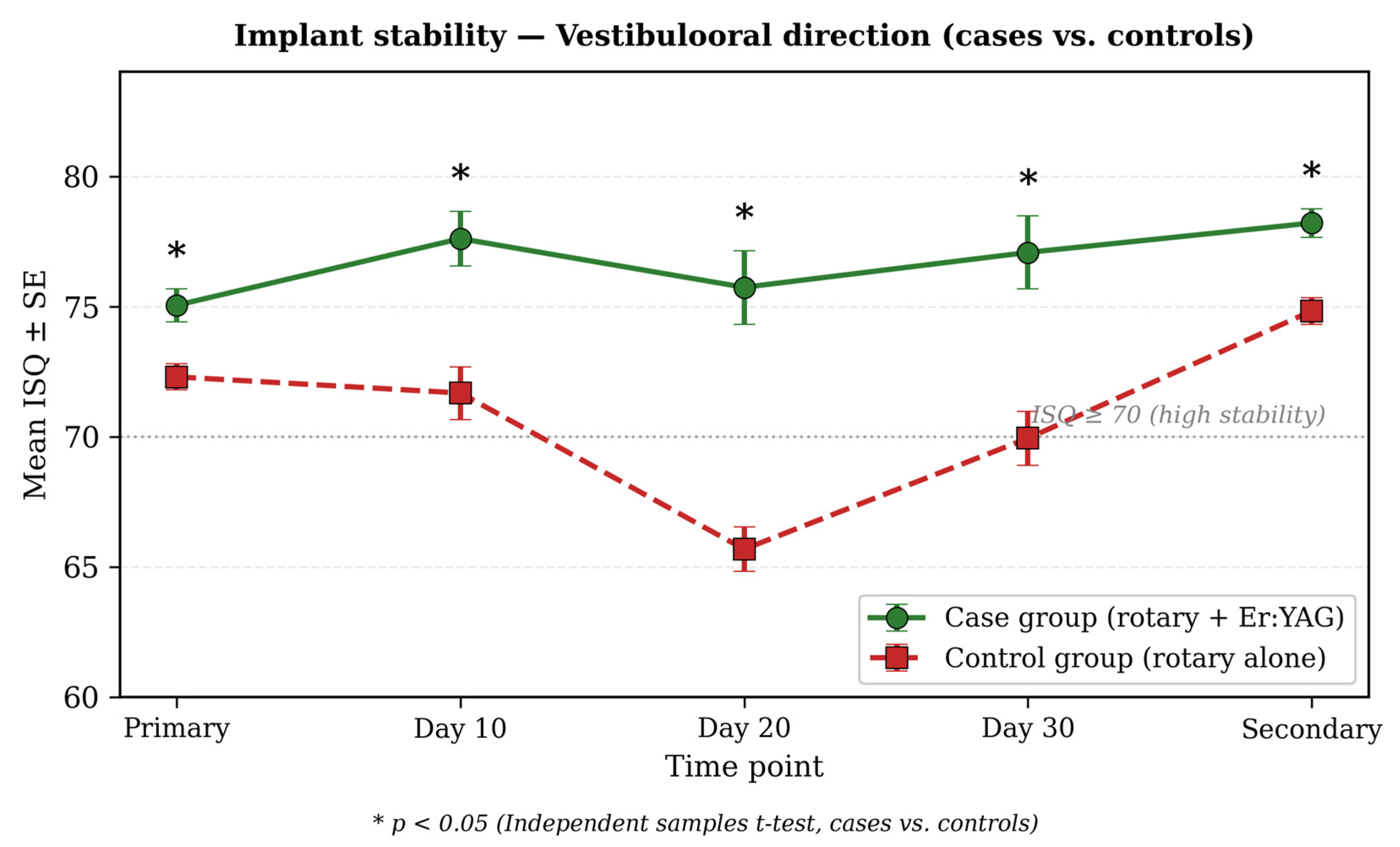
| Primary VO | Cases | 45 | 75.04 | 0.636 | 4.269 | 72 | 66 | 84 |
| Controls | 45 | 72.29 | 0.504 | 3.382 | 72 | 65 | 80 | |
| Secondary VO | Cases | 45 | 78.20 | 0.543 | 3.641 | 78 | 70 | 85 |
| Controls | 45 | 74.82 | 0.514 | 3.446 | 72 | 69 | 82 | |
| Day 10 VO | Cases | 15 | 77.60 | 1.050 | 4.067 | 78 a | 69 | 83 |
| Controls | 15 | 71.67 | 1.013 | 3.922 | 72 | 66 | 80 | |
| Day 20 VO | Cases | 15 | 75.73 | 1.416 | 5.483 | 76 a | 63 | 83 |
| Controls | 15 | 65.67 | 0.860 | 3.331 | 68 | 61 | 72 | |
| Day 30 VO | Cases | 15 | 77.07 | 1.395 | 5.405 | 80 | 63 | 84 |
| Controls | 15 | 69.93 | 1.030 | 3.990 | 64 | 64 | 76 |
| Time Point | Group | N | Mean | SE | SD | Mode | Min | Max |
|---|---|---|---|---|---|---|---|---|
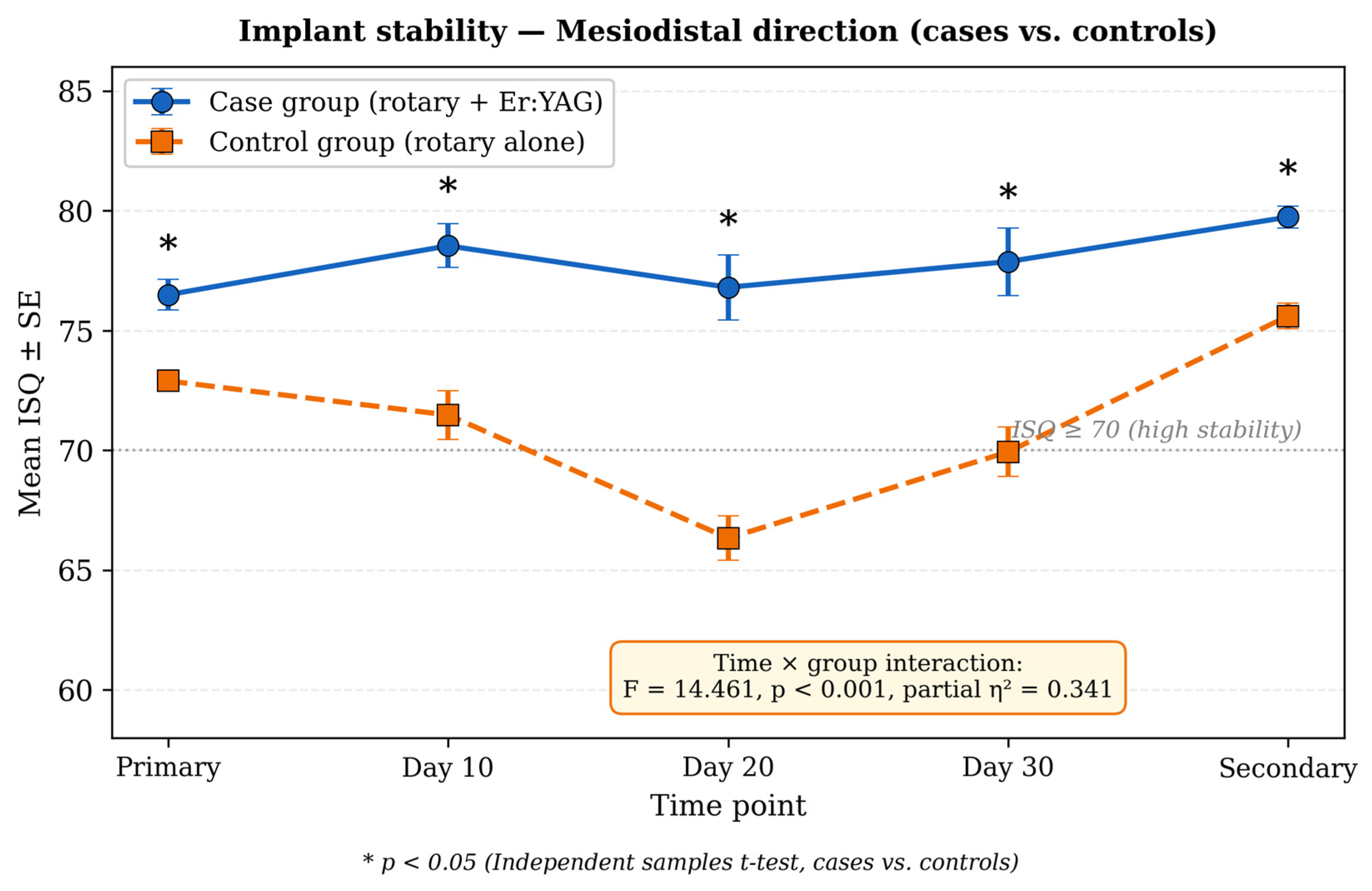
| Primary MD | Cases | 45 | 76.49 | 0.639 | 4.289 | 76 | 67 | 84 |
| Controls | 45 | 72.89 | 0.341 | 2.289 | 73 | 68 | 77 | |
| Secondary MD | Cases | 45 | 79.73 | 0.461 | 3.093 | 80 | 72 | 85 |
| Controls | 45 | 75.60 | 0.530 | 3.557 | 74 | 70 | 83 | |
| Day 10 MD | Cases | 15 | 78.53 | 0.915 | 3.543 | 78 | 71 | 84 |
| Controls | 15 | 71.47 | 1.009 | 3.907 | 69 | 65 | 80 | |
| Day 20 MD | Cases | 15 | 76.80 | 1.353 | 5.240 | 80 | 64 | 84 |
| Controls | 15 | 66.33 | 0.929 | 3.599 | 64 | 62 | 73 | |
| Day 30 MD | Cases | 15 | 77.87 | 1.407 | 5.449 | 80 | 64 | 84 |
| Controls | 15 | 69.93 | 1.030 | 3.990 | 68 | 64 | 76 |
| Time Point/Direction | Group | ISQ < 70 (%) | ISQ ≥ 70 (%) |
|---|---|---|---|
| Primary VO | Cases | 13.30 | 86.70 |
| Controls | 22.20 | 77.80 | |
| Primary MD | Cases | 8.90 | 91.10 |
| Controls | 15.60 | 84.40 | |
| Secondary VO | Cases | 0.00 | 100.00 |
| Controls | 4.40 | 95.60 | |
| Secondary MD | Cases | 0.00 | 100.00 |
| Controls | 0.00 | 100.00 | |
| Day 10 VO | Cases | 6.70 | 93.30 |
| Controls | 40.00 | 60.00 | |
| Day 10 MD | Cases | 0.00 | 100.00 |
| Controls | 40.00 | 60.00 | |
| Day 20 VO | Cases | 13.30 | 86.70 |
| Controls | 86.70 | 13.30 | |
| Day 20 MD | Cases | 13.30 | 86.70 |
| Controls | 86.70 | 13.30 | |
| Day 30 VO | Cases | 13.30 | 86.70 |
| Controls | 53.30 | 46.70 | |
| Day 30 MD | Cases | 13.30 | 86.70 |
| Controls | 26.70 | 73.30 |
Disclaimer/Publisher’s Note: The statements, opinions and data contained in all publications are solely those of the individual author(s) and contributor(s) and not of MDPI and/or the editor(s). MDPI and/or the editor(s) disclaim responsibility for any injury to people or property resulting from any ideas, methods, instructions or products referred to in the content. |
© 2026 by the authors. Licensee MDPI, Basel, Switzerland. This article is an open access article distributed under the terms and conditions of the Creative Commons Attribution (CC BY) license.
Share and Cite
Kanazirski, N.; Neychev, D.; Kanazirska, P.; Miteva-Katrandzhieva, T. The Effect of Er:YAG Laser Biomodification of the Implant Site Surface on Osseointegration: A Randomized Controlled Clinical Study. J. Funct. Biomater. 2026, 17, 287. https://doi.org/10.3390/jfb17060287
Kanazirski N, Neychev D, Kanazirska P, Miteva-Katrandzhieva T. The Effect of Er:YAG Laser Biomodification of the Implant Site Surface on Osseointegration: A Randomized Controlled Clinical Study. Journal of Functional Biomaterials. 2026; 17(6):287. https://doi.org/10.3390/jfb17060287
Chicago/Turabian StyleKanazirski, Nikolay, Deyan Neychev, Petya Kanazirska, and Tsonka Miteva-Katrandzhieva. 2026. "The Effect of Er:YAG Laser Biomodification of the Implant Site Surface on Osseointegration: A Randomized Controlled Clinical Study" Journal of Functional Biomaterials 17, no. 6: 287. https://doi.org/10.3390/jfb17060287
APA StyleKanazirski, N., Neychev, D., Kanazirska, P., & Miteva-Katrandzhieva, T. (2026). The Effect of Er:YAG Laser Biomodification of the Implant Site Surface on Osseointegration: A Randomized Controlled Clinical Study. Journal of Functional Biomaterials, 17(6), 287. https://doi.org/10.3390/jfb17060287