

Individual, High-Precision 3D Mandibular Model for Finite Element Analysis of Three-Unit Bridges: A Biomechanical Pilot Study


Abstract
1. Introduction
1.1. Clinical Background
1.2. Scientific Background of Digital Modelling
1.3. Knowledge Gap
1.4. Aim of the Study
2. Materials and Methods
2.1. CT Segmentation
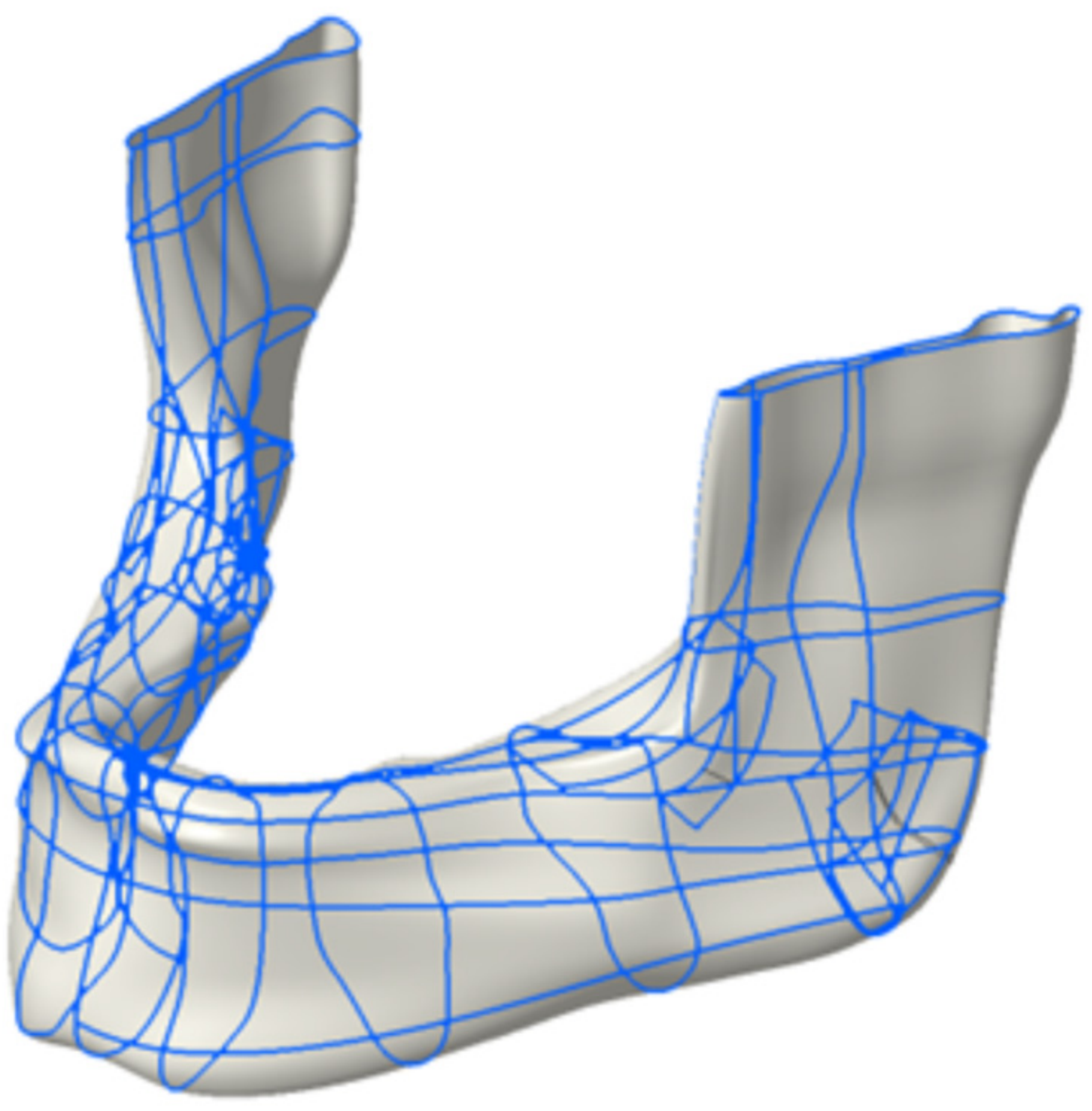
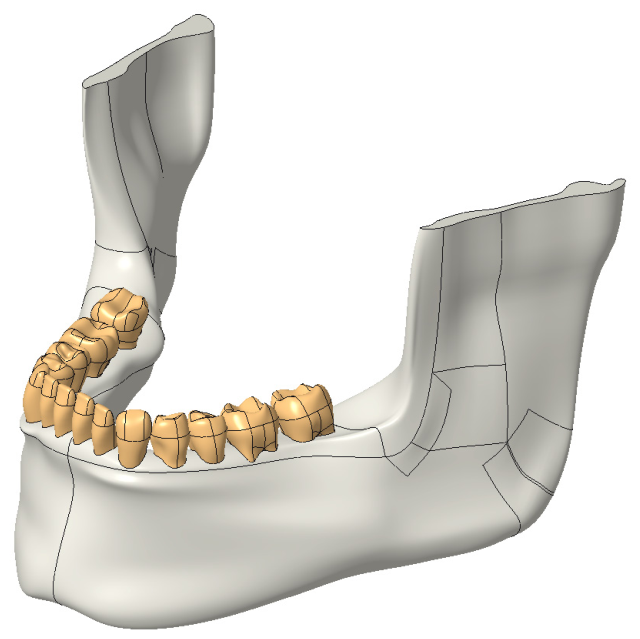
2.2. Parametric 3D Reconstruction of the Mandible
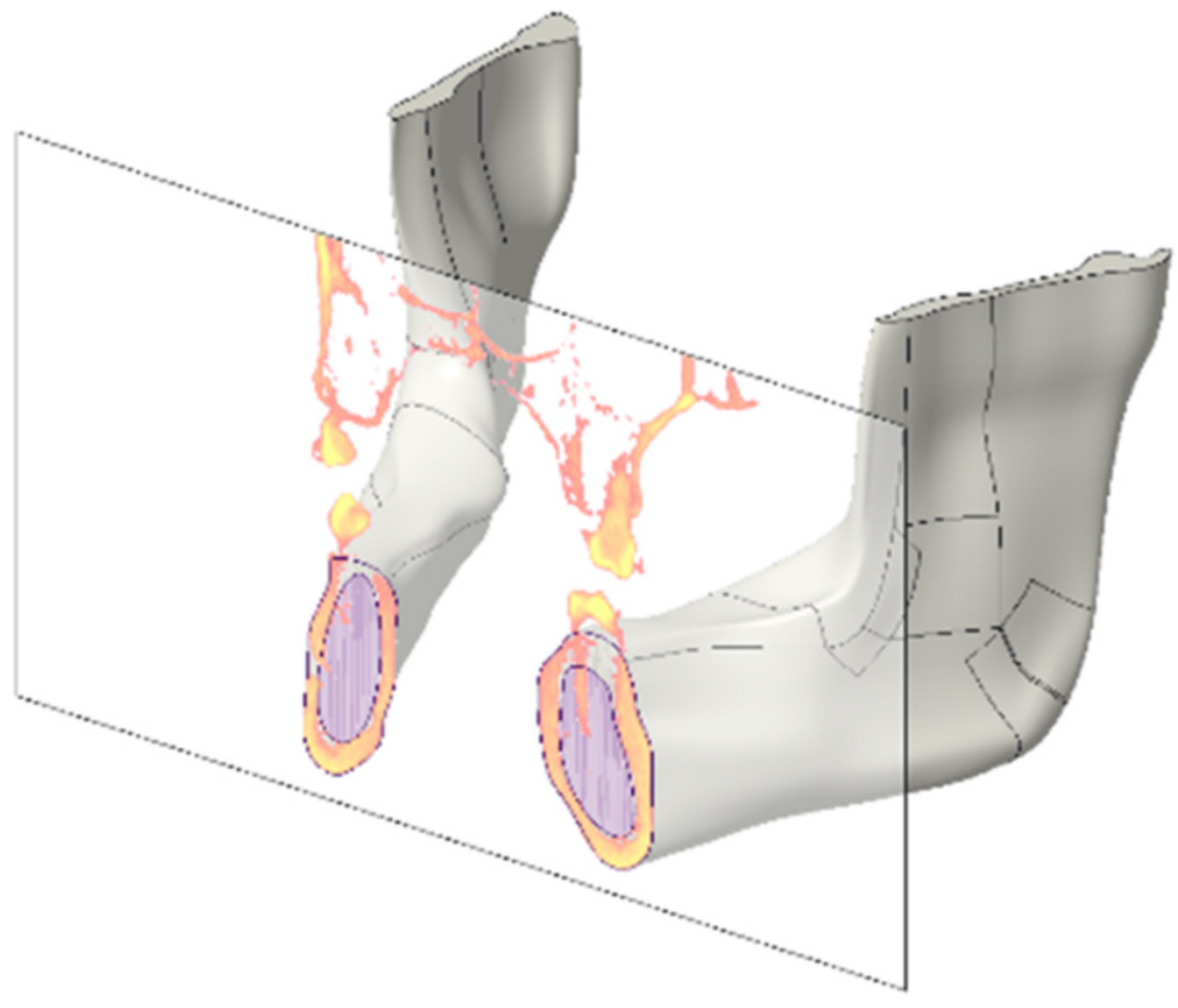
2.3. Layered Segmentation of the Mandible
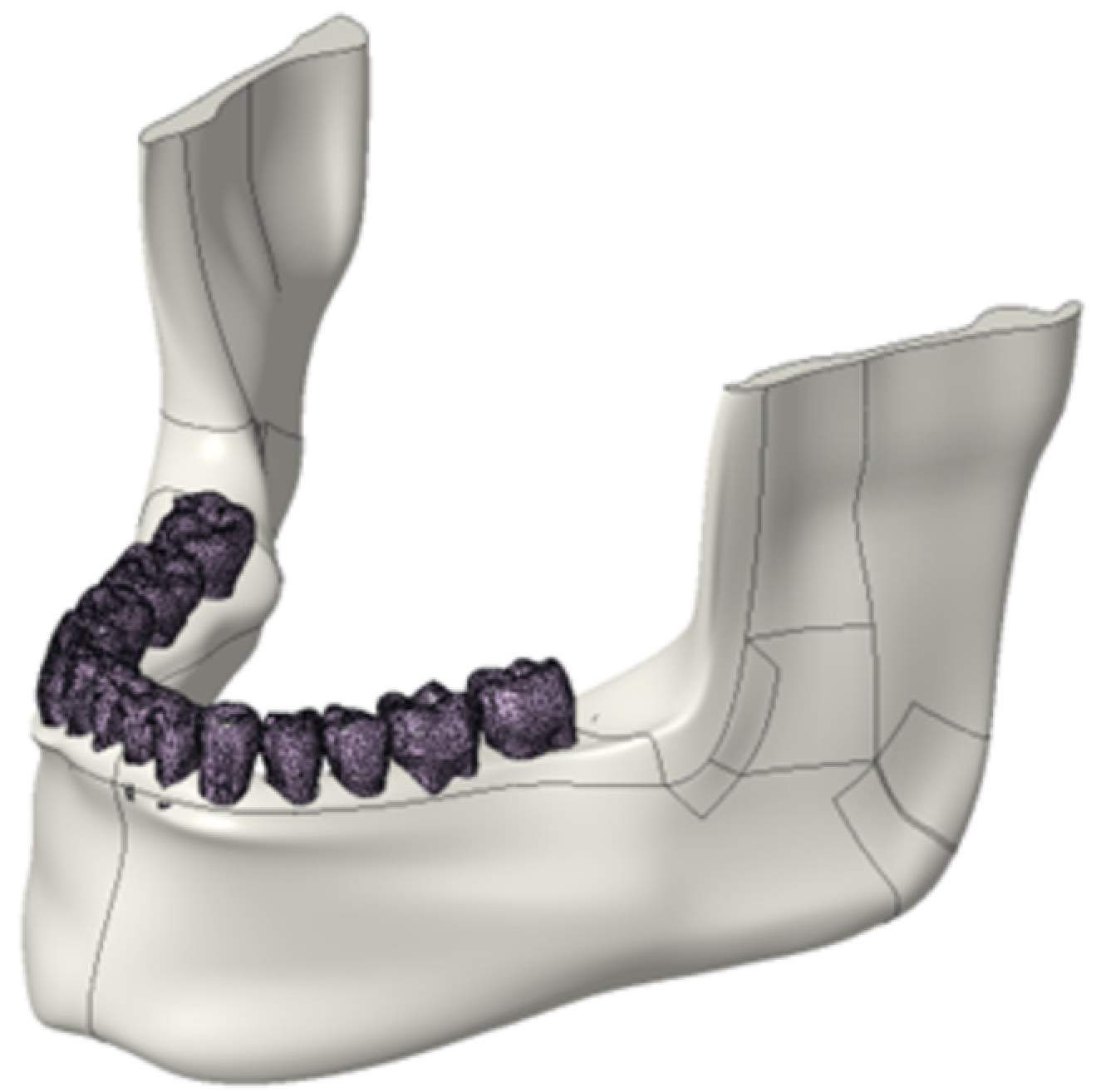
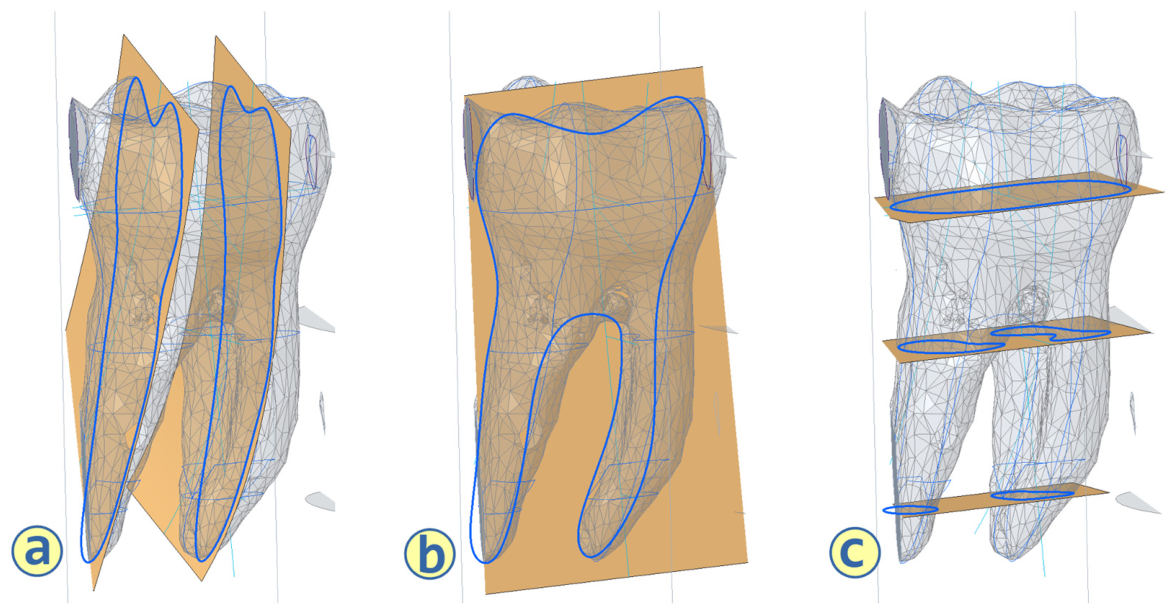
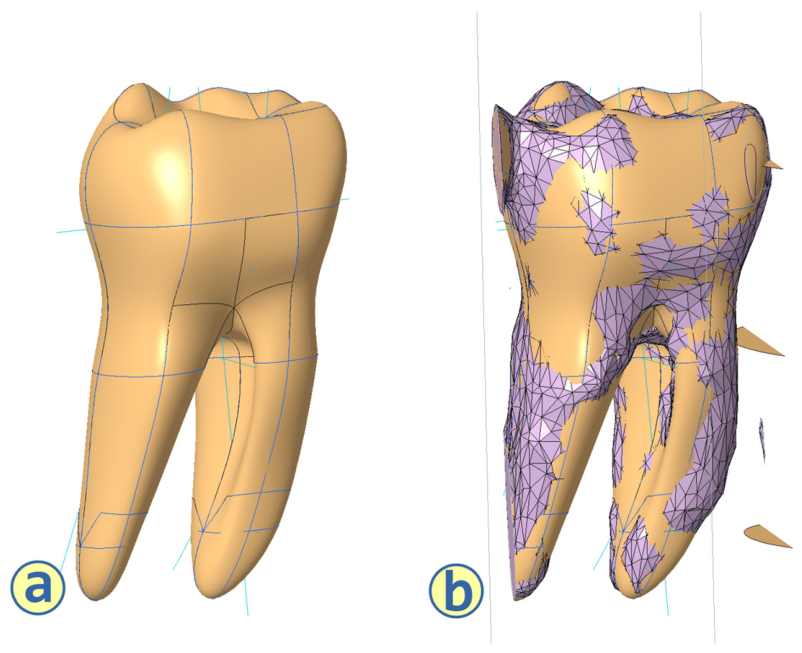
2.4. Parametric 3D Reconstruction of the Tooth
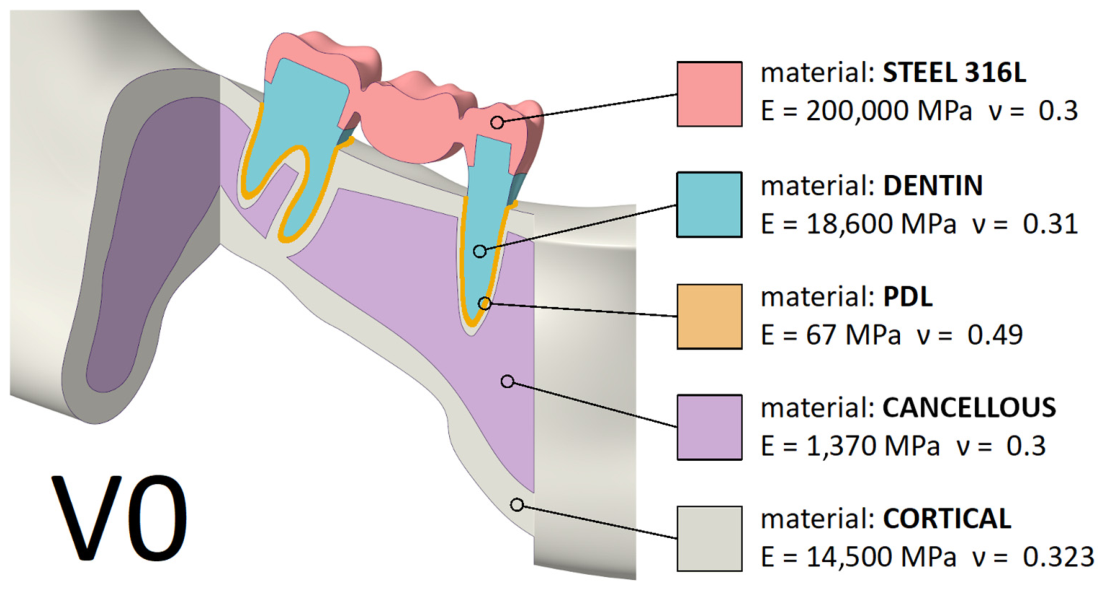
2.5. Construction of a High-Fidelity Clinical Model with Periodontal Ligament (PDL) Reconstruction
2.6. Construction of Simplified Clinical Models
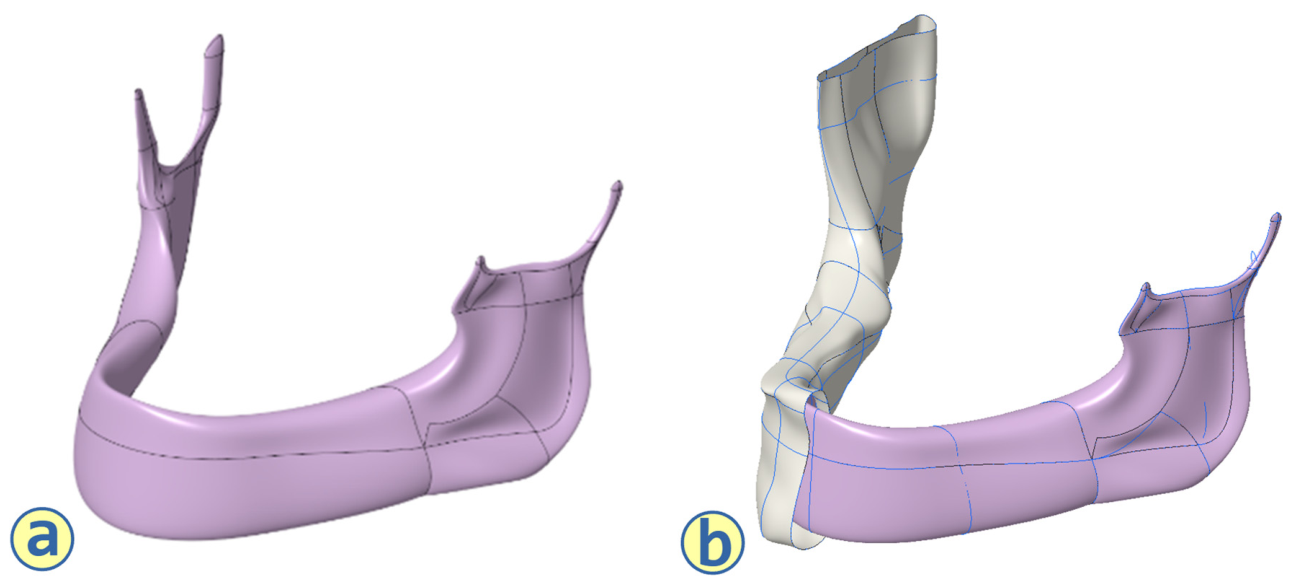
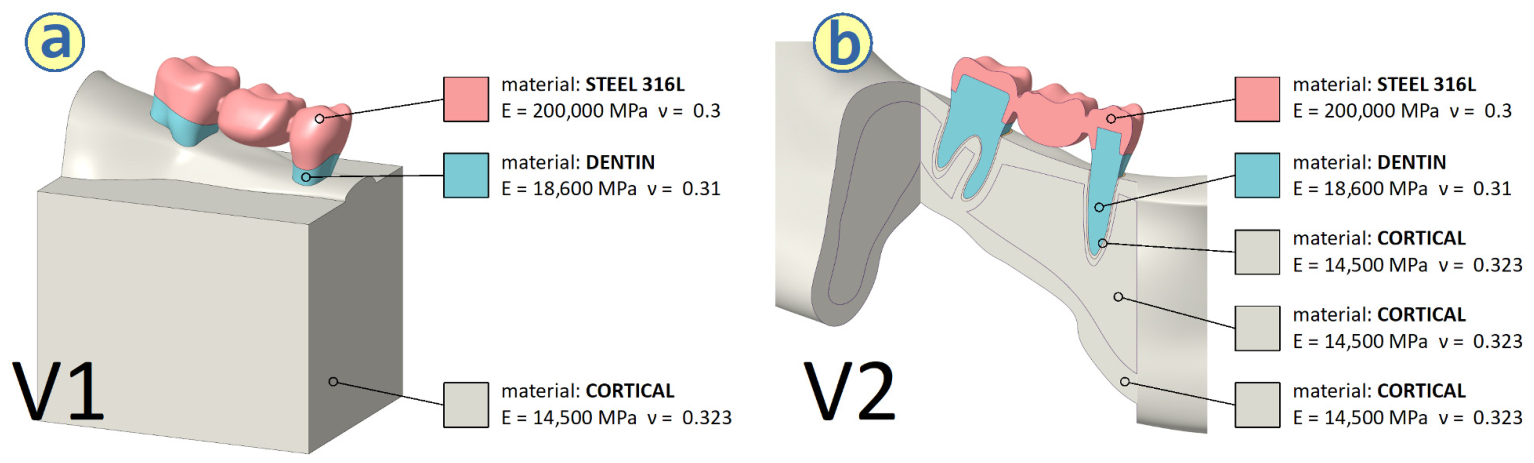
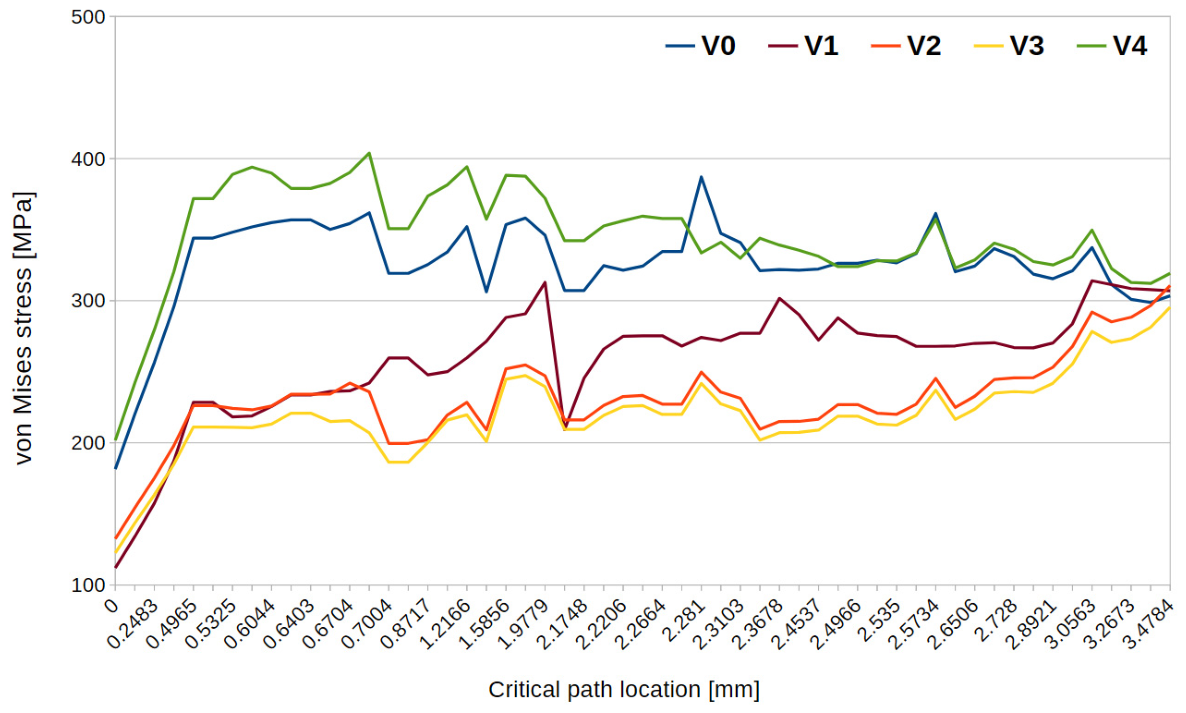
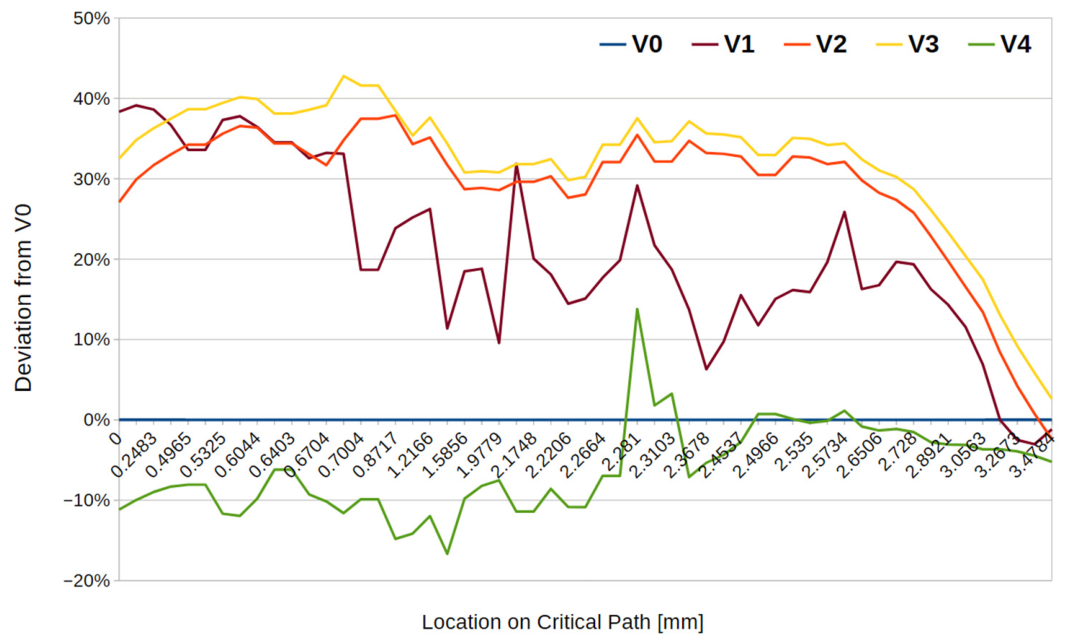
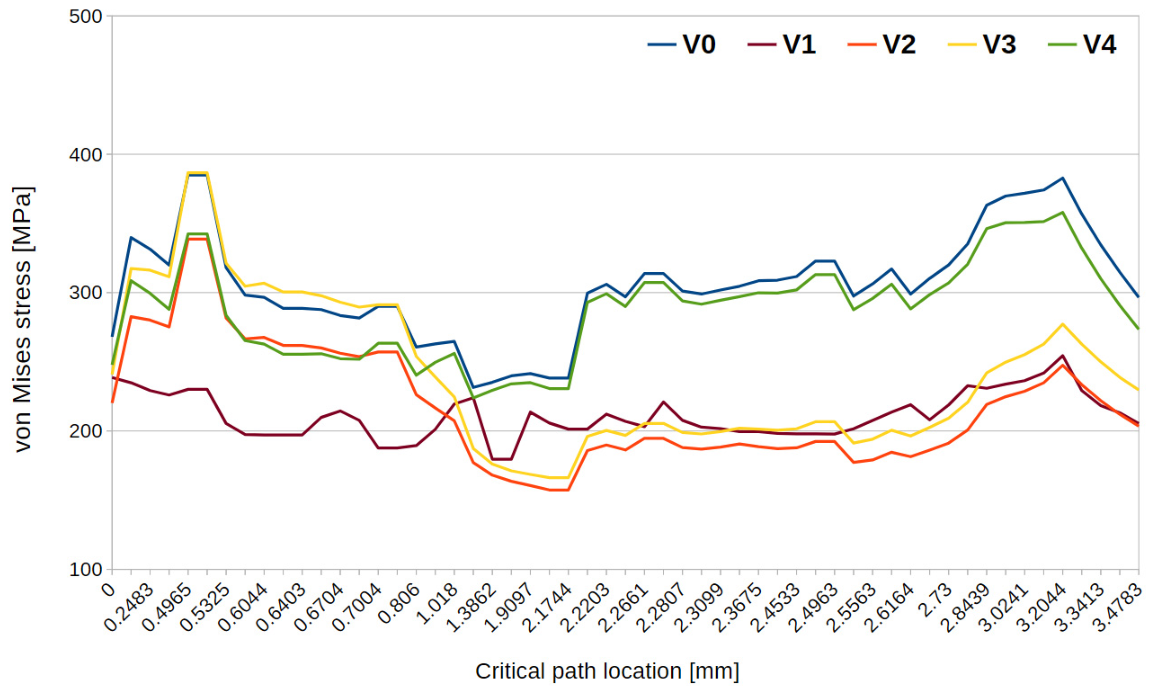
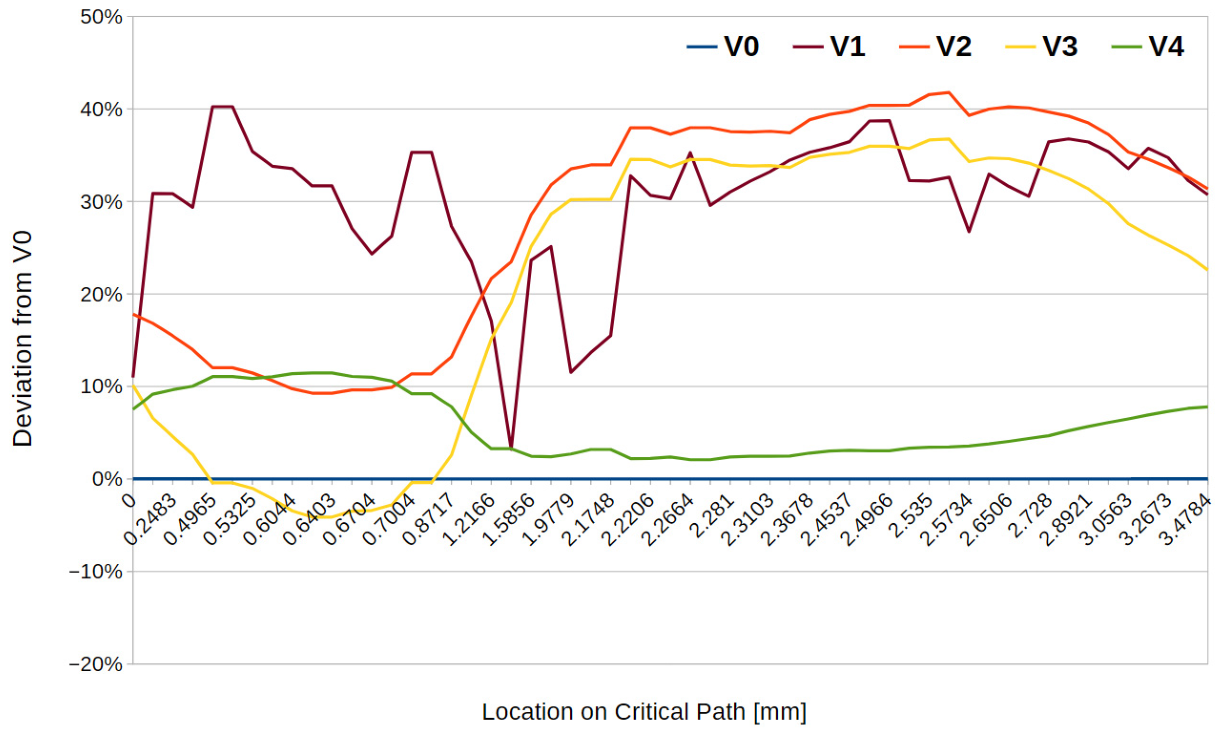
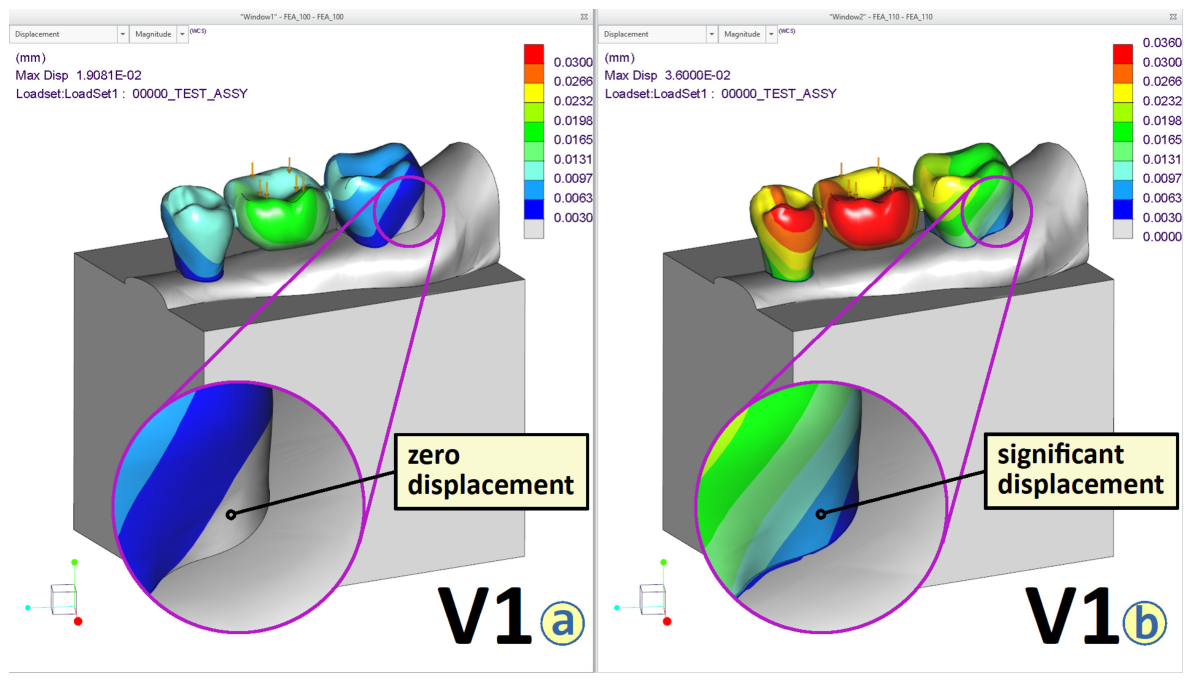
- V1 model: represents the most rudimentary approximation, in which the abutment teeth are embedded within a monolithic solid block assigned material properties equivalent to those of cortical bone (e.g., Young’s modulus of approximately 15–20 GPa). All five outer faces of the block are fully constrained by zero-displacement boundary conditions, thereby mimicking a rigidly fixed support. Although this configuration is computationally simple, it neglects the heterogeneity of the jawbone. (Figure 16a).
- V2 model: introduces basic jaw morphology by placing the teeth within a reconstructed solid volume corresponding exclusively to the cortical bone envelope (Figure 16b), without internal trabeculation. This approach enhances geometric realism while maintaining model simplicity.
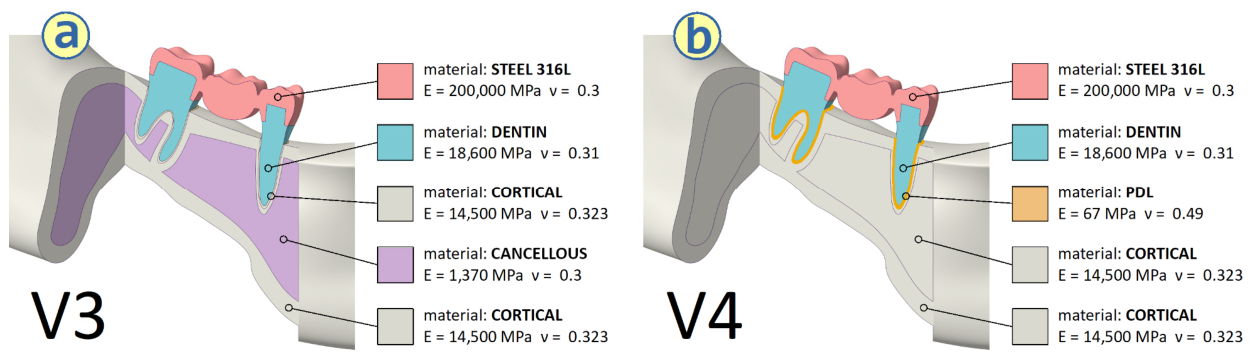
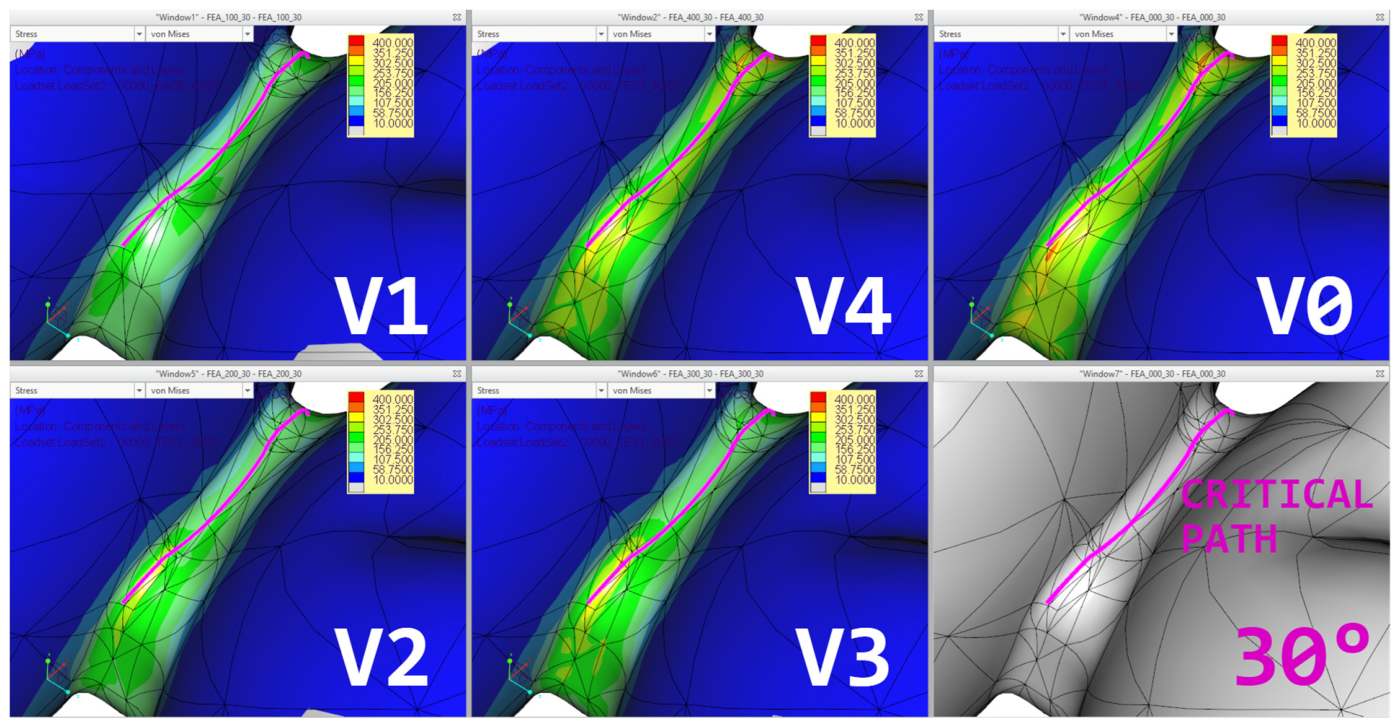
- V3 model: further refines the representation by incorporating a spongy core within the reconstructed jaw geometry to simulate cancellous (trabecular) bone properties, such as a lower elastic modulus (approximately 1–2 GPa) and higher porosity. The teeth are embedded accordingly, thereby providing a closer approximation of the bone density gradients observed in vivo. (Figure 17a).
- V4 model: incorporates the teeth into a complete solid mandibular geometry (Figure 17b) while explicitly including a PDL layer reconstructed as in V0. This hybrid configuration offers a more physiologically realistic representation of tooth–bone interactions, capturing PDL-mediated load transfer without the full trabecular complexity of V0.
3. Results
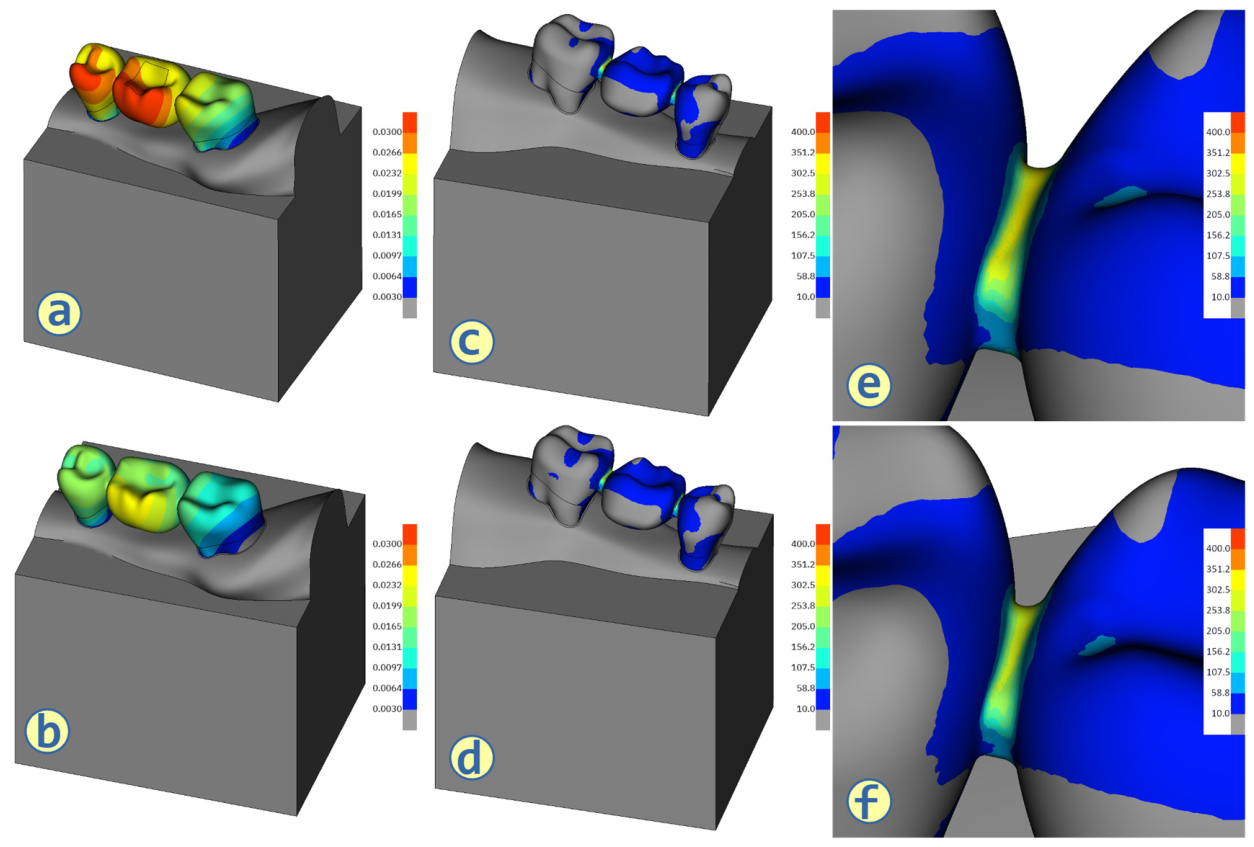
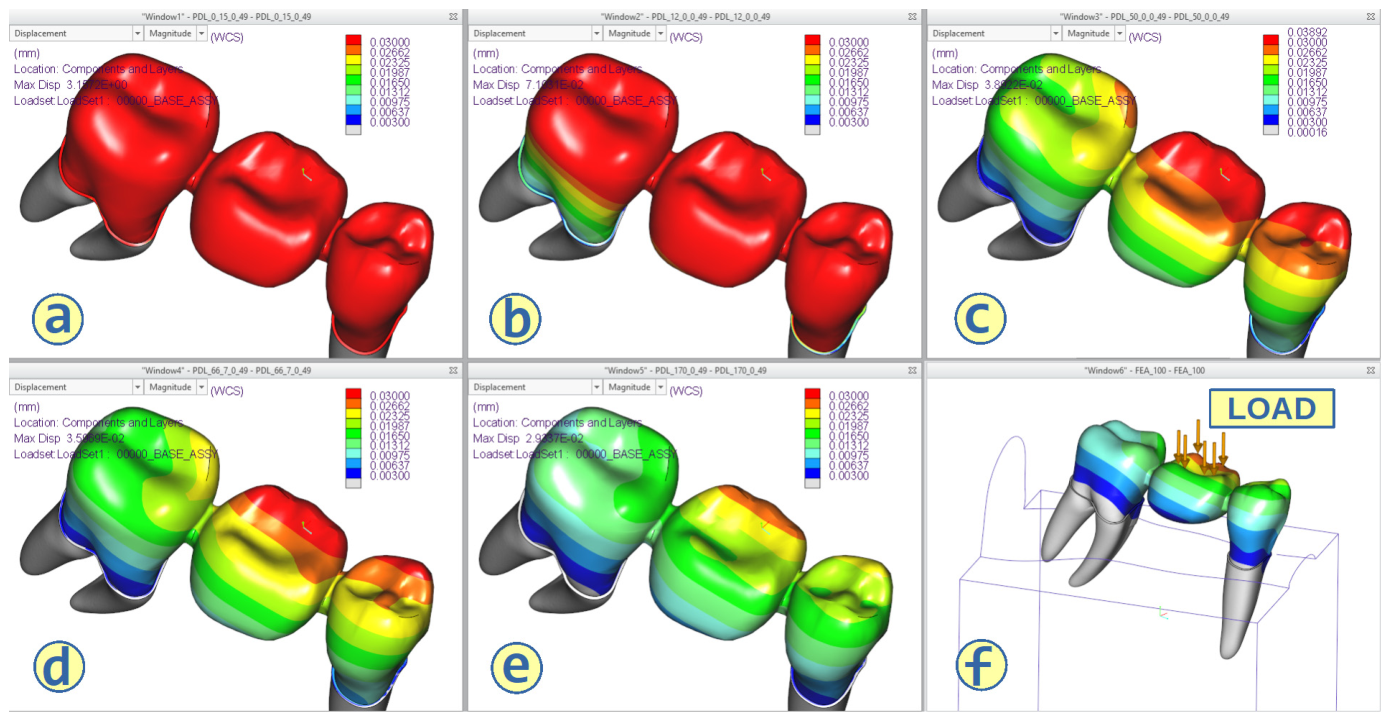
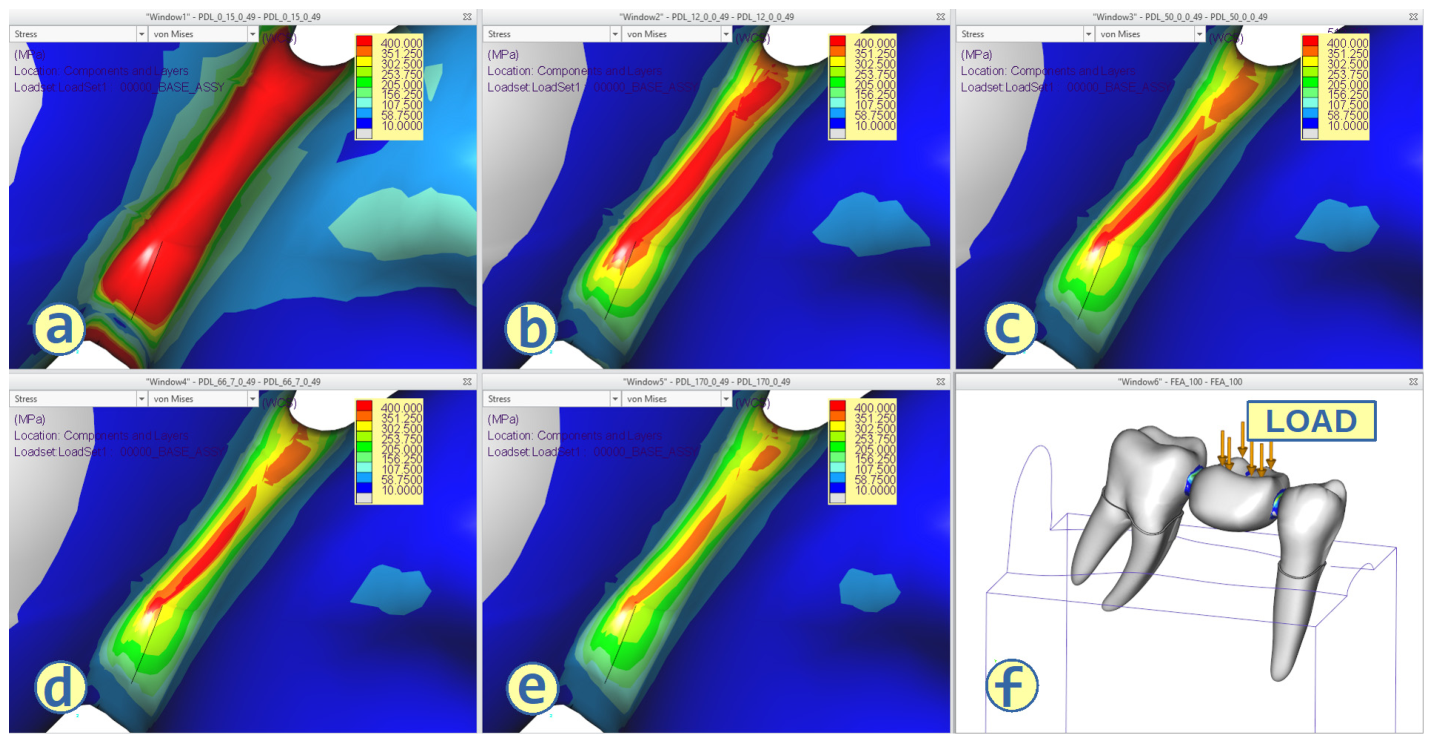
3.1. Finite Element Analysis of Fixed Partial Denture Loading
3.2. Condensed Results
4. Discussion
4.1. Reconstruction of the Anatomical Model
4.2. Clinical Model, Model Simplifications
4.3. Effect of Load Directions
4.4. Effect of PDL Characteristics on Biomechanical Outcomes
4.5. Model Validation and Limitations
4.6. Effects of Geometric Simplification on Results
4.7. Clinical Significance, Clinical Translation, and Generalisability
5. Conclusions
Author Contributions
Funding
Institutional Review Board Statement
Informed Consent Statement
Data Availability Statement
Acknowledgments
Conflicts of Interest
References
- Pjetursson, B.E.; Tan, K.; Lang, N.P.; Brägger, U.; Egger, M.; Zwahlen, M. A systematic review of the survival and complication rates of fixed partial dentures (FPDs) after an observation period of at least 5 years. Clin. Oral Investig. 2004, 15, 667–676. [Google Scholar] [CrossRef]
- Brägger, U.; Aeschlimann, S.; Bürgin, W.; Hämmerle, C.H.F.; Lang, N.P. Biological and technical complications and failures with fixed partial dentures (FPD) on implants and teeth after four to five years of function. Clin. Oral Implant. Res. 2001, 12, 26–34. [Google Scholar] [CrossRef]
- Jemaa, H.; Eisenburger, M.; Greuling, A. Automated support generation for fixed partial dentures and impact of bone loss, bone quality and support types: Parametric CAD and finite element analysis. Dent. J. 2024, 12, 394. [Google Scholar] [CrossRef]
- Cai, Y.; Yang, X.; He, B.; Yao, J. Finite element method analysis of the periodontal ligament in mandibular canine movement with transparent tooth correction treatment. BMC Oral Health 2015, 15, 106. [Google Scholar] [CrossRef]
- Moga, R.-A.; Olteanu, C.D.; Delean, A.G. The importance of boundary conditions and failure criterion in finite element analysis accuracy—A comparative assessment of periodontal ligament biomechanical behavior. Appl. Sci. 2024, 14, 3370. [Google Scholar] [CrossRef]
- Archangelo, C.M.; Rocha, E.P.; Pereira, J.A.; Martin Junior, M.; Anchieta, R.B.; Freitas Júnior, A.C. Periodontal ligament influence on the stress distribution in a removable partial denture supported by implant: A finite element analysis. J. Appl. Oral Sci. 2012, 20, 362–368. [Google Scholar] [CrossRef] [PubMed]
- Wang, C.-S.; Lin, M.-C.; Wang, C.-C.; Chen, C.-F.; Hsieh, J.-C. Feature reconstruction for 3D medical image processing. In Proceedings of the 6th International Conference on Biomedical Engineering and Informatics (BMEI); IEEE: New York, NY, USA, 2013; pp. 69–74. [Google Scholar]
- Nguyen, V.S.; Tran, M.H.; Le, S.T. Visualization of medical image data based on geometric modeling. In Future Data and Security Engineering; Dang, T.K., Kng, J., Takizawa, M., Bui, S.H., Eds.; Lecture Notes in Computer Science; Springer: Cham, Switzerland, 2019; pp. 560–576. [Google Scholar] [CrossRef]
- Aubin, C.; Dansereau, J.; Parent, F.; Labelle, H.; Guise, J.A. Morphometric evaluations of personalised 3D reconstructions and geometric models of the human spine. Med. Biol. Eng. Comput. 1997, 35, 611–618. [Google Scholar] [CrossRef] [PubMed]
- AlZubi, S.; Jararweh, Y.; Al-Zoubi, H.; Elbes, M.; Kanan, T.; Gupta, B. Multi-orientation geometric medical volume segmentation using 3D multiresolution analysis. Multimed. Tools Appl. 2019, 78, 24223–24248. [Google Scholar] [CrossRef]
- He, J.; Chen, S.; Zhang, H.; Tao, X.; Lin, W.; Zhang, S.; Zeng, D.; Ma, J. Downsampled imaging geometric modeling for accurate CT reconstruction via deep learning. IEEE Trans. Med. Imaging 2021, 40, 2976–2985. [Google Scholar] [CrossRef]
- Liu, C.-C.; Hsu, C.-H.; Hsiao, I.-T.; Lin, K.M. Effect of geometric models on convergence rate in iterative PET image reconstructions. J. Instrum. 2009, 4, P05010. [Google Scholar] [CrossRef]
- Garrido, A.H.; Cerra, P.P.; Zapico, A.O.; Lopez, M.D.G. Geometric data collection in medical imaging. Dyna 2011, 86, 222–231. [Google Scholar] [CrossRef]
- Pemmada, R.; Telang, V.S.; Tandon, P.; Thomas, V. Patient-specific mechanical analysis of PCL periodontal membrane: Modeling and simulation. J. Mech. Behav. Biomed. Mater. 2024, 151, 106397. [Google Scholar] [CrossRef]
- Franchini, S.; Gentile, A.; Vassallo, G.; Vitabile, S. Implementation and evaluation of medical imaging techniques based on conformal geometric algebra. Int. J. Appl. Math. Comput. Sci. 2020, 30, 415–433. [Google Scholar] [CrossRef]
- Decroocq, M.; Frindel, O.C.; Lavou, G. Modeling and hexahedral meshing of cerebral arterial networks from centerlines. Med. Image Anal. 2023, 89, 102912. [Google Scholar] [CrossRef]
- Abdel-Aziz, H.S.; Zanaty, E.A.; Ali, H.A.; Saad, M.K. Generating Bézier curves for medical image reconstruction. Results Phys. 2021, 23, 103996. [Google Scholar] [CrossRef]
- Majeed, A.; Mt Piah, A.R.; Rafique, M.; Abdullah, J.Y.; Rajion, Z.A. NURBS curves with the application of multiple bone fracture reconstruction. Appl. Math. Comput. 2017, 315, 70–84. [Google Scholar] [CrossRef]
- Zhong-hua, M.A.; De-jun, L.I.U. Application of NURBS in Adaptive hp Finite Element Analysis System. Microelectron. Comput. 2011, 28, 216–218,221. [Google Scholar]
- Yao, Q.; Zhuang, Y.; Aji, Y.; Zhang, Q.; Luo, Y.; Li, S. Biomechanical impact of different isthmus positions in mandibular first molar root canals: A finite element analysis. Clin. Oral Investig. 2024, 28, 311. [Google Scholar] [CrossRef]
- Demir, O.; Uslan, I.; Buyuk, M.; Salamci, M.U. Development and validation of a digital twin of the human lower jaw under impact loading by using non-linear finite element analyses. J. Mech. Behav. Biomed. Mater. 2023, 148, 106207. [Google Scholar] [CrossRef]
- Eric, J.; Bjelovic, L.; Radovic, I.; Krunic, J.; Milic-Lemic, A.; Gupta, N.; Ali, K. Effect of Prosthetic Material and Support Type on Stress Distribution of Fixed Partial Dentures: A Finite Element Study. Ceramics 2024, 7, 1204–1217. [Google Scholar] [CrossRef]
- Koosha, S.; Mirhashemi, F.S. An Investigation of Three types of Tooth Implant Supported Fixed Prosthesis Designs with 3D Finite Element Analysis. J. Dent. 2013, 10, 51–63. [Google Scholar] [PubMed] [PubMed Central]
- Ziada, A.; Beleidy, M. Influence of different customized abutment materials on stress distribution of different internal implant-abutment connections: Finite element analysis. BMC Oral Health 2025, 25, 1820. [Google Scholar] [CrossRef]
- Ceddia, M.; Montesani, L.; Comuzzi, L.; Cipollina, A.; Deporter, D.A.; Di Pietro, N.; Trentadue, B. The influence of insertion torque on stress distribution in peri-implant bones around ultra-short implants: An FEA study. J. Funct. Biomater. 2025, 16, 260. [Google Scholar] [CrossRef]
- Ceddia, M.; Marchioli, G.; Romasco, T.; Comuzzi, L.; Piattelli, A.; Deporter, D.A.; Di Pietro, N.; Trentadue, B. Effect of crestal position on bone-implant stress interface of three-implant splinted prostheses: A finite element analysis. Materials 2025, 18, 3344. [Google Scholar] [CrossRef]
- Chen, J.; Zhu, T.; Li, R.; Zhu, Z.; Pei, X.; Xu, Y.; Wan, Q. The effects of restorative material and connector cross-section area on the stress distribution of fixed partial denture: A finite element analysis. Head Face Med. 2025, 21, 15. [Google Scholar] [CrossRef]
- Kümbüloğlu, Ö.; Koyuncu, B.; Yerlioğlu, G.; Al-Haj Husain, N.; Özcan, M. Stress Distribution on Various Implant-Retained Bar Overdentures. Materials 2022, 15, 3248. [Google Scholar] [CrossRef] [PubMed] [PubMed Central]
- Nikolova, N.; Raykovska, M.; Petkov, N.; Tsvetkov, M.; Georgiev, I.; Koytchev, E.; Iankov, R.; Dimova-Gabrovska, M.; Gusiyska, A. The integration of micro-CT imaging and finite element simulations for modelling tooth-inlay systems for mechanical stress analysis: A preliminary study. J. Funct. Biomater. 2025, 16, 267. [Google Scholar] [CrossRef]
- Hamid, N.F.A.; Ahmad, R.; Izra’ai, S.I.; Shuib, S.; Ariffin, F.; Baba, N.Z. Framework material and design influence on biomechanical behavior of removable partial dentures: A finite element comparison of polyetheretherketone and cobalt-chromium. J. Prosthodont. 2026. Epub ahead of print. [Google Scholar] [CrossRef] [PubMed]
- Field, C.; Li, Q.; Li, W.; Swain, M. Biomechanical response in mandibular bone due to mastication loading on 3-unit fixed partial dentures. J. Dent. Biomech. 2010, 2010, 902537. [Google Scholar] [CrossRef] [PubMed]
- Sannino, G.; Pozzi, A.; Schiavetti, R.; Barlattani, A. Stress distribution on a three-unit implant-supported zirconia framework. A 3D finite element analysis and fatigue test. Oral Implant. 2012, 5, 11–20. [Google Scholar]
- Fill, T.S.; Toogood, R.W.; Major, P.W.; Carey, J.P. Analytically determined mechanical properties of, and models for the periodontal ligament: Critical review of literature. J. Biomech. 2012, 45, 9–16. [Google Scholar] [CrossRef]
- Özcan, C.; Lestriez, P.; Özcan, M.; Josset, Y. Finite element analysis of dental structures: The role of mandibular kinematics and model complexity. Front. Dent. Med. 2024, 5, 1461909. [Google Scholar] [CrossRef] [PubMed]
- Kuc, A.E.; Sybilski, K.; Kotuła, J.; Piątkowski, G.; Kowala, B.; Lis, J.; Saternus, S.; Sarul, M. The hydrostatic pressure distribution in the periodontal ligament and the risk of root resorption—A finite element method (FEM) study on the nonlinear innovative model. Materials 2024, 17, 1661. [Google Scholar] [CrossRef]
- Yoshida, N.; Koga, Y.; Peng, C.-L.; Tanaka, E.; Kobayashi, K. In vivo measurement of the elastic modulus of the human periodontal ligament. Med. Eng. Phys. 2001, 23, 567–572. [Google Scholar] [CrossRef]
- Celik, H.K.; Koc, S.; Kustarci, A.; Rennie, A.E.W. A literature review on the linear elastic material properties assigned in finite element analyses in dental research. Mater. Today Commun. 2022, 30, 103087. [Google Scholar] [CrossRef]
- Gröning, F.; Fagan, M.J.; O’Higgins, P. The effects of the periodontal ligament on mandibular stiffness: A study combining finite element analysis and geometric morphometrics. J. Biomech. 2011, 44, 1304–1312. [Google Scholar] [CrossRef] [PubMed]
- Bergomi, M.; Cugnoni, J.; Galli, M.; Botsis, J.; Belser, U.C.; Wiskott, H.W.A. Hydro-mechanical coupling in the periodontal ligament: A porohyperelastic finite element model. J. Biomech. 2011, 44, 34–38. [Google Scholar] [CrossRef]
- Maceri, F.; Martignoni, M.; Vairo, G. Mechanical behaviour of endodontic restorations with multiple prefabricated posts: A finite-element approach. J. Biomech. 2007, 40, 2386–2398. [Google Scholar] [CrossRef] [PubMed]
- Aversa, R.; Apicella, D.; Perillo, L.; Sorrentino, R.; Zarone, F.; Ferrari, M.; Apicella, A. Non-linear elastic three-dimensional finite element analysis on the effect of endocrown material rigidity on alveolar bone remodeling process. Dent. Mater. 2009, 25, 678–690. [Google Scholar] [CrossRef]
- Tohill, R.; Hien, M.; McGuinness, N.; Chung, L.; Reuben, R.L. Measurement of the short-term viscoelastic properties of the periodontal ligament using stress relaxation. In Proceedings of the 4th European Conference of the International Federation for Medical and Biological Engineering; IFMBE Proceedings; Springer-Verlag: Berlin/Heidelberg, Germany, 2009; Volume 22, pp. 1467–1470. [Google Scholar]
- Fill, T.S.; Carey, J.P.; Toogood, R.W.; Major, P.W. Experimentally Determined Mechanical Properties of, and Models for, the Periodontal Ligament: Critical Review of Current Literature. J. Dent. Biomech. 2011, 2011, 312980. [Google Scholar] [CrossRef]
- AlKahtania, R.N.; Allawib, Y.M.; Aladhyania, G.M.; Altassana, R.A.; AlShalawia, S.; Nassef, T.M. Combining 3D Multi-Object Reconstruction with Finite Element Analysis for Accurate Dental Modelling and Restoration. Int. Dent. J. 2026, 76, 109318. [Google Scholar] [CrossRef] [PubMed]
- Gholamalizadeh, T.; Moshfeghifar, F.; Ferguson, Z.; Schneider, T.; Panozzo, D.; Darkner, S.; Makaremi, M.; Chan, F.; Søndergaard, P.L.; Erleben, K. Open-Full-Jaw: An open-access dataset and pipeline for finite element models of human jaw. Comput. Methods Programs Biomed. 2022, 224, 107009. [Google Scholar] [CrossRef] [PubMed]
- ISO 14801:2016; Dentistry—Implants—Dynamic Loading Test for Endosseous Dental Implants. ISO: Geneva, Switzerland, 2016.
- Della Bona, A.; Borba, M.; Benetti, P.; Duan, Y.; Griggs, J.A. Three-dimensional finite element modelling of all-ceramic restorations based on micro-CT. J. Dent. 2013, 41, 412–419. [Google Scholar] [CrossRef] [PubMed]
- Karimi, A.; Razaghi, R.; Biglari, H.; Rahmati, S.M.; Sandbothe, A.; Hasani, M. Finite element modeling of the periodontal ligament under a realistic kinetic loading of the jaw system. Saudi Dent. J. 2020, 32, 349–356. [Google Scholar] [CrossRef]
- Xiao, N.; Sun, Y.C.; Zhao, Y.J.; Wang, Y. A method to evaluate the trueness of reconstructed dental models made with photo-curing 3D printing technologies. J. Peking Univ. (Health Sci.) 2019, 51, 120–130. (In Chinese) [Google Scholar] [CrossRef]








Disclaimer/Publisher’s Note: The statements, opinions and data contained in all publications are solely those of the individual author(s) and contributor(s) and not of MDPI and/or the editor(s). MDPI and/or the editor(s) disclaim responsibility for any injury to people or property resulting from any ideas, methods, instructions or products referred to in the content. |
© 2026 by the authors. Licensee MDPI, Basel, Switzerland. This article is an open access article distributed under the terms and conditions of the Creative Commons Attribution (CC BY) license.
Share and Cite
Pelsőczi-Kovács, I.; Deák, B.; Papp, K.; Piros, A.I. Individual, High-Precision 3D Mandibular Model for Finite Element Analysis of Three-Unit Bridges: A Biomechanical Pilot Study. J. Funct. Biomater. 2026, 17, 285. https://doi.org/10.3390/jfb17060285
Pelsőczi-Kovács I, Deák B, Papp K, Piros AI. Individual, High-Precision 3D Mandibular Model for Finite Element Analysis of Three-Unit Bridges: A Biomechanical Pilot Study. Journal of Functional Biomaterials. 2026; 17(6):285. https://doi.org/10.3390/jfb17060285
Chicago/Turabian StylePelsőczi-Kovács, István, Bálint Deák, Klaudia Papp, and Attila István Piros. 2026. "Individual, High-Precision 3D Mandibular Model for Finite Element Analysis of Three-Unit Bridges: A Biomechanical Pilot Study" Journal of Functional Biomaterials 17, no. 6: 285. https://doi.org/10.3390/jfb17060285
APA StylePelsőczi-Kovács, I., Deák, B., Papp, K., & Piros, A. I. (2026). Individual, High-Precision 3D Mandibular Model for Finite Element Analysis of Three-Unit Bridges: A Biomechanical Pilot Study. Journal of Functional Biomaterials, 17(6), 285. https://doi.org/10.3390/jfb17060285