Review

Cellular Alterations in Carbohydrate and Lipid Metabolism Due to Interactions with Nanomaterials


by
Ana Martín-Pardillos
1,2,3,* and
Pilar Martin-Duque
3,4,5,*
1
Instituto de Nanociencia y Materiales de Aragón (INMA), CSIC-Universidad de Zaragoza, 50009 Zaragoza, Spain
2
Department of Chemical Engineering and Environmental Technology (IQTMA), University of Zaragoza, 50018 Zaragoza, Spain
3
Instituto de Investigaciones Sanitarias de Aragón (IIS Aragón), 50009 Zaragoza, Spain
4
Ciber Bioingeniería y Biomateriales (CIBER-BBN), Instituto de Salud Carlos lll, 28029 Madrid, Spain
5
Surgery Department, Medicine Medical School, University of Zaragoza, 50009 Zaragoza, Spain
*
Authors to whom correspondence should be addressed.
J. Funct. Biomater. 2023, 14(5), 274; https://doi.org/10.3390/jfb14050274
Submission received: 10 April 2023 / Revised: 7 May 2023 / Accepted: 11 May 2023 / Published: 14 May 2023
(This article belongs to the Special Issue Micro and Nanocarriers for Biomedicine)

Abstract

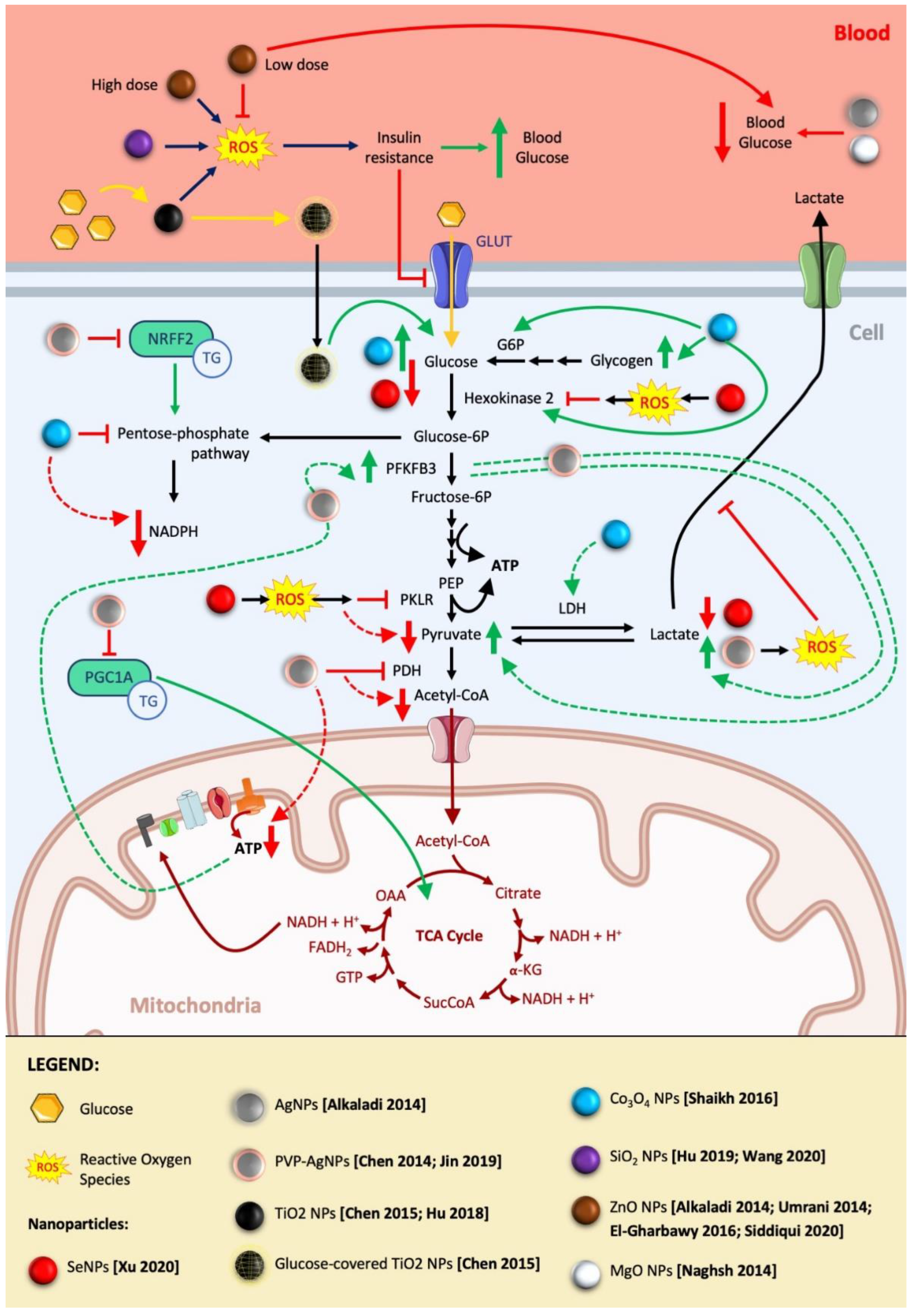
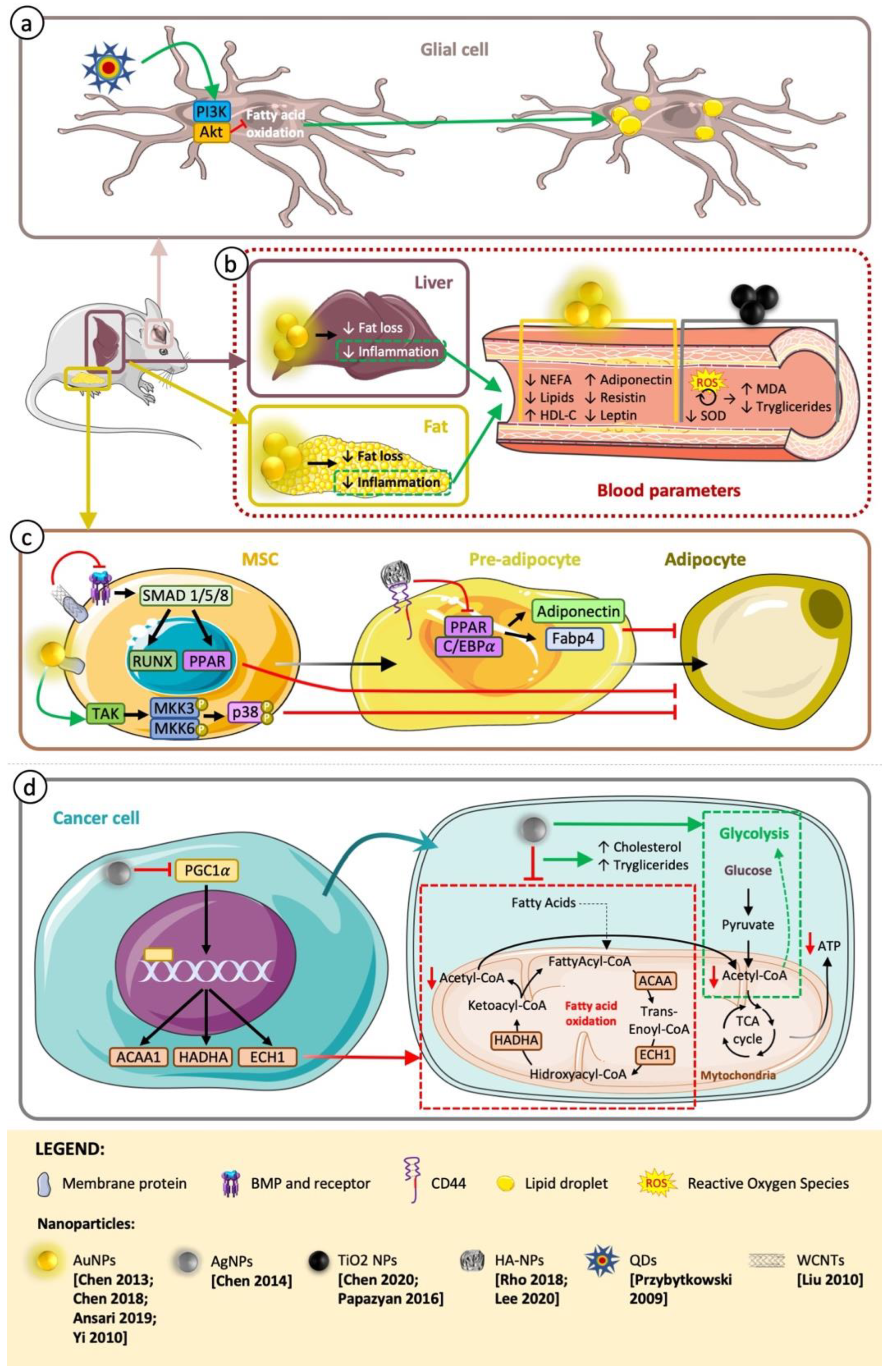
Nanoparticles (NPs) have unique physicochemical properties that are useful for a broad range of biomedical and industrial applications; nevertheless, increasing concern exists about their biosafety. This review aims to focus on the implications of nanoparticles in cellular metabolism and their outcomes. In particular, some NPs have the ability to modify glucose and lipid metabolism, and this feature is especially interesting to treat diabetes and obesity and to target cancer cells. However, the lack of specificity to reach target cells and the toxicological evaluation of nontargeted cells can potentially induce detrimental side effects, closely related to inflammation and oxidative stress. Therefore, identifying the metabolic alterations caused by NPs, independent of their application, is highly needed. To our knowledge, this increase would lead to the improvement and safer use with a reduced toxicity, increasing the number of available NPs for diagnosis and treatment of human diseases.
Keywords: nanoparticle; metabolism; lipid; carbohydrate; diabetes; obesity; cancer; oxidative stress; inflammation nanoparticle; metabolism; lipid; carbohydrate; diabetes; obesity; cancer; oxidative stress; inflammation