Article

Development of a More Environmentally Friendly Silk Fibroin Scaffold for Soft Tissue Applications


1
Department of Materials Science and Engineering, Carnegie Mellon University, Pittsburgh, PA 15213, USA
2
Department of Biomedical Engineering, Carnegie Mellon University, Pittsburgh, PA 15213, USA
3
Department of Mechanical Engineering, Carnegie Mellon University, Pittsburgh, PA 15213, USA
*
Author to whom correspondence should be addressed.
J. Funct. Biomater. 2023, 14(4), 230; https://doi.org/10.3390/jfb14040230
Submission received: 23 March 2023 / Revised: 12 April 2023 / Accepted: 14 April 2023 / Published: 18 April 2023

Abstract

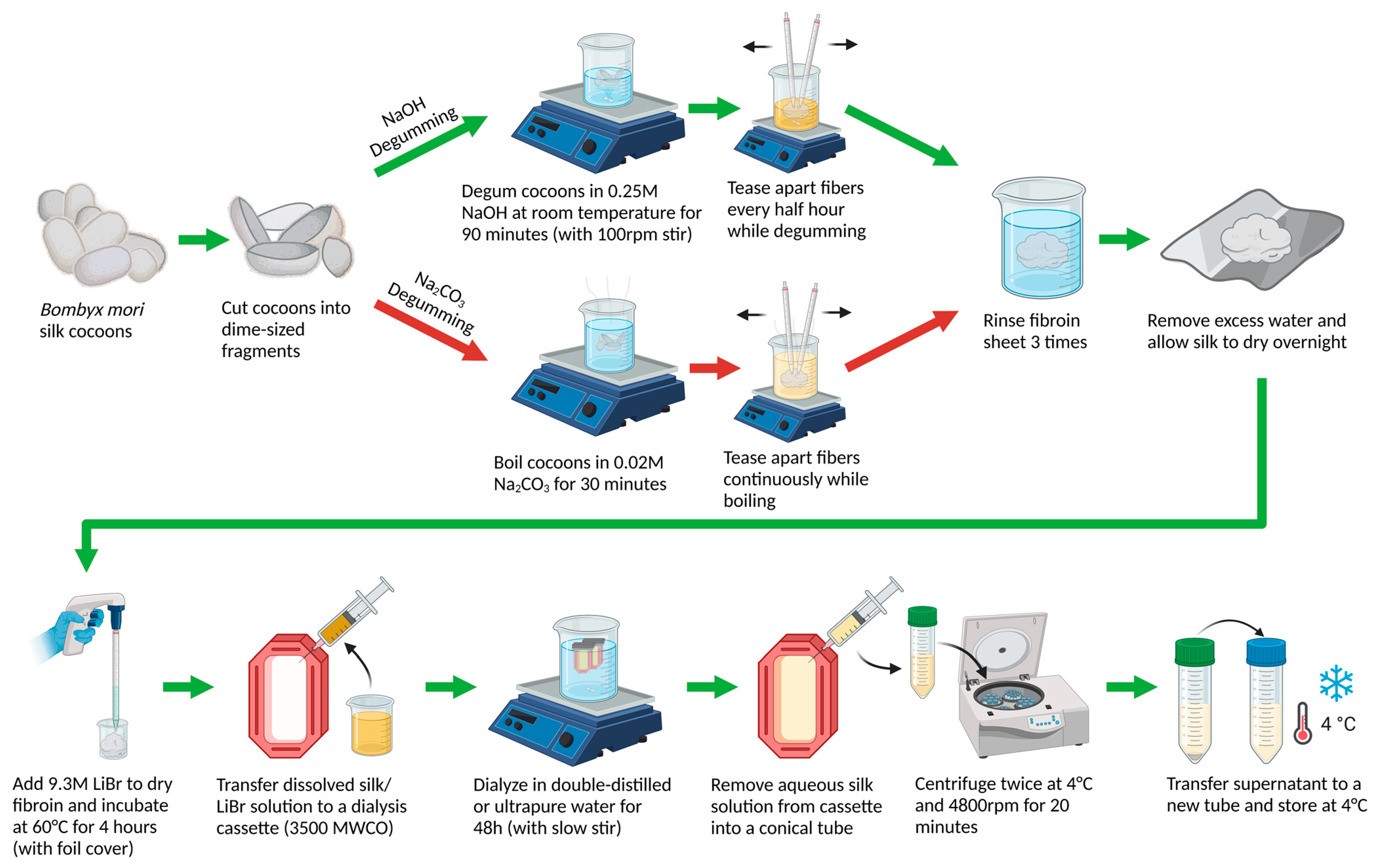
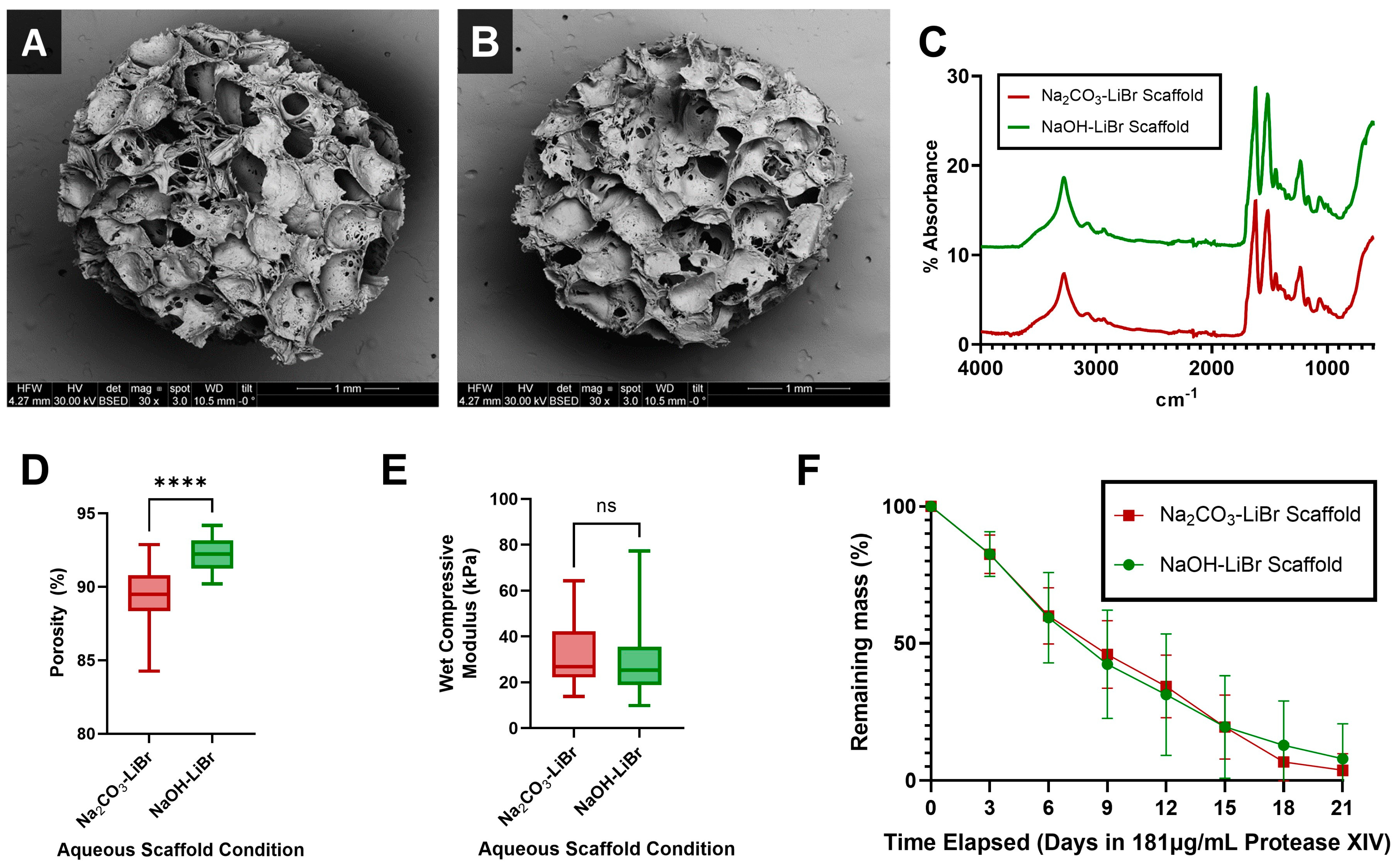
A push for environmentally friendly approaches to biomaterials fabrication has emerged from growing conservational concerns in recent years. Different stages in silk fibroin scaffold production, including sodium carbonate (Na2CO3)-based degumming and 1,1,1,3,3,3-hexafluoro-2-propanol (HFIP)-based fabrication, have drawn attention for their associated environmental concerns. Environmentally friendly alternatives have been proposed for each processing stage; however, an integrated green fibroin scaffold approach has not been characterized or used for soft tissue applications. Here, we show that the combination of sodium hydroxide (NaOH) as a substitute degumming agent with the popular “aqueous-based” alternative silk fibroin gelation method yields fibroin scaffolds with comparable properties to traditional Na2CO3-degummed aqueous-based scaffolds. The more environmentally friendly scaffolds were found to have comparable protein structure, morphology, compressive modulus, and degradation kinetics, with increased porosity and cell seeding density relative to traditional scaffolds. Human adipose-derived stem cells showed high viability after three days of culture while seeded in each scaffold type, with uniform cell attachment to pore walls. Adipocytes from human whole adipose tissue seeded into scaffolds were found to have similar levels of lipolytic and metabolic function between conditions, in addition to a healthy unilocular morphology. Results indicate that our more environmentally friendly methodology for silk scaffold production is a viable alternative and well suited to soft tissue applications.
Keywords: biomaterials; tissue engineering; silk fibroin; sodium carbonate; sodium hydroxide; environmental impact; green processing; soft tissue; adipose tissue; adipocyte biomaterials; tissue engineering; silk fibroin; sodium carbonate; sodium hydroxide; environmental impact; green processing; soft tissue; adipose tissue; adipocyte