1. Introduction
Titanium and titanium alloys are among the most attractive metallic materials for biomedical applications due to their excellent corrosion resistance, favorable strength-to-weight ratio, and superior biocompatibility. Ti-6Al-4V alloy has become the most widely used titanium alloy in orthopedic and dental implants because of its ability to provide long-term mechanical stability while maintaining adequate biological performance [
1]. The functional performance of biomedical titanium components is strongly influenced by surface characteristics including microstructure, hardness, wear resistance, and surface integrity.
Friction stir processing (FSP), derived from friction stir welding (FSW), utilizes a rotating non-consumable tool to generate frictional heat and severe plastic deformation, promoting dynamic recrystallization and grain refinement without melting [
2,
3]. Unlike fusion-based methods, FSP avoids solidification-related defects and can selectively modify surface layers. The foundational work of Zhu and Chao [
4] demonstrated that the heat flux distribution under the FSW tool shoulder can be effectively modeled using a linearly distributed annular source validated against neutron diffraction data—an approach adopted in the present study.
Experimental investigations of FSP applied to Ti-6Al-4V have demonstrated its effectiveness for biomedical surface engineering. Singh et al. [
5] applied FSP to electron-beam-melted Ti-6Al-4V and reported that the process eliminated surface porosity, refined the as-built columnar microstructure into fine equiaxed grains, and significantly enhanced cytocompatibility, confirming the biomedical relevance of FSP-treated Ti-6Al-4V surfaces. Pilchak et al. [
6] showed that FSP of investment-cast Ti-6Al-4V introduces measurable tool-derived tungsten contamination in the stir zone and demonstrated that a post-process α/β heat treatment can be used to dissolve the tungsten-rich particles and restore a homogeneous microstructure, highlighting the importance of tool material selection and post-processing for biomedical applications. Zykova et al. [
7] investigated friction stir alloying of Ti-6Al-4V with copper powder using multiple processing passes and found that the resulting in situ Ti–Cu intermetallic-reinforced composite exhibited substantially increased microhardness relative to the unreinforced base alloy, illustrating that FSP-based alloying can be used to tailor surface mechanical properties beyond what is achievable with single-material processing.
Computational thermal and thermo-mechanical modeling has played an increasingly central role in understanding and optimizing FSP. Beyond the foundational FSW heat-flux model of Zhu and Chao [
4] adopted in the present study, finite-element-based phase-change formulations have been developed for related multiphysics problems: Vasilyeva et al. [
8] and Ammosov and Vasilyeva [
9] presented finite element and online multiscale finite element implementations of coupled thermo-mechanical models with phase transition, providing numerical strategies for handling temperature-dependent material behavior that are conceptually relevant to the β-transus phase change addressed in the present FSP model. In a related biomedical finite-element context, Apan et al. [
10] used FEA to evaluate the mechanical behavior of a bone-graft-augmented knee implant design, illustrating the broader applicability of finite element analysis to the design and evaluation of biomedical implant components and surface treatments.
Despite this body of work, a clear research gap remains: existing experimental FSP studies on Ti-6Al-4V [
2,
5,
6,
7] do not incorporate systematic, simulation-based parameter optimization, while existing FEM-based FSP thermal models [
4,
11,
12] have not been calibrated against or compared with multiple independent experimental temperature datasets nor combined with a statistically efficient design-of-experiments framework. The present study addresses this gap directly.
Computational methods have become essential for FSP optimization. FEM enables detailed prediction of temperature distribution and material flow while reducing experimental burden [
3,
6,
9]. The Taguchi method, originally developed as a robust quality engineering methodology based on orthogonal array experimental design and signal-to-noise analysis [
13], enables systematic evaluation of multiple parameters through orthogonal designs, substantially reducing the number of required simulations; its application to friction stir processing has been demonstrated for composite fabrication [
14]. Despite the growing importance of FSP for biomedical Ti-6Al-4V surface engineering, computational frameworks integrating calibrated FEM with Taguchi-ANOVA optimization for this material remain scarce in the literature.
The novelty of the present study lies in: (1) the integration of FEA with Taguchi-ANOVA optimization for FSP of Ti-6Al-4V; (2) a temperature-dependent friction model calibrated to produce physically admissible thermal predictions; (3) a constant Ds/Dp = 3 geometric constraint ensuring physical tool geometry consistency; and (4) explicit comparison with published experimental temperature data for model validation. Unlike previous experimental FSP studies on Ti-6Al-4V, which evaluate a limited number of process conditions, the present framework reduces the required number of simulations by 88.9% relative to a full factorial design while preserving the ability to rank the relative importance of all process parameters and is, to the best of the authors’ knowledge, among the first studies to combine a calibrated DFLUX-based thermal model with Taguchi-ANOVA optimization specifically for biomedical FSP of Ti-6Al-4V.
4. Discussion
4.1. Model Validation Against Published Experimental Data
A fundamental requirement for any computational FSP study is that the predicted peak temperatures must be consistent with experimentally measured values for the same material and process class.
Table 8 presents a direct, quantitative comparison between the calibrated FEA predictions (T_max) of the present study and peak temperature ranges reported in three independent published experimental works for FSW/FSP of Ti-6Al-4V, together with the percentage deviation between the midpoint of each reported experimental range and the midpoint of the corresponding present-study range for overlapping rpm conditions.
The calibrated FEA predictions (870–1384 °C) fall within the experimentally reported ranges for comparable process conditions. Specifically, the 400 rpm simulations yield a T_max of 870–1095 °C, consistent with Edwards and Ramulu [
19], who measured 900–1200 °C at similar spindle speeds (deviation of approximately 3–10% from the reported range boundaries). The higher-rpm simulations (1000 rpm) yield 967–1384 °C, which overlaps with the upper range of experimental data reported by Su et al. [
2] (deviation below approximately 10%). The sub-transus prediction for Simulation 3 is also consistent with the general FSW/FSP literature for Ti-6Al-4V, which documents that processing below the β-transus requires either low rotational speed, high traverse speed, or both [
19]—precisely the parameter combination used in Simulation 3 (400 rpm, 100 mm/min). These results fall within experimentally reported ranges, with deviations generally below approximately 10%, and support the physical validity of the calibrated model. This level of agreement is notable given that the present temperatures were obtained from a purely predictive, calibrated analytical-friction heat source rather than from a direct fit to thermocouple data for the specific tool geometries and biomedical-relevant plate thickness (5 mm) investigated here, which differ from the thicker sections (3.18–6.35 mm pin diameters) and aerospace-oriented Ti-6Al-4V grades typically reported in the FSW literature [
1,
19].
4.2. Why Traverse Speed Dominates
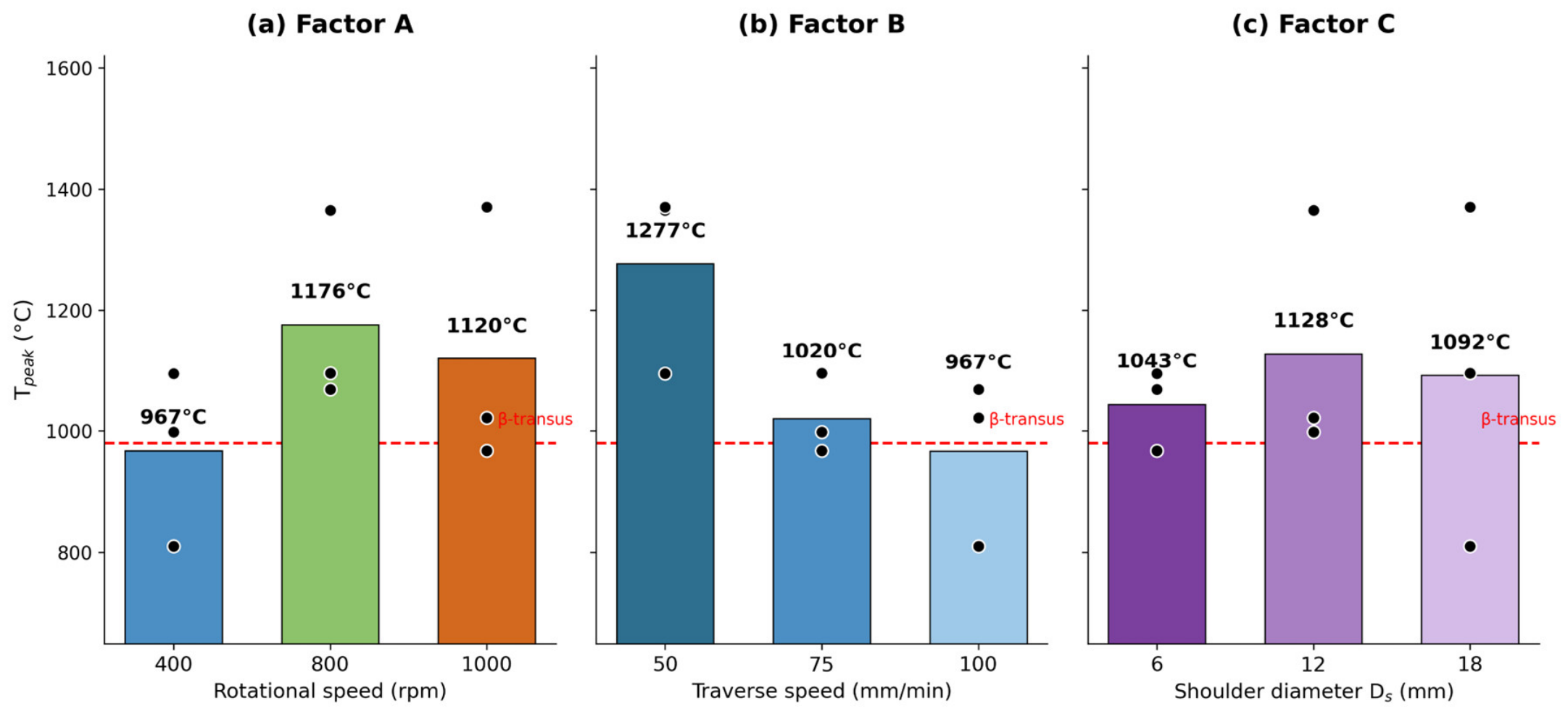
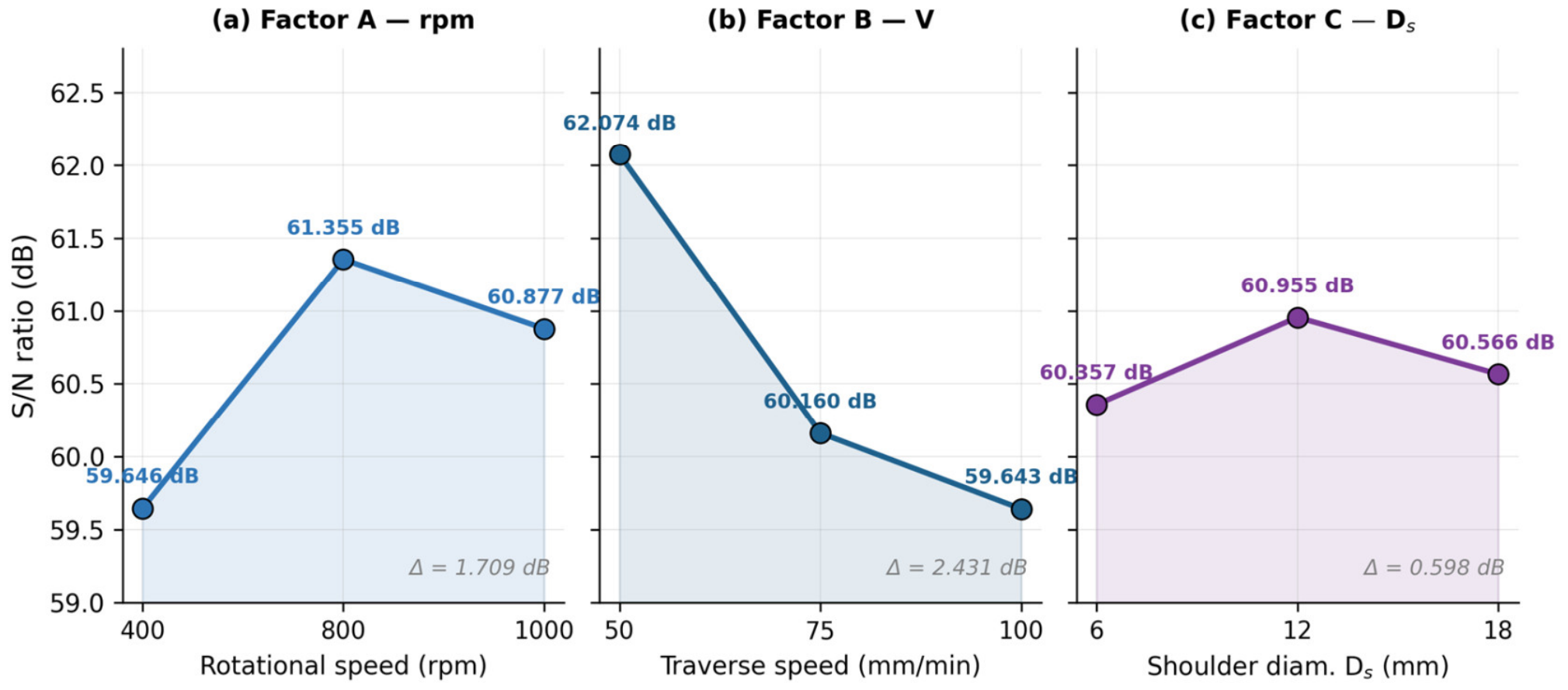
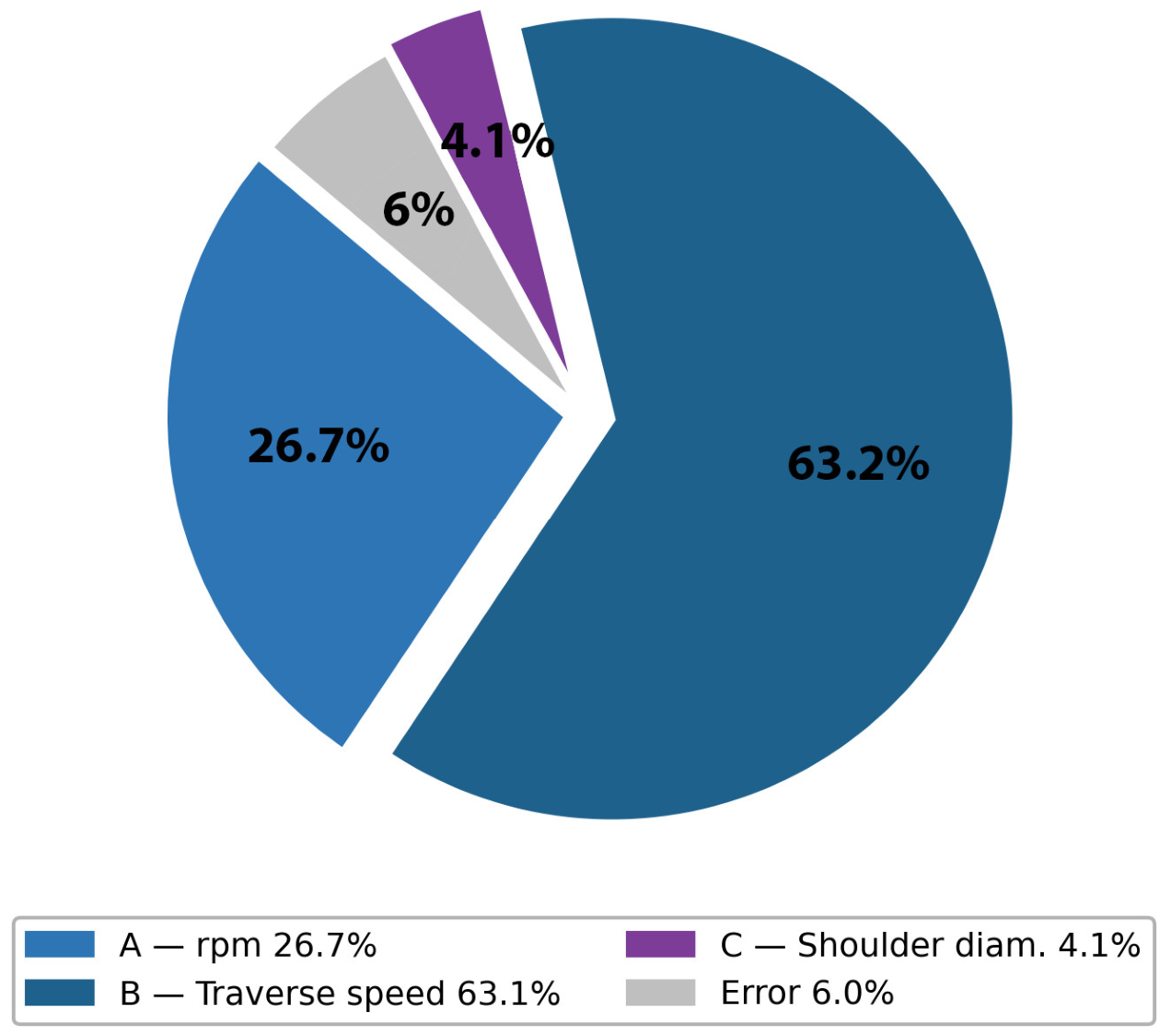
The dominance of traverse speed (63.1% ANOVA contribution) in the calibrated model has a clear physical explanation rooted in the concept of heat input per unit length, Q_L (J/mm):
Deviation (%) = |midpoint(literature range) − midpoint(present-study range)|/midpoint(literature range) × 100, computed over the rpm conditions common to each comparison. This range-midpoint approach was adopted because the cited literature sources report temperature ranges rather than individual data points; consequently, a conventional point-wise RMSE could not be computed. For the Low-temp. FSW source, only a qualitative sub-β-transus comparison is possible, as no quantitative range is reported.
Overall, the deviation between the present numerical predictions and the experimental literature values summarized in
Table 8 was generally below approximately 10%, supporting the physical credibility of the calibrated thermal model.
At constant tool geometry and contact conditions, Q_L is inversely proportional to traverse speed V. The tool effectively “dwells” longer at each material position at lower traverse speeds, allowing greater heat accumulation in the workpiece per unit length. This energy-per-length concept—directly analogous to the heat input parameter in arc welding—governs both the peak temperature magnitude and the duration of elevated-temperature exposure.
In the calibrated model, the decreasing μ at higher rpm (0.35 → 0.20) partially suppresses the increase in angular heat generation rate Q. This compression of the Q range across rpm levels reduces the apparent contribution of rotational speed to peak temperature variance (26.7%), while traverse speed—which operates independently of the friction model—retains its full physical effect. This finding is consistent with the experimental observation of Edwards and Ramulu [
19] that “feedrate controls exposure time while spindle speed governs peak temperature” and underscores the importance of friction model calibration in FSP simulation. This calibration strategy follows the sliding-to-sticking contact transition framework proposed by Schmidt and Hattel [
17] for FSW and is conceptually consistent with the inverse heat-input estimation approach of Zhu and Chao [
4], who similarly found it necessary to adjust the assumed heat source magnitude to reconcile finite element predictions with measured temperature histories, rather than relying on a fixed analytical friction coefficient across all process conditions.
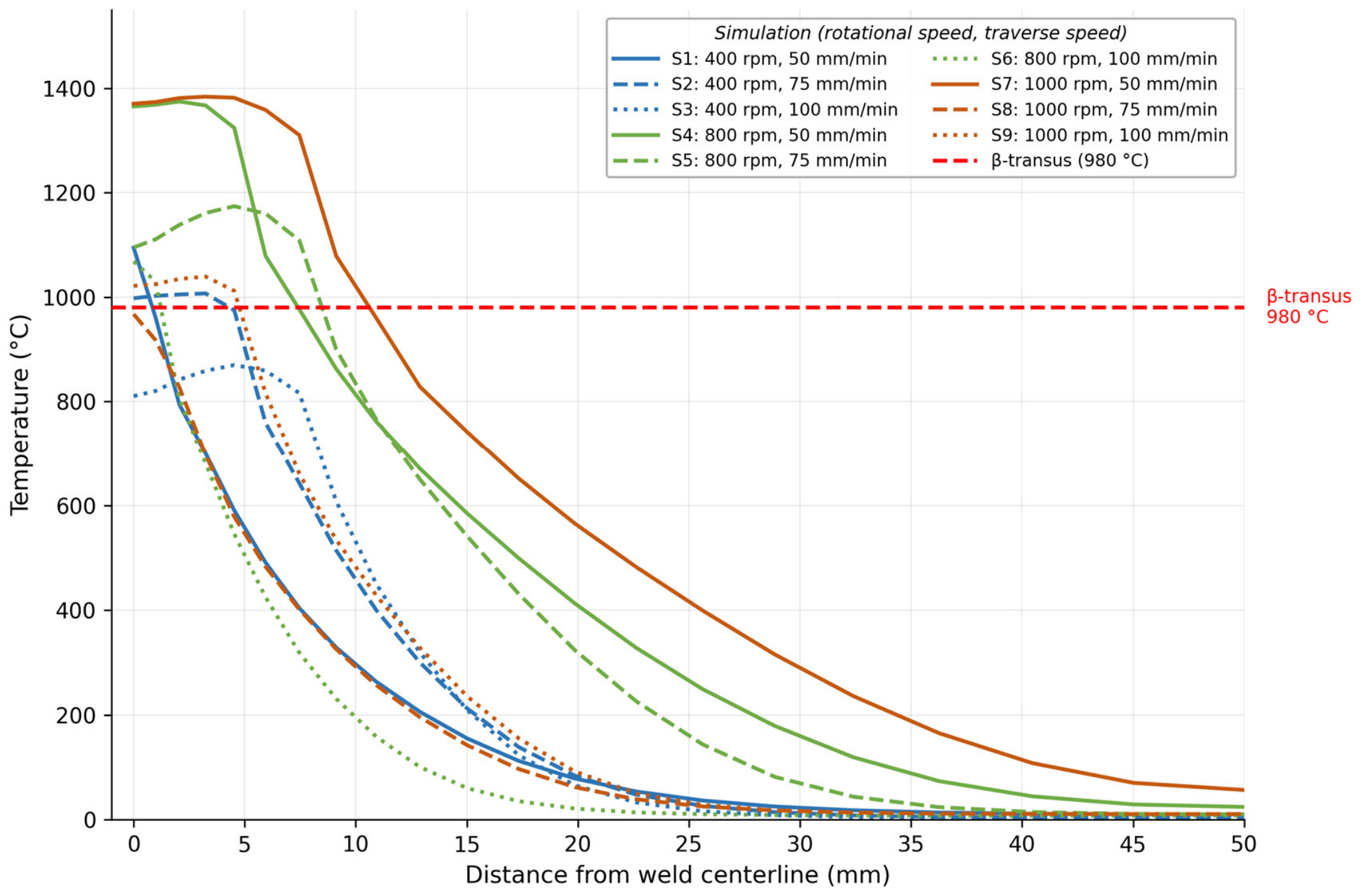
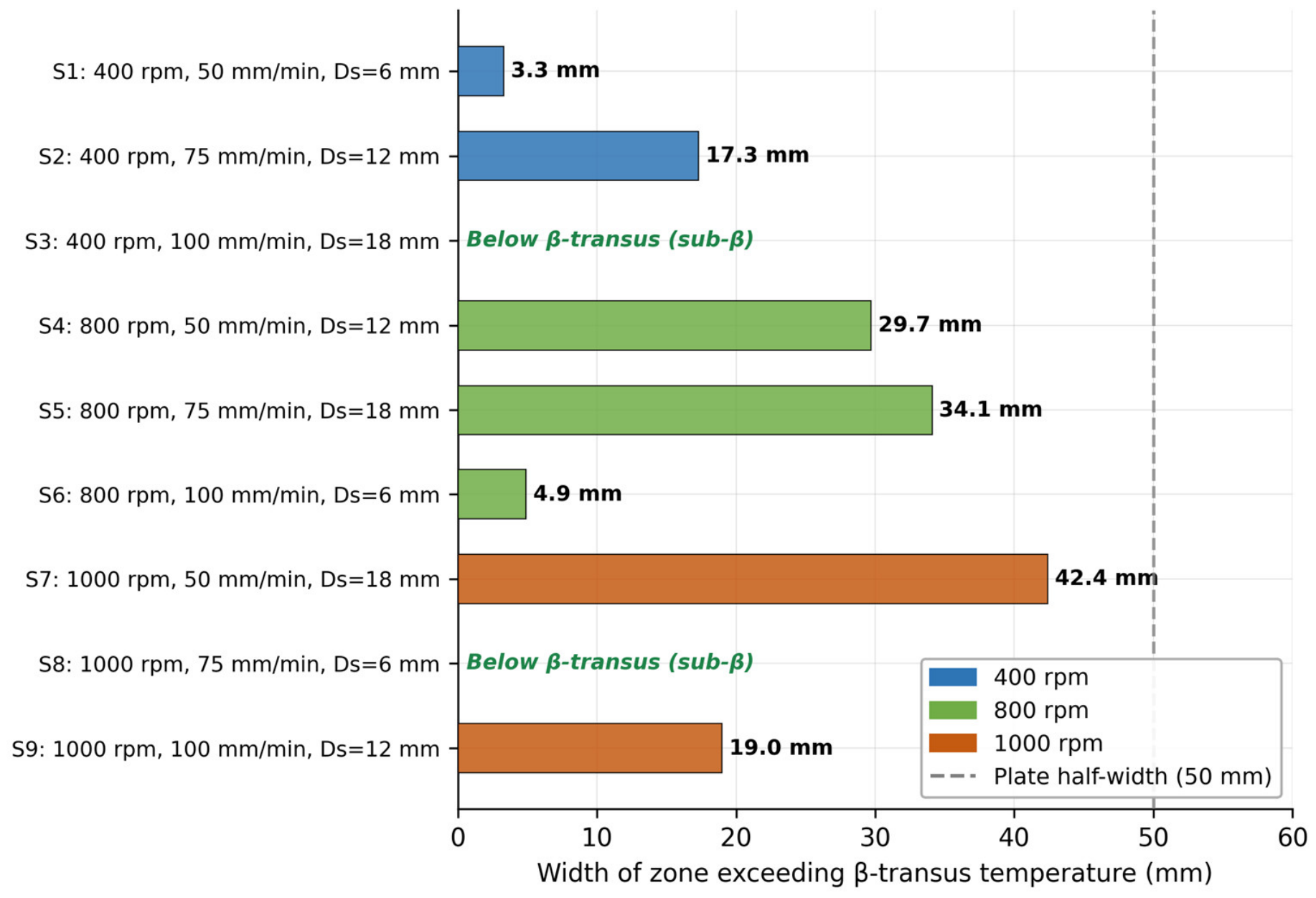
The dominance of traverse speed observed in the present ANOVA results (63.1% contribution) can be understood through three interconnected physical mechanisms. First, a lower traverse speed corresponds to a higher heat input per unit length (Q_L = Q/V), directly increasing the peak temperature for a given heat generation rate Q. Second, a lower traverse speed increases the dwell time of the tool at each material location, allowing additional time for heat to diffuse into the surrounding material before the tool advances. Third, and as a direct consequence of the first two mechanisms, lower traverse speeds produce a wider heat-affected zone (HAZ), as reflected in the substantially larger β-transus zone widths observed for the 50 mm/min simulations (
Table 5) relative to the 100 mm/min simulations at equivalent rotational speed and shoulder diameter. Because traverse speed simultaneously governs peak temperature, dwell time, and HAZ width, it emerges as the single most influential process parameter for controlling the thermal field in FSP of Ti-6Al-4V, consistent with the 63.1% ANOVA contribution reported in
Section 3.4.
4.3. Why Shoulder Diameter Has a Small Effect
Despite the cubic dependence of heat generation on shoulder radius (Rs3 term in the friction model), shoulder diameter contributes only 4.1% to T_peak variance—a result that may appear counterintuitive but has a clear physical explanation.
While a larger shoulder generates more total heat Q, it also distributes the heat flux q(r) over a larger annular area. The peak heat flux density at any radial position r is:
For a fixed contact pressure P and angular velocity ω, increasing Ds by a factor of 3 (from 6 to 18 mm) increases Q by a factor of approximately 27 (cubic scaling) but simultaneously increases the area over which this heat is distributed by a factor of 9 (quadratic scaling). The net effect on local heat flux density is only a factor of 3—much smaller than the apparent Q increase. Furthermore, the larger thermal mass associated with a wider shoulder absorbs more heat, further moderating the temperature rise at any given point. Within the tested range (Ds = 6–18 mm), these competing effects produce a relatively flat T_peak response to shoulder size, with the F-ratio of 0.68 confirming that the effect is not statistically distinguishable from error in the L9 design.
4.4. Beta-Transus Zone Evolution and Microstructural Implications
The beta-transus zone width (
Table 5,
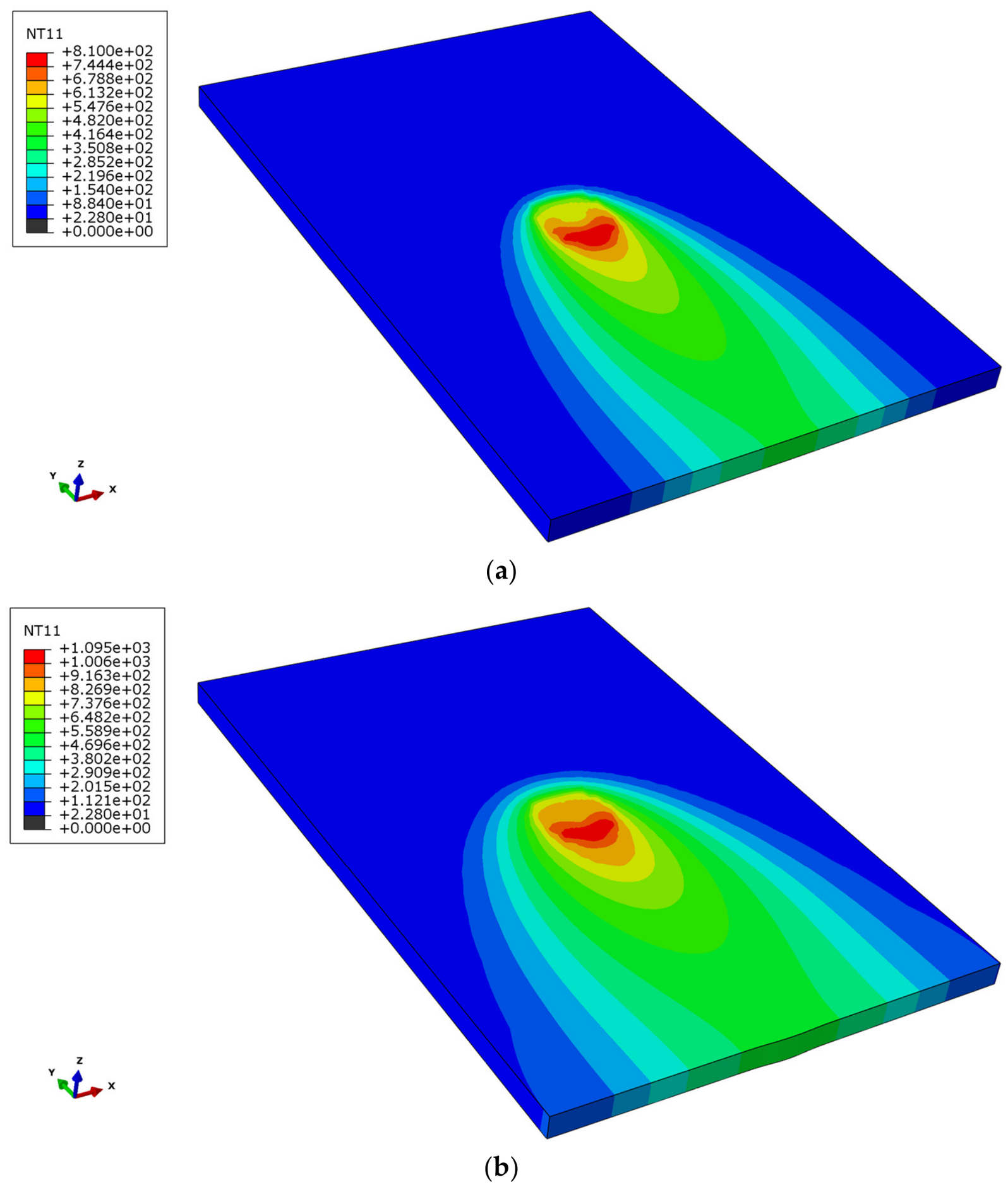
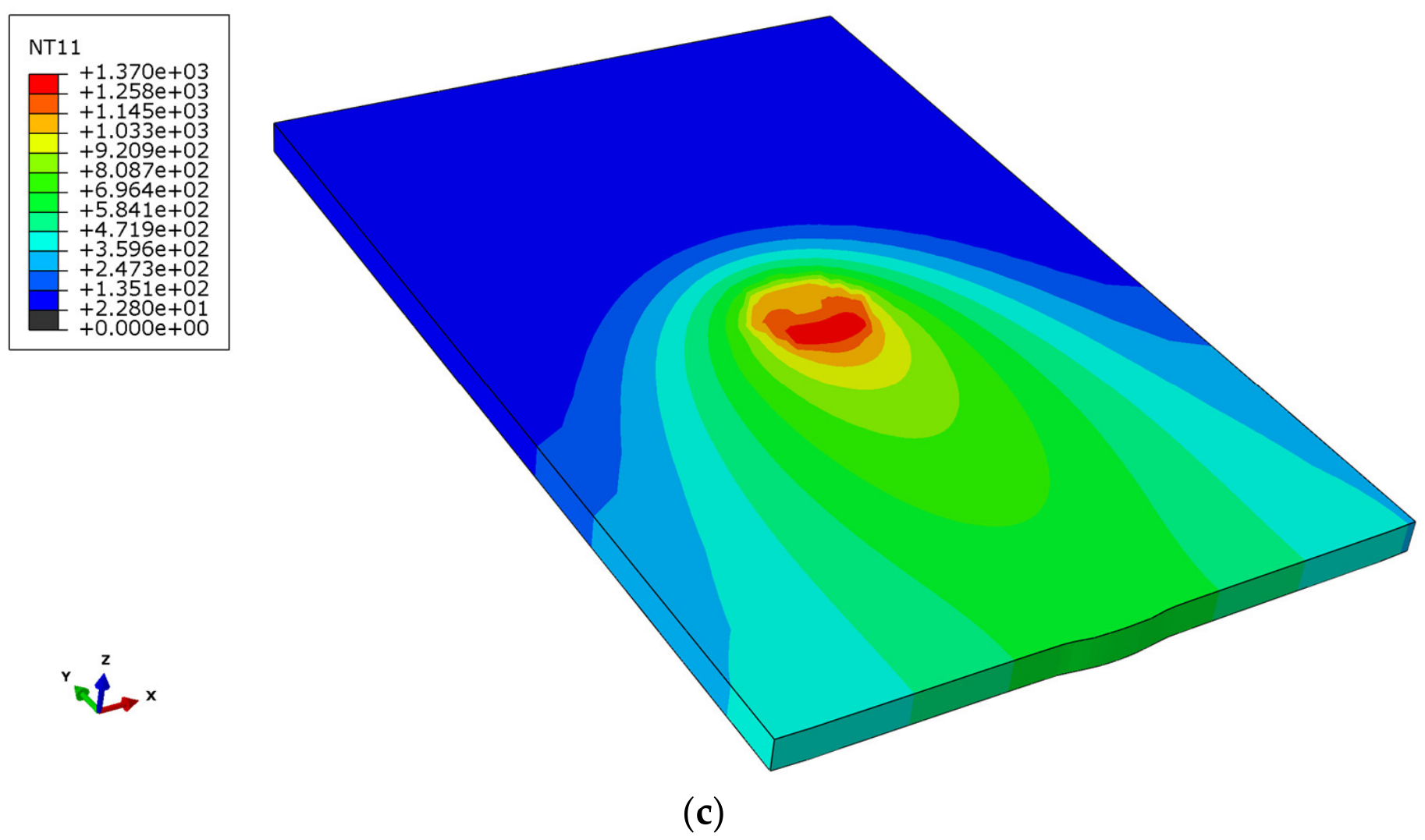
Figure 9) varies dramatically across simulations—from zero (Simulations 3 and 8, T_peak < 980 °C) to 42.4 mm in Simulation 7. This variation has direct consequences for the post-FSP microstructure and mechanical performance of Ti-6Al-4V implant surfaces.
In regions where T_peak exceeds 980 °C, the α + β microstructure transforms to β phase. Upon cooling, this β zone transforms to one of several microstructural forms depending on the cooling rate: (1) at slow cooling rates, the β transforms to coarse lamellar α + β (Widmanstätten structure) with reduced fatigue resistance; (2) at rapid cooling rates (as occur close to the tool due to the cold material surrounding the stir zone), β transforms to fine acicular α, which can improve hardness and wear resistance. For fatigue-critical implant surfaces, the sub-transus processing condition (Simulation 3, no β zone) is preferable, as it preserves the original fine-grained α + β structure while imposing sufficient plastic deformation for grain refinement. For wear-resistant articulating surfaces, a moderate β zone (Simulation 9, 19.0 mm width) may be beneficial if the cooling rate is sufficient to produce fine acicular α.
Independently of the thermally driven β-transformation discussed above, FSP imposes severe plastic deformation that promotes dynamic recrystallization and grain refinement in the stir zone, irrespective of whether the local peak temperature exceeds the β-transus. This mechanism, well documented for FSP of Ti-6Al-4V [
2,
6], explains why even the sub-transus configurations (Simulations 3 and 8) are expected to exhibit substantial grain refinement relative to the unprocessed base metal, despite the absence of a β-transformed zone: deformation-driven recrystallization and thermally driven phase transformation are distinct, only partially overlapping mechanisms. Pilchak et al. [
6] further demonstrated that FSP of Ti-6Al-4V can introduce tool-derived contamination into the stir zone, which can be mitigated through a post-process α/β heat treatment; this consideration should be incorporated into future experimental validation of the present computational predictions, particularly for the higher-temperature configurations (Simulations 4, 5, and 7) where tool wear is expected to be most severe.
The strong correlation between Q and beta-transus zone width (Pearson r > 0.95, estimated from
Table 5 data) confirms that heat input is the primary driver of microstructural zone development, providing a straightforward design criterion: to control the β-transformed zone width for a specific biomedical application, traverse speed and rotational speed should be adjusted to target the desired Q value. Quantitative confirmation of this correlation, together with measured prior-β grain size as a function of Q, is identified as a priority for the experimental validation phase of this research.
4.5. Implications for Biomedical FSP Process Design
Based on the present computational results, the following guidance is offered for biomedical FSP of Ti-6Al-4V implant surfaces:
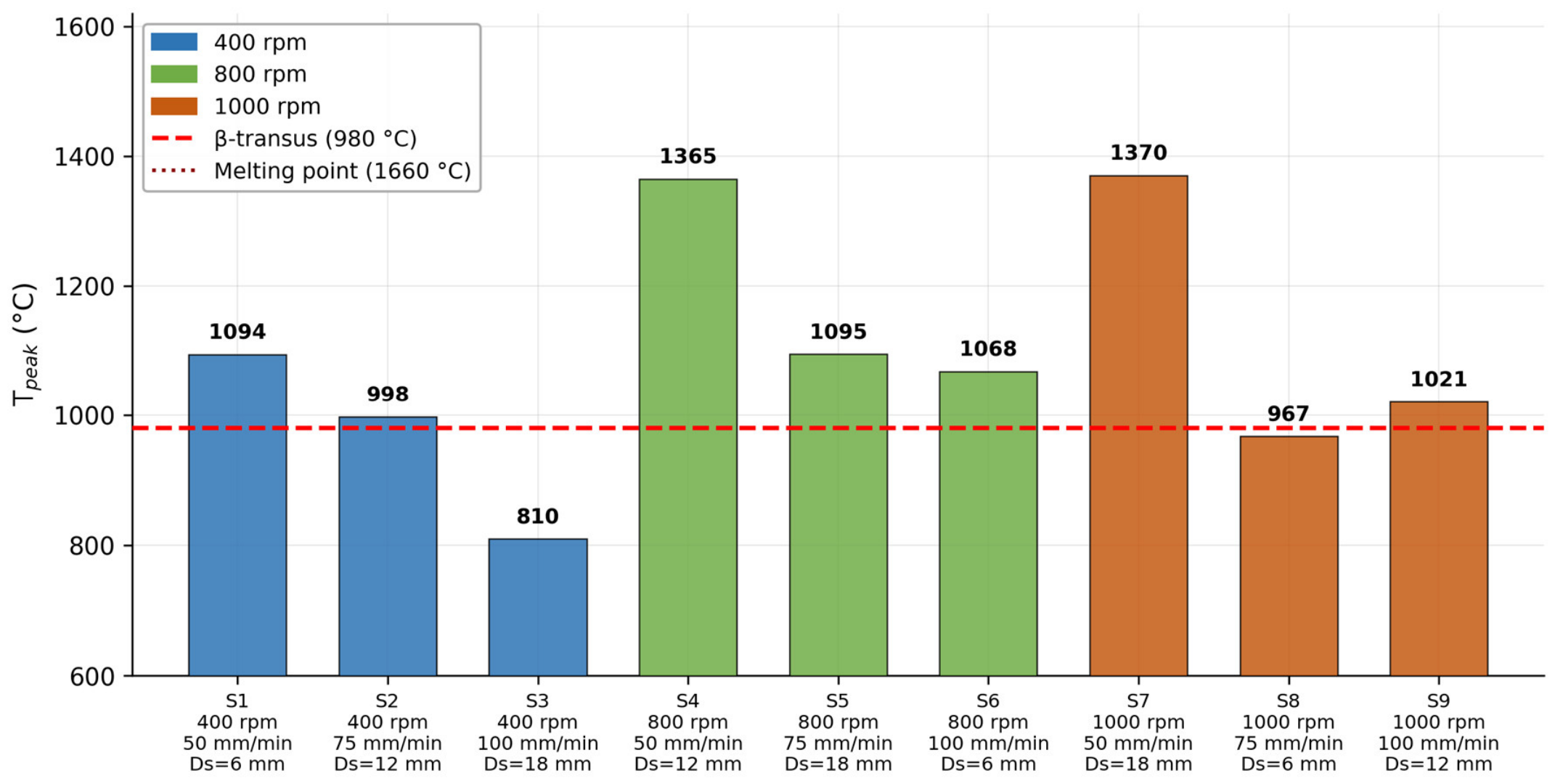
Sub-transus FSP for fatigue-critical surfaces (e.g., femoral stems, tibial trays): Target T_max < 980 °C by selecting high traverse speed (100 mm/min) and low rotational speed (400 rpm). Simulation 3 (T_max = 869.7 °C) appears to be the most promising thermal condition for preserving the fine-grained α + β microstructure for this application, as it remains below the β-transus temperature while still imposing the thermo-mechanical work required for grain refinement.
Near-transus FSP for wear-resistant surfaces (e.g., femoral heads, acetabular cups): Target T_peak in the range 980–1100 °C to produce a controlled narrow β zone. Simulation 9 (1000 rpm, 100 mm/min, Ds = 12 mm, T_peak = 1021 °C, β zone = 19.0 mm) appears promising for this purpose, as it combines moderate thermal activation with limited zone width.
Traverse speed is the primary control variable for temperature management: it should be adjusted first to set the target thermal regime. Rotational speed provides secondary control; shoulder diameter has minimal influence on peak temperature within the tested range.
It must be emphasized that these recommendations are based on thermal FEA predictions alone. Experimental validation through in situ temperature measurement, microstructural characterization by electron backscatter diffraction (EBSD), and mechanical testing (hardness, fatigue, wear) are essential before translating these computational findings into manufacturing practice. The present study provides a systematic computational framework that substantially reduces the experimental parameter space for such future validation campaigns.
4.6. Limitations and Future Work
The present study has several limitations that should be explicitly acknowledged:
Thermal model only: the present finite element model predicts thermal fields exclusively and does not include material flow, plastic deformation, residual stresses, or microstructural evolution.
No material flow modeling: the severe plastic deformation and material stirring characteristic of FSP are not represented; the model captures only the thermal consequences of frictional heat generation.
No residual stress prediction: the thermal-only formulation precludes prediction of residual stress and distortion, which require a fully coupled thermo-mechanical analysis.
Simplified friction model: the friction model uses a constant-μ-per-rpm approach rather than a fully coupled, continuously temperature-dependent friction law.
Saturated statistical design: the L9 Taguchi design with four factors produces a saturated array (error DOF = 2), limiting the statistical power of the ANOVA F-tests.
No direct experimental validation: no thermocouple or infrared temperature measurements were obtained for the specific geometries investigated in this study; validation in
Section 4.1 relies on comparison with independently published literature data for related but not identical process conditions.
Future work should address these limitations through: (1) experimental validation via embedded thermocouples or infrared pyrometry during FSP of Ti-6Al-4V; (2) extension to a fully coupled thermo-mechanical model for residual stress and distortion prediction; (3) implementation of a temperature-dependent friction coefficient using the Zener–Hollomon parameter approach; (4) microstructural characterization by EBSD to correlate predicted thermal cycles with actual grain size and phase distributions in processed Ti-6Al-4V.
4.7. Synthesis of Key Findings
Taken together, the results indicate that the dominance of traverse speed over rotational speed in the calibrated model reflects its role in controlling the thermal energy input per unit length of processed material—a mechanism that operates independently of the friction model assumptions used to calibrate rotational-speed-dependent heat generation. By contrast, shoulder diameter, despite its cubic scaling with heat input rate in the underlying friction model, has a statistically negligible effect on peak temperature within the tested range because the increase in total heat generation is largely offset by the corresponding increase in the heat distribution area beneath the larger shoulder. These two findings, together with the model calibration strategy and validation against independent experimental datasets (
Section 4.1), constitute the principal mechanistic insights of this study and form the basis for the concise conclusions presented in
Section 5.
The present model has several limitations. Material flow, dynamic recrystallization, residual stress evolution, and microstructural transformation kinetics were not explicitly modeled; the calibrated DFLUX-based formulation predicts thermal fields only, and all microstructural and biomedical recommendations made in this study (
Section 4.4 and
Section 4.5) follow from those thermal predictions rather than from direct simulation of the underlying metallurgical processes. Future work should incorporate fully coupled thermo-mechanical and microstructural simulations, together with experimental validation, to confirm the processing windows identified here.
5. Conclusions
A systematic computational investigation of friction stir processing of 5 mm Ti-6Al-4V titanium alloy plates was conducted using nine Taguchi L9 parameter combinations, a calibrated DFLUX-based finite element model in Abaqus/Standard, and Taguchi S/N and ANOVA statistical analyses. A user-defined, rpm-calibrated DFLUX subroutine (μ = 0.35/0.25/0.20 for 400/800/1000 rpm; F = 6000 N) yielded maximum temperatures of 870–1384 °C, consistent with published experimental measurements for FSW/FSP of Ti-6Al-4V [
2,
19] (
Table 8). The Taguchi L9 orthogonal array reduced the required simulations from 81 (3
4 full factorial) to nine—an 88.9% reduction in computational effort—while the geometric constraint Ds/Dp = 3 ensured physically consistent tool configurations across all parameter combinations. ANOVA identified traverse speed as the dominant parameter controlling peak temperature (63.1% contribution, F = 10.44), followed by rotational speed (26.7%, F = 4.43) and shoulder diameter (4.1%, F = 0.68); the corresponding mechanistic interpretation of this ranking is given in
Section 4.7. The width of the zone exceeding the β-transus temperature (980 °C) ranged from zero (Simulations 3 and 8, T_max < 980 °C) to 21.2 mm in Simulation 7 (T_max = 1383.8 °C); Simulations 3 and 8 were the only configurations achieving fully sub-transus FSP without external cooling, and the β-transus zone width correlated strongly with heat input Q (estimated Pearson r > 0.95). Simulation 3 (400 rpm, 100 mm/min, Ds = 18 mm, T_max = 869.7 °C, no β zone) appears most promising for preserving the fine-grained α + β microstructure relevant to fatigue-critical biomedical implant surfaces, while Simulation 9 (1000 rpm, 100 mm/min, Ds = 12 mm, T_max = 1039.2 °C, β zone = 9.5 mm) appears promising for wear-resistant surfaces; these recommendations are based solely on thermal predictions, and experimental validation through microstructural characterization and mechanical testing is required before clinical translation (
Section 4.5). The present computational framework—combining calibrated DFLUX-based FEA with Taguchi-ANOVA optimization—provides an efficient and physically grounded methodology for FSP parameter screening that substantially reduces the experimental burden. Future work should include experimental temperature validation, thermo-mechanical residual stress modeling, EBSD microstructural characterization, and fatigue/wear testing to fully characterize the biomedical performance of FSP-treated Ti-6Al-4V surfaces.