A New QoE Model for 5G FWA Using the Structural Equation Modeling (SEM) Approach


Abstract
1. Introduction
2. Related Work
2.1. Technology 5G FWA
2.2. QoS and User Experience with 5G FWA
2.3. Review Structural Equation Modeling (SEM)
2.4. Relevant Literature of Structural Equation Modeling (SEM) in Quality of Experience (QoE)
3. Methodology
3.1. The Research Framework
3.2. Identification Factors of Model UX and QoS
- Prediction ModelThe framework connecting QoS and UX factors was established in [33], beginning with the primary influence of service factors. Based on the ITU definition, QoE measures the subjective satisfaction of users while interacting with a service. As various applications have diverse technical requirements to satisfy a user, QoE outcomes are inherently variable. This highlights the necessity of precise QoS parameters, as they are the key building blocks for achieving a high-quality user experience. Within 5G FWA ecosystems, the assessment of QoS and UX service parameters involves key parameters, such as throughput, latency, MOS, usage, location, and time. The 5G FWA landscape is anticipated to support a diverse service suite, including high-speed internet, OTT multimedia, and real-time voice services, all of which rely on the intersection of technical quality, reliability, and bandwidth. Notably, 5G-enabled OTT videos services are expected to outperform the traditional FTTx platforms. However, because real-time applications and high-speed access are highly sensitive to latency, maintaining high reliability and consistent bandwidth remains a critical necessity.
- Data Collection and sampleData collection and sample data collection from qualified participants, both experts and users, were conducted, focusing on those actively engaged with RF engineering and spectrum frequency or users active in their workplaces. A total of 94 valid responses were obtained, which satisfied the minimum sample size recommended in Table 2 for PLS-SEM [34].A purposive sampling strategy was adopted because the study required participants with specific expertise and user experience with relevant mobile and fixed broadband technologies. To minimize potential sampling bias and enhance representativeness, data were gathered from multiple channels, including organizational networks, professional associations, and active users. Participation was voluntary and anonymous, with informed consent obtained from all respondents.
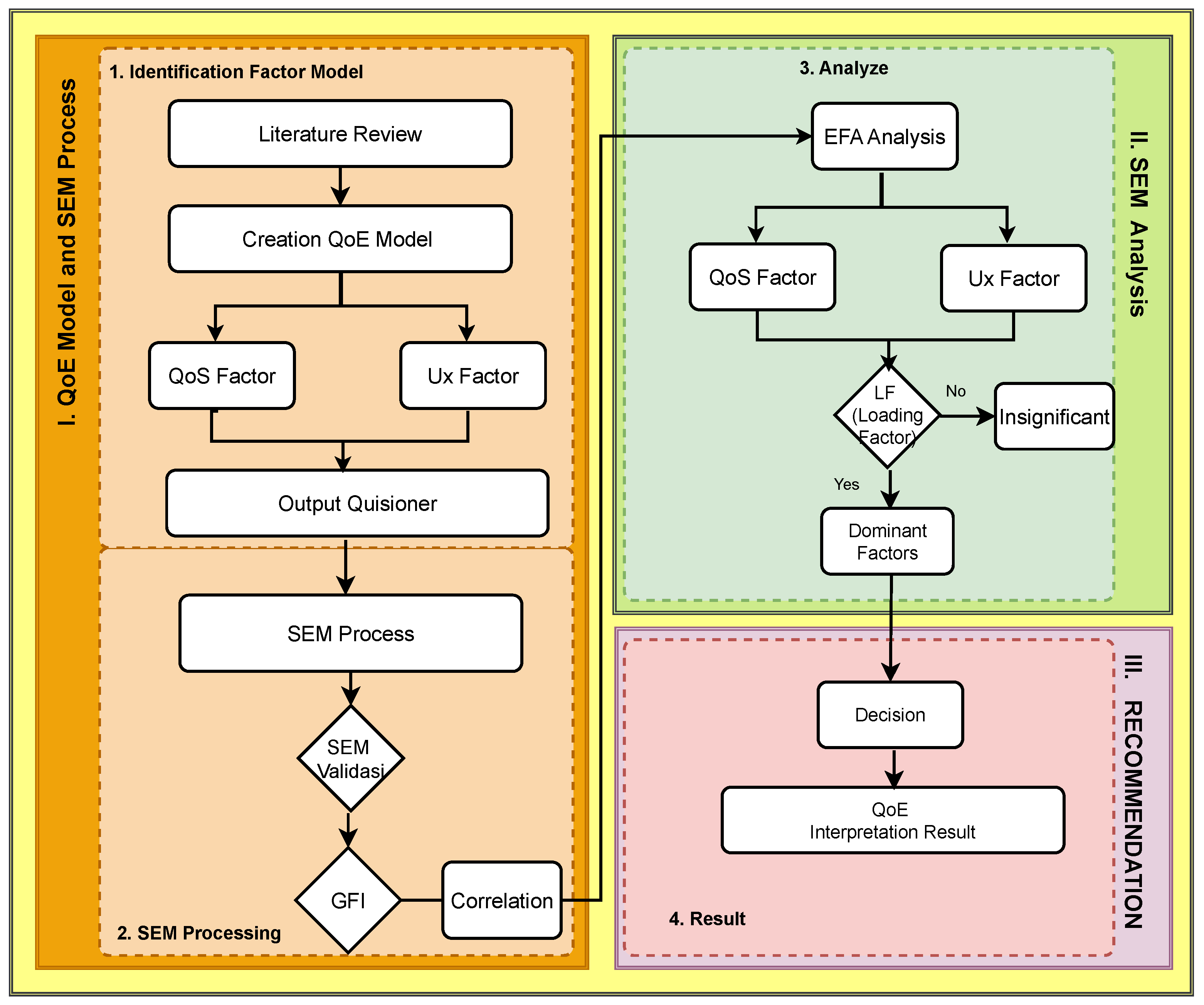
- Feedback Input ProcessThe questionnaires in this study were divided into two models: the SEM EFA (QoS) and (UX) model, followed by a comparative value analysis between 5G FWA and FTTx technologies. To ensure that the survey data reflected high-quality domain expertise, this study employed purposive sampling to recruit qualified participants. The selection criteria for both experts and users were defined as follows:
- Subject matter experts with professional experience in both mobile and fixed telecommunications technologies.
- Direct users with active experience in utilizing both 5G and FTTX data services.
- Mid-to-senior-level professional standing, such as RF managers, RF architects, and senior engineers involved in RF quality.
- Proven track record for enhancing user experience or contributing to broadband strategy development in Indonesia.
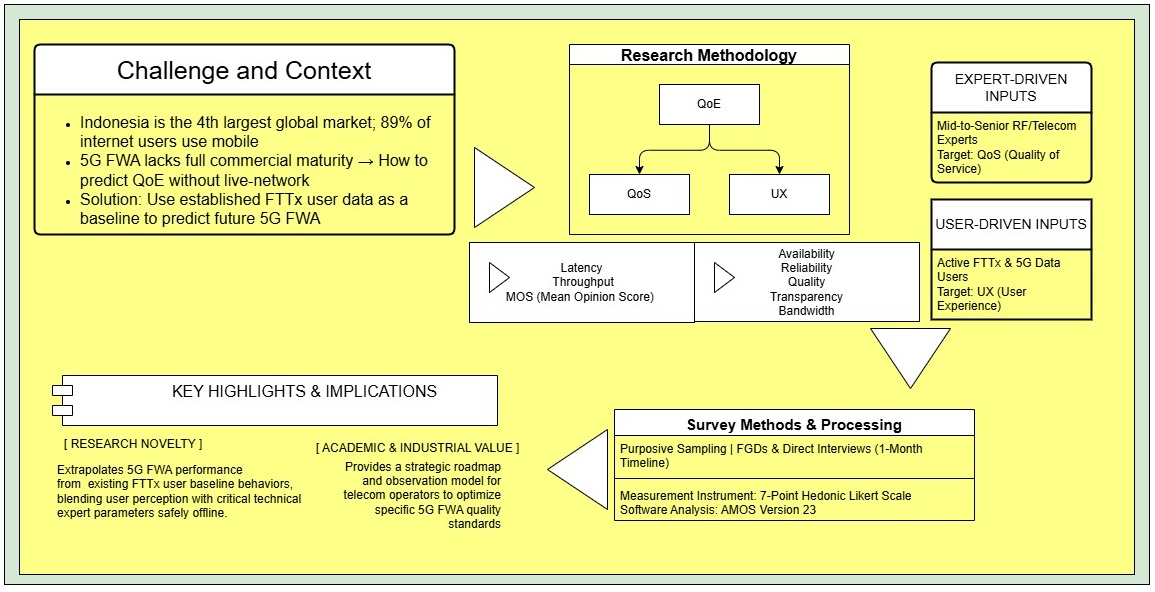
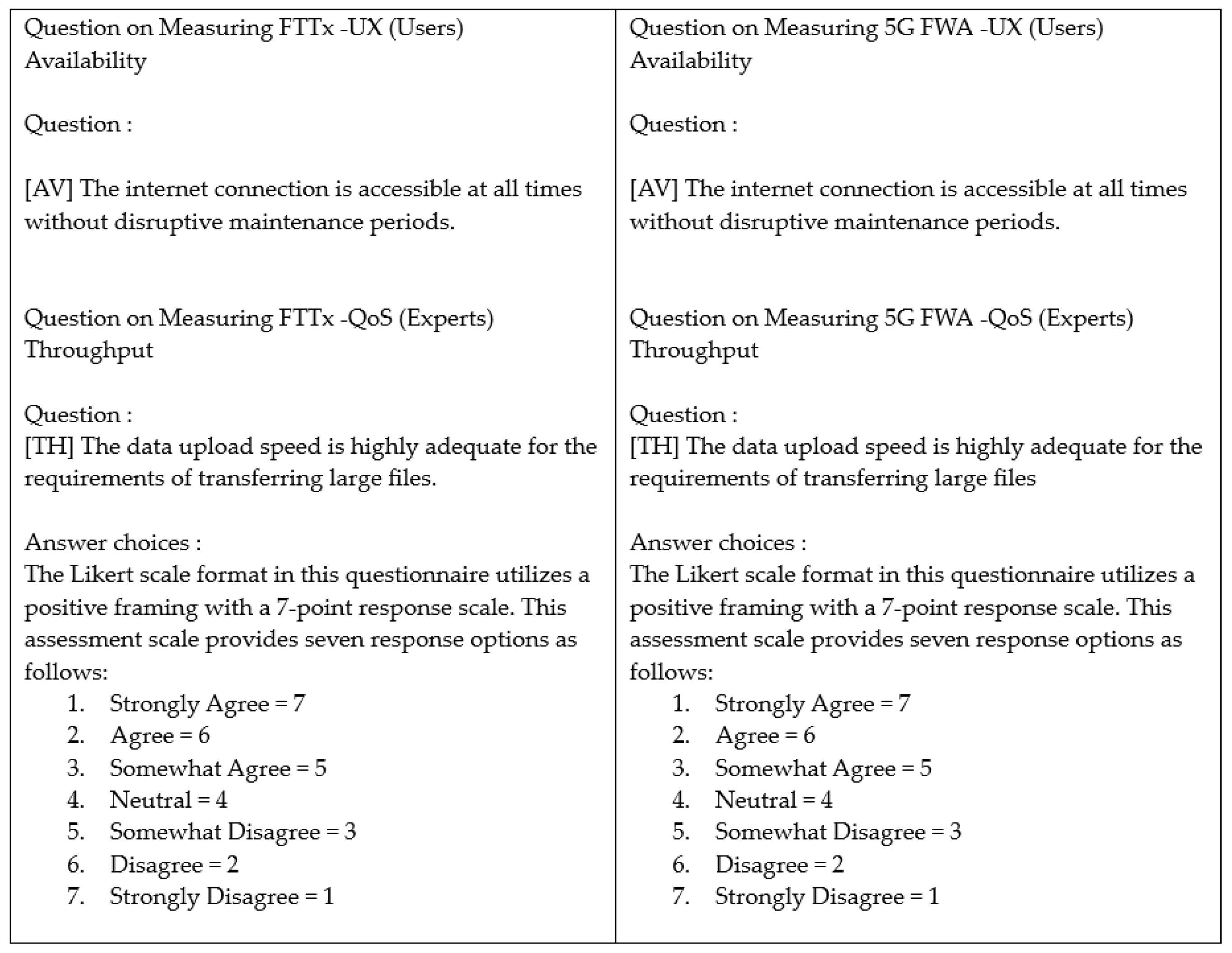
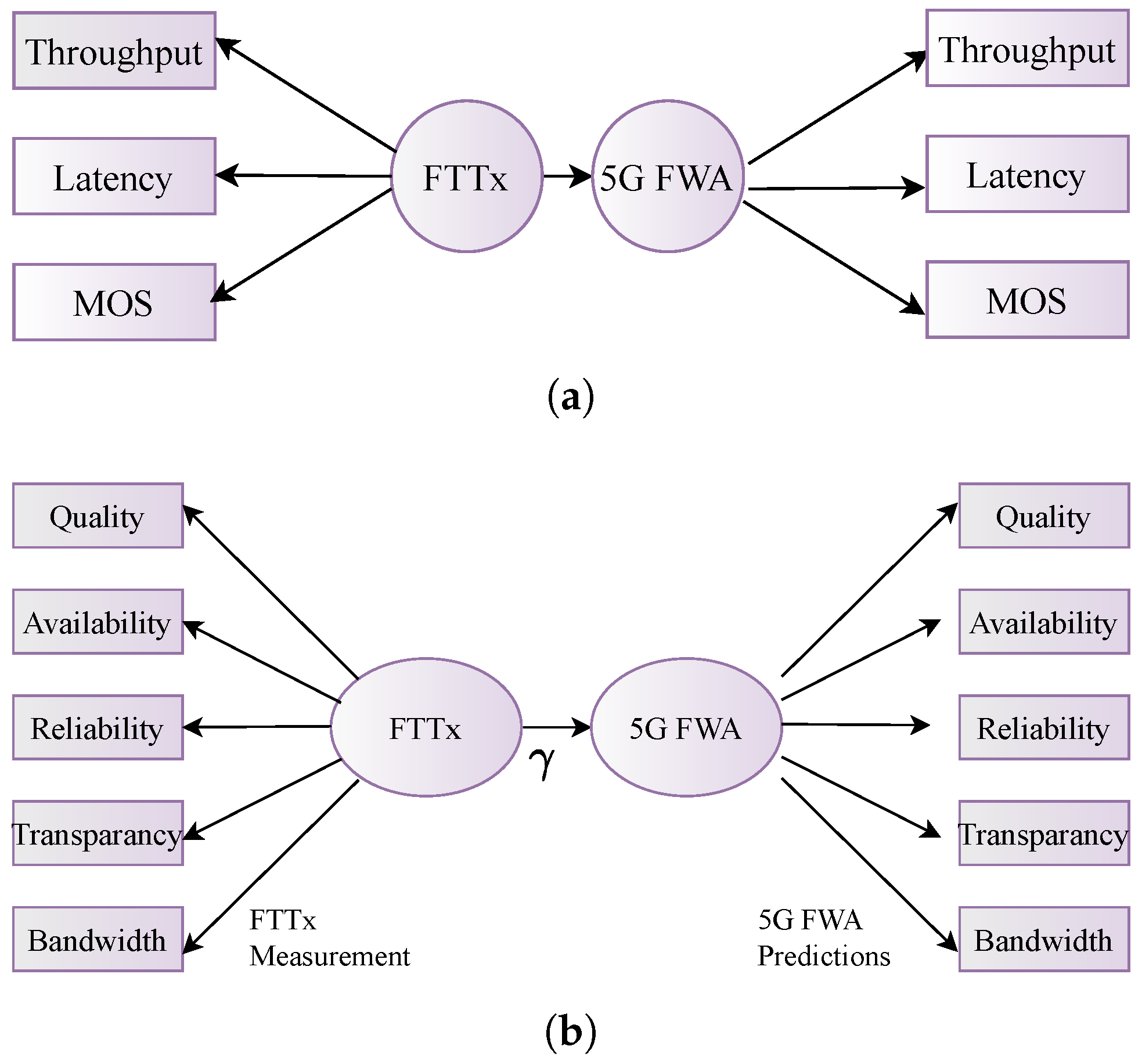
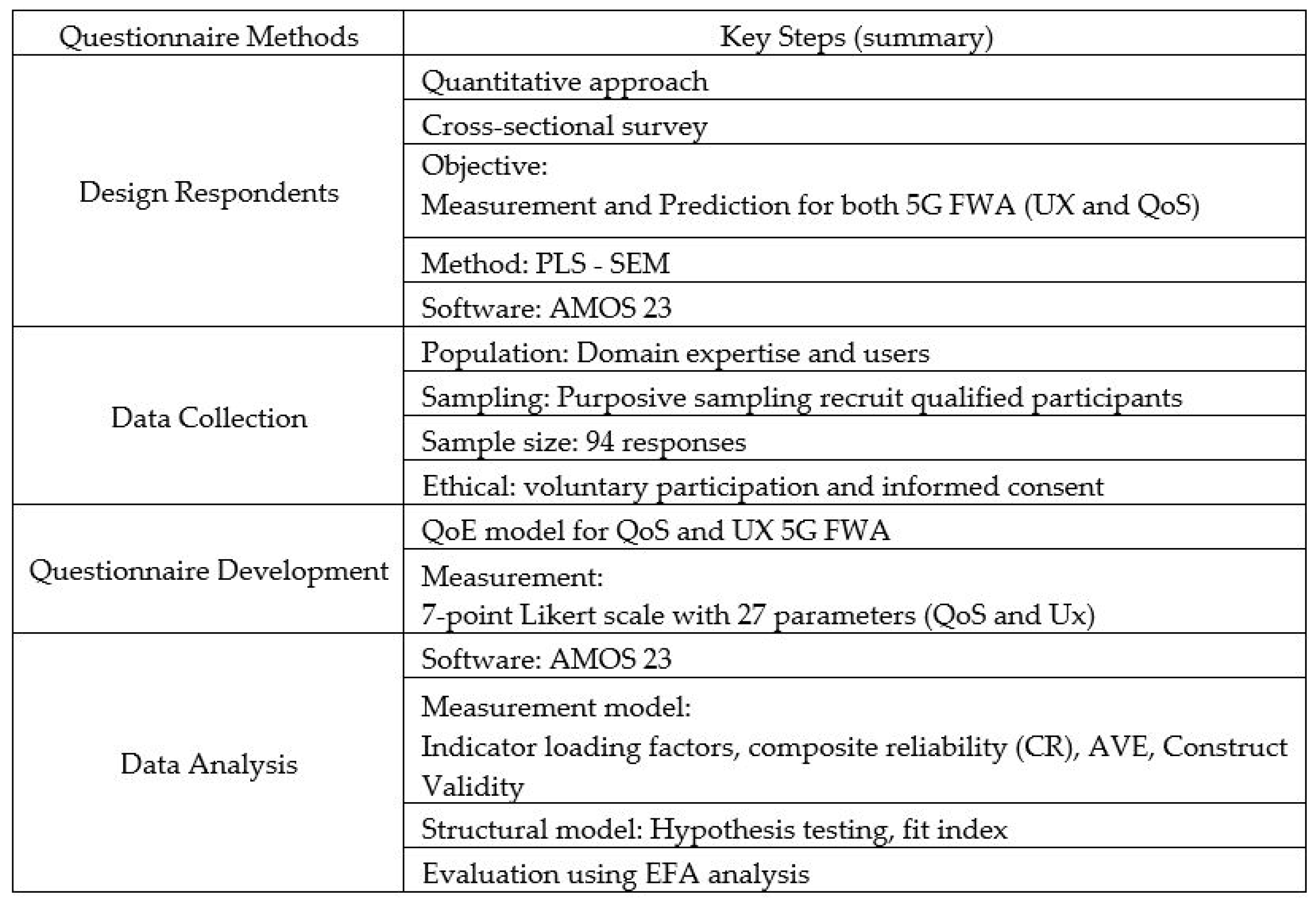
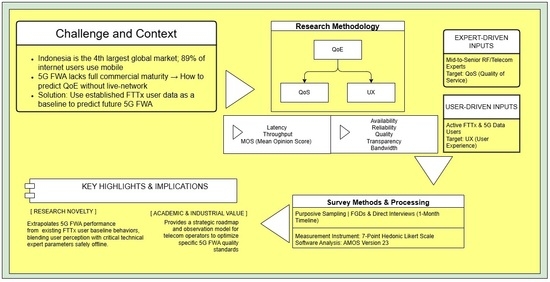
Since 5G FWA technology has not yet reached full commercial maturity, respondents were selected from existing FTTx technology. This introduces a unique methodological challenge: developing a statistical model that extrapolates 5G FWA outcomes from FTTx user data. The survey targeted the Indonesian market using a seven-point Likert scale, often referred to as the Hedonic scale in consumer research [35,36]. This approach assumes that FTTx is already a staple of daily consumption and will follow a similar trajectory to 5G FWA. To maintain statistical validity, the sample size was determined to be two to three times the number of primary questions. An example of the instrument focusing on availability (UX) and throughput (QoS) is illustrated in Figure 2.Consequently, by engaging expert respondents and employing a rigorous selection process, this approach ensured robust data validation while maintaining random errors within acceptable margins.The random error of the measured parameter factors consists of user experience variables, namely, quality, availability, reliability, transparency, and bandwidth, which produce correlation values and loading factors. The measurement results to be conducted included calculating the GFI value, loading factor, p-value, and r-value. The r-value is used to obtain an overview of the distribution, whereas the loading factor for each parameter can be interpreted to represent the precision. Based on the samples to be used in the measurement with systematic and random error simulations of the 5G FWA QoE across several parameters, it was found that all loading factors were greater than 0.10 (r-value). Therefore, the SEM processing results for 5G FWA prediction are valid and accurate against the standard loading factor threshold, thus increasing the accuracy. This accuracy improves because the number of respondents meets the standards of the model used; hence, the construction model in Figure 3 must be precise in order to obtain accurate correlation values and loading factors. - Ethical ConsiderationEthical integrity was maintained throughout the study in accordance with international research guidelines. Participants were fully briefed on the research objectives and assured that their involvement was entirely voluntary and confidential. Before any data collection began, formal informed consent was secured from each respondent. To protect participant anonymity, no personally identifiable data were gathered or retained. Furthermore, the study’s procedures and questionnaire design were reviewed and approved by an academic ethics committee prior to launch to ensure they were culturally sensitive and respectful. A summary of the survey methodology, including respondent design, data collection, questionnaire design, and analysis, is detailed in Figure 4.
3.3. SEM Processing
- Construction ModelWhen constructing a structural equation modeling (SEM) model, several key elements must be considered [37,38]:
- (a)
- Latent VariablesThere must be at least two latent variables in the model construction. These variables cannot be measured directly except for the underlying factors. There are two types of latent variable:
- Exogenous variables : The independent variables that exert influence.
- Endogenous variables : The dependent variables that are influenced.
- (b)
- Factors, Indicators, or Observed Variables (x and y)These factors are the elements that build the value or measurement of latent variables.
- (c)
- Correlation ()The relationship paths or links between the latent variables.
- (d)
- Loading Factor ( and )Relationship paths between latent variable and its corresponding factors. Based on the four elements mentioned above, the simple mathematical representation of the SEM model correlation using Equations (1)–(3) is as follows:SEM analysis requires the validity and reliability of the constructed model, as shown in Figure 3. The requirements for validity are as follows [39]:
- i.
- p < 0.05, indicating that the model provided a significant relationship or correlation.
- ii.
- The relationship between factors and their latent variables was supplemented by a critical ratio (C.R.) coefficient for each factor >1.96.
- iii.
- Reliability was met if the coefficient value or Cronbach’s Alpha was >0.60.
- iv.
- The significance level of the correlation was set at a threshold of 0.5. If the correlation value was lower than 0.5, then the influence of the exogenous variable in this study, FTTx technology, on the endogenous variable, 5G FWA, was not significant. Conversely, if the correlation value was higher than 0.5, the influence of the FTTx technology on 5G FWA was considered significant.
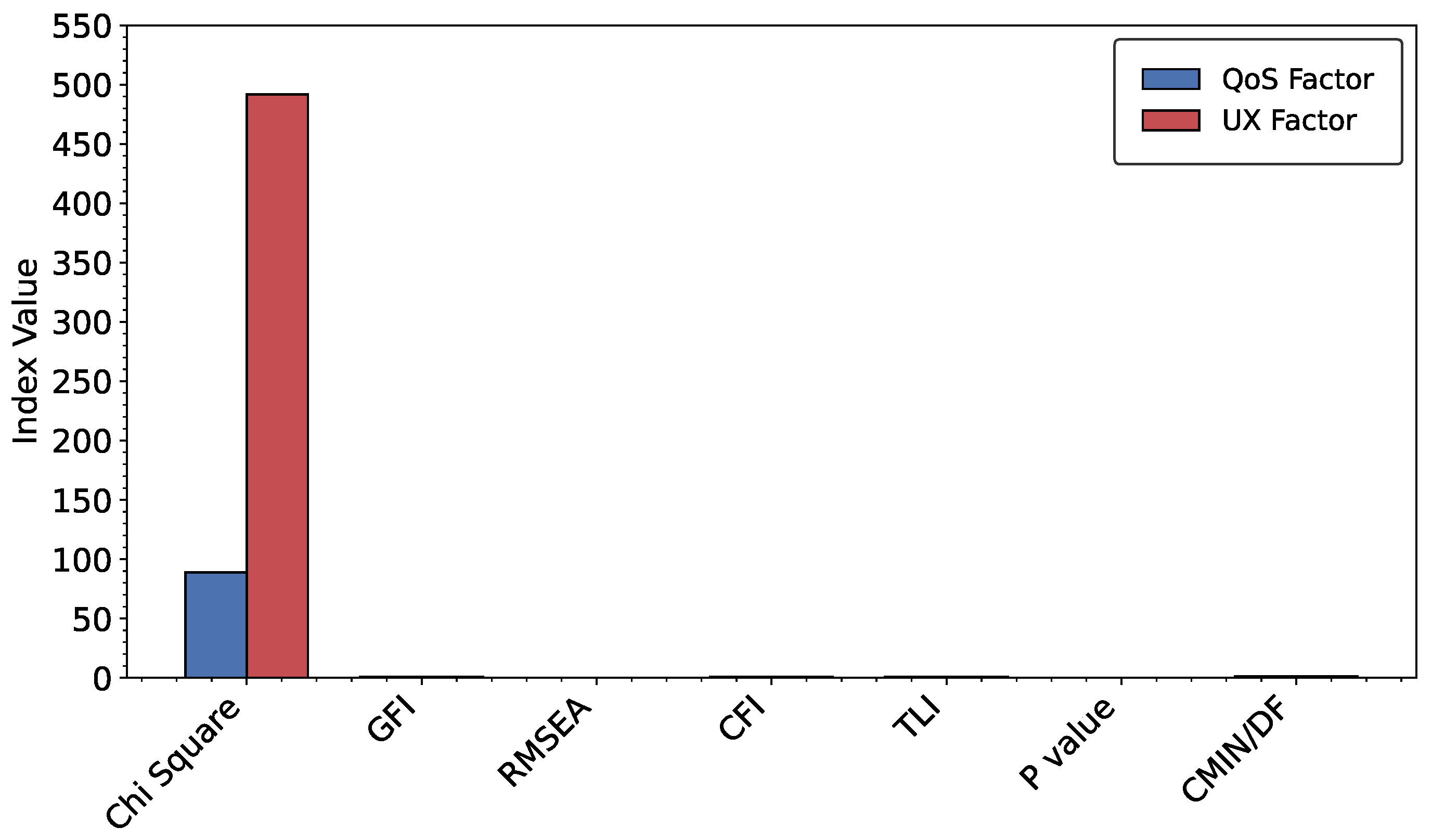
- Systematic Error/GFIIn the SEM analysis, managing systematic errors involves several testing phases. First, the Goodness of Fit Index (GFI) was tested to determine whether systematic errors existed in the constructed model. The Goodness of Fit (GFI) test was conducted to assess the extent to which the data and model satisfied the SEM assumptions. The evaluation was performed on the overall model, followed by separate evaluations of the measurement model and the structural model, with a standard threshold value of >0.90 or approaching 1. In addition to the GFI, several other indices are used to evaluate the Goodness of Fit of the model, including:
- (a)
- The Root Mean Square Error of Approximation (RMSEA) measures the discrepancy between the observed covariance matrix and the model’s covariance matrix. An RMSEA value below 0.08 is generally considered an indication of an acceptable model fit.
- (b)
- Comparative Fit Index (CFI): The hypothesized model is compared with a baseline or null model. A value >0.90 or >0.95 indicates a good fit.
- (c)
- The Tucker–Lewis Index (TLI), also known as the Non-Normed Fit Index (NNFI), is used to evaluate the model’s fit while accounting for model complexity. The standard threshold is typically >0.90.
- (d)
- Chi-square: A fundamental measure for testing the difference between the sample and fitted covariance matrices. A low Chi-square value relative to the degrees of freedom (with a p-value > 0.05) suggested that the model fit the data well.
3.4. Analyze SEM—EFA
3.5. Decision Hypothesis Factors Among Latent and Observed Variables
- LV-H0: FTTx (fiber to the x) has the perceived performance and limitations of existing FTT-x services that significantly influence the user’s expectation and transition towards 5G FWA solutions for both UX and QoS path-observed variables. There was no influence between the LV of FTT-x and 5G FWA and the related service factors.
- LV-H1: 5G FWA (Fixed Wireless Access) has the technical dimensions of 5G FWA QoS (e.g., latency, throughput, and MoS) that have a positive and significant correlation with the overall quality of experience (QoE) as perceived by experts. There is an influence between the variables of FTT-x and 5G FWA and related service factors.
4. Results
4.1. SEM Processing Result
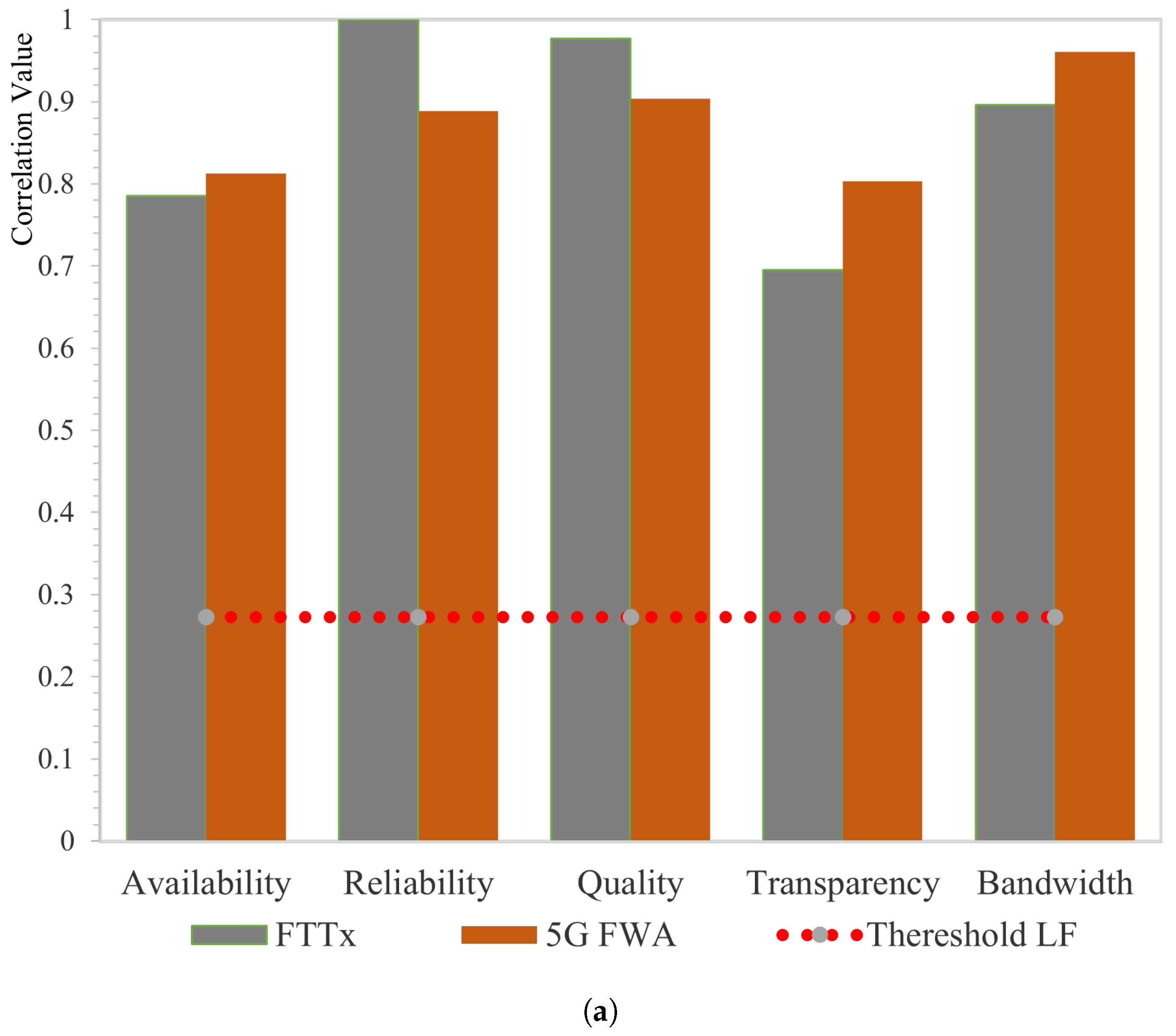
- UX Factor Result For FTTx.Indicators for FTTx demonstrate a very strong correlation with their respective latent variables:
- Reliability of FTTx is the strongest indicator with a correlation value of 0.999 and a t-value of 2.36, suggesting that technical reliability is the primary identity of fiber services for users.
- Quality (0.977) and bandwidth (0.896) also exhibited very high correlations, confirming that FTTx is evaluated based on its quality and bandwidth.
- Validity and Reliability: A validity score of 0.943 and an AVE of 0.77 indicate that these indicators are highly consistent in measuring the FTTx variable.
- UX Factor Result For 5G FWA.Indicators for 5G FWA show more uniform consistency and are statistically significant:
- The bandwidth (0.96) and quality (0.90) were the dominant factors. This is logical because the primary advantage of 5G FWA is its wireless speed that rivals fiber.
- Statistical Significance: In contrast to FTTx, nearly all t-values for 5G FWA are above the 1.96 threshold (e.g., reliability at 4.10 and quality at 4.02). This indicates that these indicators are robust in defining the 5G FWA experience.
- Validity: A validity score of 0.942 demonstrated that the measurement model for 5G FWA was highly accurate.
- Correlation Result UX: FTTx TO 5G FWA.The final row of the result is a critical finding regarding the hypothesis in Figure 5:
- Weak Negative Correlation: The value of −0.052 indicates a negligible negative relationship. In practical terms, this means that a user’s experience with FTTx does not automatically transfer to, or guarantee the same perception of, 5G FWA.
- Statistically Insignificant: The t-value (−0.100) is well below the standard threshold of 1.96, and the relationship between FTTx UX and 5G FWA UX is considered insignificant.
The empirical results for the UX factors indicate a negligible and statistically insignificant correlation between FTTx UX and 5G FWA UX ( = −0.052, t = −0.100).This result suggests that user satisfaction with traditional fiber-based services (FTTx) does not serve as a predictor of user experience with 5G FWA technology. - QoS Factor Result For FTTx.The indicator for FTTx demonstrates a very strong correlation with technical indicators, showing more consistency and near-perfect significance:
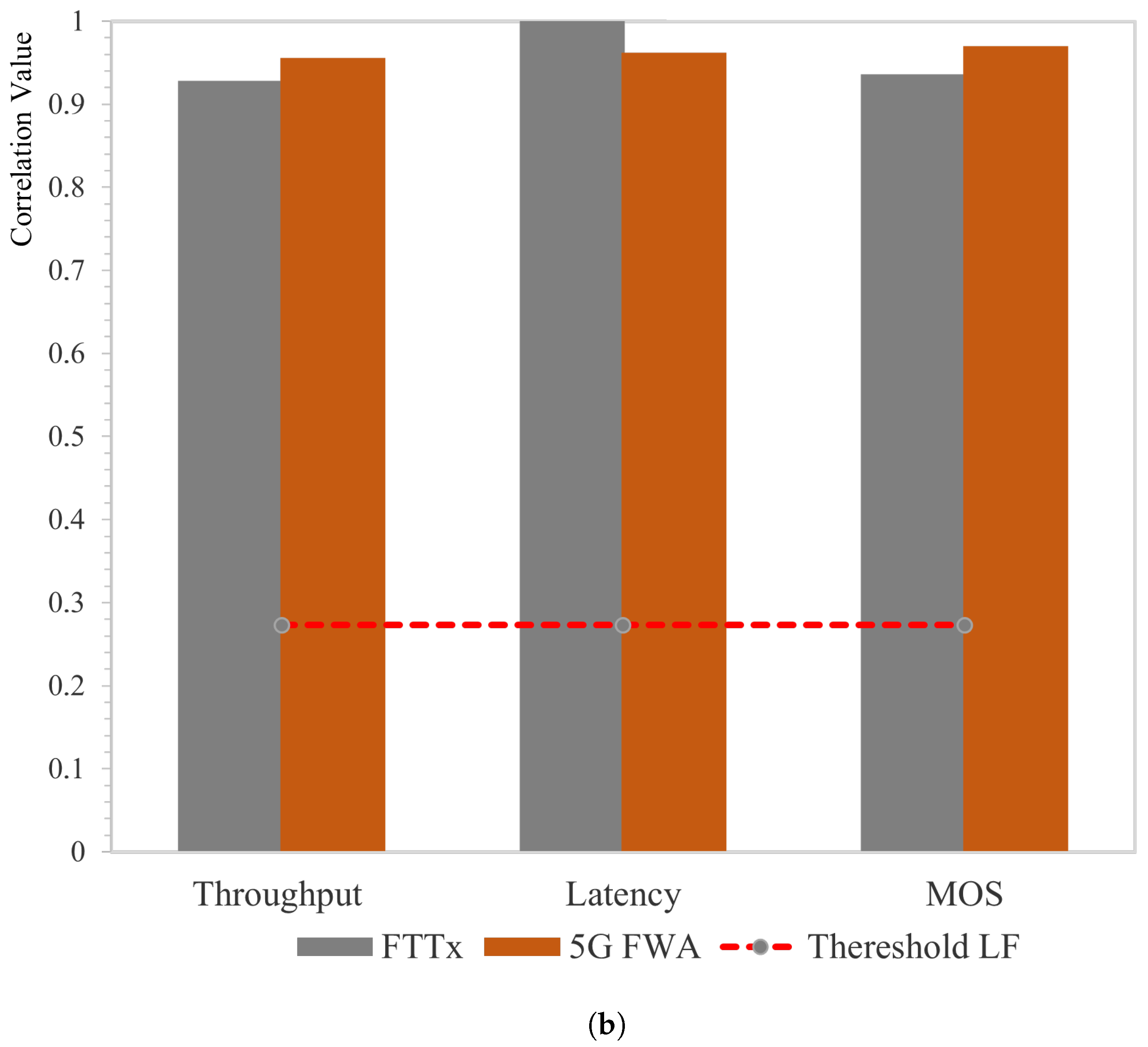
- Latency on FTTx was the strongest indicator (correlation: 1.00; t-value: 6.85), followed closely by the MoS (0.936). This indicates that, for fiber users, the perceived mean opinion score and low latency are the primary technical benchmarks.
- Validity and Reliability: A validity score of 0.969 and AVE of 0.62 indicate that these indicators are highly consistent in measuring the FTTx variable.
- QoS Factor Result For 5G FWA.Indicators for 5G FWA show that this technology has high statistical significance:
- The MoS was the most critical factor (correlation: 0.97; t-value: 9.42). The extremely high t-value 5G QoS factors (latency and MOS > 9) suggest that latency and MoS are tightly coupled in defining 5G service quality.
- Validity and Reliability: A validity score of 0.974 and AVE of 0.61 indicate that these indicators are highly consistent in measuring the 5G FWA variable.
- Correlation Result QoS: FTTx TO 5G FWA.The relationship between the technical quality of FTTx and 5G FWA is expressed through the path coefficient (y) and critical ratio (t-value) in Figure 5:
- Correlation Value ( = −0.02):This value is extremely close to zero, indicating that there is virtually no linear relationship between the quality of service (QoS) of FTTx and 5G FWA. The negative sign suggests a negligible inverse trend; however, it is too small to be considered a functional impact.Technical statistical results are insignificant (t-value = −0.122). In structural equation modeling (SEM), a relationship is typically considered significant if the t-value is greater than 1.96 (for a 95% confidence level). Referring to the result, −0.122 is far below this threshold, so hypothesis 0 (H0) cannot be rejected.
4.2. Systematic Error (GFI) UX: FTTx to 5G FWA
4.3. SEM Exploratory Analysis (EFA) Result
- Factor #5 Bandwidth (0.939): This is the strongest loading factor in the set, identifying bandwidth as the most critical element in defining the 5G FWA user experience.
- Factor #3 Quality (0.915): Overall, perceived quality ranks as the second most influential parameter, closely following bandwidth.
- Factor #4 Transparency (0.91): High throughput was confirmed as a major contributor to UX, reflecting the high-speed nature of 5G technology.
- Factor #2 Reliability (0.87): Although slightly lower than speed-related factors, reliability remains a robust component of the UX construct.
- Factor #1 Availability (0.859): Network availability had the lowest loading in this group, although it remained well above the standard acceptable threshold of 0.4 or 0.5 EFA.
- Factor #3 MOS (0.982): Mean opinion score (MOS) was the most dominant factor. This suggests that the overall perceived technical quality is the primary representation of the QoS variable.
- Factor #2 Latency (0.967): Network responsiveness or latency is a critical secondary factor. Its high loading indicates that the low-latency nature of 5G is a core defining characteristic of technical service quality.
- Factor #1 Throughput (0.96): The data transmission speed and throughput also show very high loading. This confirms that high-speed capability is the foundational pillar of the 5G FWA technical framework.
5. Discussion
6. Implication
7. Conclusions
Author Contributions
Funding
Institutional Review Board Statement
Informed Consent Statement
Data Availability Statement
Acknowledgments
Conflicts of Interest
Abbreviations
| 5G | Fifth Generation |
| FWA | Fixed Wireless Access |
| QoE | Quality of Experience |
| QoS | Quality of Service |
| FTTx | Fiber to The X |
| FTTH | Fiber to The Home |
| UX | User Experience |
| SEM | Structural Equation Modeling |
| EFA | Exploratory Factor Analysis |
| GFI | Goodness of Fit Index |
| WBB | Wireless Broadband |
| MNO | Mobile Network Operator |
| ITU | International Telecommunication Union |
| RMSEA | Root Mean Square Error of Approximation |
| CFI | Comparative Fit Index |
| TLI | Tucker–Lewis Index |
References
- Jasiyah, R.; Raliby, O.; Hierdawati, T.; Pamungkas, B.D.; Ningtyas, S. Indonesia’s economic growth projections 2023–2025: Empirical data analysis. J. Ekon. 2024, 13, 345–354. [Google Scholar]
- Chen, X.; Chen, K.; Wang, M.; Li, R. Roles of wireless networks in bridging the rural smart infrastructural divide. Infrastructures 2023, 8, 159. [Google Scholar] [CrossRef]
- Shirvani Moghaddam, S. The Past, Present, and Future of the Internet: A Statistical, Technical, and Functional Comparison of Wired/Wireless Fixed/Mobile Internet. Electronics 2024, 13, 1986. [Google Scholar] [CrossRef]
- ISO 9241–210:2010; Ergonomics of Human-System Interaction—Part 210: Human-Centred Design for Interactive Systems (Formerly Known as 13407). International Standards Organization: Geneva, Switzerland, 2010.
- Wu, Y.; Jiang, Q.; Ni, S.; Liang, H. Critical factors for predicting users’ acceptance of digital museums for experience-influenced environments. Information 2021, 12, 426. [Google Scholar] [CrossRef]
- Torjemen, N.; Tabbane, N. Survey on advancing QoE in the 5G/6G era: Challenges, standards, and emerging directions. IEEE Access 2025, 13, 177874–177894. [Google Scholar] [CrossRef]
- Agiwal, M.; Roy, A.; Saxena, N. Next generation 5G wireless networks: A comprehensive survey. IEEE Commun. Surv. Tutor. 2016, 18, 1617–1655. [Google Scholar] [CrossRef]
- Mardian, R.; Suryanegara, M.; Ramli, K. Measuring quality of service (QoS) and quality of experience (QoE) on 5G technology: A review. In Proceedings of the 2019 IEEE International Conference on Innovative Research and Development (ICIRD), Jakarta, Indonesia, 28–30 June 2019; IEEE: Piscataway, NJ, USA, 2019; pp. 1–6. [Google Scholar]
- Suryanegara, M. Managing 5G technology: Using quality of experience (QoE) to identify the innovation enhancement pattern according to the indonesian market. IEEE Access 2020, 8, 165593–165611. [Google Scholar] [CrossRef]
- Suryanegara, M.; Arifin, A.; Asvial, M.; Ramli, K.; Nashiruddin, M.; Hayati, N. What are the indonesian concerns about the internet of things (IoT)? Portraying the profile of the prospective market. IEEE Access 2018, 7, 2957–2968. [Google Scholar] [CrossRef]
- Oktarian, A.; Suryanegara, M.; Asvial, M. 5G fwa bandwitdh spectrum analysis for solutions in exclusive areas of indonesia. In Proceedings of the 2025 8th International Conference of Computer and Informatics Engineering (IC2IE), Depok, Indonesia, 11–12 September 2025; pp. 1–6. [Google Scholar]
- Wei, J.; Huang, X.; Qian, B.; Zhang, L.; Zhang, A.; Wei, K.; Chen, X. Throughput modeling and validation of MIMO terminals with adaptive MCS and layers. IEEE Trans. Instrum. Meas. 2024, 73, 5501004. [Google Scholar] [CrossRef]
- Schoolar, D. 5G fixed wireless access: Providing fiber speeds over the air while also helping pave the way for full 5G mobility. In White; Paper; Ovum & Samsung: Cumbria, UK, 2016. [Google Scholar]
- Chatur, N.; Bose, T.; Adhya, A. Planning cost-efficient fiwi access network with joint deployment of fwa and ftth. IEEE Trans. Commun. 2024, 72, 5688–5703. [Google Scholar] [CrossRef]
- Suryanegara, M. 5G as disruptive innovation: Standard and regulatory challenges at a country level. Int. J. Technol. 2016, 7, 635–642. [Google Scholar] [CrossRef][Green Version]
- Nokia. 5G Report: The Value of 5G Services and the Opportunity for Csps. Available online: https://www.nokia.com/networks/research/5gconsumer-market-research/ (accessed on 7 May 2026).
- Liu, M.; Yang, L.; Barriac, V.; Hu, Y.; Joskowicz, J.; Sotelo, R.; Zhang, S.; Chen, Z.; Armendariz, A.; Wildbaum, M.; et al. Quality assessment of audiovisual communication in videotelephony: New itu-t p.940 and suppl.31. IEEE Trans. Consum. Electron. 2025, 71, 10172–10184. [Google Scholar] [CrossRef]
- Gatara, M.C.; Mzyece, M. From QoS to QoE plus QoT in beyond 5G networks. J. Mob. Multimed. 2023, 19, 135–146. [Google Scholar] [CrossRef]
- Kim, H.; Lee, D.; Lee, J.; Lee, K.; Lyu, W.; Choi, S. The QoE evaluation method through the QoS-QoE correlation model. In Proceedings of the 2008 Fourth International Conference on Networked Computing and Advanced Information Management, Gyeongju, Republic of Korea, 2–4 September 2008; IEEE: Piscataway, NJ, USA, 2008; Volume 2, pp. 719–725. [Google Scholar]
- Rivera, S.; Riveros, H.; Ariza-Porras, C.; Lozano-Garzon, C.; Donoso, Y. QoS-QoE correlation neural network modeling for mobile internet services. In Proceedings of the 2013 International Conference on Computing, Management and Telecommunications (ComManTel), Ho Chi Minh City, Vietnam, 21–24 January 2013; IEEE: Piscataway, NJ, USA, 2013; pp. 75–80. [Google Scholar]
- Chakraborty, S.; Sengupta, K. Structural equation modelling of determinants of customer satisfaction of mobile network providers: Case of Kolkata, India. IIMB Manag. Rev. 2014, 26, 234–248. [Google Scholar] [CrossRef]
- Laugwitz, B.; Held, T.; Schrepp, M. Construction and evaluation of a user experience questionnaire. In Symposium of the Austrian HCI and Usability Engineering Group; Springer: Berlin/Heidelberg, Germany, 2008; pp. 63–76. [Google Scholar]
- Reyes-Menendez, A.; Palos-Sanchez, P.; Saura, J.; Martin-Velicia, F. Understanding the influence of wireless communications and Wi-Fi access on customer loyalty: A behavioral model system. Wirel. Commun. Mob. Comput. 2018, 2018, 3487398. [Google Scholar] [CrossRef]
- Yang, M.; Wang, S.; Calheiros, R.; Yang, F. Survey on QoE assessment approach for network service. IEEE Access 2018, 6, 48374–48390. [Google Scholar] [CrossRef]
- Arbuckle, J. SPSS® User’s Guide AmosTM; IBM®: Armonk, NY, USA, 2016; pp. 1–720. [Google Scholar]
- Zahrani, A.A. Artificial intelligence for employee growth: A unified model of factors influencing ai-supported staff development through SEM analysis. IEEE Access 2026, 14, 375–397. [Google Scholar] [CrossRef]
- Hu, H.; Xu, Z.; Zhang, X.; Guo, Z. Predicting QoE of video streaming with network-context features. In Proceedings of the 2019 2nd International Conference on Hot Information-Centric Networking (HotICN), Chongqing, China, 13–15 December 2019; IEEE: Piscataway, NJ, USA, 2019; pp. 56–57. [Google Scholar]
- Adityo, M.; Nashiruddin, M.; Nugraha, M. 5G fixed wireless access network for urban residential market: A case of indonesia. In Proceedings of the 2021 IEEE International Conference on Internet of Things and Intelligence Systems (IoTaIS), Bandung, Indonesia, 23–24 November 2021; IEEE: Piscataway, NJ, USA, 2021; pp. 123–128. [Google Scholar]
- Abrar, M.F.; Majeed, M.F.; Saqib, M.; Alferaidi, A.; Razauddin. A data-driven analysis of software testing automation challenges using structural equation modeling (SEM) approach. IEEE Access 2025, 13, 96159–96181. [Google Scholar] [CrossRef]
- Gbongli, K.; Xu, Y.; Amedjonekou, K. Extended technology acceptance model to predict mobile-based money acceptance and sustainability: A multi-analytical structural equation modeling and neural network approach. Sustainability 2019, 11, 3639. [Google Scholar] [CrossRef]
- Mardian, R.; Suryanegara, M.; Ramli, K. Userexperience of 5G video services in indonesia: Predictions based on a structural equation model. Information 2022, 13, 155. [Google Scholar] [CrossRef]
- Chiaraviglio, L.; Montenero, M.; Lodovisi, C.; Salsano, S.; Mayer, A.; Lungaroni, P.; Blefari-Melazzi, N.; Basset, L.; Duca, M.L.; Cicciarelli, T.; et al. Measuring 5G exposure from multiple terminals and base station in standalone fwa networks. IEEE Access 2025, 13, 87438–87461. [Google Scholar] [CrossRef]
- Oktarian, A.; Asvial, M. QoE approach of 5G fwa services in indonesia: A review. In Proceedings of the 2024 2nd International Symposium on Information Technology and Digital Innovation (ISITDI), Bukittinggi, Indonesia, 24–25 July 2024; IEEE: Piscataway, NJ, USA, 2024; pp. 349–356. [Google Scholar]
- Hair, J.F., Jr.; Hult, G.T.M.; Ringle, C.M.; Sarstedt, M.; Danks, N.P.; Ray, S. Partial Least Squares Structural Equation Modeling (PLS-SEM) Using R: A Workbook; Springer Nature: Berlin/Heidelberg, Germany, 2021. [Google Scholar]
- Ltifi, M. Exploratory Factor Analysis; Emerald Publishing Limited: Cambridge, MA, USA, 2018; Volume 56, pp. 112291–23072018. [Google Scholar]
- Yalcintekin, T.; Saygili, M. Brand loyalty at smartphones market: Linking between brand passion, hedonic and utilitarian values. Mark. Manag. Innov. 2020. [Google Scholar] [CrossRef]
- Nejjari, N.; Zkik, K.; Hammouchi, H.; Ghogho, M.; Benbrahim, H. Assessing data breach factors through modern crime theory: A structural equation modeling approach. IEEE Access 2024, 12, 92198–92214. [Google Scholar] [CrossRef]
- Ltifi, M. Determinants of the intention of smartphone usage by mobile internet users for m-services. Manag. Decis. 2018, 56, 2291–2307. [Google Scholar] [CrossRef]
- Cohen, J. Statistical Power Analysis for the Behavioral Sciences; Routledge: Oxfordshire, UK, 2013. [Google Scholar]
- Watkins, M. A Step-by-Step Guide to Exploratory Factor Analysis with SPSS; Routledge: Oxfordshire, UK, 2021. [Google Scholar]
- MSilva. Exploratory Factor Analysis. Available online: https://opgabriel.github.io/ISMIR2020/visualizations/efa.html (accessed on 7 May 2026).[Green Version]



| QoE Model | Code Variable Latency | Code | Role Service Factors (Observed Variables) |
|---|---|---|---|
| Role UX | FTTx <> 5G FWA | AV | Availability (AV11,AV21,AV31,AV41) |
| REA | Reliability (RE11,RE21,RE31,RE41) | ||
| QUA | Quality (QU11,QU21,QU31) | ||
| TR | Transparency (TR11,TR21,TR31) | ||
| BW | Bandwidth (BW11,BW21,BW31,BW41) | ||
| Role QoS | FTTx <> 5G FWA | TH | Throughput (TH11,TH21,TH31) |
| LAT | Latency (LAT11,LAT21,LAT31) | ||
| MO | MoS (MOS11,MOS21,MOS31) |
| p min | Significance Level | ||
|---|---|---|---|
| 0.01 | 0.05 | 0.10 | |
| p (0.05–0.10) | 1004 | 619 | 451 |
| p (0.11–0.20) | 251 | 155 | 113 |
| p (0.21–0.30) | 112 | 69 | 51 |
| p (0.31–0.40) | 63 | 39 | 29 |
| p (0.41–0.50) | 41 | 25 | 19 |
| UX Factors | FTTx | 5G FWA | ||
|---|---|---|---|---|
| Correlation | CR (-Value) | Correlation | CR (-Value) | |
| Availability | 0.785 | 0.79 | 0.813 | 0.81 |
| Reliability | 1.000 | 2.36 | 0.889 | 4.10 |
| Quality | 0.977 | 1.88 | 0.904 | 4.02 |
| Transparency | 0.695 | 0.74 | 0.803 | 4.00 |
| Bandwidth | 0.896 | 0.83 | 0.961 | 4.69 |
| Construct Validity | 0.943 | 0.942 | ||
| AVE | 0.77 | 0.76 | ||
| UX FTTx → 5G FWA | ||||
| QoS Factors | FTTx | 5G FWA | ||
|---|---|---|---|---|
| Correlation | CR (-Value) | Correlation | CR (-Value) | |
| Throughput | 0.928 | 0.93 | 0.956 | 0.96 |
| Latency | 1.000 | 6.85 | 0.962 | 9.16 |
| MoS | 0.936 | 6.78 | 0.970 | 9.42 |
| Construct Validity | 0.969 | 0.974 | ||
| AVE | 0.62 | 0.61 | ||
| QoS FTTx → 5G FWA | ||||
| Fit Index | Threshold | QoS Factor | UX Factor | Interpretation |
|---|---|---|---|---|
| Chi-square () | Lower is better | 89.04 | 491.7 | Acceptable |
| GFI | >0.90 | 0.782 | 0.655 | Acceptable Fit |
| RMSEA | ≤0.08 | 0.08 | 0.08 | Excellent Fit |
| CFI | >0.90 | 0.973 | 0.895 | Excellent Fit |
| TLI | >0.90 | 0.965 | 0.881 | Excellent Fit |
| p-value | >0.05 | 0.07 | 0.00 | Excellent Fit |
| CMIN/DF | <1.5 | 1.254 | 1.377 | Excellent Fit |
| LV Relationship | Result | Interpretation |
|---|---|---|
| FTTx UX → 5G FWA UX | Insignificant | User experience is not transferable between these two technologies. |
| FTTx QoS → 5G FWA QoS | Insignificant | The technical quality of FTTx does not influence the perceived technical quality of 5G FWA. |
| 5G FWA Indicators Prediction | Strongly Significant | (UX) Bandwidth and quality are the most critical drivers for 5G FWA success ().
(QoS) Latency and MoS are the most critical drivers for 5G FWA, while throughput remains critical to service quality. |
| Observed Variable UX | 5G FWA Latent Variable | ||||
|---|---|---|---|---|---|
| Availability | Reliability | Quality | Transparency | Bandwidth | |
| AV11 | 0.758 | ||||
| AV21 | 0.688 | ||||
| AV31 | 0.744 | ||||
| AV41 | 0.795 | ||||
| RE11 | 0.696 | ||||
| RE21 | 0.680 | ||||
| RE31 | 0.767 | ||||
| RE41 | 0.743 | ||||
| QU11 | 0.77 | ||||
| QU21 | 0.80 | ||||
| QU31 | 0.85 | ||||
| TR11 | 0.804 | ||||
| TR21 | 0.782 | ||||
| TR31 | 0.661 | ||||
| TR41 | 0.691 | ||||
| BW11 | 0.853 | ||||
| BW21 | 0.825 | ||||
| BW31 | 0.864 | ||||
| BW41 | 0.879 | ||||
| Loading Factor UX 5G FWA | Value | Interpretation |
|---|---|---|
| Factor #1 Availability | 0.859 | High |
| Factor #2 Reliability | 0.870 | High |
| Factor #3 Quality | 0.915 | Extremely High |
| Factor #4 Transparency | 0.910 | Extremely High |
| Factor #5 Bandwidth | 0.939 | Extremely High |
| Observed Variable QoS | 5G FWA Latent Variable | ||
|---|---|---|---|
| Throughput | Latency | MoS | |
| TH11 | 0.921 | ||
| TH21 | 0.941 | ||
| TH31 | 0.902 | ||
| LAT11 | 0.902 | ||
| LAT21 | 0.936 | ||
| LAT31 | 0.950 | ||
| MOS11 | 0.918 | ||
| MOS21 | 0.905 | ||
| MOS31 | 0.927 | ||
| Loading Factor QoS 5G FWA | Value | Interpretation |
|---|---|---|
| Factor #1 Throughput | 0.960 | Extremely High |
| Factor #2 Latency | 0.967 | Extremely High |
| Factor #3 MoS | 0.982 | Extremely High |
| EFA Test | QoS Factor | UX Factor | Interpretation |
|---|---|---|---|
| KMO-MSA | 0.646 | 0.709 | Acceptable |
| Significant | 0.000 | 0.000 | Acceptable |
| Bartlett’s Test of Sphericity | 153 | 703 |
Disclaimer/Publisher’s Note: The statements, opinions and data contained in all publications are solely those of the individual author(s) and contributor(s) and not of MDPI and/or the editor(s). MDPI and/or the editor(s) disclaim responsibility for any injury to people or property resulting from any ideas, methods, instructions or products referred to in the content. |
© 2026 by the authors. Licensee MDPI, Basel, Switzerland. This article is an open access article distributed under the terms and conditions of the Creative Commons Attribution (CC BY) license.
Share and Cite
Oktarian, A.; Suryanegara, M.; Asvial, M. A New QoE Model for 5G FWA Using the Structural Equation Modeling (SEM) Approach. Information 2026, 17, 591. https://doi.org/10.3390/info17060591
Oktarian A, Suryanegara M, Asvial M. A New QoE Model for 5G FWA Using the Structural Equation Modeling (SEM) Approach. Information. 2026; 17(6):591. https://doi.org/10.3390/info17060591
Chicago/Turabian StyleOktarian, Andi, Muhammad Suryanegara, and Muhamad Asvial. 2026. "A New QoE Model for 5G FWA Using the Structural Equation Modeling (SEM) Approach" Information 17, no. 6: 591. https://doi.org/10.3390/info17060591
APA StyleOktarian, A., Suryanegara, M., & Asvial, M. (2026). A New QoE Model for 5G FWA Using the Structural Equation Modeling (SEM) Approach. Information, 17(6), 591. https://doi.org/10.3390/info17060591