Systematic Review

Transforming Financial Reporting: A Systematic Literature Review on the Synergistic Role of Artificial Intelligence and Blockchain


1
School of Accounting, Shandong Technology and Business University, Yantai 264005, China
2
Lee Shau Kee School of Business and Administration, Hong Kong Metropolitan University, Hong Kong, China
*
Author to whom correspondence should be addressed.
Information 2026, 17(4), 390; https://doi.org/10.3390/info17040390
Submission received: 16 December 2025 / Revised: 7 February 2026 / Accepted: 27 February 2026 / Published: 20 April 2026
(This article belongs to the Section Information Systems)

Abstract

As global digital transformation accelerates, artificial intelligence (AI) and blockchain technologies have evolved from theoretical concepts into practical tools within the field of accounting, particularly in financial reporting. This study conducts a systematic review of 62 sources drawn from major academic databases to develop a comprehensive framework for classifying application scenarios. The findings indicate that the application of artificial intelligence and blockchain technology can help improve the efficiency of financial report generation, enhance the reliability of data, and promote innovation in the auditing process. Nevertheless, persistent challenges remain, including concerns related to data security, technological limitations, and regulatory gaps. The study proposes a structured roadmap for the implementation of these technologies, underscoring their transformative potential in advancing the digital evolution of accounting, while also identifying key directions for future research.

1. Introduction

Artificial intelligence (AI) and blockchain technologies are transforming accounting and financial reporting by enabling advanced automation, enhanced data analytics, and decentralized frameworks to address inherent vulnerabilities in traditional systems (Milana & Ashta, 2021) [1]. The increasing complexity of global financial environments, coupled with rising demands for transparency, accuracy, and operational efficiency, has highlighted the limitations of manual procedures and centralized data management. These conventional approaches are increasingly susceptible to human error, fraudulent activities, and cybersecurity threats (Han et al., 2023) [2].
The integration of artificial intelligence and blockchain has brought significant benefits to financial reporting, which indicates that the way related processes are executed within organizations may undergo transformation (Hussein et al., 2024) [3]. Artificial intelligence can help improve efficiency, reduce human errors, and accelerate reporting cycles by automating daily tasks such as data entry, reconciliation, and anomaly detection. Blockchain complements these gains by recording financial transactions on a decentralized, tamper-proof ledger, thereby ensuring robust transparency, immutability, and end-to-end traceability (Dashkevich et al., 2024) [4]. The rapid evolution and synergistic integration of AI and blockchain hold substantial promise for redefining modern financial reporting practices, enabling the development of accounting systems that are efficient, accurate, secure, and capable of real-time operation (Agarwal, 2024) [5]. Collectively, the synergy of these technologies enhances audit readiness, significantly enhance fraud detection through advanced pattern recognition, and support the implementation of real-time financial reporting—empowering stakeholders to access timely, accurate, and trustworthy information. Consequently, organizations achieve more informed decision-making, reduced operational costs, improved regulatory compliance, and heightened stakeholder confidence—key drivers of competitive advantage in an increasingly digital economy.
However, existing research mostly discusses artificial intelligence and blockchain as independent technological tools, lacking a systematic analysis of their integrated and collaborative effects, especially in the field of financial reporting. A conceptual framework that can clearly categorize application scenarios and explain the core value of their “efficiency-trust synergy” remains absent. To fill this research gap and respond to the urgent demands in practice, this study aims to answer three core research questions: What are the specific collaborative application scenarios of artificial intelligence and blockchain in accounting, especially in financial reporting, and how can these scenarios be systematically classified? Through which mechanisms do the synergy between artificial intelligence and blockchain enhance the efficiency, reliability, transparency, and timeliness of financial reporting? What key challenges need to be faced or resolved when actually applying artificial intelligence and blockchain technology in financial reporting?
This study aims to make a clear contribution to the existing knowledge system. Firstly, through a systematic interdisciplinary literature review, it will comprehensively sort out and evaluate the research progress in this field. Secondly, this study will propose a classification framework to clarify the collaborative models and application paths of dual-technology integration, transcending isolated discussions on individual technologies. Finally, this study strives to provide direct implications for practitioners (managers) and regulators—on one hand, to help organizations identify strategic implementation priorities and risk governance paths; on the other hand, to provide a basis for the development of adaptive regulatory standards and tools, thereby achieving a balance between promoting innovation and ensuring system security.
This study presents a systematic review of 62 academic and industry sources to classify application scenarios, identify practical opportunities, and examine key challenges, including data security risks, integration complexities, skill shortages, and evolving regulatory requirements. Its purpose is to offer a conceptual framework for practitioners and researchers, foster the development of more effective financial reporting systems, and guide future research and best practices in advancing the digital transformation of accounting. The structure of the remaining part of this paper is arranged as follows. Section 2 provides background information. Section 3 conducts a descriptive analysis. Section 4 introduces the classification framework we proposed for blockchain use cases. Section 5 outlines the future research directions. Finally, Section 6 summarizes this study.

2. Background

2.1. The Transformation in the Accounting Field Driven by Artificial Intelligence

The accounting industry is undergoing profound changes, with the rise of artificial intelligence (AI) being the main driving force (Peng et al., 2023) [6]. Traditional accounting practices have long relied on a work model dominated by manual operations and linear processes, with a strong emphasis on precision. This model is mainly reflected in basic data entry, account maintenance, and the handling of a large number of paper documents. However, these processes are not only time-consuming and labor-intensive but also prone to errors due to human negligence, seriously restricting the efficiency and timeliness of financial reporting and data analysis. For instance, a report by Deloitte (2023) indicates that the error rate of manual bookkeeping is as high as 18%, and it takes an average of 120 h to complete each financial report.
The integration of artificial intelligence (AI) technology is revolutionizing this field. With its powerful data processing capabilities, AI can conduct rapid and precise analysis and calculation of massive financial data, thereby significantly enhancing the efficiency of accounting work (Nuritdinovich et al., 2025) [7]. Its intelligent processing methods have significantly reduced errors in traditional manual operations, improved the accuracy and reliability of financial information, and provided a solid technical support for the modernization transformation of accounting.

2.2. Views on the Application of Artificial Intelligence and Blockchain Technology

By summarizing and analyzing the advantages of artificial intelligence and blockchain in relevant literature (Table 1), prior studies indicate that the integration of artificial intelligence and blockchain technology in accounting not only streamlines operational processes and minimizes errors but also significantly improves the reliability, transparency, and efficiency of financial reporting. By automating processes related to data collection, analysis, and reporting, artificial intelligence enables accountants to redirect their efforts toward more strategic responsibilities, while blockchain technology enhances the integrity and reliability of financial information. Given the extensive benefits of AI and blockchain applications in accounting and financial reporting, it is not surprising that these technologies have garnered significant attention in both academic research and industry practice.
The integration of artificial intelligence (AI) and blockchain is not merely a simple superimposition of technologies, but rather a complementary advantage formed by “AI enhancing efficiency” and “blockchain ensuring trust”. This can effectively address a core contradiction in traditional accounting: the difficulty in balancing efficient data processing and data credibility. Relying solely on AI may pose a risk of data tampering, while using only blockchain makes it hard to handle unstructured data efficiently. Only by combining the two can a “1 + 1 > 2” synergy be achieved, improving data processing efficiency and accuracy while optimizing financial workflows, strengthening risk management, and promoting innovation in auditing methods.

3. Methodology

3.1. Data Collection

In recent years, numerous articles exploring the application of artificial intelligence (AI) in auditing processes have been published across various academic journals, and related topics have also been presented at scholarly conferences. While some researchers have offered valuable insights into specific aspects of artificial intelligence and blockchain technologies within the accounting domain, there remains a notable absence of comprehensive reviews that systematically examine innovative applications and associated challenges from the perspective of technological integration. To address this gap, we conducted a systematic literature review (SLR) focusing on the use cases of artificial intelligence and blockchain in accounting and financial reporting. The design and reporting of this study adhered to the Preferred Reporting Items for Systematic Reviews and Meta-Analyses (PRISMA 2020 statement) guidelines. The PRISMA checklist and flow diagram for this article are available as Supplementary Materials.
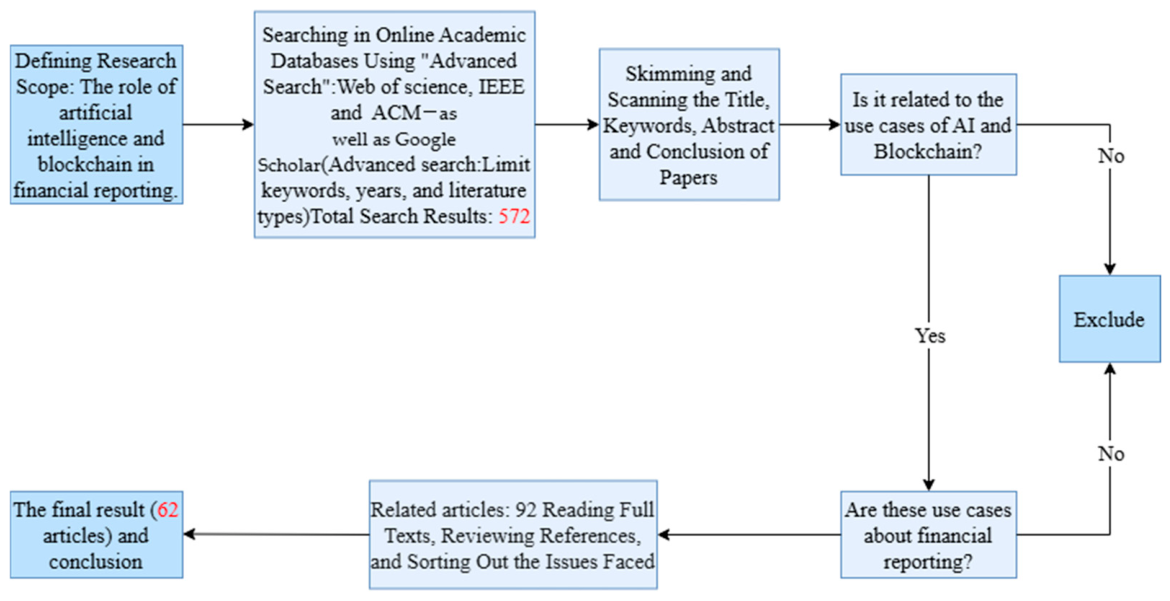
As illustrated in Figure 1, the first stage involved a comprehensive search for existing literature across three major online academic databases—namely, Web of Science, IEEE and ACM—as well as Google Scholar (a small amount as a supplement), focusing on publications from the past 15 years. We chose Web of Science as the primary search platform because it is one of the most trusted and authoritative academic databases globally. It is also recognized for its advantages in bibliometric research, and many scholars choose WOS as their main data source in their studies. The WOS Core Collection is regarded as the most reliable database in such research, allowing cross-publisher search without showing any bias towards any particular publisher (Bartolacci et al., 2020) [16]. It contains over 90 million documents and more than 12,000 journals (Kureljusic and Karger, 2023) [17], and enjoys a good reputation for providing accurate literature data, including coverage of SCIE and SSCI journals (Alhazmi et al., 2025) [18]. Furthermore, WoS offers the “Keywords Plus” function, which is particularly suitable for data mining needs and is widely adopted by scholars (Forliano et al., 2021) [19]. Specifically, the adopted search strategy employs Boolean operators (“OR” and “AND”) to combine core concepts (including “artificial intelligence”, “blockchain”, “accounting” and “financial reporting”) with semantically related terms (such as “machine learning”, “smart contract”, “automation”, “financial statement”, “assurance” and “audit”). The resulting query strings are used to retrieve relevant articles from the database. This initial search resulted in a total of 572 articles. We then conducted a preliminary screening of these articles by reviewing their abstracts and conclusions. The screening criteria were whether the articles involved the application of artificial intelligence or blockchain in the accounting field, with a particular focus on financial reporting. During this process, we excluded articles that did not meet the criteria, those for which the full text could not be obtained, and duplicate entries found in different databases. Finally, we read the remaining articles in full and retained 62 articles for further analysis. The distribution of the collected data from various online academic databases is presented in Table 2.
The research team then performed descriptive analysis, that is, the general statistics of the final search results. We numbered and recorded each paper and extracted the important details of the research from them. The extracted data was systematically recorded and stored in an Excel spreadsheet, covering the following standardized fields: number, paper title, keywords, main viewpoints, publication year, author’s name, whether it was a collaborative work, and the corresponding country. Based on this spreadsheet, we designed and used a relational database to describe the data. After screening, sorting, and counting the extracted data, various charts were generated for further analysis.
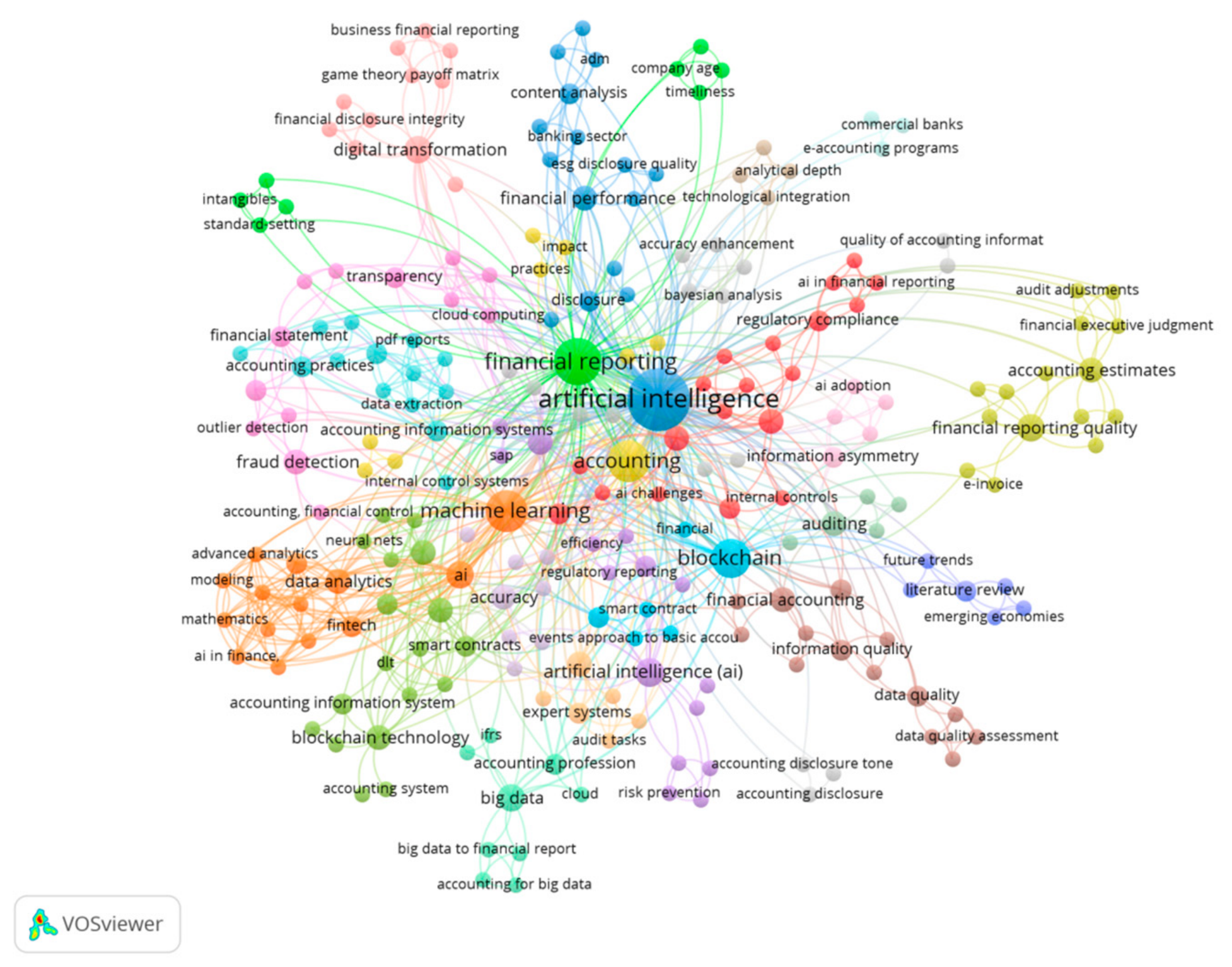
Next, to deeply reveal the research hotspots and theme correlations in the literature, we utilized the VOSviewer 1.6.20 software to conduct bibliometric and visualization analysis on the 62 selected articles. By extracting, cleaning, and merging the keywords of the literature, we constructed a keyword co-occurrence network and generated a visualization map based on its clustering and association strength.
Following this process, we employed thematic analysis to derive qualitative analysis statistics of the identified papers. The thematic analysis categorized the identified papers according to the type of artificial intelligence and blockchain use case for accounting presented in the papers.
The structure of the remaining part of this paper is arranged as follows. Section 4 introduces the classification framework we proposed for blockchain use cases. Section 5 outlines the future research directions. Finally, Section 6 summarizes this study.

3.2. Methodological Quality and Risk of Bias Assessment

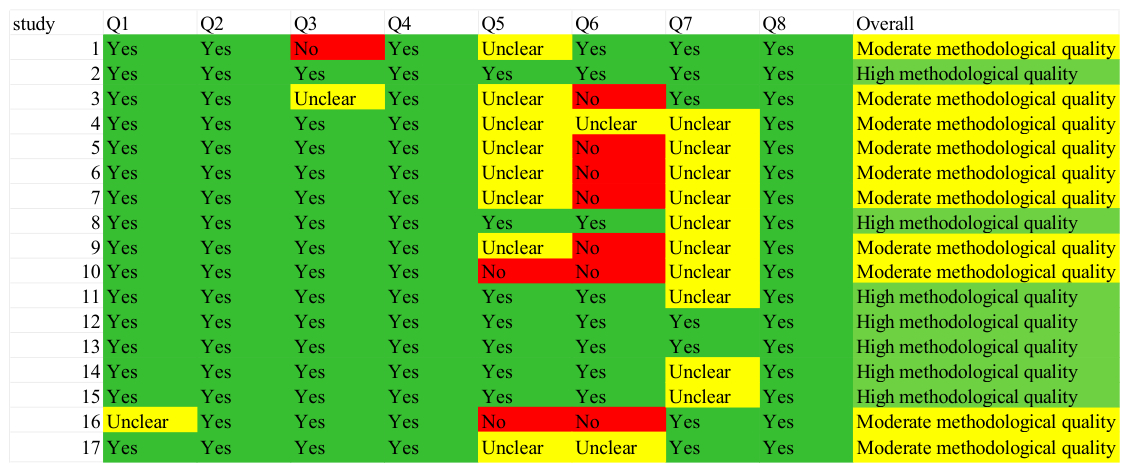
The methodological quality and risk of bias of the included studies were evaluated in accordance with their study designs, following established evidence-synthesis guidelines. Randomized experimental studies were assessed using Cochrane RoB 2 (J. A. C. Sterne et al., 2019) [20], whereas non-randomized intervention studies were evaluated using ROBINS-I (J. A. Sterne et al., 2016) [21]. Observational and analytical studies, including qualitative studies, without experimental manipulation were appraised using JBI Critical Appraisal tools (JBI Manual for Evidence Synthesis, 2024) [22], with the appropriate checklist selected based on study design.
Overall judgments were made in line with the guidance of each appraisal tool. Studies assessed using RoB 2 and ROBINS-I were categorized according to risk of bias, while studies evaluated using JBI tools were summarized in terms of methodological quality (e.g., high or moderate), consistent with JBI recommendations.
Certain articles—including narrative reviews, conceptual papers, design science research, bibliometric analyses, and methodological or survey studies—were not subjected to formal methodological quality or risk-of-bias assessment, as existing appraisal tools are designed for primary empirical research and are not applicable to secondary or theoretical studies.
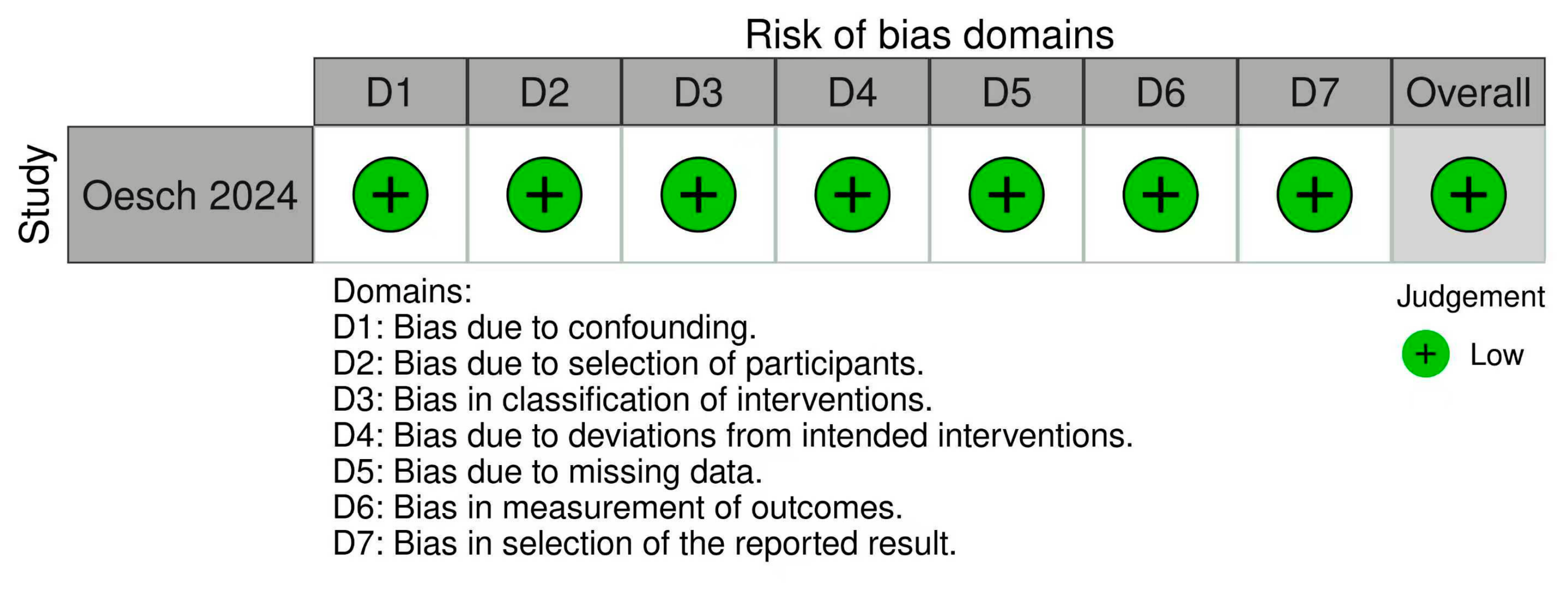
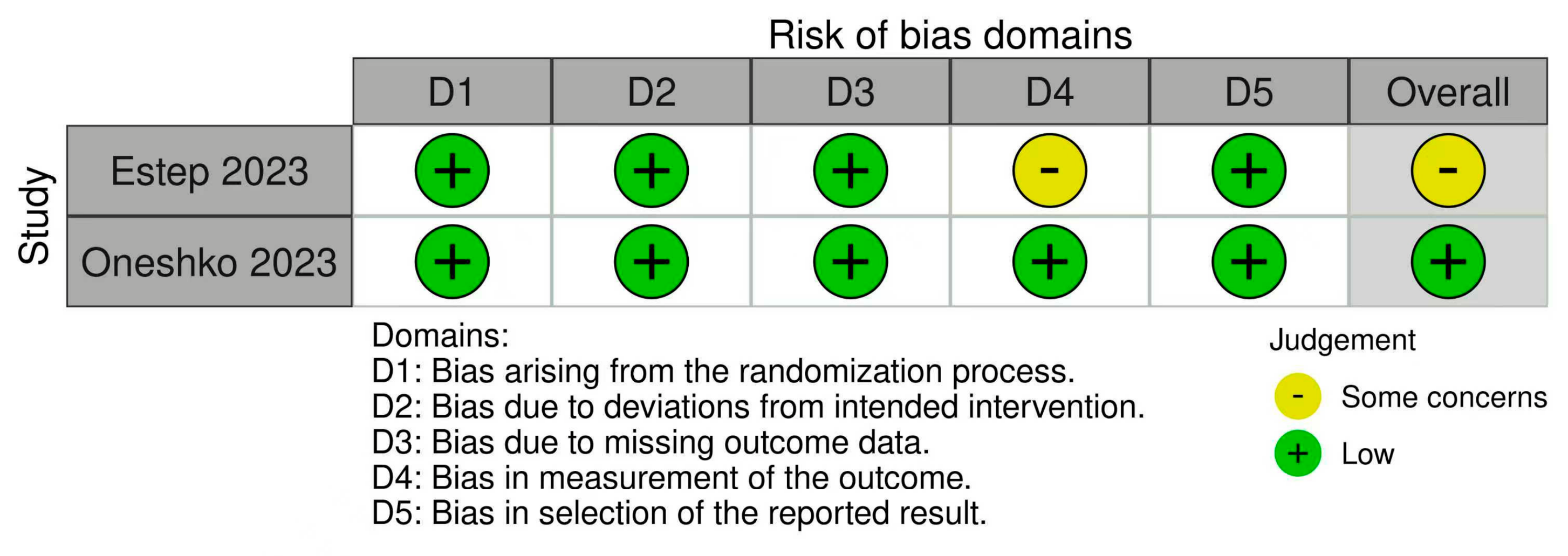
Of the 62 studies included in this review, 20 empirical studies were subjected to formal methodological quality or risk-of-bias assessment according to their respective study designs. Specifically, 17 observational or qualitative studies were appraised using JBI Critical Appraisal tools, two randomized experimental studies were evaluated using Cochrane RoB 2, and one non-randomized intervention study was assessed using ROBINS-I. The assessment result chart is shown in Appendix A.
Overall, although variability in methodological quality and risk of bias was observed across study designs, the majority of the assessed empirical studies demonstrated acceptable methodological rigor or manageable levels of bias, supporting their inclusion in the qualitative synthesis. The remaining included studies were narrative, conceptual, or methodological in nature and were therefore not eligible for formal methodological quality or risk-of-bias assessment.

3.3. Descriptive Analysis

3.3.1. Publication Years

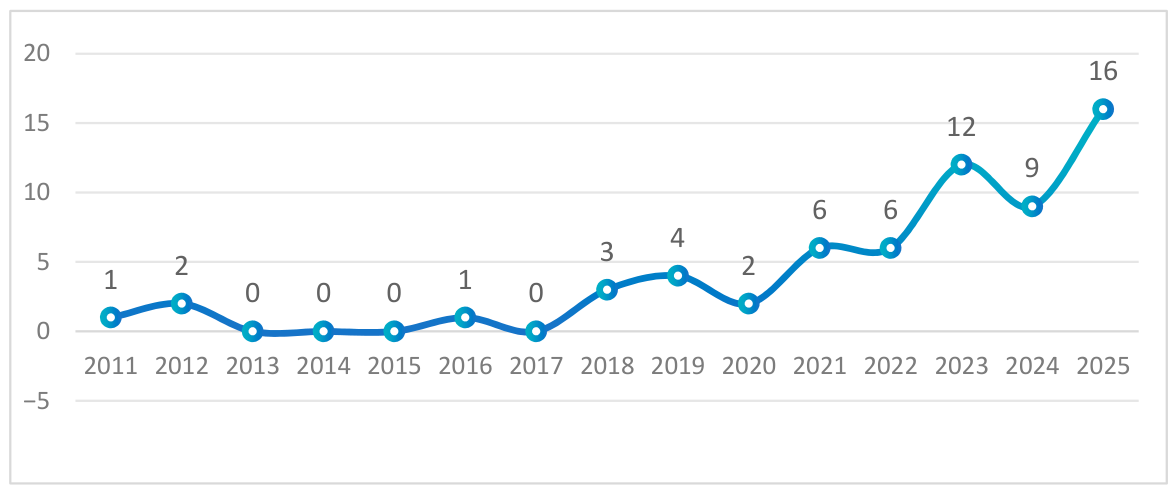
Figure 2 illustrates the distribution of all included studies from 2005 to the present. The earliest relevant publication identified was published in 2005 by Matthew Bovee et al. from the United States. This study presents the development and application of FRAANK, a web-enabled intelligent agent for financial reporting and auditing. Capable of autonomously retrieving and analyzing financial data from online sources—particularly the SEC EDGAR database—the agent employs intelligent analysis to extract accounting information from narrative-style financial statements, converts it into standardized XBRL format using established XBRL taxonomies, and integrates supplementary financial data such as stock prices and analyst forecasts to compute key financial ratios and corporate health indicators. From 2011 to 2025, the total number of scholarly articles demonstrated a fluctuating yet consistent upward trajectory, with a particularly pronounced surge in 2024. Notably, the majority of the identified studies were published within the past three years, underscoring a marked increase in academic engagement and research interest in this domain. In light of the rapid advancement of artificial intelligence in recent years, a continued growth in research exploring its application in accounting and financial reporting is highly anticipated.
As previously stated, this review comprises 62 academic papers. Most of them are journal articles. Since 2018, the number of journal articles in this field has been increasing.

3.3.2. Citation Counts of Articles

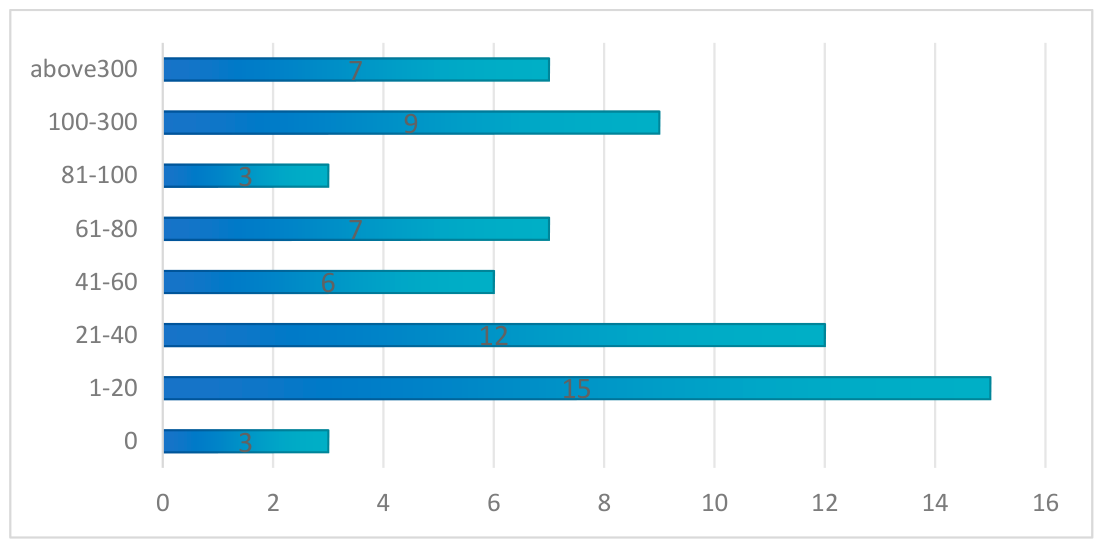
Due to the differences in citation counts among various databases, we uniformly use Google Scholar as the source for citation counts, and the detailed distribution is presented in Figure 3. This figure shows that approximately 28% of the articles are cited 1–20 times. Interestingly, 6 of these articles have been cited more than 300 times, and 5 have never been cited. Considering that most of the papers were published in the past few years, their citations are expected to increase in future years.

3.3.3. Coverage of Researchers

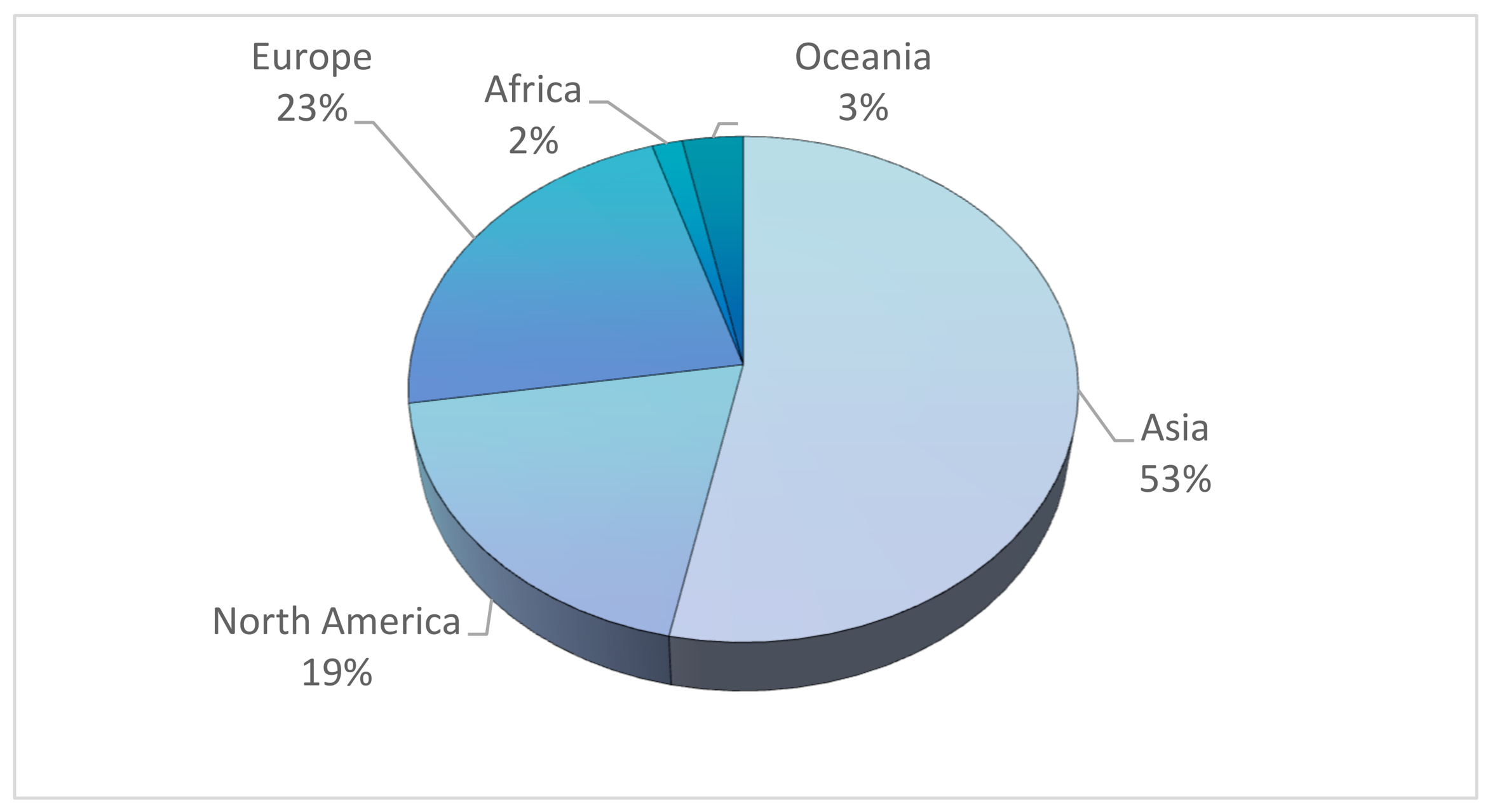
Figure 4 shows the geographical distribution of authors/researchers by continent. As indicated in the figure, 48% of the researchers are located in Asia, followed by Europe (23%) and North America (19%). Researchers from Oceania, Africa, and South America participating in this study are relatively few, among which South America has the smallest proportion.
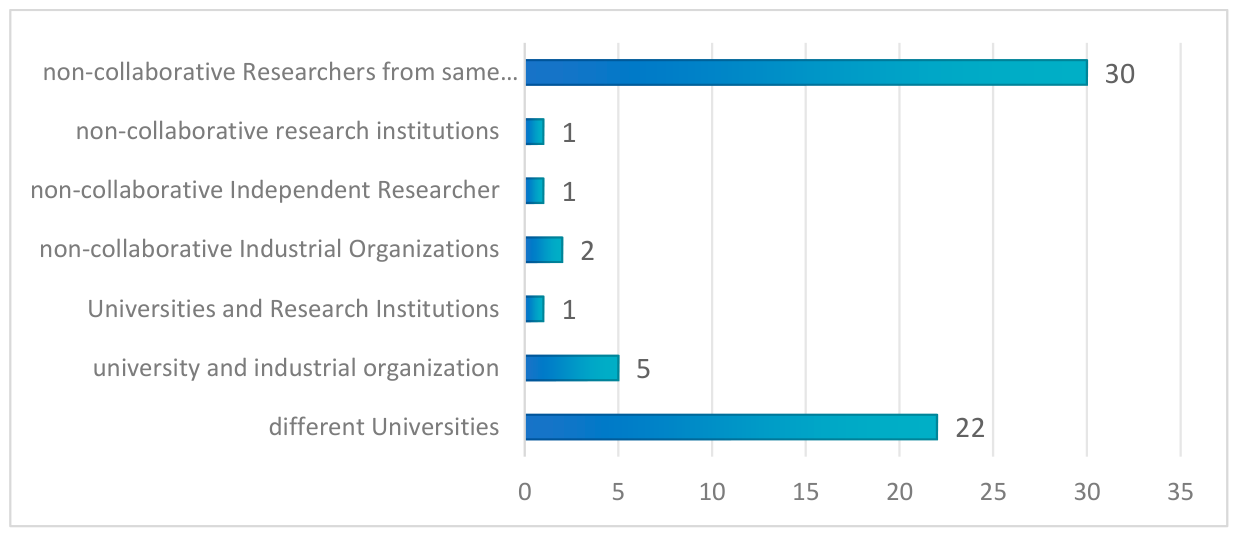
This chart (Figure 5) presents the distribution of cooperative and non-cooperative entities within the research context. The data indicate that inter-university collaboration is currently the most prevalent form, occurring 22 times. Other relatively common collaborative arrangements include partnerships between universities and industrial organizations (5 instances), whereas collaborations among industrial organizations or between universities and research institutions are less frequent, each occurring twice. In the non-cooperative category, research conducted by researchers from the same university is notably more common, with 30 instances, while independent researchers, single research institutions, or individual industrial organizations engage in non-collaborative work far less frequently, ranging from 1 to 3 instances. Overall, the findings underscore the dominance of collaborative research practices, particularly those spanning different academic institutions.

3.3.4. Word Clouds

Based on the literature reviewed above, a word cloud map was generated using the VOSviewer software. As illustrated in Figure 6, the most frequently occurring term is “AI”, followed by “financial reporting”, “accounting”, and “blockchain”. The frequency of other related terms generally corresponds to the prevailing research themes identified in the literature. Moreover, these terms are thematically connected to the top four dominant keywords.

4. Classification Framework and Application Paths of AI and Blockchain

4.1. Use Case Classification Framework

Based on the summary and analysis of relevant literature (Table 3), we have reached the following viewpoints: Artificial intelligence and blockchain technology run through the entire accounting process, driving its evolution from traditional manual, post-event processing to automation, real-time processing, and intelligence. From the very beginning of a transaction, AI can automatically identify and extract key information from bills, while blockchain provides an immutable “digital fingerprint” for these original documents and instantly records them on the chain for verification. In the accounting processing stage, AI-driven rule engines can automatically classify and record transactions, while smart contracts deployed on the blockchain can automatically execute complex accounting logic, ensuring the accuracy and compliance of the accounting process. In the reporting and auditing phase, AI can quickly aggregate data, generate preliminary financial statements, and conduct in-depth analysis. At the same time, blockchain provides a transparent, traceable foundation of trust for the entire data flow, making accounts clear and verifiable, thereby greatly improving audit efficiency and the credibility of reports. This collaboration not only automates processes but also creates a real-time, self-verifiable, and highly transparent accounting ecosystem.
To gain a deeper understanding of the application scenarios of artificial intelligence and blockchain in the accounting domain, particularly in financial reporting, a classification framework was developed. The use cases in this study refer to specific situations in which artificial intelligence and blockchain technology can be applied.

4.2. Application Paths of AI and Blockchain

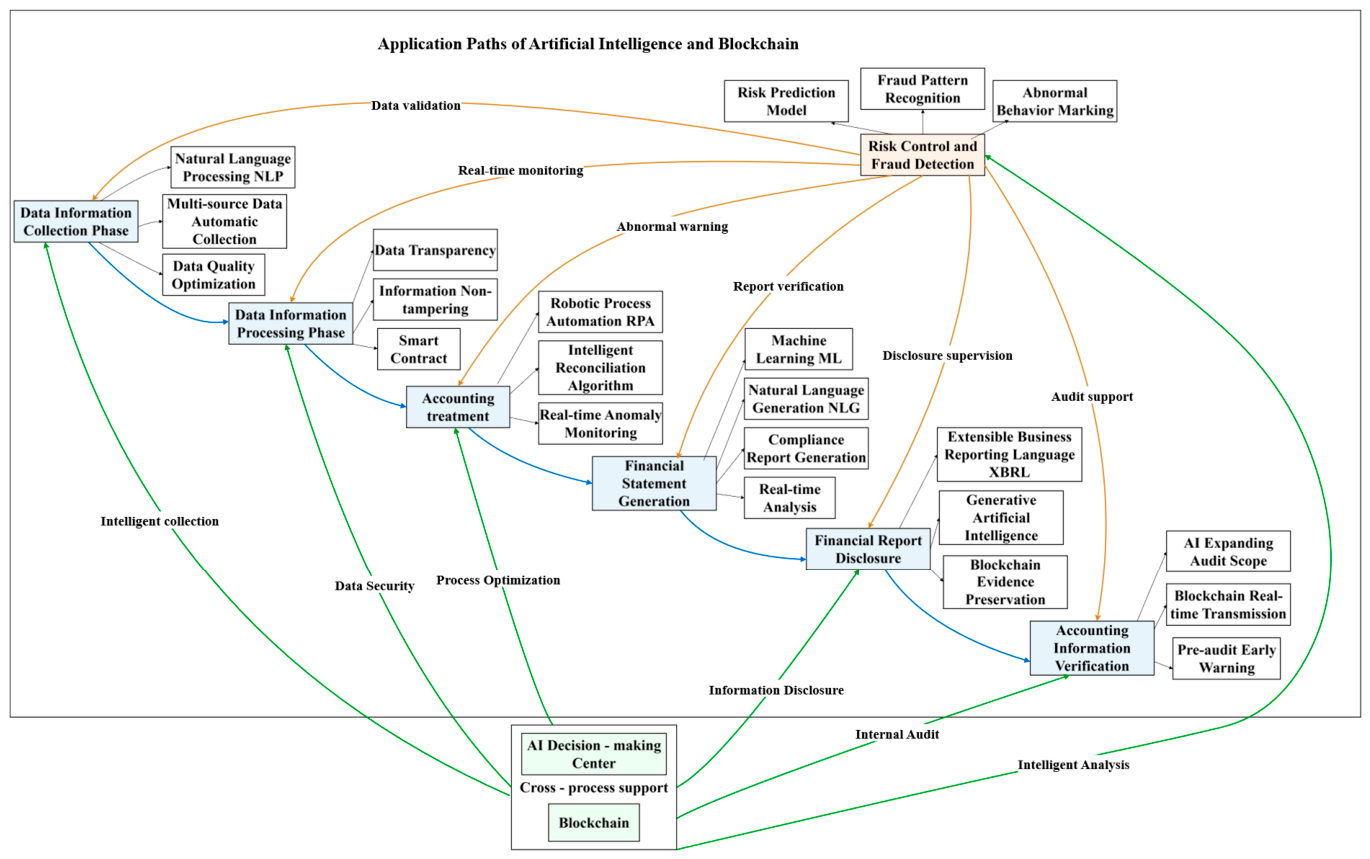
After constructing the framework, the applications of artificial intelligence (AI) and blockchain in the accounting domain were systematically organized according to the accounting workflow, leading to the development of the application pathway illustrated in Figure 7. According to the accounting workflow, the process is divided into several sequential stages: data collection → data processing and input → accounting treatment → financial statement preparation → financial reporting → accounting information verification, with risk control and fraud detection integrated throughout the entire cycle.
During the data collection phase, AI automatically collects multi-source data and optimizes its quality through technologies such as natural language processing. In terms of information, blockchain can ensure the transparency and immutability of financial data, preventing tampering with it at the source. During data processing and accounting, process automation and anomaly monitoring are achieved through robotic process automation (RPA) and intelligent reconciliation algorithms. In terms of financial statement generation, machine learning and natural language generation technologies support the rapid and compliant generation of statements and real-time analysis. During the financial reporting phase, blockchain, Extensible Business Reporting Language (XBRL), and generative AI improve transparency and timeliness. During the accounting information verification process, AI expands the audit scope, and blockchain facilitates real-time data transmission, thus optimizing the audit process. In terms of risk control, AI analyzes data to warn of risks and identify fraud. In addition, blockchain ensures data security and trust mechanisms in cross-process scenarios, such as internal audit, information disclosure, and accounting information security. The core of the application path lies in the collaboration between AI and blockchain. AI is responsible for the intelligent processing of each node, while blockchain provides the trusted guarantee for each node. Together, they promote accounting work from a “manually led fragmented process” to a “technology-collaborated full-link trusted process”.
Overall, the research findings indicate that artificial intelligence and blockchain technology have attracted significantly increased scholarly attention in the field of accounting. The most prominent application area is automation in financial reporting, with use cases encompassing intelligent financial report generation, real-time data integration, detection of anomalous transactions, and blockchain-based mechanisms for immutable storage of accounting information. Notably, although numerous studies have demonstrated technical feasibility through case analyses—for instance, Deloitte’s RPA-based audit tool—the actual implementation scale in real-world business environments remains limited. In addition, the study reveals that the majority of research focuses on corporate financial statement generation, accounting information system optimization, audit efficiency enhancement, and supply chain finance. The application dimension can be categorized into three primary aspects: automated processing, accuracy improvement, real-time monitoring, transparency, and traceability.

5. Challenges and Future Research

5.1. Challenges Associated with AI and Blockchain

Despite the numerous advantages of artificial intelligence and blockchain technology, their application still faces multi-dimensional challenges (Table 4), which require joint attention from both the industry and academia. In terms of security and ethics, financial data is highly sensitive, and information leakage can easily lead to legal compliance risks; the “black box” nature of AI algorithms reduces the transparency of decision-making; and model bias may lead to discriminatory results, triggering ethical controversies. There are also dual obstacles in technical integration: one is the insufficient compatibility of AI with traditional financial systems; the other is the need for professional talents, infrastructure, and financial investment to deploy technologies such as blockchain. In addition, AI itself has inherent limitations in areas such as context understanding and common sense reasoning. It is worth noting that the synergy between artificial intelligence and blockchain poses integration risks. For instance, technical incompatibility may nullify the efficiency gains, while the security risks of shared data could exacerbate the vulnerabilities present in either system.

5.2. Future Research

Based on the integration of artificial intelligence and blockchain in accounting, particularly in financial reporting, this study proposes the following directions for future research:
Data security and privacy. AI and blockchain in accounting handle sensitive financial data, exposing gaps in current protection mechanisms. While blockchain resists tampering, its access control is often weak and AI processing can leak private information. Arten et al. (2024) [42] recommend strong encryption, clear governance policies, granular access controls, and strict enforcement of authorization. Future work should explore advanced encryption or dynamic access control to further strengthen security.
AI model bias. AI may inherit and amplify biases from training data—raising serious ethical concerns in finance and accounting. Peng et al. (2023) [6] show biased inputs yield biased outputs, underscoring the need for algorithmic fairness within a robust ethical framework. Researchers should ensure diverse, representative data and rigorously validate outputs against ethical accounting standards.
Regulatory and compliance risks. Widespread AI use in accounting has intensified debate over legal accountability and ethics. Key unresolved issues include assigning liability for AI-driven decisions and managing ethical risks. As Zemankova (2019) [43] notes, EU regulation—especially GDPR—is strict: it mandates algorithmic interpretability, requiring audits to prove algorithms are unbiased and logically sound. Future research must co-develop regulatory frameworks with policymakers, proposing unified standards that assess both AI model reliability and blockchain security—ensuring full alignment with IFRS, GAAP, and other financial reporting standards.
Human–AI collaboration. AI lacks human-like critical thinking and contextual judgment. In financial analysis and high-stakes decisions, AI outputs must be validated by humans; unchecked reliance risks error. Toumeh (2024) [44] warns that accountants might overly trust reports generated by large language models, thus skipping manual verification and increasing the risk of distortion. Future research should examine how AI augments—not replaces—human expertise in disclosure and auditing.
Interdisciplinary expertise gap. Integrating AI, blockchain, and accounting demands professionals fluent in both technology and finance. Cao (2022) [45] finds auditors and analysts often lack practical AI skills. Closing this gap requires interdisciplinary education: AI + finance curricula, ethics-integrated training, and upskilling for practitioners. Collaboration among universities, industry, and regulators is essential to co-design curricula, research, and certification programs.
Data accuracy dependency. AI and blockchain performance in financial reporting hinges entirely on input data quality. Leitner-Hanetseder & Lehner (2023) [41] describe a data value chain: “raw Big Data → refined Big Data → AI-powered information.” Each stage depends critically on the prior stage’s integrity—errors propagate as “chain deviation.” Future research must prioritize automated validation frameworks that combine blockchain’s immutability with AI analytics (e.g., using AI to detect anomalies or fraud pre-onboarding, and blockchain consensus to authenticate multi-source data), thus boosting reliability and trust in financial reporting.
By addressing these critical areas, future research can fully realize the potential of artificial intelligence and blockchain technologies in the field of accounting, thereby improving the security, trustworthiness, and efficiency of financial reporting while effectively mitigating associated risks. The table below (Table 5) presents the future research opportunities as well as the suggested research questions.

5.3. The Practical Verification and Testing Approaches of the Classification Framework

To enhance the practical significance and future value of this research, we systematically explored several feasible empirical testing paths.
Design science research: Following the design science paradigm, iteratively develop and evaluate the prototype of an AI-blockchain integrated financial reporting tool, and assess its performance in dimensions such as processing efficiency and reporting accuracy through simulation tests of the system.
Multi-case comparative study: Based on the framework type, conduct in-depth comparative analysis of multiple organizations that have implemented related technologies, examining the implementation paths, facilitating factors, actual outcomes, and emerging challenges in different contexts.
Large-scale empirical analysis: Based on the framework dimension, design the survey tool, collect data from technical leaders such as financial executives and auditors, and use statistical models to test whether constructs such as the maturity of technology integration significantly affect objective performance indicators.
Action research: Closely collaborate with industry partners, using the framework as a diagnostic tool and a co-design scaffold to formulate and implement a contextualized technology integration roadmap. Directly assess the action guidance value of the framework through process tracking and outcome benchmarking.

6. Conclusions and Implications

In this study, we conducted a systematic literature review and developed a use-case classification framework to analyze collaborative patterns and explore the application potential of artificial intelligence in the field of accounting, with a particular focus on the financial reporting process. By systematically reviewing and synthesizing existing research, we identified and categorized key application scenarios, technical advantages, and associated challenges. Based on this analysis, we propose future critical research directions. This foundational work enhances the understanding of how artificial intelligence and blockchain technologies are transforming accounting practices, thereby establishing a theoretical basis for advancing the intelligent evolution of accounting workflows. This study examines the transformative potential of technological integration, centering on the central challenge of balancing efficiency enhancement with model innovation, while thoughtfully addressing the emerging issues and governance complexities introduced by automated trust mechanisms. By examining the impact mechanisms of artificial intelligence and blockchain, this study seeks to facilitate the strategic transformation of the accounting profession, outline viable pathways for this transition, and advance the evolution of financial reporting processes toward enhanced efficiency, transparency, and reliability.

6.1. Contributions to Research

This study advances the knowledge base in several ways. First, it advances the interdisciplinary research on artificial intelligence and blockchain in accounting and financial reporting by conducting a systematic review of the existing literature, thereby assisting researchers in evaluating prior applications and related studies in the field of accounting, particularly financial reporting. The study reviews scholarly publications over the past 15 years in a thematic manner from three major online academic databases (i.e., Web of Science, IEEE and ACM) and Google Scholar. In the process, the study systematically identifies a wide range of scholarly papers relevant to the field and analyzes and classifies them accordingly.
Secondly, building on a rigorous systematic literature review (SLR), this study introduces a practical and inclusive taxonomic framework that maps the diverse ways artificial intelligence and blockchain are being applied in accounting—with special attention to financial reporting. Rather than aiming for exhaustive coverage, our goal is to thoughtfully synthesize and clarify real-world use cases, highlighting both established applications and emerging opportunities. We not only delineated the evolving trends of dual-technology applications but also identified the “efficiency-trust synergy” as the core value of their integration—this fills a long-standing gap in existing reviews that have failed to explore how artificial intelligence and blockchain complement each other (rather than existing as independent tools). The resulting framework is designed not only to organize existing knowledge but also to support practitioners and researchers in identifying meaningful pathways for responsible, context-aware innovation in accounting and financial reporting.
Third, this study provides guidance for future research focusing on the integration of artificial intelligence, blockchain technology, and financial reporting. Based on the findings of the systematic literature review (SLR), we offer several valuable recommendations for subsequent studies. Future research may build upon our foundational work for further expansion.

6.2. Implications for Managers and Regulators

The integration of artificial intelligence and blockchain in financial reporting delivers actionable, dual-sided implications for managers and regulators—necessitating coordinated action across technological deployment and institutional design. For managers, strategic priority must be placed on synergistic implementation: embedding AI-driven automation within blockchain’s tamper-proof infrastructure to resolve the longstanding tension between operational efficiency and audit-grade credibility. Concurrently, proactive risk governance is imperative—establishing end-to-end data security protocols and mandating human-in-the-loop oversight for judgment-intensive tasks to mitigate algorithmic opacity and systemic overreliance. Furthermore, enterprises must close the cross-domain capability gap through targeted upskilling and strategic hiring of hybrid professionals; and harness real-time, verifiable data streams—enabled jointly by blockchain transparency and AI analytics—to elevate both reporting timeliness and forward-looking decision support.
For regulators, adaptive standard-setting is critical: updating IFRS/GAAP frameworks to formally recognize data assets as reportable resources, codifying algorithmic explainability requirements, and specifying evidentiary standards for blockchain-verified financial records. Supervisory tools must likewise evolve, leveraging AI-augmented analytics to detect anomalous patterns in distributed ledgers while ensuring regulatory technology solutions interoperate seamlessly with enterprise systems. Crucially, regulatory stewardship must navigate the dual mandate of innovation acceleration and systemic safeguarding: advancing ethical guardrails, fostering multilateral alignment on cross-border reporting protocols, and catalyzing industry-wide maturity through evidence-based guidance—including curated use-case repositories and context-specific risk advisories.

6.3. Implications for Practice

The application of artificial intelligence (AI) and blockchain technology in accounting and financial reporting faces a range of significant challenges. Key concerns include data security and privacy vulnerabilities—such as data breaches stemming from system flaws and poor management of blockchain access permissions—as well as limited transparency in AI models and opaque decision-making processes. Furthermore, biases inherent in training datasets can result in unfair or discriminatory outcomes in automated decisions. Technical integration difficulties, including compatibility issues with legacy systems and substantial infrastructure requirements, further hinder adoption. Additional barriers encompass the scarcity of professionals with interdisciplinary competencies and regulatory frameworks that lag behind technological progress. Resistance among accountants, who may view AI as a threat to their professional autonomy, adds another layer of complexity. Moreover, growing concerns about over-reliance on AI systems and the high sensitivity of these technologies to data quality and availability underscore the need for cautious implementation. Future research should prioritize several key directions: developing advanced technologies to enhance data security; designing explainable AI models and integrating them with blockchain’s inherent transparency; mitigating biases in AI systems; collaborating with policymakers to strengthen regulatory and supervisory frameworks; investigating synergistic models that combine AI-driven efficiency with human judgment; promoting interdisciplinary education initiatives to cultivate professionals with cross-domain expertise; and improving data accuracy through diverse and robust methods.
Finally, a limitation of this study lies in the scope of the systematic literature review, which included searches across three academic databases (i.e., Web of Science, IEEE and ACM) and Google Scholar. Relevant industry practice cases may exist in sources beyond these repositories, particularly in unpublished reports or proprietary documentation, potentially resulting in an incomplete representation of real-world application scenarios. To enhance comprehensiveness, future reviews should consider expanding the search to include additional databases, industry white papers, and practitioner-oriented publications.

Supplementary Materials

The following supporting information can be downloaded at: https://www.mdpi.com/article/10.3390/info17040390/s1, PRISMA 2020 checklist and PRISMA 2020 flow diagram. Reference [46] is presented in the reference list of the article.

Author Contributions

Conceptualization, J.W., W.Y. and J.C. (Jingzhu Chen); methodology, J.W. and W.Y.; formal analysis, J.C. (Jiaqi Chen); investigation, J.C. (Jiaqi Chen); data curation, J.C. (Jiaqi Chen); writing—original draft preparation, J.C. (Jiaqi Chen); writing—review and editing, J.W., J.C. (Jiaqi Chen), W.Y. and J.C. (Jingzhu Chen); supervision, J.W., W.Y. and J.C. (Jingzhu Chen); project administration, J.W.; funding acquisition, J.W. All authors have read and agreed to the published version of the manuscript.

Funding

This research was funded by Shandong Provincial Natural Science Foundation Project Research on Early Warning and Governance Mechanism of Supply-Demand Mismatch of High-Risk Financial Products under the Background of Financial Regulatory Reform, grant number ZR2022MG053.

Institutional Review Board Statement

Not applicable.

Informed Consent Statement

Not applicable.

Data Availability Statement

The original contributions presented in this study are included in the article/Supplementary Material. Further inquiries can be directed to the corresponding author.

Acknowledgments

We sincerely acknowledge the financial support provided by the Shandong Provincial Natural Science Foundation Project Research on Early Warning and Governance Mechanism of Supply-Demand Mismatch of High-Risk Financial Products under the Background of Financial Regulatory Reform (Grant No. ZR2022MG053).

Conflicts of Interest

The authors declare no conflicts of interest.

Appendix A

Figure A1. The results of the JBI assessment.
Information 17 00390 g0a1
Figure A2. The results of the ROBINS-I assessment (The impact of automation on firms’reporting quality [47]).
Information 17 00390 g0a2
Figure A3. The results of the RoB 2 assessment (How do financial executives respond to the use of artificial intelligence in financial reporting and auditing? [31] and Accounting and financial reporting in the it sphere of Ukraine: opportunities of artificial intelligence [11]).
Information 17 00390 g0a3

References

  1. Milana, C.; Ashta, A. Artificial intelligence techniques in finance and financial markets: A survey of the literature. Strateg. Change 2021, 30, 189–209. [Google Scholar] [CrossRef]
  2. Han, H.; Shiwakoti, R.K.; Jarvis, R.; Mordi, C.; Botchie, D. Accounting and auditing with blockchain technology and artificial Intelligence: A literature review. Int. J. Account. Inf. Syst. 2023, 48, 100598. [Google Scholar] [CrossRef]
  3. Hussein, T.M.; Michael, A.A.; Goparaju, A. Reviewing the Impact of Technological Innovation on Accounting Practices. In Business Sustainability with Artificial Intelligence (AI): Challenges and Opportunities; Springer Nature: Cham, Switzerland, 2024; Volume 2, pp. 69–82. [Google Scholar]
  4. Dashkevich, N.; Counsell, S.; Destefanis, G. Blockchain financial statements: Innovating financial reporting, accounting, and liquidity management. Future Internet 2024, 16, 244. [Google Scholar] [CrossRef]
  5. Agarwal, Y. KPMG Global AI and Finance Report 2024: Transforming New Era with AI-Empowered Finance Functions. Finance India. 2024. Available online: https://financeindia.org/data/2024/FI384/FI-384-BR02.pdf (accessed on 12 August 2025).
  6. Peng, Y.; Ahmad, S.F.; Ahmad, A.Y.B.; Al Shaikh, M.S.; Daoud, M.K.; Alhamdi, F.M.H. Riding the waves of artificial intelligence in advancing accounting and its implications for sustainable development goals. Sustainability 2023, 15, 14165. [Google Scholar] [CrossRef]
  7. Nuritdinovich, M.A.; Bokhodirovna, K.M.; Kavitha, V.O.; Ugli, S.A.O. Advanced AI algorithms in accounting: Redefining accuracy and speed in financial auditing. AIP Conf. Proc. 2025, 3306, 050008. [Google Scholar]
  8. Li, H.; Gao, H.; Wu, C.; Vasarhelyi, M.A. Extracting financial data from unstructured sources: Leveraging large language models. J. Inf. Syst. 2025, 39, 135–156. [Google Scholar] [CrossRef]
  9. Hu, R.; Yang, Y.; Liu, S.; Li, Z.; Liu, J.; Ding, X.; Sun, H.; Ren, L. Large language model driven transferable key information extraction mechanism for nonstandardized tables. Sci. Rep. 2025, 15, 29802. [Google Scholar] [CrossRef]
  10. Li, C.; Haohao, S.; Ming, F. Research on the impact of artificial intelligence technology on accounting. J. Phys. Conf. Ser. 2020, 1486, 032042. [Google Scholar] [CrossRef]
  11. Oneshko, S.; Nazarenko, A.; Koval, O.; Yaremko, I.; Pysarchuk, O. Accounting and financial reporting in the it sphere of Ukraine: Opportunities of artificial intelligence. Financ. Credit. Act. Probl. Theory Pract. 2023, 5, 79–96. [Google Scholar] [CrossRef]
  12. Alshareef, M.N. Artificial Intelligence-Enhanced Environmental, Social, and Governance Disclosure Quality and Financial Performance Nexus in Saudi Listed Companies Under Vision 2030. Sustainability 2025, 17, 7421. [Google Scholar] [CrossRef]
  13. Tan, B.S.; Low, K.Y. Blockchain as the database engine in the accounting system. Aust. Account. Rev. 2019, 29, 312–318. [Google Scholar] [CrossRef]
  14. Lestari, T.U.; Putri, K.P.; Devi, M.C. The Influence of XBRL adoption on financial reporting timeliness: Evidence from Indonesian banking industry. J. Din. Akunt. Dan Bisnis 2021, 8, 181–196. [Google Scholar] [CrossRef]
  15. Kuswara, Z.; Pasaribu, M.; Fitriana, F.; Santoso, R.A. Artificial intelligence in financial reports: How it affects the process’s effectiveness and efficiency. J. Ilmu Keuang. Dan Perbank. (JIKA) 2024, 13, 257–272. [Google Scholar] [CrossRef]
  16. Bartolacci, F.; Caputo, A.; Soverchia, M. Sustainability and financial performance of small and medium sized enterprises: A bibliometric and systematic literature review. Bus. Strategy Environ. 2020, 29, 1297–1309. [Google Scholar] [CrossRef]
  17. Kureljusic, M.; Karger, E. Forecasting in financial accounting with artificial intelligence–A systematic literature review and future research agenda. J. Appl. Account. Res. 2024, 25, 81–104. [Google Scholar] [CrossRef]
  18. Alhazmi, A.H.J.; Islam, S.M.N.; Prokofieva, M. The impact of artificial intelligence adoption on the quality of financial reports on the Saudi Stock Exchange. Int. J. Financ. Stud. 2025, 13, 21. [Google Scholar] [CrossRef]
  19. Forliano, C.; De Bernardi, P.; Yahiaoui, D. Entrepreneurial universities: A bibliometric analysis within the business and management domains. Technol. Forecast. Soc. Change 2021, 165, 120522. [Google Scholar] [CrossRef]
  20. Sterne, J.A.C.; Savović, J.; Page, M.J.; Elbers, R.G.; Blencowe, N.S.; Boutron, I.; Cates, C.J.; Cheng, H.-Y.; Corbett, M.S.; Eldridge, S.M.; et al. RoB 2: A revised tool for assessing risk of bias in randomised trials. BMJ 2019, 366, l4898. [Google Scholar] [CrossRef]
  21. Sterne, J.A.; Hernán, M.A.; Reeves, B.C.; Savović, J.; Berkman, N.D.; Viswanathan, M.; Henry, D.; Altman, D.G.; Ansari, M.T.; Boutron, I.; et al. ROBINS-I: A tool for assessing risk of bias in non-randomised studies of interventions. BMJ 2016, 355, i4919. [Google Scholar] [CrossRef]
  22. JBI Manual for Evidence Synthesis. 2024. Available online: https://jbi-global-wiki.refined.site/space/MANUAL/4685837/jbi-global-wiki.refined.site (accessed on 23 January 2026).
  23. Sreseli, N. Use of artificial intelligence for accounting and financial reporting purposes: A review of the key issues. Am. Int. J. Bus. Manag. (AIJBM) 2023, 6, 72–83. [Google Scholar]
  24. Shanghai National Accounting Institute. “AI + Finance” Drives the Digital and Intelligent Upgrade of Enterprises. Intelligent Finance Has Become the Future Trend. Available online: https://www.snai.edu/2024/0718/83150.shtml (accessed on 18 July 2024).
  25. Saleh, M.M.A.; Jawabreh, O.A.; Al Om, R.; Shniekat, N. Artificial intelligence (AI) and the impact of enhancing the consistency and interpretation of financial statement in the classified hotels in aqaba, Jordan. Acad. Strateg. Manag. J. 2021, 20, 1–18. [Google Scholar]
  26. Bovee, M.; Kogan, A.; Nelson, K.; Srivastava, R.P.; Vasarhelyi, M.A. Financial reporting and auditing agent with net knowledge (FRAANK) and extensible business reporting language (XBRL). J. Inf. Syst. 2005, 19, 19–41. [Google Scholar] [CrossRef][Green Version]
  27. Odonkor, B.; Kaggwa, S.; Uwaoma, P.U.; Hassan, A.O.; Farayola, O.A. The impact of AI on accounting practices: A review: Exploring how artificial intelligence is transforming traditional accounting methods and financial reporting. World J. Adv. Res. Rev. 2024, 21, 172–188. [Google Scholar] [CrossRef]
  28. Alonge, E.O.; Dudu, O.F.; Alao, O.B. The impact of digital transformation on financial reporting and accountability in emerging markets. Int. J. Sci. Technol. Res. Arch. 2024, 7, 025–049. [Google Scholar] [CrossRef]
  29. Mwachikoka, C.F. Effects of artificial intelligence on financial reporting accuracy. World J. Adv. Res. Rev. 2024, 23, 1751–1767. [Google Scholar] [CrossRef]
  30. Deloitte. The Impact of Generative Artificial Intelligence on the Financial Field. Available online: https://www2.deloitte.com/cn/zh/pages/consulting/articles/generative-ai.html (accessed on 18 August 2023).
  31. Estep, C.; Griffith, E.E.; MacKenzie, N.L. How do financial executives respond to the use of artificial intelligence in financial reporting and auditing? Rev. Account. Stud. 2024, 29, 2798–2831. [Google Scholar] [CrossRef]
  32. Wyrobek, J. Application of machine learning models and artificial intelligence to analyze annual financial statements to identify companies with unfair corporate culture. Procedia Comput. Sci. 2020, 176, 3037–3046. [Google Scholar] [CrossRef]
  33. Wu, J.; Xiong, F.; Li, C. Application of Internet of Things and blockchain technologies to improve accounting information quality. IEEE Access 2019, 7, 100090–100098. [Google Scholar] [CrossRef]
  34. Liao, K.; Lin, L.; Sun, Y. Blockchain adoption and corporate financial reporting quality. J. Account. Public Policy 2025, 49, 107265. [Google Scholar] [CrossRef]
  35. Yu, T.; Lin, Z.; Tang, Q. Blockchain: The introduction and its application in financial accounting. J. Corp. Account. Financ. 2018, 29, 37–47. [Google Scholar] [CrossRef]
  36. Chowdhury, E.; Stasi, A.; Pellegrino, A. Blockchain technology in financial accounting: Emerging regulatory issues. Rev. Financ. Econ. 2023, 21, 862–868. [Google Scholar]
  37. Alruwaili, T.F.; Mgammal, M.H. The impact of artificial intelligence on accounting practices: An academic perspective. Humanit. Soc. Sci. Commun. 2025, 12, 1–18. [Google Scholar] [CrossRef]
  38. Li, Y.; Yi, J.; Chen, H.; Peng, D. Theory and application of artificial intelligence in financial industry. Data Sci. Financ. Econ. 2021, 1, 96–116. [Google Scholar] [CrossRef]
  39. Roszkowska, P. Fintech in financial reporting and audit for fraud prevention and safeguarding equity investments. J. Account. Organ. Change 2021, 17, 164–196. [Google Scholar] [CrossRef]
  40. Al-Okaily, M. Artificial intelligence and its applications in the context of accounting and disclosure. J. Financ. Report. Account. 2024, 23, 1387–1401. [Google Scholar] [CrossRef]
  41. Leitner-Hanetseder, S.; Lehner, O.M. AI-powered information and Big Data: Current regulations and ways forward in IFRS reporting. J. Appl. Account. Res. 2023, 24, 282–298. [Google Scholar] [CrossRef]
  42. Artene, A.E.; Domil, A.E.; Ivascu, L. Unlocking Business Value: Integrating AI-Driven Decision-Making in Financial Reporting Systems. Electronics 2024, 13, 3069. [Google Scholar] [CrossRef]
  43. Zemankova, A. Artificial intelligence in audit and accounting: Development, current trends, opportunities and threats-literature review. In Proceedings of the 2019 International Conference on Control, Artificial Intelligence, Robotics Optimization (ICCAIRO), Athens, Greece, 8–10 December 2019; pp. 148–154. [Google Scholar]
  44. Toumeh, A.A. Assessing the potential integration of large language models in accounting practices: Evidence from an emerging economy. Future Bus. J. 2024, 10, 82. [Google Scholar] [CrossRef]
  45. Cao, L. Ai in finance: Challenges, techniques, and opportunities. ACM Comput. Surv. (CSUR) 2022, 55, 1–38. [Google Scholar]
  46. Page, M.J.; McKenzie, J.E.; Bossuyt, P.M.; Boutron, I.; Hoffmann, T.C.; Mulrow, C.D.; Shamseer, L.; Tetzlaff, J.M.; Akl, E.A.; Brennan, S.E.; et al. The PRISMA 2020 statement: An updated guideline for reporting systematic reviews. BMJ 2021, 372, n71. [Google Scholar] [CrossRef] [PubMed]
  47. Oesch, D.; Walser, T. The impact of automation on firms’ reporting quality. J. Corp. Financ. 2025, 92, 102683. [Google Scholar] [CrossRef]
Figure 1. Methodological framework for the research.
Information 17 00390 g001
Figure 2. Distribution of publication years.
Information 17 00390 g002
Figure 3. Distribution of citation counts of papers.
Information 17 00390 g003
Figure 4. Geographic distribution of authors.
Information 17 00390 g004
Figure 5. Number of different types of research.
Information 17 00390 g005
Figure 6. Word clouds derived from AI and financial reporting.
Information 17 00390 g006
Figure 7. Application Paths of Artificial Intelligence and Blockchain.
Information 17 00390 g007
Table 1. Benefits associated with AI and blockchain applications in financial reporting.
BenefitsExplanationSource
Strong data processing and analysis capabilitiesThe rise of LLMs (such as ChatGPT) can convert unstructured information generated by humans into machine-readable data.Li et al. (2025) [8]
Hu et al. (2025) [9]
Li et al. (2020) [10]
In traditional finance, basic and repetitive tasks, if performed by financial robots—such as intelligent data collection, intelligent auditing, and intelligent certificate preparation—can free up accounting personnel.
Improve accuracyAI has a significant positive effect on improving the accuracy of financial reports, and this effect remains evident in crisis situations.Oneshko et al. (2023) [11]
Mohammed Naif Alshareef (2025) [12]
Tan et al. (2024) [13]
AI automates ESG and financial reporting, text analysis, and data aggregation, improving disclosure accuracy and compliance.
After research, the author speculates that digitizing the current verification process and handling accounting transactions on a private blockchain will improve the reliability of accounting data required for preparing financial statements.
Improve efficiencyArtificial intelligence can automatically process a large amount of financial data, such as tasks like data entry, account reconciliation, and monitoring. This reduces the time and cost of manual operations and improves the efficiency of data processing and report generation.Oneshko et al. (2023) [11]
Improve timelinessXBRL (AI-related technology) improves the timeliness of financial reports through automation, standardization, etc. From 2015 to 2019, the usage rate of XBRL in the Bank of Indonesia increased from 76% to 97%, and the timely reporting rate also increased from 76% to 97%.Lestari et al. (2021) [14]
Improve transparencyIn the BFS system, all transaction data is recorded on the blockchain for real-time viewing and verification by all relevant parties, thus greatly reducing the likelihood of fraud and errors.Dashkevich et al. (2024) [4]
Han et al. (2023) [2]
Blockchain enables network participants to track all past transactions through a distributed ledger. The shared ledger verified by multiple parties and the encrypted and synchronized transaction records improve the traceability and visibility of information, thus enhancing transparency.
Promote the transformation of the audit modelArtificial intelligence has prompted audit work to shift from the traditional post-event response model to a more forward-looking proactive prevention model.Kuswara et al. (2024) [15]
Table 2. Distribution of papers.
The Number of Papers from Different Online Academic Databases and Google Scholar
Online Academic DatabasesRelated papers
Web of science47
IEEE2
ACM2
Google scholar11
Total62
Table 3. Classification framework of AI and blockchain use cases for accounting.
ApplicationDefinitionUse CaseUse case
Artificial IntelligenceData processingThe Ukrainian company SoftServe uses AI to automate invoice processing, and Grammarly accurately extracts financial data through AI.Oneshko et al. (2023) [11]
Automatic data input and reconciliationAI-driven systems can extract financial data from various sources such as invoices, receipts, and bank statements, and automatically populate accounting software.Sreseli (2023) [23]
Accounting ProcessingHuifu Pay’s AI platform “Dougong” for automated reconciliation and financial management.Shanghai
National
Accounting
Institute (2024) [24]
Improve the quality of reportsFocus on the star-rated hotels in the Aqaba Special Economic Zone Authority (ASEZA) in Jordan, and find that AI can effectively enhance the integration and accuracy of hotel accounting information systems, improve the quality of financial statements, reduce information risks, and assist managers in decision-making.Saleh et al. (2021) [25]
Data processing and integrationThe FRAANK (a web-knowledgeable financial reporting and auditing agent) prototype can automatically acquire, understand, and integrate rapidly changing financial information from various channels on the Internet.Bovee et al. (2005) [26]
Accuracy and EfficiencyAI reduces errors and improves efficiency (e.g., Deloitte’s financial robot).Odonkor et al. (2024) [27]
AutomationNubank’s innovative application of technology enables it to automate multiple financial reporting processes.Alonge et al. (2024) [28]
efficiency and accuracyApproximately 70% of the respondents admitted that artificial intelligence had a positive impact on the accuracy of financial reports, emphasizing the great benefits of integrating these tools into financial practices.Mwachikoka (2024) [29]
TimelinessXBRL (AI-related technology) improves the timeliness of financial reports through automation, standardization, etc. From 2015 to 2019, the XBRL usage rate of banks in Indonesia increased from 76% to 97%, and the timely reporting rate also increased from 76% to 97%.Lestari et al. (2021) [14]
Collaborative GenerationCollaboratively generate financial statements and management reports. The first drafts of internal and external financial reports completed by highly reliable generative artificial intelligence can save a lot of time for financial staff at the end of the month and quarter.Deloitte (2023) [30]
The application rate of AI has increasedIn KPMG’s “2024 Global Artificial Intelligence and Financial Reporting”, 1800 companies were surveyed (later expanded to 2900, covering 10 major economies and 23 countries). It was found that nearly three-quarters of the companies have used AI to some extent in financial reporting, and this proportion is expected to reach 100% in the next three years.Agarwal (2024) [5]
Audit verificationUsing artificial intelligence can improve the quality of financial reports and audit effectiveness. Audit evidence generated by artificial intelligence is more accurate than that generated by human experts.Estep et al. (2023) [31]
Fraud Detection and Risk AssessmentBased on annual financial statements, machine learning and artificial intelligence can be used to identify significant financial irregularity risks in enterprises and detect fraud patterns.Wyrobeka (2020) [32]
blockchainrecordBy providing a decentralized and immutable ledger, blockchain technology can securely and transparently record financial transactions, enhancing transparency and trust.Alonge et al. (2024) [28]
Smart contracts serve as the starting point of transactions, linking logistics, capital, and information flows. Whether a contract is executed successfully, partially successfully, or fails, the information is permanently recorded by the blockchain.Wu & Li (2019) [33]
Invoice systemSince 2018, the blockchain electronic invoice system, which has been phased in by Chinese local governments, has enhanced the quality of financial reports and the efficiency of accounting functions for enterprises.Liao et al. (2025) [34]
Real-time It has revolutionized processes such as invoicing and payment processing, enabling enterprises to share key information in real time and build a real-time, verifiable, and transparent accounting ecosystem. By leveraging blockchain, financial statements such as balance sheets and income statements can be updated in real time.Han et al. (2023) [2]
TransparencyThe accounting and reporting process, verified and supervised by all nodes of the accounting blockchain, becomes more transparent and traceable. Yu et al. (2018) [35]
The automation of accounting processesBlockchain can directly empower enterprises in basic accounting tasks such as transaction processing, voucher generation, inventory management, and contract execution; the world’s top four accounting firms have already launched blockchain platforms/models.Chowdhury et al. (2023) [36]
GenerationEnterprises can upload original vouchers to the public blockchain, and the public blockchain will automatically generate accounting books and financial statements through smart contracts. Yu et al. (2018) [35]
Audit verificationBy making the process of voucher verification and transaction tracing in audits more efficient, auditors can narrow the scope of substantive tests based on the results of control tests on the blockchain.Tan & Low (2018) [13]
Table 4. Challenges associated with AI and blockchain applications for financial reporting.
ChallengesExplanationSource
Data security and privacy protection issuesHandling sensitive financial information is prone to causing privacy and security risks, and there is a hidden danger of cyber-attacks.Alruwaili & Mgammal (2025) [37]
Li et al. (2021) [38]
Information risks include doubts about the legality of data collection and vulnerability to hacker attacks leading to information leakage. In 2015, the average total cost of data breaches reached $3.79 million (2015) Cost of Data Breach Study: Global Analysis).
BiasAI systems have the “black box” problem, with insufficient transparency, making it difficult to explain decision-making logic and potentially implying undetected algorithmic biases.Alhazmi et al. (2025) [18]
Technical challengesThe implementation of AI faces high costs, cybersecurity threats, regulatory uncertainties, and the integration of technologies such as ERP systems needs to be adapted to the organizational structure.Alruwaili & Mgammal (2025) [37]
Paulina Roszkowska (2021) [39]
Manaf Al-Okaily (2024) [40]
Blockchain is not an off-the-shelf product and has security issues (such as hacker attacks) and scalability problems.
The integration of AI and XBRL (eXtensible Business Reporting Language) requires technical investment, and the automated processes for data extraction and analysis need to address system compatibility issues; continuous investment is required to maintain technical stability.
Shortage of professional talentsAuditors lack expertise in AI technology, and the existing education system has not fully integrated AI into auditing courses. There is a need to cultivate talents with data analytics and AI tool operation capabilities.Alhazmi et al. (2025) [18]
Regulatory and supervision lagThe existing IFRS (International Financial Reporting Standards) cannot fully identify and measure the value of AI-powered information and big data, lack a framework for the recognition and measurement of data assets, and regulatory supervision lags behind technological development.Leitner-Hanetseder & Lehner (2023) [41]
Model bias and uncertaintyAI models’ performance depends on data quality and algorithm selection, with potential biases/uncertainties.Oneshko et al. (2023) [11]
Scalability issuesBlockchain technology may face challenges in scalability and performance when handling a large number of transactions. As the transaction volume increases, the consensus mechanism and storage requirements of the blockchain may become bottlenecks, leading to slower transaction speeds and increased costs. This may affect the real-time performance and efficiency of the BFS system.Dashkevich et al. (2024) [4]
ResistanceAccounting staff worry AI will replace their jobs and weaken human experience/intuition in identifying financial report risks, resisting AI and hindering its audit application.Kuswara et al. (2024) [15]
Over-reliance riskExcessive use of AI can trigger “automation fatigue” and lead to reduced employee engagement.Alruwaili & Mgammal (2025) [37]
Odonkor et al. (2024) [27]
Over-relying on AI for financial reports may weaken accountants’/auditors’ professional skills and judgment.
Table 5. Future research directions.
Future Research OpportunitySuggested Research Questions
Data security and privacy protection.
  • How can blockchain’s access control systems be optimized to minimize unauthorized data exposure without compromising transparency?
  • What metrics can quantify the trade-off between data security and system performance in AI-augmented auditing platforms?
Transparency limitations
  • How to translate AI decision logic into auditor-friendly formats?
  • How to reconcile the public’s demand for “complete transparency” with the proprietary nature of AI algorithms in commercial systems?
Bias in AI models
  • Can hybrid human-AI validation workflows mitigate biases more effectively than purely algorithmic solutions?
  • How to standardize ethical audits for AI models across jurisdictions with conflicting regulatory requirements?
Regulations and supervision lag
  • How to establish cross-border legal frameworks for assigning liability in AI-driven accounting errors?
  • What role should third-party auditors play in certifying compliance of AI systems with GAAP/IFRS standards?
  • How can regulatory bodies incentivize enterprises to adopt ethical AI practices without stifling innovation?
Human-AI Collaboration
  • What psychological factors influence auditors’ trust in AI recommendations, and how can they be calibrated?
  • How to measure the “critical thinking gap” between human judgment and AI outputs in high-stakes financial decisions?
Shortage of interdisciplinary expertise
  • How to define “ideal” AI-blockchain-accounting professionals?
  • How to teach these competencies?
Data accuracy dependencies
  • How to develop self-correcting AI models that identify and rectify data inconsistencies before blockchain recording?
  • How to balance automation (AI preprocessing) and human oversight in ensuring data integrity?
Disclaimer/Publisher’s Note: The statements, opinions and data contained in all publications are solely those of the individual author(s) and contributor(s) and not of MDPI and/or the editor(s). MDPI and/or the editor(s) disclaim responsibility for any injury to people or property resulting from any ideas, methods, instructions or products referred to in the content.