Review

Contextualizing the Intersection of Makerspaces and XR Technologies Through Immersive Storytelling: A Thematic Hybrid Review


Education Department, Ontario Tech University, Oshawa, ON L1G 0C5, Canada
*
Author to whom correspondence should be addressed.
Information 2026, 17(2), 192; https://doi.org/10.3390/info17020192
Submission received: 13 December 2025 / Revised: 11 February 2026 / Accepted: 11 February 2026 / Published: 13 February 2026

Abstract

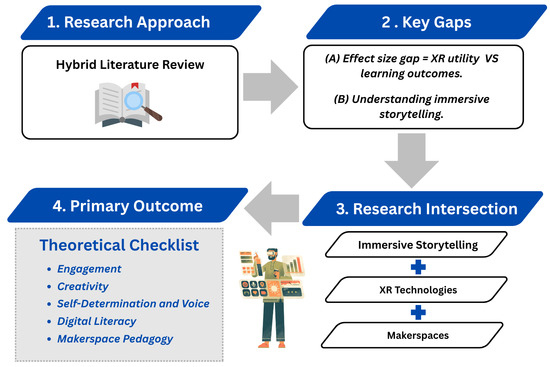
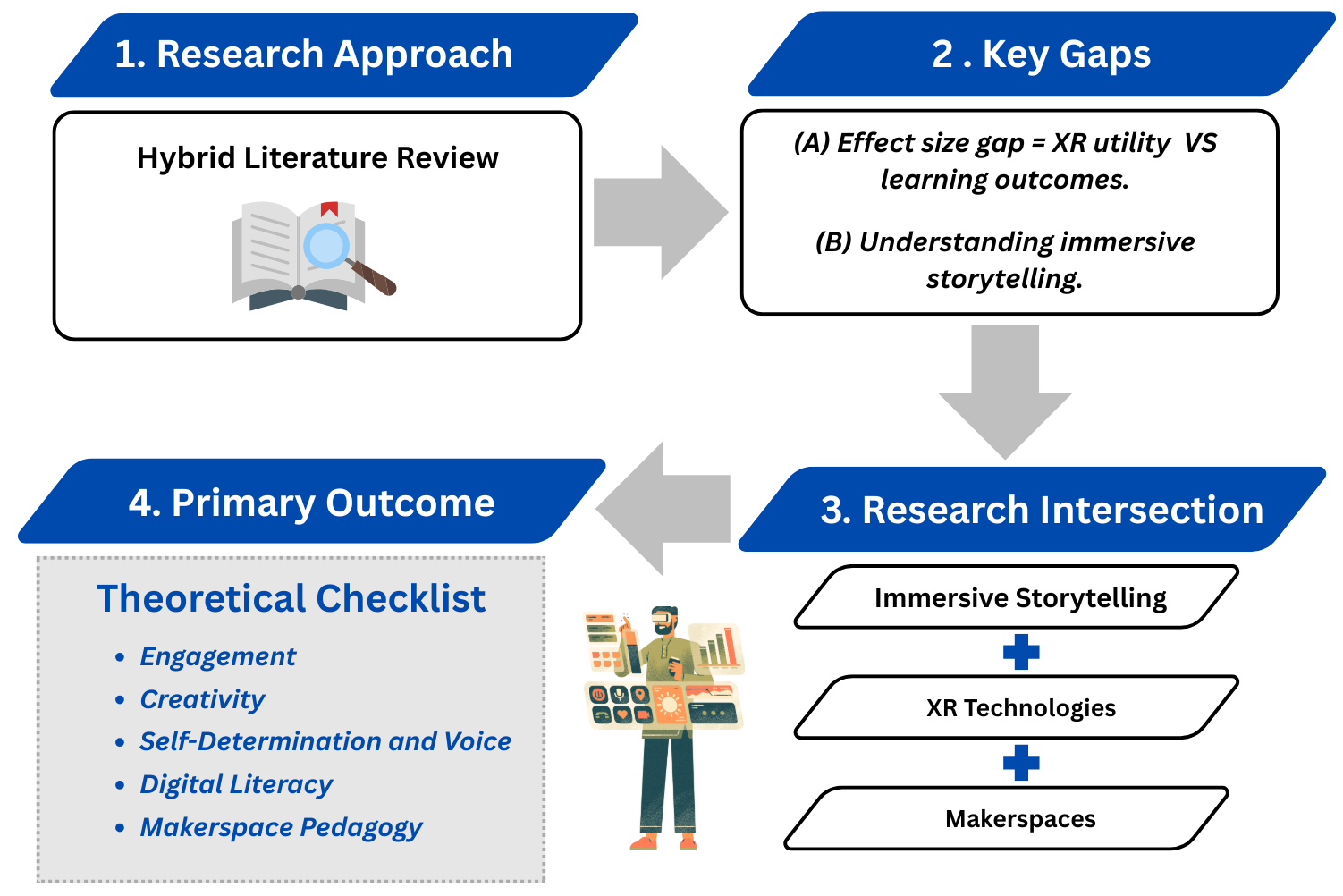
Makerspaces in K-12 education are multidisciplinary and provide multiple points of intersection with different subjects, technologies, and pedagogies. At the forefront of the maker movement is an emphasis on positioning students as playing an active role in defining and interpreting their learning experiences. Extended reality (XR) technologies are used in makerspaces to help students create a record of these goals and experiences. XR technologies provide a broad inventory of devices to support students in publishing their creative process through narratives and immersive storytelling. However, the literature points to an effect size gap between the utility of XR in education and students’ learning outcomes using XR. Conversely, engaging students in XR-enhanced maker spaces through storytelling offers one approach to bridging this effect size gap. However, the literature also points to the need for a better theoretical understanding of storytelling in digital forms. This paper explores these gaps by investigating the intersection of XR technology and makerspaces through the lens of immersive storytelling. We implemented a hybrid literature review approach whereby the researchers’ independent investigations were synthesized with data from a systematized review process. Our analysis of the literature and research on immersive storytelling resulted in developing a preliminary theoretical checklist that can inform future research on developing immersive storytelling frameworks for XR-enhanced makerspaces. Researchers can use our literature-based checklist as a foundation to investigate the intersection of immersive storytelling in XR-enhanced makerspaces with the aim of helping students improve their storytelling and supporting practitioners’ formative feedback.

Graphical Abstract

1. Introduction

The maker movement has been primarily associated with STEM [1] or STEAM (Science, Technology, Engineering, Arts, and Math) education; however, these spaces are now expanding into formal educational settings, including subjects like history, geography, and language arts [2,3]. This shift has broadened access to Do It Yourself (DIY) activities, fostering a more diverse range of participants and increasing the creation of spaces where hands-on learning is encouraged [4,5,6]. The movement has also been instrumental in promoting equity and gender inclusivity, especially in STEM, and emphasizing that every child has the potential to be an innovator [7,8,9].
What sets a makerspace apart from a simple workspace is the unique culture it fosters [6,10]. Beyond just equipment, a true makerspace is dedicated to a spirit of innovation, while also providing the foundational skills students need to thrive in that environment [11,12]. The maker culture encourages experimentation, learning through failure, problem-solving, and perseverance in the face of challenges. This culture also nurtures higher-order thinking and opens up opportunities for sharing knowledge at both local and global levels [13,14].
Maker pedagogies emphasize core values such as inquiry, creativity, play, innovation, collaboration, and personalized learning [6,15,16]. These teaching approaches build on project- and problem-based learning (PBL), design thinking, and remixing practices often seen in media literacy. Our research has expanded the concept of PBL to include passion-based learning, which centers on student-driven interests and positions learners as active agents of change within their communities [17].
Positioning learners as active agents of change in maker pedagogies requires methods that promote student voices, such as through narratives and storytelling. Storytelling with personal narratives using digital technologies (i.e., digital storytelling) has grown out of a movement since the 1980s at the Center for Digital Storytelling (CDS). The digital storytelling movement aligns well with student-centered maker pedagogies, as this form of communication emphasizes learners as creative storytellers [18]. An example of students taking the role of creative storytellers, is through the development of digital stories using coding software to convert physical projects into digital demonstrations [19].
An evolution of digital storytelling is called immersive storytelling [20]. This form of storytelling implements virtual worlds through extended reality (XR) technology in a number of ways (e.g., via fully immersive virtual reality or augmented overlays of the physical environment using smart devices). Immersive storytelling has been realized as one way to promote a more active role for students in various educational contexts, including history, training serious games, science, and public health [20]. The flexibility in how immersive storytelling can be implemented aligns with the wide variety of technologies used in makerspaces—such as the vast array of smart objects encompassed under the umbrella term The Internet of Things (IoT) [17].
Existing research has looked at the fundamental structure of storytelling in this context and found a range of factors that are important for effective immersive storytelling. These factors include interaction and structure type [21], affective experience, narrative meaning, and agency [20,22], learners as active creators [23], and open exploration of branching narratives [24]. While the basic implementation of immersive storytelling can enhance learning experiences, such as making museum visits more engaging [25], immersive storytelling can also be used as a way to center students in the creation of narratives based on their prior histories and selves [23]. However, research on storytelling in digital learning contexts highlights a theoretical gap in how these pedagogical benefits can be better enacted in education praxis [18].
Including XR technologies in makerspaces creates a range of possibilities where physical spaces are annotated on and viewed in virtual space, or where the makerspaces are recreated into the virtual world altogether. These virtual makerspaces can have a positive impact on learners’ autonomy, creativity, spatial reasoning, and anxiety, while also opening ways to make learning more authentic [26]. Virtual makerspaces have the added benefit of using VR technology to provide safe pre-training environments where students can experiment with otherwise expensive or dangerous equipment without risk to their physical health [27]. However, while students tend to have a positive attitude toward learning with XR [28,29], a meta-analysis of educators’ attitudes shows there is concern about overcoming barriers to integrating XR technology in education as a whole [28]. Thus, a better understanding of facilitating XR technology in maker education is needed. Consequently, a review of the literature between 1991 and 2021 encourages deeper exploration at the intersection of XR technologies and education, emphasizing building XR-enhanced classrooms and virtual learning environments [30]. To this end, recent work has established useful design guidelines and outlined common tensions between one form of XR technology (i.e., augmented reality) and makerspace education [31].
Considering the interplay of dimensions noted above, as well as a call for better theoretical understanding of storytelling praxis [18], this research examines the intersection of makerspaces, XR technology, and storytelling. Specifically, our objective is twofold. First, we attempt to analyze the interplay of makerspaces, XR technology, and storytelling to conceptualize how these areas interact. Second, our synthesis is intended to contribute clarity to the field by outlining important dimensions of each of these areas into a preliminary theoretical checklist. The checklist is intended to offer researchers a set of themes and dimensions that can inform the development of frameworks for storytelling in XR-enhanced makerspaces. To this end, our guiding research question is as follows: What themes and dimensions emerge from the literature that can inform praxis at the intersection of XR-enhanced makerspaces and storytelling?
The following sections provide an overview of the hybrid review method applied, an outline of the synthesis of key themes in the results, followed by a discussion of our checklist development, and a final concluding section outlining future research at the intersection of maker education, XR, and immersive storytelling.

2. Methods

In following Kraus et al. [32], we conducted a hybrid literature review technique that blends non-systematic and systematic methods. Our literature review implemented elements of a systematic search of the literature, combined with the researchers’ independent reviews of the extant literature, followed by a narrative analysis of selected articles. This approach considers the researchers’ exposure, expertise, and experience in the field, while also deploying systematic methods in the review process [32]. This form of review is well suited for the exploratory context of XR technologies and makerspaces because it demonstrates a broad review of the literature, emphasizes an appraisal of contributions, seeks to identify significant themes, and the review results in new theory [33]. Specifically, the goal of conducting the narrative analysis was to contribute to theoretical discourse by proposing a theoretical checklist of dimensions pertinent to storytelling in XR-enhanced makerspaces. The resulting checklist is outlined in Section 4.
Our hybrid review process was conducted in three stages. First, each researcher compiled pertinent articles from their respective areas of research. Second, to facilitate and contextualize our independent research on maker pedagogy, XR technology, and immersive storytelling, we conducted a literature review to identify additional literature on XR technologies and makerspace education. In consultation with the PRISMA framework [34] and the extended PRISMA-S statement [35], it is noted that interdisciplinary and alternative review types are inclusive under the umbrella term systematic review. Thus, we specifically applied elements of the identification and screening procedures of the PRISMA framework to structure the literature search [34]. Third, we conducted an overarching narrative analysis of the selected articles with emphasis on identifying common concepts and themes [33], followed by synthesizing prevalent themes into macro themes. The final macro themes are outlined in Section 3.

2.1. Eligibility Criteria and Information Sources

We primarily included studies that focused on XR technologies in K-12 makerspace education. Only peer-reviewed journal articles published in English from 2015 to 2024 were eligible for inclusion. The eligible articles reported on qualitative or quantitative factors associated with XR or makerspace in K-12 education, such as student engagement, pedagogy, digital literacy, and facilitator or student perspectives. As the researchers compiled pertinent literature for their research in the first stage of their study, the EBSCOhost powered database Academic Search Premier was used to provide further specific results on our study subject. This database search as not intended to be exhaustive in following our hybrid approach [33]. We also included studies from searching reference sections of included articles from the review stage. Articles included from all sources followed the same inclusion criteria noted above.

2.2. Search Strategy, Selection Process, and Study Selection

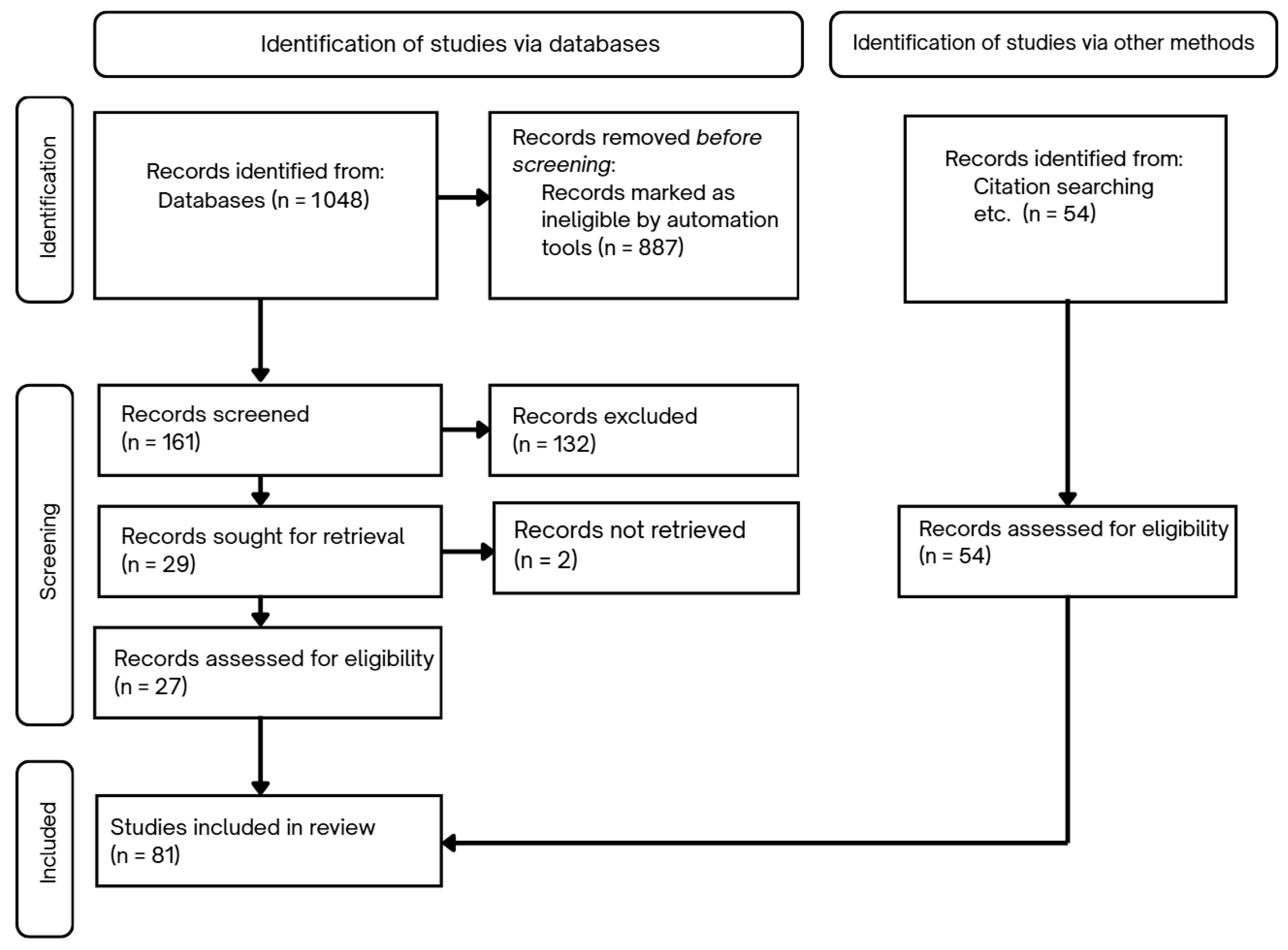
The initial search strategy used in the primary information source was “XR technology” AND “makerspaces”. This search resulted in only one item being found. We then revised our search string to (“Extended Reality” OR “XR technology”) AND (“makerspace” OR “maker space”). This search string returned 1048 results. We then refined the search results to peer reviewed academic journals, with full text availability and published in English between 2015 and 2024. Our revised search filter resulted in a total of 161 articles. Referring to our eligibility criteria (i.e., including qualitative and quantitative factors, K-12 education, dealing with engagement, pedagogy, digital literacy, and facilitators or students’ perspectives) and the primary search terms of our review (i.e., XR technology and makerspaces) we looked at article titles, as well as abstracts if the titles were unclear, and downloaded suitable articles for full-text reading. This process resulted in the exclusion of 132 articles based on titles or abstracts that did not reference XR technology or makerspaces, or that specifically focused on business or healthcare sectors. Two articles were not available online in full-text. We then downloaded 29 articles for full-text reading and analysis. At this point, 54 additional articles that met our eligibility criteria were downloaded from the reference sections of articles or were added from our files and included for full-text reading. The additional articles added from the researchers’ files were based on their existing independent research, which represents the hybrid review dimension of relying on researchers’ exposure and experience in the field [32]. A total of 81 studies were included in our review (See Figure 1 for a flow diagram of our study selection).

3. Results

Our hybrid review focused on common, overarching themes closely related to our research question. Special attention was given to themes that inform student-centred pedagogy, as well as constructs that support the role of students as active innovators and change agents. It is important to note that due to the nature of reviewing literature at the intersection of three areas (i.e., storytelling, XR technology, and makerspaces) the themes and constituent dimensions intersect in dynamic ways. Thus, each article in the review may appear across multiple themes in order to approach understanding the intersections holistically. The following interrelated themes were extracted from our analysis: (1) engagement; (2) creativity; (3) self-determination with empowerment and voice; (4) digital literacy with XR in makerspaces; and (5) citizenship in makerspaces. We then explored these themes to understand their common pedagogical underpinnings as they may relate to XR technology and makerspaces, while also considering pedagogical challenges associated with each theme.

3.1. Engagement

Our analysis resulted in nine articles that discussed engagement with direct or tangential connections to makerspace education and/or XR technologies. The authors, who examine makerspace settings in a variety of contexts (i.e., schools, libraries, remote learning) define engaged learning as agency-rich, collaborative, identity-forming participation in iterative making, supported by documentation and values-aligned assessment. They view imagination as a core mechanism of engagement through which learners enter maker activities with agency, curiosity, and creative ownership. One way to conceptualize engagement is through specific pedagogical design. In the case of makerspaces, an insight gleaned from the literature places these learning contexts squarely in the sociocultural and constructivist traditions [36,37]. To affirm the sociocultural constructivist pedagogy of makerspaces, practitioners have a wide range of engagement factors to consider when planning, implementing, and evaluating these learning contexts. Walan and Gericke [38] reported that teachers consider making connections in STEM, motivation, collaboration, and creativity as possibilities for makerspace education.
One guiding principle for understanding the interplay between students and making is that engagement should be facilitated through student actions and processes that support equity for all learners [39]. However, the complexity of assessing students’ experiences in makerspaces is a challenge noted in the literature [40], and facilitators are encouraged to engage with students about their learning goals to overcome this challenge and enhance engagement [41]. Additionally, equity is an imperative factor when discussing female students’ engagement in makerspaces and STEM, as Sheffield et al. [42] discuss the importance of improving female primary school students’ engagement through directly appealing to their imaginations.
Imagination is closely linked to the type of inquiry that is facilitated in the learning context. Looking outside the main review for context on types of inquiry, Banchi and Bell [43] discussed a continuum of Inquiry-Based Learning (IBL), which moves learners from high scaffolded inquiry (confirmation of skills and knowledge to teacher-provided structured procedures) toward independent, student-driven investigations (guided by teacher to open and student led). Open-ended inquiry and a collaborative environment are two factors Bower et al. [44] also discuss as important for student engagement. This suggests that the modes of access to maker education can also impact engagement and introduce the issue of accessibility as a critical principle of equity into the discourse. For example, in the case of virtual field trips, students who experience the field trips through remotely accessible telepresence robots were more engaged than students who watched a recorded video [45]. This illustrates that access to technology by all students (i.e., equity) is one area where all stakeholders must focus planning efforts, to ensure learning is not limited by the technology it incorporates.
To gain a deeper understanding of engagement on an affective level through XR technology, stakeholders can investigate the relationship between students and the materials or technology they access. Kumpulainen and Kajamaa [46] discuss the interplay between humans and materials, positing that manipulated technology influences learners as much as learners manipulate materials in a process termed sociomateriality. Sociomateriality is a complex topic, though it offers a clear link between the cognitive and affective aspects of learning in makerspaces that can help create more engaging learning through making. However, this complexity can be a drawback, as Vanek et al. [47] note that teachers often feel limited by the time or skills to implement flexible, engaging opportunities with digital activities. Ultimately, developing strategies to enhance engagement in makerspaces with XR technology and storytelling will require flexible and creative approaches.

3.2. Creativity

Thematic analysis of the articles included in our systematic review resulted in five articles that discuss creativity as a central factor of makerspace learning. Across these studies, creativity in makerspaces is consistently framed as an iterative, hands-on process of problem solving, design, and expressive making, whether through teacher-artist partnerships, narrative construction, interdisciplinary inquiry, e-textile design, or emergent experimentation. They emphasize creativity as a social, material, and cross-disciplinary practice that develops through collaboration, exploration, and tinkering. The creativity theme is integral for our synthesis in Section 4, as this theme embodies the open-ended nature of learning in makerspaces. Open-endedness as a pedagogical value sets the stage for interdisciplinary approaches to learning in makerspaces. Conceptualizing makerspaces as interdisciplinary spaces can spark the creativity of educators and students alike, and also engage students in skills such as reading, writing, problem-solving, engineering, science, and math [48]. One example of an interdisciplinary approach to makerspace learning is in the framework developed by Santos et al. [37], which provides a process for teachers and artists to develop a partnership and foster students’ creativity in school makerspaces.
Providing learning spaces where several competencies are readily available to explore is one way for facilitators to offer students opportunities to be creative and be at the center of their learning. Facilitating students’ experiences with new competencies is a critical goal, as research on e-textile making by Hébert and Jenson [49] found that students were not motivated to make outside of the classroom, and sewing and coding were two challenging skills that required the most assistance. Bull et al. [19] also outline how makerspace learning contexts and the included technologies can foster interdisciplinary competencies, such as using the Scratch programming software to create digital stories converted from student-built physical dioramas.
Without the interdisciplinary skills and literacies to explore making in makerspaces, it may be challenging for students and facilitators to fully realize the potential of making materials. This tension between the potential of makers and material is discussed by Smith [50], in which the author states that knowing where art, technology, practice, and unknowability intersect requires literacy of the process. XR technologies offer one path for students to explore a range of literacies in a creative, open-ended environment, and to tell stories about their making processes in their own ways.

3.3. Self-Determination, Empowerment, and Voice

Fifteen articles included at least one element of self-determination (i.e., empowerment or voice) that we synthesized from the literature. While seven of the articles included here overlap with other sections, it is worth noting that this theme was the most common theme found in our review. In this section, the themes are analyzed to better understand how equity is democratized in maker education. Equity in terms of self-determination and empowerment have been identified in the literature as closely tied to learners’ attitudes [51], the development of identity for individual students [39,52], power dynamics in the environment [53], and the degree of intrinsic motivation facilitators feel to create makerspaces [54]. These findings suggest that facilitators can approach maker education through meaningful contexts that inspire positive attitudes and intrinsic motivation in themselves and students, but also for stakeholders to ensure that proper supports are in place for facilitators to be motivated [54].
Across these articles, self-determination is understood as learners’ ability to direct their own learning trajectories and make autonomous choices in maker activities, manifested in student-centred, interest-driven activity structures where learners control their processes and outcomes, as seen in Nadelson’s [52] framing of makerspaces as environments where learners control their learning. Empowerment, by contrast, refers to how makerspaces provide learners, particularly those from historically marginalized or underrepresented groups, with the tools, access, and conditions to participate meaningfully, build confidence, and exert influence over technological or creative processes. Agency is conceptualized as the capacity to act, intervene, and shape outcomes within sociotechnical systems, emerging in makerspaces through inquiry, experimentation, and the relational dynamics between humans, tools, and materials, such as Smith’s [50] discussion of “agential symmetry” in hacklabs.
It is also important to incorporate students’ learning goals, as defined by students, to inspire feelings of self-determination, empowerment, and voice. Wardrip et al. [41] note that students can demonstrate empowerment and voice by discussing socio-emotional goals, documenting (i.e., telling a story or narrating) their learning artifacts and learning process, and by teachers engaging students in their learning goals. Emphasizing students’ socio-emotional goals is also critical for empowering students to engage in makerspace education equitably, especially for students with varying abilities (e.g., for students in wheelchairs), and to adjust these spaces to allow nontraditional ways of engaging in maker learning [55].
One way to facilitate self-determination, empowerment, and student voice is to encourage what Przybylla [56] points to as an often-neglected part of maker education—reflecting on the learning process. An extensive body of literature, beyond the scope of this paper, encourages students’ reflections as part of good metacognitive practice for higher-order thinking and deep learning. An example of centering learners as empowered, reflective, individuals is illustrated in a study by Martin et al. [36], in which students created repertoires of practice that provided each individual learner with the agency to actively define and redefine what counts as making. Encouraging students to be centered in defining their learning goals and outcomes, also makes learning more equitable for marginalized students which can empower them as agents of change in their communities or in defining new communities [42]. However, Walan and Gericke [38] call attention to an important limitation in this context, specifically that teachers often do not reflect on the cultural, ontological, and epistemological contextual differences between formal school and makerspace learning. If educators are to facilitate self-determination, empowerment, and voice, reflecting on the pedagogical and sociocultural dimensions of maker education is crucial to the educator’s role.
A series of interesting explorations of how students, facilitators, peers, materials, and makerspace contexts interact is discussed in depth in four articles from our review. Kumpulainen and Kajamaa [46] discuss agency (i.e., self-determination) as in flux, and that makerspaces offer a context through which humans and materials intra-act. Johnson-Eilola and Selber [57] echo this discussion by emphasizing flow, flux, and change as essential processes in what they define as the sociotechnical context of makerspaces. Further discussion distinguishing human and material agency and how humans and materials influence each other can be found in Smith [50], and Lemieux and Rowsell [58]. Exploring these topics could offer educators a more robust understanding of the tensions in designing and facilitating makerspaces deeply rooted in cultural, ontological, and epistemological praxis.

3.4. Digital Literacy with XR and Makerspaces

In addition to articles selected from our files and through references of reviewed articles, five articles were included through our review that enhanced our understanding of digital literacy across a range of technologies incorporated into makerspace education.
Digital literacy is a set of critical competencies constantly evolving in an ever-changing world of rapid technological development [59,60,61]. As new technology is introduced, the breadth and depth of competencies in technology-enhanced environments must evolve [62,63]. Currently, critical competencies of digital literacy include information literacy [64], communication and collaboration [65], technical skills [49,56,66], content creation [67], critical thinking and problem-solving [68], digital citizenship [69], and adaptability and lifelong learning [70].
XR can potentially enrich and significantly add to current digital literacy competencies. With respect to information literacy, XR allows students to engage in a more interactive and contextualized manner, thereby improving their ability to evaluate and synthesize information [71]. XR can also enhance communication and collaboration within virtual learning spaces, enabling students to solve problems creatively [62]. Along with creativity, facilitators can implement computational thinking (CT) pedagogy in the making process [72,73]. In addition, XR necessarily requires students to develop new skills related to XR devices and software [74], as well as 3D design software for iterative design and 3D printing [75,76,77]. Furthermore, XR can promote critical thinking and problem-solving skills, working on presenting complex, real-world, real-time scenarios and problems [75]. Immersing students in scenarios requiring ethical considerations, privacy, online safety, and responsible actions can help develop digital citizenship [78]. XR can also empower students to create immersive content, thereby enhancing their skills in digital storytelling and multimedia design [79]. Additionally, Reddy et al. [70] claim that XR scenarios can motivate students to explore and adapt to new tools and applications.
Makerspaces, in conjunction with XR, can further expand digital literacy competencies. Makerspaces encourage inquiry-based learning, and adding this component to XR scenarios requires students to research and evaluate information, enhancing their information literacy skills [71]. Both makerspaces and XR foster real-time communication and collaboration, allowing students to work together regardless of physical location [62]. Critical thinking and problem-solving are integral to makerspaces [80] and can potentially be enhanced with XR employing real-world, real-time scenarios. Finally, makerspaces create safe spaces to discuss the responsible use of technology and the impact of digital actions [78]. XR could enhance these discussions involving digital citizenship through rich virtual realities among diverse students worldwide. One challenge, however, involves enhancing service learning for teachers to expand and build their digital skills [62].
In summary, digital literacy constantly evolves with the growth of technology-enhanced applications. XR offers the possibility to interact, play and engage in a wide range of virtual scenarios otherwise inaccessible to most students. It also expands the range of interactions among students who are not physically together. Makerspaces offers the foundation of a solid pedagogy and a set of principles that can help guide the use of XR to expand and add to digital literacy competencies.

3.5. Citizenship in Makerspaces

Three articles from our review were used with our files to synthesize a thematic context between makerspace pedagogy and the development of students as citizens. Citizenship that is fostered in makerspaces can be localized—centered on community and civic responsibility, but it can also be global. As students use XR technologies to engage in social media, they act as digital citizens communicating in and between local and global networks.
Based on an exploration of the literature external to our review, we can characterize the digital citizenship field as existing in a time of polycrisis. This polycrisis involves concurrent and significant economic, social, and technological upheaval [81]—educators play a crucial role in equipping students with the knowledge and skills to foresee and adapt. This enables them to comprehend their world, anxieties, and aspirations, seize opportunities brought by change, envision their futures, and pursue innovative and resilient outcomes. Today, we are grappling with unprecedented uncertainty, discomfort, and fear, driven by the looming threats of climate inaction, severe weather events, geopolitical tensions, political division exacerbated by social media, economic instability, housing insecurity, and the resulting mental health deterioration [82]. While such vast societal shifts present formidable challenges, they also create avenues for exploring innovations that stretch our notions of what is possible.
Against the backdrop of this polycrisis, our reading of this study’s literature review articles show there is a growing need for a renewed digital citizenship curriculum that prioritizes democratic involvement and responsible, equity-oriented engagement. For example, digital media offer young people numerous possibilities for communication, connection, creation, critical thinking, and knowledge-building, while also guiding them towards civic engagement and social participation [83]. However, the effectiveness of these tools relies on how learners use and adapt them, emphasizing the reciprocal relationship between user and technology.
DIY making and makerspaces literature points to various ways in which these spaces foster improved shared social environments. For example, civil engagement and collaboration can improve as individuals of diverse backgrounds come together to solve community problems and promote a culture of trial and error [84], as well as the co-construction of knowledge [37], and collaboration through design challenges [48]. These spaces encourage hands-on learning, creativity, and innovation, empowering participants to actively engage in their communities through projects that address local needs, such as environmental sustainability, social equity, and economic development. By democratizing access to tools and knowledge, makerspaces break down traditional barriers to participation, enabling people to take an active role in shaping their surroundings. The open, peer-driven culture of makerspaces nurtures civic responsibility, promoting values like cooperation, resourcefulness, and public-mindedness, which in turn enhance community resilience and social capital. This participatory ethos aligns with broader movements for grassroots activism and collective problem-solving, making makerspaces vital hubs for civic engagement.
Critical making [6,13] integrates the physical process of constructing artifacts with the use of digital media but transcends the mere creation of objects for their own sake, focusing instead on the intersections between technology and social life, emphasizing the potential of technology to foster emancipatory change. While making with digital media is not a new concept in education, educators have long guided students in creating digital stories and other forms of digital content. The introduction of multimodal technologies such as XR enhances this digital fabrication, providing students with the tools to generate multimodal, multimedia creations more seamlessly. This transformation shifts students’ roles from passive consumers to active producers of content. By engaging with raw materials, digital technologies, and topics they are passionate about, students develop their learning through active participation.
As [85] (p. 1) point out, XR comes with a “set of new benefits and interrelations for citizen participation.” Drawing on previous research [86], the authors argue that a “traditional text-based approach to digital participation through platforms or social media is efficient but suffers from several challenges such as the lack of expressivity and the ease of propagating hate speech or fake news” while XR technologies offer, “an increased sense of presence, awareness of others, and sense of community” [85] (p. 1). They also note that AR in particular “supports tangibility and spatial reference on top of facilitating collaboration between citizens” [86] (p. 2). A maker approach that uses innovative XR technologies, can enable students to be seen and to act as critical creators and innovators, using their learning to inform, support, and create change within both local and global contexts [87].
Educators have the opportunity to empower students to become responsible digital citizens by setting examples of appropriate online behaviour, offering secure and safe environments where they can practice digital citizenship skills, educating them about their rights and obligations, and fostering their ability to protect and advance human rights through active participation in digital democratic spaces [88,89]. This emphasis on empowering students towards digital citizenship is a clear global motivation, as seen in the extant literature (outside of our review) published by the United Nations [90].

4. Discussion

In response to the identified effect size gap between practitioners’ and students’ attitudes toward XR technologies [28], as well as a call to improve understanding of digital storytelling [18], our research synthesized a lens for advancing both storytelling and XR through makerspace pedagogy. A review of the literature on immersive storytelling suggests that the narrative elements of storytelling are applicable across a range of subjects and benefit immersive learning, personalized learning, affective learning, and scaffolded learning [20]. To realize each of these learning benefits for students in XR-enhanced makerspaces, storytelling praxis relies on a range of factors, such as feelings of immersion or presence, narrative meaning, a sense of agency [20], students as active creators [23], as well as branching narratives, narrative synergy between active or passive interaction, and implicit or explicit narrative structure [21,24]. Taken together, these factors of storytelling praxis can create a learning context that has much to offer learners as active creators.
When learners are centered in and have a more active role in designing and creating, they are said to be experiencing open-ended environments which contrast to more structured learning environments [91]. These open-ended environments especially come to life through the open-ended nature of virtual worlds. These environments in-turn align with makerspace pedagogy, emphasizing centering students as active agents of change in their learning context. Additionally, the affordances of XR technologies make it possible for students to realize their active role and to create and annotate both virtual and physical environments with narrative, immersive stories about their learning.
XR technologies offer affordances of improving physical task and content understanding, and increasing motivation and engagement [27], as well as improving student performance and providing technical assistance to teachers while aiding the teaching process [28]. While meta-analysis work on XR technology in education between 2000 and 2022 by Dong et al. [28] found a low to moderate effect size for the inclusion of XR into education as a whole, the authors also found at least a moderate effect size of XR on student learning outcomes, such as academic performance, motivation, academic achievement, and attitudes toward learning. This difference in effect size illustrates a gap between students’ experiences using XR in their learning and the overall implementation of XR technologies in education.
Based on this effect size gap, our thematic review of the literature resulted in developing a literature-based theoretical checklist for storytelling in XR-enhanced makerspaces. This checklist can be used to better understand storytelling with XR about the making processes. Our checklist might inform framework development to focus resources on critical topics (e.g., equity and sociomateriality) that can help improve facilitators’ acceptance and implementation of XR technologies.
By synthesizing the literature on makerspaces and XR technology through the lens of immersive storytelling, we can point to five themes that illustrate the theoretical process of enhancing makerspaces with immersive storytelling using XR. The themes are engagement, creativity, self-determination with empowerment and voice, digital literacy with XR technology, and citizenship in makerspaces. By pointing out these themes, we can propose a preliminary theoretical checklist that can provide the foundation for further research to expand the checklist into a functioning framework. Such a framework could provide practitioners and students with a learner-centered perspective, that is useful for facilitating, creating, and reflecting on individual or socially constructed stories of makerspace projects. It could also provide a practical starting point for praxis which may help address concerns educators expressed that affected their attitudes toward XR technology in education overall [28]. Furthermore, to help contextualize the themes and associated checklist items in the table, a series of questions have been developed that can inform how these dimensions can be understood from a practical lens (See Appendix A). Table 1 lists each of the themes and definitions of themes included in the checklist.

5. Conclusions

Our research outlined themes at the intersection of makerspaces and XR, and we synthesized these themes through the lens of immersive storytelling as one potential site of this intersection. We suggest immersive storytelling with XR technologies as one way to realize student-centered learning, and to improve facilitators’ experiences in maker education. We organized our thematic analysis of the literature into a checklist of dimensions that can inform further framework development aimed at supporting practitioners and students in implementing immersive stories and narration through XR-enhanced makerspaces. The checklist dimensions provide a set of well-defined themes that can potentially guide the design, implementation, and evaluation of makerspace learning. For students, these dimensions can inform how they tell stories about their making experiences and processes, with the added benefit of supporting their metacognitive reflections, and empowering them to have a strong voice in their maker education.
We also posit three potential directions for future research. First, the primary limitation of this study is the theoretical nature of the checklist. Therefore, the literature, themes and checklist items we identified need confirmation or revision based on empirical validation. Such validation would be the next logical step in developing the checklist into a functional framework tool for students and practitioners. The development of such a framework is a pertinent task as reflected in the literature on gaps in digital storytelling praxis [18]. Second, we echo the call by Obeidallah et al. [92] for researchers to develop an XR framework that includes course guidelines, regulations and technology standards, data protection, and accessibility. Additionally, emphasis on technology should also include discussion on challenges related to XR technologies as part of a holistic understanding of immersive learning environments overall. We add that such a framework can be revised for K-12 contexts specifically, and the framework could be developed and tested based on the themes we identified through our literature synthesis. Practitioners could use such a tool as a just-in-time reminder of the pedagogical motives of makerspace education, thus supporting their praxis and potentially helping to overcome negative attitudes towards the technology. Practitioners could also have the framework projected in virtual space as a convenient visual cue, reminding them of the pedagogical elements to consider when providing more meaningful formative feedback to students. Improving feedback in makerspaces is a critical, as Kumpulainen et al. [93] found that practitioners can become overwhelmed in makerspaces and revert to more traditional, teacher-centred feedback loops which stifle student-centeredness, even in purpose-built makerspaces with strong student-centred pedagogical foundations.
Furthermore, such a framework tool could be used by students as a guide in their reflective practice after completing a makerspace session. Reflective practice is one method for improving metacognition, such as awareness of our practices, activities, actions, and sense-making about the nature and reasoning of those choices and actions [94]. Metacognition is essential for developing higher-order thinking, which is required for problem-solving and creativity [95]. Ultimately, such an XR framework could enhance practitioners’ experiences in guiding a holistic approach to planning XR-infused maker education while offering specific themes for students to reflect on through metacognitive, immersive storytelling about their making processes.
The third potential direction for future research could build off our synthesis by investigating the potential for immersive storytelling with XR technologies to facilitate students reaching a flow state during their making processes. Flow is an interesting concept as it encapsulates the learner’s experience as flowing from one moment to the next, where time and space fade, and progression is based on individual, internal logic [96]. Telling a story through XR annotations of a physical makerspace could offer researchers a clear, replicable process through which students’ experiences of reaching a flow state are analyzed holistically and more easily reproduced. A better understanding of what activities and storytelling techniques are associated with students achieving flow in makerspaces could offer practitioners valuable insight into how we can better facilitate students’ learning processes as makers. Overall, we have high hopes for the continued exploration of the various points of intersection between makerspaces and XR technologies, and for the potential innovations at this intersection to improve the reality of the maker movement for practitioners and students alike.

Author Contributions

Conceptualization, P.J.; methodology, P.J.; formal analysis, P.J., J.H. and R.K.; data curation, P.J.; writing—original draft preparation, P.J., J.H. and R.K.; writing—review and editing, P.J., J.H. and R.K. All authors have read and agreed to the published version of the manuscript.

Funding

This research received no external funding.

Institutional Review Board Statement

Not applicable.

Data Availability Statement

The original contributions presented in this study are included in the article. Further inquiries can be directed to the corresponding author.

Conflicts of Interest

The authors declare no conflicts of interest.

Abbreviations

The following abbreviations are used in this manuscript:
DIYDo-It-Yourself
STEMScience, Technology, Engineering, and Math
STEAMScience, Technology, Engineering, Arts, and Math
PBLProject- and Problem-Based Learning
XRExtended Reality
VRVirtual Reality
IVRImmersive Virtual Reality
ARAugmented Reality
MRMixed Reality
PRISMAPreferred Reporting Items for Systematic Reviews and Meta-Analyses Statement
IBLInquiry-Based Learning
CTComputational Thinking Pedagogy

Appendix A. Questions for Contextualizing the Proposed Immersive Storytelling XR-Enhanced Makerspace Checklist

Checklist ItemQuestion
Engagement
  • How did you use your imagination in this XR story, and what choices did you make that were uniquely yours?
  • What different paths or possibilities did you explore, and why did you choose them?
  • How did you collaborate with others, and how did their ideas shape your own?
  • What helped you feel included or able to participate fully in this activity? What could make it more equitable?
  • How did the XR tools or materials you used influence your decisions or the direction of your story?
  • If you could change the technology or materials, what would you adjust to improve your experience?
Creativity
  • What materials or tools from different subject areas did you combine in your XR story?
  • How did using skills from science, art, technology, or language help you create something new?
  • Which storytelling methods or traditions did you draw upon when building your interactive scene or narrative?
  • What part of your creative process changed as you worked—what did you iterate or rethink?
  • How did you use different literacies (visual, digital, narrative, spatial) while building your XR experience?
  • What surprised you about your own creativity during this project?
Self-Determination, Empowerment, Voice
  • How does your XR story reflect something about who you are or what you care about?
  • What personal goals—emotional or learning-related—guided your choices in the project?
  • Which moments in your project made you feel confident or empowered as a creator?
  • What motivated the direction or message of your XR narrative?
  • How does the context of your story connect to real experiences, communities, or issues you find meaningful?
  • Looking back, how did your thinking or attitudes change as you created your immersive story?
  • What did you learn about yourself as a designer/author during this process?
Digital Literacy with XR Technologies
  • What XR tools or software did you use, and what new skills did you learn while using them?
  • How did you gather, evaluate, or combine information to build your XR experience?
  • What parts of your project required multiple iterations, and what changed between versions?
  • How did you ensure your digital choices (images, sounds, models) were used responsibly and ethically?
  • What might be the impact of your digital footprint as you create and share XR content?
  • How did you troubleshoot technical challenges, and what strategies helped you solve them?
Citizenship in Makerspaces
  • How does your XR story or project show you taking initiative or trying something new?
  • In what ways does your work address a community issue or something that matters beyond the classroom?
  • How are you acting as an innovator—what new idea, method, or perspective are you introducing?
  • Who could benefit from what you created, and how might you share this knowledge with others?
  • How does your project encourage positive change or help others see a problem differently?
  • What role do you think makerspaces can play in supporting civic engagement or social contribution?

References

  1. Bevan, B. The promise and the promises of making in science education. Stud. Sci. Educ. 2017, 53, 75–103. [Google Scholar] [CrossRef]
  2. Hagerman, M.S.; Cotnam-Kappel, M.; Turner, J.-A.; Hughes, J.M. Literacies in the making: Exploring elementary students’ digital-physical meaning-making practices while crafting musical instruments from recycled materials. Technol. Pedagog. Educ. 2022, 31, 63–84. [Google Scholar] [CrossRef]
  3. Hughes, J.; Morrison, L. The use of e-textiles in Ontario education. Can. J. Educ. 2018, 41, 256–384. [Google Scholar]
  4. Barton, A.; Tan, E. A longitudinal study of equity-oriented STEM-rich making among youth from historically marginalized communities. Am. Educ. Res. J. 2018, 55, 761–800. [Google Scholar] [CrossRef]
  5. Barton, A.C.; Tan, E.; Greenberg, D. The makerspace movement: Sites of possibilities for equitable opportunities to engage underrepresented youth in STEM. Teach. Coll. Rec. Voice Scholarsh. Educ. 2017, 119, 1–44. [Google Scholar] [CrossRef]
  6. Hughes, J. Meaningful making: Establishing a makerspace in your school or classroom. In What Works? Research into Practice. Literacy Numeracy Secretariat; Ontario Ministry of Education: Toronto, ON, USA, 2017; Available online: https://www.onted.ca/monographs/what-works/meaningful-making (accessed on 5 May 2025).
  7. Bean, V.; Farmer, N.M.; Kerr, B.A. An exploration of women’s engagement in makerspaces. Gift. Talent. Int. 2015, 30, 61–67. [Google Scholar] [CrossRef]
  8. Halverson, E.R.; Sheridan, K. The maker movement in education. Harv. Educ. Rev. 2014, 84, 495–504. [Google Scholar] [CrossRef]
  9. Vossoughi, S.; Bevan, B. Making and tinkering: A review of the literature. Comm. Comm. Success. Out-Sch. STEM Learn. 2014, 8, 1–55. Available online: http://sites.nationalacademies.org/cs/groups/dbassesite/documents/webpage/dbasse_089888.pdf (accessed on 14 April 2025).
  10. Blikstein, P.; Gomes, J.S.; Akiba, H.T.; Schneider, B. The effect of highly scaffolded versus general instruction on students’ exploratory behavior and arousal. Technol. Knowl. Learn. 2017, 22, 105–128. [Google Scholar] [CrossRef]
  11. Kurti, R.S.; Kurti, D.; Fleming, L. Practical implementation of an educational makerspace: Part 3 of making an educational makerspace. Teach. Libr. 2014, 42, 20–24. Available online: http://www.teacherlibrarian.com/2014/12/17/educational-makerspaces-2/ (accessed on 20 April 2025).
  12. Martinez, S.L.; Stager, G. Invent to Learn: Making, Tinkering, and Engineering in the Classroom, 2nd ed.; Constructing Modern Knowledge Press: Manchester, NH, USA, 2019. [Google Scholar]
  13. Ratto, M.; Boler, M. (Eds.) DIY Citizenship: Critical Making and Social Media; MIT Press: Cambridge, MA, USA, 2014; ISBN 9780262525527. [Google Scholar]
  14. Schrock, A.R. “Education in Disguise”: Culture of a hacker and maker space. Interact. UCLA J. Educ. Inf. Stud. 2014, 10, 1. [Google Scholar] [CrossRef]
  15. Hughes, J.; Morrison, L. Works of heart: Revisiting creativity and innovation through maker pedagogies. Spark UAL Creat. Teach. Learn. J. 2018, 3, 150–160. Available online: https://sparkjournal.arts.ac.uk/index.php/spark/article/view/91/181 (accessed on 22 October 2024).
  16. Martin, L. The promise of the maker movement for education. J. Pre-Coll. Eng. Educ. Res. (J-PEER) 2015, 5, 4. [Google Scholar] [CrossRef]
  17. Hughes, J.; Robb, J.A.; Lam, M. Designing and learning with IoT in a passion-based constructionist context. In Interactivity, Game Creation, Design, Learning, and Innovation; Brooks, A., Brooks, E.I., Eds.; Lecture Notes of the Institute for Computer Sciences, Social Informatics and Telecommunications Engineering; Springer International Publishing: Cham, Switzerland, 2020; Volume 328, pp. 760–771. ISBN 978-3-030-53293-2. [Google Scholar]
  18. Robin, B.R. Digital storytelling: A powerful technology tool for the 21st century classroom. Theory Into Pract. 2008, 47, 220–228. [Google Scholar] [CrossRef]
  19. Bull, G.; Schmidt-Crawford, D.A.; McKenna, M.C.; Cohoon, J. Storymaking: Combining making and storytelling in a school makerspace. Theory Into Pract. 2017, 56, 271–281. [Google Scholar] [CrossRef]
  20. Calvert, J.; Hume, M. Immersing learners in stories: A systematic literature review of educational narratives in virtual reality. Australas. J. Educ. Technol. 2022, 38, 45–61. [Google Scholar] [CrossRef]
  21. Ferguson, C.; Van Den Broek, E.L.; Van Oostendorp, H. On the role of interaction mode and story structure in virtual reality serious games. Comput. Educ. 2020, 143, 103671. [Google Scholar] [CrossRef]
  22. Mystakidis, S.; Lympouridis, V. Immersive Learning. Encyclopedia 2023, 3, 396–405. [Google Scholar] [CrossRef]
  23. Bevan, B.; Rosin, M.; Mejias, S.; Wong, J.; Choi, M. Food for thought: Immersive storyworlds as a way into scientific meaning-making. J. Res. Sci. Teach. 2022, 59, 1607–1650. [Google Scholar] [CrossRef]
  24. Papadopoulou, A.; Mystakidis, S.; Tsinakos, A. Immersive Storytelling in Social Virtual Reality for Human-Centered Learning about Sensitive Historical Events. Information 2024, 15, 244. [Google Scholar] [CrossRef]
  25. Li, J.; Wider, W.; Ochiai, Y.; Fauzi, M.A. A bibliometric analysis of immersive technology in museum exhibitions: Exploring user experience. Front. Virtual Real. 2023, 4, 1240562. [Google Scholar] [CrossRef]
  26. Fowler, S.; Kennedy, J.; Cutting, C.; Gabriel, F.; Leonard, S.N. Self-determined learning in a virtual makerspace: A pathway to improving spatial reasoning for upper primary students. Int. J. Technol. Des. Educ. 2024, 34, 563–584. [Google Scholar] [CrossRef]
  27. Alnagrat, A.; Che Ismail, R.; Syed Idrus, S.Z.; Abdulhafith Alfaqi, R.M. A review of extended reality (XR) technologies in the future of human education: Current trend and future opportunity. HumEnTech 2022, 1, 81–96. [Google Scholar] [CrossRef]
  28. Dong, W.; Zhou, M.; Zhou, M.; Jiang, B.; Lu, J. An overview of applications and trends in the use of extended reality for teaching effectiveness: An umbrella review based on 20 meta-analysis studies. Electron. Libr. 2023, 41, 557–577. [Google Scholar] [CrossRef]
  29. Nikou, S.A. Student motivation and engagement in maker activities under the lens of the activity theory: A case study in a primary school. J. Comput. Educ. 2024, 11, 347–365. [Google Scholar] [CrossRef]
  30. Guo, X.; Guo, Y.; Liu, Y. The development of extended reality in education: Inspiration from the research literature. Sustainability 2021, 13, 13776. [Google Scholar] [CrossRef]
  31. Radu, I.; Schneider, B. Designing augmented reality for makerspaces: Guidelines, lessons and mitigation strategies from 5+ years of AR educational projects. Comput. Educ. X Real. 2023, 2, 100026. [Google Scholar] [CrossRef]
  32. Kraus, S.; Breier, M.; Lim, W.M.; Dabić, M.; Kumar, S.; Kanbach, D.; Mukherjee, D.; Corvello, V.; Piñeiro-Chousa, J.; Liguori, E.; et al. Literature Reviews as Independent Studies: Guidelines for Academic Practice. Rev. Manag. Sci. 2022, 16, 2577–2595. [Google Scholar] [CrossRef]
  33. Grant, M.J.; Booth, A. A typology of reviews: An analysis of 14 review types and associated methodologies. Health Inf. Libr. J. 2009, 26, 91–108. [Google Scholar] [CrossRef]
  34. Page, M.J.; McKenzie, J.E.; Bossuyt, P.M.; Boutron, I.; Hoffmann, T.C.; Mulrow, C.D.; Shamseer, L.; Tetzlaff, J.M.; Akl, E.A.; Brennan, S.E.; et al. The PRISMA 2020 statement: An updated guideline for reporting systematic reviews. Syst. Rev. 2021, 10, 89. [Google Scholar] [CrossRef]
  35. Rethlefsen, M.L.; Kirtley, S.; Waffenschmidt, S.; Ayala, A.P.; Moher, D.; Page, M.J.; Koffel, J.B.; PRISMA-S Group; Blunt, H.; Brigham, T.; et al. PRISMA-S: An extension to the PRISMA statement for reporting literature searches in systematic reviews. Syst. Rev. 2021, 10, 39. [Google Scholar] [CrossRef]
  36. Martin, L.; Dixon, C.; Betser, S. Iterative design toward equity: Youth repertoires of practice in a high school maker space. Equity Excell. Educ. 2018, 51, 36–47. [Google Scholar] [CrossRef]
  37. Santos, I.M.; Menano, L.; Habak, C. Teacher–artist partnership framework within school makerspaces to foster students’ creativity. Int. J. Art. Des. Ed. 2023, 42, 33–48. [Google Scholar] [CrossRef]
  38. Walan, S.; Gericke, N. Transferring makerspace activities to the classroom: A tension between two learning cultures. Int. J. Technol. Des. Educ. 2023, 33, 1755–1772. [Google Scholar] [CrossRef]
  39. Fasso, W.; Knight, B.A. Identity development in school makerspaces: Intentional design. Int. J. Technol. Des. Educ. 2020, 30, 275–294. [Google Scholar] [CrossRef]
  40. Wardrip, P.S.; Abramovich, S.; Millerjohn, R.; Smith, J.M. Assessing learning and engagement in library makerspaces: It’s harder than you think. Young Adult Libr. Serv. 2019, 17, 32. [Google Scholar]
  41. Wardrip, P.S.; Saplan, K.; Evancho, J. Finding the right window into what they’re doing: Assessment of maker-based learning experiences remotely. TechTrends 2021, 65, 952–962. [Google Scholar] [CrossRef]
  42. Sheffield, R.; Koul, R.; Blackley, S.; Maynard, N. Makerspace in STEM for girls: A physical space to develop twenty-first-century skills. Educ. Media Int. 2017, 54, 148–164. [Google Scholar] [CrossRef]
  43. Banchi, H.; Bell, R. The many levels of inquiry. Sci. Child. 2008, 46, 26–29. Available online: https://ocul-it.primo.exlibrisgroup.com/permalink/01OCUL_IT/7cp26g/cdi_hal_primary_oai_HAL_hal_00692073v1 (accessed on 12 December 2025).
  44. Bower, M.; Stevenson, M.; Forbes, A.; Falloon, G.; Hatzigianni, M. Makerspaces pedagogy—Supports and constraints during 3D design and 3D printing activities in primary schools. Educ. Media Int. 2020, 57, 1–28. [Google Scholar] [CrossRef]
  45. Chen, Y.; Cao, L.; Guo, L.; Cheng, J. Driving Is believing: Using telepresence robots to access makerspace for teachers in rural areas. Br. J. Educ. Technol. 2022, 53, 1956–1975. [Google Scholar] [CrossRef]
  46. Kumpulainen, K.; Kajamaa, A. sociomaterial movements of students’ engagement in a school’s makerspace. Br. J. Educ. Technol. 2020, 51, 1292–1307. [Google Scholar] [CrossRef]
  47. Vanek, J.; Maddrell, J.; Goumas, J.; Riggs, R. Service learning: Using a “Maker Space” to build teachers’ digital skills and expand access to digital resources. COABE J. Resour. Adult Educ. 2023, 12, 75–90. [Google Scholar]
  48. Ciecierski, L.M.; Styers, J. Interdisciplinary makerspaces: A stone’s throw away. Teach. Libr. 2020, 47, 21–25. [Google Scholar]
  49. Hébert, C.; Jenson, J. Making in schools: Student learning through an e-textiles curriculum. Discourse: Stud. Cult. Politics Educ. 2020, 41, 740–761. [Google Scholar] [CrossRef]
  50. Smith, T.S.J. Of makerspaces and hacklabs: Emergence, experiment and ontological theatre at the Edinburgh hacklab, Scotland. Scott. Geogr. J. 2017, 133, 130–154. [Google Scholar] [CrossRef]
  51. Leonard, S.N.; Repetto, M.; Kennedy, J.; Tudini, E.; Fowler, S. Designing maker initiatives for educational inclusion. Int. J. Technol. Des. Educ. 2023, 33, 883–899. [Google Scholar] [CrossRef]
  52. Nadelson, L.S. Makerspaces for rethinking teaching and learning in K–12 education: Introduction to research on makerspaces in K–12 education special issue. J. Educ. Res. 2021, 114, 105–107. [Google Scholar] [CrossRef]
  53. Nascimento, S.; Pólvora, A. Maker cultures and the prospects for technological action. Sci. Eng. Ethics 2018, 24, 927–946. [Google Scholar] [CrossRef]
  54. Moorefield-Lang, H.; Dubnjakovic, A. Factors influencing intention to introduce accessibility in makerspace planning and implementation. Sch. Libr. Worldw. 2020, 26, 14–26. [Google Scholar] [CrossRef]
  55. Love, T.S.; Roy, K.R.; Marino, M.T. Inclusive makerspaces, FAB labs, and STEM labs. Technol. Eng. Teach. 2020, 79, 23–27. [Google Scholar]
  56. Przybylla, M. Interactive objects in physical computing and their role in the learning process. Constr. Found. 2019, 14, 264–266. [Google Scholar]
  57. Johnson-Eilola, J.; Selber, S.A. Technical communication as assemblage. Tech. Commun. Q. 2023, 32, 79–97. [Google Scholar] [CrossRef]
  58. Lemieux, A.; Rowsell, J. On the relational autonomy of materials: Entanglements in Maker Literacies Research. Literacy 2020, 54, 144–152. [Google Scholar] [CrossRef]
  59. Kumar, P.; Hyde, L. Exploring how U.S. K-12 education addresses privacy literacy. AoIR Sel. Pap. Internet Res. 2023, AoIR’23, 1–4. [Google Scholar] [CrossRef]
  60. Livingstone, S.; Stoilova, M.; Nandagiri, R. Data and Privacy Literacy: The role of the school in educating children in a datafied society. In Aufwachsen in Überwachten Umgebungen; Stapf, I., Ammicht Quinn, R., Friedewald, M., Heesen, J., Krämer, N., Eds.; Nomos Verlagsgesellschaft mbH & Co. KG: Baden-Baden, Germany, 2021; pp. 219–236. ISBN 978-3-7489-2163-9. [Google Scholar]
  61. Starkey, L. A review of research exploring teacher preparation for the digital age. Camb. J. Educ. 2020, 50, 37–56. [Google Scholar] [CrossRef]
  62. Lee, Y.-C.J.; Takenaka, B.P. Extended reality as a means to enhance public health education. Front. Public Health 2022, 10, 1040018. [Google Scholar] [CrossRef]
  63. Samala, A.D.; Bojic, L.; Rawas, S.; Howard, N.-J.; Arif, Y.M.; Tsoy, D.; Coelho, D.P. Extended reality for education: Mapping current trends, challenges, and applications. J. Pendidik. Teknol. Kejuru. 2024, 7, 140–169. [Google Scholar] [CrossRef]
  64. Ussarn, A.; Pimdee, P.; Kantathanawat, T. Needs assessment to promote the digital literacy among students in Thai community colleges. Int. J. Eval. Res. Educ. (IJERE) 2022, 11, 1278. [Google Scholar] [CrossRef]
  65. Chan, B.S.K.; Churchill, D.; Chiu, T.K.F. Digital literacy learning in higher education through digital storytelling approach. J. Int. Educ. Res. (JIER) 2017, 13, 1–16. [Google Scholar] [CrossRef]
  66. Menggo, S.; Darong, H.C. Blended learning in Esl/Efl Class. LLT J. A J. Lang. Lang. Teach. 2022, 25, 132–148. [Google Scholar] [CrossRef]
  67. Alakrash, H.M.; Abdul Razak, N. Technology-based language learning: Investigation of digital technology and digital literacy. Sustainability 2021, 13, 12304. [Google Scholar] [CrossRef]
  68. Sari, D.I.P.; Prayitno, H.J.; Rahmawati, L.E.; Prastiwi, Y. Culture of digital literacy in thematic learning at the basic education level. J. Ilm. Sekol. Dasar 2022, 6, 467–475. [Google Scholar] [CrossRef]
  69. Wahjusaputri, S.; Nastiti, T.I. Digital literacy competency indicator for Indonesian high vocational education needs. EduLearn 2022, 16, 85–91. [Google Scholar] [CrossRef]
  70. Reddy, P.; Chaudhary, K.; Sharma, B.; Chand, R. Digital Literacy: A catalyst for the 21st century education. In Proceedings of the 2020 IEEE Asia-Pacific Conference on Computer Science and Data Engineering (CSDE), Gold Coast, Australia, 16–18 December 2020; IEEE: New York, NY, USA, 2020; pp. 1–6. [Google Scholar]
  71. Chang, C.-Y.; Kuo, H.-C.; Du, Z. The role of digital literacy in augmented, virtual, and mixed reality in popular science education: A review study and an educational framework development. Virtual Real. 2023, 27, 2461–2479. [Google Scholar] [CrossRef]
  72. Mann, L. Information literacy and instruction: Making a place for makerspaces in information literacy. Ref. User Serv. Q. 2019, 58, 82–86. [Google Scholar] [CrossRef]
  73. Yin, Y.; Hadad, R.; Tang, X.; Lin, Q. Improving and assessing computational thinking in maker activities: The integration with physics and engineering learning. J. Sci. Educ. Technol. 2020, 29, 189–214. [Google Scholar] [CrossRef]
  74. Ocholla, D.N.; Ocholla, L. Readiness of academic libraries in South Africa to research, teaching and learning support in the fourth industrial revolution. Libr. Manag. 2020, 41, 355–368. [Google Scholar] [CrossRef]
  75. Aguayo, C.; Eames, C.; Cochrane, T. A framework for mixed reality free-choice, self-determined learning. Res. Learn. Technol. 2020, 28, 2347. [Google Scholar] [CrossRef]
  76. Jordan, A.; Knochel, A.D.; Meisel, N.; Reiger, K.; Sinha, S. Making on the move: Mobility, makerspaces, and art education. Int. J. Art. Des. Ed. 2021, 40, 52–65. [Google Scholar] [CrossRef]
  77. Chau, I.F.; Cardoso, J.; Estadieu, G. Design explorations for 3D-printed modular markers for extended-reality tangible user interfaces. Int. J. Creat. Interfaces Comput. Graph. 2022, 13, 1–15. [Google Scholar] [CrossRef]
  78. Miller, J. Enhancing educators’ cultural and digital literacies through makerspace development activities. In Education and Human Development; Azeem Ashraf, M., Maekele Tsegay, S., Eds.; IntechOpen: London, UK, 2024; Volume 14, ISBN 978-1-83769-255-2. [Google Scholar]
  79. Bucea-Manea-Țoniş, R.; Simion, V.E.; Ilic, D.; Braicu, C.; Manea, N. Sustainability in higher education: The relationship between work-life balance and XR E-learning facilities. Sustainability 2020, 12, 5872. [Google Scholar] [CrossRef]
  80. Sheridan, M.P.; Lemieux, A.; Do Nascimento, A.; Arnseth, H.C. Intra-active entanglements: What posthuman and new materialist frameworks can offer the learning sciences. Br. J. Educ. Technol. 2020, 51, 1277–1291. [Google Scholar] [CrossRef]
  81. Homer-Dixon, T.; Rockstrom, J. What Happens When a Cascade of Crises Collide? New York Times: New York, NY, USA, 2022; Available online: https://www.nytimes.com/2022/11/13/opinion/coronavirus-ukraine-climate-inflation.html (accessed on 12 April 2025).
  82. UNESCO. Young Children and the ‘Polycrisis.’ World Education Blog, 2024. Available online: https://world-education-blog.org/2024/01/11/young-children-and-the-polycrisis/ (accessed on 5 May 2025).
  83. Kahne, J.; Hodgin, E.; Eidman-Aadahl, E. Redesigning civic education for the digital age: Participatory politics and the pursuit of democratic engagement. Theory Res. Soc. Educ. 2016, 44, 1–35. [Google Scholar] [CrossRef]
  84. Zheng, J.; Shi, L.; Jiang, T. What mechanism design helps to realize the innovation function of Maker-spaces: A qualitative comparative analysis based on fuzzy sets. PLoS ONE 2022, 17, e0274307. [Google Scholar] [CrossRef]
  85. Simonofski, A.; Johannessen, M.R.; Stendal, K. Extended reality for citizen participation: A conceptual framework, systematic review and research agenda. Sustain. Cities Soc. 2024, 113, 105692. [Google Scholar] [CrossRef]
  86. Porwol, L.; Ojo, A. Harnessing virtual reality for E-participation: Defining VR-participation domain as extension to e-participation. In Proceedings of the 20th Annual International Conference on Digital Government Research, Dubai, United Arab Emirates, 18–20 June 2019; ACM: New York, NY, USA, 2019; pp. 324–331. [Google Scholar]
  87. Hughes, J.; Robb, J.; Gadanidis, M. Educating for a just world: Empowering K-12 students as global democratic digital citizens. J. Digit. Life Learn. 2024, 3, 69–95. [Google Scholar] [CrossRef]
  88. Curran, M.B.F.X.; Ribble, M. P–20 Model of digital citizenship. New Dir. Stud. Leadersh. 2017, 2017, 35–46. [Google Scholar] [CrossRef]
  89. Hollandsworth, R.; Dowdy, L.; Donovan, J. Digital citizenship in K-12: It takes a village. TechTrends 2011, 55, 37–47. [Google Scholar] [CrossRef]
  90. Office of the United Nations High Commissioner for Human Rights. Annual Report 2023. Available online: https://www.ohchr.org/en/publications/annual-report/ohchr-report-2023 (accessed on 5 May 2025).
  91. Merchant, Z.; Goetz, E.T.; Cifuentes, L.; Keeney-Kennicutt, W.; Davis, T.J. Effectiveness of virtual reality-based instruction on students’ learning outcomes in K-12 and higher education: A meta-analysis. Comput. Educ. 2014, 70, 29–40. [Google Scholar] [CrossRef]
  92. Obeidallah, R.; Al Ahmad, A.; Qutishat, D. Challenges of extended reality technology in higher education: A review. Int. J. Emerg. Technol. Learn. 2023, 18, 39–50. [Google Scholar] [CrossRef]
  93. Kumpulainen, K.; Kajamaa, A.; Rajala, A. Motive-demand dynamics creating a social context for students’ learning experiences in a making and design environment. In Cultural-Historical Approaches to Studying Learning and Development; Edwards, A., Fleer, M., Bøttcher, L., Eds.; Perspectives in Cultural-Historical Research; Springer Singapore: Singapore, 2019; Volume 6, pp. 185–199. ISBN 978-981-13-6825-7. [Google Scholar]
  94. Denami, M.; Adinda, D. The reflective practice at university: How to enhance students’ competencies awareness by using ‘Reflective Breaks’. Reflective Pract. 2023, 24, 413–432. [Google Scholar] [CrossRef]
  95. Whitebread, D.; Coltman, P.; Jameson, H.; Lander, R. Play, cognition and self-regulation: What exactly are children learning when they learn through play? Educ. Child Psychol. 2009, 26, 40–52. [Google Scholar] [CrossRef]
  96. Csikszentmihalyi, M. Play and Intrinsic Rewards. In Flow and the Foundations of Positive Psychology; Springer: Dordrecht, The Netherlands, 2014; pp. 135–153. ISBN 978-94-017-9087-1. [Google Scholar]
Figure 1. Study Selection Flowchart.
Information 17 00192 g001
Table 1. Immersive Storytelling XR-Enhanced Makerspace Checklist.
ThemeSynthesized Checklist ItemsSummary Description of
Checklist Items
Engagement
Item 1.
Equity
Item 2.
Imagination
Item 3.
Open-ended inquiry
Item 4.
Collaboration
Item 5.
Flexible
Item 6.
Reflect on the technology (Sociomateriality)
Enhance engagement through XR immersive stories that are premised on open-ended inquiry, are equity-driven through flexibility and imagination, and include collaborative efforts to reflect on the purpose of the applied technologies and materials.
Creativity
Item 1.
Interdisciplinary materials
Item 2.
Interdisciplinary competencies
Item 3.
Multiple literacies
Item 4.
Emphasis on the process
Enhance creativity through XR immersive stories that discuss or annotate various materials and skills, apply various storytelling methods or traditions, and focus on the making process.
Self-determination, empowerment, and voice
Item 1.
Narratives
Item 2.
Attitudes
Item 3.
Identity
Item 4.
Motivation
Item 5.
Meaningful context
Item 6.
Learning goals (affective & cognitive)
Item 7.
Metacognitive practice (reflecting on the process and sociocultural context)
Enhance self-determination, empowerment, and voice through XR immersive stories that provide a narrative, include reflections of unique learning goals, attitudes, and motivations, that cover meaningful contexts, and that are centered on students’ identity creation.
Digital literacy with XR technology
Item 1.
XR devices and software skills development
Item 2.
Evaluate and synthesize information
Item 3.
Iterative
Item 4.
Responsible use and digital footprint
Enhance digital literacy through XR immersive stories that require the use of different devices and software, that require multiple iterations, that include evaluation and synthesis of information, and that demonstrate awareness of ethical use issues.
Citizenship in makerspaces
Item 1.
Students as active agents of change
Item 2.
Students as innovators
Item 3.
Initiative
Item 4.
Civic engagement
Item 5.
Sharing knowledge
Enhance citizenship in makerspaces through XR immersive stories that advocate for students as innovators and agents of change, promote civic engagement and shared knowledge, and demonstrate students’ initiative.
Disclaimer/Publisher’s Note: The statements, opinions and data contained in all publications are solely those of the individual author(s) and contributor(s) and not of MDPI and/or the editor(s). MDPI and/or the editor(s) disclaim responsibility for any injury to people or property resulting from any ideas, methods, instructions or products referred to in the content.