Article

Service Mode Switching for Autonomous Robots and Small Intelligent Vehicles Using Pedestrian Personality Categorization and Flow Series Fluctuation


1
Key Laboratory of Knowledge Engineering with Big Data (Ministry of Education), School of Computer Science and Information Engineering, Hefei University of Technology, Hefei 230601, China
2
College of Cyber Science and Engineering, Wuhan University, Wuhan 430072, China
3
Anhui Branch, China Mobile Communications Group Design Institute Co., Ltd., Hefei 230001, China
*
Author to whom correspondence should be addressed.
Information 2026, 17(1), 43; https://doi.org/10.3390/info17010043
Submission received: 15 December 2025 / Accepted: 25 December 2025 / Published: 4 January 2026
(This article belongs to the Special Issue Emerging Research in Computational Creativity and Creative Robotics)

Abstract

Autonomous robots and small intelligent vehicles with diverse service functions have been extensively researched and are expected to be deployed in scenarios such as sci-tech parks, museums, and transportation hubs. Although designed as AI-driven assistants, they may not always provide optimal customer service. A key challenge is achieving service intelligence, where adaptive mode switching plays a critical role. Our experimental research demonstrates that the composition of pedestrian types can be inferred from microscopic flow fluctuations. This finding enables the development of effective service mode switching strategies. Therefore, this article proposes a method that classifies pedestrians by their temperament-based behaviors, simulates their movement, and extracts microscopic features from flow data using moving standard deviation (MSTD) and moving root mean square (MRMS) indicators. Analysis of these features enables inference of approximate composition ratio of different pedestrian types, consequently enabling a targeted switching mechanism between active and passive service modes. Simulations confirm that each pedestrian type exhibits distinct flow patterns, and the employed indicators can effectively estimate pedestrian ratios through microscopic flow data analysis, thereby facilitating efficient service mode switching. Furthermore, validation using pedestrian flow data extracted from real-world video footage confirms the method’s applicability and effectiveness.

1. Introduction

Driven by advances in artificial intelligence and communication technologies, companies worldwide are actively developing autonomous robots and small intelligent vehicles. The traditional service industry is undergoing a transformation, and the modern service style is increasingly shifting toward intelligent solutions. Currently, such robots and vehicles are being deployed in fundamental, consumer, and market services, gradually taking over tasks from human staff [1]. They are expected to become integrated into diverse aspects of daily life, offering considerable convenience in the foreseeable future.
In recent years, numerous prototypes and application scenarios for autonomous robots and small intelligent vehicles have been developed and tested. To ensure these devices can provide accurate and reliable services, path planning and optimization methods have been proposed to enable them to reach their destinations efficiently. Draghici et al. in [2] designed a social robot named Pepper to serve as a museum tour guide, providing companionship and exhibit explanations to visitors. Cruz et al. in [3] developed a service robot capable of delivering catering orders while ensuring that liquid items are not spilled during transit. Repiso et al. in [4] investigated an adaptive side-by-side accompaniment model, allowing an autonomous device to adjust to the walking patterns of individuals or groups. By dynamically modifying its position and velocity, the device aligns with the behaviors of the accompanied group, thus minimizing disruptions to pedestrian flow and assisting in navigating around obstacles. Fan et al. in [5] proposed a method to enhance robot navigation in dense crowds by addressing typical challenges such as involuntary halting and navigational disorientation. Their method enhanced robot mobility in crowded environments by dynamically identifying feature-rich recovery locations for re-localization when failures occurred. Tseng et al. in [6] introduced a human feedback-based model that learned user needs and preferences, enabling the robot to adapt its services accordingly. Using an online reward and prediction mechanism, the robot could quickly adjust to evolving user demands and progressively deliver personalized services.
To enable safe navigation in highly dynamic environments, Zhan et al. in [7] highlighted that path planning represents one of the core functions of service autonomous robots and small intelligent vehicles. Subsequently, an improved particle swarm optimization algorithm was applied to solve the path planning problem in a static spatial environment. Cai et al. in [8] proposed a path planning framework that incorporates collision risk, social norms, and crowd density. By integrating the assessment of collision probability with respect for personal space, the framework generated paths that effectively avoided collisions with pedestrians in complex scenarios. Choi et al. in [9] developed a path optimization algorithm for robots on pedestrian walkways. Their approach enhanced navigational safety and efficiency by minimizing both travel distance and time, while ensuring pedestrian safety through collision avoidance. Zheng et al. in [10] proposed a hierarchical framework for safe and efficient path planning in crowded environments, effectively leveraging both local and global information. By integrating a reinforcement learning-based obstacle avoidance algorithm, their method enables autonomous devices to navigate safely through crowds along pre-defined paths. Xiang et al. in [11] introduced an enhanced dynamic window approach for local path planning in wheeled robots. By incorporating a heading angle deviation function and adaptively adjusting the weight coefficients in the evaluation function, their method improves path planning performance in complex environments.
In high-density customer scenarios, the deployment of autonomous robots and small intelligent vehicles is often limited by cost and safety constraints, which makes efficient task offloading and allocation a critical challenge. To address this, Hong et al. in [12] proposed a quality-of-service-aware cooperative computation offloading method for robots. Their approach focuses on joint optimization of computation offloading and routing decisions, with the dual objectives of minimizing latency and enhancing energy efficiency. The problem was formulated as a multi-hop cooperative computation offloading game, and the existence of a Nash equilibrium was demonstrated. Guo et al. in [13] investigated task offloading to cloud centers and peer devices, employing a genetic algorithm to optimize task distribution and extend the overall network lifetime. Rahman et al. in [14] jointly addressed the problems of task offloading, path planning, and access point selection with the aim of minimizing energy consumption within a unified optimization framework. They proposed a three-layer architecture based on a genetic algorithm, which leveraged the on-demand mobility of devices to plan paths in alignment with offloading decisions and bandwidth requirements. Wang et al. in [15] developed a resource optimization algorithm for task offloading based on location prediction. By integrating the social force model with the artificial potential field method, their algorithm predicted the future positions of pedestrians and devices, thereby significantly improving offloading performance in crowded areas.
While the service robots and small intelligent vehicles developed in prior studies can meet customer needs in specific scenarios, their service intelligence could be further enhanced for dynamic environments by integrating real-time pedestrian movement characteristics. Recent research in pedestrian traffic and psychology has laid a foundation for this direction, primarily through analyses of individual characteristics and traffic behaviors. Zheng et al. in [16] proposed a location-prediction-based resource optimization scheme for task offloading, which employed a social force model (SFM) to predict pedestrian locations and a car-following model to estimate vehicle positions. A pre-trained deep Q-network was then used to retain task offloading policies, which reduced the time required for both optimization and transmission signaling. Yang et al. in [17] introduced a hybrid crowd model that combined the conservation law of mass with SFM to predict the dynamic characteristics of pedestrian flow in corridors. To account for pedestrian heterogeneity, the model divided the corridor into multiple computational cells and simulated movement using pre-stored density-flow data. The results confirmed that the model could accurately predict pedestrian density and motion states, offering valuable insights for pedestrian traffic management in public buildings. Wu et al. in [18] enhanced the traditional SFM to account for pedestrian heterogeneity by introducing physio-psychological coefficients, which quantified individual pedestrians’ physiological and psychological attributes, thereby enabling a more realistic characterization of crowd heterogeneity. Li in [19] proposed a road-crossing model based on subjective awareness and pedestrian psychology, with the objective of analyzing strategies to enhance both the safety and comfort of pedestrians while crossing the street. Liu et al. in [20] examined how the suddenness, scale, and unpredictability of public emergencies influence pedestrian psychology and behavior. They proposed a modified model integrating the SFM with the Yerkes–Dodson law, which effectively reproduced pedestrian behaviors across different psychological states. Lee et al. in [21] used the SFM to simulate evacuations involving varying proportions of patient and impatient pedestrians, deriving optimal parameters for different mixes of these mentalities. Zhou et al. in [22] adapted the SFM by categorizing pedestrians in subway station passages into ordinary pedestrians, pedestrians with luggage, and panicked pedestrians, and examined evacuation dynamics as the numbers of luggage-carrying and panicked pedestrians.
Most of the above studies are primarily based on SFM. These works typically consider different pedestrian mentalities or varying proportions of such mentalities, with the objective of either calibrating model parameters or enhancing pedestrian safety. As an alternative, pedestrian flow can be analyzed as a time series. Such data enable the study and prediction of feature changes and fluctuations in pedestrian movement, thereby providing a complementary approach for enhancing service intelligence. In this context, technical indicators offer an effective means for extracting data characteristics and are widely used to identify underlying trends, momentum, and volatility in temporal data. Ardimansyah et al. in [23] utilized moving averages and the relative strength index (RSI) to analyze data characteristics for predicting future trends in time series. Khairi et al. in [24] highlighted the efficacy of stochastic indicators, including exponentially smoothed moving averages, Bollinger bands, and the RSI, in short-term series forecasting. In their methodology, these indicators extracted useful information from the data, and news data mining techniques were integrated to achieve high predictive accuracy and enable deeper analytical insights. Yan et al. in [25] employed technical indicators, including moving averages, exponentially smoothed moving averages, standard deviation, and the RSI, to predict peaks and valleys in pedestrian traffic. These predictions were then used to adjust the operating modes of vehicles and robots to achieve energy savings. Sun et al. in [26] designed a rehabilitation robot capable of switching between passive and active service modes. By dynamically adapting its operation mode, the robot effectively enhanced rehabilitation training outcomes, confirming the value of mode-switching mechanisms on improving robotic service effectiveness.
Existing research has demonstrated the capability of autonomous robots and small intelligent vehicles to serve customers effectively in specific scenarios. Enhanced SFMs have shown accuracy in simulating pedestrians with diverse psychological traits. Meanwhile, technical indicators have proven effective in capturing features from time series data, enabling deeper trend analysis. However, the use of technical metrics to estimate the composition of pedestrians with distinct walking patterns and subsequently apply such insights to guide adaptive service mode switching has yet to be thoroughly investigated. While current technologies, such as video surveillance and radar, are capable of identifying individual pedestrian behaviors, they remain vulnerable to challenges including occlusion, clothing variations, and processing latency in crowded environments. These approaches also raise additional privacy and security concerns. More notably, conventional approaches have not yet investigated how macroscopic pedestrian flow metrics can be utilized to infer the proportion of pedestrians with distinct walking patterns within a crowd, nor how to leverage such inferences for service mode optimization. We argue that by establishing a correlation between these metrics and the proportion of pedestrian types, a well-designed system can achieve efficient, anonymous, and scalable switching of service modes. This would enhance overall system performance and responsiveness without relying on precise individual identification. Therefore, we propose a method that applies indicators to recognize the composition of pedestrians with different walking patterns based on time series fluctuation and switches the service mode accordingly. Our study first classifies pedestrians by analyzing their walking patterns, and then randomly generates the number of pedestrians appearing per second in the simulated scene based on real collected pedestrian flow data. Then, different types of pedestrians are dynamically added to the scene, and the time series corresponding to the pedestrian flow are obtained through SFM-based simulation. Ultimately, using indicators such as moving standard deviation (MSTD) and moving root mean square (MRMS), real-time composition of pedestrians is inferred based on the microscopic features of the time series obtained from simulations, and the service mode is timely switched.
To sum up, the contributions of this article are twofold. On the one hand, a method is proposed for inferring pedestrian composition ratios based on metric changes. By continuously observing the variation patterns of metrics during pedestrian movement, an approximate composition ratio of different pedestrian types can be inferred. Such information is difficult to acquire through video observation alone, while the proposed method offers an effective and quantifiable alternative. On the other hand, a decision-making mechanism is designed for service mode switching based on pedestrian composition ratios. By analyzing changes in directly relevant metrics (e.g., MSTD, MRMS), the mechanism can identify optimal time points for switching service modes. Relying solely on metric fluctuations to trigger mode switching significantly improves the responsiveness and adaptability of service robot systems. Furthermore, the proposed method enables both intelligent and privacy-aware services. By using long-distance cameras to monitor pedestrian flows and analyze metrics, adaptive service mode switching is realized without recognizing individual behaviors from surveillance videos or deploying additional sensors, effectively mitigating privacy and security concerns.
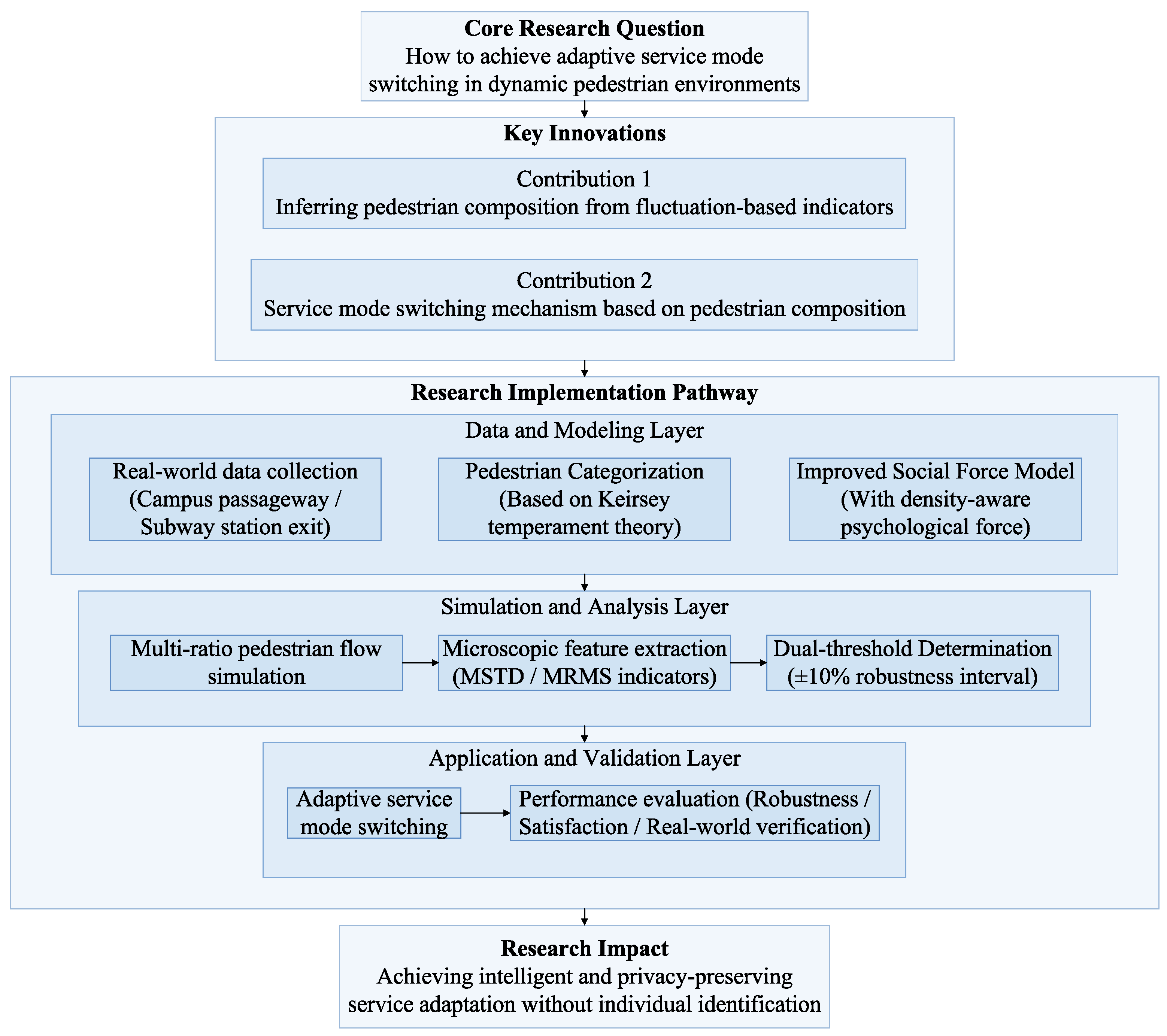
To provide a comprehensive understanding of the workflow in this study, a high-level schematic of the proposed framework is presented in Figure 1. The diagram illustrates the core research question, the two key innovations (inferring pedestrian composition from indicators and adaptive service mode switching), and the three-layer implementation pathway: data and modeling, simulation and analysis, and application and validation. The bottom layer highlights the research impact, showing that the system can achieve intelligent, privacy-preserving adaptive service without requiring individual identification. This visual overview effectively complements the contributions described above and clarifies the methodology adopted in this work. Detailed operations within each sub-layer are described in the following sections.
The rest of the article is organized as follows. Section 2 details the pedestrian data collection. Section 3 classifies pedestrians psyches and modified SFM accordingly. Section 4 simulates pedestrian flows to determine a service mode switching threshold. Section 5 analyzes the performance of the proposed method. Finally, we conclude the article in Section 6.

2. Scenario Description and Data Collection

In this section, we describe the main research scenario and the procedure for collecting pedestrian flow data. This study focuses on scenarios where pedestrians primarily follow unidirectional passageways. Representative examples include sidewalks and corridors in science and technology (sci-tech) parks, museums, and transportation hubs, where visitors typically move in one direction along designated routes. A large number of autonomous robots and small intelligent vehicles are expected to be deployed in such application scenarios in the near future.
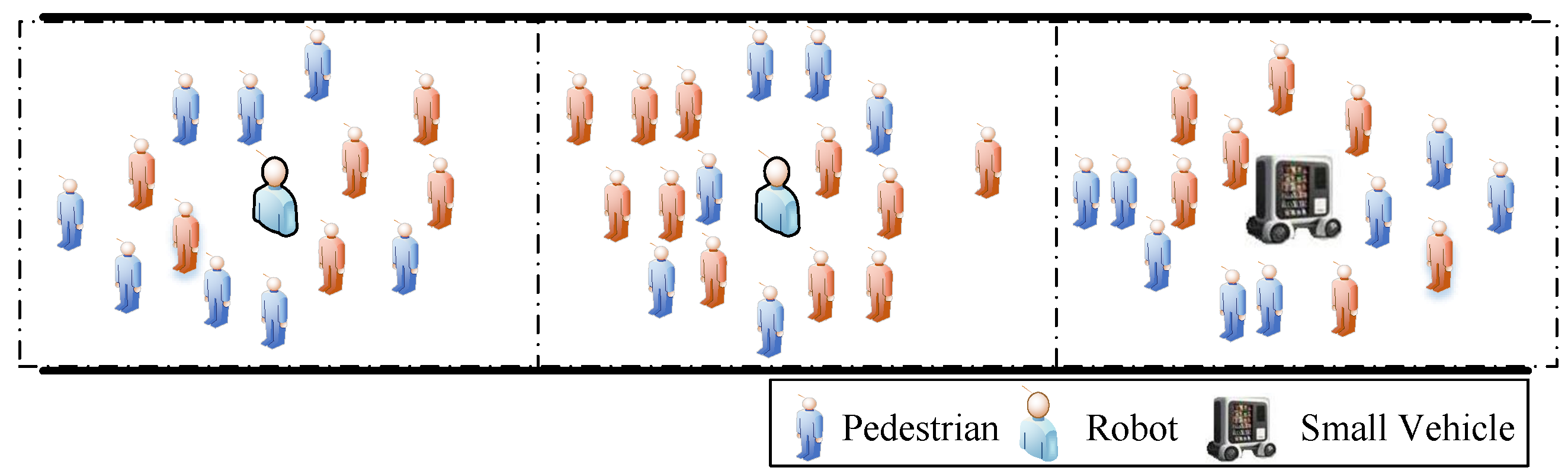
Figure 2 illustrates a unidirectional straight passageway equipped with service robots. Each robot operates within a fixed service area and supports two built-in service modes (i.e., active and passive), which can be switched based on surrounding pedestrian behavior to enable adaptive service intelligence. Specifically, the active service mode involves the robot proactively approaching pedestrians and attempting to offer services before any explicit request is made. In contrast, the passive service mode entails providing services only upon receiving a clear request or signal from one or more customers.
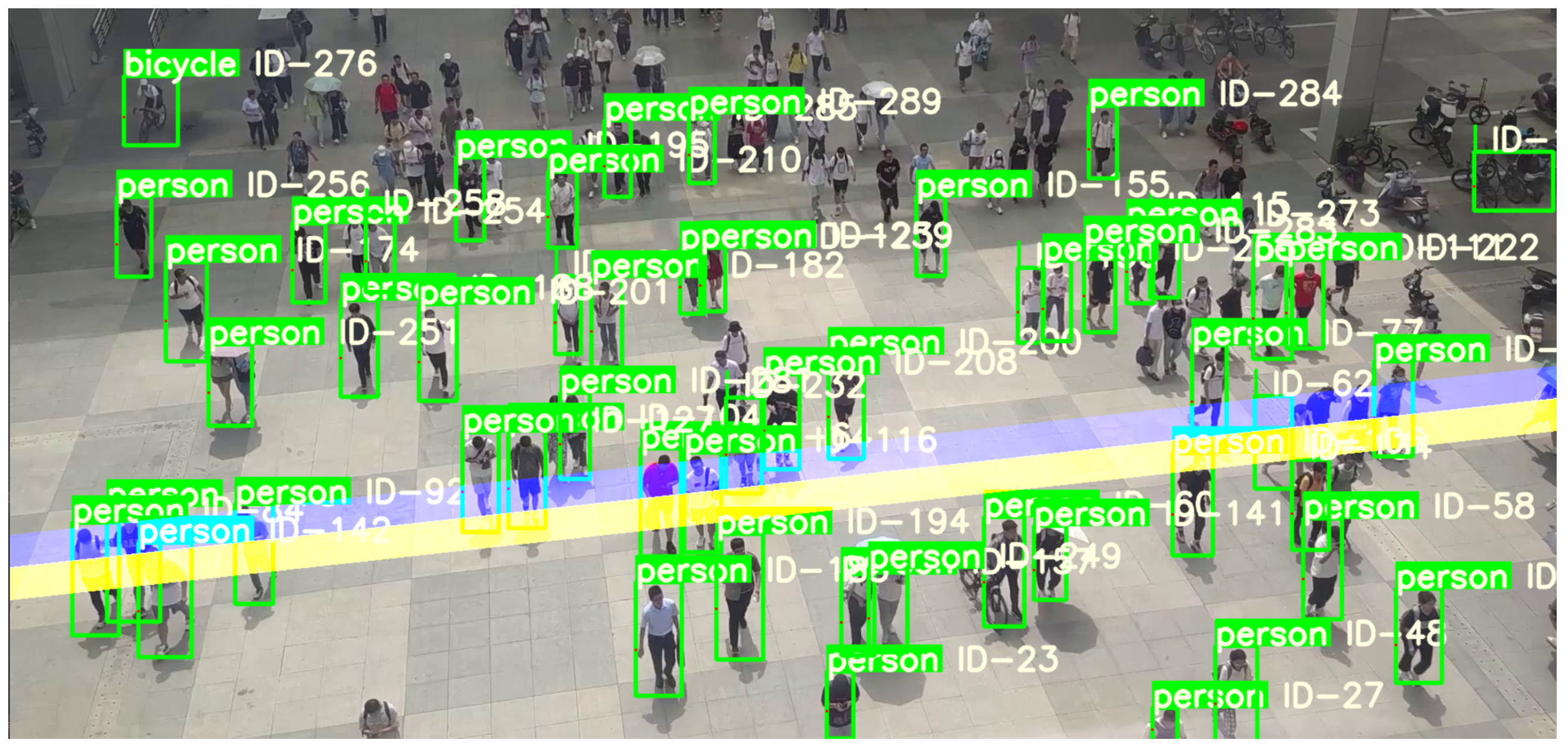
Pedestrian flow data were collected at two representative locations: a passageway between sci-tech buildings on a university campus and the exit of an urban subway station. The former captures substantial unidirectional student flows during the lunchtime dismissal period, typifying movement patterns in university towns or sci-tech parks. The latter provides high-density passenger flow during morning peak hours, representing typical entrance/exit dynamics in public transport hubs. At each location, a stationary long-distance camera recorded 30-min videos during consistent daily time periods. The You Only Look Once version 5 (YOLOv5) algorithm [27] was employed for pedestrian detection and counting. Figure 3 illustrates a sample frame processed by YOLOv5, showing pedestrian identification within the campus passageway.
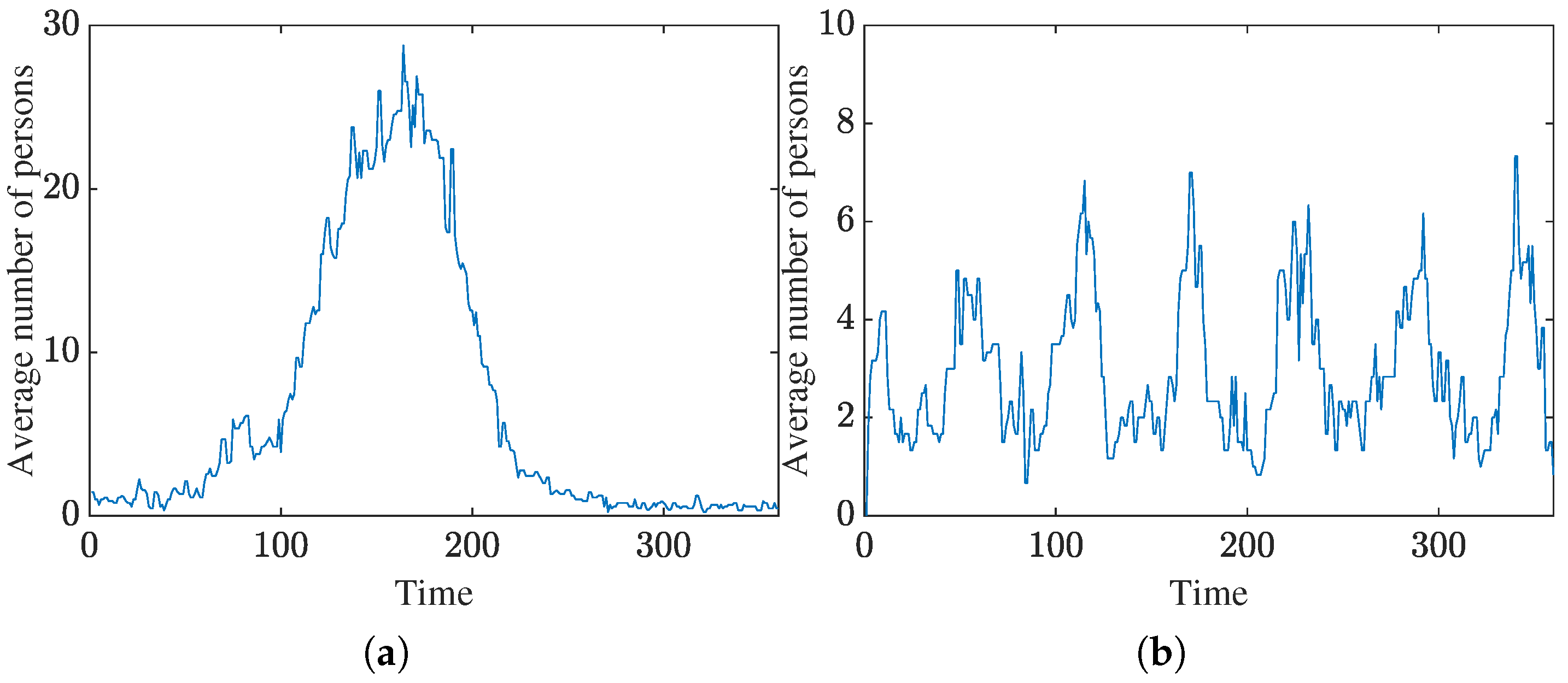
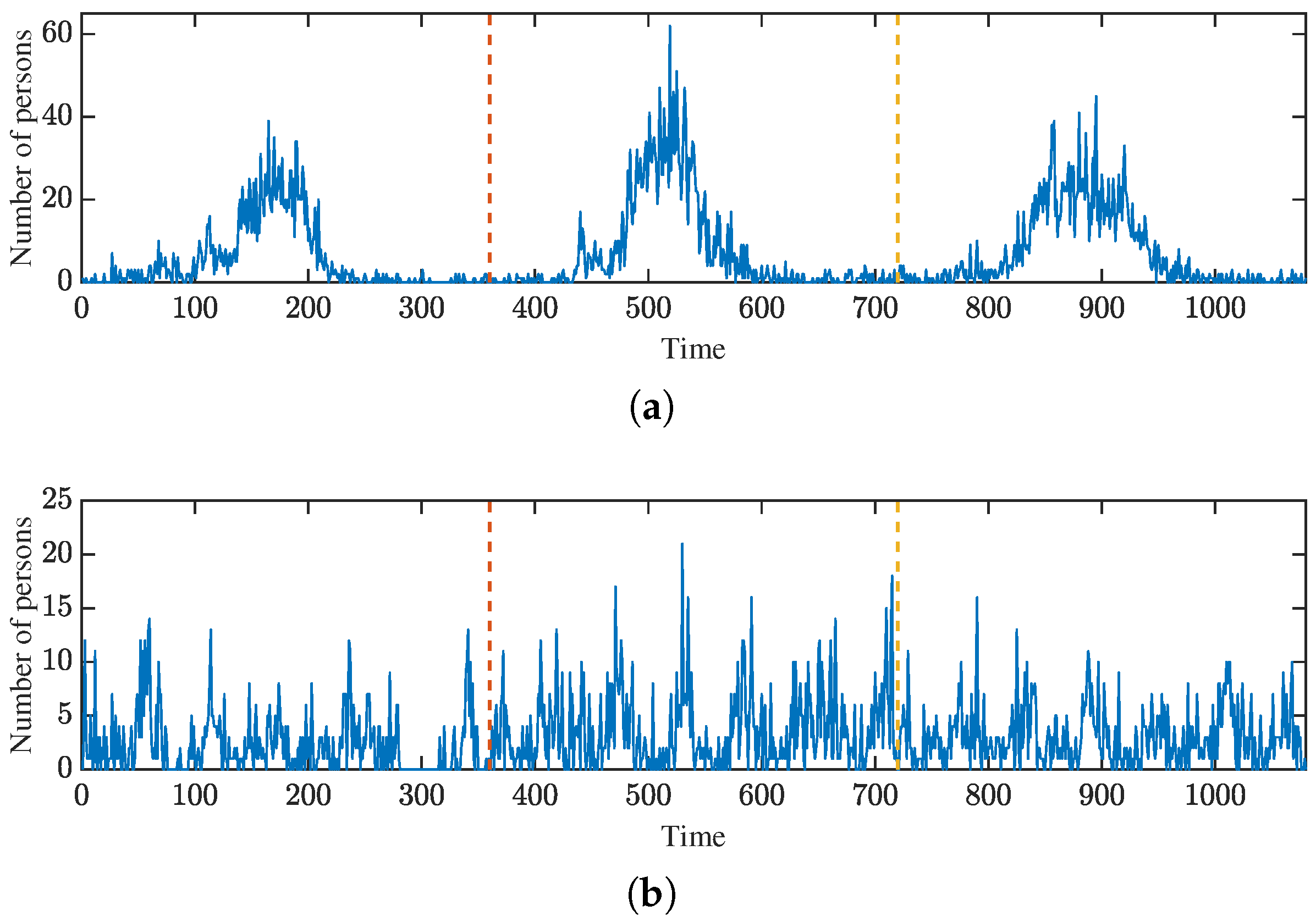
The procedure for pedestrian identification and data aggregation involves loading a pre-trained YOLOv5 model for detection and defining a reference line for counting. Each scenario video is processed by the model at an adjusted frame rate of 10 frames per second to maintain a balance between processing efficiency and recognition accuracy, with errors kept within acceptable bounds. Pedestrians are counted as they cross a reference line positioned perpendicular to the walking direction near the passageway exit. Pedestrians crossing the reference line were counted in 5-s intervals, generating a time series of 360 pedestrian flow data points from each 30-min video. To visually compare flow patterns across recordings, time series from three videos captured at the same location were concatenated and separated by dash lines in each subfigure of Figure 4, resulting in 1080 data points per subfigure. In the campus passageway, the time series generally shows a gradual increase followed by a decrease, reflecting the rising and diminishing student flow after class. By contrast, the subway station exit time series displays rapid rises and subsequent sharp drops in pedestrian numbers, corresponding to the arrival and departure intervals of train services. In summary, by adapting the statistical interval according to the specific scenario, a balance between data density and fluctuation discernibility is achieved, which grants the method strong generalizability across a wide range of contexts.

3. Modification of SFM Based on Pedestrian Classification

3.1. Traditional SFM

The SFM proposed by Helbing [28] identifies psychosocial and physical forces as the primary factors influencing pedestrian behavior. Considering a total of N pedestrians in the scenario, pedestrian i with mass m i tends to move with a desired speed v i 0 in a specific direction e i 0 . To maintain this desired speed, pedestrian i continuously adjusts the actual velocity v i so that it gradually approaches v i 0 over a characteristic time period τ i . This behavioral adaptation is achieved by a self-driven force f i , which originates from the pedestrian’s motivation to reach their destination. The relationship is expressed as follows:
f i = m i v i 0 e i 0 v i τ i .
Meanwhile, to maintain personal space and avoid collisions, pedestrian i seeks to keep a certain distance from other pedestrians and obstacles. This behavior is modeled through the force f i j exerted on pedestrian i by pedestrian j ( j i ) , and the force f i w exerted by obstacle w on pedestrian i. Interaction forces between pedestrians include repulsive, squeezing, and sliding friction forces. The psychological tendency of pedestrians to maintain interpersonal distance is represented by a repulsive force, which between pedestrian i and j is expressed as A i e ( r i j d i j ) / B i n i j . Here, A i and B i are constants, r i j = r i + r j represents the sum of the radii of pedestrians i and j, and d i j = s i s j denotes the distance between their mass centers, where s i is the position of pedestrian i, The normalized vector pointing from pedestrian j to i is given by n i j = ( n i j 1 , n i j 2 ) = ( s i s j ) / d i j . When the distance d i j between pedestrian mass centers is less than r i j , the pedestrians are in contact. In this case, the model incorporates a squeezing force k ( r i j d i j ) n i j due to physical body compression, and a sliding friction force κ ( r i j d i j ) Δ v j i t t i j that opposes relative tangential motion. Here, t i j = ( n i j 2 , n i j 1 ) is the tangential direction, Δ v j i t = ( v j v i ) t i j is the tangential velocity difference, and k and κ are constants. In summary, the total force on pedestrian i from j is
f i j = A i e ( r i j d i j ) / B i n i j + k g ( r i j d i j ) n i j + κ g ( r i j d i j ) Δ v j i t t i j ,
where g ( x ) is defined as
g ( x ) = 0 x < 0 x x 0 .
Similar to (2), pedestrian i also experiences a total force from obstacle w, expressed as
f i w = A i e ( r i d i w ) / B i n i w + k g ( r i d i w ) n i w + κ g ( r i d i w ) ( v i t i w ) t i w ,
where d i w is the distance from pedestrian i to obstacle w, n i w is a normalized vector in the perpendicular direction, and t i w is the parallel direction.
The relationship between the velocity v i of pedestrian i and the forces can be expressed as
m i d v i d t = f i + j ( i ) f i j + w f i w .
Finally, the location s i of pedestrian i can be obtained by s i ( t ) = v i ( t ) d t .

3.2. Pedestrian Classification and Model Modification

The model described above assumes homogeneous characteristics among all pedestrians in the scenario. In reality, however, pedestrians exhibit varied social force characteristics attributable to differences in individual temperament. As one of the most established frameworks for personality categorization, the Keirsey Temperament Sorter (KTS) [29] characterizes temperament as a set of innate psychological dispositions that shape behavioral tendencies. Thus, it categorizes individuals into distinct temperament types according to their preferred patterns in cognition, behavior, and interaction with the external world. The KTS framework was selected as the basis for pedestrian classification in this study owing to its conciseness and widespread recognition compared to other established psychological frameworks, such as Jung’s psychological types, the Myers-Briggs Type Indicator (MBTI), the Big Five personality traits model, and Cattell’s personality trait theory.
By integrating this theoretical framework with pedestrian flow analysis, we classify pedestrians into distinct groups according to walking behaviors influenced by their temperament types. Some pedestrians exhibit temperaments oriented toward safety, stability, and rule compliance. To avoid conflicts and collisions, they tend to slow down in crowded conditions and accelerate when pedestrian density decreases. In contrast, others are inclined to prioritize efficiency and goal achievement, often accelerating in dense crowds to optimize movement and slowing down when fewer pedestrians are present, having satisfied their efficiency requirements. Additionally, mutual familiarity and preference among pedestrians can amplify these behavioral tendencies. Based on these distinct walking behaviors, we categorize pedestrians into two types: dispersed and aggregated. This classification effectively captures the dominant walking patterns observed in most scenarios. It should be acknowledged that cultural and legal differences across regions may affect the proportional distribution of pedestrian types. Nevertheless, all pedestrians exhibit free will and individual variation, meaning that both types coexist in any scenario. While the specific ratios may vary, the proposed classification remains effective in characterizing overall crowd flow patterns, thereby providing a reliable basis for refining SFM and optimizing service modes. Although real-world pedestrian behavior is continuous rather than strictly binary, this simplified model facilitates a clearer decomposition of the problem, enabling rigorous theoretical and simulation-based comparisons. Further subdivision of pedestrian types tends to smooth and average the overall flow, obscuring typical fluctuation patterns. Empirical observations confirm strong consistency between fluctuation patterns in simulated and real-world flows, demonstrating that this binary classification effectively captures the primary dynamic characteristics of actual pedestrian movement. Thus, categorizing pedestrians into two types is a reasonable approach for subsequent research.
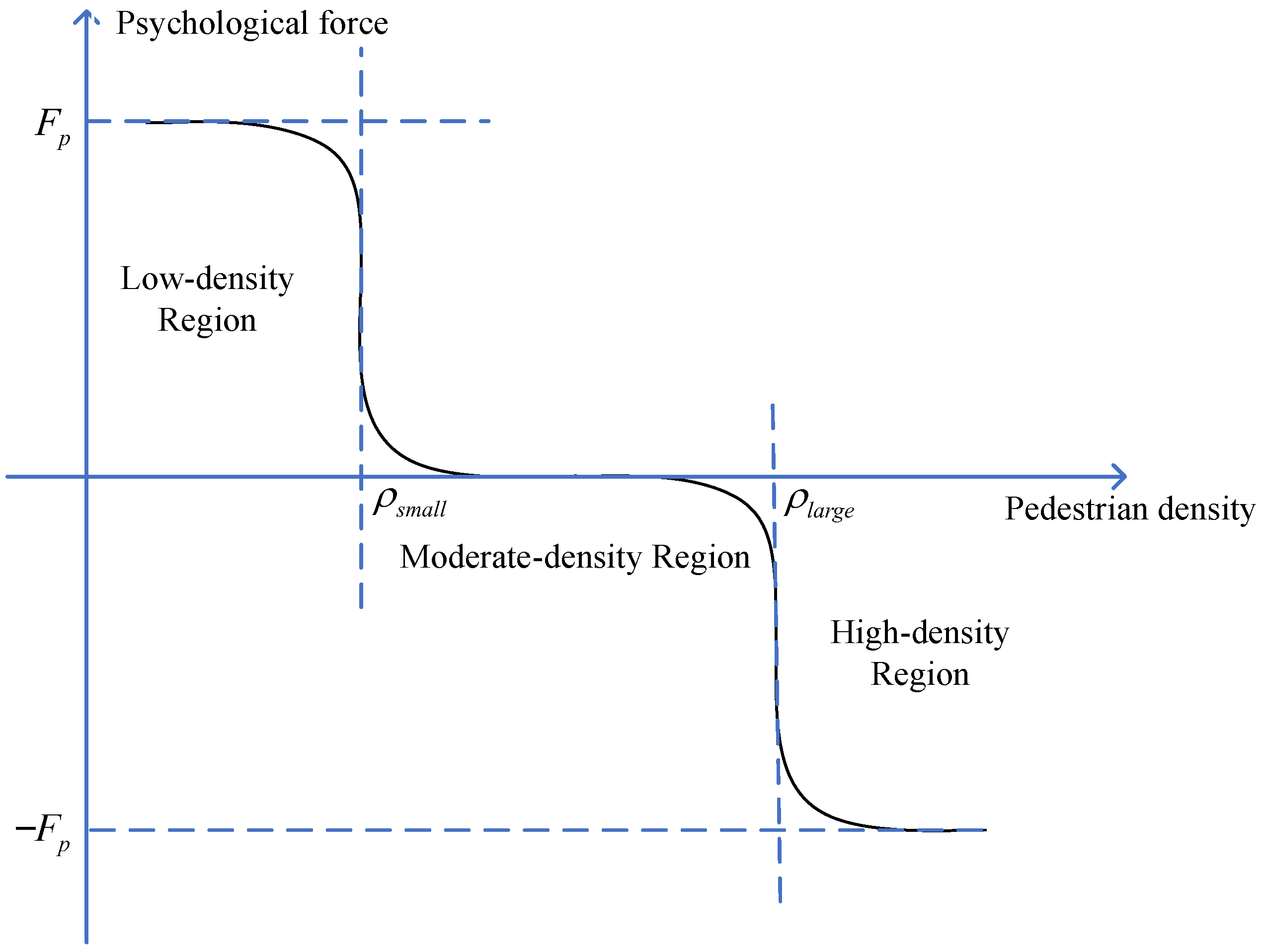
The perception of pedestrian density serves as the basis for this behavioral distinction. Figure 5 illustrates the psychological force modeling for dispersed pedestrians. When the density is high, a psychological force opposing their intended direction is introduced to reduce their speed. Conversely, when density is low, a psychological force aligned with their walking direction is applied to encourage acceleration. This psychological force, arising from the local crowd density perception of pedestrian i, is defined as follows:
f i p d i s p = F p ρ i > ρ l a r g e 0 ρ s m a l l ρ i ρ l a r g e F p ρ i < ρ s m a l l ,
where ρ i is the pedestrian density within l meters ahead of pedestrian i, calculated as the number of pedestrians in this area divided by its surface area. The thresholds ρ l a r g e and ρ s m a l l are constants determined based on perceived crowding levels in front of pedestrian i. Since pedestrians in a unidirectional straight passageway primarily focus on the path ahead rather than behind them, this approach of considering only forward density provides a rational basis for defining the psychological force.
For aggregated pedestrians, the behavioral pattern is reversed: they increase their driving force in the direction of movement to accelerate when pedestrian density ahead is high, and apply force opposing their direction to decelerate when density is low. Since the psychological force of aggregated pedestrians follows a symmetric and inverse trend to that of dispersed pedestrians across all densities, it can be directly inferred and is not separately plotted. The psychological force for aggregated pedestrians is defined as follows:
f i p a g g r = F p ρ i > ρ l a r g e 0 ρ s m a l l ρ i ρ l a r g e F p ρ i < ρ s m a l l .
In summary, the acceleration equation for a pedestrian is modified as follows:
m i d v i d t = f i + j ( i ) f i j + w f i w + f i p ,
where f i p is given by either (6) or (7), depending on the type of the pedestrian.
The modified model effectively simulates the distinct decision-making behaviors of dispersed and aggregated pedestrians, which in turn produce significantly different patterns in pedestrian flow data. Dispersed pedestrians accelerate when encountering fewer pedestrians ahead, leading to increased flow rates, and decelerate in response to higher densities ahead, resulting in decreased flow. Aggregated pedestrians exhibit precisely the opposite responses. Consequently, these behavioral differences are observed in the data curves: the former tends to smooth the curve, while the latter increases its volatility. Rather than defining this psychological force as a variable, we represent it using constant values with opposing effects, which sufficiently captures the fundamental distinction between the two pedestrian types. This approach also facilitates clearer analysis of how the magnitude of this force influences volatility in the pedestrian flow time series, while minimizing interference from other factors. Comparing alternative formulations of this psychological force represents an interesting direction for future research, though it falls beyond the scope of the current study.

4. Microscopic Flow Features and Service Mode Switching Thresholds

To enable precise service mode switching, it is essential to identify representative distinctions in the flow characteristics between the two pedestrian types and determine appropriate switching thresholds. Using the modified SFM combined with real-world pedestrian data, we first simulate scenarios with varying proportions of dispersed and aggregated pedestrians. The primary distinction in the resulting data curves lies in their degree of fluctuation. By subtracting the overall trend from the simulated pedestrian flow data, we derive the corresponding fluctuation curves. These curves are then analyzed using indicators such as MSTD and MRMS to extract microscopic features, which in turn inform the service mode switching thresholds. Ultimately, service intelligence is achieved by applying these two indicators with their corresponding thresholds to trigger adaptive mode switching.

4.1. Flow Construction for Different Pedestrian Types

We simulate scenarios with varying proportions of the two pedestrian types to extract corresponding fluctuation features from their respective time series. For data collected at real locations, we first average multiple recordings from each location to obtain a representative series. Using Figure 4 as an example, the three data segments separated by dash lines are averaged to form a composite series that characterizes the general pedestrian flow trend. This composite series then undergoes median filtering to extract the overall trend, resulting in a smoothed series denoted as
P M t w l = M d P A i i = t w l 1 2 , , t + w l 1 2 , w l   is   odd M d P A i i = t w l 2 , , t + w l 2 1 , w l   is   even ,
where w l denotes the length of the moving window used for median filtering. When w l is odd, M d { P A i } sorts the values in the window and takes the median element. When w l is even, the values are similarly sorted and the average of the two centeral elements is taken. In this study, w l is set to 3. The general trends of the filtered data obtained using (9) are shown in Figure 6.
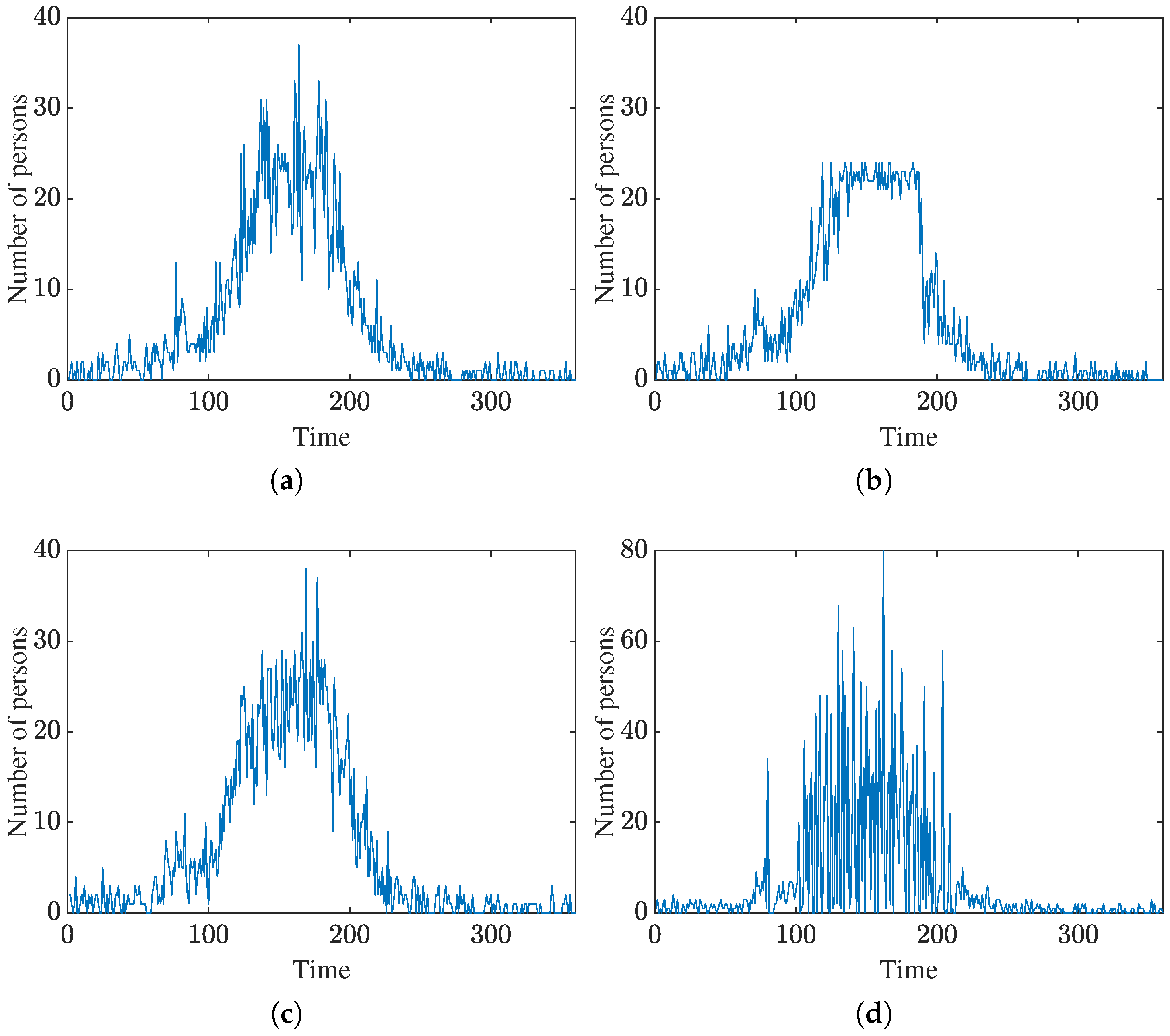
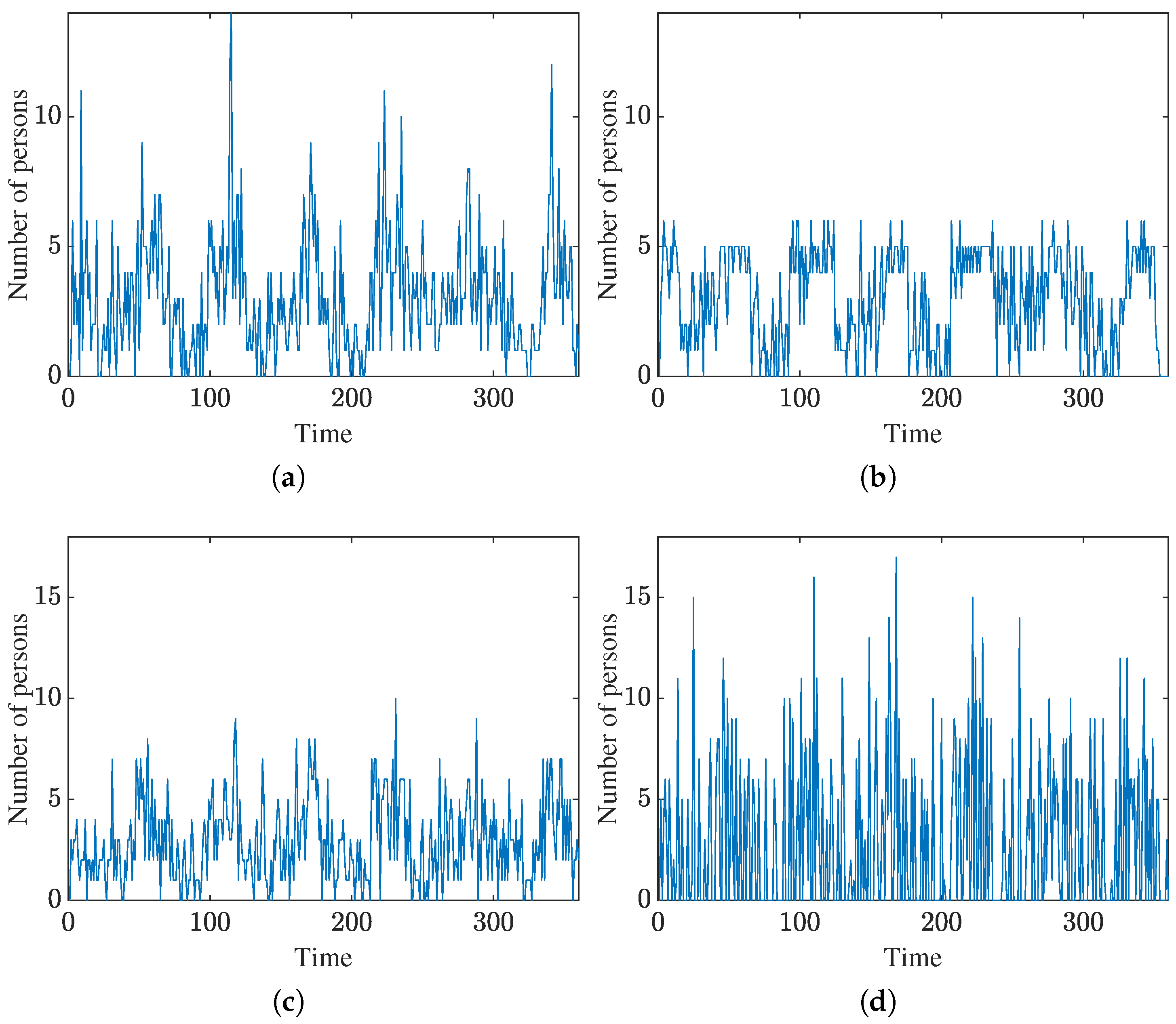
Following the filtering process, the resulting series has a length of 360 data points. Each point serves as the mean arrival rate to generate five Poisson-distributed random numbers, representing the number of pedestrians entering per second. Over the 30-min simulation, this procedure yields a total of 1800 Poisson random numbers. To allow sufficient walking distance for pedestrians to fully exhibit type-specific movement characteristics, a straight 100-m passageway is used. Pedestrians enter at the left boundary each second according to the generated Poisson values, which serve as the initial data in Figure 7a,c. When a pedestrian exits the right boundary of the passageway, force calculations for this individual are terminated. The right boundary acts as a reference line representing the yellow line in Figure 3, and simulated pedestrian flow data are collected using the same counting method, which obtains the observed data in Figure 7b,d. To analyze the corresponding time series features for each pedestrian type, each simulation is conducted with the same type of pedestrians in this subsection.
Pedestrian movement is simulated using the modified SFM with parameters listed in Table 1. The values of the classic interaction parameters A, B, k, κ , and τ in the SFM model are primarily referenced from the pioneering study in Helbing [30]. This set of parameters has been widely validated to effectively reproduce a variety of typical pedestrian flow phenomena and is considered the standard configuration for the model. To simulate the heterogeneity of adult pedestrians in real-world scenarios, the pedestrian radius r, mass m, and desired speed v 0 are uniformly selected within reasonable ranges. These ranges are based on physiological and behavioral statistics of normal adult pedestrians, thereby enhancing the realism of the simulation. The local force range l defines a pedestrian’s forward perceptual range and is set to 3 m. This setting reflects the behavioral principle that walking decisions in real environments are primarily based on conditions within the immediate forward vicinity. The psychological force F p represents the intensity of the psychological force generated by pedestrians in response to perceived local density changes. Its setting is matched to the order of magnitude of pedestrian mass to ensure that the acceleration produced by this force is sufficient to induce reasonable speed adjustment behaviors (acceleration or deceleration) while avoiding non-physical motion discontinuities.
In each simulation, all pedestrians are assigned the same type to highlight their characteristic flow patterns. Both the initial time series at the entrance (left side of the passageway) and the observed series recorded at the reference line (right boundary) are presented in Figure 7 and Figure 8. A comparison between the initial and observed series reveals distinct behavioral tendencies: when the scenario consists entirely of dispersed pedestrians, the curve amplitude decreases and becomes smoother. In contrast, when only aggregated pedestrians are present, the curve amplitude increases with more pronounced fluctuations. These observations align with the behavioral classification established in Section 3.2.

4.2. Microscopic Features of Various Types of Pedestrians

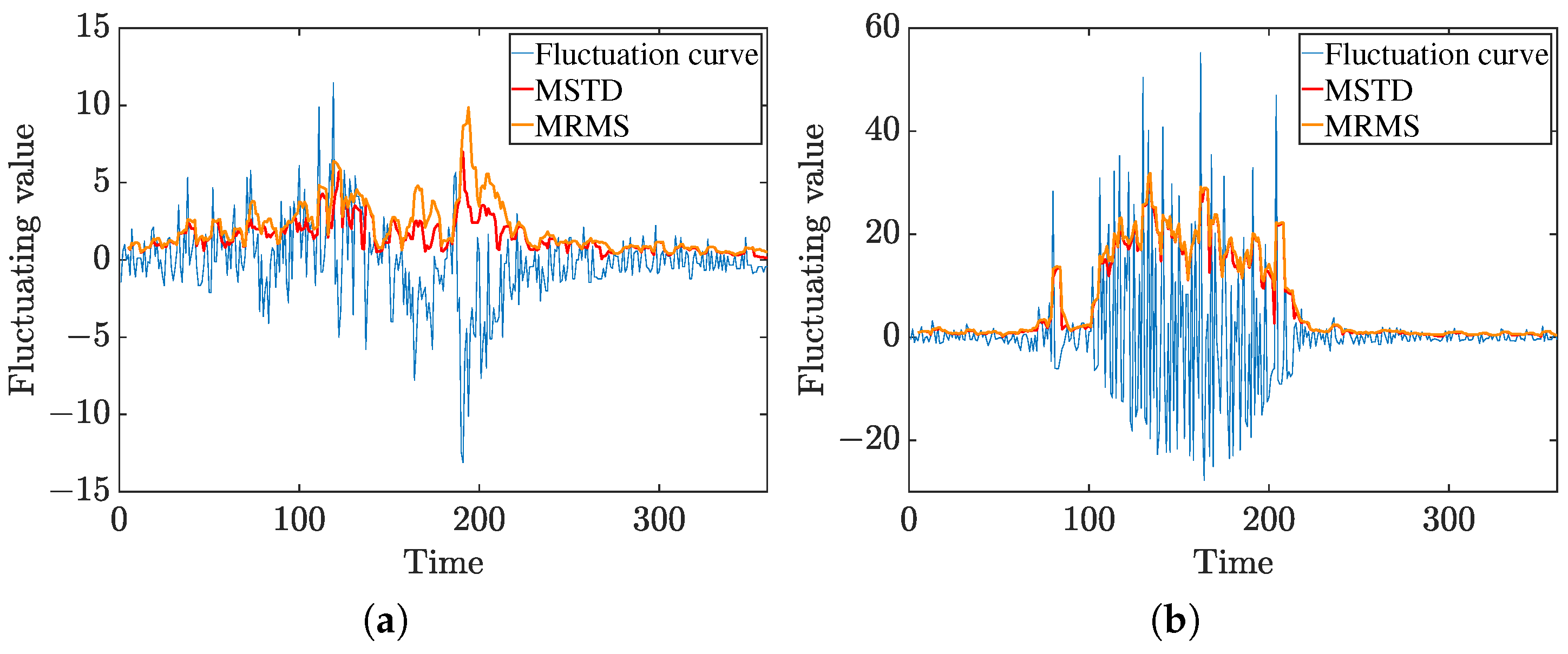
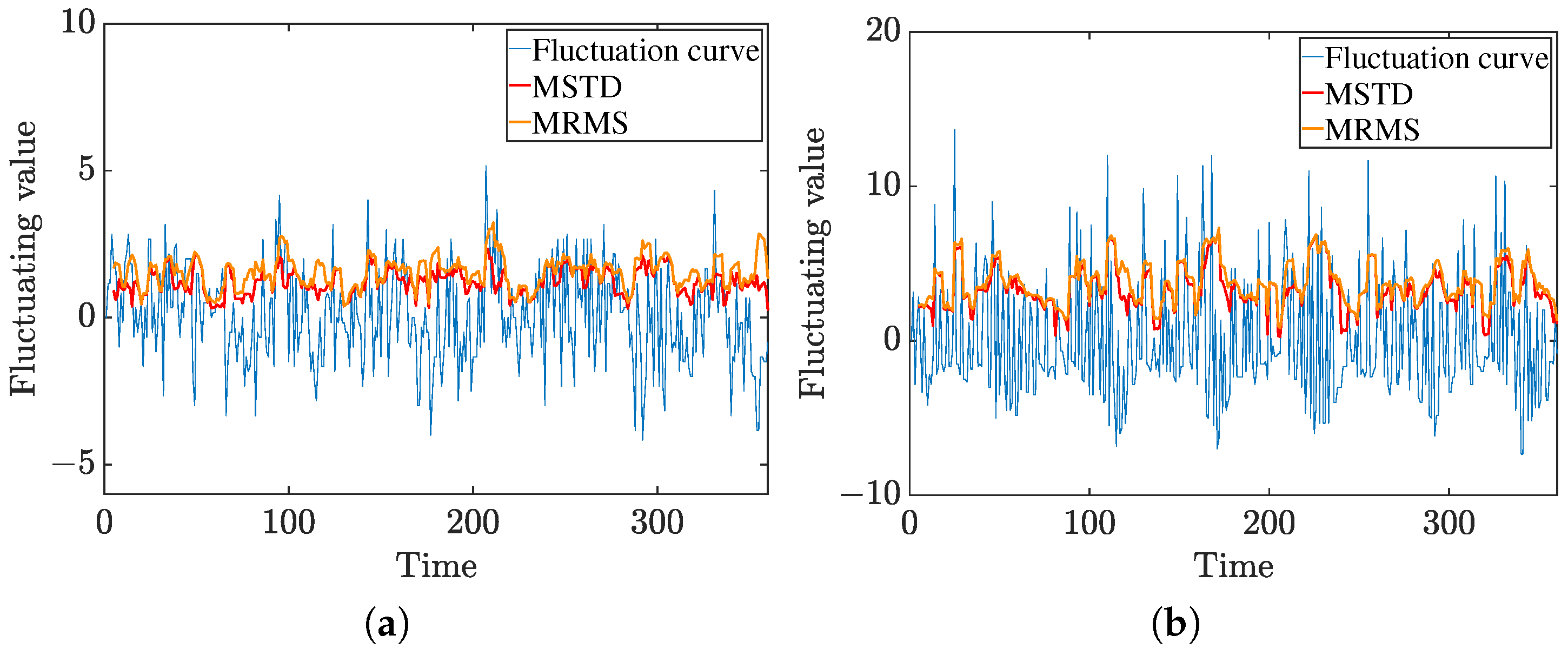
By subtracting the general trend (Figure 6) from the observed pedestrian flow at the reference line (Figure 7 and Figure 8), we obtain the fluctuation curves shown in Figure 9 and Figure 10. These curves are analyzed using two indicators: MSTD and MRMS. The MSTD is computed as the standard deviation within a sliding time window advancing through the dataset at fixed intervals, capturing the dynamic volatility of flow fluctuations, given by
M S T D t n = i = t n 1 t P i M A t n 2 / n ,
where P t denotes the series value at time t and n denotes the size of the sliding window. The moving average (MA) is calculated as
M A t n = i = t n 1 t P i / n .
MRMS is calculated as the root mean square of the data within a sliding window. This metric captures both the overall magnitude and the fluctuation intensity of the data series, formulated as
M R M S t n = i = t ( n 1 ) t P i 2 / n .
An appropriate length for the sliding window must be selected. When the MSTD (or MRMS) value falls below a predefined threshold for dispersed pedestrians, it indicates that dispersed pedestrians dominate the composition. Conversely, when the value exceeds a threshold set for aggregated pedestrians, it suggests a predominance of aggregated pedestrians. The MSTD and MRMS results for the fluctuation curves, calculated with a window size of n = 5 under homogeneous pedestrian type conditions, are shown in Figure 9 and Figure 10.
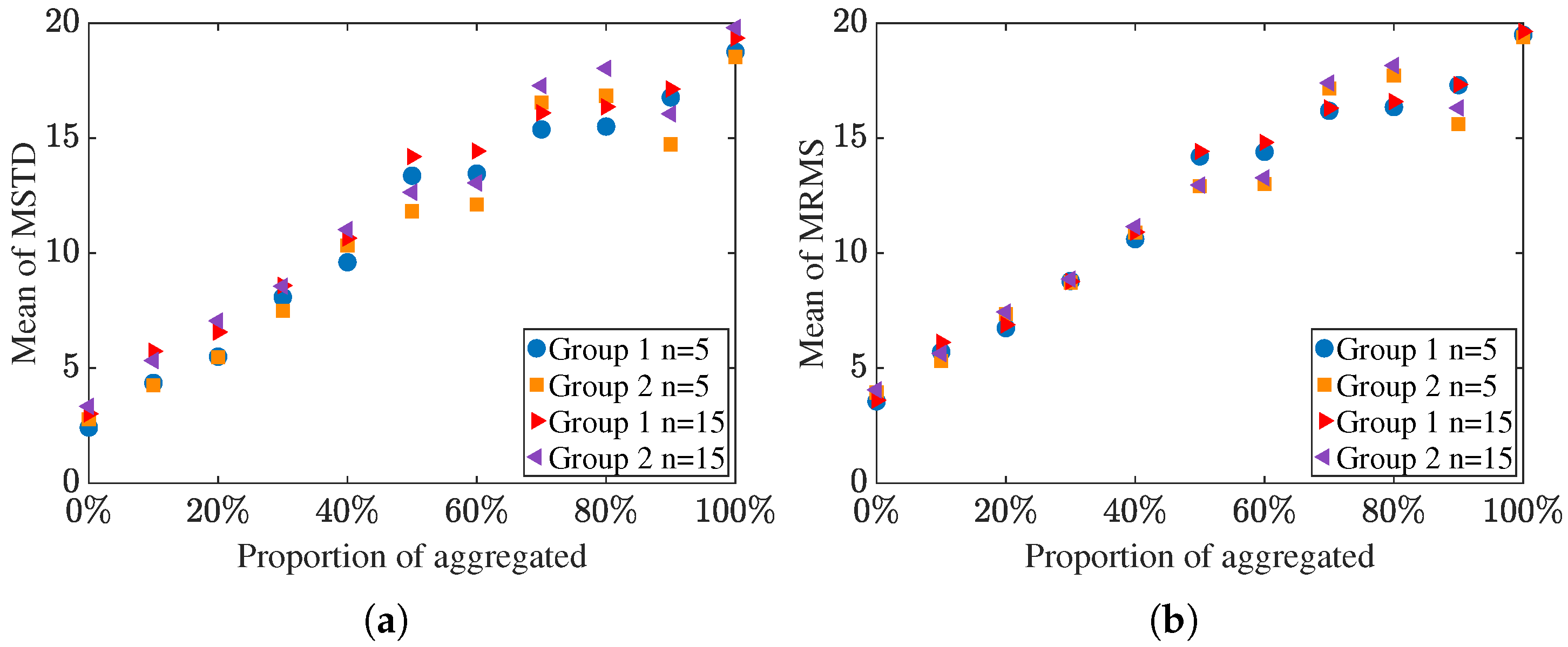
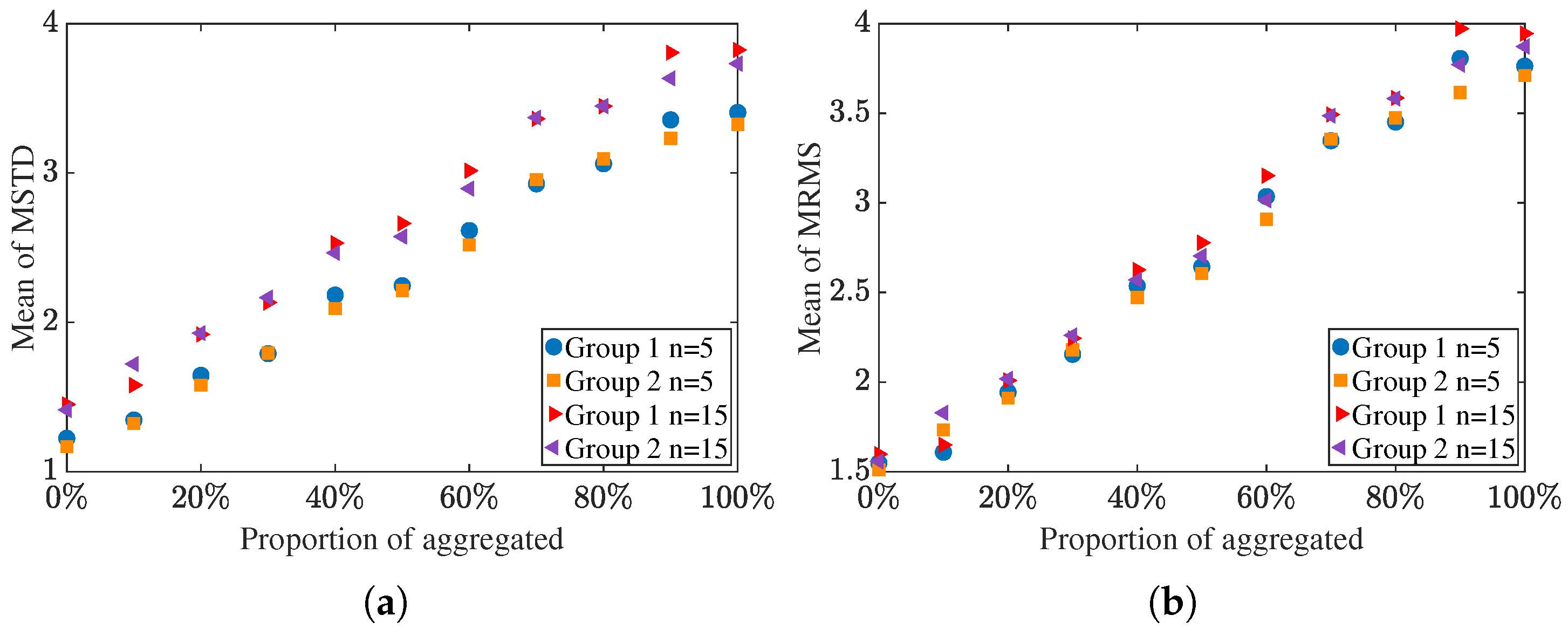
Both indicators effectively capture pedestrian flow volatility. The two pedestrian types exhibit distinct MSTD and MRMS ranges, with differences becoming more pronounced in their temporal averages. To analyze how pedestrian composition affects flow fluctuations, we simulated scenarios with aggregated pedestrian proportions increasing from 0% to 100% in 10% increments, conducting independent trials at each proportion level. We computed MSTD and MRMS values from the resulting fluctuation curves, with their mean values presented in Figure 11 and Figure 12 for both scenarios. Across all simulations, pedestrian arrivals per second followed a Poisson distribution based on overall trend data, while individual parameters were randomized within the ranges specified in Table 1.
In the sci-tech building scenario, pedestrian activity is sparse outside rush hours. Therefore, characteristic flow patterns are primarily observed in the middle segment (time points 110 to 200) of each 30-min video, and only this segment is used for calculating mean indicator values. Since MA-based indicators require sufficient preceding data points to stabilize, the initial portion of each indicator curve is unreliable. Accordingly, mean calculations for the subway station exit scenario use data points starting from position n to the end of each curve. These data selection criteria are consistently applied in all subsequent simulations when computing time-period averages for the indicators.
Due to individual variations among randomly generated pedestrians, simulated pedestrian flow data differ between simulation runs. This results in different fluctuation curves and corresponding variations in the mean indicator values. To demonstrate this variability, we present two simulation rounds with identical parameters, labeled as Group 1 and Group 2. Additionally, we compare results obtained with two different sliding window lengths (5 and 15). The window length influences both the smoothness and lag of the indicator curves: while a shorter window maintains better real-time responsiveness but yields less smoothing, a longer window provides greater smoothness at the expense of increased lag. Comparing multiple window lengths thus enables a more comprehensive evaluation of indicator performance.
These figures illustrate the general relationship between the proportion of aggregated pedestrians and the mean indicator values, rather than focusing on individual data points. As demonstrated, the fluctuation intensity of pedestrian flow curves exhibits an approximately linear relationship with the proportion of aggregated pedestrians. Therefore, both indicators, which quantify flow volatility, can be effectively used to estimate the approximate composition of pedestrian types in the scenario.

4.3. Determination of Service Mode Switching Thresholds

The above studies demonstrate that different pedestrian types exhibit distinct walking patterns, resulting in different fluctuation features in the time series. Furthermore, the average values of MSTD or MRMS over a given period serve as reliable indicators of pedestrian composition. Building on these findings, service devices with both active and passive modes can intelligently switch between them based on indicator values to better serve pedestrian groups during specific periods. When dispersed pedestrians dominate a group, they tend to walk slowly in a dispersed manner, presenting lower safety risks. This creates a suitable opportunity for service provision, making the active mode a strategic choice to enhance customer satisfaction. Conversely, when aggregated pedestrians prevail, they tend to accelerate and move in clusters, leading to unstable and potentially risky flow conditions. In such situations, it is advisable for robots to avoid approaching pedestrians. Switching to the passive mode and maintaining a cautious stance to avoid disrupting normal pedestrian flow represents a more rational operational strategy.
To achieve accurate service mode switching using the MSTD and MRMS indicators, appropriate thresholds must be established between the two modes. When a scenario is populated exclusively with one pedestrian type, the indicators reflect the characteristic features of that type. We calculated the mean MSTD and MRMS values for both dispersed and aggregated pedestrians over the entire simulation period, considering the two previously described locations and two sliding window lengths, as summarized in Table 2.
The results show significantly different indicator values between the two pedestrian types, demonstrating that this method provides an effective means of distinguishing between them. The values also differ between the two locations, indicating that thresholds should be adjusted according to the specific flow fluctuation characteristics of each environment. Furthermore, no significant differences are observed between the two sliding window lengths, suggesting that the method remains relatively robust to minor variations in this parameter.
To determine the switching thresholds, we calculate the average of each indicator’s values across different pedestrian types and sliding window lengths for the same location. Taking the MSTD indicator at the first location as an example, the intermediate value is computed as ( ( 2.4172 + 3.0163 ) / 2 + ( 18.7560 + 19.3523 ) / 2 ) / 2 = 10.8854 . Similarly, the intermediate values for MRMS at the first location, and for MSTD and MRMS at the subway station exit, are 11.5750, 2.4760, and 2.7135, respectively. These intermediate values effectively distinguish between the two pedestrian types and thus serve as appropriate thresholds for service mode switching.
To enhance the robustness of these thresholds and avoid the ping-pong effect, we define threshold ranges by adjusting each intermediate value upward or downward by 10%. For the sci-tech buildings, when the monitored MSTD breaks 10.8845 × 90 % = 9.7969 , a predominance of dispersed pedestrians and the system should switch to active mode. Conversely, when the MSTD exceeds 10.8845 × 110 % = 11.9740 , it indicates an increase in aggregated pedestrians, requiring a switch to passive mode. Similarly, for the MRMS indicator, when it breaks 11.5750 × 90 % = 10.4175 or exceeds 11.5750 × 110 % = 12.7325 , the robot correspondingly switches to active or passive modes. For the subway station exit, thresholds are set analogously, resulting in MSTD and MRMS ranges of [2.2284, 2.7235] and [2.4422, 2.9849], respectively.

5. Performance Evaluation of the Proposed Method

5.1. Threshold Robustness and Rationale Analysis

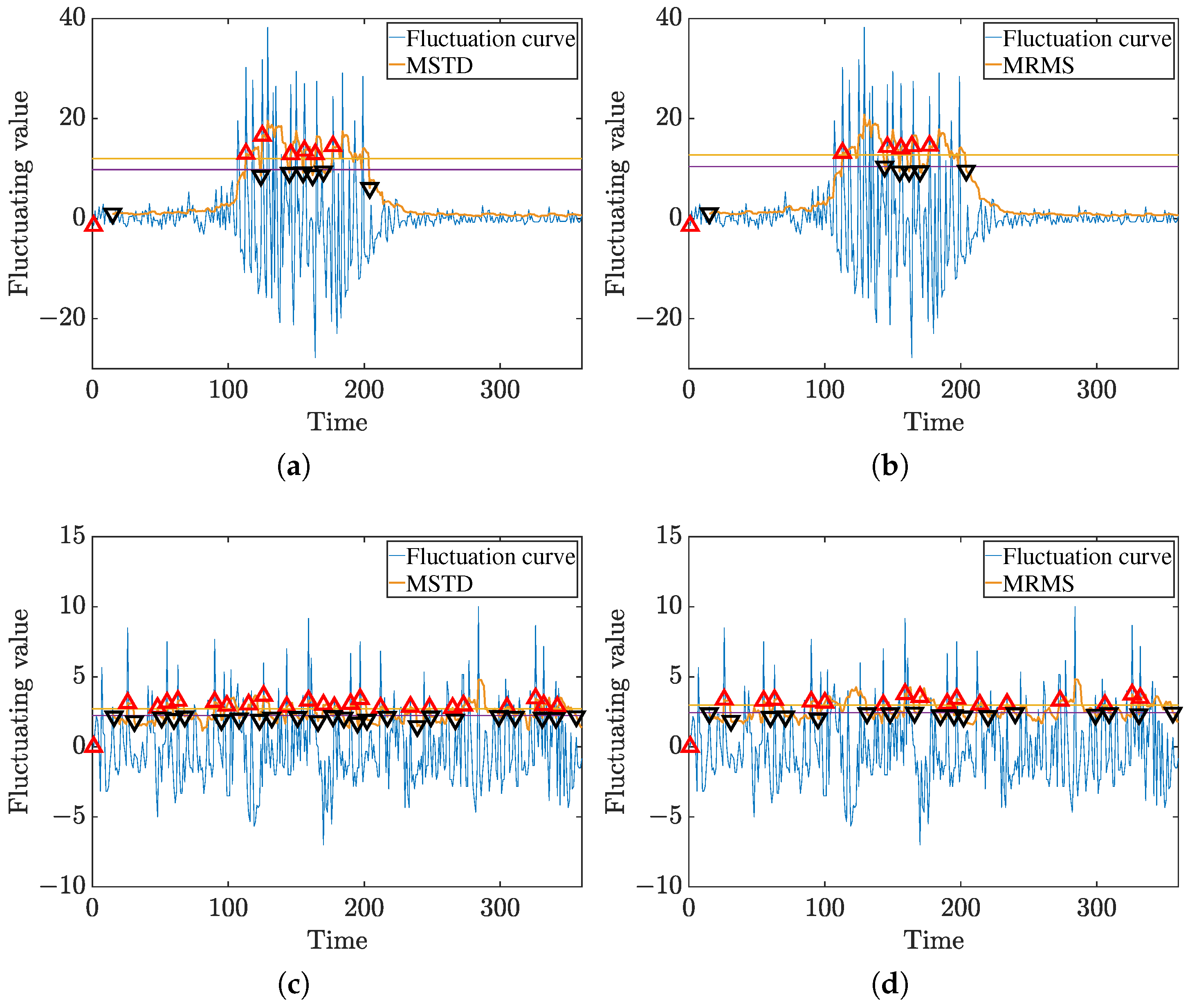
To evaluate performance, we first examine the validity of the thresholds established in the previous section. The ratio of dispersed to aggregated pedestrian types in this simulation is set to 1:1, and the procedure outlined in Section 4 is applied to derive the fluctuation curve. The thresholds remain consistent with those obtained in Section 4.3. The MSTD and MRMS curves are generated by averaging the results for window sizes n = 5 and n = 15 . The resulting mode-switching points are shown in Figure 13, where red triangles indicate transitions to passive mode and black triangles denote switches to active mode. The simulation demonstrates that the specified thresholds generally lie near the mid-level range of the indicator curves, representing an appropriate strategy for distinguishing between the two service modes and balancing their utilization under the 1:1 pedestrian type ratio.
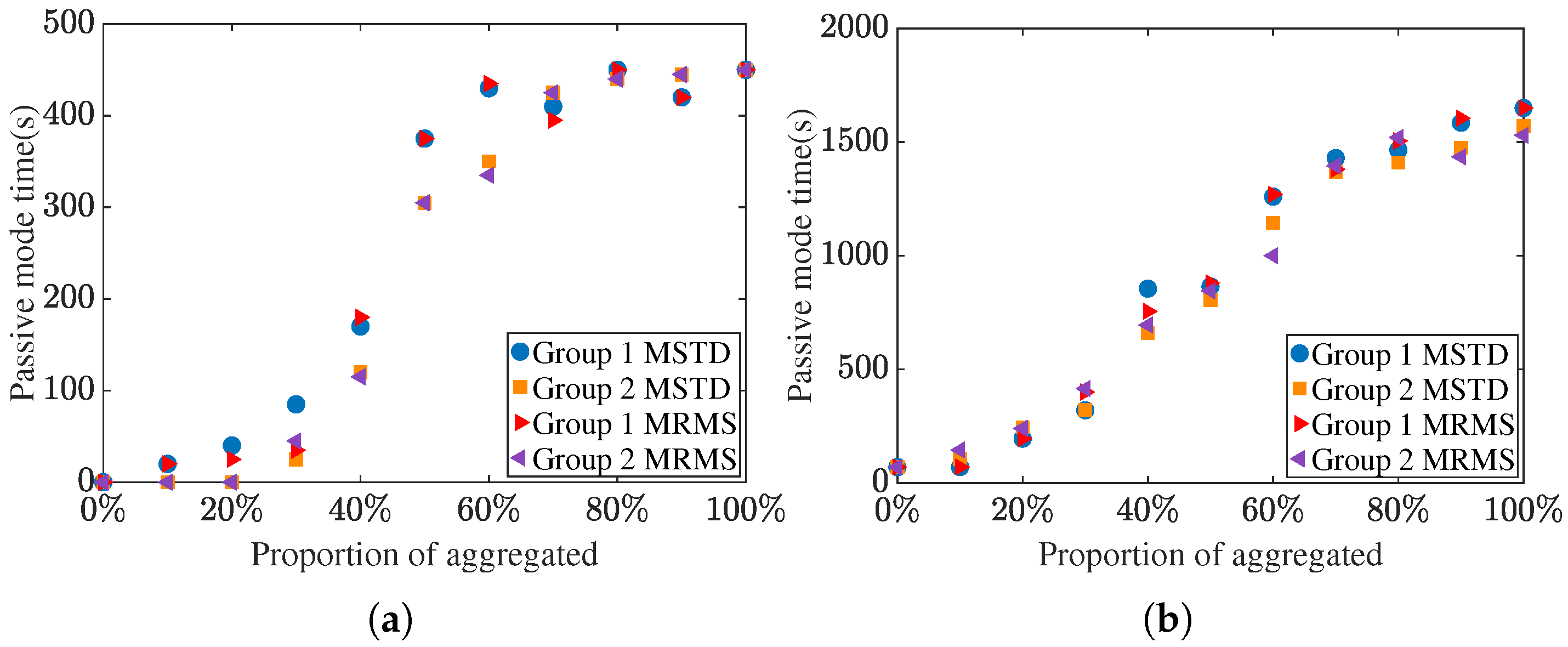
Assuming the initial mode is set to passive, we obtain the total duration of passive mode usage relative to the proportion of aggregated pedestrians, as shown in Figure 14. It can be observed that the total time in passive mode is approximately proportional to the proportion of aggregated pedestrians. This result confirms the rationality and effectiveness of our design in achieving the objective of aligning passive mode usage proportionally with the presence of aggregated pedestrians.

5.2. Service Satisfaction Improvement Through the Proposed Method

To evaluate pedestrian service satisfaction, a service robot is positioned at the right boundary of the simulated passageway (i.e., the reference line). When a pedestrian crosses this reference line, they are considered to have been served by the robot, and a satisfaction score is recorded based on their pedestrian type and the service mode received based on the following rules. Dispersed pedestrians typically walk at a slower pace and prefer a comfortable experience. They generally appreciate being actively served, resulting in high satisfaction scores when the robot operates in active mode. In contrast, aggregated pedestrians usually walk urgently in groups and prefer minimal disruption. They tend to respond negatively to active service interventions, leading to low satisfaction scores when approached proactively by the robot.
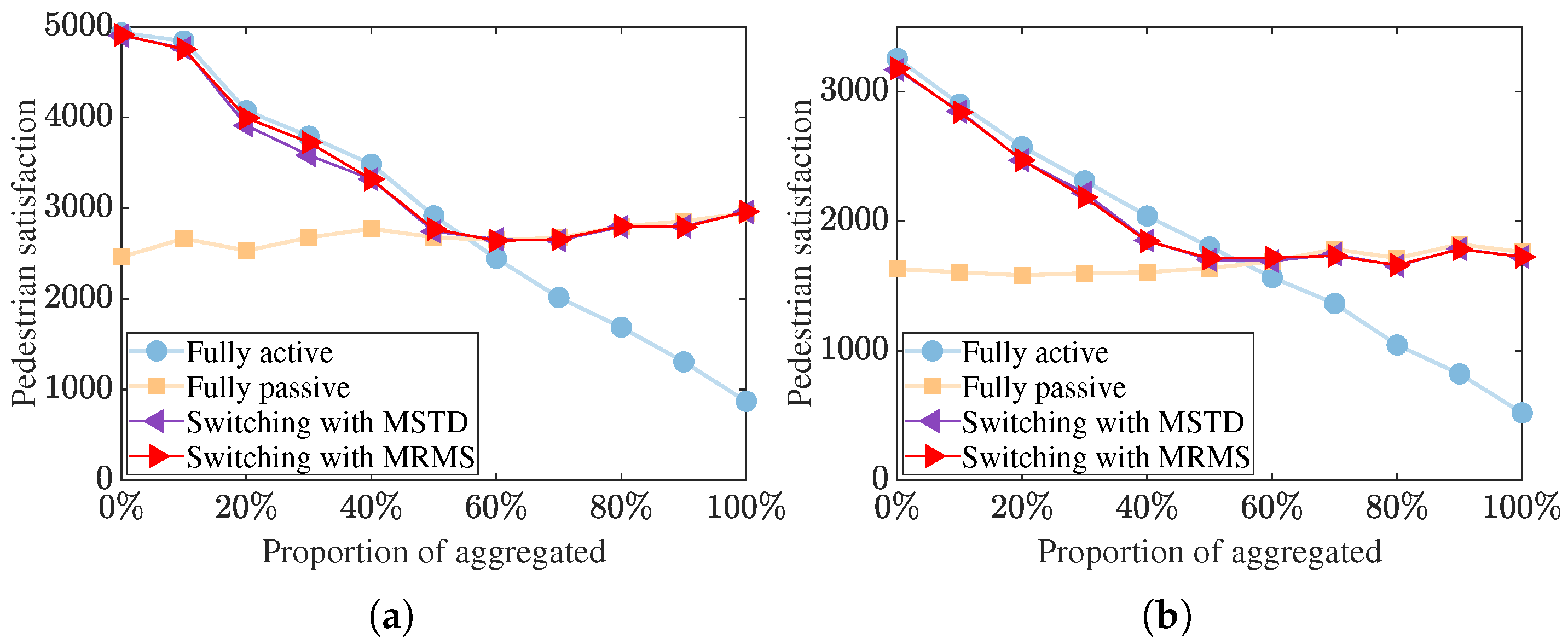
Accordingly, the satisfaction scores for dispersed and aggregated pedestrians in active mode are set to 3 and 0.5, respectively. In passive mode, dispersed pedestrians experience lower satisfaction due to insufficient service attention, while aggregated pedestrians, being less disturbed, demonstrate moderately higher satisfaction levels. Since the robot passively awaits service requests in this mode, the satisfaction scores between the two pedestrian types should not differ significantly. Therefore, the satisfaction scores for dispersed and aggregated pedestrians in passive mode are set to 1.5 and 1.7, respectively. For different proportions of aggregated pedestrians, we evaluate service satisfaction levels achieved through mode-switching methods using the MSTD and MRMS indicators, as shown in Figure 15. For comparison, we also include the results obtained by exclusively using each of the two service modes throughout the simulations.
When the proportion of aggregated pedestrians is small, total satisfaction remains high if the active mode is used exclusively. By switching service modes based on either indicator, the resulting satisfaction level approaches that achieved by full active mode usage. Conversely, when the proportion is large, higher satisfaction is attained through exclusive use of the passive mode. Service mode switching guided by either indicator yields satisfaction levels comparable to full passive mode implementation. These results demonstrate that over extended periods where one pedestrian type significantly predominates, the proposed indicators can effectively select the most appropriate service mode, thereby maintaining high satisfaction levels. When the proportions of the two pedestrian types are comparable, the satisfaction levels achieved by exclusively using either active or passive mode remain similar. Service mode switching based on either indicator yields satisfaction levels between those achieved by the two exclusive modes, though generally closer to their average. This occurs because technical indicators using a sliding window inherently exhibit a certain delay. When the two pedestrian types are thoroughly mixed or alternate rapidly, the indicators may temporarily identify one type as dominant. However, due to the time lag, by the time a mode switch is triggered, the short-term dominant pedestrian group may have already passed, causing the robot to enter a state of frequent and potentially ineffective mode switching.
To further demonstrate the advantage of our proposed method, we use the results in Figure 15 to calculate the average satisfaction values across different pedestrian proportions for each method and location, as summarized in Table 3. In general, service mode switching using either indicator achieves higher satisfaction than exclusive use of a single mode, underscoring the value of adaptive mode switching for service intelligence. Note that when only one pedestrian type is present, exclusive use of active or passive mode corresponds to the upper and lower satisfaction bounds, respectively. For mixed pedestrian flows with varying proportions, it is difficult to derive theoretical upper bounds. Therefore, we use the averaged satisfaction curves from repeated simulations under fully active and fully passive modes as effective baselines for performance comparison. As Figure 15 shows, our switching methods achieve satisfaction levels closely aligned with these baseline curves, making further detailed comparison between them unnecessary.

5.3. Identification of Switching Points in Real Pedestrian Flows

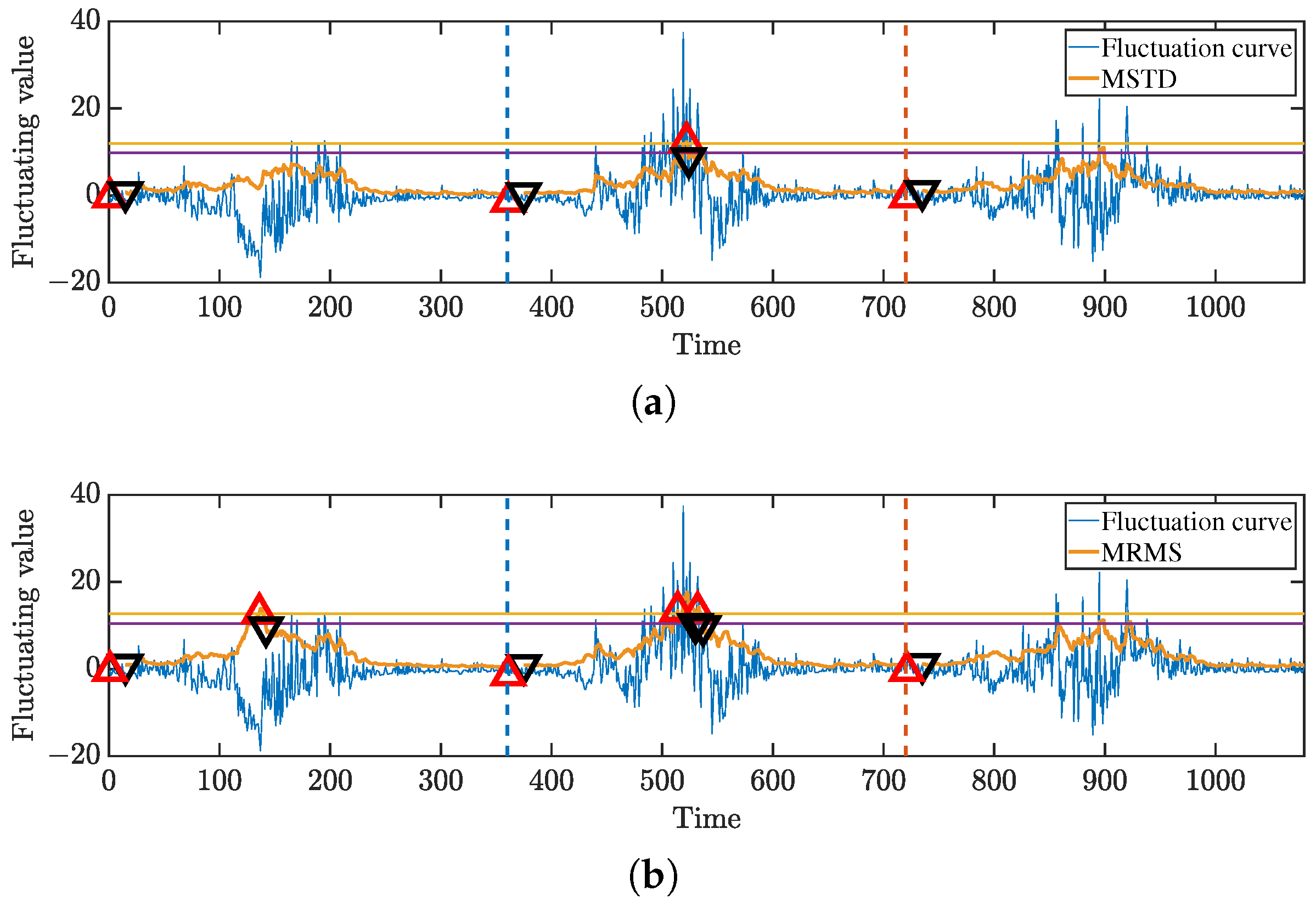
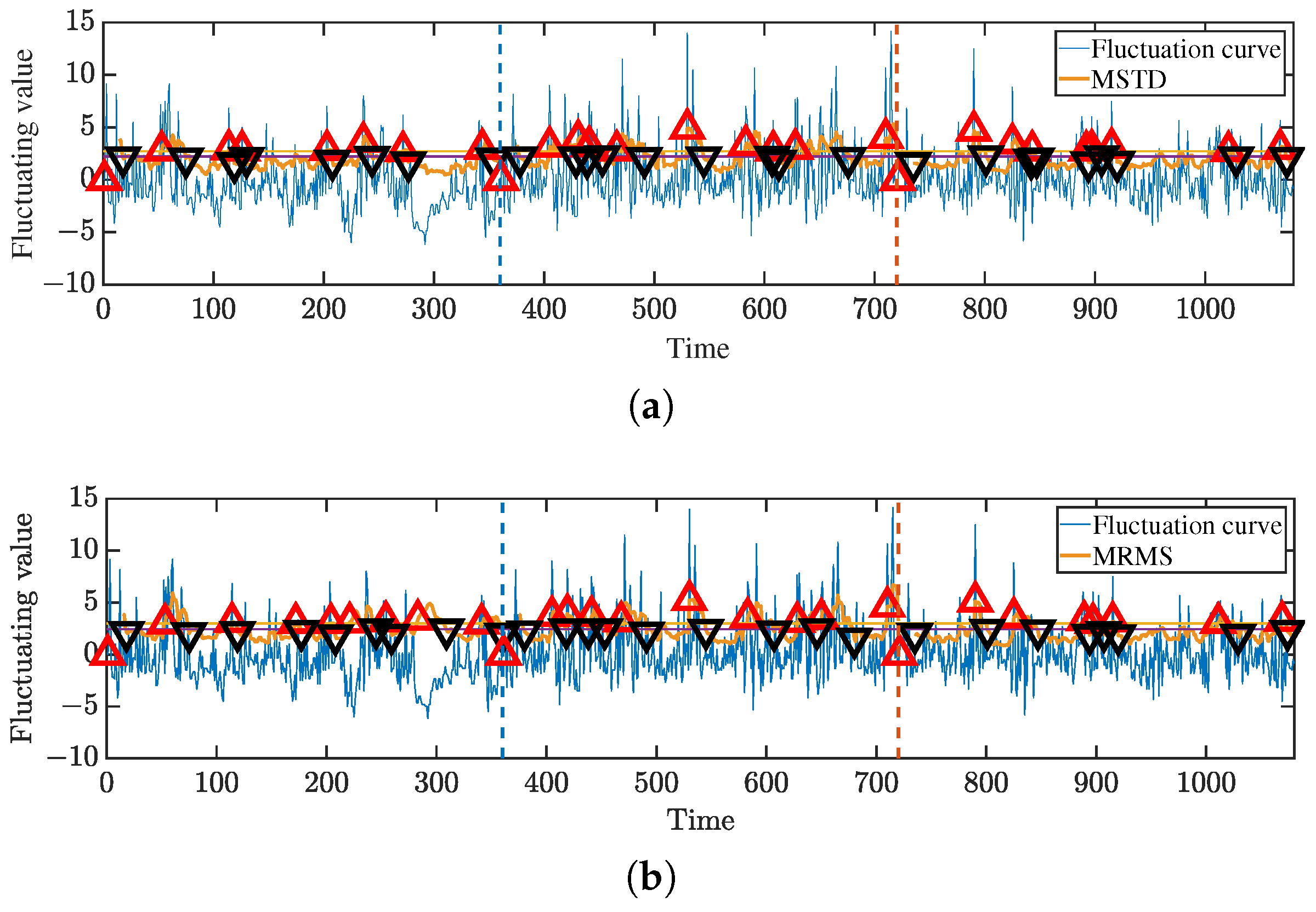
In this subsection, we evaluate the application of the proposed mode-switching method to real-world scenarios. We utilize the data collected following the procedure described in Section 2. The time series from multiple videos are averaged, and the median filter defined in (9) is applied to extract the general trend curve for each location. The fluctuation curve for each location is derived by subtracting this general trend from the original time series shown in Figure 4. Since the general trend curve can be statistically estimated from historical data at each location, this procedure remains real-time applicable, consistent with the simulations conducted in previous subsections. Finally, the service mode switching points are identified and marked as triangles in Figure 16 and Figure 17.
The results demonstrate that the indicators generally trigger appropriate mode switches. For fluctuation curves centered around the zero-axis, both indicators yield similar outcomes, as shown in Figure 13. However, real pedestrian walking patterns can be inherently complex and unpredictable, which may occasionally lead to failures in fluctuation capture by a single indicator. This limitation is illustrated in the first data segment (separated by dash lines) in panel (a) of Figure 16. Conversely, switching decisions triggered by the other indicator may effectively capture these fluctuations, as demonstrated in panel (b) of Figure 16. In summary, combining multiple indicators could enhance the determination of optimal service mode switching points in practical applications.
Based on a comprehensive analysis of the preceding charts and results, the performance characteristics of the MSTD and MRMS metrics were compared. The results indicate differences in the calculated values between the two metrics, as shown in Table 2, and slight variations in their triggered mode-switching effects, as illustrated in Figure 11. For example, in the sci-tech building scenario, the MSTD metric triggered slightly more mode switches than the MRMS metric. Nevertheless, the two metrics show a high degree of similarity in their overall switching behavior, differing only in minor details. In principle, any metric demonstrating a significant correlation with pedestrian composition ratios can effectively characterize pedestrian composition and facilitate mode-switching decisions. Such correlations may assume various functional forms, including linear, nonlinear, sigmoidal, or exponential relationships. Based on empirical observations, this study selects MSTD and MRMS as representative metrics owing to their approximately linear relationship with pedestrian composition ratios, as shown in Figure 9 and Figure 10. This linear characteristic enables intuitive visualization of the relationship between metric and composition. Although other metrics may potentially fit within this analytical framework, systematic comparison and implementation of alternative metrics fall outside the scope of this article and remain valuable directions for future research.
In practical applications of the proposed method, site-specific adjustments are essential. Pedestrian flow patterns may vary considerably even within the same category of locations. For instance, subway exits adjacent to a university campus may exhibit different characteristics from those in a central business district. Given the impracticality of conducting large-scale controlled experiments with large number of human participants, we instead leverage existing surveillance infrastructure at key passageways of subway exits and sci-tech buildings for data collection. These real-world observations enable model validation and ensure the method accurately captures behavioral patterns and flow dynamics under actual conditions. Consequently, prior to deployment, it is imperative to perform extended data collection and statistical analysis tailored to the target environment. The proposed metrics should be employed to analyze fluctuations in pedestrian flows, with optimal thresholds determined empirically based on observed patterns. This site-calibrated approach not only ensures operational reliability across diverse settings but also demonstrates the model’s adaptability to the complexities of real-world pedestrian dynamics.

6. Conclusions

This study addressed the problem of service mode switching for autonomous robots and small intelligent vehicles in unidirectional straight passageways. First, pedestrian walking behaviors were categorized as aggregated or dispersed types using the KTS. Second, based on data collected from real scenarios, we simulated pedestrian flows with different composition ratios using a modified SFM that incorporates this categorization. We then employed two technical indicators, MSTD and MRMS, to extract features from the simulated data and estimate pedestrian composition. Finally, service modes were adaptively adjusted based on these indicator values. Simulation results demonstrate that the two indicators can effectively estimate pedestrian composition proportions, and the proposed method shows significant improvement in service satisfaction. For future work, we plan to extend the current framework by incorporating additional indicators, refining pedestrian type categorization, and exploring alternative SFM formulations. These enhancements would enable modeling of continuous pedestrian behavior spectrum through probability density functions, further improving the method’s applicability and robustness.

Author Contributions

Conceptualization: L.W., H.L. and W.L.; methodology: P.Z. and L.W.; software: P.Z. and W.H.; validation: P.Z., W.H. and L.W.; cata curation: P.Z., W.H. and M.P.; writing—original draft: P.Z. and L.W.; writing—review and editing: W.H., L.W. and H.L.; visualization: P.Z. and W.H.; supervision: H.L., W.L. and M.P.; funding acquisition: L.W. and M.P. All authors have read and agreed to the published version of the manuscript.

Funding

This research was funded by Anhui Provincial Natural Science Foundation grant number 2308085MF194.

Institutional Review Board Statement

Not applicable.

Informed Consent Statement

Not applicable.

Data Availability Statement

The raw data supporting the conclusions of this article will be made available by the authors on request.

Acknowledgments

The extraction of pedetrian flow time series from captured videos is completed on the high-performance computation (HPC) platform of Hefei University of Technology.

Conflicts of Interest

Author Weiping Li was employed by the company Anhui Branch, China Mobile Communications Group Design Institute Co., Ltd. The remaining authors declare that the research was conducted in the absence of any commercial or financial relationships that could be construed as a potential conflict of interest.

References

  1. Lu, L.; Cai, R.; Gursoy, D. Developing and validating a service robot integration willingness scale. Int. J. Hosp. Manag. 2019, 80, 36–51. [Google Scholar] [CrossRef]
  2. Draghici, B.G.; Dobre, A.E.; Misaros, M.; Stan, O.P. Development of ahuman service robot application using pepper robot as a museum guide. In Proceedings of the IEEE International Conference on Automation, Quality and Testing, Robotics (AQTR), Cluj-Napoca, Romania, 19–21 May 2022; pp. 1–5. [Google Scholar]
  3. Cruz, J.D.; Domingo, G.C.B.; Garcia, R.G. Automated service robot for catering businesses using Arduino Mega 2560. In Proceedings of the 15th International Conference on Computer and Automation Engineering (ICCAE), Sydney, Australia, 3–5 March 2023; pp. 436–441. [Google Scholar]
  4. Repiso, E.; Garrell, A.; Sanfeliu, A. People’s adaptive side-by-side model evolved to accompany groups of people by social robots. IEEE Robot. Autom. Lett. 2020, 5, 2387–2394. [Google Scholar] [CrossRef]
  5. Fan, T.; Cheng, X.; Pan, J.; Long, P.; Liu, W.; Yang, R.; Manocha, D. Getting robots unfrozen and unlost in dense pedestrian crowds. IEEE Robot. Autom. Lett. 2019, 4, 1178–1185. [Google Scholar] [CrossRef]
  6. Tseng, S.-H.; Liu, F.-C.; Fu, L.-C. Active learning on service providing model: Adjustment of robot behaviors through human feedback. IEEE Trans. Cogn. Dev. Syst. 2018, 10, 701–711. [Google Scholar] [CrossRef]
  7. Zhan, X.; Chen, Z. Path planning of service robot based on improved particle swarm optimization algorithm. In Proceedings of the 4th International Symposium on Computer Engineering and Intelligent Communications (ISCEIC), Nanjing, China, 18–20 August 2023; pp. 244–248. [Google Scholar]
  8. Cai, K.; Chen, W.; Wang, C.; Song, S.; Meng, M. Human-aware path planning with improved virtual doppler method in highly dynamic environments. IEEE Trans. Autom. Sci. Eng. 2023, 20, 1304–1321. [Google Scholar] [CrossRef]
  9. Choi, M.; Park, S.; Kim, S.; Lee, S. Human-aware trajectory optimization for enhancing D* algorithm for autonomous robot navigation. IEEE Access 2024, 12, 103237–103250. [Google Scholar] [CrossRef]
  10. Zheng, Z.; Cao, C.; Pan, J. A hierarchical approach for mobile robot exploration in pedestrian crowd. IEEE Robot. Autom. Lett. 2022, 7, 175–182. [Google Scholar] [CrossRef]
  11. Xiang, L.; Li, X.; Liu, H.; Li, P. Parameter fuzzy self-adaptive dynamic window approach for local path planning of wheeled robot. IEEE Open J. Intell. Transp. Syst. 2022, 3, 1–6. [Google Scholar] [CrossRef]
  12. Hong, Z.; Huang, H.; Guo, S.; Chen, W.; Zheng, Z. QoS-aware cooperative computation offloading for robot swarms in cloud robotics. IEEE Trans. Veh. Technol. 2019, 68, 4027–4041. [Google Scholar] [CrossRef]
  13. Guo, Y.; Mi, Z.; Yang, Y.; Obaidat, M. An energy sensitive computation offloading strategy in cloud robotic network based on GA. IEEE Syst. J. 2019, 13, 3513–3523. [Google Scholar] [CrossRef]
  14. Rahman, A.; Jin, J.; Cricenti, A.L.; Rahman, A.; Kulkarni, A. Communication-aware cloud robotic task offloading with on-demand mobility for smart factory maintenance. IEEE Trans. Ind. Inform. 2019, 15, 2500–2511. [Google Scholar] [CrossRef]
  15. Wang, Z.; Wang, L.; Peng, M.; Zhao, S. Resource optimization algorithm for task offloading of service robots with position prediction. In Proceedings of the 7th IEEE International Conference on Computer and Communications (ICCC), Chengdu, China, 10–13 December 2021; pp. 1047–1051. [Google Scholar]
  16. Zheng, D.; Wang, L.; Kai, C.; Peng, M. Resource optimization for task offloading with real-time location prediction in pedestrian-vehicle interaction scenarios. IEEE Trans. Wirel. Commun. 2023, 22, 7331–7344. [Google Scholar] [CrossRef]
  17. Yang, X.; Wang, Q. Crowd hybrid model for pedestrian dynamic prediction in a corridor. IEEE Access 2019, 7, 95264–95273. [Google Scholar] [CrossRef]
  18. Wu, W.; Chen, M.; Li, J.; Liu, B.; Zheng, X. An extended social force model via pedestrian heterogeneity affecting the self-driven force. IEEE Trans. Intell. Transp. Syst. 2022, 23, 7974–7986. [Google Scholar] [CrossRef]
  19. Li, G. Research on the model of road crossing based on pedestrian psychology. In Proceedings of the 33rd Chinese Control and Decision Conference (CCDC), Kunming, China, 22–24 May 2021; pp. 6864–6868. [Google Scholar]
  20. Liu, J.; Zhang, H.; Ding, N.; Li, Y. A modified social force model for sudden attack evacuation based on Yerkes-Dodson law and the tendency toward low risk areas. Phys. A Stat. Mech. Its Appl. 2024, 633, 129403–129420. [Google Scholar] [CrossRef]
  21. Lee, H.R.L.; Bhatia, A.; Brynjarsdóttir, J.; Abaid, N.; Barbaro, A.; Butail, S. Speed modulated social influence in evacuating pedestrian crowds. Coll Dyn 2020, 5, 1–24. [Google Scholar] [CrossRef]
  22. Zhou, R.; Cui, Y.; Wang, Y.; Jiang, J. A modified social force model with different categories of pedestrians for subway station evacuation. Tunn. Undergr. Space Technol. 2021, 110, 103837. [Google Scholar] [CrossRef]
  23. Ardimansyah; Ahyuna; Syam, A.; Salman; Ghani, A.D.; Natsir, M.S. Moving average and relative strength index indicators in determining open and closed positions on the metatrader4 expert advisor. In Proceedings of the 3rd International Conference on Cybernetics and Intelligent System (ICORIS), Makasar, Indonesia, 25–26 October 2021; pp. 1–5. [Google Scholar]
  24. Khairi, T.W.A.; Zaki, R.M.; Mahmood, W.A. Stock price prediction using technical, fundamental and news based approach. In Proceedings of the 2nd Scientific Conference of Computer Sciences (SCCS), Baghdad, Iraq, 27–28 March 2019; pp. 177–181. [Google Scholar]
  25. Yan, D.; Wang, L.; Kai, C.; Peng, M. Index-based mode adjustment for energy saving of service vehicles and robots in vehicular networks. In Proceedings of the 9th International Conference on Computer and Communications (ICCC), Chengdu, China, 8–11 December 2023; pp. 1279–1285. [Google Scholar]
  26. Sun, P.; Shan, R.; Wang, S. An intelligent rehabilitation robot with passive and active direct switching training: Improving intelligence and security of human-robot interaction systems. IEEE Robot. Autom. Mag. 2023, 30, 72–83. [Google Scholar] [CrossRef]
  27. Sukkar, M.; Kumar, D.; Sindha, J. Real-time pedestrians detection by YOLOv5. In Proceedings of the 12th International Conference on Computing Communication and Networking Technologies (ICCCNT), Kharagpur, India, 6–8 July 2021; pp. 1–6. [Google Scholar]
  28. Helbing, D.; Farkas, I.; Vicsek, T. Simulating dynamical features of escape panic. Nature 2000, 407, 487–490. [Google Scholar] [CrossRef] [PubMed]
  29. Keirsey, D. Please Understand Me II: Temperament, Character, Intelligence; Prometheus Nemesis: Del Mar, CA, USA, 1998. [Google Scholar]
  30. Helbing, D.; Molnár, P. Social force model for pedestrian dynamics. Phys. Rev. E 1995, 51, 4282–4286. [Google Scholar] [CrossRef] [PubMed]
Figure 1. A high-level schematic of the proposed framework.
Information 17 00043 g001
Figure 2. Scenario graph.
Information 17 00043 g002
Figure 3. Data extraction example for a video captured on a passageway.
Information 17 00043 g003
Figure 4. Examples of real time series captured and extracted at different locations. (a) Sci-tech buildings. (b) Subway station exit.
Information 17 00043 g004
Figure 5. Psychological force modeling for dispersed pedestrians.
Information 17 00043 g005
Figure 6. General trend after taking average and median filtering. (a) Sci-tech buildings. (b) Subway station exit.
Information 17 00043 g006
Figure 7. Initial series at the entrance and the observed series at the reference line for the two types of pedestrians at sci-tech buildings. (a) Initial data for dispersed. (b) Observed data for dispersed. (c) Initial data for aggregated. (d) Observed data for aggregated.
Information 17 00043 g007
Figure 8. Initial series at the entrance and the observed series at the reference line for the two types of pedestrians at subway station exit. (a) Initial data for dispersed. (b) Observed data for dispersed. (c) Initial data for aggregated. (d) Observed data for aggregated.
Information 17 00043 g008
Figure 9. Pedestrian flow fluctuation curves at sci-tech buildings and their MSTD and MRMS. (a) Dispersed. (b) Aggregated.
Information 17 00043 g009
Figure 10. Pedestrian flow fluctuation curves at subway station exit and their MSTD and MRMS. (a) Dispersed. (b) Aggregated.
Information 17 00043 g010
Figure 11. Mean MSTD and MRMS values of fluctuation curves corresponding to different proportions of aggregated pedestrians at sci-tech buildings. (a) MSTD. (b) MRMS.
Information 17 00043 g011
Figure 12. Mean MSTD and MRMS values of fluctuation curves corresponding to different proportions of aggregated pedestrians at subway station exit. (a) MSTD. (b) MRMS.
Information 17 00043 g012
Figure 13. Mode switching points for 1:1 pedestrian composition at the two locations. (a) MSTD for sci-tech buildings. (b) MRMS for sci-tech buildings. (c) MSTD for subway station exit. (d) MRMS for subway station exit.
Information 17 00043 g013
Figure 14. Total time of passive mode. (a) Sci-tech buildings. (b) Subway station exit.
Information 17 00043 g014
Figure 15. Service satisfaction comparison for various mode switching methods. (a) Sci-tech buildings. (b) Subway station exit.
Information 17 00043 g015
Figure 16. Mode switching points corresponding to the real collected data at sci-tech buildings. (a) Switching with MSTD. (b) Switching with MRMS.
Information 17 00043 g016
Figure 17. Mode switching points corresponding to the real collected data at subway station exit. (a) Switching with MSTD. (b) Switching with MRMS.
Information 17 00043 g017
Table 1. Model Parameters.
ParameterValueParameterValue
A (N)2000 B ( m ) 0.08
k ( kgs 2 ) 120,000 κ ( kgm 1 s 1 ) 240,000
τ (s)0.5 r ( m ) [0.25, 0.35]
m (kg)[60, 90] v 0 ( ms 1 ) [1.1, 1.5]
l (m)3 F p ( N ) 50
ρ small ( ped / m 2 ) 0.15 (sci-tech buildings),
0.1 (subway station exit)
ρ large ( ped / m 2 ) 0.2 (sci-tech buildings),
0.13 (subway station exit)
Table 2. Mean MSTD and MRMS for Data Corresponding to Two Locations.
LocationIndicatornDispersedAggregated
Sci-tech buildingsMSTD52.417218.7560
153.016319.3523
MRMS53.556719.4936
153.607019.6428
Subway station exitMSTD51.22353.4053
151.45093.8241
MRMS51.54873.7627
151.59823.9446
Table 3. Mean Values of Pedestrian Satisfaction.
Mode Switching MethodsMean of Satisfaction
Sci-Tech
Buildings
Subway
Station Exit
Fully active2942.00001835.7272
Fully passive2700.29091674.6909
Switching with MSTD3370.34542077.4181
Switching with MRMS3392.90002077.0181
Disclaimer/Publisher’s Note: The statements, opinions and data contained in all publications are solely those of the individual author(s) and contributor(s) and not of MDPI and/or the editor(s). MDPI and/or the editor(s) disclaim responsibility for any injury to people or property resulting from any ideas, methods, instructions or products referred to in the content.