1. Introduction
X-band marine radar offers elevated temporal and spatial resolutions and is widely used in ship navigation. The radar images collected retain rich sea clutter information, which can be used to telemeter ocean wave parameters. Significant wave height is a critical technical specification for the study of the wave field [
1,
2]. The emitted electromagnetic wave of marine radar scans the ocean surface in a large area, and the radar receiver receives the backscattered echo to form a radar image sequence. Wave, current, and wind information can be obtained by analyzing the obtained radar image sequences [
3,
4,
5].
The spectral analysis method using the three-dimensional fast Fourier transform (3DFFT) on an image sequence is the mainstream method for deriving the significant wave height. After converting the image spectrum to the wave spectrum with the modulation transfer function (MTF), the empirical relationship of wave height to the signal-to-noise ratio (SNR) is calibrated using the deployed sensors on site [
6]. The components of the image spectrum are thoroughly investigated, and the SNR definition is revised [
7]. Instead of using 3DFFT, the wavelet transform [
8,
9,
10] and synchronous compressed wavelet transform [
11] can be applied to radar image processing for extracting the wave spectrum and parameters, which can better capture the non-stationary characteristics of waves in shallow sea and enhance the precision of wave height inversion. The SNR is computed based on the geometric derivation of the linear wave dispersion relation, which does not require the sea surface current [
12]. Since the existing MTF is not applicable to shallow water areas, a quadratic polynomial MTF for the nearshore region [
13] and a modified MTF considering the dependence on distance and azimuth [
14,
15] are designed. The relationship between the two-dimensional wave spectrum and parameters is investigated and quantified at different distances and azimuths [
16]. By studying the relationship between the estimated result and the selected analysis area, a recursive method is proposed to determine the number and position of analysis areas [
17]. For the classical spectral analysis method, the selected analysis region near the upwind direction is required to guarantee the inversion precision.
In the spatial domain, the radar image is decomposed using variational mode decomposition [
18] and the empirical orthogonal function [
19], and the obtained components are employed to compute wave height. The shadow regions in the radar image are calibrated to reduce the impact of shadow modulation [
20]. Based on the characteristic of the radar image shadow changing with the distance to the transmitter, the visual function [
21] and the wave slope feature obtained [
22] are utilized to retrieve wave height. Meanwhile, the correction of the water depth factor [
23] and the approximated Smith fit function [
24] are used to enhance the estimation precision and lower the algorithm execution time. A scale factor is adopted to maximize the correlation between echo intensity in non-shadow regions and the corresponding non-calibrated wave elevation. Then, the wave height is determined using the obtained scale factor and corresponding wave elevation [
25].
Because of the constraints in the spectral analysis method under high sea conditions, a method using a multi-layer perceptron is presented to estimate wave height, which uses the SNR, peak wavelength, and average wave period as the input [
26]. Then, the support vector regression technology [
27,
28], based on shadow information, and a radial basis function network [
29], using both SNR and wave slope, are used to improve the model accuracy. In addition, based on the extracted SNR and empirical mode decomposition coefficients from radar images, the deep learning technology, such as a convolutional neural network (CNN) [
30,
31], a gated recurrent unit network [
32], self-attention generative adversarial networks [
33], and context-aware segmentation [
34], is utilized to estimate wave height. The hybrid models using a convolutional network [
35] and a dual network model [
36] with variational mode decomposition are proposed to enhance the precision of wave height. The experimental outcomes confirm that the neural network-based method delivers higher precision than the traditional spectral analysis method.
Currently, the algorithm combining the genetic algorithm (GA) and back-propagation (BP) neural network is attracting more attention [
37,
38]. A method using a genetic algorithm back-propagation (GABP) neural network, which can directly achieve visibility by using optical detection and ranging signals, is proposed. In comparison with the BP neural network, it is verified that the network model optimized by GA offers better performance [
39]. In order to determine the age of seamounts, a GABP model for seamount age forecasting is established. The prediction accuracy of the GABP neural network model is superior to that of the support vector regression model, convolutional neural network model, and BP network model [
40]. Based on the wavenumber energy spectrum extracted from rain-contaminated radar images and the GABP neural network, a combination method is presented to calculate the rainfall intensity grade [
41]. Although the machine learning technology, such as support vector regression and the BP neural network, has been utilized to derive wave height from radar images, the GABP neural network has not been utilized to estimate wave height, which has excellent global search ability and a wider application scope.
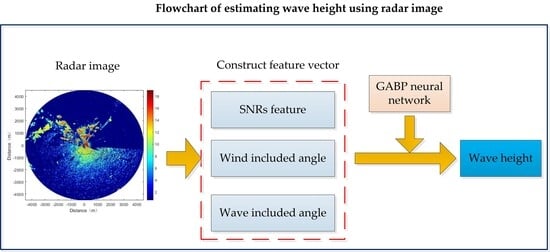
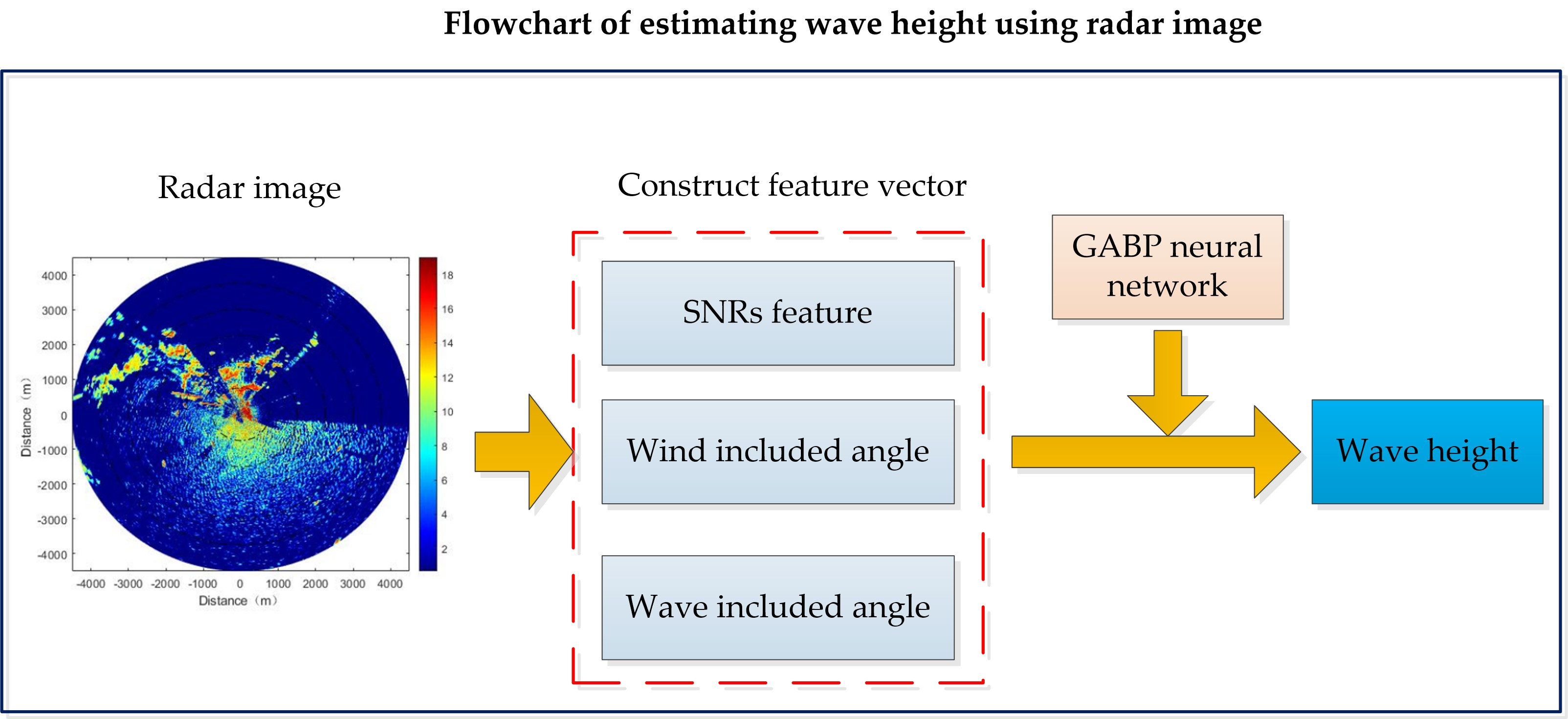
In order to ensure the accuracy of the traditional SNR-based spectral method, it is necessary to select the upwind analysis region for wave height inversion. However, access to data from the upwind analysis area cannot be guaranteed in practice, especially for shore-based radar, which limits the measurement accuracy of the SNR-based approach. In this paper, the extracted SNRs from multiple analysis regions are utilized to construct a feature vector by combining the wind speed and included angles. A method combining the constructed feature vector and the GABP neural network is proposed for the inversion of significant wave height.
The main contributions and novelty of the proposed method are as follows: (1) instead of using a single SNR estimated from an analysis region, the extracted SNRs from multiple selected analysis regions are utilized to construct a feature vector, due to the radar image echo intensity changing with the azimuth. (2) To improve the generalizability and interpretability of physical laws, the wind speed, wind included angle, and wave included angle of the corresponding sub-image are used to establish the feature vector. (3) To reduce the effect of the initial weight and obtain the global optimal solution, the GABP neural network model is utilized to enhance the inversion accuracy of significant wave height.
The paper is structured as follows:
Section 2 describes the extraction of wave height utilizing the classical spectral analysis approach. Exploiting the SNR feature vector created from the multiple chosen analysis areas, the wave height derived using the GABP network model is displayed in
Section 3. The experimental result and corresponding analysis are presented in
Section 4. Finally, a discussion and conclusion are summarized.
2. Extracting Wave Height Utilizing the Classical Spectral Analysis Approach
At present, the dominant methods for extracting wave height from radar images are the shadow statistical method, based on the illumination percentage of the radar image, and the spectral analysis method, using three-dimensional fast Fourier transform (3DFFT). The approach of using 3DFFT to estimate wave information accounts for the temporal and spatial evolution characteristics of sea waves. The spectral analysis method calculates the wavenumber frequency spectrum using a 3DFFT on a radar image sequence and filters out the non-wave signal to obtain an image spectrum using a dispersion bandpass filter. The wave spectrum is obtained by correcting the image spectrum with an MTF, and the SNR of the sea wave is derived using the image spectrum and wave spectrum, which is used to produce the wave height [
35,
36]. The main procedure of estimating wave height is given below:
- (1)
Extract wavenumber frequency image spectrum
After performing a 3DFFT on the preprocessed image sequence
in the Cartesian coordinate system, the three-dimensional wavenumber frequency image spectrum
is obtained, which is given as
where
is the size of the rectangular analysis area selected, and
is the total time of the collected image sequence. Based on the obtained wavenumber frequency image spectrum, the energy spectrum is given as
In the process of obtaining the energy spectrum, to ensure that the transformed sub-image sequence conforms to the law of conservation of energy, dividing by scale factors is often used to normalize and eliminate dimensional effects.
- (2)
Extract wave spectrum based on dispersion relationship
The obtained wavenumber frequency energy spectrum contains wave energy and a large amount of noise that does not belong to waves, which will greatly affect the inversion accuracy of wave information. The dominant wave energy is distributed near the dispersion relationship curve. Designing a bandpass filter near the curve can obtain real wave information and filter out interference noise.
Since a surface current that moves relative to the radar antenna platform exists, it will cause a certain deviation in the dispersion relationship curve and affect the wavenumber frequency energy spectrum. The dispersion relationship after introducing a Doppler shift becomes
where
is the natural frequency of ocean waves,
is the vector sum of ship speed and surface current,
and
are the water depth and gravitational acceleration, and
is the wavenumber of THE sea wave. The dispersion relationship bandpass filter is constructed to derive the wave signal based on the dispersion relationship. A two-dimensional image spectrum
is obtained after integrating the image spectrum with frequency.
Considering the certain difference between the image and wave spectra, the image spectrum is corrected by using an empirical MTF. The wave spectrum
is given as
where
is the MTF and
is the empirical coefficient.
- (3)
Derive wave height using extracted SNR
According to the linear relationship to the square root of the SNR, the commonly used method for producing the significant wave height is given as
and
where
and
are the coefficients of the linear relationship,
is the angle frequency resolution,
and
are the wavenumber resolution, and
and
are the quantities of pixels and radar images.
The wave spectrum in Cartesian coordinates is usually expressed as a directional wave spectrum
, which is given as
By integrating the directional spectrum with frequency, the one-dimensional directional spectrum is acquired. Meanwhile, the wave direction is determined based on the corresponding position of the peak value of the wave spectrum.
3. Estimating Wave Height Using Constructed SNR Feature Vector and GABP Neural Network
In this paper, multiple analysis regions of interest are selected from a radar image, and then multiple sub-image region sequences are obtained based on the radar image sequence. The 3DFFT is performed on each sub-image sequence to calculate the wave direction and corresponding SNR. Then, the extracted signal-to-noise ratio from each sub-image region is used as a feature parameter. Finally, the extracted SNR feature parameters are fed into the GABP neural network to train the model parameters, and the wave height is estimated using the test set and the trained GABP model.
3.1. Construct Feature Vector Based on Extracted SNRs from Multiple Analysis Regions
- (1)
Select multiple analysis areas based on radar field of view
Since a sea wave is a typical non-stationary, stochastic process, the statistical characteristics may vary and affect the accuracy of the results among different regions when the size of the selected data is large. However, waves are typically treated as stationary stochastic processes and can assume various states in practice. For the spectrum analysis method, the size and position of the analysis area should be determined in advance.
The mean wave period is typically 5~11 s for ocean waves, and the chosen data analysis area should include at least 3~5 complete waveforms. Since the radar images collected have a distance resolution of 7.5 m, 128 by 128 pixels, namely an analyzing region of 960 m by 960 m, are selected in the spatial domain for subsequent Fourier transform analysis. To promote the Fourier transform in the temporal domain, 32 successive sea clutter images are generally selected for spectrum analysis. In the experiment, the antenna rotation period of the marine radar is about 2.3 s. Thus, a radar sub-image sequence spanning about 74 s is obtained.
Due to the restriction on the radar antenna installation height, the grazing angle is small, and the corresponding wave echo signal is weak if the selected analysis area is too far from the radar. Conversely, the radar will illuminate the entire sea surface when the grazing angle is too large, which is not conducive to extracting wave information. According to the optimal span of grazing angle interval, the near edge of the chosen analysis region is roughly 600 m horizontally away from the radar platform. In this case, the radar echo intensity is not relatively saturated, and the wave texture quality is obvious. Compared to the traditional spectrum method using a single Cartesian coordinate analysis region, multiple analysis regions in different azimuths are utilized to estimate the SNR of sea waves based on the radar observation field of view in this paper. In the experiment, the marine radar works in scanning mode, and the radar output video signal is collected using a digital acquisition card.
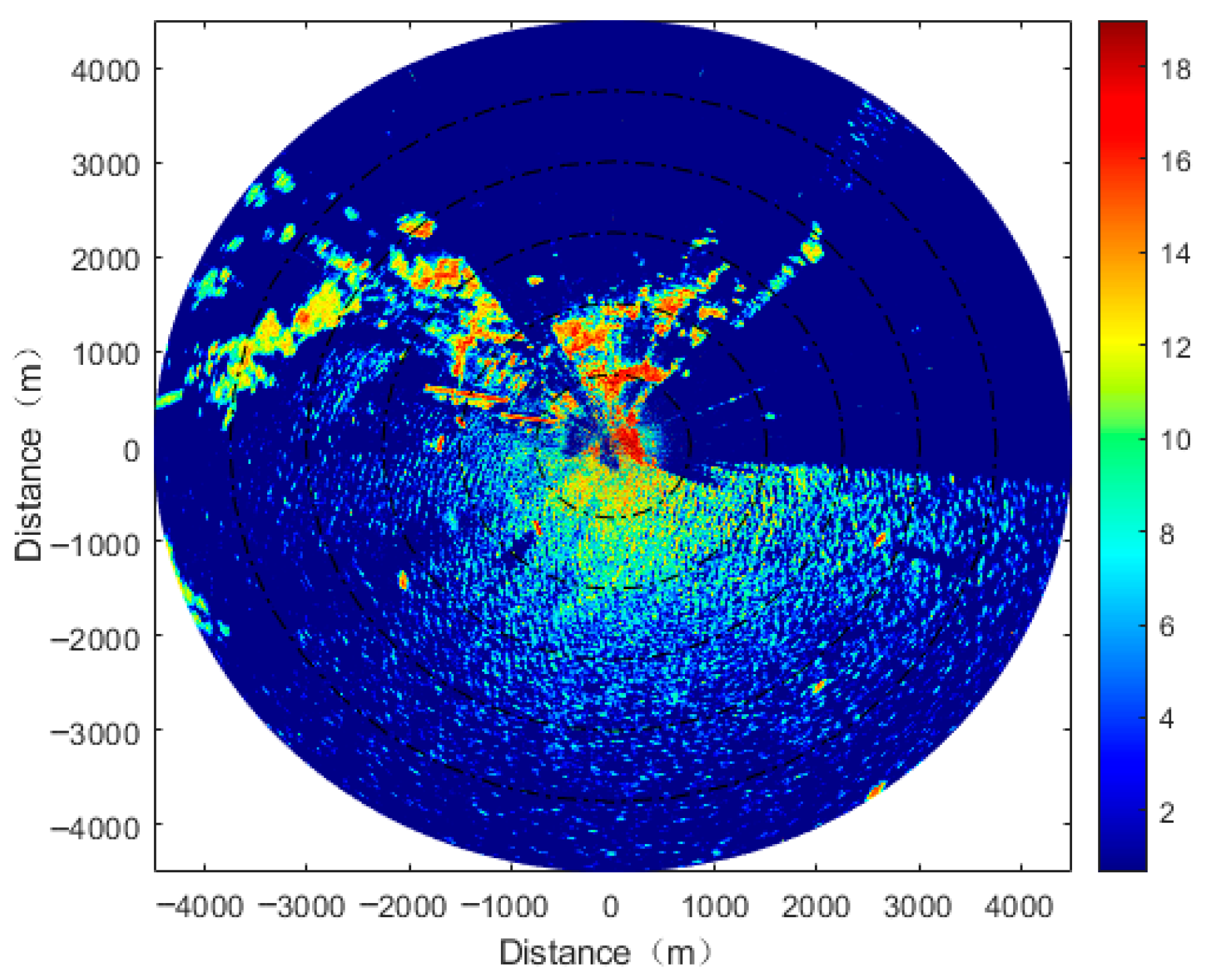
Figure 1 is the pseudo-color display mode of the original radar image collected at 23:53 on 19 January 2015. In the distance direction, there are 600 points with a resolution of 7.5 m. The detailed radar configuration parameters are illustrated in
Table 1. The color bar denotes the intensity in dB units and the mapping range of echo intensity.
- (2)
Impact of wind information on wave height
Waves are free oscillations of the sea surface caused by wind. The sea surface is affected by wind field modulation, which changes the magnitude and distribution of sea surface roughness. Based on the Bragg scattering, echo signals generated by wind field modulation will appear in radar images. Meanwhile, a model function between wind speed and significant wave height is proposed [
42].
The prediction precision of the existing spectral analysis method is closely related to wind information. In high wind speeds, the sea surface is mostly covered with wind waves, and the estimated wave height accuracy is higher, while in low wind speeds, the wave height accuracy error is larger. The sea surface roughness is low, and the backscattering mechanism is weak when the local wind is weak. In this case, the sea surface is dominated by swells instead of wind waves. The SNR and wave height are easily overestimated due to the low background noise energy. Therefore, it is possible to identify the situation of wind wave and swell, and it is beneficial to enrich the precision of wave height inversion by including the influence of wind speed measured.
To investigate the relationship to radar images, a geophysical function model is used to express the relation between the normalized radar backscatter cross-section and sea surface wind field [
43]. The research found that the normalized backscatter cross-section has a harmonic relationship with the angle between electromagnetic waves and wind direction and an exponential relationship with wind velocity [
44]. Since the maximum echo intensity occurs against the wind, the region around the upwind is chosen to estimate wave parameters. However, the ideal analysis region around the upwind direction cannot always be obtained for shore-based marine radar, owing to the effects of the monsoon and terrain obstruction. Thus, the wind direction has a certain impact on the prediction precision of wave height. In this paper, the wind speed is also considered as a characteristic parameter to estimate wave height.
- (3)
Feature vectors constructed using SNRs and included angles
Although the spectral analysis method can currently achieve high accuracy in estimating wave periods from radar images, the inversion precision of wave height still needs further improvement for the non-desired analysis areas. Given the echo intensity difference in different regions of radar images, it is beneficial to consider the consequence of wind and wave directions when retrieving wave height. Thus, the wind included angle
between the center angle of the sub-image and the wave direction and the wave included angle
between the center angle of the sub-image and the wind direction are used as characteristic parameters, which are given as
where the
is the center angle of the chosen sub-image in azimuth, and
and
are the wind and wave directions, respectively. Meanwhile, the wind speed
, which is directly proportional to echo intensity, is added as a characteristic parameter.
For the shore-based radar, it is not always possible to select upwind areas from the collected radar images. To address this problem, the SNRs extracted from different azimuth regions of radar images are utilized to enrich the prediction precision of the wave height. Based on the above extracted SNRs in different sub-image regions, wind included angle, and wave included angle, a feature vector is established as the input of the GABP neural network, which is
where
is the number of the sub-image in the radar image and
and
are the wind included angle and the wave included angle of the corresponding
-th sub-image.
Due to the large differences in data range in SNR, wind included angle, wave included angle, and wind speed characteristics, the features obtained from each sub-image are normalized into roughly the same numerical range. In this paper, to realize the proportional scaling of the original data, the linear function normalization on the feature vector of data set is used to map the minimum and maximum values of each feature to the range of [0, 1].
3.2. Model Construction and Training of the GABP Neural Network
- (1)
Description of BP network model
The BP model can be considered a nonlinear function-mapping relationship. The characteristics of the network are error back-propagation and signal forward transmission. If the output layer does not receive the desired output, it will enter the back-propagation stage. Meanwhile, the thresholds and weights of the network are revised based on the error, so that the outcome of the network remains close to the preferred output [
38,
39].
The learning capacity of the network is poor, and the fault tolerance is imperfect when the quantity of hidden layer nodes is insufficient. Conversely, the network learning duration is extended, which degrades the generalization capability of the network. The quantity of hidden layer nodes is commonly calculated using an empirical formula, which is given as
where
,
, and
represent the quantity of nodes in the input, output, and hidden layers, respectively, and
is usually a constant between 0 and 10. The training steps of the BP network model are as follows:
Step 1: Network initialization. The quantity of network input layer nodes
, hidden layer nodes
, and output layer nodes
are determined using the data dimensions of the input and output layers. After initializing the connection weights
between the input and hidden layers and
between the hidden and output layers, the thresholds
and
of the hidden and output layers, the neuron activation function, and the learning rate are, respectively, set.
Step 2: Output of the hidden layer. Based on the connection weight
, the input feature variable
, and the hidden layer threshold
, the hidden layer output is calculated, which is given as
where
is the quantity of nodes and
is the activation function.
Step 3: Output calculation of the output layer. The predictive result relies on the hidden layer output, the connection weight
between the hidden and output layer neurons, and the output layer threshold
, and is given as
Step 4: Update weight. The forecast error
is computed by using the network prediction output
and desired output
. The connection weights
and
are recalculated with the obtained forecast error, which is calculated as
where
is the learning rate.
Step 5: Update threshold. The thresholds
and
of the network nodes are updated according to the prediction error, and are given as
Step 6: Evaluate whether the iteration of the BP algorithm is over. If not, return to step 2.
- (2)
Estimate wave height based on the trained BPGA neural network model
The initial thresholds and weights of the BP model are generated randomly, which will greatly affect the data prediction ability of the network [
39,
40,
41]. Based on the powerful adaptability and good global-search ability, the GA is employed to optimize the initial threshold and weight of the BP model for the sake of enhancing the performance and robustness of the network.
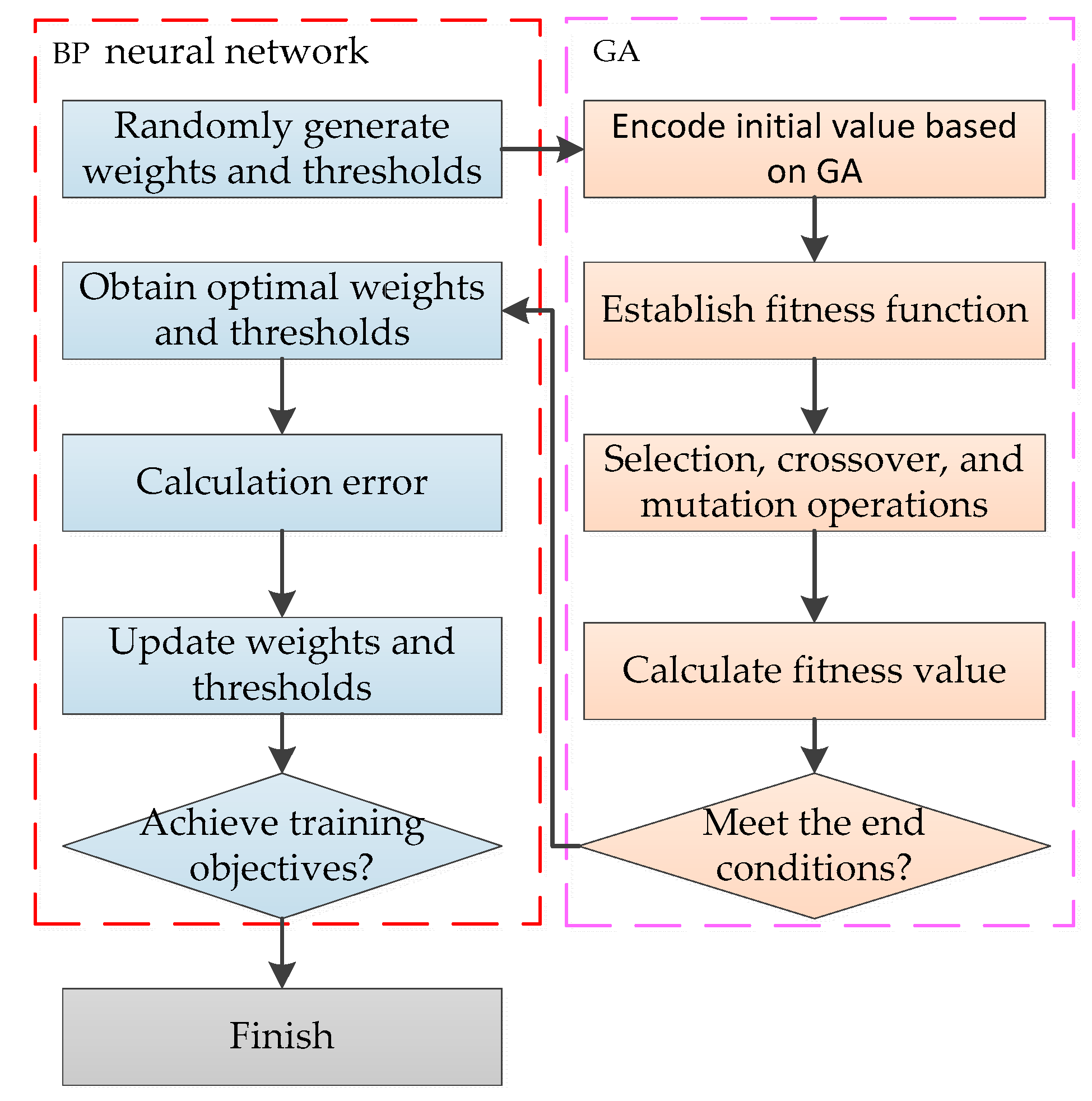
When the fitness function is chosen and the selection, crossover, and mutation operations are implemented, individuals with unsatisfactory fitness are stopped, and individuals with fine fitness are retained. The new group is superior to the earlier generation and inherits the information of the previous generation, and so on until the conditions are met [
39]. The algorithm flow chart of the BP model optimized by GA is displayed in
Figure 2.
The elaborate training stages are as follows:
Step 1: Initialize the BP model, generate initial thresholds and weights randomly, and generate an initialization population randomly.
Step 2: Establish a fitness function, which is given as
where
and
, respectively, denote the quantity of output nodes and training set samples,
and
, respectively, indicate the
-th actual and forecasted outputs derived by feeding the
-th training example into the network.
Step 3: Selection, crossover, and mutation operations. The roulette selection method is usually used to select the best individuals from the group and eliminate the defective ones [
39]. The possibility of being picked depends on fitness. Crossover is the process of recombining and replacing part of the structure of two parent individuals to produce new individuals, which is described by
where
is a constant between 0 and 1. By crossing individuals
and
, new individuals
and
are derived.
Mutation involves modifying the gene value at a locus in an individual within a population. When the
-th gene of an individual is mutated, the operation is expressed as
where
and
are the lower and upper bounds of gene value,
and
are the present and maximum iteration numbers, and
and
are arbitrary values between 0 and 1.
To reinforce the global search capability at the early phase of iteration and the local search capability at the phase stage of iteration, an adaptive method is adopted to adjust the mutation bits, which is given as
where
means rounding up, and
represents the preset maximum mutation bit.
Step 4: The procedure of conducting selection, crossover, and mutation constitutes one generation. When the calculation error approaches the allowable accuracy error after several generations, the initial thresholds and weights of the BP model are substituted by the computed optimal values.
Step 5: The thresholds and weights are fine-tuned through the training of the BP network model. The training terminates when the network approaches the training destination.
- (3)
Network configuration
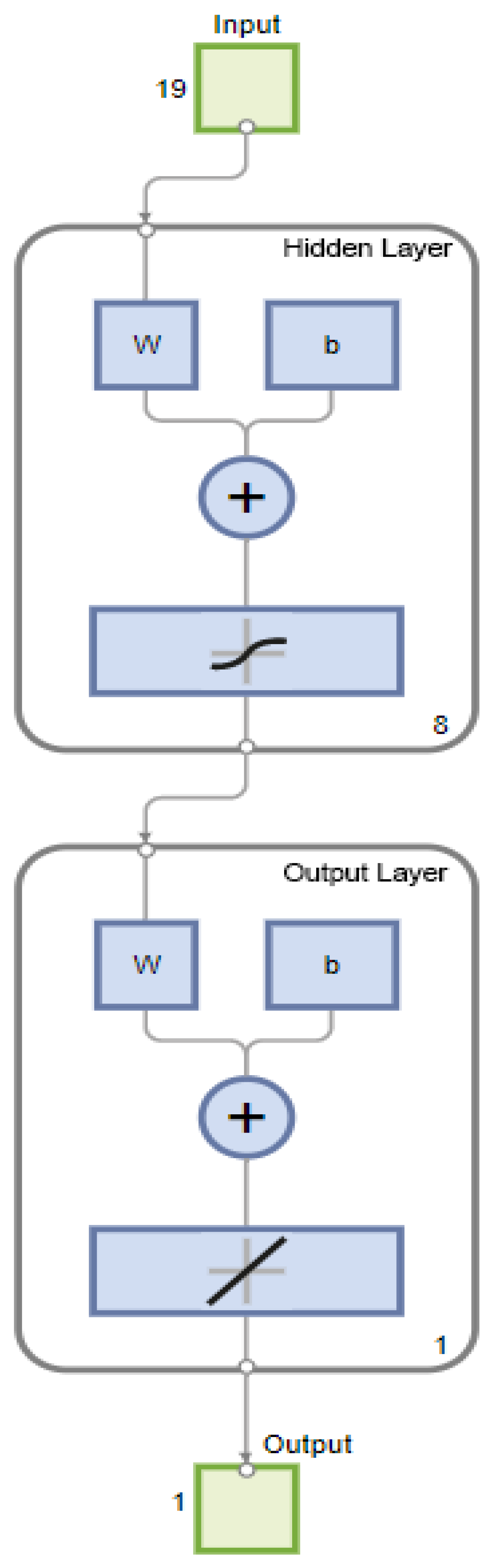
The detailed network architecture of GABP, generated using MATLAB software (version 2022), is given in
Figure 3. The length of the feature vector in the input layer is 19, which contains a wind speed, calculated SNR, wind included angle, and wave included angle from 6 sub-images. The number of neurons in the hidden layer is 8. The hyperbolic tangent Sigmoid transfer function is used as the activation function of the hidden layer. For the inversion of wave height, the number of neurons in the output layer is 1, and the activation function of the output layer is the linear transfer function.
The main network parameter configuration and training hyperparameters of G are presented in
Table 2. The maximum training time is 1000. For the GA part, the strategy of roulette wheel selection, two-point crossover, and Gaussian variation is utilized as the genetic operator to determine the initial value of the BP network model.
4. Experimental Results
The collected radar images from 8–19 November 2014 and 10–20 January 2015 at Haitan Island were employed to verify the effectiveness and analyze the capability of the proposed method. The longitude and latitude of the island are 119°50′ E and 25°27′ N, respectively. Due to the influence of topography, the observed wave has certain surge-forcing characteristics. The mean water depth is approximately 20 m. During the experiment, the average wind speed at the data collection site was about 10 m/s, and the wind direction was mainly northeast. The SBF3 wave buoy, which was moored at a distance of roughly 800 m from the radar and about 170° in azimuth, is regarded as the reference equipment. The wave buoy only operates for 20 min at the end of every hour and produces a wave height per hour. To better validate the experimental results, the corresponding radar images from the final 20 min of each hour were also chosen as the dataset for calculating wave height. During the experiment, a rain gauge was installed near the radar antenna, and the rainfall intensity recorded by the rain gauge was used to identify rain-contaminated images. The collected images are considered rain-contaminated when the accumulated rainfall intensity in the last 20 min of each hour exceeds 1mm. A rainfall event occurred on 14 January 2015, and eight consecutive hours of radar images were removed. After eliminating rain-contaminated images, 469 h of effective radar image sequences were employed during the experiment.
In the experiment, 32 consecutive radar images were recorded with a time span of about 74 s. To facilitate the Fourier transform and account for the non-stationary characteristics of ocean waves, a 128-by-128-pixel analysis area was chosen in the radar image. According to the radar echo nonlinear attenuation characteristics with distance, from the center of the sub-image to the radar is approximately 1100 m. The SNR feature and wave direction could be estimated based on the determined sub-image sequence. In this paper, multiple analysis regions were selected to calculate SNR, and the SNRs were used to construct a feature vector. Based on the fixed objects in the observation of radar and the surrounding terrain, the fan region in the radar image, in the azimuth range 120°~230°, was available in the experiment. For improving the estimation accuracy, multiple analysis regions were chosen from the available sea observation area. Based on the available observation region, six sub-image areas were selected from the radar image with a 15° azimuth interval from azimuth angle 135° to 210°.
To validate the effectiveness of the proposed method based on the GABP neural network for retrieving wave height, the obtained experimental data set was randomly split into a training set and a test set according to the ratio of 3:1.
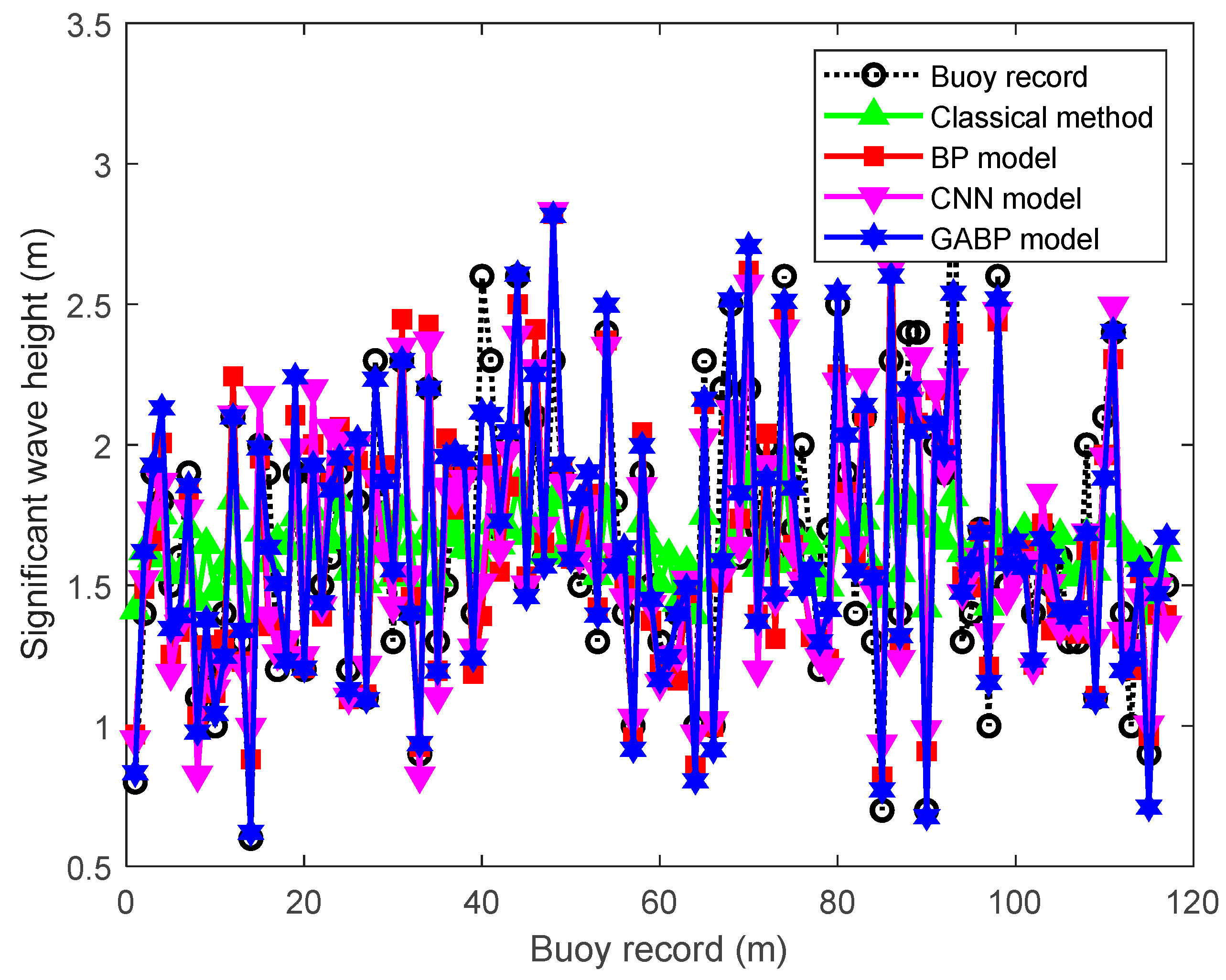
The retrieved features from the training set were employed to train the GABP network model. In this paper, the estimated wave height using the trained GABP model was compared with the buoy measurement result, the classical spectrum analysis method, the BP model, and the CNN model using the constructed feature vector. The buoy measurement result and the wave height estimated from radar images are shown in
Figure 4.
Between two neighboring data points, the time interval on the horizontal axis is one hour. The vertical axis denotes the significant wave height, and the horizontal axis is the number of samples. The dotted line with a black circle indicates the significant wave height recorded by the wave buoy. The solid line with a green triangle indicates the inversion result using the classical spectral analysis method. An ideal analyzing area, 960 m by 960 m, was selected from a radar image for the classical method, and the azimuth angle of the analyzing region was about 135° in the radar image. The training set was employed to calibrate the coefficients of the linear relation between the square root of SNR and wave height, as defined by Equation (5). Using the calibrated coefficients, the test set was adopted to produce the wave height. The solid line with a red square, the solid line with a pink lower triangle, and the solid line with a blue star are the estimated significant wave height based on the BP, CNN, and GABP neural network models with the constructed feature vector. From
Figure 3, it can be noticed that the methods based on the constructed feature vector can better follow the fluctuation in the true value compared to the classical spectral analysis method.
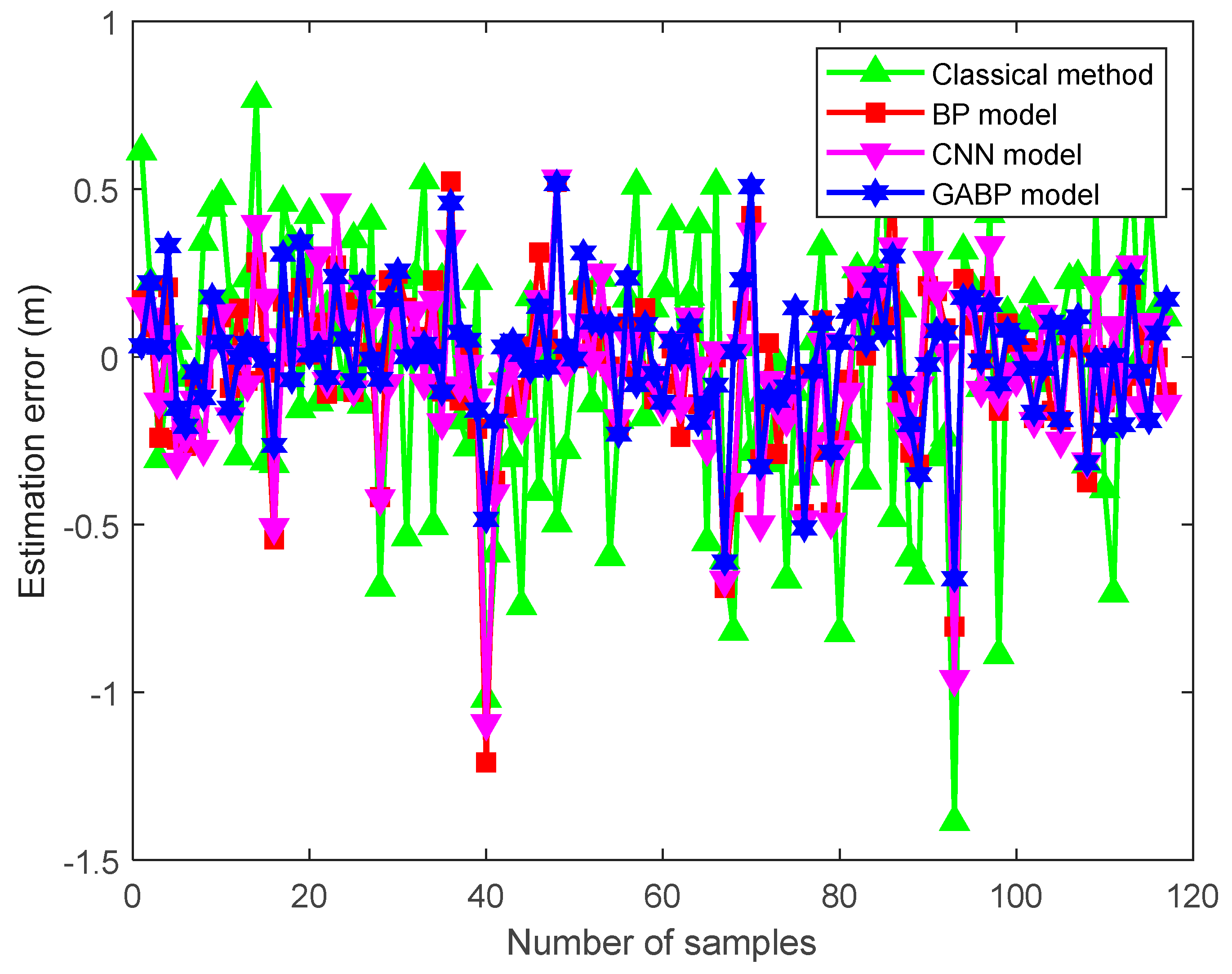
To further illustrate the implementation of the proposed method more clearly, the range of estimation error variation is presented in
Figure 5. The solid line with a green triangle, solid line with a red square, solid line with a pink lower triangle, and solid line with a blue star, respectively, indicate the estimation error based on the classical spectral analysis method, constructed feature vector with the BP neural network, constructed feature vector with the CNN, and constructed feature vector with the GABP neural network. The horizontal and vertical axes represent the number of samples and the estimation error, respectively. From
Figure 5, it can be observed that the error variation range is reduced when the constructed feature vector is used. The proposed GABP neural network method with the constructed feature has the smallest error variation range compared with the classical method and the constructed feature vector with the CNN and BP neural network.
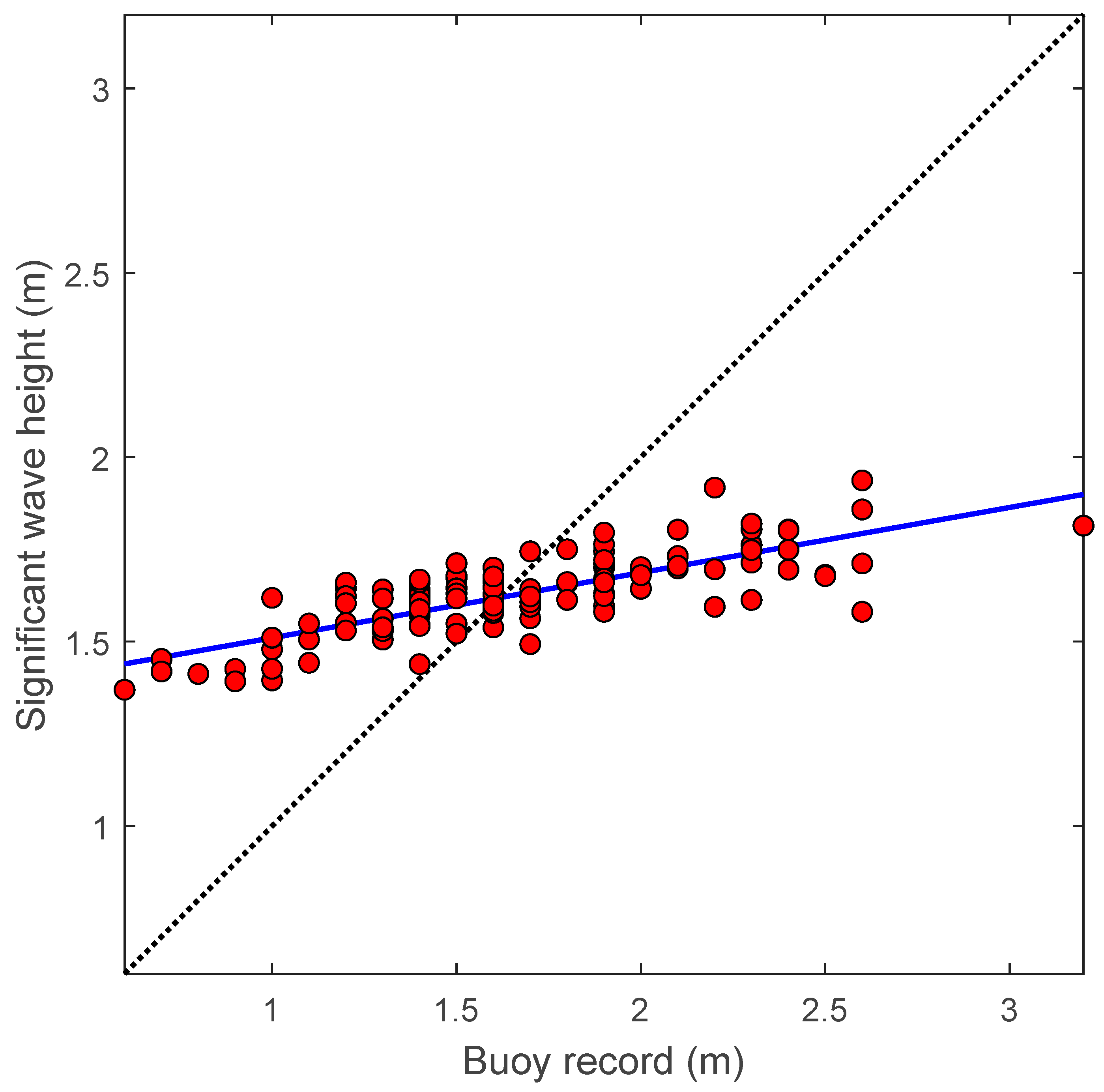
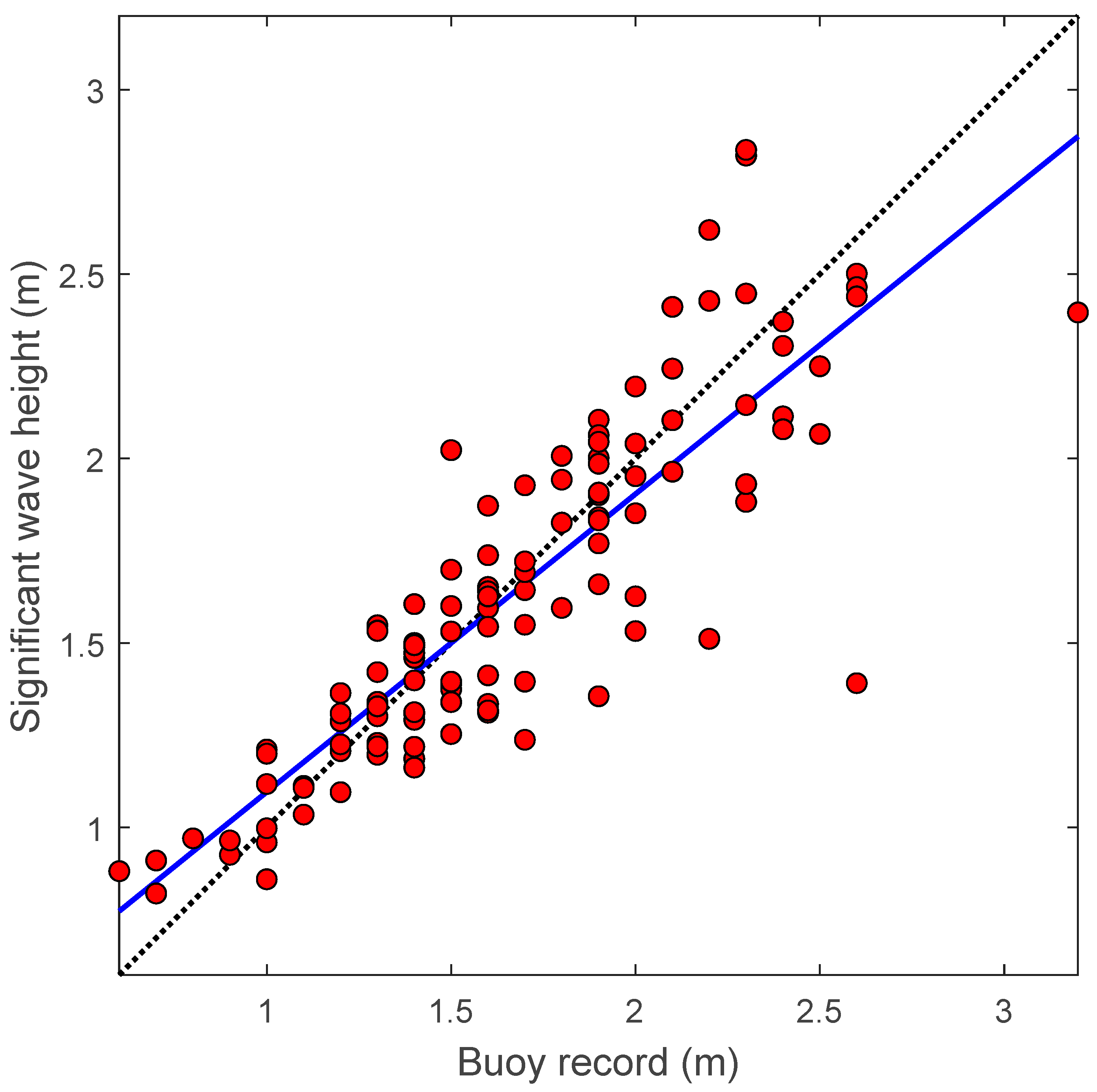
Figure 6 shows a scatter plot of significant wave height between the buoy measurement result and that retrieved by the classical method. The vertical and horizontal axes are the estimated wave height based on the classical spectral analysis method and the buoy measurement result. The red circle represents the scatter distribution based on the test data. The black dotted line represents the complete positive correlation line. The produced wave height is consistent with the trend of the buoy record. The blue solid line is the fitting line based on the estimated wave height and buoy record. The root mean square error (RMSE) and correlation coefficient (CC) are 0.40 m and 0.78. The calculated mean absolute percentage error (MAPE) is 21.63%. In addition, the 95% confidence intervals (CI) of the retrieved wave height by the classical method are [1.61, 1.65].
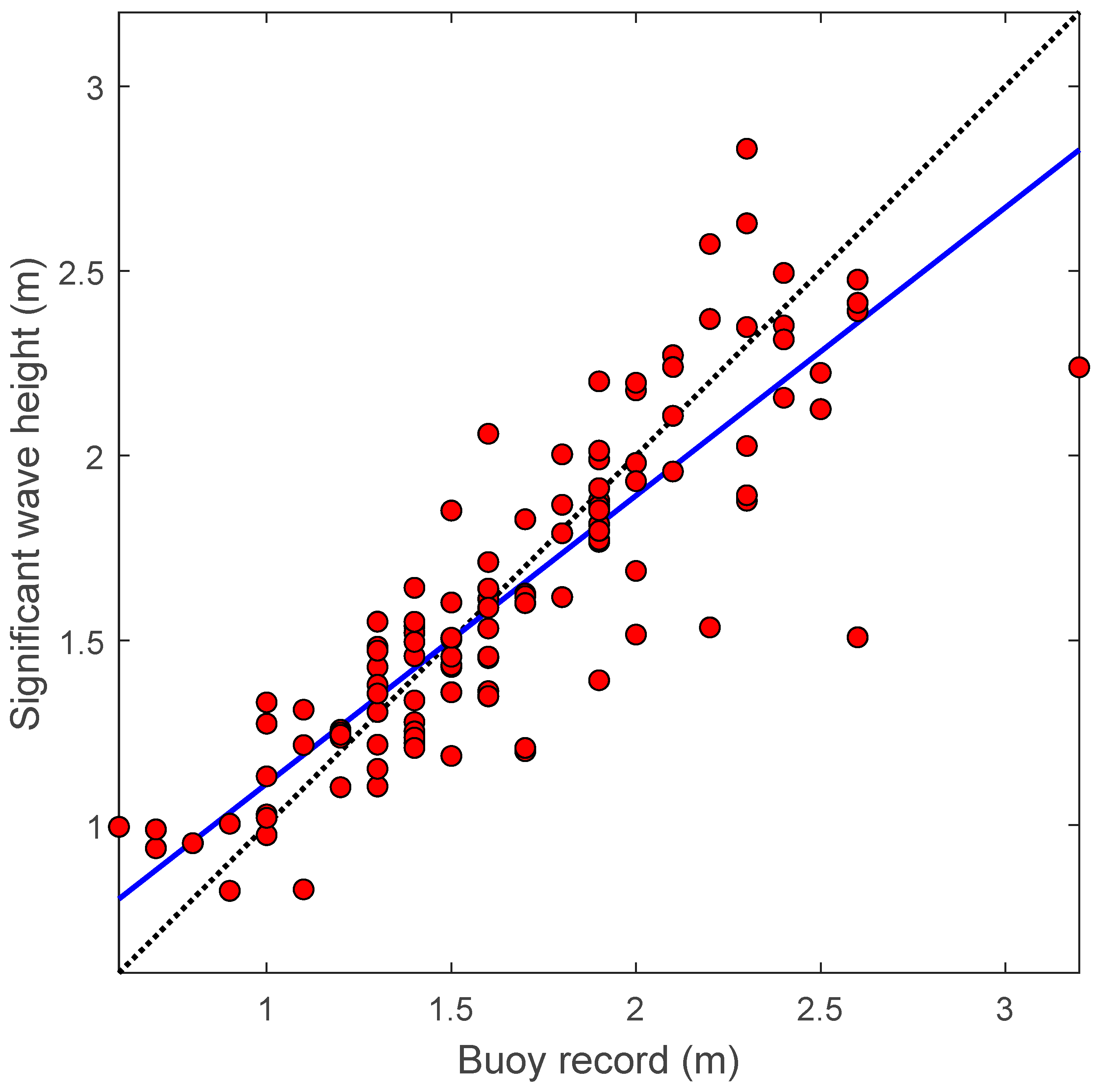
Figure 7 is a scatter plot of wave height between the buoy’s measurement result and that retrieved by the constructed feature vector with the BP model. The vertical axis is the produced wave height using the constructed feature vector with the BP network model. When the constructed feature vector is used, the CC of the predicted wave height is 0.86, and the RMSE drops to 0.25 m. Compared to the performance of the classical spectral analysis method, the CC increases by 0.08, the MAPE drops by 10.03, and the RMSE drops by 0.15 m. The measurement prediction of wave height is enhanced when the constructed feature vector and BP neural network model are utilized. The 95% CI of the retrieved result by the BP network model is [1.55, 1.71].
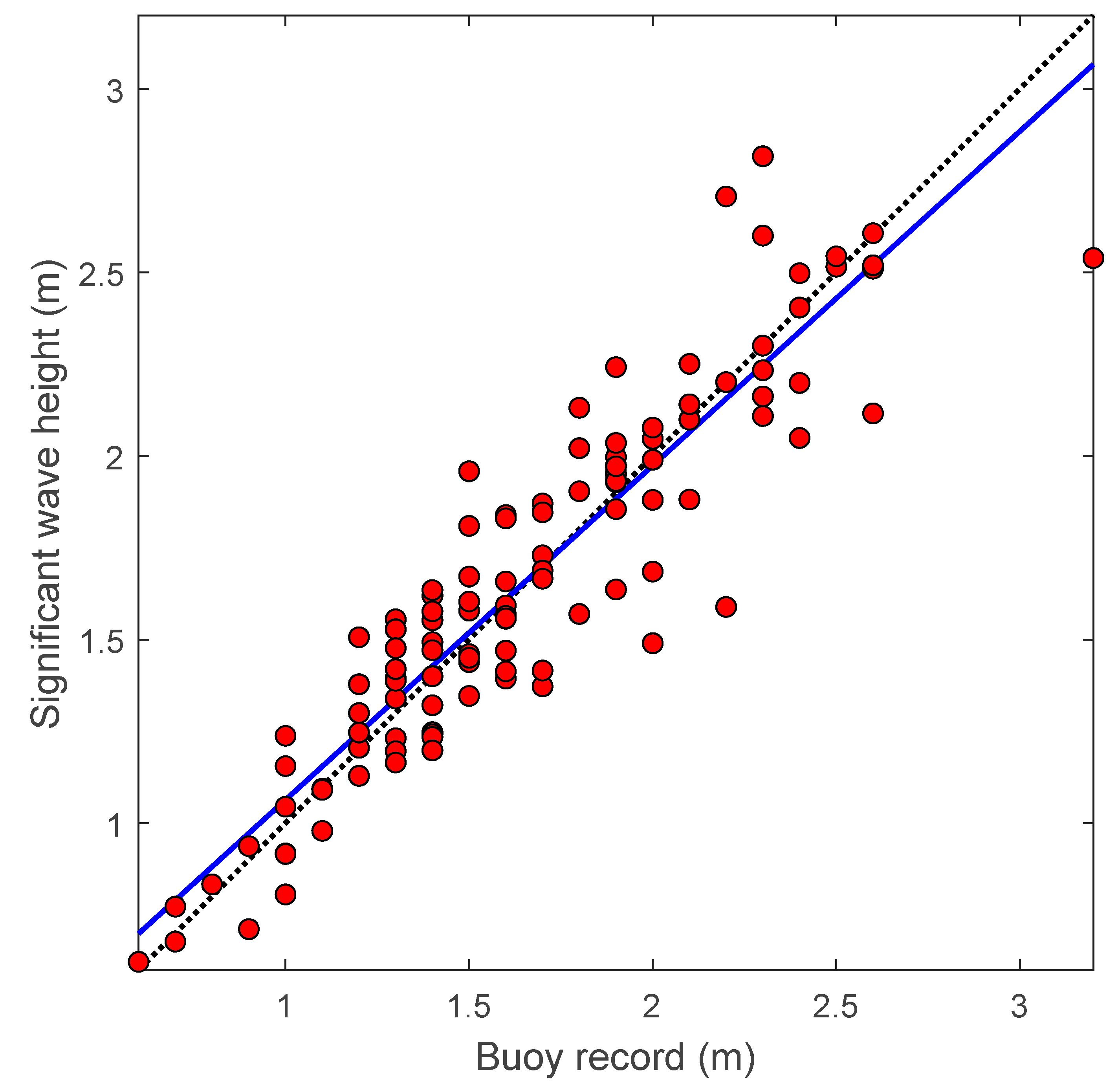
Figure 8 is a scatter plot of the significant wave height between the buoy’s measurement result and that retrieved by the constructed feature vector with the CNN model. The vertical axis is the produced wave height using the constructed feature vector with the CNN model. The calculated CC and RMSE are similar to those when using the BP network model. In addition, the derived MAPE is 11.22, which is close to the result of the BP network model. Limited by the amount of radar data, the performance of the CNN model is close to that of the BP model, when the established constructed feature vector is adopted. The 95% CI [1.55, 1.71] of the retrieved result by the CNN model is similar to that of using the BP network model.
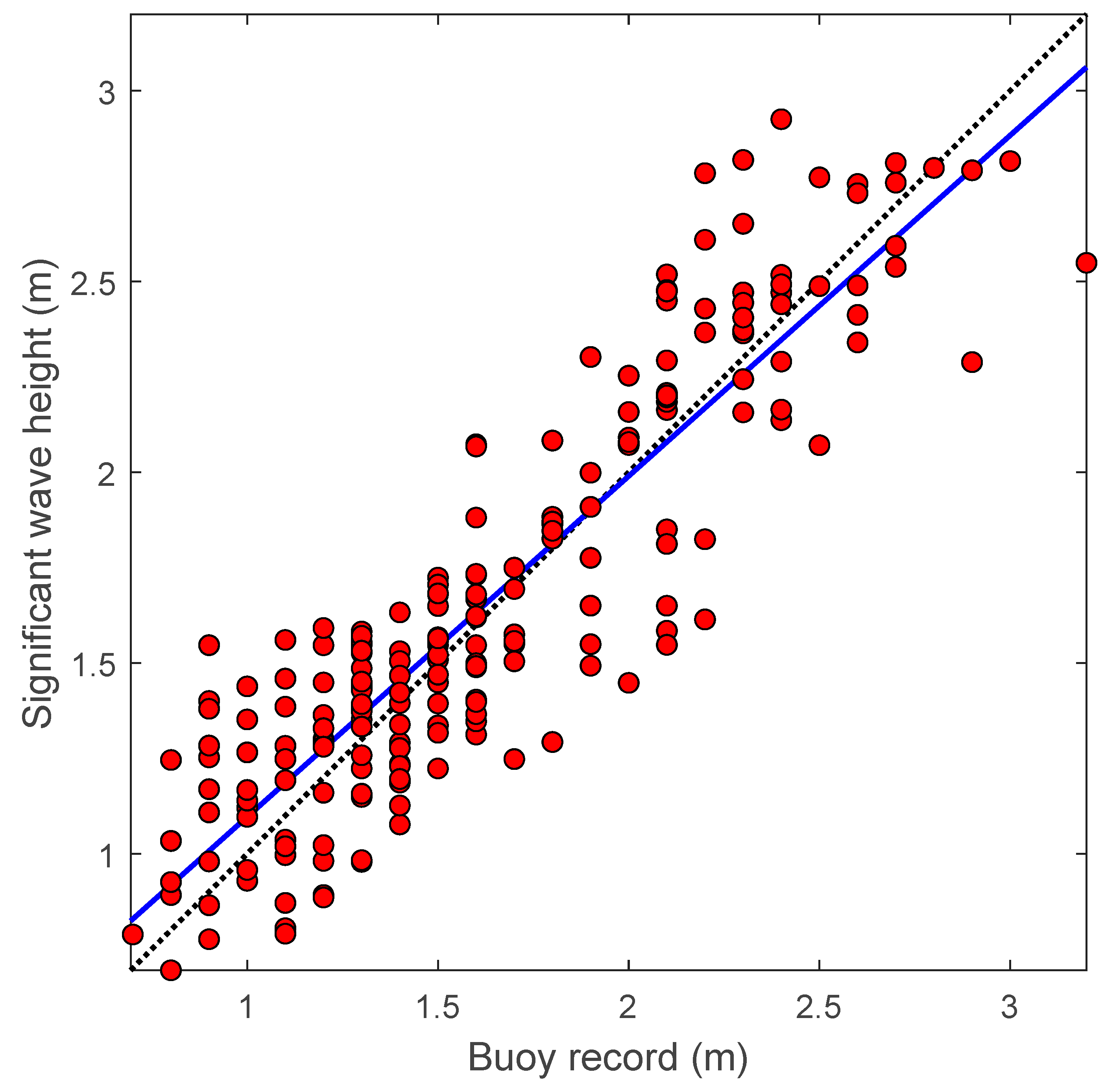
Figure 9 is a scatter plot of the significant wave height between the buoy’s measurement result and that retrieved using the proposed method. The CC approaches 0.92 when the ratio is 3:1. Meanwhile, the MAPE and RMSE decrease to 8.69% and 0.20 m, respectively. Compared with the BP model method, the CC improved by 0.06, the MAPE degraded by 2.91%, and the RMSE fell by 0.05 m. The 95% CI of the retrieved result by the GABP model is [1.58, 1.75], which is close to that of other methods. The points in the scatter plot are roughly distributed near the complete positive correlation line, indicating that the proposed method can better capture the evolution trend of the data. Considering the obstacles posed by the surrounding geography and the non-stationarity of sea waves, the prediction of wave height is enhanced using extracted SNRs from multiple regions.
Using the X-band radar image sequence, the detailed performance of the classical spectral analysis method, the constructed feature vector with BP and CNN models, and the proposed method is presented in
Table 3. The mean absolute error (MAE) and mean bias error (MBE) are also described. The proposed GABP-based method illuminates good consistency under different proportions of the training set to the test set.
Since the radar observations are collected sequentially over time, the purely random split may mix samples and lead to the risk of data leakage through autocorrelation in consecutive hourly measurements. Thus, an additional experiment with temporally separated training and testing periods was conducted to further verify the performance of the proposed method. During the experiment, two data sets on 8–19 November 2014 and 10–20 January 2015 were collected. The 254 h radar images on 8–19 November 2014 were utilized to train the GABP model, and the 215 h radar images on 10–20 January 2015 were used to test and evaluate the trained model. The scatter plot of the buoy’s measurement result and wave height retrieved using the proposed method with temporally separated periods is given in
Figure 10. The RMSE and CC are 0.24 m and 0.89, which is close to that of the proposed method based on a purely random-split mode on the training and test sets. The calculated MAPE is 13.21%, and the 95% CI is [1.59, 1.73]. Compared with the random-split mode on the training and test sets, it can be found that the performance of the proposed method was basically unchanged, and the proposed method shows good stability.
The X-band radar interacts with the sea surface micro-scale wave through the backscattered signal, and its observation value can establish a physical connection with the wind field and wave field. The wind speed and wind included angle as input characteristics have a solid physical basis. Wind is the main driving force for wave generation and maintenance. Wind speed directly affects the growth of wave height, and wind direction determines the energy input efficiency. The wave angle reflects the geometric relationship between the wave propagation direction and the radar line of sight, which affects the polarization characteristics of the radar image and modulates the radar echo intensity. The wind speed, wind included angle, and wave included angle together constitute the physical framework of wind–wave interaction and are the inputs to the inversion model, which can improve the generalization ability and interpretability with the help of physical laws. By using these physical feature constraints and the extracted SNR from the spectral inversion method, the inversion accuracy can be improved, and the uncertainty can be reduced.
In addition, an ablation analysis of different combination features is presented based on the GABP network model in
Table 4. The effectiveness of the wind included angle, wave included angle, and wind speed can be observed by comparing them with the only SNR feature in the last row. From the fourth row, it can be observed that the effect of wind speed on the inversion precision of wave height is not obvious. Generally, the echo intensity and wave height are positively correlated with wind speed. Affected by the nearshore topography, the observed wave presents certain swell characteristics. For the collected data set, both the wave included angle and wind included angle could enhance the inversion precision of wave height.