Article

Trajectories of Digital Teaching Competence: A Multidimensional PLS-SEM Study in University Contexts

by
Isaac González-Medina
1,
Óscar Gavín-Chocano
1,
Eufrasio Pérez-Navío
1,* and
Guadalupe Aurora Maldonado Berea
2
1
Department of Pedagogy, University of Jaén, 23071 Jaén, Spain
2
Institute of Education Sciences, University Autonomus Benito Juárez of Oaxaca, Oaxaca de Juárez 68120, Mexico
*
Author to whom correspondence should be addressed.
Information 2025, 16(5), 373; https://doi.org/10.3390/info16050373
Submission received: 9 March 2025 / Revised: 25 April 2025 / Accepted: 28 April 2025 / Published: 30 April 2025

Abstract

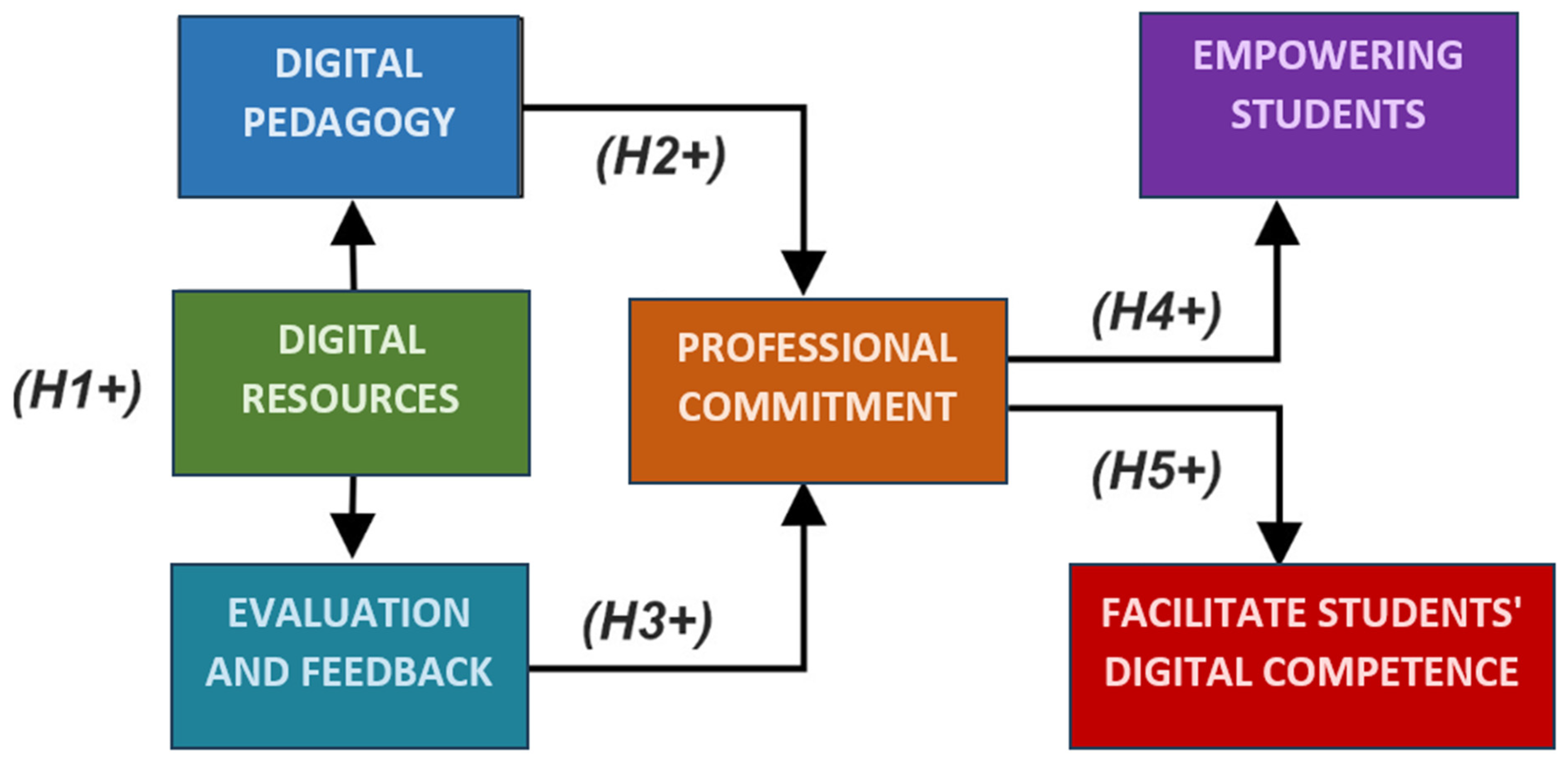
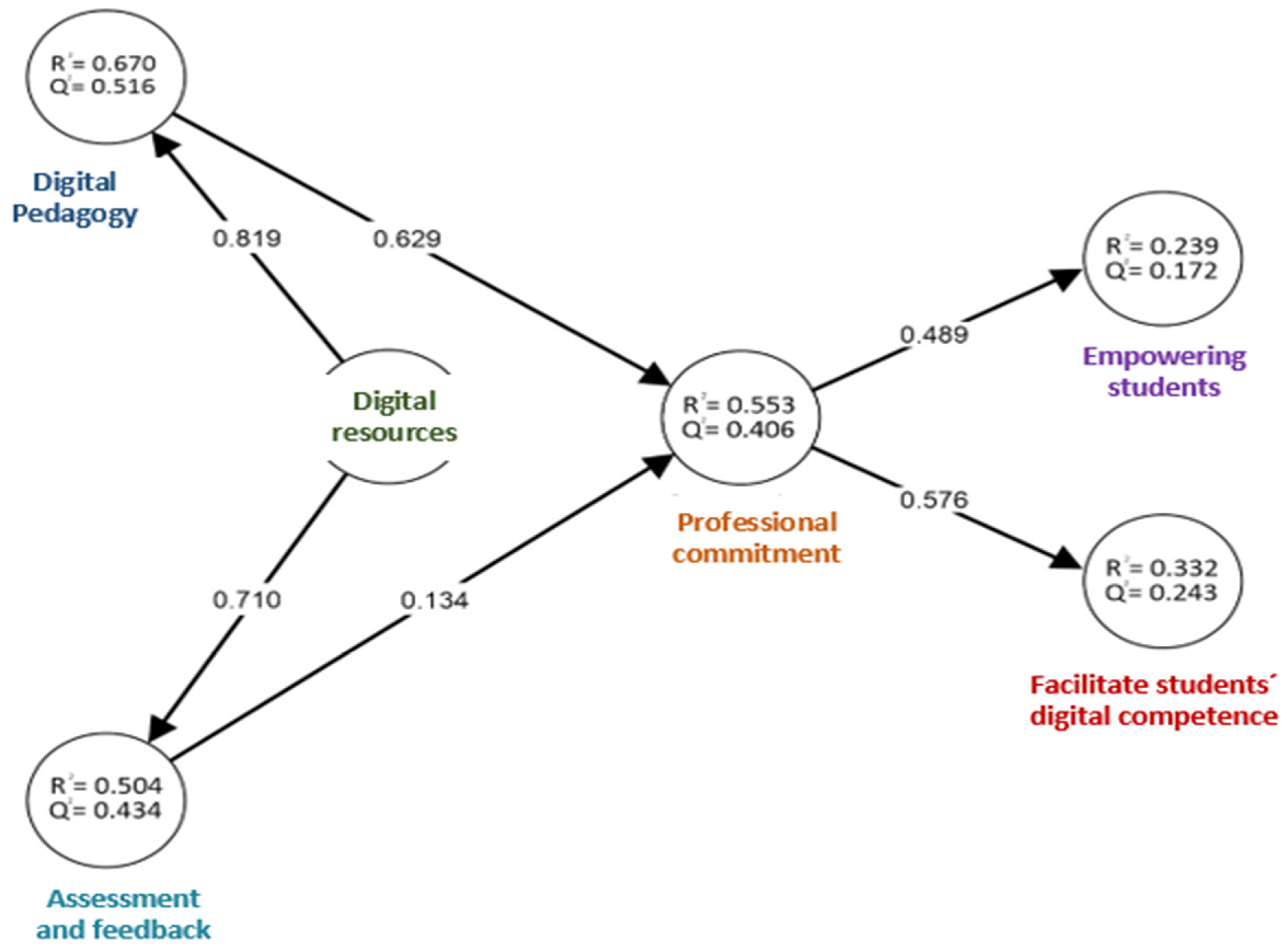
Digital teaching competence (DTC) emerges as a fundamental strategic element in today’s higher education, where the DigCompEdu framework is consolidated as a key tool for assessing the digital skills of teachers. The study sample is composed of 3309 students from educational programs in Andalusian universities, and this study uses the PLS-SEM methodology to examine the interrelationships among six critical dimensions: professional engagement, digital resources, digital pedagogy, assessment and feedback, student empowerment, and digital competence development. The research proposes five main hypotheses that explore how digital resources drive pedagogy and assessment and how professional engagement directly influences student empowerment and the development of their own digital competencies. The results reveal the complexity inherent in developing digital competencies in the university setting, underscoring the need to implement ongoing training programs that address not only essential technical skills but also innovative pedagogical strategies adapted to digital environments. These programs should train teachers to effectively use digital resources, design interactive learning activities, and encourage active student participation. In addition, the importance of promoting teachers’ professional engagement is highlighted, as this factor significantly influences students’ empowerment and their ability to develop strong digital competencies, thus preparing them for the technological challenges of the 21st century and equipping them with the skills and competencies needed to thrive in an increasingly digitized world.
Keywords: digital competence; student; areas; multidimensional; pedagogy digital competence; student; areas; multidimensional; pedagogy