Article

ProtoE: Enhancing Knowledge Graph Completion Models with Unsupervised Type Representation Learning
1
Department of Informatics, School of Multidisciplinary Sciences, The Graduate University for Advanced Studies, Tokyo 101-8430, Japan
2
National Institute of Informatics, Tokyo 101-8430, Japan
3
Department of Industrial Engineering and Economics, School of Engineering, Tokyo Institute of Technology, Tokyo 152-8552, Japan
*
Author to whom correspondence should be addressed.
Information 2022, 13(8), 354; https://doi.org/10.3390/info13080354
Submission received: 11 July 2022 / Revised: 11 July 2022 / Accepted: 22 July 2022 / Published: 25 July 2022
(This article belongs to the Special Issue Knowledge Graph Technology and Its Applications)

Abstract

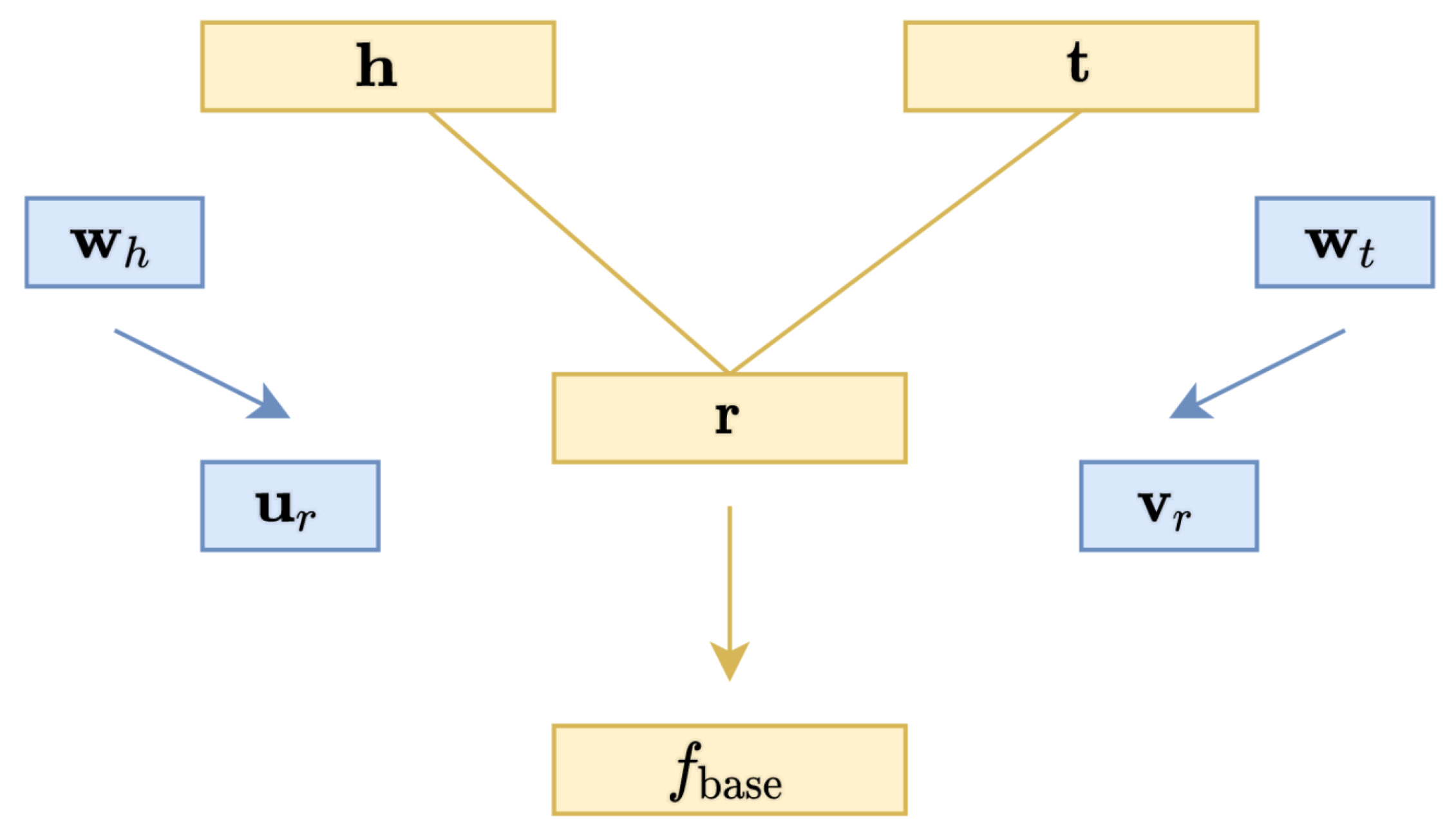
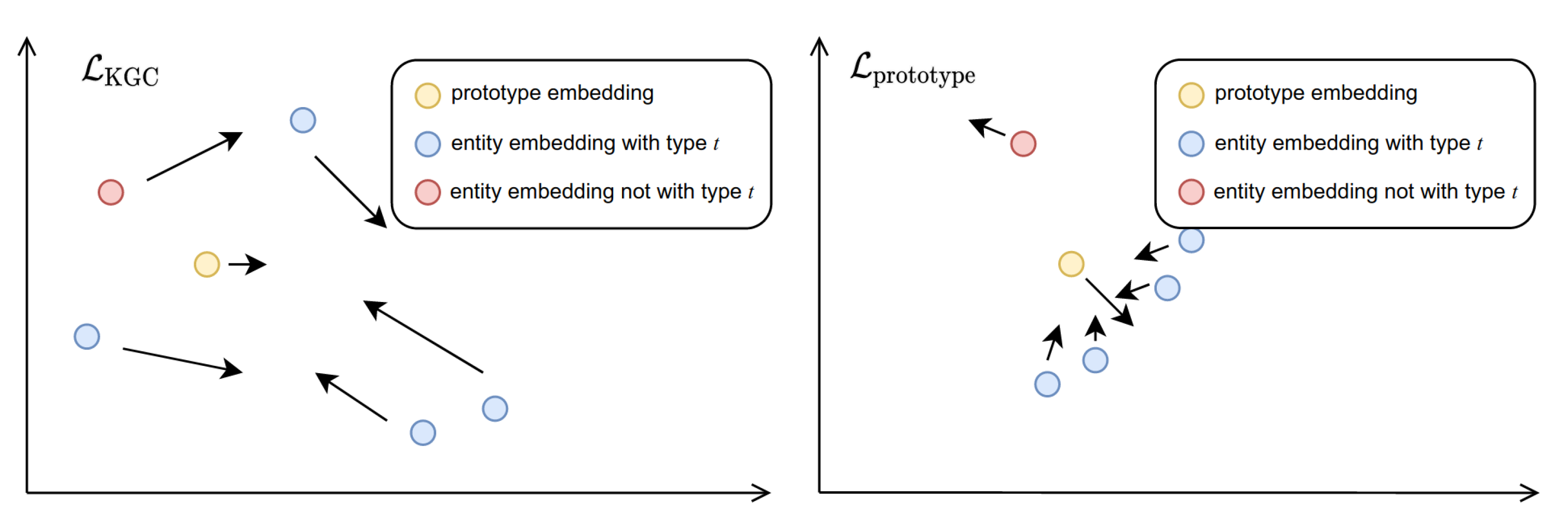
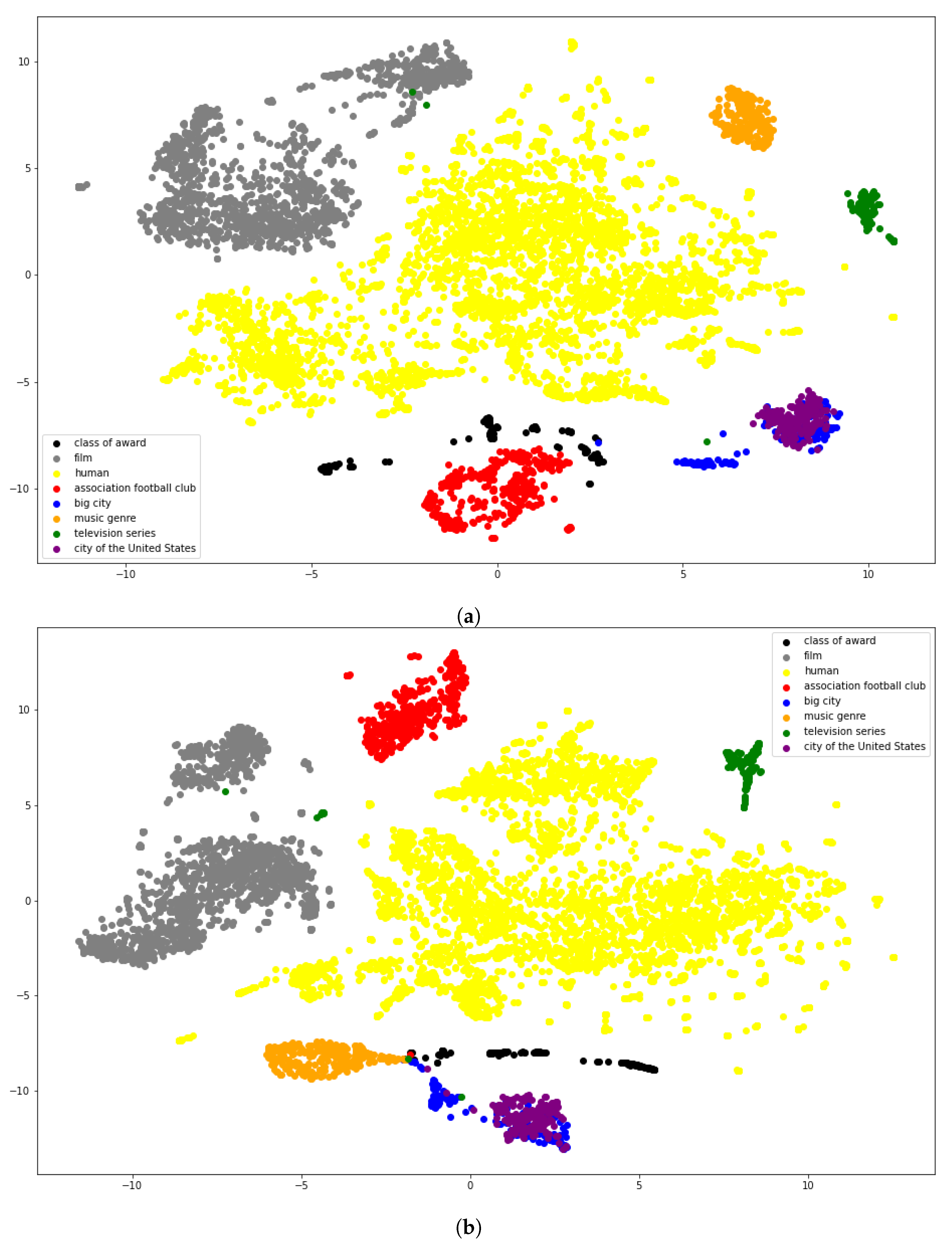
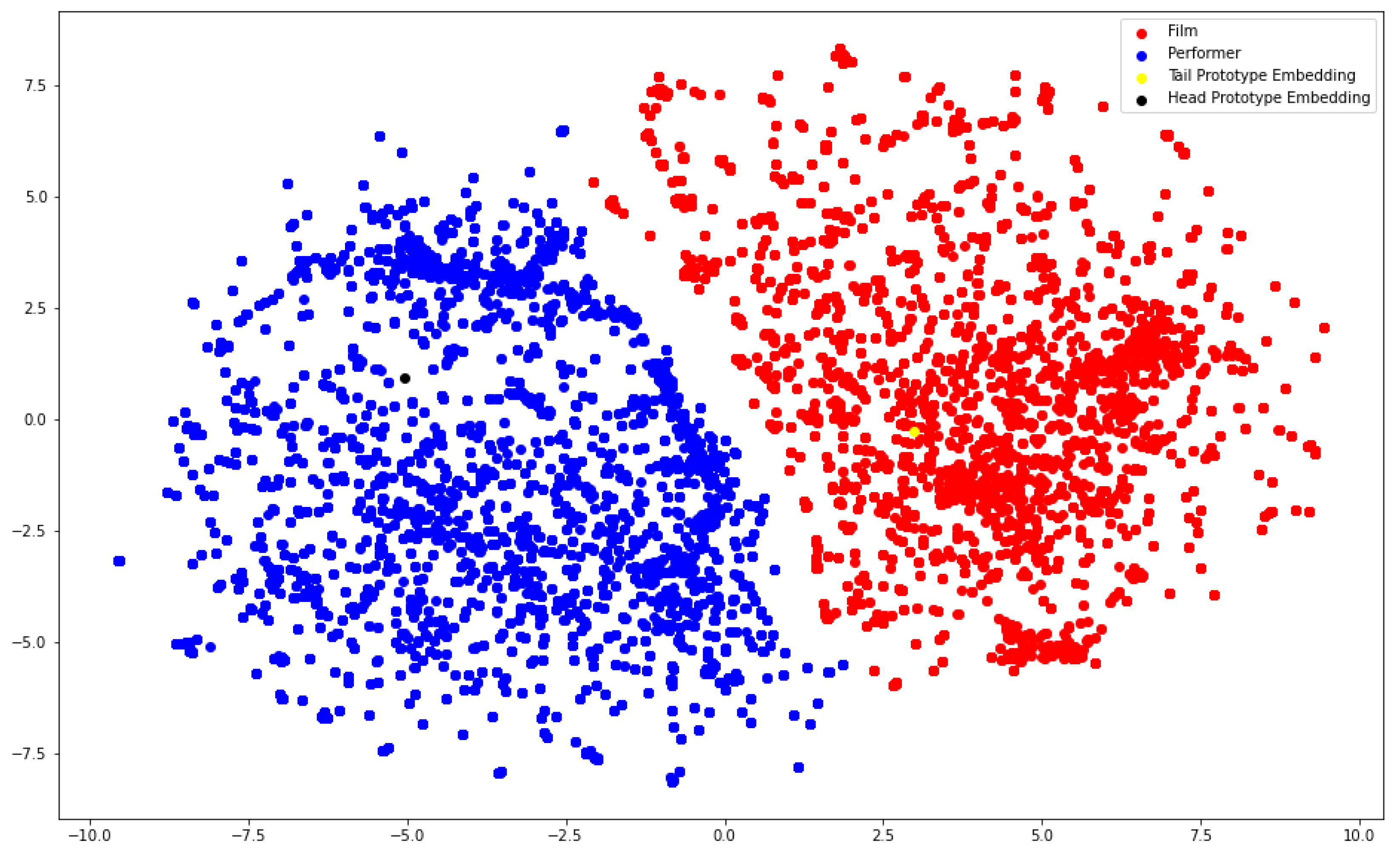
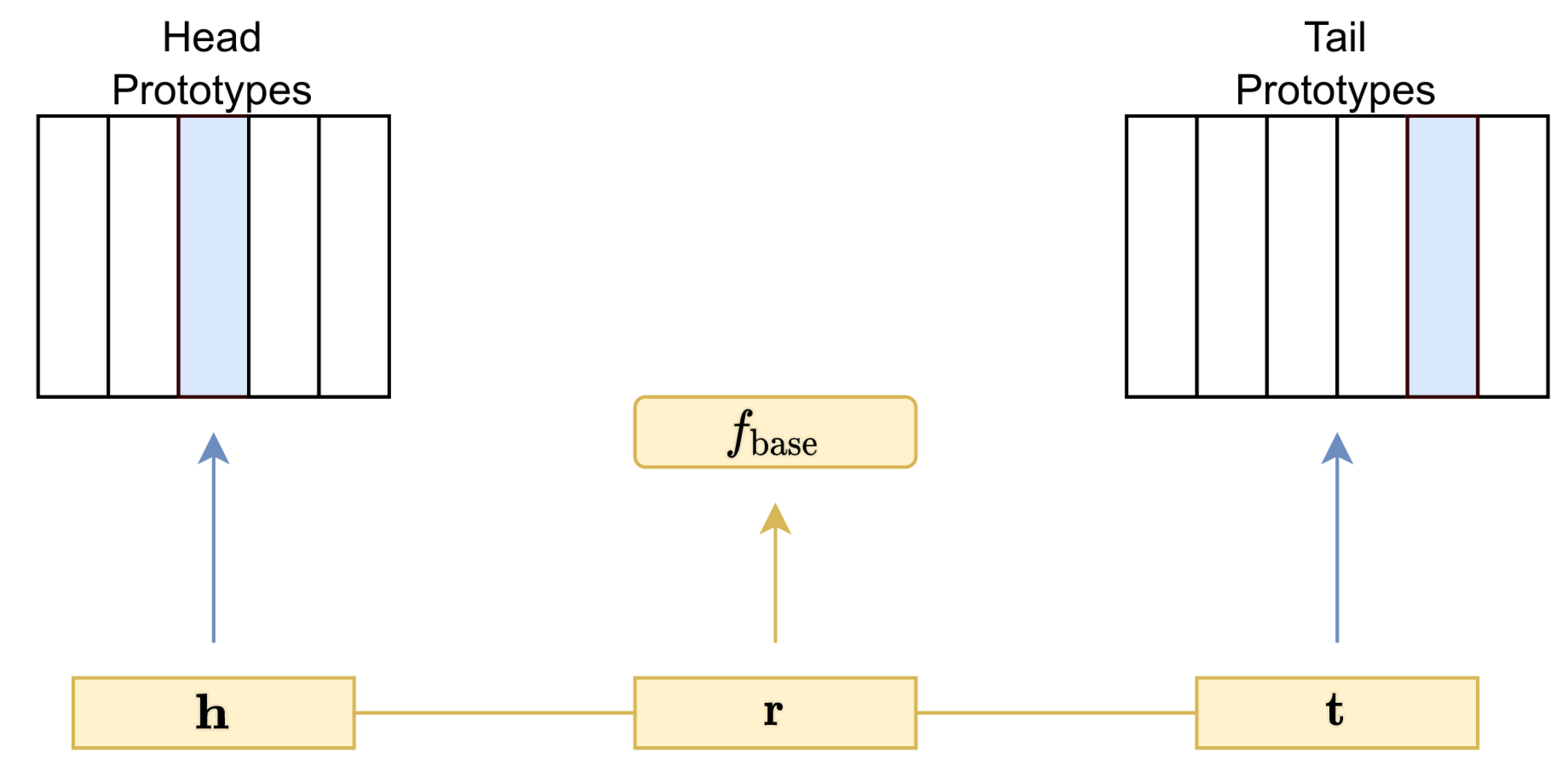
Knowledge graph completion (KGC) models are a feasible approach for manipulating facts in knowledge graphs. However, the lack of entity types in current KGC models results in inaccurate link prediction results. Most existing type-aware KGC models require entity type annotations, which are not always available and expensive to obtain. We propose ProtoE, an unsupervised method for learning implicit type and type constraint representations. ProtoE enhances type-agnostic KGC models by relation-specific prototype embeddings. Our method does not rely on entity type annotations to capture the type and type constraints of entities. Unlike existing unsupervised type representation learning methods, which have only a single representation for entity-type and relation-type constraints, our method can capture multiple type constraints in relations. Experimental results show that our method can improve the performance of both bilinear and translational KGC models in the link prediction task.
Keywords: knowledge graph; knowledge graph completion model; representation learning; unsupervised learning knowledge graph; knowledge graph completion model; representation learning; unsupervised learning