Article

Motivating Machines: The Potential of Modeling Motivation as MoA for Behavior Change Systems
1
Social AI, Department of Computer Science, Vrije Universiteit Amsterdam, 1081 HV Amsterdam, The Netherlands
2
Department of Computer Science, University of Swabi, Swabi 94640, Pakistan
3
Philips Research, High Tech Campus 34, 5656 AE Eindhoven, The Netherlands
*
Author to whom correspondence should be addressed.
Information 2022, 13(5), 258; https://doi.org/10.3390/info13050258
Submission received: 21 April 2022 / Revised: 12 May 2022 / Accepted: 12 May 2022 / Published: 17 May 2022
(This article belongs to the Special Issue Advances in AI for Health and Medical Applications)

Abstract

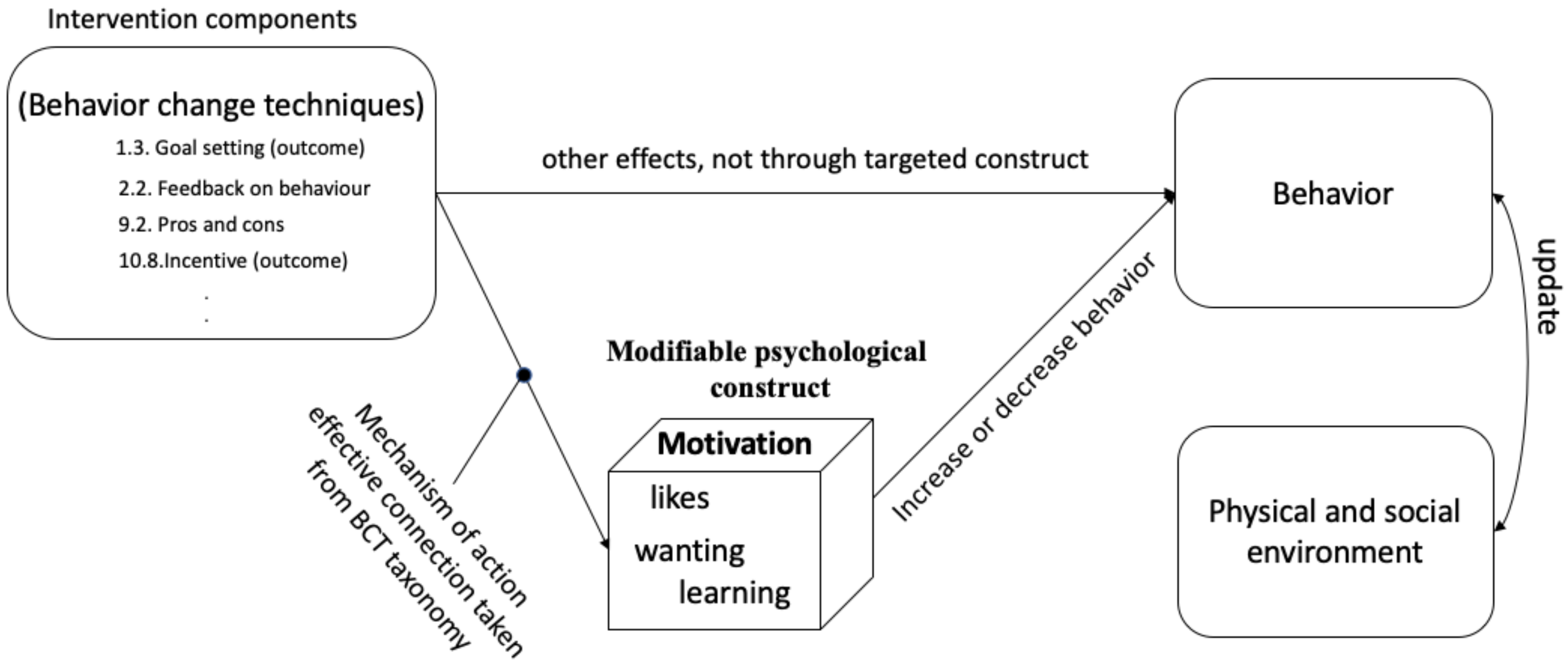
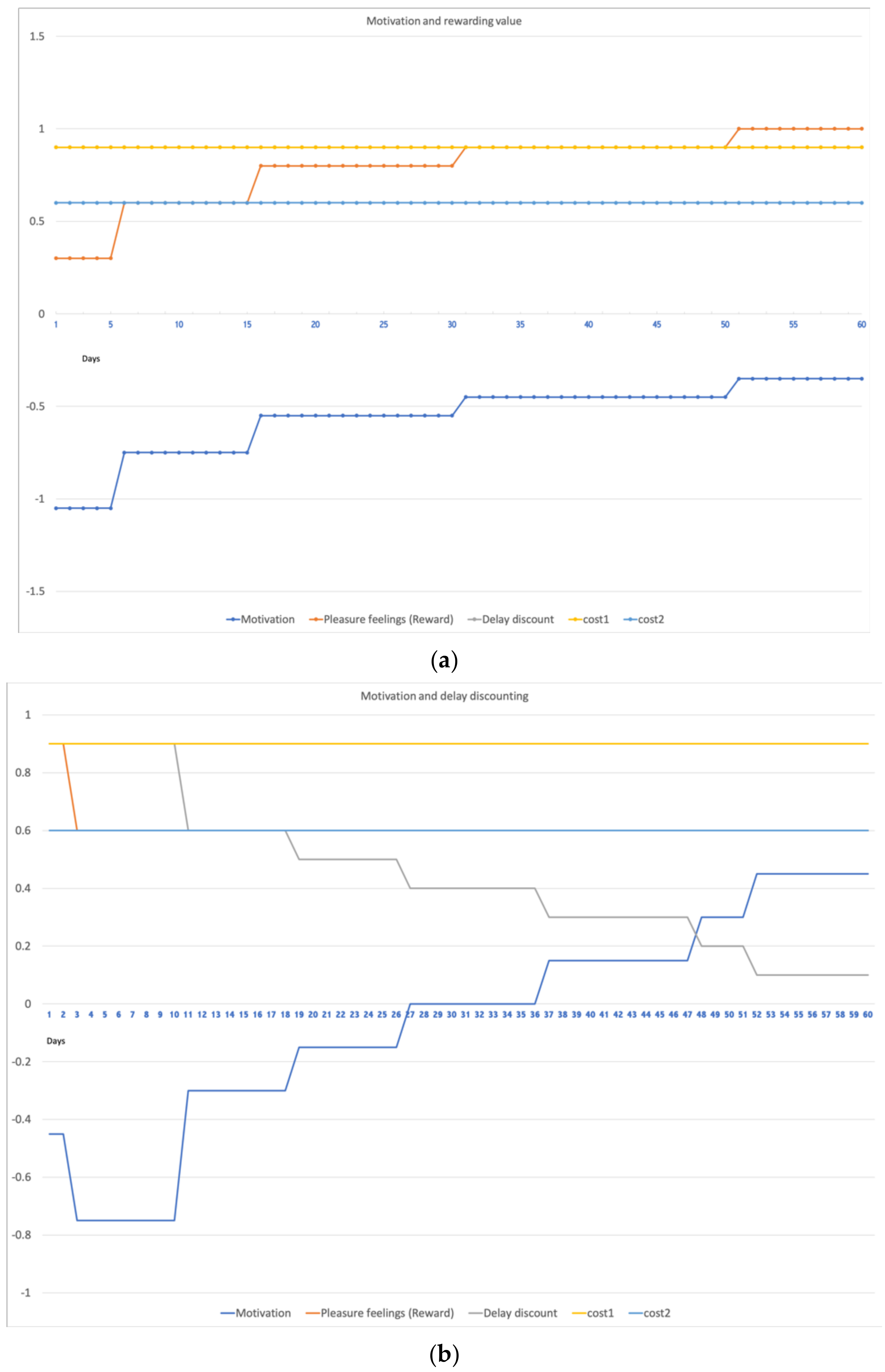
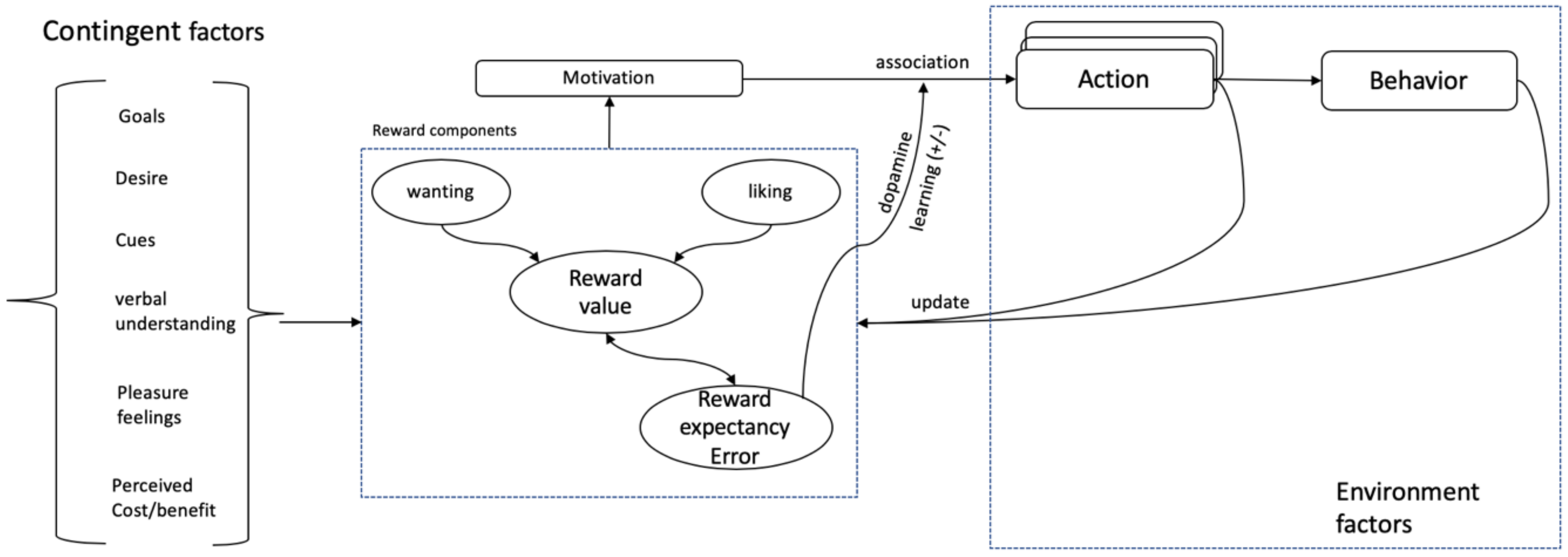
The pathway through which behavior change techniques have an effect on the behavior of an individual is referred to as the Mechanism of Action (MoA). Digitally enabled behavior change interventions could potentially benefit from explicitly modelling the MoA to achieve more effective, adaptive, and personalized interventions. For example, if ‘motivation’ is proposed as the targeted construct in any behavior change intervention, how can a model of this construct be used to act as a mechanism of action, mediating the intervention effect using various behavior change techniques? This article discusses a computational model for motivation based on the neural reward pathway with the aim to make it act as a mediator between behavior change techniques and target behavior. This model’s formal description and parametrization are described from a neurocomputational sciences prospect and elaborated with the help of a sub-question, i.e., what parameters/processes of the model are crucial for the generation and maintenance of motivation. An intervention scenario is simulated to show how an explicit model of ‘motivation’ and its parameters can be used to achieve personalization and adaptivity. A computational representation of motivation as a mechanism of action may also further advance the design, evaluation, and effectiveness of personalized and adaptive digital behavior change interventions.
Keywords: AI-powered behavioral change support systems; motivation; computational modeling; behavior change techniques; AI in health; pervasive health system AI-powered behavioral change support systems; motivation; computational modeling; behavior change techniques; AI in health; pervasive health system