Article

Study on the Behavior of the Water Temperature Inversion Layer in the Northern East China Sea


1
Maritime Security and Safety Research Center, Korea Institute of Ocean Science and Technology, Busan 49111, Korea
2
Marine Domain Management Research Division, Korea Institute of Ocean Science and Technology, Busan 49111, Korea
*
Author to whom correspondence should be addressed.
J. Mar. Sci. Eng. 2020, 8(3), 157; https://doi.org/10.3390/jmse8030157
Submission received: 28 January 2020 / Revised: 20 February 2020 / Accepted: 25 February 2020 / Published: 1 March 2020
(This article belongs to the Section Physical Oceanography)

Abstract

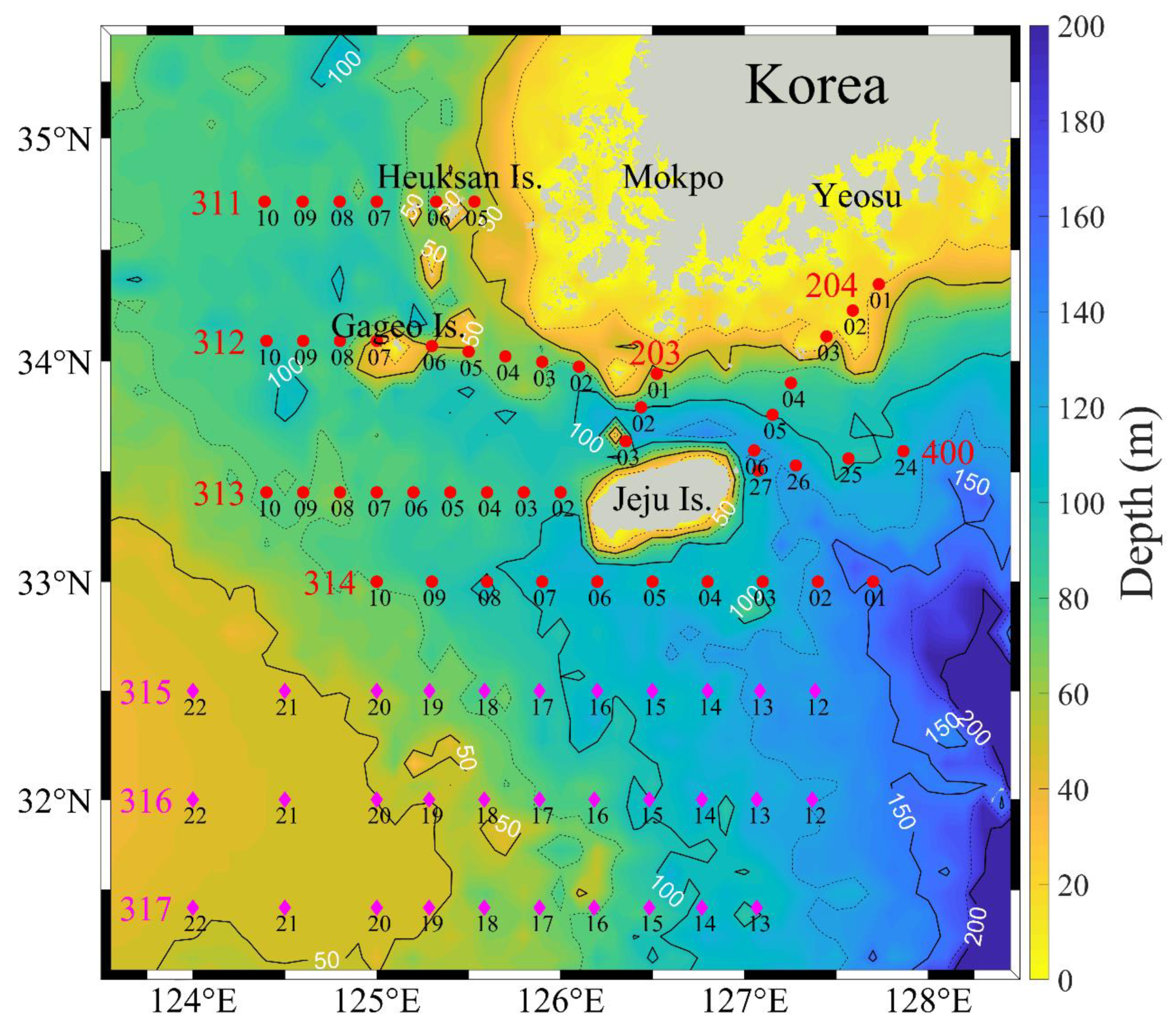
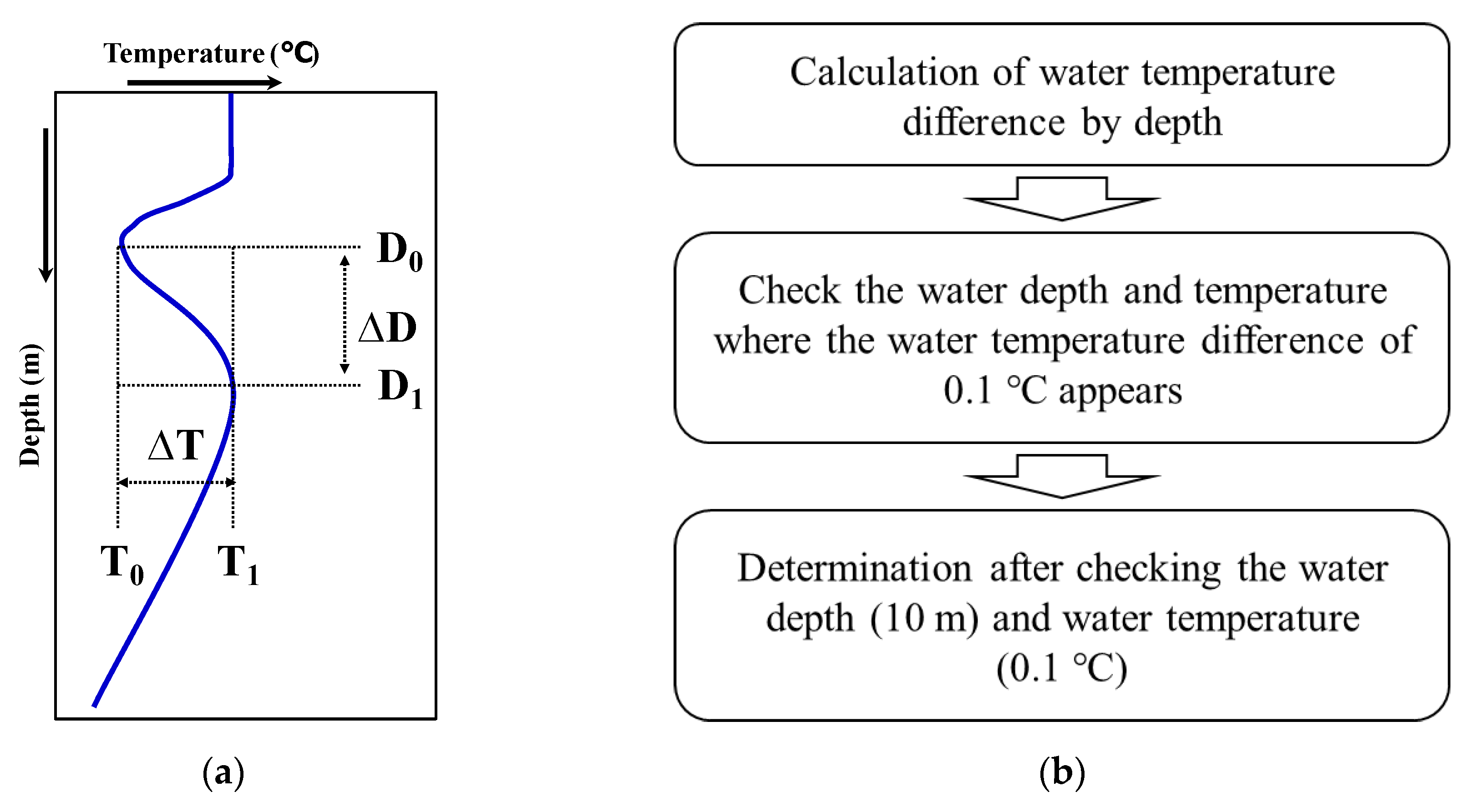
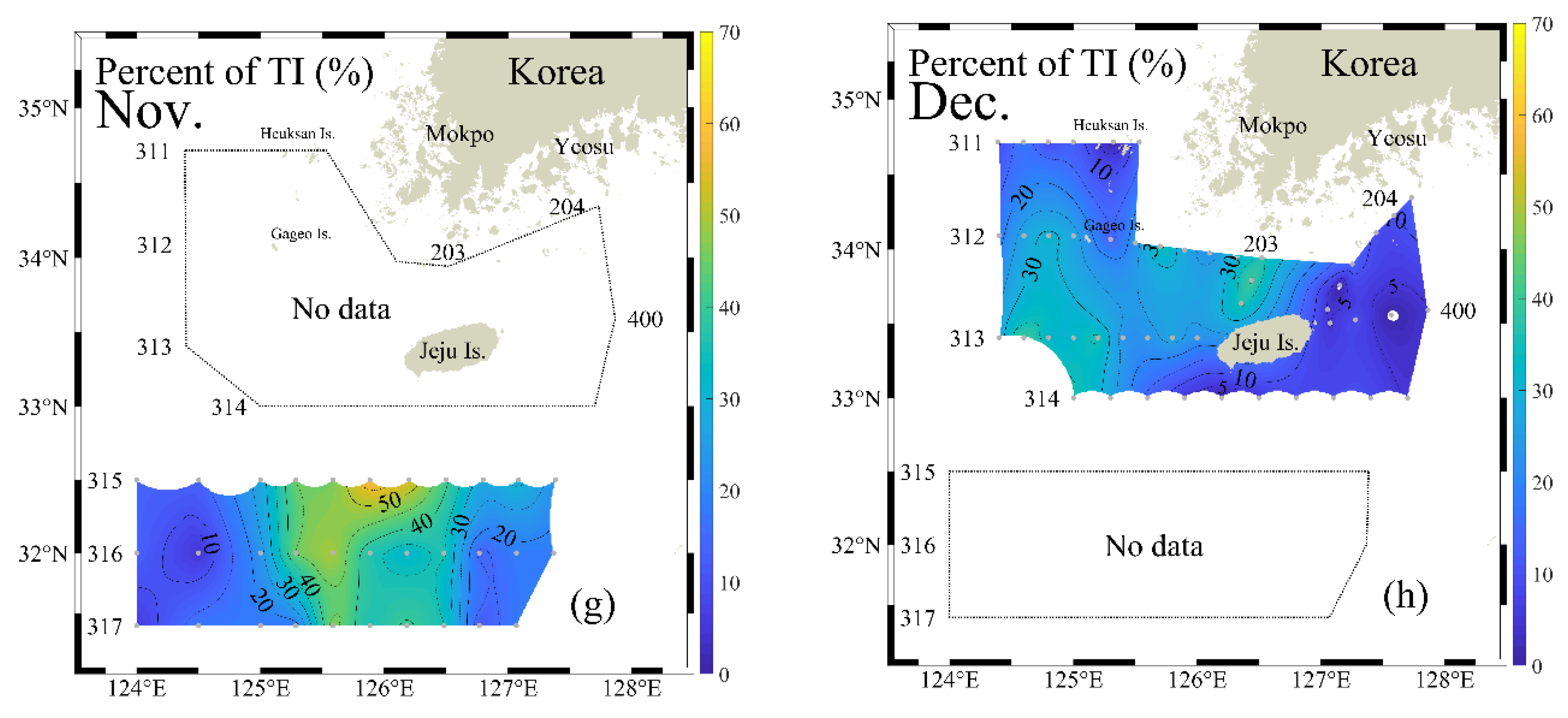
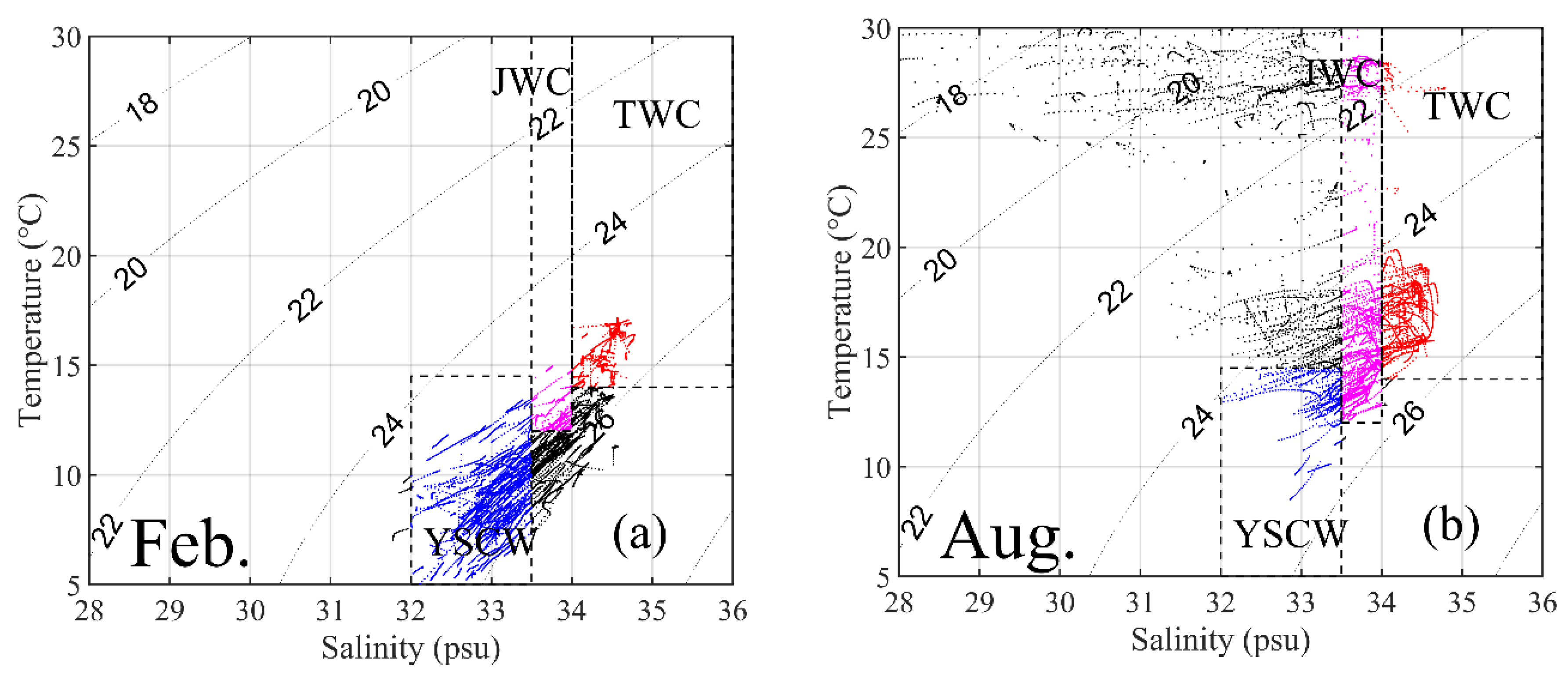
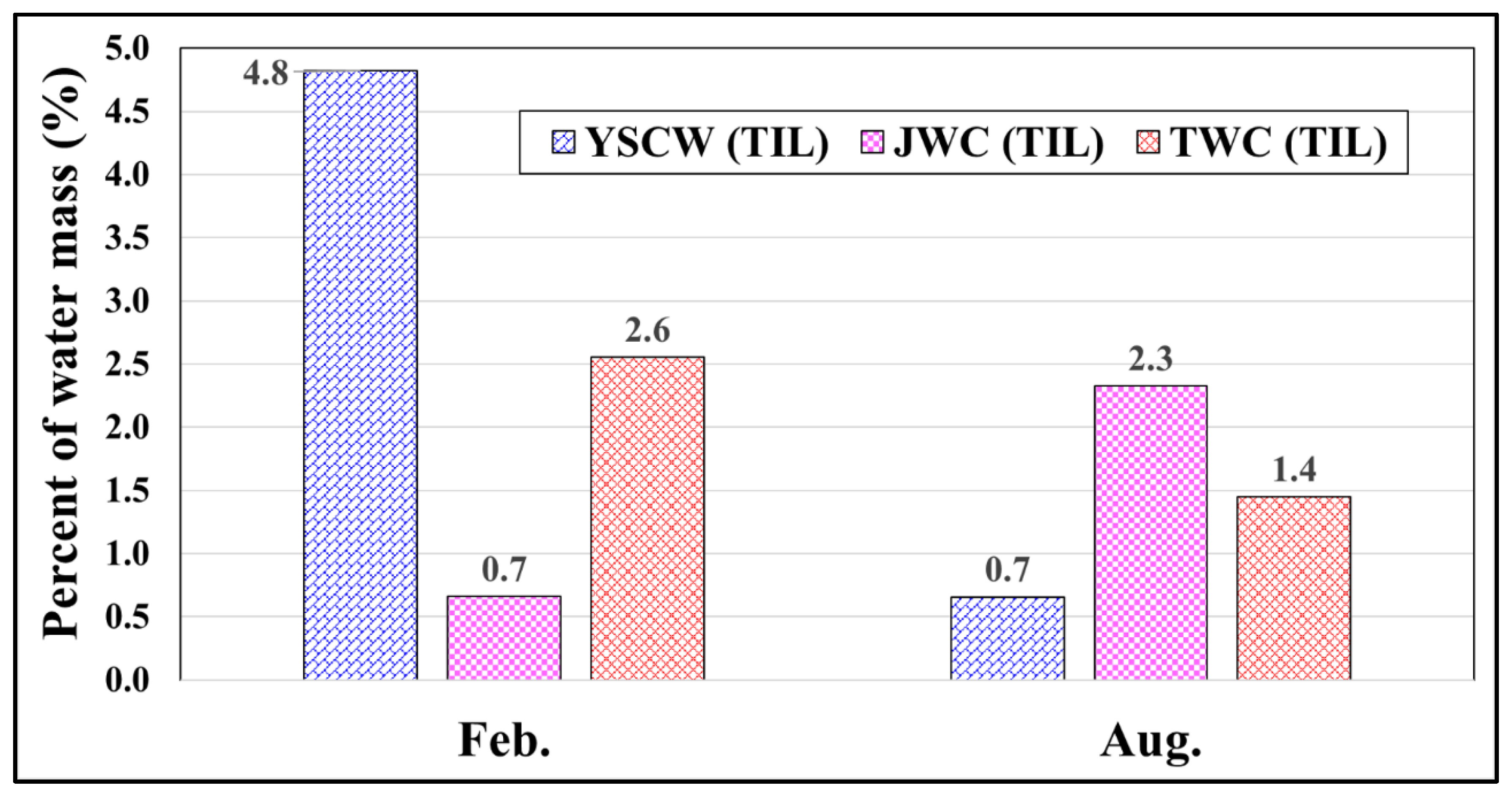
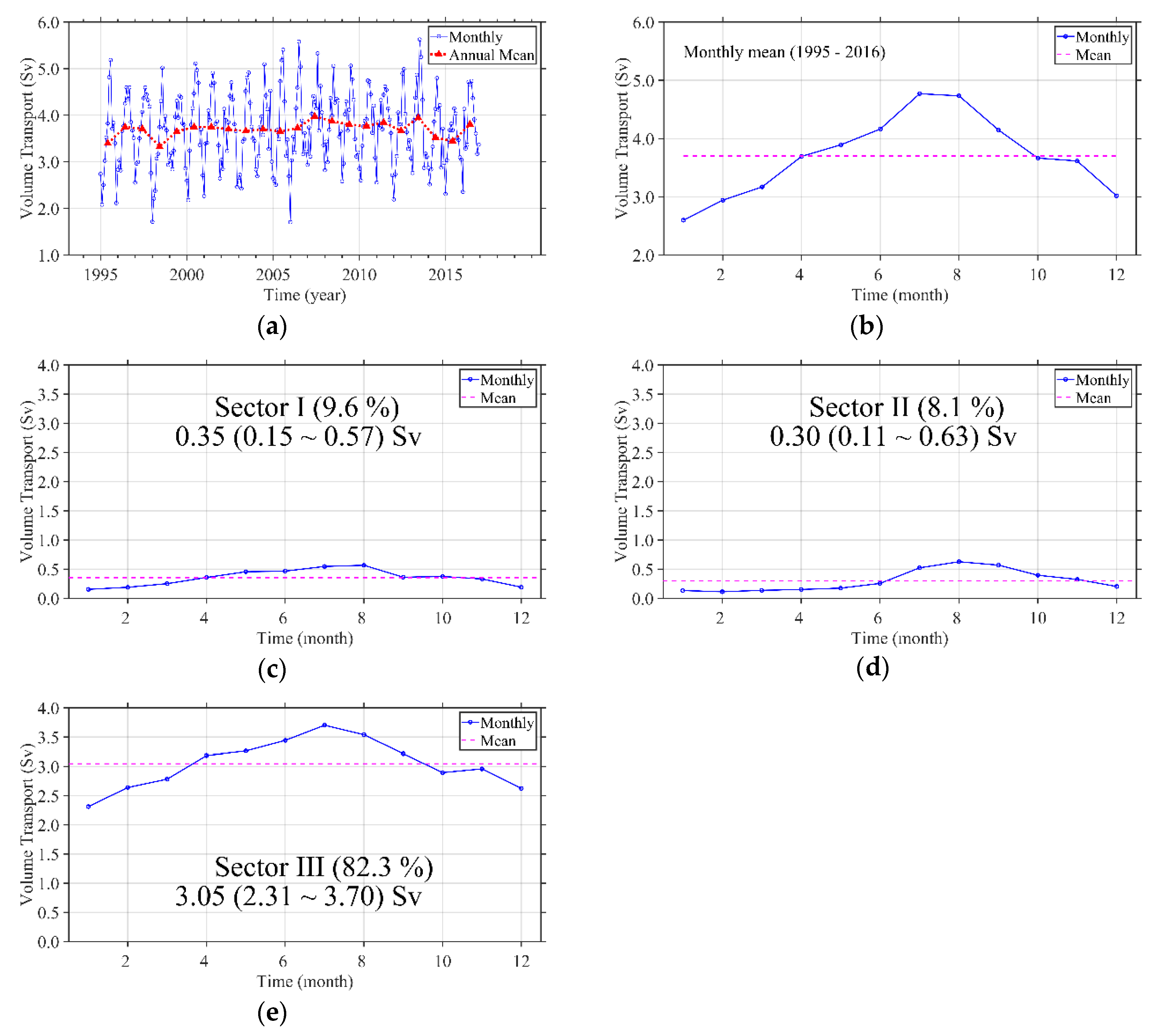
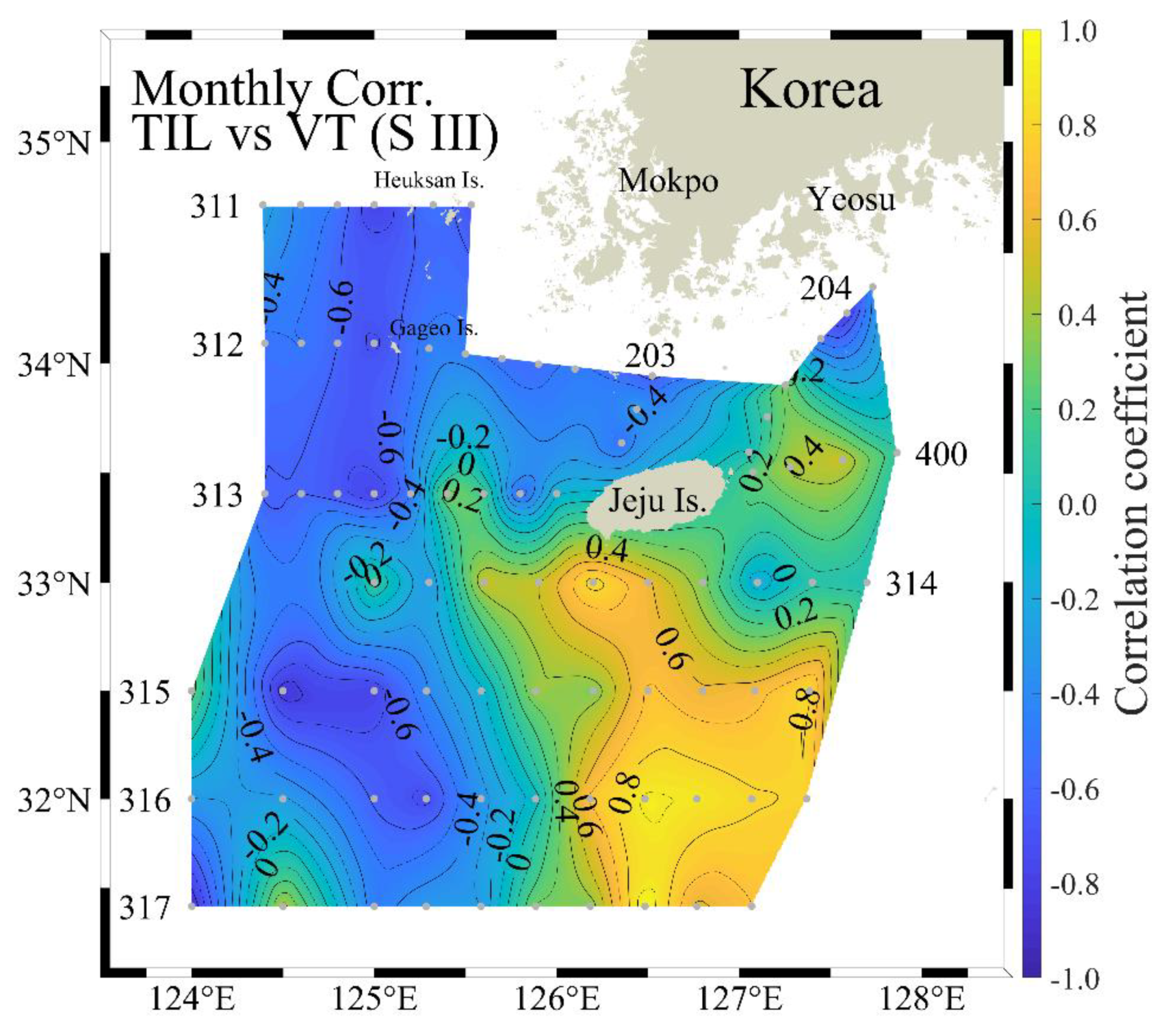
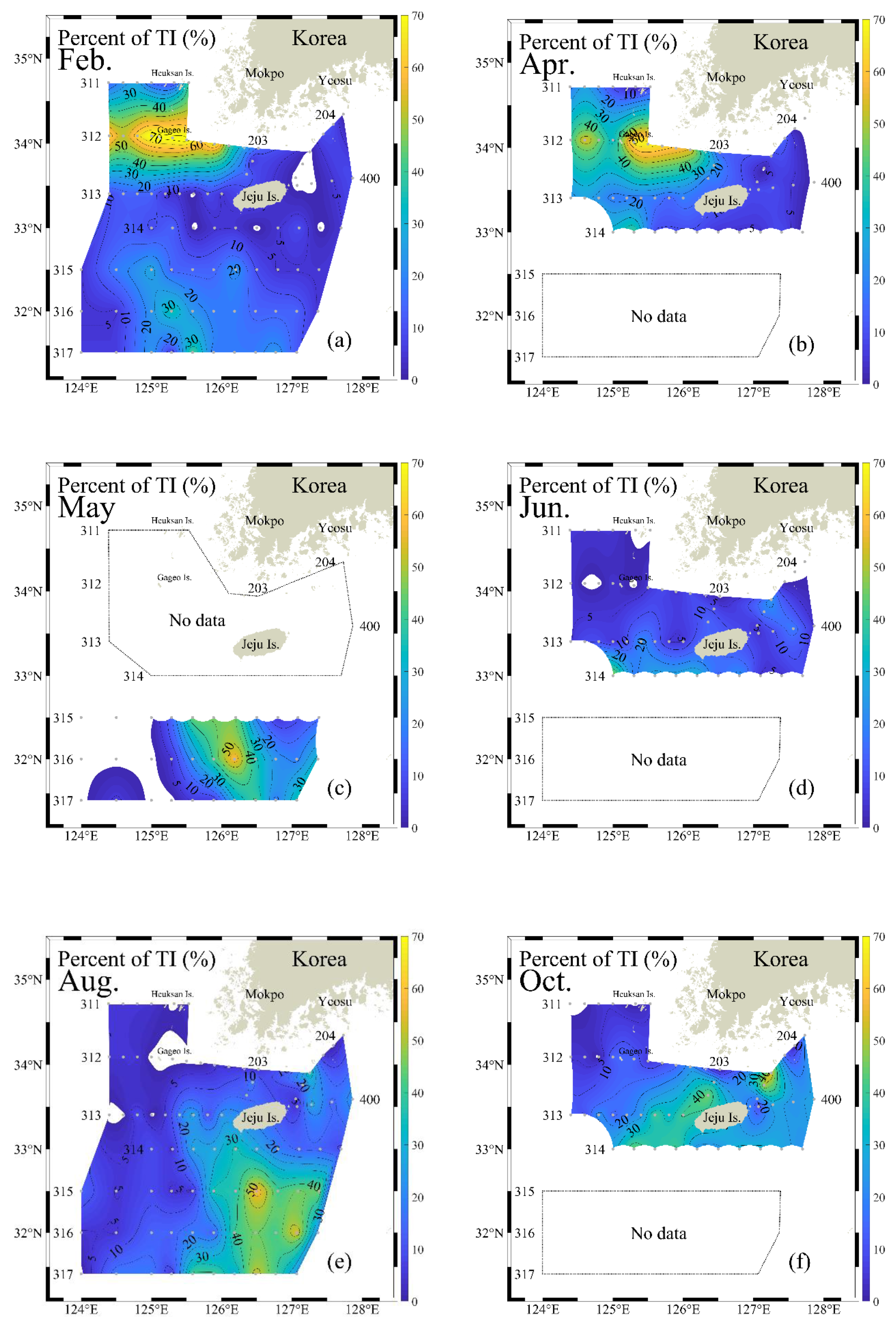
To investigate the behavioral characteristics of the water temperature inversion layer (TIL), we used data (KODC) from areas in the Northern East China Sea from 1995 to 2016. Water temperature and salinity surveys were conducted 8820 casts over 22 years. Of these, 1589 water temperature inversion layers were found, and the probability of occurrence was 18.0%. In the Gageo island, probability of TIL occurrence in winter was 25 times higher than in summer. On the other hand, in the south of Jeju Island, summer values were 3.7 times higher than winter values. A T–S diagram analysis shows the components of the water temperature inversion layers. Yellow Sea Cold Water was mainly found in the winter, while Jeju Warm Currents and Tsushima Warm Currents were found in summer. The correlation between the probability of the occurrence of a monthly water temperature inversion layer and the amount of seawater volume transported into the study area was analyzed. The correlation coefficient was higher than r = 0.8 in parts of southern Jeju Island. On the other hand, the correlation coefficient was r = −0.6 in the Gageo Island. The spatial correlation index for the seawater volume transport and the water temperature inversion layer is presented.
Keywords: water temperature inversion layer; Northern East China Sea; Tsushima Warm Current; volume transport; Jeju Island; Yellow Sea Cold Water; Jeju Warm Current water temperature inversion layer; Northern East China Sea; Tsushima Warm Current; volume transport; Jeju Island; Yellow Sea Cold Water; Jeju Warm Current