Article

Establishment of an Astronomical Time Scale and Discussion on the Sedimentary Origin of the Member 4 Glutenite, Paleogene Wenchang Formation, Enping 21 Sag, Zhu III Depression, Pearl River Mouth Basin, South China Sea


1
School of GeoSciences, Yangtze University, Wuhan 430100, China
2
Key Laboratory of Exploration Technologies for Oil and Resources, Ministry of Education, Yangtze University, Wuhan 430100, China
3
Shenzhen Branch, CNOOC China Limited, Shenzhen 518000, China
*
Author to whom correspondence should be addressed.
J. Mar. Sci. Eng. 2026, 14(9), 823; https://doi.org/10.3390/jmse14090823
Submission received: 28 March 2026 / Revised: 22 April 2026 / Accepted: 27 April 2026 / Published: 29 April 2026
(This article belongs to the Section Geological Oceanography)

Abstract

Coarse-grained clastic systems in rift basins are often considered unfavorable for preserving continuous astronomical records. This study investigates the thick conglomeratic succession in the upper Member 4 (43.90–44.73 Ma) of the Wenchang Formation in the Enping 21 sub-sag, Yangjiang East Sag, Zhu III Depression, Pearl River Mouth Basin. Integrating cyclostratigraphy, petrography, and seismic-logging analyses, we established a high-resolution astronomical timescale (43.90–44.73 Ma) covering approximately 828 kyr. Cyclostratigraphic results indicate a highly continuous depositional record with an optimal sedimentation rate of 19.55 cm/kyr. Petrographic and geochemical evidence—including low structural maturity, dominant igneous lithic fragments, and high detrital zircon Th/U ratios—reveals a proximal volcaniclastic source, characterizing the studied interval as tephroid successions. Anomalously high GR responses and chaotic seismic facies further distinguish this succession from conventional terrigenous deposits, linked to a nearby identified magmatic body. Our results suggest that rapid accumulation of volcaniclastic flows and ash fallout, driven by proximal magmatic activity, reduced hydrodynamic reworking and facilitated the preservation of astronomical signals. This study highlights that in active lacustrine rift basins, magmatic activity significantly dictates sedimentary infill patterns by providing rapid volcaniclastic input, thereby enabling the establishment of precise chronostratigraphic frameworks even within complex, coarse-grained depositional systems.

1. Introduction

As a key bridge connecting Earth’s orbital cycles with geological records, cyclostratigraphy has emerged as a fundamental approach for establishing high-precision geochronological frameworks and deciphering climate–sedimentary coupling processes [1,2]. Its theoretical foundation resides in the Milankovitch theory, which posits that periodic variations in Earth’s orbital parameters—namely eccentricity, obliquity, and precession—drive global glacial–interglacial cycles and sea (lake) level fluctuations by modulating the distribution of solar insolation on Earth’s surface [3]. Since the pioneering verification of orbital signals in deep-sea sediments, cyclostratigraphic methods have successfully expanded from marine successions to continental lacustrine basins [4,5,6,7,8,9].
With the innovation of signal processing algorithms, optimization methods such as TimeOpt have significantly improved the statistical efficacy of identifying astronomical cycles and optimizing sedimentation rates in deep-time successions by jointly evaluating eccentricity-related amplitude modulation and frequency. As an objective and robust time-series analysis tool in cyclostratigraphy, the effectiveness of the TimeOpt method has been widely validated. It has not only successfully verified previous astronomical interpretations of stratigraphic records but also accurately identified orbital forcing signals in multiple Phanerozoic successions [10,11]. In continental basins, it successfully extracted the 405-kyr long eccentricity cycle from the lacustrine fine-grained rocks of Member 4 of the Shahejie Formation in the Bohai Bay Basin, eastern China, using well logging data [12]; In marine environments, it provided a methodological paradigm for low-latitude paleoclimate research in the Oligocene–Miocene successions of the Qiongdongnan Basin [13]. Furthermore, this method possesses the capability to invert deep-time orbital parameters, such as reconstructing the precession constant over the past 60 Ma, providing geological evidence to constrain the evolution of the Earth–Moon system [14]. The AstroGeoFit method, based on a Bayesian framework [15] represents a cutting-edge technological approach combining global optimization and uncertainty quantification in cyclostratigraphy. Overcoming the limitations of traditional linear sedimentation rate assumptions, its core lies in integrating the global search capability of the Genetic Algorithm (GA) with the statistical inference of Markov Chain Monte Carlo (MCMC), aiming to provide an automated and probabilistic comprehensive solution for stratigraphic tuning. Through this dual mechanism, AstroGeoFit can accurately extract astronomical signals from successions with variable sedimentation rates or discontinuous records, dynamically capturing subtle fluctuations in sedimentation rates within the studied interval. This establishes a high-precision chronological framework with greater statistical robustness than traditional models. Advancements in research methodologies have made the extraction and validation of faint orbital signals in geological records more reliable.
Traditional cyclostratigraphic studies have mostly focused on continuous, fine-grained sedimentary successions (e.g., marine and deep-lake facies), as they are considered capable of recording low-frequency astronomical orbital signals more completely and continuously, demonstrating the control of astronomical forcing on sea-level changes and sandbody development in those regions [1]. Coarse-grained sedimentary systems, characterized by high sedimentation rates, rapid facies changes, and poor stratigraphic continuity, were historically deemed unlikely to preserve intact astronomical orbital records [16]. However, recent studies are challenging this perception. Romans et al. noted that intense astronomical climate forcing is sufficient to dominate the periodic supply of clastic material, thereby imprinting climatic signals within coarse-grained strata [17]. Milankovitch cycles have been successfully identified in the glutenite deposits of continental lacustrine basins, such as the Shahejie Formation in the Dongying Sag of the Bohai Bay Basin, confirming the control of astronomical orbital forcing over near-source coarse-grained sedimentary rhythms [18,19]. In lacustrine basin settings, astronomical orbital cycles control the progradation and retrogradation of coarse-grained sedimentary systems by modulating paleoclimatic changes, which in turn influence continental weathering intensity, runoff, and sediment supply rates [20]. These findings provide a vital theoretical basis for conducting cyclostratigraphic research in similar coarse-grained settings.
The Yangjiang East Sag, the main secondary tectonic unit of the Yangjiang Sag in the western Pearl River Mouth Basin, was in a continental rift lacustrine basin environment during the deposition of the Paleogene Wenchang Formation (approximately 47.8–43.9 Ma). This period corresponds to the intense rifting stage of the basin and the Paleogene extensional phase associated with the formation of lacustrine source rocks, characterized by highly frequent magmatic activities. Related studies have mostly focused on tectonic evolution [21,22]. sedimentary infill [23,24], and hydrocarbon accumulation [25,26]. Previous geochemical analyses of the Enping 21 Sag in the Yangjiang East Sag have revealed the existence of hydrothermal activities during the Wenchang period [27].
In this study, Member 4 of the Wenchang Formation in the Enping 21 Sag, Yangjiang East Sag, was selected as the research object. Using natural gamma-ray (GR) logging curves as the primary high-resolution stratigraphic response indicator, we integrated time-series analysis methods such as TimeOpt, COCO, and AstroGeoFit, combined with detrital zircon Th/U characteristics, thin section petrography, and well logging-seismic facies analyses. The objectives of this study are to: (1) identify and verify the astronomical orbital cycle signals preserved in the coarse-grained clastic strata; (2) establish an absolute astronomical timescale for the study area; and (3) clarify the sedimentary genesis of this coarse-grained succession.

2. Regional Geological Background

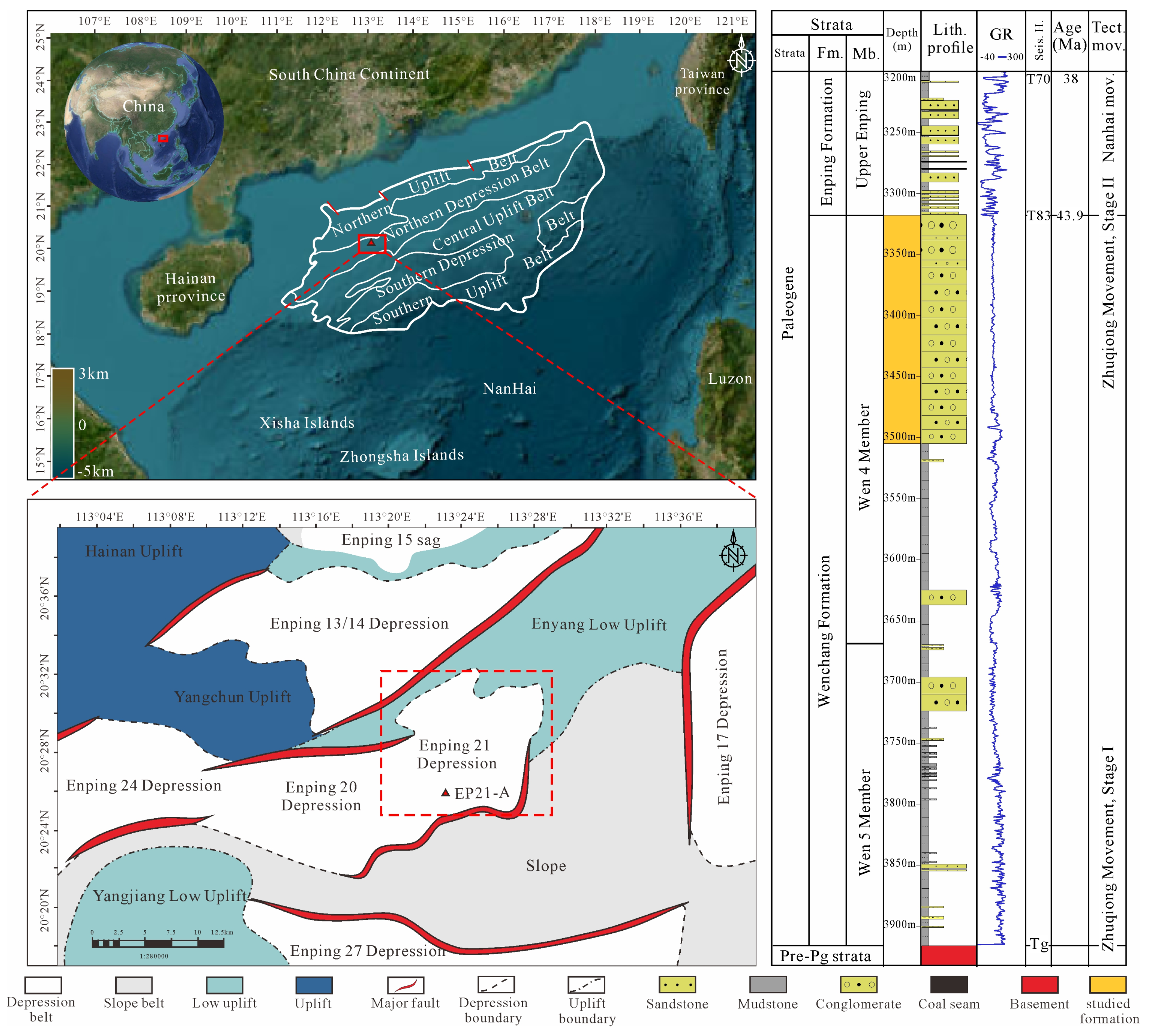
The Pearl River Mouth Basin (PRMB) is a large Cenozoic extensional rift basin developed on the northern continental margin of the South China Sea. Its formation and evolution are profoundly controlled by the interactions among the Eurasian, Pacific, and Indo-Australian plates, overall exhibiting a dual-layer structural characteristic of “lower rift and upper sag” [28]. The Yangjiang Sag is located in the structural transition zone between the Zhu I and Zhu III depressions, serving as a key pivot connecting the eastern and western sedimentary systems [29]. As the primary secondary structural unit of the Yangjiang Sag, the Yangjiang East Sag consists of a series of en-echelon half-graben sags, including the Yangjiang 24, Enping 20, and Enping 21 sags [30]. The Enping 21 Sag, located in the central–eastern part of the Yangjiang East Sag (Figure 1), is a typical hydrocarbon-rich sag in this region. During the deposition of the Wenchang Formation (47.8 Ma–43.9 Ma), it was primarily influenced by the intense extensional rifting of Phase I of the Zhu-Qiong Movement, characterized by differential basement subsidence and active faulting [31]. Driven by the combined effects of the attitude transition of sag-controlling faults and deep magmatic underplating, the internal structure of the Yangjiang East Sag exhibits significant east–west differentiation. The central–eastern sags, including the Enping 21 Sag, mostly developed as “dual-fault” complex half-graben structures or “south-fault, north-overlap” asymmetric structures [21,22]. This tectonic extensional activity directly constrained the syn-depositional filling processes.
The Cenozoic stratigraphic sequence of the Yangjiang East Sag is completely developed, classified from bottom to top as the Paleocene Shenhu Formation, the Eocene Wenchang and Enping Formations, the Oligocene Zhuhai Formation, and Neogene strata [23]. In the Enping 21 Sag of the Yangjiang East Sag, the Eocene Wenchang Formation is subdivided from bottom to top into Member 6, Member 5, and Member 4. The top interface of the Member 4 under study is the T83 seismic interface, with an interface age of 43.9 Ma [32], coinciding with the critical structural transition stage as the basin shifted from the rift stage to the sag stage.

3. Data and Methods

3.1. Time-Series Analysis Methods

To determine whether continuous astronomical orbital cycle records are preserved within the upper glutenites of Member 4 and to further evaluate their depositional continuity, cyclostratigraphic analyses were conducted using the Acycle software (V2.8) [16] and the ‘astrochron’ R package (v1.5) [10].
(1) Data preprocessing and spectral identification: Natural gamma-ray (GR) logging data, which is highly sensitive to variations in lithology and depositional environments, was selected as the primary proxy [33]. The GR data sequence from the upper Member 4 glutenite interval (3318–3479.9 m) of the target Well EP21-A in the Enping 21 Sag was processed by removing anomalous values, followed by equal-interval interpolation. The locally weighted scatterplot smoothing (LOWESS) method was applied to remove long-term background trends and highlight orbital-scale fluctuations [34]. Subsequently, the 2π Multi-Taper Method (MTM) was employed for spectral analysis [35], coupled with a robust red-noise background model to identify statistically significant spectral peaks [36,37]. This allowed for the preliminary identification of potential dominant Milankovitch cycle signals. Additionally, the evolutionary Fast Fourier Transform (eFFT) was utilized to evaluate the stability and variation trends of sedimentation rates in the depth domain.
(2) Sedimentation rate evaluation and continuity verification: To quantitatively constrain the optimal sedimentation rate range and rigorously test the depositional continuity of the strata, three optimization algorithms were jointly applied. First, the Correlation Coefficient (COCO) and evolutionary Correlation Coefficient (eCOCO) methods were utilized to preliminarily assess the match between the sedimentary records and theoretical astronomical cycles, thereby estimating the sedimentation rate range [38]. Next, the TimeOpt method served as the core testing tool to objectively optimize the sedimentation rate model by evaluating the amplitude modulation of the precession signal against theoretical eccentricity [14]. Finally, the AstroGeoFit algorithm, based on a Bayesian statistical framework, was introduced for variable sedimentation rate inversion [12] to quantify the uncertainties of the tuning results, aiming to objectively demonstrate the temporal continuity of this stratigraphic interval.
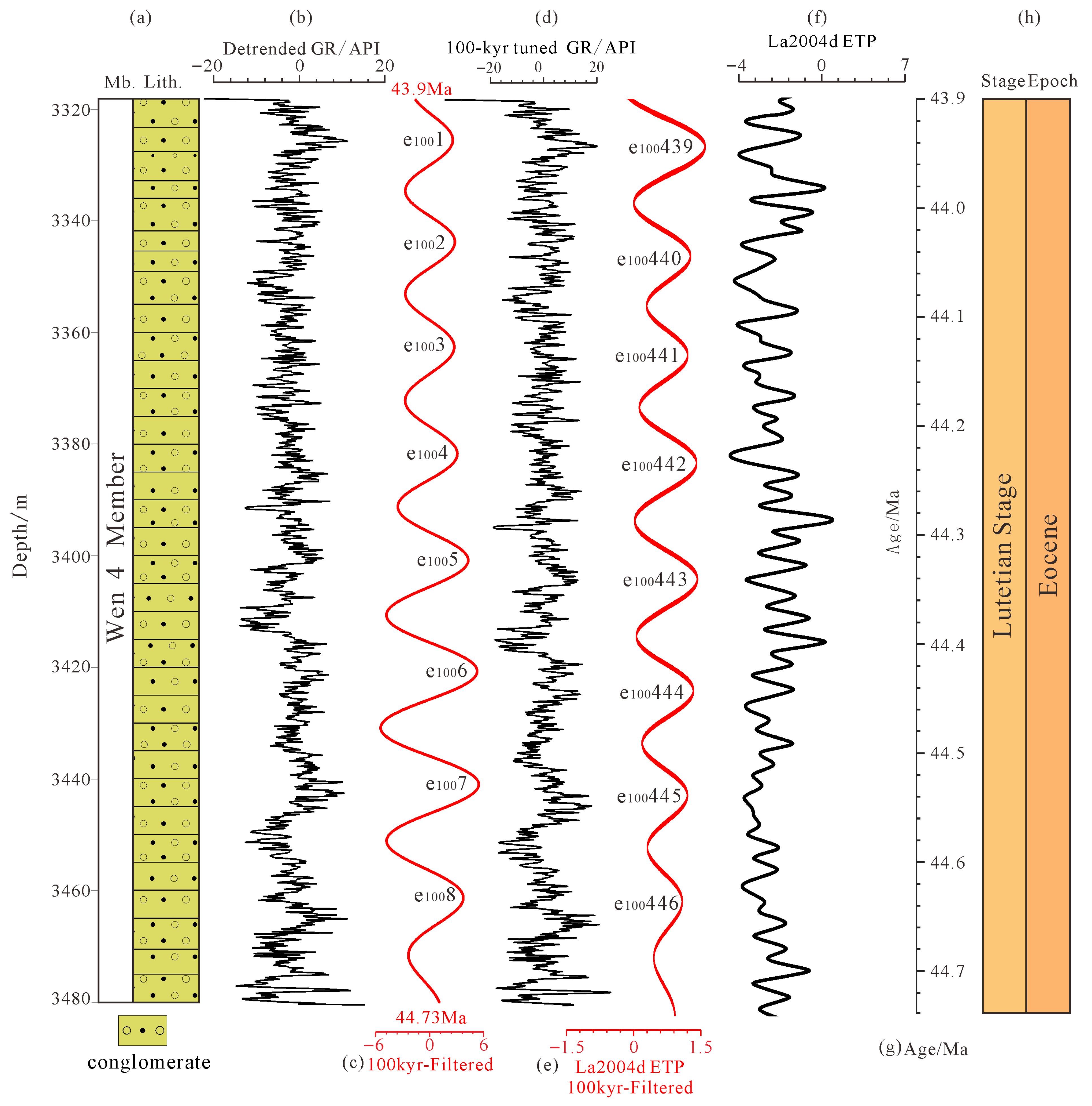
(3) Establishment of an absolute astronomical timescale: Based on the optimal sedimentation rate determined by the aforementioned algorithms, a Gaussian band-pass filter was applied to extract the eccentricity cycles to construct an age model [39]. The filtered stratigraphic cycle curves were then tuned to the theoretical astronomical orbital solutions of La2004d. Using the regional T83 seismic reflection interface (with an age of 43.9 Ma) as the absolute age anchor, a high-resolution absolute astronomical timescale was established.

3.2. Sedimentary Genesis Analysis Methods

To interpret the sedimentary genesis based on the temporal continuity characteristics of the glutenite strata revealed by the time-series analysis, the following analytical procedures were conducted:
(1) Analysis of depositional continuity and hiatuses: Based on the results of the time-series analysis, the continuity of the studied interval was evaluated. The smoothness of the established time–depth relationship was examined, and potential depositional hiatuses were identified. These temporal constraints were used to evaluate the depositional process and genetic background of the glutenites from the perspective of temporal continuity.
(2) Analysis of rock texture and composition: Systematic identification and microscopic observation were conducted on clastic thin-section samples from the 3318–3479.9 m interval in Well EP21-A. The detrital compositions were quantitatively determined using the standard Gazzi-Dickinson point-counting method. Rock textural features, including grain size and sorting, were evaluated through microscopic image analysis in conjunction with standard visual estimation charts, based on the wide grain-size distribution observed in the thin sections, ranging from the tuffaceous matrix (<0.03 mm) to coarse clasts (>20 mm), the sorting coefficient was estimated. We supplemented the petrographic analysis with X-ray diffraction (D8 Advance, Bruker, Karlsruhe, Germany) and scanning electron microscopy (FEI Quanta 450, Thermo Fisher Scientific, Waltham, MA, USA). Specifically, microscopic textural features and microstructures related to volcanic materials were identified to characterize the petrological features of the glutenite succession.
(3) Analysis of geochemical characteristics: Elemental analyses were conducted on detrital zircons extracted from the 3318–3479.9 m interval using LA-ICP-MS (Agilent 7900, Agilent Technologies, Santa Clara, CA, USA) (Laser Ablation Inductively Coupled Plasma Mass Spectrometry). Based on the Th/U ratios, statistical analyses were performed to classify the genetic types of the zircons. Compared to bulk-rock geochemical analysis, this study prioritized detrital zircon geochemical analysis to avoid potential interference from tuffaceous matrix alteration on chemical signals, thereby ensuring the accuracy of provenance interpretation.
(4) Analysis of geophysical responses: For well logging responses, natural gamma-ray (GR), acoustic transit time (DT), and density (DEN) were extracted from the target interval. Cross-plots (DT vs. DEN and DT vs. GR) were employed to identify the logging data characteristics. Additionally, the maximum, minimum, and mean GR values of the upper Member 4 glutenites were statistically compared with those of normal sedimentary glutenite strata. Regarding seismic responses, internal reflection architectures and interface characteristics were identified from seismic profiles passing through Well EP21-A. The spatial configuration of magmatic bodies or low uplifts nearby was also analyzed to identify potential source-to-sink connections.

4. Results

4.1. Results of Time-Series Analysis

4.1.1. Spectral Analysis

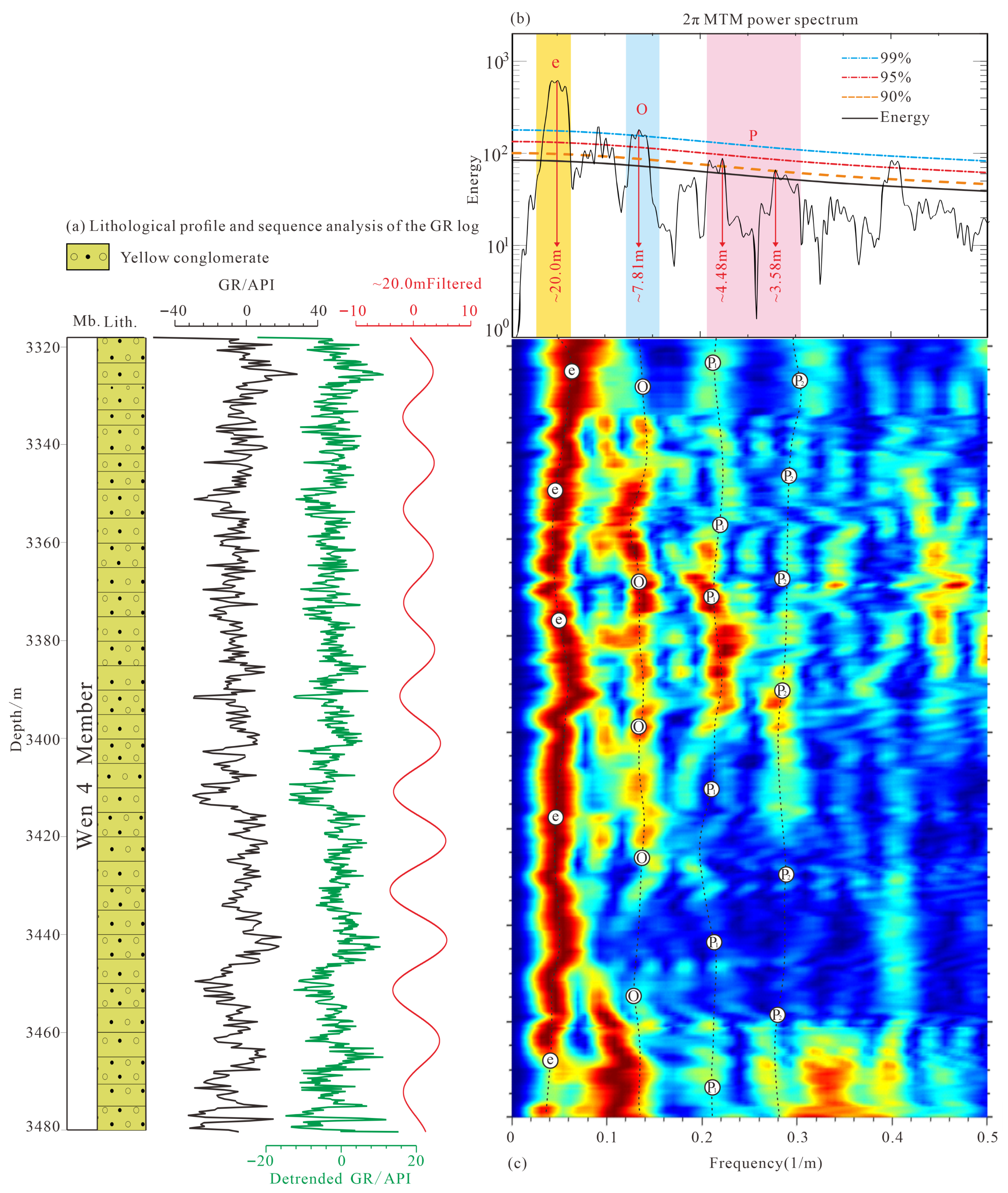
For the 161.9-m-thick GR data sequence from Well EP21-A, a locally weighted scatterplot smoothing (LOWESS) method with a window size of 48.63 m was applied to remove the long-term background trend interference (Figure 2a). Subsequently, a 2π Multi-Taper Method (MTM) spectral analysis was performed. The results reveal the presence of multiple significant spectral peaks above the 95% to 99% confidence levels (Figure 2b). Among these, the dominant identified sedimentary cycle thicknesses are 20.0 m, 7.81 m, 4.48 m, and 3.58 m. The spatial proportionality of this set of cycle thicknesses is approximately 5:1.95:1.12:0.89. This ratio is strikingly similar to the theoretical temporal proportionality (approximately 5:2:1:0.95) of the short eccentricity (~100 kyr), obliquity (~40 kyr), and precession (~23 kyr, ~19 kyr) periods provided by the La04 astronomical solution of Laskar et al. (2004) [39]. These initial findings were further validated by subsequent COCO, TimeOpt, and AstroGeoFit analyses.
The evolutionary spectral analysis using the sliding Fast Fourier Transform (eFFT) (Figure 2c) demonstrates that the 20.0-m-thick cycle, corresponding to the 100-kyr short eccentricity period, exhibits continuous and high-energy characteristics vertically throughout the section. In contrast, the obliquity and precession signals display a more discontinuous distribution pattern.

4.1.2. Sedimentation Rate Analysis

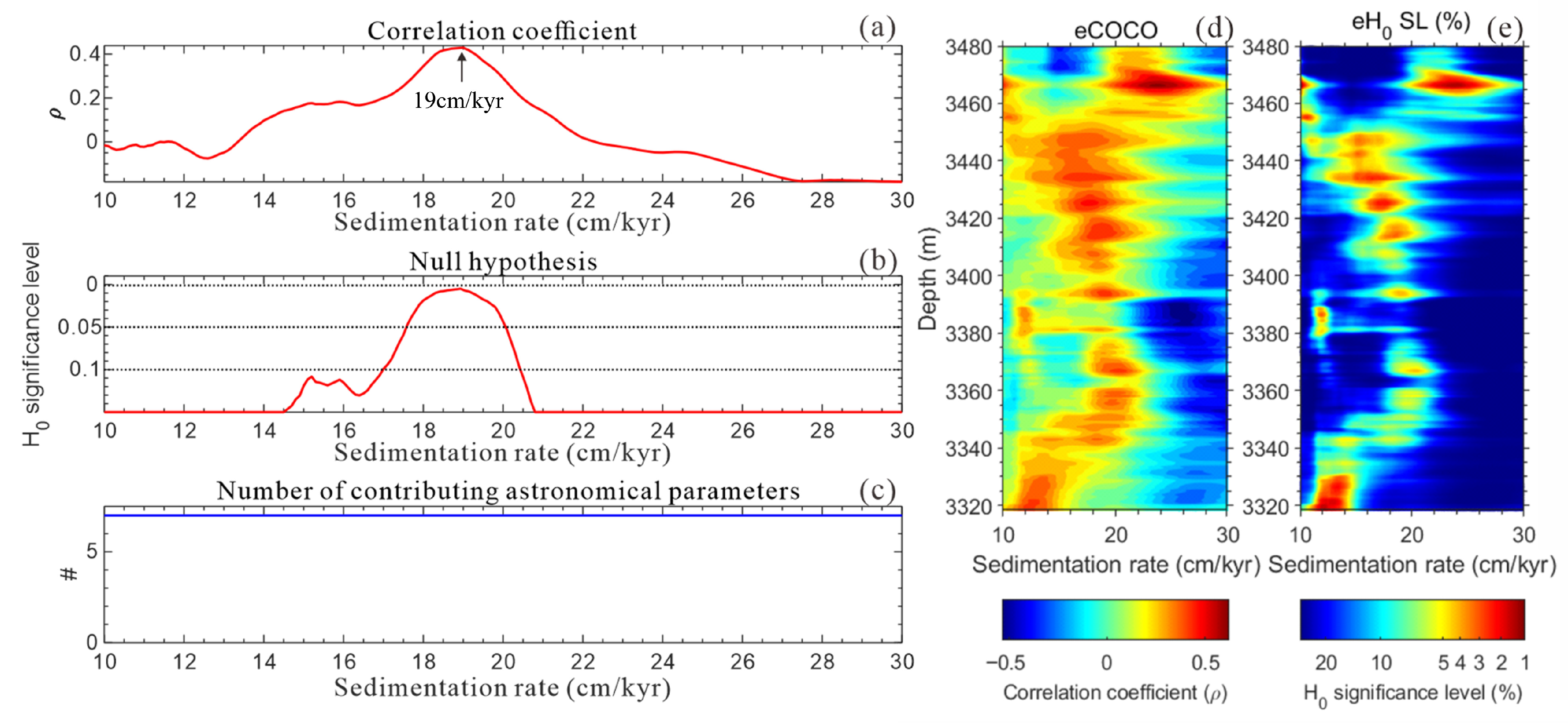
The correlation coefficient (COCO) and evolutionary correlation coefficient (eCOCO) methods were applied to the gamma-ray (GR) dataset to constrain sedimentation rates. Using a step size of 0.1 cm/kyr and 5000 Monte Carlo simulations, the correlation coefficient (ρ), reaches a maximum at a sedimentation rate of 19.0 cm/kyr, representing the similarity between observed sedimentary cycles and theoretical orbital periods, while the H0 significance level is well below 0.01 (Figure 3a,b), indicating an excellent correspondence between observed cycle thicknesses and theoretical orbital periods. In addition, the eCOCO evolutionary spectra (Figure 3d,e) suggest relatively stable sedimentation rates throughout the interval, preliminarily constraining the sedimentation rate to a range of 15–22 cm/kyr.
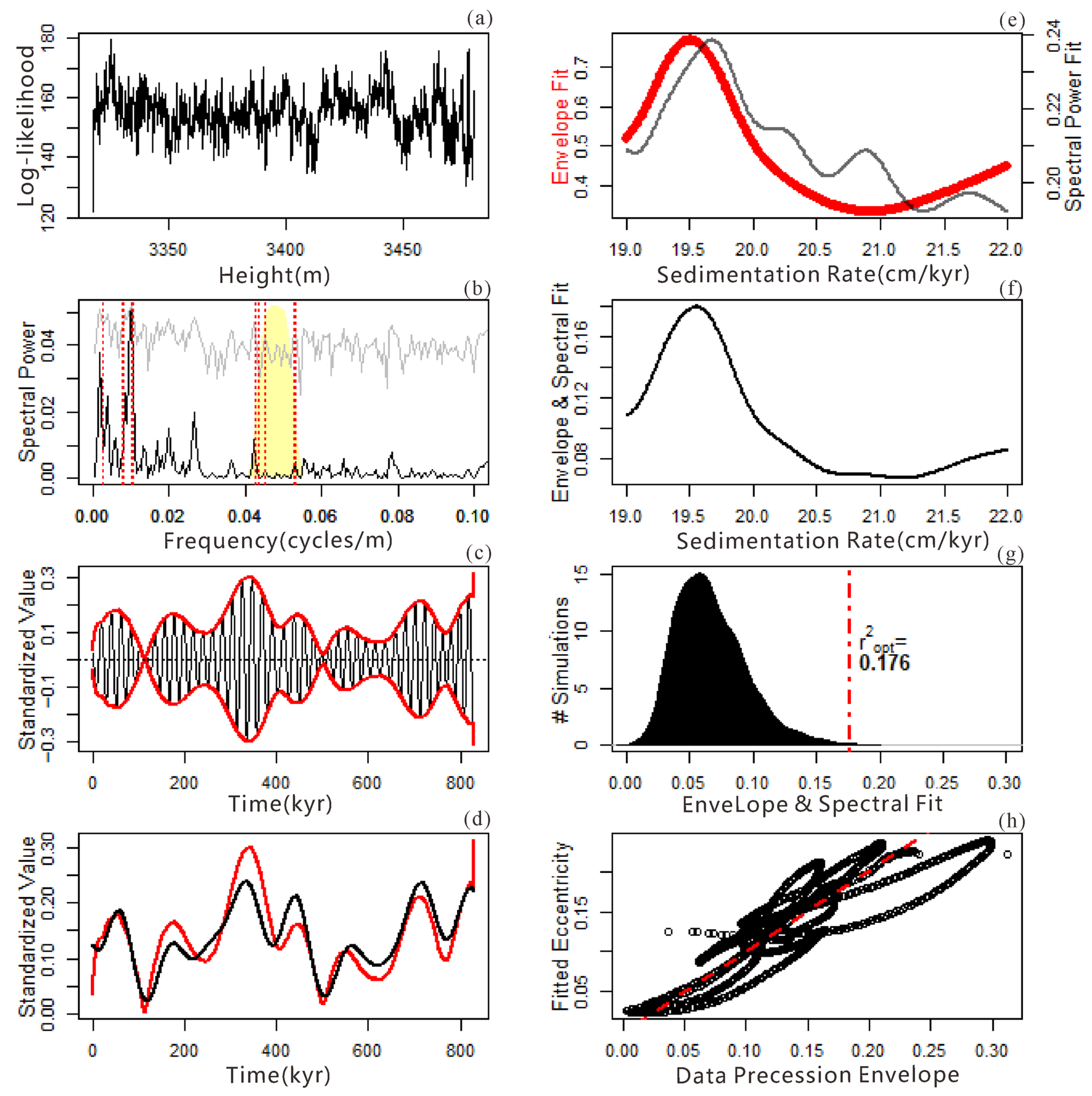
Based on this interval, TimeOpt was employed for further optimization. The results indicate that the optimal sedimentation rate is 19.55 cm/kyr, at which the combined goodness-of-fit between the amplitude envelope and spectral power reaches a maximum (Figure 4c,d). The joint fitting metric (r2opt) attains a peak value of 0.176 (Figure 4f,g). Statistical testing based on 5000 simulations using an AR1 red-noise model yields a significance level of p = 0.005 (Figure 4g), effectively excluding random noise and demonstrating a high level of confidence in the result. At the optimal sedimentation rate of 19.55 cm/kyr, the extracted stratigraphic cycle thicknesses correspond closely to theoretical orbital periodicities: a thickness of 79.2 m corresponds to the 405 kyr long eccentricity cycle, 19.6 m to the 100 kyr short eccentricity cycle, ~7.9 m to the 40.5 kyr obliquity cycle, and 3.7–4.6 m to the ~19–23.7 kyr precession cycle (Figure 4b).
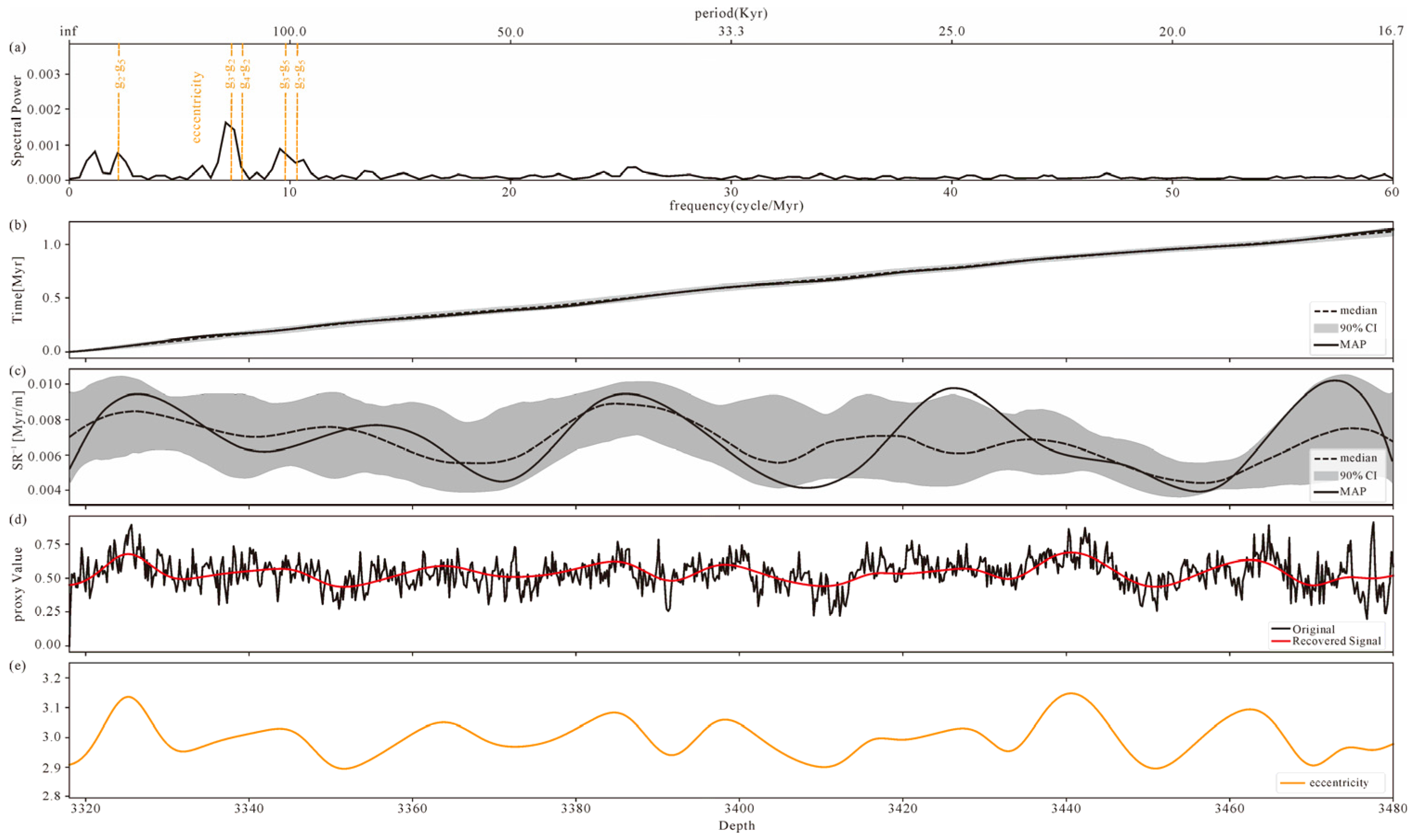
The AstroGeoFit inversion further identifies a complete set of astronomical parameters within the conglomeratic interval from 3318 m to 3479.9 m (Figure 5a), and clearly extracts the ~100 kyr short eccentricity signal (Figure 5d,e). The inverse sedimentation rate (SR-1) curve for the 161.9 m-thick upper Member 4 interval fluctuates between 0.0045 and 0.0085 Myr/m (Figure 5c), corresponding to sedimentation rates of 11.76–22.22 cm/kyr. Notably, no stepwise abrupt changes associated with stratigraphic gaps are identified, indicating that the model is not affected by artificial peak responses typically produced when compensating for missing strata.

4.1.3. Establishment of the Absolute Astronomical Timescalel

The regional marker bed corresponding to the T83 seismic reflector, which defines the upper boundary of Member 4 of the Wenchang Formation, was used as the absolute age anchor, with an assigned age of 43.9 Ma. Phase tuning was then carried out downward from this boundary. Because the total duration of the studied interval is insufficient to fully record multiple 405 kyr long-eccentricity cycles, whereas the 100 kyr short-eccentricity cycle is the most continuous and readily identifiable signal within the interval and is stably modulated by the 405 kyr long-eccentricity cycle, the 100 kyr eccentricity-filtered curve was selected as the tuning target. After converting the depth domain into the time domain, the 161.9 m-thick conglomeratic interval is shown to record approximately eight complete 100 kyr short-eccentricity cycles (Figure 6c). The resulting chronology indicates that deposition of this interval occurred between 43.90 and 44.73 Ma, with a total duration of approximately 828 kyr, corresponding to the Lutetian Stage of the middle Eocene.

4.2. Sedimentary Origin Analysis of the Upper Member 4 Conglomerates

4.2.1. Stratigraphic Continuity

The time–depth model derived from variable sedimentation rate inversion using the AstroGeoFit algorithm exhibits an extremely smooth and near-linear trend (Figure 5b). Within the defined confidence interval, no stepwise abrupt changes—indicative of significant loss of astronomical signals—are identified in either the 828 kyr time domain or the 161.9 m depth domain. This suggests that no major depositional hiatuses occurred within the conglomeratic interval between 3318 and 3479.9 m in the upper Member 4, indicating a high degree of stratigraphic continuity.

4.2.2. Rock Texture and Compositional Characteristics

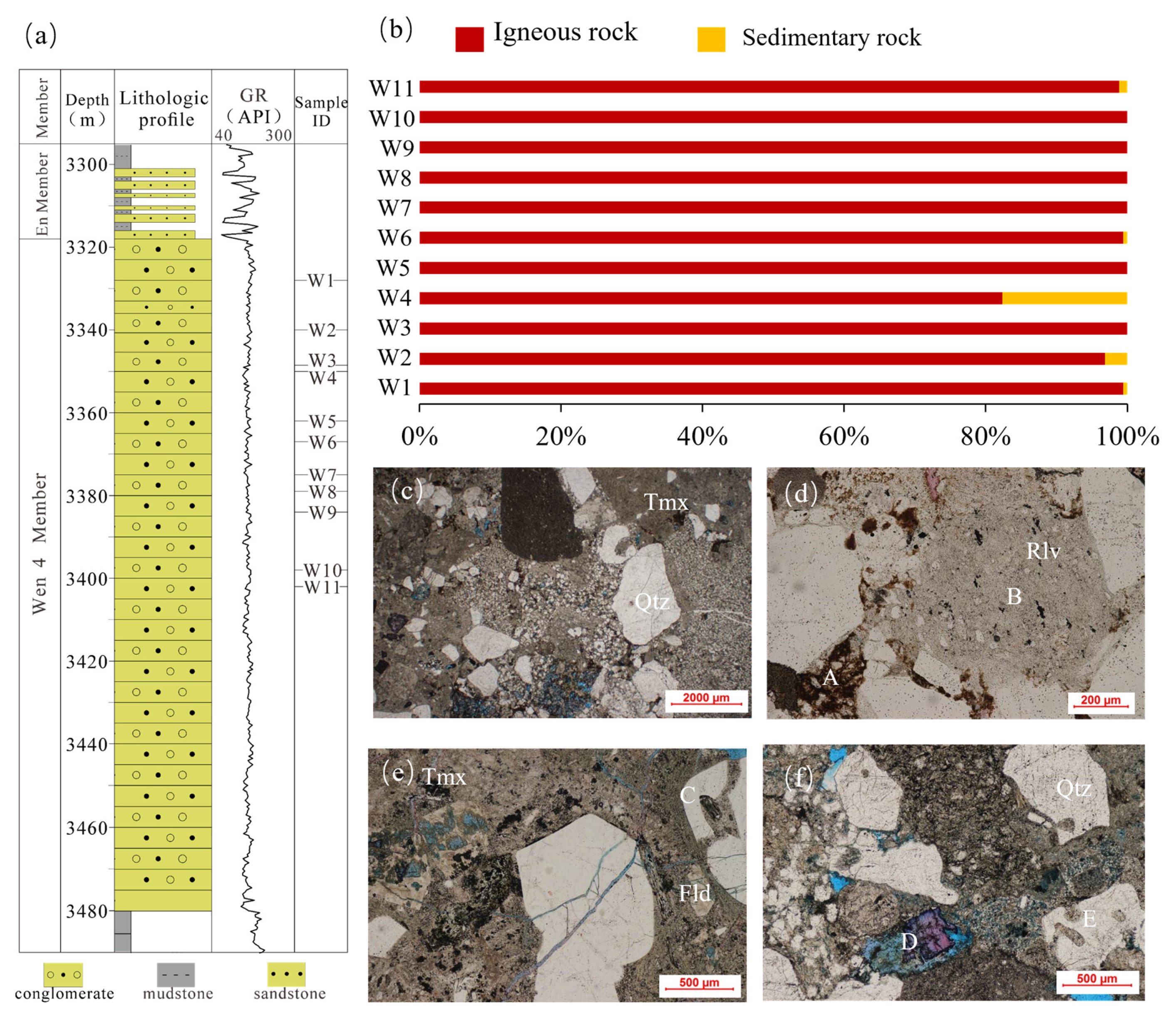
Petrographic analysis of thin sections (Table 1) indicates that the studied interval is predominantly composed of conglomerates and sandy conglomerates. These rocks are characterized by coarse grain size, poor sorting, and predominantly sub-angular clast shapes (Figure 7c). The sorting of the glutenites was determined via semi-quantitative visual estimation by comparing microscopic images with standard sorting charts. Microscopic observations and statistical analyses show that the dominant grain size is approximately 2 mm, with maximum grain sizes ranging from 3.2 to 25 mm. Clast composition statistics reveal that igneous lithic fragments dominate, with contents ranging from 68.6% to 100% and an average of approximately 86.6%, primarily consisting of volcanic (extrusive) rocks (Figure 7b). Quartz content varies from 0% to 20.6%, with an average of 8.5%, while feldspar and sedimentary rock fragments are present in minor amounts, ranging from 0.4% to 2.0% and 0.5% to 14.7%, respectively. The matrix is predominantly composed of tuffaceous material, with contents ranging from 0% to 2.9% and an average of 1.1%. Thin-section observations further show that rhyolitic lithic fragments are widely developed within the samples (Figure 7c,d). In addition, intergranular dissolution pores formed by tuffaceous alteration and shrinkage are observed (Figure 7d), along with embayed quartz phenocrysts (Figure 7e,f), indicating strong volcanic influence during deposition.

4.2.3. Detrital Zircon Th/U Geochemical Characteristics

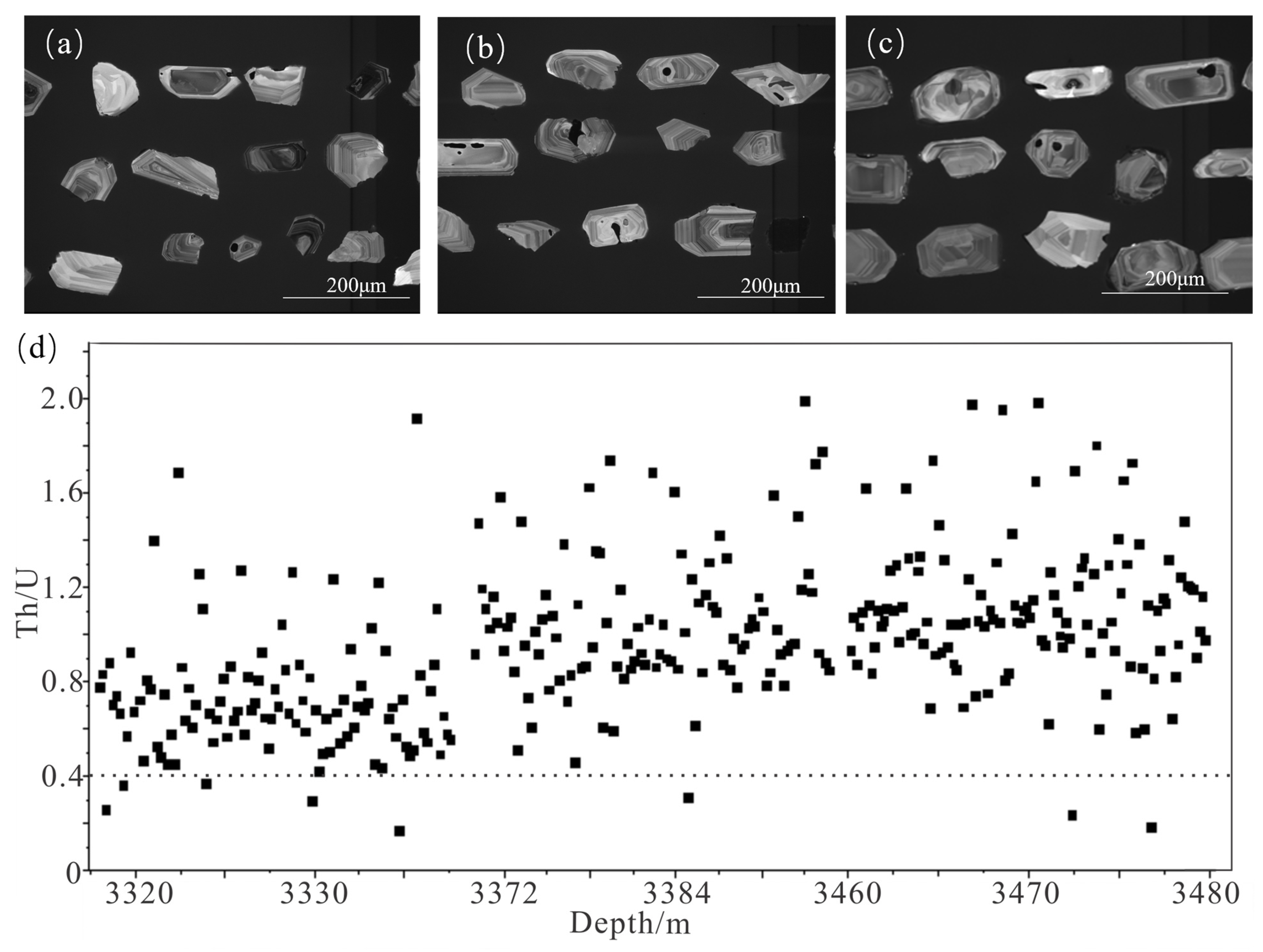
Representative cathodoluminescence (CL) images of zircons exhibit predominantly long-to-short prismatic habits with well-developed and clear oscillatory zoning (Figure 8a–c), and minor magmatic embayments are also observed on the edges of some grains. Results of detrital zircon geochemical analysis show that the Th/U ratios range from 0.11 to 1.92 (Figure 8d). In the upper Member 4 glutenite interval, the minimum Th/U value is 0.11, the maximum is 1.92, and the average is 0.67. According to the genetic classification criteria for zircons [40,41,42], Th/U ratios greater than 0.4 are typically indicative of a magmatic origin, whereas ratios below 0.1 suggest metamorphic recrystallization. Statistical analysis indicates that 94% of the analyzed grains exhibit Th/U ratios greater than 0.4 (Figure 8d). This distribution pattern demonstrates that the detrital materials in the studied interval are almost entirely derived from magmatic rocks. Such a high proportion of magmatic zircons, as visualized in the cluster above the 0.4 threshold, underscores the predominant contribution of igneous provenance to the upper Member 4 glutenites.

4.2.4. Logging Response Characteristics

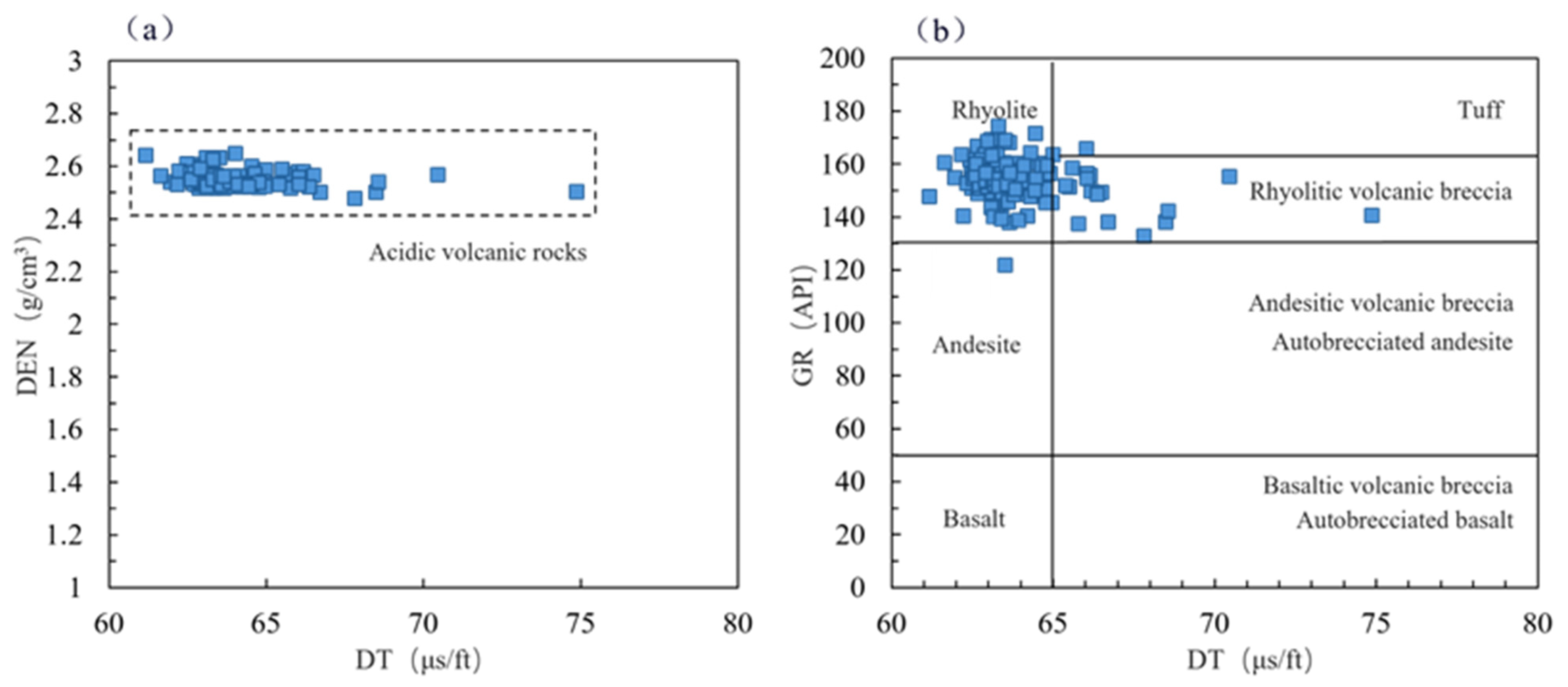
Cross-plots of acoustic transit time versus density for the conglomeratic interval (3318–3479.9 m) in the upper Member 4 of Well EP21-A show that the data points are relatively well clustered, with density values ranging from 2.5 to 2.7 g/cm3 and an average of 2.59 g/cm3. These values predominantly fall within the response range of felsic volcanic rocks (Figure 9a) [43]. The cross-plot of acoustic transit time versus gamma-ray (GR) values further shows that GR values range from 121.83 to 168.63 API, with an average of 153.81 API. The data points are mainly distributed within or close to the response fields of rhyolite and rhyolitic volcanic breccia (Figure 9b).

4.2.5. Seismic Facies Characteristics

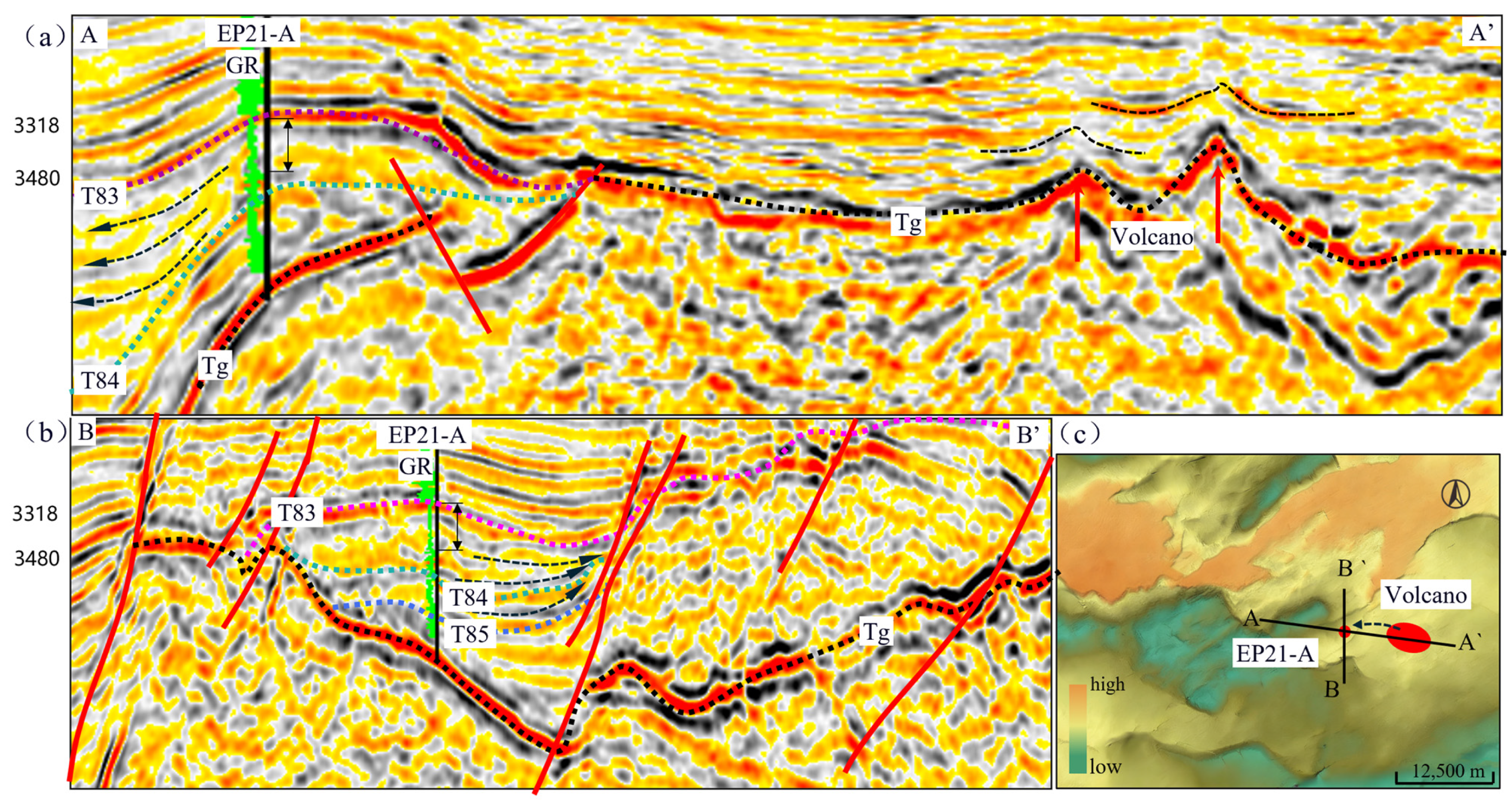
North–south and northwest–southeast seismic profiles crossing Well EP21-A were selected for well–seismic integration analysis (Figure 10). The upper Member 4 interval in the well area is characterized by low-frequency, moderate- to weak-amplitude, chaotic to reflection-free seismic facies, with poor reflector continuity (Figure 10a,b). In contrast, distal deposits located to the east of the well exhibit continuous progradational reflection patterns, forming a clear contrast with the proximal depositional strata of Member 4 in the well area. In addition, a magmatic body is identified at a low uplift located along the southeastern margin of the Enping 21 sub-sag, southeast of the well location (Figure 10a,c). This body displays a spike-shaped external geometry and is internally characterized by low-frequency, high-amplitude, discontinuous chaotic to reflection-free seismic facies. In terms of stratigraphic relationships, the intrusion exerts an upward doming effect on the overlying strata. Geometrically, this is expressed as upward bending and uplift of the overlying layers, thinning at the crest, and thickening on both flanks.

5. Discussion

5.1. Depositional Continuity of the Upper Member 4 Conglomeratic Interval

Results from multiple time-series analyses consistently indicate that the 161.9 m-thick conglomeratic interval in the upper Member 4 of the Wenchang Formation represents a relatively continuous depositional record over approximately 828 kyr. No significant depositional hiatuses are identified, and well-defined Milankovitch cyclicity is preserved throughout the interval. This suggests that the succession was not formed by the simple stacking of multiple isolated short-lived depositional events, but rather accumulated under relatively continuous depositional conditions. This finding contrasts sharply with the conventional understanding of coarse-grained depositional systems along the margins of rift basins. Such systems are typically considered to be strongly influenced by high-energy hydrodynamic processes and frequent shifts in sediment supply pathways, leading to the development of erosion surfaces and stratigraphic discontinuities. As a result, they are generally regarded as unfavorable for preserving continuous orbital-scale signals [16,17]. However, the studied interval not only preserves clear short-eccentricity, obliquity, and precession signals, but these high-frequency cycles are also consistently modulated by the 405 kyr long eccentricity cycle. This indicates a high degree of periodicity and continuity in the depositional process, implying the presence of sustained sediment supply and rapid accumulation mechanisms. Therefore, the continuous preservation of astronomical signals within the upper Member 4 conglomerates suggests that their formation cannot be simply attributed to intermittent deposition under conventional hydrodynamic conditions. Instead, the depositional mechanism must differ fundamentally from that of typical terrigenous conglomerates. This necessitates further evaluation of the sedimentary origin through integrated analysis of petrographic, geochemical, and geophysical evidence.

5.2. Constraints from Rock Texture and Compositional Characteristics

Terrigenous conglomerates that have undergone prolonged weathering, transport, and reworking typically exhibit relatively good sorting and rounding. Unstable components, such as igneous lithic fragments and mafic minerals, are commonly depleted during transport, resulting in high textural and compositional maturity. In contrast, the upper Member 4 conglomerates in the study area display markedly anomalous characteristics. These deposits are dominated by coarse grains, exhibit very poor sorting, and are composed predominantly of sub-angular clasts, indicating that the detrital material has not undergone extensive hydraulic reworking and was likely deposited in a proximal, rapidly accumulating environment. Moreover, the clast composition is overwhelmingly dominated by igneous lithic fragments, with an average content of 86.6%, whereas stable minerals such as quartz account for only ~8.5%. Tuffaceous matrix is also widely developed. This compositional assemblage is fundamentally different from that of typical terrigenous conglomerates, which are generally dominated by quartz and feldspar. Thin-section observations further reveal a series of microstructural features closely associated with volcanic activity, including the widespread occurrence of rhyolitic lithic fragments, intergranular dissolution pores formed by tuffaceous alteration and shrinkage, embayed quartz phenocrysts, and sericitization. These features are not characteristic of clastic rocks subjected to prolonged fluvial or deltaic reworking, but instead are consistent with rapid accumulation of volcaniclastic materials in proximal settings, potentially accompanied by subsequent hydrothermal alteration. Taken together, these observations indicate that the upper Member 4 conglomerates are unlikely to represent reworked terrigenous deposits transported over long distances from extra-basin sources. Rather, they are more plausibly interpreted as products of syn-sedimentary volcanic activity along the basin margin, including direct deposition of volcanic ash fallout and volcaniclastic flows in proximal environments. Therefore, the upper Member 4 conglomerates are more accurately characterized as tephroid successions. Unlike typical terrigenous clastics, the rapid, pulse-like accumulation of tephroid material effectively ‘sealed’ the primary sedimentary fabric before extensive environmental reworking occurred, providing a unique condition for signal preservation.

5.3. Geochemical Constraints

Trace elements such as Th and U in detrital zircon are highly resistant to weathering and can reliably preserve the genetic signatures of their source rocks. The Th/U ratio of detrital zircon thus provides an effective proxy for constraining whether sediments have a magmatic origin. Generally, magmatic crystallization processes enrich zircon in Th, resulting in Th/U ratios typically greater than 0.4, whereas metamorphic zircon tends to lose Th, yielding Th/U ratios commonly lower than 0.1 [42,43,44]. In the studied interval, detrital zircon Th/U ratios range from 0.11 to 1.92, with 94% of the analyzed grains exhibiting Th/U values greater than 0.4 (Figure 8). This enrichment in Th indicates that the zircon population is dominantly of magmatic origin. Consequently, the detrital material within the study interval is characterized by a pronounced magmatic provenance. Importantly, this geochemical evidence is consistent with the petrographic observations. In addition to the dominance of magmatic zircon, the studied interval is characterized by abundant rhyolitic lithic fragments and widespread tuffaceous matrix. The concurrence of these petrographic and geochemical features strongly suggests that intense felsic magmatic activity occurred during deposition of the upper Member 4 conglomerates. Therefore, the detrital zircon Th/U signatures provide robust geochemical support for a significant volcanic material input during sedimentation.

5.4. Geophysical Response Characteristics

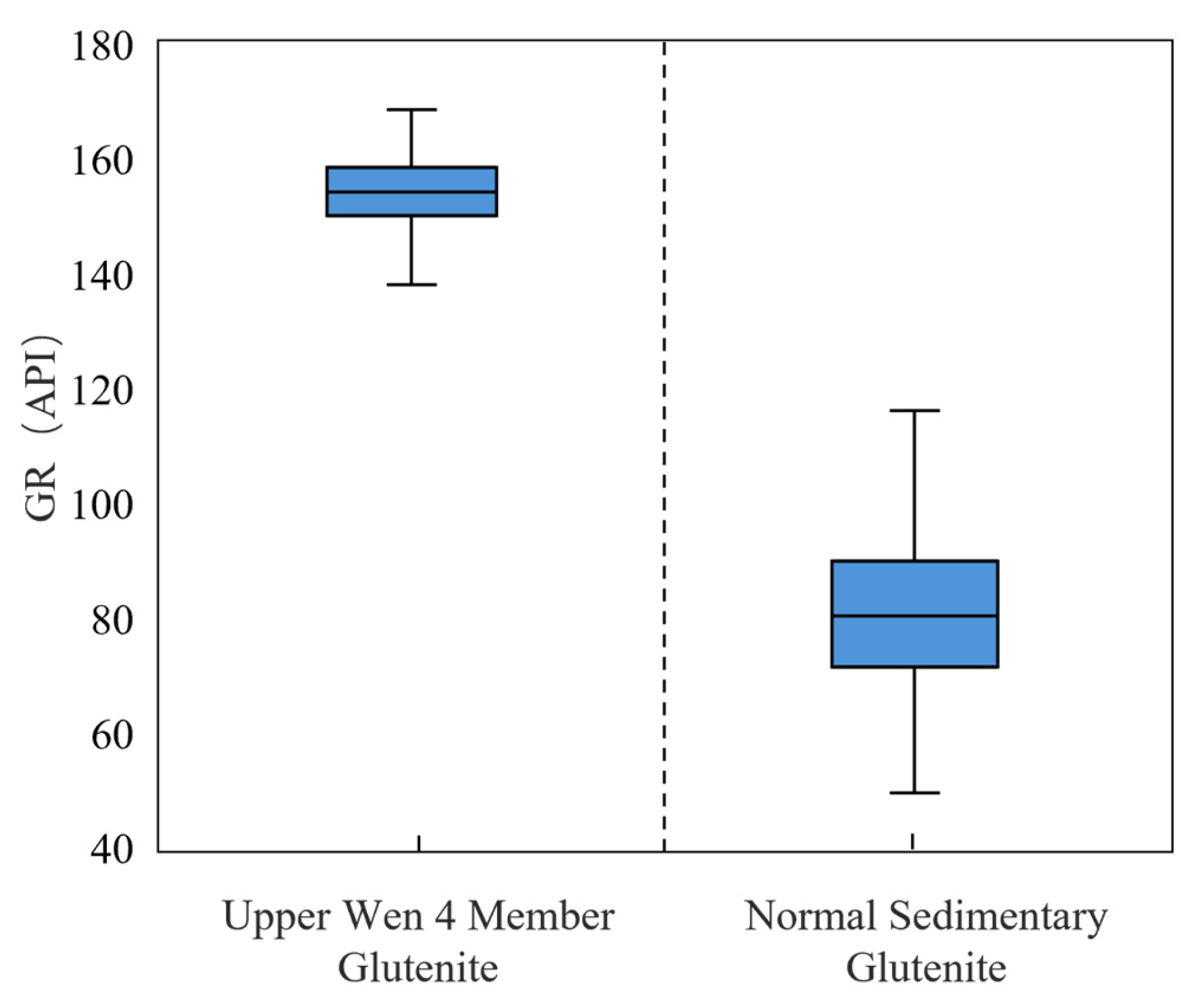
To highlight the anomalous nature of the target interval, conglomerates from the Zhuhai and Enping formations—representing typical terrigenous deposits formed under normal hydrodynamic conditions within the basin—are used as reference strata for comparison [25,44]. In general, terrigenous clastic systems dominated by fluvial or deltaic processes exhibit relatively low gamma-ray (GR) responses, typically ranging from 50 to 80 API [45]. In contrast, volcanic rocks or sediments enriched in volcaniclastic material commonly display elevated GR values due to higher concentrations of radioactive elements [46]. Boxplot statistics of GR values (Figure 11) reveal that the upper Member 4 conglomerates exhibit significantly elevated GR responses. GR values range from 121.83 to 168.63 API, with an average of 153.81 API. By comparison, conglomerates from the Zhuhai and Enping formations show GR values ranging from 49.62 to 116.2 API, with an average of 79.09 API. The upper Member 4 interval thus clearly deviates from the background range of typical terrigenous conglomerates represented by the reference formations. This systematic shift toward higher GR values cannot be simply attributed to increased clay content, but instead more plausibly reflects the incorporation of radioactive volcaniclastic material. Therefore, the anomalously high GR response of the upper Member 4 conglomerates provides strong geophysical evidence for significant volcanic input during deposition.
This elevated GR response cannot be simply attributed to an increase in clay content. Petrographic compositions of the reference strata (Table 2) indicate that the Zhuhai and Enping formations are predominantly composed of quartz and feldspar. Thin-section analyses of samples Z1–E1 show that quartz content ranges from 18.3% to 35.1%, with an average of 30.1%, while feldspar content varies from 0.9% to 14.9%, averaging 10.7%. Igneous lithic fragments are present in moderate proportions (average 44.6%), and tuffaceous material is essentially absent in the Z1–Z3 samples. These characteristics are consistent with typical terrigenous conglomerates and can therefore be used to represent the baseline logging response of normal clastic depositional systems in the study area. In contrast, the upper Member 4 conglomerates exhibit a systematic and significantly elevated GR anomaly relative to this baseline. This indicates that the sediments are enriched in anomalously high concentrations of radioactive components, which is more plausibly interpreted as the result of substantial input of felsic volcanic materials during deposition.
Cross-plot analysis (Figure 9) shows that the upper Member 4 conglomerates are mainly distributed within the response field of felsic volcanic rocks on the acoustic transit time–density cross-plot, whereas on the acoustic transit time–gamma-ray cross-plot they cluster within the response domains of rhyolite and rhyolitic volcanic breccia. These results indicate that both the petrophysical and radiometric signatures of the studied interval deviate markedly from those of normal terrigenous conglomerates and are instead more comparable to felsic volcanic and volcaniclastic assemblages. This demonstrates that the conglomeratic succession exhibits a clear volcanic material signature in terms of multiple combined logging parameters.
In the seismic profiles, the studied interval in the well area is characterized by low-frequency, moderate- to weak-amplitude, chaotic to reflection-free facies, whereas the distal strata to the east of the well display relatively continuous progradational reflections (Figure 10a,b). This contrast indicates that the internal architecture of the upper Member 4 depositional body differs fundamentally from that of conventional, hydrodynamically controlled layered progradational deposits. In addition, a spike-shaped magmatic body is identified at a low uplift southeast of the well location (Figure 10a,c). This spatial relationship suggests a direct source-to-sink connection between the depositional body in the well area and adjacent syn-sedimentary magmatic activity. It is therefore inferred that deep-sourced magma intruded and erupted along faults at the basin margin, generating abundant volcaniclastic debris and volcanic ash, which were rapidly transported and accumulated in the nearby EP21-A well area under the combined influence of gravity and local paleotopographic relief, ultimately forming a proximal volcaniclastic depositional body with a chaotic internal structure.
Taken together, the logging and seismic evidence demonstrates that the upper Member 4 conglomerates are not ordinary terrigenous deposits formed by weathered clastic material under normal hydrodynamic conditions. Instead, they represent a depositional succession whose petrophysical properties, seismic facies, and spatial configuration were all strongly controlled by syn-sedimentary volcanic and magmatic activity.

5.5. Volcaniclastic Depositional Model of the Upper Member 4 Conglomerates

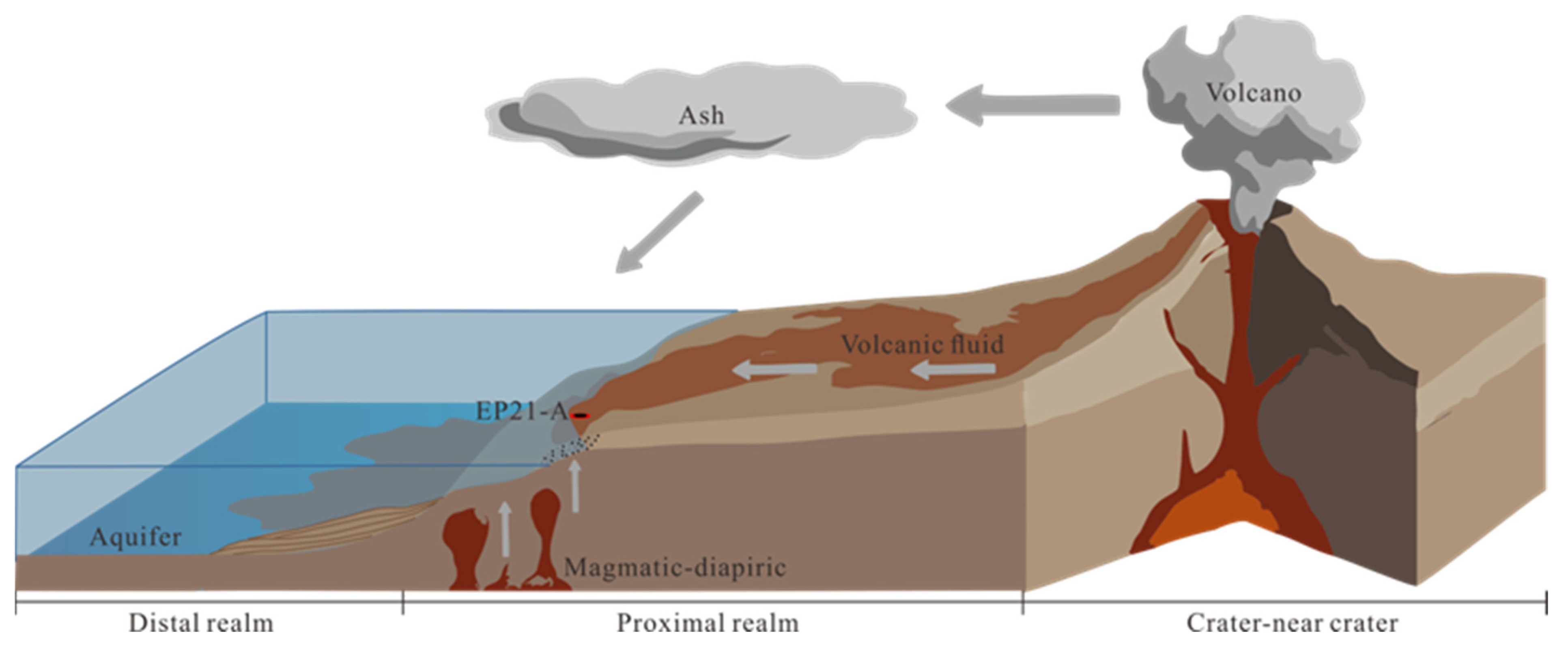
Based on integrated evidence from depositional continuity, rock texture and composition, geochemical characteristics, and geophysical responses, a proximal volcaniclastic depositional model is proposed for the upper Member 4 of the Wenchang Formation in the Enping 21 sub-sag (Figure 12). The primary sediment source of the studied interval was not derived from long-distance transport of conventional terrigenous clastics, but instead originated from syn-sedimentary proximal volcanic eruptions. Coarse volcanic fragments generated during eruptions were transported over short distances into the basin under gravity-driven processes along steep basin-margin slopes, where they were rapidly accumulated in proximal settings. This resulted in conglomeratic deposits dominated by coarse volcaniclastic material with poor sorting. Meanwhile, large volumes of fine-grained volcanic ash settled from suspension and contributed to matrix infill, producing a sedimentary assemblage characterized by high proportions of igneous lithic fragments, well-developed tuffaceous matrix, and anomalously elevated gamma-ray responses. This volcaniclastic depositional model effectively explains the key characteristics observed in the studied interval, including the high abundance of igneous lithic fragments, the systematically elevated GR logging responses, and the chaotic seismic reflection patterns. More importantly, such volcanically driven rapid accumulation processes likely reduced the degree of reworking and erosion by normal hydrodynamic processes, thereby creating favorable conditions for the continuous preservation of high-frequency astronomical (Milankovitch) signals in deep-time coarse-grained successions. Therefore, the upper Member 4 conglomerates are interpreted as a volcaniclastic depositional system controlled by syn-sedimentary proximal volcanic activity. This model provides new insights into the sedimentary mechanisms that allow complete preservation of astronomical signals within coarse-grained depositional systems in complex rift-related lake basins.

6. Conclusions

This study investigates the thick glutenite succession of the Middle Eocene upper Member 4 of the Wenchang Formation in the Enping 21 Sag, Yangjiang East Sag. By integrating cyclostratigraphic time-series analysis (MTM, COCO, TimeOpt, and Astro-GeoFit) with petrological, geochemical, and geophysical data, we aim to establish a high-resolution astronomical timescale and clarify the sedimentary genesis of these complex coarse-grained deposits.
(1) Statistically significant Milankovitch signals, including the 405-kyr long eccentricity, 100-kyr short eccentricity, ~40-kyr obliquity, and ~20-kyr precession, were identified within the 161.9-m-thick glutenite succession. These signals indicate that the depositional process was governed by robust orbital forcing on timescales of tens to hundreds of thousands of years.
(2) Based on an optimal average sedimentation rate of 19.55 cm/kyr (ranging from 11.76 to 22.22 cm/kyr), a high-resolution astronomical timescale spanning 43.90–44.73 Ma (with a duration of ~828 kyr) was established. The smooth time–depth relationship and the absence of significant depositional hiatuses demonstrate that this coarse-grained clastic succession maintained excellent temporal continuity despite its rapid accumulation.
(3) Integrated analysis of rock textures, detrital zircon Th/U ratios, and geophysical responses reveals that the upper Member 4 glutenites differ fundamentally from conventional terrigenous clastic deposits. Characteristics such as low textural maturity, a high proportion of igneous lithic fragments, a tuffaceous matrix, and a predominance of magmatic-origin zircons collectively indicate that the studied interval represents a tephroid depositional system. The systematic and significantly elevated GR values further distinguish this succession, reflecting the substantial input of proximal volcanic materials.
(4) The upper Member 4 glutenites are interpreted as a volcaniclastic depositional system controlled by proximal synrift magmatic activity. Coarse-grained materials generated by eruptions were transported over short distances and rapidly accumulated, while fine-grained volcanic ash contributed to the matrix via air-fall deposition. This synrift magmatic activity not only dictated the sedimentary infill process and material composition but also facilitated the continuous preservation of orbital signals within this complex coarse-grained succession.

Author Contributions

Conceptualization, S.Z. and Y.F.; methodology, S.Z., Y.W. and R.H.; software, Y.F. and R.H.; validation, Y.F. and R.H.; formal analysis, S.Z., Y.F. and Y.W.; investigation, R.H. and X.Q.; resources, S.Z. and Y.W.; data curation, Y.F. and Y.W.; writing—original draft preparation, Y.F.; writing—review and editing, S.Z. and G.G.; visualization, Y.F.; supervision, R.H., G.G. and X.Q.; project administration, S.Z. and Y.W.; funding acquisition, S.Z. All authors have read and agreed to the published version of the manuscript.

Funding

The work was supported by the National Natural Science Foundation of China (grant No. 41472098).

Institutional Review Board Statement

Not applicable.

Informed Consent Statement

Not applicable.

Data Availability Statement

All data and materials are available on request from the corresponding author. The data are not publicly available due to ongoing studies using a part of the data.

Conflicts of Interest

Xinwei Qiu was employed by the Shenzhen Branch, CNOOC China Limited, Guangdong, Shenzhen, 518000, China. The remaining authors declare that the research was conducted in the absence of any commercial or financial relationships that could be construed as a potential conflict of interest.

References

  1. Wu, H.; Zhang, S.; Feng, Q.; Fang, N.; Yang, T.; Li, H. Theoretical Basis, Research Advancement and Prospects of Cyclostratigraphy. J. Earth Sci. 2011, 36, 409–428. [Google Scholar]
  2. Hinnov, L.A. Cyclostratigraphy and its revolutionizing applications in the earth and planetary sciences. Bulletin 2013, 125, 1703–1734. [Google Scholar] [CrossRef]
  3. Hays, J.D.; Imbrie, J.; Shackleton, N.J. Variations in the Earth’s Orbit: Pacemaker of the Ice Ages: For 500,000 years, major climatic changes have followed variations in obliquity and precession. Science 1976, 194, 1121–1132. [Google Scholar] [CrossRef]
  4. Wu, H.; Fang, Q.; Zhang, S.; Yang, T. Cenozoic Milankovitch Cycles and Astronomical Geologic Time Scale. Quat. Sci. 2016, 36, 1055–1074. [Google Scholar]
  5. Zhang, S.; Xu, M.; Tang, W.; Xu, E.; Wang, Y.; Zhu, R. Cyclostratigraphy and paleoclimate analysis of the Lingshui Formation inthe Beijiao Sag, Qiongdongnan Basin. Bull. Geol. Sci. Technol. 2025, 44, 95–105. [Google Scholar] [CrossRef]
  6. Liang, Y.; Zhang, S.; Xu, E.; Wang, Y.; Zhu, R.; Liang, J.; Gong, G.; Han, R. Establishment of astronomical time scale and high-frequency sequence stratigraphy of the Hanjiang Formation in the Xijiang Sag. Mar. Geol. Front. 2025, 41, 29–41. [Google Scholar] [CrossRef]
  7. Tian, S.; Chen, Z.; Zha, M. Astronomical time scale of middle Miocene Hanjiang formationin Pearl River Mouth Basin, South China Sea. J. China Univ. Pet. Ed. Nat. Sci. 2012, 36, 27–32. [Google Scholar]
  8. Xu, E.; Zhang, S.; Wang, Y.; Zhu, R.; Liang, J.; Zhang, Z. Astronomical orbital cycle-driven controls on the Oligocene marine hydrocarbon source rock development in the South China Sea. J. Palaeogeogr. Chin. Ed. 2025, 27, 1333–1350. [Google Scholar]
  9. Zhang, S.; Cheng, X.; Xu, E.; Wang, Y.; Zhu, R.; Han, R.; Gong, G. Depositional filling response driven by astronomical cycles: Taking Zhujiang Formation in Huizhou Sag as an example. Fault-Block Oil Gas Field 2025, 32, 984–994. [Google Scholar]
  10. Meyers, S.R. The evaluation of eccentricity-related amplitude modulation and bundling in paleoclimate data: An inverse approach for astrochronologic testing and time scale optimization. Paleoceanography 2015, 30, 1625–1640. [Google Scholar] [CrossRef]
  11. Li, Y. Extraction of astronomical cycle signals and identification of third-order sequences in the Ordovician of Well XT1, southern margin of Ordos Basin. J. Palaeogeogr. (Chin. Ed.) 2025, 27, 209–224. [Google Scholar]
  12. Hoang, N.; Laskar, J.; Hara, N.; Wu, Y.; Sultanov, A.; Sinnesael, M.; Westerhold, T.; Bujons, P. AstroGeoFit. A genetic algorithm and Bayesian approach for the astronomical calibration of the geological timescale. Paleoceanogr. Paleoclimatol. 2025, 40, e2024PA005021. [Google Scholar] [CrossRef]
  13. Li, Y.; Li, X.; Zhang, T.; Zou, B.; Chen, C.; Li, J.; Zhou, X.; Wang, G.; Liu, Y.; Qi, X.; et al. Identification of Astronomical Cycles in Fine-grained Rocks and Their Application in Fine Stratigraphic Division: A case study of the Fourth member of the Shahejie Formation in the Leijia area, Western Sag of the Liaohe Depression. Acta Sedimentol. Sin. 2025, 43, 2053–2067. [Google Scholar] [CrossRef]
  14. Liang, J.; Wang, Y.; Zhang, S.; Huang, C.; Xu, E.; Zhang, Z. Astronomical Forcing of late oligocene to early Miocene Paleoclimate: A case study from the Northern South China Sea. Palaeogeogr. Palaeoclimatol. Palaeoecol. 2025, 673, 113007. [Google Scholar] [CrossRef]
  15. Ge, Z.; Shi, J.; Liu, Q.; Fan, T.; Gao, Z.; Xu, H.; Wang, R.; Bi, W.; Jin, Z. Geological sedimentary records constraining Earth-Moon system evolution over the past 60 million years: Insights from Cyclostratigraphy. Gondwana Res. 2026, 153, 362–376. [Google Scholar] [CrossRef]
  16. Li, M.; Hinnov, L.; Kump, L. Acycle: Time-series analysis software for paleoclimate research and education. Comput. Geosci. 2019, 127, 12–22. [Google Scholar] [CrossRef]
  17. Romans, B.W.; Castelltort, S.; Covault, J.A.; Fildani, A.; Walsh, J. Environmental signal propagation in sedimentary systems across timescales. Earth-Sci. Rev. 2016, 153, 7–29. [Google Scholar] [CrossRef]
  18. Song, M.L. Fine division and correlation of conglomerate sedimentary cycles in Yanjia area of Dongying depression. Acta Pet. Sin. 2012, 33, 781. [Google Scholar]
  19. Chen, P.; Fang, N.; Li, C.; Liu, J. A method for the division of the conglomerate depositional cycle under Milankovitch cycles. J. Geophys. Eng. 2017, 14, 611–620. [Google Scholar] [CrossRef]
  20. Feng, X.; Zhao, X.; Zhang, X.; Ge, J.; Yang, C.; Liang, Y.; Bouchakour, M. Astronomically forced lake-level fluctuation and sediment distribution patterns during the early Middle Jurassic, central Sichuan Basin. Oil Gas Geol. 2024, 45, 1368–1382. [Google Scholar]
  21. Shen, M. Distribution of Source Rocks in the Sags Effected by Magmatism Under the Background of Transformation: A Case Study of the Eastern Yangjiang Sag in the Pearl River Mouth Basin. Master’s Thesis, Jilin University, Changchun, China, 2022. [Google Scholar]
  22. Liu, X.; Wu, J.; Zhu, D.; Suo, Y.; Zhou, J.; Wang, P.; Wang, G.; Liu, Z.; Liu, B.; Guo, L.; et al. Superimposition of Strike-slip Faults and Pull-apart Basins in the Pearl River Mouth Basin: A Case Study from the Eastern Yangjiang Sag. Geotecton. Metallog. 2021, 45, 6–19. [Google Scholar] [CrossRef]
  23. Du, X.; Peng, G.; Wu, J.; Zhang, Z.; Xu, X.; Zhu, D. Faults and Its Impacts on Petroleum Accumulation in Eastern Yangjiang Sag, Pearl River Mouth Basin. Xinjiang Pet. Geol. 2020, 41, 414–421. [Google Scholar]
  24. Liang, W.; Peng, G.; Zhu, D.; Wu, J.; Du, X.; Cai, G.; Wang, X.; He, J.; Li, S.; Suo, Y. Paleogene Structures and Exploration Potential in the Eastern Yangjiang Sag, Pearl River Mouth Basin. Geotecton. Metallog. 2021, 45, 168–178. [Google Scholar] [CrossRef]
  25. Peng, G.; Zhang, X.; Xu, X.; Bai, H.; Cai, G.; Zhao, C.; Zhang, Z. Important discoveries and understandings of oil and gas exploration in Yangjiang sag of the Pearl River Mouth Basin, northern South China Sea. China Pet. Explor. 2019, 24, 267–279. [Google Scholar]
  26. Tian, L.; Zhang, X.; Peng, G.; Du, X.; Wu, J.; Cai, G.; Zhu, D. Petroleum geological characteristics and main controlling factors of the Yangjiang sag in Pearl River Mouth Basin. China Offshore Oil Gas 2020, 32, 13–22. [Google Scholar]
  27. Xu, C.; Shan, X.; Lin, H.; Hao, G.; Liu, P.; Wang, X.; Shen, M.; Rexiti, Y.; Li, K.; Li, Z.; et al. The formation of early Eocene organic-rich mudstone in the western Pearl River Mouth Basin, South China: Insight from paleoclimate and hydrothermal activity. Int. J. Coal Geol. 2022, 253, 103957. [Google Scholar] [CrossRef]
  28. Shi, H.; He, M.; Zhang, L.; Yu, Q.; Pang, X.; Zhong, Z.; Liu, L. Hydrocarbon geology, accumulation pattern and the next exploration strategy in the eastern Pearl River Mouth basin. China Offshore Oil Gas 2014, 26, 11–22. [Google Scholar]
  29. Tian, L.; Shi, H.; Liu, J.; Zhang, X.; Liu, J.; Dai, Y. A major discovery and the significance of new frontier exploration in the Huizhou sag, Pearl River Mouth Basin. China Pet. Explor. 2020, 25, 22–30. [Google Scholar]
  30. Liang, W.; Li, X. Lithological Exploration and Potential in Mixed Siliciclastic-Carbonate Depositional Area of Eastern Pearl River Mouth Basin. J. Earth Sci. 2020, 45, 3870–3884. [Google Scholar]
  31. Mu, D.; Peng, G.; Zhu, D.; Li, S.; Suo, Y.; Zhan, H.; Zhao, L. Structure and formation mechanism of the Pearl River Mouth Basin: Insights from multi-phase strike-slip motions in the Yangjiang Sag, SE China. J. Asian Earth Sci. 2022, 226, 105081. [Google Scholar] [CrossRef]
  32. Ma, X.; Liu, J.; Zhu, D.; Li, S.; Li, Y.; Suo, Y.; Zhou, J.; Li, X.; Wang, G.; Wang, P.; et al. Sedimentary Response of Multi-Stage Pull-Apart Basin: Insights from the Pearl River Mouth Basin in the Northern South China Sea Margin. Geotecton. Metallog. 2021, 45, 64–78. [Google Scholar] [CrossRef]
  33. Li, M.; Huang, C.; Ogg, J.; Zhang, Y.; Hinnov, L.; Wu, H.; Chen, Z.-Q.; Zou, Z. Paleoclimate proxies for cyclostratigraphy: Comparative analysis using a Lower Triassic marine section in South China. Earth-Sci. Rev. 2019, 189, 125–146. [Google Scholar] [CrossRef]
  34. Cleveland, W.S. Robust Locally Weighted Regression and Smoothing Scatterplots. J. Am. Stat. Assoc. 2012, 74, 829–836. [Google Scholar] [CrossRef]
  35. Thomson, D.J. Spectrum estimation and harmonic analysis. Proc. IEEE 2005, 70, 1055–1096. [Google Scholar] [CrossRef]
  36. Ghil, M.; Allen, M.R.; Dettinger, M.D.; Ide, K.; Kondrashov, D.; Mann, M.E.; Robertson, A.W.; Saunders, A.; Tian, Y.; Varadi, F. Advanced spectral methods for climatic time series. Rev. Geophys. 2002, 40, 3-1–3-41. [Google Scholar] [CrossRef]
  37. Schulz, M.; Mudelsee, M. REDFIT: Estimating red-noise spectra directly from unevenly spaced paleoclimatic time series. Comput. Geosci. 2002, 28, 421–426. [Google Scholar] [CrossRef]
  38. Fang, X.; Zhong, Q.; Zhang, J.; Li, J.; Meng, T.; Jiang, Z.; Zhao, H. Cyclostratigraphy analysis and stratigraphic division of lower Sha-3 member of Paleogene in Zhanhua Sag, Bohai Bay Basin. Lithol. Reserv. 2024, 36, 19–30. [Google Scholar]
  39. Laskar, J.; Robutel, P.; Joutel, F.; Gastineau, M.; Correia, A.C.; Levrard, B. A long-term numerical solution for the insolation quantities of the Earth. Astron. Astrophys. 2004, 428, 261–285. [Google Scholar] [CrossRef]
  40. Rubatto, D.; Gebauer, D. Use of cathodoluminescence for U-Pb zircon dating by ion microprobe: Some examples from the Western Alps. In Cathodoluminescence in Geosciences; Springer: Berlin/Heidelberg, Germany, 2000; pp. 373–400. [Google Scholar]
  41. Möller, A.; O’Brien, P.J.; Kennedy, A.; Kröner, A. Linking growth episodes of zircon and metamorphic textures to zircon chemistry: An example from the ultrahigh-temperature granulites of Rogaland (SW Norway). In Geochronology: Linking the Isotopic Record with Petrology and Textures; Geological Society of London: London, UK, 2003. [Google Scholar]
  42. Wu, Y.; Zheng, Y. Genesis of zircon and its constraints on interpretation of U-Pb age. Chin. Sci. Bull. 2004, 49, 1589–1604. [Google Scholar] [CrossRef]
  43. Fan, C.; Chen, Y.; Zhang, Y. The Logging Response Characteristics and Identification of Yingcheng Formation Volcanic Rocks in Changling Fault Depression, Songliao Basin. J. Jilin Univ. Earth Sci. Ed. 2010, 40, 87–91. [Google Scholar] [CrossRef]
  44. Yang, S.; Liu, C.; Hu, Z.; Fan, Z.; Xu, J.; Cao, Z. Volcanic Logging Recognition in Reservoir Analysis. J. Oil Gas Technol. 2007, 29, 33–37. [Google Scholar] [CrossRef]
  45. Yuan, R.; Zhu, R.; Qu, J.; You, X.; Wu, J.; Huang, Y. Abnormal open-hole natural gamma ray (GR) log in Baikouquan Formation of Xiazijie Fan-delta, Mahu Depression, Junggar Basin, China. Open Geosci. 2018, 10, 844–854. [Google Scholar] [CrossRef]
  46. Zhao, J.; Zou, C.; Wang, W.; Zhang, X.; Zhu, Y.; Zhang, J.; Zhang, H.; Ding, Y.; Lin, F.; Qin, Y.; et al. Log response characteristics and lithological evaluation of volcanic rocks in Yingcheng Formation from the second scientific drilling borehole (SK-2 east borehole) in Songliao basin of Northeast China. Geol. China 2019, 46, 1174–1183. [Google Scholar]
Figure 1. Structural units and generalized stratigraphic column of the Enping 21 Sag in the Yangjiang East Sag, Pearl River Mouth Basin.
Jmse 14 00823 g001
Figure 2. Depth-domain analysis of the Wen 4 Member in Well EP21-A. (a) Lithological column, raw GR log, detrended GR sequence, and the ~20.0-m band-pass filtered output; (b) 2π MTM power spectrum of the detrended GR sequence; (c) eFFT evolutionary spectrogram of the detrended GR sequence, where e, O, and P represent short eccentricity, obliquity, and precession, respectively.
Jmse 14 00823 g002
Figure 3. Correlation coefficient (COCO) analysis of Well EP21-A. (a) COCO analysis of well EP21-A, testing sedimentation rates from 10 to 30 cm/kyr with 5000 Monte Carlo simulations, ρ denotes the correlation coefficient between observed spectral peaks and theoretical astronomical periods; (b) Null hypothesis (H0) testing for well EP21-A; (c) Number of astronomical orbital matches for well EP21-A, # indicates the number of matched astronomical cycles; (d,e) eCOCO analysis of well EP21-A.
Jmse 14 00823 g003
Figure 4. Time-Optimization analysis results for Well EP21-A. (a) Detrended natural gamma-ray (GR) depth series of Well EP21-A; (b) Power spectrum tuned at the optimal sedimentation rate of 19.55 cm/kyr; (c) Filtered precession signal (black line) and the precession amplitude envelope (red line) extracted via Hilbert transform; (d) Comparison between the precession amplitude envelope (red line) and the eccentricity model (black line) inverted by TimeOpt; (e) Envelope goodness-of-fit r2env (red line) and spectral power goodness-of-fit r2power (gray line) across different sedimentation rates; (f) Variation curve of the combined goodness-of-fit r2opt versus sedimentation rates; (g) Monte Carlo significance test based on the first-order autoregressive AR(1) red noise model (ρ, first-order autocorrelation coefficient = 0.551), showing the observed maximum r2opt = 0.176 corresponds to a statistical p-value of 0.005; (h) Cross-plot of the observed precession amplitude envelope versus the reconstructed eccentricity model, with the red dashed line representing the best-fit line.
Jmse 14 00823 g004
Figure 5. AstroGeoFit-based astronomical signal extraction and stratigraphic continuity verification of Member 4, Wenchang Formation. (a) Target frequencies of eccentricity cycles in the depth-domain logging sequence; (b) Time–depth model inverted via Bayesian statistics; (c) Evolution curve of the inverse sedimentation rate (SR−1)versus depth; (d) Comparison between the raw data (black line) and the astronomical signal model (red line) recovered by AstroGeoFit; (e) Extracted depth series of the eccentricity cycle.
Jmse 14 00823 g005
Figure 6. Absolute astronomical time scale. (a) Lithological column and depth of the Member 4 of the Wenchang Formation in well EP21-A; (b) Detrended natural gamma-ray (GR) curve of well EP21-A; (c) 100-kyr filtered signal of well EP21-A in the time domain; (d) GR time series tuned to the 100-kyr short eccentricity target; (e) 100-kyr short eccentricity filter curve of the La2004d theoretical ETP solution; (f) La2004d theoretical ETP composite curve; (g) Absolute geochronological scale; (h) Corresponding international standard chronostratigraphic division.
Jmse 14 00823 g006
Figure 7. Textural and compositional characteristics of the upper Member 4 glutenite in Well EP21-A. (a) Lithologic profile and sampling depths; (b) Statistical composition of detrital components in Member 4 of Well EP21-A; (c) Clasts are dominated by rhyolite, showing poor sorting and sub-angular roundness, W1-3328.00 m, plane-polarized light; (d) Intergranular dissolution pores (A) formed by shrinkage during tuffaceous alteration, with sericitization of rhyolitic lithic fragments (B), W4-3350.00 m, plane-polarized light; (e) Embayed quartz phenocryst (C), W6-3367.00 m, plane-polarized light; (f) Local occurrence of ferroan calcite cement particles (D) and an embayed quartz phenocryst (E), W7-3375.00 m, plane-polarized light.
Jmse 14 00823 g007
Figure 8. (ac) Representative cathodoluminescence (CL) images of detrital zircons showing clear oscillatory zoning and prismatic habits; (d) Distribution of Th/U ratios in detrital zircons from the upper Member 4 of the Wenchang Formation, Well EP21-A.
Jmse 14 00823 g008
Figure 9. Acoustic interval transit time (AC) cross-plots for the upper Member 4 glutenite in Well EP21-A. (a) Acoustic transit time versus density cross-plot; (b) Acoustic transit time versus natural gamma-ray cross-plot.
Jmse 14 00823 g009
Figure 10. Seismic facies characteristics across Well EP21-A. (a) Seismic profile A-A′ through well EP21-A; (b) Seismic profile B-B′ through well EP21-A; (c) Seismic profile through the well and planar distribution of volcanoes in the study area.
Jmse 14 00823 g010
Figure 11. Comparative analysis of GR value distributions: Wenchang Member 4 vs. normal sedimentary successions.
Jmse 14 00823 g011
Figure 12. Schematic model of volcaniclastic sedimentation.
Jmse 14 00823 g012
Table 1. Statistical analysis of detrital compositions in Member 4 of the Wenchang Formation, Well EP21-A.
Sampling InformationClastic CompositionMatrix/Cement Content
No.Depth (m)LithologyQuartzFeldsparIgneous RockMetamorphic RockSedimentary RockMuddyTuffaceousCement
13328Yellow Sandy Conglomerate8.60.081.80.00.50.02.76.4
23340Yellow Pebbly Sandstone20.60.476.50.02.50.01.60.4
33348.5Yellow Sandy Conglomerate0.00.0100.00.00.00.00.00.0
43350Yellow Sandy Conglomerate12.72.068.60.014.71.01.00.0
53362Yellow Conglomerate0.01.996.60.00.00.00.51.0
63367Yellow Pebbly Sandstone11.92.085.10.00.50.50.00.0
73375Yellow Conglomerate0.00.0100.00.00.00.00.00.0
83379Yellow Sandy Conglomerate6.70.089.40.00.00.01.02.9
93384Yellow Pebbly Sandstone13.61.082.50.00.00.02.90.0
103392Yellow Pebbly Sandstone7.00.092.50.00.00.00.50.0
113402Yellow Pebbly Sandstone9.02.087.60.01.00.40.00.0
Table 2. Statistical analysis of detrital compositions in the Zhuhai and Enping Formations, Well EP21-A.
Sampling InformationClastic CompositionMatrix/Cement Content
No.Depth (m)LithologyQuartzFeldsparIgneous RockMetamorphic RockSedimentary RockTuffaceousCement
Z11950.0Coarse- to medium-grained lithic arkose32.712.534.612.57.70.00.0
Z22029.2Coarse- to medium-grained lithic arkose35.114.933.38.87.90.00.0
Z32082.2Medium- to fine-grained lithic arkose34.214.436.09.06.40.00.0
E13264.0Medium- to coarse-grained lithic arkose18.30.974.30.02.80.92.8
E23265.5Coarse-grained feldspathic quartz sandstone32.712.534.612.57.70.00.0
E33313.0Coarse-grained feldspathic quartz sandstone35.114.933.38.87.90.00.0
Disclaimer/Publisher’s Note: The statements, opinions and data contained in all publications are solely those of the individual author(s) and contributor(s) and not of MDPI and/or the editor(s). MDPI and/or the editor(s) disclaim responsibility for any injury to people or property resulting from any ideas, methods, instructions or products referred to in the content.