Article

Petrological and Geochemical Characteristics of the Lower Cambrian Shuijingtuo Formation in the Middle Yangtze Block, South China: Implications for Organic Matter Accumulation on Carbonate Platform


1
Technology Innovation Center for Shale Oil and Gas Accumulation Theory and Engineering in Southern Complex Structural Area, China Geological Survey, Wuhan 430205, China
2
Wuhan Center of China Geological Survey, Wuhan 430205, China
3
Shale Gas Research Center for Southern Complex Structural Area, China Geological Survey, Wuhan 430205, China
4
School of Geosciences, Yangtze University, Wuhan 430100, China
5
SINOPEC Petroleum Exploration and Production Research Institute, Beijing 102206, China
*
Author to whom correspondence should be addressed.
J. Mar. Sci. Eng. 2026, 14(9), 762; https://doi.org/10.3390/jmse14090762
Submission received: 4 March 2026 / Revised: 13 April 2026 / Accepted: 15 April 2026 / Published: 22 April 2026

Abstract

Understanding the development characteristics and controlling factors of organic-rich shales in carbonate platform settings is essential for predicting their distribution and assessing their natural gas exploration potential. However, the mechanisms governing the accumulation of such shales in these specific sedimentary environments remain poorly constrained, and the lack of integrated petrological and geochemical studies limits accurate evaluation of their resource potential. The key objective of this study is to investigate the development characteristics and formation mechanisms of organic-rich shales within intraplatform depressions. To address this objective, we conducted a comprehensive petrological and geochemical analysis of the Cambrian Shuijingtuo Formation organic-rich shale deposits deposited in a carbonate platform setting, particularly from Well EYY3 in Western Hubei, Central Yangtze region. The obtained results indicate that total organic carbon (TOC) contents in the Shuijingtuo Formation can reach up to 4.77%, with a thickness of approximately 9.5 m for shales containing over 2% TOC. Vertically, TOC content exhibits a rapid increase at the base, followed by a gradual decline toward the top, reflecting the evolution of depositional environments. The characteristics of organic-rich shale indicate a significant presence of carbonate minerals, which increase in concentration, alongside tuff lenticular bodies and lithological transition surfaces between tuff and shale. While the longitudinal variation of SiO2 content in shale is subtle, there is a slight increase in land-sourced clasts and excess silica, and TOC has a significant positive correlation. At the base of the Shuijingtuo Formation, redox parameters, including U-EF and Mo-EF, display a rapid increase followed by a gradual decrease. Conversely, changes in Ni-EF, which indicate paleoproductivity, are less pronounced, and their correlation with TOC is relatively poor. These findings suggest that rapid sea-level rise associated with Cambrian transgressions was the main factor influencing organic matter enrichment in the carbonate platform depressions. This rise supplied nutrients and silica-rich organisms, altering the biological landscape and fostering anoxic conditions in the intraplatform depressions, promoting organic-rich shale formation. As sea levels declined, water circulation became restricted, leading to oxidation of shallow water bodies, decreased paleoproductivity, and shale deposits transitioned to tuff. Therefore, organic-rich shale can also be developed on carbonate platforms, with its formation primarily controlled by fluctuations in sea level. During highstand periods, intraplatform depressions may serve as favorable zones for shale gas exploration.

1. Introduction

Marine organic-rich shales form in response to major paleoenvironmental changes. They preserve critical information about significant geological events [1,2,3,4] and serve as important targets for unconventional oil and gas exploration [5,6,7]. A thorough understanding of the formation mechanisms of marine organic-rich shales in different geomorphic settings is essential for reconstructing paleoenvironmental evolution, predicting their spatial distribution, and advancing shale gas exploration [8].
Previous research has identified two primary factors influencing marine organic-rich shales development, namely paleoproductivity and preservation conditions [9,10,11]. Marine organic-rich shales are commonly found in deep-water shelf settings, as well as on continental slopes and at the bottoms of semi-enclosed deep basins [12,13]. In these environments, upwelling currents provide abundant nutrients and suitable temperatures, fostering plankton proliferation and significant organic matter accumulation, which can be preserved under anoxic conditions, which can be preserved under anoxic conditions that are often associated with high sea levels and low sedimentation rates [1,14]. Consequently, organic-rich shales in these areas tend to be thick and exhibit relatively high TOC content, making them a major focus. However, organic-rich shales are also prevalent in rift troughs and carbonate platform depressions [12,15,16]. In South China, the Central Yangtze region, the recent drilling of Well EYY3 in the Yichang area has revealed organic-rich shales with TOC levels exceeding 5% within the Cambrian carbonate platform. Nevertheless, prior research has predominantly concentrated on the depositional settings of thick organic-rich mudstones in shelf areas. This has led to a lack of systematic understanding of the depositional characteristics of organic-rich shales within carbonate platforms and their detailed comparison with those deposited in shelf environments. This knowledge gap constrains the assessment of their unconventional natural gas exploration potential.
This paper focuses on well EYY3, drilled in the carbonate platform of Western Hubei, Central Yangtze, to improve our understanding of the sedimentary geology of organic-rich shale on carbonate platforms. Through systematic petrological and geochemical analyses, our principal objectives are to: (1) characterize the properties of organic-rich shale; (2) analyze the depositional settings of organic-rich shale in the carbonate platform; and (3) explore the main factors that influence organic-rich shale development in the carbonate platform.

2. Geological Background

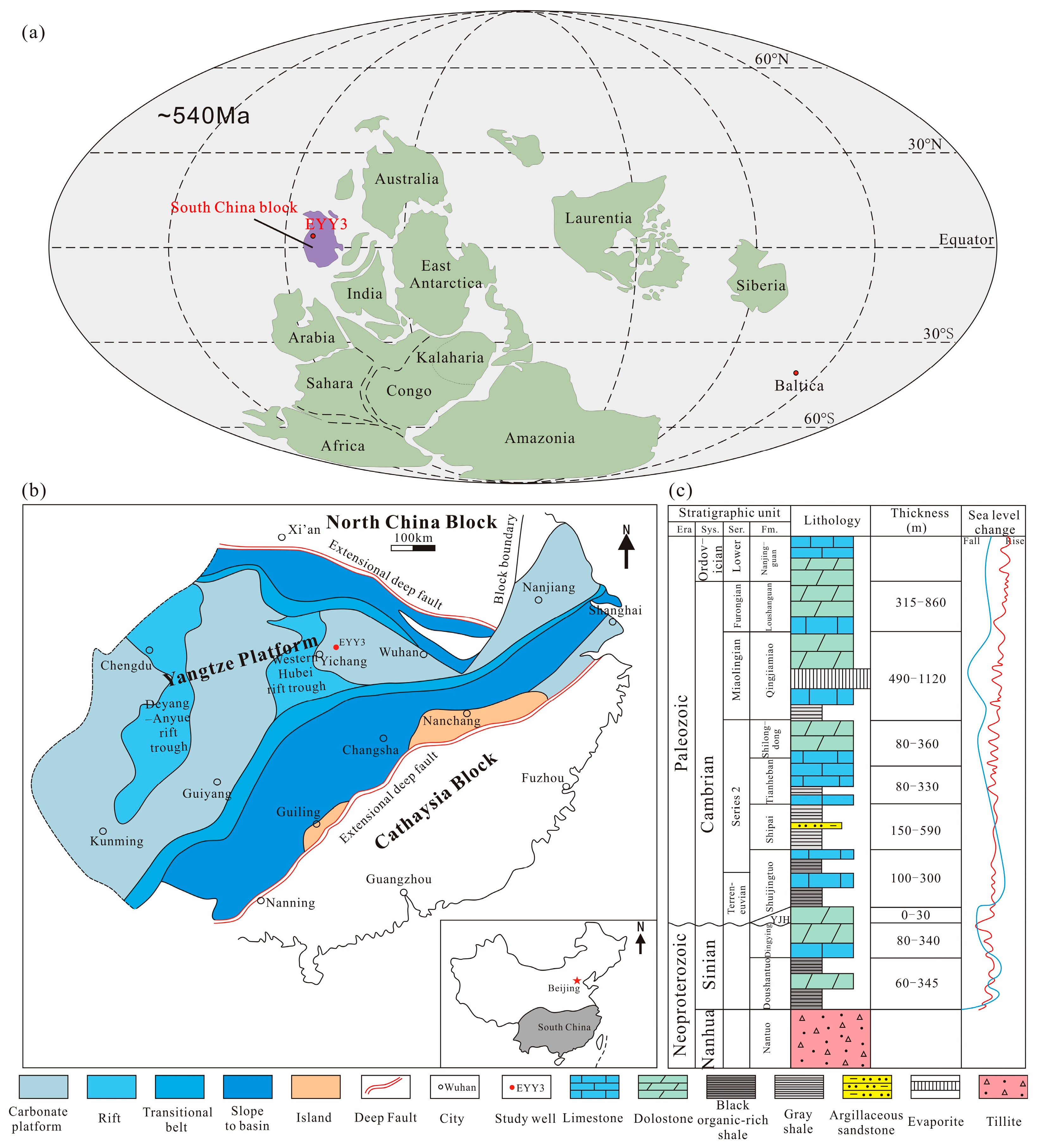
The transition between the Ediacaran and the Cambrian marked a period of significant change in the global geological environment, associated with a series of events including the breakup of the Rodinia supercontinent, the amalgamation of the Gondwana continent, and an important global sea-level rise that coincided with the Cambrian Explosion [17,18,19,20,21]. During this time, the South China Plate, comprising the Yangtze and Cathaysia Blocks, experienced the transition of its sedimentary basin from a rift to a passive continental margin. As a result, the South China paleocontinent entered a relatively stable phase of platform development, marked by sustained marine sedimentation [22,23,24,25]. From northwest to southeast, the South China Plate developed a sequence of depositional environments, including carbonate platform (dominated by carbonate deposition), slope (dominated by carbonate and dark mud shale), and deep-water basin (dominated by dark mudstone and siliceous rock). These settings were influenced by local rifting and subsidence, resulting in the formation of two rift troughs: one in Western Hubei on the Yangtze platform and another in the Deyang-Anyue region [26,27,28]. These rift troughs represent the most favorable areas for the occurrence of high-quality Lower Cambrian black shales and for unconventional natural gas exploration (Figure 1a).
In Western Hubei, the Yichang area is situated at the intersection of the rift trough and carbonate platform. During the late Ediacaran, this region was predominantly characterized by dolomite deposits. A sea-level fall occurred, leading to the exposure of some parts of the area and resulting in the formation of the Ediacaran–Cambrian unconformity atop the Dengying Formation [17,24,28]. Following the subsequent Cambrian sea-level rise, this unconformity was largely covered by black shale of the Cambrian Shuijingtuo Formation [17]. The Shuijingtuo Formation is primarily developed within the rift trough and consists mainly of black shale and dark gray limestone. Its lower section is characterized by high total organic carbon content, which gradually transitions upward to marl or tuff (Figure 1b). The Shuijingtuo Formation is correlative to the Niutitang and the Lower Cambrian Qiongzhusi formations, all of which are main targets for unconventional hydrocarbon exploration [29,30,31]. Across the Western Hubei rift trough, several wells have confirmed that the Shuijingtuo Formation has promising natural gas exploration potential. Recently, Well EYY3, drilled in a carbonate platform setting in Western Hubei, encountered extensive organic-rich shales within the Shuijingtuo Formation. This finding indicates that intraplatform depressions can also host significant deposits of organic-rich shale, highlighting their potential as new targets for shale gas exploration.

3. Materials and Methods

3.1. Sample Collection and Analysis

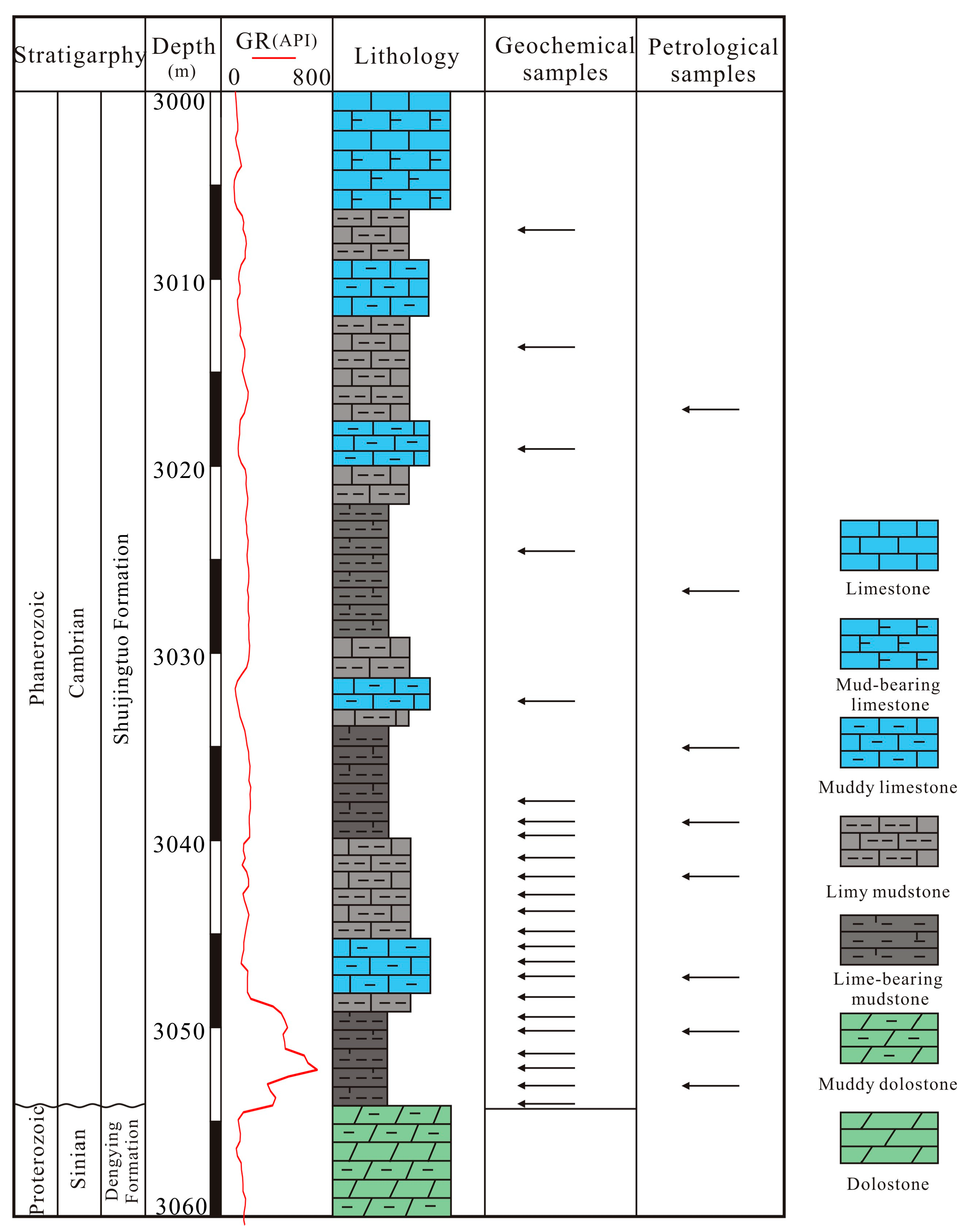
This research systematically examines the core features of well EYY3 from the Cambrian Shuijingtuo Formation to investigate sedimentary characteristics of the carbonate platform shale. The well was drilled by the Wuhan Geological Survey Center, China Geological Survey, and the samples were collected with permission for this study. From the lower part of the Shuijingtuo Formation, a total of 33 organic-rich shales were sampled. Sampling was strategically designed based on vertical variations in organic matter content, with denser sampling intervals in the organic-rich lower section to better capture the characteristics of organic matter enrichment, and sparser sampling in the upper lean section. Among these samples, 23 were used for trace element and total organic carbon (TOC) analysis, and 10 underwent whole-rock mineral analysis (Figure 2). Geochemical analyses were conducted at the China Geological Survey (CGS) in the Wuhan Geological Survey Center. A LECO CS-600 Carbon and Sulfur Analyzer was used to evaluate TOC content, trace elements were measured using an X Series 2 Mass Spectrometer, and major elements were analyzed with an Epsilon 5 X-Ray Fluorescence Spectrometer. Rock mineralogy was determined on 10 samples at Numerical Rock Technologies (NRT) using a Bruker D8 Advance Powder X-Ray Diffraction (PXRD).

3.2. Data Analysis

To analyze the redox conditions of the sedimentary water column, we utilized an elemental enrichment factor (EEF) as recommended by Algeo [32,33]. The EEF is calculated adopting the formula below:
X-EF = (X/Al)sample/(X/Al)PAAS
(X/Al)sample represents the ratio of the target element to aluminum in the sample, and (X/Al)PAAS represents the corresponding ratio for Post-Archean Australian Shale [34]. An X-EF value greater than 1 indicates elemental enrichment, whereas a value less than 1 indicates depletion [35].
Generally, there are three sources of silicon in shale, including normal terrestrial clastic deposition, hydrothermal diagenetic processes, and biogenic contributions. Due to the challenge in quantifying biogenic or hydrothermal silicon [36,37], we estimated the content of silica derived from non-terrestrial detrital sources using the equation for excess silicon:
Siex = Sis − [(Si/Al)bg × Als]
where Sis denotes the elemental silicon concentration of the sample, and (Si/Al)bg is set to 3.11, based on the mean ratio of pre-Paleozoic shales [34]. To evaluate paleoclimatic conditions and weathering intensity in the source area, we calculated the Chemical Alteration Index (CIA) [38] as follows:
CIA = 100 × [Al2O3/(Al2O3 + CaO* + Na2O + K2O)]
Here, CaO* depicts only the calcium oxide in silicates and can be adjusted by P2O5: CaO* = Min [Na2O, CaO−10/3 × P2O5] [39].

4. Results

4.1. Core Observation

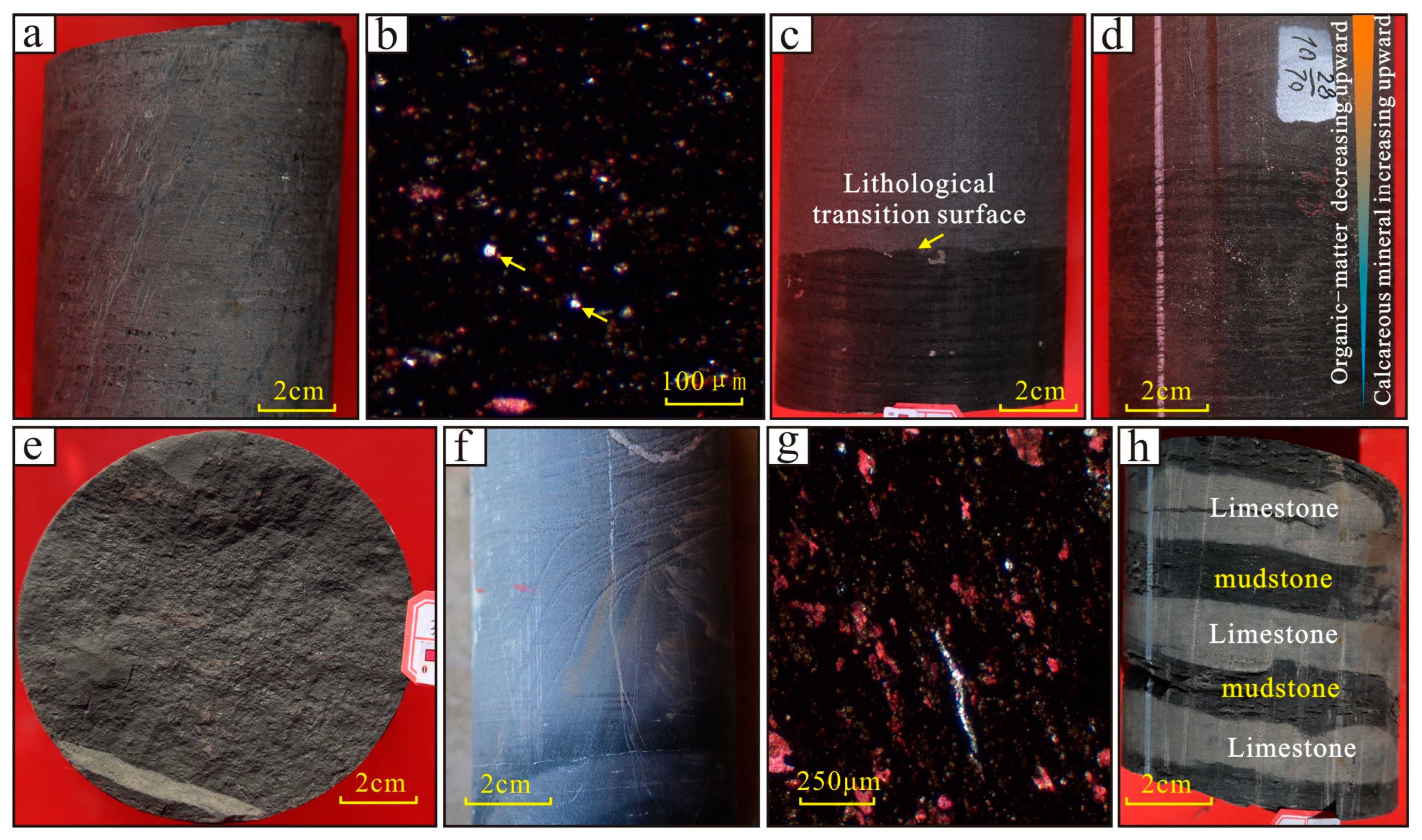
The petrographic analysis of the Shuijingtuo Formation in well EYY3 reveals that it consists mainly of carbonate rocks and mudstone (Figure 3). The black organic-rich mudstone at the base is in unconformable contact with dolomite rocks of the Dengying Formation. In the Shuijingtuo Formation, organic-rich shale is predominantly found in the lower section, where various fossils are present, including trilobites and high-muscle worms. Notably, the color of the mudstone transitions gradually from black at the bottom to dark gray and then gray towards the top. The carbonate minerals interbedded within the mudstone increase in abundance, with locally visible muddy chert directly overlying the dark mudstone and transitioning upward into carbonate deposits. Chert lenses are more frequently observed within mudstone, and the contact between the top and bottom predominantly exhibits a synclinal geometry.

4.2. Mineralogy

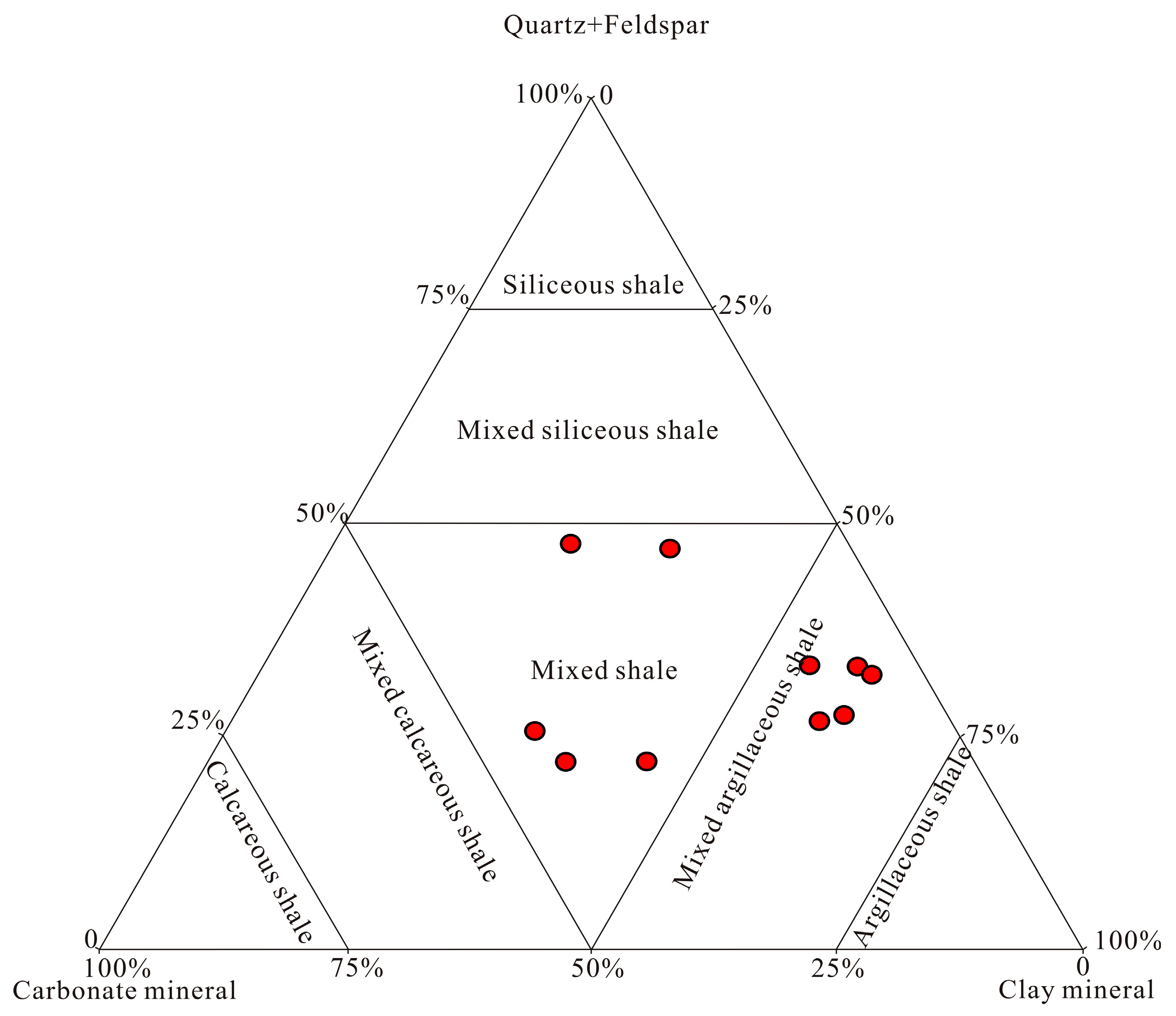
In well EYY3, mineralogical analysis of organic-rich shale from the Cambrian Shuijingtuo Formation reveals a composition primarily consisting of quartz, carbonate minerals, and clay minerals, along with pyrite and feldspar. Quartz content varies from 18.6% to 31.3%, averaging 25.5%. Carbonate minerals, primarily dolomite and calcite, vary from 4.8% to 39.9%, averaging 18.9%. Clay minerals range from 18.1% to 61.1%, averaging 43.9%. Feldspar minerals, including potassium feldspar and plagioclase feldspar, range from 0% to 10.8%, with an average of 2.9%. Pyrite is found in all samples, varying from 1.8% to 7.8%, averaging 4.3%. In comparison with typical organic-rich shale found in continental-shelf environments, this formation exhibits lower silica and higher calcium contents. Based on their mineral composition, the shale deposits of the Shuijingtuo Formation are predominantly mixed shale and argillaceous shale (Figure 4). Vertically, the black rock system transitions primarily from a mixed shale facies to a muddy shale facies.

4.3. TOC

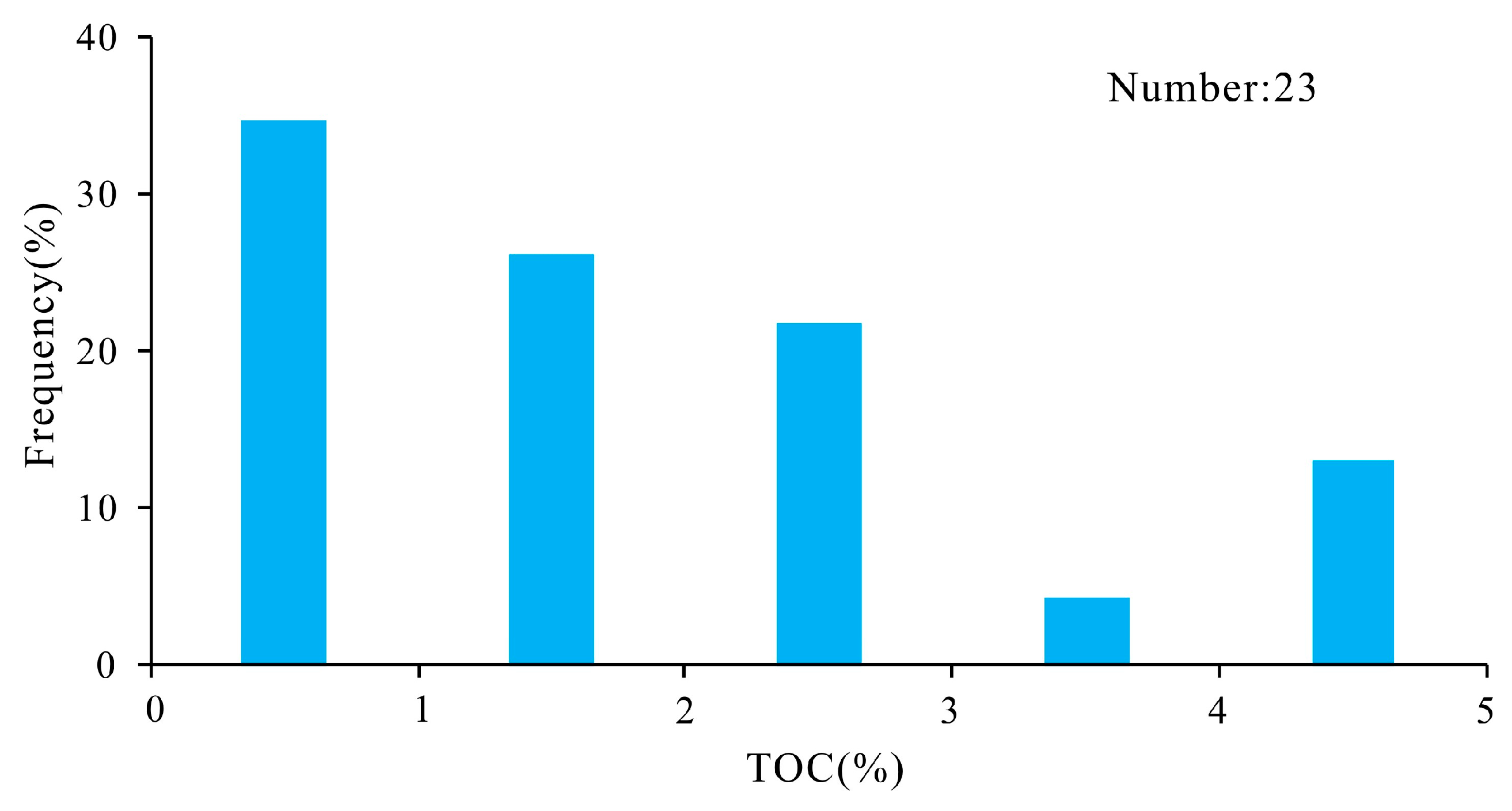
TOC contents of shales in the lower section of the Shuijingtuo Formation from well EYY3 vary from 0.30% to 4.77%, averaging 1.79% (Figure 5). The data show a rapid increase in the lower section, followed by a gradual decrease upward, with a 9.5 m interval of shale exhibiting TOC values greater than 2% (Figure 6). These TOC contents are lower than those reported for the Shuijingtuo Formation in the rift trough area by previous studies [41].

4.4. Major Elements

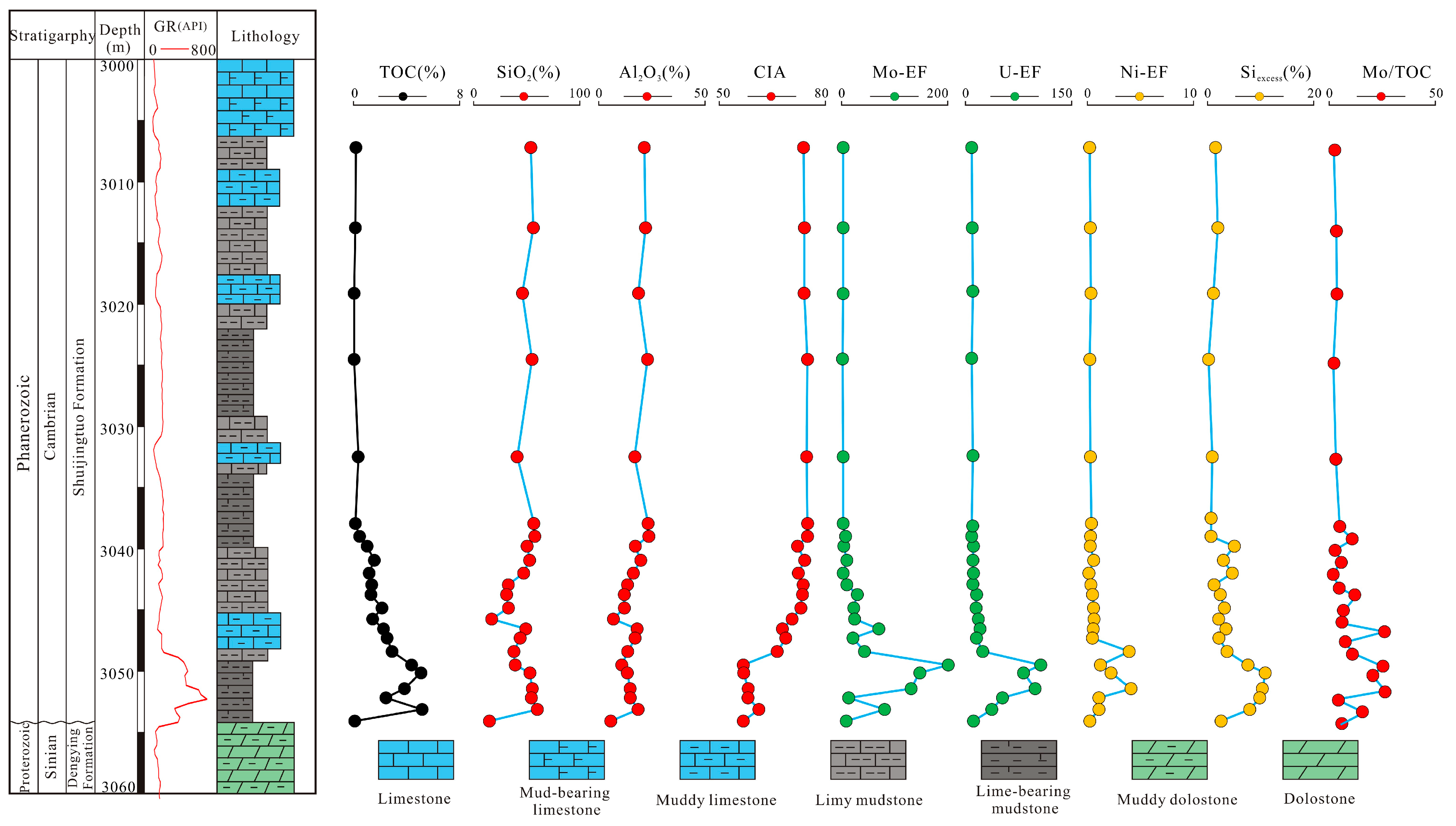
Major element compositions are detailed in the Supplementary Table S1. SiO2, Al2O3, and CaO are the predominant elements in the Shuijingtuo Formation, with each exceeding 10%, followed by MgO, K2O, Fe2O3, and FeO, which generally range from 1% to 5%. Other elements, including Na2O, TiO2, P2O5, and MnO, occur in minor concentrations or are present in very low concentrations, mostly below 1%. SiO2 content varies from 15.62% to 54.79%, averaging 41.89%, with slightly lower values in the lower part. Al2O3 concentrations range from 4.24% to 19.83%, averaging 13.45%, and show a gradual increase from bottom to top (Figure 6). CaO content values vary considerably, ranging from 2% to 38.16%, with an average of 12.80%.
The chemical weathering index (CIA) and excess silicon content (Siex) were calculated based on major element composition. The results show CIA values ranging from 57.84 to 73.62, averaging 68.24, with a gradual increase from bottom to top. Conversely, Siexcess values decrease from the bottom upwards, varying from 0% to 9.11%, averaging 3.11%.

4.5. Trace Elements

We determined the enrichment coefficients for trace elements (including Mo, Ni, U, and V) and the Mo/TOC ratio using the standard method. The results indicate that in the lower part of the black shale of the Shuijingtuo Formation, the enrichment factors for Mo, Ni, U, and V display similar patterns characterized by a rapid rise in the lower section followed by a gradual decrease toward the top. Mo-EF values vary from 0.42 to 172.98, averaging 30.32; Ni-EF values range from 0.68 to 4.13, averaging 1.31; U-EF values vary from 2.76 to 87.78, averaging 18.35; and V-EF values vary from 0.74 to 12.21, averaging 1.94. The Mo/TOC ratios vary from 0.92 to 25.09, averaging 7.78, displaying high values at the bottom that gradually decrease toward the top.

5. Discussion

5.1. Redox Environment

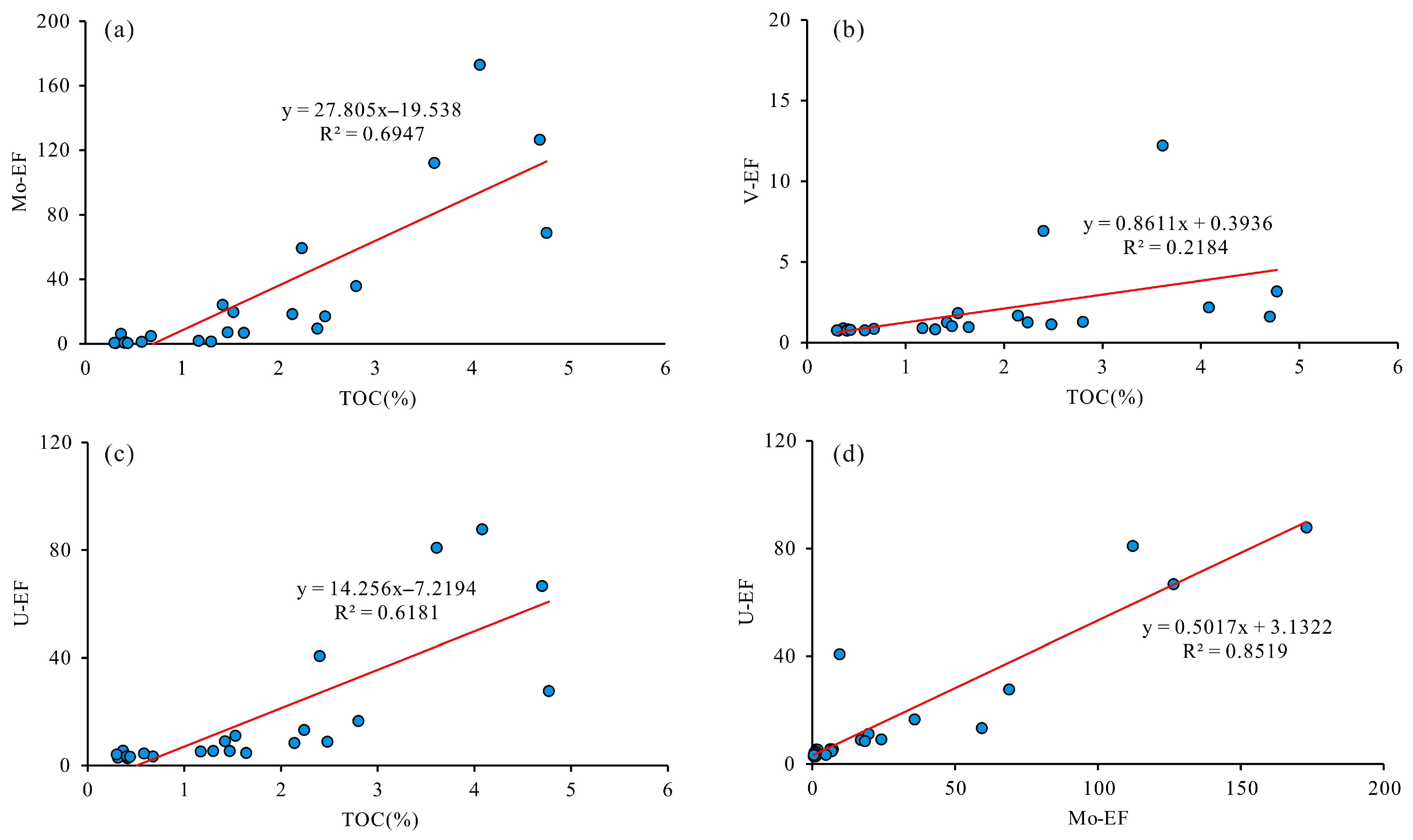
Understanding redox conditions is essential to comprehending the enrichment of organic matter in marine rock systems. Reliable parameters are necessary for distinguishing redox conditions in sedimentary waters. Generally, a significant positive correlation exists between total organic carbon (TOC) content and redox-sensitive element enrichment, reflecting that lower oxygen levels facilitate organic matter accumulation [35,42]. Therefore, the analysis of the correlation between TOC values and certain redox-sensitive elements can be used to assess the effectiveness of redox conditions. In the shale deposits of the Shuijingtuo Formation, the correlation coefficients for molybdenum enrichment factor (R2 = 0.69) and uranium enrichment factor (R2 = 0.62) with TOC are significantly higher than that of vanadium enrichment factor (R2 = 0.22) (Figure 7a–c), indicating that Mo and U are more responsive to variations in the depositional environment. Geochemical sedimentary profiles (Figure 6) demonstrate that the highest organic matter enrichment occurs under strongly reducing conditions at the base, with a subsequent decline in enrichment as the environment becomes more oxygenated. Algeo suggested that the depositional environment transitions to a sulfidic one when oxygen concentrations in the water body approach zero [32]. This scenario can result in distinct redox differential enrichment patterns for redox-sensitive elements—specifically, the enrichment rate of molybdenum in sediments can substantially exceed that of uranium [35]. However, in shale deposits of the Shuijingtuo Formation from Well EYY3, Mo-EF and U-EF do not exhibit differential enrichment (Figure 7d). This finding indicates the presence of an anoxic environment in well EYY3, but suggests that sulfidic (euxinic) conditions had not yet developed in the study area.

5.2. Hydrodynamic Environment

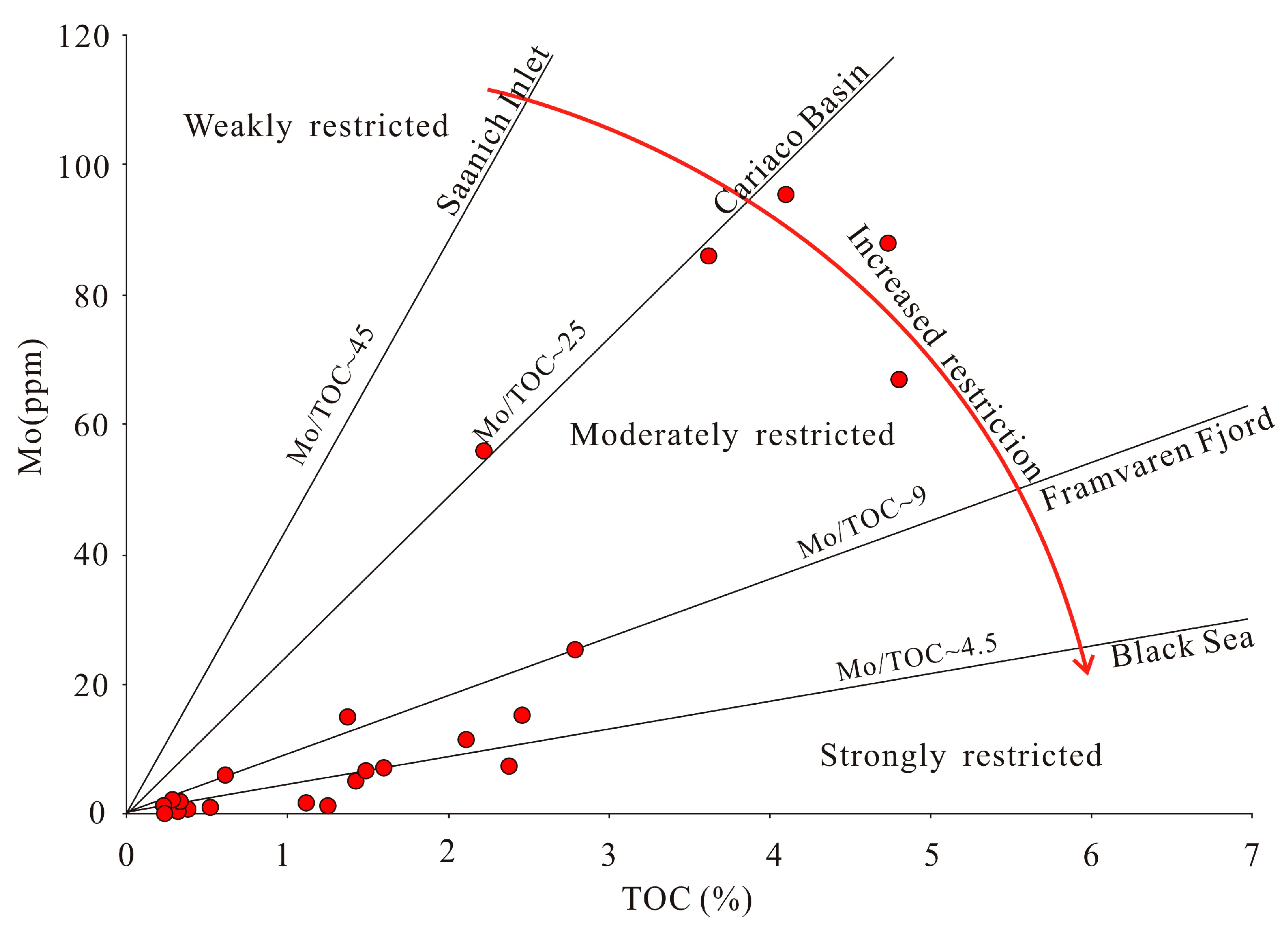
Hydrodynamic environments are closely related to paleotopography. Open basins typically exhibit stronger hydrodynamic conditions and better water circulation, whereas restricted areas tend to have reduced water circulation, leading to anoxic and low-energy water environments [43,44]. Previous investigations have shown that the ratio of molybdenum (Mo) concentration to total organic carbon (TOC) in sediments varies significantly across sedimentary basins with different hydrodynamic environments. For instance, in the Saanich Inlet, the Mo/TOC ratio in sediments is approximately 45, whereas in the completely enclosed Black Sea, this ratio is only about 4.5. This pattern indicates that a more restricted basin is associated with a lower Mo/TOC ratio [42]. In the investigated region, the Shuijingtuo Formation is situated atop a carbonate platform, with its Mo/TOC ratios ranging from 0.92 to 25.09, placing all samples in the moderately restricted to strongly restricted range (Figure 8). Higher proportions of Mo/TOC are predominantly found in the lower portion of the black shale, with values gradually decreasing upward (Figure 6). This pattern suggests that water circulation on the carbonate platform in the study area was enhanced by large-scale marine incursions during the Early Cambrian. Subsequently, as sea levels declined, water circulation between the platform depression area and the ocean decreased, resulting in a more restricted basin. These observations underscore the significant impact of sea level fluctuations on the hydrodynamic environment of the carbonate platform region.

5.3. Terrigenous Supply

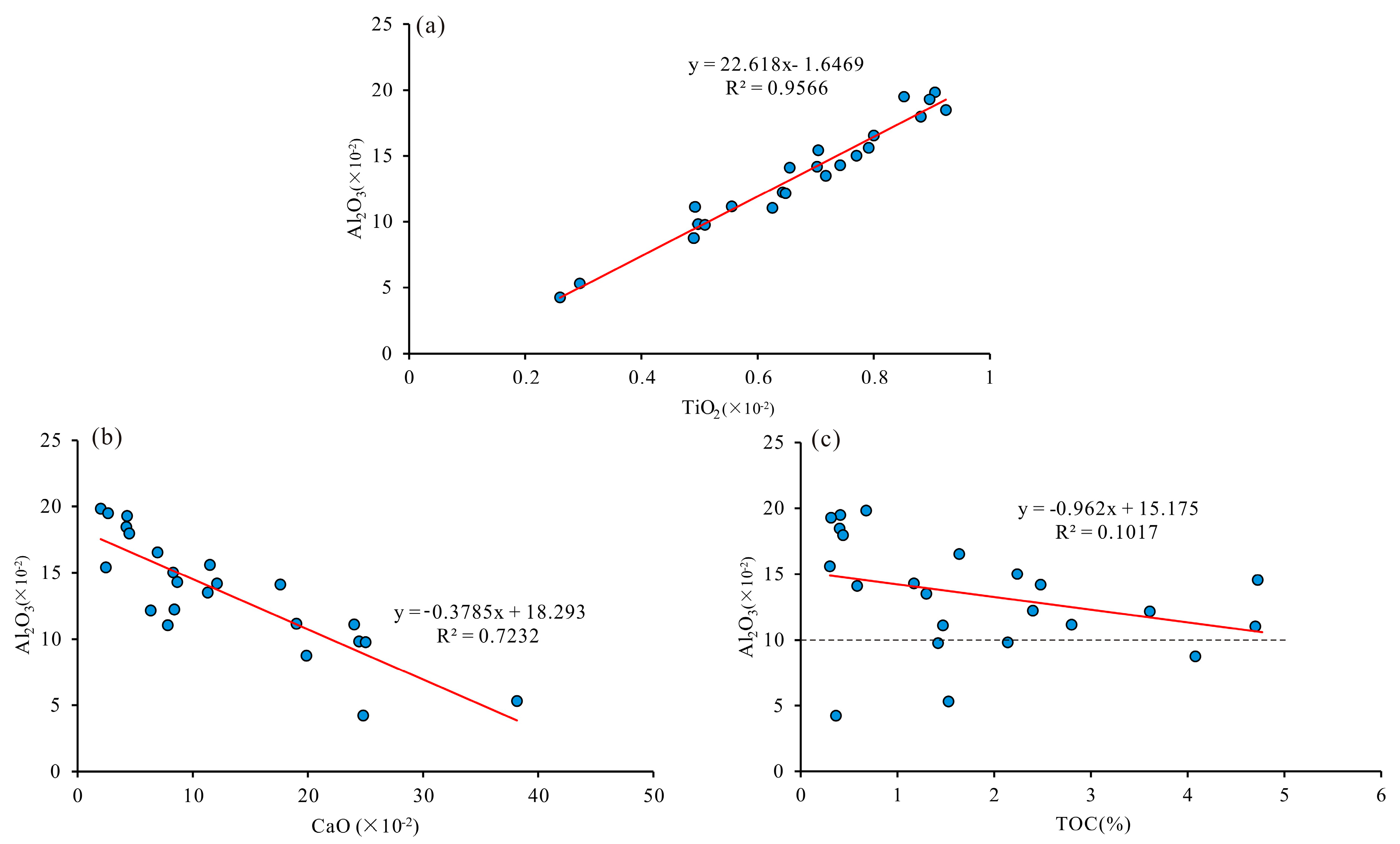
Previous studies indicate that the enrichment of organic matter is closely linked to detrital input. In general, a high supply of terrigenous detrital materials can increase the sedimentation rate but may also dilute organic matter concentration. Conversely, a low supply of terrigenous detrital material reduces the sedimentation rate, potentially leading to oxidation of organic matter [45,46]. Therefore, accurate assessment of terrigenous detrital material inputs is necessary for evaluating organic matter enrichment. Previous studies have shown that Al2O3 and TiO2 contents in marine shales can be used to quantitatively estimate terrigenous detrital material input [35,45,47]; these two elements are typically well correlated. In the Shuijingtuo Formation on the carbonate platform, Al2O3 and TiO2 contents show a strong positive correlation (R2 = 0.96), and Al2O3 shows a strong negative correlation with CaO content (R2 = 0.72; Figure 9), indicating that Al2O3 can be used as a reliable proxy for terrigenous detrital material inputs in this carbonate platform setting. In the geochemical profiles, Al2O3 values vary from 4.24% to 19.83%, averaging 13.45%, and show a gradual increasing trend in the vertical profile (Figure 6). Although TOC and Al2O3 show no significant correlation (R = 0.10), a strong negative correlation between Al2O3 and TOC is observed when Al2O3 values exceed 10% (Figure 9c). However, when Al2O3 content is below 10%, TOC content also decreases markedly (Figure 9c). These observations suggest that terrigenous detrital material input may be an important factor affecting the enrichment of organic matter in the carbonate platform and that either too high or too low terrigenous detrital material supply may be unfavorable for organic matter enrichment [45,46].

5.4. Silica Source and Upwelling Current
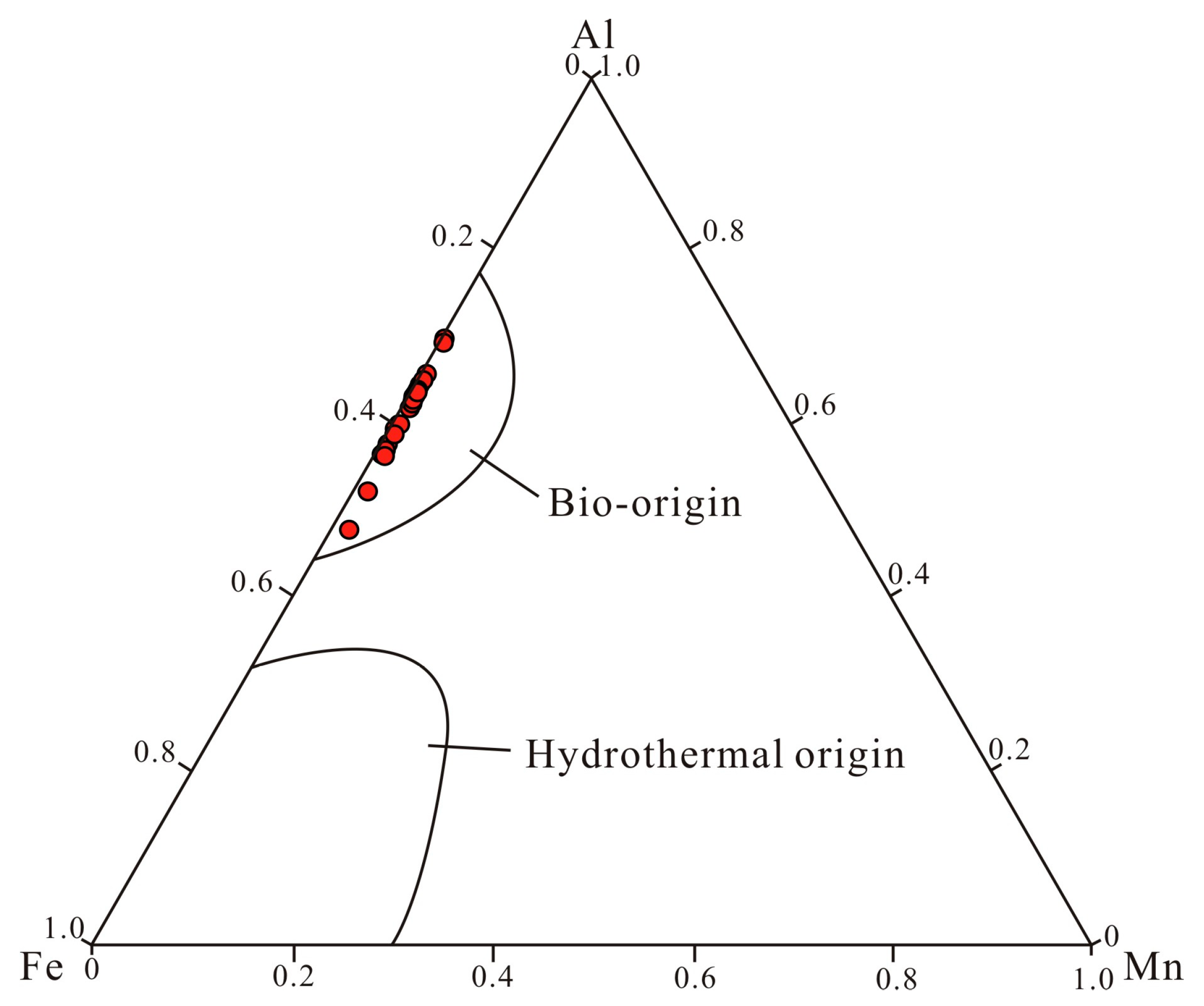
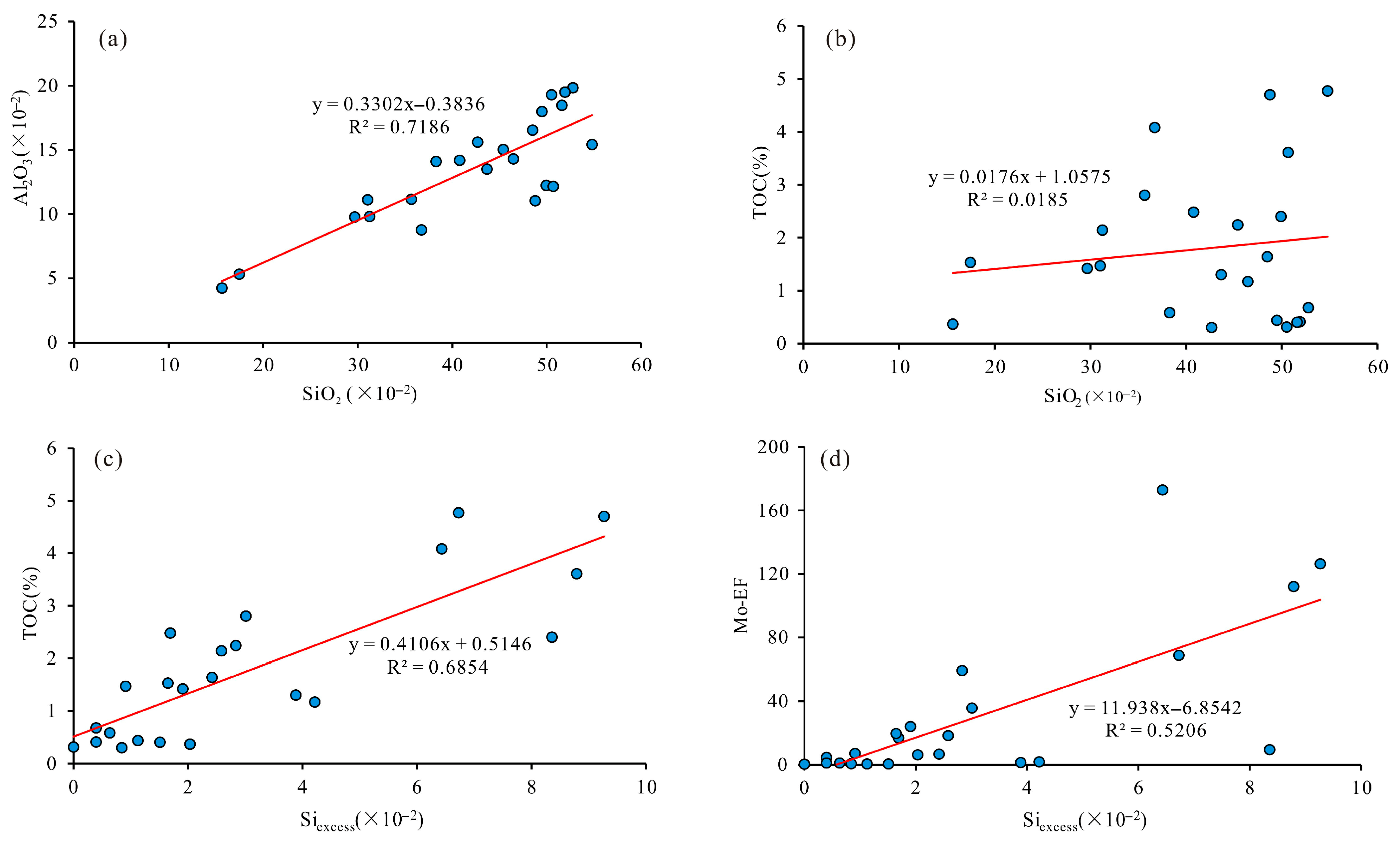
The sources of shale silica can be of various origins, including terrestrial, biological, and hydrothermal. The petrological and geochemical characteristics of shale with different silica sources show clear variations [36,46,47,48]. In general, silica of terrestrial origin tends to correlate with the amount of terrigenous detrital input, with higher terrigenous detrital content leading to higher terrestrial silica content. In the Cambrian Shuijingtuo Formation shale, the parameters of terrigenous detrital input, including Al2O3 and SiO2 contents, show a strong positive correlation (R2 = 0.72), indicating that the silica in the Shuijingtuo Formation shale is likely dominated by terrigenous origin (Figure 10a). However, some silica-rich shale samples have low TOC content, which is probably related to a large amount of terrigenous detrital input. At the same time, other silica-rich shale samples have high TOC content (Figure 10b), indicating that there are other sources of silica in this part of the shale. Previous authors frequently used excess silica (Siexcess) to characterize the total amount of silica from sources other than terrestrial. The geochemical profiles show a decrease in excess silica from the bottom upwards in the Shuijingtuo Formation. Excess silica shows a strong positive correlation with TOC values (R2 = 0.69) and redox conditions (R2 = 0.52) of the sedimentary water body (Figure 10c, d), suggesting that the enrichment of excess silica is possibly associated with the combined effects of sea level change and biological activities. Meanwhile, the Al-Fe-Mn triangular projection can determine whether the Si in shale has been affected by hydrothermal activities [36]. Although previous studies showed significant hydrothermal activities in the South China Yangtze slope area during the Ediacaran–Cambrian transition, all data points in this study fall into the biogenic field, indicating that the contribution of hydrothermal silica, if any, was insignificant compared to biogenic and terrigenous sources (Figure 11). The absence of hydrothermal silica is likely due to the fact that the study area is located on a carbonate platform, and therefore hydrothermal fluids from the slope area are unlikely to have affected it.
Therefore, in the investigated region, silica in the Shuijingtuo Formation shale is primarily of terrigenous and biogenic origin, with biogenic silica dominating at the bottom (Figure 3b). This interpretation is supported by previous studies, which report that silica-rich organisms are common in the Shuijingtuo Formation black shale deposits [49,50,51,52].
However, it should be noted that the relative contributions of different silica sources in shale are closely linked to the depositional environment. During the Early Cambrian, under the influence of sea-level rise, the study area not only developed a strongly reducing water environment but also experienced a flourishing of silica-rich organisms carried by ocean currents (Figure 3b). After their death, the siliceous remains of these silica-rich organisms were preserved in an anoxic environment. In the latter stage, the sea level declined, the number of siliceous organisms decreased, preservation conditions deteriorated, and silica in shale became dominated by terrigenous sources.
Figure 11. Al-Fe-Mn triangular projection of the Cambrian Shuijingtuo Formation (Modified from [53]).
Jmse 14 00762 g011

5.5. Paleoproductivity

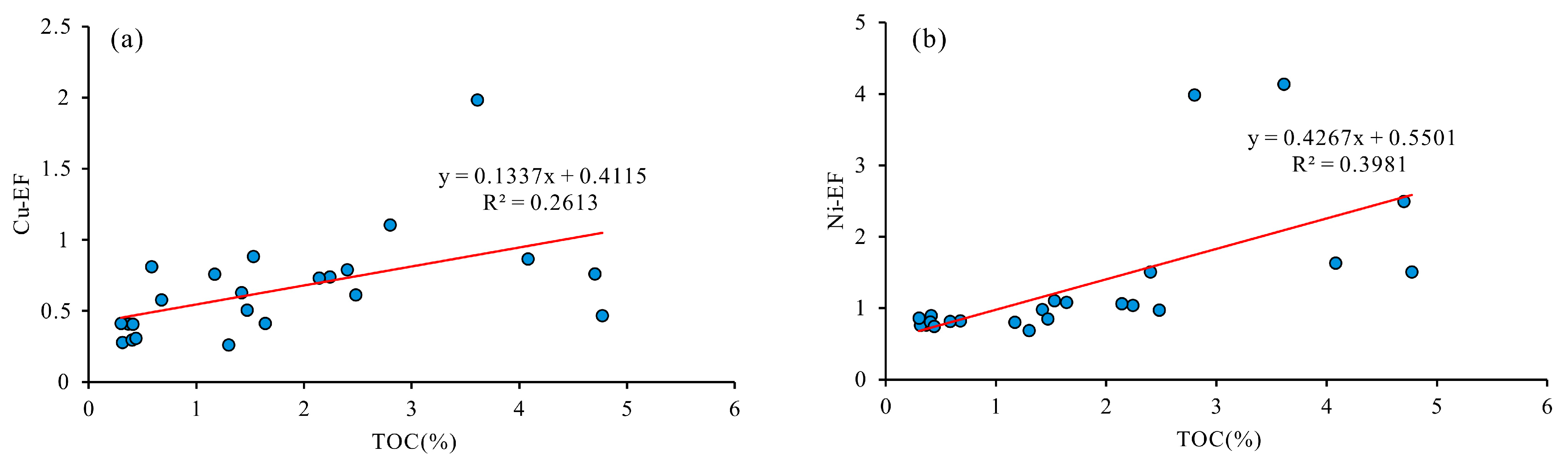
The enrichment of organic matter is primarily influenced by paleoproductivity; researchers commonly use proxies such as Cu, Ni, Ba, P, and TOC to reconstruct paleoproductivity during the sedimentary period [35,54]. In the geochemical section of the Cambrian Shuijingtuo Formation (Figure 6), Ni enrichment factor (Ni-EF) and TOC exhibit parallel trends, with values showing a rapid increase in the lower section followed by a gradual decrease upward. This pattern suggests that paleoproductivity was relatively high during the Early Cambrian in the study area, as indicated by the presence of multiple biogenic fossils in the core samples. However, correlation plots of Cu-EF and Ni-EF with TOC reveal weak positive correlations (R2 = 0.26 and R2 = 0.40; Figure 12). These results are different from those obtained in the Wufeng and Longmaxi shale deposits, representing deep-water shelf environments. Nevertheless, the strong correlation between excess silica (Siexcess) and organic matter (Figure 10c) indicates that silica-rich biogenic remains could be a vital component of organic matter, suggesting that excess silica can serve as a key indicator for evaluating palaeoceanographic productivity in the investigated region. The lower part of the Shuijingtuo Formation shows a rapid increase in excess Si, indicating that rising sea levels promoted biological flourishing in the carbonate platform area.

5.6. Controlling Factors on Organic Matter Accumulation

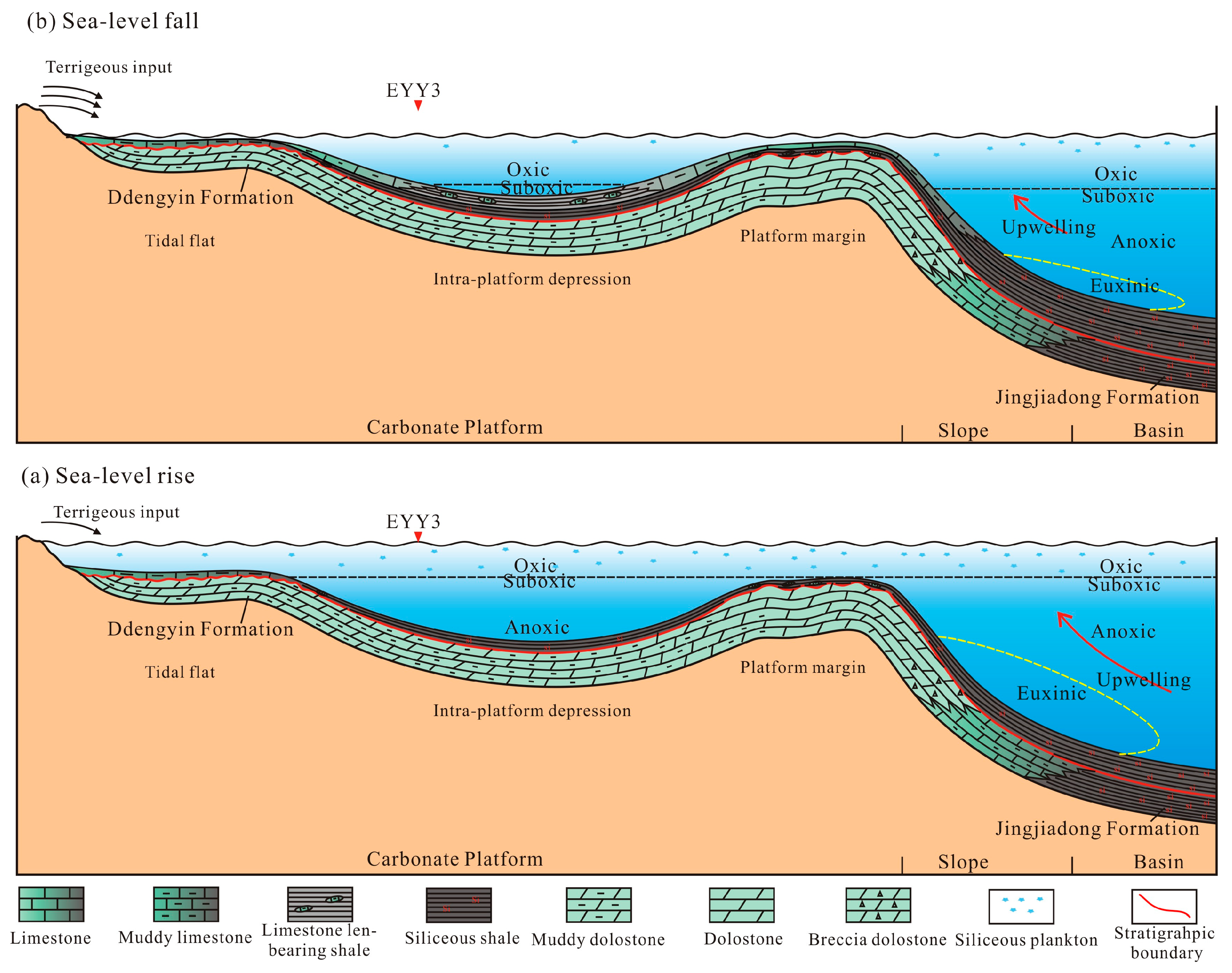
Previous studies have identified two primary factors controlling organic matter enrichment in marine shale: paleoproductivity and preservation conditions [55,56,57]. Higher productivity provides the organic matter for sedimentation, while anoxic depositional environments promote organic matter preservation. Therefore, both factors are typically essential for organic-rich shale [58]. However, it is vital to note that productivity and preservation conditions of oceans are influenced by various factors, including nutrient availability, upwelling, redox state, terrigenous detrital material inputs, and water column circulation. Ultimately, these factors are controlled by basin tectonic geomorphology and climate change, which collectively shape the marine environment and constrain organic-rich shale development [59,60,61]. In contrast to organic-rich shales from shelf environments, the organic-rich shale of the Shuijingtuo Formation was deposited on a carbonate platform, and its sedimentary characteristics are distinct. Based on the findings of this study, an original conceptual model is proposed (Figure 13) to illustrate the formation process of organic-rich shale within intra-platform depressions, demonstrating that such shales can also develop in carbonate platform interiors, not only in slope and shelf settings.
During the Sinian period, the investigated region was characterized by a carbonate platform depositional environment. Due to shallow sea levels, dolomite or chert deposition predominated, with some regions locally exposed to the surface [62]. However, with large-scale Cambrian marine incursions, the sea level rose rapidly, altering the biological landscape and the paleoceanographic environment [63,64]. The geochemical profiles (Figure 6) show that an abrupt increase in Mo/TOC ratios and Siexcess contents in the lower section of the Shuijingtuo Formation indicates that rapidly rising sea levels enhanced seawater circulation in the depressions within the platform and oceanic basins, facilitating the flourishing of silica-rich organisms and increasing paleoproductivity. The clear correlation between excess silica and TOC (Figure 10c) suggests that silica-rich organisms resulting from sea-level rise play an important role in the formation of organic-rich shale in the Shuijingtuo Formation. Additionally, sea-level rise led to the formation of anoxic environments in some low-lying areas, as evidenced by the substantial enrichment of redox-sensitive elements at the bottom of the Shuijingtuo Formation. The redox-sensitive elements exhibit a positive correlation with TOC (Figure 7). These findings indicate that higher paleoproductivity and anoxic environments resulting from rapid sea-level rise promote organic-rich shale formation. Consequently, the carbonate rocks of the Sinian Dengying Formation on the carbonate platform were covered by black shale of the Cambrian Shuijingtuo Formation (Figure 13a).
However, with the subsequent sea-level decline, the water depth in the depressions decreased significantly, leading to an increase in carbonate rock minerals within the shale. This resulted in numerous chert lenses or lithological synclinal surfaces, indicating that storms began to affect the sedimentary basement during this period. The concentration of redox-sensitive elements decreased significantly, suggesting that the water body transitioned to an oxidized environment. At the same time, the connectivity between the intraplatform depression and the ocean weakened considerably, resulting in a more restricted water body that limited nutrient supply and adversely affected plankton proliferation. This ultimately led to the replacement of organic-rich shale with organic-poor marl in the Shuijingtuo Formation (Figure 13b).
The conceptual model presented in Figure 13 demonstrates that while organic-rich shale can form on carbonate platforms, these shale deposits are often rich in carbonate minerals (Figure 3g), and their development scale is not comparable to that of basinal or slope environments. Therefore, large and deep depressions within platforms may have the potential to form thick shale deposits. Furthermore, sea-level change is the key factor controlling the formation of organic-rich shale in carbonate platform depressions. Sea-level rise can enhance water circulation in platform depressions, promoting organism proliferation and the establishment of anoxic environments, factors that have the most pronounced effects on organic enrichment in platform environments. The proposed model may offer insights for understanding organic matter enrichment in similar carbonate platform settings globally, particularly during intervals of rapid sea-level rise.

6. Conclusions

  • Petrological and geochemical data indicate that the total organic carbon (TOC) content of the Cambrian Shuijingtuo Formation shale in western Hubei of the Middle Yangtze region can reach 4.77%. Additionally, the interval with TOC content higher than 2% is 9.5 m thick. This suggests that carbonate platform depression settings may accumulate significant organic-rich shales, highlighting their potential for unconventional hydrocarbon exploration.
  • Organic-rich shale development in carbonate platform depressions is most likely linked to sea level change. Global sea-level rise was associated with significant marine transgressions in the Early Cambrian, possibly leading to rapid sea-level rise in the Central Yangtze and Western Hubei carbonate platform. This influx likely allowed nutrients and silica-rich organisms from the basin to enter the platform depression areas, potentially enhancing paleoproductivity and providing a material source for organic matter enrichment. Sea-level rise probably facilitated circulation between the surface waters of the platform and external bodies of water, which may have further contributed to the development of anoxic environments in the depressions. Consequently, organic-rich shale occurrence at the base of the Shuijingtuo Formation was promoted by the rapid sea-level rise.
  • Unlike shale deposits in shelf environments, the organic-rich shale in carbonate platform depressions is often rich in carbonate minerals. As sea level declined, the connectivity between the water bodies in the platform depressions and external waters likely decreased significantly, which may have led to a reduced supply of nutrients and diminished paleoproductivity. This decline probably also caused the sedimentary water bodies to become oxidized, intensifying storm impacts in the depression areas. As a result, organic matter content significantly decreased in shale deposits, and the sediments in these areas were eventually replaced by marl.
  • The low-lying geomorphology of the carbonate rocks and the rise in sea level appear to be the primary factors that restrict organic-rich shale development within carbonate platforms. During highstand periods, large-scale intraplatform depressions may emerge as favorable areas for the formation of organic-rich shale, which warrant more attention for shale gas exploration. Furthermore, these black shales with a higher proportion of carbonate minerals might also be more conducive to fracturing processes, potentially enhancing resource extraction.
  • Given that this study is based on a single well (EYY3) with a limited number of samples, the conclusions drawn here may be spatially limited in the absence of regional correlation. Future research should focus on multi-well correlation across the carbonate platform, with particular emphasis on comparing intraplatform depressions, platform slopes, and basinal environments. Understanding the sedimentary and organic enrichment differences among these settings will help refine the exploration framework for organic-rich shales in carbonate platforms.

Supplementary Materials

The following supporting information can be downloaded at: https://www.mdpi.com/article/10.3390/jmse14090762/s1, Table S1: Geochemical data; Table S2: Petrological data.

Author Contributions

Conceptualization Q.C.; methodology, B.Z. and Q.C.; formal analysis, Q.C., G.Z. and P.Z.; investigation, G.Z., L.C., A.L. and P.Z.; resources, A.L. and P.Z.; data curation, A.L.; writing—original draft preparation, B.Z. and Q.C.; writing—review and editing, B.Z., Q.C., O.I.K. and R.W.; funding acquisition, B.Z. and Q.C. All authors have read and agreed to the published version of the manuscript.

Funding

This research was funded by National Science and Technology Major Project of China [2025ZD1404102-01], Regional Innovation and Development Joint Fund of the National Natural Science Foundation of China [U25A20776], the Fundamental and Commonweal Geological Survey of Oil and Gas of China [DD20240047, DD20221659, and DD20190109], and the Open Fund of Technology Innovation Center for Shale Oil and Gas Accumulation Theory and Engineering in Southern Complex Structural Area, China Geological Survey [SOG-202408].

Data Availability Statement

Data supporting reported results can be found in the Supplementary File. Further inquiries can be directed to the corresponding author.

Conflicts of Interest

Author Ruyue Wang was employed by the company SINOPEC Petroleum Exploration and Production Research Institute. The remaining authors declare that the research was conducted in the absence of any commercial or financial relationships that could be construed as a potential conflict of interest.

References

  1. Yan, D.; Chen, D.; Wang, Q.; Wang, J. Large-scale climatic fluctuations in the latest Ordovician on the Yangtze block, South China. Geology 2010, 38, 599–602. [Google Scholar] [CrossRef]
  2. Xu, L.; Lehmann, B.; Mao, J.; Nägler, T.F.; Neubert, N.; Böttcher, M.E.; Escher, P. Mo isotope and trace element patterns of Lower Cambrian black shales in South China: Multi-proxy constraints on the paleoenvironment. Chem. Geol. 2012, 318–319, 45–59. [Google Scholar] [CrossRef]
  3. Zhang, Y.; Liao, Z.; Cao, J.; Lash, G.G.; Wei, Y.; Shi, Q.; Zhang, B.; Kuang, H.; Liu, Y.; Huang, Q. Climate variability during the late Ediacaran: Insights from episodic deposition of black shale-hosted Mn-carbonates in South China. Chem. Geol. 2024, 646, 121910. [Google Scholar] [CrossRef]
  4. Zhao, B.; Long, X.; Chang, C. Early Cambrian sedimentary rocks in South China: A link between oceanic oxygenation and biological explosion. Earth-Sci. Rev. 2024, 250, 104708. [Google Scholar] [CrossRef]
  5. Zhai, G.; Wang, Y.; Liu, G.; Zhou, Z.; Bao, S.; Chen, K.; Kang, H.; Zhang, J.; Wang, S.; Zhang, Y. The Sinian-Cambrian formation shale gas exploration and practice in southern margin of Huangling paleo-uplift. Mar. Pet. Geol. 2019, 109, 419–433. [Google Scholar] [CrossRef]
  6. Dou, L.; Wen, Z.; Wang, J.; Wang, Z.; He, Z.; Song, C.; Liu, X.; Zhang, N. Analysis of the world oil and gas exploration situation in 2021. Pet. Explor. Dev. 2022, 49, 1195–1209. [Google Scholar] [CrossRef]
  7. Guo, X.S.; Wang, R.Y.; Shen, B.J.; Wang, G.P.; Wan, C.X.; Wang, Q.R. Geological characteristics, resource potential, and development direction of shale gas in China. Pet. Explor. Dev. 2025, 52, 17–32. [Google Scholar] [CrossRef]
  8. Chen, W.; Tian, J.; Lin, X.; Liang, Q.; Wang, X.; Yi, D.; Li, Y. Climate fluctuations during the Ordovician-Silurian transition period in South China: Implications for paleoenvironmental evolution and organic matter enrichment. Palaeogeogr. Palaeoclimatol. Palaeoecol. 2023, 613, 111411. [Google Scholar] [CrossRef]
  9. Lu, Y.B.; Jiang, S.; Lu, Y.C.; Xu, S.; Shu, Y.; Wang, Y. Productivity or preservation? The factors controlling the organic matter accumulation in the late Katian through Hirnantian Wufeng organic-rich shale, South China. Mar. Pet. Geol. 2019, 109, 22–35. [Google Scholar] [CrossRef]
  10. Wang, X.Q.; Zhu, Y.M.; Lash, G.G.; Wang, Y. Multi-proxy analysis of organic matter accumulation in the Upper Ordovician–Lower Silurian black shale on the Upper Yangtze Platform, south China. Mar. Pet. Geol. 2019, 103, 473–484. [Google Scholar] [CrossRef]
  11. Cai, Q.S.; Hu, M.Y.; Zhang, B.M.; Ngia, N.; Liu, A.; Liao, R.Q.; Kane, O.; Li, H.; Hu, Z.G.; Deng, Q.J.; et al. Source of silica and its implications for organic matter enrichment in the Upper Ordovician-Lower Silurian black shale in western Hubei Province, China: Insights from geochemical and petrological analysis. Pet. Sci. 2022, 19, 74–90. [Google Scholar] [CrossRef]
  12. Zou, C.; Zhu, R.; Chen, Z.Q.; Ogg, J.G.; Wu, S.; Dong, D.; Qiu, Z.; Wang, Y.; Wang, L.; Lin, S.; et al. Organic-matter-rich shales of China. Earth-Sci. Rev. 2019, 189, 51–78. [Google Scholar] [CrossRef]
  13. Cai, Q.S.; Hu, M.Y.; Kane, O.I.; Yang, Z.; Wen, Y.R.; Luo, Q.; Li, M.T.; Hu, Z.G.; Deng, Q.J. Petrological and geochemical characteristics of the Ordovician–Silurian black shale in eastern Sichuan and western Hubei, South China: Differential sedimentary responses to tectonism and glaciation. J. Palaeogeogr. 2023, 12, 129–152. [Google Scholar] [CrossRef]
  14. Khan, I.; Gao, Z.W.; Wang, G.L.; Luo, Q.Y.; Jamil, M.; Zhong, N.N.; Sun, Y.G. Lipid biomarkers recording marine redox conditions and biological community structures across the Precambrian–Cambrian transition from the west passive margin of the Indian Plate. Palaeogeogr. Palaeoclimatol. Palaeoecol. 2026, 629, 113781. [Google Scholar] [CrossRef]
  15. Wang, D.; Struck, U.; Ling, H.F.; Guo, Q.J.; Shields-Zhou, G.A.; Zhu, M.Y.; Yao, S.P. Marine redox variations and nitrogen cycle of the early Cambrian southern margin of the Yangtze Platform, South China: Evidence from nitrogen and organic carbon isotopes. Precambrian Res. 2015, 267, 209–226. [Google Scholar] [CrossRef]
  16. Zhou, D.; Dong, H.; Huang, X.; Liang, Y.; Deng, Z.; Huang, L.; Jiang, S. The paleo-oceanic environment and organic matter enrichment mechanism of the early Cambrian in the southern Lower Yangtze platform, China. Mar. Pet. Geol. 2024, 170, 107119. [Google Scholar] [CrossRef]
  17. Haq, B.U.; Schutter, S.R. A chronology of paleozoic sea-level changes. Science 2008, 322, 64–68. [Google Scholar] [CrossRef] [PubMed]
  18. Meert, J.G.; Lieberman, B.S. The Neoproterozoic assembly of Gondwana and its relationship to the Ediacaran-Cambrian radiation. Gondwana Res. 2008, 14, 5–21. [Google Scholar] [CrossRef]
  19. Zhao, G.C.; Wang, Y.J.; Huang, B.C.; Dong, Y.P.; Li, S.Z.; Zhang, G.W.; Yu, S. Geological reconstructions of the East Asian blocks: From the breakup of Rodinia to the assembly of Pangea. Earth-Sci. Rev. 2018, 186, 262–286. [Google Scholar] [CrossRef]
  20. Min, X.; Hua, H.; Sun, B.; Dai, Q.K.; Luo, J.Z.; Pan, X.Q.; Liu, Z.W. Diversification of heterotrophic protists at the eve of Cambrian explosion. Glob. Planet. Change 2021, 203, 103545. [Google Scholar] [CrossRef]
  21. Wang, Z.W.; Zhong, Y.J.; Liu, L.; Chen, H.D.; Wang, X.L.; Chan, A.Q. Evolution of Early Cambrian Intracraton Rift and Its Influence on the Paleogeographical Pattern, Western Hubei⁃Eastern Chongqing. Acta Sedimentol. Sin. 2023, 41, 1110–1123, (In Chinese with English abstract). [Google Scholar]
  22. Wang, J.; Li, Z.X. History of Neoproterozoic rift basins in South China: Implications for Rodinia break-up. Precambrian Res. 2003, 122, 141–158. [Google Scholar] [CrossRef]
  23. Guo, Q.; Strauss, H.; Zhu, M.; Zhang, J.; Yang, X.; Lu, M.; Zhao, F. High resolution organic carbon isotope stratigraphy from a slope to basinal setting on the Yangtze Platform, South China: Implications for the Ediacaran-Cambrian transition. Precambrian Res. 2013, 225, 209–217. [Google Scholar] [CrossRef]
  24. Wang, R.Y.; Gu, Y.; Ding, W.L.; Gong, D.J.; Yin, S.; Wang, X.H.; Zhou, X.H.; Li, A.; Xiao, Z.K.; Cui, Z.X. Characteristics and dominant controlling factors of organic-rich marine shales with high thermal maturity: A case study of the Lower Cambrian Niutitang Formation in the Cen’gong block, southern China. J. Nat. Gas Sci. Eng. 2016, 33, 81–96. [Google Scholar] [CrossRef]
  25. Gao, P.; Li, S.; Lash, G.G.; Yan, D.; Zhou, Q.; Xiao, X. Stratigraphic framework, redox history, and organic matter accumulation of an Early Cambrian intraplatfrom basin on the Yangtze Platform, South China. Mar. Pet. Geol. 2021, 130, 105095. [Google Scholar] [CrossRef]
  26. Wang, Z.; Jiang, H.; Chen, Z.; Liu, J.; Ma, K.; Li, W.; Xie, W.; Jiang, Q.; Zhai, X.; Shi, S.; et al. Tectonic paleogeography of Late Sinian and its significances for petroleum exploration in the middle-upper Yangtze region, South China. Shiyou Kantan Yu Kaifa Pet. Explor. Dev. 2020, 47, 946–961. [Google Scholar] [CrossRef]
  27. Xie, W.R.; Jiang, H.; Ma, S.Y.; Wang, Z.C.; Hao, T.; Fu, X.D.; Su, N.; Li, W.Z.; Wu, S.J.; Wang, X.D.; et al. Sedimentary evolution characteristics and favorable exploration directions of Deyang- Anyue Rift within the Sichuan Basin in Late Sinian-Early Cambrian. Nat. Gas Geosci. 2022, 33, 1240–1250, (In Chinese with English abstract). [Google Scholar]
  28. Wang, Z.; Zeng, X.; Miao, W.; Chen, B.; Liu, R. Geochemical Characteristics of Elements and Their Geological Significance in the Boundary between Yanjiahe Formation and Shuijingtuo Formation of the Early Cambrian in Yichang area. South China Geol. 2023, 39, 320–332, (In Chinese with English abstract). [Google Scholar] [CrossRef]
  29. Guo, T.L.; Deng, H.C.; Zhao, S.; We, L.M.; He, J.H. Formation mechanisms and exploration breakthroughs of new type of shale gas in Cambrian Qiongzhusi Formation, Sichuan Basin, SW China. Pet. Explor. Dev. 2025, 52, 64–78. [Google Scholar] [CrossRef]
  30. Zhang, J.; Zhai, G.; Wang, D.; Bao, S.; Chen, K.; Li, H.; Song, T.; Wang, P.; Zhou, Z. Tectonic evolution of the Huangling dome and its control effect on shale gas preservation in the north margin of the Yangtze Block, South China. China Geol. 2020, 3, 28–37. [Google Scholar] [CrossRef]
  31. Wang, R.Y.; Liu, Y.J.; Li, Z.; Wang, D.H.; Wang, G.P.; Lai, F.Q.; Li, Z.H.; He, J.H. Microscopic pore structure characteristics and controlling factors of marine shale: A case study of Lower Cambrian shales in the Southeastern Guizhou, Upper Yangtze Platform, South China. Front. Earth Sci. 2024, 12, 1368326. [Google Scholar] [CrossRef]
  32. Algeo, T.J.; Li, C. Redox classification and calibration of redox thresholds in sedimentary systems. Geochim. Cosmochim. Acta 2020, 287, 8–26. [Google Scholar] [CrossRef]
  33. Algeo, T.J.; Liu, J. A re-assessment of elemental proxies for paleoredox analysis. Chem. Geol. 2020, 540, 119549. [Google Scholar] [CrossRef]
  34. Taylor, S.; McLennan, S. The Continental Crust: Its Composition and Evolution; Blackwell Scientific Publications: Oxford, UK; London, UK, 1985. [Google Scholar]
  35. Tribovillard, N.; Algeo, T.J.; Lyons, T.; Riboulleau, A. Trace metals as paleoredox and paleoproductivity proxies: An update. Chem. Geol. 2006, 232, 12–32. [Google Scholar] [CrossRef]
  36. Murray, R.W. Chemical criteria to identify the depositional environment of chert: General principles and applications. Sediment. Geol. 1994, 90, 213–232. [Google Scholar] [CrossRef]
  37. Cai, Q.; Hu, M.; Kane, O.I.; Li, M.; Zhang, B.; Hu, Z.; Deng, Q.; Xing, N. Cyclic variations in paleoenvironment and organic matter accumulation of the Upper Ordovician–Lower Silurian black shale in the Middle Yangtze Region, South China: Implications for tectonic setting, paleoclimate, and sea-level change. Mar. Pet. Geol. 2022, 136, 105477. [Google Scholar] [CrossRef]
  38. Wang, P.; Du, Y.S.; Yu, W.C.; Algeo, T.J.; Zhou, Q.; Xu, Y.; Qi, L.; Yuan, L.J.; Pan, W. The chemical index of alteration (CIA) as a proxy for climate change during glacial-interglacial transitions in Earth history. Earth-Sci. Rev. 2020, 201, 103032. [Google Scholar] [CrossRef]
  39. McLennan, S.M. Weathering and Global Denudation. J. Geol. 1993, 101, 295–303. [Google Scholar] [CrossRef]
  40. Ma, Y.; Fan, M.; Lu, Y.; Guo, X.; Hu, H.; Chen, L.; Wang, C.; Liu, X. Geochemistry and sedimentology of the Lower Silurian Longmaxi mudstone in southwestern China: Implications for depositional controls on organic matter accumulation. Mar. Pet. Geol. 2016, 75, 291–309. [Google Scholar] [CrossRef]
  41. Algeo, T.J.; Tribovillard, N. Environmental analysis of paleoceanographic systems based on molybdenum-uranium covariation. Chem. Geol. 2009, 268, 211–225. [Google Scholar] [CrossRef]
  42. Algeo, T.J.; Lyons, T.W. Mo-total organic carbon covariation in modern anoxic marine environments: Implications for analysis of paleoredox and paleohydrographic conditions. Paleoceanography 2006, 21. [Google Scholar] [CrossRef]
  43. Wang, C.; Dong, T.; He, Z.; Guo, X.; Liu, S. Hydrographic restriction conditions in the Middle and Upper Yangtze region during the Early Silurian post-glacial transgression: Constraints from major, trace elemental geochemistry and Mo-TOC relationship. Palaeogeogr. Palaeoclimatol. Palaeoecol. 2024, 655, 112546. [Google Scholar] [CrossRef]
  44. Xiao, W.; Cao, J.; Liao, Z.; Wang, X.; Zhang, S. Links between hydrographic restriction, redox conditions, and organic matter accumulation in the Early Cambrian intrashelf basin, South China. Gondwana Res. 2024, 133, 199–215. [Google Scholar] [CrossRef]
  45. Rimmer, S.M.; Thompson, J.A.; Goodnight, S.A.; Robl, T.L. Multiple controls on the preservation of organic matter in Devonian–Mississippian marine black shales: Geochemical and petrographic evidence. Palaeogeogr. Palaeoclimatol. Palaeoecol. 2004, 215, 125–154. [Google Scholar] [CrossRef]
  46. Khan, M.Z.; Feng, Q.; Zhang, K.; Guo, W. Biogenic silica and organic carbon fluxes provide evidence of enhanced marine productivity in the Upper Ordovician-Lower Silurian of South China. Palaeogeogr. Palaeoclimatol. Palaeoecol. 2019, 534, 109278. [Google Scholar] [CrossRef]
  47. Liu, Z.; Algeo, T.J.; Guo, X.; Fan, J.; Du, X.; Lu, Y. Paleo-environmental cyclicity in the Early Silurian Yangtze Sea (South China): Tectonic or glacio-eustatic control? Palaeogeogr. Palaeoclimatol. Palaeoecol. 2017, 466, 59–76. [Google Scholar] [CrossRef]
  48. Chen, D.Z.; Qing, H.R.; Yan, X.; Li, H. Hydrothermal venting and basin evolution (Devonian, South China): Constraints from rare earth element geochemistry of chert. Sediment. Geol. 2006, 183, 203–216, (In Chinese with English abstract). [Google Scholar] [CrossRef]
  49. Wu, Y.; Tian, H.; Gong, D.; Li, T.; Zhou, Q. Paleo-environmental variation and its control on organic matter enrichment of black shales from shallow shelf to slope regions on the Upper Yangtze Platform during Cambrian Stage 3. Palaeogeogr. Palaeoclimatol. Palaeoecol. 2020, 545, 109653. [Google Scholar] [CrossRef]
  50. Wang, H.; Liu, S.; Hou, M.; Zhang, B.; Song, J.; Zhao, R.; Ding, Y.; Han, Y.; Li, Z. Petrological and micrometer-scale geochemical constraints on chert origins in the Dengying Formation, Yangtze Block, South China: Implications for Late Ediacaran hydrothermal activity and tectonic setting. Precambrian Res. 2022, 370, 106531. [Google Scholar] [CrossRef]
  51. Liu, Z.; Yan, D.; Yuan, D.; Niu, X.; Fu, H. Multiple controls on the organic matter accumulation in early Cambrian marine black shales, middle Yangtze Block, South China. J. Nat. Gas Sci. Eng. 2022, 100, 104454. [Google Scholar] [CrossRef]
  52. Lin, D.; Xi, Z.; Tang, S.; Lash, G.G.; Li, J.; Gou, Q.; Zhang, K.; Mei, X.; Wang, K. Enrichment mechanism of organic matter and silicon in lower Cambrian shale of the Yangtze Platform. Palaeogeogr. Palaeoclimatol. Palaeoecol. 2024, 648, 112282. [Google Scholar] [CrossRef]
  53. Adachi, M.; Yamamoto, K.; Sugisaki, R. Hydrothermal chert and associated siliceous rocks from the northern Pacific their geological significance as indication of ocean ridge activity. Sediment. Geol. 1986, 47, 125–148. [Google Scholar] [CrossRef]
  54. Shang, F.; Zhu, Y.; Hu, Q.; Wang, Y.; Li, Y.; Li, W.; Liu, R.; Gao, H. Factors controlling organic-matter accumulation in the Upper Ordovician-Lower Silurian organic-rich shale on the northeast margin of the Upper Yangtze platform: Evidence from petrographic and geochemical proxies. Mar. Pet. Geol. 2020, 121, 104597. [Google Scholar] [CrossRef]
  55. Jin, C.; Liao, Z.; Tang, Y. Sea-level changes control organic matter accumulation in the Longmaxi shales of southeastern Chongqing, China. Mar. Pet. Geol. 2020, 119, 104478. [Google Scholar] [CrossRef]
  56. Wang, Y.; Xu, S.; Hao, F.; Lu, Y.Y.; Shu, Z.; DetianYan; Lu, Y.Y. Geochemical and petrographic characteristics of Wufeng-Longmaxi shales, Jiaoshiba area, southwest China: Implications for organic matter differential accumulation. Mar. Pet. Geol. 2019, 102, 138–154. [Google Scholar] [CrossRef]
  57. Wei, C.; Dong, T.; He, Z.; He, S.; He, Q.; Yang, R.; Guo, X.; Hou, Y. Major, trace-elemental and sedimentological characterization of the upper Ordovician Wufeng-lower Silurian Longmaxi formations, Sichuan Basin, south China: Insights into the effect of relative sea-level fluctuations on organic matter accumulation in shale. Mar. Pet. Geol. 2021, 126, 104905. [Google Scholar] [CrossRef]
  58. Liu, Y.; Li, C.; Algeo, T.J.; Fan, J.; Peng, P. Global and regional controls on marine redox changes across the Ordovician-Silurian boundary in South China. Palaeogeogr. Palaeoclimatol. Palaeoecol. 2016, 463, 180–191. [Google Scholar] [CrossRef]
  59. Xu, Z.; Jiang, S.; Yao, G.; Liang, X.; Xiong, S. Tectonic and depositional setting of the lower Cambrian and lower Silurian marine shales in the Yangtze Platform, South China: Implications for shale gas exploration and production. J. Asian Earth Sci. 2019, 170, 1–19. [Google Scholar] [CrossRef]
  60. Han, Y.; Ran, B.; Liu, S.; Li, Z.; Ye, Y.; Sun, W.; Yang, D.; Wang, S. Main controlling factors of organic-matter enrichment in the Ordovician-Silurian marine organic-rich mudrock in the Yangtze Block, South China. Mar. Pet. Geol. 2021, 127, 104959. [Google Scholar] [CrossRef]
  61. Chen, L.; Liu, A.; Tian, W.; Li, H.; Zhang, B.M.; Chen, X.H.; Lv, R. Paleoclimate Variations of the Lower Member of Shetianqiao Formation in Shaoyang Sag, Xiangzhong Depression and Its Influence on Marine Carbon Cycle. South China Geol. 2023, 39, 309–319, (In Chinese with English abstract). [Google Scholar] [CrossRef]
  62. Wang, D.; Liu, Y.; Zhang, J.; Lang, Y.; Li, Z.; Tong, Z.; Xu, L.; Su, Z.; Niu, J. Controls on marine primary productivity variation and organic matter accumulation during the Late Ordovician–Early Silurian transition. Mar. Pet. Geol. 2022, 142, 105742. [Google Scholar] [CrossRef]
  63. Frei, R.; Lehmann, B.; Xu, L.; Frederiksen, J.A. Surface water oxygenation and bioproductivity—A link provided by combined chromium and cadmium isotopes in Early Cambrian metalliferous black shales (Nanhua Basin, South China). Chem. Geol. 2020, 552, 119785. [Google Scholar] [CrossRef]
  64. Zhou, L.; Wang, Z.; Gao, W.; Zhang, K.; Li, H.; Zhang, L. Provenance and tectonic setting of the Lower Cambrian Niutitang formation shales in the Yangtze platform, South China: Implications for depositional setting of shales. Geochemistry 2019, 79, 384–398. [Google Scholar] [CrossRef]
Figure 1. (a) Global paleogeography during Ediacaran-Cambrian transition (modified from [19]); (b) Ediacaran-Cambrian petrographic paleogeographic features (modified from [25]); (c) stratigraphic depositional sequences of the Western Hubei. The blue line in Figure 1b refers to regional long-term sea level fluctuation, and the red line refers to the global sea level curve (modified from [17]).
Jmse 14 00762 g001
Figure 2. Stratigraphic characteristics and sampling of the Shuijingtuo Formation, well EYY3, Western Hubei, Middle Yangtze area.
Jmse 14 00762 g002
Figure 3. Typical Lower Cambrian Shuijingtuo Formation’s lithologic photographs in Western Hubei Province. (a) Dark gray granular dolomite with dissolution pores from the Dengying Formation, 3054.68 m; (b) Black, organic-rich shale containing calcite and siliceous organisms (yellow arrows), 3049.68 m; (c) Contact between black organic-rich shale and gray mudstone; (d) Gray mudstone in the lower part and muddy limestone in the upper part, showing a gradual increase in longitudinal gray mineral deposits and a decrease in organic matter content, from the Shuijingtuo Formation, 3047.58 m; (e) Black-gray mudstone containing densely distributed trilobites from the Shuijingtuo Formation, 3044.38 m; (f) Gray muddy limestone with organic matter deposited in the lower section, from the Shuijingtuo Formation, 3048.61 m; (g) Black mudstone characterized by high calcite content, 3047.78 m; (h) Black gray mudstone interbedded with light gray limestone showing an abrupt lithologic interface, from the Shuijingtuo Formation, 3006.51 m.
Jmse 14 00762 g003
Figure 4. Petrographic types of the Lower Cambrian Shuijingtuo Formation in Western Hubei, China (Ternary diagrams are modified from Ma et al., 2016 [40]).
Jmse 14 00762 g004
Figure 5. Characteristics of shale TOC values in the Shuijingtuo Formation, well EYY3.
Jmse 14 00762 g005
Figure 6. Geochemical characterization of well EYY3 in the Cambrian Shuijingtuo Formation.
Jmse 14 00762 g006
Figure 7. Correlation characteristics between Mo, U, V (as enrichment factors, EF) and TOC values in the Cambrian Shuijingtuo Formation shale of well EYY3: (a) crossplot of TOC vs. Mo-EF; (b) TOC vs. V-EF; (c) TOC vs. U-EF; (d) U-EF vs. Mo-EF.
Jmse 14 00762 g007
Figure 8. The Cambrian Shuijingtuo Formation Mo/TOC parameters and characterization of paleoceanic water cyclicity (modified from [42]).
Jmse 14 00762 g008
Figure 9. Correlation Characteristics between Al2O3 content and TiO2, CaO, and TOC values in the Cambrian Shuijingtuo Formation: (a) crossplot of Al2O3 vs. TiO2; (b) Al2O3 vs. CaO; (c) Al2O3 vs. TOC. The dashed line in (c) marks the 10% Al2O3; content threshold.
Jmse 14 00762 g009
Figure 10. Relationships between SiO2 content with Al2O3 and TOC, and betwween excess Si (Siexcess) with TOC and Mo-EF in the Cambrian Shuijingtuo Formation: (a) crossplot of Al2O3 vs. SiO2; (b) SiO2 vs. TOC; (c) Siexcess vs. TOC; (d) Siexcess vs. Mo-EF.
Jmse 14 00762 g010
Figure 12. Relationships between Cu-EF, Ni-EF, and TOC in organic-rich shale: (a) crossplot of Cu-EF vs. TOC; (b) Ni-EF vs. TOC.
Jmse 14 00762 g012
Figure 13. Depositional pattern of the Shuijingtuo Formation shale rich in organic matter, Cambrian carbonate platform, Central Yangtze region.
Jmse 14 00762 g013
Disclaimer/Publisher’s Note: The statements, opinions and data contained in all publications are solely those of the individual author(s) and contributor(s) and not of MDPI and/or the editor(s). MDPI and/or the editor(s) disclaim responsibility for any injury to people or property resulting from any ideas, methods, instructions or products referred to in the content.