Petrological and Geochemical Characteristics of the Lower Cambrian Shuijingtuo Formation in the Middle Yangtze Block, South China: Implications for Organic Matter Accumulation on Carbonate Platform

 ,
, 
Abstract
1. Introduction
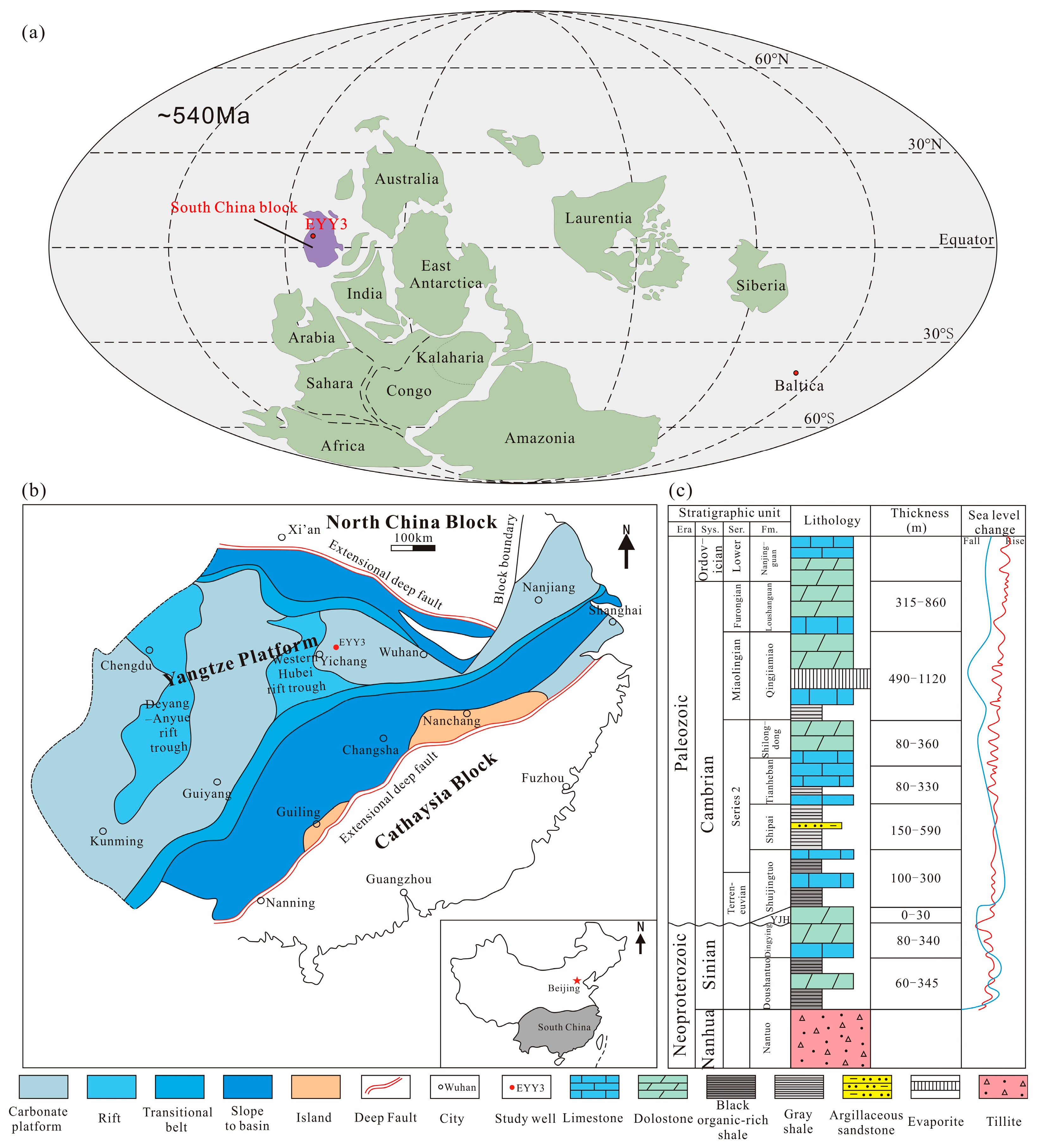
2. Geological Background
3. Materials and Methods
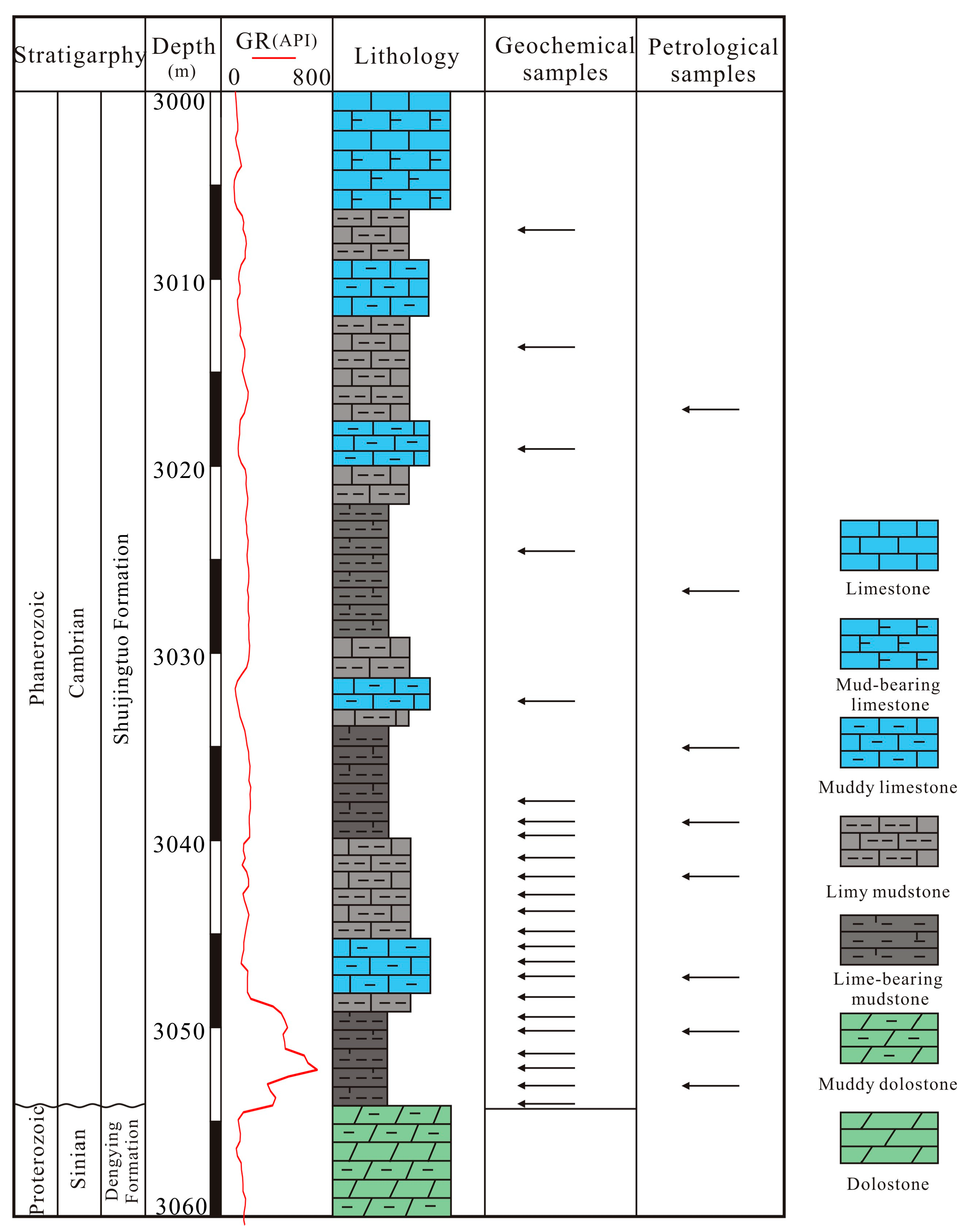
3.1. Sample Collection and Analysis
3.2. Data Analysis
4. Results
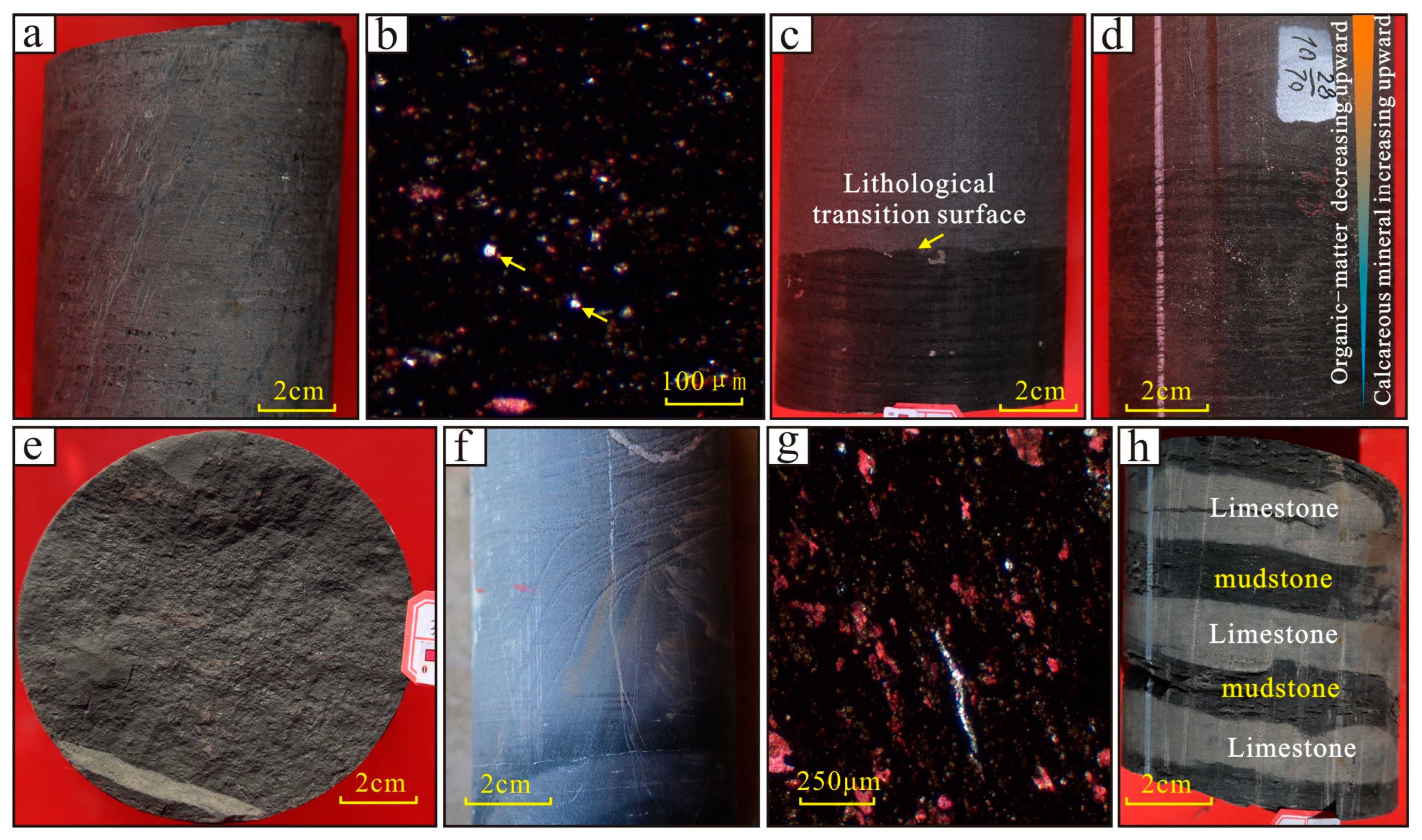
4.1. Core Observation
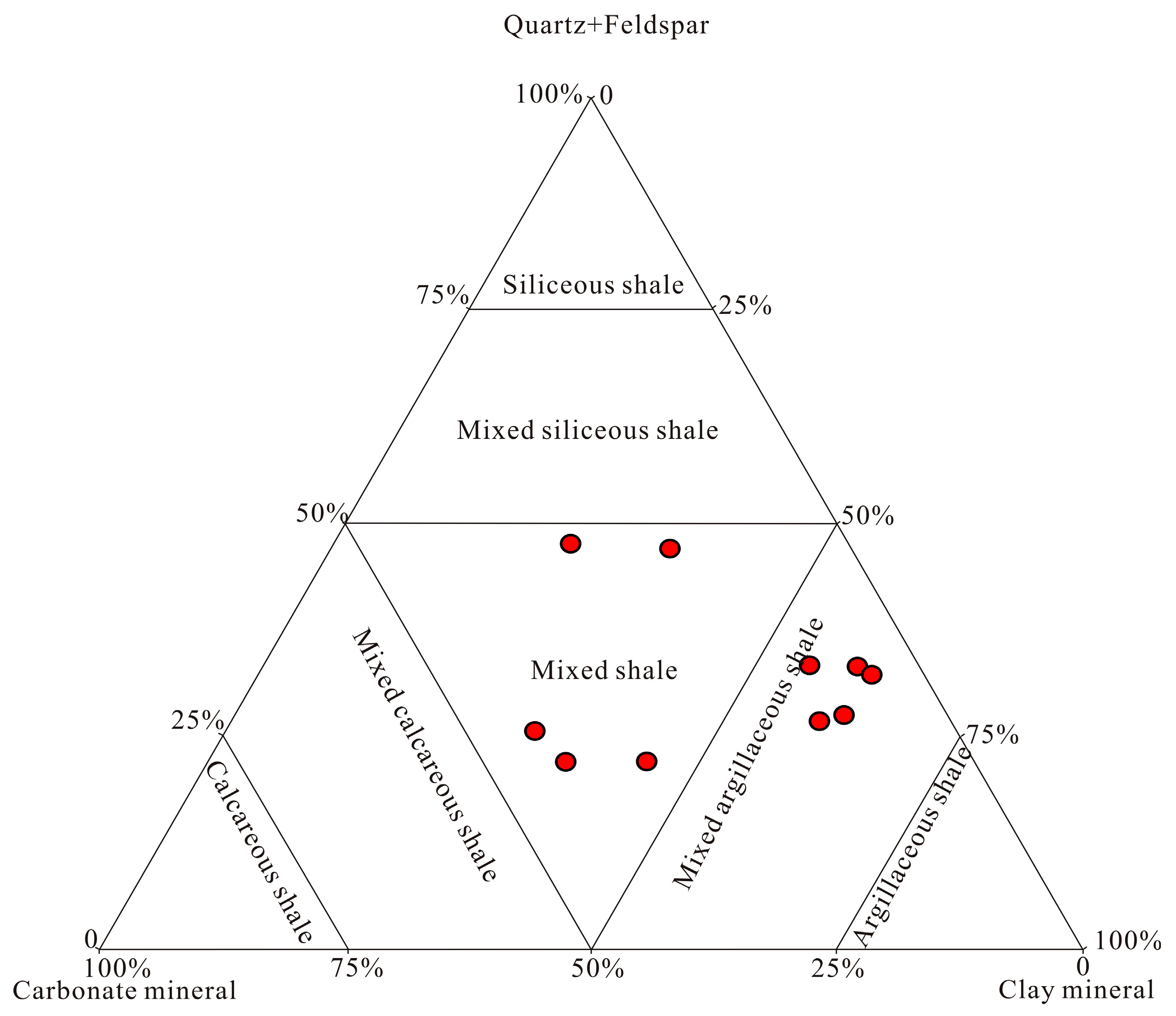
4.2. Mineralogy
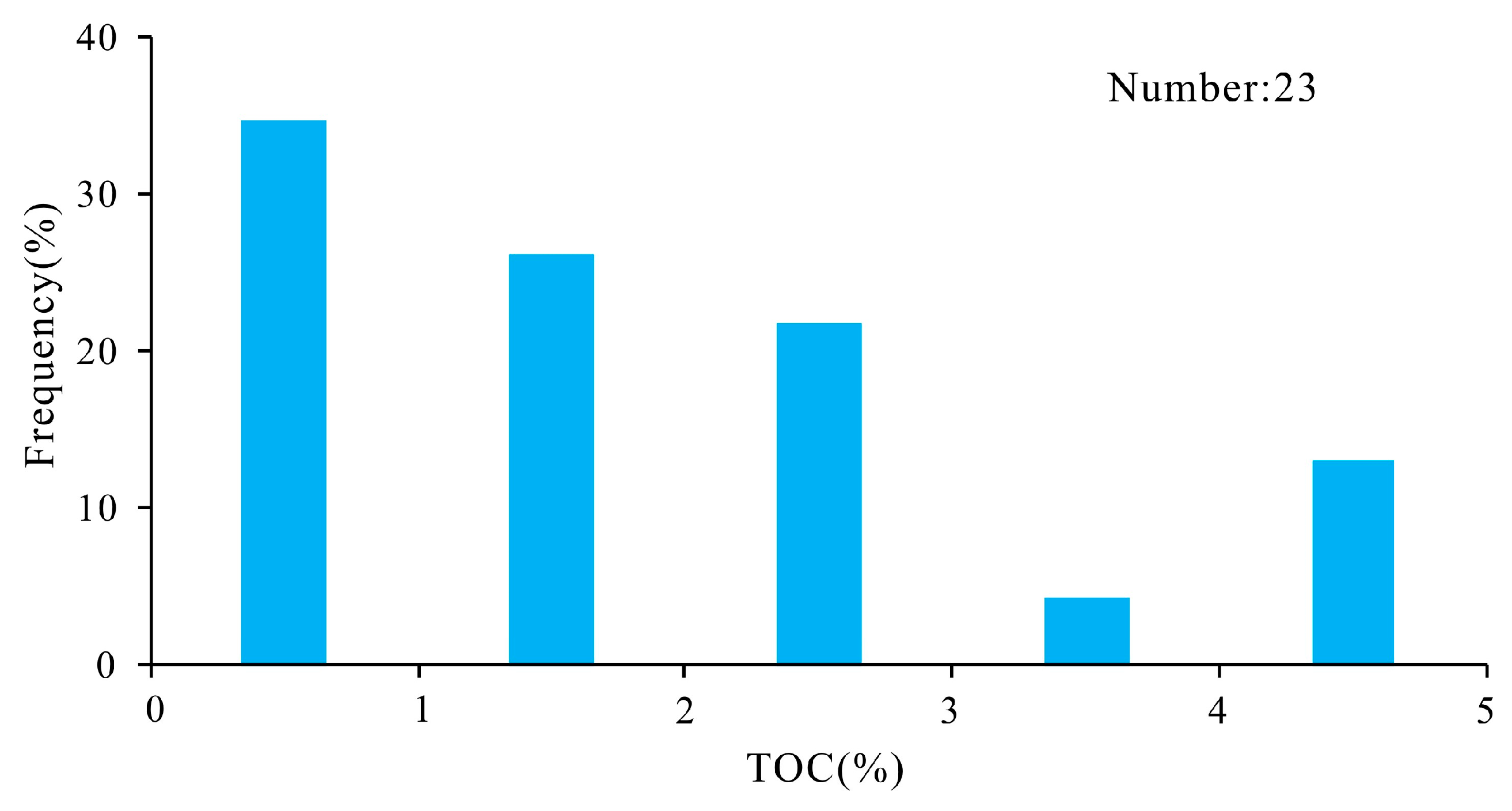
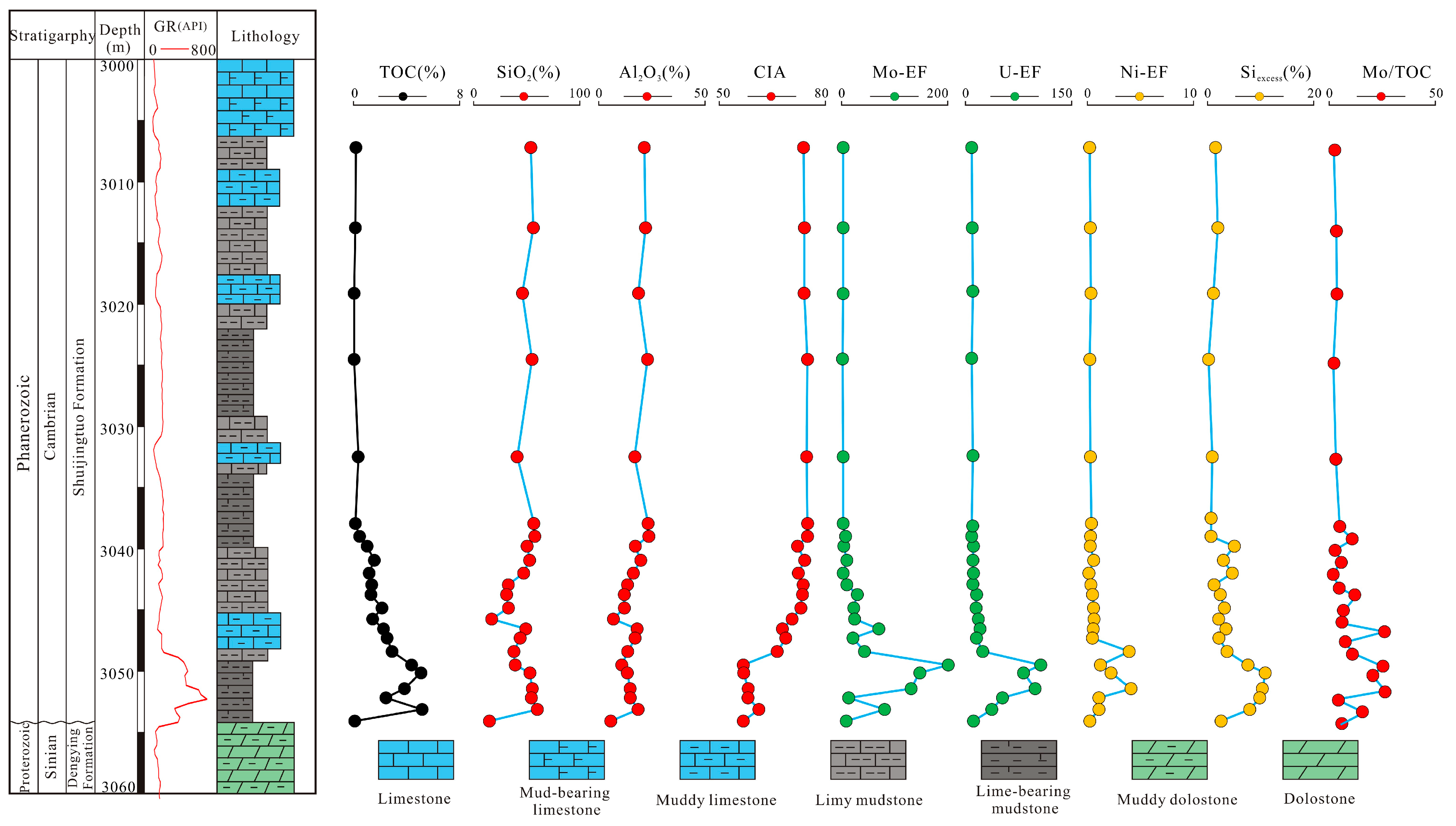
4.3. TOC
4.4. Major Elements
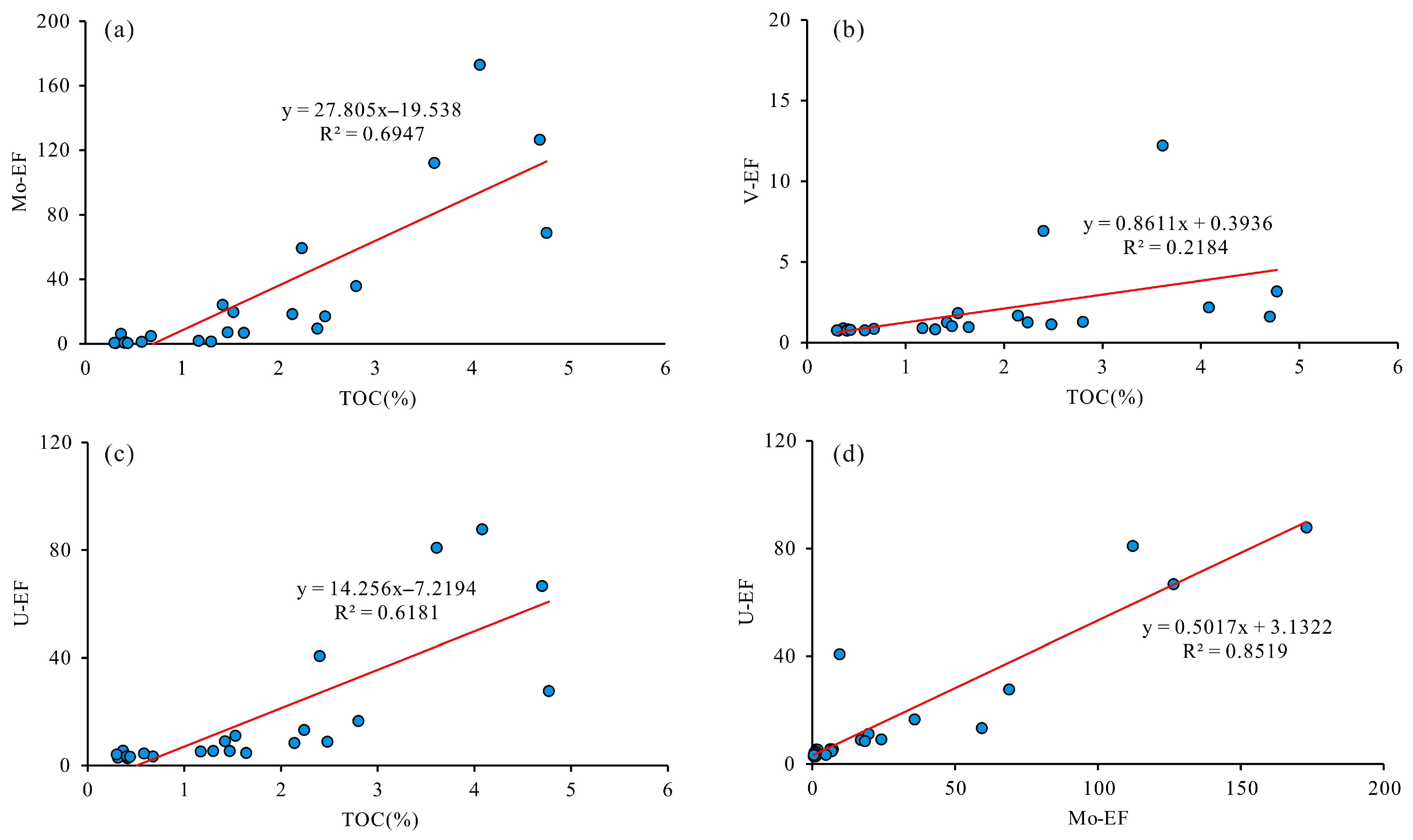
4.5. Trace Elements
5. Discussion
5.1. Redox Environment
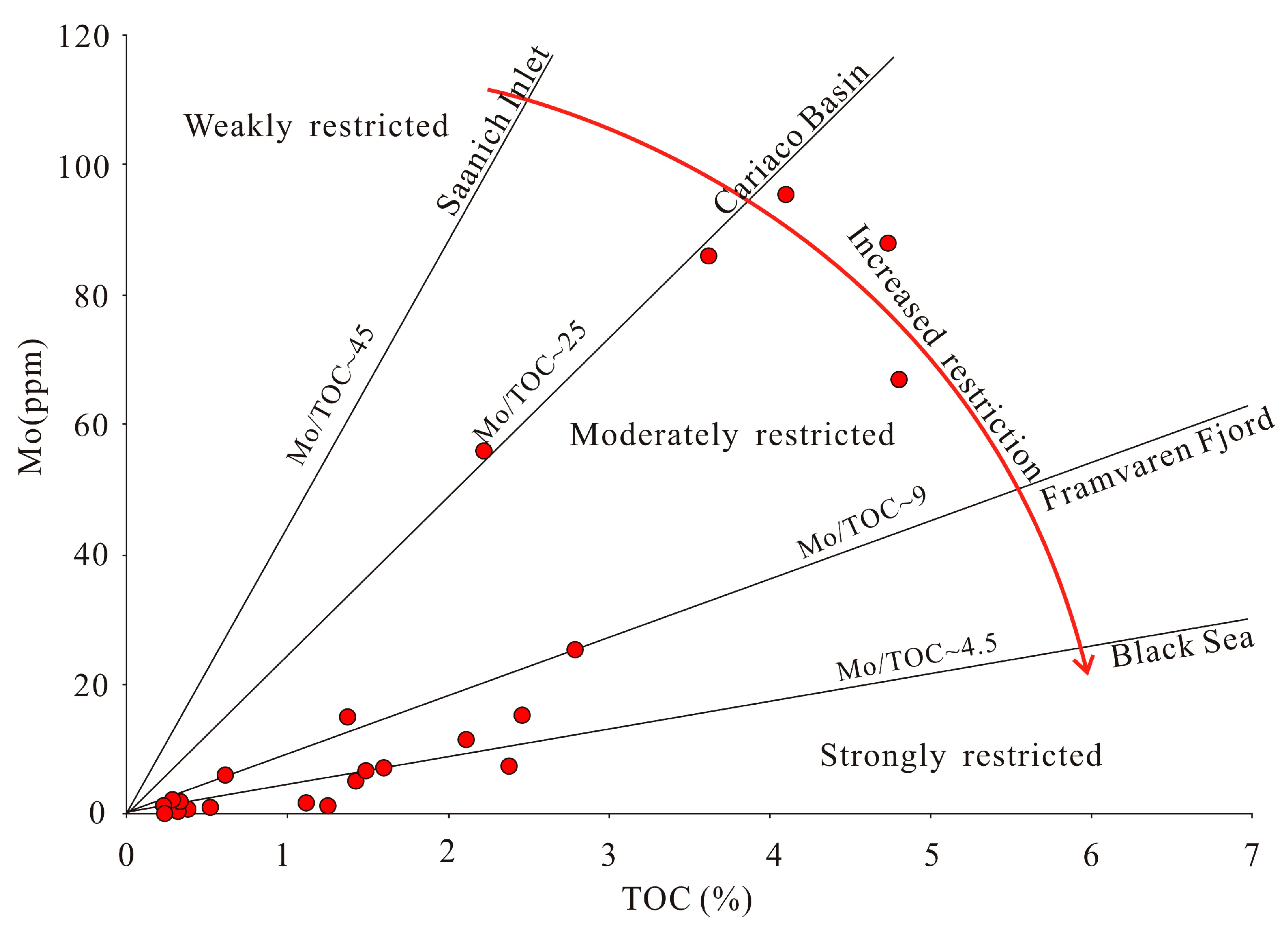
5.2. Hydrodynamic Environment
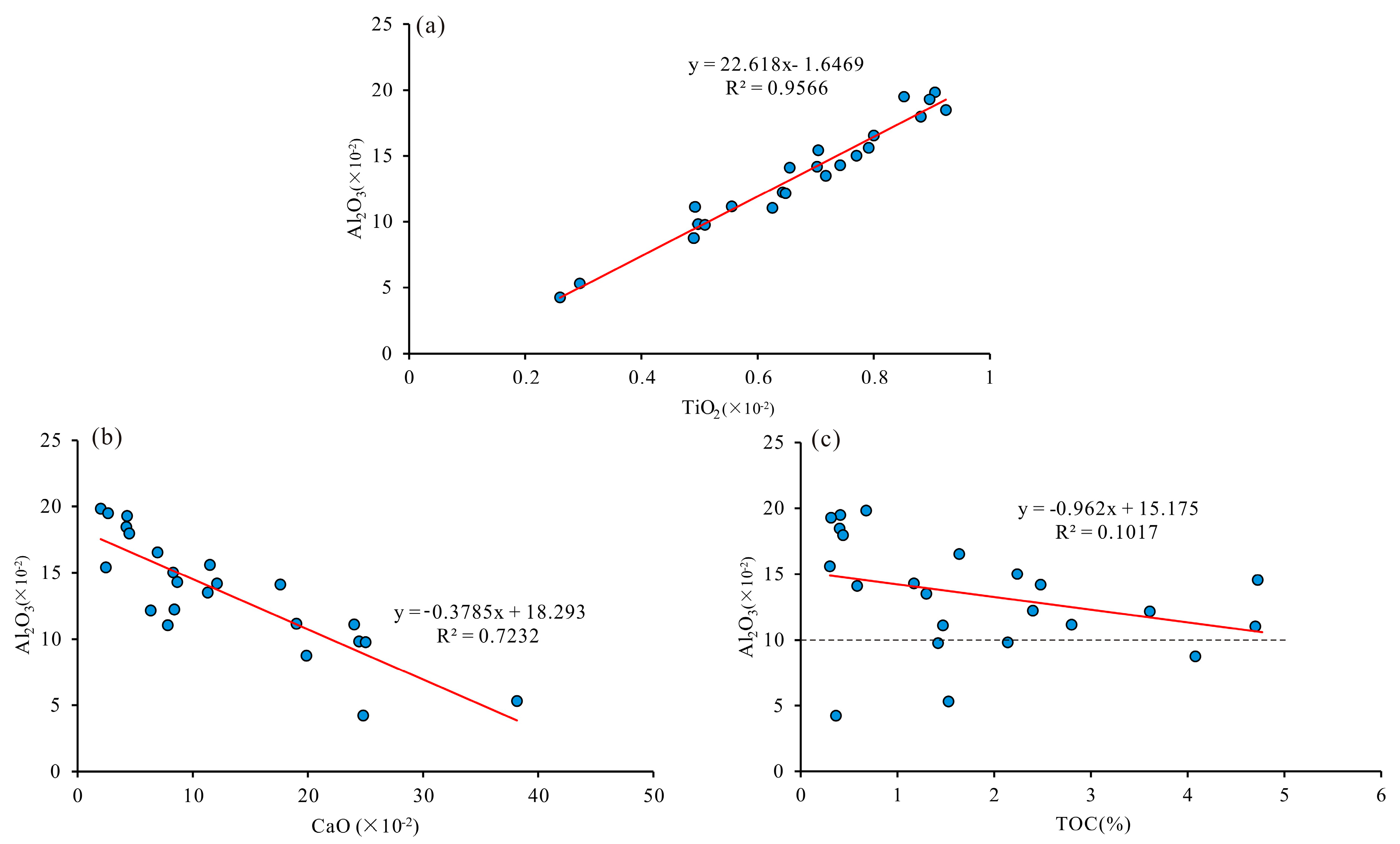
5.3. Terrigenous Supply
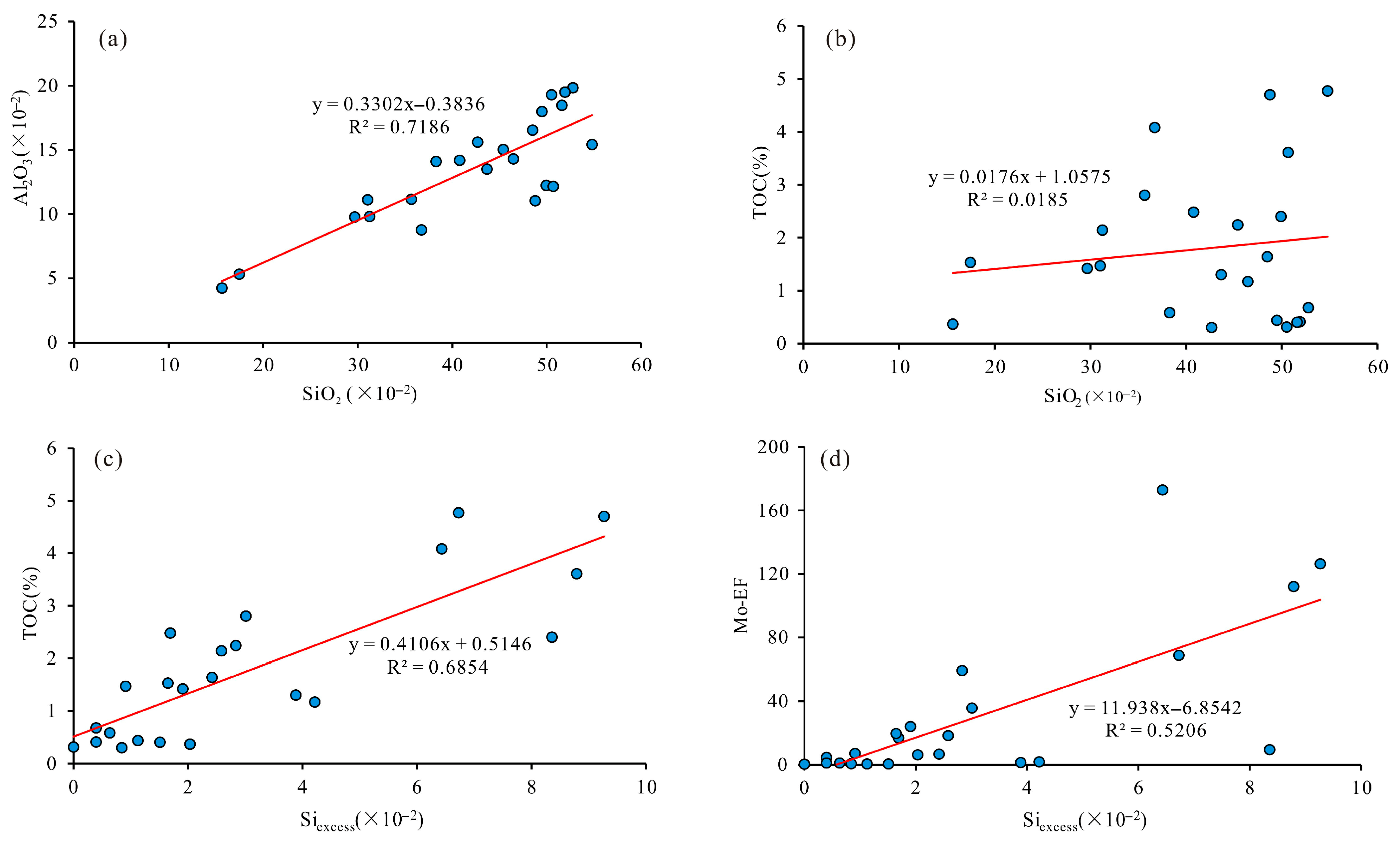
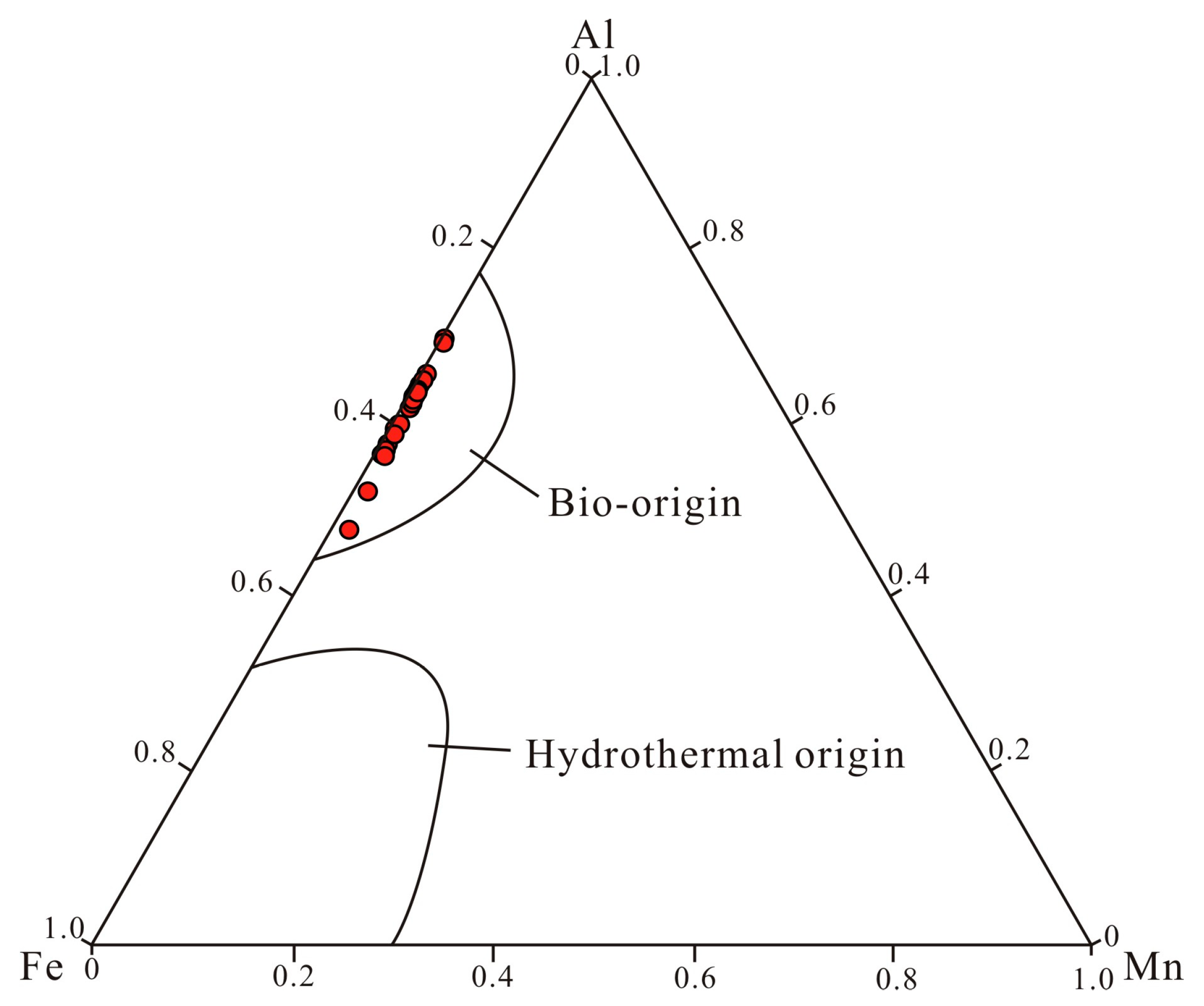
5.4. Silica Source and Upwelling Current
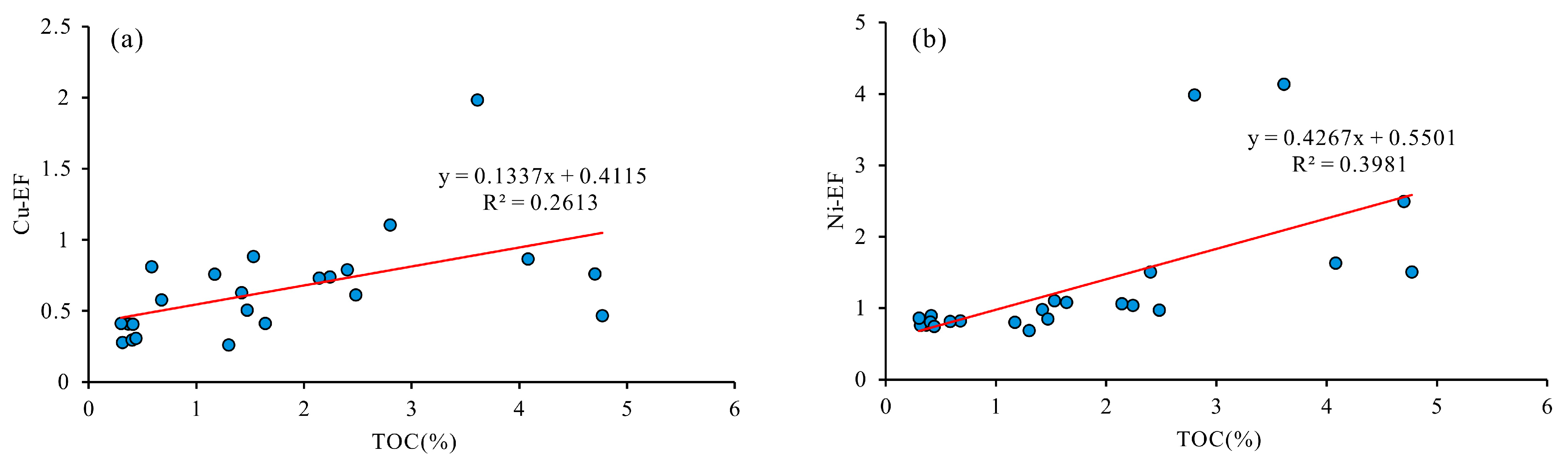
5.5. Paleoproductivity
5.6. Controlling Factors on Organic Matter Accumulation
6. Conclusions
- Petrological and geochemical data indicate that the total organic carbon (TOC) content of the Cambrian Shuijingtuo Formation shale in western Hubei of the Middle Yangtze region can reach 4.77%. Additionally, the interval with TOC content higher than 2% is 9.5 m thick. This suggests that carbonate platform depression settings may accumulate significant organic-rich shales, highlighting their potential for unconventional hydrocarbon exploration.
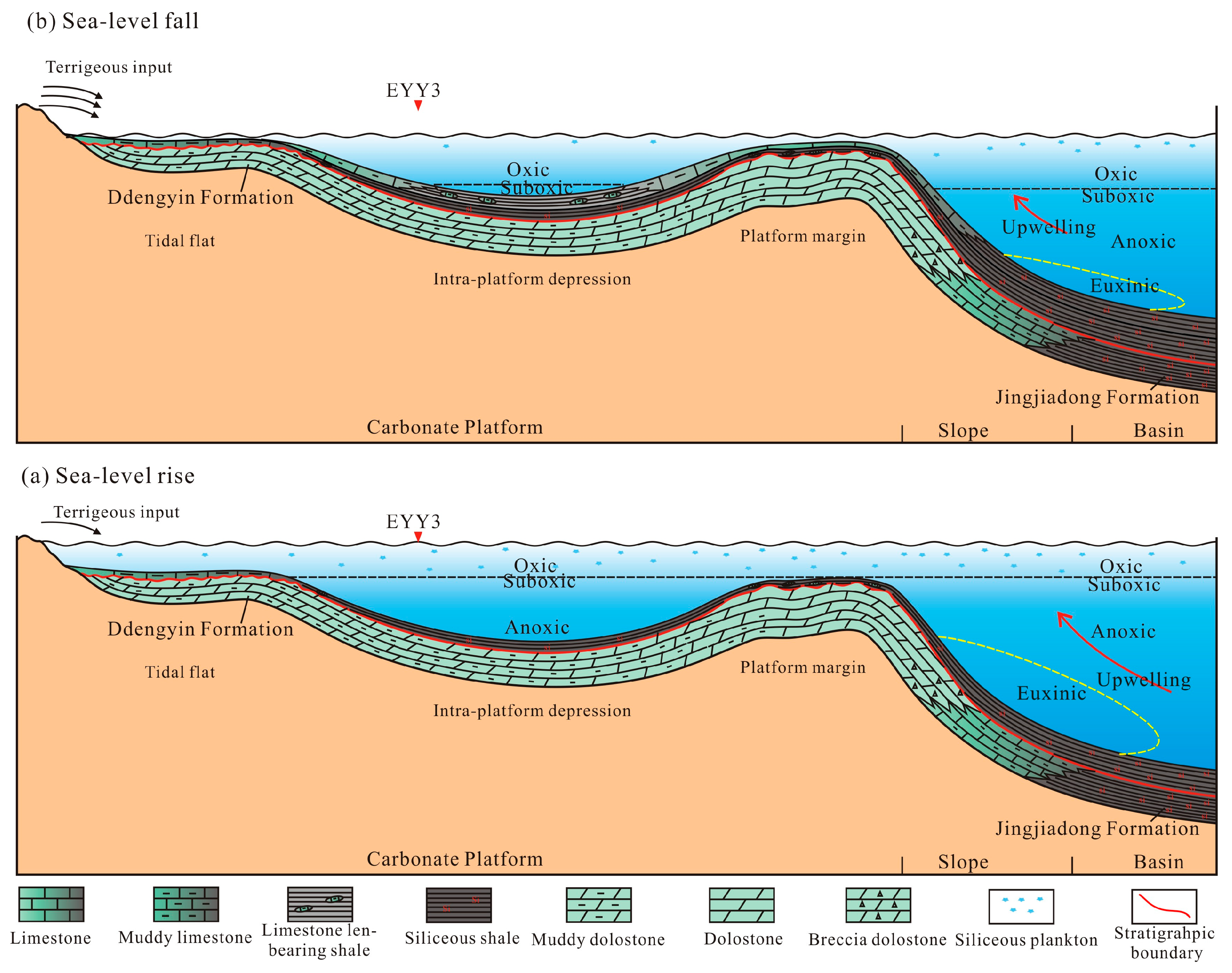
- Organic-rich shale development in carbonate platform depressions is most likely linked to sea level change. Global sea-level rise was associated with significant marine transgressions in the Early Cambrian, possibly leading to rapid sea-level rise in the Central Yangtze and Western Hubei carbonate platform. This influx likely allowed nutrients and silica-rich organisms from the basin to enter the platform depression areas, potentially enhancing paleoproductivity and providing a material source for organic matter enrichment. Sea-level rise probably facilitated circulation between the surface waters of the platform and external bodies of water, which may have further contributed to the development of anoxic environments in the depressions. Consequently, organic-rich shale occurrence at the base of the Shuijingtuo Formation was promoted by the rapid sea-level rise.
- Unlike shale deposits in shelf environments, the organic-rich shale in carbonate platform depressions is often rich in carbonate minerals. As sea level declined, the connectivity between the water bodies in the platform depressions and external waters likely decreased significantly, which may have led to a reduced supply of nutrients and diminished paleoproductivity. This decline probably also caused the sedimentary water bodies to become oxidized, intensifying storm impacts in the depression areas. As a result, organic matter content significantly decreased in shale deposits, and the sediments in these areas were eventually replaced by marl.
- The low-lying geomorphology of the carbonate rocks and the rise in sea level appear to be the primary factors that restrict organic-rich shale development within carbonate platforms. During highstand periods, large-scale intraplatform depressions may emerge as favorable areas for the formation of organic-rich shale, which warrant more attention for shale gas exploration. Furthermore, these black shales with a higher proportion of carbonate minerals might also be more conducive to fracturing processes, potentially enhancing resource extraction.
- Given that this study is based on a single well (EYY3) with a limited number of samples, the conclusions drawn here may be spatially limited in the absence of regional correlation. Future research should focus on multi-well correlation across the carbonate platform, with particular emphasis on comparing intraplatform depressions, platform slopes, and basinal environments. Understanding the sedimentary and organic enrichment differences among these settings will help refine the exploration framework for organic-rich shales in carbonate platforms.
Supplementary Materials
Author Contributions
Funding
Data Availability Statement
Conflicts of Interest
References
- Yan, D.; Chen, D.; Wang, Q.; Wang, J. Large-scale climatic fluctuations in the latest Ordovician on the Yangtze block, South China. Geology 2010, 38, 599–602. [Google Scholar] [CrossRef]
- Xu, L.; Lehmann, B.; Mao, J.; Nägler, T.F.; Neubert, N.; Böttcher, M.E.; Escher, P. Mo isotope and trace element patterns of Lower Cambrian black shales in South China: Multi-proxy constraints on the paleoenvironment. Chem. Geol. 2012, 318–319, 45–59. [Google Scholar] [CrossRef]
- Zhang, Y.; Liao, Z.; Cao, J.; Lash, G.G.; Wei, Y.; Shi, Q.; Zhang, B.; Kuang, H.; Liu, Y.; Huang, Q. Climate variability during the late Ediacaran: Insights from episodic deposition of black shale-hosted Mn-carbonates in South China. Chem. Geol. 2024, 646, 121910. [Google Scholar] [CrossRef]
- Zhao, B.; Long, X.; Chang, C. Early Cambrian sedimentary rocks in South China: A link between oceanic oxygenation and biological explosion. Earth-Sci. Rev. 2024, 250, 104708. [Google Scholar] [CrossRef]
- Zhai, G.; Wang, Y.; Liu, G.; Zhou, Z.; Bao, S.; Chen, K.; Kang, H.; Zhang, J.; Wang, S.; Zhang, Y. The Sinian-Cambrian formation shale gas exploration and practice in southern margin of Huangling paleo-uplift. Mar. Pet. Geol. 2019, 109, 419–433. [Google Scholar] [CrossRef]
- Dou, L.; Wen, Z.; Wang, J.; Wang, Z.; He, Z.; Song, C.; Liu, X.; Zhang, N. Analysis of the world oil and gas exploration situation in 2021. Pet. Explor. Dev. 2022, 49, 1195–1209. [Google Scholar] [CrossRef]
- Guo, X.S.; Wang, R.Y.; Shen, B.J.; Wang, G.P.; Wan, C.X.; Wang, Q.R. Geological characteristics, resource potential, and development direction of shale gas in China. Pet. Explor. Dev. 2025, 52, 17–32. [Google Scholar] [CrossRef]
- Chen, W.; Tian, J.; Lin, X.; Liang, Q.; Wang, X.; Yi, D.; Li, Y. Climate fluctuations during the Ordovician-Silurian transition period in South China: Implications for paleoenvironmental evolution and organic matter enrichment. Palaeogeogr. Palaeoclimatol. Palaeoecol. 2023, 613, 111411. [Google Scholar] [CrossRef]
- Lu, Y.B.; Jiang, S.; Lu, Y.C.; Xu, S.; Shu, Y.; Wang, Y. Productivity or preservation? The factors controlling the organic matter accumulation in the late Katian through Hirnantian Wufeng organic-rich shale, South China. Mar. Pet. Geol. 2019, 109, 22–35. [Google Scholar] [CrossRef]
- Wang, X.Q.; Zhu, Y.M.; Lash, G.G.; Wang, Y. Multi-proxy analysis of organic matter accumulation in the Upper Ordovician–Lower Silurian black shale on the Upper Yangtze Platform, south China. Mar. Pet. Geol. 2019, 103, 473–484. [Google Scholar] [CrossRef]
- Cai, Q.S.; Hu, M.Y.; Zhang, B.M.; Ngia, N.; Liu, A.; Liao, R.Q.; Kane, O.; Li, H.; Hu, Z.G.; Deng, Q.J.; et al. Source of silica and its implications for organic matter enrichment in the Upper Ordovician-Lower Silurian black shale in western Hubei Province, China: Insights from geochemical and petrological analysis. Pet. Sci. 2022, 19, 74–90. [Google Scholar] [CrossRef]
- Zou, C.; Zhu, R.; Chen, Z.Q.; Ogg, J.G.; Wu, S.; Dong, D.; Qiu, Z.; Wang, Y.; Wang, L.; Lin, S.; et al. Organic-matter-rich shales of China. Earth-Sci. Rev. 2019, 189, 51–78. [Google Scholar] [CrossRef]
- Cai, Q.S.; Hu, M.Y.; Kane, O.I.; Yang, Z.; Wen, Y.R.; Luo, Q.; Li, M.T.; Hu, Z.G.; Deng, Q.J. Petrological and geochemical characteristics of the Ordovician–Silurian black shale in eastern Sichuan and western Hubei, South China: Differential sedimentary responses to tectonism and glaciation. J. Palaeogeogr. 2023, 12, 129–152. [Google Scholar] [CrossRef]
- Khan, I.; Gao, Z.W.; Wang, G.L.; Luo, Q.Y.; Jamil, M.; Zhong, N.N.; Sun, Y.G. Lipid biomarkers recording marine redox conditions and biological community structures across the Precambrian–Cambrian transition from the west passive margin of the Indian Plate. Palaeogeogr. Palaeoclimatol. Palaeoecol. 2026, 629, 113781. [Google Scholar] [CrossRef]
- Wang, D.; Struck, U.; Ling, H.F.; Guo, Q.J.; Shields-Zhou, G.A.; Zhu, M.Y.; Yao, S.P. Marine redox variations and nitrogen cycle of the early Cambrian southern margin of the Yangtze Platform, South China: Evidence from nitrogen and organic carbon isotopes. Precambrian Res. 2015, 267, 209–226. [Google Scholar] [CrossRef]
- Zhou, D.; Dong, H.; Huang, X.; Liang, Y.; Deng, Z.; Huang, L.; Jiang, S. The paleo-oceanic environment and organic matter enrichment mechanism of the early Cambrian in the southern Lower Yangtze platform, China. Mar. Pet. Geol. 2024, 170, 107119. [Google Scholar] [CrossRef]
- Haq, B.U.; Schutter, S.R. A chronology of paleozoic sea-level changes. Science 2008, 322, 64–68. [Google Scholar] [CrossRef] [PubMed]
- Meert, J.G.; Lieberman, B.S. The Neoproterozoic assembly of Gondwana and its relationship to the Ediacaran-Cambrian radiation. Gondwana Res. 2008, 14, 5–21. [Google Scholar] [CrossRef]
- Zhao, G.C.; Wang, Y.J.; Huang, B.C.; Dong, Y.P.; Li, S.Z.; Zhang, G.W.; Yu, S. Geological reconstructions of the East Asian blocks: From the breakup of Rodinia to the assembly of Pangea. Earth-Sci. Rev. 2018, 186, 262–286. [Google Scholar] [CrossRef]
- Min, X.; Hua, H.; Sun, B.; Dai, Q.K.; Luo, J.Z.; Pan, X.Q.; Liu, Z.W. Diversification of heterotrophic protists at the eve of Cambrian explosion. Glob. Planet. Change 2021, 203, 103545. [Google Scholar] [CrossRef]
- Wang, Z.W.; Zhong, Y.J.; Liu, L.; Chen, H.D.; Wang, X.L.; Chan, A.Q. Evolution of Early Cambrian Intracraton Rift and Its Influence on the Paleogeographical Pattern, Western Hubei⁃Eastern Chongqing. Acta Sedimentol. Sin. 2023, 41, 1110–1123, (In Chinese with English abstract). [Google Scholar]
- Wang, J.; Li, Z.X. History of Neoproterozoic rift basins in South China: Implications for Rodinia break-up. Precambrian Res. 2003, 122, 141–158. [Google Scholar] [CrossRef]
- Guo, Q.; Strauss, H.; Zhu, M.; Zhang, J.; Yang, X.; Lu, M.; Zhao, F. High resolution organic carbon isotope stratigraphy from a slope to basinal setting on the Yangtze Platform, South China: Implications for the Ediacaran-Cambrian transition. Precambrian Res. 2013, 225, 209–217. [Google Scholar] [CrossRef]
- Wang, R.Y.; Gu, Y.; Ding, W.L.; Gong, D.J.; Yin, S.; Wang, X.H.; Zhou, X.H.; Li, A.; Xiao, Z.K.; Cui, Z.X. Characteristics and dominant controlling factors of organic-rich marine shales with high thermal maturity: A case study of the Lower Cambrian Niutitang Formation in the Cen’gong block, southern China. J. Nat. Gas Sci. Eng. 2016, 33, 81–96. [Google Scholar] [CrossRef]
- Gao, P.; Li, S.; Lash, G.G.; Yan, D.; Zhou, Q.; Xiao, X. Stratigraphic framework, redox history, and organic matter accumulation of an Early Cambrian intraplatfrom basin on the Yangtze Platform, South China. Mar. Pet. Geol. 2021, 130, 105095. [Google Scholar] [CrossRef]
- Wang, Z.; Jiang, H.; Chen, Z.; Liu, J.; Ma, K.; Li, W.; Xie, W.; Jiang, Q.; Zhai, X.; Shi, S.; et al. Tectonic paleogeography of Late Sinian and its significances for petroleum exploration in the middle-upper Yangtze region, South China. Shiyou Kantan Yu Kaifa Pet. Explor. Dev. 2020, 47, 946–961. [Google Scholar] [CrossRef]
- Xie, W.R.; Jiang, H.; Ma, S.Y.; Wang, Z.C.; Hao, T.; Fu, X.D.; Su, N.; Li, W.Z.; Wu, S.J.; Wang, X.D.; et al. Sedimentary evolution characteristics and favorable exploration directions of Deyang- Anyue Rift within the Sichuan Basin in Late Sinian-Early Cambrian. Nat. Gas Geosci. 2022, 33, 1240–1250, (In Chinese with English abstract). [Google Scholar]
- Wang, Z.; Zeng, X.; Miao, W.; Chen, B.; Liu, R. Geochemical Characteristics of Elements and Their Geological Significance in the Boundary between Yanjiahe Formation and Shuijingtuo Formation of the Early Cambrian in Yichang area. South China Geol. 2023, 39, 320–332, (In Chinese with English abstract). [Google Scholar] [CrossRef]
- Guo, T.L.; Deng, H.C.; Zhao, S.; We, L.M.; He, J.H. Formation mechanisms and exploration breakthroughs of new type of shale gas in Cambrian Qiongzhusi Formation, Sichuan Basin, SW China. Pet. Explor. Dev. 2025, 52, 64–78. [Google Scholar] [CrossRef]
- Zhang, J.; Zhai, G.; Wang, D.; Bao, S.; Chen, K.; Li, H.; Song, T.; Wang, P.; Zhou, Z. Tectonic evolution of the Huangling dome and its control effect on shale gas preservation in the north margin of the Yangtze Block, South China. China Geol. 2020, 3, 28–37. [Google Scholar] [CrossRef]
- Wang, R.Y.; Liu, Y.J.; Li, Z.; Wang, D.H.; Wang, G.P.; Lai, F.Q.; Li, Z.H.; He, J.H. Microscopic pore structure characteristics and controlling factors of marine shale: A case study of Lower Cambrian shales in the Southeastern Guizhou, Upper Yangtze Platform, South China. Front. Earth Sci. 2024, 12, 1368326. [Google Scholar] [CrossRef]
- Algeo, T.J.; Li, C. Redox classification and calibration of redox thresholds in sedimentary systems. Geochim. Cosmochim. Acta 2020, 287, 8–26. [Google Scholar] [CrossRef]
- Algeo, T.J.; Liu, J. A re-assessment of elemental proxies for paleoredox analysis. Chem. Geol. 2020, 540, 119549. [Google Scholar] [CrossRef]
- Taylor, S.; McLennan, S. The Continental Crust: Its Composition and Evolution; Blackwell Scientific Publications: Oxford, UK; London, UK, 1985. [Google Scholar]
- Tribovillard, N.; Algeo, T.J.; Lyons, T.; Riboulleau, A. Trace metals as paleoredox and paleoproductivity proxies: An update. Chem. Geol. 2006, 232, 12–32. [Google Scholar] [CrossRef]
- Murray, R.W. Chemical criteria to identify the depositional environment of chert: General principles and applications. Sediment. Geol. 1994, 90, 213–232. [Google Scholar] [CrossRef]
- Cai, Q.; Hu, M.; Kane, O.I.; Li, M.; Zhang, B.; Hu, Z.; Deng, Q.; Xing, N. Cyclic variations in paleoenvironment and organic matter accumulation of the Upper Ordovician–Lower Silurian black shale in the Middle Yangtze Region, South China: Implications for tectonic setting, paleoclimate, and sea-level change. Mar. Pet. Geol. 2022, 136, 105477. [Google Scholar] [CrossRef]
- Wang, P.; Du, Y.S.; Yu, W.C.; Algeo, T.J.; Zhou, Q.; Xu, Y.; Qi, L.; Yuan, L.J.; Pan, W. The chemical index of alteration (CIA) as a proxy for climate change during glacial-interglacial transitions in Earth history. Earth-Sci. Rev. 2020, 201, 103032. [Google Scholar] [CrossRef]
- McLennan, S.M. Weathering and Global Denudation. J. Geol. 1993, 101, 295–303. [Google Scholar] [CrossRef]
- Ma, Y.; Fan, M.; Lu, Y.; Guo, X.; Hu, H.; Chen, L.; Wang, C.; Liu, X. Geochemistry and sedimentology of the Lower Silurian Longmaxi mudstone in southwestern China: Implications for depositional controls on organic matter accumulation. Mar. Pet. Geol. 2016, 75, 291–309. [Google Scholar] [CrossRef]
- Algeo, T.J.; Tribovillard, N. Environmental analysis of paleoceanographic systems based on molybdenum-uranium covariation. Chem. Geol. 2009, 268, 211–225. [Google Scholar] [CrossRef]
- Algeo, T.J.; Lyons, T.W. Mo-total organic carbon covariation in modern anoxic marine environments: Implications for analysis of paleoredox and paleohydrographic conditions. Paleoceanography 2006, 21. [Google Scholar] [CrossRef]
- Wang, C.; Dong, T.; He, Z.; Guo, X.; Liu, S. Hydrographic restriction conditions in the Middle and Upper Yangtze region during the Early Silurian post-glacial transgression: Constraints from major, trace elemental geochemistry and Mo-TOC relationship. Palaeogeogr. Palaeoclimatol. Palaeoecol. 2024, 655, 112546. [Google Scholar] [CrossRef]
- Xiao, W.; Cao, J.; Liao, Z.; Wang, X.; Zhang, S. Links between hydrographic restriction, redox conditions, and organic matter accumulation in the Early Cambrian intrashelf basin, South China. Gondwana Res. 2024, 133, 199–215. [Google Scholar] [CrossRef]
- Rimmer, S.M.; Thompson, J.A.; Goodnight, S.A.; Robl, T.L. Multiple controls on the preservation of organic matter in Devonian–Mississippian marine black shales: Geochemical and petrographic evidence. Palaeogeogr. Palaeoclimatol. Palaeoecol. 2004, 215, 125–154. [Google Scholar] [CrossRef]
- Khan, M.Z.; Feng, Q.; Zhang, K.; Guo, W. Biogenic silica and organic carbon fluxes provide evidence of enhanced marine productivity in the Upper Ordovician-Lower Silurian of South China. Palaeogeogr. Palaeoclimatol. Palaeoecol. 2019, 534, 109278. [Google Scholar] [CrossRef]
- Liu, Z.; Algeo, T.J.; Guo, X.; Fan, J.; Du, X.; Lu, Y. Paleo-environmental cyclicity in the Early Silurian Yangtze Sea (South China): Tectonic or glacio-eustatic control? Palaeogeogr. Palaeoclimatol. Palaeoecol. 2017, 466, 59–76. [Google Scholar] [CrossRef]
- Chen, D.Z.; Qing, H.R.; Yan, X.; Li, H. Hydrothermal venting and basin evolution (Devonian, South China): Constraints from rare earth element geochemistry of chert. Sediment. Geol. 2006, 183, 203–216, (In Chinese with English abstract). [Google Scholar] [CrossRef]
- Wu, Y.; Tian, H.; Gong, D.; Li, T.; Zhou, Q. Paleo-environmental variation and its control on organic matter enrichment of black shales from shallow shelf to slope regions on the Upper Yangtze Platform during Cambrian Stage 3. Palaeogeogr. Palaeoclimatol. Palaeoecol. 2020, 545, 109653. [Google Scholar] [CrossRef]
- Wang, H.; Liu, S.; Hou, M.; Zhang, B.; Song, J.; Zhao, R.; Ding, Y.; Han, Y.; Li, Z. Petrological and micrometer-scale geochemical constraints on chert origins in the Dengying Formation, Yangtze Block, South China: Implications for Late Ediacaran hydrothermal activity and tectonic setting. Precambrian Res. 2022, 370, 106531. [Google Scholar] [CrossRef]
- Liu, Z.; Yan, D.; Yuan, D.; Niu, X.; Fu, H. Multiple controls on the organic matter accumulation in early Cambrian marine black shales, middle Yangtze Block, South China. J. Nat. Gas Sci. Eng. 2022, 100, 104454. [Google Scholar] [CrossRef]
- Lin, D.; Xi, Z.; Tang, S.; Lash, G.G.; Li, J.; Gou, Q.; Zhang, K.; Mei, X.; Wang, K. Enrichment mechanism of organic matter and silicon in lower Cambrian shale of the Yangtze Platform. Palaeogeogr. Palaeoclimatol. Palaeoecol. 2024, 648, 112282. [Google Scholar] [CrossRef]
- Adachi, M.; Yamamoto, K.; Sugisaki, R. Hydrothermal chert and associated siliceous rocks from the northern Pacific their geological significance as indication of ocean ridge activity. Sediment. Geol. 1986, 47, 125–148. [Google Scholar] [CrossRef]
- Shang, F.; Zhu, Y.; Hu, Q.; Wang, Y.; Li, Y.; Li, W.; Liu, R.; Gao, H. Factors controlling organic-matter accumulation in the Upper Ordovician-Lower Silurian organic-rich shale on the northeast margin of the Upper Yangtze platform: Evidence from petrographic and geochemical proxies. Mar. Pet. Geol. 2020, 121, 104597. [Google Scholar] [CrossRef]
- Jin, C.; Liao, Z.; Tang, Y. Sea-level changes control organic matter accumulation in the Longmaxi shales of southeastern Chongqing, China. Mar. Pet. Geol. 2020, 119, 104478. [Google Scholar] [CrossRef]
- Wang, Y.; Xu, S.; Hao, F.; Lu, Y.Y.; Shu, Z.; DetianYan; Lu, Y.Y. Geochemical and petrographic characteristics of Wufeng-Longmaxi shales, Jiaoshiba area, southwest China: Implications for organic matter differential accumulation. Mar. Pet. Geol. 2019, 102, 138–154. [Google Scholar] [CrossRef]
- Wei, C.; Dong, T.; He, Z.; He, S.; He, Q.; Yang, R.; Guo, X.; Hou, Y. Major, trace-elemental and sedimentological characterization of the upper Ordovician Wufeng-lower Silurian Longmaxi formations, Sichuan Basin, south China: Insights into the effect of relative sea-level fluctuations on organic matter accumulation in shale. Mar. Pet. Geol. 2021, 126, 104905. [Google Scholar] [CrossRef]
- Liu, Y.; Li, C.; Algeo, T.J.; Fan, J.; Peng, P. Global and regional controls on marine redox changes across the Ordovician-Silurian boundary in South China. Palaeogeogr. Palaeoclimatol. Palaeoecol. 2016, 463, 180–191. [Google Scholar] [CrossRef]
- Xu, Z.; Jiang, S.; Yao, G.; Liang, X.; Xiong, S. Tectonic and depositional setting of the lower Cambrian and lower Silurian marine shales in the Yangtze Platform, South China: Implications for shale gas exploration and production. J. Asian Earth Sci. 2019, 170, 1–19. [Google Scholar] [CrossRef]
- Han, Y.; Ran, B.; Liu, S.; Li, Z.; Ye, Y.; Sun, W.; Yang, D.; Wang, S. Main controlling factors of organic-matter enrichment in the Ordovician-Silurian marine organic-rich mudrock in the Yangtze Block, South China. Mar. Pet. Geol. 2021, 127, 104959. [Google Scholar] [CrossRef]
- Chen, L.; Liu, A.; Tian, W.; Li, H.; Zhang, B.M.; Chen, X.H.; Lv, R. Paleoclimate Variations of the Lower Member of Shetianqiao Formation in Shaoyang Sag, Xiangzhong Depression and Its Influence on Marine Carbon Cycle. South China Geol. 2023, 39, 309–319, (In Chinese with English abstract). [Google Scholar] [CrossRef]
- Wang, D.; Liu, Y.; Zhang, J.; Lang, Y.; Li, Z.; Tong, Z.; Xu, L.; Su, Z.; Niu, J. Controls on marine primary productivity variation and organic matter accumulation during the Late Ordovician–Early Silurian transition. Mar. Pet. Geol. 2022, 142, 105742. [Google Scholar] [CrossRef]
- Frei, R.; Lehmann, B.; Xu, L.; Frederiksen, J.A. Surface water oxygenation and bioproductivity—A link provided by combined chromium and cadmium isotopes in Early Cambrian metalliferous black shales (Nanhua Basin, South China). Chem. Geol. 2020, 552, 119785. [Google Scholar] [CrossRef]
- Zhou, L.; Wang, Z.; Gao, W.; Zhang, K.; Li, H.; Zhang, L. Provenance and tectonic setting of the Lower Cambrian Niutitang formation shales in the Yangtze platform, South China: Implications for depositional setting of shales. Geochemistry 2019, 79, 384–398. [Google Scholar] [CrossRef]


Disclaimer/Publisher’s Note: The statements, opinions and data contained in all publications are solely those of the individual author(s) and contributor(s) and not of MDPI and/or the editor(s). MDPI and/or the editor(s) disclaim responsibility for any injury to people or property resulting from any ideas, methods, instructions or products referred to in the content. |
© 2026 by the authors. Licensee MDPI, Basel, Switzerland. This article is an open access article distributed under the terms and conditions of the Creative Commons Attribution (CC BY) license.
Share and Cite
Zhang, B.; Cai, Q.; Zhang, G.; Kane, O.I.; Chen, L.; Liu, A.; Zhou, P.; Wang, R. Petrological and Geochemical Characteristics of the Lower Cambrian Shuijingtuo Formation in the Middle Yangtze Block, South China: Implications for Organic Matter Accumulation on Carbonate Platform. J. Mar. Sci. Eng. 2026, 14, 762. https://doi.org/10.3390/jmse14090762
Zhang B, Cai Q, Zhang G, Kane OI, Chen L, Liu A, Zhou P, Wang R. Petrological and Geochemical Characteristics of the Lower Cambrian Shuijingtuo Formation in the Middle Yangtze Block, South China: Implications for Organic Matter Accumulation on Carbonate Platform. Journal of Marine Science and Engineering. 2026; 14(9):762. https://doi.org/10.3390/jmse14090762
Chicago/Turabian StyleZhang, Baomin, Quansheng Cai, Guotao Zhang, Oumar Ibrahima Kane, Lin Chen, An Liu, Peng Zhou, and Ruyue Wang. 2026. "Petrological and Geochemical Characteristics of the Lower Cambrian Shuijingtuo Formation in the Middle Yangtze Block, South China: Implications for Organic Matter Accumulation on Carbonate Platform" Journal of Marine Science and Engineering 14, no. 9: 762. https://doi.org/10.3390/jmse14090762
APA StyleZhang, B., Cai, Q., Zhang, G., Kane, O. I., Chen, L., Liu, A., Zhou, P., & Wang, R. (2026). Petrological and Geochemical Characteristics of the Lower Cambrian Shuijingtuo Formation in the Middle Yangtze Block, South China: Implications for Organic Matter Accumulation on Carbonate Platform. Journal of Marine Science and Engineering, 14(9), 762. https://doi.org/10.3390/jmse14090762