Author Contributions
Conceptualization, L.W., S.L., Y.Y., J.H. and Y.R.; Methodology, W.H., L.W., S.L., S.Z. and Y.Y.; Software, W.H. and S.Z.; Validation, W.H. and S.Z.; Formal analysis, W.H. and S.Z.; Investigation, W.H.; Writing—original draft, W.H., S.Z., Y.Y. and J.H.; Writing—review & editing, L.W., S.L. and Y.R.; Visualization, S.Z.; Supervision, L.W., S.L., Y.Y., J.H. and Y.R.; Project administration, L.W., S.L., Y.Y., J.H. and Y.R.; Funding acquisition, L.W., S.L., Y.Y., J.H. and Y.R. All authors have read and agreed to the published version of the manuscript.
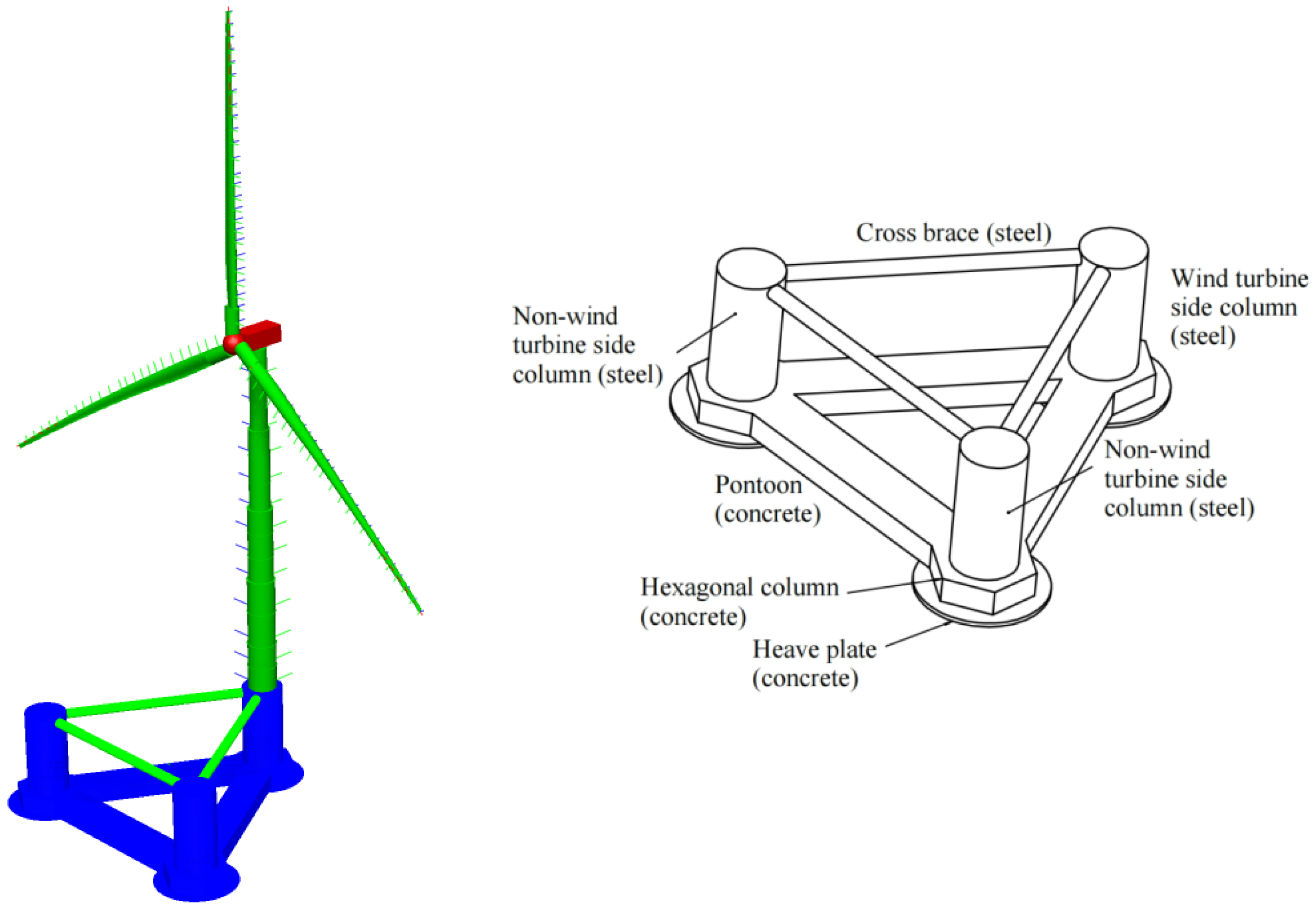
Figure 1.
Wind turbine and floating platform.
Figure 1.
Wind turbine and floating platform.
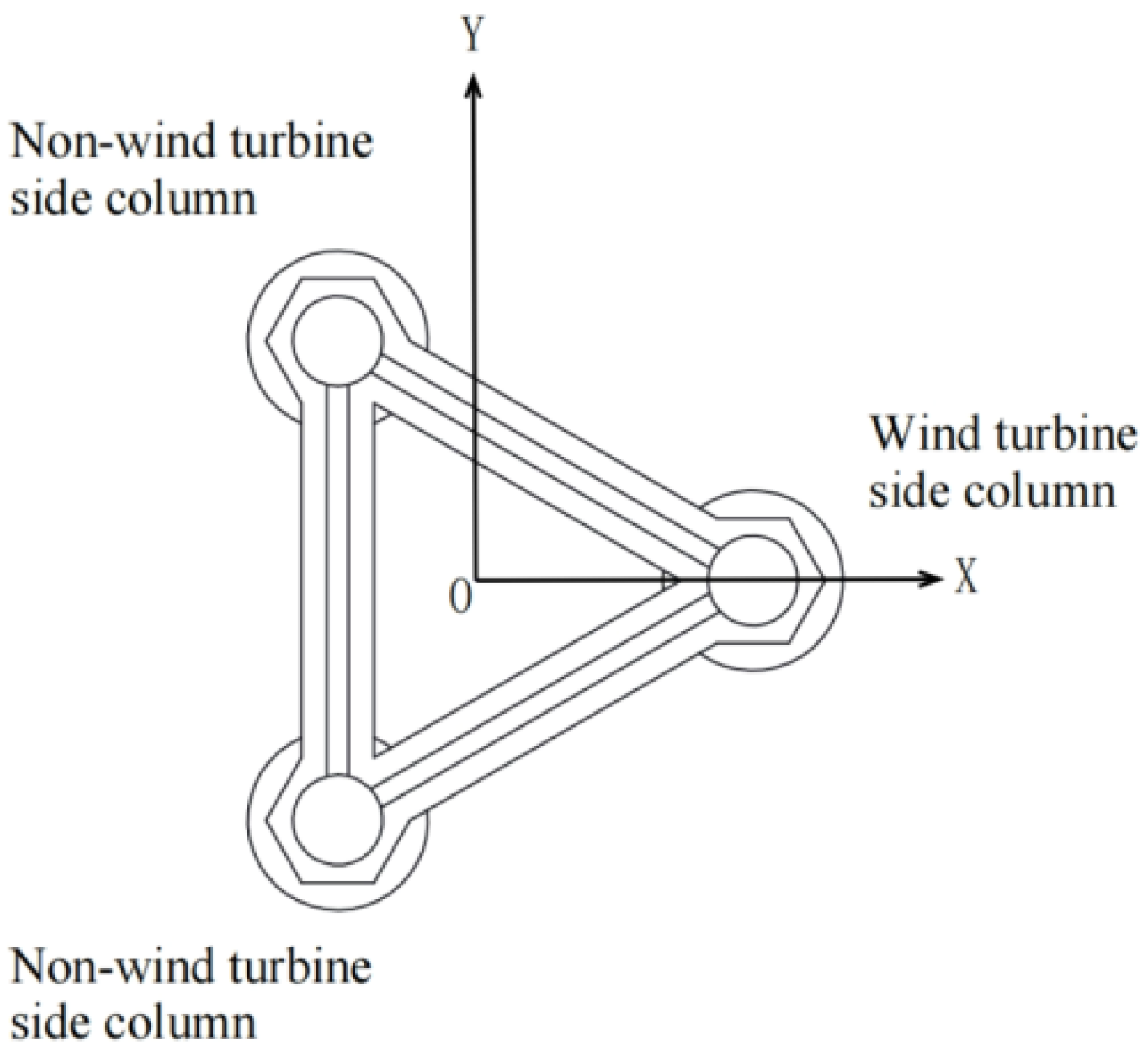
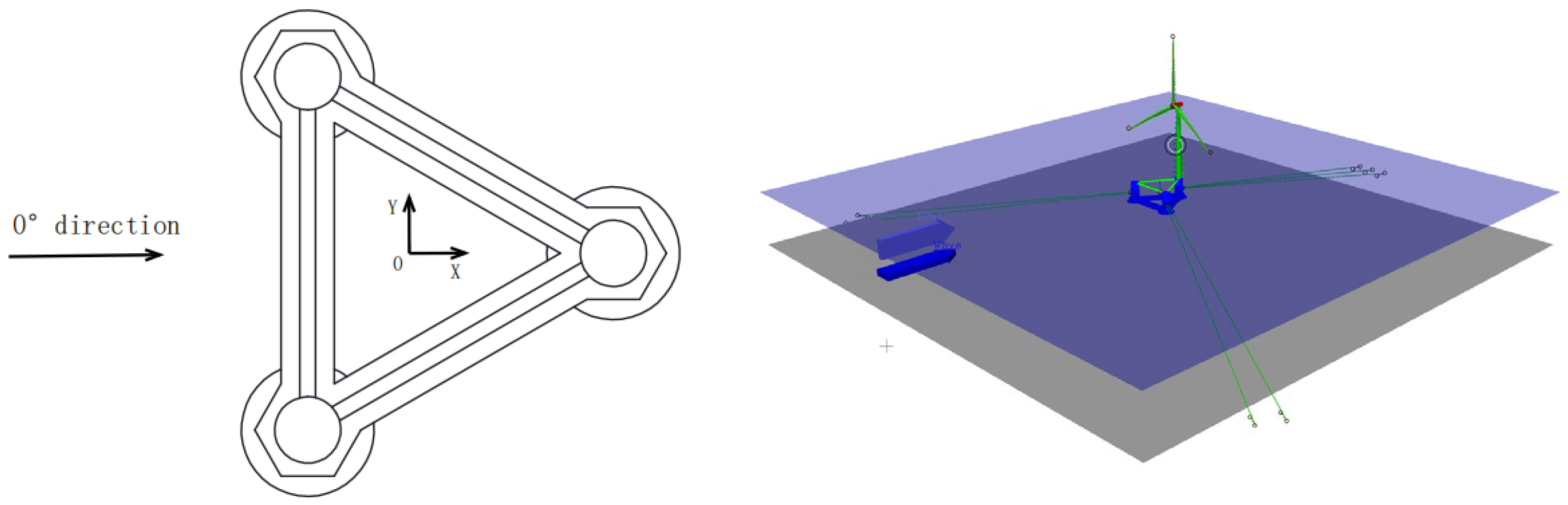
Figure 2.
Top view of the floating platform global coordinate system.
Figure 2.
Top view of the floating platform global coordinate system.
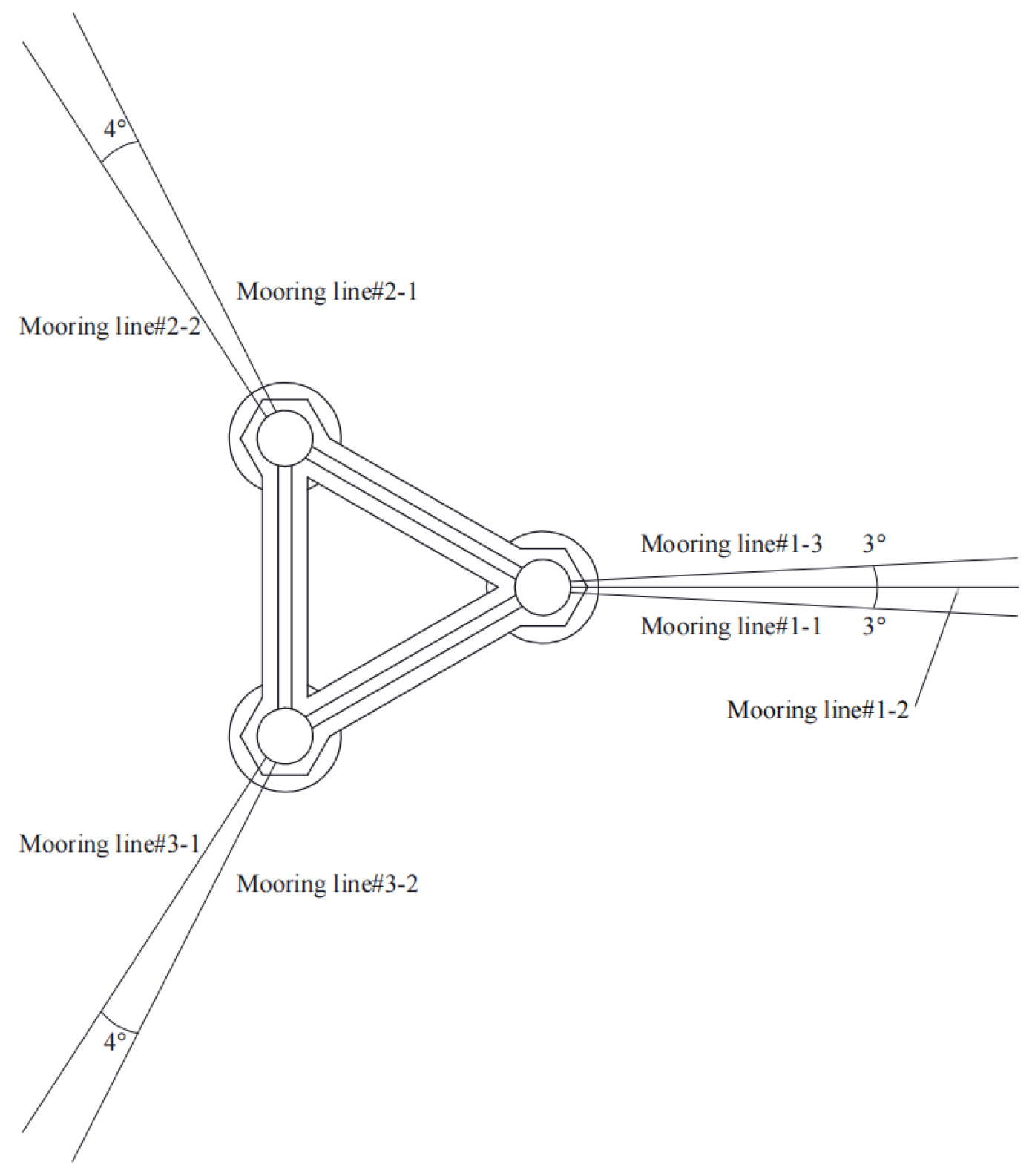
Figure 3.
Mooring system.
Figure 3.
Mooring system.
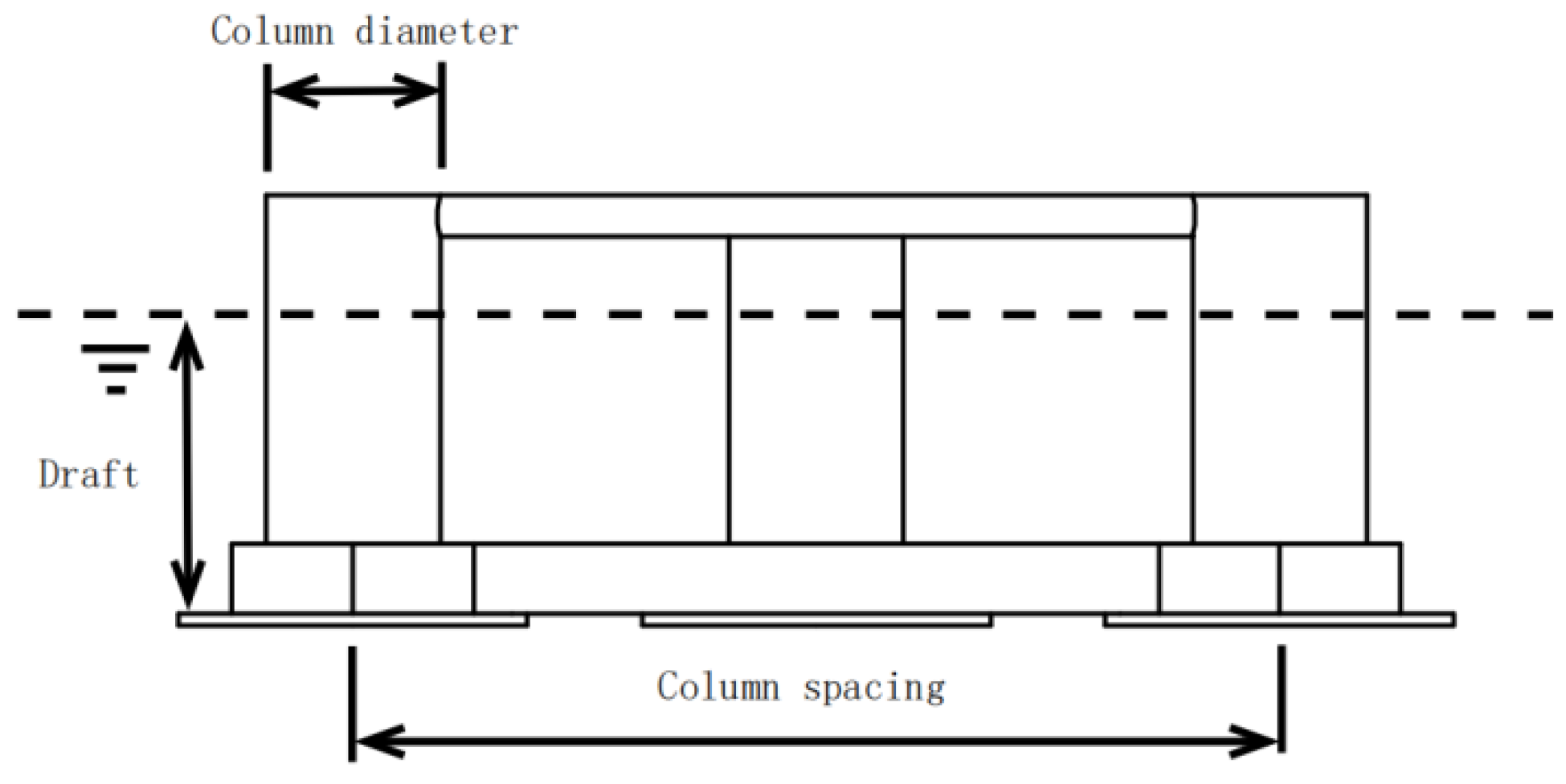
Figure 4.
Schematic diagram of principal dimension nomenclature.
Figure 4.
Schematic diagram of principal dimension nomenclature.
Figure 5.
Directions of wind, wave and current loads.
Figure 5.
Directions of wind, wave and current loads.
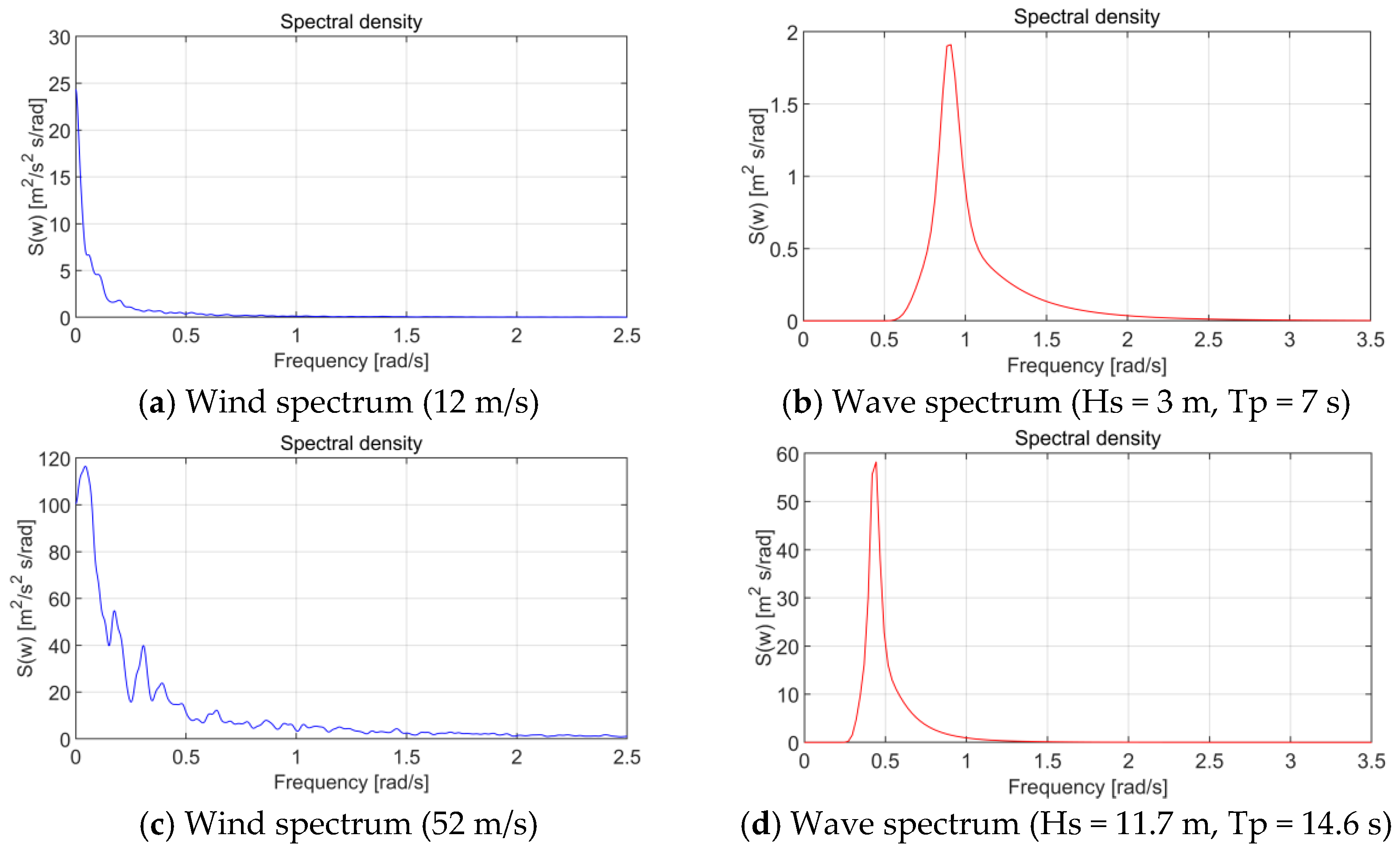
Figure 6.
Wind spectra and wave spectra for operational and extreme conditions.
Figure 6.
Wind spectra and wave spectra for operational and extreme conditions.
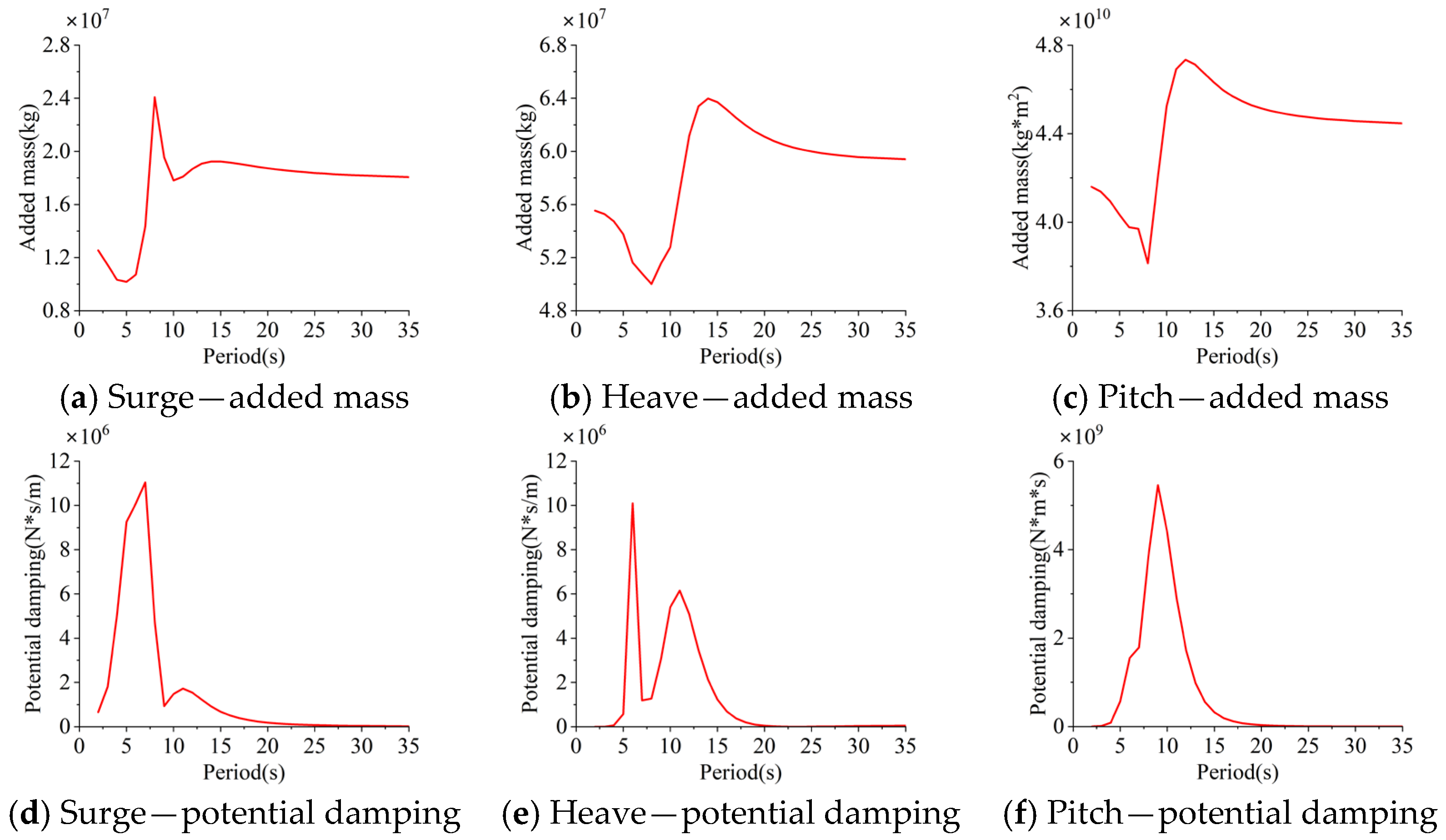
Figure 7.
Hydrodynamic coefficients of the platform.
Figure 7.
Hydrodynamic coefficients of the platform.
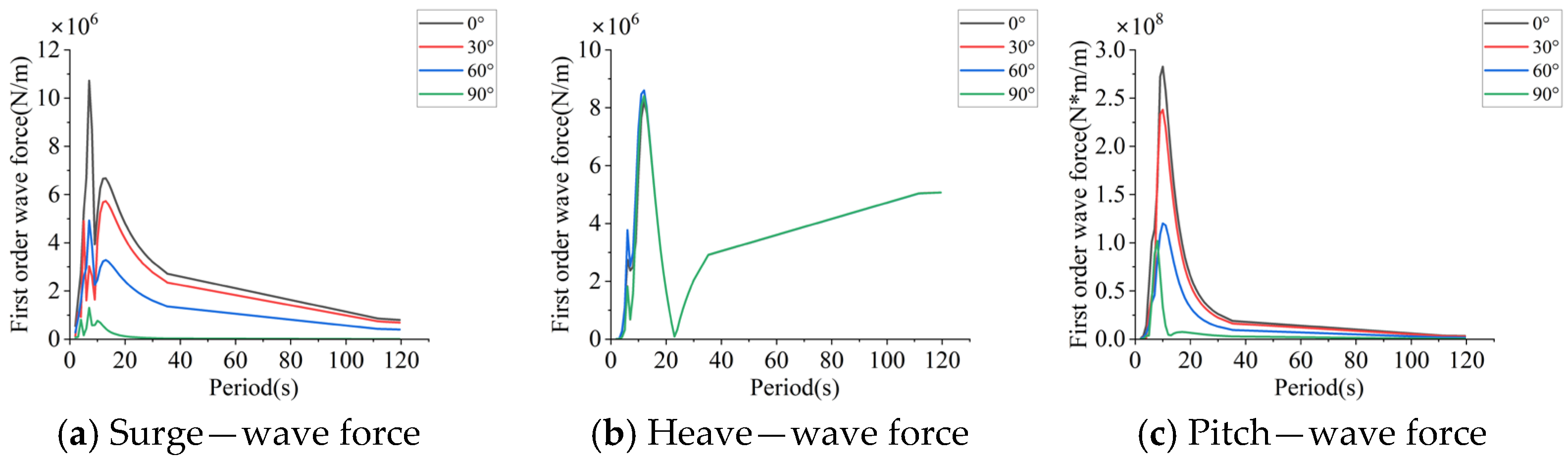
Figure 8.
Hydrodynamic characteristics of the platform under different wave directions.
Figure 8.
Hydrodynamic characteristics of the platform under different wave directions.
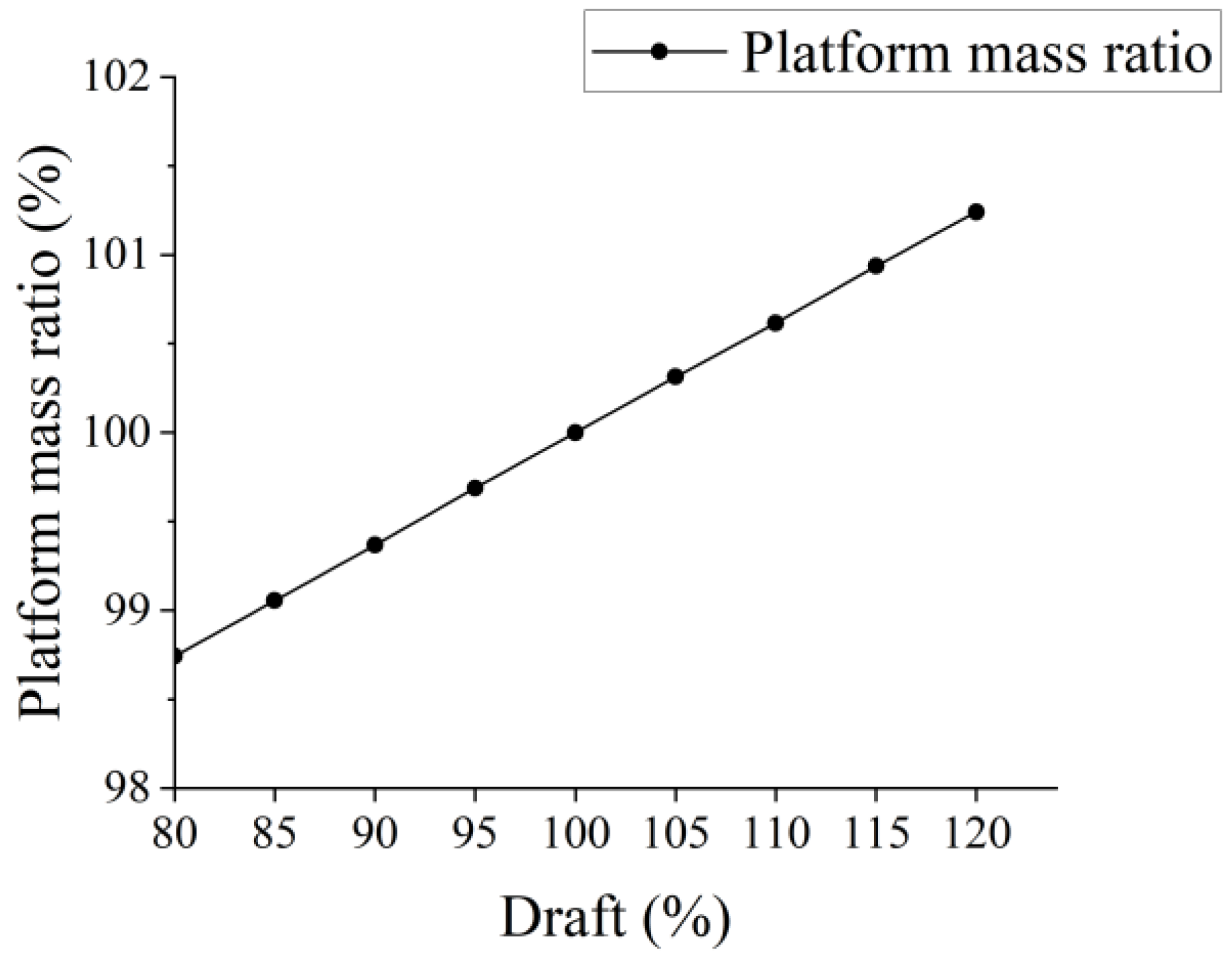
Figure 9.
Mass calculation results for different drafts.
Figure 9.
Mass calculation results for different drafts.
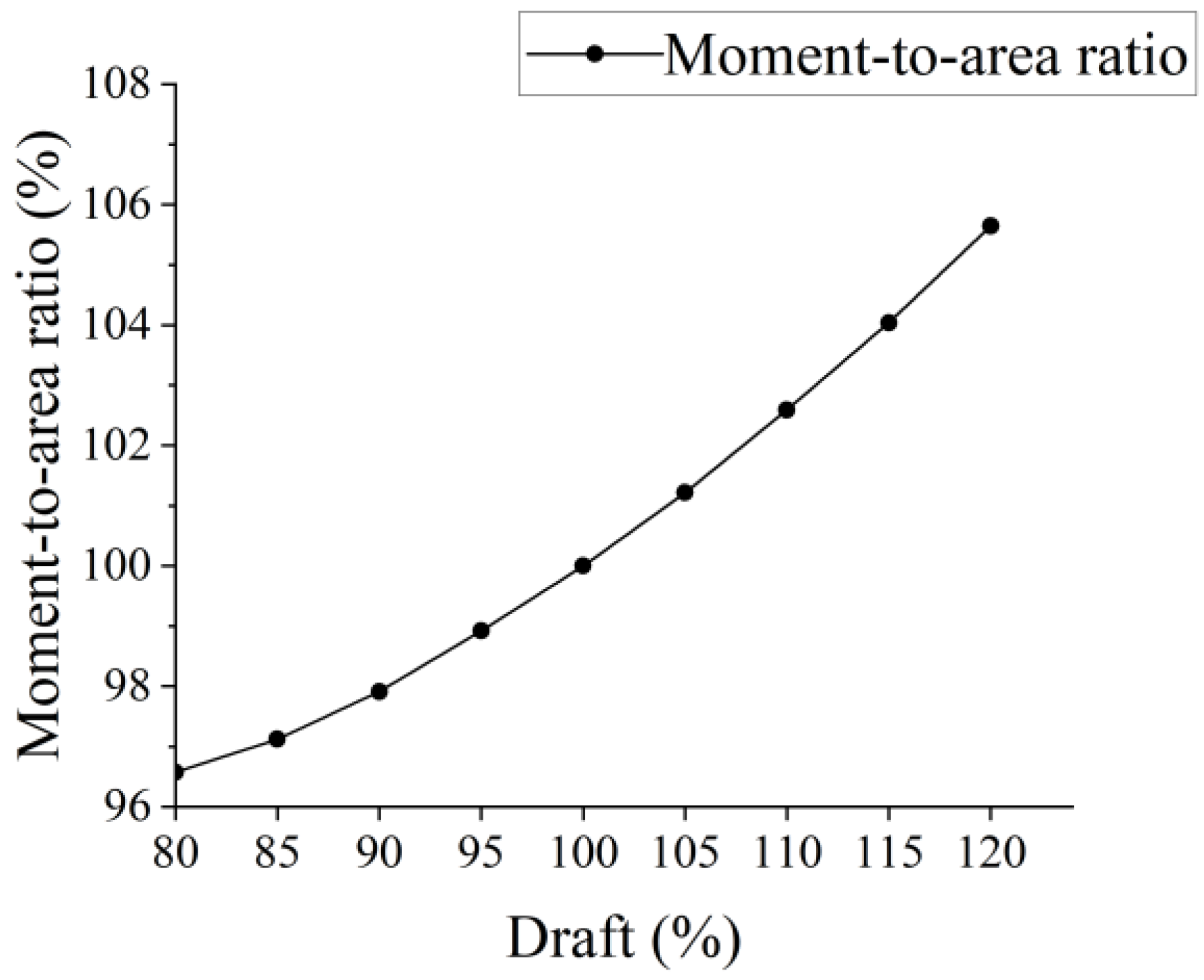
Figure 10.
Stability calculation results for different drafts.
Figure 10.
Stability calculation results for different drafts.
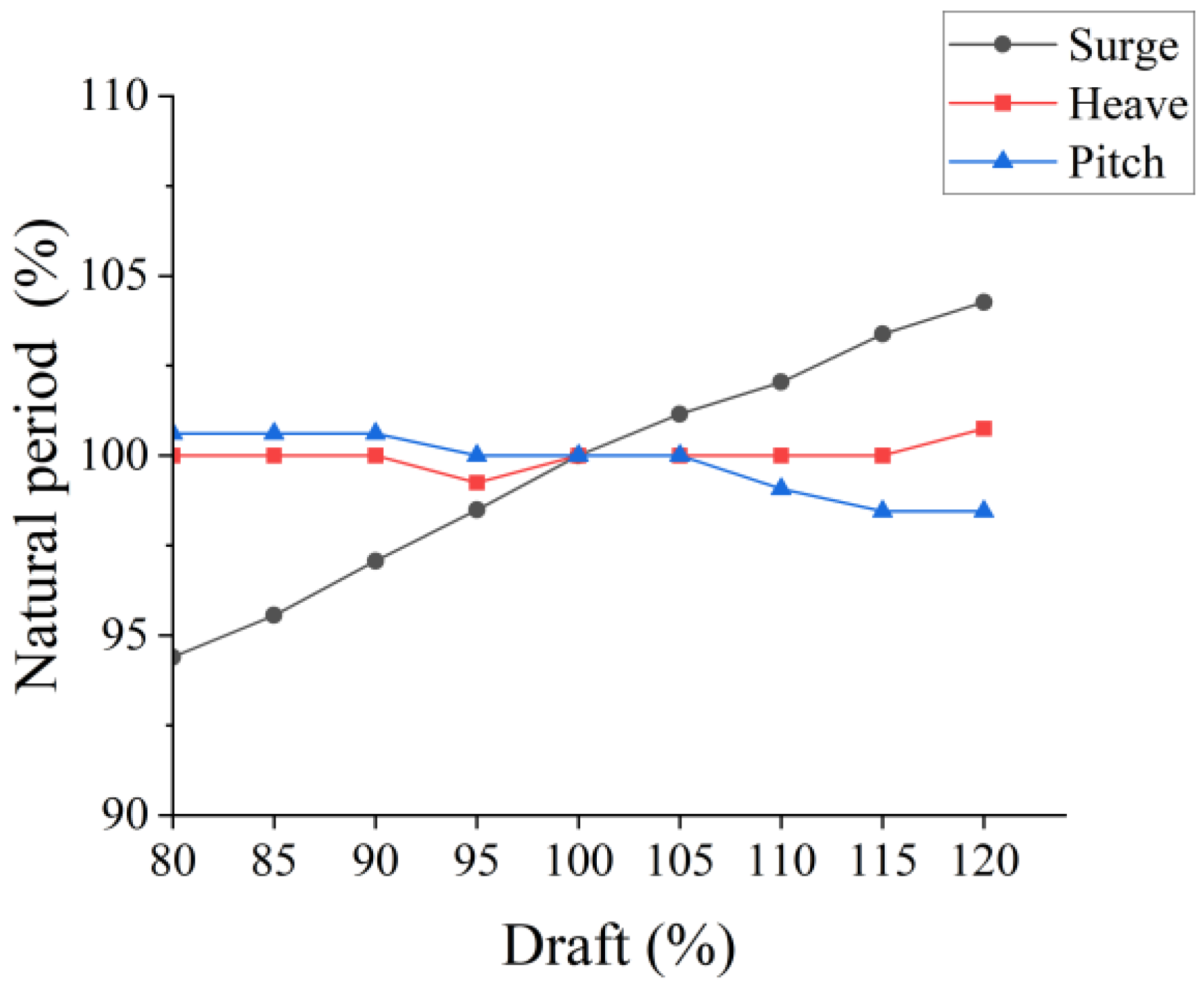
Figure 11.
Natural period calculation results for different drafts.
Figure 11.
Natural period calculation results for different drafts.
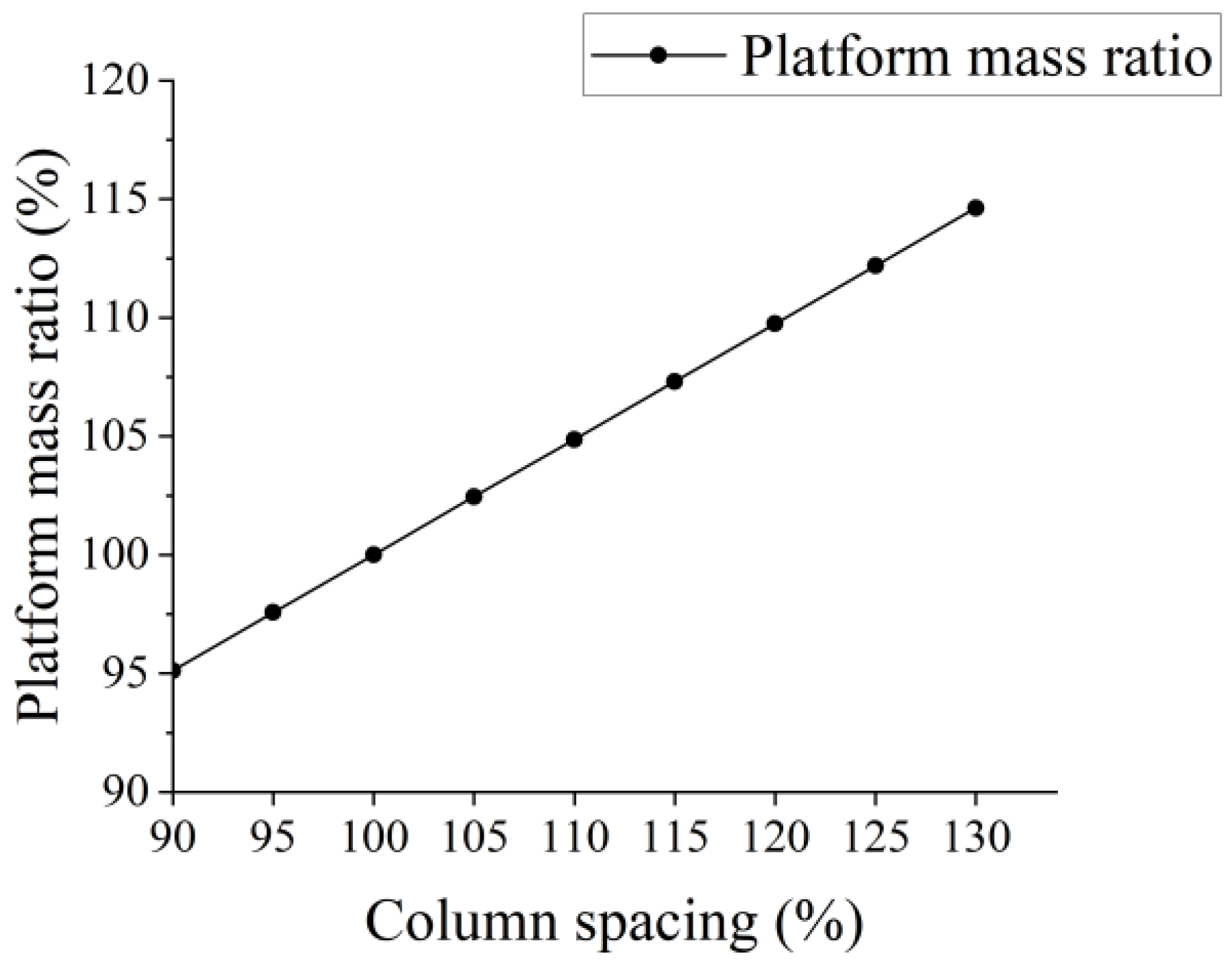
Figure 12.
Mass calculation results for different column spacings.
Figure 12.
Mass calculation results for different column spacings.
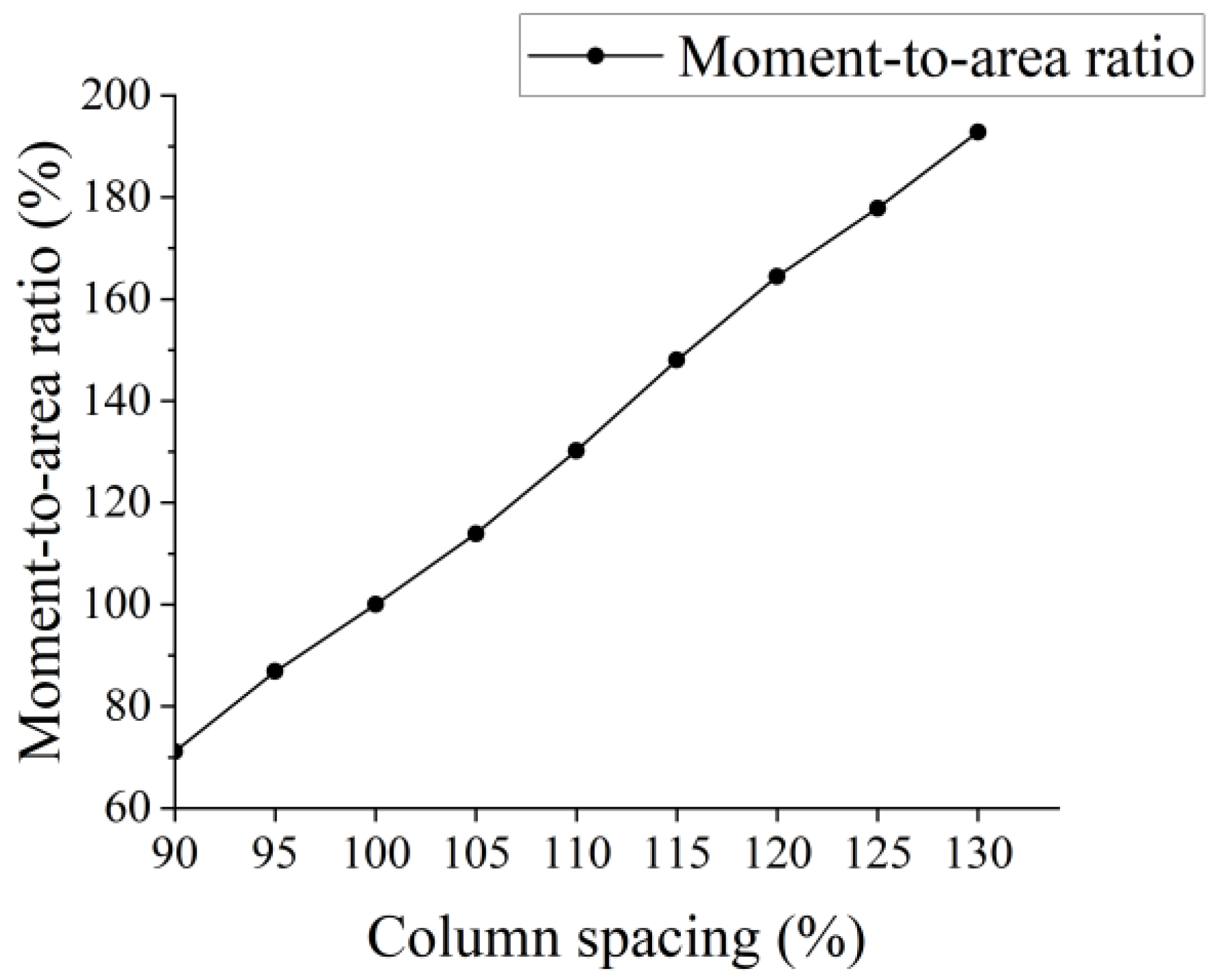
Figure 13.
Stability calculation results for different column spacings.
Figure 13.
Stability calculation results for different column spacings.
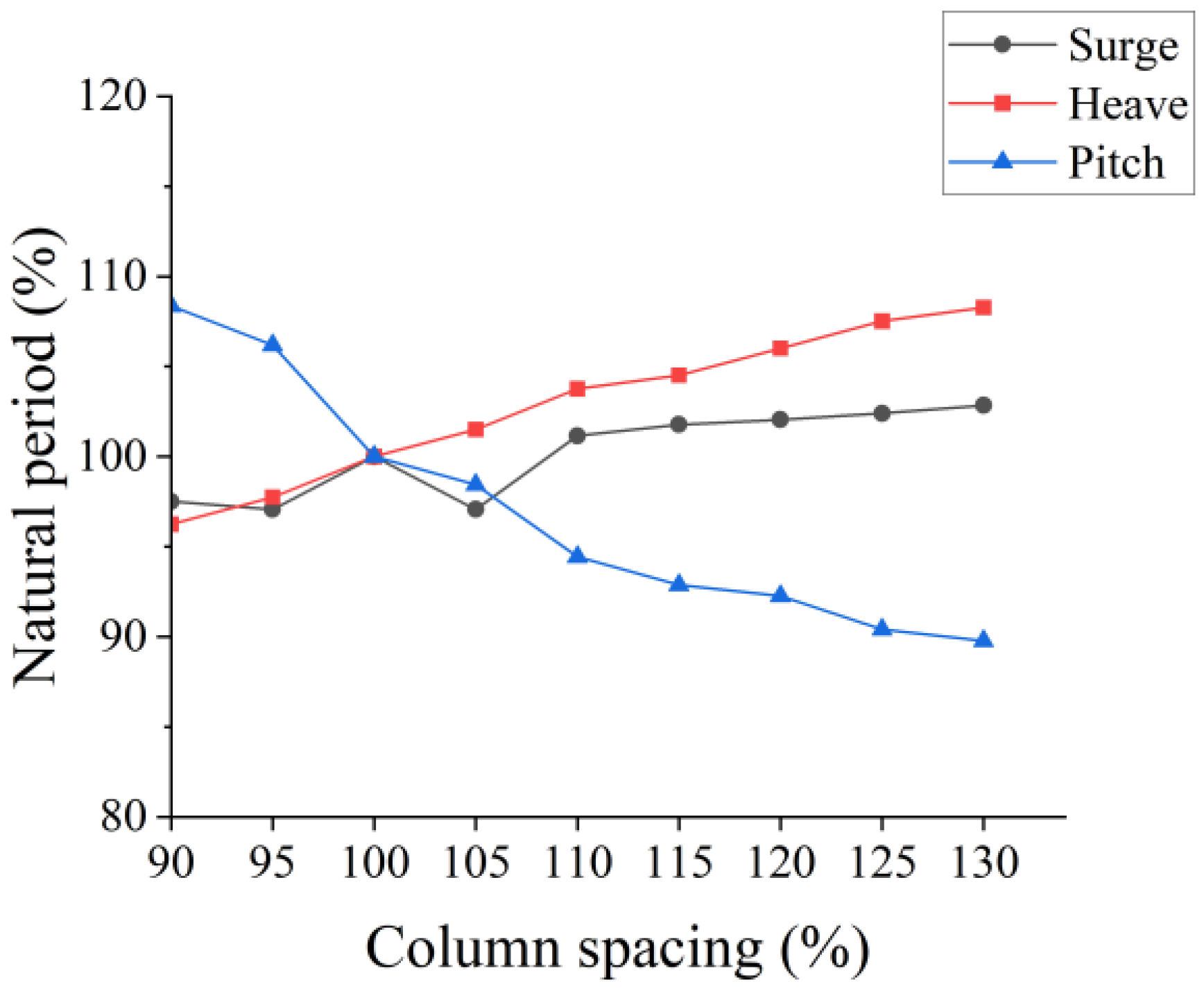
Figure 14.
Natural period calculation results for different column spacings.
Figure 14.
Natural period calculation results for different column spacings.
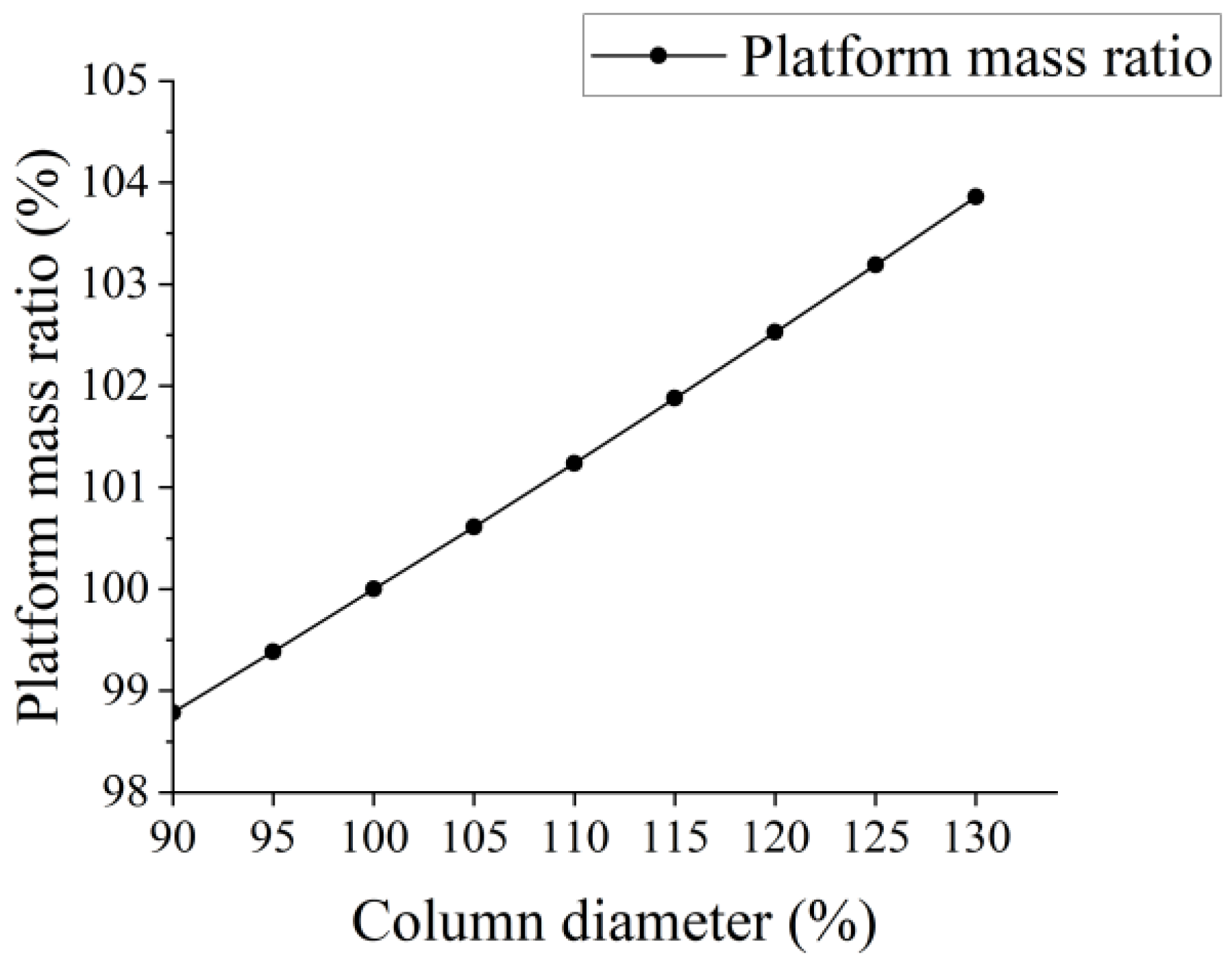
Figure 15.
Mass calculation results for different column diameters.
Figure 15.
Mass calculation results for different column diameters.
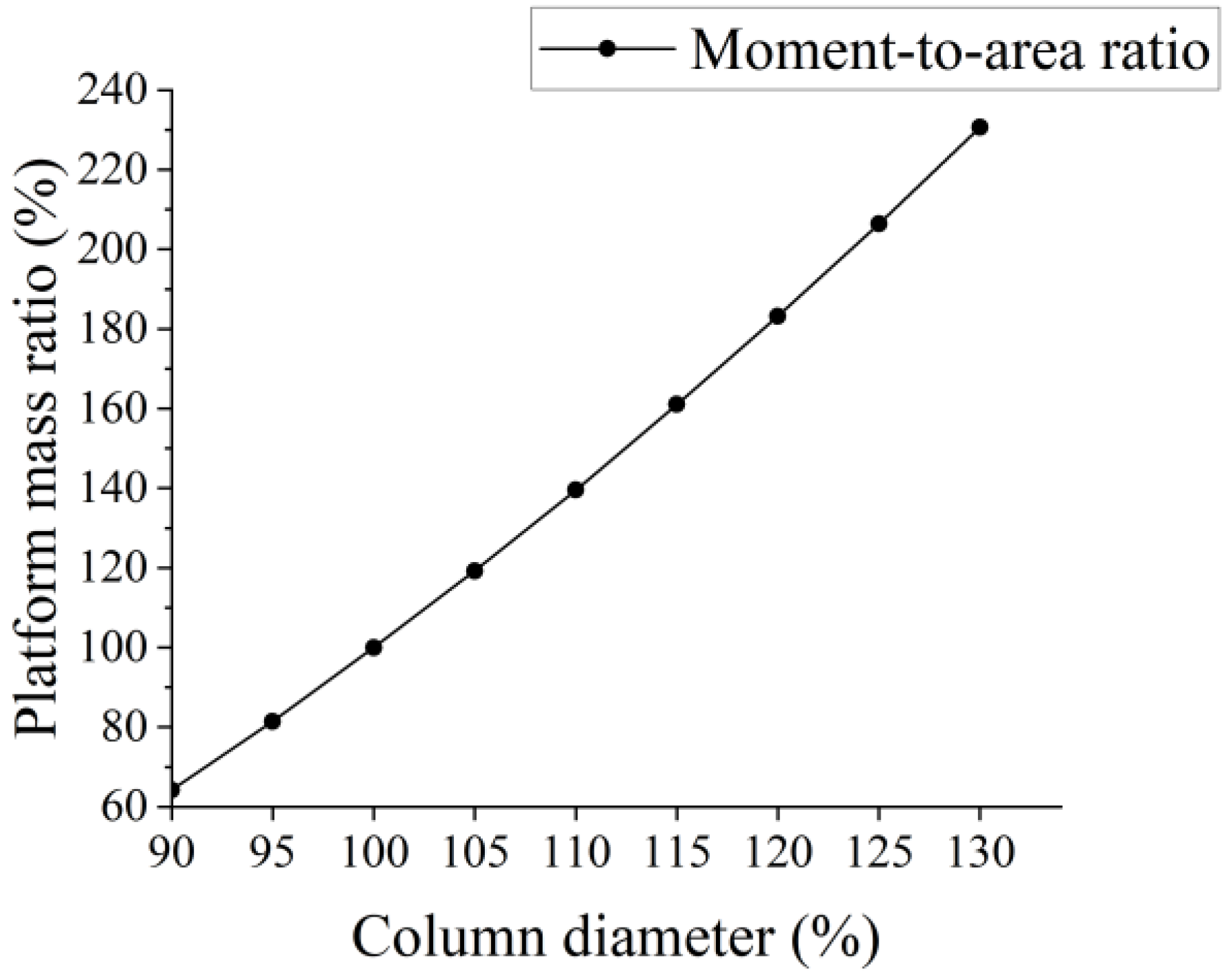
Figure 16.
Stability calculation results for different column diameters.
Figure 16.
Stability calculation results for different column diameters.
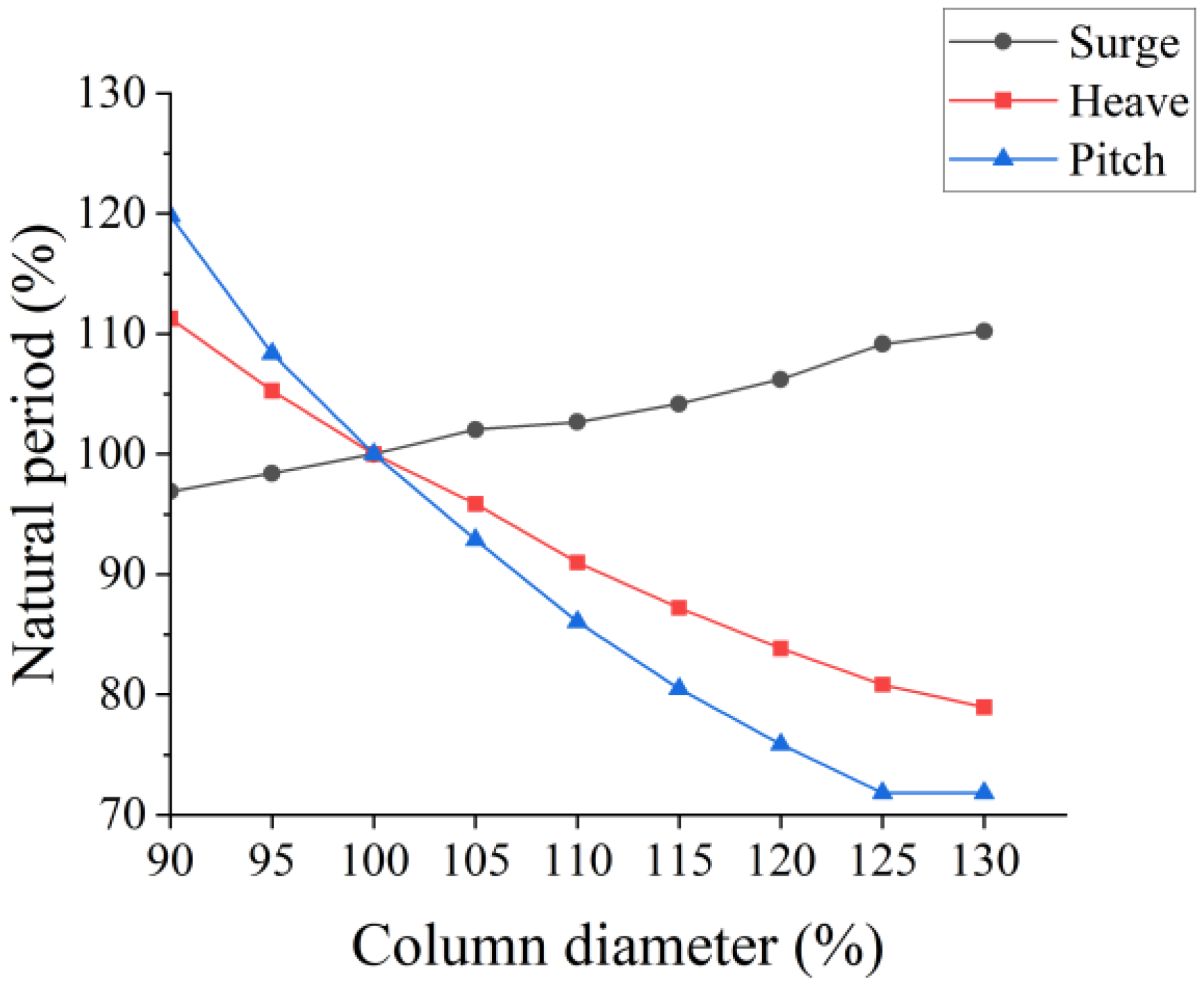
Figure 17.
Natural period calculation results for different column diameters.
Figure 17.
Natural period calculation results for different column diameters.
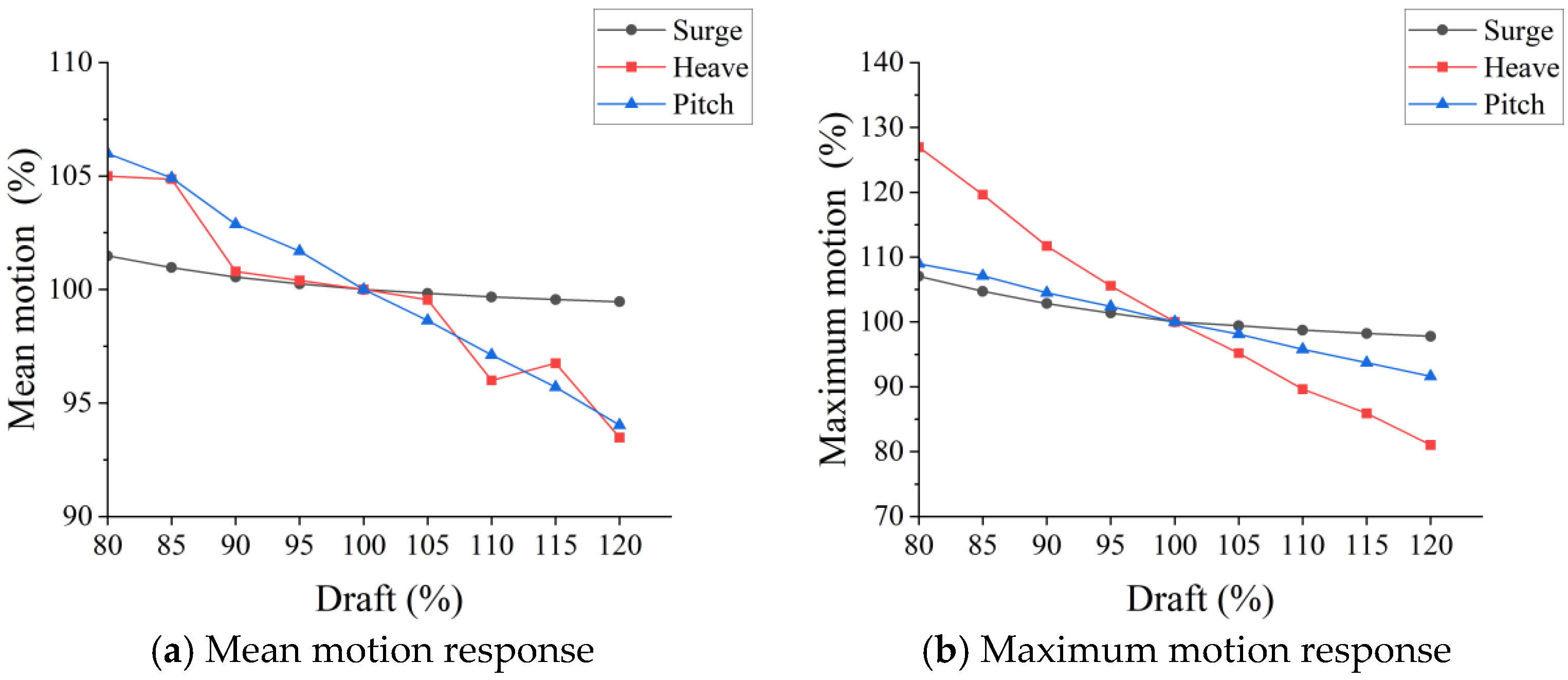
Figure 18.
Motion response values for different drafts under operational conditions.
Figure 18.
Motion response values for different drafts under operational conditions.
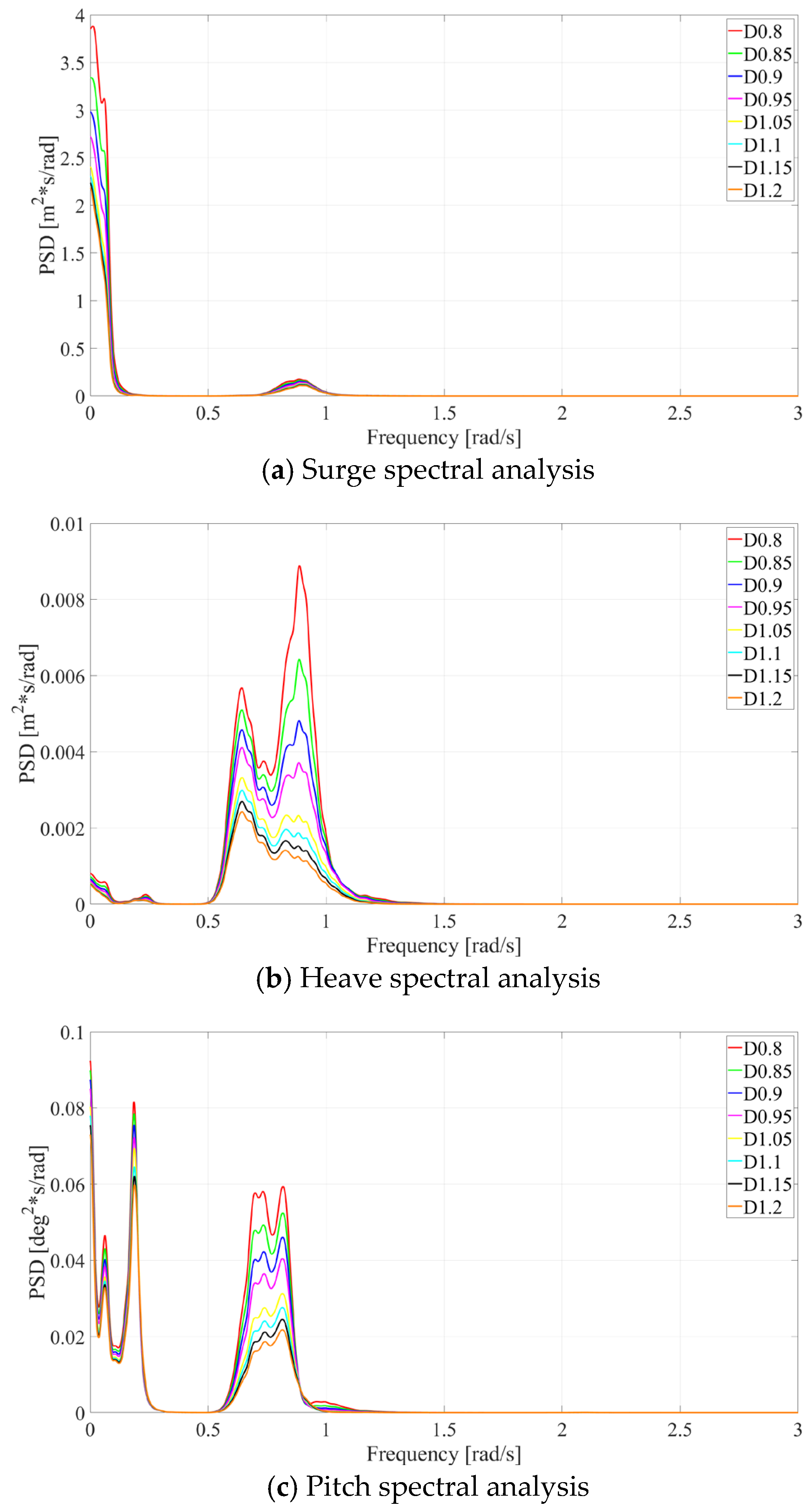
Figure 19.
Motion response spectral analysis for different drafts under operational conditions.
Figure 19.
Motion response spectral analysis for different drafts under operational conditions.
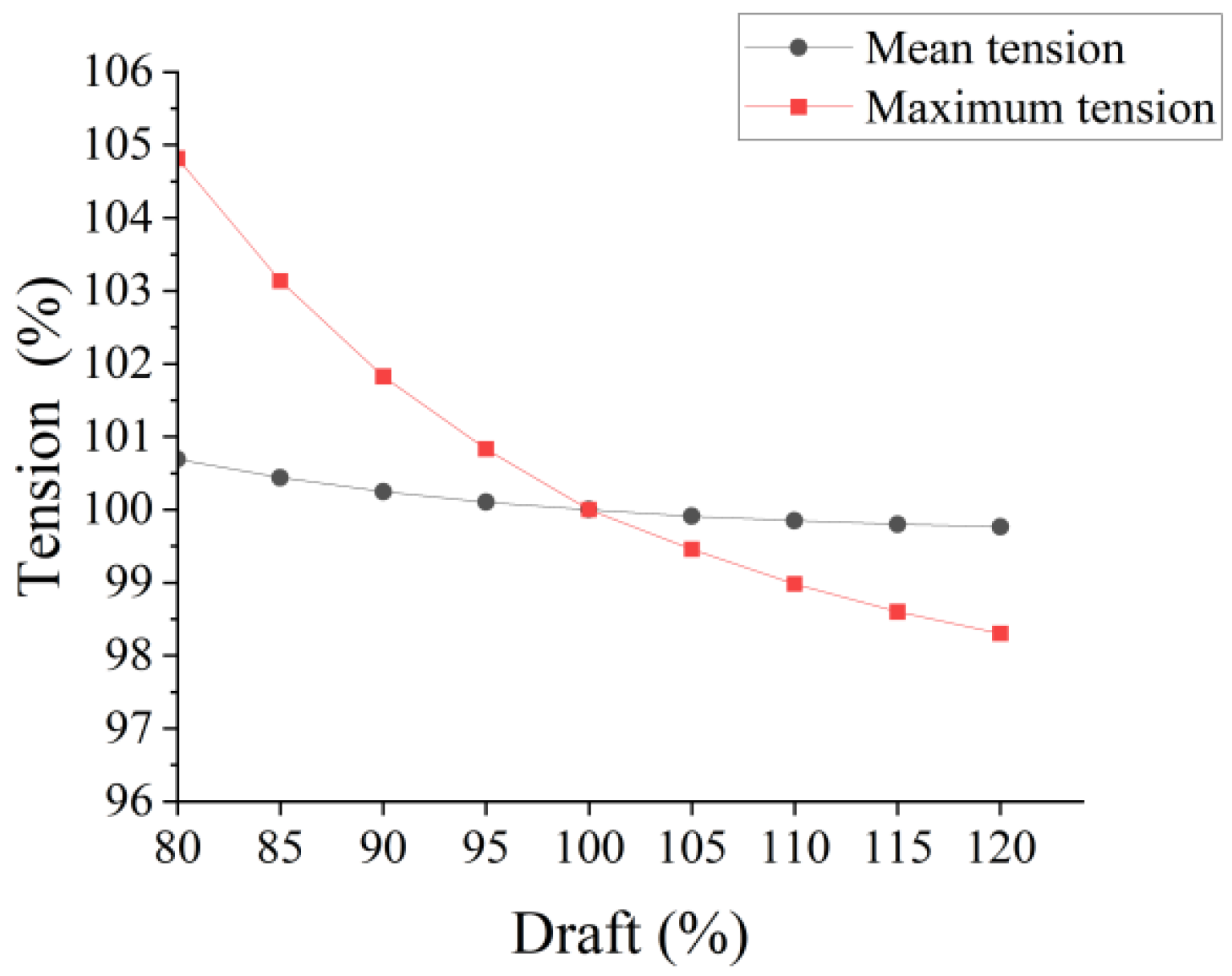
Figure 20.
Tension values of mooring line 2-2 for different drafts under operational conditions.
Figure 20.
Tension values of mooring line 2-2 for different drafts under operational conditions.
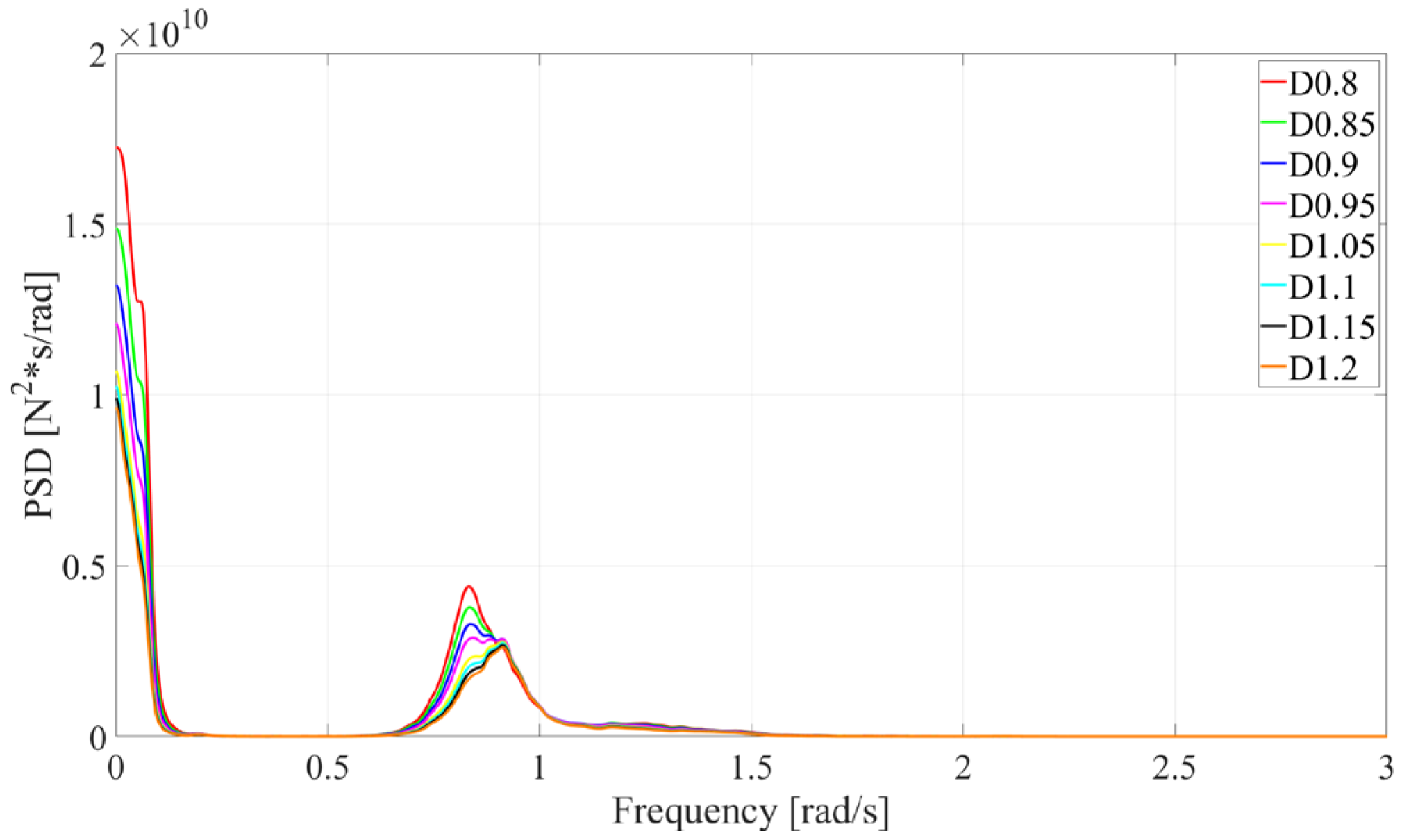
Figure 21.
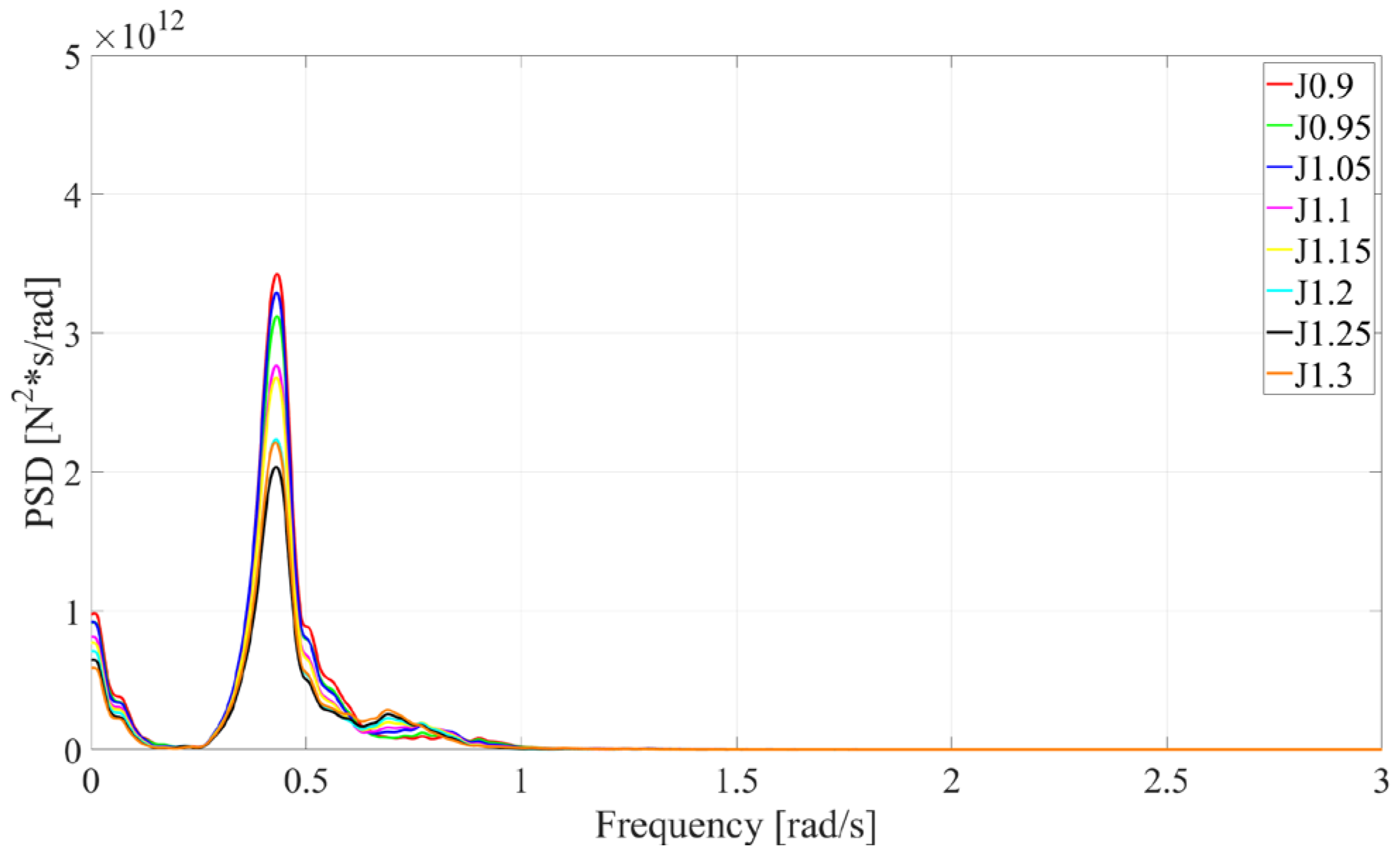
Tension spectral analysis of mooring line 2-2 for different drafts under operational conditions.
Figure 21.
Tension spectral analysis of mooring line 2-2 for different drafts under operational conditions.
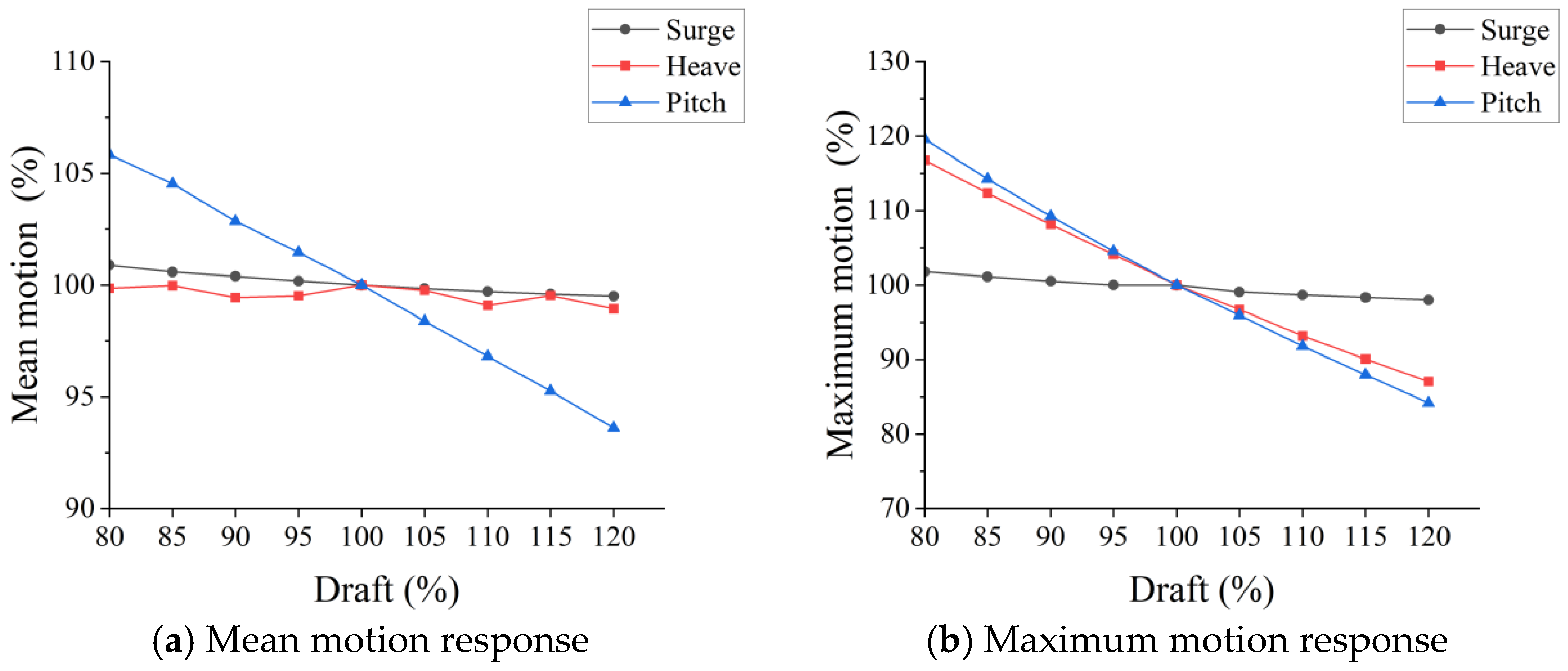
Figure 22.
Motion response values for different drafts under extreme conditions.
Figure 22.
Motion response values for different drafts under extreme conditions.
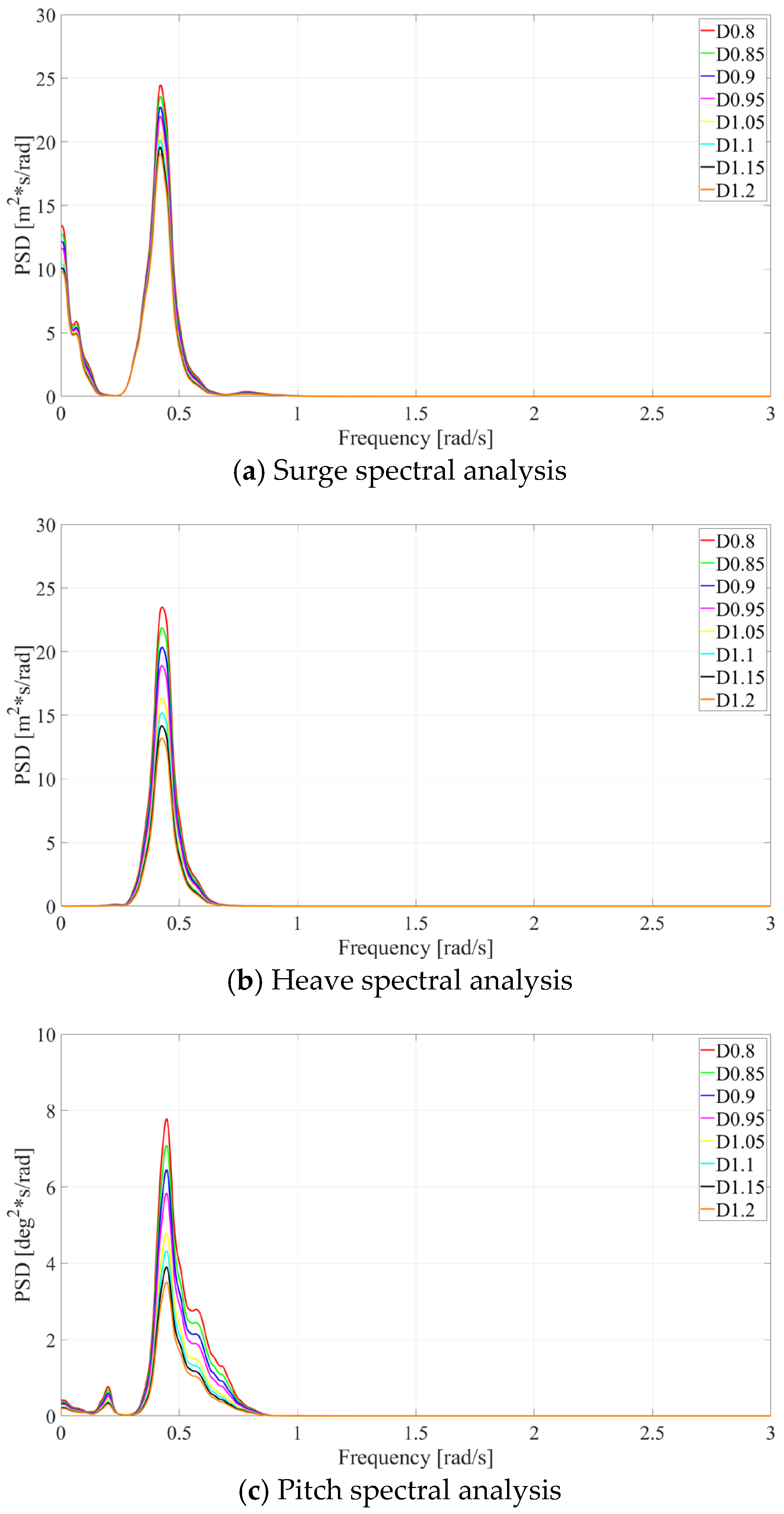
Figure 23.
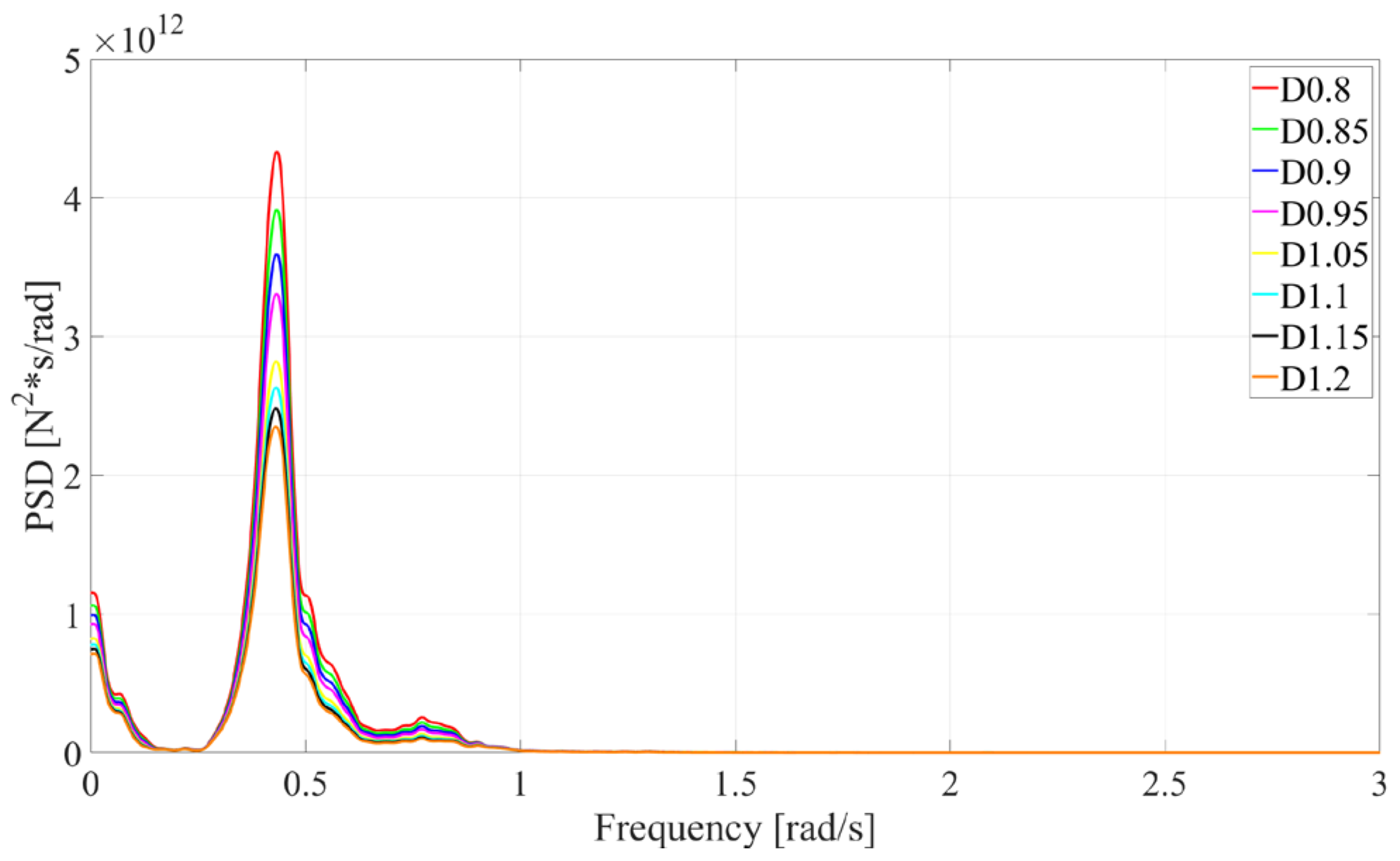
Motion response spectral analysis for different drafts under extreme conditions.
Figure 23.
Motion response spectral analysis for different drafts under extreme conditions.
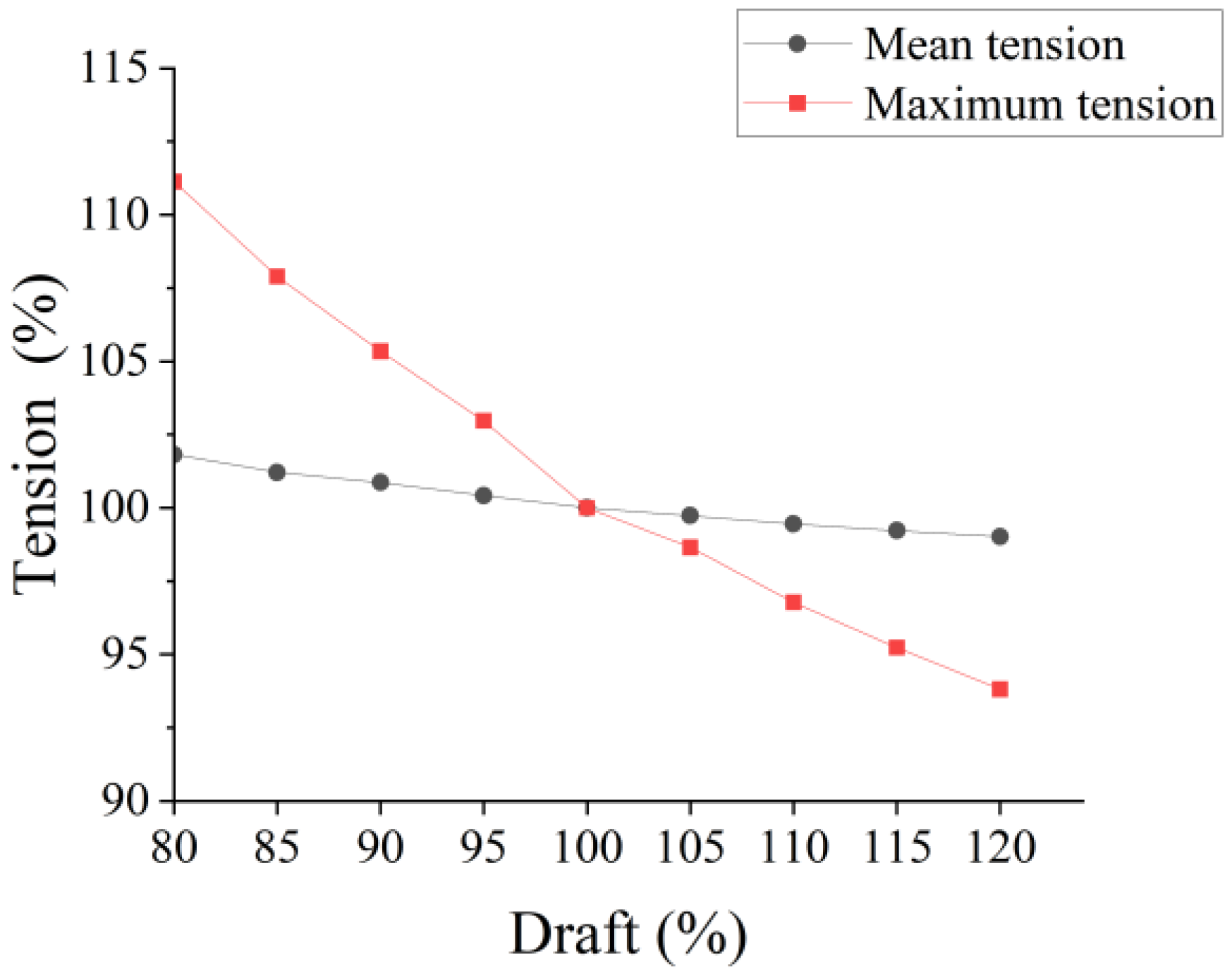
Figure 24.
Tension values of mooring line 2-2 for different drafts under extreme conditions.
Figure 24.
Tension values of mooring line 2-2 for different drafts under extreme conditions.
Figure 25.
Tension spectral analysis of mooring line 2-2 for different drafts under extreme conditions.
Figure 25.
Tension spectral analysis of mooring line 2-2 for different drafts under extreme conditions.
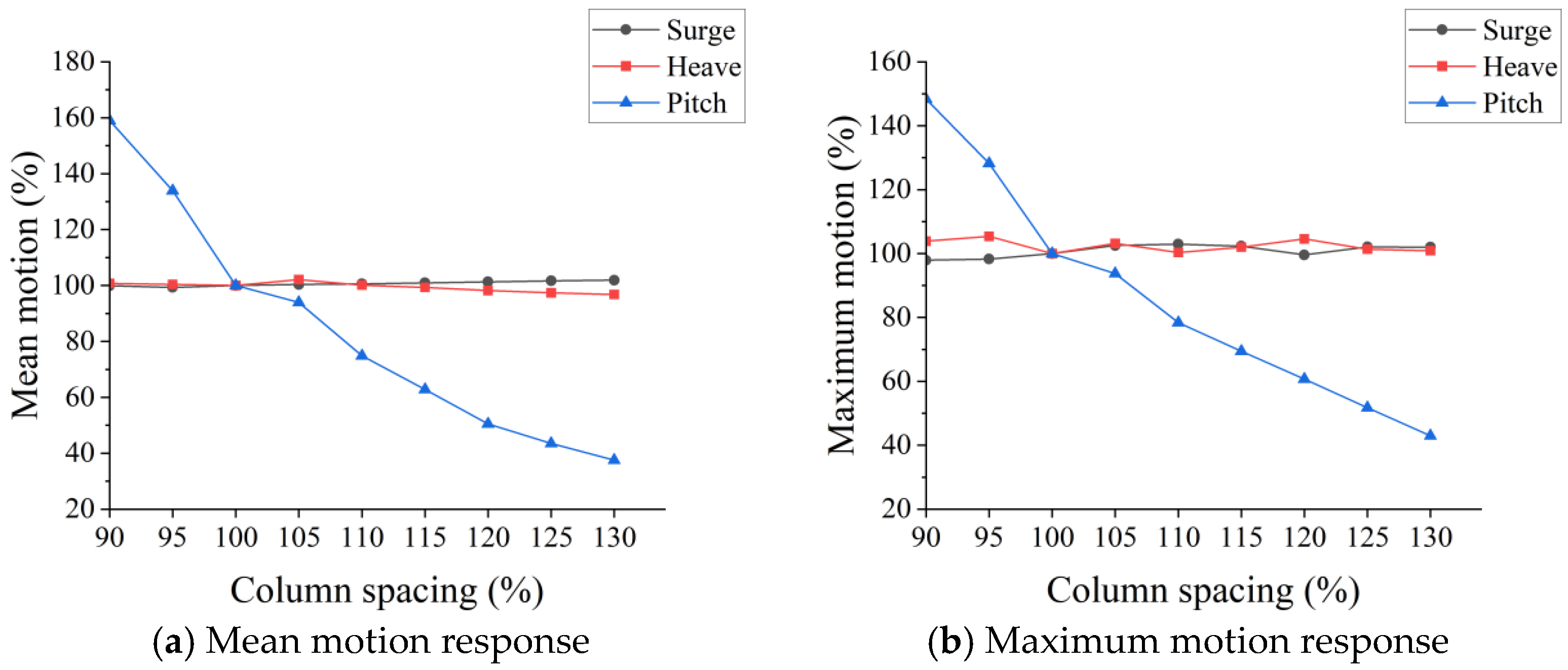
Figure 26.
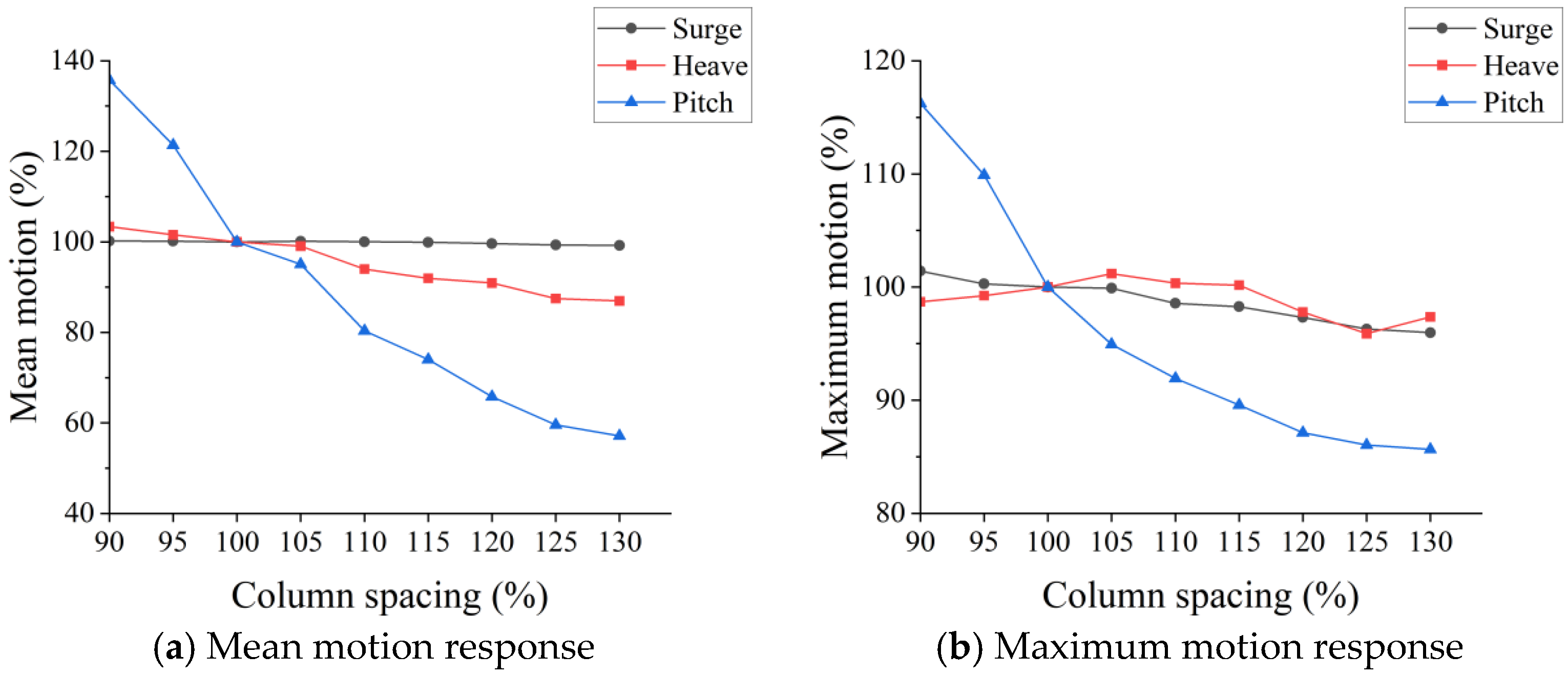
Motion response values for different column spacings under operational conditions.
Figure 26.
Motion response values for different column spacings under operational conditions.
Figure 27.
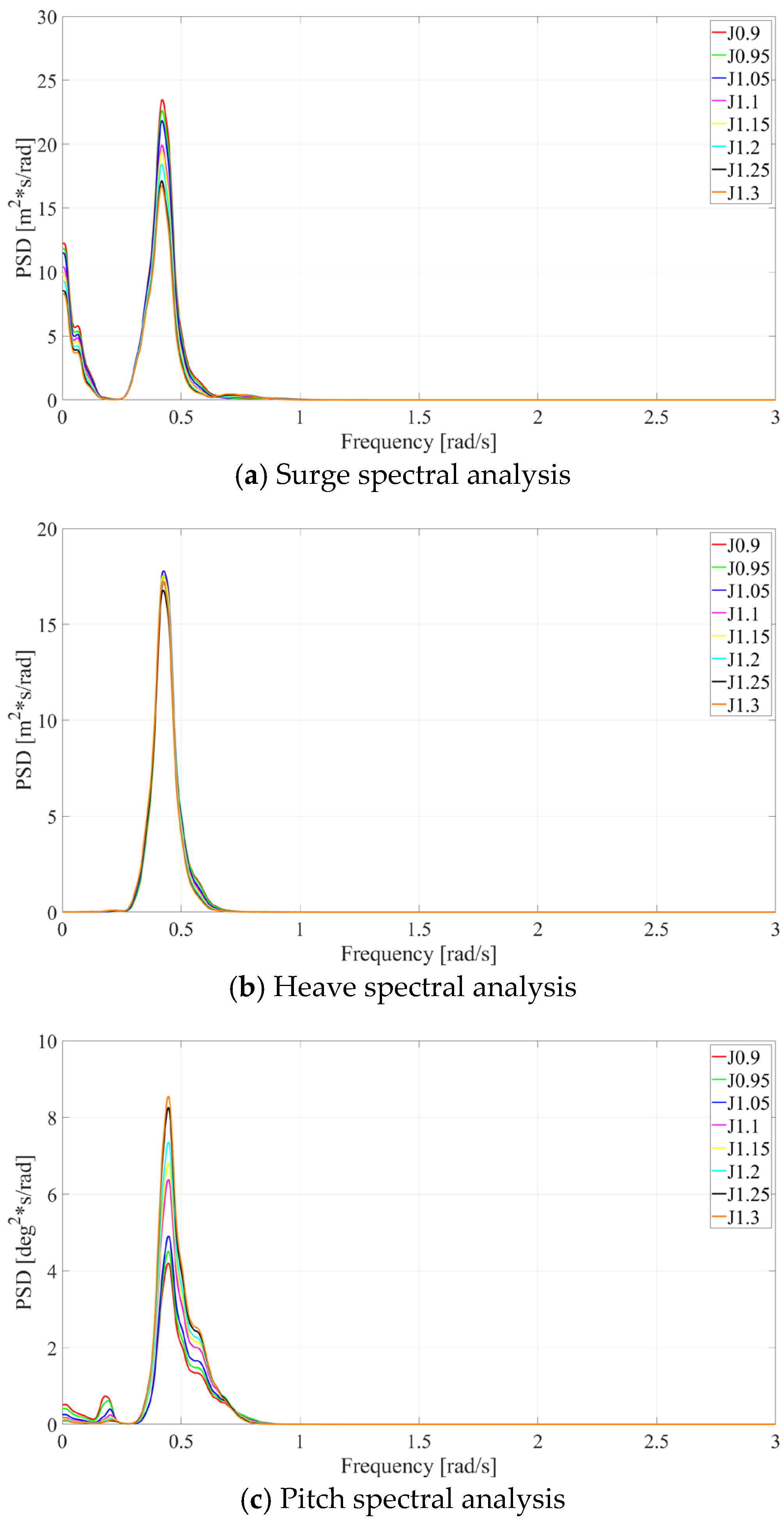
Motion response spectral analysis for different column spacings under operational conditions.
Figure 27.
Motion response spectral analysis for different column spacings under operational conditions.
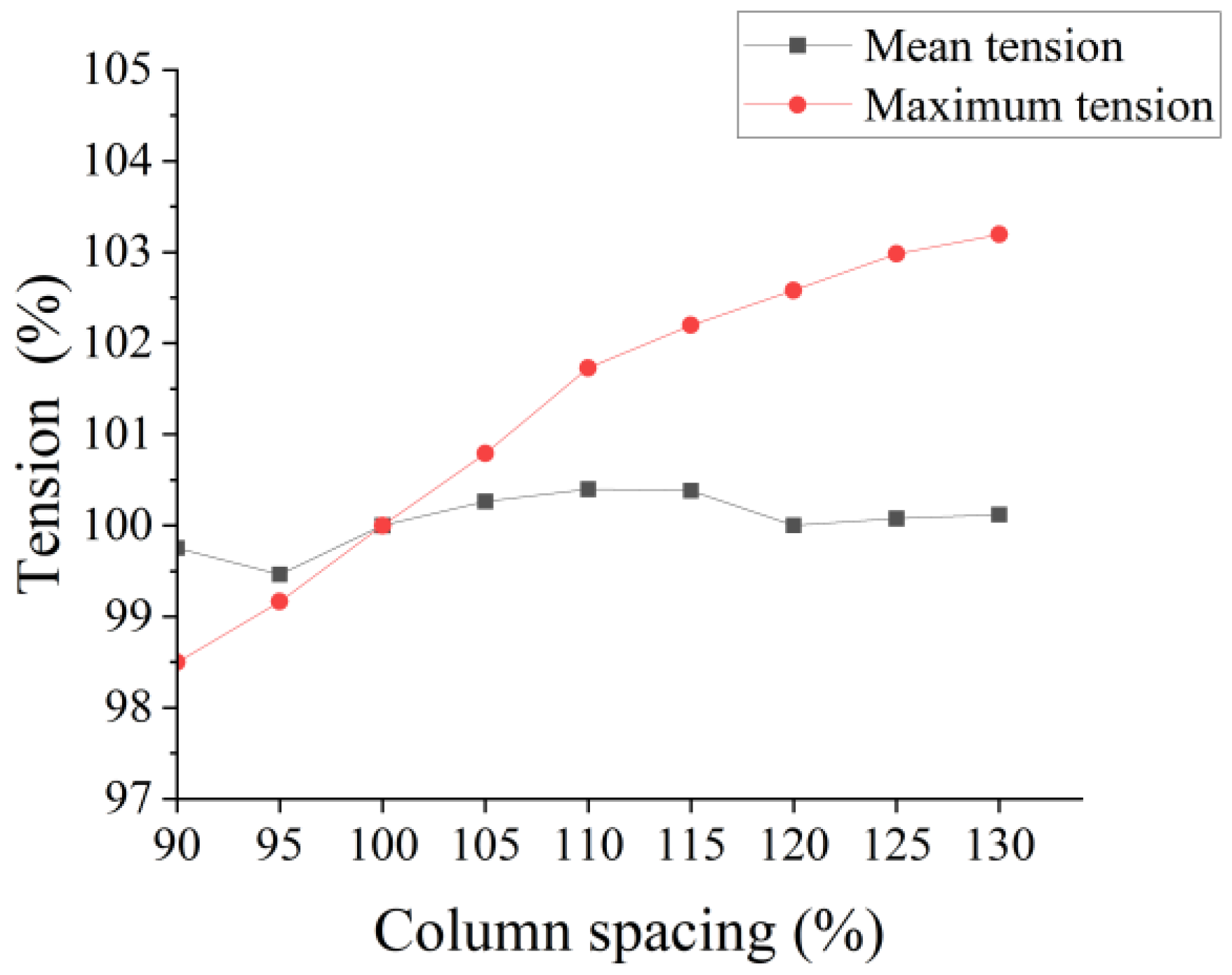
Figure 28.
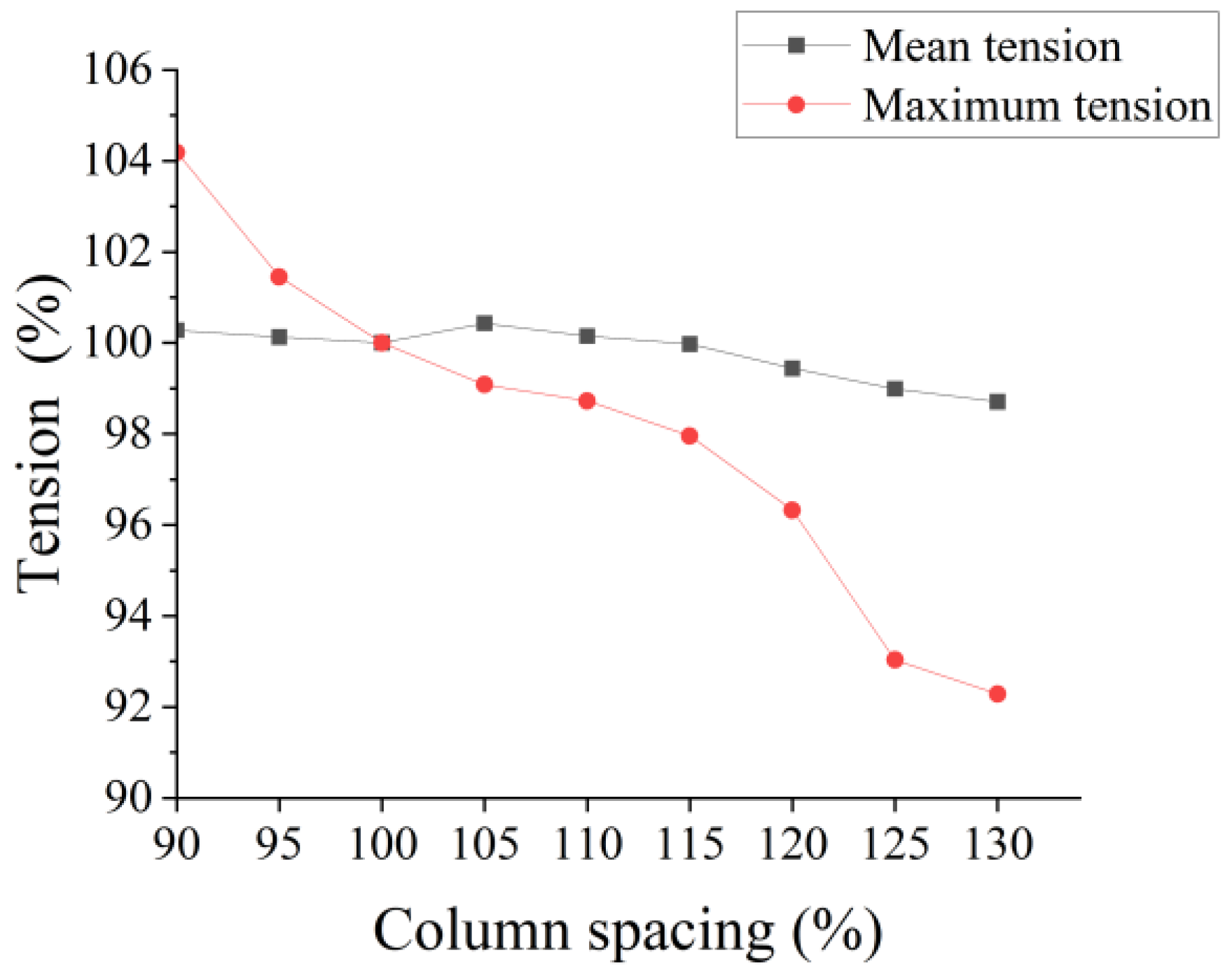
Tension values of mooring line 2-2 for different column spacings under operational conditions.
Figure 28.
Tension values of mooring line 2-2 for different column spacings under operational conditions.
Figure 29.
Tension spectral analysis of mooring line 2-2 for different column spacings under operational conditions.
Figure 29.
Tension spectral analysis of mooring line 2-2 for different column spacings under operational conditions.
Figure 30.
Motion response values for different column spacings under extreme conditions.
Figure 30.
Motion response values for different column spacings under extreme conditions.
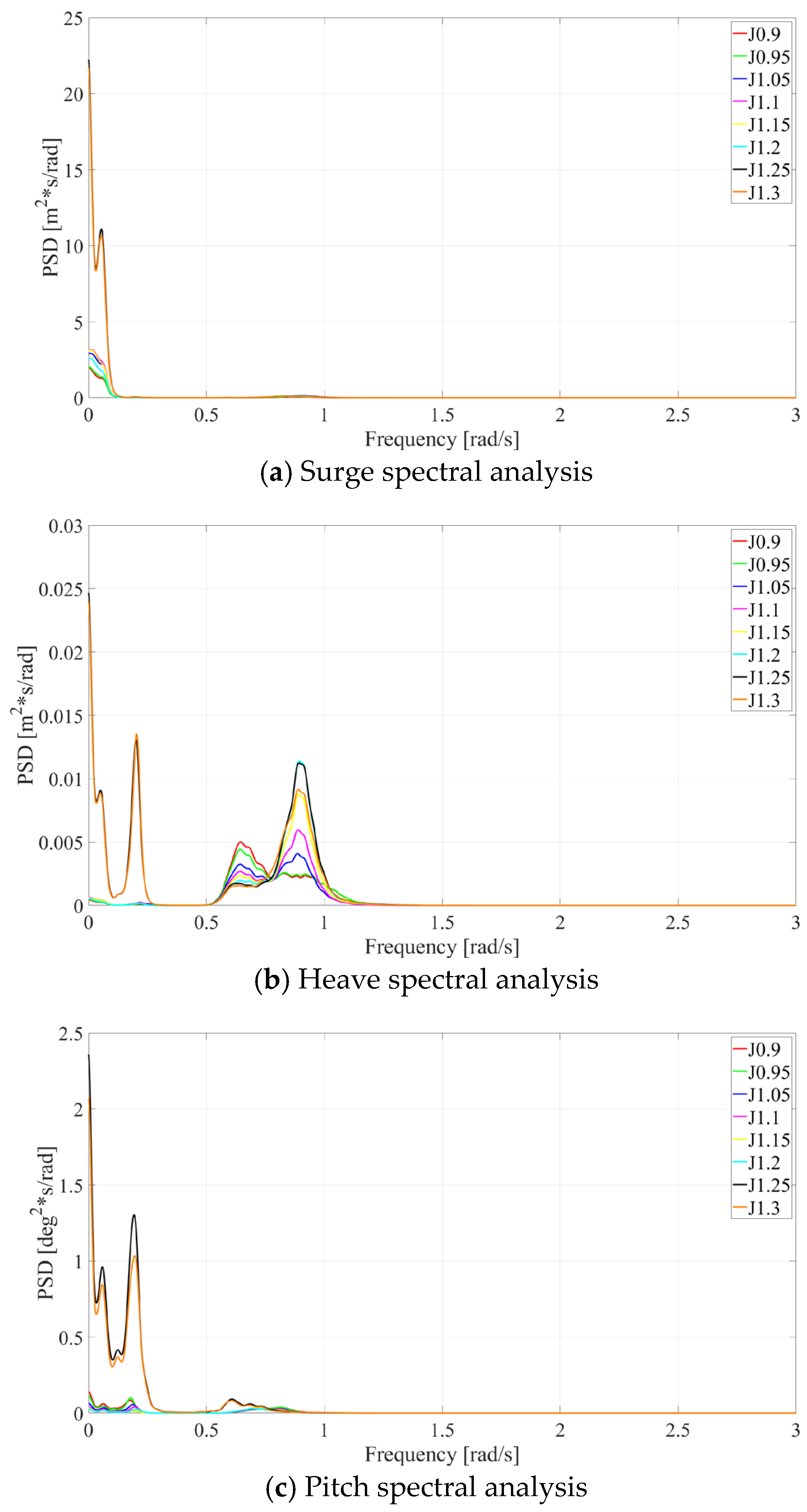
Figure 31.
Motion response spectral analysis for different column spacings under extreme conditions.
Figure 31.
Motion response spectral analysis for different column spacings under extreme conditions.
Figure 32.
Tension values of mooring line 2-2 for different column spacings under extreme conditions.
Figure 32.
Tension values of mooring line 2-2 for different column spacings under extreme conditions.
Figure 33.
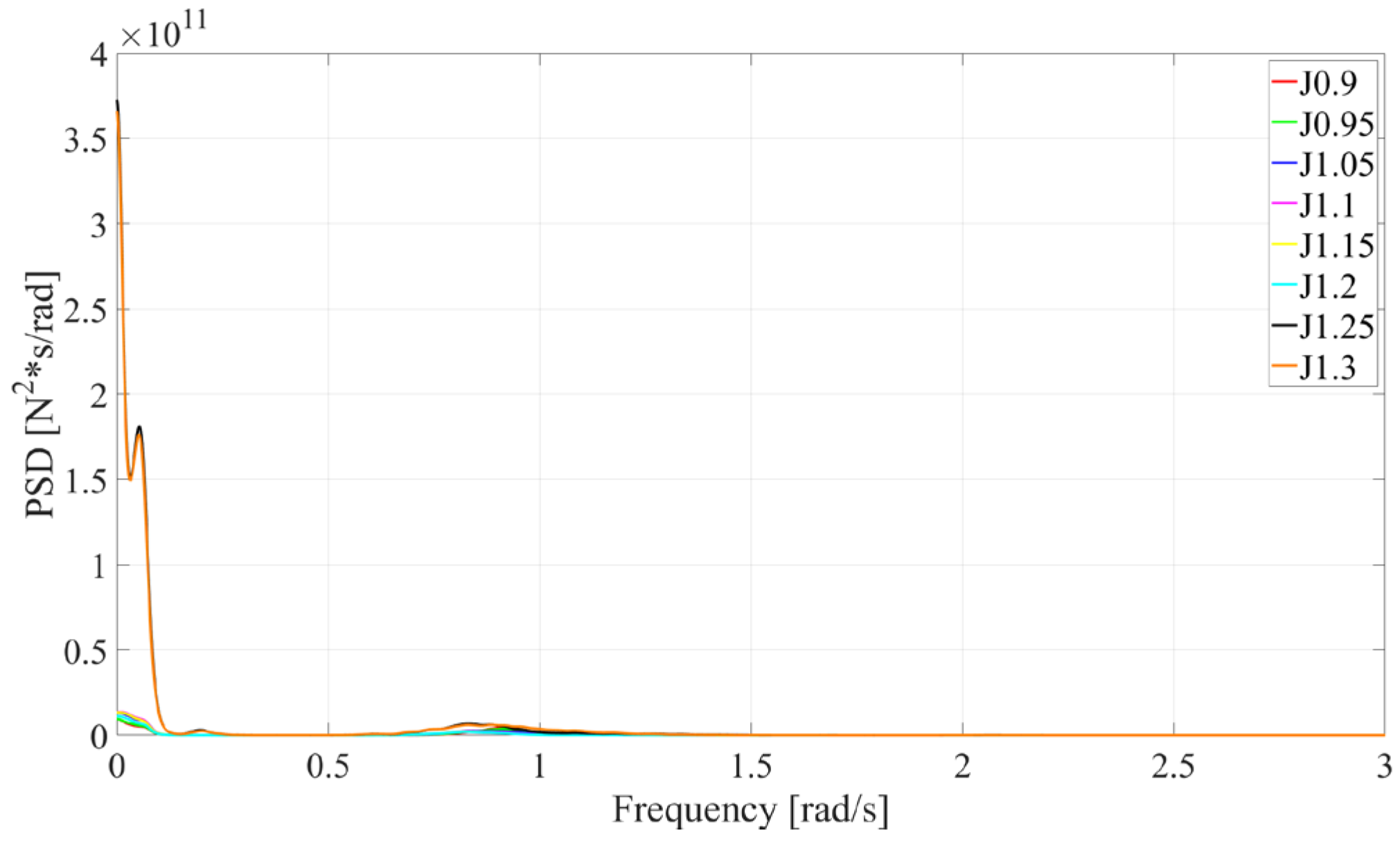
Tension spectral analysis of mooring line 2-2 for different column spacings under extreme conditions.
Figure 33.
Tension spectral analysis of mooring line 2-2 for different column spacings under extreme conditions.
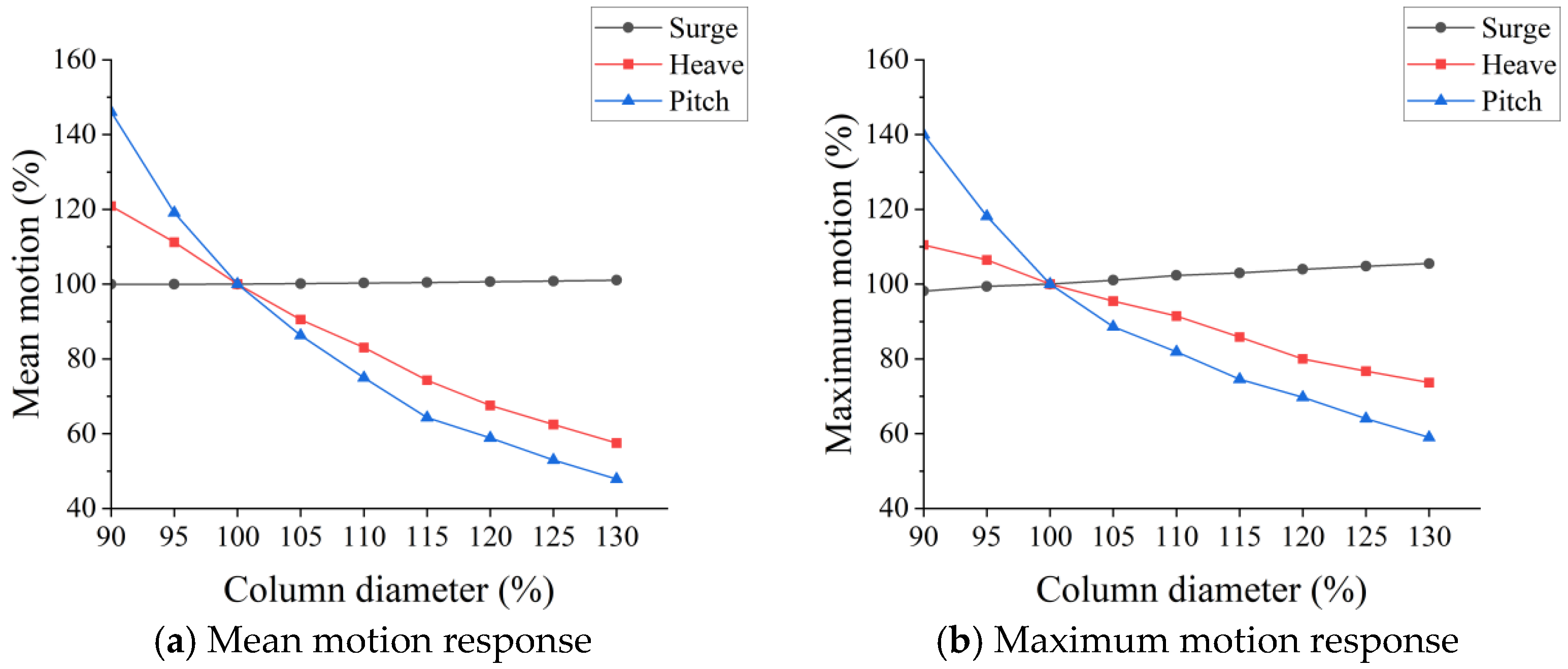
Figure 34.
Motion response values for different column diameters under operational conditions.
Figure 34.
Motion response values for different column diameters under operational conditions.
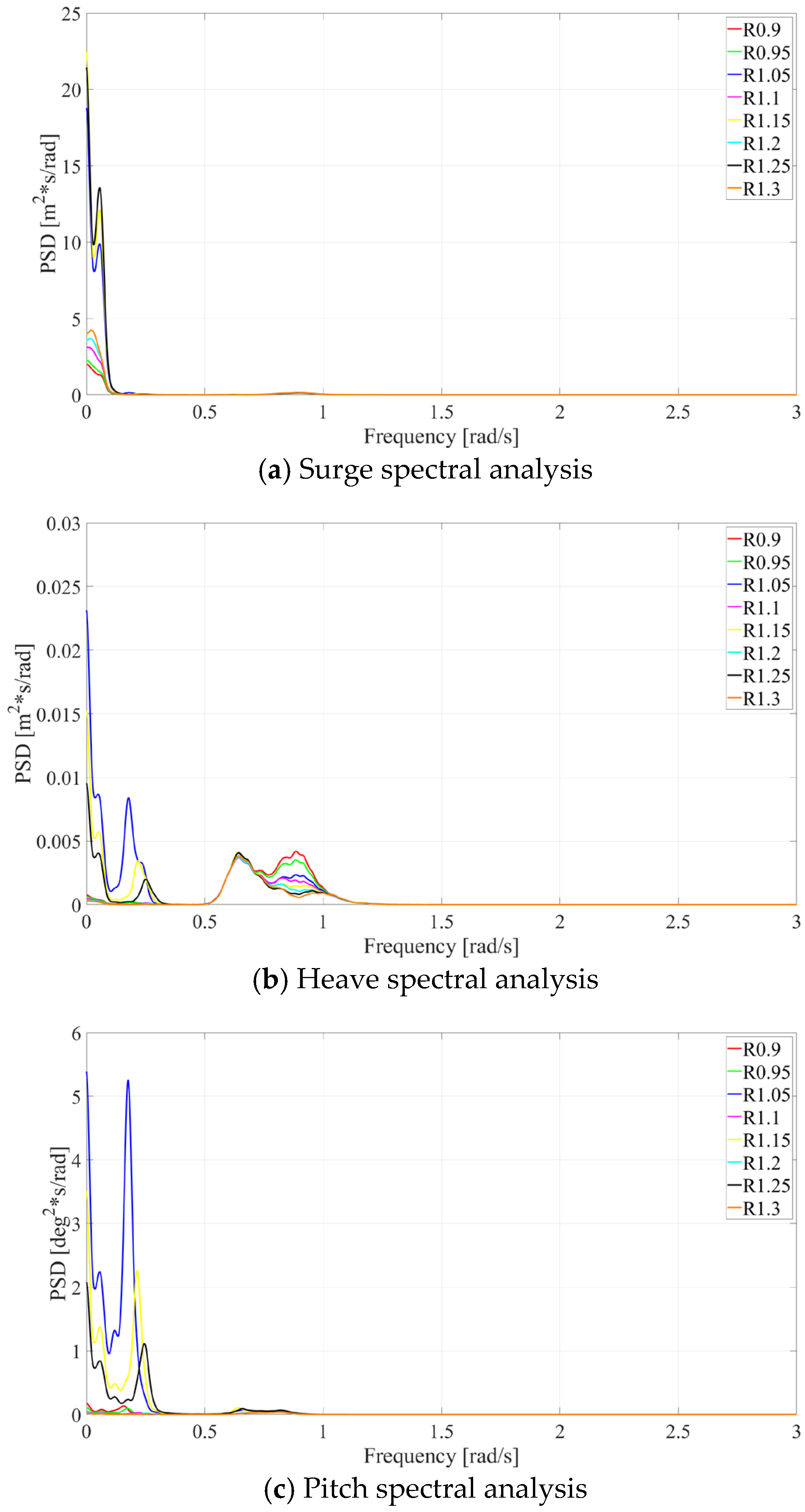
Figure 35.
Motion response spectral analysis for different column diameters under operational conditions.
Figure 35.
Motion response spectral analysis for different column diameters under operational conditions.
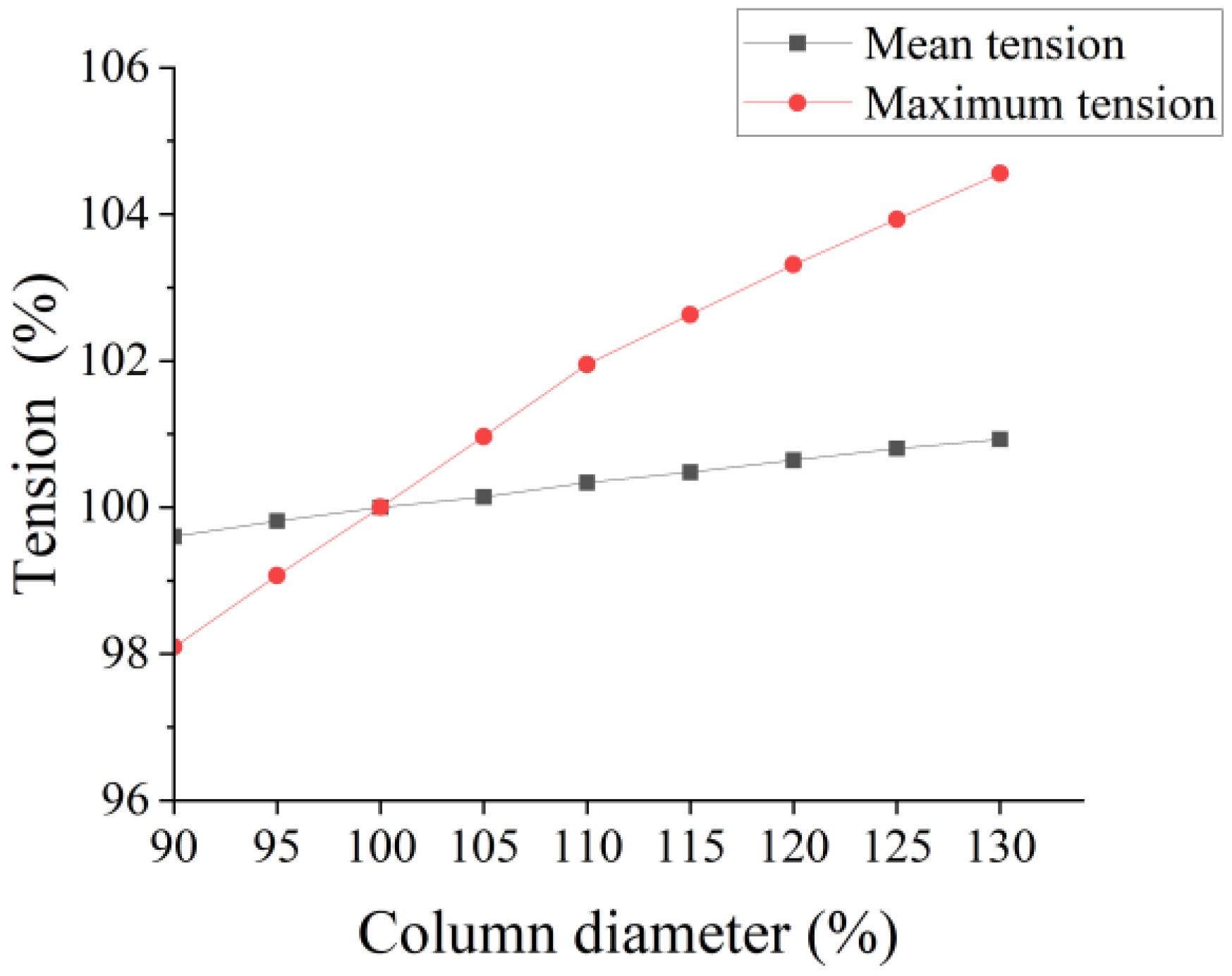
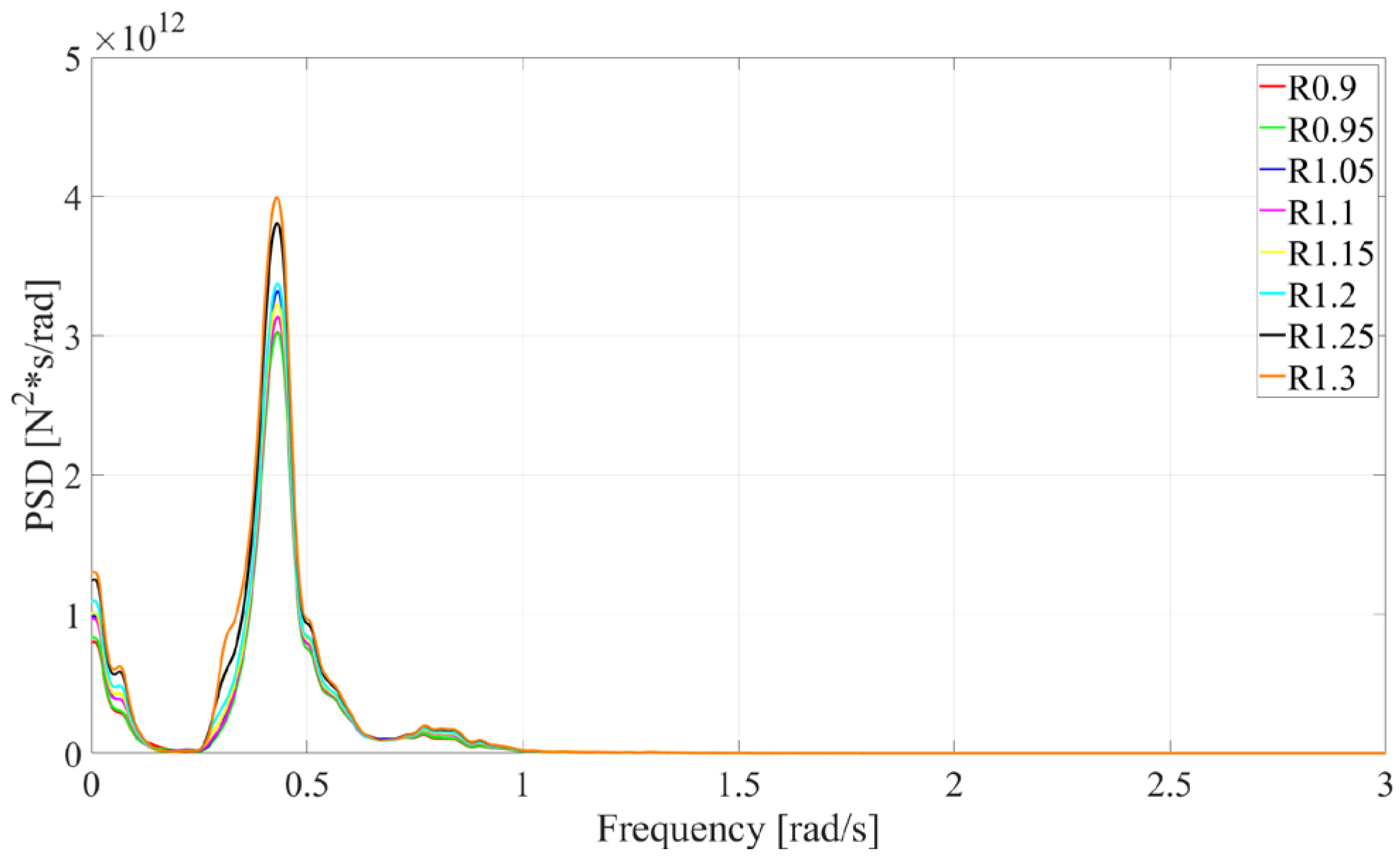
Figure 36.
Tension values of mooring line 2-2 for different column diameters under operational conditions.
Figure 36.
Tension values of mooring line 2-2 for different column diameters under operational conditions.
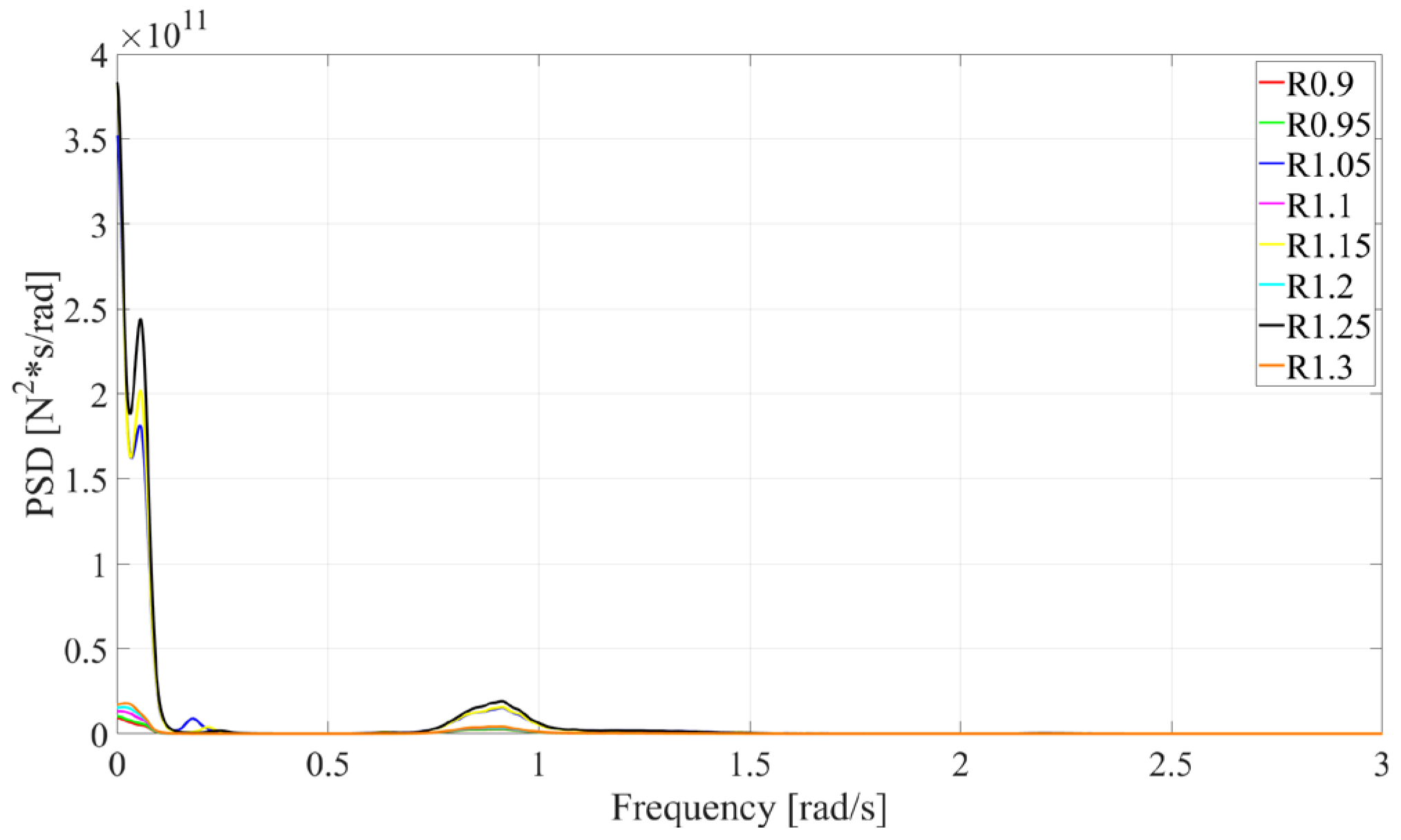
Figure 37.
Tension spectral analysis of mooring line 2-2 for different column diameters under operational conditions.
Figure 37.
Tension spectral analysis of mooring line 2-2 for different column diameters under operational conditions.
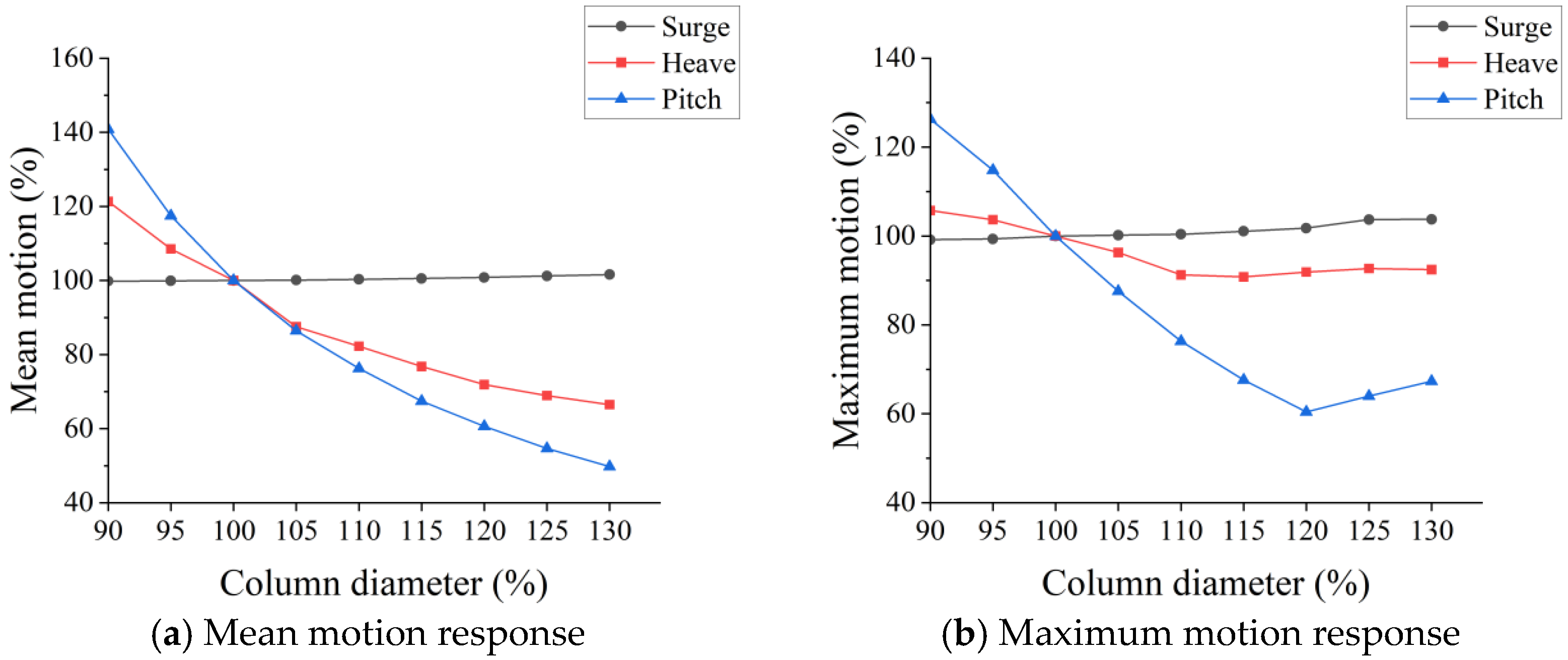
Figure 38.
Motion response values for different column diameters under extreme conditions.
Figure 38.
Motion response values for different column diameters under extreme conditions.
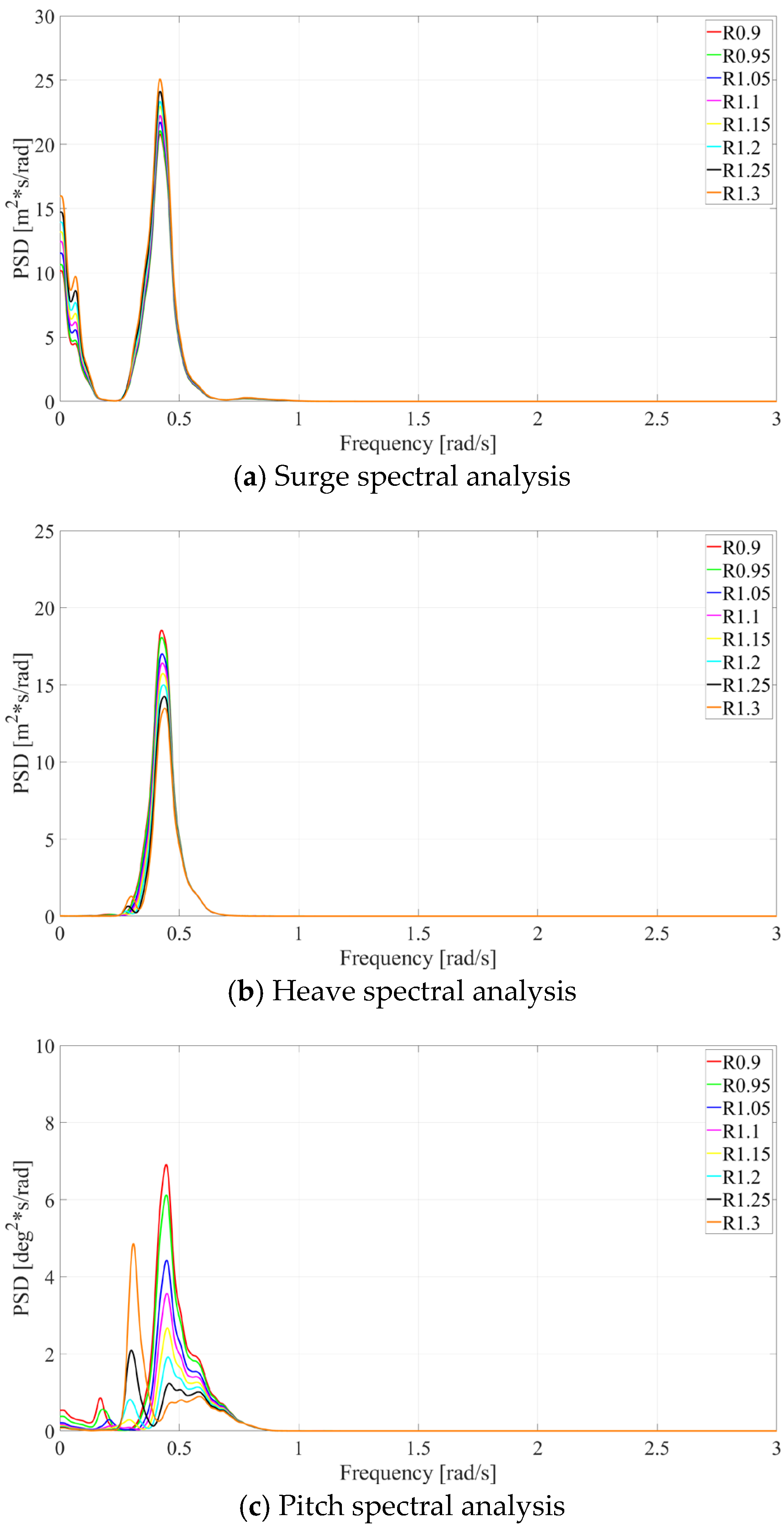
Figure 39.
Motion response spectral analysis for different column diameters under extreme conditions.
Figure 39.
Motion response spectral analysis for different column diameters under extreme conditions.
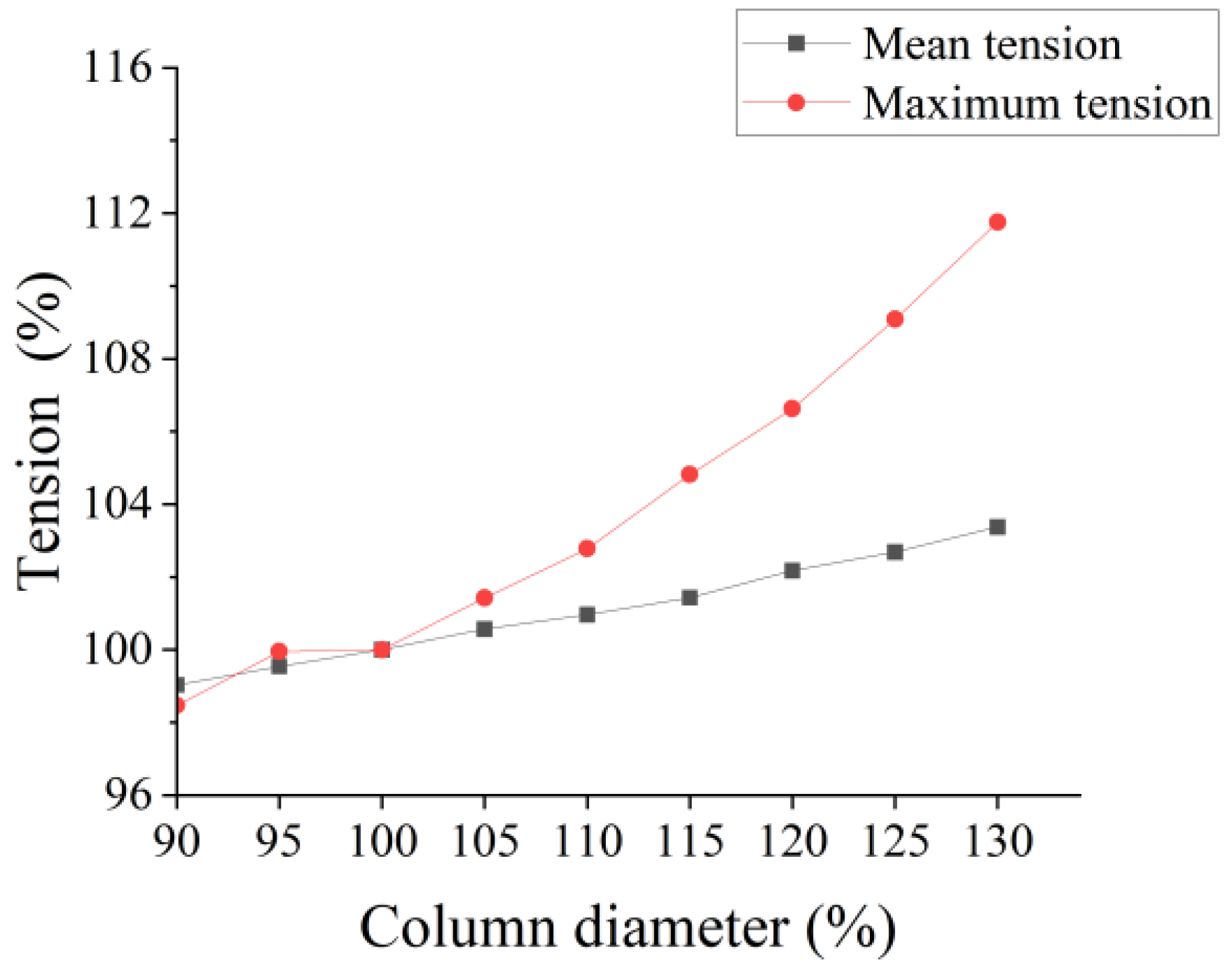
Figure 40.
Tension values of mooring line 2-2 for different column diameters under extreme conditions.
Figure 40.
Tension values of mooring line 2-2 for different column diameters under extreme conditions.
Figure 41.
Tension spectral analysis of mooring line 2-2 for different column diameters under extreme conditions.
Figure 41.
Tension spectral analysis of mooring line 2-2 for different column diameters under extreme conditions.
Table 1.
Design parameters of the 15 MW wind turbine.
Table 1.
Design parameters of the 15 MW wind turbine.
| Parameter | Value |
|---|
| Tower mass (t) | 1265.77 |
| Tower COG-z (m) | 75.97 |
| Nacelle and wind rotor mass (t) | 759.58 |
| Nacelle and rotor COG-z (m) | 150.00 |
Table 2.
Parameters of the new floating platform.
Table 2.
Parameters of the new floating platform.
| Parameter | Value | Parameter | Value |
|---|
| Column height (m) | 30 | Platform mass (t) | 18,995.4 |
| Column diameter (m) | 15 | Platform COG-z (m) | −15.96 |
| Hexagonal prism side length (m) | 12 | Overall COG-x (m) | 4.63 |
| Hexagonal prism height (m) | 6 | Overall COG-y (m) | 0 |
| Float height (m) | 6 | Overall COG-z (m) | −4.58 |
| Float length (m) | 59 | Mass moments of inertia Ixx (kg·m2) | 1.68 × 10¹⁰ |
| Heave tank diameter (m) | 30 | Mass moments of inertia Iyy (kg·m2) | 1.68 × 10¹⁰ |
| Platform draft (m) | 15 | Mass moments of inertia Izz (kg·m2) | 3.07 × 10¹⁰ |
Table 3.
Mooring line cross-sectional parameters.
Table 3.
Mooring line cross-sectional parameters.
| Parameter | R4-142 | R4-152 |
|---|
| Diameter (m) | 0.142 | 0.152 |
| Dry weight (kg/m) | 407.31 | 466.7 |
| Wet weight (kg/m) | 354.1 | 405.7 |
| Axial stiffness (N) | 1.6138 × 10⁹ | 1.8400 × 10⁹ |
| Breaking strength (MN) | 18.034 | 20.157 |
Table 4.
Mooring point coordinates.
Table 4.
Mooring point coordinates.
| Mooring Line | Fairlead (m) | Anchor (m) | Mooring Line Type |
|---|
| Line 1_1 | (53.49, −2.80, −5.00) | (602.74, −31.59, −106.00) | R4-142 |
| Line 1_2 | (53.56, 0.00, −5.00) | (603.56, 0.00, −106.00) | R4-142 |
| Line 1_3 | (53.49, 2.80, −5.00) | (602.74, 31.59, −106.00) | R4-142 |
| Line 2_1 | (−25.15, 47.30, −5.00) | (−283.36, 532.92, −113.00) | R4-152 |
| Line 2_2 | (−28.38, 45.43, −5.00) | (−319.84, 511.85, −113.00) | R4-152 |
| Line 3_1 | (−28.38, −45.43, −5.00) | (−319.84, −511.85, −106.00) | R4-152 |
| Line 3_2 | (−25.15, −47.30, −5.00) | (−283.36, −532.92, −106.00) | R4-152 |
Table 5.
Parameters of all models.
Table 5.
Parameters of all models.
| Model | Draft | Column Spacing | Column Diameter | Model | Draft | Column Spacing | Column Diameter |
|---|
| Baseline model | 100%
(22 m) | 100%
(80 m) | 100%
(15 m) | J1.15 | 100% | 115% | 100% |
| D0.8 | 80% | 100% | 100% | J1.2 | 100% | 120% | 100% |
| D0.85 | 85% | 100% | 100% | J1.25 | 100% | 125% | 100% |
| D0.9 | 90% | 100% | 100% | J1.3 | 100% | 130% | 100% |
| D0.95 | 95% | 100% | 100% | R0.9 | 100% | 100% | 90% |
| D1.05 | 105% | 100% | 100% | R0.95 | 100% | 100% | 95% |
| D1.1 | 110% | 100% | 100% | R1.05 | 100% | 100% | 105% |
| D1.15 | 115% | 100% | 100% | R1.1 | 100% | 100% | 110% |
| D1.2 | 120% | 100% | 100% | R1.15 | 100% | 100% | 115% |
| J0.9 | 100% | 90% | 100% | R1.2 | 100% | 100% | 120% |
| J0.95 | 100% | 95% | 100% | R1.25 | 100% | 100% | 125% |
| J1.05 | 100% | 105% | 100% | R1.3 | 100% | 100% | 130% |
| J1.1 | 100% | 110% | 100% | | | | |
Table 6.
Influence of a 1 m reduction in each parameter on platform mass.
Table 6.
Influence of a 1 m reduction in each parameter on platform mass.
| Parameter | Per 1 m Reduction in Draft | Per 1 m Reduction in Column Spacing | Per 1 m Reduction in Column Diameter |
|---|
| Change in steel mass (t) | −55.30 | −7.70 | −129.63 |
| Change in concrete mass (t) | 0 | −103.20 | 0 |
| Change in total mass (t) | −55.30 | −110.90 | −129.63 |
Table 7.
Environmental condition parameters.
Table 7.
Environmental condition parameters.
| Condition | Hs (m) | Tp (s) | Wind Speed (m/s) | Uc1 (m/s) | Uc2 (m/s) | Uc3 (m/s) | State |
|---|
| LC1 | 3 | 7 | 12 | 1.6 | 1.0 | 0.1 | Operating |
| LC2 | 11.7 | 14.6 | 52 | 2.4 | 2.0 | 0.8 | Shutdown |
Table 8.
Natural period calculation results for different drafts.
Table 8.
Natural period calculation results for different drafts.
| Draft | Surge Natural Period (s) | Heave Natural Period (s) | Pitch Natural Period (s) |
|---|
| 80% | 106.2 | 26.6 | 32.5 |
| 85% | 107.5 | 26.6 | 32.5 |
| 90% | 109.2 | 26.6 | 32.5 |
| 95% | 110.8 | 26.4 | 32.3 |
| 105% | 113.8 | 26.6 | 32.3 |
| 110% | 114.8 | 26.6 | 32.0 |
| 115% | 116.3 | 26.6 | 31.8 |
| 120% | 117.3 | 26.8 | 31.8 |
Table 9.
Natural period calculation results for different column spacings.
Table 9.
Natural period calculation results for different column spacings.
| Column Spacing | Surge Natural Period (s) | Heave Natural Period (s) | Pitch Natural Period (s) |
|---|
| 90% | 109.7 | 25.6 | 35.0 |
| 95% | 109.2 | 26.0 | 34.3 |
| 105% | 109.2 | 27.0 | 31.8 |
| 110% | 113.8 | 27.6 | 30.5 |
| 115% | 114.5 | 27.8 | 30.0 |
| 120% | 114.8 | 28.2 | 29.8 |
| 125% | 115.2 | 28.6 | 29.2 |
| 130% | 115.7 | 28.8 | 29.0 |
Table 10.
Natural period calculation results for different column diameters.
Table 10.
Natural period calculation results for different column diameters.
| Column Diameter | Surge Natural Period (s) | Heave Natural Period (s) | Pitch Natural Period (s) |
|---|
| 90% | 109.0 | 29.6 | 38.7 |
| 95% | 110.7 | 28.0 | 35.0 |
| 105% | 114.8 | 25.5 | 30.0 |
| 110% | 115.5 | 24.2 | 27.8 |
| 115% | 117.2 | 23.2 | 26.0 |
| 120% | 119.5 | 22.3 | 24.5 |
| 125% | 122.8 | 21.5 | 23.2 |
| 130% | 124.0 | 21.0 | 23.2 |
Table 11.
Recommended design ranges for principal dimensions.
Table 11.
Recommended design ranges for principal dimensions.
| Parameter | Recommended Range | Key Performance Implications |
|---|
| Draft | 100–110% | Reduce extreme heave and pitch motions and significantly decrease extreme mooring tensions |
| Column spacing | 105–120% | Significantly enhance platform stability and substantially reduce extreme pitch response |
| Column diameter | 115–125% | Significantly enhance platform stability and reduce extreme pitch response |





 ,
,