1. Introduction
Ocean turbulence, a fundamental physical process in ocean hydrodynamics, holds profound importance in advancing our understanding of ocean energy exchange, nutrient transport, ocean circulation, and various ocean chemical and biological processes [
1], which has recently garnered significant attention within marine science research [
2,
3,
4]. Due to the immense computational complexity involved in solving the Navier–Stokes (N-S) equations, which govern the dynamics of turbulent flows, and the elusive nature of establishing a clear correlation between macroscopic manifestations and the intricate details of the motion, turbulence remains one of the unresolved problems in classical physics, offering little prospect of resolution even to this day. As a result, an increasing number of studies are adopting an observational approach to investigate ocean turbulence [
5,
6,
7]. Furthermore, the acquisition of high-quality motion data holds the potential to significantly enhance our comprehension and refinement of practical turbulence models and theories.
However, our comprehension of the ocean velocity field remains limited due to technological constraints in observation. For instance, within the Mariana Trench, traditional flow measuring instruments like the Acoustic Doppler Current Profiler (ADCP) are difficult to use. Specifically, the scarcity of suspended solids in the water prevents the detection of scattered sound waves, thus impeding the determination of flow velocity in that sea area [
8,
9]. In the realm of ocean turbulence observation, the commonly used high-frequency point velocity instrument, Acoustic Doppler Velocimetry (ADV), provides high-frequency observations of flow velocity at a single point. These observations then rely on the Taylor freezing assumption to extrapolate turbulent flow field information. Nonetheless, this assumption can introduce significant estimation errors in numerous scenarios [
10,
11,
12]. Although the Vertical Microstructure Profiler (VMP) offers direct turbulence measurements, its capability is confined to instantaneous single-point measurements, rendering it unsuitable for long-term continuous observation. Consequently, there is an urgent need to develop in situ measurement technologies for 3D turbulence [
13].
The technology centered on in situ observation of single-particle suspension flows has undergone substantial development and maturation within laboratory settings [
14,
15]. A proliferation of advanced techniques has emerged, enabling 3D flow field measurements through the capture and tracking of suspended particles in aqueous environments. These methodologies, including Particle Image Velocimetry (PIV) and Particle Tracking Velocimetry (PTV), fundamentally hinge upon the precise 3D localization of particles within the flow field, subsequently leveraging particle cross-correlation or tracking algorithms to compute 3D velocity profiles. However, the realization of 3D velocimetry introduces an additional dimension, the longitudinal component, which is inherently unobservable by a solitary camera, thereby necessitating more intricate technological implementations and equipment. A prevalent approach involves the utilization of multiple cameras positioned at varied angles to capture the flow field comprehensively. This includes techniques such as Tomographic Particle Image Velocimetry (TPIV) [
16,
17,
18] and Synthetic Aperture Particle Tracking Velocimetry (SAPTV) [
19], which, despite their proven effectiveness, remain primarily confined to laboratory environments due to their intricate configurations and reliance on multiple-camera setups. Consequently, their application in real-world natural settings, particularly oceanic flow field observations, remains a formidable challenge.
Recently, techniques that enable three-dimensional (3D) velocity measurements using a single camera have gained significant popularity. These include all-optical [
20,
21], defocusing [
22,
23], and holographic [
24,
25,
26] imaging technologies. These methods boast simple setups and minimal calibration requirements [
27,
28], minimizing intrusive interference within the measurement area. Consequently, they hold immense potential for underwater applications, particularly for in situ observations in real-world oceanic environments. Flow field measurement techniques based on single-particle suspensions in water can often achieve 2D and even 3D flow field observations that surpass the capabilities of traditional oceanographic instruments [
24,
27]. The acquisition of 3D flow fields eliminates the need for various assumptions when calculating turbulence characteristics, achieving a notable advance in the observational study of oceanic turbulence. However, constrained by the technical characteristics of single-camera holographic imaging and the actual hardware limitations of marine in situ observation equipment, it is currently impossible to achieve full 3D three-component velocity resolution in natural marine environments. Thus, a 3D two-component observation mode has become a necessary technical compromise for the practical application of holographic-based 3D volume turbulence observation technology at the current stage—prioritizing the realization of 3D volume coverage of the flow field, while resolving the key velocity components that can be accurately obtained under existing technical conditions.
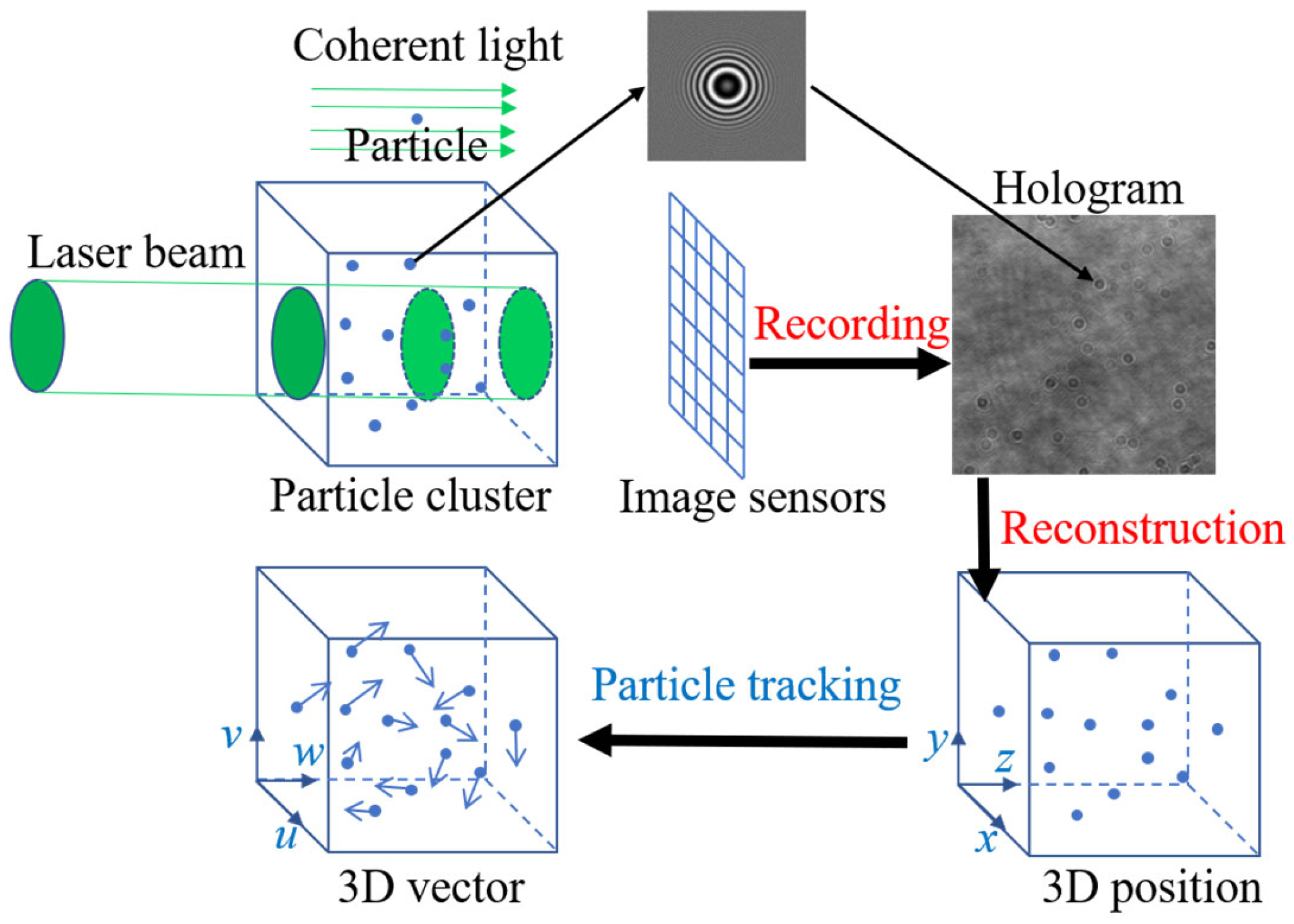
To achieve observations of oceanic 3D flow fields, specifically for flow field measurements in the deep open ocean and waters with low suspended particle concentrations, this study developed a 3D flow field measurement system based on HAPTV. This system is for the first time preliminarily applied to 3D two-component flow field observations in natural marine environments, where the two components refer to the horizontal velocity
u along the
x-axis of the camera imaging plane and the vertical velocity
v along the
y-axis of the imaging plane. Owing to the large positioning error of the system along the
z-axis, the axial velocity component
w along the
z-axis (the laser beam propagation direction) is not analyzed in this study. We aim to extract basic turbulent parameters from the captured 3D two-component flow field data, thereby providing a novel 3D two-component observational perspective for oceanographic studies and valuable references for the development of future oceanographic observation instruments.
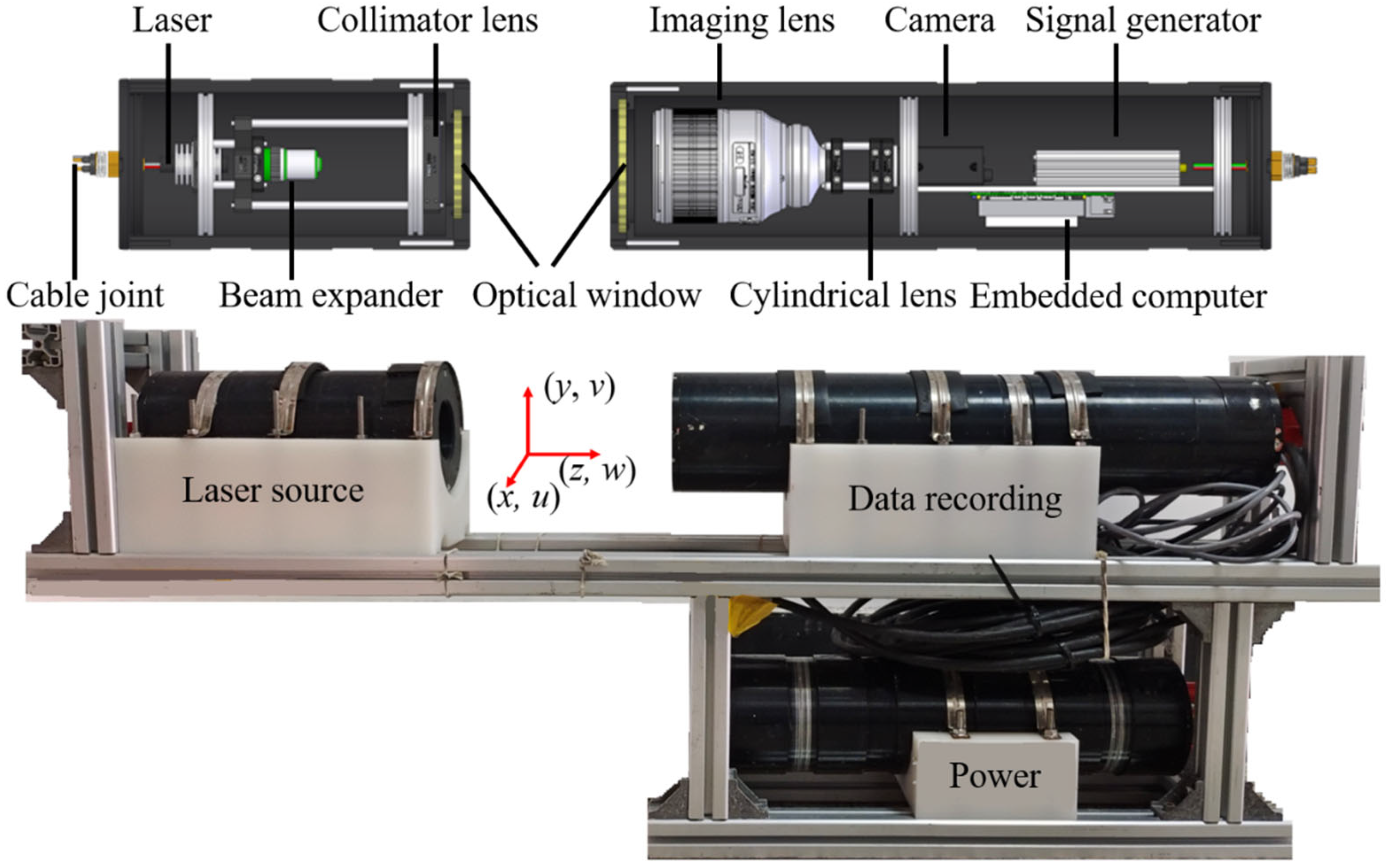
Section 2 gives a brief introduction to our holographic astigmatic particle tracking velocity system.
Section 3 presents the raw data that we get from the natural environments, followed by the basic procedure of retrieving 3D flow fields and turbulent parameters from raw data.
Section 4 demonstrates the preliminary results, and
Section 5 evaluates the uncertainty of the system.
Section 6 gives our conclusions.
3. In Situ Data Capturing and Processing
In recognition of the low-concentration suspended solids requirement for our experimental instrumentation, we opted to conduct our study within the pristine environs of the Xidao Tourism Resort in Sanya City, renowned for its excellent water quality. Xidao Island, situated in Sanya Bay, Hainan Province, China, lies approximately 15 nautical miles from the heart of Sanya, where environmental pollution and eutrophication levels are notably low. Our experimental site was carefully chosen to be adjacent to the civilian dock in the Xidao community, with a transparency of approximately 4 m and an average water depth of roughly 15 m. This location boasts clear seawater, lacking visible suspended solids under adequate lighting conditions, indicating that the suspended particles in the water column have relatively small diameters and thus exhibit low Stokes numbers—a key condition for particles to accurately follow the fluid motion [
14,
30]. The suspended concrete structure of the dock facilitates measurements by minimizing disturbances from shoreline structures on the flow field. Observations were conducted between 18:50 and 20:00 on 21 January 2023, coinciding with the high tide period in the Sanya Sea area, where the average tide height reached 1.08 m. During the measurement period, consistent breezes and mild wave activity, occasionally punctuated by larger waves generated by passing vessels, prevailed. The holographic measurement instrument, securely fastened to the dock railing via ropes, was positioned approximately 3 m from the sea surface for optimal data acquisition. Sampling intervals were set at 10 s, with a frequency of 32 Hz.
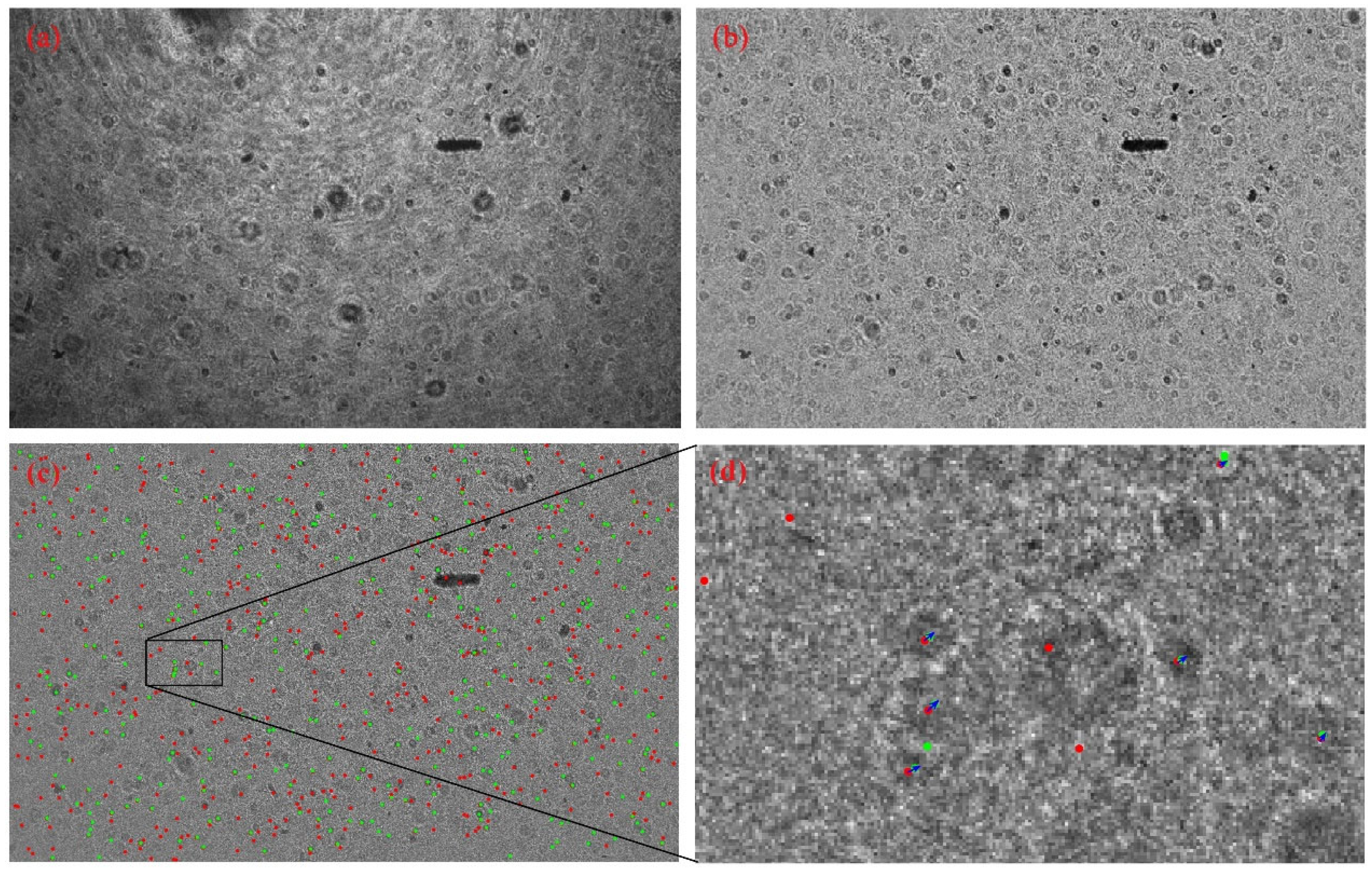
Figure 3a,b represent the raw holographic data image captured in seawater at the Xidao Pier and the enhanced hologram after background removal, respectively. Due to the excessive number of suspended particles in the nearshore seawater, coupled with the weaker diffraction of coherent light by a significant portion of large-diameter particles (i.e., holograms with larger rings and darker central areas in
Figure 3b), the formation of prominent holographic signals is hindered, resulting in a relatively weak enhancement effect in the hologram (
Figure 3b). When utilizing the enhanced hologram for particle identification and 3D localization, some particles cannot be accurately recognized, as indicated by the red dots in
Figure 3c. For particles with accurately obtained 3D positions, the nearest neighbor matching method was employed for tracking and pairing. To facilitate the comparison of particle movement distances within a unit time and particle pairing, particles from adjacent frames are represented by different colors (red for the current frame and green for the previous frame) and plotted on the same background-enhanced image (
Figure 3c). Based on these matched particles, velocity calculations were performed, yielding
Figure 3d, where the blue arrows represent the velocity vectors. Particles that failed to match with each other were considered spurious or lost particles and were discarded in this study. Finally, all obtained velocity vectors were processed for outlier removal using the maximum threshold method, retaining only those within the normal range for subsequent analysis.
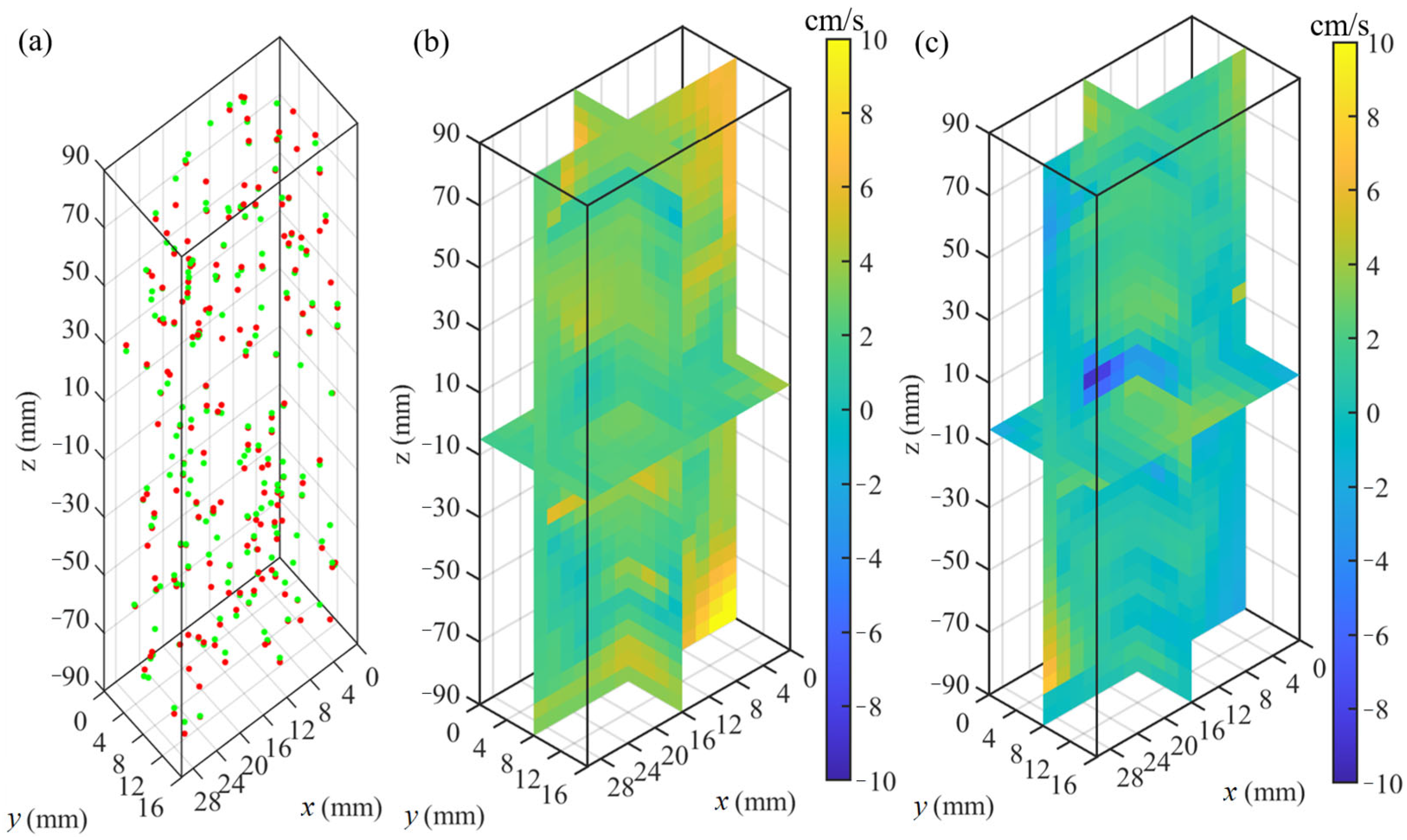
Figure 4 presents the distribution of the velocity field obtained after particle tracking and pairing using the example image from
Figure 4a. Due to the relatively large error in particle localization along the
z-axis, and considering the short measurement time between two frames, resulting in significant uncertainty in the
w-velocity, only the
u and
v velocity components are presented here.
Figure 4b,c show the gridded velocity components (with an interpolation grid size of 2 × 2 × 5 mm
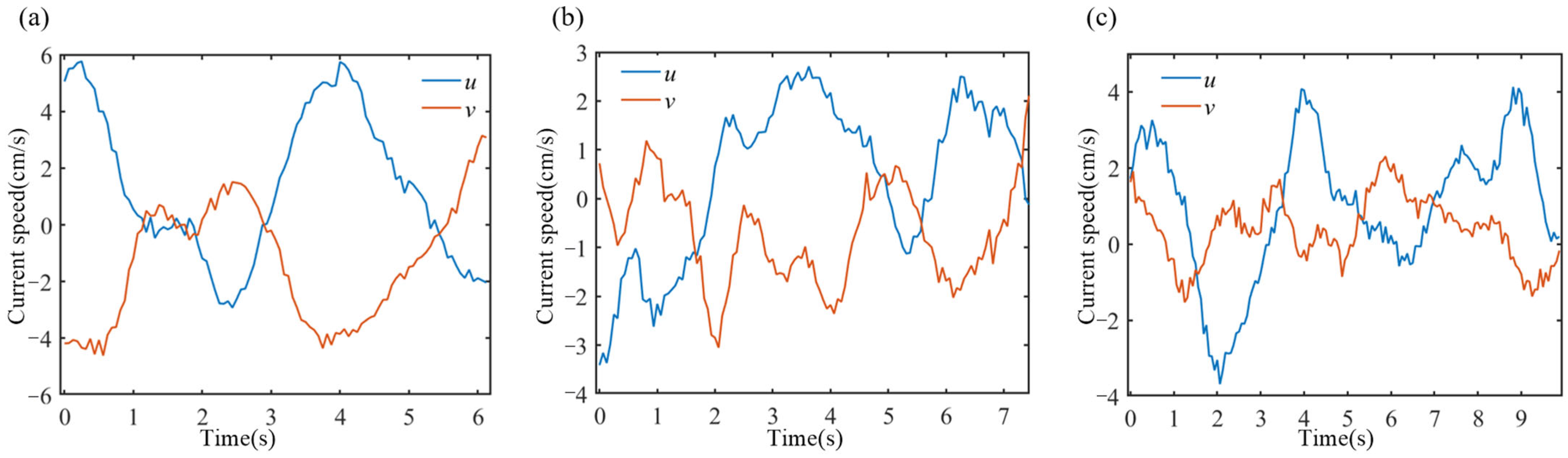
3, the resolution of the interpolation grid is determined by the density of velocity vectors acquired within the observation volume for this time, which ensures that no over-interpolation occurs when the flow field with the highest achievable resolution is obtained.), with the velocity magnitudes mostly ranging between 4 and 7 cm/s. The distribution of the gridded velocity field is not uniform, but the velocity gradients are relatively small. To quantify the temporal variation in flow velocity in the observed marine area, we spatially averaged the velocity fields from three sets of data to obtain
Figure 5. The average velocities from the three sets of observation data are relatively small, with a maximum flow velocity of approximately 6 cm/s. It is noteworthy that the
u and
v components defined in this study are based on the camera’s imaging plane, the
v component actually refers to the vertical velocity, while the velocity component parallel to the light beam is denoted as the
w component. Due to its low axial positioning accuracy and the susceptibility to interference from the observation windows on both sides, the
w component is not discussed in this study. Comparing the
u and
v velocity components, it is evident that the horizontal velocity is slightly greater than the vertical velocity, which is consistent in all three sets of data. Additionally, the flow velocities calculated from the three sets of data exhibit significant fluctuation information, with a fluctuation period of approximately 4 s.
4. Results
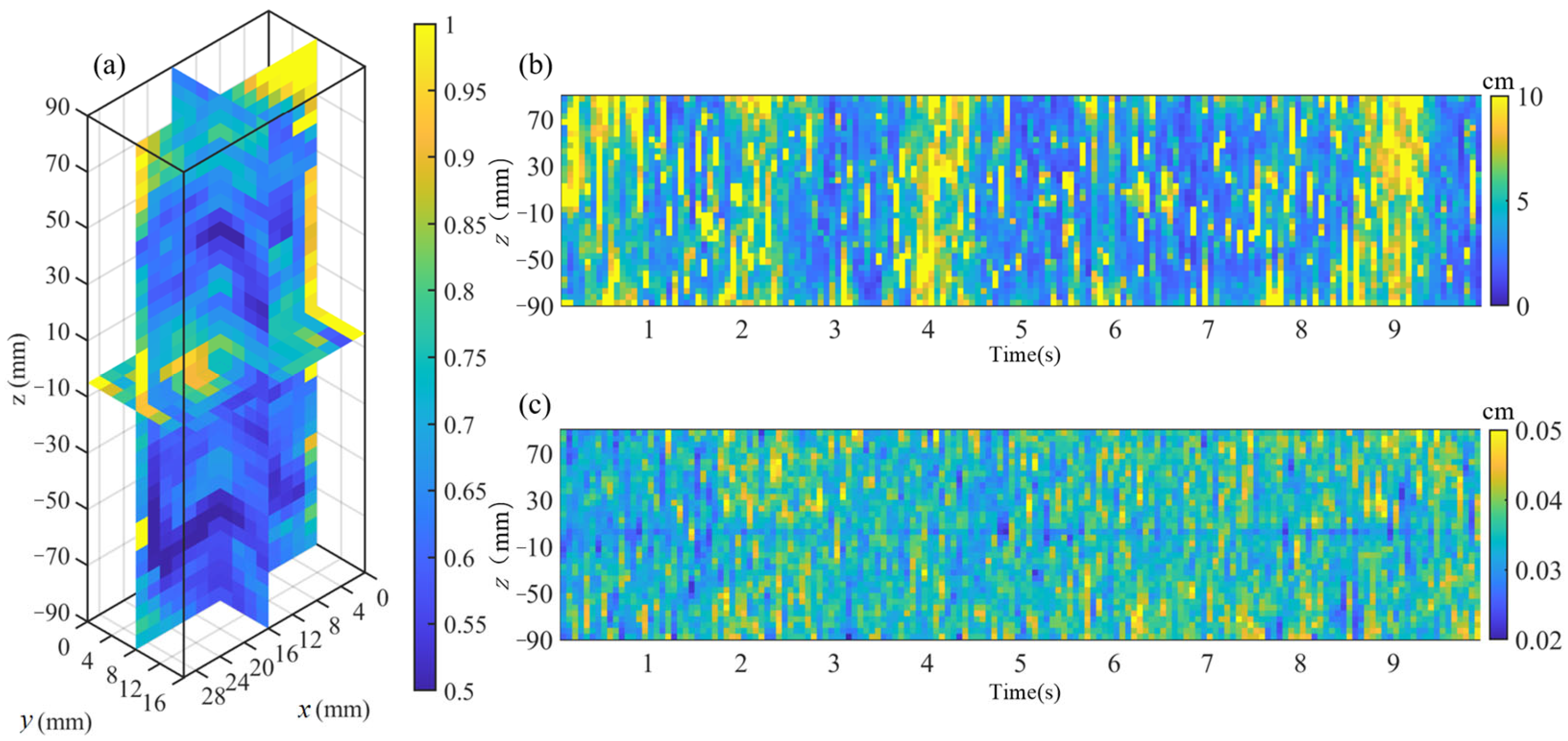
Based on the observed velocity fields, we first analyzed the isotropy of the turbulence field within the observation region.
Figure 6a shows the distribution of the ratio between the vertical root-mean-square velocity (
vrms) and the horizontal root-mean-square velocity (
urms). Most regions indicate that the vertical velocity (
vrms) is approximately half of the horizontal velocity (
urms), indicating that the horizontal velocity component dominates in the water column, while the vertical velocity component is generally smaller. This further suggests that oceanic turbulence is not isotropic in most regions. Additionally, we calculated the characteristic length scales of the turbulent inertial subrange in the observed sea area, as shown in
Figure 6b,c.
Figure 6b shows the Taylor microscale, which lies between the integral scale (L, the scale of the largest eddies) and the Kolmogorov microscale (η, the scale of the smallest eddies). In this study, we calculated the Taylor microscale over a 10 s duration within the observation region.
Figure 6b suggests that the maximum dissipation scale tends to increase with increasing flow velocity. Over the observation time and within the observation area, the average Taylor microscale is 6.93 cm. Similarly, we also calculated the Kolmogorov microscale, which typically represents the smallest characteristic length in the inertial subrange, i.e., the smallest eddy scale. Eddies smaller than this scale dissipate turbulent kinetic energy into heat rather than transferring it through vortex motion. During the observation period, the average Kolmogorov microscale is 0.04 cm. As a result, within the observation region and time frame, the characteristic length of turbulent eddies varies between 0.04 cm and 6.93 cm.
To further elaborate on the calculation of the turbulent dissipation rate and the distribution of Reynolds numbers (Taylor-scale Reynolds number,
Reλ) within the observation region (as depicted in
Figure 7), we adopted a direct formulation for the turbulent dissipation rate proposed by Luznik et al. [
31], which is derived based on the Kolmogorov similarity hypothesis and the local isotropy of small-scale turbulence. This study adopted this formula to estimate the turbulent dissipation rate based on the measured two-dimensional velocity gradients (
u and
v components) of the flow field. It is worth noting that the
w component (the direction parallel to the light beam) was not included in the calculation process, owing to the limitation of the
z-axis positioning accuracy of the holographic astigmatic particle tracking velocimetry (HAPTV) system in this in situ experiment and the significant deviation of the
w component from the actual ocean flow velocity caused by the influence of the chambers on both sides. Although the absence of the
w component has a certain impact on the estimation of the turbulent dissipation rate, incorporating data with large errors into the calculation would lead to even greater estimation errors. For this reason, the
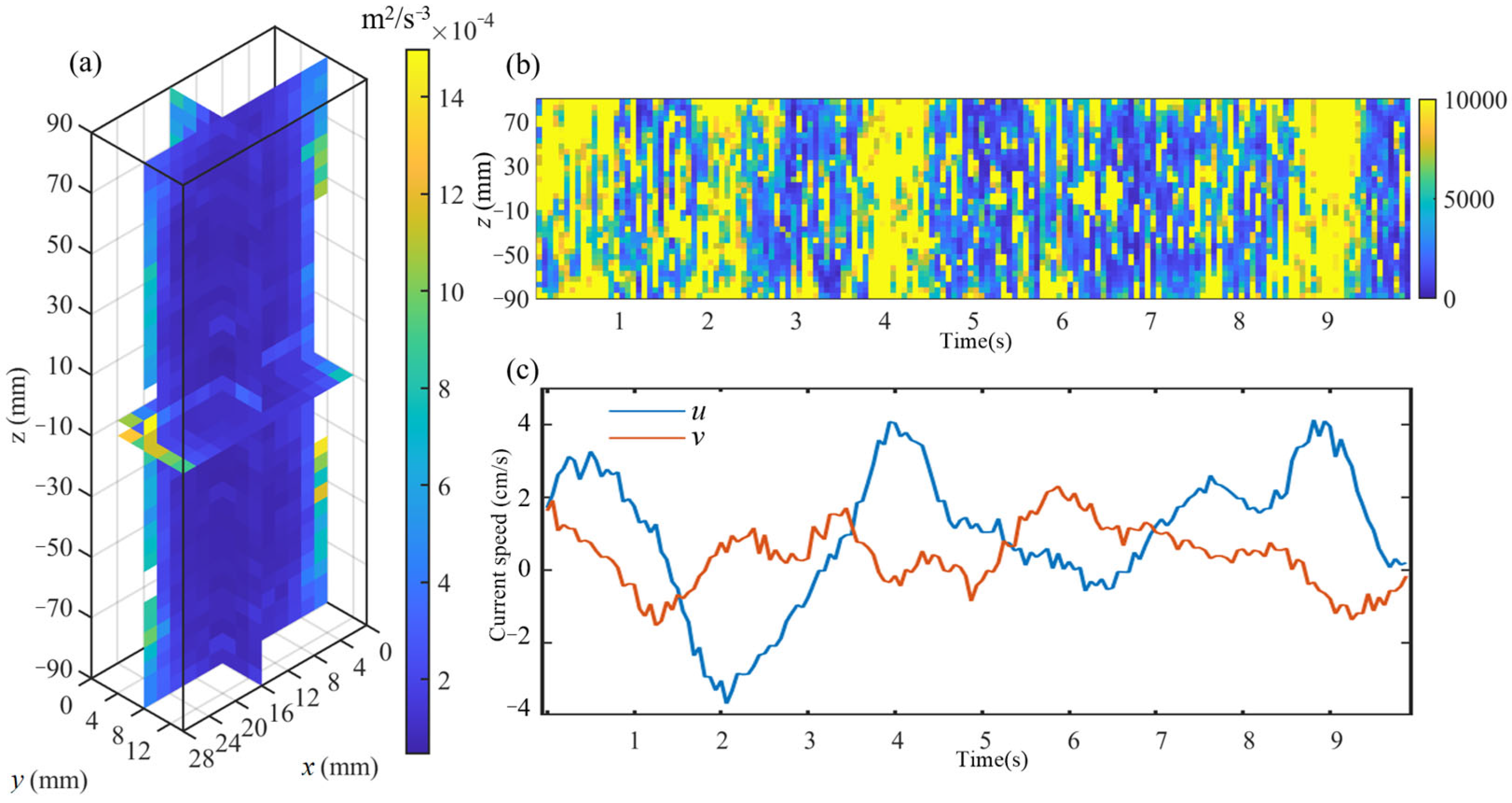
w component was excluded in this study. Accordingly, the results related to the turbulent dissipation rate in this study are explicitly defined as preliminary estimates limited by the current spatial resolution of the HAPTV system.
Figure 7a depicts the calculated distribution of the turbulent dissipation rate within the observation region. Most of the grid cells exhibit a turbulent dissipation rate on the order of 10
−4 m
2s
−3, with an average dissipation rate of 3.63 × 10
−4 m
2s
−3 across the entire space. This average dissipation rate is consistent with the typical range of turbulent dissipation rates observed in the ocean. Additionally, we have computed the temporal distribution of the
Re
λ within the flow field, as shown in
Figure 7b. The Reynolds number is defined as
Reλ =
urmsλ/
ν, where
urms denotes the spatially averaged mean velocity of the measured flow field,
λ represents the Taylor microscale (with an average value of 6.93 cm in the observation region,
Figure 6b) as the characteristic length scale, and
ν is the kinematic viscosity of seawater. The variations in the
Reλ align well with the seawater flow velocity (
Figure 7c). The spatial distribution remains uniform in the
z-direction (horizontal direction, perpendicular to the direction of the tidal flow). When the flow velocity is relatively low,
Reλ in the measurement area is approximately 3000, whereas it exceeds 10,000 during periods of higher flow velocity. The average
Reλ during the observation period is 8776.
5. Discussion
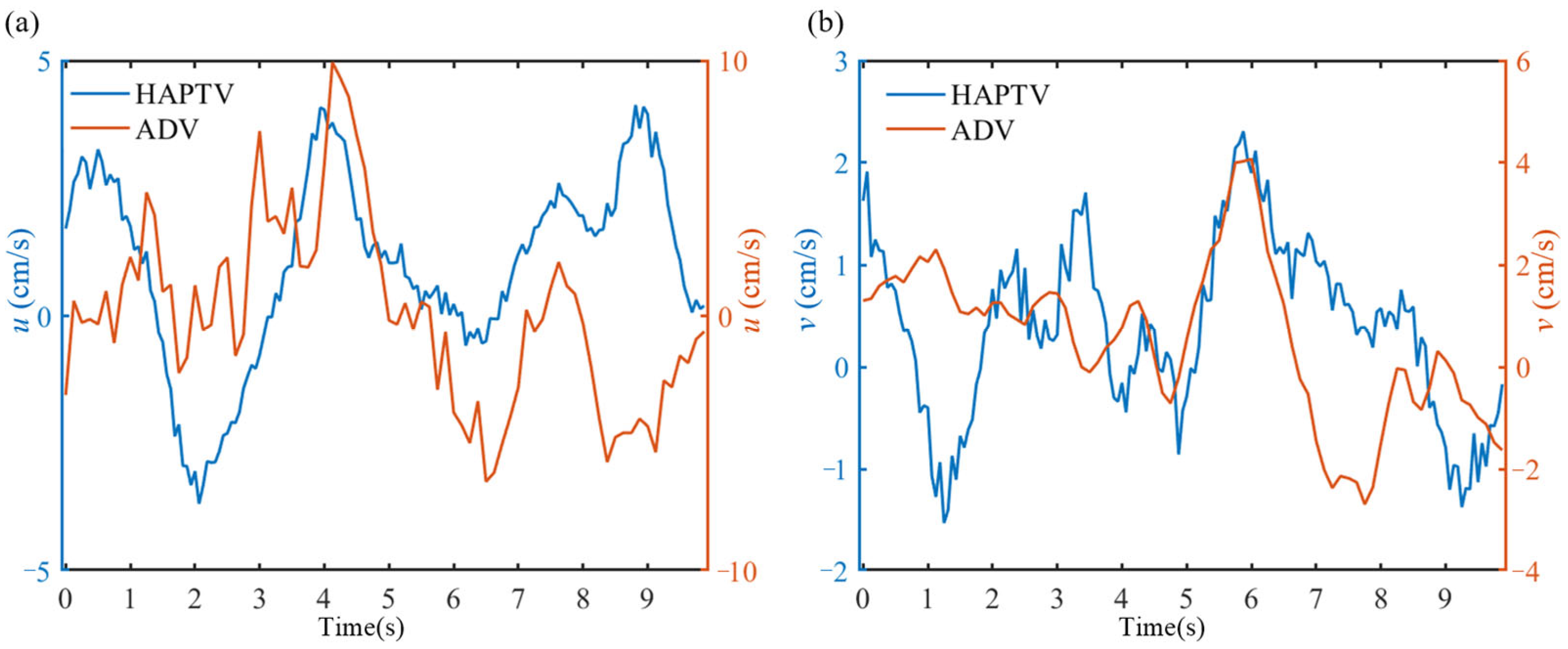
During the observation period, we simultaneously deployed an ADV to verify the accuracy of the HAPTV system in measuring the flow field. The ADV was positioned directly above the window of the holographic 3D flow field observation system.
Figure 8 presents a comparison of the velocity time series obtained by both systems during the third set of observation experiments. The results show that the values of the average flow field measured by the HAPTV system are slightly lower than those measured by the ADV for both velocity components. Specifically, for the u-direction, the root mean square error (RMSE) of the observation results from the HAPTV and ADV is 3.34 cm/s, with a correlation coefficient of R
2 = 0.39; for the
v-direction, the RMSE is 1.57 cm/s, and the correlation coefficient is R
2 = 0.35. The flow velocity distributions obtained by the two instruments show an overall consistent trend.
During the observational period, discrepancies in the velocity measurements obtained by the holographic 3D ocean flow observation system and the ADV can be attributed to various factors. Firstly, the ADV, which was suspended by ropes from a railing, struggled to maintain stability, introducing significant errors in its flow velocity measurements. This instability is reflected in the ADV’s velocity distribution. Conversely, the holographic system, owing to its heavier weight, was suspended in a nearshore region with slower flow rates, minimizing swaying and enhancing the reliability of its flow field measurements.
Secondly, despite the ADV being positioned directly above the holographic system, there may have been a mismatch in the measurement areas between the two instruments. This mismatch would have resulted in the measurement of velocities from non-overlapping regions. Given the complexity of microscale structures and flow variations in the ocean, inconsistencies in measurement areas are expected to lead to differences in velocity readings.
Thirdly, the ADV captures the velocity at a singular point, whereas the holographic system provides a comprehensive 3D flow field distribution. While the spatially averaged velocity from the holographic system offers an overview of the regional flow conditions, it differs notably from the velocity at a specific point captured by the ADV.
Finally, the accuracy of the HAPTV system is also constrained by the concentration of suspended particles. Although the in situ measurements in this study were conducted in a scenic area with relatively clear water quality, the suspended solids concentration in the water body remained higher than that of tap water due to its proximity to residential areas. The system was originally developed to address the limitations of traditional acoustic instruments in deep-sea environments, where suspended particle concentrations are extremely low. Under such low-concentration conditions, the system performs effectively. However, in nearshore or estuarine waters with high sediment loads, two major limitations arise. First, the quality of holograms acquired under high-concentration conditions deteriorates, making accurate three-dimensional particle localization difficult. Second, the particle tracking algorithm becomes prone to failure when the number of particles per frame exceeds a certain threshold, compromising the accuracy of the derived flow field data. Based on laboratory calibrations and previous studies [
29], the current system achieves reliable performance when the particle count per frame is below 500, corresponding to an estimated suspended solids concentration of approximately 5 mg/L (assuming a mean particle diameter of 20 μm and a density of 2650 kg/m
3 [
32]). This concentration threshold defines the current operational envelope of the system. To address this limitation, future work will focus on improving both hardware (e.g., optical design and illumination) and software (e.g., advanced particle identification and tracking algorithms) to extend applicability to more turbid environments.
In addition to the discrepancies in velocity measurements between HAPTV and ADV, the uncertainties in the estimation of key turbulence parameters (e.g., turbulent dissipation rate) also need to be elaborated, considering the theoretical assumptions and technical limitations of the present study. The turbulent dissipation rate
ε in this study was estimated using the direct gradient-based formulation proposed by Luznik et al. [
31], which is fundamentally derived on the premise of the Kolmogorov similarity hypothesis and the local isotropy of small-scale turbulence within the inertial subrange. Consequently, the significant anisotropy exhibited by the large-scale flow field in the observation region inevitably introduces errors into the estimation of
ε, a limitation that is explicitly clarified herein. First, the anisotropy of the large-scale flow field may indirectly affect the small-scale turbulent structures to a certain extent, leading to a slight deviation between the actual small-scale dissipation characteristics and the theoretical isotropic assumption. Second, constrained by the low
z-axis positioning accuracy of the HAPTV system and interference from the observation windows, the
w-component of the velocity field was not acquired in this study, resulting in an incomplete 3D velocity gradient tensor for the dissipation rate calculation. Only the horizontal (
u) and vertical (
v) velocity gradients were incorporated into the formulation, with no consideration of the gradient terms associated with the
w-component, which may cause either underestimation or overestimation of the actual dissipation rate. Although the absence of the
w-component has a certain impact on the estimation of the turbulent dissipation rate, incorporating data with large errors into the calculation would lead to even greater estimation errors. For this reason, we consider the absence of the
w-component to be acceptable. It should be noted that the mean value of the turbulent dissipation rate obtained in this study is 3.63 × 10
−4 m
2s
−3, which falls within the typical range of oceanic turbulent dissipation rates in coastal waters. This indicates that despite the uncertainties, the estimated results are still capable of reflecting the overall turbulent characteristics of the observation region. The quantitative impacts of large-scale anisotropy and incomplete gradient tensor information on the
ε estimation will be further quantified in future research through numerical simulations and improved experimental designs with higher
z-axis positioning accuracy.
Additionally, as the development of underwater holographic flow measurement systems is also a novel endeavor, the initial designs inevitably possess shortcomings. Examples include the bulkiness of the instrument, issues with heat dissipation in the embedded computer, and the inability of the camera to capture dual frames simultaneously. These aspects represent avenues for continuous improvement in subsequent iterations of the instrument design.
6. Conclusions and Future Work
Based on HAPTV technology, this study designed and fabricated an oceanic holographic measurement system for 3D volume two-component (2C) turbulent flow, utilizing natural suspended particles in marine environments. Employing the developed system, an in situ observational experiment was conducted to measure flow fields near Xidao Pier in Sanya City. Through intricate processes including hologram reconstruction, particle localization, tracking, and subsequent flow field calculation, the horizontal (u) and vertical (v) velocity distributions within the 3D measurement volume were successfully obtained. Due to significant z-axis localization errors and interference from observation windows, the axial velocity component (w) was not included in the analysis. The study further calculated key turbulence parameters, including the 3D distribution characteristics of the turbulent dissipation rate within the observation area, and the results are highly consistent with the actual environmental characteUristics of oceanic turbulence. A comparative analysis was conducted between the measurement results of this system and the in situ flow velocity data obtained by the ADV, revealing certain deviations in the flow velocity measurements of the two systems. These deviations can be attributed to multiple factors: potential vibration interference during instrument deployment, spatial mismatch between the two measurement regions, the influence of spatial averaging effects on flow velocity estimation results, the attenuation of holographic signals caused by abnormally high concentrations of suspended particles in local nearshore waters, and the inherent limitations of z-axis positioning accuracy superimposed thereon. Accordingly, considering the aforementioned technical limitations, such as z-axis positioning accuracy and spatial resolution constraints, the turbulent dissipation rate results in this study are explicitly defined as preliminary estimates limited by the current performance of the HAPTV system.
In future research, we will optimize the on-site deployment scheme and design a dedicated fixed bracket to achieve precise co-location of HAPTV and ADV, thereby eliminating spatial matching deviations; we will increase the number of experimental repetitions and conduct multiple sets of in situ experiments under different tidal periods and flow field conditions to obtain comparative data with more statistical significance. Meanwhile, we will introduce data preprocessing methods to perform synchronous filtering and time calibration on the measurement data of the two instruments, reducing errors caused by environmental disturbances and asynchronous sampling.