Control of Direct-Drive Wave Energy Conversion Considering Displacement Constraints and an Improved Sensorless Strategy



Abstract
1. Introduction
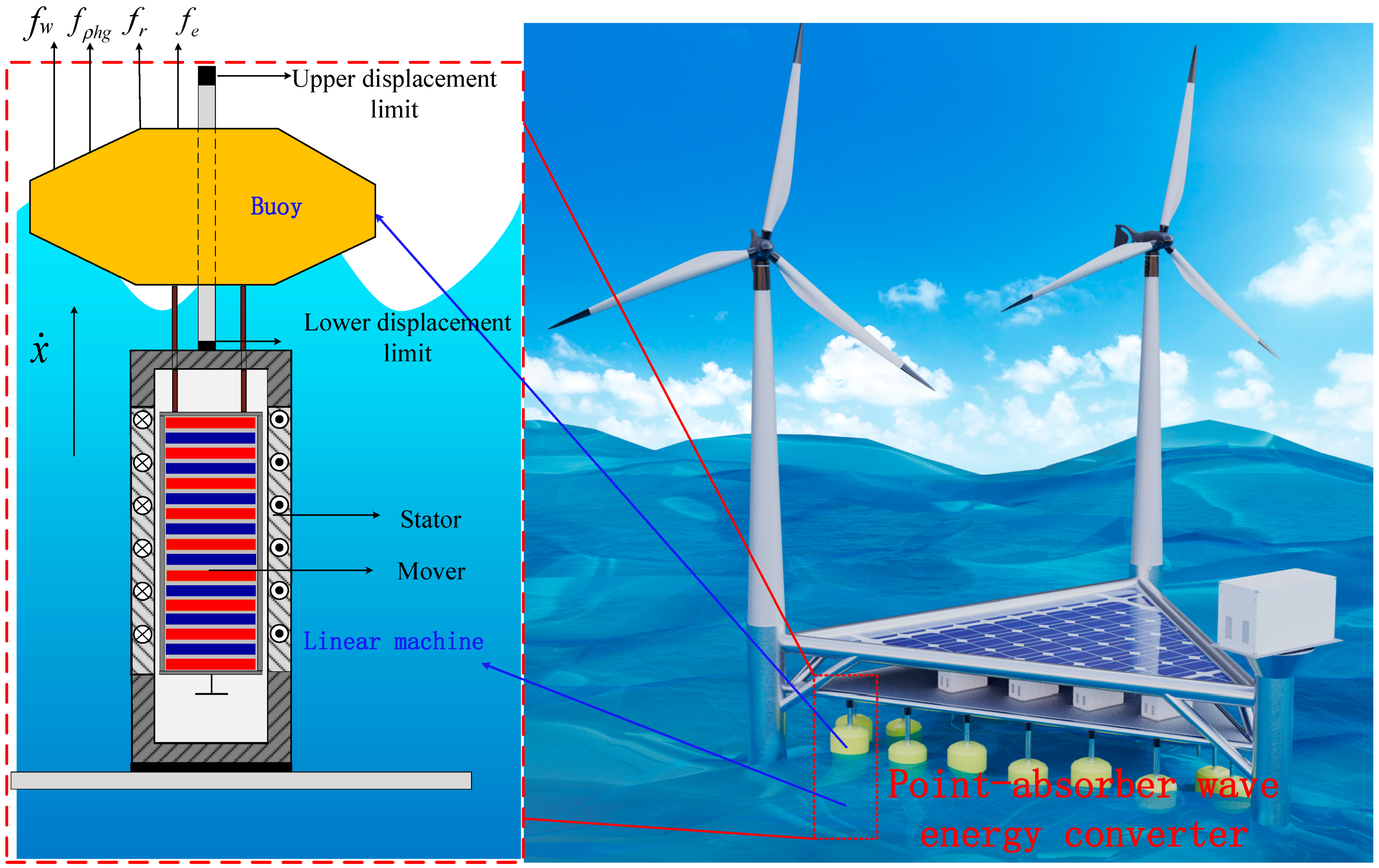
2. Mathematical Model of the Wave Power Generation System
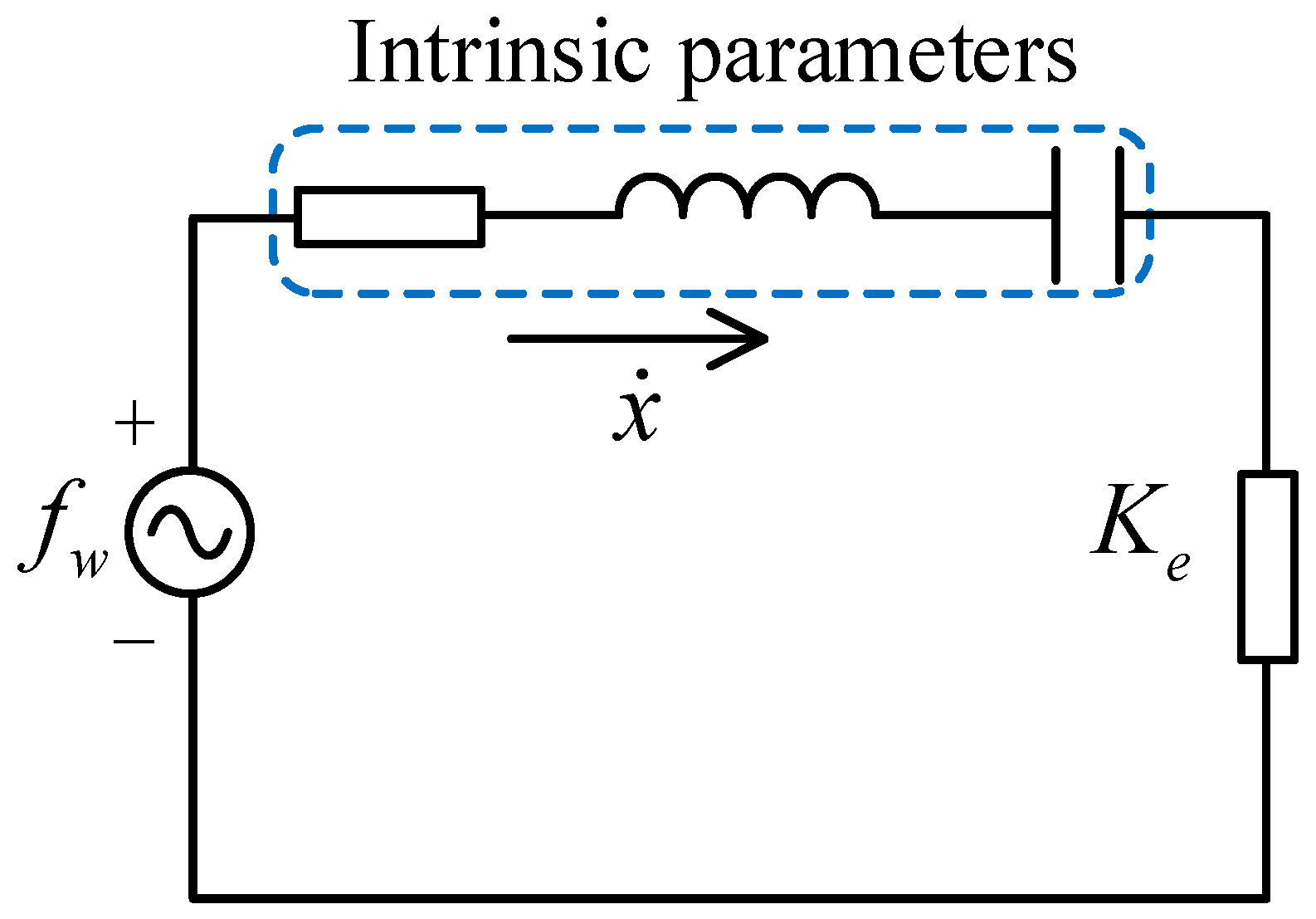
2.1. Hydrodynamic Model
2.2. Electromechanical Model of the Permanent-Magnet Linear Machine
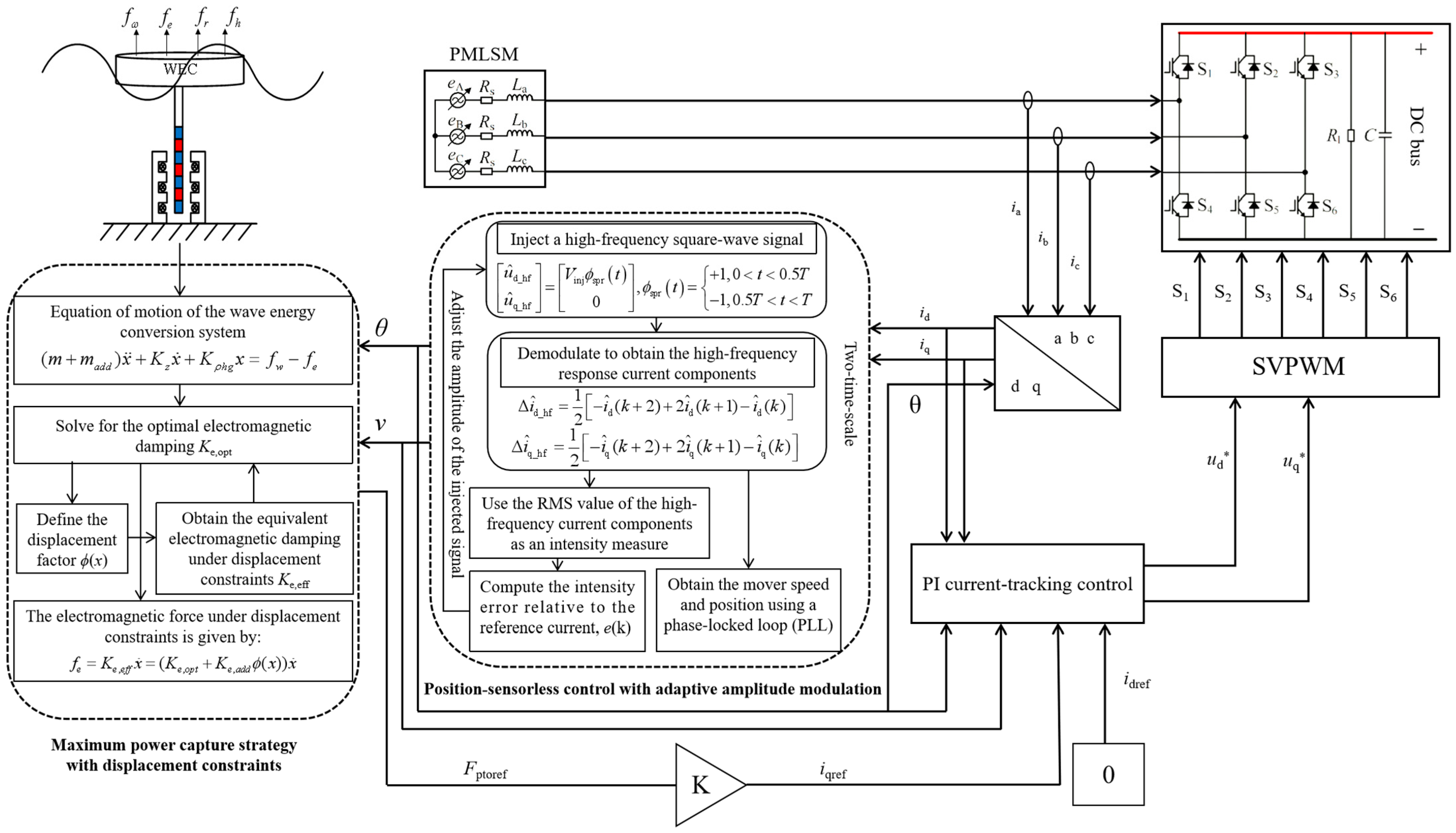
3. Optimal Power Capture Strategy Based on Damping Control with Displacement Constraints
3.1. Determination of the Optimal Damping Coefficient
3.2. Improved Control Strategy Considering Displacement Constraints
4. Position-Sensorless Control Strategy Based on High-Frequency Injection and Adaptive Amplitude Modulation
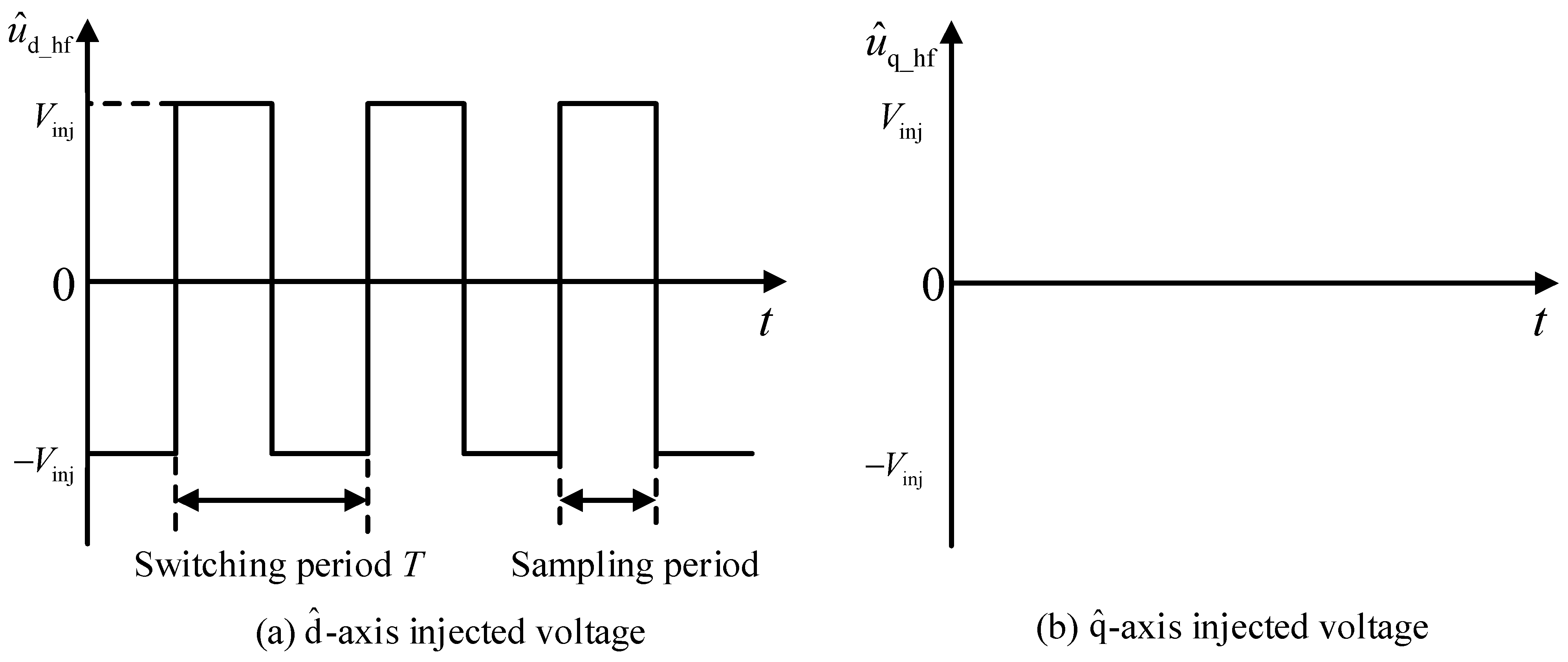
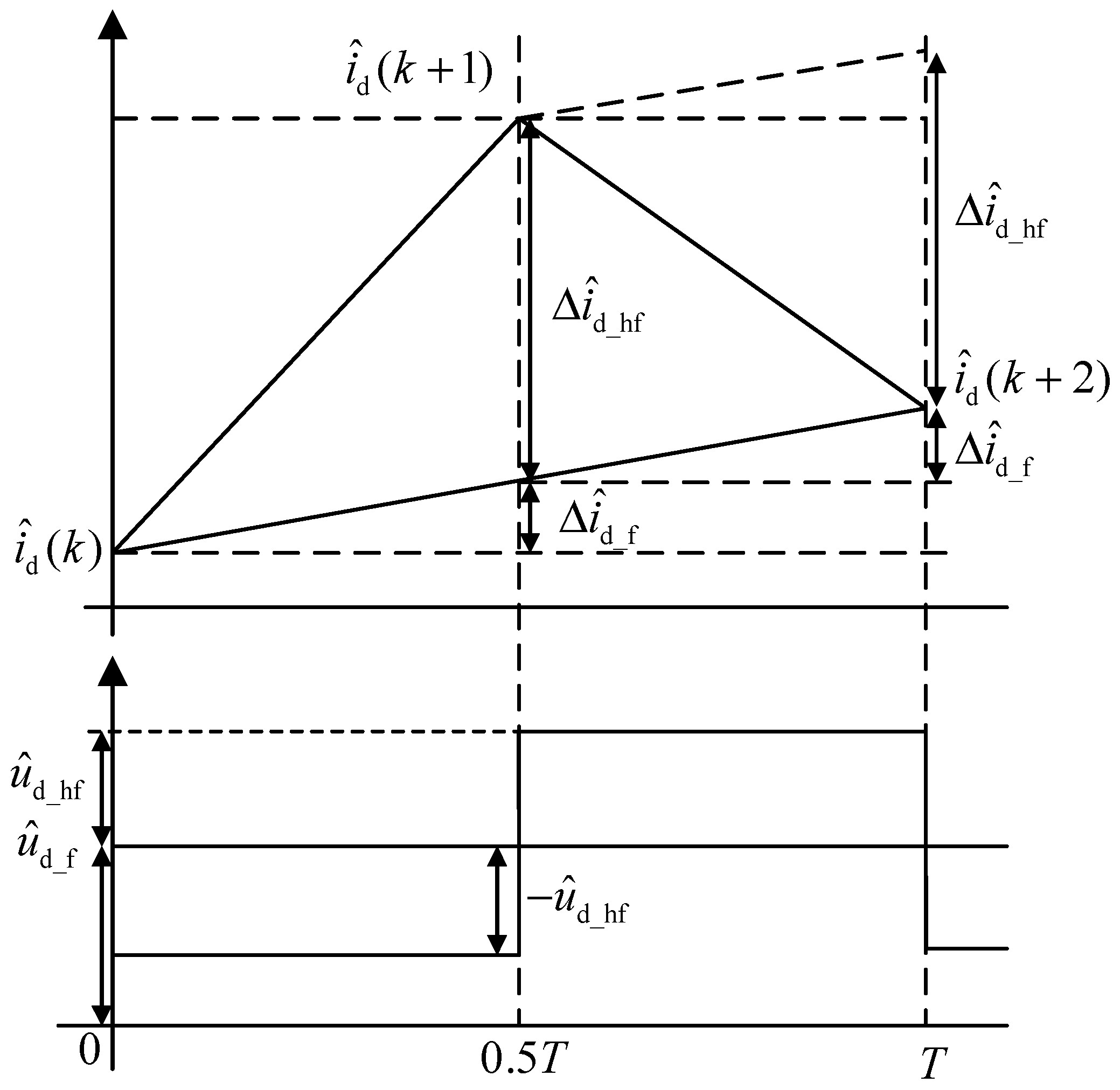
4.1. Current Response Under High-Frequency Square-Wave Voltage Injection
4.2. Extraction of the High-Frequency Response Current
4.3. Adaptive Amplitude Modulation Strategy
4.4. Design Rationale of the Optimal Measurement Band and Electrical Cost of HF Injection
5. Results and Discussion
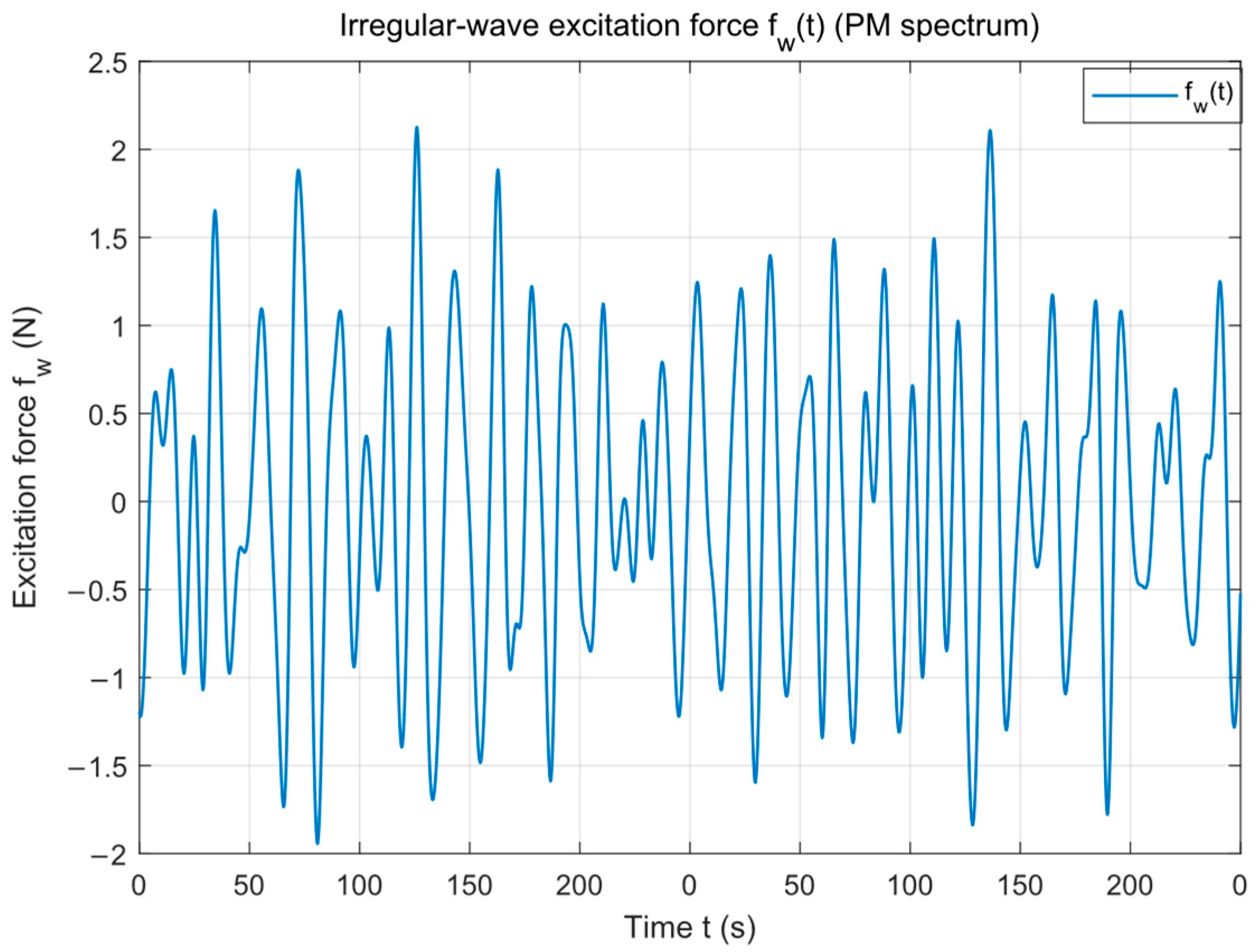
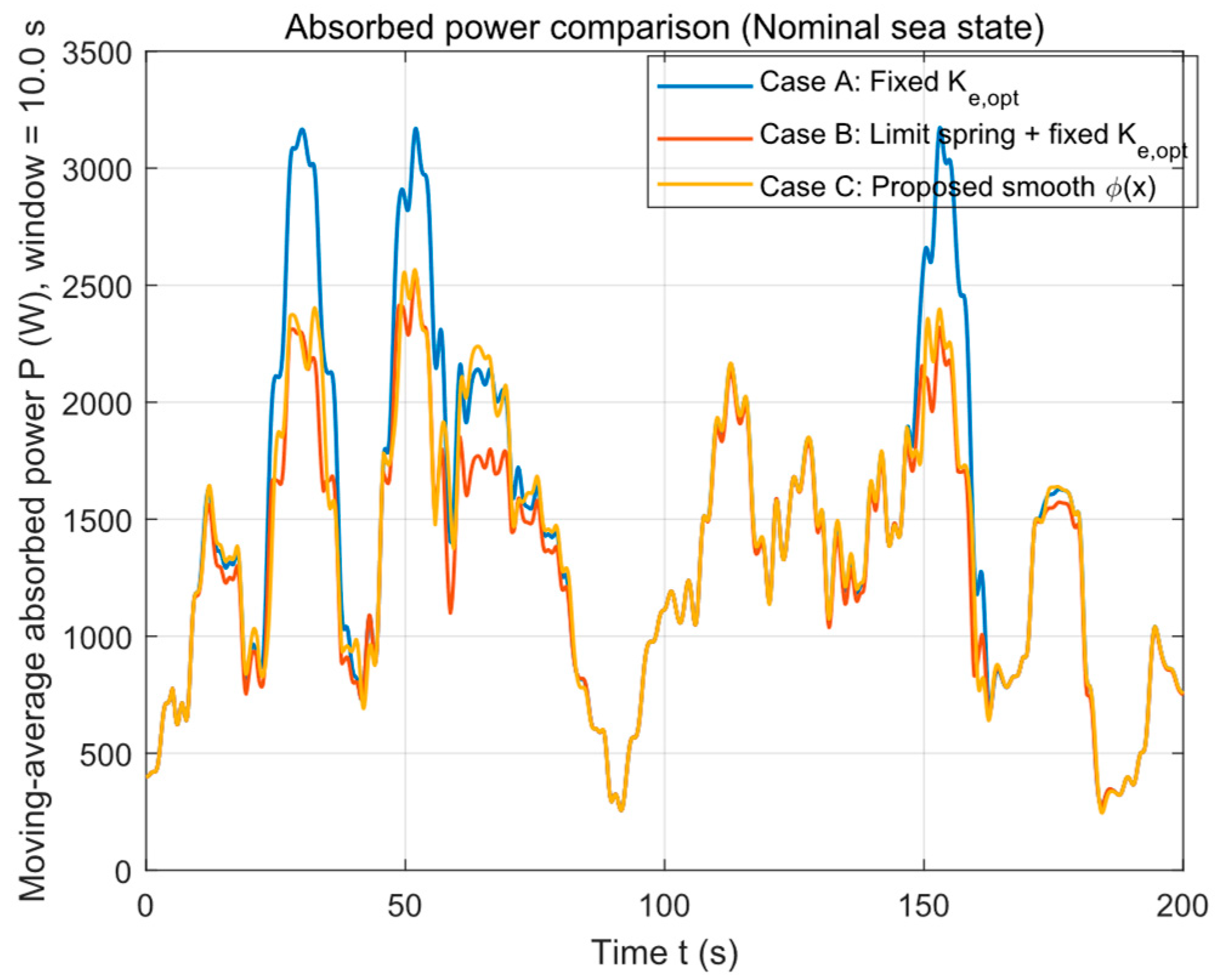
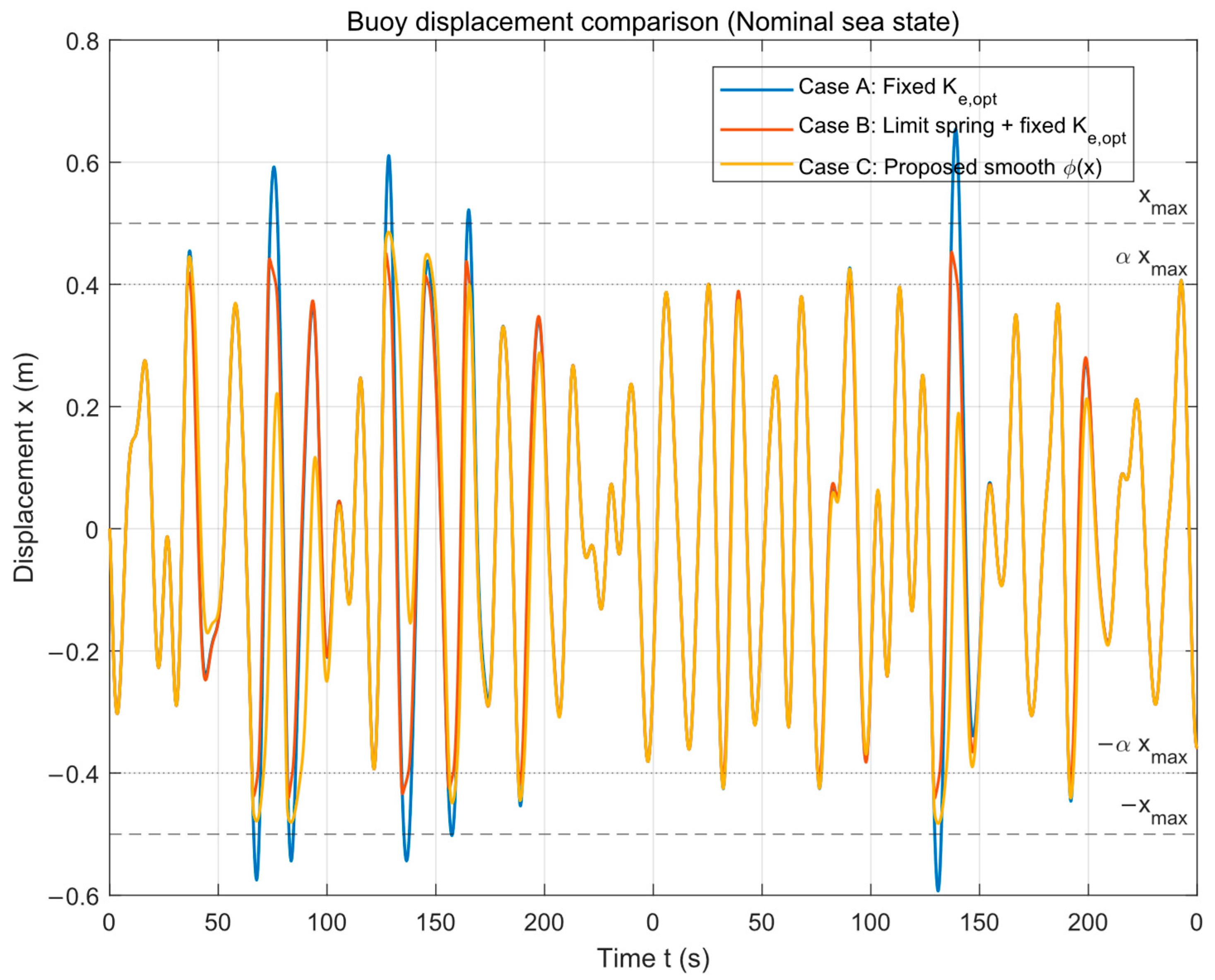
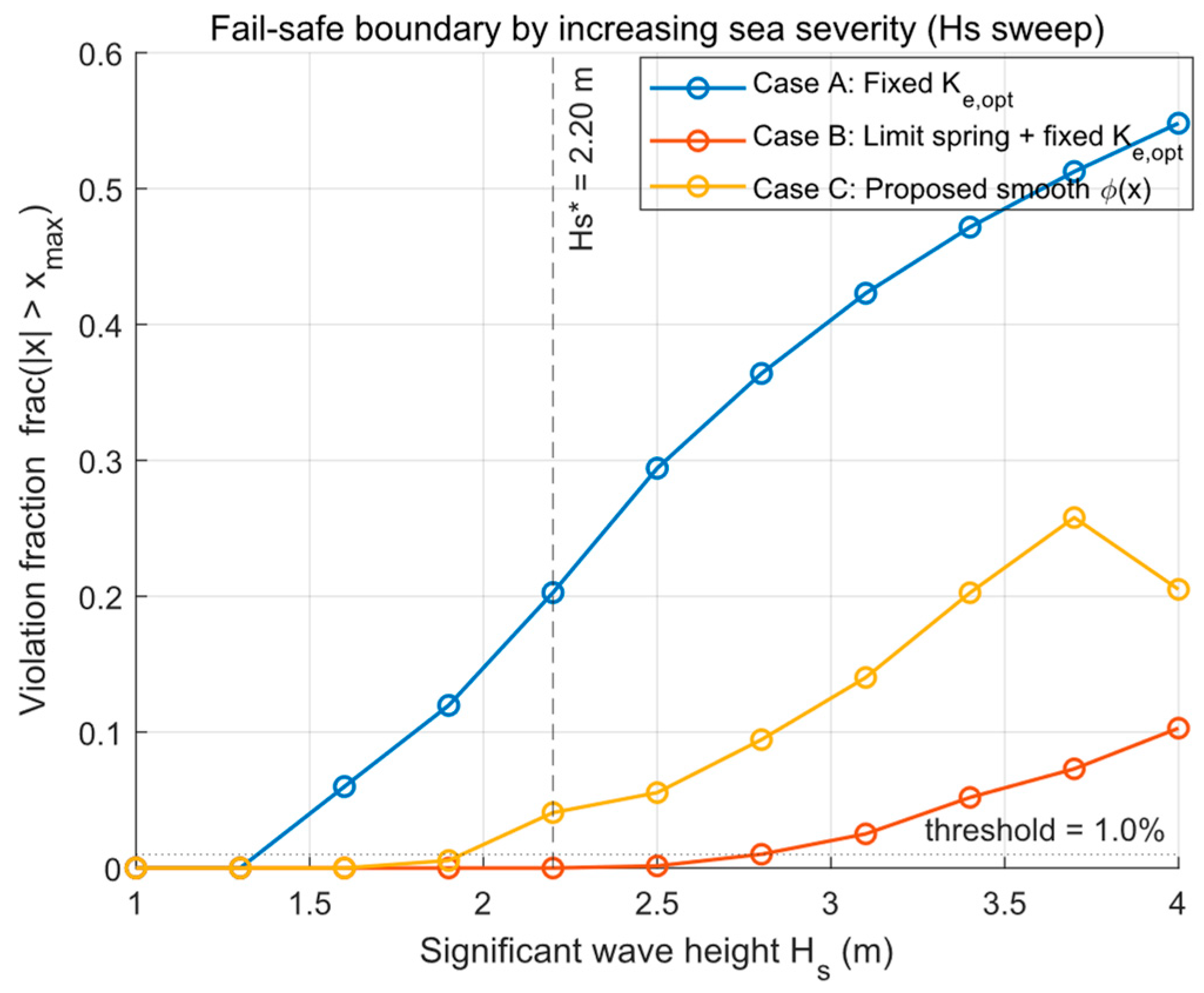
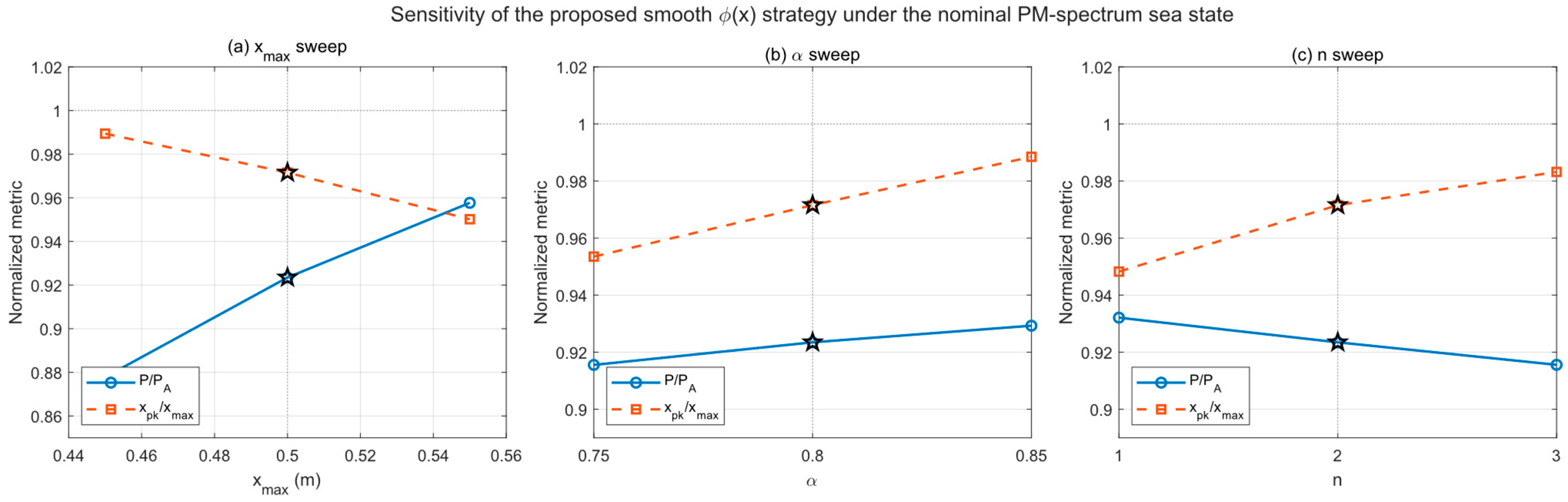
5.1. Simulation of Damping-Type Power Capture Considering Displacement Constraints
- Case A (conventional fixed damping): a constant Ke,opt was applied in the outer loop throughout the simulation. The electromagnetic force reference was generated as F* = −Ke,opt and converted into the q-axis current reference iq* for tracking by the inner current loop.
- Case B (traditional end-stop spring–damper limiter): the same fixed Ke,opt was used for power capture, while a symmetric mechanical limiter was added to emulate a conventional stroke-protection device. When |x| > αxmax, the limiter generated an additional restoring and damping force to prevent end-stop impacts.
- Case C (proposed smooth additional damping): when |x| ≤ αxmax, Ke,opt was retained; when |x| > αxmax, an additional damping term Ke,addϕ(x) was introduced such that the equivalent damping increased smoothly as |x| approached xmax, thereby suppressing further displacement growth without relying on mechanical limiting forces.
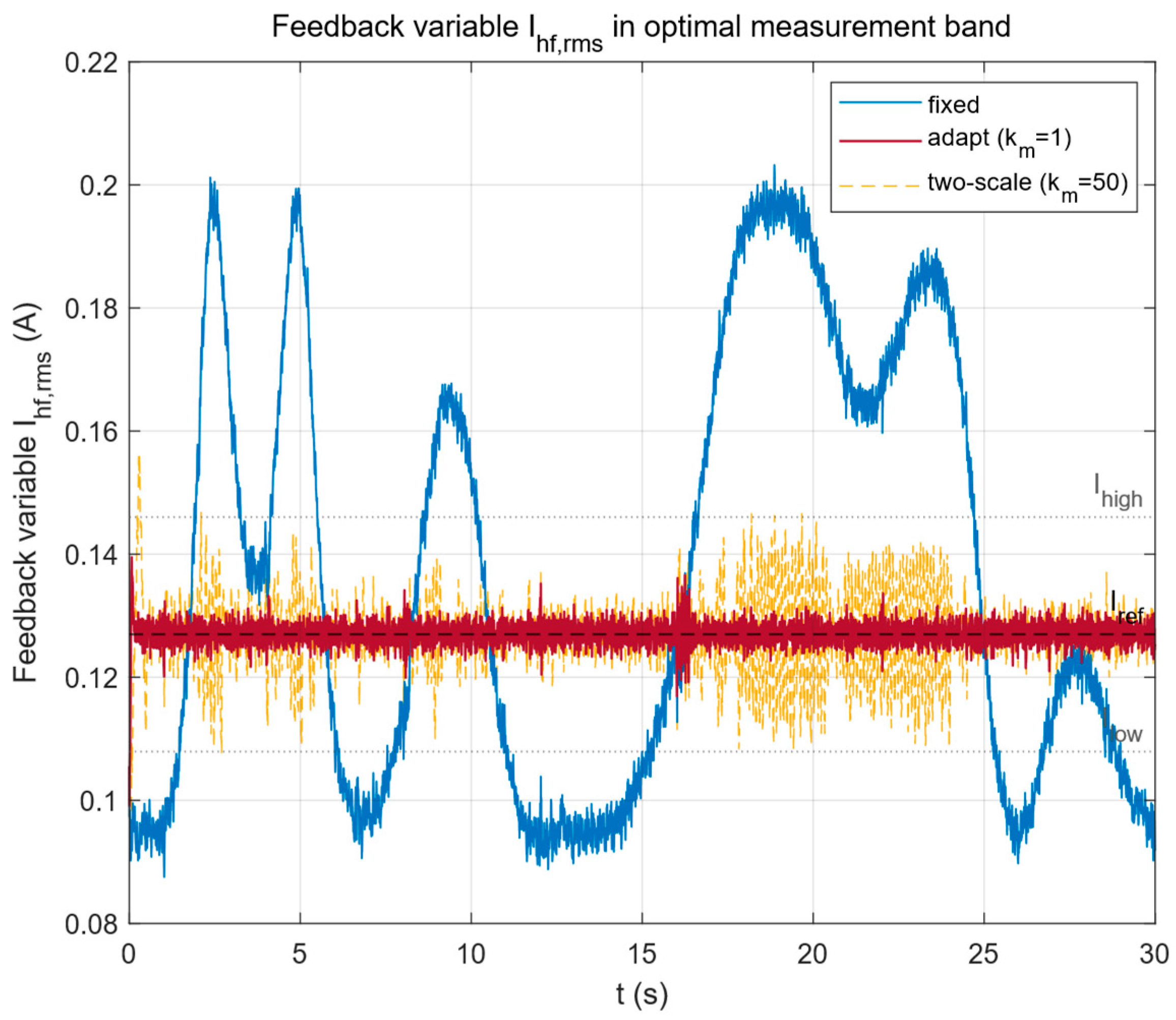
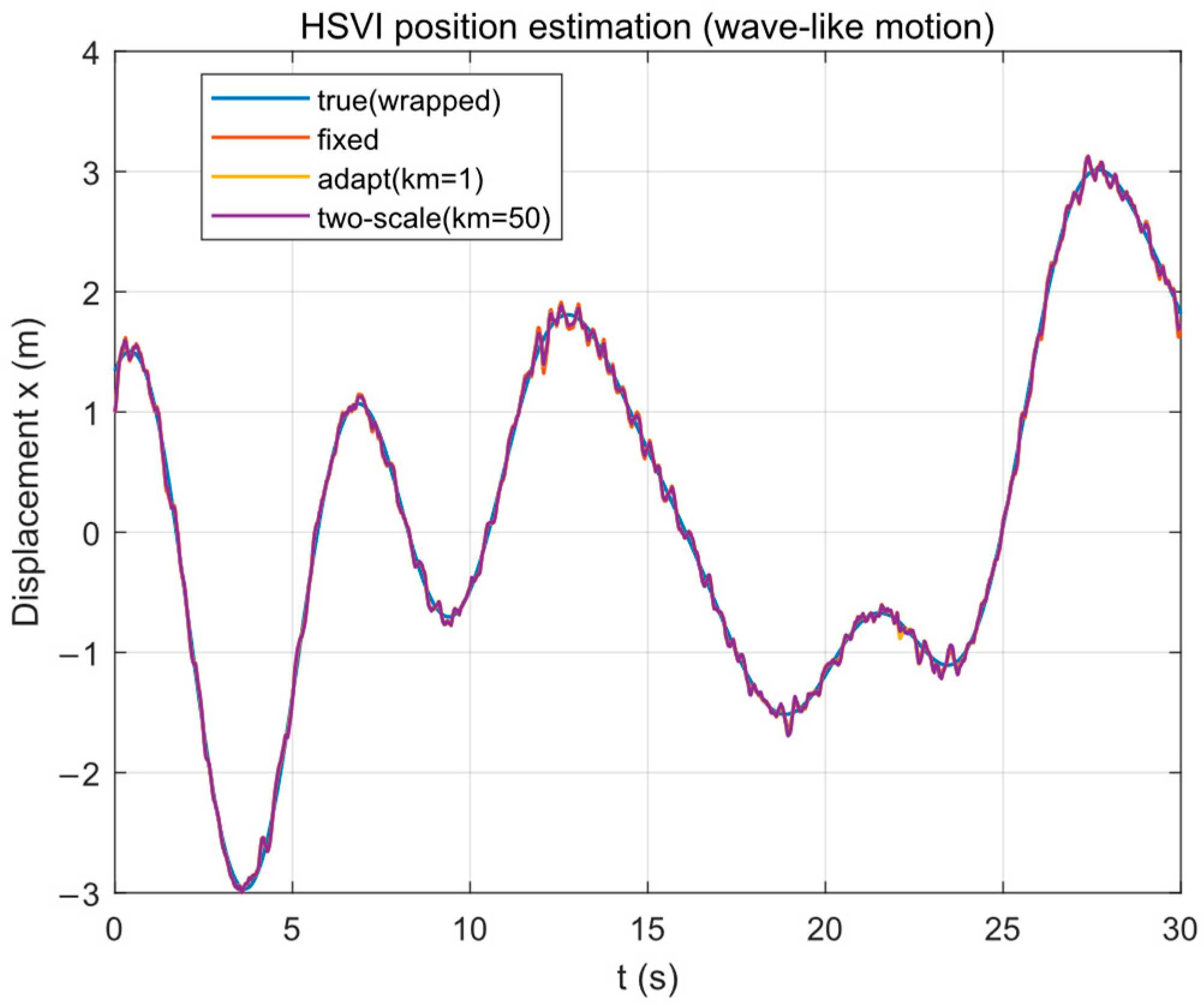
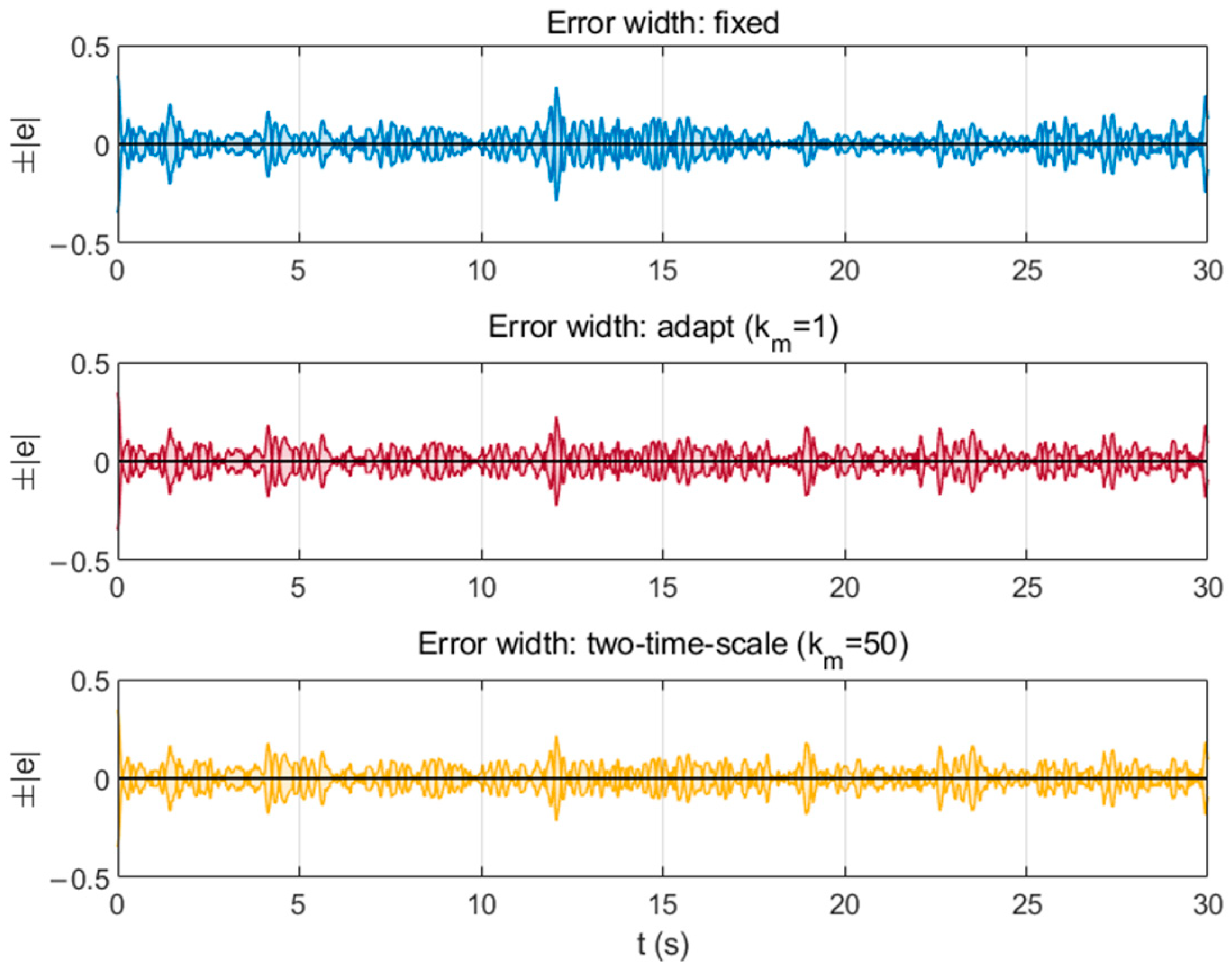
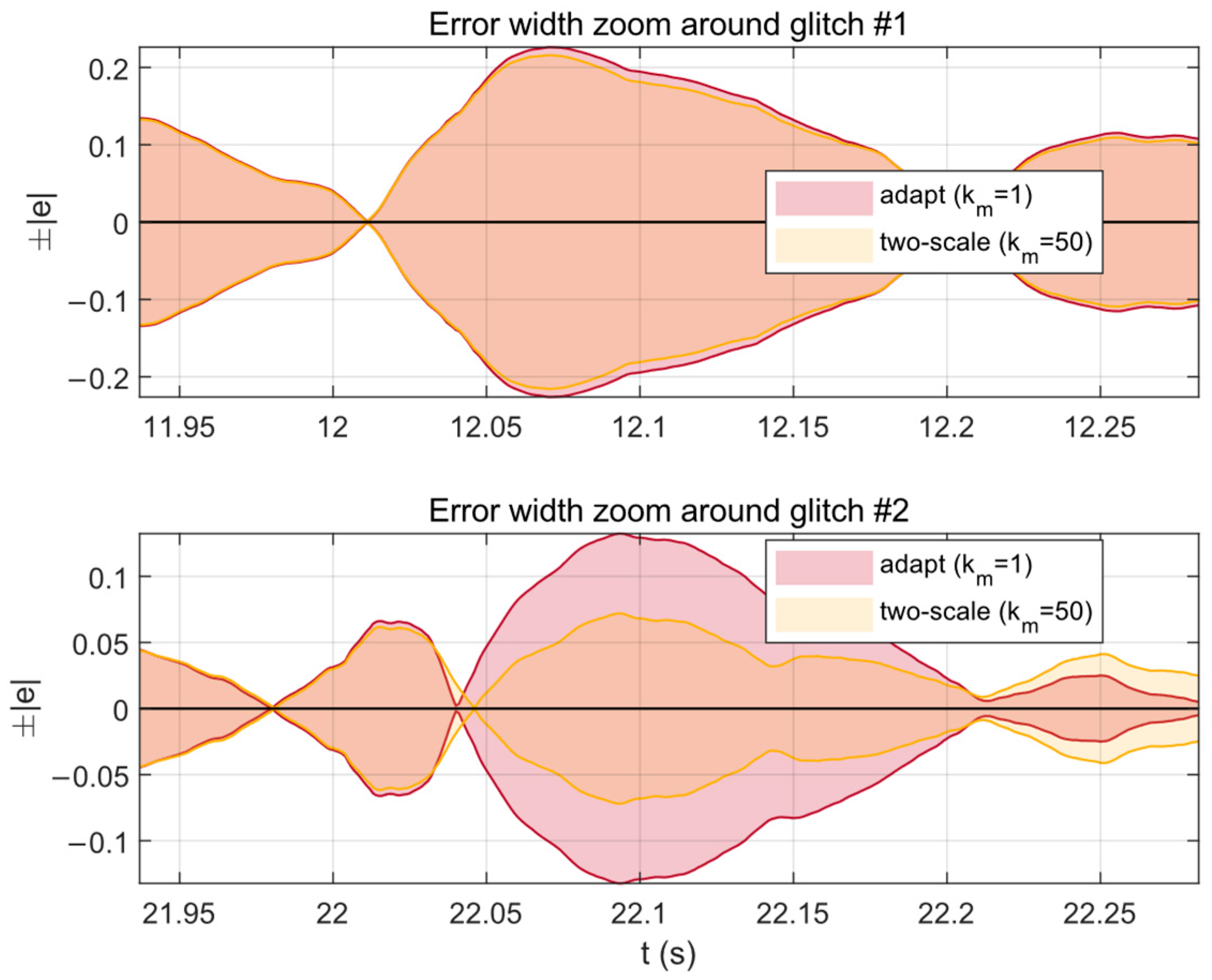
5.2. Position-Sensorless Simulation of the Improved High-Frequency Square-Wave Injection Method
- Fixed-amplitude HSVI;
- Single-time-scale adaptive-amplitude HSVI (km = 1);
- Two-time-scale adaptive-amplitude HSVI (km = 50).
6. Experimental Validation on a Laboratory Emulation Platform
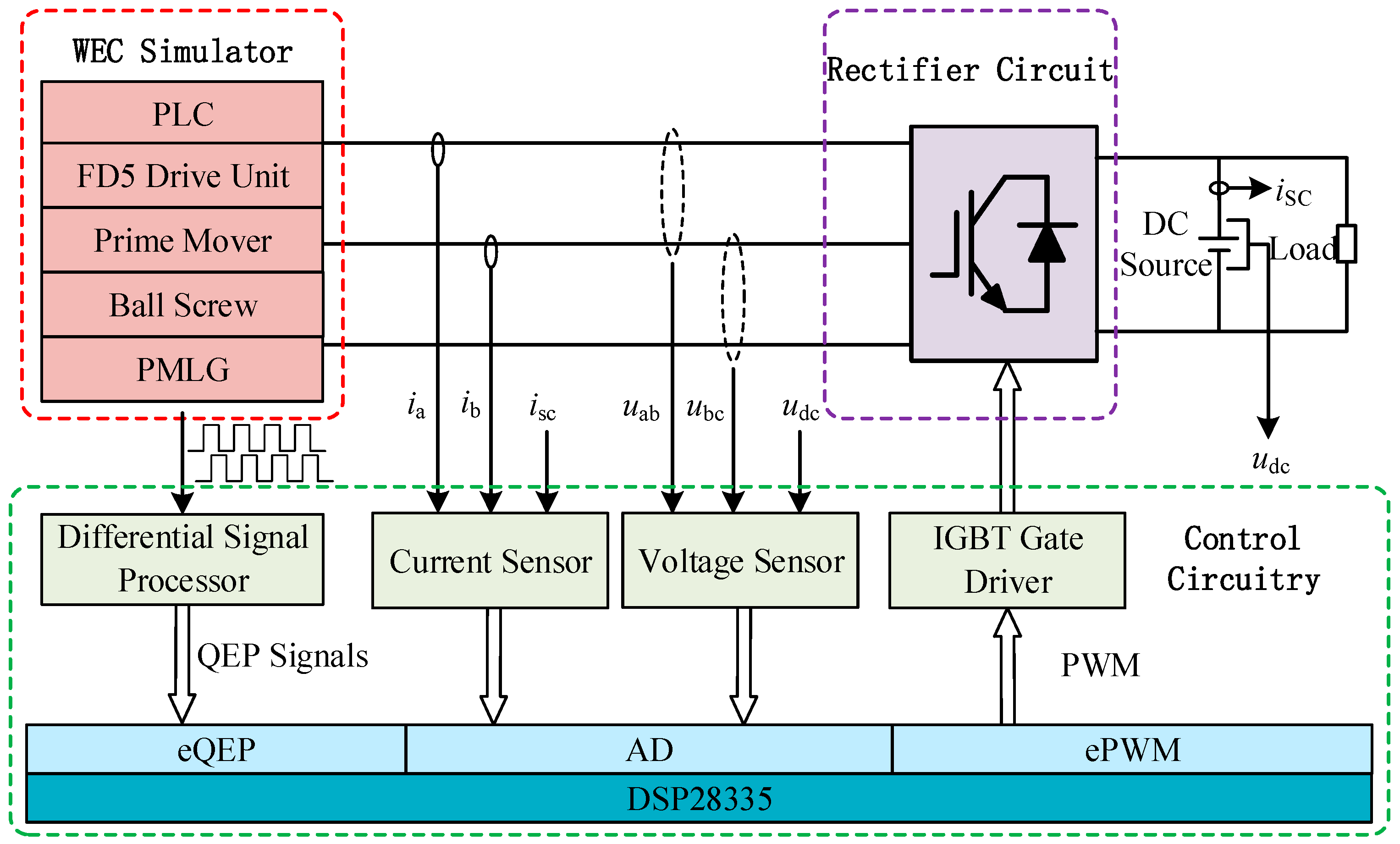
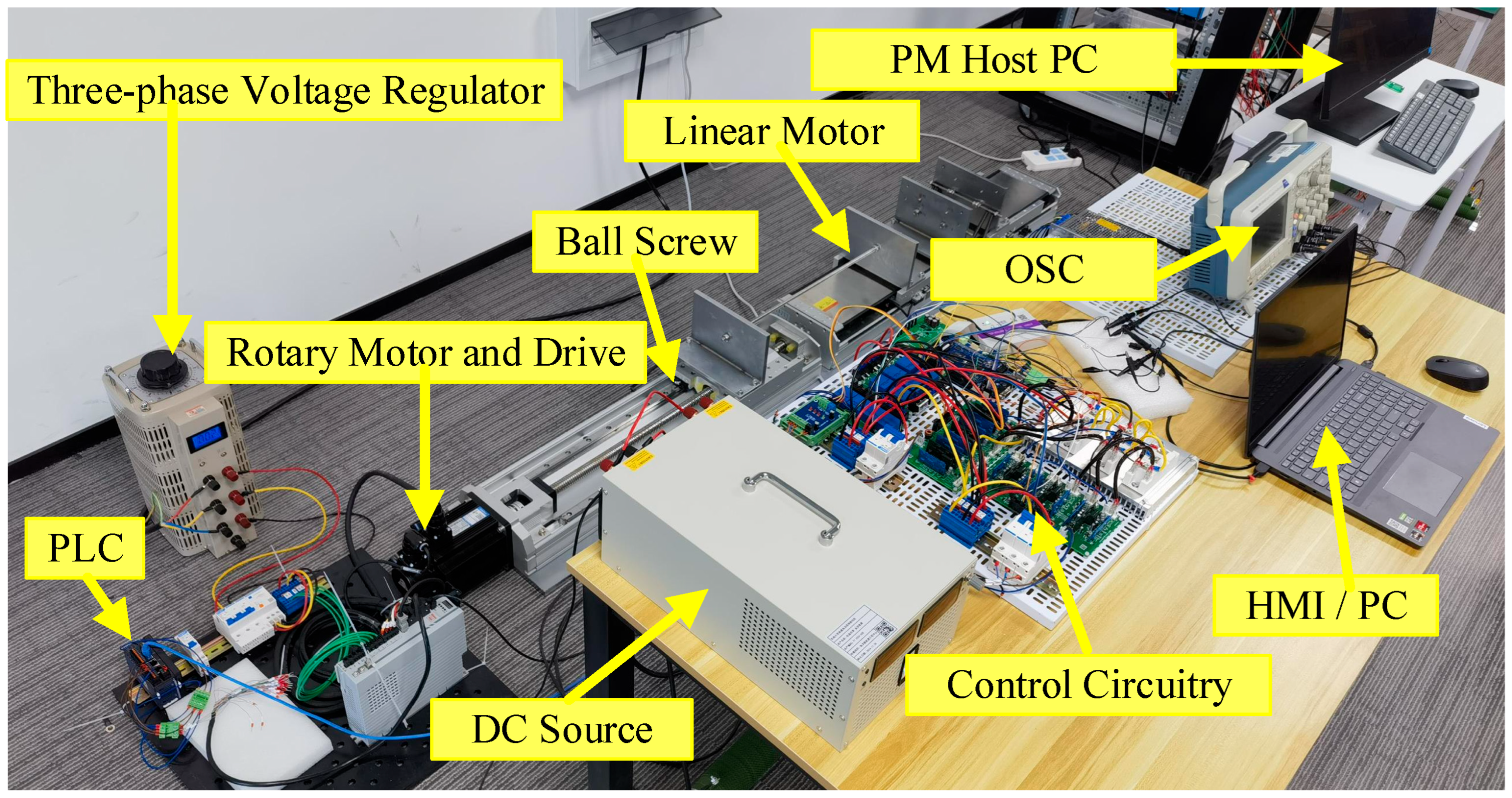
6.1. Overview of the DDWEC Emulation Platform
6.2. Hardware Configuration
6.2.1. Motion Emulation Unit
6.2.2. Linear Generator and Power Electronics
6.3. Control and Software Implementation
6.3.1. Reference Position Processing for Calibration
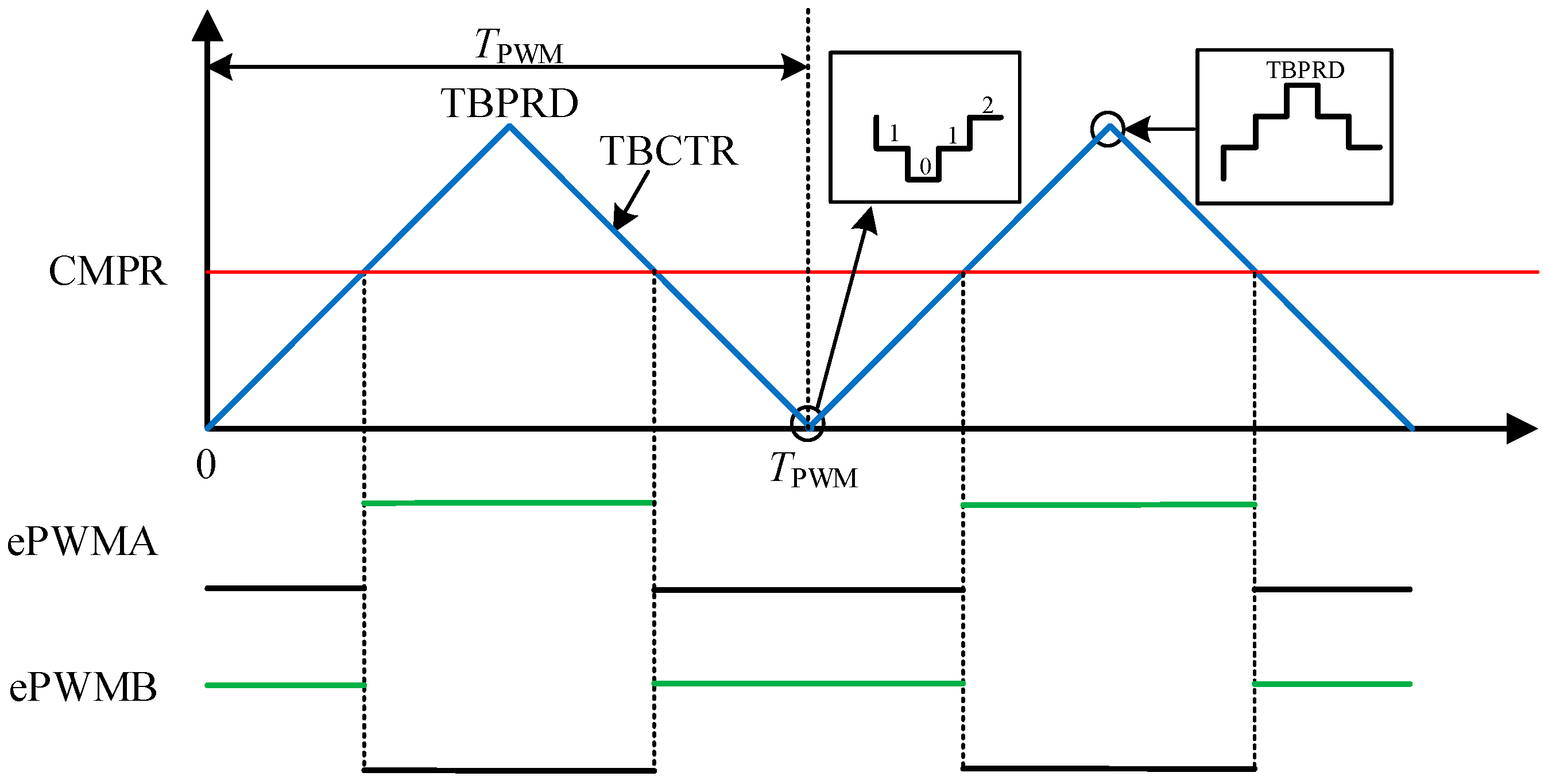
6.3.2. PWM Generation
6.3.3. Robustness Evaluation Under Disturbances
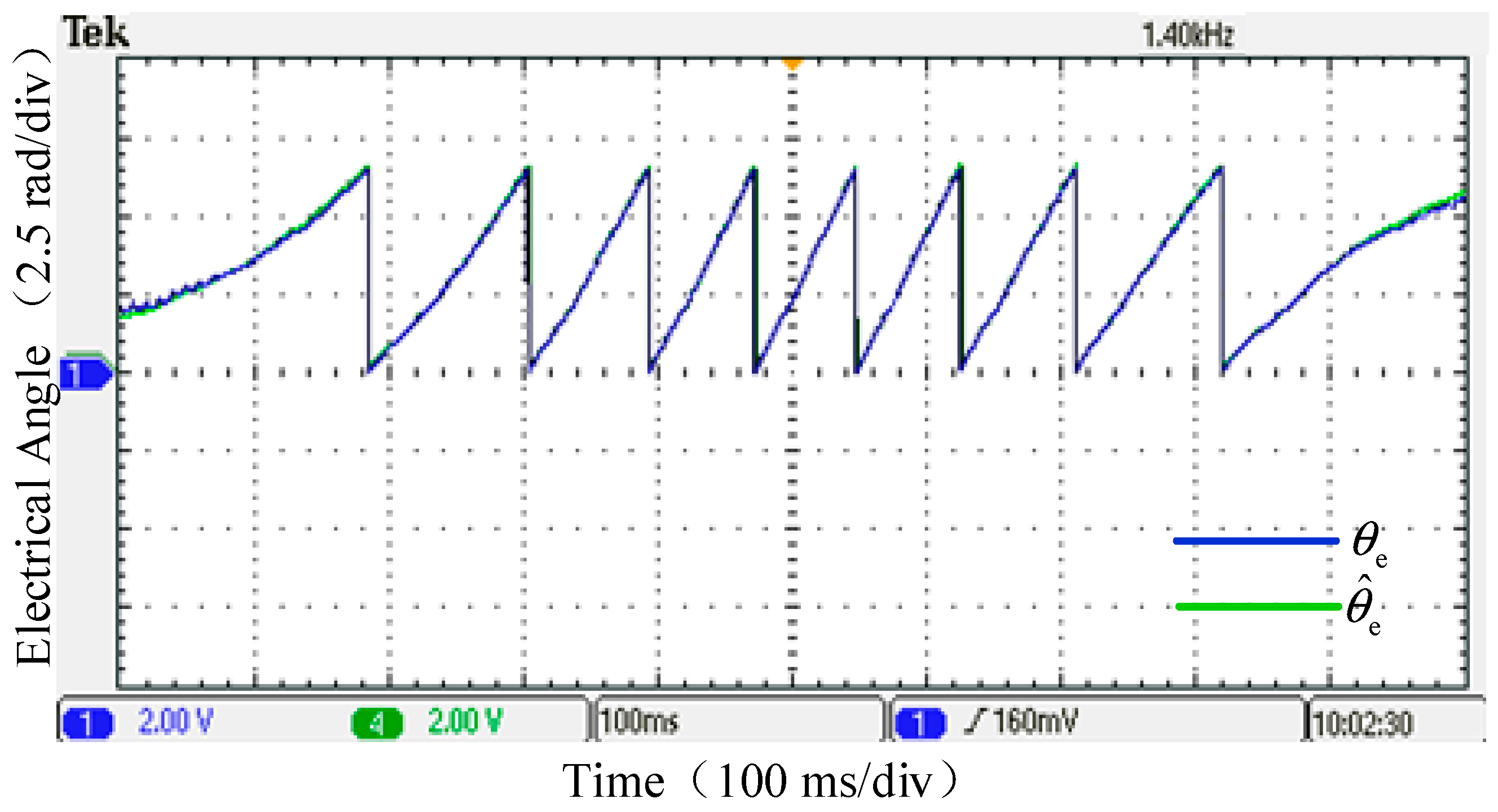
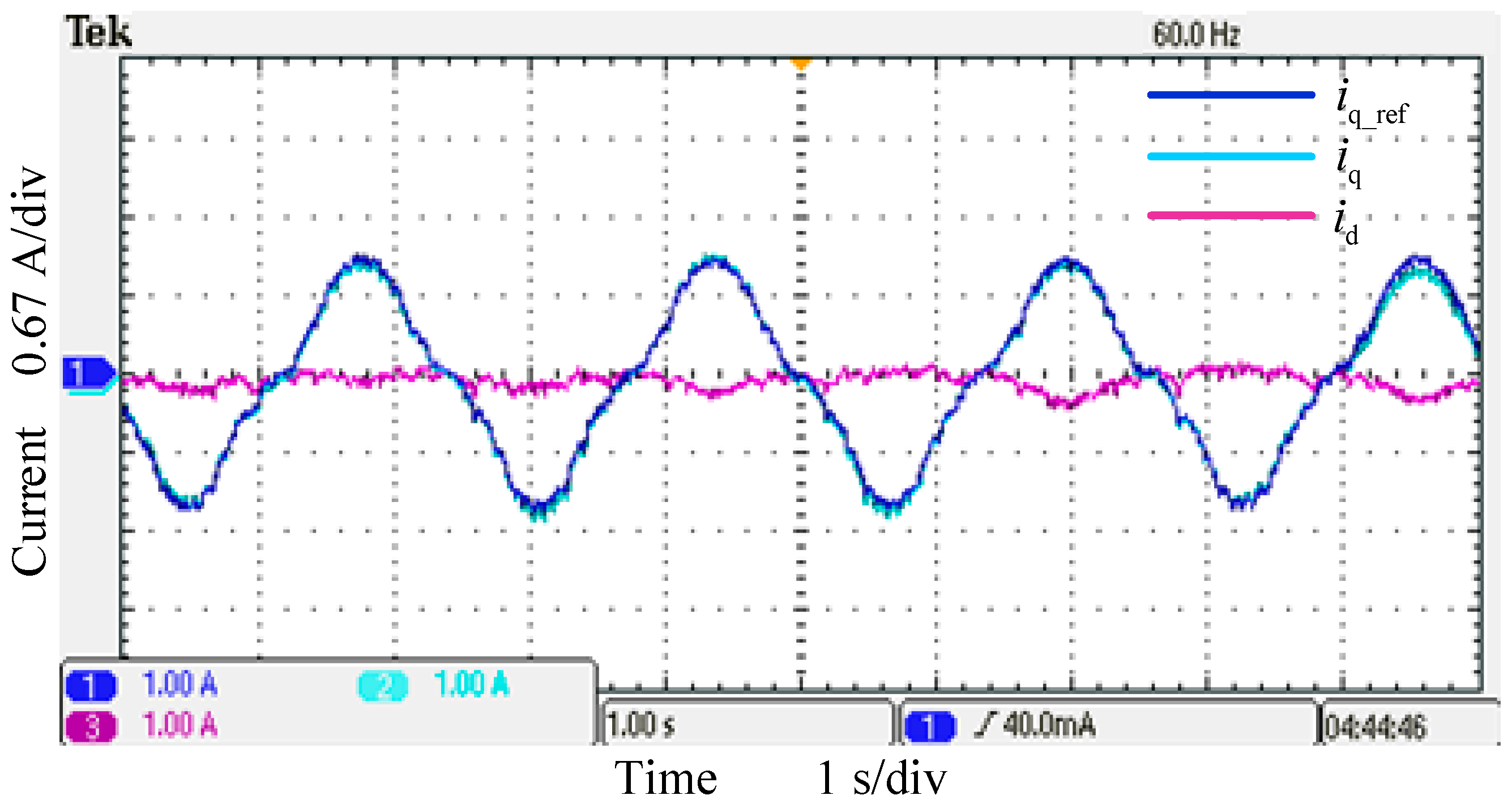
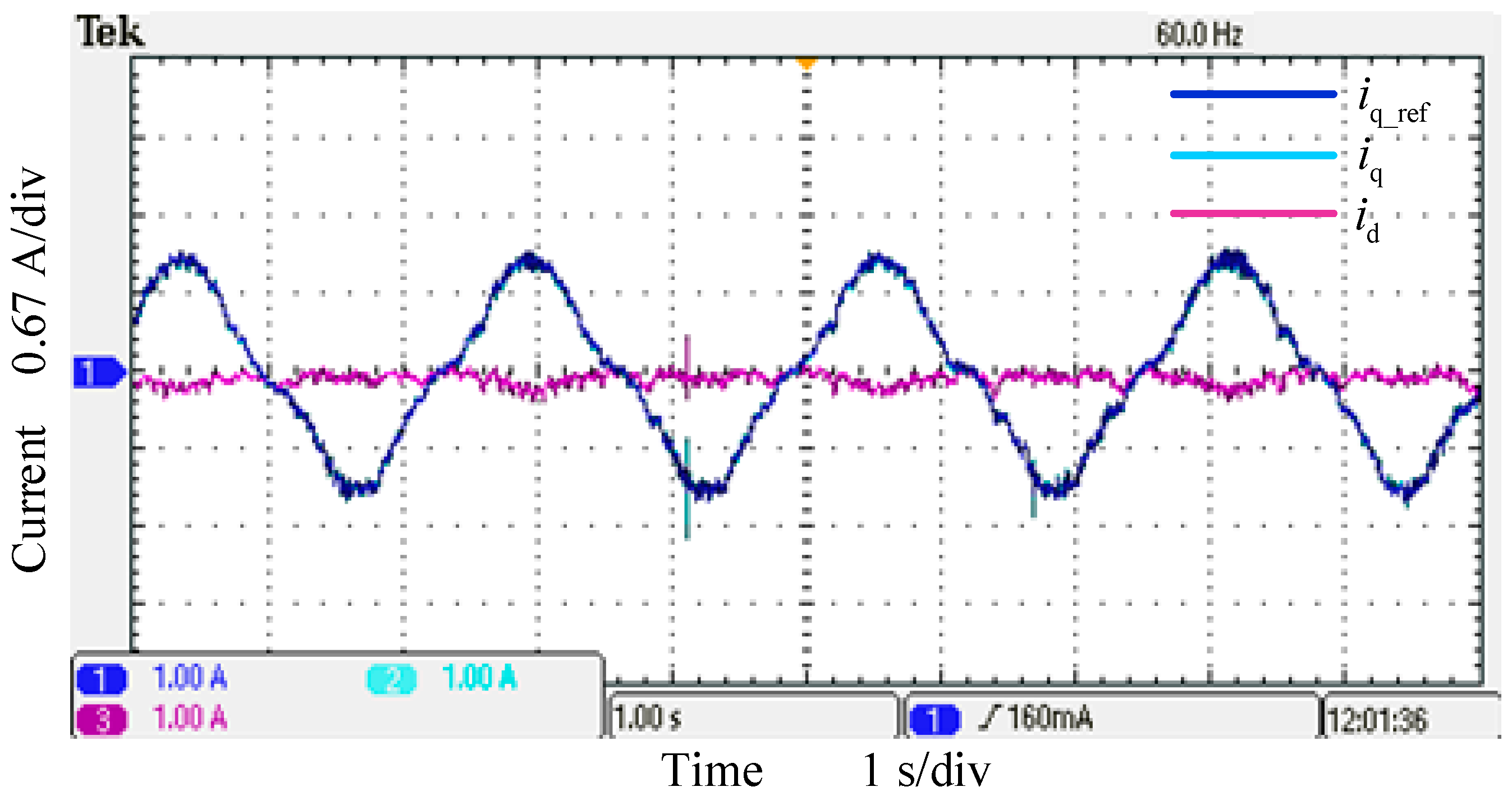
6.4. Experimental Results and Discussion
7. Conclusions
- A continuous transition from maximum-power capture to safety-first operation was enabled by the proposed displacement-constrained damping regulation, in which an additional damping term was smoothly increased as the stroke limit was approached while power capture was maintained within the safe operating region.
- Under strong wave excitation, the buoy displacement peak was reduced by approximately 25.7%, with stroke-limit violations prevented, while only a 7.65% decrease in average captured power was observed, indicating a favorable trade-off between safety and energy-capture efficiency. A sensitivity study of xmax, α, and n further showed that xmax and α mainly shift the expected displacement–power trade-off, whereas n primarily affects the smoothness-related electrical stress; the nominal choice xmax = 0.5 m, α = 0.8, and n = 2 was therefore retained as a balanced setting.
- With adaptive amplitude modulation, the demodulated HF current was maintained within the prescribed measurement band, improving position-observation signal conditioning and enhancing disturbance rejection compared to fixed-amplitude injection. The position-error metric remained around 0.06 m, and the two-time-scale scheme reduced error fluctuations, improving estimation robustness.
Author Contributions
Funding
Data Availability Statement
Conflicts of Interest
Abbreviations
| Acronym | Definition |
| DDWEC | Direct-drive wave energy conversion |
| PMLSG | Permanent-magnet linear synchronous generator |
| PTO | Power take-off |
| SDOF | Single-degree-of-freedom |
| 2DOF | Two-degree-of-freedom |
| SVM | Space-vector modulation |
| SVPWM | Space-vector pulse-width modulation |
| HF | High frequency |
| HSVI | High-frequency square-wave voltage injection |
| PLL | Phase-locked loop |
| PI | Proportional–integral |
| RMS | Root-mean-square |
| PM-Spectrum | Pierson–Moskowitz |
| SNR | Signal-to-noise ratio |
| EMF | Electromotive force |
| PM | Permanent magnet |
References
- Fan, X.; Meng, H. Research on maximum power control of direct-drive wave power generation device based on BP neural network PID method. Actuators 2024, 13, 159. [Google Scholar] [CrossRef]
- Sheng, W. Wave energy conversion and hydrodynamics modelling technologies: A review. Renew. Sustain. Energy Rev. 2019, 109, 482–498. [Google Scholar] [CrossRef]
- Shek, J.K.H.; Macpherson, D.E.; Mueller, M.A. Experimental verification of linear generator control for direct drive wave energy conversion. IET Renew. Power Gener. 2010, 4, 395–403. [Google Scholar] [CrossRef]
- Guo, B.; Ringwood, J.V. A review of wave energy technology from a research and commercial perspective. IET Renew. Power Gener. 2021, 15, 3065–3090. [Google Scholar] [CrossRef]
- Budar, K.; Falnes, J. A resonant point absorber of ocean-wave power. Nature 1975, 256, 478–479. [Google Scholar] [CrossRef]
- Dong, S.; Wu, Z. Prescribed performance adaptive MPPT control of direct-drive wave energy generation system. Ocean Eng. 2024, 298, 117066. [Google Scholar] [CrossRef]
- Zhan, S.; Li, G.; Bailey, C. Economic feedback model predictive control of wave energy converters. IEEE Trans. Ind. Electron. 2020, 67, 3932–3943. [Google Scholar] [CrossRef]
- Zhang, Y.; Stansby, P.; Li, G. Non-causal linear optimal control with adaptive sliding mode observer for multi-body wave energy converters. IEEE Trans. Sustain. Energy 2021, 12, 568–577. [Google Scholar] [CrossRef]
- Fusco, F.; Ringwood, J.V. A simple and effective real-time controller for wave energy converters. IEEE Trans. Sustain. Energy 2013, 4, 21–30. [Google Scholar] [CrossRef]
- Mehdipour, H.; Amini, E.; Naeeni, S.T.O.; Neshat, M.; Gandomi, A.H. Optimization of power take-off system settings and regional site selection procedure for a wave energy converter. Energy Convers. Manag. X 2024, 22, 100559. [Google Scholar] [CrossRef]
- Thomas, S.; Giassi, M.; Eriksson, M.; Goteman, J.; Göteman, M. A model free control based on machine learning for energy converters in an array. Big Data Cogn. Comput. 2018, 2, 36. [Google Scholar] [CrossRef]
- Ligeikis, C.H.; Scruggs, J.T. Causal, stochastic MPC for wave energy converters. IEEE Trans. Control Syst. Technol. 2024, 32, 351–367. [Google Scholar] [CrossRef]
- Umeda, J.; Taniguchi, T.; Fujiwara, T. Development of model-based and model-free reactive control scheme: Considering copper loss and movable-floater-displacement constraint for a wave energy converter. J. Mar. Sci. Technol. 2023, 28, 439–451. [Google Scholar] [CrossRef]
- Wang, G.; Valla, M.; Solsona, J. Position sensorless permanent magnet synchronous machine drives—A review. IEEE Trans. Ind. Electron. 2020, 67, 5830–5842. [Google Scholar] [CrossRef]
- Ni, R.; Xu, D.; Blaabjerg, F.; Lu, K.; Wang, G.; Zhang, G. Square-wave voltage injection algorithm for PMSM position sensorless control with high robustness to voltage errors. IEEE Trans. Power Electron. 2017, 32, 5425–5437. [Google Scholar] [CrossRef]
- Li, H.; Zhang, X.; Yang, S.; Liu, S. Unified graphical model of high-frequency signal injection methods for PMSM sensorless control. IEEE Trans. Ind. Electron. 2020, 67, 4411–4421. [Google Scholar] [CrossRef]
- Liu, J.M.; Zhu, Z.Q. Sensorless control strategy by square-waveform high-frequency pulsating signal injection into stationary reference frame. IEEE J. Emerg. Sel. Top. Power Electron. 2014, 2, 171–180. [Google Scholar] [CrossRef]
- Wang, G.; Yang, L.; Yuan, B.; Wang, B.; Zhang, G.; Xu, D. Pseudo-random high-frequency square-wave voltage injection based sensorless control of IPMSM drives for audible noise reduction. IEEE Trans. Ind. Electron. 2016, 63, 7423–7433. [Google Scholar] [CrossRef]
- Zhang, Y.; Yin, Z.; Liu, J.; Zhang, R.; Sun, X. IPMSM sensorless control using high-frequency voltage injection method with random switching frequency for audible noise improvement. IEEE Trans. Ind. Electron. 2020, 67, 6019–6030. [Google Scholar] [CrossRef]
- Wang, P.; Zhu, Z.Q.; Liang, D. Improved position-offset based online parameter estimation of PMSMs under constant and variable speed operations. IEEE Trans. Energy Convers. 2024, 39, 1325–1340. [Google Scholar] [CrossRef]
- Woldegiorgis, A.T.; Ge, X.L.; Zuo, Y.; Wang, H.M.; Hassan, M.N. Sensorless control of interior permanent magnet synchronous motor drives considering resistance and permanent magnet flux linkage variation. IEEE Trans. Ind. Electron. 2023, 70, 7716–7730. [Google Scholar] [CrossRef]
- Pierson, W.J.; Moskowitz, L. A proposed spectral form for fully developed wind seas based on the similarity theory of S. A. Kitaigorodskii. J. Geophys. Res. 1964, 69, 5181–5190. [Google Scholar] [CrossRef]



| Category | Parameter | Symbol | Value |
|---|---|---|---|
| Generator (PMLSG) | Stator resistance | Rs | 6.35 Ω |
| d-axis inductance | Ld | 59.07 mH | |
| q-axis inductance | Lq | 70.88 mH | |
| PM flux linkage | ψf | 0.425 Wb | |
| Pole pitch | τ | 0.025 m | |
| Hydrodynamics/structure | Buoy mass | M | 342 kg |
| Added mass | m∞ | 84.6 kg | |
| Radiation damping coefficient | Kz | 6000 N·s/m | |
| Hydrostatic stiffness | K | 2.0 × 10⁴ N/m | |
| Stroke constraint | Stroke limit | xmax | 0.5 m |
| Threshold coefficient | α | 0.8 | |
| Correction-factor exponent | n | 2 | |
| Controllers and simulation | Current control | — | PI |
| Base simulation step size | Ts | 1 ms | |
| Sensorless | HF injection frequency | fhf | 1 kHz |
| Current sampling frequency | fs | 10 kHz | |
| Injection amplitude range | Vinj | 5–30 V | |
| Fixed-amplitude baseline | Vinj | 15 V | |
| Optimal measurement band | [Ilow,Ihigh] | [0.11 A,0.15 A] | |
| Target intensity | Iref | 0.13 A | |
| PLL | Proportional gain | Kp | 60 |
| Integral gain | Ki | 1200 | |
| Amplitude modulation | Update interval (single-time-scale) | km | 1 |
| Update interval (two-time-scale) | km | 50 |
| Item | Value | Item | Value |
|---|---|---|---|
| Translator stroke | 440 mm | d-axis inductance Ld | 59.07 mH |
| PM flux linkage ψf | 0.425 WB | q-axis inductance Lq | 70.88 mH |
| Pole pitch τ | 25 mm | Prime mover rated torque TN | 10 N·m |
| Stator resistance Rs | 6.35 Ω | Prime mover rated power P | 2 kw |
| DC bus voltage udc | 100 V | Resistive load R | 100 Ω |
Disclaimer/Publisher’s Note: The statements, opinions and data contained in all publications are solely those of the individual author(s) and contributor(s) and not of MDPI and/or the editor(s). MDPI and/or the editor(s) disclaim responsibility for any injury to people or property resulting from any ideas, methods, instructions or products referred to in the content. |
© 2026 by the authors. Licensee MDPI, Basel, Switzerland. This article is an open access article distributed under the terms and conditions of the Creative Commons Attribution (CC BY) license.
Share and Cite
Huang, L.; Hou, J.; Wang, H.; Mou, Z. Control of Direct-Drive Wave Energy Conversion Considering Displacement Constraints and an Improved Sensorless Strategy. J. Mar. Sci. Eng. 2026, 14, 552. https://doi.org/10.3390/jmse14060552
Huang L, Hou J, Wang H, Mou Z. Control of Direct-Drive Wave Energy Conversion Considering Displacement Constraints and an Improved Sensorless Strategy. Journal of Marine Science and Engineering. 2026; 14(6):552. https://doi.org/10.3390/jmse14060552
Chicago/Turabian StyleHuang, Lei, Jianan Hou, Haoran Wang, and Zihao Mou. 2026. "Control of Direct-Drive Wave Energy Conversion Considering Displacement Constraints and an Improved Sensorless Strategy" Journal of Marine Science and Engineering 14, no. 6: 552. https://doi.org/10.3390/jmse14060552
APA StyleHuang, L., Hou, J., Wang, H., & Mou, Z. (2026). Control of Direct-Drive Wave Energy Conversion Considering Displacement Constraints and an Improved Sensorless Strategy. Journal of Marine Science and Engineering, 14(6), 552. https://doi.org/10.3390/jmse14060552