1. Introduction
The ocean is rich in numerous mineral and biological resources, such as oil, natural gas, manganese nodules, coral and mollusk. As vital instruments to explore and exploit the ocean, autonomous underwater vehicles (AUVs) have attracted more and more attention in recent years. A lot of tasks and operations, including observing and sampling, can be executed by various AUVs. Moreover, sonar, doppler log, and manipulators can be equipped on AUVs to undertake diverse functional operations, like in situ observation, testing, inspection, and cleaning [
1,
2]. The vast ocean calls for numerous AUVs and long-term continuous work; however, the limited power capacity generally carried by lithium-ion batteries poses an obstacle. Fortunately, wireless power transfer (WPT) technology, which has been widely utilized in electrical vehicles, electrical equipment monitoring, auto-guided vehicles, mining equipment, and desktop office electronics, provides a feasible solution to the power supply of AUVs [
3,
4,
5,
6,
7]. In recent decades, lots of research about wireless power transfer for AUVs has been conducted by scholars [
6,
8,
9]. A double-D coil and C-shaped plate-based inductive and capacitive hybrid WPT system has been proposed, and a 255 W constant power under constant voltage and constant current modes with a maximum efficiency of 88.2% was achieved [
10]. Wang et al. [
11] designed hybrid compensation topologies and quasi-decoupled arc-shaped magnetic integrated couplers for AUVs, with 1.2 kW rated power and peak efficiency of 92.4% under composite misalignments, including axial, radial and angular offsets. In the literature [
12], a conformal ODO magnetic structure was built for an AUV’s WPT system; based on this, an extended O4DO magnetic coupler was developed for cluster AUV power supply applications, and a 360-degree rotational offset and ±100 mm axial misalignment tolerance were acquired. Chen et al. [
13] introduced a U-shaped bipolar transmitting coil and an arc-shaped receiving coil, and complementary and opposite magnetic flux and field were employed to achieve a significant misalignment tolerance ability. Vertically aligned transmitting coils and the tail vanes of the AUV-embedded receiving coil were developed, and both the leakage electromagnetic field shielding effect and stable output characteristics under radial, axial offsets and circumference misalignments were obtained [
14]. The abovementioned research concentrated on the misalignment tolerance ability, and the hybrid or combined magnetic couplers were utilized, so the complex installation structures for AUVs were usually evitable.
Magnetic materials are commonly employed in WPT systems. On the one hand, they could enhance the magnetic coupling between the transmitting coil and receiving coil owing to their high-permeability property; on the other hand, the leakage electromagnetic field could be shielded and reduced by the magnetic materials. At present, the most widely used and popular magnetic materials are Manganese Zinc (MnZn) ferrites [
15]. MnZn ferrites are usually placed at the back of transmitting or receiving coils, a relatively low magnetic reluctance path is built, and a higher coupling coefficient obtained [
16]. The eddy-current loss and hysteresis loss caused by magnetic materials are nonnegligible, bringing extra power loss to the WPT system [
17]. Research on the arrangement and structure optimization of MnZn ferrites was conducted to reduce the power loss. Xu et al. [
18] compared the different arrangements of MnZn ferrites in the WPT system, namely the block, mesh, strip shapes, and the results showed that the block-shaped MnZn ferrite WPT system has a higher coupling coefficient and power transfer efficiency than the others; the power loss caused by magnetic materials was lower. A stacking machine learning model and algorithm were proposed and developed for the optimization of MnZn ferrites in a WPT system. Eight-, four-, and two-ferrite-core arrangements were compared. The optimization of coils combined with an eight-ferrite-core layout achieved the best power transfer efficiency [
19]. In order to minimize the power loss of ferrite cores, Mohammad et al. [
20] optimized the layout of MnZn ferrites with DD coils. The uniformity of magnetic flux density distribution was set as the measurement factor, and the magnetic core layout with linear thickness variation reduced approximately 25.1% power loss, compared with the equal-thickness ferrite core arrangement. In the literature [
21], a machine learning algorithm was employed to obtain a better magnetic enhancement effect with the novel structure of ferrite cores. The interleaved distribution structure of multi-layers of vacuum materials and ferrite cores achieved a higher coupling coefficient, and a 10% cost reduction in ferrite cores was also achieved, compared with conventional layouts of magnetic cores. MnZn ferrites have always been utilized with an Al plate to constitute composed shielding, so the coupling coefficient could be enhanced. Moreover, the leakage electromagnetic field was shielded and reduced significantly, and the experimental results showed that the fluctuation in the output power of the WPT system with composed shielding was only 1/12 of the WPT system with ferrite cores under the same misalignment condition [
22]. However, the poor mechanical properties restricted the utilization of ferrite cores in the WPT system. In terms of the geometry and configuration, most MnZn ferrites were fixed in shape; they were not suitable for the flexible profile of the AUV’s WPT system. As for the fragility of ferrite cores, the magnetic materials would be fragmentated under impact and shock.
The invention and promotion of nanocrystalline materials have changed everything [
23]. In contrast with ferrite cores, the enhancement of the coupling coefficient of a magnetic coupler is more effective. Furthermore, the power loss brought by magnetic materials was reduced sharply, as the nanocrystalline materials could be broken, processed, and manufactured into a nanocrystalline flake ribbon core; thus, the eddy current in magnetic materials would be decreased dramatically. What’s more, the flexibility characteristic of the nanocrystalline flake ribbon core means it could be placed at the back of coupling coils according to the profile and configuration of the WPT system, especially suitable for the structure of autonomous underwater vehicles, auto-guided vehicles, and special robots, in which the magnetic couplers are always designed with curve and ball shapes. In recent years, we have witnessed the application of nanocrystalline flake ribbon cores in the WPT system. Dai et al. [
24] investigated the application of crushing flexible nanocrystalline materials in a WPT system, where the properties of high permeability and anti-saturation were employed. Moreover, the flexible and light-weight characteristics made nanocrystalline materials suitable for WPT systems. The laminating nanocrystalline materials were utilized in the WPT system, and the test results showed a high-power transfer efficiency of 96%, with high output power of 8.9 kW. Furthermore, the temperature rise of the magnetic core was significantly lower than MnZn ferrites [
25]. A viaduct structure was proposed for laminated nanocrystalline materials, which could balance the magnetic flux. Moreover, the shielding loss was reduced. The results demonstrated that the peak AC-AC efficiency increased up to 97.4%, and the temperature decreased by 35 °C [
26]. The abovementioned research showed that the application of nanocrystalline materials in WPT systems achieved good results. However, at present, there are relatively few applications of nanocrystalline materials in WPT systems for autonomous underwater vehicles. Chen et al. [
27] explored the utilization of a nanocrystalline flake ribbon in autonomous underwater vehicles’ WPT system. The curved magnetic coupler and LCC-S compensation network were selected, a high-power transfer efficiency of 92.85% was achieved, and the temperature rise was less than MnZn ferrites; the weight was also reduced.
In this study, the nanocrystalline flake ribbon in magnetic design for the D-D WPT system is analyzed, especially in terms of the coupling coefficients under different misalignment conditions. The layouts of the nanocrystalline flake ribbon are compared, and the magnetic coupling effect enhancement by the nanocrystalline flake ribbon is verified through simulation. A comparison of the variation in the coupling coefficient under different misalignment conditions with or without a nanocrystalline flake ribbon is given. Finally, a 200 W prototype is built, and an experiment is conducted to verify the effect of the magnetic coupler with a nanocrystalline flake ribbon.
2. Nanocrystalline Flake Ribbon
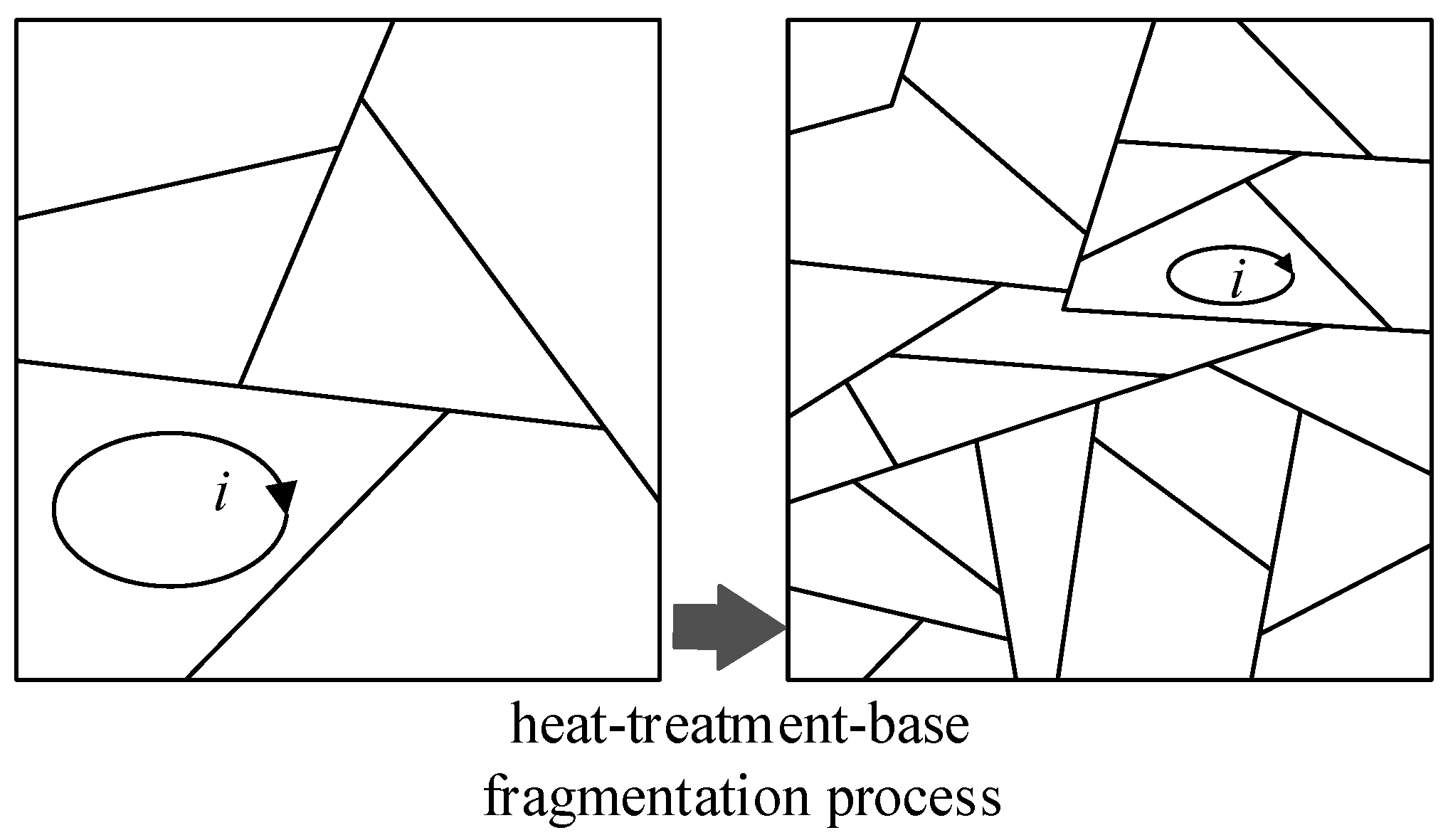
To simultaneously enhance the power transfer capability of underwater wireless power transfer (WPT) systems and maintain effective electromagnetic shielding, nanocrystalline flexible ribbons were processed using a fragmentation technique, which emerged in recent years, selected as a novel magnetic core structure. The flexible magnetic core undergoes a heat-treatment-based fragmentation process, during which large sheets of nanocrystalline alloy are mechanically broken into fine fragments. These nanocrystalline fragments are subsequently re-bonded using a specialized adhesive technique. The presence of the adhesive significantly increases the overall electrical resistivity of the material, thereby confining the originally large annular eddy currents to within the smaller alloy fragments and effectively suppressing the overall eddy-current loss of the magnetic core.
Figure 1 illustrates a schematic diagram of the nanocrystalline fragmentation process.
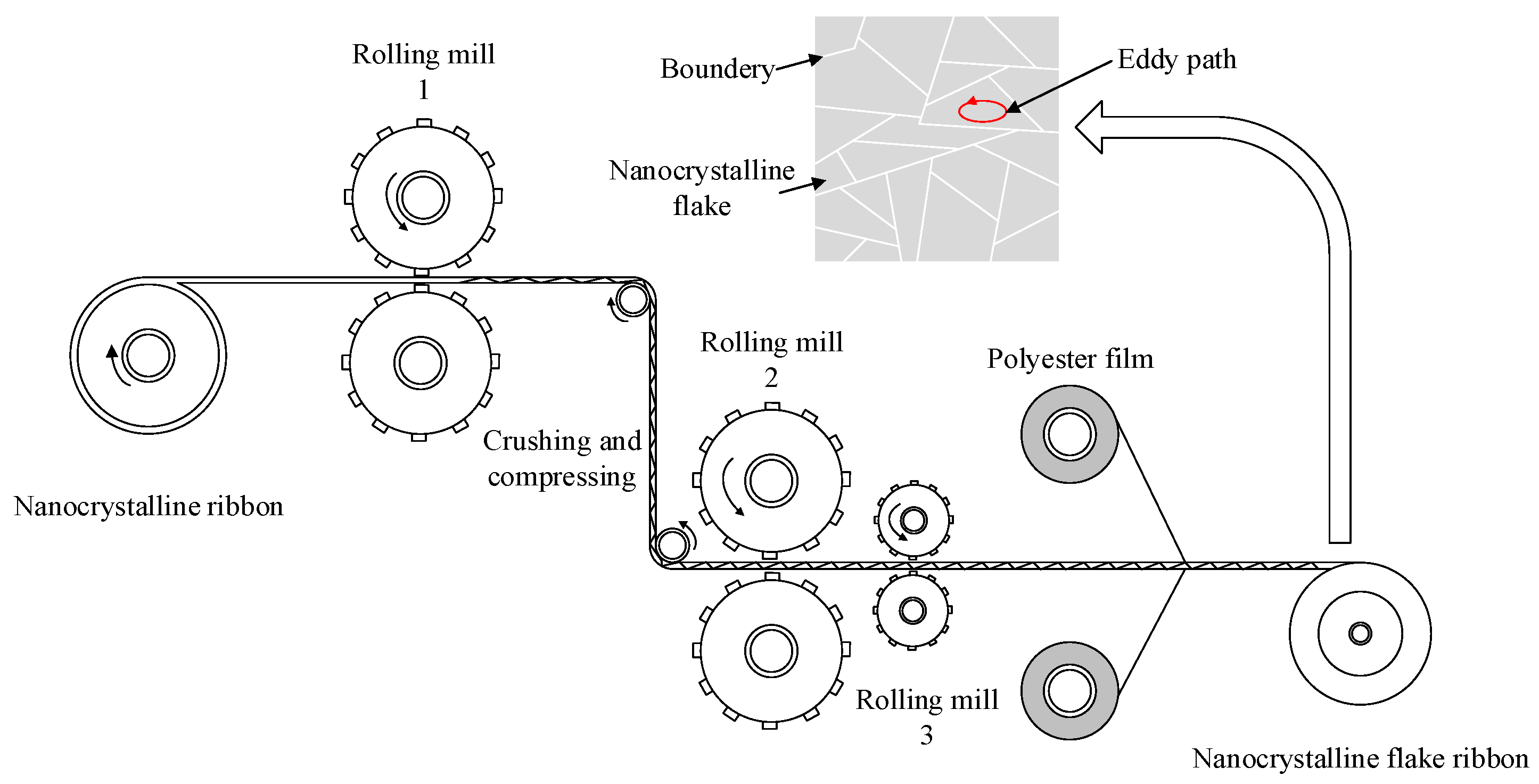
The specific manufacturing process of nanocrystalline ribbons is displayed in
Figure 2. Firstly, the nanocrystalline raw material is fed into a rolling mill. At this point, the magnetic permeability of the nanocrystalline raw material is approximately between 15,000 and 31,000. Subsequently, the material undergoes a rolling and crushing process that mechanically breaks it into smaller fragments, thereby shortening the current paths and reducing eddy-current losses. The rolled ribbon is then subjected to annealing treatment. After annealing, the thin ribbon becomes extremely brittle; therefore, a very thin layer of adhesive is applied to its surface to maintain structural integrity. Meanwhile, the final permeability of the resulting nanocrystalline ribbon can be tailored by adjusting the fragment size and the pressure applied by the rolling mill. Finally, inspection and testing are conducted to verify the accuracy of key material parameters, such as electrical conductivity and magnetic permeability.
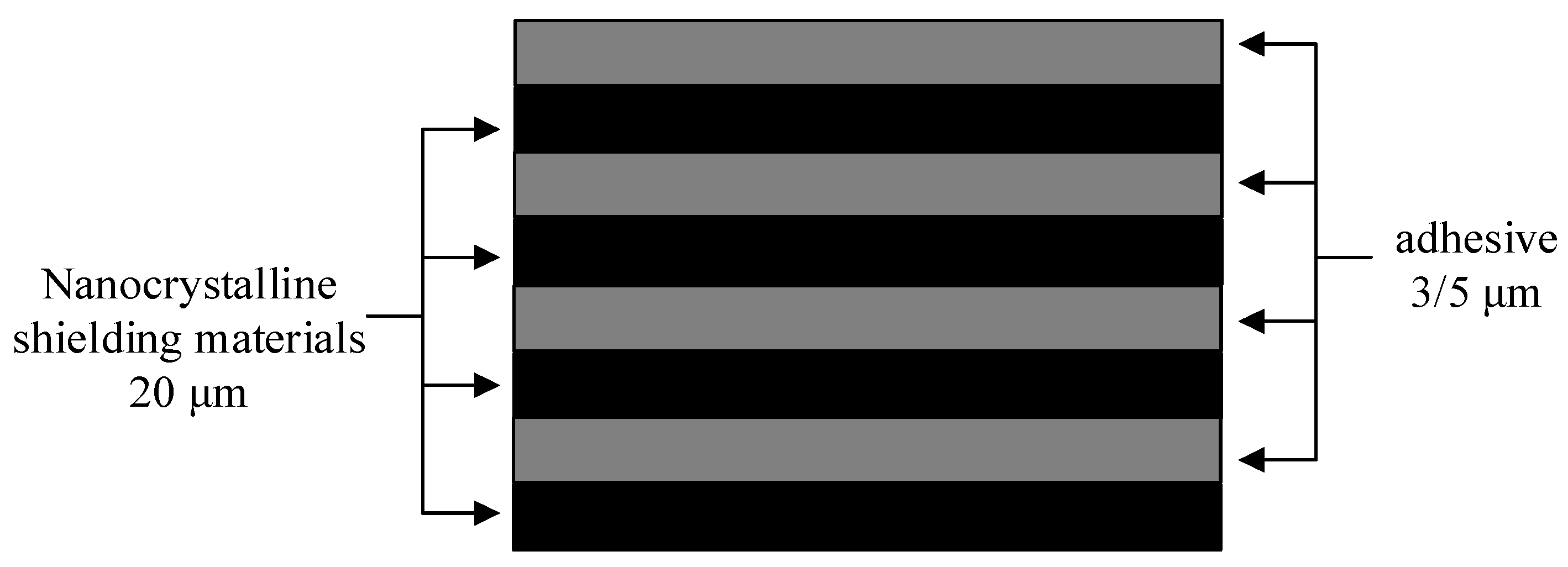
As shown in
Figure 3, each layer of the nanocrystalline shielding material in the nanocrystalline ribbon is composed of a laminated structure consisting of four 20 μm thick nanocrystalline flakes bonded with adhesive. The nanocrystalline material primarily serves three functions: (1) it provides a low-reluctance path for magnetic flux, thereby reducing the leakage flux caused by air gaps in ferrite magnetic shields; (2) the multi-layer shielding configuration enables multiple shunting and attenuation of the magnetic field, resulting in superior shielding effectiveness; (3) compared with ferrite, nanocrystalline material is lighter and thinner, allowing it to compensate for leakage flux in ferrite gaps while reducing both the thickness and weight of the composite shield and maintaining excellent shielding performance. The eddy-current loss is reduced by the fabrication procedure of the nanocrystalline flake ribbon, as displayed in
Figure 2 and
Figure 3. As illustrated in
Figure 3, the adhesive fills the gap between the ribbons, thereby preventing direct contact between adjacent ribbons and breaking the eddy-current paths into smaller loops. The thickness of nanocrystalline materials is merely 20 μm, and the lamination fabrication process results in a reduction in the effective conductivity of ribbons. Therefore, the eddy-current loss is decreased.
3. Design of Magnetic Coupler for AUV’s WPT System with Nanocrystalline Flake Ribbon
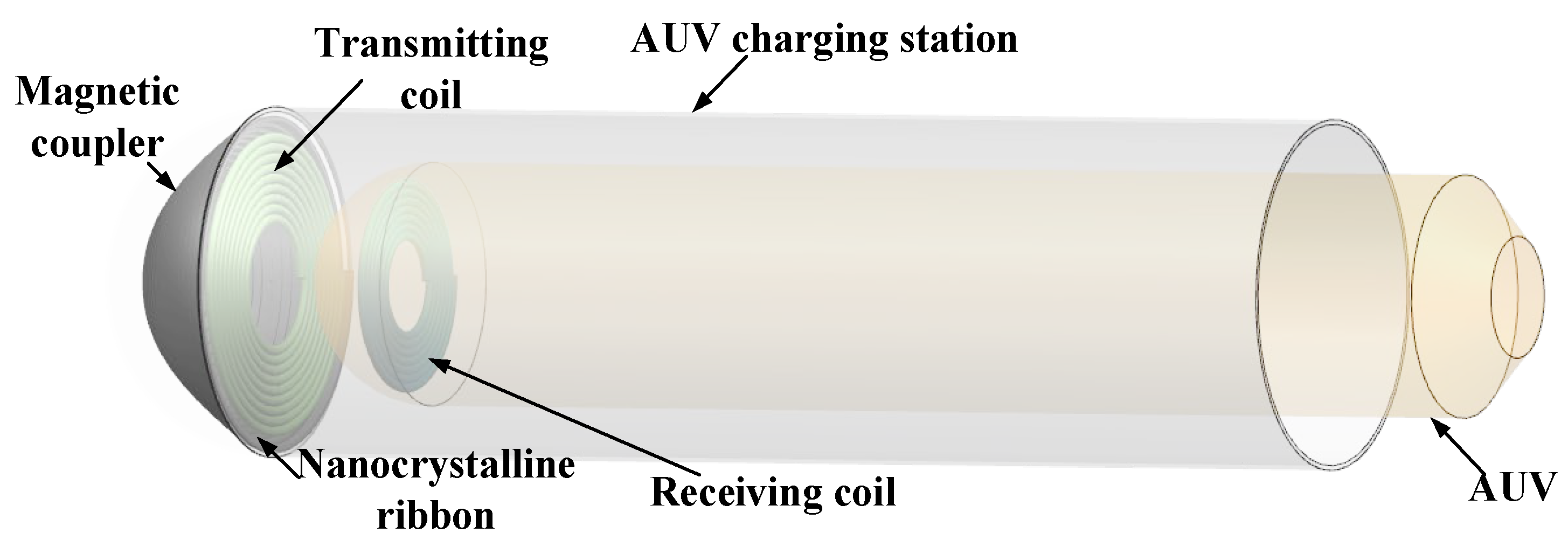
Figure 4 presents the wireless charging station of AUVs. When the AUV’s battery is about to run out, it will return to the charging station for recharging. The transmitting coil is wound inside the cone-type charging station, and the nanocrystalline flake ribbon is placed at the back of the transmitting coil. The receiving coil is installed in the front part of the AUV. The transmitting coil and receiving coil constitute the magnetic coupler. Both the transmitting coil and the receiving coil are planar circular coils. The cone-type wireless charging station enables the stability of the docking and charging process under the dynamic ocean environment. The impact and shock effect of the ocean current to a AUV can be withstood. Considering the cylindrical structure of AUVs and the cone-type charging station, the planar circular coils possess natural resistance to rotational misalignment [
28]; thus, the planar circular coils are employed as both the transmitting coil and receiving coil in this study.
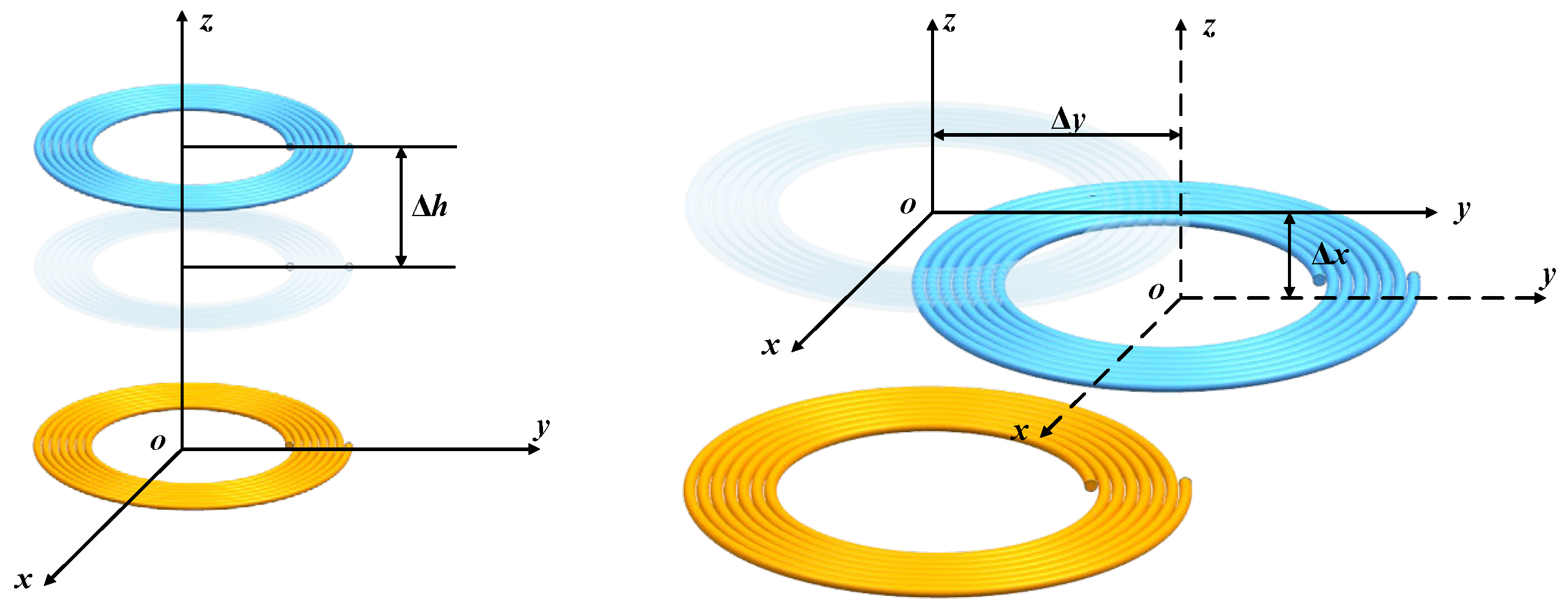
The position offsets between the transmitting coil and receiving coil are illustrated in
Figure 5. As the inherent characteristics of the anti-rotational misalignment of a circular coil, the vertical and lateral misalignments are concentrated on. The docking errors, ocean current, wave, and marine microbiological biofouling [
7] will influence the vertical and lateral displacement. In
Figure 5, the yellow circle represents the transmitting coil, and the dash area is the initial position of the receiving coil. At the same time, the present position of the receiving coil is shown as the blue circle.
Δh stands for the vertical misalignment, and
Δx and
Δy represent the lateral misalignment.
A schematic diagram of the transmitting coil with a nanocrystalline flake ribbon core is shown in
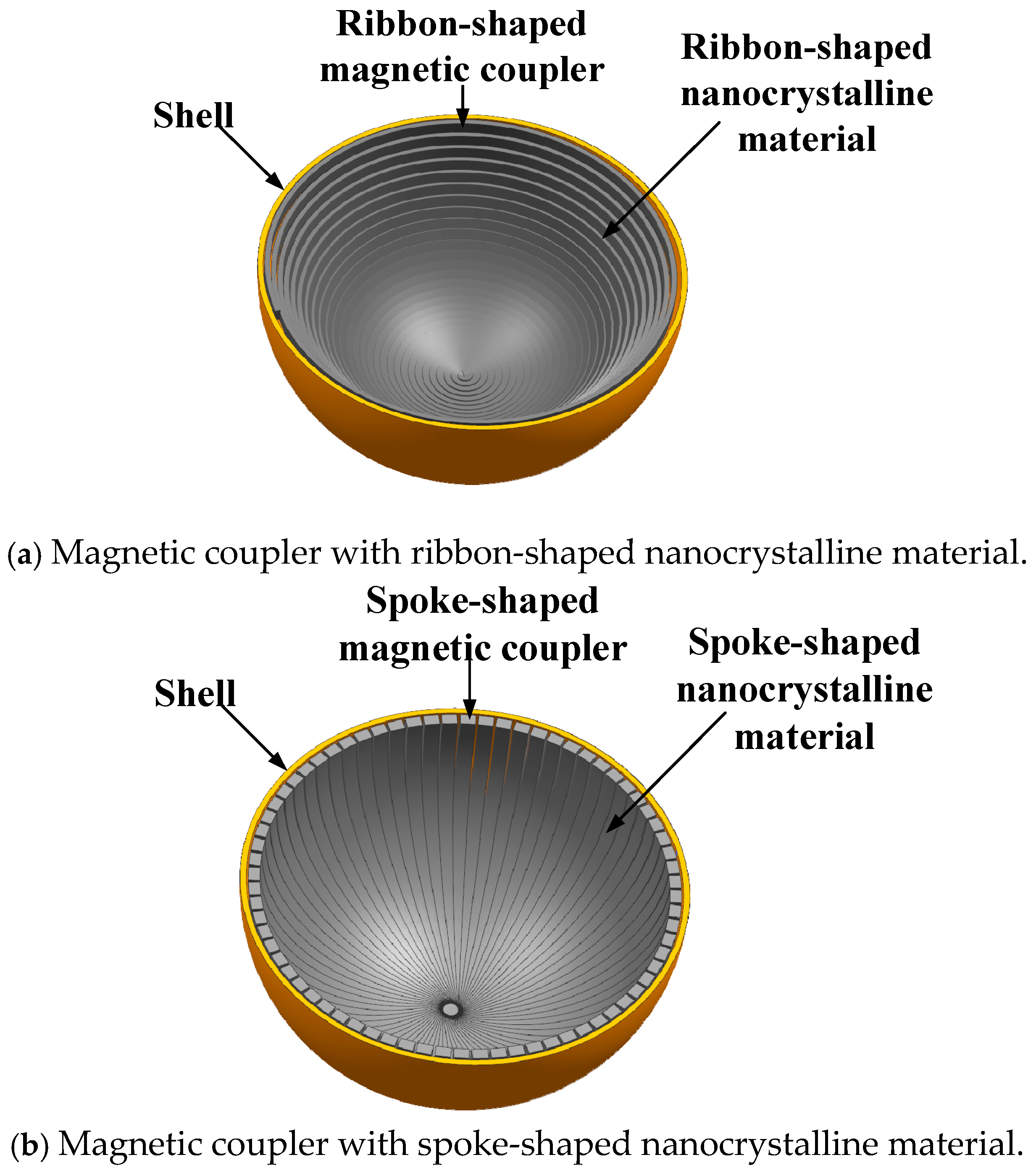
Figure 6. Due to the anisotropic properties of the nanocrystalline ribbon, the electromagnetic concentrating and shielding performance varies significantly across different directions. Consequently, it is necessary to classify the various shapes utilized for the nanocrystalline material. Two different patterns of a magnetic coupler with nanocrystalline materials are proposed and compared.
Figure 6a represents the ribbon-shaped layout of the nanocrystalline flake ribbon core. The yellow cone stands for the shell of the AUV, and the nanocrystalline flake ribbon core is wound inside the shell in a spiral. The transmitting coil is placed on the top of the AUV’s cone shell.
Figure 6b shows the spoke-shaped arrangement of the nanocrystalline flake ribbon core. In this structure, the nanocrystalline flake ribbon core is paved inside the AUV’s shell in a radial pattern from the bottom to the top. The design allows the magnetic field generated by the transmitting coil to be concentrated by the magnetic coupler, resulting in stronger mutual inductance between the transmitting coil and receiving coil, increasing the coupling coefficient of the electromagnetic coupling mechanism. In addition, the high-permeability nanocrystalline ribbon can further shield the leakage magnetic field generated by the transmitting coil, thereby preventing any adverse influence on the AUV’s internal navigation components or electronic devices. The magnetic coupler, including the transmitting coil and nanocrystalline flake ribbon cores, is protected by the shell of the AUV, which is capable of resisting high hydrostatic pressure in underwater environments. Buffer material, such as ethylene-vinyl acetate (EVA) copolymer, is placed between the shell and the nanocrystalline materials.
In order to compare the electromagnetic concentrating and shielding effects of different arrangements of nanocrystalline flake ribbon cores, a magnetic flux distribution simulation is conducted. The actual material parameters are listed in
Table 1. The COMSOL 6.0 software is utilized to achieve the magnetic flux distribution and mutual inductance of the magnetic coupler, varying with misalignments with and without nanocrystalline material. The litz coil conductor modeling is employed, and the operating frequency is set as 85 kHz. The excitation current is selected as 1 A.
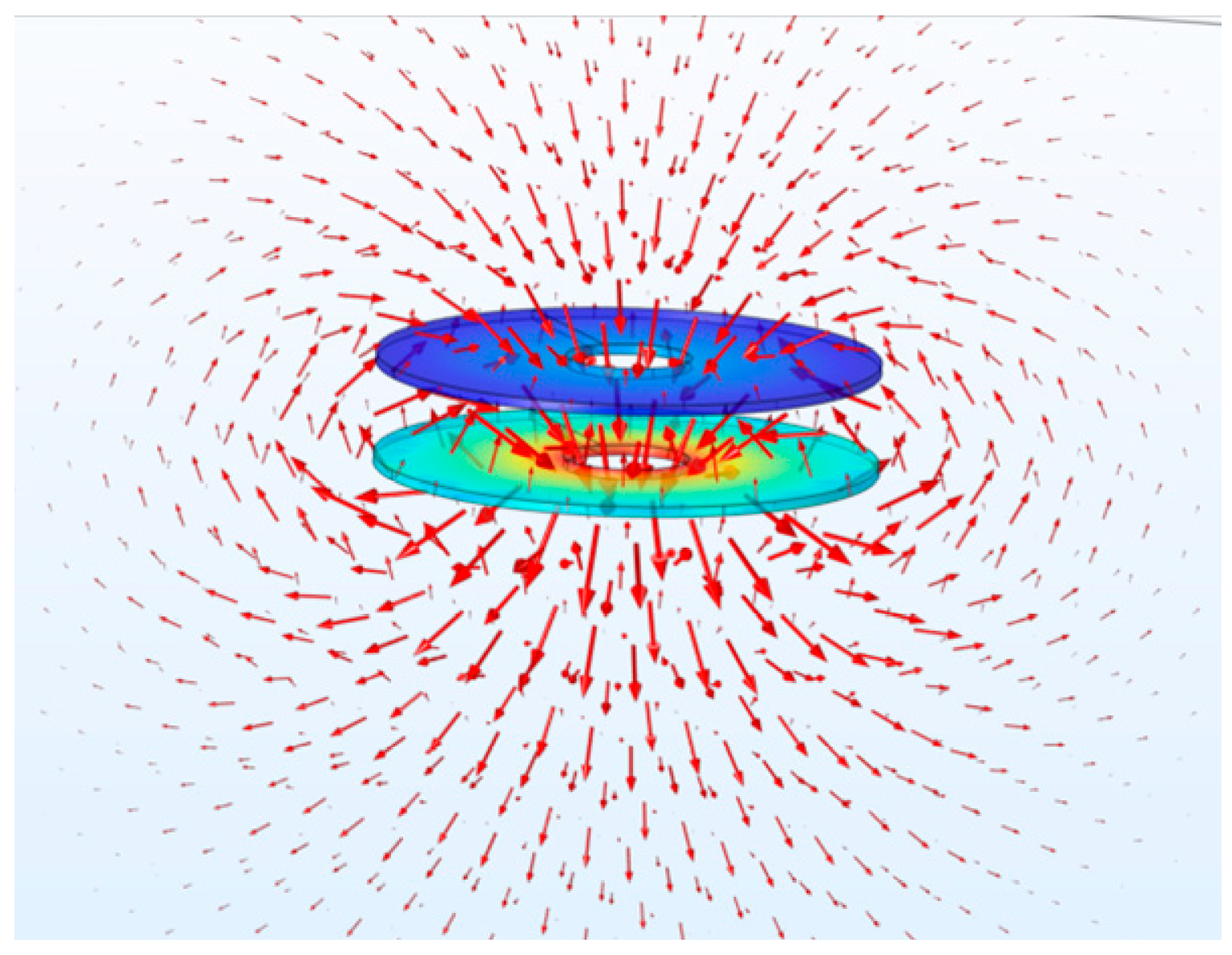
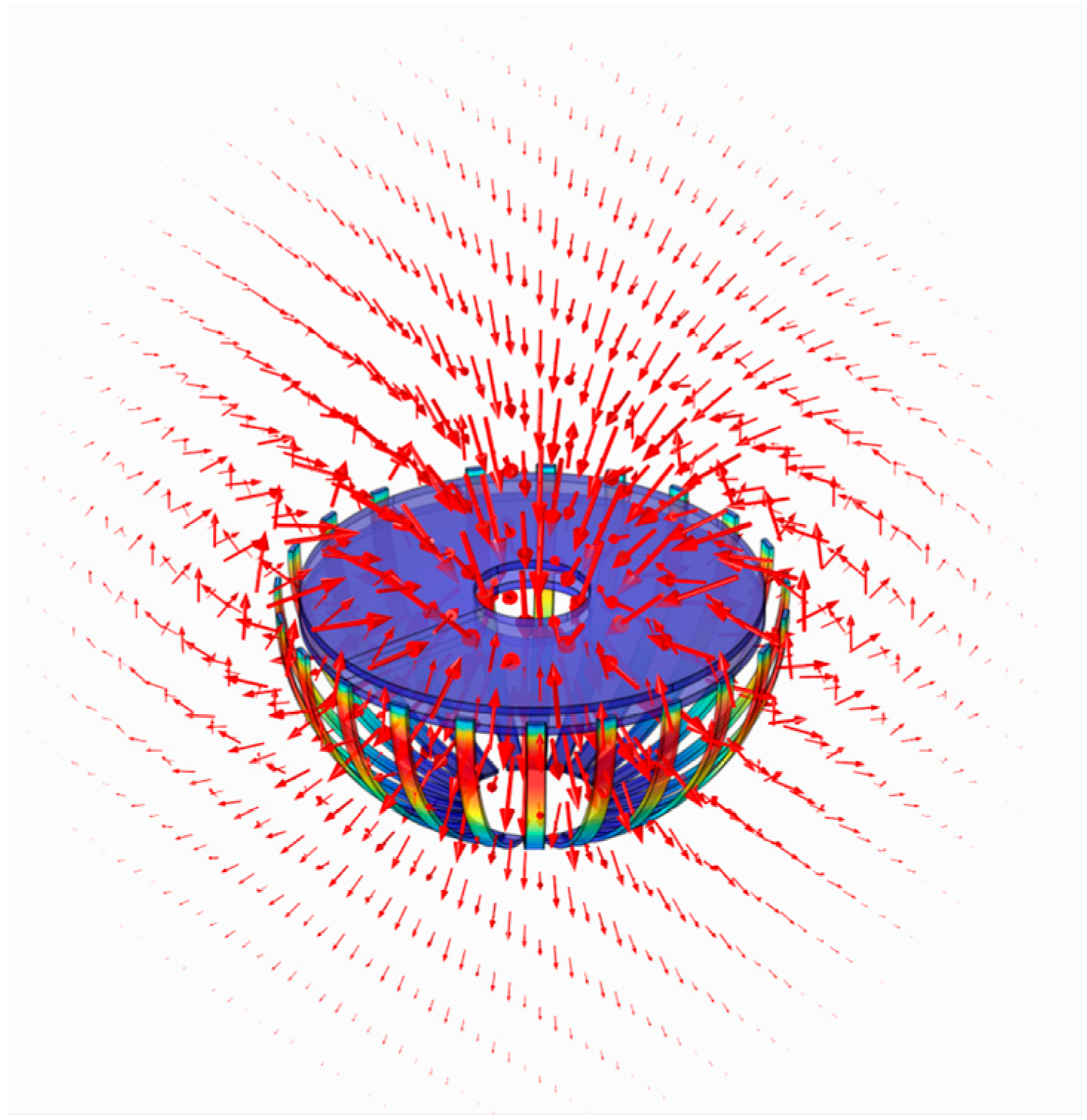
Figure 7 shows the magnetic flux density distribution of the electromagnetic coupling mechanism without the nanocrystalline material. It can be observed that, in the absence of nanocrystalline material, the magnetic flux is highly dispersed, with a substantial portion of the magnetic field flux dissipated into the air, resulting in power loss and leakage of the magnetic field. In contrast,
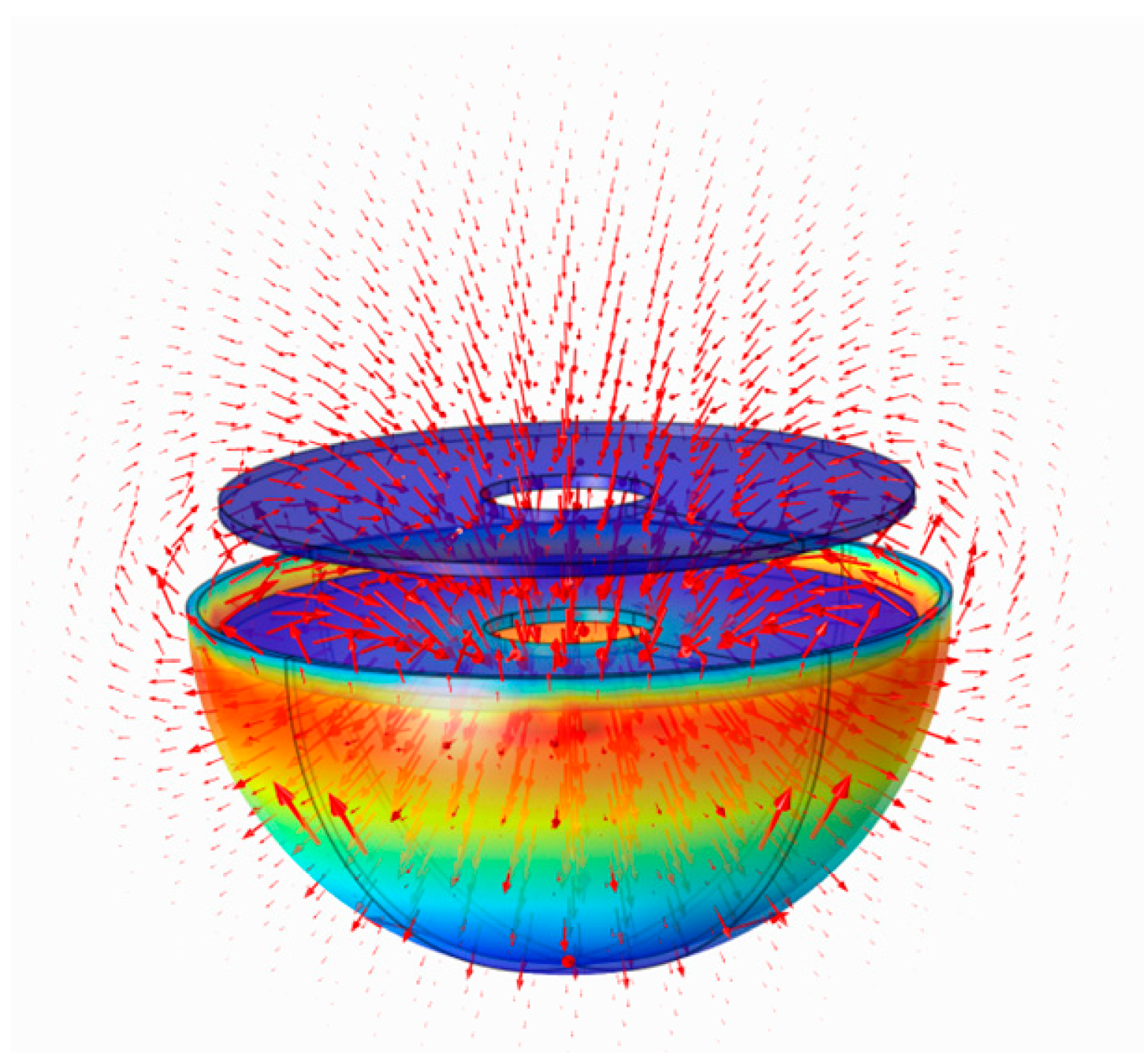
Figure 8 and
Figure 9 illustrate the magnetic flux density distribution of the magnetic coupler with the addition of a ribbon-shaped nanocrystalline material and a spoke-shaped nanocrystalline material, respectively. As shown in the figures, after incorporating the ribbon-type nanocrystalline material, the magnetic flux distribution becomes considerably more uniform, and due to the presence of the nanocrystalline material, the flux is effectively confined within the magnetic coupler interior. The exterior region of magnetic coupler is well shielded owing to the excellent electromagnetic shielding performance of the nanocrystalline material. It demonstrates that the nanocrystalline material significantly enhances the concentrating and shielding effectiveness of the magnetic coupler. However, when the spoke-type nanocrystalline material is employed, the relatively large gaps between the spokes allow a considerable portion of the magnetic field generated by the transmitting coil to leak into the surrounding air, resulting in inadequate containment of the leakage flux from the coupler. Moreover, the magnetic flux density on the spoke-type nanocrystalline material is unevenly distributed. During energized operation, the non-uniformity of magnetic flux distribution may lead to power loss in the localized area and consequent failure of the shielding function; also, the lower power transfer efficiency is inevitable.
Based on the simulation results, the magnetic coupler with ribbon-type nanocrystalline material is adopted in this study as the basis for subsequent work.
4. Simulation Verification of Magnetic Coupler with Nanocrystalline Flake Ribbon Core
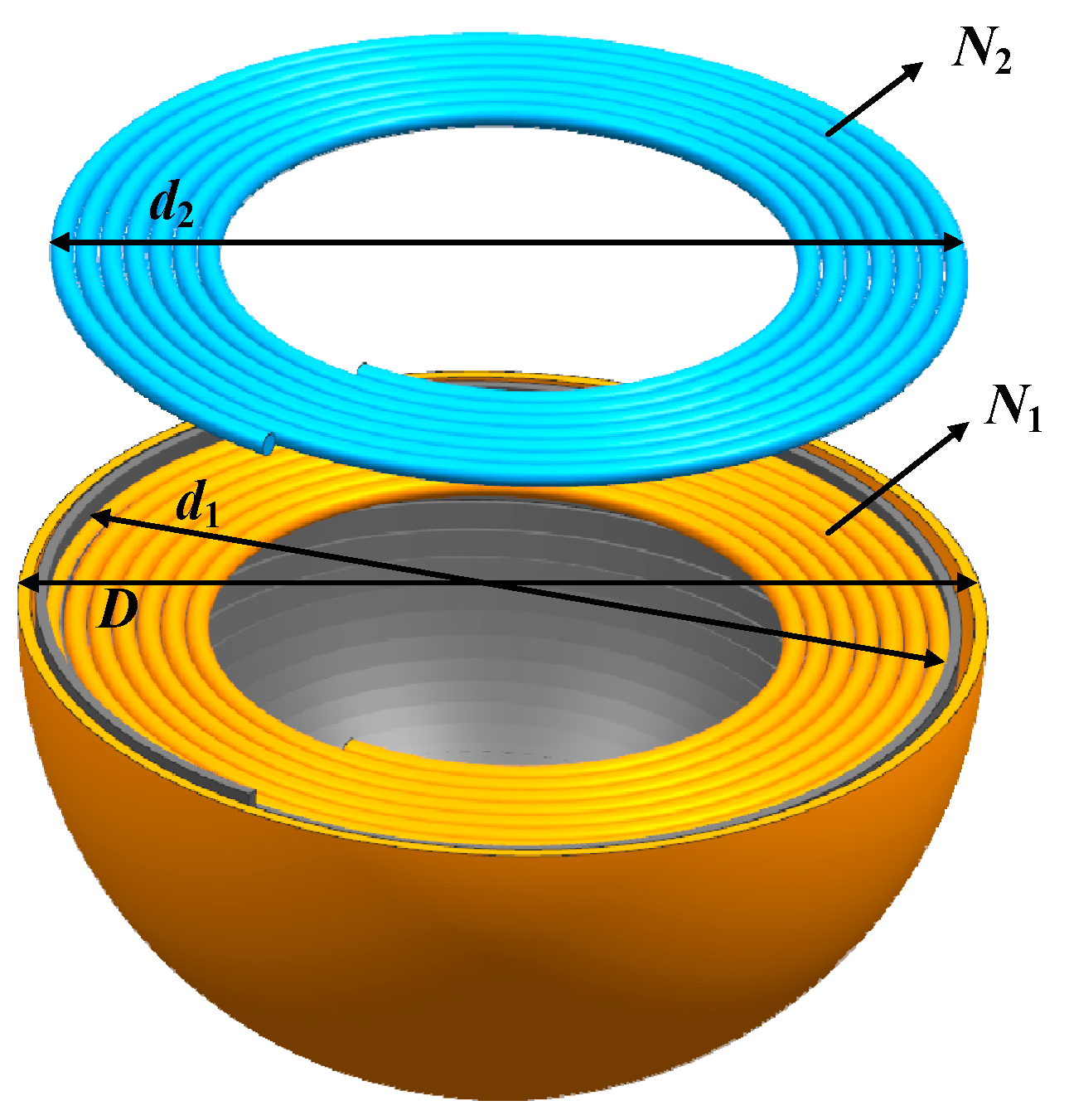
Figure 10 presents a schematic diagram of the overall assembly structure of the nanocrystalline material and the magnetic coupler. As can be seen from
Figure 10, the diameter of the AUV shell is denoted as
D, the outer diameter of the transmitting coil is
d1,
d2 is the outer diameter of the receiving coil,
N1 represents the number of turns of the transmitting coil,
N2 denotes the number of turns of the receiving coil. The specific parameters are listed in
Table 2.
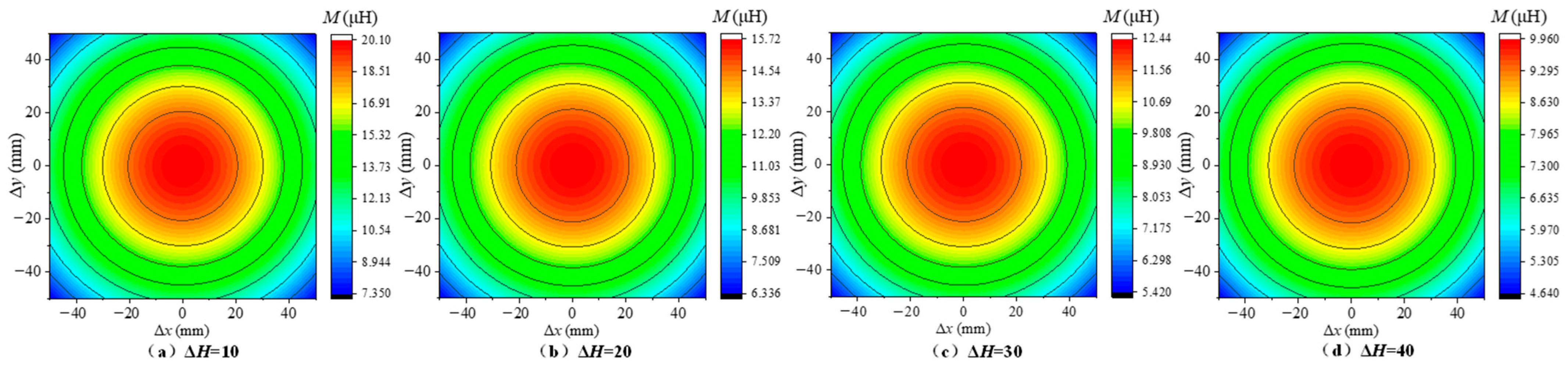
Figure 11 illustrates the variation in the mutual inductance, denoted as
M, between the transmitting coil and the receiving coil as a function of lateral misalignment (including transverse misalignment
Δx and longitudinal misalignment
Δy) under different vertical offsets
Δh in the absence of nanocrystalline material. Specifically,
Figure 11a–d, correspondingly represent the distribution of the mutual inductance of the magnetic coupler at
Δh = 10 mm, 20 mm, 30 mm, and 40 mm, respectively. The mutual inductance distribution contour maps clearly show that the mutual inductance changes with the transmission distance between the magnetic coupler.
The results in
Figure 11 show that the peak mutual inductance decreases from 20.10 μH to 9.96 μH as the power transmission distance increases. The overall distribution of the mutual inductance is relatively uniform, and the value gradually decreases as the receiving coil is displaced from the perfectly aligned position.
For the purpose of quantifying the fluctuation in mutual inductance more accurately, the mutual inductance fluctuation rate
ε between the magnetic coupler is adopted as the key parameter to evaluate the variation in the mutual inductance value. The mutual inductance fluctuation rate
ε can be expressed by Equation (1):
where
M represents the mutual inductance between the transmitting coil and the receiving coil;
denotes the maximum mutual inductance value when the transmitting coil and receiving coil are perfectly aligned with no misalignment. In other words, the vertical and lateral misalignments are 0.
corresponds to the minimum mutual inductance when the coils are at extreme positional or angular displacement. In this study, the vertical misalignment is 40 mm, and the lateral offset is
Δx =
Δy = 40 mm. When the transmission distances are 10 mm, 20 mm, 30 mm, and 40 mm, respectively, the corresponding mutual inductance fluctuation rates are 15.8%, 14.9%, 14.0%, and 13.3%.
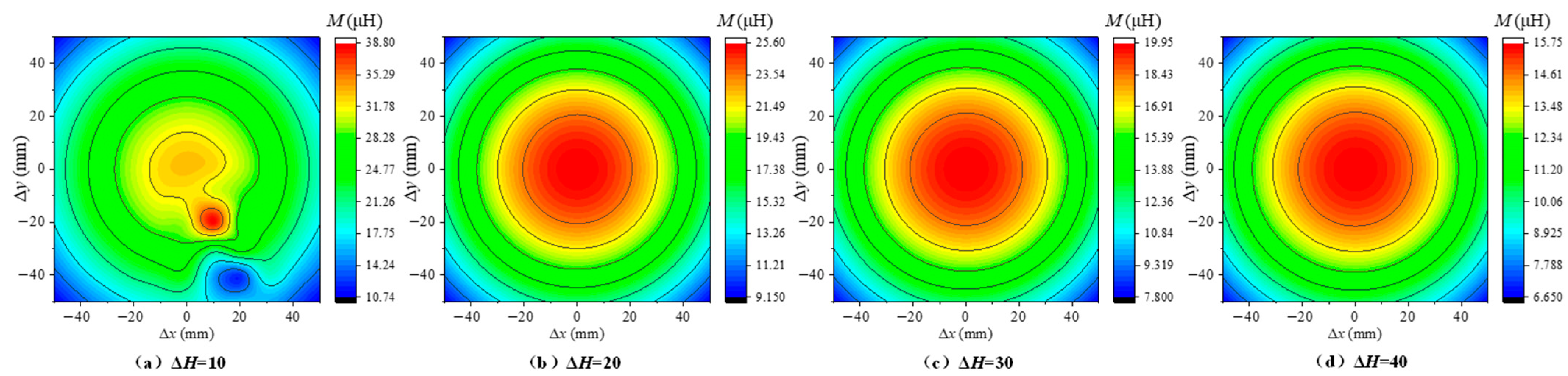
Figure 12 depicts the variation in the mutual inductance between the transmitting and receiving coils with the lateral offset under different vertical offsets
ΔH when the nanocrystalline material is added. Particularly, the mutual inductance distribution of the magnetic coupler at a distance of
Δh = 10 mm, 20 mm, 30 mm, and 40 mm is displayed in
Figure 12a,
Figure 12b,
Figure 12c and
Figure 12d, respectively.
It can be observed from
Figure 12 that the peak mutual inductance gradually decreases with an increase in transmission distance. However, compared with the magnetic coupler without the nanocrystalline material, the incorporation of the nanocrystalline flake ribbon core increases the peak mutual inductance of the magnetic coupler by 48.1%, 38.6%, 37.6%, and 36.7% at the corresponding power transmission distances, respectively. This indicates that the addition of the nanocrystalline material significantly enhances the mutual inductance of the magnetic coupler. The corresponding mutual inductance fluctuation rates are 9.0%, 8.0%, 7.6%, and 7.23%, respectively, proving that a substantial reduction in the fluctuation of mutual inductance is achieved by adding the nanocrystalline flake ribbon core. These results demonstrate that the nanocrystalline material plays a significant role in both improving the mutual inductance and reducing its sensitivity to misalignment in the magnetic coupler of the WPT system.
5. Experimental Verification
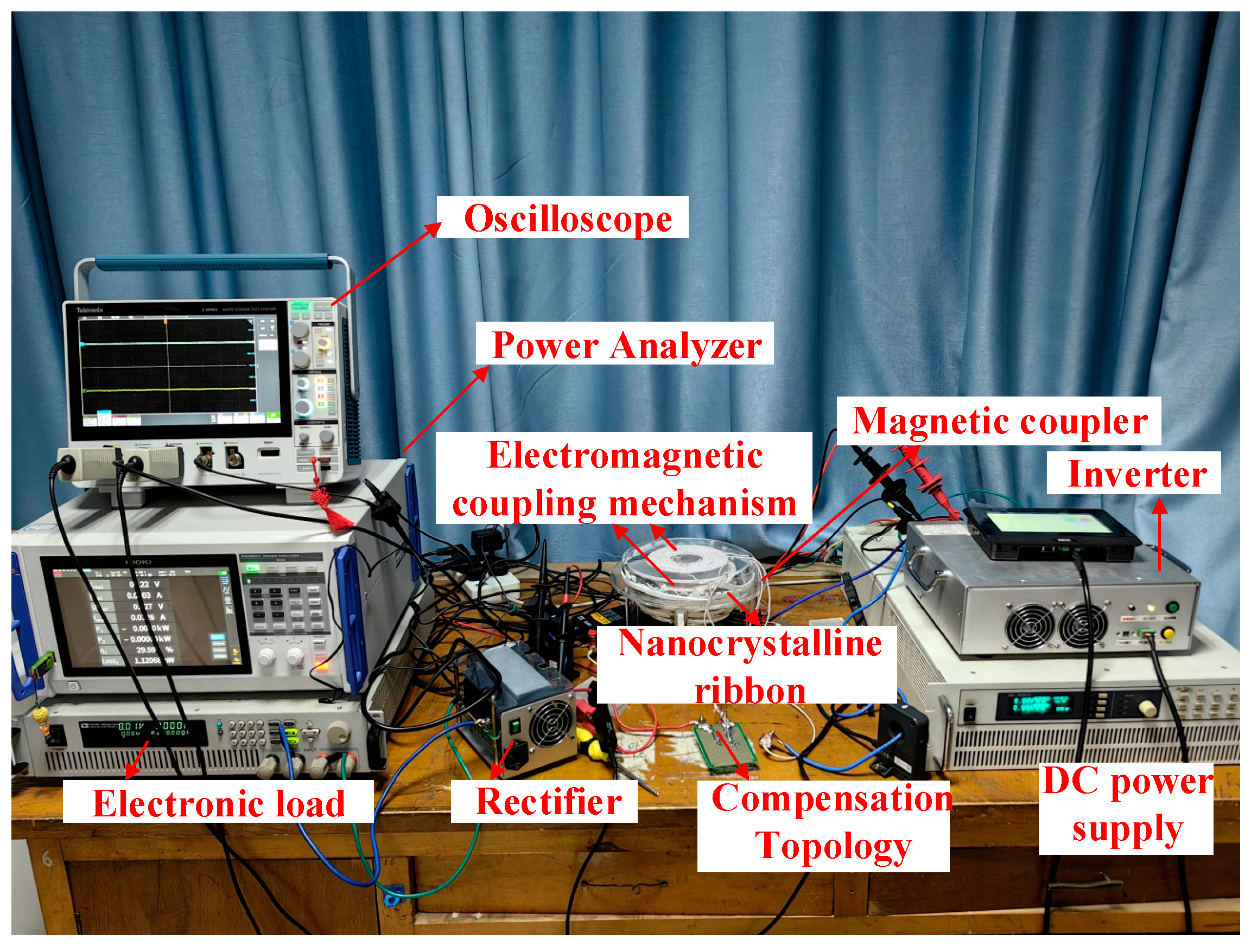
An experimental platform, as shown in
Figure 13, is established to conduct experimental validation of the proposed WPT system, incorporating the magnetic coupler with the nanocrystalline flake ribbon core. The S-S compensation topology is employed, and the high-frequency ac current is converted from DC power supply through the inverter. Accordingly, on the receiving side, a rectifier is adopted to switch the high-frequency ac current into dc current charging for the battery, and an electronic load is utilized to simulate the variations in load during the battery charging process. The LCR meter is employed to measure the self-inductance and mutual inductance of the magnetic coupler. The waveforms of input/output voltage and current are displayed and recorded in the oscilloscope. A power analyzer is used to measure the output power and power transmission efficiency of the proposed WPT system. The output characteristics of the WPT system under varying load conditions, the verification of constant current output performance, and the waveforms of input/output voltage and current, the output power, the power transmission efficiency of the WPT system with or without nanocrystalline material are experimentally verified, respectively.
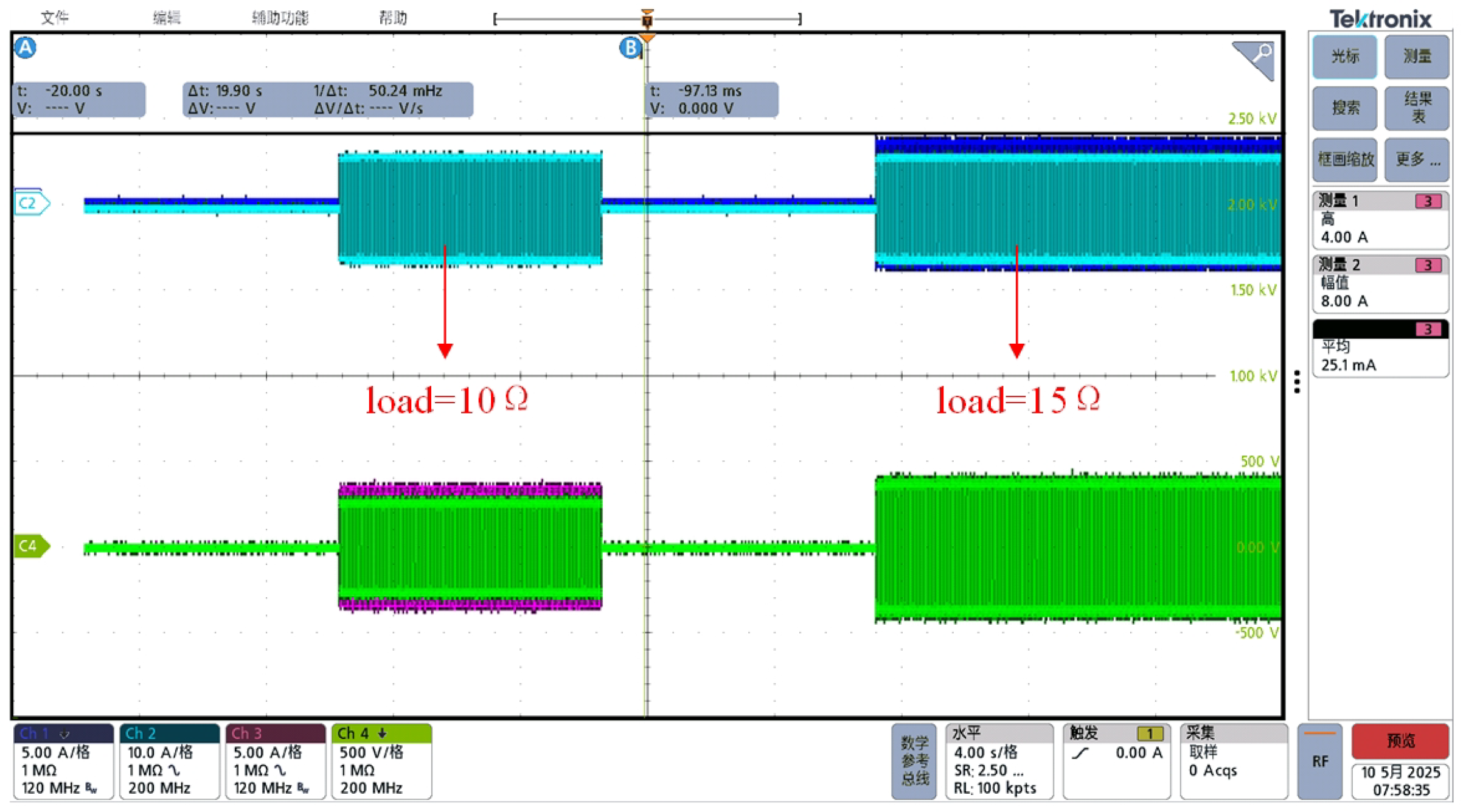
Figure 14 shows the waveforms of the WPT system equipped with the nanocrystalline material under varying load conditions. The left side presents the input and output voltage and current waveforms when the load is 10 Ω, while the right side corresponds to a load of 15 Ω. As can be observed from the figure, the system maintains good stability during the load variation process.
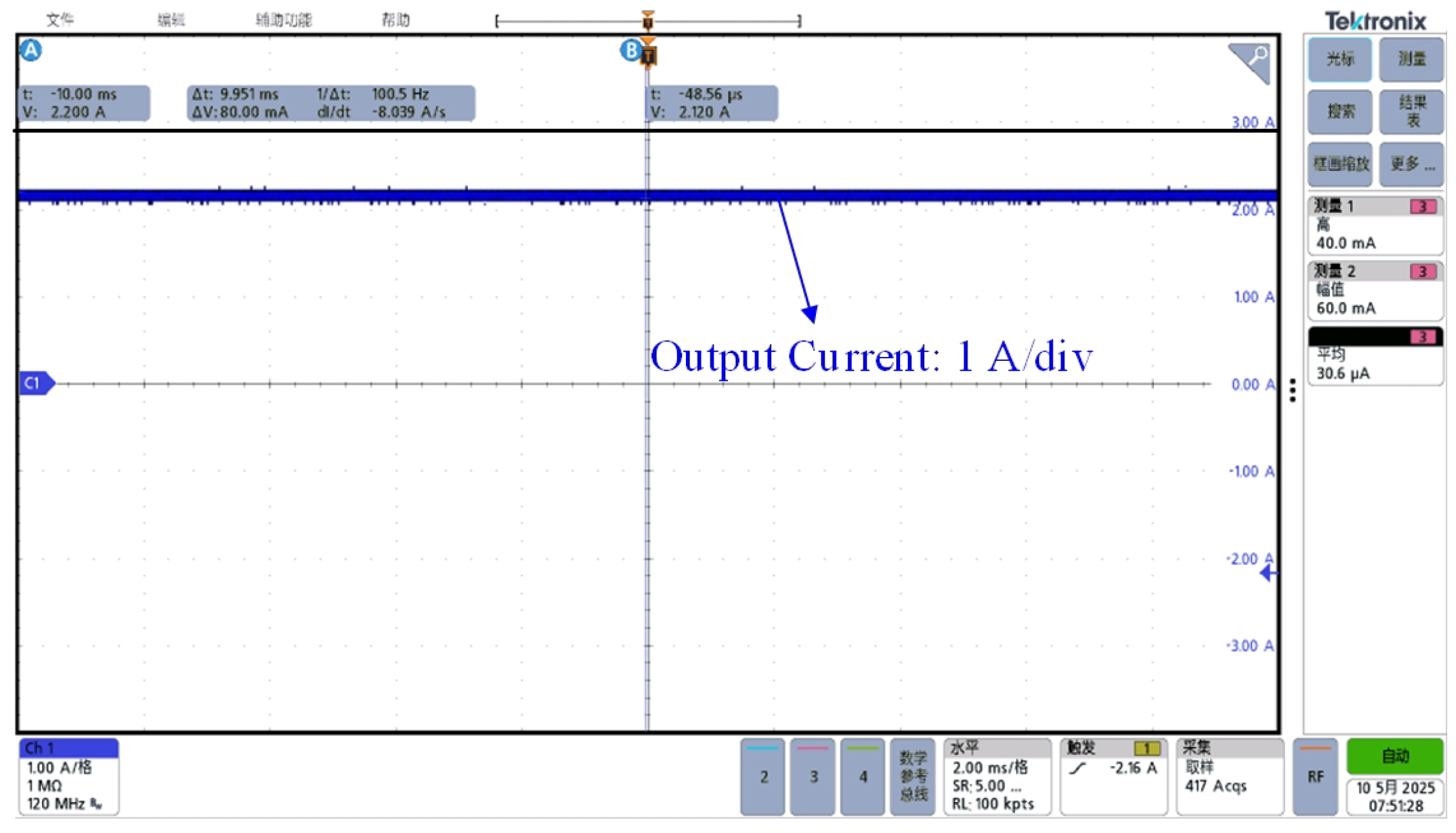
Figure 15 presents the verification waveforms of the constant-current output for the WPT system. The system employs an S-S (series-series) compensation topology and exhibits constant-current output characteristics. As shown in the figure, the output current of the system remains stable at approximately 2 A, demonstrating excellent constant-current performance.
Figure 5 illustrates the positional misalignment in the WPT system, where
Δh represents the vertical offset. During the experiment, the input voltage
Uin is maintained at a constant value. The output characteristics of the WPT system are verified both with and without the nanocrystalline material under conditions of lateral misalignment and vertical misalignment between the transmitting and receiving coils.
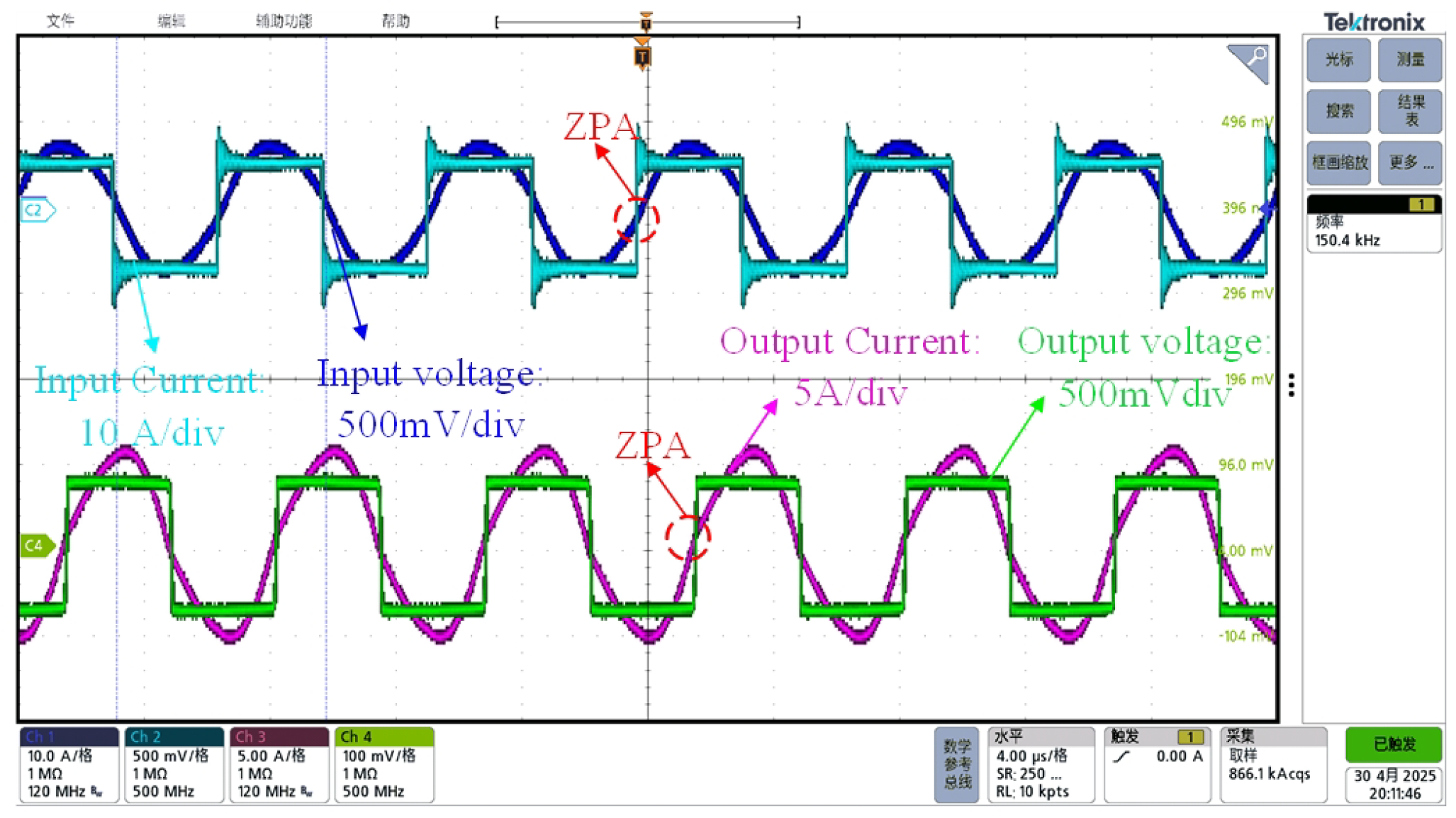
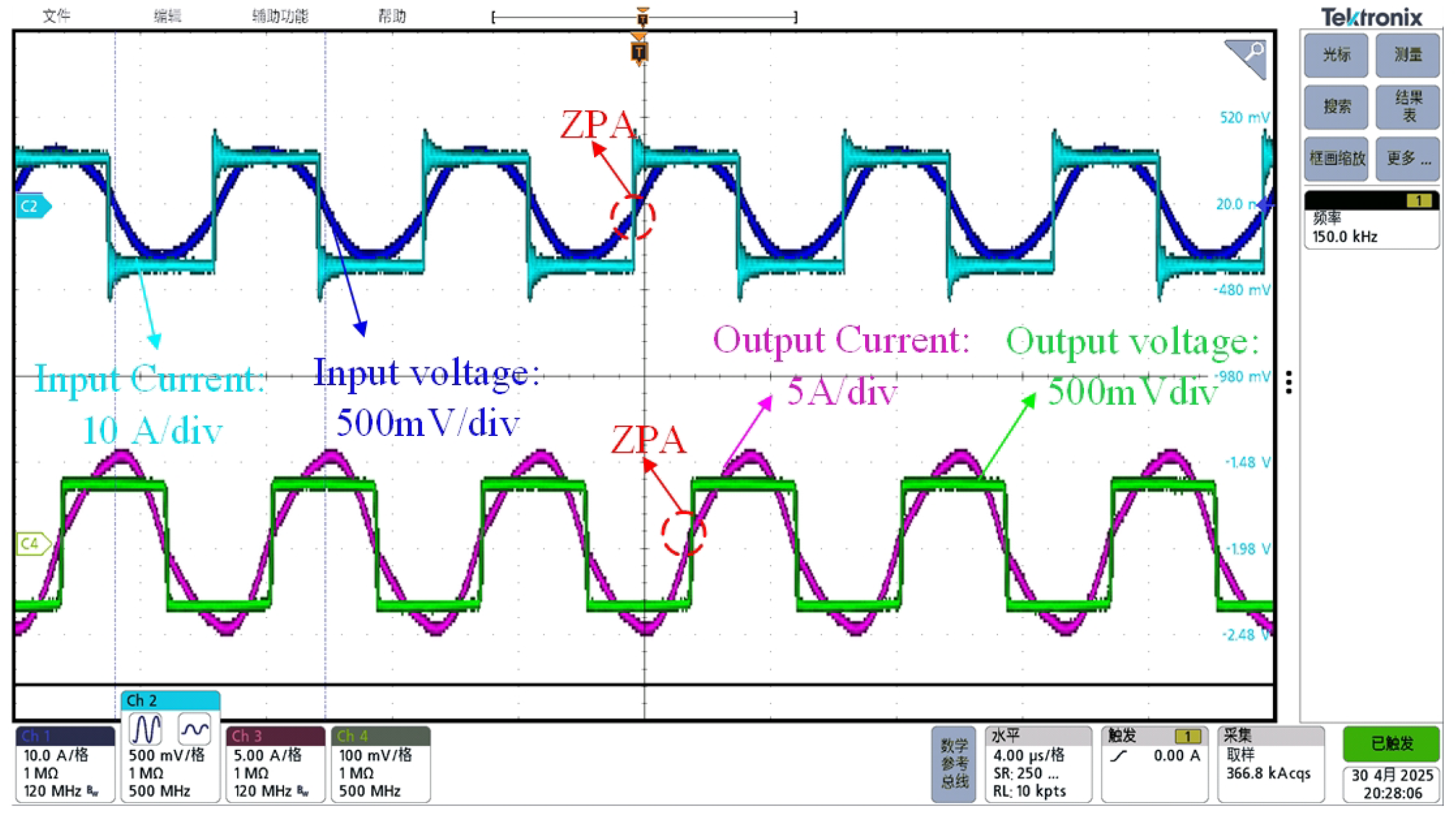
Figure 16 shows the waveforms of the input voltage and current at the transmitting side (i.e., the inverter output voltage and current) as well as the output voltage and current at the receiving side (i.e., the rectifier input voltage and current) for the WPT system with the addition of the nanocrystalline material, under a lateral misalignment of
Δx = 10 mm. As can be observed from
Figure 16, when lateral misalignment occurs between the transmitting coil and the receiving coil, the system achieves ZPA operation.
Figure 17 displays the waveforms of the input voltage and current at the transmitting side and the output voltage and current at the receiving side for the WPT system without the nanocrystalline material, also under a lateral misalignment of
Δx = 10 mm. As can be observed from
Figure 17, when lateral misalignment occurs between the transmitting coil and the receiving coil, the system is still capable of achieving ZPA operation. The output power and power transfer efficiency are analyzed in the following parts.
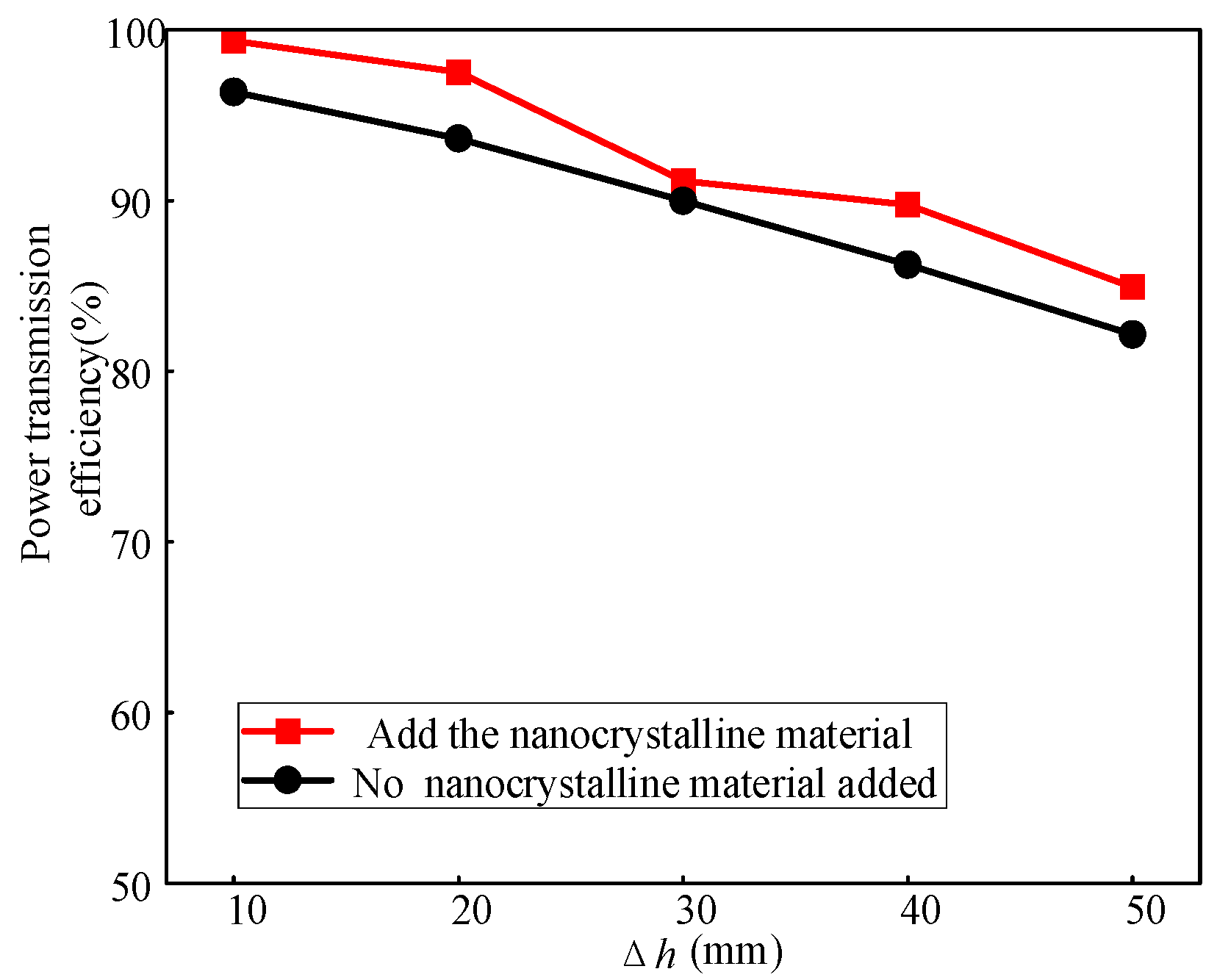
Figure 18 presents the variation in the power transfer efficiency of the magnetic coupler, denoted as the ac-ac efficiency in the WPT system with respect to vertical misalignment, both with and without the nanocrystalline material incorporated. The power transmission efficiency and output power in
Figure 18 and
Figure 19 are compared based on the power data acquired by the power analyzer.
As can be observed from
Figure 18, when the vertical (height) misalignment varies between 10 mm and 50 mm, the ac-ac efficiencies of the magnetic coupler, which is also denoted as coil-to-coil efficiencies, in the WPT system with the nanocrystalline material, reaches a maximum of 99.35% and a minimum of 84.93%. In contrast, without the nanocrystalline material, the maximum efficiency is 96.36% and the minimum is 82.16%. Compared with the case without the nanocrystalline material, the incorporation of the nanocrystalline material increases the power transfer efficiency of the magnetic coupler, with the maximum efficiency improved by 2.99%.
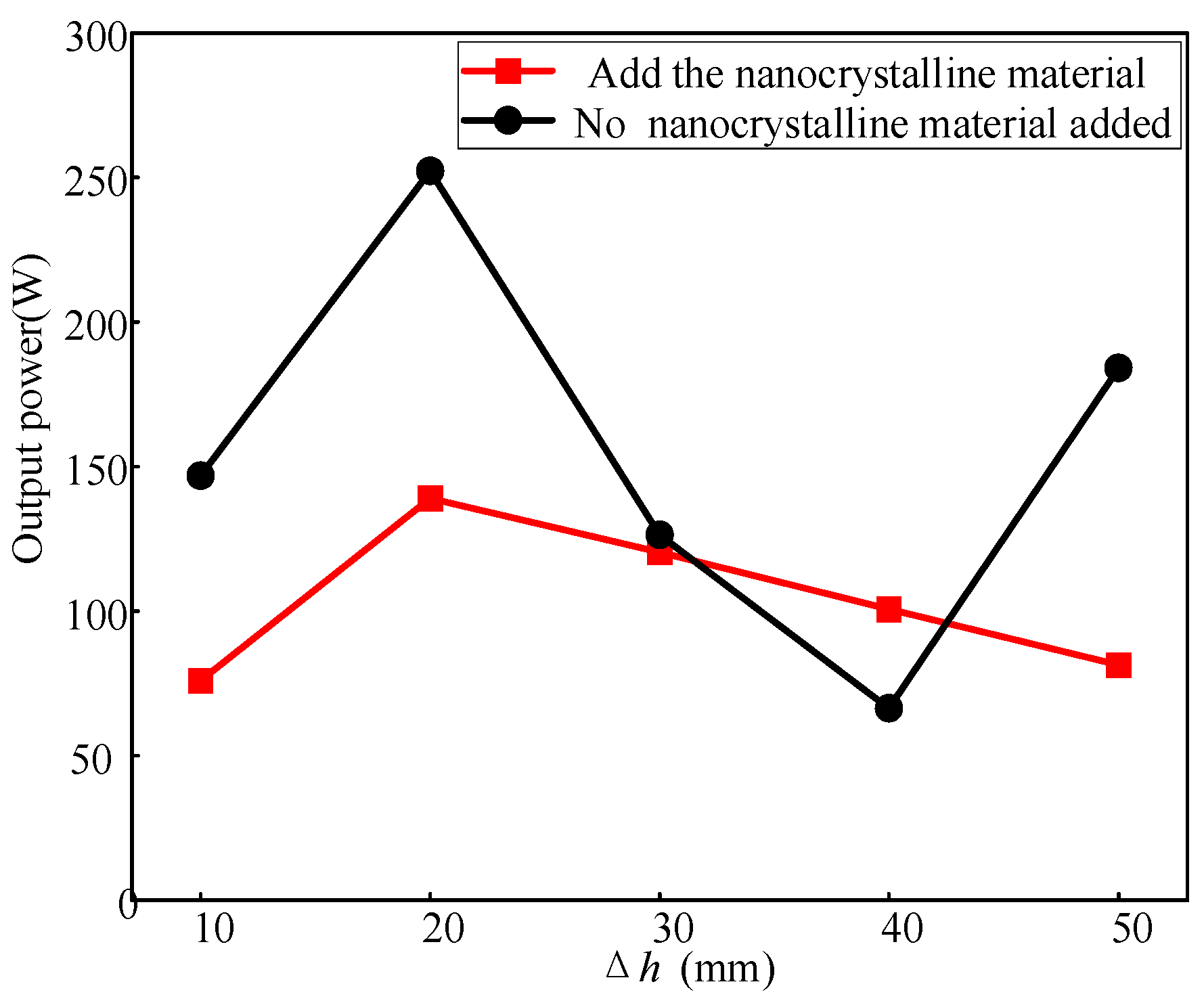
Figure 19 illustrates the variations in the output power of the WPT system as functions of vertical misalignment, both with and without the nanocrystalline material.
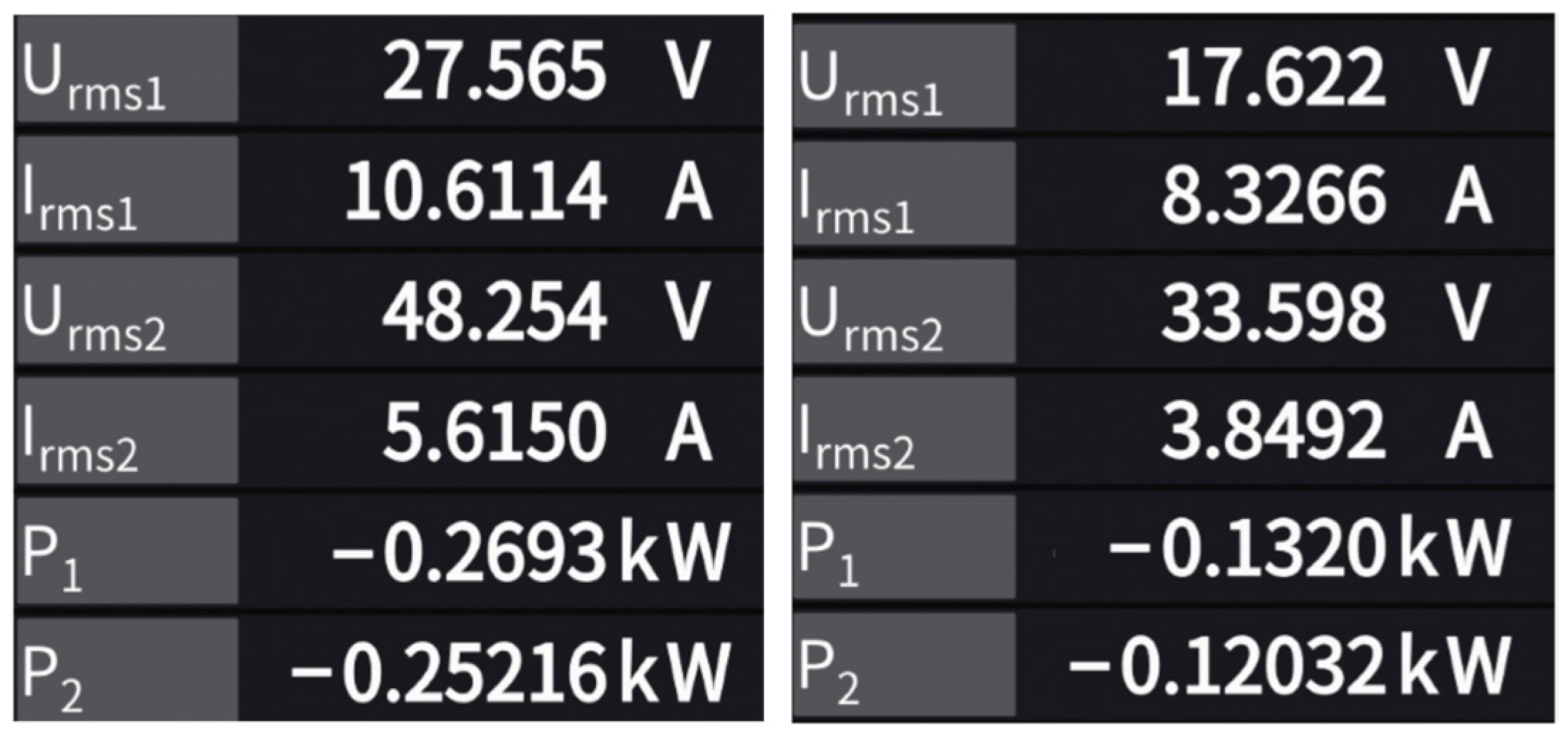
Figure 20 displays a screenshot of the power analyzer in the WPT system under the maximum power, with and without nanocrystalline material.
As can be observed from
Figure 19, when the vertical (height) misalignment varies between 10 mm and 50 mm, the maximum output power of the WPT system with the nanocrystalline material is 120.32 W, while the minimum output power is 76.23 W. In the absence of the nanocrystalline material, the maximum output power reaches 252.16 W, and the minimum is 66.36 W. Compared with the case without the magnetic shield, the incorporation of the nanocrystalline material significantly reduces the output power fluctuation rate of the system. The output power fluctuation rate without the nanocrystalline material is 74%, whereas it decreases to only 36% after adding the nanocrystalline material, substantially enhancing the stability of the output power in the WPT system.