Article

Oxygen Dynamics in a Complex Climate Change: Investigating Thermocline and Hypoxia in Lake Długie Wigierskie, Poland


1
Honghu Laboratory, College of Animal Science and Technology, Yangtze University, Jingzhou 434100, China
2
College of Fisheries, Huazhong Agricultural University, Wuhan 430070, China
3
Department of Land Improvement, Environmental Development and Spatial Management, Poznań University of Life Sciences, Piątkowska 94E, 60-649 Poznań, Poland
4
Department of Hydrology and Water Management, Adam Mickiewicz University, Krygowskiego 10, 61-680 Poznań, Poland
*
Authors to whom correspondence should be addressed.
J. Mar. Sci. Eng. 2026, 14(4), 361; https://doi.org/10.3390/jmse14040361
Submission received: 19 January 2026 / Revised: 6 February 2026 / Accepted: 11 February 2026 / Published: 13 February 2026
(This article belongs to the Special Issue Marine Ecological Ranch, Fishery Remote Sensing, and Smart Fishery)

Abstract

Complex climate change exacerbates variability in bottom oxygen availability, posing serious threats to aquatic ecosystems. This study investigates the interrelationships among meteorological, thermocline, oxycline variables, and the Kjeldahl nitrogen ratio in Lake Długie Wigierskie, Poland, using long-term monitoring data (2008–2022). Results show a decline in surface and bottom %saturation, but an increase in dissolved oxygen (DO) concentrations. Air temperature and Secchi depth primarily influenced surface oxygen dynamics, while wind speed drove bottom oxygen variability. Thermocline depth and thickness positively correlated with oxycline depth and hypoxic thickness, revealing that stable stratification restricts vertical mixing and shapes oxygen distribution. Air temperature significantly affected Schmidt Stability (SS), with warmer periods promoting stronger stratification, greater hypoxic thickness, and lower hypolimnetic oxygen minimum (HOM). Interestingly, DO levels and their variability showed significant correlation with the Kjeldahl nitrogen ratio (TKN/TN), suggesting that oxygen fluctuations may influence nitrogen cycling more strongly than average DO concentrations. These findings imply that warming may worsen bottom hypoxia by elevating respiration rates, thereby altering organic nitrogen mineralization. Overall, the study highlights the need for effective management strategies to alleviate hypoxia and protect water quality in deep lakes under climate change.

1. Introduction

Oxygen levels play a crucial role in assessing water quality changes. Hypoxia, characterized by low dissolved oxygen (DO) levels, poses significant ecological threats to freshwater ecosystems [1]. The widespread occurrence of hypoxic zones, often referred to as “dead zones,” underscores the urgency of addressing this environmental crisis. In limnology, the changing availability of oxygen in lakes presents fundamental challenges with cascading effects on freshwater ecosystem functioning [2]. Numerous lakes are experiencing diminishing oxygen availability in both surface and bottom waters [3]. Increased air temperatures and nutrient runoff from human activities can elevate phytoplankton biomass and surface DO levels; however, this is often accompanied by reduced transparency, increased water column stability, shallower oxycline depths, and lower bottom DO concentrations [4,5]. Understanding the drivers of hypoxia is essential for developing effective management strategies and restoring aquatic ecosystems’ health.
Water column stratification is a fundamental process in many deep lakes, influencing the dynamics of oxygen [6]. Stratification occurs as layers of water with varying temperatures and densities establish a thermocline, which acts as a barrier to vertical mixing—crucial for oxygenating bottom waters and redistributing nutrients [7]. Consequently, this spatial separation exacerbates hypoxic conditions in bottom water. In stratified systems, the upper layer, typically rich in oxygen due to atmospheric interaction, can become isolated from deeper layers, leading to reduced oxygen levels and nutrient depletion [8]. Therefore, temperature and oxygen concentration profiles are among the most commonly measured parameters in stratified lakes.
Climate change greatly influences thermocline stability. Rising temperatures can enhance thermal stratification, reinforce the stability of water column and limit vertical mixing [9]. Global atmospheric stilling in recent decades has led to the diminished wind speeds and a more stable water column, especially at mid and low latitudes [10]. Furthermore, shifts in rainfall patterns may alter freshwater inputs, impacting density gradients [11]. Additionally, climate change exacerbates DO deficit by increasing respiration while decreasing oxygen solubility [11]. Previous studies have shown a significant increase in air temperature and the disappearance of ice in most temperate lakes [12,13,14,15]. This warming further exacerbates the DO deficit at the bottom by prolonging the duration of stratification [6]. In addition to a general increasing trend in air temperature, an increase in the frequency and intensity of extreme heat events, will influence the oxygen variability [16]. However, such noncyclic extreme warming events and their potential consequence on organic nitrogen mineralization under hypoxia fluctuations conditions could not be identified until now. Therefore, understanding the interplay between thermocline stratification, oxygen levels, and climate change is imperative, particularly as future climate scenarios introduce additional complexities.
This study investigates monthly temperature, oxygen concentration and saturation levels in profiles, along with meteorological and environmental variables, in a seasonally stratified lake in Poland over a 14-year period. We focus on the close relationships between meteorological factors, thermocline, and oxycline structure. The primary objectives of this study are to (1) understand the underlying mechanism about how water stability influences oxygen distribution and bottom hypoxia under complex climate change; and (2) their potential consequence on organic nitrogen mineralization under hypoxia fluctuation conditions. Here we calculated the oxycline depth, the oxygen concentration and %saturation at various depths, the hypolimnetic oxygen minimum (HOM), the hypoxic thickness and the Kjeldahl nitrogen ratio (TKN/TN). We hypothesize that warming temperatures are a key factor contributing to the decline of HOM concentrations due to stronger thermoclines, which enhance water column stability, resulting in shallower oxyclines, thicker anoxic layers, and lower %saturation. The results of our study could provide valuable insights for hydrodynamic models predicting future DO availability in lakes across varying climate change scenarios.

2. Materials and Methods

2.1. Study Sites

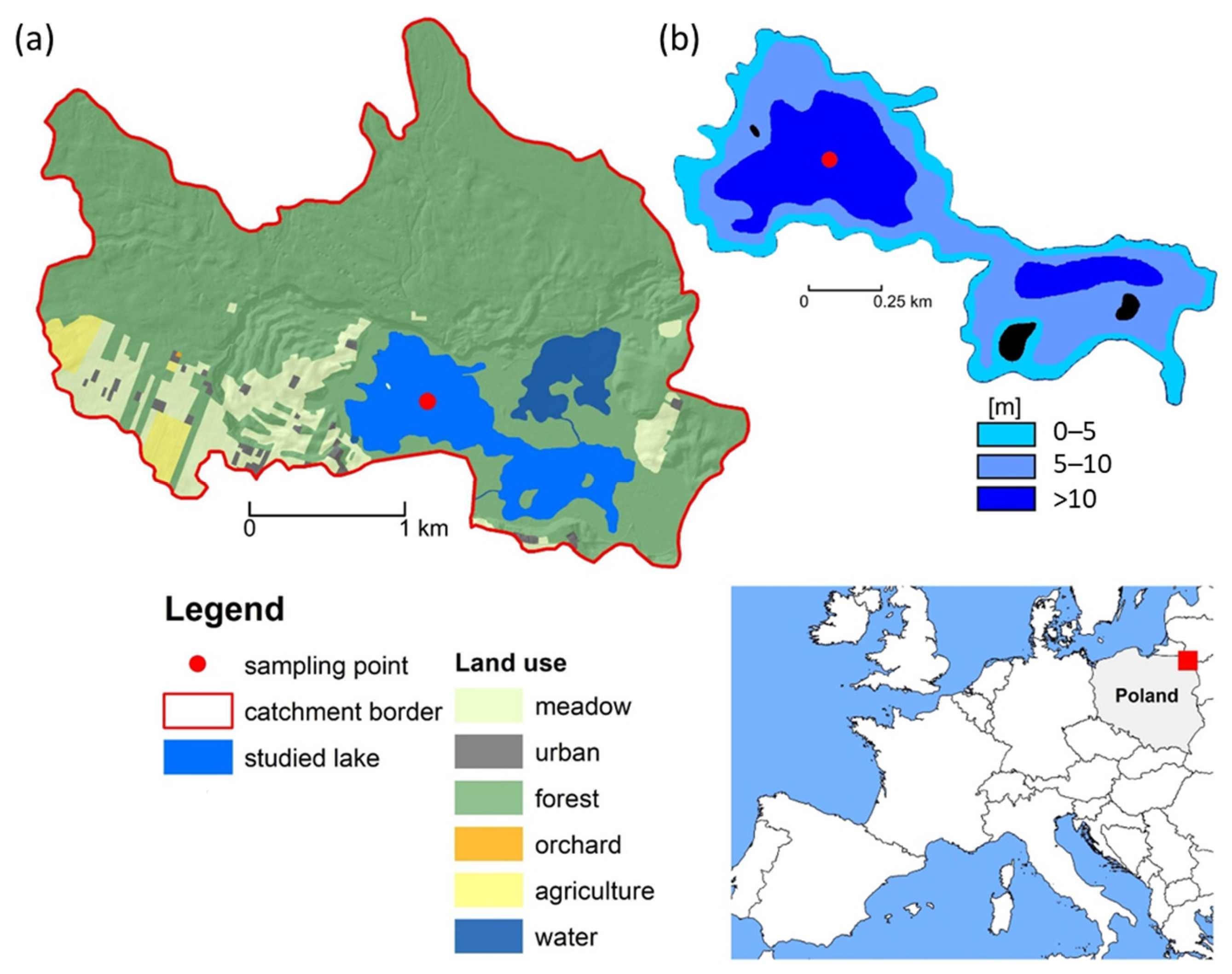
Lake Długie Wigierskie (54°01′17 N, 23°02′03 E) is located in Wigry National Park in northeastern Poland. The lake has a surface area of 0.8 km2 and a catchment area of 8.8 km2, predominantly characterized by forests (75%) (Figure 1). The lake experiences thermal stratification during summer, with a maximum depth of 14.8 m and an average depth of 6.4 m. In winter the lake is covered with ice, which typically disappears between February and March, though it occasionally persists until April.
Lake Długie Wigierskie is part of the national monitoring network of benchmark lakes under strict nature conservation protection. Its ecological status is classified as good, with total phosphorus levels below 0.060 mg dm−3, chlorophyll a concentration at 10 μg dm−3, and a Secchi depth exceeding 2.5 m. These assessments are based on data obtained from the Inspectorate of Environmental Protection as part of the National Environmental Monitoring program.

2.2. Data Collection

Sampling was conducted at the deepest point (14.8 m) in the northwestern part of Lake Długie Wigierskie (see Figure 1). Monthly field measurements were performed during the ice-free period from 2008 to 2022, following established guidelines. Due to missing temperature and DO data in 2018, a total of 85 water samples were collected and analyzed throughout the study.
Vertical profiles of temperature and dissolved oxygen were measured at 1 m intervals using a multiparameter probe (EXO, YSI, USA). These continuous measurements enabled the determination of thermal and oxygen stratification within the water column. DO saturation levels were calculated from mg L−1 to percentage saturation using standard equations correcting for temperature-dependent oxygen solubility with respect to atmospheric concentrations [17].
Surface water samples were also analyzed for Kjeldahl nitrogen (TKN) and total nitrogen (TN). The TKN/TN ratio was calculated to indicate the efficiency of organic nitrogen conversion, where a higher ratio suggests increased mineralization and microbial activity [18].
Thermocline parameters—including depth, thickness, strength (TS), and Schmidt Stability (SS), were calculated using the ‘rLakeAnalyzer’ package in R v4.1.0 [19]. The SS index is a key indicator of lake’s thermal stratification [20]. Thermocline depth and thickness describe the structure of the thermocline, while oxycline depth and hypoxic thickness (defined as the vertical extent of DO concentration below 2 mg L−1; [21,22,23]) were used to characterize oxygen stratification. Hypolimnetic oxygen minimum (HOM) was defined as the minimum DO concentration within the top 14 m of the lake. A detailed description of these parameters is provided in Figure S1, using 2010 data as an example. Due to relatively uniform vertical profiles, mean temperature, oxygen concentration, and saturation were calculated separately for the epilimnion, metalimnion, and hypolimnion layers.
Daily air temperature data from 2008 to 2022 were obtained from the Institute of Meteorology and Water Management—National Research Institute (IMWM-NRI) station in Suwałki, located approximately 12 km from the lake. Unfortunately, wind speed, rainfall, and sunshine data were not available for this site.
Initial attempts to analyze ice cover dynamics using LANDSAT satellite imagery were hindered by frequent cloud cover and revisit intervals, limiting temporal resolution. Consequently, in situ ice phenology data from the nearby Lake Wigry (approximately 200 m away) were obtained from IMWM-NRI. Historically, Lake Długie Wigierskie and Lake Wigry were a single water body until separation by overgrowth [24]. Although Lake Wigry is larger and deeper, its ice phenology data provide valuable regional insights. This dataset includes ice cover duration and termination dates for each season (see Table S1).

2.3. Statistical Analysis

We assessed the temporal trends in temperature and DO parameters and their variability. The variance associated with noncyclic patterns (variables fluctuations remaining after subtracting the 7 month moving average and the annual cycle) were calculated following the methodology outlined by Niedrist et al. (2018) [16]. Nonparametric Sen’s slope trends were employed to evaluate the significance of trends in time series data using the “openair” package in R. The nonparametric Mann–Kendall (M-K) test was utilized to detect significant abrupt changes [25,26]. Subsequently, we applied smoothed curve fitting and piecewise linear fitting to illustrate trends in seasonal and annual changes based on the change point year.
Correlation analysis was frequently conducted to examine the relationship between a dependent variable and an independent variable. Data from 2008 to 2022 were analyzed to investigate Spearmon correlation among meteorological variables (variability), thermocline (variability), and oxycline parameters (variability). Then linear regression analysis was performed to identify the significant relationships between thermocline and oxycline parameters during various stratification stages.
Finally, Structural Equation Modeling (SEM) was extensively utilized to elucidate the relationships among independent (predictor) variables and their effects on dependent variables. Three SEMs were conducted to compare the relative influences of SS on oxycline parameters during different stratification periods. Principal Coordinates Analysis (PCoA) was utilized to resolve collinearity and generate the first axis scores for DO at various depths (DOAxis1) and %saturation at various depths (SaturationAxis1). Results were deemed significant if p < 0.05. The random forest method was then employed to comprehensively assess the relative importances of oxycline parameters and their variability on TKN/TN.

3. Results

3.1. Correlations Among Meteorological, Thermocline, Oxycline Parameters and Their Variability

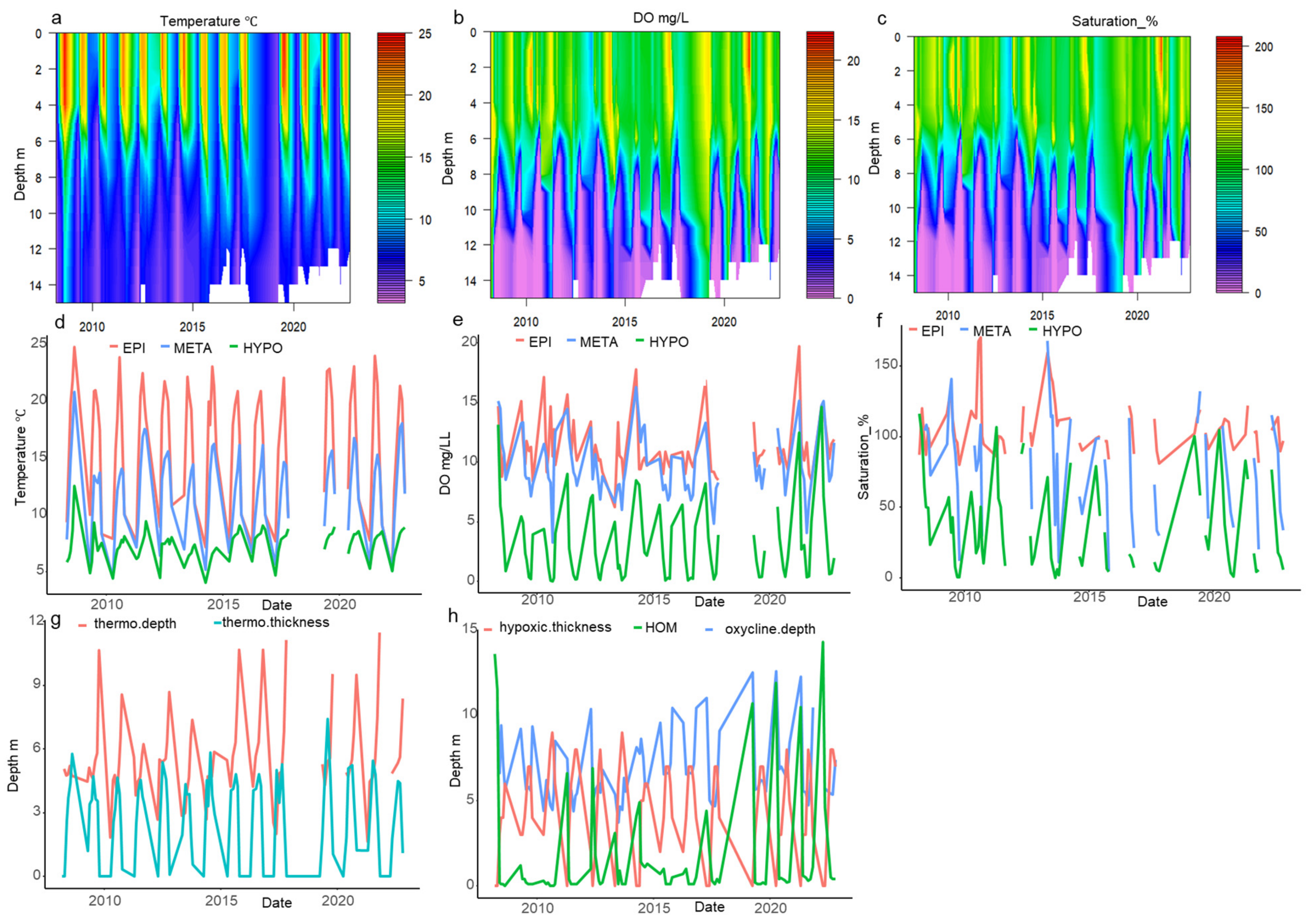
Figure 2 illustrates the vertical distribution of temperature (Figure 2a), oxygen concentrations (DO) (Figure 2b), and saturation levels (%saturation) (Figure 2c), showcasing their uneven profiles. Notably, a persistent phenomenon of hypolimnetic hypoxia has been observed over the years. Sen’s slope analysis revealed a statistically significant decreasing trend in wind speed and a significant decrease in %saturation within the metalimnion (Table 1; Figure 2d–f). Other parameters exhibited non-significant tendencies, including decreasing surface temperature and increasing bottom temperature. DO concentrations at both the surface and bottom showed non-significant increasing trends, while %saturation displayed a decreasing tendency. In the metalimnion, temperature, DO, and %saturation parameters generally tended to decrease, although these trends did not reach statistical significance. Specifically, surface water temperature (0–4 m) began to significantly decline from 2015, while bottom water temperature (7–12 m) significantly increased from the same year (Figure S2). Notably, DO experienced significant decreases at 0–2 m in 2009 and at 3–4 m in 2010, while significant increases in DO were recorded at 6–7 m in 2014, 8–10 m in 2018, and 11–13 m in 2020 (Figure S3). Sen’s slope analysis revealed a significant increasing trend in thermocline depth and HOM, alongside a decreasing trend in hypoxic thickness and SS over the years (Figure 2g,h; Table 1).
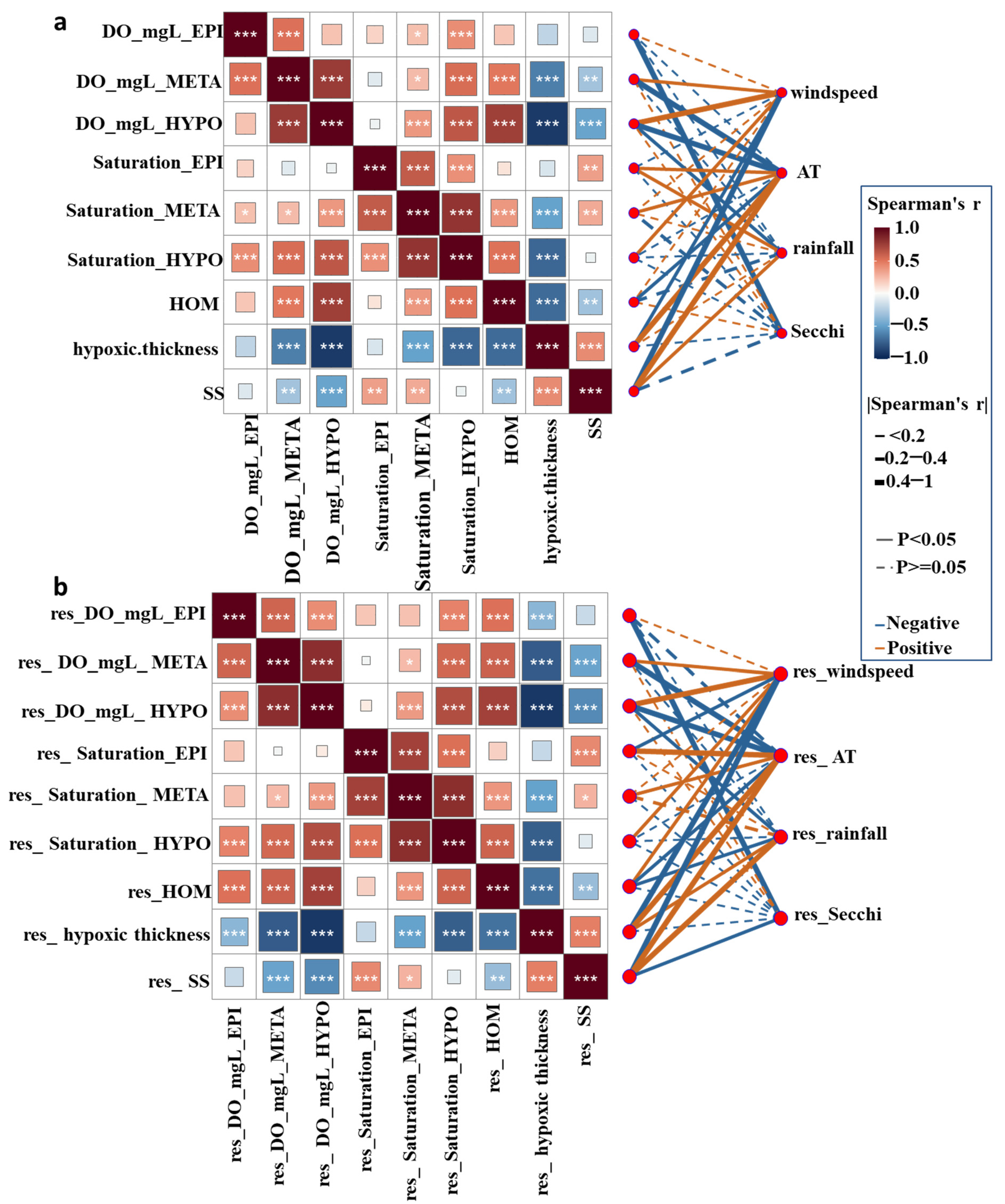
Throughout the study period (2008–2022), Sen’s slope analysis revealed statistically significant decreasing trends in wind speed and SS. Mean air temperature and rainfall, however, exhibited non-significant tendencies, with air temperature tending to decrease and rainfall showing an increasing trend, though these changes did not reach statistical significance (Table 1; Figure S4a–h). The MK analysis revealed notable temporal variability, with marked annual periodicity observed up to 2015 for both SS and air temperature. During the summer months, the highest rainfall, peak air temperatures, and SS were recorded, while wind speed reached its lowest levels (Figure S4a–h). In spring, both SS and Secchi depth reached their minimum levels, whereas wind speed peaked (Figure S4d,f,j). Spearman correlation analysis demonstrated that SS was significantly negatively correlated with wind speed and significantly positively correlated with both air temperature and rainfall (Figure 3a). Additionally, surface DO was negatively correlated with transparency. Surface %saturation showed a significant positive correlation with air temperature and a negative but non-significant correlation with wind speed (p > 0.05). In contrast, bottom DO levels exhibited a significant positive correlation with wind speed. It showed almost the same relationships between environmental parameters variability and thermocline and oxycline parameters variability (Figure 3b).

3.2. Influences of SS on Bottom Hypoxia Under Various Stratification Periods

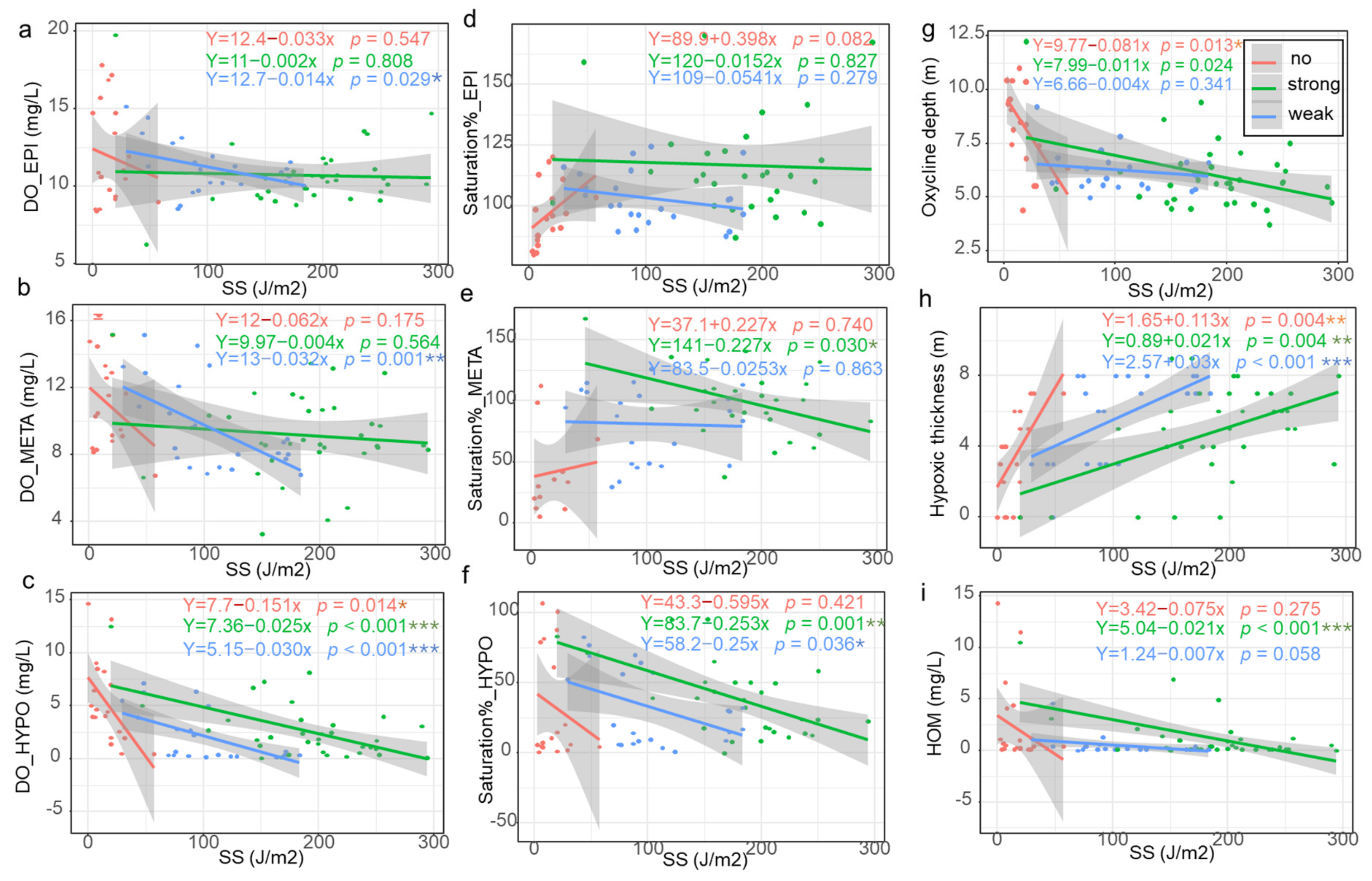
There was a close connection between thermocline and oxycline dynamics (Figure S5). Significant positive linear correlations were observed between oxycline depth and thermocline depth (Figure S5c), as well as between thermocline thickness and hypoxic thickness (Figure S5d). Moreover, the relationships between SS and DO levels (i.e., DO and %saturation) at epilimnion and metalimnion layers exhibited weak negative correlations, whereas the relationship between SS and hypolimnion DO levels demonstrated a significant negative correlation (Figure 4a–f).
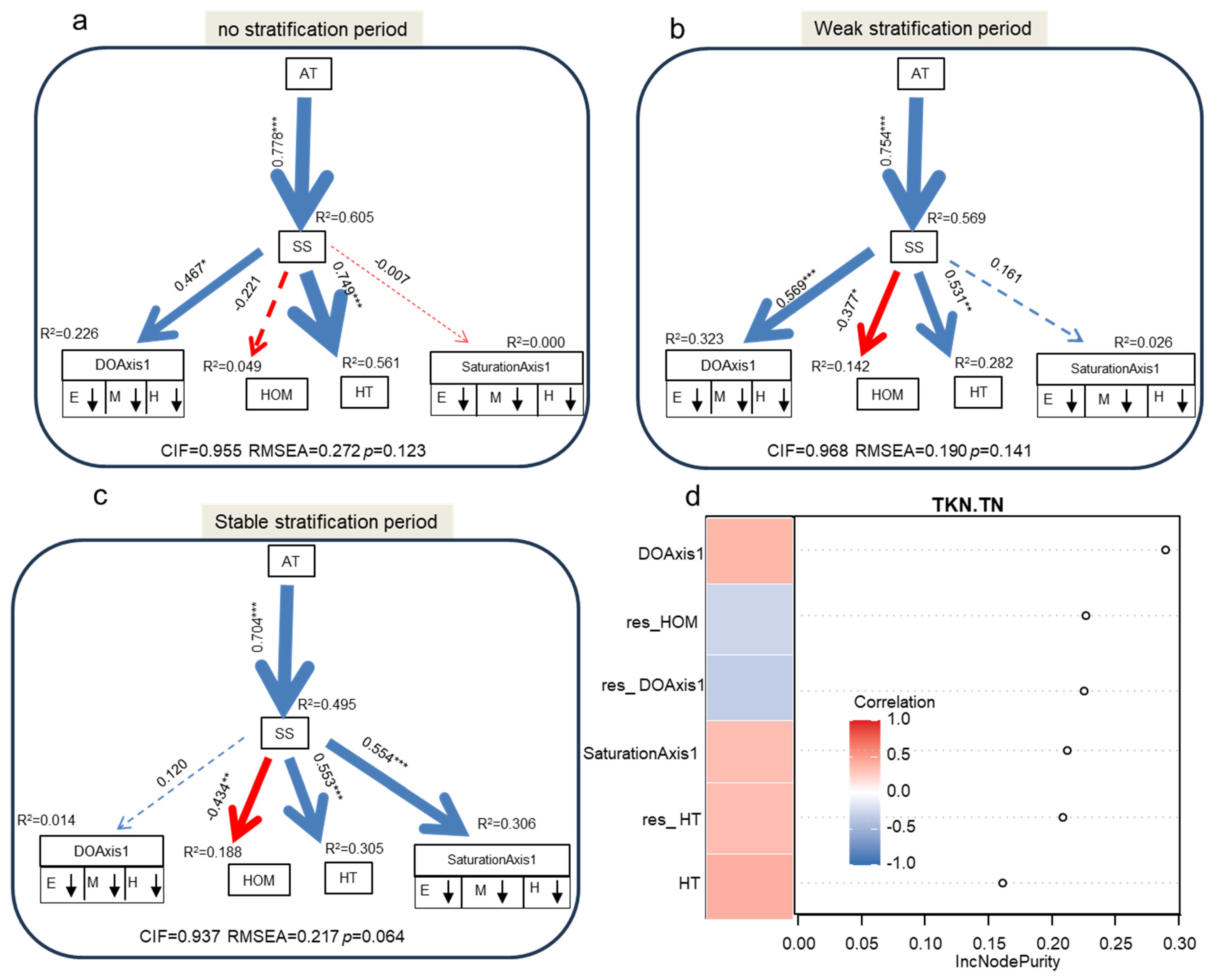
To illustrate how SS influences oxygen dynamics across these varying stratification states, based on thermocline strength, we classified the stratification stages into three categories: no stratification (0–0.2 °C/m), weak stratification (0.2–0.5 °C/m), and strong stratification (>0.5 °C/m). Results of SEM indicated that air temperature exerted a significantly greater influence (coefficient: 0.554) on %saturation (PC1saturatin) through SS during strong stratification periods, whereas it had a significantly greater influence (coefficient: 0.467) on DO (PC1DO) through SS during no stratification periods (Figure 5a–c). Moreover, SS displayed a significant negative correlation with oxycline depth and HOM, while being positively correlated with hypoxic thickness, especially under strong stratification (Figure 4g–i and Figure 5a–c). Interestingly, those DO levels and their variability showed significant correlation with TKN/TN. Random Forest analysis further indicated that the importance of DO levels variability may be greater than DO levels (Figure 5d).

4. Discussion

The availability of DO in lakes is critical for the health of freshwater ecosystems, and its variability poses significant challenges under complex climate change [27]. This study utilized long-term monitoring data on temperature, DO, %saturation, meteorological conditions, and Kjeldahl nitrogen ratio to understand the underlying mechanisms affecting these dynamics. Our findings indicated a decline in air temperature and wind speed, while both surface and bottom DO increase, yet %saturation decreased over the years in Lake Długie Wigierskie. Results revealed that bottom oxygen levels were significantly related to wind speed, as water column mixing increased bottom oxygen solubility. By contrast, surface oxygen levels correlated significantly with Secchi depth and air temperature, driven by enhanced photosynthesis. Furthermore, air temperatures emerged as the most important driver of thermocline, with increases correlating to intensified stratification and shallower oxycline depths. This dynamic ultimately resulted in higher hypoxic thickness and lower oxygen solubility. During strong stratification period, photosynthesis was the main driver of oxygen dynamic, while during no stratification period it was respiration. Interestingly, those DO levels and their variability showed significant correlation with Kjeldahl nitrogen ratio, suggesting that warming temperatures may exacerbate bottom hypoxic conditions by increasing respiration, then change organic nitrogen mineralization process in aquatic systems. These findings could provide a more nuanced understanding of the influencing mechanism of complex climate change on hypoxia and water quality degradation in deep lakes.

4.1. Climate Change Influence Oxygen Distribution

Our findings reveal that DO levels demonstrated a clear stratification effect, wherein surface waters exhibit higher oxygen levels compared to bottom waters. This phenomenon can be attributed to thermocline, which acts as a barrier preventing oxygen replenishment from the surface to deeper waters, resulting in sharper oxygen gradients. Generally, DO levels below 2 mg·L−1 or %saturation below 80% are classified as hypoxic zones [28]. In our study, DO was saturated at the surface (0–6 m) and dropped sharply below this depth, forming a low-oxygen zone approximately 3 m thick, with an anoxic zone existing at 9–14 m zone. Moreover, we found a significant positive correlation between oxycline depth and thermocline depth, indicating that thermal stratification greatly influences oxygen distribution. Furthermore, the relationship between SS and bottom DO levels was stronger than that with surface and middle DO levels. This suggests that aside from stability, other factors such as atmospheric exposure, increased photosynthesis, and mixing from wind could influence surface DO [29,30].
The dynamics of dissolved oxygen in aquatic ecosystems are closely linked to the biological communities within the water column, including bacterioplankton, phytoplankton, and zooplankton. Phytoplankton produce substantial amounts of oxygen through photosynthesis in the euphotic zone, creating an oxygen-rich surface layer. In contrast, the respiration of planktonic organisms and microbial decomposition consume oxygen continuously, especially in the middle and deeper layers under stratified or eutrophic conditions. Recent studies have highlighted the role of phytoplankton blooms in driving diel oxygen fluctuations and contributing to bottom hypoxia under certain environmental scenarios (e.g., [31]). Additionally, bacterioplankton-mediated degradation of organic matter is a key factor causing oxygen depletion in hypolimnetic zones. Zooplankton also influence oxygen dynamics by grazing on phytoplankton, thereby regulating their populations, while their fecal pellets enhance the vertical transport of organic material to deeper waters, further shaping oxygen gradients. These complex biotic interactions collectively govern the spatial and temporal distribution of oxygen in the water column and play a critical role in maintaining ecosystem stability. Incorporating these biological processes provides a more comprehensive understanding of oxygen distribution patterns and the development of hypoxia in aquatic systems.
Further analysis revealed that the driving factors affecting DO levels across different water layers included wind speed, temperature, and transparency. Surface DO levels were negatively correlated with transparency, while surface % saturation was positively correlated with temperature; bottom DO levels were positively correlated with wind speed. Additionally, during various stratification periods, the influence of thermocline on %saturation was greater than that on DO. Specifically, bottom DO saturation was highest during strong stratification, followed by weak stratification, and lowest during the unstratified period. However, DO concentration did not follow this pattern. Thus, in this study, high DO saturation appears to represent strong photosynthesis, while low DO saturation indicates strong respiration. Overall, the interplay between physical, biological, and chemical processes leads to a tighter association between the thermocline and oxygen dynamics in stratified lakes.
Climate change significantly impacts the thermocline. SS is significantly negatively correlated with wind speed and significantly positively correlated with both air temperature and rainfall. Higher precipitation affects water density, consequently influencing thermocline stability, while stronger winds can enhance mixing processes, further modifying thermocline and oxycline dynamics [10]. In Lake Długie Wigierskie, our analysis of water temperature and oxygen monitoring data (2008–2022) indicated that the increase in DO and reduction in %saturation at both surface and bottom levels are likely linked to significant decreasing trends in air temperature since 2015, coupled with decreasing wind speeds that contribute to reduced SS. Decreased water clarity also reduces thermal depth, likely tied to increased productivity and light attenuation in surface waters [32], which in turn exhibits increased surface oxygen concentration. This trend is consistent with the linear relationships we observed between SS and DO levels. Although many lakes generally show a decrease in oxygen level at both surface and bottom layers [3], the reduced solubility in warmer waters remains a key factor. Additionally, the time-lag effect of climate change across water layers warrants attention; shallower layers tend to respond to climate changes more rapidly than deeper layers, necessitating further investigation.

4.2. Complex Climate Change Will Exacerbate Future Bottom Hypoxia

The role of the thermocline in influencing the oxycline structure is critical for comprehending the mechanisms behind hypoxia. We found that during strong stratification periods, SS positively correlates with hypoxic thickness and oxycline depth but negatively correlates with HOM. Our results align with the hypothesis that warming temperatures are a key factor contributing to the decline of HOM concentrations due to stronger thermoclines, which enhance water column stability, resulting in shallower oxyclines, thicker anoxic layers, and lower %saturation. Moreover, SEM analyses revealed that oxycline variables respond differently to SS depending on the degree of stratification. During no stratification period, the influence of SS on %saturation was lowest, alongside the highest HOM and the lowest hypoxic thickness. The weak hypoxia zones can be explained by several factors. First, spring turnover mixes oxygen-rich surface water into deeper layers [33]. Second, nutrient influxes from runoff, promoting phytoplankton growth and initial oxygen production [34]. Third, the short duration of ice cover [35] results in prolonged mixing and increased oxygen levels at depth [36,37]. During strong stratification period, the influence of SS on %saturation was greatest, alongside the lowest HOM concentration and the highest hypoxic thickness. It suggests that under stable stratified conditions, respiration consumption such as summer phytoplankton decomposition at higher temperatures [38], is the most important cause of bottom hypoxia, contributing to larger volumes of oxygen-depleted water. Stable stratification also restricts oxygen mixing from surface waters. Additionally, the release of nutrients from sediments under anoxic conditions further exacerbates hypoxia [39]. Consequently, hypolimnetic DO concentrations can serve as an “early warning” for changes in trophic state. Though this research significantly contributes to understanding oxygen dynamics in relation to rising temperatures, we acknowledge its limitations. The geographical scope was restricted to specific water bodies, which may overlook variations in other regions. Additionally, the influence of sediment nutrient release and hydrological changes was not thoroughly examined, potentially confounding the results. Future research should broaden the geographical scope and include a wider array of environmental processes to capture the complexity of aquatic oxygen dynamics in the context of climate change [40].
The increasing variability trend in wind speed and rainfall and decreasing variability trend in air temperature indicates complex climate changes in the future. According to the RCP 8.5 scenario, temperatures could rise by up to 4.2 °C by the end of the 21st century [12]. Our results also document the phenomenon of ice disappearance in Lake Długie Wigierskie from 2008 to 2022. The rapid reduction in ice cover linked to ongoing climate change could further exacerbate hypoxic conditions [41]. Although our study observed a decrease in temperature, the long-term outlook is not optimistic. This temperature decline may be influenced by natural climatic events, such as El Niño, or could stem from an insufficient observation period. Anyway, the divergence between decreasing variability in surface DO and increasing variability in bottom DO suggests that the longer and stronger thermal stratification expected in the future [6] will further intensify the decoupling of DO dynamics within lakes. Overall, our study suggests that complex climate change will likely increase the variability of thermocline, leading to more frequent and severe hypoxic events. However, greater variability in hypolimnetic oxygen will likely enhance lake biogeochemical cycles [39]. Though some recent studies force on the long-term change in DO variability [42], less is known about the consequences of changing oxygen variability in lakes than changing oxygen concentrations. Interestingly, we found that DO levels and their variability, especially greater variability in hypolimnetic DO dynamics, showed significant correlation with Kjeldahl nitrogen ratio, suggesting that warming temperatures may exacerbate bottom hypoxic conditions and then change the organic nitrogen mineralization process.

5. Conclusions

In summary, this study highlights that warming temperature enhances water column stability, resulting in shallow oxyclines, thick anoxic layers, low %saturation, and low HOM concentrations. Because stable stratification hinders vertical mixing and influence oxygen distribution, bottom oxygen levels were significantly related to wind speed, as water column mixing increased bottom oxygen solubility. Surface oxygen levels correlated significantly with Secchi depth and air temperature, driven by enhanced photosynthesis. Furthermore, during strong stratification period, photosynthesis was the main driver of oxygen dynamic, while during no stratification period it was respiration. Interestingly, bottom DO levels and their variability showed significant correlation with Kjeldahl nitrogen ratio, suggesting that warming temperatures may exacerbate bottom hypoxic conditions and then change the organic nitrogen mineralization process in aquatic systems. As complex climate change continues to evolve, the enhanced DO variability due to increasing climate variability may have a substantial effect on lake ecosystem functioning. Future research efforts should aim to understand both the variability of oxygen and oxygen concentrations, as well as the consequences of changing oxygen variability.

Supplementary Materials

The following supporting information can be downloaded at: https://www.mdpi.com/article/10.3390/jmse14040361/s1.

Author Contributions

Conceptualization, L.W. and M.P.; methodology, L.W.; software, L.W.; validation, L.W., M.S. and X.M.; formal analysis, L.W.; investigation, M.P.; resources, M.P. and X.M.; data curation, L.W. and M.P.; writing—original draft preparation, L.W.; writing—review and editing, M.S., M.P. and X.M.; visualization, L.W.; supervision, M.P.; project administration, L.W. and M.P.; funding acquisition, L.W. All authors have read and agreed to the published version of the manuscript.

Funding

This research was funded by the National Key Laboratory of Mountain River Protection and Governance, Sichuan University Open Project 2024 (SKHL2426); Hubei Provincial Key Laboratory of Waterlogging and Wetland Agriculture Open Project Funded for 2025 (KFG202515); the National Natural Science Foundation of China (32301357). And The APC was funded by L.W. and M.P.

Data Availability Statement

The data presented in this study are available on request from the corresponding author due to privacy restrictions.

Conflicts of Interest

The authors declare no conflict of interest.

References

  1. Pollock, M.S.; Clarke, L.M.J.; Dubé, M.G. The effects of hypoxia on fishes: From ecological relevance to physiological effects. Environ. Rev. 2007, 15, 1–14. [Google Scholar] [CrossRef]
  2. Ptak, M.; Nowak, B. Variability of oxygen-thermal conditions in selected lakes in Poland. Ecol. Chem. Eng. 2016, 23, 639–650. [Google Scholar] [CrossRef]
  3. Carey, C.C. Causes and consequences of changing oxygen availability in lakes: Kilham Plenary Lecture Article. Inland Waters 2023, 13, 316–326. [Google Scholar] [CrossRef]
  4. Jenny, J.; Francus, P.; Normandeau, A.; Lapointe, F.; Perga, M.; Ojala, A.; Schimmelmann, A.; Zolitschka, B. Global spread of hypoxia in freshwater ecosystems during the last three centuries is caused by rising local human pressure. Glob. Change Biol. 2016, 22, 1481–1489. [Google Scholar] [CrossRef]
  5. Knoll, L.B.; Williamson, C.E.; Pilla, R.M.; Leach, T.H.; Brentrup, J.A.; Fisher, T.J. Browning-related oxygen depletion in an oligotrophic lake. Inland Waters 2018, 8, 255–263. [Google Scholar] [CrossRef]
  6. Woolway, R.I.; Sharma, S.; Weyhenmeyer, G.A.; Debolskiy, A.; Golub, M.; Mercado-Bettín, D.; Perroud, M.; Stepanenko, V.; Tan, Z.; Grant, L.; et al. Phenological shifts in lake stratification under climate change. Nat. Commun. 2021, 12, 2318. [Google Scholar] [CrossRef]
  7. Zhang, Y.; Gao, X.; Sun, B.; Liu, X. Oxygen evolution and its drivers in a stratified reservoir: A supply-side perspective for informing hypoxia alleviation strategies. Water Res. 2024, 257, 121694. [Google Scholar] [CrossRef]
  8. Schwefel, R.; Steinsberger, T.; Bouffard, D.; Bryant, L.D.; Müller, B.; Wüest, A. Using small-scale measurements to estimate hypolimnetic oxygen depletion in a deep lake. Limnol. Oceanogr. 2018, 63, S54–S67. [Google Scholar] [CrossRef]
  9. Butcher, J.B.; Nover, D.; Johnson, T.E.; Clark, C.M. Sensitivity of lake thermal and mixing dynamics to climate change. Clim. Change 2015, 129, 295–305. [Google Scholar] [CrossRef]
  10. Jiang, Y.; Luo, Y.; Zhao, Z.; Tao, S. Changes in wind speed over China during 1956–2004. Theor. Appl. Climatol. 2010, 99, 421–430. [Google Scholar] [CrossRef]
  11. Lensing, J.R.; Todd, S.; Wise, D.H. The impact of altered precipitation on spatial stratification and activity-densities of springtails (Collembola) and spiders (Araneae). Ecol. Entomol. 2005, 30, 194–200. [Google Scholar] [CrossRef]
  12. Czernecki, B.; Ptak, M. The impact of global warming on lake surface water temperature in Poland: The application of empirical-statistical downscaling, 1971–2100. J. Limnol. 2018, 77, 330–348. [Google Scholar] [CrossRef]
  13. Woolway, R.I.; Kraemer, B.M.; Lenters, J.D.; Merchant, C.J.; O’Reilly, C.M.; Sharma, S. Global lake responses to climate change. Nat. Rev. Earth Environ. 2020, 1, 388–403. [Google Scholar] [CrossRef]
  14. Ptak, M.; Sojka, M. The disappearance of ice cover on temperate lakes (Central Europe) as a result of global warming. Geogr. J. 2021, 187, 200–213. [Google Scholar] [CrossRef]
  15. Ptak, M.; Amnuaylojaroen, T.; Huang, W.; Wang, L.; Sojka, M. Role of Lake Morphometric and Environmental Drivers of Ice Cover Formation and Occurrence on Temperate Lakes: A Case Study from the Eastern Baltic Lakeland, Poland. Resources 2024, 13, 146. [Google Scholar] [CrossRef]
  16. Niedrist, G.H.; Psenner, R.; Sommaruga, R. Climate warming increases vertical and seasonal water temperature differences and inter-annual variability in a mountain lake. Clim. Change 2018, 151, 473–490. [Google Scholar] [CrossRef]
  17. Benson, B.B.; Krause, D. The concentration and isotopic fractionation of oxygen dissolved in freshwater and seawater in equilibrium with the atmosphere. Limnol. Oceanogr. 1984, 29, 620–632. [Google Scholar] [CrossRef]
  18. Benbi, D.K.; Richter, J. Nitrogen dynamics. In Handbook of Processes and Modeling in the Soil–Plant System; Routledge: London, UK, 2003; pp. 409–482. [Google Scholar]
  19. Read, J.S.; Hamilton, D.P.; Jones, I.D.; Muraoka, K.; Winslow, L.A.; Kroiss, R.; Wu, C.; Gaiser, E. Derivation of lake mixing and stratification indices from high-resolution lake buoy data. Environ. Model. Softw. 2011, 26, 1325–1336. [Google Scholar] [CrossRef]
  20. Foley, B.; Jones, I.D.; Maberly, S.C.; Rippey, B. Long-term changes in oxygen depletion in a small temperate lake: Effects of climate change and eutrophication. Freshw. Biol. 2012, 57, 278–289. [Google Scholar] [CrossRef]
  21. Diaz, R.J. Overview of hypoxia around the world. J. Environ. Qual. 2001, 30, 275–281. [Google Scholar] [CrossRef]
  22. Conley, D.J.; Carstensen, J.; Ærtebjerg, G.; Christensen, P.B.; Dalsgaard, T.; Hansen, J.L.; Josefson, A.B. Long-term changes and impacts of hypoxia in Danish coastal waters. Ecol. Appl. 2007, 17, S165–S184. [Google Scholar] [CrossRef]
  23. Alvisi, F.; Cozzi, S. Seasonal dynamics and long-term trend of hypoxia in the coastal zone of Emilia Romagna (NW Adriatic Sea, Italy). Sci. Total Environ. 2016, 541, 1448–1462. [Google Scholar] [CrossRef] [PubMed]
  24. Więckowski, K. Stosunki wodne i ewolucja systemu jezior. In Studium Geoekologiczne Rejonu Jezior Wigierskich: Opracowanie Zbiorowe; Prace Geograficzne; Kostrowicki, A.S., Ed.; IGiPZ PAN: Warsaw, Poland, 1988; Volume 147, pp. 31–44. [Google Scholar]
  25. Mann, H.B. Nonparametric test against trend. Econometrica 1945, 13, 245–259. [Google Scholar] [CrossRef]
  26. Kendall, M.G. Rank Correlation Measures; Charles Griffin: London, UK, 1975. [Google Scholar]
  27. Diaz, R.J.; Nestlerode, J.; Diaz, M.L. A Global Perspective on the Effects of Eutrophication and Hypoxia on Aquatic Biota and Water Quality; U.S. Environmental Protection Agency: Washington, DC, USA, 2004. [Google Scholar]
  28. Bouffard, D.; Ackerman, J.D.; Boegman, L. Factors affecting the development and dynamics of hypoxia in a large shallow stratified lake: Hourly to seasonal patterns. Water Resour. Res. 2013, 49, 2380–2394. [Google Scholar] [CrossRef]
  29. Auer, M.T.; Effler, S.W. Variability in photosynthesis: Impact on DO models. J. Environ. Eng. 1989, 115, 944–963. [Google Scholar] [CrossRef]
  30. Blottiere, L. The Effects of Wind-Induced Mixing on the Structure and Functioning of Shallow Freshwater Lakes in a Context of Global Change. Doctoral Dissertation, Paris Saclay University (COmUE), Orsay, France, 2015. [Google Scholar]
  31. Chowdhury, P.; Khan, S.J.; Sumon, M.A.A.; El-Regal, M.A.A.; Tayyamath, K.; Van Doan, H. The role of planktons in sustaining the function and diversity of marine ecosystems: A systematic review. Discov. Anim. 2026, 3, 9. [Google Scholar] [CrossRef]
  32. Liu, M.; Zhang, Y.; Zhou, Y.; Shi, K.; Zhu, G.; Sun, X. Thermal structure controlled by morphometry and light attenuation across subtropical reservoirs. Hydrol. Process. 2022, 36, e14502. [Google Scholar] [CrossRef]
  33. Yankova, Y.; Neuenschwander, S.; Köster, O.; Posch, T. Abrupt stop of deep water turnover with lake warming: Drastic consequences for algal primary producers. Sci. Rep. 2017, 7, 13770. [Google Scholar] [CrossRef]
  34. Wang, L.; Liu, J.; Bao, Z.; Ma, X.; Shen, H.; Xie, P.; Chen, J. Thermocline stratification favors phytoplankton spatial overlap and species diversity in a subtropical deep reservoir. Sci. Total Environ. 2024, 913, 169712. [Google Scholar] [CrossRef]
  35. Choiński, A.; Ptak, M.; Skowron, R.; Strzelczak, A. Changes in ice phenology on Polish lakes from 1961 to 2010 related to location and morphometry. Limnologica 2015, 53, 42–49. [Google Scholar] [CrossRef]
  36. Flaim, G.; Andreis, D.; Piccolroaz, S.; Obertegger, U. Ice cover and extreme events determine dissolved oxygen in a placid mountain lake. Water Resour. Res. 2020, 56, e2020WR027321. [Google Scholar] [CrossRef]
  37. Hazuková, V.; Burpee, B.T.; Northington, R.M.; Anderson, N.J.; Saros, J.E. Earlier ice melt increases hypolimnetic oxygen despite regional warming in small Arctic lakes. Limnol. Oceanogr. Lett. 2024, 9, 258–267. [Google Scholar] [CrossRef]
  38. Lee, D.Y.; Owens, M.S.; Doherty, M.; Eggleston, E.M.; Hewson, I.; Crump, B.C.; Cornwell, J.C. The effects of oxygen transition on community respiration and potential chemoautotrophic production in a seasonally stratified anoxic estuary. Estuaries Coasts 2015, 38, 104–117. [Google Scholar] [CrossRef]
  39. Lewis, A.S.L.; Lau, M.P.; Jane, S.F.; Rose, K.C.; Be’ERi-Shlevin, Y.; Burnet, S.H.; Clayer, F.; Feuchtmayr, H.; Grossart, H.; Howard, D.W.; et al. Anoxia begets anoxia: A positive feedback to the deoxygenation of temperate lakes. Glob. Change Biol. 2024, 30, e17046. [Google Scholar] [CrossRef]
  40. Shuvo, A.; O’Reilly, C.M.; Blagrave, K.; Ewins, C.; Filazzola, A.; Gray, D.; Mahdiyan, O.; Moslenko, L.; Quinlan, R.; Sharma, S. Total phosphorus and climate are equally important predictors of water quality in lakes. Aquat. Sci. 2021, 83, 16. [Google Scholar] [CrossRef]
  41. Bartosiewicz, M.; Ptak, M.; Woolwey, I.; Sojka, M. On thinning ice: Effects of atmospheric warming, stilling, and rainfall intensity on ice conditions in differently shaped lakes. J. Hydrol. 2021, 597, 125724. [Google Scholar] [CrossRef]
  42. Jane, S.F.; Hansen, G.J.A.; Kraemer, B.M.; Leavitt, P.R.; Mincer, J.L.; North, R.L.; Pilla, R.M.; Stetler, J.T.; Williamson, C.E.; Woolway, R.I.; et al. Widespread deoxygenation of temperate lakes. Nature 2021, 594, 66–70. [Google Scholar] [CrossRef]
Figure 1. Location of the study lake: (a) catchment area, (b) bathymetric map [source: Inspectorate of Environmental Protection].
Jmse 14 00361 g001
Figure 2. Vertical distribution of temperature (a), DO (b), and %saturation (c) over time. Temperature (d), DO (e), and %saturation (f) trends at the epilimnion (EPI), metalimnion (META), and hypolimnion (HYPO) zones during 2008–2022. Trends in thermocline (g) and oxycline (h) variables during 2008–2022.
Jmse 14 00361 g002
Figure 3. Spearmon correlation analysis demonstrating relations among environmental, thermocline, and oxycline variables (a) and their variability (b). Note EPI: epilimnion, META: metalimnion, HYPO: hypolimnion, HOM: hypolimnetic oxygen minimum, DO: dissolved oxygen, SS: Schmidt stability, AT: air temperature, res_: residual component of parameters. Significant when * p < 0.05, ** p < 0.01, *** p < 0.001.
Jmse 14 00361 g003
Figure 4. Linear regressions between SS and oxycline depth (a), hypoxic thickness (b), and HOM (c), and between SS and DO at epilimnion (d), metalimnion (e), and hypolimnion zones (f), and between SS and %saturation at epilimnion (g), metalimnion (h), and hypolimnion zones (i). EPI: epilimnion, META: metalimnion, HYPO: hypolimnion, HOM: hypolimnetic oxygen minimum, DO: dissolved oxygen, SS: Schmidt stability. Note, significant when * p < 0.05, ** p < 0.01, *** p < 0.001. The gray shadow represents the 75% confidence interval around each regression line.
Jmse 14 00361 g004
Figure 5. Structural equation models (SEMs) analyses between meteorological, thermocline and oxycline variables during no stratification (a), weak stratification (b) and stable stratification (c) periods. The blue arrows represent significant positive pathways, while the red arrows indicate significant negative pathways. Dashed arrows denote nonsignificant pathways. Bold numbers reflect the standard path coefficients, and the width of the arrows are proportional to the strength of the relationships. R2 values represent the proportion of variance explained for each dependent variable in the model. * p < 0.05, ** p < 0.01, *** p < 0.001. Spearmon correlation analysis and random forest analysis showing the impact of significant DO levels parameters and their variability on TKN/TN (d). Here, the circles of Random Forest Importance show the relative importance of each DO parameter in predicting TKN/TN. The farther to the right a circle is, the more influential that parameter is in the model. AT: air temperature, SS: Schmidt stability, HOM: hypolimnetic oxygen minimum, HT: hypoxic thickness, TKN/TN: the ratio of Kjeldahl nitrogen and total nitrogen, res_: residual component of parameters. DOAxis1 and SaturationAxis1 represent DO concentration and %saturation at E (epilimnion), M (metalimnion) and H (hypolimnion) layers as indicated by PCA analysis, respectively. The black symbol ‘↓’ indicate a negative relationship between the variables and the first component from the PCA.
Jmse 14 00361 g005
Table 1. Trends in the Sen’s slope of thermocline and oxycline, meteorological, and environmental variables, along with their variability analysis among years. EPI: epilimnion, META: metalimnion, HYPO: hypolimnion, HOM: hypolimnetic oxygen minimum.
TypesParametersSen Slope of VariablesSen Slope of Variability
Slopep ValueSlopep Value
Meteorologywindspeed−0.033030.0233720.00259550.5609349
Air temperature−0.092580.207012−0.0175790.8380634
rainfall0.0054470.8113520.00363150.7712855
OxygenDO_mgL_EPI0.017940.81969−0.055490.597663
DO_mgL_META−0.045230.616020.03742390.3305509
DO_mgL_HYPO0.040390.848080.04575050.4240401
Hypoxic thickness−0.008780.76461−0.0219520.1502504
HOM0.00850.756260.01522370.5742905
Saturation%_EPI−0.159530.627710.28922140.1769616
Saturation%_META−1.850990.003330.63881860.0767947
Saturation%_HYPO−0.890080.427370.54820540.2437396
Temperaturetemp_mgL_EPI−0.115560.19699NANA
temp_mgL_META−0.012960.89649NANA
temp_mgL_HYPO0.024390.32053NANA
thermocline depth0.0719550.021703NANA
thermocline thickness−0.000740.90818NANA
schmidt stability−2.036840.05509−0.1325690.8681135
EnvironmentSecchi0.0458020.5776294−0.0006590.9616027
TKN/TN0.01242910.1135225NANA
Note: EPI: epilimnion, META: metalimnion, HYPO: hypolimnion, HOM: hypolimnetic oxygen minimum, DO: dissolved oxygen, TKN/TN: the ratio of Kjeldahl nitrogen and total nitrogen. Bold numbers reflect significant; NA represents factors not considered in this study.
Disclaimer/Publisher’s Note: The statements, opinions and data contained in all publications are solely those of the individual author(s) and contributor(s) and not of MDPI and/or the editor(s). MDPI and/or the editor(s) disclaim responsibility for any injury to people or property resulting from any ideas, methods, instructions or products referred to in the content.