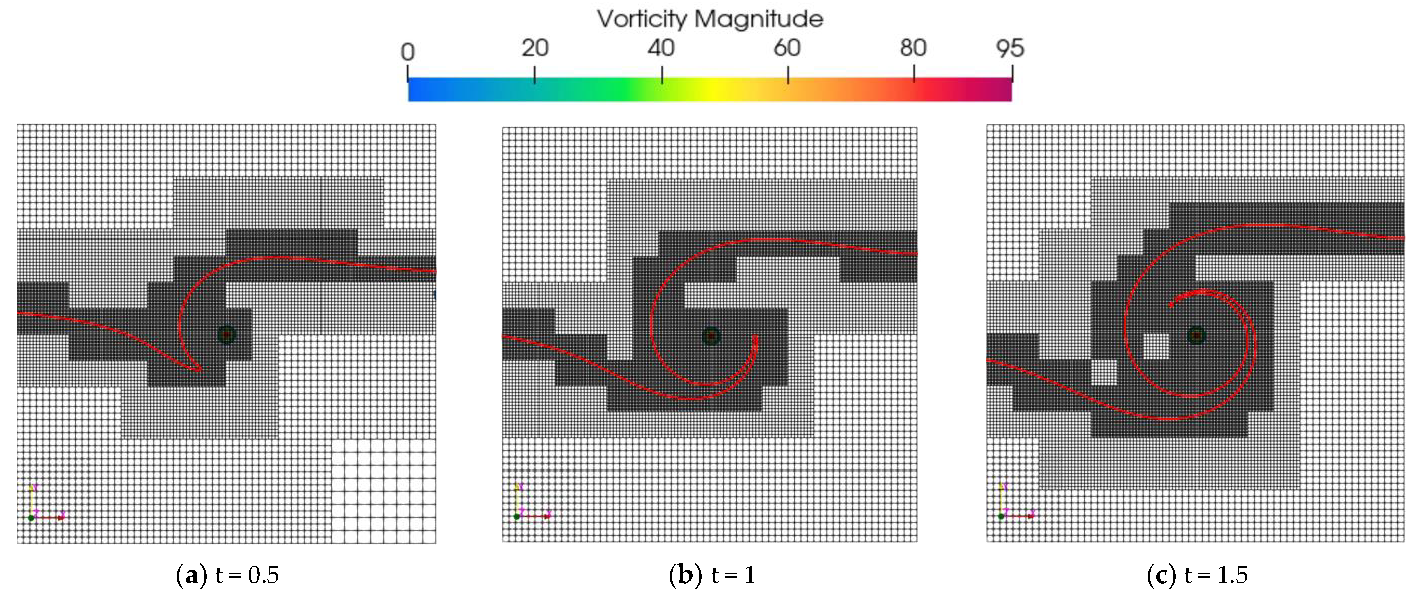
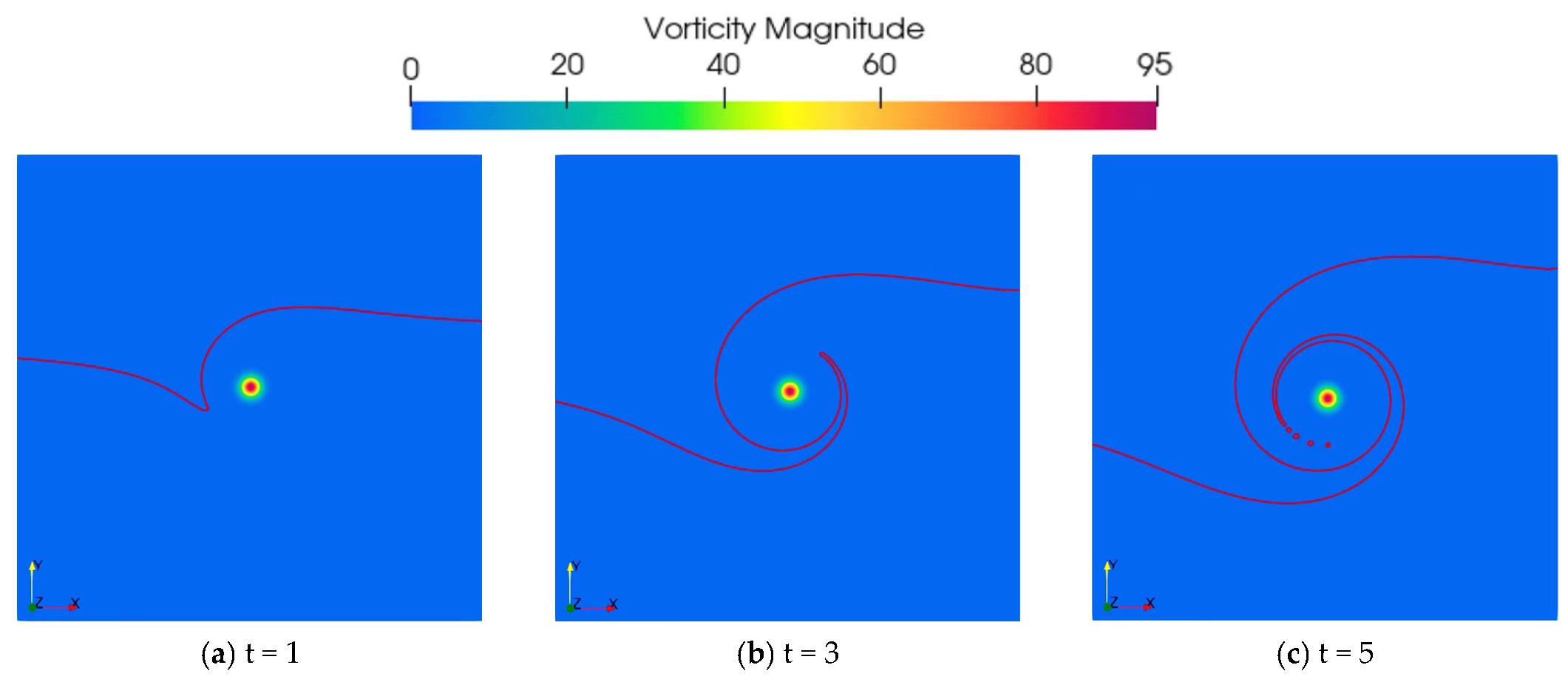
3.1. Idealized Numerical Experiments
Initially, we conduct simulations under idealized conditions to understand the fundamental behavior of vortex–interface interactions. Specifically, when the densities of the two phases are equal (i.e.,
) and surface tension is neglected (i.e.,
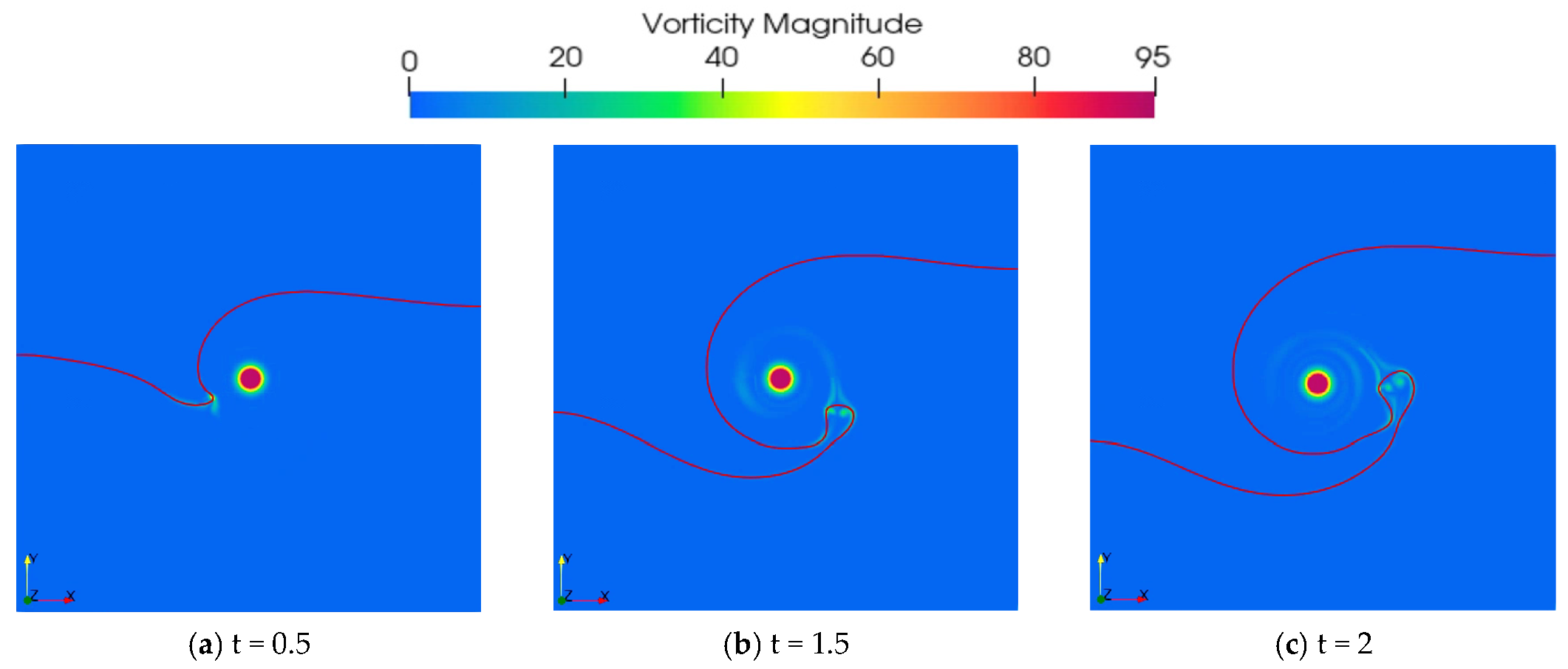
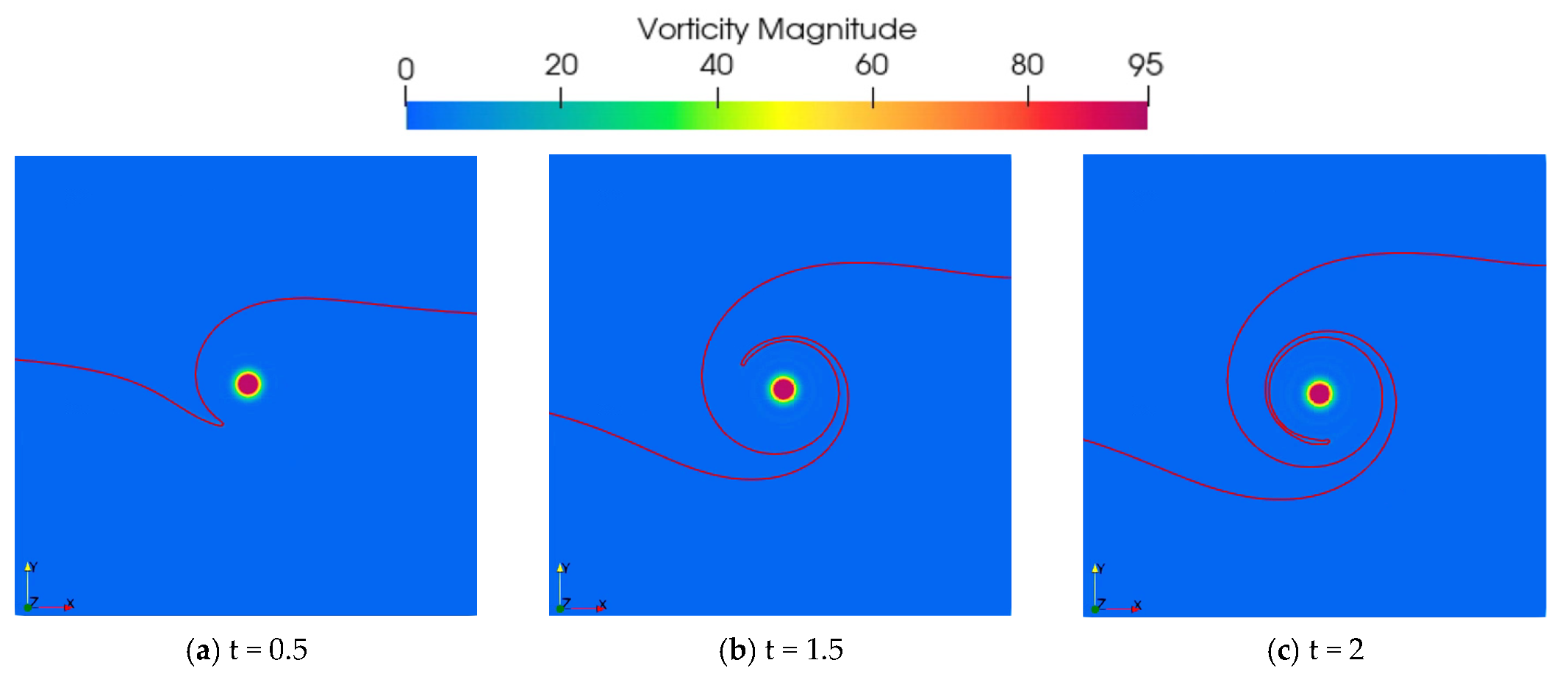
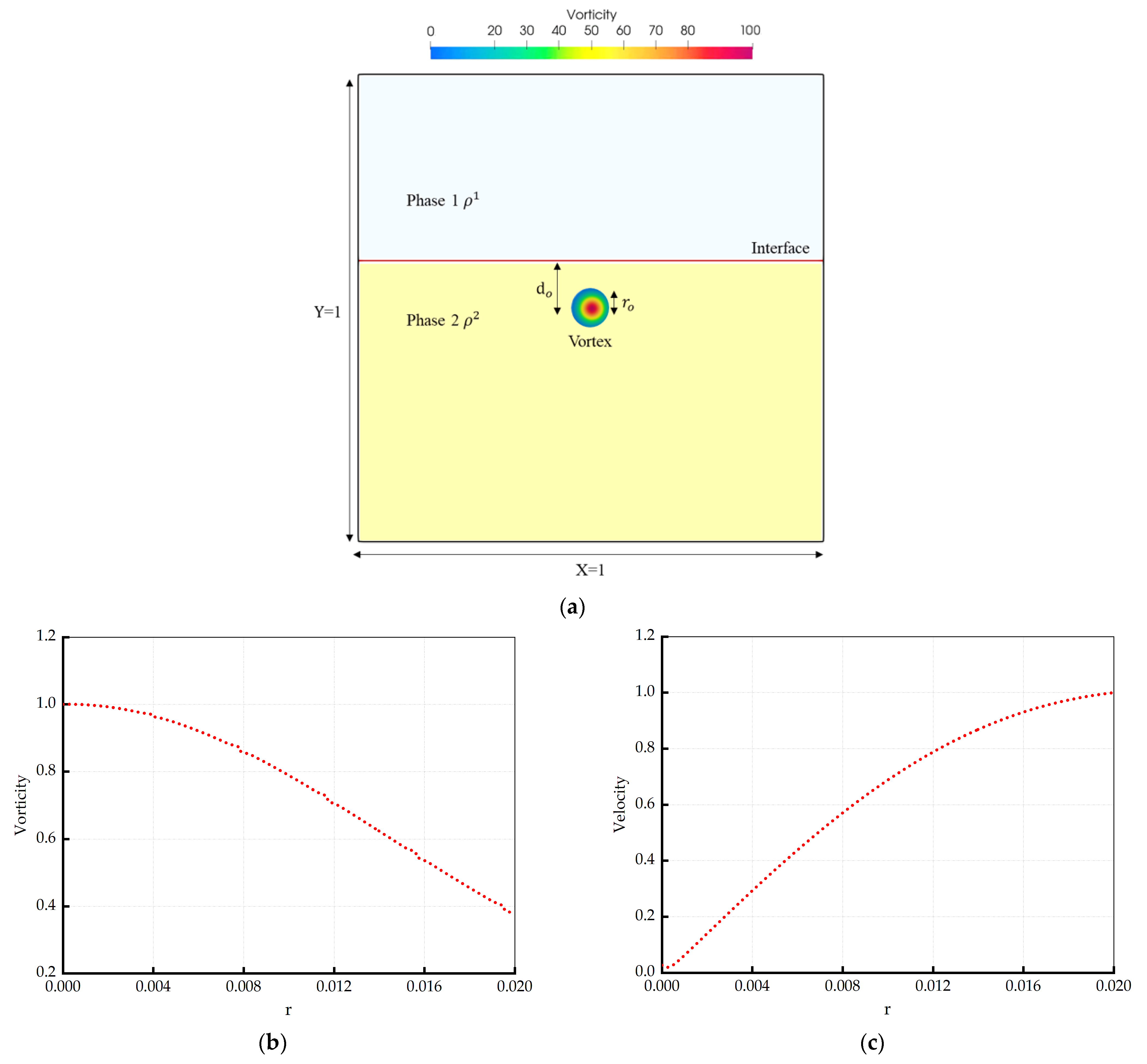
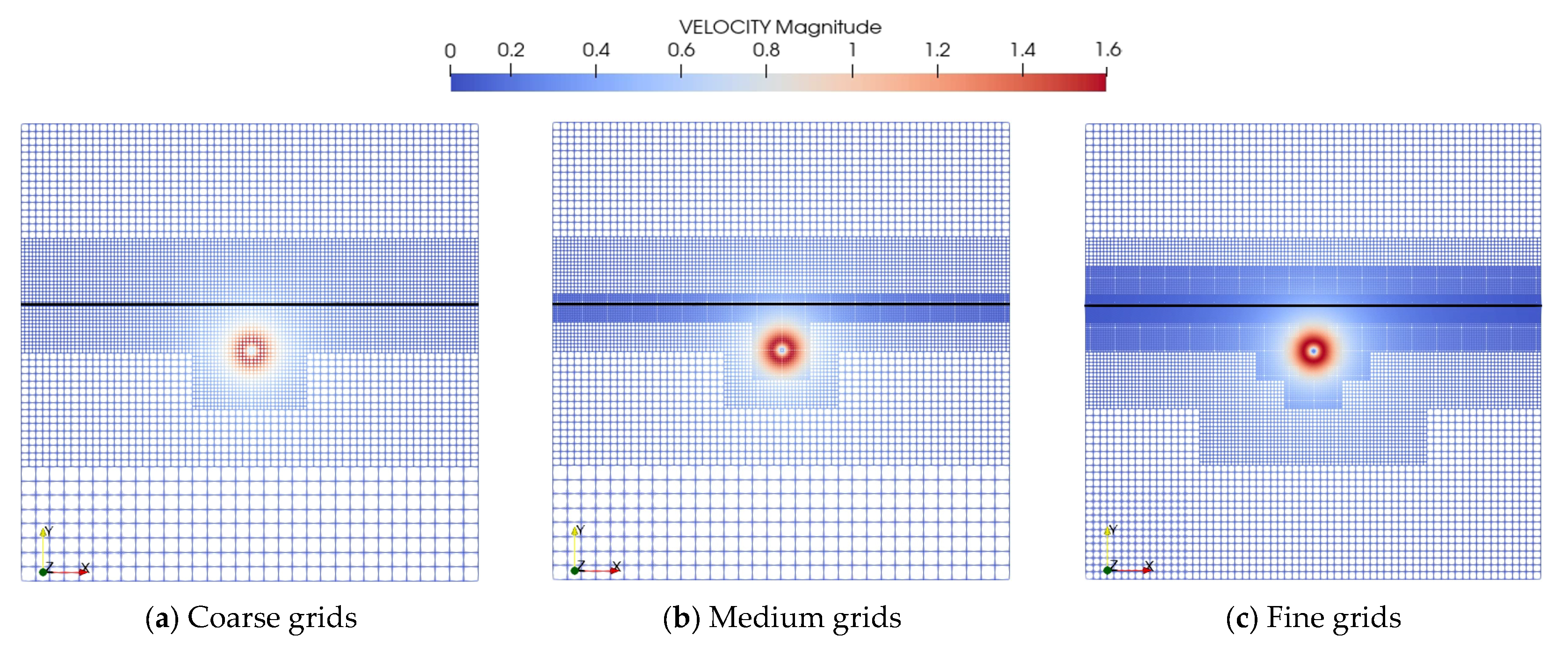
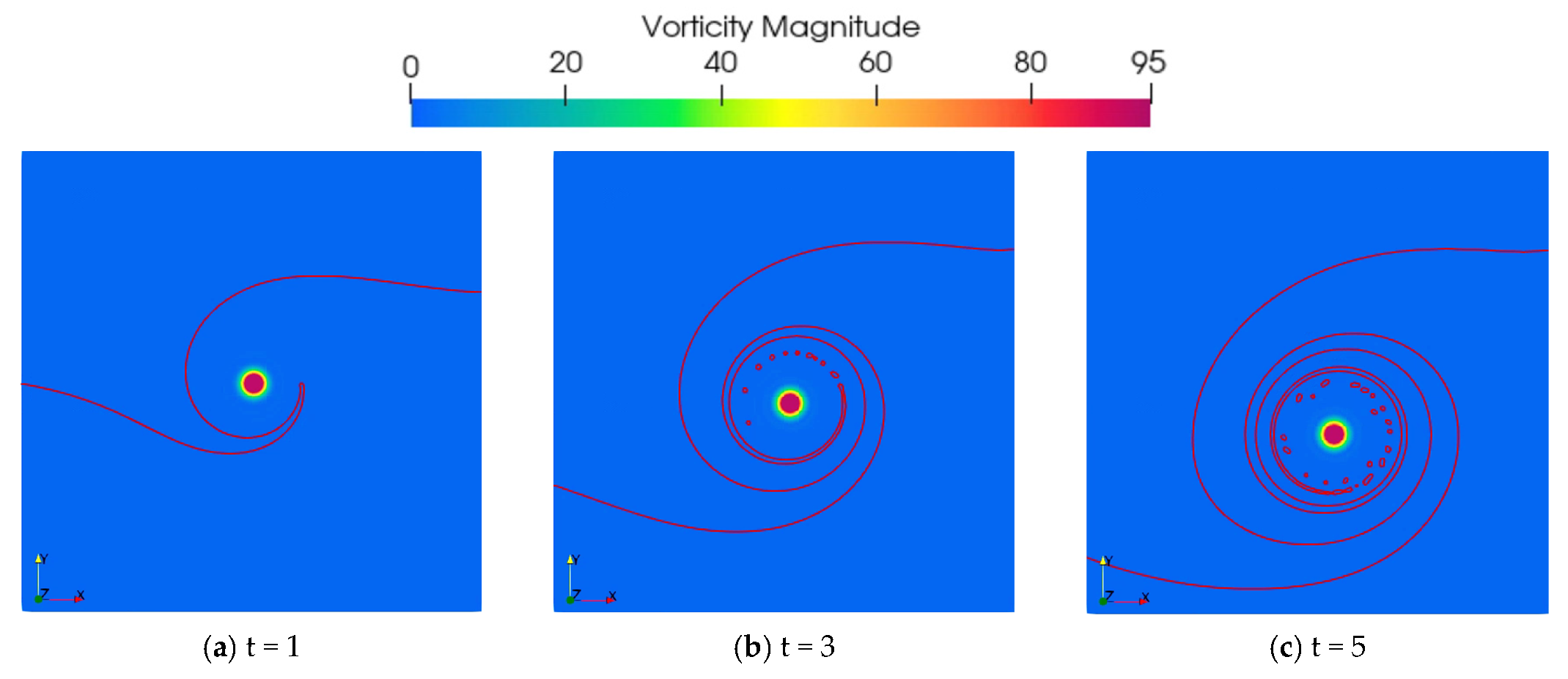
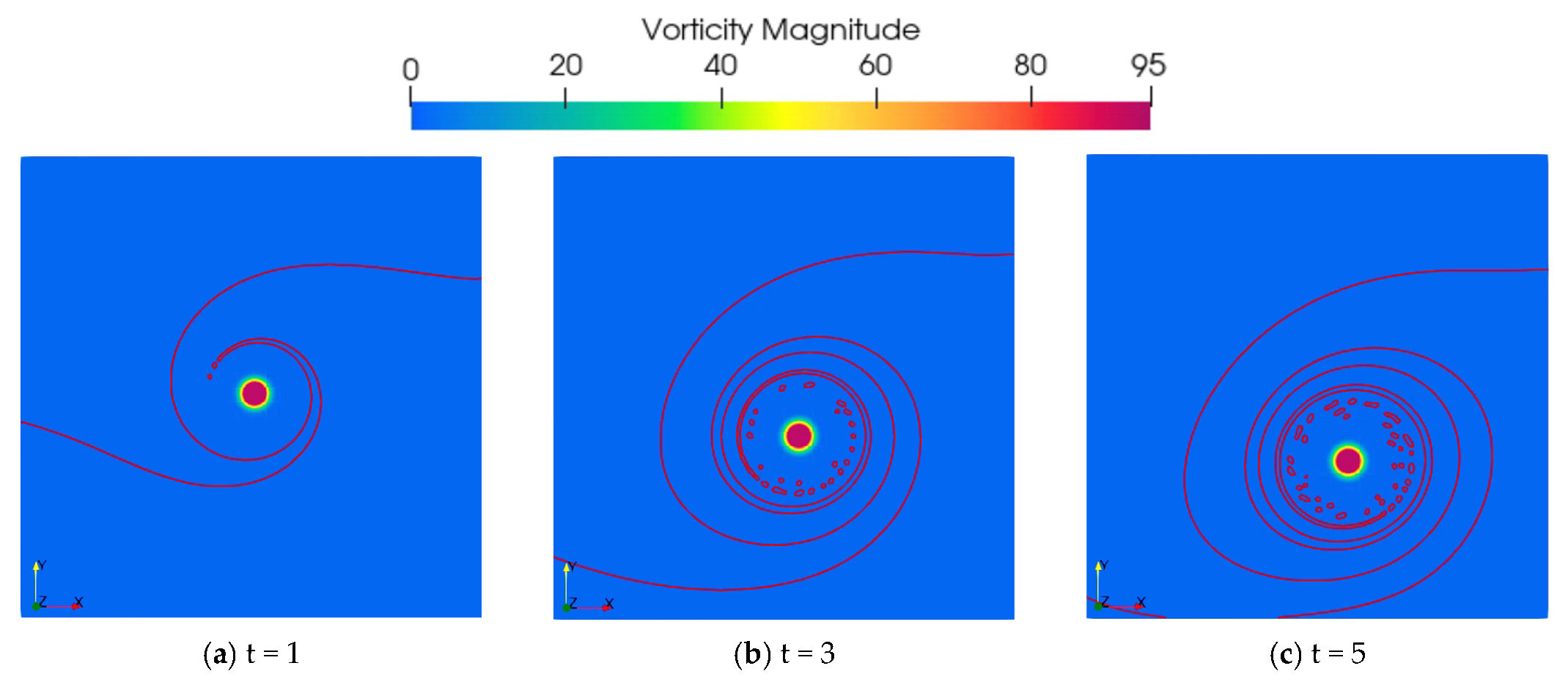
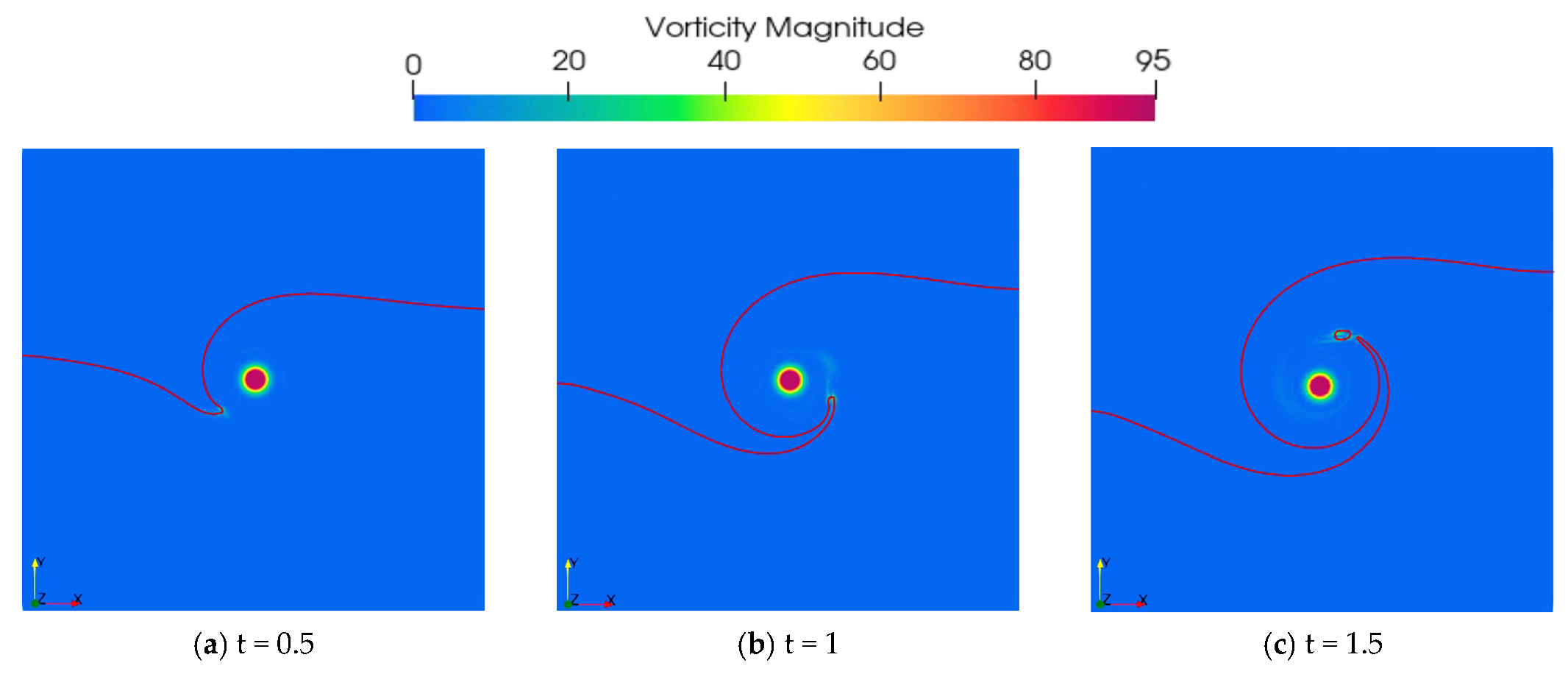
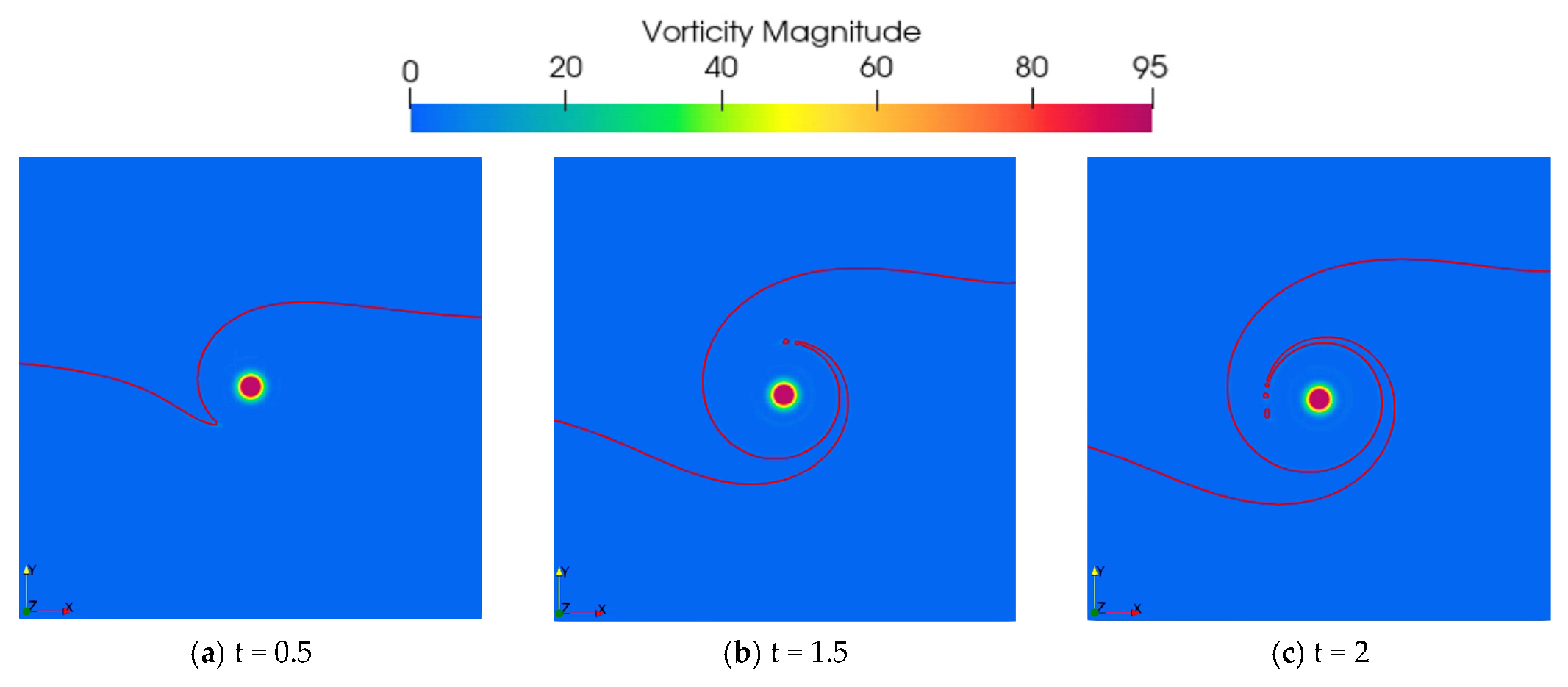
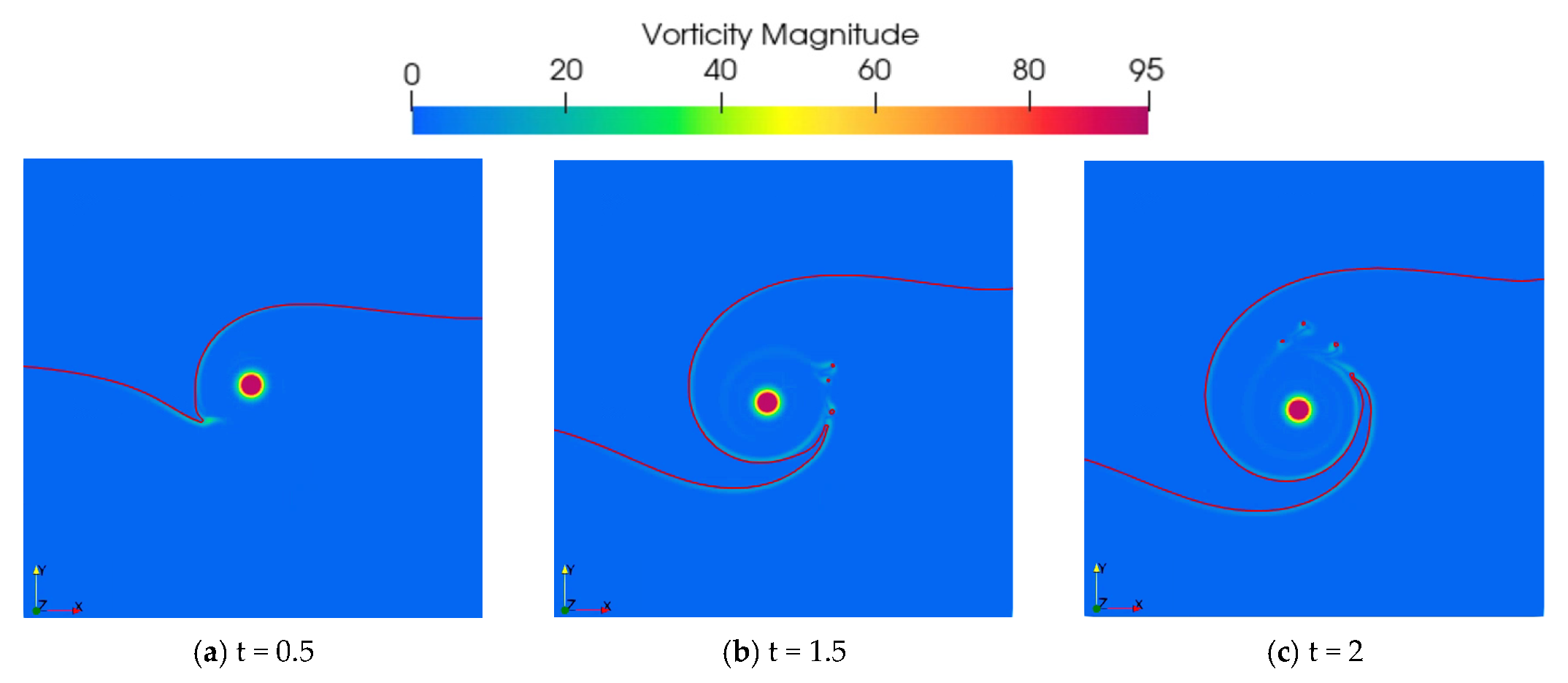
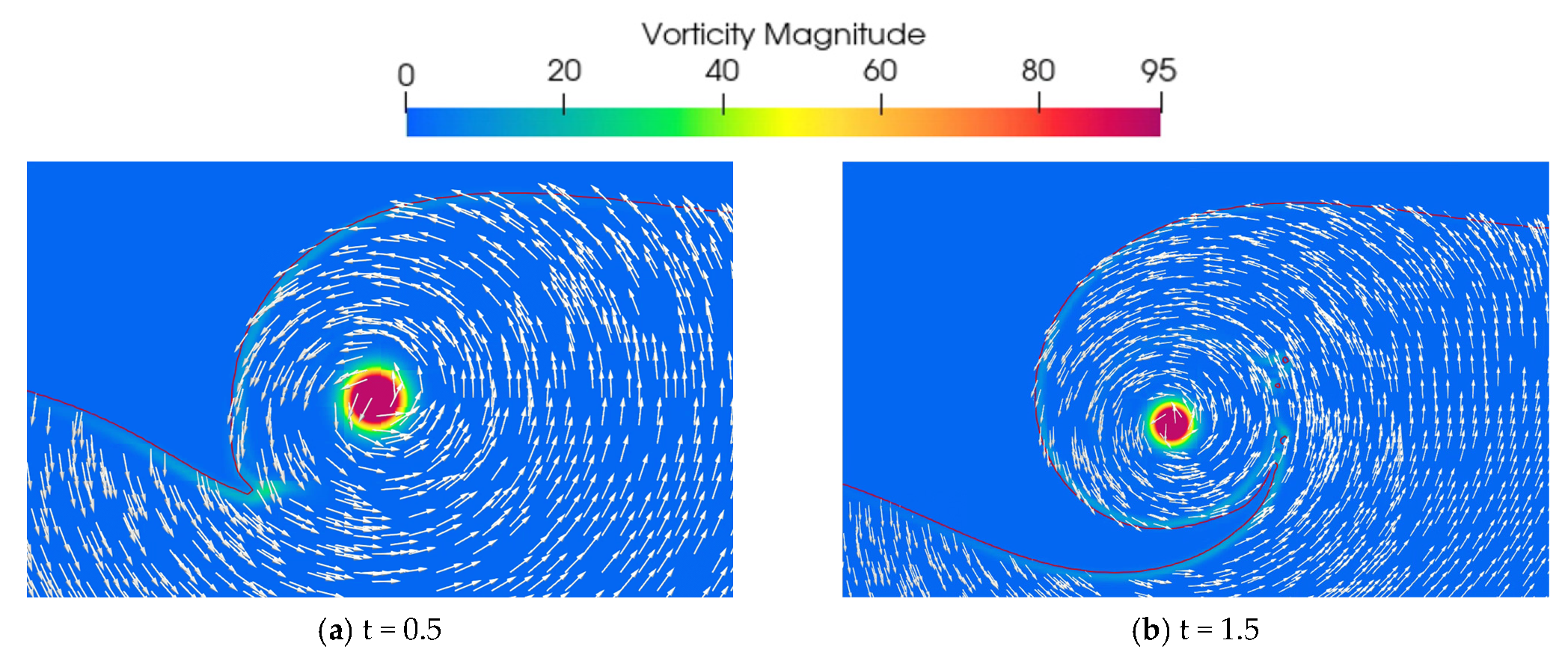
), the baroclinic source term in Equation (10) vanishes. Under these conditions, rather than being entirely passive, the interface dynamics are kinematically governed by the strain field imposed by the primary vortex. Although no new vorticity is generated via the baroclinic mechanism, the interface still undergoes significant stretching and deformation driven by viscous coupling and the non-uniform velocity distribution. Consequently, in this regime, the interface essentially acts as a material line tracking the flow kinematics without exerting feedback (such as capillary forces) on the primary vortex, as shown in
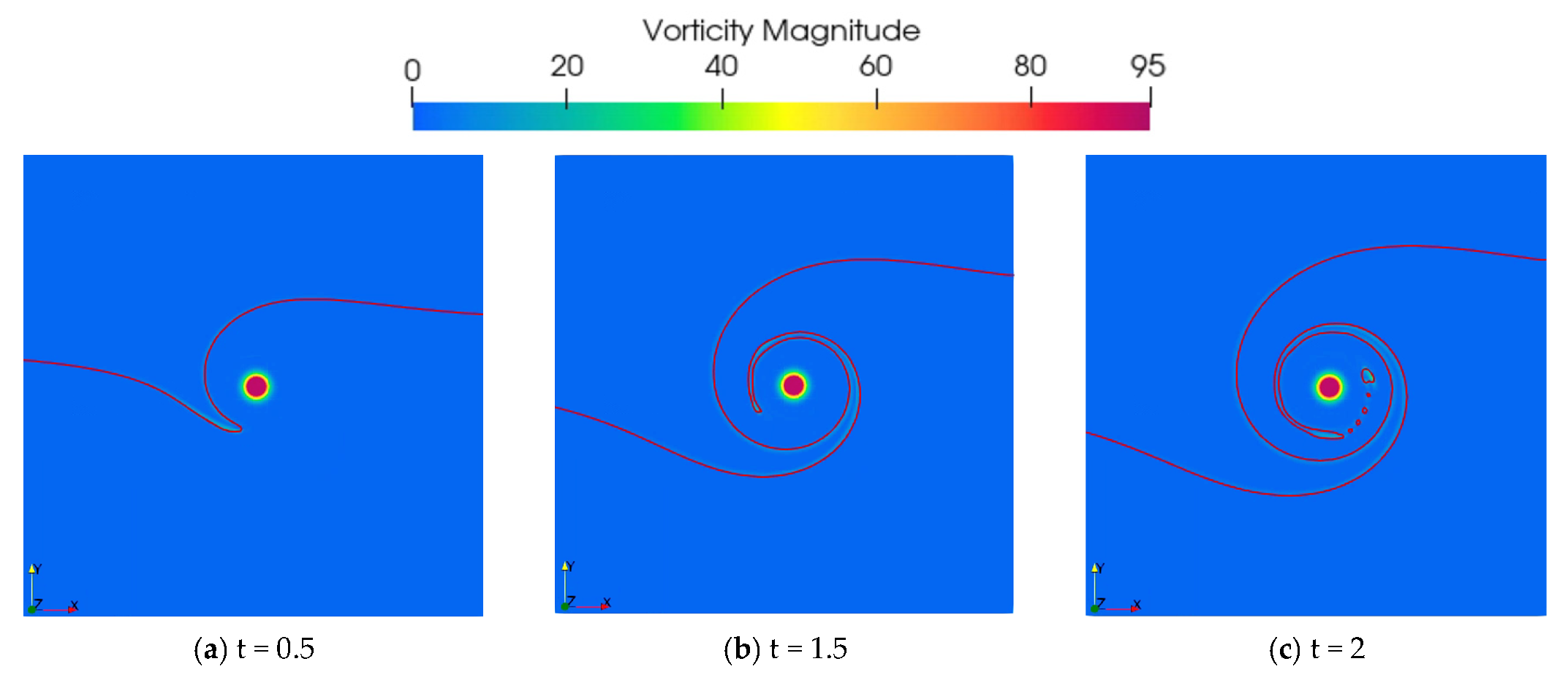
Figure 6,
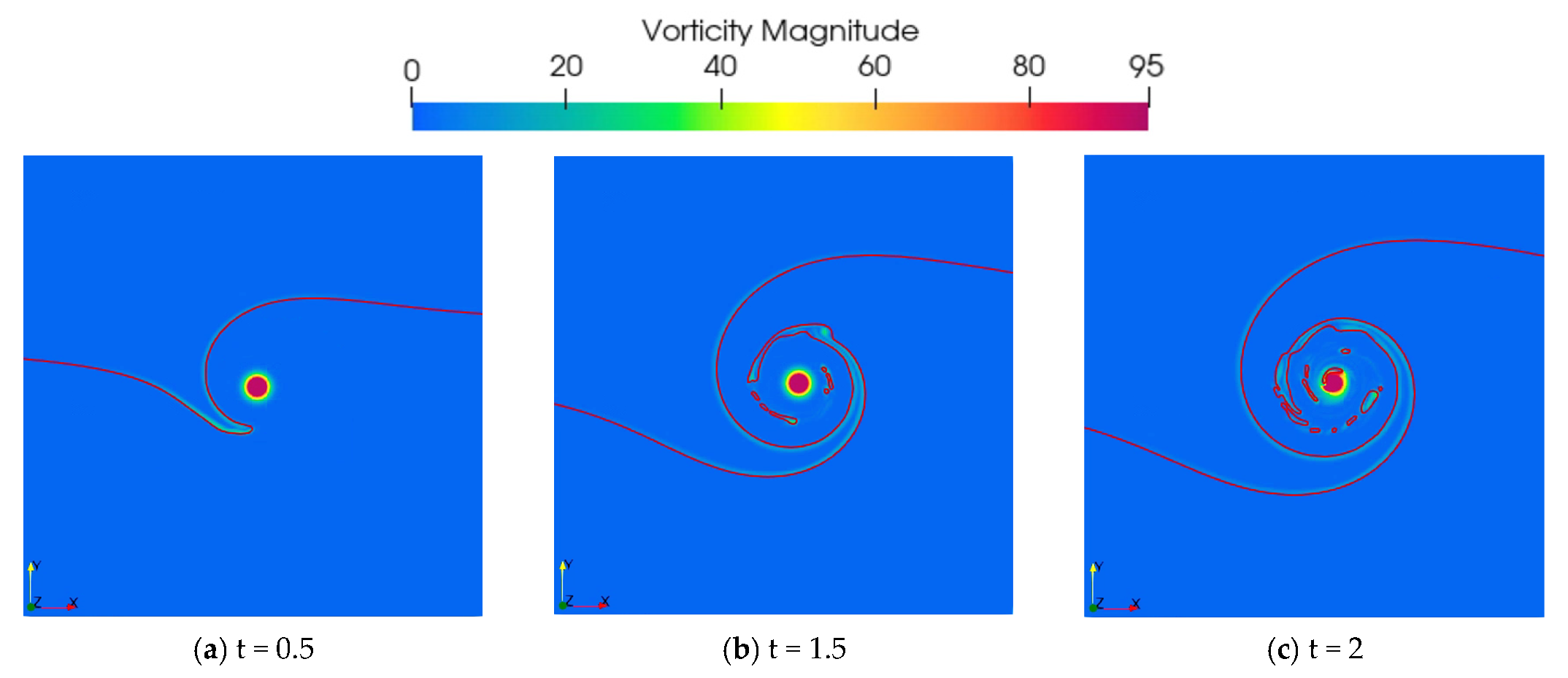
Figure 7 and
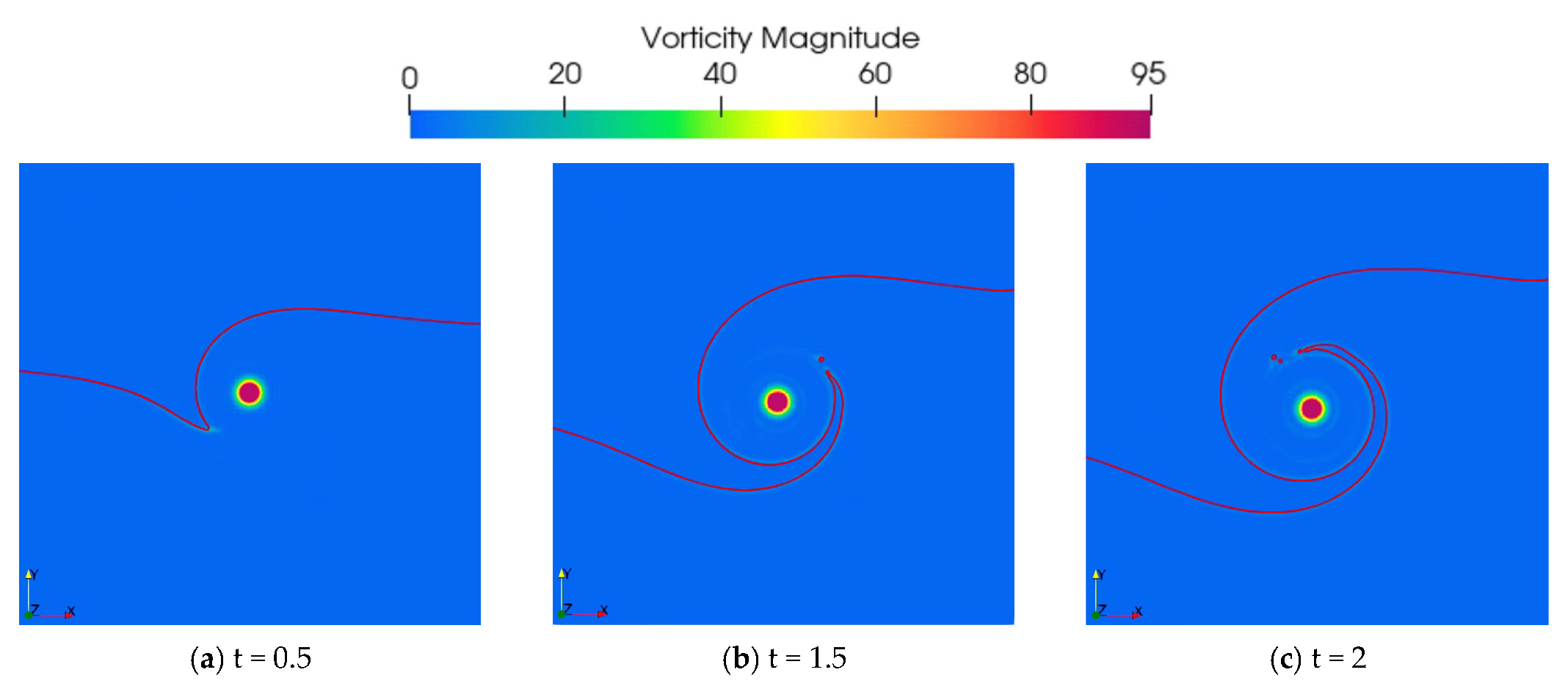
Figure 8.
Under these ideal conditions, we systematically vary the Reynolds number (
) to three distinct values:
,
, and
. These different Reynolds numbers represent flows with varying inertial forces relative to viscous forces, with higher
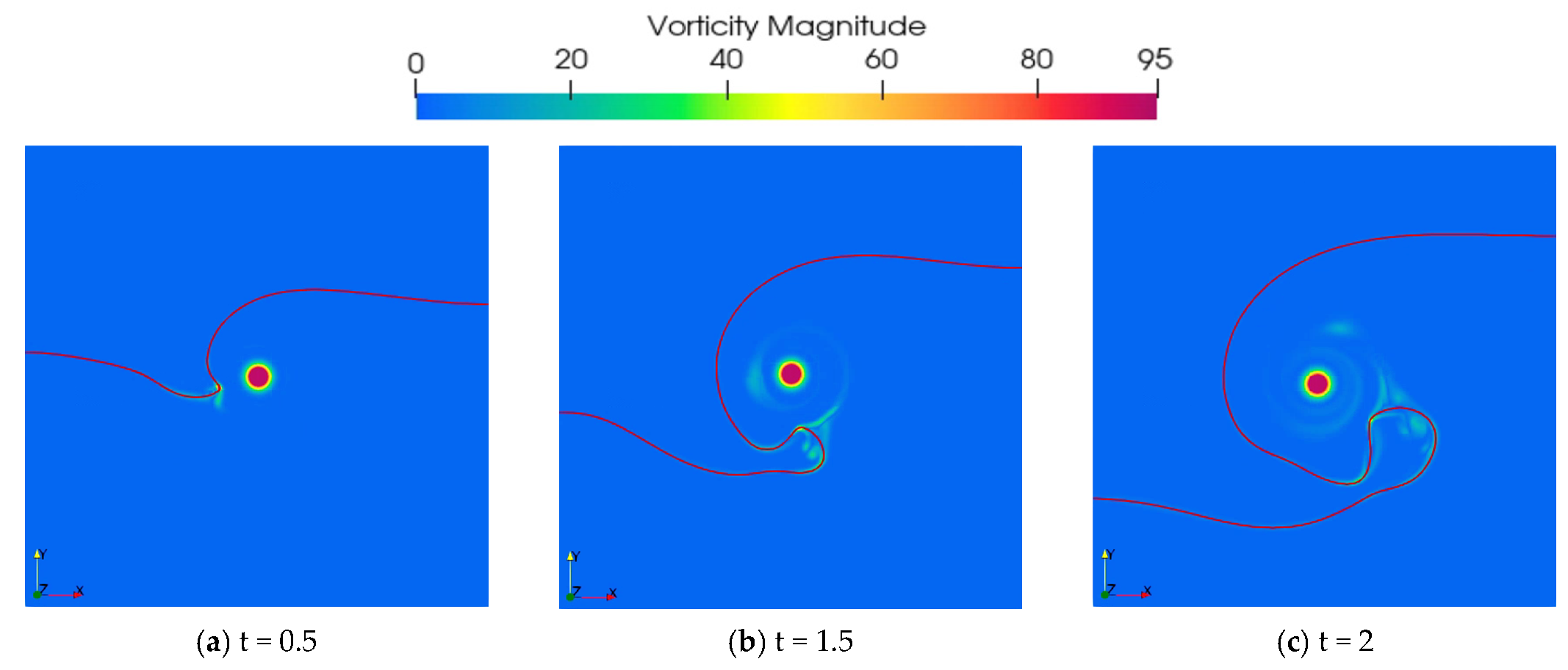
values corresponding to stronger inertial effects and more intense vortex activity. The resulting interface evolution is shown in
Figure 6,
Figure 7 and
Figure 8. As expected, the simulations are in agreement with hydrodynamic theory, which predicts that at higher
, vortices become stronger and their impact on the interface increases. The higher Reynolds numbers correspond to more energetic flow, leading to the amplification of vortex strength and a greater ability to perturb the interface. Consequently, at high Reynolds numbers, the interface undergoes more significant breaking. In the case of
, the interface becomes highly curved, with extensive breaking occurring near the liquid film.
The increase in vortex strength at higher Reynolds numbers is due to the growing influence of inertial forces, which dominate over viscous forces. As these vortices interact with the interface, they induce shear and circulation at the interface, causing it to deform. These deformations, while passive in the absence of surface tension, still reveal how vortices influence the interface dynamics. This effect becomes more pronounced as increases, where the vortices become more chaotic and lead to larger-scale perturbations of the interface.
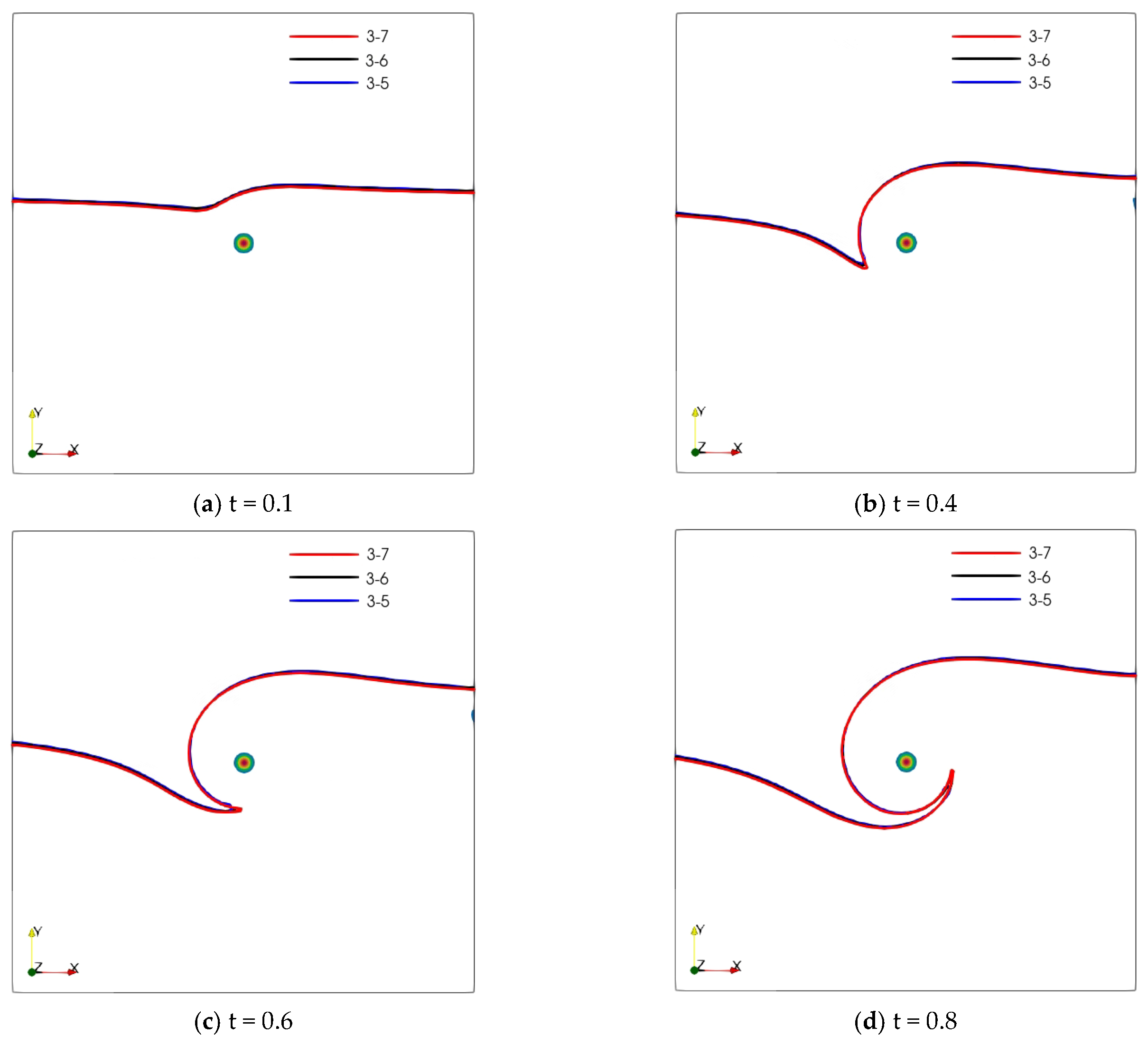
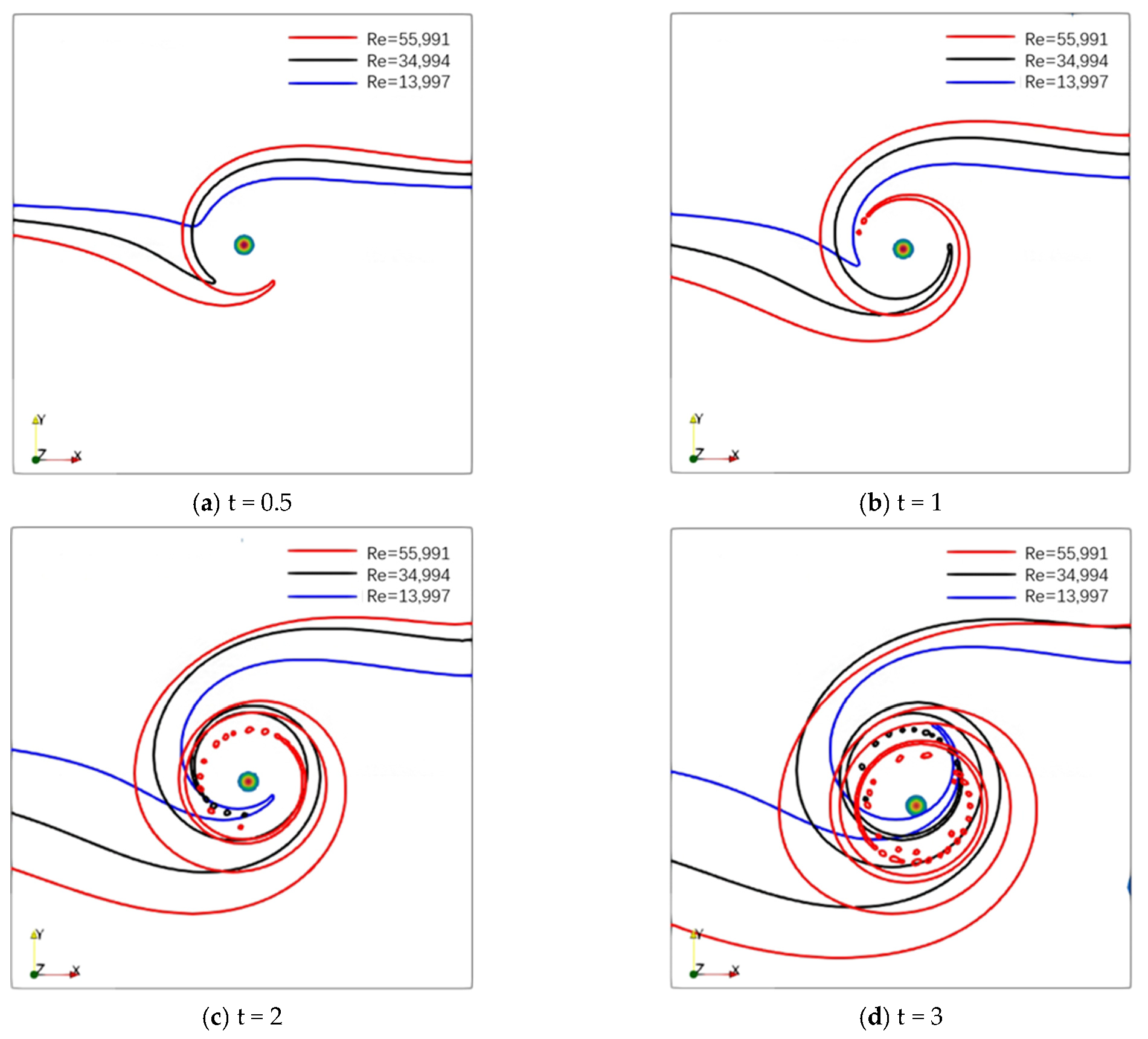
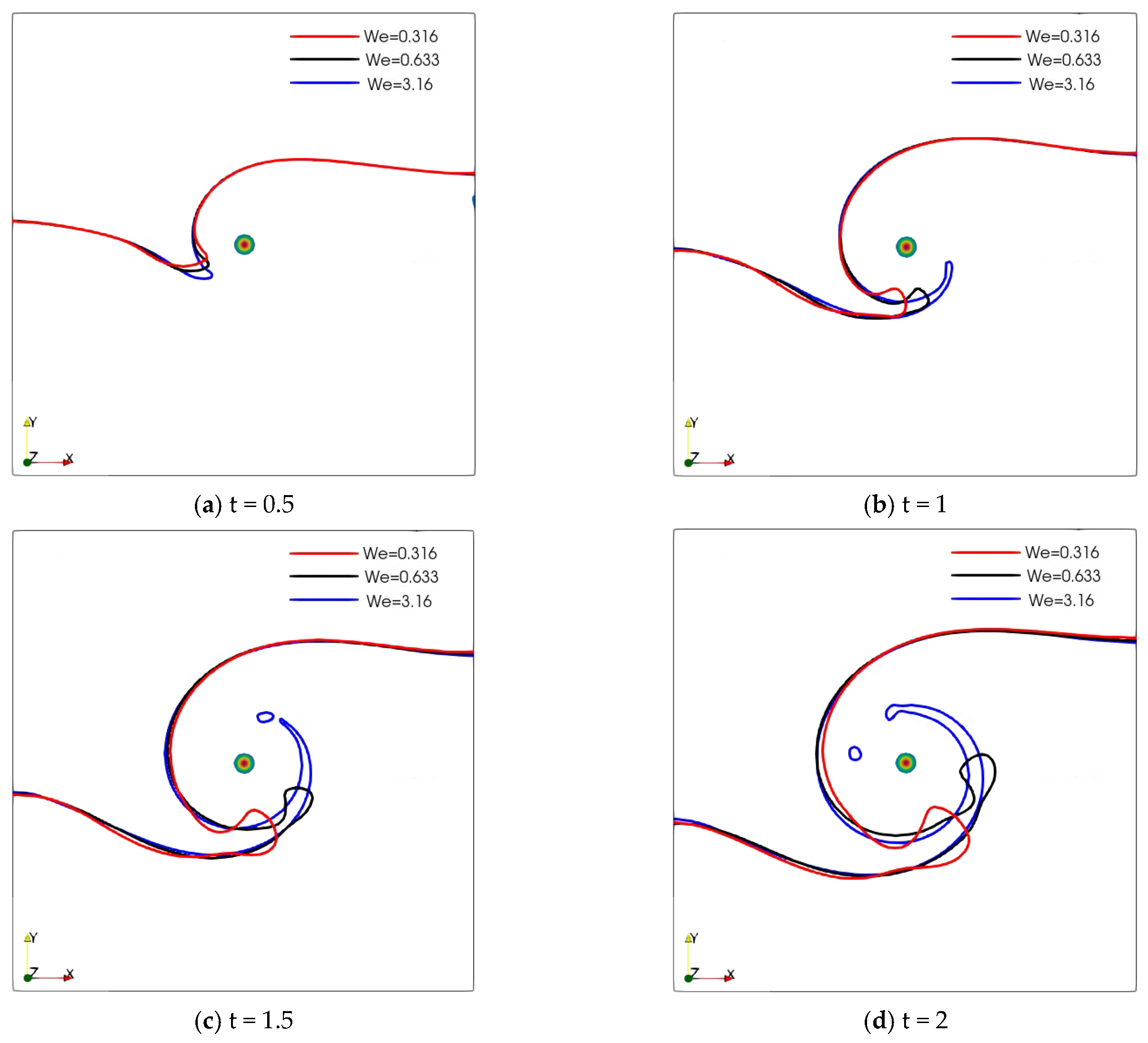
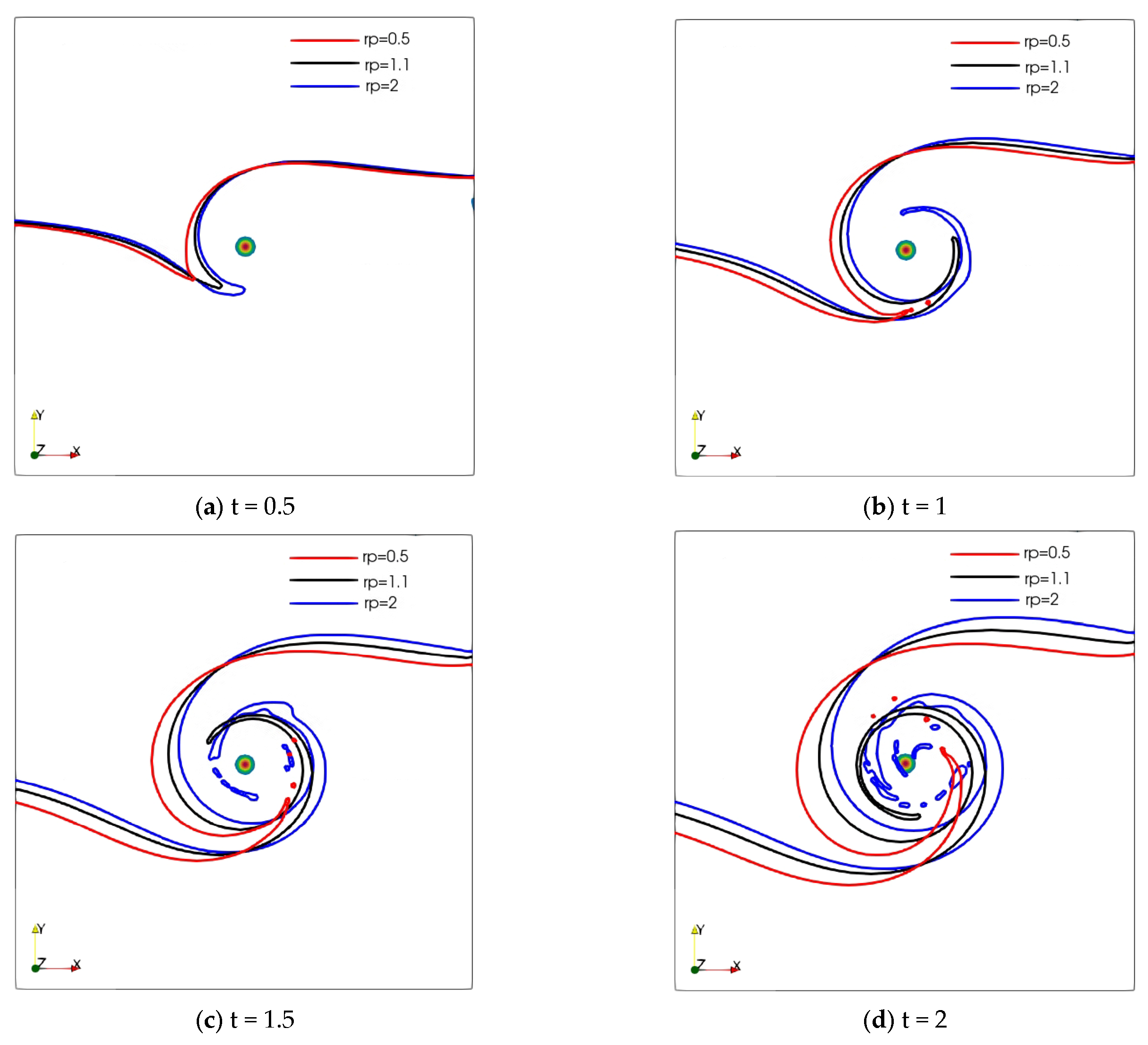
For a more intuitive comparison, we overlay the results for the three Reynolds numbers in a single figure, showing the interface at four different time steps. This comparison, presented in
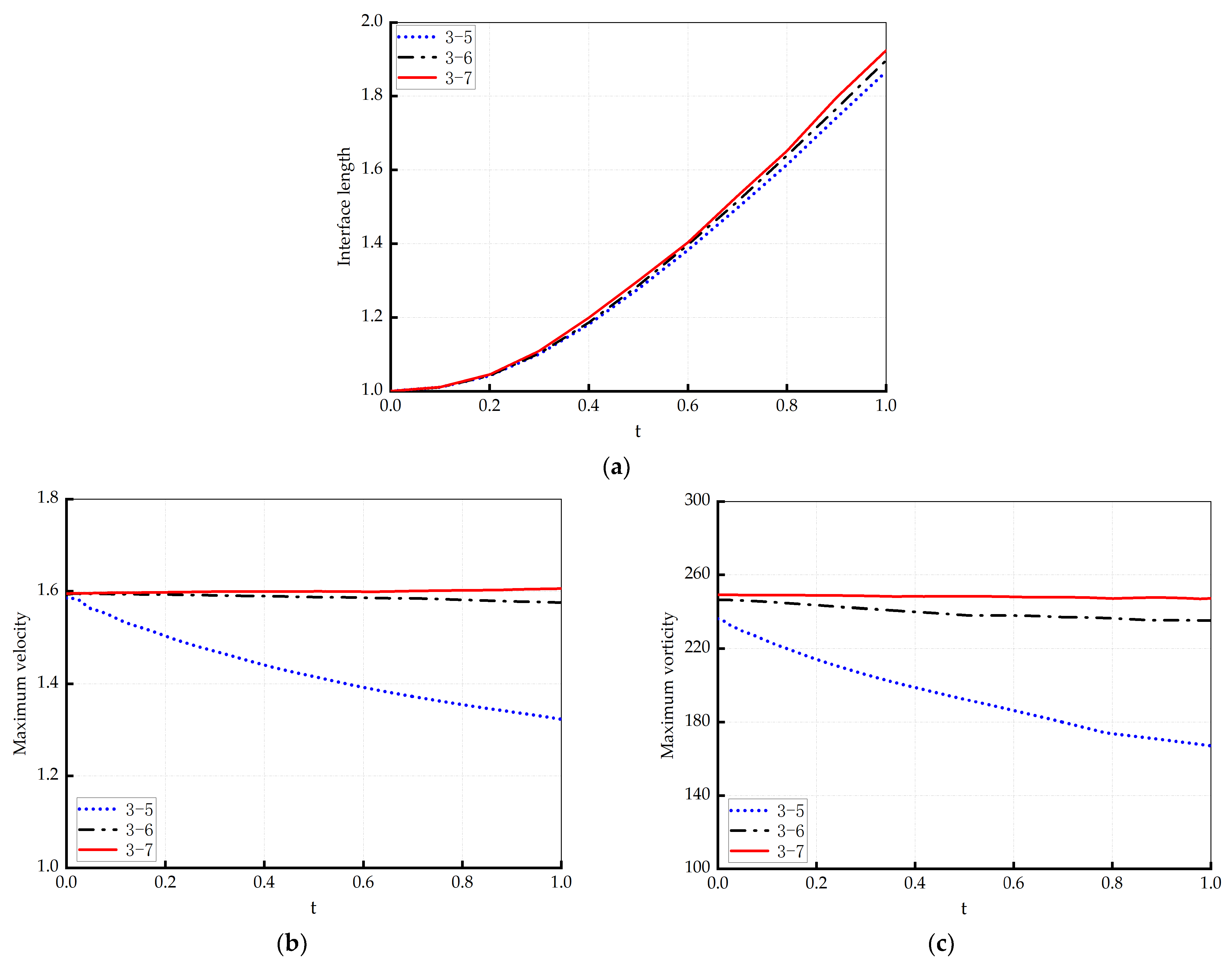
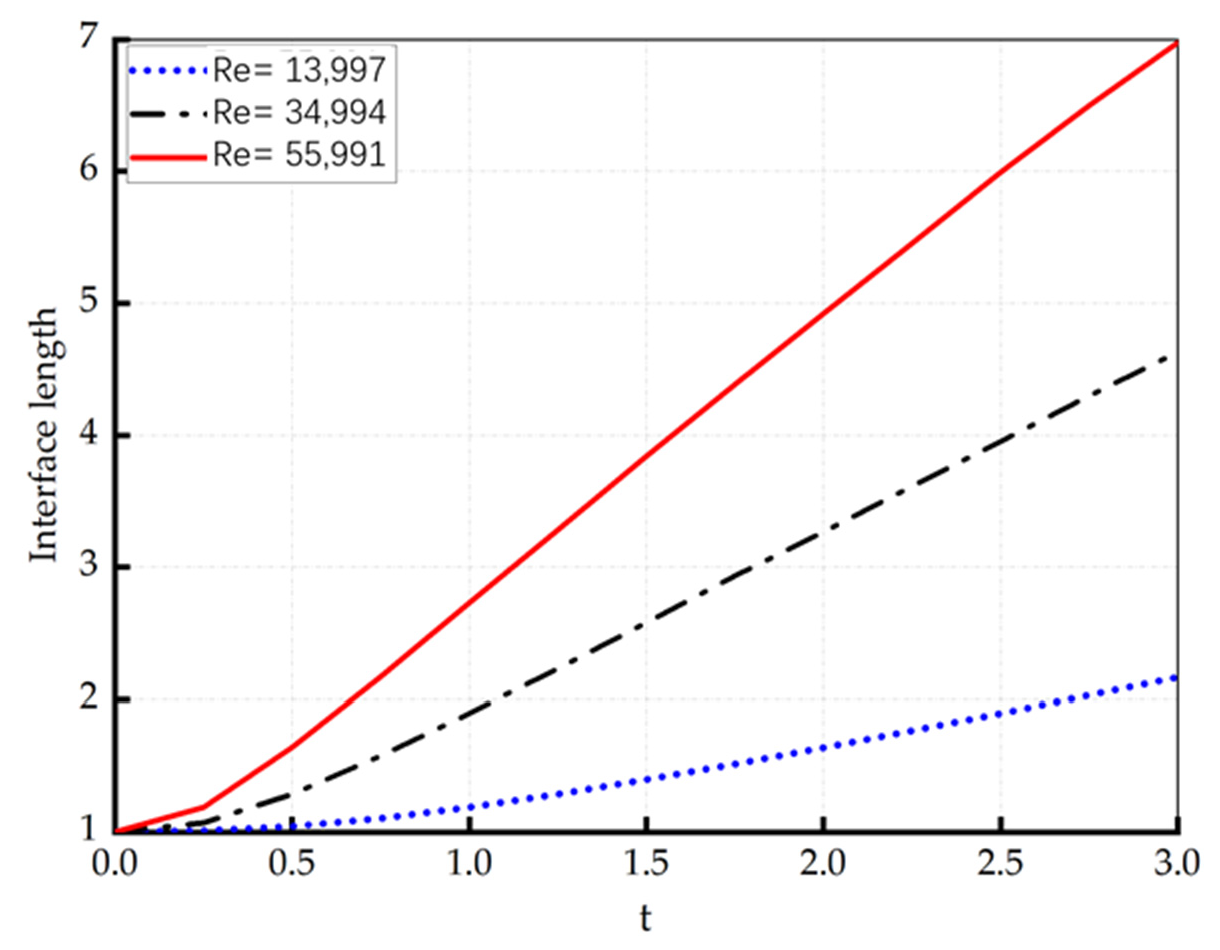
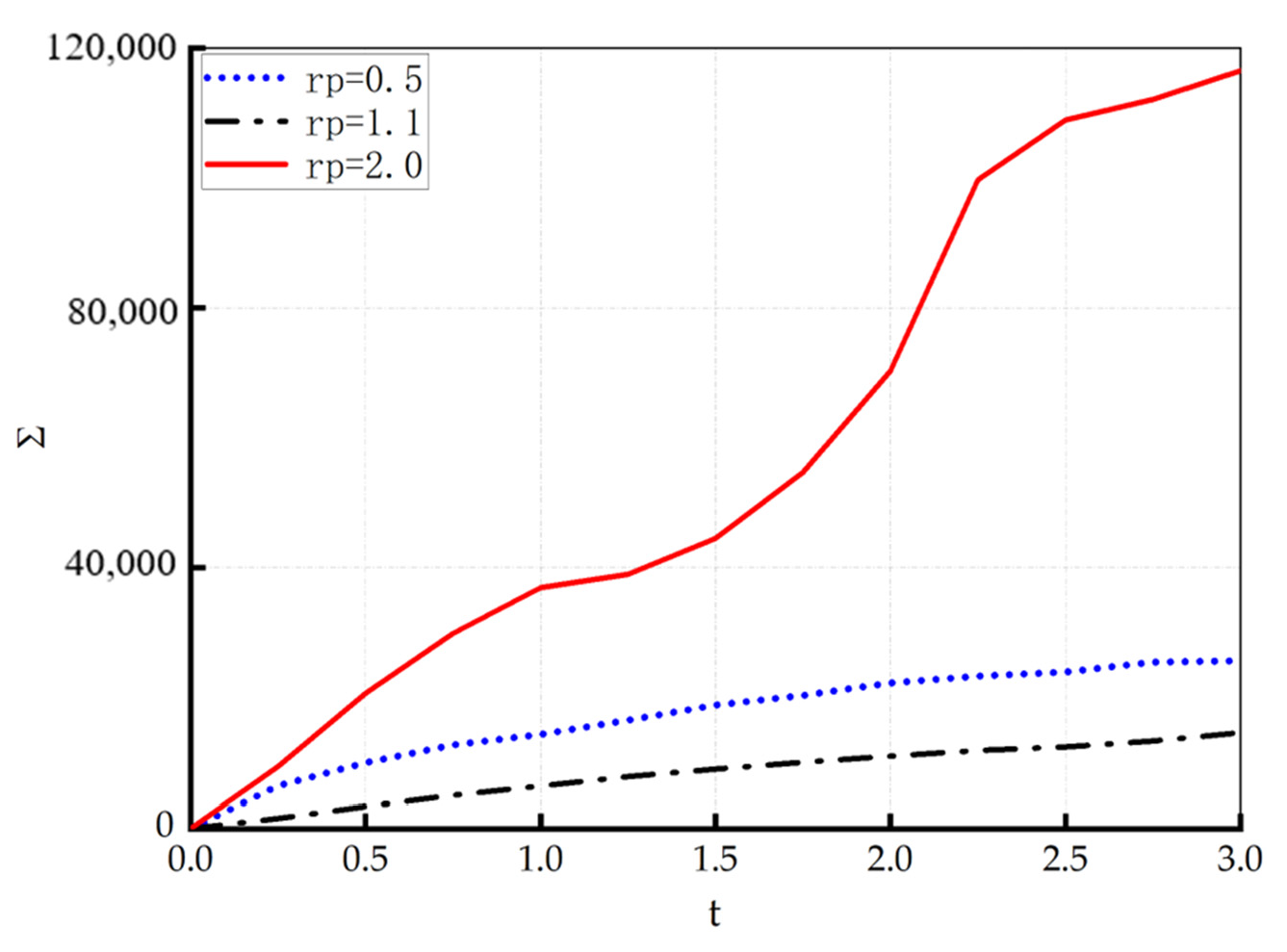
Figure 9, allows for a visual assessment of the differences in interface evolution under varying vortex strengths. As the Reynolds number increases, the vortices cause greater and more rapid distortion of the interface, particularly in regions with high vorticity. To further quantify the results, we use the total length of the interface as an indicator of the degree of deformation. A more deformed interface corresponds to a larger total length, due to the increased surface area created by the vortical motion. The time evolution of this total interface length, corresponding to different vortex strengths, is presented in
Figure 10. This analysis provides a clear and quantitative measure of how vortex strength influences the interface over time, offering deeper insights into the physical mechanisms underlying vortex–interface interactions.
3.2. Consideration of Surface Tension
This section focuses on investigating the role of surface tension in vortex–interface interactions, simplifying the problem by neglecting the density differences between the two phases, i.e., setting
and varying the Weber number (
). The Reynolds number (
) is fixed at 34,994 for the study. We explore three distinct values of
, specifically
,
, and
, with the corresponding interface evolution shown in
Figure 11,
Figure 12 and
Figure 13. As in
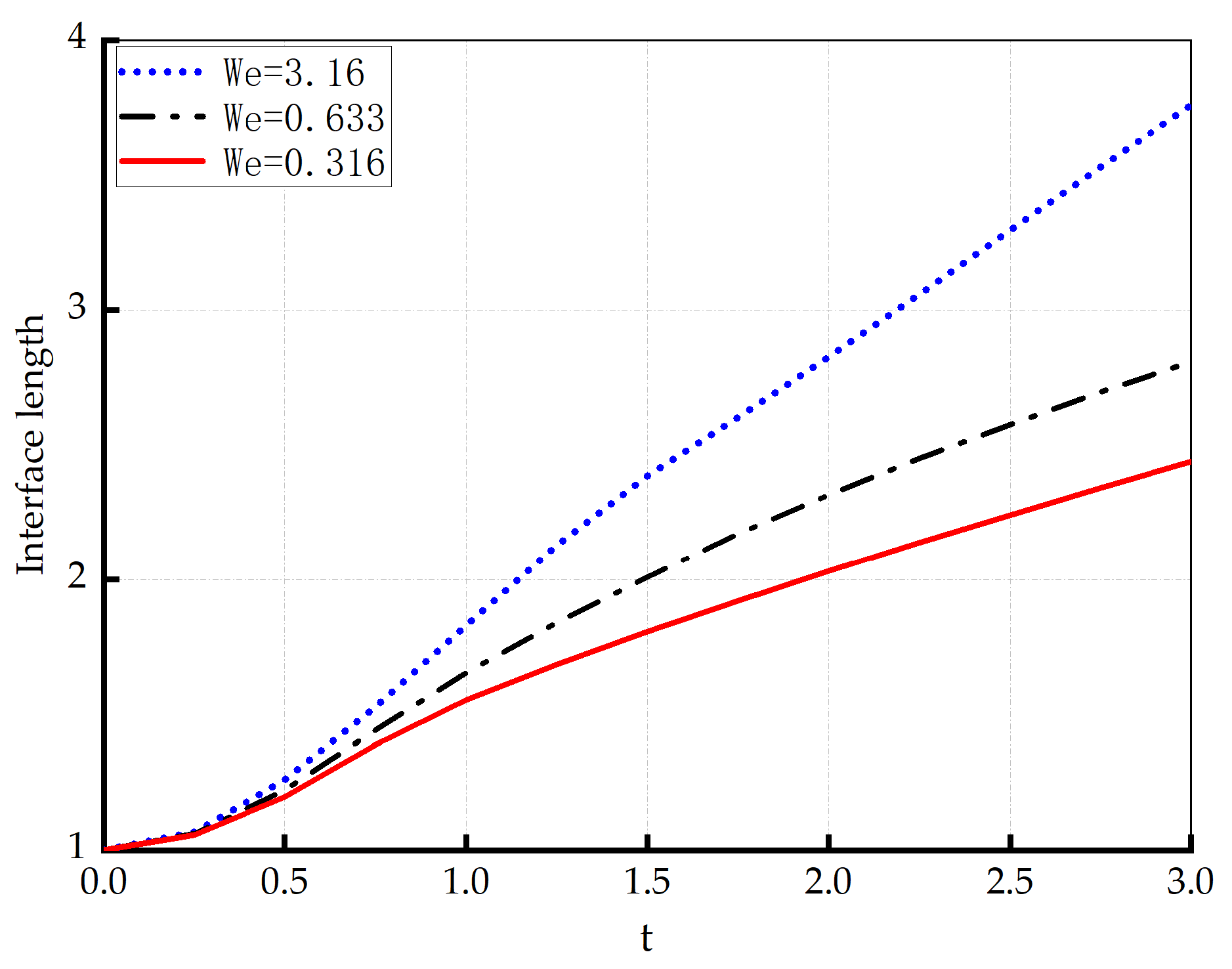
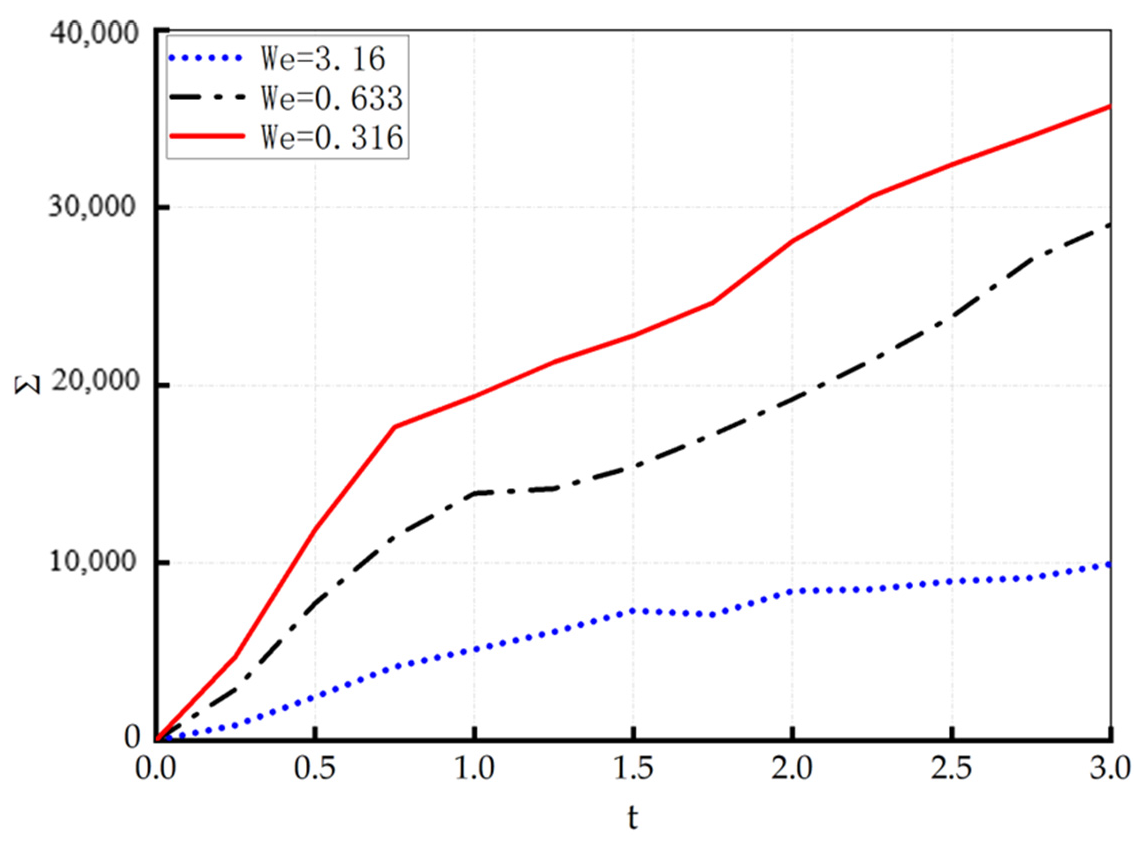
Section 3.2, the total length of the interface is used as a quantitative indicator to assess the degree of interface deformation, and the time evolution of the interface length is analyzed, with results presented in
Figure 14.
When
is large, the dynamics of the interface primarily change in regions with sharp interface curvature, where the curvature is more pronounced. This behavior can be explained by Equation (10) for
, which suggests that vorticity generation at the interface is influenced by the curvature gradient:
Here, the source term is directly proportional to the curvature gradient along the interface, implying that stronger curvature leads to greater vorticity generation. Even for relatively high
, the formation of a distinct liquid film edge can be observed, as shown in
Figure 11 and
Figure 12. As surface tension increases (i.e.,
decreases), the size of the liquid film edge grows. This is a direct consequence of increased surface tension, which stabilizes the interface and promotes the formation of a sharper, more distinct liquid film. This effect is particularly evident when comparing
Figure 11 and
Figure 12, where a more pronounced liquid film edge is observed with lower
.
Additionally, there exists a critical range for
, below which surface tension prevents significant curling phenomena from occurring. This is illustrated in
Figure 13, where no notable interface deformation occurs for
values below this threshold. In this regime, a vortex layer can detach from the sharp interface, leading to vortex shedding and the formation of a dipole, accompanied by the generation of capillary waves. This mechanism can be understood as the transition of the interface from a stable state to one where surface tension induces more complex dynamic effects, such as vortex formation and wave propagation. The observed behavior highlights the critical role of surface tension in shaping the interface dynamics, driving the formation of intricate fluid structures that evolve over time.
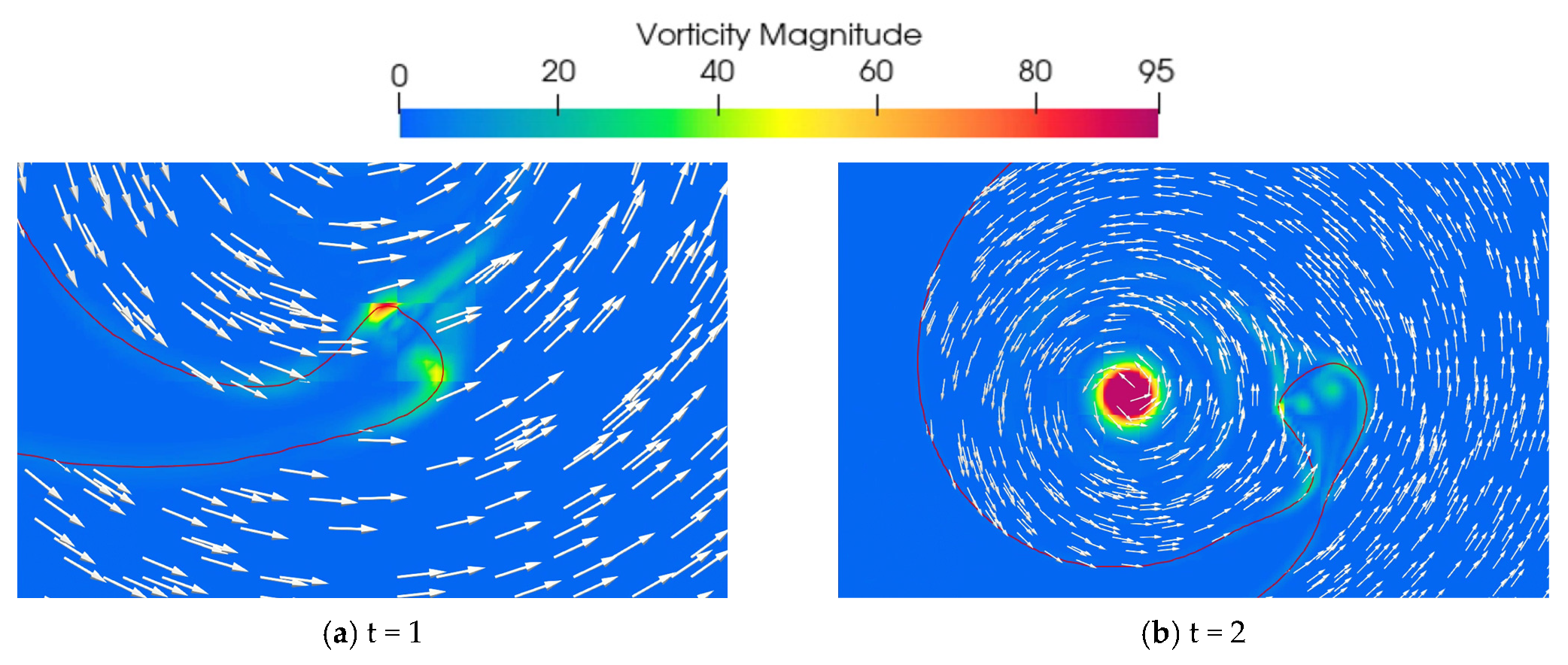
As surface tension increases, the size of the liquid film edge continues to grow, and the vorticity generated at the interface also increases, as shown in
Figure 15. This figure provides an intuitive comparison of the changes in vorticity for different
values. From
Figure 15, we can find that the vorticity generated at the interface could exceed the peak vorticity of the initial vortex. To quantify this effect, we analyze the total vorticity generated near the interface and present a comparison in
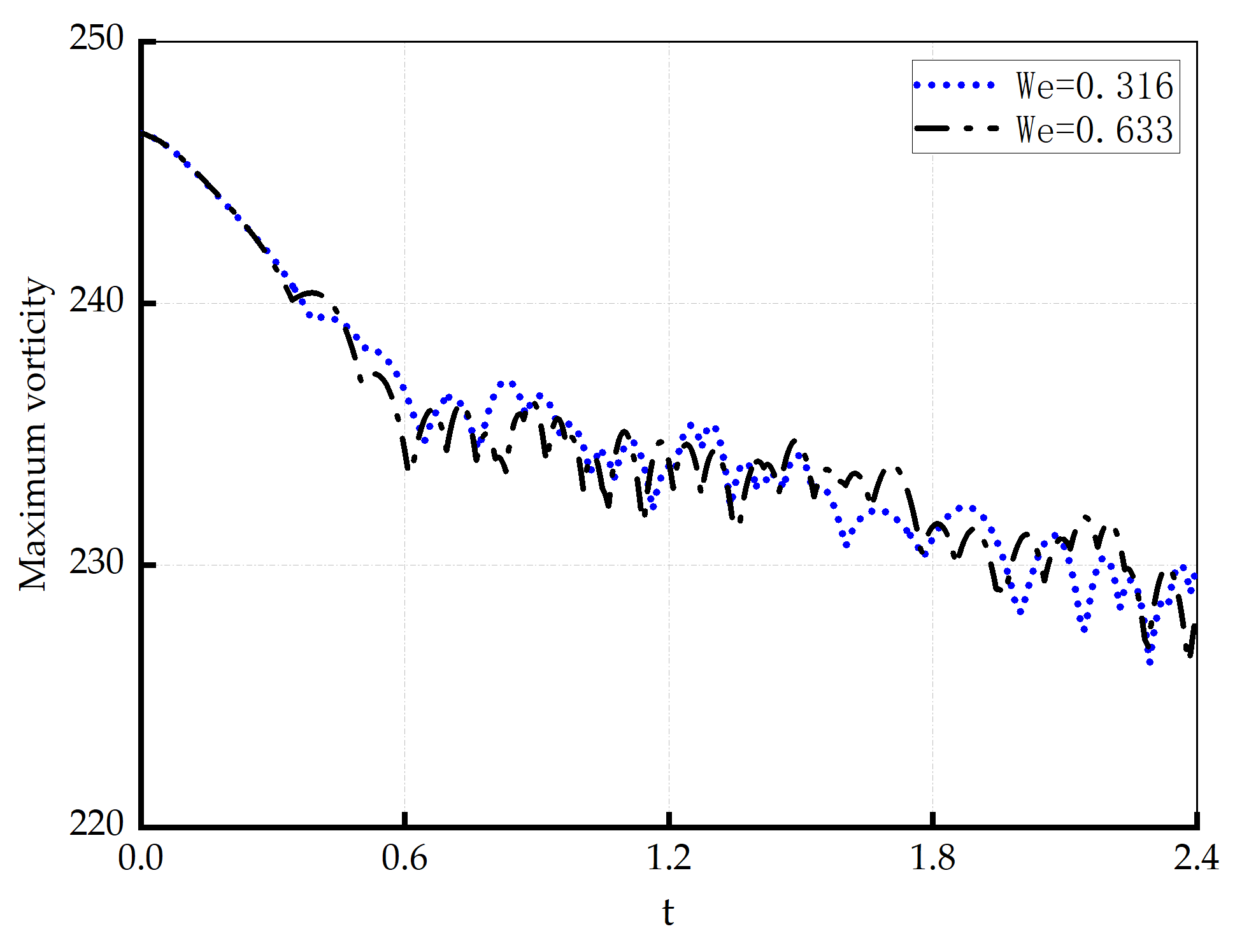
Figure 16. However, the differences between
and
are not particularly significant, as shown in
Figure 17, where the maximum vorticity strengths over time are compared. The similar vorticity field structures lead to comparable dimensionless vorticity values.
Despite this, as
decreases, the size of the vorticity field grows. However, the reduction in curvature is compensated by the increase in surface tension, which keeps the peak vorticity relatively constant. This indicates that the effect of surface tension becomes more significant as
decreases, with the interface dynamics increasingly governed by surface forces rather than inertial forces. The vorticity generated at the interface leads to the creation of a velocity field, which can be estimated using the following approach: First, the vorticity from the deformation vortices in the total vorticity field is removed to obtain the filtered vorticity field
. Then, the velocity potential
is determined by solving the following equation:
Subsequently, the velocity field is computed using
and
.
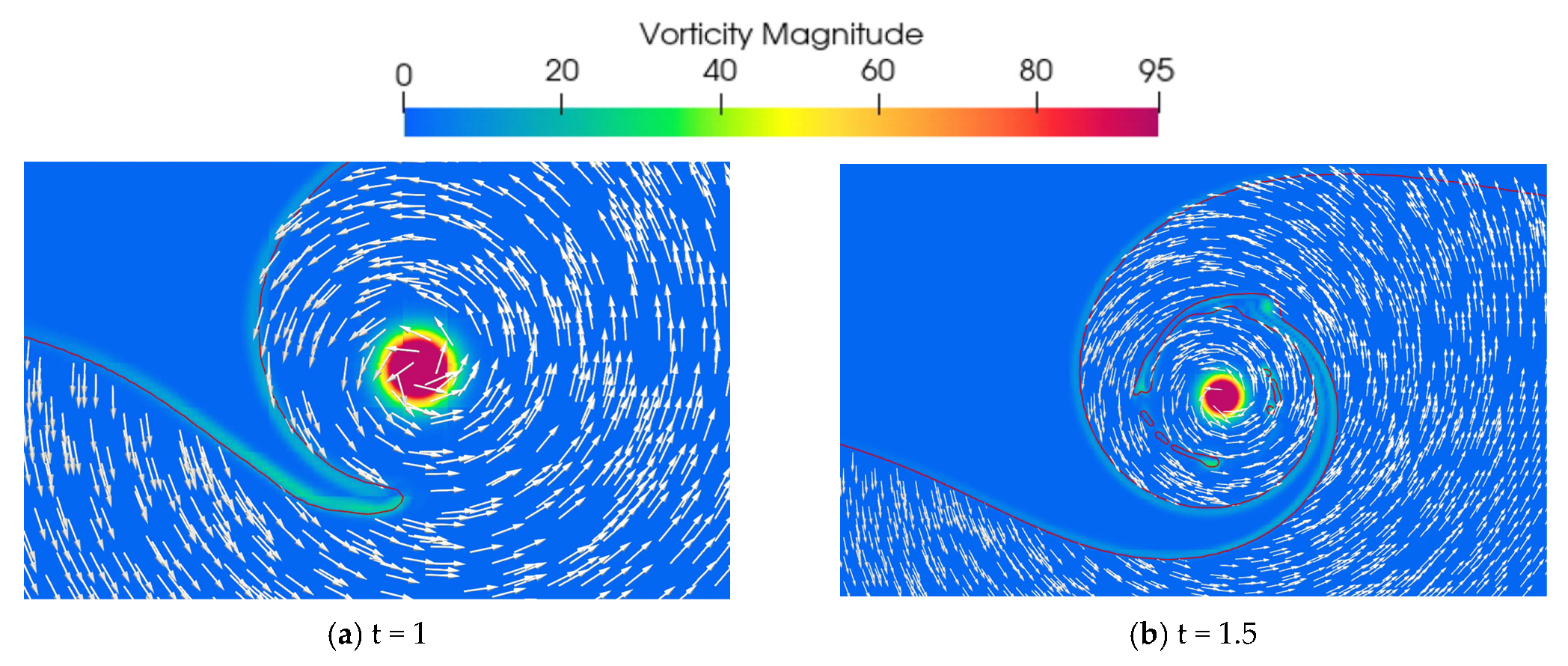
Figure 18 shows that the velocity field is predominantly dipolar in nature, with the situation at
being particularly pronounced. This velocity field originates from the formation of the liquid film edge, and the size and formation of this edge depend on
. As
increases, the size of the liquid film edge decreases, and the formation time increases. This suggests that as surface tension rises, the interface dynamics become more stable and evolve more slowly.
The numerical results in this section also reveal that, regardless of the value, the dynamic properties of the interface remain relatively unchanged over a broad range of Reynolds numbers (). Notably, for higher values of , the effect of on the interface shape becomes negligible, even over extended periods. This observation suggests that, at high surface tension, the primary factors influencing interface dynamics are surface tension and curvature, rather than the Reynolds number. As a result, the interface dynamics stabilize under these conditions, with surface tension playing a dominant role in determining the behavior of the interface.
3.3. The Effect of Density Ratio on the Interface Evolution
Next, we focus on studying the impact of the density ratio between the two phases on the interaction between the vortex and the interface, while neglecting the effects of surface tension, i.e., setting
and varying the phase density ratio
. The Reynolds number (
) is fixed at 34,994 for all simulations. Under the influence of the existing vortex, the interface begins to curl. However, unlike the passive interface behavior observed in
Section 3.2,
Figure 19 and
Figure 20 show that even when the density ratio
is close to 1, the sharp interface undergoes rapid and significant changes. These deformations are much more pronounced compared to the passive interface behavior described in
Section 3.1. In this case, the source term generates a vorticity layer at the interface, rather than a localized dipole near high-curvature points. This can be explained by Equation (10) for
:
Here, the source term is proportional to the pressure gradient along the interface. As the density difference between the phases increases, the pressure differential across the interface becomes more pronounced, leading to greater vorticity generation. This explains why, with increasing density differences, the interface exhibits more intense dynamic interactions. The increased pressure differential drives stronger vortex formation and more significant deformation of the interface. This study emphasizes the critical role of density differences in vortex–interface interactions, demonstrating that even small variations in the density ratio can significantly influence the interface’s response to vortex dynamics.
To explore the physical mechanisms behind these observations, we consider a rough approximation, assuming that the observed vortex behaves similarly to the passive spiral interface described in
Section 3.1, with the pressure field primarily driven by the undisturbed Lamb–Oseen vortex. This approximation evaluates the vorticity generated along the spiral as follows:
Unlike in
Section 3.2, where the source term is concentrated near high-curvature points, here the vorticity source is more evenly distributed along the interface, resulting in a broader vorticity layer. This more uniform distribution of vorticity contributes to the observed dynamics and highlights the differences in vortex–interface interactions between the two scenarios.
Next, we discuss two cases with different density ratios: Case 1, where
, and Case 2, where
. For
, the dynamics at the sharp interface change rapidly, with small-scale structures appearing at the interface tip, as shown in
Figure 20,
Figure 21 and
Figure 22. The vorticity source term, as approximated by Equation (14), shows that the vorticity at the upper part of the interface is positive (
), while at the lower part, it is negative (
).
Figure 23 illustrates the velocity field generated by the interface vorticity, calculated using Equation (12). This additional velocity field enhances the effect of the existing vortex velocity field, leading to greater stretching of the liquid film and ultimately resulting in fluid fragmentation near the interface tip, as seen in the formation of small fluid droplets. This effect is more pronounced for higher
, as larger density differences promote faster vortex shedding and interface deformation.
The enhanced stretching of the liquid film is a direct result of the self-amplifying mechanism associated with the vorticity layer generated at the interface. As surface tension increases, the liquid film edge grows larger, and the vorticity generated at the interface intensifies. This stretching leads to exponential growth, which explains the observation of the sharp interface evolving with exponential thinning behavior, as the vorticity layer amplifies the deformation process.
For
, the interface becomes unstable on the outer side due to the existing vortex velocity field. The initial vorticity generated at the interface also induces shear effects, which further intensify the generalized Rayleigh-Taylor (RT) instability driven by the vortex dynamics. This shear effect accelerates the breakup of the fluid near the interface tip, as illustrated by the comparison between
Figure 7 and
Figure 22. As the vorticity generated at the interface increases, the velocity induced by this additional vorticity eventually surpasses the velocity induced by the existing vortex, causing the vorticity to roll up and shed from the tip, forming a new vortex (see
Figure 22).
This new vortex, in turn, influences the interface’s dynamic response, triggering the formation of a heavy liquid (liquid 2) film. The rate of vorticity generation and the intensity of this effect strongly depend on the density ratio , as the differential momentum between the phases governs the overall vorticity generation at the interface.
In contrast, for the case where
, the sign of the vorticity generated in Equation (13) changes. This change is clearly visible when comparing
Figure 19 with
Figure 18,
Figure 24 and
Figure 25. The reversal of the vorticity sign results in a relative velocity that opposes the existing vortex velocity field, as seen in
Figure 26. This reversed vorticity induces a distinct interface evolution: compared to the single-phase case, the liquid film in this condition becomes thicker. Similar to the case where
, a localized centrifugal Rayleigh-Taylor instability is still observed, confined to the inner side of the interface (see
Figure 18,
Figure 24, and
Figure 25) where the local density gradient opposes the effective centrifugal gravity.
When comparing the results of
and
, the interface evolution comparison is shown in
Figure 27. From
Figure 27, it is evident that the liquid film in the
case breaks more quickly (is more prone to shedding) than in the
case. However, the overall deformation of the interface at the sharp point is slower and less intense than in the
case. As the density ratio
increases, the liquid film breaks more quickly, and the deformation becomes more violent. Quantitative analysis of these effects, considering the total vorticity generated near the interface, is shown in
Figure 28. It is observed that the total vorticity generated decreases as the density ratio approaches 1, which is corroborated by the comparison in
Figure 27. For the case with
, the vorticity grows more rapidly, and this quantitative result supports the observation in
Figure 27, where the interface deformation near the sharp point is faster and more violent for higher
.
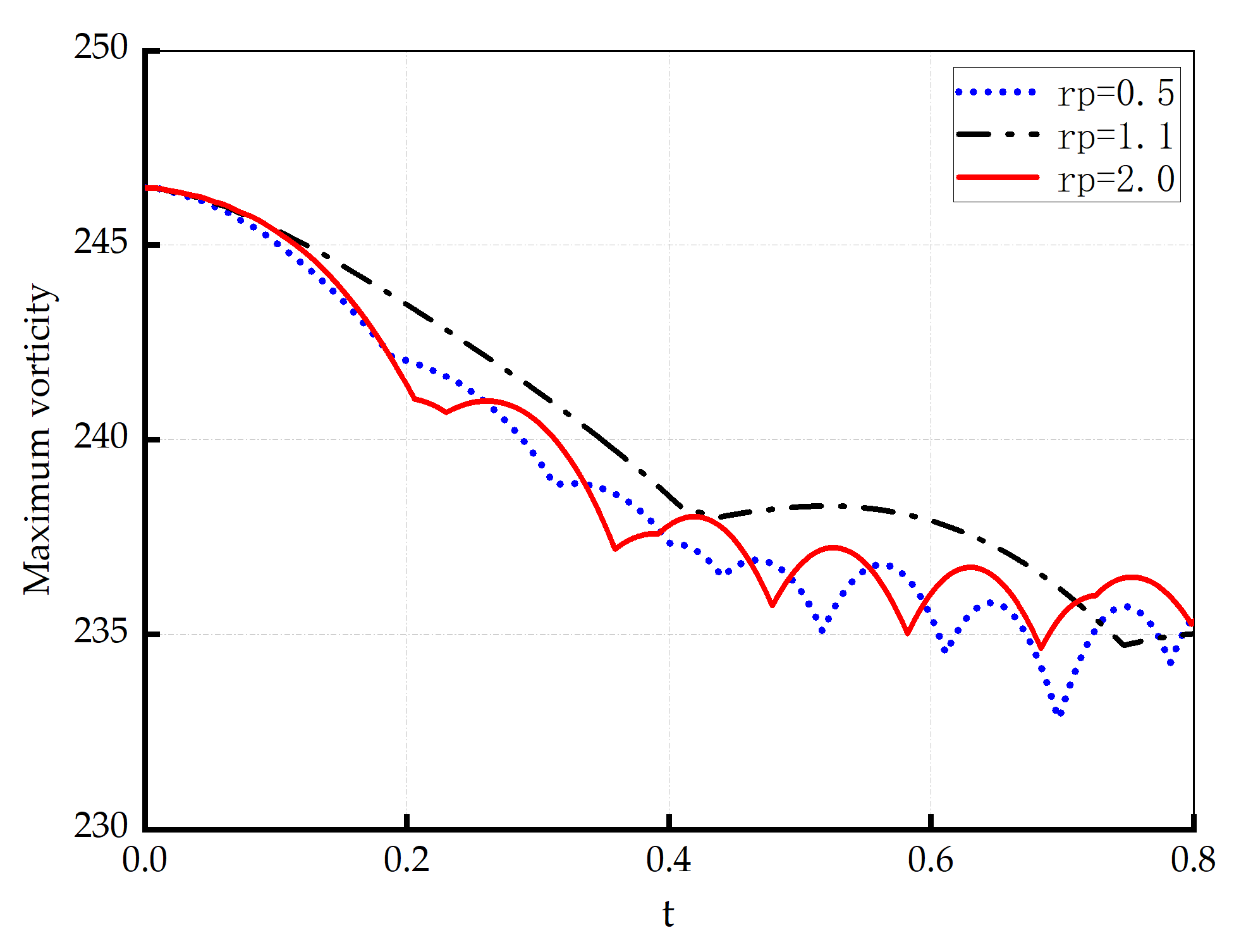
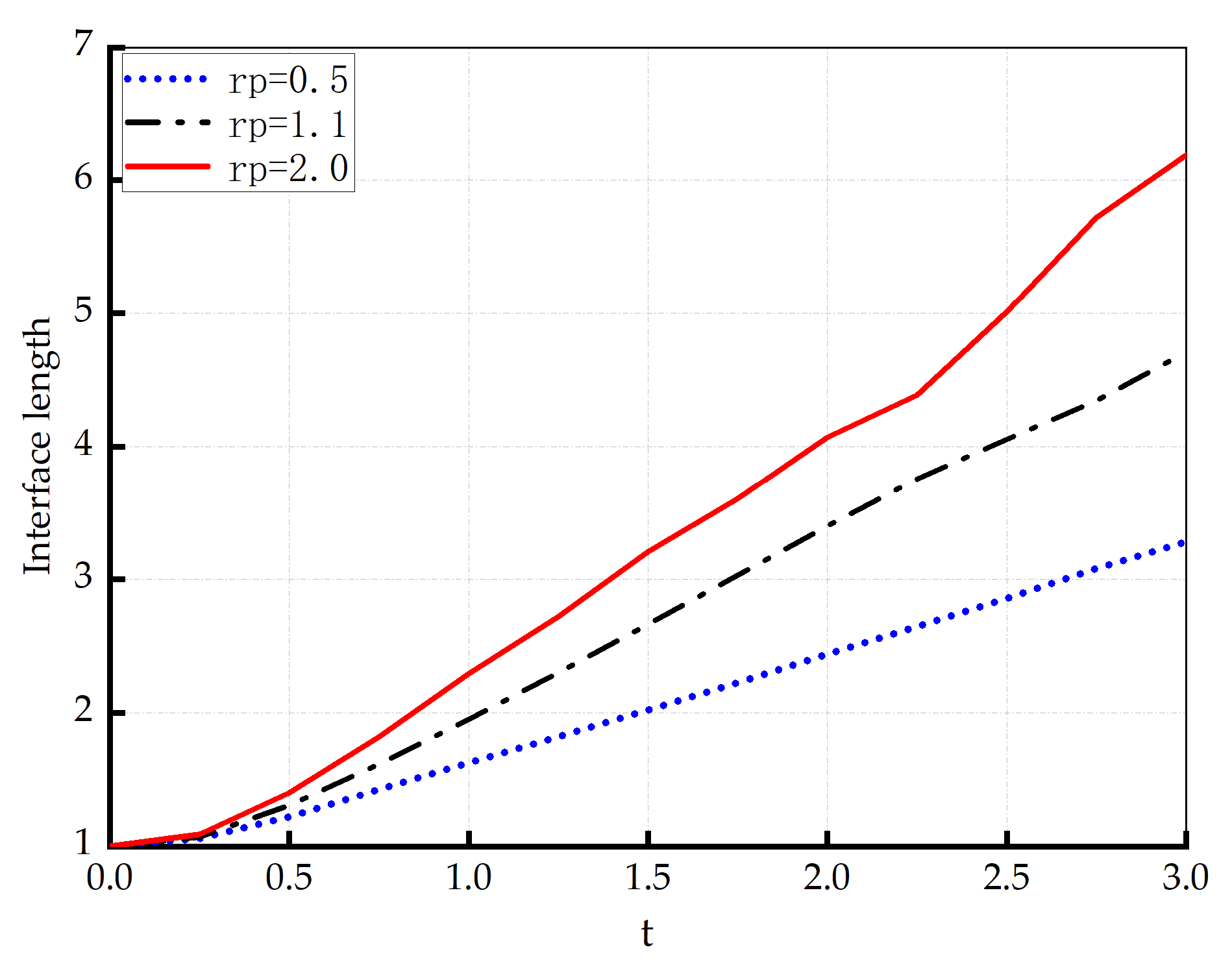
Further, two additional quantitative analysis plots focusing on the maximum vortex strength and the formed interface length are shown in
Figure 29 and
Figure 30. From these plots, it is clear that the dissipation of the initial vortex in the
case occurs more quickly (
Figure 29), while
Figure 30 visually shows that as
increases, the overall interface change becomes more intense.
3.4. The Together Effects of Density and Surface Tension
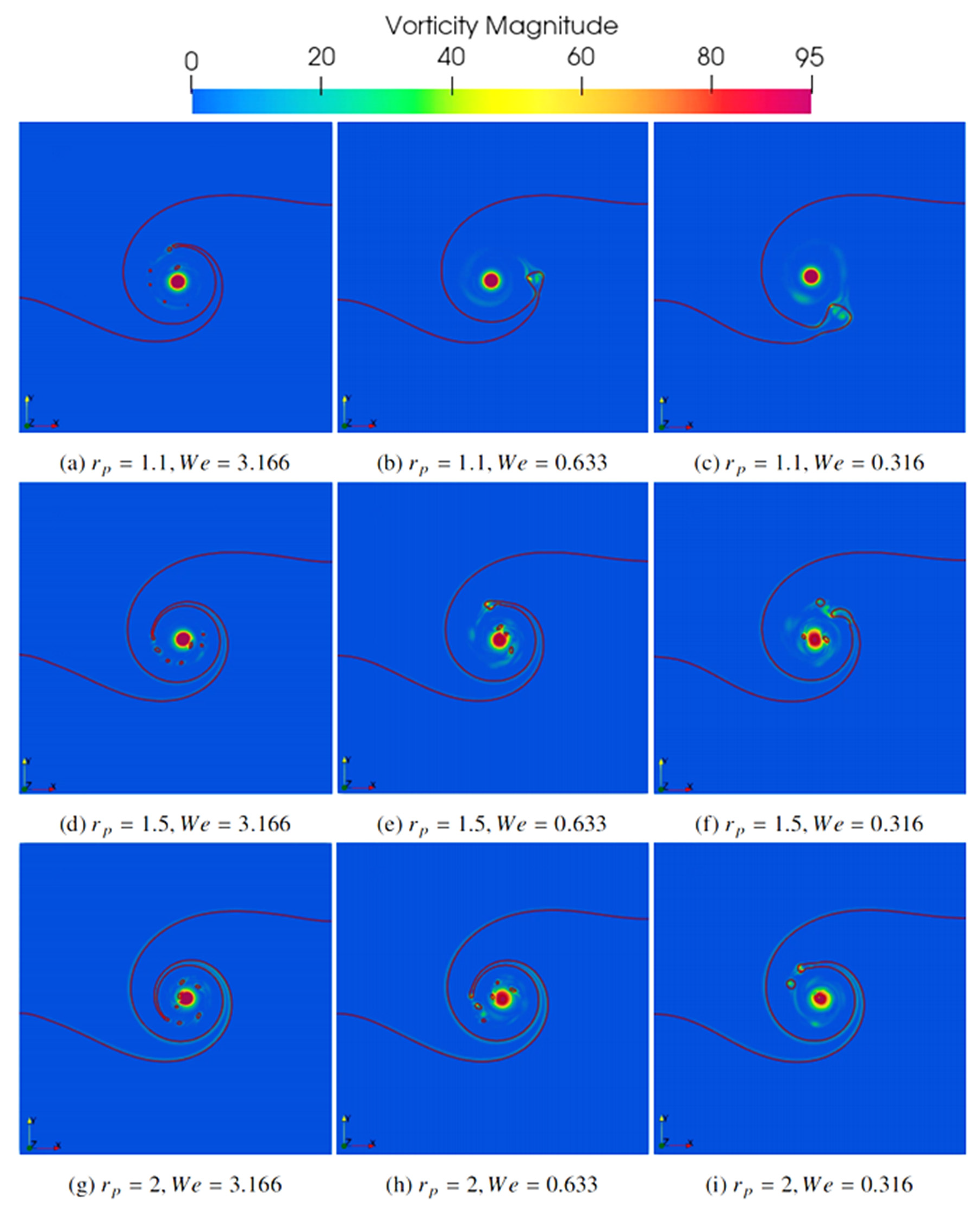
Building upon the work presented in the previous two sections, this section explores the combined effects of surface tension and phase density ratio on vortex–interface interactions. Specifically, we set the phase density ratio and vary the Weber number to analyze how these two factors jointly influence the dissipation of the initial vortex and the generation of vorticity at the interface.
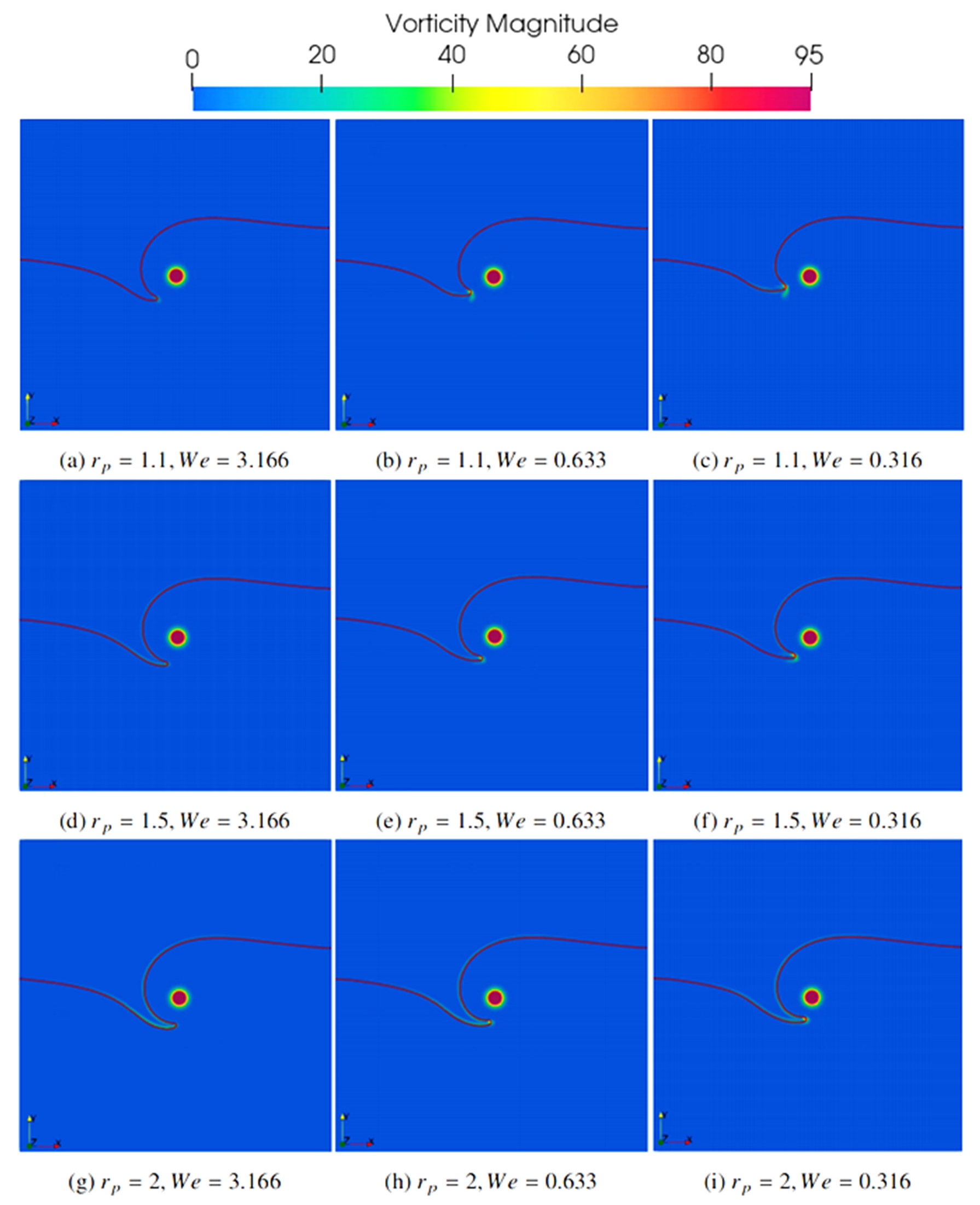
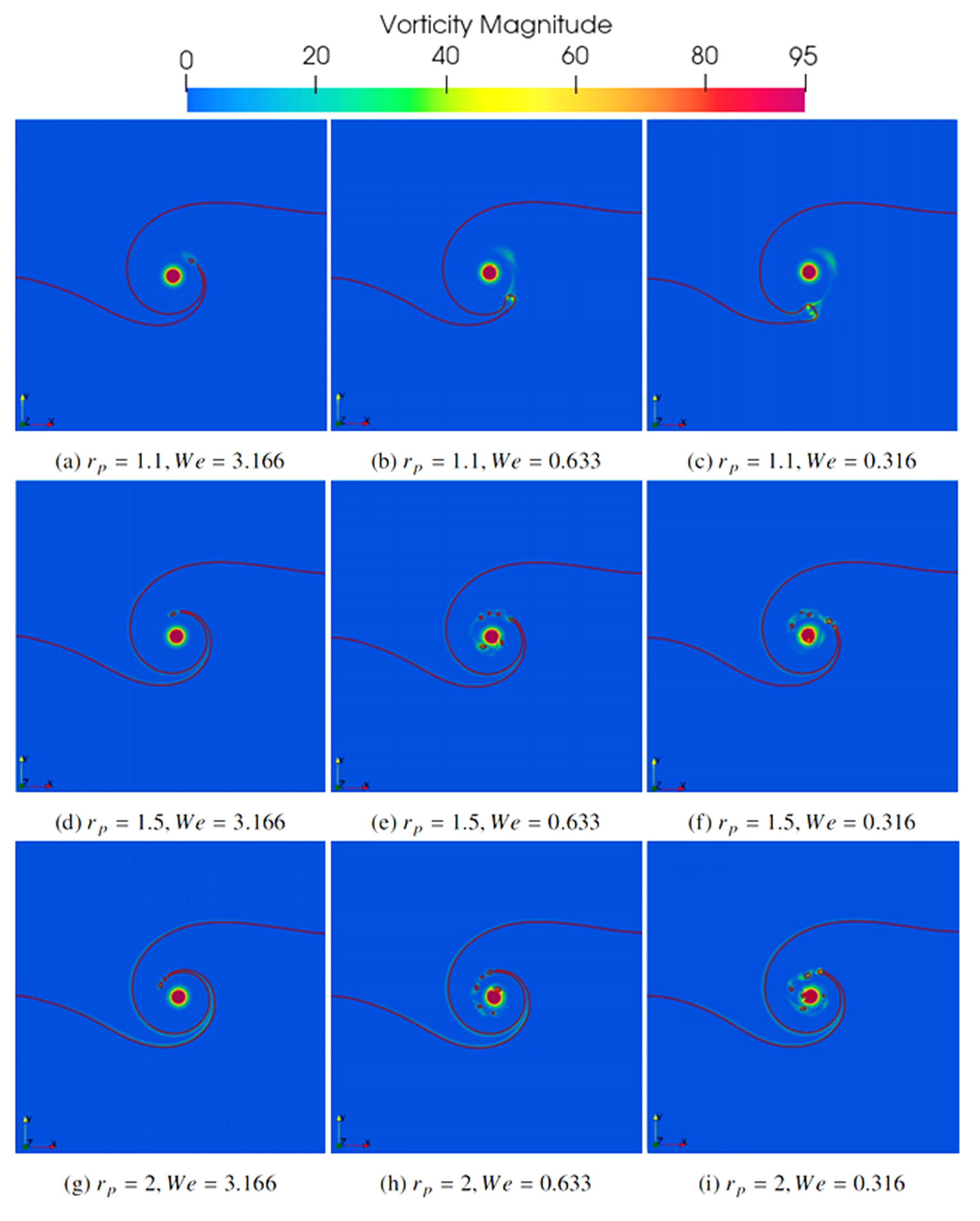
For this study, we select values for the phase density ratio
as 1.1, 1.5, and 2, and values for
as 3.166, 0.633, and 0.316, with
. The corresponding interface evolution for these different conditions is shown in
Figure 31,
Figure 32 and
Figure 33, where the vertical axis corresponds to the values of
(1.1, 1.5, and 2), and the horizontal axis corresponds to the values of
(3.166, 0.633, and 0.316). The comparison is made at three different time steps,
, 1, and 1.5.
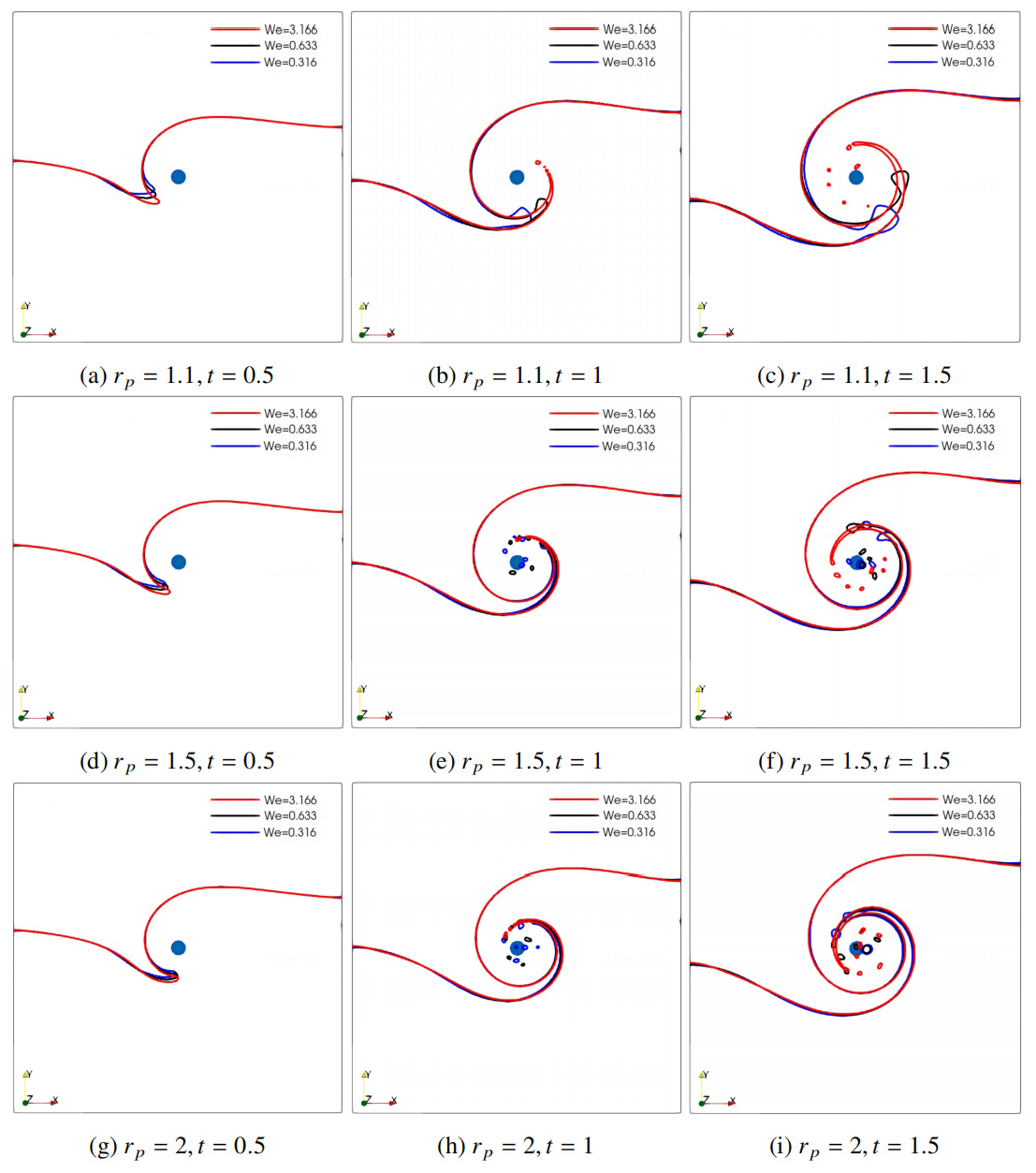
For a more intuitive comparison of how the interface evolves over time with varying
and
, we present
Figure 34, which clearly illustrates the effects of these two parameters on vortex–interface interactions, as described in Equation (10). From
Figure 34, we can observe that when the density ratio
is close to 1, interface breakage occurs only under high
(low surface tension). Under low
(high surface tension), the sharp interface becomes stretched into a liquid film, increasing the surface area without breakage.
However, as the density ratio increases, even under low and high-surface-tension conditions, the interface becomes more prone to breakage at the sharp points. This can be explained by the fact that increasing the density contrast between the two phases creates a larger differential momentum between the phases, enhancing the vorticity generation at the interface. The larger the density ratio, the greater the momentum transfer between the phases, which leads to faster deformation of the interface and more rapid vortex dissipation. As a result, the initial vortex dissipates more quickly when the density contrast is higher, even in the presence of high surface tension.
On the other hand, surface tension plays a stabilizing role at the interface. When
is large (low surface tension), the interface is more susceptible to deformation and breakage because surface forces are weaker, allowing the vortices to cause more pronounced interface instabilities. As
decreases (increasing surface tension), the interface becomes more stable, and the vortex-induced deformation is slower. This effect is clearly visible in the comparison between
Figure 11 and
Figure 12, where lower
values lead to the formation of larger liquid film edges, while higher
values result in sharper, more unstable interfaces.
For high (low surface tension), we observe that as the density ratio increases, the rate at which new vorticity layers form at the interface also increases, and the vorticity generated becomes more intense. This is due to the larger density contrast between the phases, which promotes faster momentum transfer and strengthens vortex activity at the interface. However, when surface tension increases (i.e., when decreases), the vorticity generated at the interface becomes larger, but the rate of generation of new vorticity layers slows down. This is due to the stabilizing effect of surface tension, which reduces the intensity of vortex formation while allowing for a more gradual deformation of the interface.
In summary, the combined effects of surface tension and density ratio significantly influence the vortex–interface interaction. As the density ratio increases, the interface becomes more prone to breakage due to the stronger momentum differential between the phases. Surface tension moderates this effect, with high surface tension (low ) stabilizing the interface and reducing vortex-induced deformation, while low surface tension (high ) allows for more pronounced interface breakage and vortex shedding. The balance between these two factors dictates the dynamics of the interface and the vortex behavior.




 ,
,