Article

Measurement of Length and Swimming Speed of Golden Pompano (Trachinotus ovatus) in Offshore Cage Using Adaptive Resolution Imaging Sonar


1
School of Marine Technology and Environment, Dalian Ocean University, Dalian 116023, China
2
South China Sea Fisheries Research Institute, Chinese Academy of Fishery Sciences, Guangzhou 510301, China
3
Key Laboratory for Sustainable Utilization of Open-Sea Fishery, Ministry of Agriculture and Rural Affairs, Guangzhou 510300, China
*
Authors to whom correspondence should be addressed.
J. Mar. Sci. Eng. 2026, 14(3), 314; https://doi.org/10.3390/jmse14030314
Submission received: 31 December 2025 / Revised: 30 January 2026 / Accepted: 4 February 2026 / Published: 6 February 2026
(This article belongs to the Section Marine Aquaculture)

Abstract

Golden pompano (Trachinotus ovatus) ranks among the most commercially important and high-yield marine finfish species in Chinese mariculture. In response to the requirement for monitoring fish in aquaculture, this study employed Adaptive Resolution Imaging Sonar (ARIS) to observe the body length, swimming speed, and spatial distribution of untreated (GI group), anesthetized (GII group), and injured (GIII group) T. ovatus in a small offshore cage (1.5 × 1.5 × 2.5 m3). The results demonstrated that the relative error range of the length measurement of the T. ovatus spanned from −3.24 to 4.35, and there was no significant difference between the observed and actual body lengths (ANOVA, p > 0.05). We failed to detect a significant difference in the average speed between the untreated group and the anesthetized group (ANOVA, p > 0.05; Tukey’s HSD, p > 0.05). The injured fish exhibited a significantly lower swimming speed compared to untreated and anesthetized individuals (ANOVA, p < 0.01; Tukey’s HSD, p < 0.01). Untreated individuals and fish with physical injuries exhibited mean vertical distribution depths of 1.06 ± 0.47 m and 1.70 ± 0.51 m, respectively, with the injured fish occupying a significantly greater water depth than the untreated conspecifics (one-way ANOVA, p < 0.01). There was a highly significant association between the treatment status of the fish (untreated/injured) and the frequency of water layer distribution (χ2(2) = 196.78, p < 0.01). The findings of the present study can furnish specific methodological references for the imaging sonar-based monitoring of T. ovatus within aquaculture cage systems. Nevertheless, the study is subject to several inherent limitations, including a small sample size for the injured group (n = 3), the employment of an artificial injury model, and the confinement of experimental subjects to a closed cage environment; these factors may introduce statistical uncertainty and thus exert a considerable impact on the external validity of the study’s results.

1. Introduction

With the rapid advancement of Deep-sea aquaculture, intelligent large-scale farming vessels, offshore deep-sea farming platforms, and smart deepwater culture cages have emerged as the core developmental directions for the sector in the future [1]. The offshore deep-sea environment, remote from coastal areas, is characterized by more severe marine hydrodynamic conditions, encompassing intensified wave and current dynamics, as well as elevated susceptibility to storm disturbances and pathogenic infestations. Meanwhile, high-density farming worsens disease spread, escape risks, and water pollution. The advancement of modern marine ranching is heavily contingent upon fishery science, technological innovation, and specialized aquacultural equipment [2]. Among these pivotal elements, the accurate monitoring of fish population dynamics, behavioral traits and health status—an essential prerequisite for the development of effective early warning systems—constitutes a core component in the construction of modern marine ranching systems [3]. This is essential for ensuring biosecurity and promoting high-quality industrial development.
Currently, the monitoring of farmed fish stocks mainly employs acoustic, optical and a combination of these two methods, with acoustic and optical methods being the mainstream approaches [4,5,6]. Optical monitoring offers high resolution; however, it has a short effective range and is susceptible to water turbidity and insufficient light [7]. For deep-sea aquaculture systems, which are typified by large water volumes, low light availability, and high-water quality variability, optical-based monitoring approaches necessitate the deployment of numerous imaging cameras, thereby leading to elevated capital and operational maintenance costs. Moreover, turbid water and strong light attenuation yield blurry, unstable images with narrow fields of view. In contrast, acoustic monitoring features strong penetration and a long operating range and is less affected by light and transparency [8]. However, regardless of whether imaging sonar or optical cameras are used to assess the behavior and quantity of fish, if there is an insufficient understanding of the behavioral characteristics of farmed fish, it is difficult to achieve effective monitoring.
Imaging sonar provides high-resolution spatial and temporal data, overcoming the limitations of traditional sampling methods [9,10,11]. It enables precise observation of aquatic organism behavior and offers a reliable solution for aquatic monitoring, complementing the weaknesses of optical monitoring. Imaging sonar technology is widely utilized in various scenarios within natural aquatic ecosystems. These applications involve monitoring the biological conditions in complex and sensitive habitats, detecting targets in aquatic environments with low visibility, and studying the behavioral patterns of fish [12,13,14]. Within aquacultural rearing systems, a considerable knowledge gap remains with respect to the sensitivity and specificity of sonar-derived metrics for detecting subtle behavioral alterations induced by divergent physiological states (e.g., stress, physical injury, or pathological conditions) [15,16,17]. Moreover, the impact of environmental variables and acoustic artifacts within cage systems on behavioral measurements has frequently been insufficiently investigated [8,12]. To improve the accuracy of behavior monitoring in farmed fish using imaging sonar, it is crucial to systematically gather fundamental experimental data and conduct thorough analyses of behavioral patterns under diverse environmental conditions. This method not only helps optimize aquaculture efficiency but also offers a valuable reference for the future development of high-precision acoustic imaging algorithms and advanced data processing techniques [18,19].
The golden pompano (Trachinotus ovatus) is a commercially pivotal marine aquaculture species in China, with its national aquaculture output reaching 294,000 metric tons in 2023—ranking first among all farmed marine finfish species across the country—and thus underscoring its prominent nutritional and economic value [20]. In this study, we used the Adaptive Resolution Imaging Sonar (ARIS) to measure the length, swimming speed and distribution of T. ovatus under controlled conditions. Subsequently, key parameters including body length, movement speed and depth distribution were analyzed. The results of this analysis are intended to provide a reference for the application of imaging sonar technology in monitoring the behavioral conditions of Trachinotus ovatus in aquaculture settings. Therefore, this study aimed to: (1) assess the accuracy of imaging sonar for measuring the body length and swimming speed of T. ovatus in a confined cage and (2) examine whether artificial injury leads to quantifiable changes in swimming speed detectable by sonar. We hypothesized that: (a) injured fish would display significantly lower swimming speeds compared to untreated conspecifics and (b) injured fish would show a distinct preference for deeper water layers within the cage.

2. Materials and Methods

2.1. Sonar Equipment

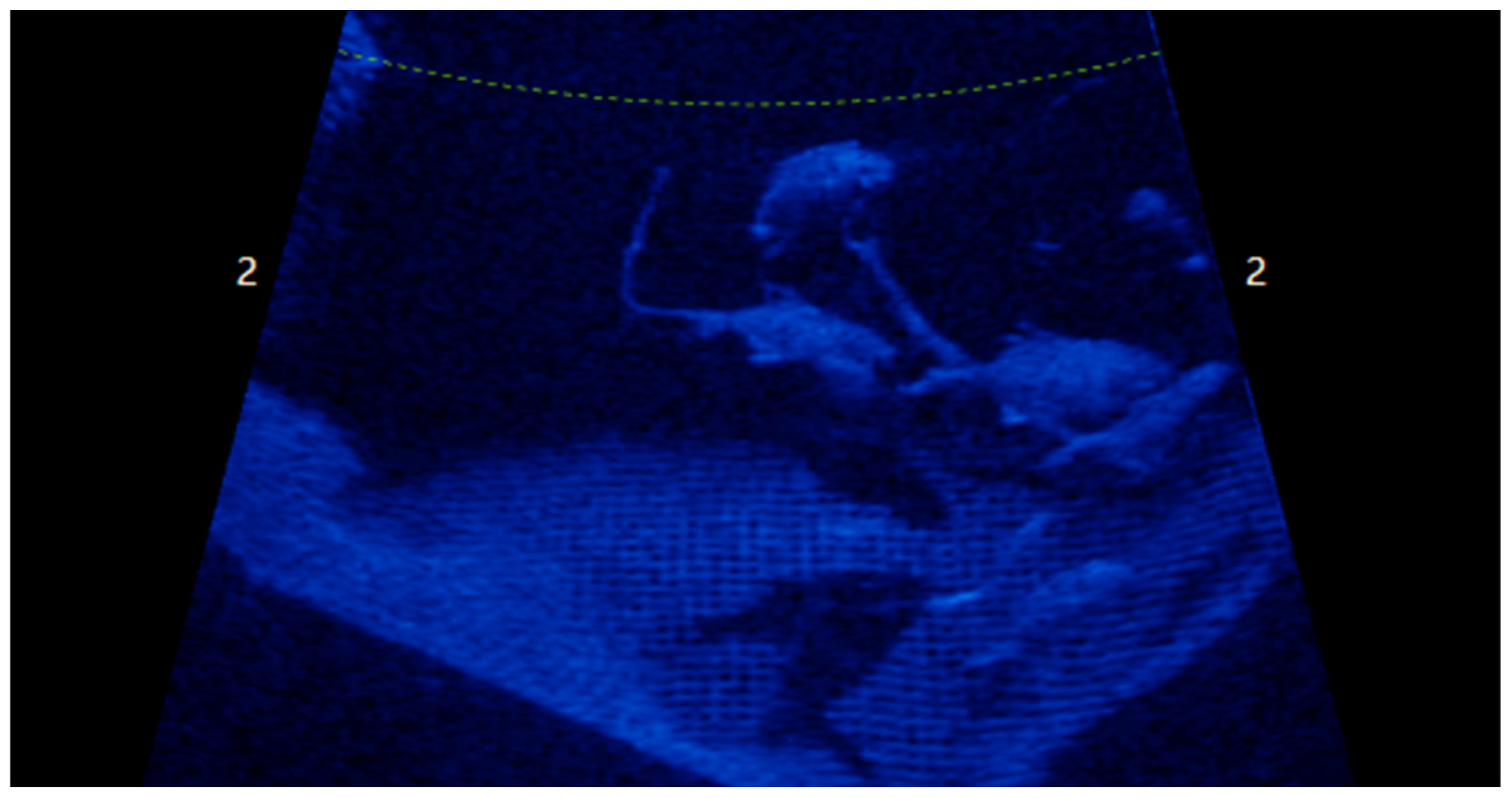
This experiment employed the Aris3000 imaging sonar (Sound Metrics, Bellevue, WA, USA). The main technical parameters of this sonar are presented in Table 1, and the sonar imaging results are depicted in Figure 1. The ARIS 3000 imaging sonar functions at two distinct frequencies depending on the operational mode: 3 MHz in identification mode optimized for high-resolution imaging within a 5 m range and 1.8 MHz in detection mode, which sacrifices spatial detail to achieve an extended detection range of up to 15 m. Both modes share a minimum operational distance of 0.7 m and a horizontal field of view measuring 30°. When operating at 3 MHz, the system generates images from 128 discrete acoustic beams, each characterized by a horizontal beamwidth of 0.2° and a vertical beamwidth of 14°. At a standoff distance of 3 m, a target occupies approximately 10 mm of the acoustic beam’s cross-sectional width; this expands to roughly 40 mm at 12 m [21,22]. The nominal angular spacing between adjacent beams is consistently 0.25° across both modes, while the down-range (range) resolution varies between 3 mm and 19 mm. In our measurement, ARIS 3000 was carried out in the 3 MHz identification mode.

2.2. Experimental Site and Cage System

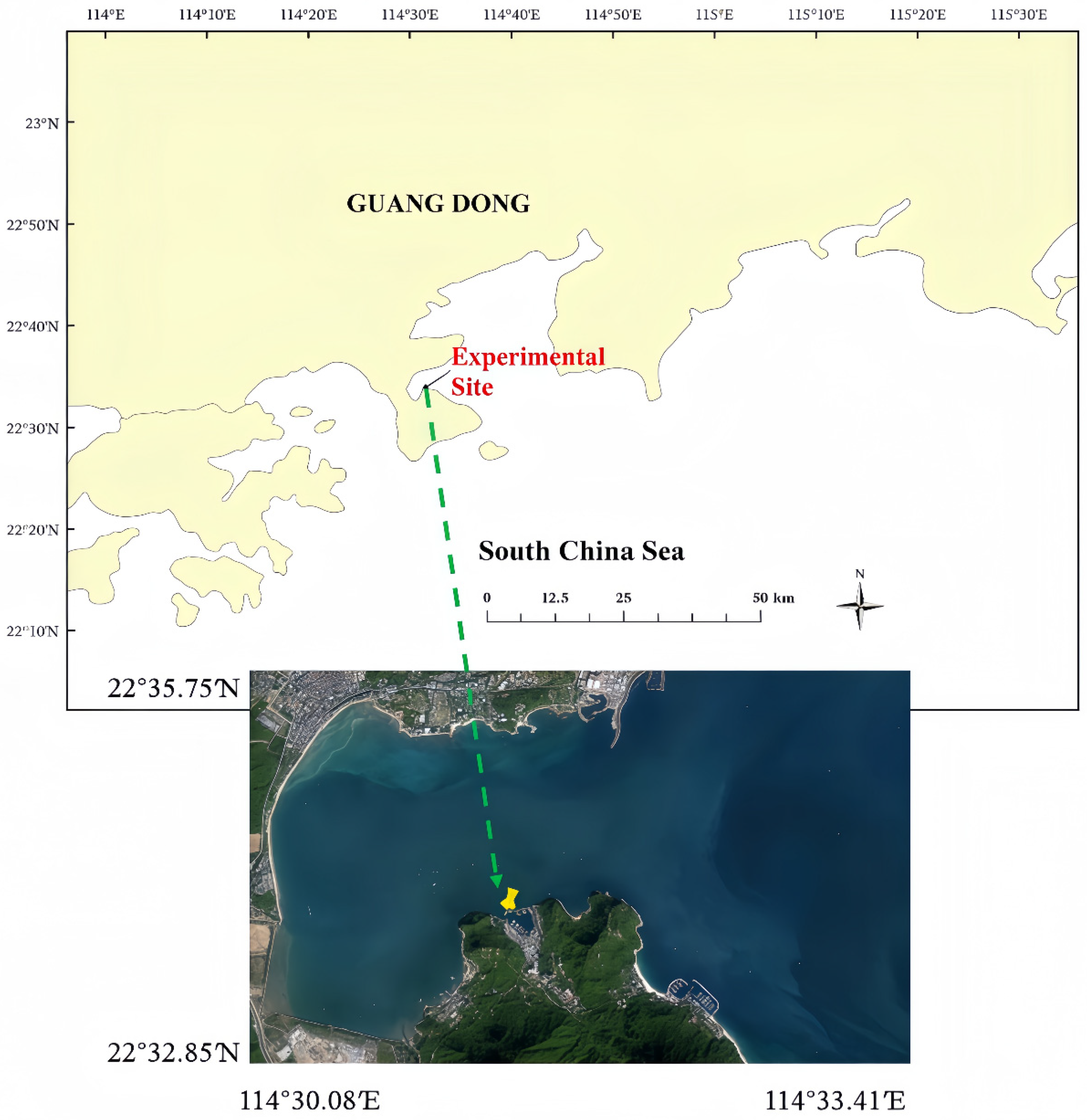
The experimental area was located in the Qixing Bay sea area of Shenzhen City, China. Qixing Bay is a naturally formed semi-concave shallow water bay with excellent water quality, surrounded by mountains on three sides, and is located east of Daya Bay. The South China Sea Fisheries Research Institute, Chinese Academy of Fishery Sciences, operates experimental aquaculture cages in this area dedicated primarily to scientific research, with the principal cultured species including T. ovatus. The specific location of the experiment was along the coast of Qixing Bay (22.5649° N, 114.5358° E), and the water depth of the experimental area is about 5 m (Figure 2). The experimental data were collected between 17 and 20 December 2024, with the main time period spanning from 10:00 to 16:30.
The main experimental cage was constructed using iron square tube brackets to create a closed water space (1.5 × 1.5 × 2.5 m3). It is externally covered with a 3 cm mesh polyethylene nodular cage that has sound transmission performance, and a counterweight anchor chain was installed at the bottom to prevent displacement. An isolated small temporary cage (0.5 × 0.5 × 1.5 m3) was set up 2 m laterally from the main experimental cage to house the fish samples collected from the marine aquaculture cage, thus avoiding interference with the main experimental process [23].
To ensure the stable operation of the ARIS3000 sonar host, a high-strength, corrosion-resistant rope was employed to flexibly fasten it to the designated position on the cage frame [21]. This was done to alleviate the vibrations induced by water flow and waves and to adapt to the slight deformation of the cage resulting from hydrodynamic forces. During installation, the posture of the main unit was adjusted to precisely align the scanning surface with the long-axis direction of the cage. Through hydrodynamic simulation pre-assessment and on-site debugging, the position and pitch angle (−20°) of the probes were optimized to precisely align the center of the acoustic beam with the central area of the cage. This optimization was designed to maximize the acoustic coverage across the primary water column of the culture cage. Nevertheless, in the microscale regions adjacent to the cage’s walls and corner junctions, the constrained acoustic wave incident angles and the formation of potential acoustic shadow zones may lead to a reduction in monitoring sensitivity or the emergence of acoustic blind spots. After the physical installation is completed, online debugging was carried out [24]. Technicians connected the host to the shore-based terminal via dedicated cables. Subsequently, they performed power supply detection, signal handshake, clocked synchronization, and parameter configuration in sequence. They also monitored the data reception quality in real time and calibrated the transmission frequency and reception gain to guarantee that the system operated in the optimal condition. Finally, it was verified that the ARIS had entered the normal operation mode and could continuously collect high-resolution underwater images, particularly for subsequent fish behavior monitoring and analysis.
To ensure the measurement accuracy of the acoustic imaging system, following the Cook et al. [21] protocol, this experiment used a 30 × 30 cm2 PVC calibration plate to facilitate the matching of visual and acoustic signals. During the experiment, we recorded external disturbance events that could potentially trigger sudden stress responses in the fish (e.g., the passing of distant ships) and documented them in the data analysis. Nevertheless, continuous quantitative monitoring was not carried out for the persistent, low-intensity background environmental noise (e.g., occasional wind sounds) and the periodic vibrations of the cages potentially induced by water flow.

2.3. Treatment of Experimental Fish Samples

2.3.1. Sample Collection and Pretreatment

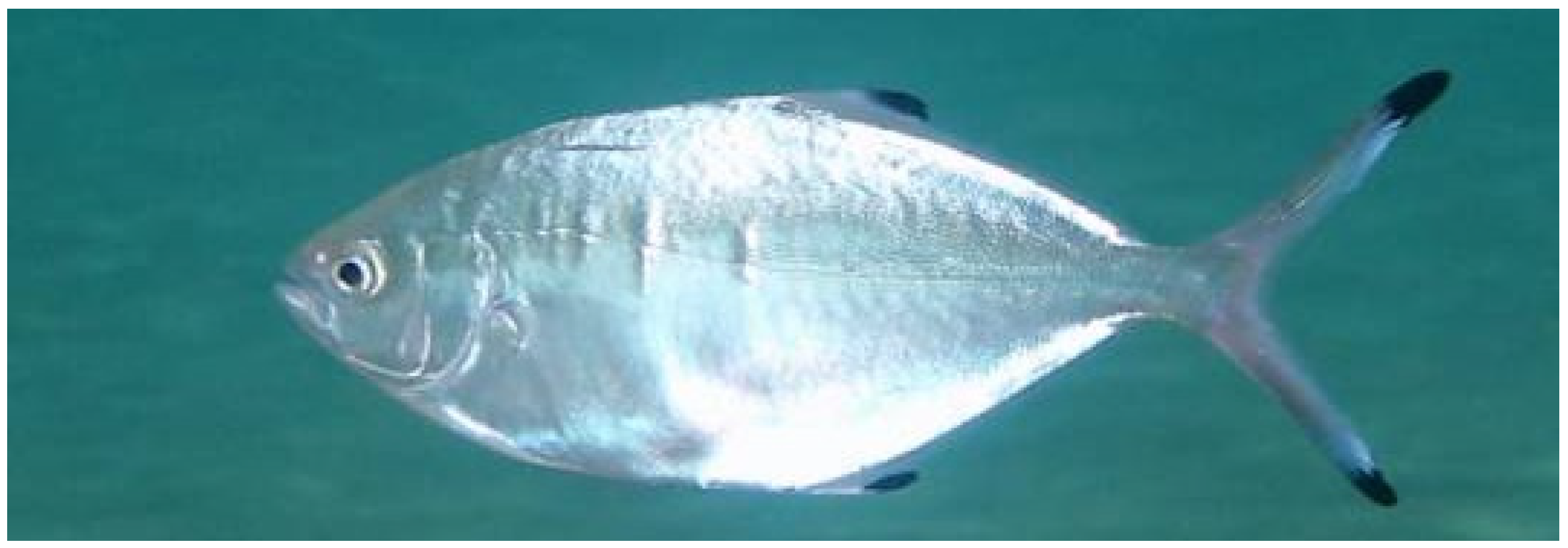
The T. ovatus samples were collected from the aquaculture cages in the Qixing Bay area of the South China Sea Fisheries Research Institute, Chinese Academy of Fishery Sciences (Figure 3), all from the same batch of farmed individuals. A total of 30 fish samples were collected, and their body lengths and weights were recorded one by one. The body lengths ranged from 134 to 236 mm (202 ± 25 mm), and the weights ranged from 198.9 to 478.2 g (337.7 ± 83.0 g). Forty-eight hours prior to the experiment initiation, experimental fish were transferred from the commercial culture cages to temporary holding cages and were fed twice daily at 08:00 and 16:00, respectively. Feeding was ceased 12 h prior to the commencement of experimental trials. Throughout the experimental period, the ambient seawater temperature was maintained at a range of 26.3–27.8 °C, with a mean value of 27 ± 0.5 °C; in situ water temperature measurements were conducted using a YSI ProPlus water quality meter (Yellow Springs, OH, USA).

2.3.2. Experimental Grouping Design

The experimental fish were divided into four groups: the control group (untreated group), the pure anesthesia group, the injury group, and the “untreated and anesthesia” mixed group (Table 2). The control group was composed of 10 untreated fish that had not undergone any treatment and were sequentially placed in cages. Their behaviors were recorded using imaging sonar, with each fish being observed for 5 min. The data obtained were utilized to establish behavioral status standards for untreated fish. The anesthesia group consisted of 9 fish, each of which was successively anesthetized by immersion in a buffered MS-222 solution (100 mg/L, pH 7.0) until it lost equilibrium and opercula movement stopped (typically within 3–5 min) [25,26]. Subsequently, each fish was transferred one by one to a plastic bucket filled with fresh seawater (top diameter: 24 cm, bottom diameter: 35 cm, and height: 32 cm) and monitored until it fully resumed normal swimming behavior, and then the fish were transferred one by one to the measurement cage, and their behavior was recorded by imaging sonar for 5 min.
The injury treatment group consisted of three individuals, and following anesthesia of the experimental fish, a standardized incisional wound (20 mm in length and 3 mm in depth) was inflicted at a predetermined dorsal position on each target fish using a utility knife. After the model establishment was completed, the fish were temporarily placed in similar buckets for 5 min to confirm their survival and swimming ability. Subsequently, they were successively transferred to the measurement cage and continuously monitored for 5 min using imaging sonar. The utility knife employed was made of high-carbon steel, having a width of 25 mm and a thickness of 3 mm to guarantee the consistency of the cut [27].
The mixing group was designed with gradient mixing and comprises three subgroups. Sub-group 1 consisted of ten untreated fish and one anesthetized fish, Sub-group 2 consisted of eight untreated fish and two anesthetized fish, and Sub-group 3 consists of seven untreated fish and three anesthetized fish. In Sub-group 2, the two fish to be anesthetized were anesthetized simultaneously and then transferred to the measurement cage according to the aforementioned operation. In Sub-group 3, the three fish to be anesthetized were treated in the same manner as those in Sub-group 2. Given that only three fish were injured and these injuries were caused by human factors, along with a restrained small cage, these inevitably introduced statistical uncertainty into the measurement data and restricted the inferential capacity of the research results. Therefore, our measurements should be regarded more as an exploratory study.

2.4. Data Collection and Analysis

Throughout the measurement campaign, sporadic exogenous environmental interferences, including wind-induced hydrodynamic disturbances and the acoustic perturbations from distant vessel traffic, were systematically documented. In the data analysis, we excluded these data to preclude the influence of these sporadic environmental interferences on our conclusions. To minimize the interference of partial occlusion on length measurement, we utilized the “measure mode” function of the ARISFish software (Version 2.6.3) to record the fish length [28]. During the analysis, we only chose a single-frame image that clearly depicts the full length of the fish and refrained from performing additional data operations (e.g., magnifying the image). Additionally, we reanalyzed the influence of body orientation (angle) and target-to-sonar distance on the length measurement. To avoid subjective bias that could be introduced by manually excluding frames and trajectories, we arranged for two professionals to operate concurrently during data analysis, with one person in charge of data processing and the other for supervision. Each measurement was counted three times by one person. If the difference between each measurement and the average measurement was less than 5%, the measurement was regarded as accurate. Otherwise, the measurement would be re-measured. The average of the three measurements was used as the final value. When analyzing data, we use the background subtraction filter of the ARISFish software to eliminate background noise [29].

2.4.1. Body Length

The imaging sonar data were collected using ARIScope software (Version 2.6.3). Subsequently, the sonographic data of 10 fish in the control group were replayed and systematically analyzed by ARISFish software. Frames with overlapping targets or incomplete contours were removed (retention rate > 85%). For each experimental individual, 30 s acoustic video clips were screened and continuously extracted, yielding a total of 900 image frames per fish. For each frame, the linear axis extending from the snout tip to the caudal fin tip of the fish was manually validated, with the pixel distance along this axis automatically calculated by the software and subsequently converted into actual physical body length. From the exported data, 10 frames of clear images were selected for each fish for independent measurement, and the arithmetic mean was taken as the acoustic estimate of the individual’s body length [21,22].

2.4.2. Swimming Speed

A quantitative analysis of the swimming speeds of fish targets was conducted using the ARISFish motion trajectory analysis module based on the data obtained by imaging sonar [29]. Spatially coherent and biologically significant trajectories of each fish in its natural swimming state were extracted from multiple frames of continuous sonar images [16,30]. To filter out positional noise and ensure biologically meaningful movement, the time difference between adjacent positions was set to be no more than 0.2 s, and the displacement was set to be no less than 5 cm. That meant that the position change in the same fish in two consecutive frames should be greater than 5 cm. If it was less than this value, these data would not be used for speed calculation. This minimum displacement threshold was calculated by us based on the target-to-sonar distance and angle. Subsequently, the instantaneous swimming speed and average speed (m/s) are calculated accordingly. The sonar is located at origin O, and the position of the target in the polar coordinate system is denoted as p (radius: r, radian angle: θ), with the corresponding center of the circle being O′. To calculate the Euclidean distance, polar coordinates need to be converted to Cartesian coordinates (x, y), and the conversion formula is as follows:
x = r · cos ( θ r a d ) + O O y = r · sin θ r a d                              
The instantaneous speed between adjacent data points, where ∆s is the Euclidean distance between two points, calculated as follows:
v i n s = s t
s = ( x i + 1 x i ) 2 + ( y i + 1 y i ) 2
where (xi, yi) and (xi+1, yi+1) represent the Cartesian coordinate positions of the target at time i and time (i + 1), respectively. The ∆t represents the time difference between time i and time (i + 1).
The mean speed ( v ¯ ) is defined as the average of instantaneous speeds and is calculated as follows:
v ¯ = 1 n v i n s , n n
where the v i n s , n represents the instantaneous speed at the n-th position point.

2.4.3. Distribution Depth and Position Frequency

Based on some reports [17,23], T. ovatus showed a certain preference for the vertical space of the cage. To observe whether T. ovatus also shows a preference for the vertical space in our measurement, the cage space is partitioned into three water layers: the surface layer (from the surface of the imaging sonar to −0.7 m), the middle layer (0.7–1.4 m), and the bottom layer (1.4–2.5 m). Differences in vertical depth habitat preference between the untreated and injured fish were quantified by determining the residence duration of each individual within each water layer and its relative proportion of the total experimental period; this was evaluated using the spatial position distribution frequency (Fd) metric, which is calculated according to the following formula:
Fd = Nframe/Ntotal × 100%
where Nframe is the sum of the number of frames a fish is in a certain water layer per unit time, and Ntotal is the total number of frames per unit time. Meanwhile, we computed and contrasted their average depths.
A two-tailed t-test was performed to evaluate the significance of discrepancies between the observed and actual body lengths of the fish. Pearson correlation analysis and linear regression modeling were conducted to elucidate the effects of sonar detection distance and incident angle on length measurement accuracy. One-way analysis of variance (ANOVA) was used to compare swimming speed among the different treatment groups, while an independent two-tailed t-test was applied to assess differences in vertical depth distribution between non-injured and injured individuals. A chi-square test of independence was employed to examine the presence of a significant association between fish treatment status (non-injured vs. injured) and water layer distribution frequency. The significance level (α) was set at 0.05 for all aforementioned statistical analyses, and all data statistical analyses were implemented in the R software (Version 4.4.0) environment [31].

3. Results

3.1. Length Measurement

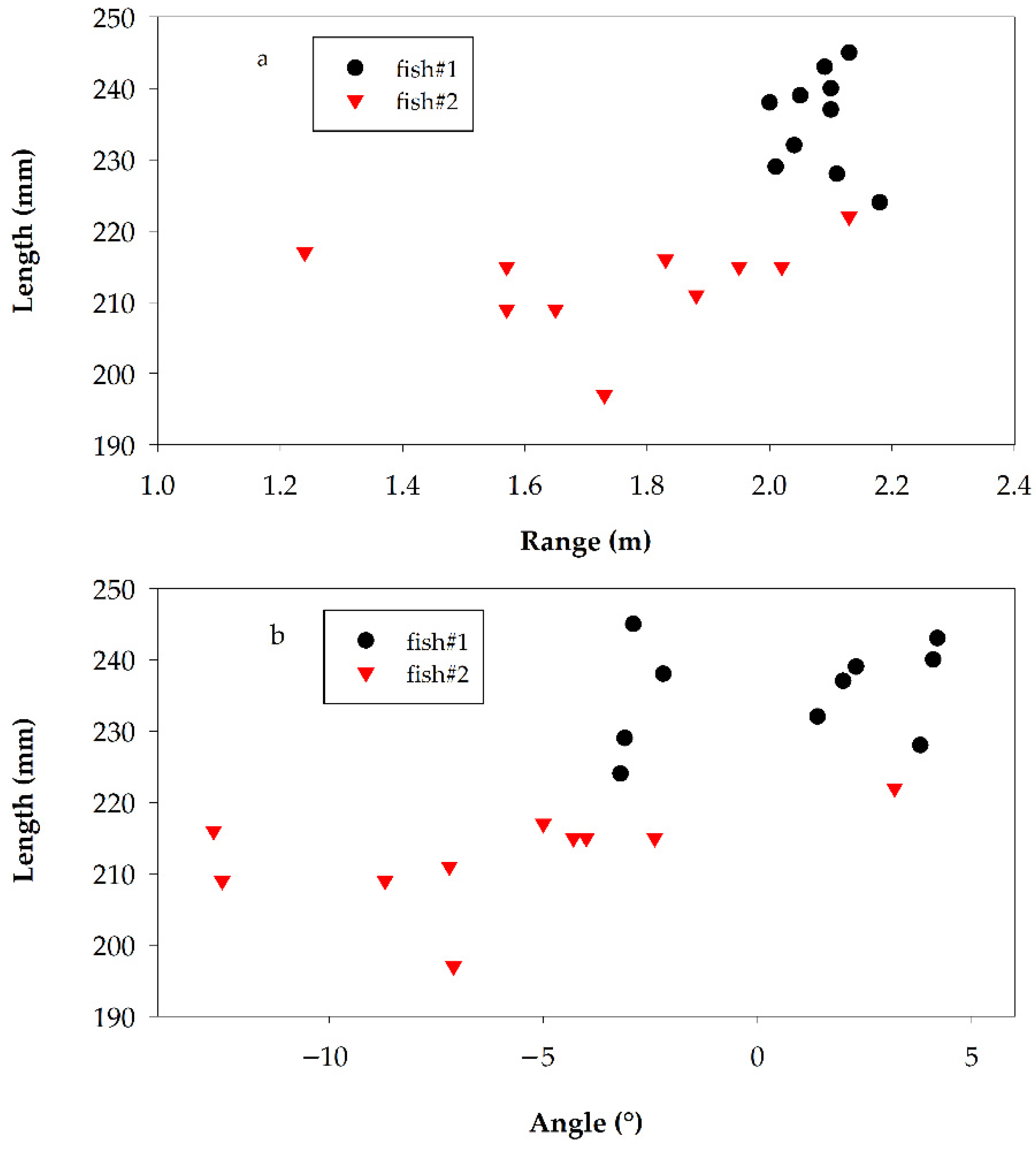
The actual body lengths of T. ovatus individuals and the corresponding imaging sonar-derived body length measurements are presented in Table 3. Among the 10 fish samples used for the body length measurement, the relative error range of the length measurement of the T. ovatus spanned from −3.24 to 4.35. For each experimental individual, the t-test revealed no statistically significant difference between the mean observed body length and the actual body length (n = 10, p > 0.05). Figure 4 presents the observed body lengths at different positions of two representative samples, along with their corresponding distances and angles relative to the sonar system. For fish #1, the Pearson correlation coefficients between its observed body length and the corresponding distance and angle from the sonar are −0.1193 (n = 10, p > 0.05) and 0.1008 (n = 10, p > 0.05), respectively. Additionally, for fish #1, the Pearson correlation coefficients for the same relationships were 0.5272 (n = 10, p > 0.05) and 0.7206 (p > 0.05), respectively. The linear regression coefficients between body length and distance, as well as those between body length and angle, were not significant (n = 10, p > 0.05 for the slope).

3.2. Speed and Trajectory

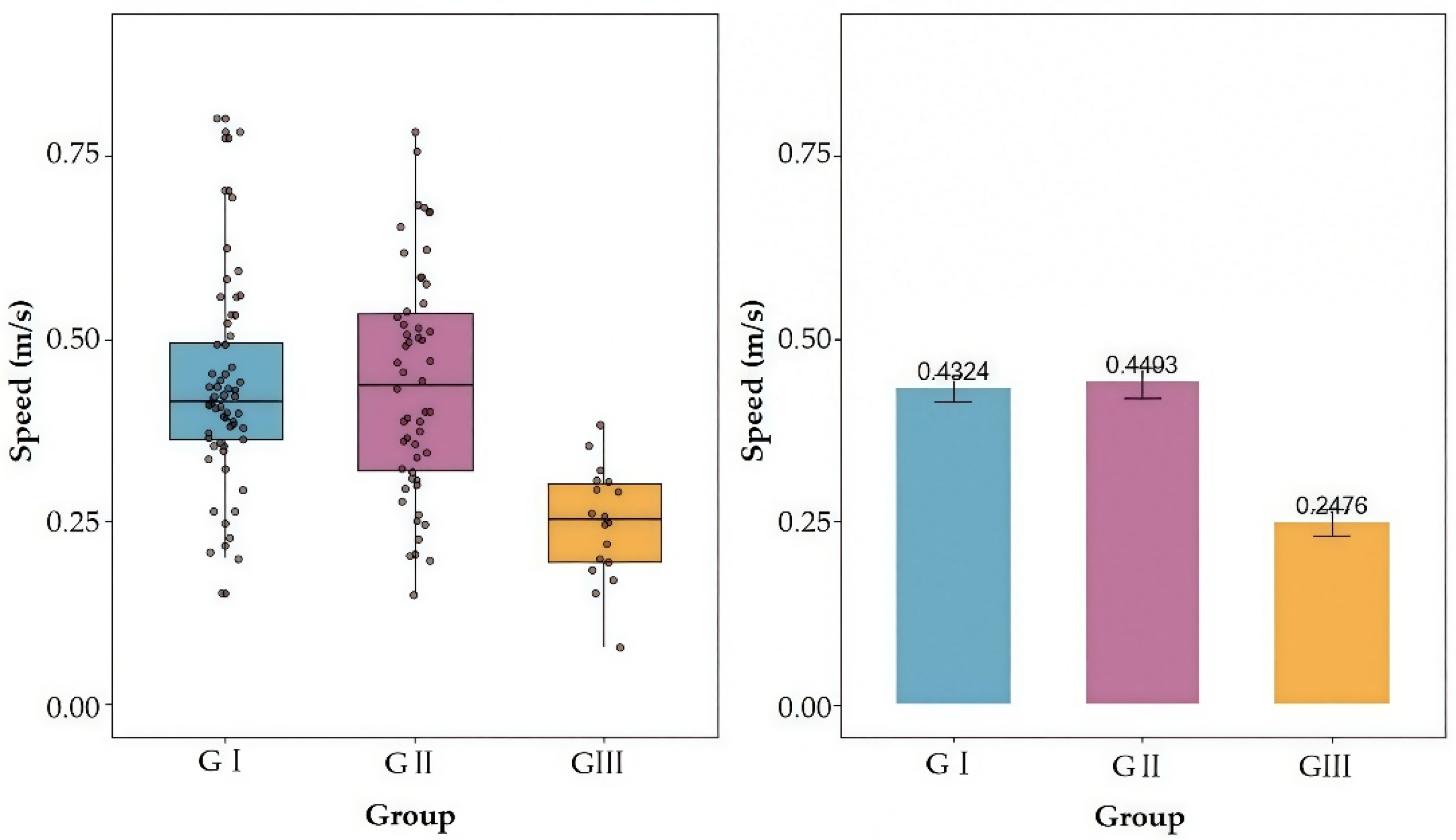
The swimming speeds of 10 untreated fish in the control group (GI) ranged from 0.1530 to 0.8015 m/s, with individual average speeds ranging from 0.3243 m/s to 0.5917 m/s and an overall average speed of 0.4324 m/s (Figure 5). The swimming speeds of the 9 fish in the pure anesthesia group (GII) ranged from 0.1500 to 0.7838 m/s, with individual average speeds ranging from 0.2944 m/s to 0.5794 m/s and an overall average speed of 0.4440 m/s. We failed to detect a significant difference in the average speed between the untreated group and the anesthetized group (ANOVA, p > 0.05). The swimming speeds of the three injured fish (GIII) ranged from 0.0781 to 0.3819 m/s, with individual average speeds ranging from 0.2037 m/s to 0.3139 m/s and an overall average speed of 0.2476 m/s. The injured fish exhibited a significantly lower swimming speed compared to untreated and anesthetized individuals (ANOVA, p < 0.01). The Tukey HSD post hoc multiple comparisons indicated that there was no significant difference between the GI and GII groups (p > 0.05, mean difference = −0.0079, 95% CI: −0.0715–0.0557). In contrast, a significant difference was detected between the GI and GIII groups (p < 0.01, mean difference = 0.1668, 95% CI: 0.0712–0.2624), and a significant difference was also identified between the GII and GIII groups (p < 0.01, mean difference = 0.1747, 95% CI: 0.0775–0.2719).
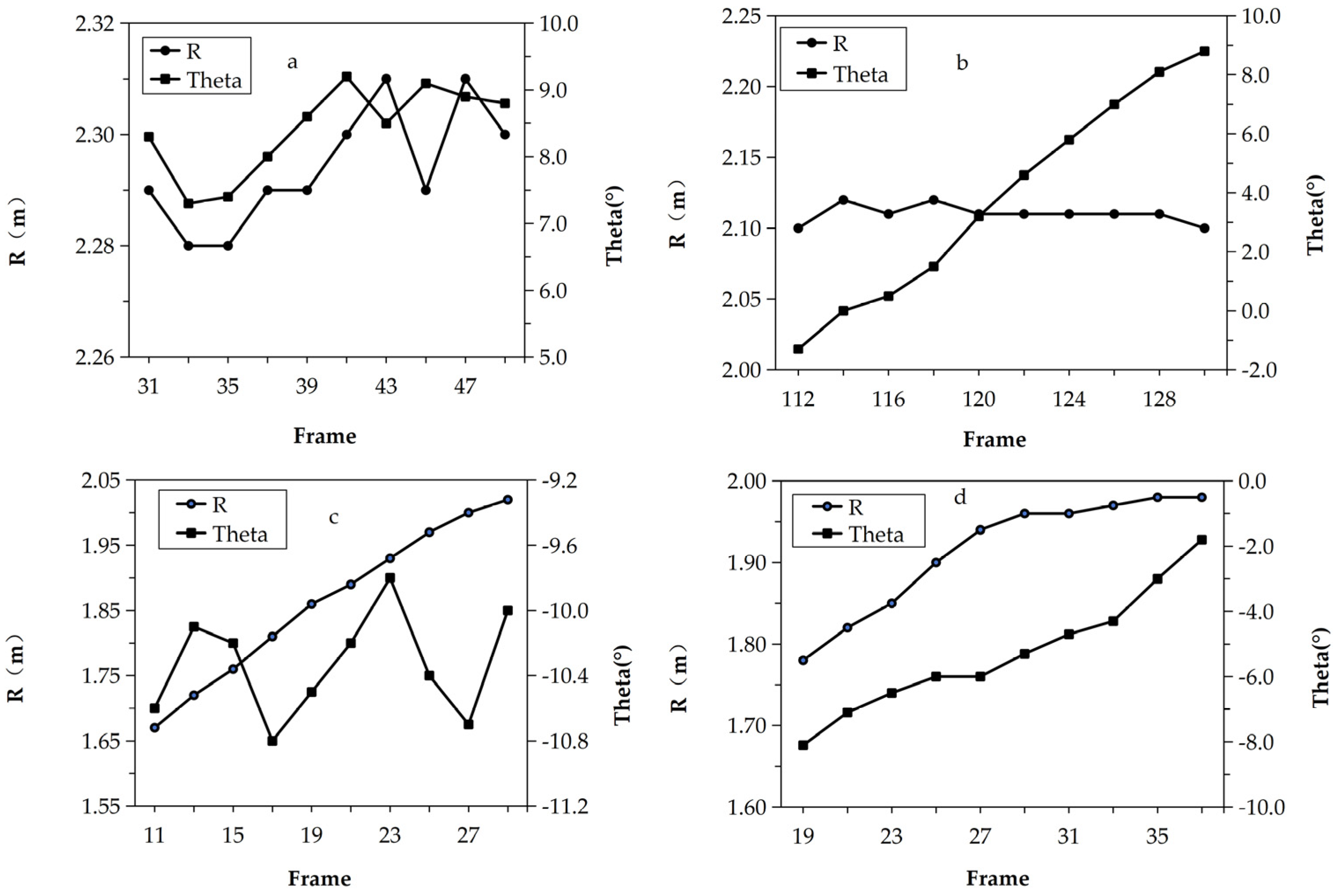
Variations in the spatial distance and incident angle of individual fish relative to the sonar transducer might reflect characteristic locomotor patterns of the fish. In the case of fish exhibiting a circular swimming trajectory around the sonar, the radial distance between the fish and the sonar remained largely constant, with only the relative incident angle exhibiting dynamic variation. Figure 6a depicts a fish whose radial distance from the sonar is essentially stable, with only the angle constantly varying, which implies that the fish may be moving in a circular path around the sonar. Figure 6b illustrates a fish whose angle is fluctuating while the radial distance from the sonar is gradually rising, suggesting that the fish is moving away from the sonar while also oscillating vertically. Figure 6c shows a fish with a continuously increasing angle and a basically stable radial distance, indicating that the fish is moving in a circular path around the sonar along a bottom-to-top route. Figure 6d presents a fish with both the angle and the radial distance continuously increasing, indicating that the fish is moving away from the sonar along an upward diagonal path.

3.3. Distribution Depth

The average distribution depths of untreated and injured fish were 1.06 ± 0.47 m and 1.70 ± 0.51 m. The distribution depth of injured fish was significantly greater than that of untreated individuals (t-test, p < 0.01). It showed that untreated fish were mainly active in the middle layer of water and were more evenly distributed in the horizontal direction. Injured fish showed a clear preference for the bottom water layer and exhibited less horizontal movement. Frame-by-frame qualitative analysis of imaging sonar datasets derived from untreated and injured fish revealed that untreated individuals spent a mean of 67.3% of the total experimental duration in the middle water layer, with only 12.0% of their time allocated to the bottom water layer (Table 4). In contrast, injured fish spent 66.8% of their time at the bottom of the water body and seldom appeared at the surface. The results of the chi-square test for independence demonstrated a highly significant association between the treatment status of the fish (untreated/injured) and the frequency of water layer distribution (χ2(2) = 196.78, p < 0.01).

4. Discussion

4.1. Length Measurement

The quantification of fish body size constitutes a foundational step toward a more comprehensive understanding of fisheries biology, and as such, the development of robust and effective measurement methodologies is imperative. High-frequency multi-beam sonar enables the accurate quantification of fish body size under conditions of high turbidity and low light availability, particularly in scenarios where conventional sampling approaches (e.g., destructive capture and underwater optical imaging systems) are unfeasible. Cook et al. [21] investigated the validation of fish length estimations from ARIS and its utilization as a field-based measurement technique. They evaluated the accuracy and precision of the ARIS under controlled tank-based conditions and compared it with stereo-camera techniques and extractive field sampling techniques (i.e., baited traps). They observed that the ARIS could provide estimations of the length of small-bodied fishes (fork length: 100–400 mm) with a measurement error of less than 10%. Moreover, when specific measurement criteria (e.g., the orientation angles of fish are greater than 30°) are applied to observations, it generally has comparable accuracy to stereo-camera techniques and extractive field sampling techniques (i.e., baited traps). However, the precision of estimates acquired with the imaging sonar was significantly lower than that with stereo-camera based techniques. Jones et al. [22] studied the suitability of ARIS 3000 for the species identification of North-East Atlantic marine species using experimental aquarium studies, field surveys and multi investigator assessments. They found that factors such as size and morphological traits limit the accuracy of identification for all species. To minimize the interference of fish size measurement on fish identification, it was recommended to utilize the “measure mode” function of the ARISFish software to record the fish length. During the analysis, choose a single-frame image that clearly depicts the full length of the fish and refrain from performing additional data operations (e.g., magnifying the image). Sibley et al. [28] quantified the ability of imaging sonar to identify fish species at a subtropical artificial reef using two Blueprint Subsea Oculus multibeam imaging sonars: the M750d (operating at 0.75 MHz, range set to 10 m) and the M3000d (3 MHz, 5 m). Their research also showed imaging sonar’s ability to identify fish varied with fish morphology and size. For accurate measurement, position of fish should be as parallel as possible to the sonar beam array and near its center. Only fish within 4 m were measured, as size estimation becomes unreliable beyond this range due to lower resolution and increased sound absorption. In our research, the relative error range of the length measurement of the T. ovatus spanned from −3.24 to 4.35, indicating a high level of accuracy. Additionally, the range and angle exerted only a minor influence on the results. This phenomenon can be ascribed to several factors: First, the measurement was performed in a relatively stable cage environment with minimal external interference. Second, the data collection and processing were carried out following the suggestions of Cook et al. and Jones et al. [21,22]. Third, the depth of our cage was less than 3 m, which complied with the recommendation of Sibley et al. [28].

4.2. Speed and Trajectory

Monitoring fish behavior is a crucial approach for comprehending the growth status of fish, along with the interactions among different species and between species and their environment. One of the notable advantages of imaging sonar is its capacity to directly monitor the behavior of fish. A substantial body of research has documented the application of the ARIS for monitoring fish swimming speed and locomotor behavior in fluvial environments, which has validated the practical applicability of this sonar system for in situ aquatic surveys [30,32]. For fish speed monitoring in aquaculture, Hwang et al. [33] observed and analyzed the swimming behavior monitoring of Pacific bluefin tuna (Thunnus orientalis) in the offshore sea cage with a diameter of 24 m and a depth of 12 m using the Blueview P900 imaging sonar (Teledyne BlueView, Bothell, WA, USA). Their research demonstrated that the maximum swimming speed of the cultured T. orientalis was 2.46 m/s (3.5 to 3.8 times their total length), the mode was 0.8–1 m/s (1.2 to 1.4 times their total length) and the swimming speed during the day time was faster than at night time. The cultured T. orientalis swam not only on the surface but also near the bottom of the cage during the day. The cultured T. orientalis spent most of the time swimming a circular path along the circular cage wall. Occasionally, small groups of T. orientalis would also swim in small circular paths. For the T. ovatus in the offshore cage, our measurements showed that the maximum speed of untreated individuals was 1.7 to 3.0 times their total length, that of anesthetized individuals was 1.6 to 2.9 times their total length, and that of injured individuals was 1.0 to 2.1 times their total length. In situ observational data of our study indicated that T. ovatus reared in culture cages also exhibited circular locomotor behavior. Owing to the limited sample size of swimming speed data acquired for T. ovatus, a comparative analysis of the mode distribution of swimming speeds between T. ovatus and T. orientalis is not currently feasible.

4.3. Distribution Depth

Hu et al. [23] employed the FishScan II omnidirectional scanning sonar, which operated in low-frequency mode at 667 kHz, to investigate the quantity and distribution of T. ovatus (with a length of 24 cm) in a marine cage aquaculture (4 m in length × 4 m in width × 2.9 m in height). The sonar system featured a horizontal opening angle of 7.5°, a vertical opening angle of 2.5°, and a detection radius of 12 m. They discovered that 51.1% of the fish were distributed in the water layer ranging from 1.00 to 2.15 m, and among them, 35.5% were in the water layer from 1.00 to 1.65 m. Sun et al. [17] employed the FishScan II omnidirectional scanning sonar to estimate the quantity and distribution of T. ovatus in offshore cage aquaculture (a radius of 12 m and a depth of approximately 6 m). Their research demonstrated that at the 9:00 time point, the density of fish was predominantly concentrated in the deep-water layer (4–6 m), and a distinct peak was detected at a depth of 5 m. Fish abundance in the shallow water layers (0–2 m) was extremely low, with negligible aggregation. In contrast, at the 13:00 time point, the vertical distribution of fish density changed notably. The center of gravity shifted towards the mid-water layers (2–4 m), and the highest densities were then observed within the 3–4 m zone. Meanwhile, fish numbers in the 5–6 m layer dropped significantly. By 17:00, fish were evenly distributed across 0–6 m.
In our experiment, untreated T. ovatus mainly occupied the middle cage layer (0.7–1.4 m), whereas the injured fish tended to reside in the bottom layer, and the difference exhibits a very strong practical effect (Cramer’s V = 0.578). This aligns with the observations of Hu et al. [23]. Although Sun et al. [17] used deeper water precluding direct vertical distribution comparison, both studies found T. ovatus consistently aggregated in the middle layer from dawn to dusk. Their vertical distribution likely responds to diel water temperature changes and bottom instability (e.g., cage vibration). In early morning, cooler surface water drives fish to the warmer middle layer; as the water column warms, distribution centers there. After 17:00, vertical distribution becomes more uniform, likely due to thermal stabilization in the water column. In our observations, injured fish were mainly concentrated in the lower layer of the cage (1.4–2.5 m), a finding consistent with the experience of aquaculture practitioners in commercial cage farming of T. ovatus. Since the feed used for T. ovatus is floating, it floats on the water surface after being thrown into the cage. During feeding trials, untreated fish swam rapidly to the water surface to feed. In contrast, following exposure to the injury treatment, the frequency and duration of their feeding near the surface were observed to decrease, which was consistent with their increased tendency to remain in the bottom of water column.

4.4. Limitations of the Study

The present study is subject to several notable limitations. First, the sample size for the injury treatment group was highly constrained (n = 3), and the injury model employed was artificially induced under controlled experimental conditions. Second, the experiment was conducted within a small-scale cage (1.5 × 1.5 × 2.5 m3), an enclosure that likely imposed substantial constraints on the natural locomotor behavior of T. ovatus. Collectively, these confounding factors may limit the direct extrapolation of the present study’s findings to the in situ monitoring of commercially farmed T. ovatus populations, and the practical applicability of these results for large-scale aquaculture monitoring scenarios therefore remains to be validated.
Furthermore, a primary objective of the present study was to anesthetize experimental fish to simulate a pathological state, and to subsequently quantify differences in swimming speed and vertical depth distribution between anesthetized and untreated individuals. This research aim, however, was not achieved, as no statistically discernible differences were detected between the two groups. Observational data indicated that anesthetized fish, upon initial placement into the culture cage, were predominantly distributed in the marginal regions of the upper water column within the enclosure. Following a short acclimation period (e.g., 30 s), however, it was not possible to visually discriminate between anesthetized and untreated fish within the mixed holding group (untreated + anesthetized). This unanticipated outcome may be attributable to suboptimal experimental operational protocols or the inherent practical infeasibility of the anesthetization-based simulation approach. Notably, the use of anesthesia to mimic fish pathological states presents considerable experimental challenges, including the precise control of anesthetic concentration, the duration of anesthetic efficacy, and the objective evaluation of anesthetic effects; additionally, direct comparability between anesthetized fish and fish in a naturally occurring pathological state is difficult to establish.
In the interpretation of the present study’s findings, it is critical to account for the limitation that environmental variables were not fully quantified during the experimental period. While this study identified significant differences in swimming speed and vertical depth distribution between the injured group and the untreated group, the potential influence of unmeasured minor environmental fluctuations on intraspecific speed variability cannot be entirely ruled out. That said, all experimental fish were subjected to the same culture cage environment and tested over temporally contiguous periods, thereby ensuring their exposure to consistent levels of background environmental disturbance and cage-associated vibrational noise. On this basis, we believe that the observed differences between the groups are mainly attributed to the treatment (injury) effect rather than background noise and cage vibration. The deficiencies in this measurement provide implications for future research. In addition to increasing the sample size, expanding the experimental space, and optimizing the treatment method of the target fish (e.g., using truly diseased fish as experimental subjects), a systematic assessment of the flow velocity, underwater environmental noise, and cage vibration in the experimental environment should also be carried out to improve the validity and applicability of the measurement results.

5. Conclusions

This study conducted a preliminary exploration and proof-of-concept validation on the body length, swimming speed, and spatial distribution characteristics of T. ovatus under untreated, anesthetized, and injured conditions in a small offshore cage (1.5 × 1.5 × 2.5 m3), using an ARIS3000 imaging sonar as the detection tool. The key observational results from this controlled experimental setting are as follows:
(1)
For the body length measurement of T. ovatus via ARIS3000 imaging sonar, the relative error ranged from −3.24 to 4.87, with no significant difference between the observed average body length and the actual value. This result demonstrates that the ARIS3000 imaging sonar has low deviation and high accuracy and reliability for the in situ detection of T. ovatus body length within the scope of this experimental setup.
(2)
Injured T. ovatus showed a significantly lower swimming speed than untreated individuals: the maximum swimming speed of untreated and injured fish was 1.7–3.0 and 1.1–2.1 times their total body length, respectively.
(3)
Untreated T. ovatus were predominantly active in the middle water column, while injured individuals exhibited a behavioral tendency to inhabit the bottom water column and showed reduced horizontal movement activity.
(4)
This study has notable inherent limitations due to its exploratory design, including a limited sample size of injured fish (n = 3), the use of an artificial injury model, a small and constrained experimental cage, and the lack of comprehensive quantification of environmental variables. These limitations restrict the direct extrapolation of the present results to natural or large-scale aquaculture settings, and thus the findings should be interpreted strictly within the context of this controlled experiment. Future follow-up studies are suggested to optimize the experimental design by expanding the sample size, using larger experimental enclosures, refining the handling and injury protocols for T. ovatus, and systematically quantifying and controlling key environmental variables (e.g., water flow, underwater noise, and cage vibration). Such improvements will help to verify and supplement the preliminary observations of this study and provide more robust data for relevant research.

Author Contributions

Conceptualization, M.S., Z.C. and J.Z.; Methodology, T.L., M.S. and J.Z.; Software, T.L. and J.Z.; Validation, J.Z.; Data analyses, T.L. and J.Z.; Investigation, M.S. and J.Z.; Resources, Y.W., H.Y., Z.C. and J.Z.; Data curation, J.Z.; Writing (preparation of original draft), T.L. and J.Z.; Writing (review and editing), H.Y., Z.T. and J.Z.; Visualization, T.L. and J.Z.; Supervision, Z.C. and J.Z.; Project administration, Z.C. and J.Z.; Funding acquisition, Z.C. and J.Z. All authors have read and agreed to the published version of the manuscript.

Funding

This work was supported by the Guangdong Province Marine Economy Development Special Project (GDNRC[2024]23).

Institutional Review Board Statement

The animal study was reviewed and approved by the welfare committee of the South China Sea Fisheries Research Institute Animal. Ethical approval number: SCSFRl. Document number: 48/2024. Approval date: 10 September 2024.

Data Availability Statement

The raw data supporting the conclusions of our study will be made available by the authors upon reasonable request.

Acknowledgments

We thank Xiancong Huang and Haiceng Deng (South China Sea Fisheries Research Institute) for their help during the experiments.

Conflicts of Interest

The authors declare no conflicts of interest.

References

  1. Huang, X.; Pang, G.; Yuan, T.; Hu, Y.; Wang, S.; Guo, G.; Tao, Q. Review of Engineering and Equipment Technologies for Deep-Sea Cage Aquaculture in China. Prog. Fish. Sci. 2022, 43, 121–131. [Google Scholar] [CrossRef]
  2. Yang, H.; Zhang, S.; Zhang, X.; Pimao, C.; Tian, T.; Zhang, T. Strategic thinking on the construction of modern marine ranching in China. J. Fish. China 2019, 43, 1255–1262. [Google Scholar] [CrossRef]
  3. Dong, S.; Dong, Y.; Huang, L.; Tian, X.; Han, L.; Li, D.; Cao, L. Toward offshore aquaculture in China: Opportunities, challenges and development strategies. J. Fish. China 2023, 47, 039601. [Google Scholar] [CrossRef]
  4. Risholm, P.; Mohammed, A.; Kirkhus, T.; Clausen, S.; Vasilyev, L.; Folkedal, O.; Johnsen, Ø.; Haugholt, K.H.; Thielemann, J. Automatic length estimation of free-swimming fish using an underwater 3D range-gated camera. Aquac. Eng. 2022, 97, 102227. [Google Scholar] [CrossRef]
  5. Shen, W.; Peng, Z.; Zhang, J. Identification and counting of fish targets using adaptive resolution imaging sonar. J. Fish Biol. 2024, 104, 422–432. [Google Scholar] [CrossRef]
  6. Egg, L.; Pander, J.; Mueller, M.; Geist, J. Comparison of sonar-, camera- and net-based methods in detecting riverine fish-movement patterns. Mar. Freshw. Res. 2018, 69, 1905–1912. [Google Scholar] [CrossRef]
  7. Li, Y.; Yang, R. Applications and prospects of optical technology in marine culture. Trans. Chin. Soc. Agric. Eng. (Trans. CSAE) 2025, 41, 9–19. [Google Scholar] [CrossRef]
  8. Li, D.; Du, Z.; Wang, Q.; Wang, J.; Du, L. Recent advances in acoustic technology for aquaculture: A review. Rev. Aquac. 2024, 16, 357–381. [Google Scholar] [CrossRef]
  9. Shahrestani, S.; Bi, H.; Lyubchich, V.; Boswell, K.M. Detecting a nearshore fish parade using the adaptive resolution imaging sonar (ARIS): An automated procedure for data analysis. Fish. Res. 2017, 191, 190–199. [Google Scholar] [CrossRef]
  10. Bender, A.; Langhamer, O.; Francisco, F.; Forslund, J.; Hammar, L.; Sundberg, J.; Molander, S. Imaging-sonar observations of salmonid interactions with a vertical axis instream turbine. River Res. Appl. 2023, 39, 1578–1589. [Google Scholar] [CrossRef]
  11. Gutiérrez-Estrada, J.C.; Pulido-Calvo, I.; Castro-Gutiérrez, J.; Peregrín, A.; López-Domínguez, S.; Gómez-Bravo, F.; Garrocho-Cruz, A.; De la Rosa-Lucas, I. Fish abundance estimation with imaging sonar in semi-intensive aquaculture ponds. Aquac. Eng. 2022, 97, 102235. [Google Scholar] [CrossRef]
  12. Munnelly, R.T.; Castillo, J.C.; Handegard, N.O.; Kimball, M.E.; Boswell, K.M.; Rieucau, G.; Wieczorek, A. Applications and analytical approaches using imaging sonar for quantifying behavioural interactions among aquatic organisms and their environment. ICES J. Mar. Sci. 2024, 81, 207–251. [Google Scholar] [CrossRef]
  13. Rakowitz, G.; Tušer, M.; Říha, M.; Jůza, T.; Balk, H.; Kubečka, J. Use of high-frequency imaging sonar (DIDSON) to observe fish behaviour towards a surface trawl. Fish. Res. 2012, 123–124, 37–48. [Google Scholar] [CrossRef]
  14. Munroe, D.M.; Grothues, T.M.; Cleary, N.E.; Daw, J.; Estrada, S. Oyster aquaculture does not impede spawning beach access for Atlantic horseshoe crabs Limulus polyphemus. Aquac. Environ. Interact. 2020, 12, 81–90. [Google Scholar] [CrossRef]
  15. Shen, W.; Lu, Q.; Peng, Z.; Cao, Z.; Zhang, J. Detection and preliminary analysis of Penaeus vannamei in aquaculture ponds based on active identification sona. Fish. Mod. 2024, 51, 64–70. [Google Scholar] [CrossRef]
  16. Cui, Z.; Zhu, H.; Song, W.; Ma, Z. A method for assessing the number of fish in aquaculture cages based on forward-looking sonar. Fish. Mod. 2023, 50, 107–117. [Google Scholar] [CrossRef]
  17. Sun, P.; Huang, X.; Sun, J.; Tao, Q.; Yuan, T.; Li, G.; Pang, G.; Liu, H.; Hu, Y. Estimating fish quantity and distribution in Offshore cage aquaculture using YOLOv8 and fish density. Smart Agric. Technol. 2025, 12, 101514. [Google Scholar] [CrossRef]
  18. Henderson, M.J.; Loomis, C.M.; Michel, C.J.; Smith, J.M.; Iglesias, I.S.; Lehman, B.M.; Demetras, N.J.; Huff, D.D. Estimates of Predator Densities Using Mobile DIDSON Surveys: Implications for Survival of Central Valley Chinook Salmon. N. Am. J. Fish. Manag. 2023, 43, 628–645. [Google Scholar] [CrossRef]
  19. Le Quinio, A.; De Oliveira, E.; Girard, A.; Guillard, J.; Roussel, J.-M.; Zaoui, F.; Martignac, F. Automatic detection, identification and counting of anguilliform fish using in situ acoustic camera data: Development of a cross-camera morphological analysis approach. PLoS ONE 2023, 18, e0273588. [Google Scholar] [CrossRef]
  20. Chen, H. Research progress in the aquaculture biology of the Golden Pompano (Trachinotus ovatus). J. Dalian Ocean. Univ. 2025, 40, 1–11. [Google Scholar] [CrossRef]
  21. Cook, D.; Middlemiss, K.; Jaksons, P.; Davison, W.; Jerrett, A. Validation of fish length estimations from a high frequency multi-beam sonar (ARIS) and its utilisation as a field-based measurement technique. Fish. Res. 2019, 218, 59–68. [Google Scholar] [CrossRef]
  22. Jones, R.E.; Griffin, R.A.; Unsworth, R.K.F. Adaptive Resolution Imaging Sonar (ARIS) as a tool for marine fish identification. Fish. Res. 2021, 243, 106092. [Google Scholar] [CrossRef]
  23. Hu, J.; Sun, J.; Huang, X.; Zhu, G.; Tao, Q.; Yuan, T.; Li, G.; Pang, G.; Yu, H.; Li, M. A method for estimating quantity of Trachinotus ovatus in marine cage aquaculture based on high-frequency horizontal mechanical scanning sonar image. South China Fish. Sci. 2024, 20, 113–125. [Google Scholar] [CrossRef]
  24. Hanot, B. ARIScope Software User Guide; Sound Metrics Corp.: Bellevue, DC, USA, 2018; p. 49. [Google Scholar]
  25. Topic Popovic, N.; Strunjak-Perovic, I.; Coz-Rakovac, R.; Barisic, J.; Jadan, M.; Persin Berakovic, A.; Sauerborn Klobucar, R. Tricaine methane-sulfonate (MS-222) application in fish anaesthesia. J. Appl. Ichthyol. 2012, 28, 553–564. [Google Scholar] [CrossRef]
  26. Ding, Y.; Wang, Z.; Wang, L.; Shi, W. Effect of MS-222 on survival of bream fish during Anaesthesia transportation. Fish. Sci. 2019, 38, 293–304. [Google Scholar] [CrossRef]
  27. Noble, C.; Cañon Jones, H.A.; Damsgård, B.; Flood, M.J.; Midling, K.Ø.; Roque, A.; Sæther, B.-S.; Cottee, S.Y. Injuries and deformities in fish: Their potential impacts upon aquacultural production and welfare. Fish Physiol. Biochem. 2012, 38, 61–83. [Google Scholar] [CrossRef]
  28. Sibley, E.C.P.; Madgett, A.S.; Lawrence, J.M.; Elsdon, T.S.; Marnane, M.J.; Fernandes, P.G. Quantifying the ability of imaging sonar to identify fish species at a subtropical artificial reef. ICES J. Mar. Sci. 2024, 81, 1478–1490. [Google Scholar] [CrossRef]
  29. Hanot, B. ARISFish Software User Guide; Sound Metrics Corp.: Bellevue, DC, USA, 2018; p. 48. [Google Scholar]
  30. Xie, Y.; Hornsby, R.L.; Hanot, W.H.; Bartel-Sawatzky, M.; Nelitz, J.L. Identifying fish and estimating abundance and swim velocities of migrating Pacific salmon using adaptive resolution imaging sonar in mobile surveys. ICES J. Mar. Sci. 2024, 81, 1295–1306. [Google Scholar] [CrossRef]
  31. RCoreTeam. R: A Language and Environment for Statistical Computing; R Foundation for Statistical Computing: Vienna, Austria, 2024; Available online: https://www.R-project.org/ (accessed on 24 April 2024).
  32. Helminen, J.; Linnansaari, T. Object and behavior differentiation for improved automated counts of migrating river fish using imaging sonar data. Fish. Res. 2021, 237, 105883. [Google Scholar] [CrossRef]
  33. Hwang, B.-K.; Kang, M.; Kim, M.-S. Swimming behavior monitoring of Pacific bluefin tuna (Thunnus orientalis) in the offshore sea cage using the imaging sonar. J. Korean Soc. Fish. Technol. 2023, 59, 125–134. [Google Scholar] [CrossRef]
Figure 1. Imaging performance of adaptive resolution imaging sonar (ARIS). The number 2 and dash line indicated a range of 2 m from the sonar and half position of the beam range.
Jmse 14 00314 g001
Figure 2. Experimental site: waters along Qixingwan, Shenzhen City, China (22.5649° N, 114.5358° E).
Jmse 14 00314 g002
Figure 3. Sample of T. ovatus.
Jmse 14 00314 g003
Figure 4. Observed values of the body length of T. ovatus and their corresponding range and angles measured by the sonar. (a) observed values of the body length of T. ovatus and their corresponding range measured by the sonar; (b) observed values of the body length of T. ovatus and their corresponding angles measured by the sonar The fish#1 and fish#2 correspond to the first and second samples in Table 3 respectively.
Jmse 14 00314 g004
Figure 5. The box plot (left) and the mean and standard error (right) of the speed of untreated T. ovatus (GI), T. ovatus under pure anesthesia (GII), and injured T. ovatus (GIII).
Jmse 14 00314 g005
Figure 6. Variations in the distance of T. ovatus relative to the sonar and its angle deviation. (ad) correspond to the fish specimens designated as GII-1, GII-2, GII-6 and II-7 respectively.
Jmse 14 00314 g006
Table 1. The primary parameters of the ARIS Explorer 3000 imaging sonar.
ProjectRecognizing PatternsDetection Mode
Operating frequency3.0 MHz1.8 MHz
Single beam Angle0.25°0.42°
Number of beams128/512128/512 or 64/256
Range5 m15 m
Maximum frame rate30 frames per second
Horizontal field of view30°
Vertical resolution0.3–10 cm
Pulse length4–100 us
Table 2. Grouping and treatment design of experimental fish.
GroupsHandling MethodsSample Size (Individual)
Control groupNo treatment. Each fish was transferred to the experimental cages in sequence, and each individual was recorded using imaging sonar for 5 min10
Pure anesthesia groupEach fish was anesthetized in a 100 mg/L, pH 7.0 fish diazepam (MS-222) solution for 5 min, and the 5 min were recorded using imaging sonar9
Injury treatment groupStandardized wounds of 20 mm in length and 3 mm in depth were made at a predetermined position on the dorsal side of the individual and transferred successively to the experimental cage, which was recorded for 5 min using imaging sonar3
“Untreated + anesthesia” mixed treatment groupSub-group 1: nine untreated fish and one anesthetized fish. Sub-group 2: eight untreated fish and two anesthetized fish. Sub-group 3: seven untreated fish and three anesthetized fish. The anesthetized fish were treated in the same way as above10
Table 3. Measurement results of body length in T. ovatus.
OrderMin. Observed BL (mm)Max. Observed BL (mm)Average Observed BL (mm)Real BL (mm)Relative Error of Average Observed BL vs. Real BL (%)
1228245235 ± 4236−0.42
2201216211 ± 32043.43
3189203197 ± 6 1941.55
4203212209 ± 6216−3.24
5209217213 ± 1221−3.62
6213221216 ± 22074.35
7199212206 ± 2206−0.19
8201207205 ± 81992.81
9190206199 ± 3199−0.15
10193204199 ± 61990.20
Table 4. Measurement results of depth distribution and position frequency of T. ovatus.
Processing
Status
Surface
Frequency
(%)
Middle Layer
Frequency
(%)
Bottom
Frequency
(%)
Main Behavioral Characteristics
Untreated13.073.014.0Preference for middle level, frequent upstream and downstream
Untreated20.068.012.0Preference for the middle layer, occasionally to the surface layer
Untreated29.061.010.0Preference for the middle layer, occasionally to the surface, high-speed shuttle
Injured3.022.574.5Preference for the bottom, rarely to the surface
Injured5.040.055.0The range is in the middle and lower layers, rarely up to the surface layer, and exhibiting infrequent feeding behavior
Injured4.025.071.0Preference for the bottom, rarely to the surface
Untreated group average20.767.312.0Preference for the middle layer, shuttling between the upper and lower layers
Average injured group4.029.266.8Preference for the bottom, rarely to the top
Disclaimer/Publisher’s Note: The statements, opinions and data contained in all publications are solely those of the individual author(s) and contributor(s) and not of MDPI and/or the editor(s). MDPI and/or the editor(s) disclaim responsibility for any injury to people or property resulting from any ideas, methods, instructions or products referred to in the content.