Article

Phenological Patterns and Driving Mechanisms of Autumn Phytoplankton Blooms in the Yellow Sea Cold Water Mass (2000–2022)


1
Marine College, Shandong University, Weihai 264209, China
2
School of Mathematics and Statistics, Shandong University, Weihai 264209, China
3
Institute of Marine Science and Technology, Shandong University, Qingdao 266237, China
4
State Key Laboratory of Satellite Ocean Environment Dynamics, Second Institute of Oceanography, Ministry of Natural Resources, Hangzhou 310012, China
5
Observation and Research Station of Yangtze River Delta Marine Ecosystems, Ministry of Natural Resources, Zhoushan 316022, China
*
Author to whom correspondence should be addressed.
J. Mar. Sci. Eng. 2026, 14(3), 313; https://doi.org/10.3390/jmse14030313
Submission received: 15 January 2026 / Revised: 1 February 2026 / Accepted: 4 February 2026 / Published: 5 February 2026

Abstract

Phytoplankton blooms represent a typical ecological process in marine systems. Climate change drives shifts in its phenology, both directly via impacts on physiology and indirectly by modifying stratification intensity, nutrients, light availability, and grazing pressure. Using satellite remote sensing and reanalysis data from 2000 to 2022, this study partitions the Yellow Sea based on interannual variability in the Yellow Sea Cold Water Mass (YSCWM). Clear spatial differences in autumn bloom phenology are observed within the YSCWM. Earlier initiation dominates the Southern YSCWM (SYSCWM), while delayed later initiation concentrates in the Northern YSCWM (NYSCWM) and along the SYSCWM’s eastern margins. This pattern can be explained by the differences in regional hydrodynamics, i.e., the Yellow Sea Warm Current (YSWC) enhances upwelling and convergence in some YSCWM areas, boosting nutrient supply and earlier blooms, whereas weaker circulation-driven nutrient supply causes the bloom delay. Interannual variation analysis further reveals that the bloom timing is regulated by seasonal YSCWM dissipation since intensified autumn northerly winds accelerate dissipation and nutrient supply, thereby advancing blooms, while weaker northerly winds and stable circulation delay bloom progress by maintaining strong thermocline stability. These findings provide further insights into the underlying mechanisms driving autumn bloom dynamics and support ecosystem monitoring efforts in shelf seas.

1. Introduction

Phytoplankton play an irreplaceable core role in sustaining marine ecosystem functionality and global climate stability, as they regulate fundamental biogeochemical cycles (e.g., carbon, nitrogen, silicon cycles), modulate atmospheric gas concentrations (e.g., carbon dioxide), and shape marine food web structure, thus mediating organic matter export efficiency [1,2]. Phytoplankton blooms represent a typical ecological process in marine systems, exhibiting distinct seasonal patterns and timing that are strongly influenced by environmental drivers such as water mass dynamics and nutrient conditions, while their intensity directly governs primary productivity and carbon cycling [3]. Phytoplankton phenology is characterized by seasonal variations in phytoplankton abundance and activities, as qualified by key metrics including bloom initiation, peak timing, termination, duration, and magnitude. These phenological traits are highly responsive to environmental perturbations, and thus serve as effective bio-indicators for detecting and assessing impacts of climate change on marine ecosystems [4]. Such responsiveness is particularly pronounced in shelf seas, such as the Yellow Sea (YS), where complex hydrological processes and climate variability collectively regulate phytoplankton dynamics.
Satellite-retrieved chlorophyll-a (Chl-a) concentration is widely accepted as a reliable proxy for phytoplankton biomass, providing an effective tool for large-scale and long-term phytoplankton phenology studies [5,6]. To derive phenological indices from satellite Chl-a time series, various analytical methods have been developed, including the threshold method, the rate-of-change (ROC) approach, the cumulative sum technique, and the shifted Gaussian fitting method [7,8]. These methods vary in their underlying principles and applicability. The threshold method identifies phenological events based on fixed or dynamic Chl-a levels; the ROC approach detects bloom initiation and decline by calculating the temporal derivative of Chl-a; the cumulative sum technique determines key phenological transitions through signal accumulation; and the shifted Gaussian fitting method characterizes bloom shape by curve fitting. In recent years, comparative and optimization studies on these methods have developed and some researchers integrated multiple approaches to enhance the robustness of their analysis [9,10]. The ROC method is selected in this study for its higher sensitivity in capturing rapid Chl-a concentration fluctuations during bloom events.
Autumn phytoplankton blooms are fueled by nutrient replenishment through vertical water mixing, thereby triggering the massive proliferation of phytoplankton [11]. This provides an abundant food source for zooplankton and directly determines the proliferation efficiency and spatial distribution of key foraging organisms including copepods and krill. Therefore, analysis of the occurrence patterns and trends of autumn phytoplankton blooms hold significance for the sustainable management of fishery resources. Numerous studies worldwide have explored the phenological patterns and trends of autumn phytoplankton blooms in various regions. For instance, Painter et al. (2016) revealed that the increase in surface Chl-a concentrations during autumn blooms in the northeast Atlantic Ocean is mainly due to storm-driven vertical water column reorganization rather than in situ phytoplankton growth [12]; Tang et al. (2006) identified nutrient inputs from coastal rivers and increased sea surface temperature (SST) as initial drivers of autumn harmful algal blooms in the Bohai Sea, with winds and local circulation regulating bloom migration [13]; and Friedland et al. (2023) reported significant changes in the phenology of autumn blooms in the Northeast U.S. Continental Shelf Ecosystem, which are closely linked to autumn thermal conditions and stratification dynamics [14].
The Yellow Sea Cold Water Mass (YSCWM) is a prominent and persistent hydrological feature in the Yellow Sea (YS), forming in spring, intensifying in summer, and persisting into autumn [15]. Characterized by low temperature and high nutrient concentrations, it is one of the most distinctive subsurface water masses in the YS and serves as a key nutrient reservoir that regulates phytoplankton growth and bloom dynamics [16]. Hydrographic conditions in the YSCWM region are mainly controlled by the East Asian monsoon, resulting in strong seasonal contrasts with intense vertical mixing in winter and stable stratification in summer [17]. As summer stratification weakens in autumn, vertical convection develops, enhancing the upward transport of nutrient-enriched bottom waters into the euphotic zone and creating favorable conditions for autumn phytoplankton blooms. Meanwhile, interactions among the Yellow Sea Warm Current (YSWC), riverine inputs, and the YSCWM region generate pronounced spatial heterogeneity in hydrographic structure and nutrient distribution [18]. Under this hydrological regime, phytoplankton blooms in the YS typically display a bimodal seasonal pattern, with major peaks in spring and autumn [18]. The autumn bloom, usually occurring from October to December, represents a substantial accumulation of phytoplankton biomass driven by the seasonal weakening of stratification, which enhances vertical mixing and creates favorable environmental conditions [19]. This period coincides with the reproductive peaks of key zooplankton species such as Calanus sinicus and Euphausia pacifica, whose increased biomass supports higher trophic levels, including economically important fish species such as Larimichthys polyactis, Gadus macrocephalus, and Trichiurus lepturus [20]. Previous studies have examined phytoplankton variability in the YSCWM region, addressing the roles of stratification and wind-driven mixing [21], the combined influence of the YSWC and YSCWM on phytoplankton biomass and community structure [22], and interannual variability in surface Chl-a concentration associated with rainfall and nutrient inputs [23]. However, systematic analyses of the phenological characteristics of autumn phytoplankton blooms remain limited. In particular, spatial heterogeneity in phenological indices and their physical drivers has received insufficient attention, as large-scale climatic indices alone cannot fully explain observed spatial variability. This gap highlights the need to clarify how regional dynamic processes, including the evolution of the YSCWM and shifts in the YSWC, influence autumn bloom phenology based on data with sufficient spatial resolutions.
Therefore, the present study employs a satellite-derived Chl-a dataset corrected via turbidity classification to investigate the phenological characteristics of autumn blooms in the YSCWM region from 2000 to 2022. By applying the ROC method to accurately identify key phenological metrics (e.g., bloom initiation, peak timing, termination, and duration) and integrating key environmental variables such as wind fields and mixed layer depth (MLD), this study aims to unravel the spatial heterogeneity of autumn bloom phenology and the primary underlying physical mechanisms. The findings are expected to provide further insights into the seasonal dynamics in the YSCWM ecosystem and scientific support for ecological monitoring, nutrient management, and ecological forecasting in shelf seas.

2. Data and Methods

2.1. Study Area

The YS is a semi-enclosed shelf sea bordered by the Chinese mainland and the Korean Peninsula, with an average water depth of approximately 44 m. The hydrographic regime of this region exhibits pronounced seasonal variability [22].
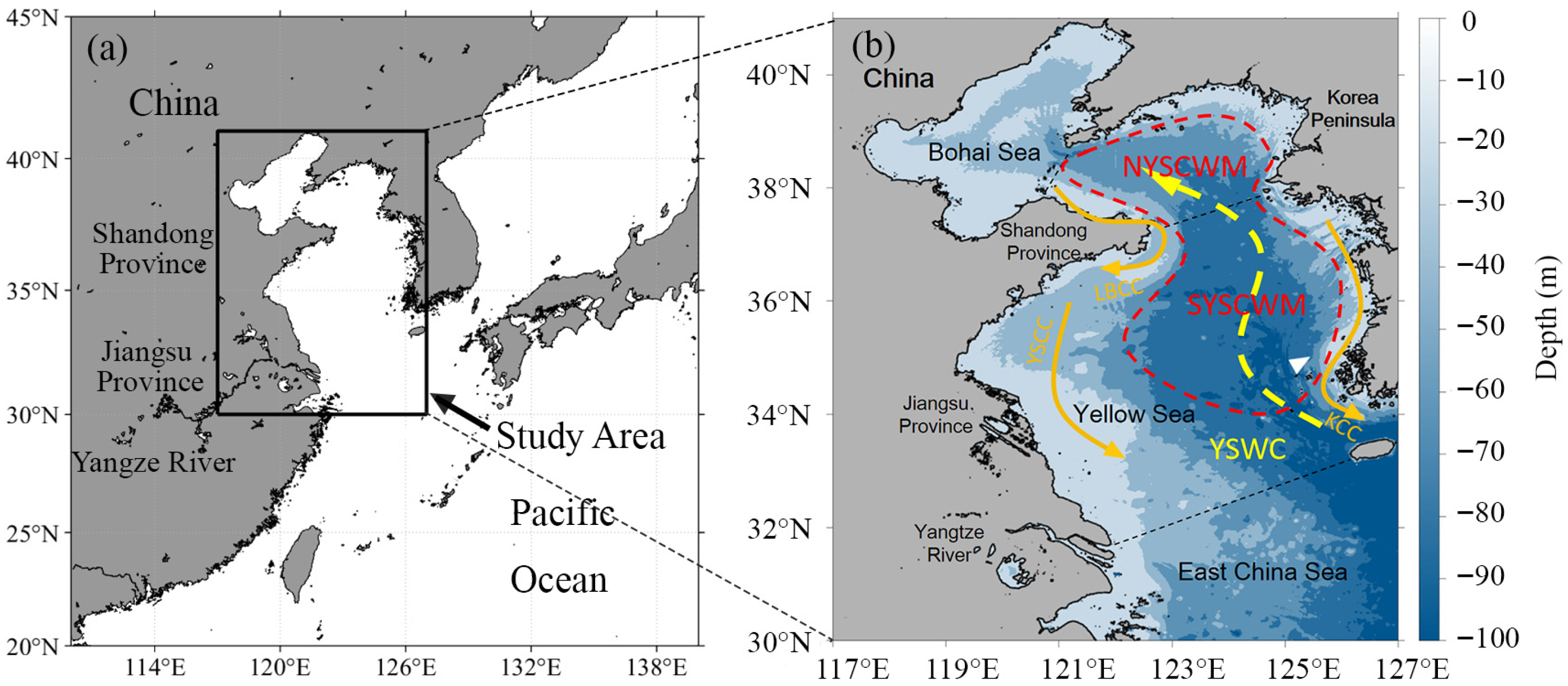
To further elucidate the spatiotemporal heterogeneity of bloom phenology within the YSCWM, this study divides the YSCWM region into the Northern Yellow Sea Cold Water Mass (NYSCWM) and the Southern Yellow Sea Cold Water Mass (SYSCWM) based on bathymetry and thermohaline structure (black dashed line in Figure 1). As shown in Figure 1, the hydrodynamic circulation in this area is complex, comprising mainly the YSWC, Yellow Sea Coastal Current, Korean Coastal Current and the Lubei Coastal Current. The interactions between these currents and the YSCWM jointly regulate nutrient transport and vertical mixing, thereby influencing the phenology and intensity of autumn blooms.

2.2. Data Sources

2.2.1. Satellite Data

The sea surface Chl-a concentration data used in this study were obtained from the Level-3 product (Version 6.0) released by the European Space Agency (ESA) Ocean Colour Climate Change Initiative (OC-CCI) Level-3 product (Version 6.0). These data, characterized by a spatial of 4 km and a temporal resolutions of 8 days, respectively, are publicly accessible online via the OC-CCI portal (http://www.esa-oceancolour-cci.org, accessed on 12 January 2025). The analysis covers the period from January 2000 to December 2022. Compared to previous versions, OC-CCI v6.0 incorporates additional sensor data, such as Sentinel-3B OLCI, and integrates updated processing modules, thereby improving data consistency and coverage [24].
To correct the Chl-a data from the OC-CCI dataset, daily remote sensing reflectance measurements at 412 nm, 443 nm, 490 nm, and 555 nm were acquired from the Copernicus Marine Environment Monitoring Service (CMEMS; https://marine.copernicus.eu, accessed on 12 January 2025). These data, derived from the Copernicus-GlobColour Level-3 global products, are produced by ACRI-ST in France and with a spatial resolution of 4 km.

2.2.2. Reanalysis Data

Sea water temperature (SWT) and sea water salinity (SWS) data were obtained from the GLORYS12V1 global ocean reanalysis dataset. Nitrate (NO3) and phosphate (PO43−) concentrations, as well as MLD data, were sourced from the global ocean biogeochemical reanalysis product released by the CMEMS, as detailed in the Copernicus Work Programme 2019 [25]. Reanalysis wind field data is provided by the European Centre for Medium-Range Weather Forecasts (ECMWF). All datasets cover the period from 1 January 2000 to 31 December 2022. Further details regarding the data can be found in Table 1.
For trend analysis of all variables, the seasonal-trend decomposition based on the Loess method was adopted. This approach robustly decomposes a time series into trend, seasonal, and residual components, thereby extracting long-term trend signals by removing noises and periodic fluctuations. The decomposition procedure and parameter settings primarily follow the foundational work by Cleveland et al. (1990) [26]. The significance of correlations and monotonic trends were evaluated using the Spearman rank correlation coefficient, with statistical significance defined at p < 0.05.

2.3. Methodology

2.3.1. Data Preprocessing

Previous studies have demonstrated that the OC-CCI dataset can reasonably identify the large-scale spatiotemporal variability of Chl-a in the YS and the East China Sea [27]. However, in coastal and estuarine waters characterized by high suspended particulate matter (SPM) and colored dissolved organic matter (CDOM), OC-CCI products tend to systematically overestimate Chl-a concentrations [28,29].
To reduce this bias, this study applies a turbidity-dependent correction scheme following the method proposed by Siswanto et al. [29]. This method classifies water types based on the normalized water-leaving radiance at 555 nm (nLw555), which serves as an indicator of water turbidity, and applies distinct different water types using different Chl-a retrieval strategies to each water type. Traditionally, waters are categorized into clear, turbid, and transitional types. For turbid waters, a Tassan-like algorithm (TChl), which is more suitable for optically complex coastal environments, is used to estimate Chl-a concentration. For clear waters, the original OC-CCI Chl-a product (OChl) is retained. In transitional waters between clear and turbid conditions, a weighted averaging approach is applied to ensure a smooth spatial transition between the two algorithms.
Following the turbidity-based correction, the resulting Chl-a fields still contain gaps due to cloud cover and sensor limitations. These missing values are subsequently reconstructed using the DINEOF (Data Interpolating Empirical Orthogonal Functions) method [30,31], yielding a spatially and temporally continuous Chl-a dataset suitable for further analysis.

2.3.2. Phytoplankton Phenology

This study applied the ROC method proposed by Brody et al. (2013) to identify phytoplankton bloom events and to quantify bloom phenology based on temporal variations in Chl-a concentrations [7]. By analyzing changes in Chl-a concentration rather than relying on absolute thresholds, this method effectively identifies bloom initiation from low background levels and captures early seasonal signals.
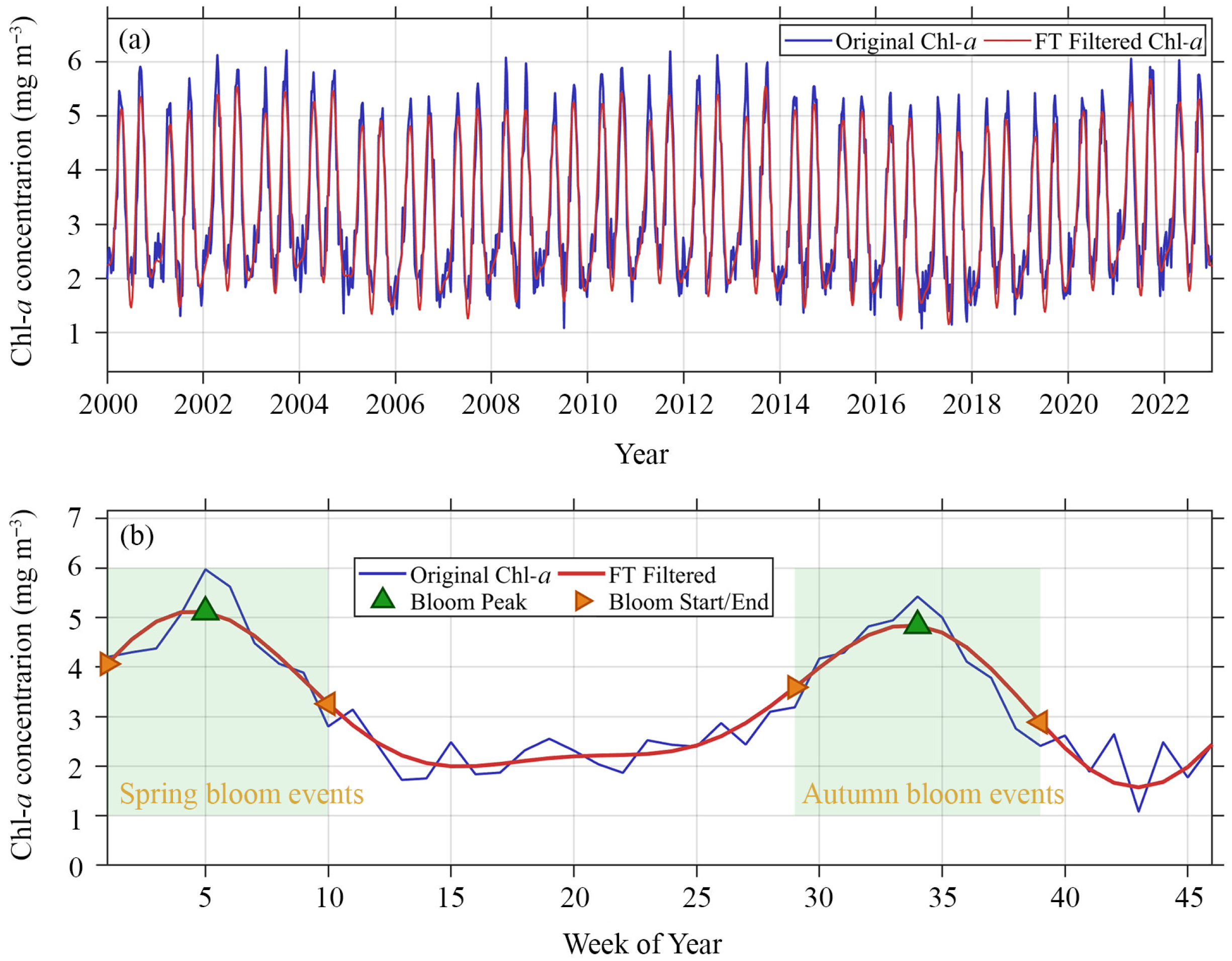
Bloom detection was conducted using the complete Chl-a time series from 2000 to 2022. To suppress high-frequency noise while retaining seasonal and interannual variability, the time series was smoothed using a Fourier transform, with the first 70 coefficients used for signal reconstruction (Figure 2a). Dominant Chl-a peaks were then identified within each annual cycle. Two bloom events were defined in years exhibiting two distinct peaks, with the second peak representing the autumn bloom.
For each bloom event, phenological metrics were derived using the ROC approach (Figure 2b). Bloom initiation (bi) was defined as the time point prior to the Chl-a peak at which the positive rate of change reached its maximum, while bloom termination (be) was defined as the time point after the peak at when the negative rate of change was largest. Bloom duration (bd) referenced the interval between bi and be. Peak bloom timing (bt) corresponded to the time of maximum Chl-a concentration, and bloom amplitude (ba) was defined as the peak Chl-a concentration value. This method enables consistent identification and cross-year comparison of bloom events and their phenological characteristics, and is particularly suitable for temperate shelf seas exhibiting bimodal bloom patterns.

2.3.3. Vertical Stratification Index

The vertical stratification index (VSI) is a key physical parameter to characterize and quantify the stability of the water column’s vertical structure [32]. It is calculated based on the potential density anomaly differences between successive water layers. The VSI is derived by vertically integrating the differences in potential density anomaly from the surface to the bottom layer, with the results directly reflecting the cumulative vertical intensity of water column static stability. Higher VSI values indicate enhanced stratification and suppressed vertical exchange, making it an essential parameter for diagnosing the intensity of ocean stratification and analyzing limitations in the vertical transport of nutrients. The computation of this parameter primarily follows the methodology described by Fu and Sun [32].

3. Results

3.1. Annual Phenological Patterns of Autumn Blooms

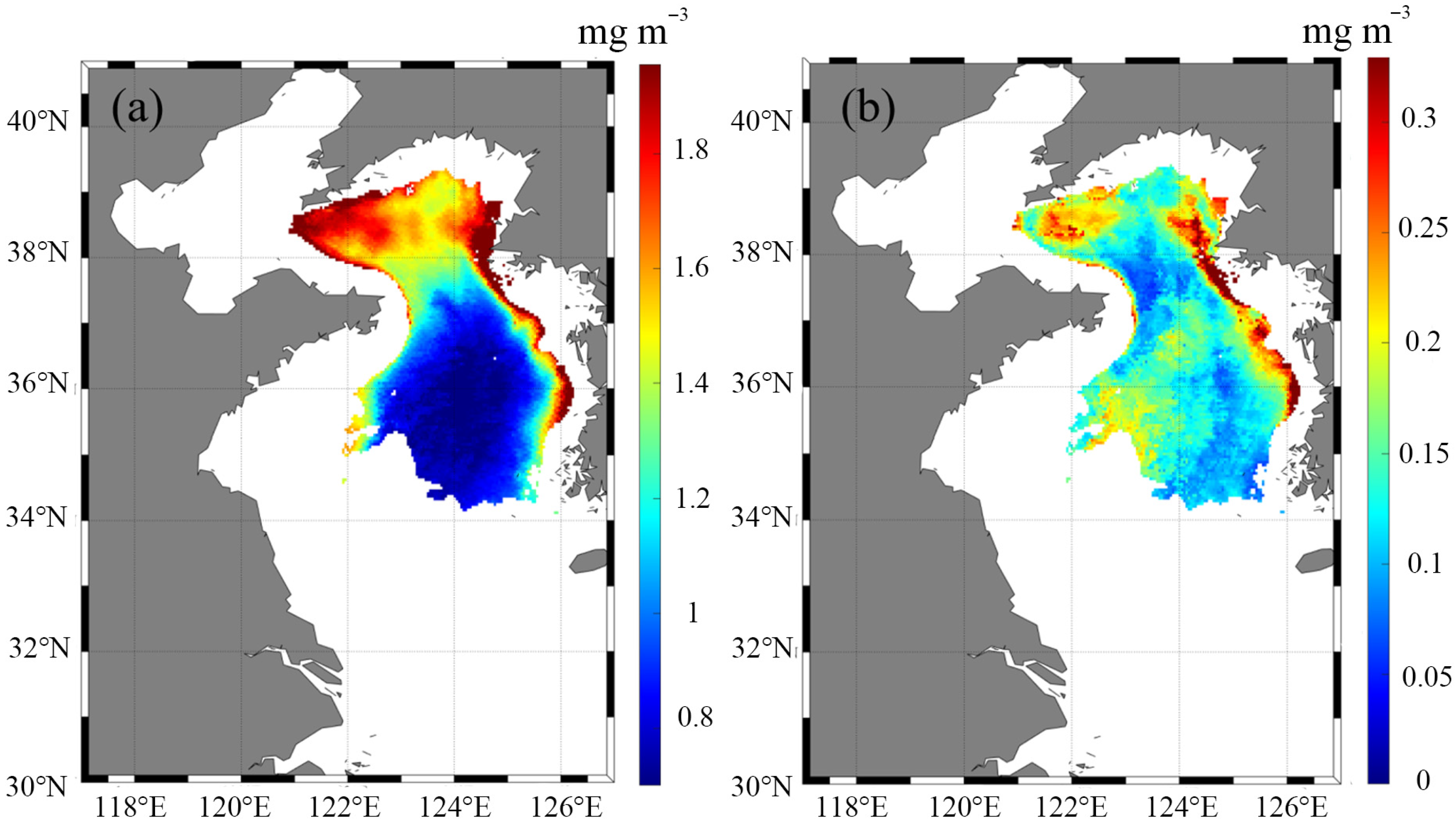
The climatologically spatial distribution of Chl-a concentration during autumn phytoplankton blooms exhibits pronounced regional differences. The core of the SYSCWM is characterized by relatively low Chl-a concentrations, whereas significantly higher values occur in the NYSCWM and along the eastern nearshore and shelf regions of the SYSCWM (Figure 3a). Interannual variability also shows strong spatial heterogeneity. The central areas of both the NYSCWM and SYSCWM display weaker and more spatially uniform variability, while the eastern and western marginal seas, particularly near coastal zones and current convergence regions, exhibit stronger variability (Figure 3b). This suggests that blooms in these areas are more sensitive to interannual environmental forcing.
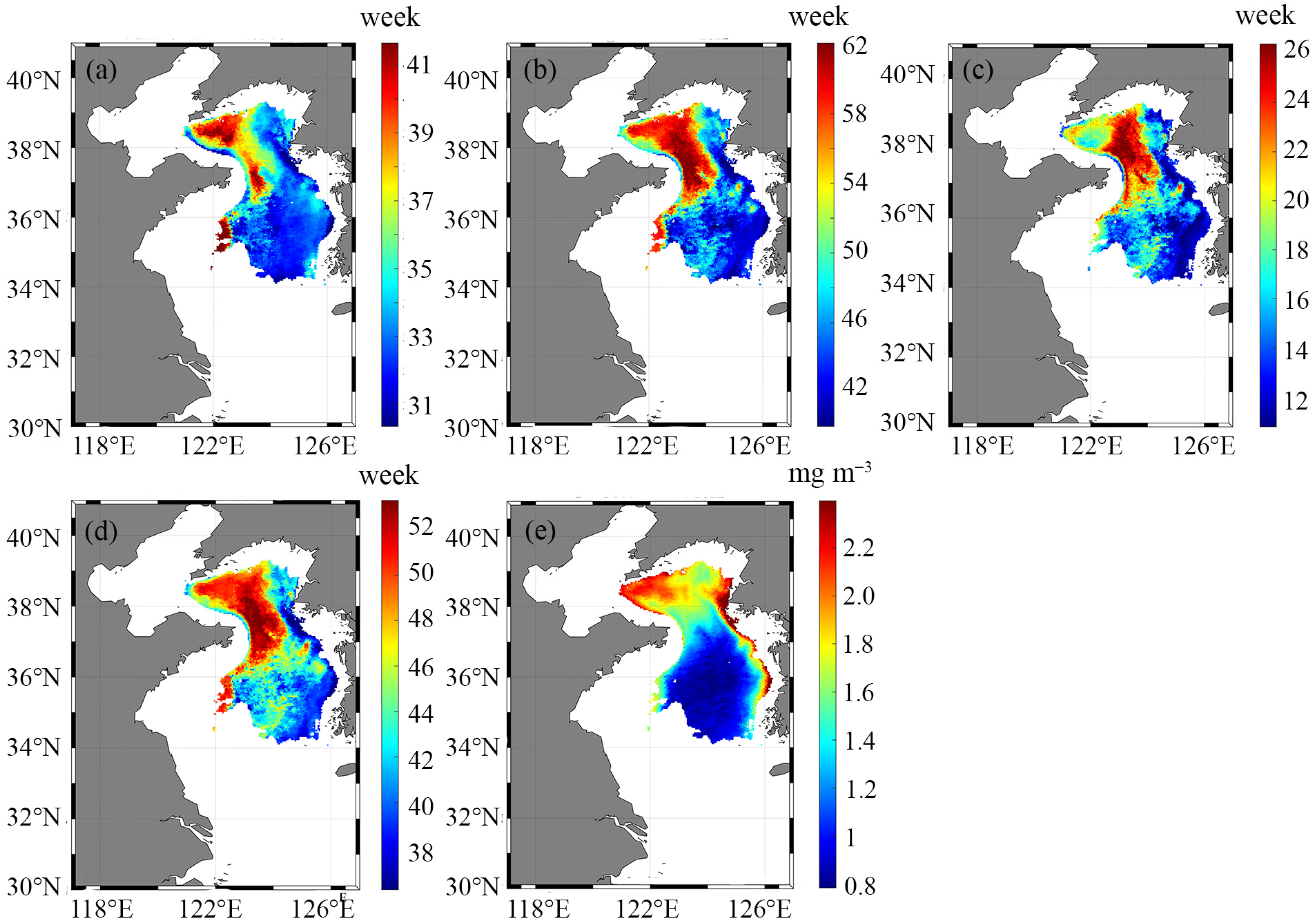
Distinct spatial heterogeneity is observed in autumn bloom phenology. The bi generally occurs between mid-August and October, with earlier initiation in the eastern region than in the western region of the YSCWM (Figure 4). The be mainly falls between November and January of the following year, though some blooms persist until March along the Shandong Peninsula coast and in the western SYSCWM. The spatial pattern of be is consistent with that of bi, with earlier bt in the east, resulting in a generally shorter bd in eastern regions. The bt follows a similar spatial pattern, with earlier bt in the east and later bt in the west, while the ba within the SYSCWM is markedly lower than that in the NYSCWM.

3.2. Divergent Trends in Phenology of Autumn Phytoplankton Bloom

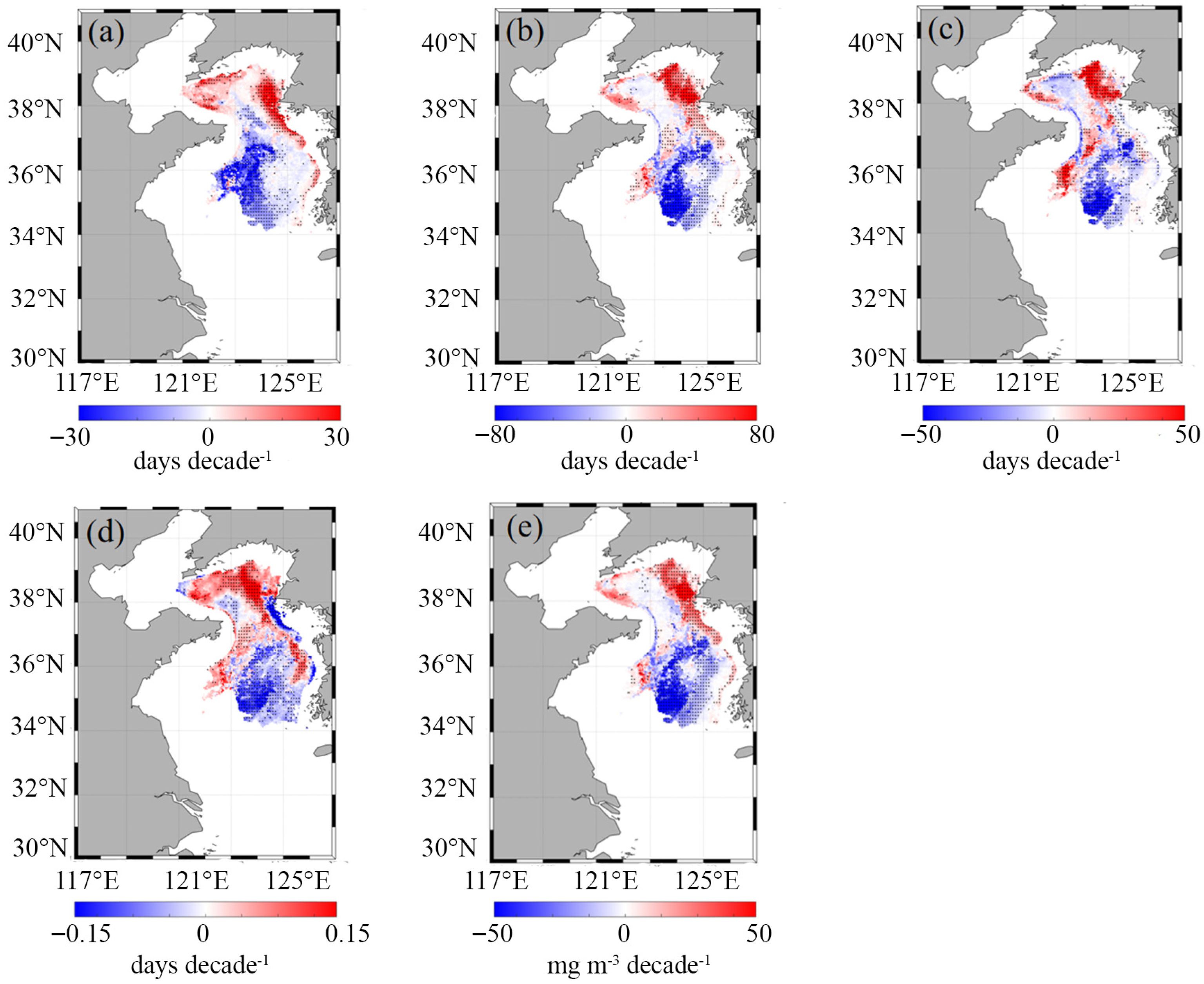
In the SYSCWM region, a distinct forward shift in bloom timing is observed. Both bi and be exhibit systematic advancement, resulting in an overall shortening of bd. Consistent with these shifts, bt also occurs markedly earlier, while ba shows a general weakening trend (Figure 5). In contrast, the marginal region of the NYSCWM and the eastern and western flanks of the SYSCWM display an opposing pattern of change. In these areas, both bi and be tend to be delayed, bd is correspondingly prolonged, bt occurs later, and ba generally increases. These contrasting trends highlight strong regional differentiation in the long-term evolution of autumn phytoplankton bloom dynamics.
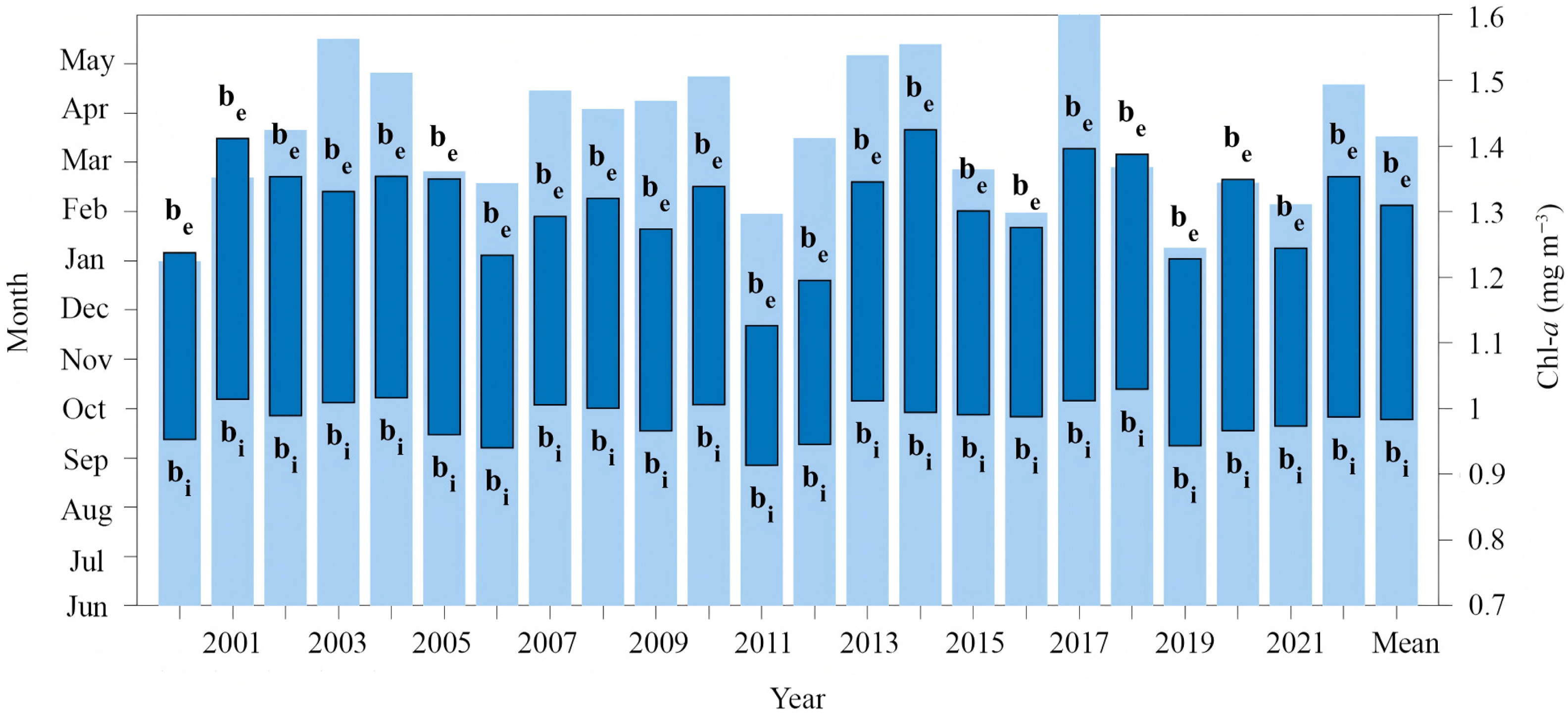
Interannual variations in autumn bloom phenology are evident from 2000 to 2022 (Figure 6). All phenological parameters show pronounced annual fluctuations that are superimposed on the long-term trends identified in Figure 5, indicating strong modulation by interannual environmental variability. Several years exhibit anomalously early bi, particularly 2006 and 2011, when blooms began earlier than the climatological mean. These early-onset events are generally accompanied by earlier bt, while be and bd show more variable responses, indicating that shifts in bi do not proportionally affect bd. Additionally, ba also varies substantially annually, with higher values often associated with longer bd.

4. Discussion

4.1. Mechanism of Autumn Phytoplankton Bloom Phenology Differentiation

The spatial patterns of autumn bloom phenology and intensity identified in this study are closely related to the structure and seasonal evolution of the YSWC, as well as associated wind-driven mixing processes. In the eastern YSCWM region, although the YSWC weakens during summer, topographic conditions promote nutrient deposition, forming a preconditioning nutrient reservoir for subsequent autumn blooms [33]. As autumn progresses, the YSWC strengthens and induces sustained upwelling and convergence [34], facilitating the upward transport of nutrient-rich bottom waters from the YSCWM region into the euphotic zone [35]. When light and water temperature become favorable in early autumn, phytoplankton in the eastern region respond rapidly to this enhanced nutrient supply, leading to earlier bi and bt. In the western region of YSCWM, persistent upwelling associated with the YSWC is comparatively weak, and nutrient supply relies more strongly on episodic wind-driven mixing. This difference in nutrient delivery delays the occurrence of phytoplankton growth and peak, resulting in later bi. The lower ba (Figure 4e) observed within the SYSCWM compared with the NYSCWM is likely due to ambient nutrient concentrations and water mass properties. The seasonal intrusion of the YSWC restricts the southeastward expansion of the YSCWM [36], limiting nutrient availability and phytoplankton growth, which aligns with the observed lower ba and shorter bd [37].
Analysis of the Chl-a time-series data further indicates that autumn blooms along the coast of the Shandong Peninsula and in the western SYSCWM often persist into the following spring as continuous events rather than two distinct seasonal blooms (Figure 3b). Along the Shandong Peninsula coast, the ear-shaped thermal front develops from late autumn to early spring and is maintained by the interaction between the YSWC and coastal currents [38,39]. This front intensifies during winter [40], enhances nutrient convergence, and prolongs phytoplankton residence time through strong thermal gradients, thereby extending the bloom period [41]. In the western SYSCWM, the N-shaped thermal front, characterized by strong circulation convergence and horizontal shear, supports sustained phytoplankton blooms [40]. Combined with additional nutrient input from Yellow River discharge in autumn and sufficient winter photosynthetically active radiation [41], Chl-a concentrations remain elevated from autumn into early spring. Therefore, regional differences in nutrient supply and in the persistence of favorable physical conditions ultimately control ba and its interannual variability in the YS.
Previous field observations on seasonal community structure in the YS show that diatoms are one of the dominant phytoplankton groups under conditions of high nutrient availability and strong turbulent mixing. In seasonal surveys including autumn, diatom taxa such as Paralia spp. and Coscinodiscus spp. have been recorded as major components of the phytoplankton community [42], with overall relatively high diatom abundance compared to other groups in autumn [43]. These patterns are consistent with the physical conditions identified in this study, which are characterized by enhanced vertical mixing and nutrient resupply in early autumn.

4.2. Physical Mechanism Driving Divergent Trends in Autumn Phytoplankton Bloom Phenology

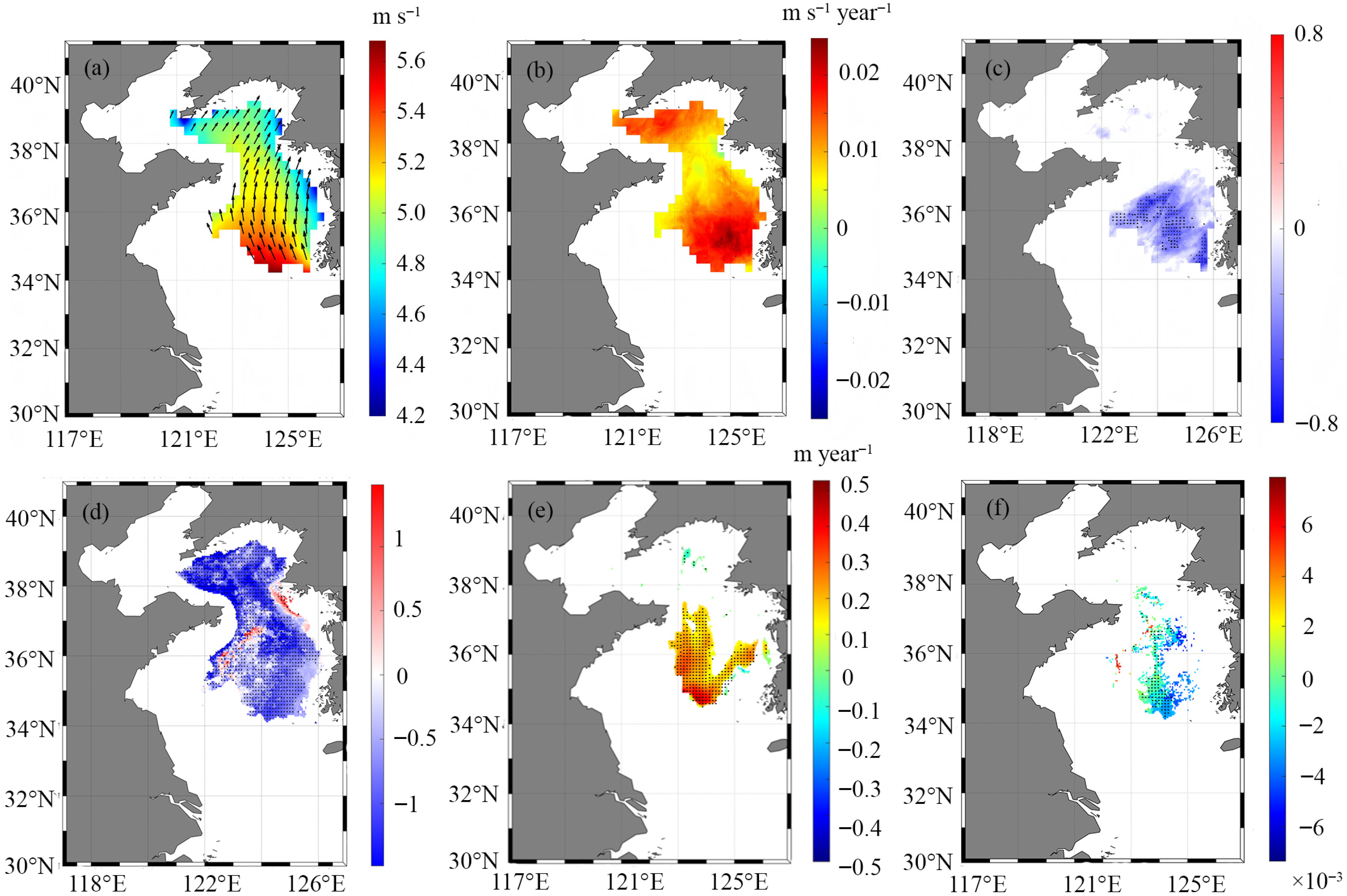
In the central SYSCWM, bi of autumn phytoplankton bloom shows a significant advanced trend during 2000 to 2022, whereas delayed bi is observed in the NYSCWM and the eastern margins of the SYSCWM (Figure 5a). Regions with earlier bi are accompanied by earlier bt and shorter bd, while regions with delayed bi show later bt and longer bd (Figure 5c,d). These patterns indicate coherent long-term adjustments in bloom timing across different regions, driven by contrasting atmospheric forcing and upper-ocean responses. In regions with advanced bi, intensified autumn northerly winds serve as the primary external force. During the 30 days preceding bloom onset, these regions experience stronger northerly winds (Figure 7a), and wind speed exhibits a significant increasing trend from 2000 to 2022 (Figure 7b). Strong northerly winds influence the upper ocean through two pathways. On one hand, wind stress enhances surface turbulent mixing and Ekman pumping; on the other hand, wind-driven surface heat loss accelerates sea surface cooling. The combined effects contribute to the destabilization of the summer stratification and weaken stratification weakening during early autumn [44].
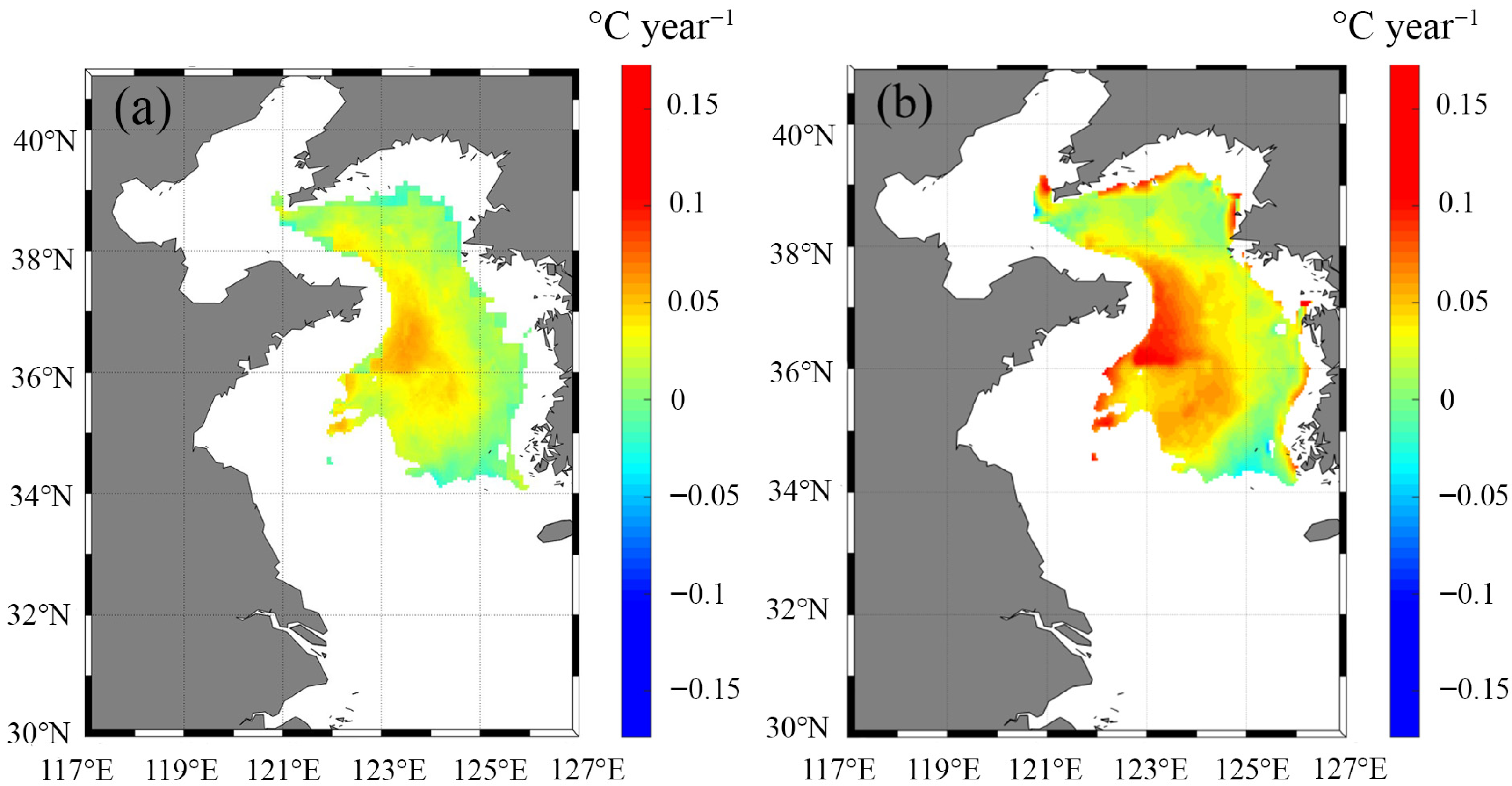
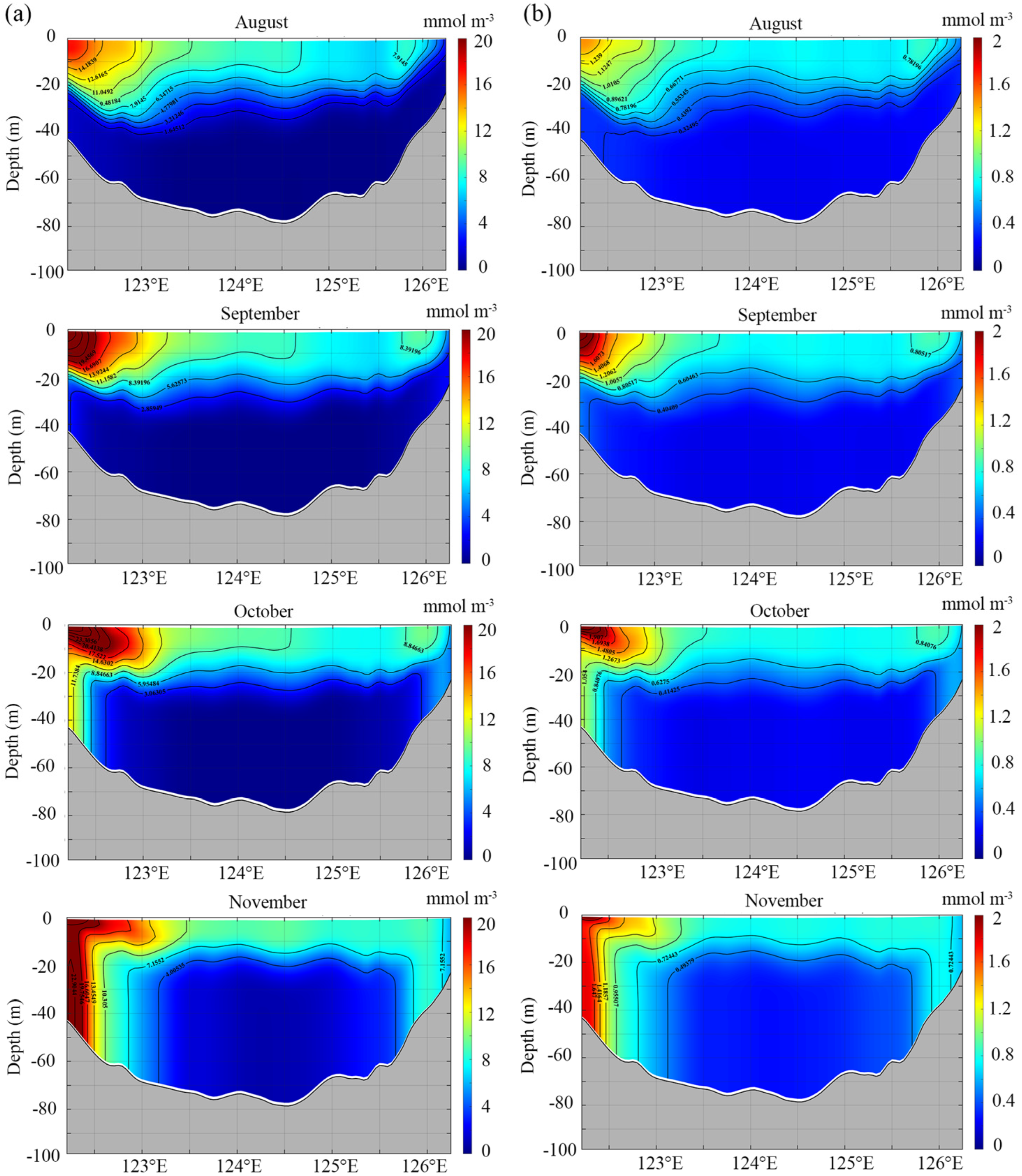
The vertical stratification index in these regions shows a significant weakening trend (Figure 7d), while the MLD deepens significantly (Figure 7e). The strong negative spatial correlation between stratification and MLD indicates that reduced stratification is accompanied by enhanced vertical mixing (Figure 7f). During the autumn bloom period, the water temperature in both deep and bottom layers increases more rapidly in regions with earlier bi than in delayed regions (Figure 8), suggesting more efficient vertical exchange between the underlying YSCWM region and the upper water column. In addition, MLD is positively correlated with northerly wind speed (Figure 7c), further indicating that wind-induced turbulent mixing is closely associated with the observed deepening of the mixed layer. The breakdown of stratification and enhancement of vertical mixing facilitate the upward transport of nutrients from the bottom layer into the euphotic zone. Consequently, nitrate and phosphate concentrations in the euphotic zone of regions with advanced bi are significantly higher than those in delayed regions (Figure 9). The earlier replenishment of nutrients in surface waters, together with relatively favorable autumn light conditions, provides favorable conditions for rapid phytoplankton growth and promotes earlier bi [45].
In contrast, regions with delayed bi are influenced by weaker northerly winds and residual warm water from the YSWC. In these areas, variations in stratification are not accompanied by significant changes in MLD (Figure 7f), and the water column remains relatively stable [46]. This stability delays the dissipation of the underlying YSCWM (Figure 9) and limits the upward transport of nutrients stored in bottom waters. Although nutrient reserves in the bottom layer may be sufficient, the surface layer remains nutrient-limited for a longer period, which constrains phytoplankton growth and delays bi [47].
Similar autumn phytoplankton bloom phenology has been documented in other temperate shelf and marginal seas, including the Mid-Atlantic Bight [48], the North Sea [49], and the broader North Atlantic [50]. Long-term satellite and reanalysis studies have shown that, despite regional differences in circulation patterns and nutrient sources, autumn blooms in these systems are commonly regulated by the seasonal weakening of stratification and wind-driven vertical mixing, which enhance nutrient entrainment from subsurface layers into the euphotic zone. In particular, intensified autumn winds have been found to accelerate stratification erosion and advance bi, whereas persistent stratification and weak mixing tend to delay bloom development. The consistency of these physical controls across different regions suggests that the mechanisms identified for the YSCWM reveal the common mechanisms driving autumn bloom dynamics in shelf and marginal seas.

5. Conclusions

Based on long-term satellite and reanalysis data from 2000 to 2022, this study investigated the spatiotemporal variability and key physical driving mechanisms of autumn phytoplankton blooms in the YSCWM region. The main findings are as follows:
Significant spatial divergence exists in the phenology of autumn phytoplankton blooms between the eastern and western regions of the YSCWM. Both bi and be in the eastern region are significantly earlier than those in the western region, ultimately resulting in an overall shorter bd in the east. Meanwhile, bt in the east is also earlier than that in the west. In addition, bloom intensity in the SYSCWM is significantly lower than that in the NYSCWM. This spatially divergent pattern of phenology is primarily regulated by the distribution of nutrient and the dynamic processes of the YSWC during summer and autumn. The eastern region benefits from circulation-driven upwelling, which brings earlier and more sufficient nutrient replenishment, thereby providing critical environmental conditions required by the earlier bloom.
The regional differences in the trends of autumn phytoplankton bloom phenology are dominated by distinct physical mechanisms. In regions with earlier bi (e.g., the central SYSCWM), the intensified autumn northerly winds accelerate the dissipation of the YSCWM by weakening vertical stratification and deepening the MLD. This process facilitates the upward transport of bottom nutrients to the euphotic zone, thereby triggering early bloom outbreaks. Conversely, in regions with delayed bi (e.g., the NYSCWM and the eastern edge of the SYSCWM), the weak northerly winds, combined with a stable circulation structure, sustain strong stratification. This suppresses vertical mixing and nutrient supply, ultimately leading to delayed bi.

Author Contributions

Conceptualization, C.L.; methodology, M.L. (Mingxuan Liu) and Y.Z.; software, M.L. (Mingxuan Liu) and B.G.; validation, M.L. (Mingxuan Liu), C.L. and B.S.; formal analysis, M.L. (Mingxuan Liu) and B.G.; investigation, M.L. (Mingxuan Liu), Y.Z. and M.L. (Min Li); resources, C.L.; data curation, Y.Z. and M.L. (Min Li); writing—original draft preparation, M.L. (Mingxuan Liu); writing—review and editing, C.L., B.S. and Q.M.; visualization, M.L. (Mingxuan Liu) and B.G.; supervision, C.L.; project administration, C.L.; funding acquisition, C.L. All authors have read and agreed to the published version of the manuscript.

Funding

This research was funded by the Zhejiang Provincial Natural Science Foundation of China (LQK26D060001); the Key Research and Development Program of Hainan Province (ZDYF2023SHFZ173); the Natural Science Foundation of Shandong Province (ZR2020MD098); and the Project of State Key Laboratory of Satellite Ocean Environment Dynamics (SOEDZZ2531).

Data Availability Statement

The satellite chlorophyll-a concentration data used in this study are available from the European Space Agency (ESA) Ocean Colour Climate Change Initiative (OC-CCI) at http://www.esa-oceancolour-cci.org. Remote sensing reflectance data are obtained from the Copernicus Marine Environment Monitoring Service (CMEMS) (https://marine.copernicus.eu). Sea water temperature, salinity, nitrate, phosphate, mixed layer depth, and wind field data can be accessed through the corresponding data providers (GLORYS12V1, CMEMS, ECMWF) following their respective data access protocols. Processed data supporting the conclusions of this article are available from the corresponding author upon reasonable request.

Acknowledgments

We acknowledge the European Space Agency (ESA), the Copernicus Marine Environment Monitoring Service (CMEMS), and the European Centre for Medium-Range Weather Forecasts (ECMWF) for providing the necessary datasets.

Conflicts of Interest

The authors declare no conflicts of interest.

References

  1. Boyd, P.W. Environmental factors controlling phytoplankton processes in the Southern Ocean. J. Phycol. 2002, 38, 844–861. [Google Scholar] [CrossRef]
  2. Cáceres, C.; González Taboada, F.; Hofer, J.; Anadón, R. Phytoplankton growth and microzooplankton grazing in the subtropical northeast Atlantic. PLoS ONE 2013, 8, e69159. [Google Scholar] [CrossRef] [PubMed]
  3. Behrenfeld, M.J.; Falkowski, P.G. Photosynthetic rates derived from satellite-based chlorophyll concentration. Limnol. Oceanogr. 1997, 42, 1–20. [Google Scholar] [CrossRef]
  4. Germán, A.; Andreo, V.C.; Tauro, C.B.; Scavuzzo, C.M.; Ferral, A. A novel method based on time series satellite data analysis to detect algal blooms. Ecol. Inform. 2020, 59, 101131. [Google Scholar] [CrossRef]
  5. Winder, M.; Sommer, U. Phytoplankton response to a changing climate. Hydrobiologia 2012, 698, 5–16. [Google Scholar] [CrossRef]
  6. Ferreira, A.; Brotas, V.; Palma, C.; Borges, C.; Brito, A.C. Assessing phytoplankton bloom phenology in upwelling-influenced regions using ocean color remote sensing. Remote Sens. 2021, 13, 675. [Google Scholar] [CrossRef]
  7. Brody, S.R.; Lozier, M.S.; Dunne, J.P. A comparison of methods to determine phytoplankton bloom initiation. J. Geophys. Res. Oceans 2013, 118, 2345–2357. [Google Scholar] [CrossRef]
  8. Racault, M.-F.; Raitsos, D.E.; Berumen, M.L.; Brewin, R.J.W.; Platt, T.; Sathyendranath, S.; Hoteit, I. Phytoplankton phenology indices in coral reef ecosystems: Application to ocean-color observations in the Red Sea. Remote Sens. Environ. 2015, 160, 222–234. [Google Scholar] [CrossRef]
  9. Ferreira, A.; Mendes, C.R.B.; Costa, R.R.; Brotas, V.; Tavano, V.M.; Guerreiro, C.V.; Secchi, E.R.; Brito, A.C. Climate change is associated with higher phytoplankton biomass and longer blooms in the West Antarctic Peninsula. Nat. Commun. 2024, 15, 6536. [Google Scholar] [CrossRef] [PubMed]
  10. Kim, S.; Lee, D.; Kim, M.; Jang, H.-K.; Park, S.; Kim, Y.; Kim, J.; Park, J.-W.; Joo, H.; Lee, S.-H. Seasonal patterns and bloom dynamics of phytoplankton based on satellite-derived chlorophyll-a in the Eastern Yellow Sea. Mar. Environ. Res. 2024, 199, 106605. [Google Scholar] [CrossRef]
  11. Yamaguchi, H.; Kim, H.-C.; Son, Y.B.; Kim, S.W.; Okamura, K.; Kiyomoto, Y.; Ishizaka, J. Seasonal and summer interannual variations of SeaWiFS chlorophyll a in the Yellow Sea and East China Sea. Prog. Oceanogr. 2012, 105, 22–29. [Google Scholar] [CrossRef]
  12. Painter, S.C.; Finlay, M.; Hemsley, V.S.; Martin, A.P.; Zubkov, M.V. Seasonality, phytoplankton succession and the biogeochemical impacts of an autumn storm in the northeast Atlantic Ocean. Prog. Oceanogr. 2016, 142, 72–104. [Google Scholar] [CrossRef]
  13. Tang, D.L.; Kawamura, H.; Oh, I.S.; Baker, J. Satellite evidence of harmful algal blooms and related oceanographic features in the Bohai Sea during autumn 1998. Adv. Space Res. 2006, 37, 681–689. [Google Scholar] [CrossRef]
  14. Friedland, K.D.; Record, N.R.; Pendleton, D.E.; Balch, W.M.; Stamieszkin, K.; Moisan, J.R.; Brady, D.C. Asymmetry in the rate of warming and the phenology of seasonal blooms in the Northeast US Shelf Ecosystem. ICES J. Mar. Sci. 2023, 80, 775–786. [Google Scholar] [CrossRef]
  15. Guo, C.; Zhang, G.; Sun, J.; Leng, X.; Xu, W.; Wu, C.; Li, X.; Pujari, L. Seasonal responses of nutrient to hydrology and biology in the Southern Yellow Sea. Cont. Shelf Res. 2020, 206, 104207. [Google Scholar] [CrossRef]
  16. Yu, F.; Ren, Q.; Diao, X.; Wei, C.; Hu, Y. The sandwich structure of the Southern Yellow Sea Cold Water Mass and Yellow Sea Warm Current. Front. Mar. Sci. 2022, 8, 767850. [Google Scholar] [CrossRef]
  17. Hao, T.; Liu, X.; Ogg, J.; Liang, Z.; Xiang, R.; Zhang, X.; Zhang, D.; Zhang, C.; Liu, Q.; Li, X. Intensified episodes of East Asian winter monsoon during the middle through late Holocene driven by North Atlantic cooling events: High-resolution lignin records from the South Yellow Sea, China. Earth Planet. Sci. Lett. 2017, 479, 144–155. [Google Scholar] [CrossRef]
  18. Song, H.J.; Ji, R.B.; Xin, M.; Liu, P.; Zhang, Z.H.; Wang, Z.L. Spatial heterogeneity of seasonal phytoplankton blooms in a marginal sea: Physical drivers and biological responses. ICES J. Mar. Sci. 2020, 77, 408–418. [Google Scholar] [CrossRef]
  19. He, X.; Bai, Y.; Pan, D.; Chen, C.-T.A.; Cheng, Q.; Wang, D.; Gong, F. Satellite views of the seasonal and interannual variability of phytoplankton blooms in the eastern China seas over the past 14 years (1998–2011). Biogeosciences 2013, 10, 4721–4739. [Google Scholar] [CrossRef]
  20. Pu, X.-M.; Sun, S.; Yang, B.; Ji, P.; Zhang, Y.-S.; Zhang, F. The combined effects of temperature and food supply on Calanus sinicus in the Southern Yellow Sea in summer. J. Plankton Res. 2004, 26, 1049–1057. [Google Scholar] [CrossRef]
  21. Xue, Y.; Jin, X.; Zhang, B.; Liang, Z. Seasonal, diel and ontogenetic variation in feeding patterns of small yellow croaker in the central Yellow Sea. J. Fish Biol. 2005, 67, 33–50. [Google Scholar] [CrossRef]
  22. Liu, X.; Huang, B.; Huang, Q.; Wang, L.; Ni, X.; Tang, Q.; Sun, S.; Wei, H.; Liu, S.; Li, C.; et al. Seasonal phytoplankton response to physical processes in the Southern Yellow Sea. J. Sea Res. 2015, 95, 45–55. [Google Scholar] [CrossRef]
  23. Zhai, F.; Liu, Z.; Gu, Y.; He, S.; Hao, Q.; Li, P. Satellite-observed interannual variations in sea surface chlorophyll-a concentration in the Yellow Sea over the past two decades. J. Geophys. Res. Oceans 2023, 128, e2022JC019528. [Google Scholar] [CrossRef]
  24. Nicholson, S.-A.; Ryan-Keogh, T.J.; Thomalla, S.J.; Chang, N.; Smith, M.E. Satellite-derived global-ocean phytoplankton phenology indices. Earth Syst. Sci. Data 2025, 17, 1959–1975. [Google Scholar] [CrossRef]
  25. Lellouche, J.-M.; Greiner, E.; Bourdallé-Badie, R.; Garric, G.; Melet, A.; Drévillon, M.; Bricaud, C.; Hamon, M.; Le Galloudec, O.; Regnier, C.; et al. The Copernicus Global 1/12° Oceanic and Sea Ice GLORYS12 Reanalysis. Front. Earth Sci. 2021, 9, 698876. [Google Scholar] [CrossRef]
  26. Cleveland, R.B.; Cleveland, W.S.; McRae, J.E.; Terpenning, I. STL: A seasonal-trend decomposition procedure based on loess. J. Off. Stat. 1990, 6, 3–73. [Google Scholar]
  27. Hao, Q.; Chai, F.; Xiu, P.; Bai, Y.; Chen, J.; Liu, C.; Le, F.; Zhou, F. Spatial and temporal variation in chlorophyll a concentration in the Eastern China Seas based on a locally modified satellite dataset. Estuar. Coast. Shelf Sci. 2019, 220, 220–231. [Google Scholar] [CrossRef]
  28. Shi, W.; Wang, M. Satellite views of the Bohai Sea, Yellow Sea, and East China Sea. Prog. Oceanogr. 2012, 104, 30–45. [Google Scholar] [CrossRef]
  29. Siswanto, E.; Tang, J.; Yamaguchi, H.; Ahn, Y.-H.; Ishizaka, J.; Yoo, S.; Kim, S.-W.; Kiyomoto, Y.; Yamada, K.; Chiang, C.; et al. Empirical ocean-color algorithms to retrieve chlorophyll-a, total suspended matter, and colored dissolved organic matter absorption coefficient in the Yellow and East China Seas. J. Oceanogr. 2011, 67, 627–650. [Google Scholar] [CrossRef]
  30. Hilborn, A.; Costa, M. Applications of DINEOF to satellite-derived chlorophyll-a from a productive coastal region. Remote Sens. 2018, 10, 1449. [Google Scholar] [CrossRef]
  31. Lu, X.; Liu, C.; Niu, Y.; Yu, S. Long-term and regional variability of phytoplankton biomass and its physical oceanographic parameters in the Yellow Sea, China. Estuar. Coast. Shelf Sci. 2021, 260, 107497. [Google Scholar] [CrossRef]
  32. Fu, X.; Sun, J. Temperature driving vertical stratification regulates phytoplankton community structure in the Bohai Sea and Yellow Sea. Mar. Environ. Res. 2024, 194, 106320. [Google Scholar] [CrossRef]
  33. Wei, Q.S.; Fu, M.Z.; Ge, R.F.; Zang, J.Y. Chemicohydrographic characteristics and the seasonal variations of nutrients at the 35° N transect in the cold water mass of the Southern Yellow Sea. Huanjing Kexue 2010, 31, 2063–2074. [Google Scholar]
  34. Lie, H.-J.; Cho, C.-H. Seasonal circulation patterns of the Yellow and East China Seas derived from satellite-tracked drifter trajectories and hydrographic observations. Prog. Oceanogr. 2016, 146, 121–142. [Google Scholar] [CrossRef]
  35. Zhou, F.; Xuan, J.L.; Huang, D.J.; Liu, C.G.; Sun, J. The timing and the magnitude of spring phytoplankton blooms and their relationship with physical forcing in the central Yellow Sea in 2009. Deep-Sea Res. Part II 2013, 97, 4–15. [Google Scholar] [CrossRef]
  36. Hyun, J.-H.; Kim, K.-H. Bacterial abundance and production during the unique spring phytoplankton bloom in the central Yellow Sea. Mar. Ecol. Prog. Ser. 2003, 252, 77–88. [Google Scholar] [CrossRef]
  37. Chen, C.-T.A. Chemical and physical fronts in the Bohai, Yellow and East China seas. J. Mar. Syst. 2009, 78, 394–410. [Google Scholar] [CrossRef]
  38. Wang, F.; Liu, C. An N-shape thermal front in the western South Yellow Sea in winter. Chin. J. Oceanol. Limnol. 2009, 27, 898–906. [Google Scholar] [CrossRef]
  39. Tana, F.Y.; Liao, B.C.; Shi, S.W.; Wu, H.W. Dramatic weakening of the ear-shaped thermal front in the Yellow Sea during 1950s-1990s. Acta Oceanol. Sin. 2017, 36, 51–56. [Google Scholar] [CrossRef]
  40. Liu, S.; Luo, Z.; Wang, Y.; Rao, Q.; Zhang, X.; Yu, B.; Zhai, F. Interannual variation in winter thermal front to the east of the Shandong Peninsula in the Yellow Sea. J. Sea Res. 2023, 193, 102370. [Google Scholar] [CrossRef]
  41. Cao, X.; Tao, B.; Liu, C.; Ai, L.; Li, C.; Li, S.; Li, X.; Zhang, Y. Association of abnormal Yantai-Weihai coastal front with large-scale algal bloom in winter in the northern Shandong Peninsula coastal waters. Prog. Oceanogr. 2026, 240, 103622. [Google Scholar] [CrossRef]
  42. Kim, Y.; Youn, S.-H.; Oh, H.-J.; Joo, H.; Jang, H.-K.; Kang, J.-J.; Lee, D.; Jo, N.; Kim, K.; Park, S.; et al. Seasonal compositions of size-fractionated surface phytoplankton communities in the Yellow Sea. J. Mar. Sci. Eng. 2022, 10, 1087. [Google Scholar] [CrossRef]
  43. Fu, X.; Xie, Y.; Guo, Y.; Gao, T.; Wei, Y.; Liu, H.; Sun, J. Phytoplankton community structure and seasonal variation in the Bohai Sea and North Yellow Sea, China. Diversity 2021, 13, 65. [Google Scholar] [CrossRef]
  44. Chen, Z.; Sun, J.; Gu, T.; Zhang, G.; Wei, Y. Nutrient ratios driven by vertical stratification regulate phytoplankton community structure in the oligotrophic western Pacific Ocean. Ocean Sci. 2021, 17, 1775–1789. [Google Scholar] [CrossRef]
  45. Taylor, J.R.; Ferrari, R. Shutdown of turbulent convection as a new criterion for the onset of spring phytoplankton blooms. Limnol. Oceanogr. 2011, 56, 2293–2307. [Google Scholar] [CrossRef]
  46. Yang, J.; Liu, C.; Sun, Q.; Zhai, L.; Sun, Q.; Li, S.; Ai, L.; Li, X. Internal variability and long-term trends in intensity of the Yellow Sea Cold Water Mass during 1993–2019. J. Mar. Sci. Eng. 2023, 11, 1888. [Google Scholar] [CrossRef]
  47. Shi, J.; Leng, Q.; Zhu, J.; Gao, H.; Guo, X.; Mao, X. Influences of nutrient sources on the alternation of nutrient limitations and phytoplankton community in Jiaozhou Bay, southern Yellow Sea of China. Sustainability 2020, 12, 2224. [Google Scholar] [CrossRef]
  48. Xu, Y.; Chant, R.; Gong, D.; Castelao, R.; Glenn, S.; Schofield, O. Seasonal variability of chlorophyll a in the Mid-Atlantic Bight. Cont. Shelf Res. 2011, 31, 1513–1524. [Google Scholar] [CrossRef]
  49. Silva, E.; Counillon, F.; Brajard, J.; Korosov, A.; Pettersson, L.H.; Samuelsen, A.; Keenlyside, N. Twenty-one years of phytoplankton bloom phenology in the Barents, Norwegian, and North Seas. Front. Mar. Sci. 2021, 8, 746327. [Google Scholar] [CrossRef]
  50. Henson, S.A.; Dunne, J.P.; Sarmiento, J.L. Decadal variability in North Atlantic phytoplankton blooms. J. Geophys. Res. Oceans 2009, 114, C04013. [Google Scholar] [CrossRef]
Figure 1. Study area. (a) Map of the Yellow Sea (YS), (b) bathymetry in the Bohai Sea and Yellow Sea. The boundary between the Northern Yellow Sea Cold Water Mass (NYSCWM) and Southern Yellow Sea Cold Water Mass (SYSCWM) is marked by the dashed black line. The circulation basically comprises the Yellow Sea Warm Current (YSWC), Yellow Sea Coastal Current (YSCC), Korean Coastal Current (KCC), Lubei Coastal Current (LBCC).
Jmse 14 00313 g001
Figure 2. Identification of phytoplankton bloom phenology at 35.5° N, 120.5° E using the ROC method. (a) Long-term Chl-a concentration time series from 2000 to 2022, showing the original observations (blue) and the Fourier transform-filtered signal reconstructed using the first 70 coefficients (red). (b) Example of bloom phenology detection for a representative year 2009, illustrating two distinct bloom events characteristic in temperate coastal waters. Green shaded areas denote identified bloom periods based on the filtered signal, while arrows indicate the bi and be points determined using the ROC method.
Jmse 14 00313 g002
Figure 3. Spatial patterns of Chl-a concentration during the autumn bloom period (2000–2022). (a) Climatological mean and (b) standard deviation.
Jmse 14 00313 g003
Figure 4. Bloom phenology in autumn from 2000 to 2022. (a) Bloom initiation (bi), (b) bloom termination (be), (c) bloom duration (bd), (d) peak bloom timing (bt), and (e) bloom amplitude (ba).
Jmse 14 00313 g004
Figure 5. Spatial patterns of temporal trends in autumn phytoplankton bloom phenological metrics from 2000 to 2022. (a) bi, (b) be, (c) bd, (d) bt, and (e) ba.
Jmse 14 00313 g005
Figure 6. Interannual variations in autumn phytoplankton bloom phenological metrics from 2000 to 2022. Each vertical box represents the bd of the autumn bloom in a given year, with the lower and upper boundaries indicating bi and be, respectively. The bars in the background show the corresponding ba for each year.
Jmse 14 00313 g006
Figure 7. (a) Climatological spatial distribution of northerly wind speed and direction (with black arrows indicating wind direction) averaged over the 30 days preceding the autumn bloom onset, (b) spatial pattern of trends in northerly wind speed during the 30-day period before the autumn bloom, (c) spatial distribution of correlation coefficients between northerly wind speed and MLD over the 30 days prior to the autumn bloom (black dots indicate statistically significant correlations), (d) spatial pattern of trends in the VSI (black dots indicate statistically significant trends), (e) spatial pattern of trends in the MLD (black dots indicate statistically significant trends), (f) spatial distribution of correlation between VSI and MLD (black dots indicate statistically significant trends).
Jmse 14 00313 g007
Figure 8. Spatial patterns of sea water temperature trends during the autumn phytoplankton bloom period. (a) Deep layer (≥40 m) and (b) bottom layer.
Jmse 14 00313 g008
Figure 9. Climatological monthly distributions of (a) nitrate (NO3) and (b) phosphate (PO43−) along the 36° N transect from August to November.
Jmse 14 00313 g009
Table 1. Data sources for all variables used in this study.
VariableData SourceTemporal ResolutionSpatial Resolution
Chl-aOC-CCI8-day4 km
SWT, SWSERA5Daily1/12°
MLD, NO3, PO43−CMEMSDaily0.25°
WindECMWFDaily0.25°
Disclaimer/Publisher’s Note: The statements, opinions and data contained in all publications are solely those of the individual author(s) and contributor(s) and not of MDPI and/or the editor(s). MDPI and/or the editor(s) disclaim responsibility for any injury to people or property resulting from any ideas, methods, instructions or products referred to in the content.