1. Introduction
Exploration of the world’s oceans is inseparable from the use of underwater vehicles. However, the motion of such bodies near the ocean surface is complicated by the presence of surface waves. Arivazhagan et al. [
1] investigated the formation of waves on a liquid surface produced by an underwater body, both in the presence and absence of ambient ocean waves. Their study addressed the problem of detecting a moving submarine based on the resulting surface-wave pattern. The authors showed that the Bernoulli hump height and the Kelvin wake angle constitute key attributes of submarine-induced free surface wakes. Additionally, they identified a negative exponential relationship between the submarine’s immersion depth and the Bernoulli hump height. This relationship led to an empirical equation for estimating a submarine’s diving depth.
According to classical theory [
2,
3], during wave motion in a liquid, the approximate trajectories of particles are circles, whose radius decreases with increasing depth. For surface particles, this radius is equal to the wave amplitude, whereas at a depth equal to the wavelength, the radius becomes hundreds of times smaller. Therefore, the influence of wave motion on the liquid surface diminishes with increasing depth. Moonesun and Korol [
4] determined the minimum logical, calm and safe depth for small and medium submarines at rest in the presence of surface waves. Experimental measurements of the pitch angle were conducted as a function of submergence depth. It was found that at a depth equal to half the wavelength, the wave effect on the pitch angle was negligible, meaning that the environment could be considered absolutely calm. However, the authors Moonesun and Korol recommended a submergence depth of 0.1λ, where λ is the wavelength, as an operationally safe and approximately calm depth for submarines.
Carrica et al. [
5] analyzed the effect of free surface waves on the vertical force and pitching moments acting on a body. Their study showed that near-surface operation induces considerable vertical forces and pitching moments.
Surface waves can propagate not only along the free surface of a liquid but also through an ice–water system. In this case, they are referred to as flexural-gravity waves [
6,
7,
8]. These waves can travel long distances, particularly those with long periods of 15–70 s, such as waves in the infragravity (IG) band [
9]. The formation of a progressive wave in an ice sheet can be caused by several factors, the first being the incidence of ocean waves on the ice sheet edge [
8,
10]. In this case, part of the wave spectrum is damped by the ice cover, while some waves can propagate infinitely far across it [
11]. The attenuation of wave amplitude is exponential in the direction of propagation into the ice cover. According to studies [
12,
13,
14,
15], the attenuation of wave amplitude and wave energy increases with increasing wave frequency. The dependence of wave attenuation on wave amplitude is insignificant in most cases. According to [
16], the amplitudes of the incoming and transmitted waves are interconnected, and an increase in the rigidity of the ice cover leads to a decrease in the height of the transmitted wave.
The second cause of wave formation in an ice cover is localized wind loading [
8]. If the ice cover is sufficiently thin and the wind speed and acceleration are sufficiently high, a traveling bending wave can form within the ice. As noted by Robin [
17], ice sheet waves associated with ocean waves running onto the ice edge are characteristic of Antarctic floating ice, because the Antarctic continent is exposed to large bodies of water along its entire perimeter. By contrast, the Arctic seas, which constitute more or less closed basins, are more commonly subject to surface waves arising from the direct impact of wind on the ice cover [
18].
When studying the motion of a body on an ice cover, the ice cover is often modeled by an elastic floating plate [
19]. However, it is known [
6] that ice cover under natural conditions and at certain temperatures can behave viscoelastically [
6]. The ice plate deflections calculated by using Maxwell, Maxwell–Kelvin, and Kelvin–Voigt linear models [
20] for a viscoelastic material are compared in [
21] with the results of available experimental data [
22,
23]. Takizava [
22] obtains the results of the tests performed at lake Sharoma in Hokkaido (Japan) in February 1981. In particular, the experimental data used for comparison with theoretical results [
21] include a time-dependent vertical displacement of an ice cover at a distance of 1 m from the line of motion of a snowmobile at various velocities. Squire et al. [
23] give the results of the Project Kiwi 131 experiment (performed near Tent Island in McMurdo sound), in particular, readings of strain gauges located at 30 and 100 m from the line of motion of a cargo pickup. From [
21], it follows that the results of calculations using the linear viscoelastic models are in good agreement with the data of [
22,
23] for a load moving on an ice plate.
The Kelvin–Voigt model of viscoelastic ice is one of the simplest models of viscoelastic material. The behavior of a Kelvin–Voigt body can be described by a model consisting of a spring and a viscous damper connected in parallel. Shishmarev et al. [
24] used this viscoelastic model to study the problem of an underwater object moving in an ice-covered channel. The effects of the width and depth of the channel, and speed of an object on the hydroelastic response of an ice cover were studied in detail.
Kelvin–Voigt linear model of viscoelastic ice was used by Pogorelova et al. [
25] to investigate the trimming moment of three models of submarine. Data of experimental measurements of the trim angle of a moving model submarine [
25] are consistent with theoretical results of the trimming moment. In addition, using of Kelvin–Voigt model enables us to simplify calculations and to improve convergence of integrals.
Flexural-gravity waves propagating in an infinite ice cover can interact with bodies located or moving in the fluid beneath the ice cover. The influence of a progressive wave propagating in the ice cover on the change in hydrodynamic loads acting on a moving underwater (under-ice) vehicle is an interesting research problem.
This study examines the rectilinear motion of a slender body in a fluid beneath an ice cover in the presence of a plane progressive wave propagating in the same direction. The viscoelastic Kelvin–Voigt model is used to model the ice cover. Furthermore, the combined effect of the body and the progressive wave on the deflection of the floating plate is analyzed. Finally, a comparison is made between the wave resistance of the body in the presence of a progressive wave and in its absence.
2. Mathematical Formulation and Analytical Solution
An ice sheet is considered to be floating on the surface of a liquid of infinite depth. The liquid is ideal, with a density of ρ
2, and its motion is assumed to be potential. The ice cover is modeled as a viscoelastic, initially unstrained, homogeneous and isotropic floating infinite plate of constant thickness
h, density ρ
1, and elastic modulus
E. The viscoelastic Kelvin–Voigt model is used to describe the viscous properties of the ice [
6,
20]. The stress relaxation time or the “retardation time” in the plate is equal to
.
The Cartesian coordinate system Ox1′y1′z1′ is defined as follows. The plane Ox1′y1′ coincides with the unperturbed surface of the plate–water interface, and the Oz1′ axis is directed vertically upward. The origin of the coordinate system corresponds to the projection onto the Ox1′y1′ plane of the bow end of a slender body that remains at rest until the moment of time .
At the initial moment
t′ = 0 s, the body begins to move rectilinearly in the liquid in the positive direction of the
Ox1′ axis with a speed
The initial acceleration μ′
is sufficiently large that the body rapidly reaches a speed close to
, after which it moves uniformly with the given speed
. The distance traveled by the body is calculated as follows:
The body has length L and diameter D. It consists of bow, middle, and stern sections. The middle section is a cylindrical body of radius R (D = 2R). The bow and stern have elliptical and parabolic contours, respectively, with lengths and . Note that bodies with varying length-to-diameter ratios (L/D) are considered by adjusting the length of the cylinder mid-body, whereas the lengths of the bow and stern remain unchanged. The submergence depth of the body d is constant and equal to 2D.
We next combine the coordinate system with the moving body. In the moving coordinate system
Ox′
y′
z′, the flow of fluid around the body is described by
x′ =
x1′ −
s′(
t′),
y′ =
y1′,
z′ =
z1′. According to the source–sink method [
2], the body is replaced by a system of
m sources and
m sinks arranged so that the surface of the flow around this system coincides with the surface of the body [
26]. The source-sink method with using linear boundary conditions at free surface and ice–water interfaces gave a good agreement with known numerical and experimental results [
27]. In this formulation, the coordinates of the sources (
fk, 0, −
d) and sinks (
ak, 0, −
d),
, and their strengths
and
, respectively, take the form [
28]
The potential of the fluid velocity
and the plate deflection
, generated by the flow around the body, are expressed as the sums of the corresponding potentials and deflections produced by the
m sources and
m sinks:
where
and
are the velocity potential and ice plate deflection, respectively, generated by the flow around a single source.
Next, we discuss a dimensionless formulation of the problem. The maximum diameter of the body is used as a characteristic length scale D: . Then , where is the acceleration due to gravity. Accordingly, . From this point onward, all dimensionless variables, parameters, and functions are denoted without primes. Dimensional quantities, when necessary, are denoted with primes.
The potential
satisfies the Laplace equation along with the following boundary and initial conditions:
where
is the velocity potential of the fluid wave motion;
;
;
is the dimensionless parameter representing the viscoelastic forces of the ice plate;
is the shear elastic modulus of the ice,
;
is the Poisson’s ratio of the ice;
E is the Young’s modulus;
is the dimensionless stress relaxation time of the ice [
6,
20]; and
is the dimensionless parameter representing the inertial forces of the ice plate. The boundary condition at z = 0 represents a combination of the dynamic and kinematic boundary conditions on the ice–water interface. In this equation, the first term on the left-hand side represents the viscoelastic forces of the ice plate, and the second term represents the inertial forces of the plate.
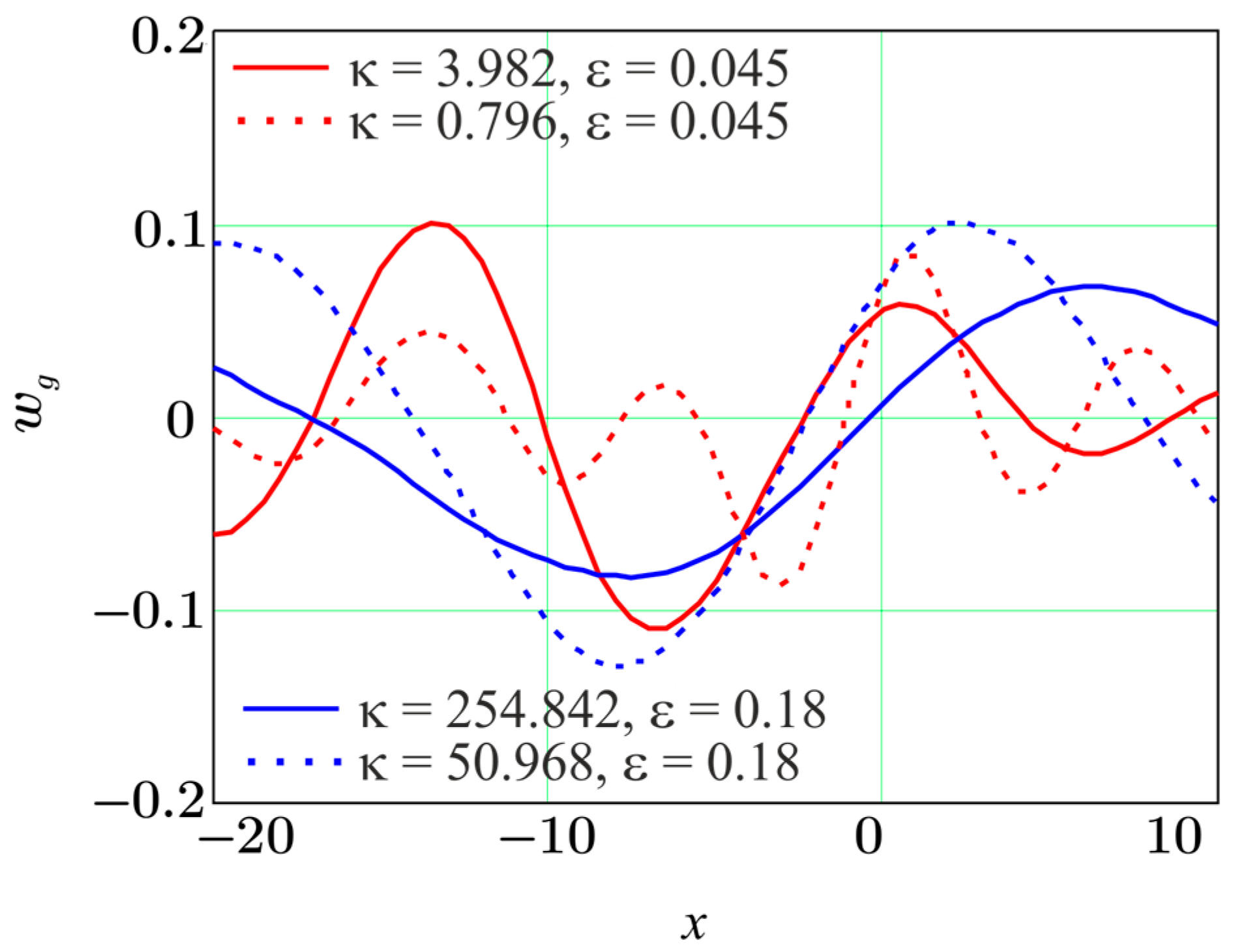
We next give examples of dimensional parameters corresponding to dimensionless κ and ε in Equation (4). We fix the following parameters: ρ1 = 900 kg/m3, ρ2 = 1000 kg/m3, ν = 1/3. Consequently, we obtain
h = 1 m, E = 5·109 Pa, D = 10 m ⇒ κ = 6.371, ε = 0.09;
h = 1 m, E = 1·1010 Pa, D = 10 m ⇒ κ = 12.742, ε = 0.09;
h = 2 m, E = 5·109 Pa, D = 10 m ⇒ κ = 50.968, ε = 0.18;
h = 0.2 m, E = 5·109 Pa, D = 2 m ⇒ κ = 31.855, ε = 0.09;
h = 0.3 m, E = 5·109 Pa, D = 2 m ⇒ κ = 107.511, ε = 0.135;
h = 0.01 m, E = 5·109 Pa, D = 0.5 m ⇒ κ = 1.019, ε = 0.018;
h = 0.04 m, E = 5·109 Pa, D = 0.5 m ⇒ κ = 65.24, ε = 0.072;
Notably the parameter κ, which represents the elastic forces, is an order of magnitude or more greater than the inertia parameter ε for different values of the diameter of the moving body D. Therefore, hereinafter, all the main conclusions of the study concerning the floating plate will be based on the parameter κ.
By applying the integral Fourier and Laplace transforms to solve system (4), we similarly obtain [
29]
A more detailed derivation of Equation (5) can be found in
Appendix A.
The deflection of a floating plate during the motion of a single source is determined using the following formula:
where
, and the deflection of the plate (6) is found from the equation (taken for τ
K → 0 on the left side):
In addition to the motion of a slender body in the liquid, let a plane progressive wave propagate in the liquid-plate system in the direction of the
Ox axis. A progressive flexural-gravity wave, which does not decay with time and distance, propagates with a speed equal to the minimum phase velocity of wave propagation in a floating plate,
[
6,
8]. Neglecting the inertial forces of the floating plate, the dimensionless minimum phase velocity of the flexural-gravity wave is given by
In the coordinate system
Oxyz attached to the moving body, the fluid velocity potential and the deflection of the floating plate associated with a plane progressive wave are expressed as
where
B is the dimensionless wave amplitude, and
and
are the dimensionless wave number and angular frequency of the wave, respectively.
The following assumptions were made in selecting the dimensionless amplitude of the flexural-gravity wave
B in Equation (8). First, in this study, the dimensionless amplitude of the progressive wave was assumed to be constant for any ice cover thickness (i.e., for any values of κ and ε),
B = const. Second, the dimensionless amplitude of the progressive wave was assumed to be approximately equal to the dimensionless maximum amplitude of the flexural-gravity wave generated when the body moves at a depth of immersion χ = 2 in the absence of a progressive wave. Preliminary calculations of the ice plate deflections (Equations (3) and (6)) were performed for the motion of bodies with various ratios
L/
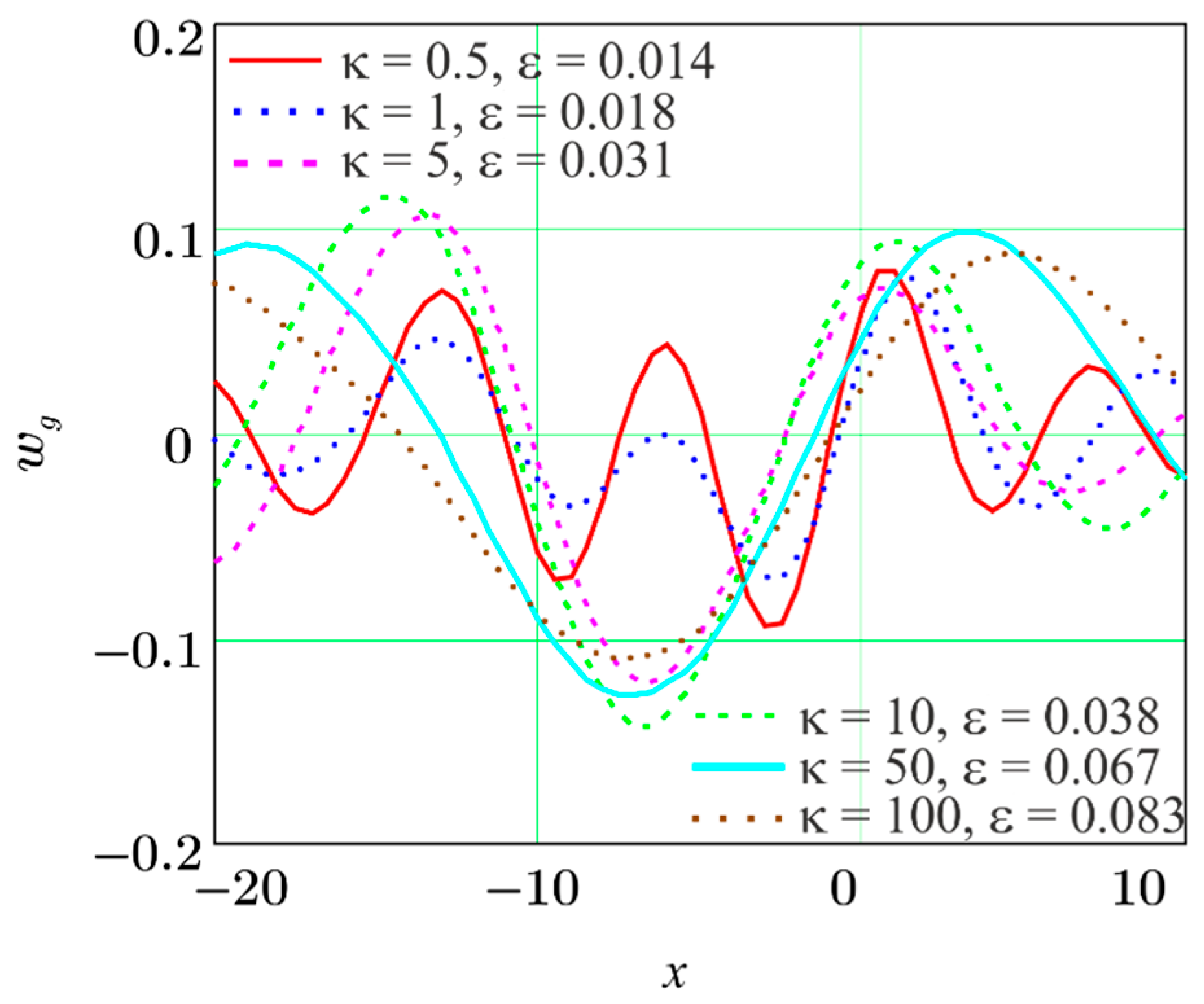
D = 6–14 and for different parameters κ = 0.5–100 at a submergence depth χ = 2 (see
Appendix B). The study showed that the maximum deflections have an amplitude close to the dimensionless value of 0.1. Notably, according to the conclusions of Korobkin and Khabakhpasheva [
30], the linear model for ice sheet deflections and the generally accepted boundary condition at the ice–water interface can be applied if
. Switching to our parameters, the condition of Korobkin and Khabakhpasheva [
30] can be rewritten as
The magnitude of the dimensionless amplitude of the progressive wave
B = 0.1 satisfies Equation (9) if
Inequality (10), according to the analysis of the parameter κ and the data of Pogorelova [
26], is valid for nearly all cases of the motion of a slender body beneath an ice cover, with the exception of a very thin ice sheet. Based on the above reasoning, we assume in Equation (8):
The ice plate deflection
and the velocity potential
occurring during the simultaneous motion of a body in a fluid and the propagation of a plane progressive wave are expressed as the sums of the corresponding deflections and potentials:
where the index
corresponds to the deflection and potential associated with the motion of the body in the liquid under the plate in the absence of a progressive wave, while the index
denotes the quantities associated with the plane progressive wave.
Table 1.
Calculation of plate deflection by the Gauss-Legendre method using a different number of points N.
Table 1.
Calculation of plate deflection by the Gauss-Legendre method using a different number of points N.
| κ | N = 20 | N = 30 | N = 40 | N = 50 |
|---|
| 1 | 4.89463 × 10⁻² | 4.89450 × 10⁻² | 4.89451 × 10⁻² | 4.89451 × 10⁻² |
| 10 | 7.33938 × 10⁻² | 7.33960 × 10⁻² | 7.33961 × 10⁻² | 7.33961 × 10⁻² |
| 100 | 4.49944 × 10⁻² | 4.49257 × 10⁻² | 4.49257 × 10⁻² | 4.49257 × 10⁻² |
In addition to the deflections of the floating plate, we are also interested in the dimensionless coefficient of wave resistance of the body in the presence of a progressive wave
and in its absence
:
where
is the wetted surface area of the slender body, and
is the area obtained by projecting the surface
onto the plane
y′ = 0. The function
denotes the equation of the half-surface of the submerged body and is given as follows:
3. Analysis of Numerical Results
Numerical calculations using Equations (12) and (13) were carried out using the Gauss–Legendre quadrature employing 40 Gauss points.
Table 1 shows the values of the ice plate deflections
calculated by the Gauss method using the integrand calculations at
N points, with the following parameter values x = y = 0, κ = 1, ε = 0.053, χ = 2, L/D = 10, t = 100, τ
K = 0.1, Fr = c
p. The points and weight functions for the calculations were taken from [
31]. From
Table 1 it follows that the calculation by the Gauss-Legendre method using 40 points gives an acceptable accuracy of calculating the integrals in this study.
In this study, the following reference values were used for the parameters:
The use of a small relaxation time τK gives results close to those obtained using the elastic model for ice and significantly improves the convergence of numerical calculations of the integrals.
For further analysis within the framework of this work, we introduce the concept of a critical velocity
(dimensionless value
), which corresponds to the maximum amplitude of the floating plate deflection
and the maximum wave resistance of the body
when it moves beneath the plate in the absence of a progressive wave. Notably, as shown earlier in [
26], the critical velocity of a body moving in deep water under a plate depends on the parameters κ and
L/
D:
.
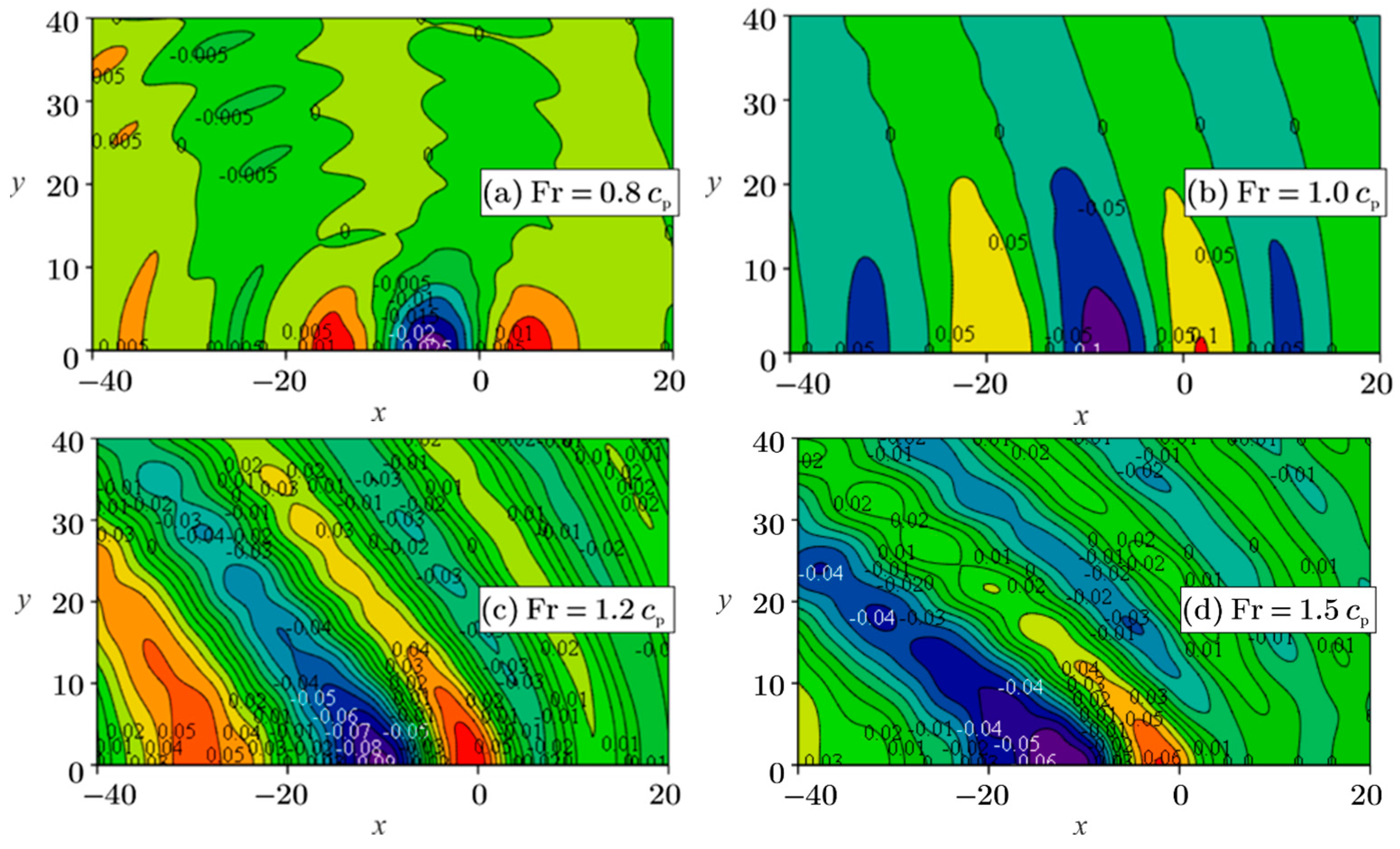
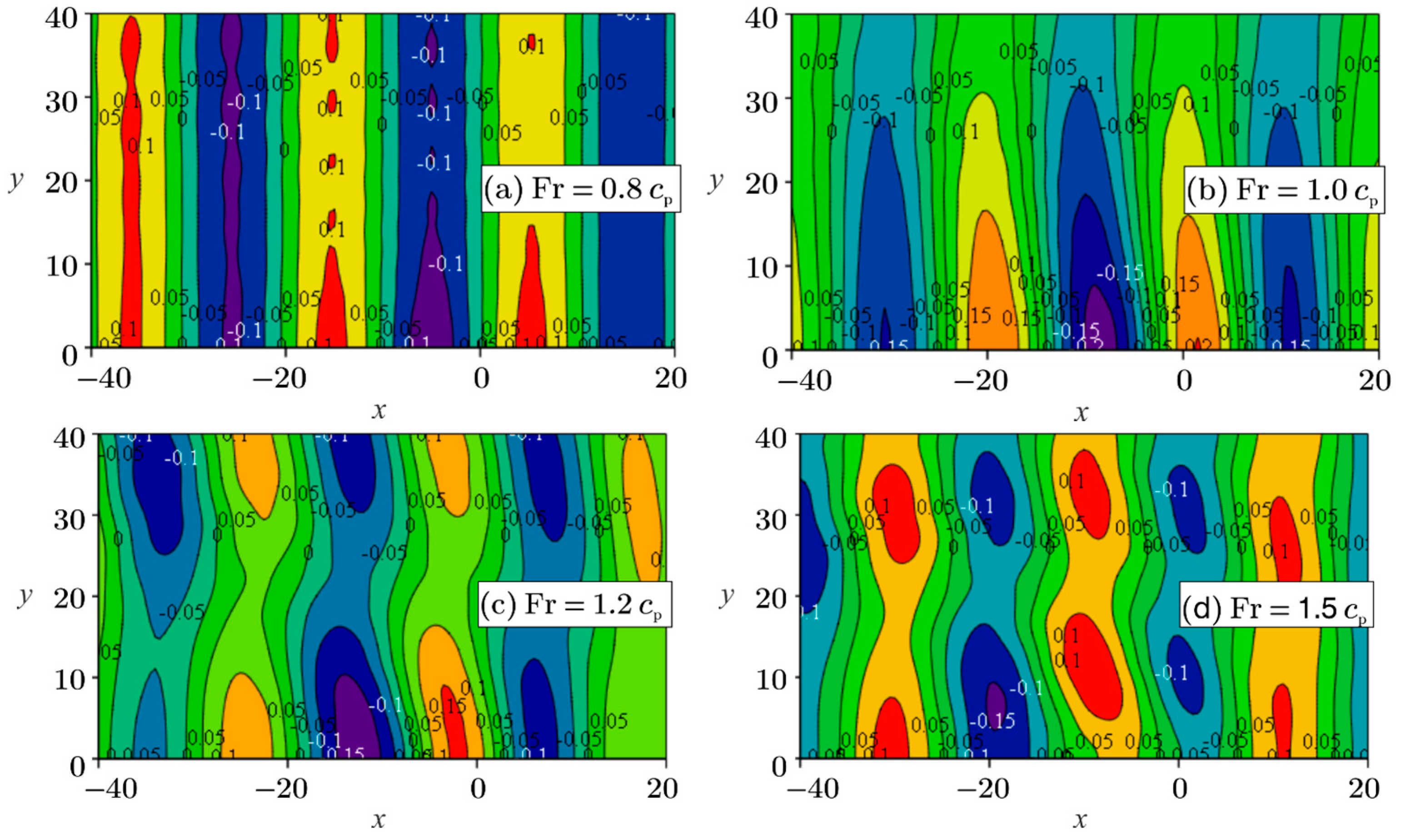
Figure 1 and
Figure 2 show the isolines of the deflections
and
, respectively, for different values of the dimensionless velocity of the body
. Here
L/
D = 10, κ = 40,
t = 100, and ε = 0.166.
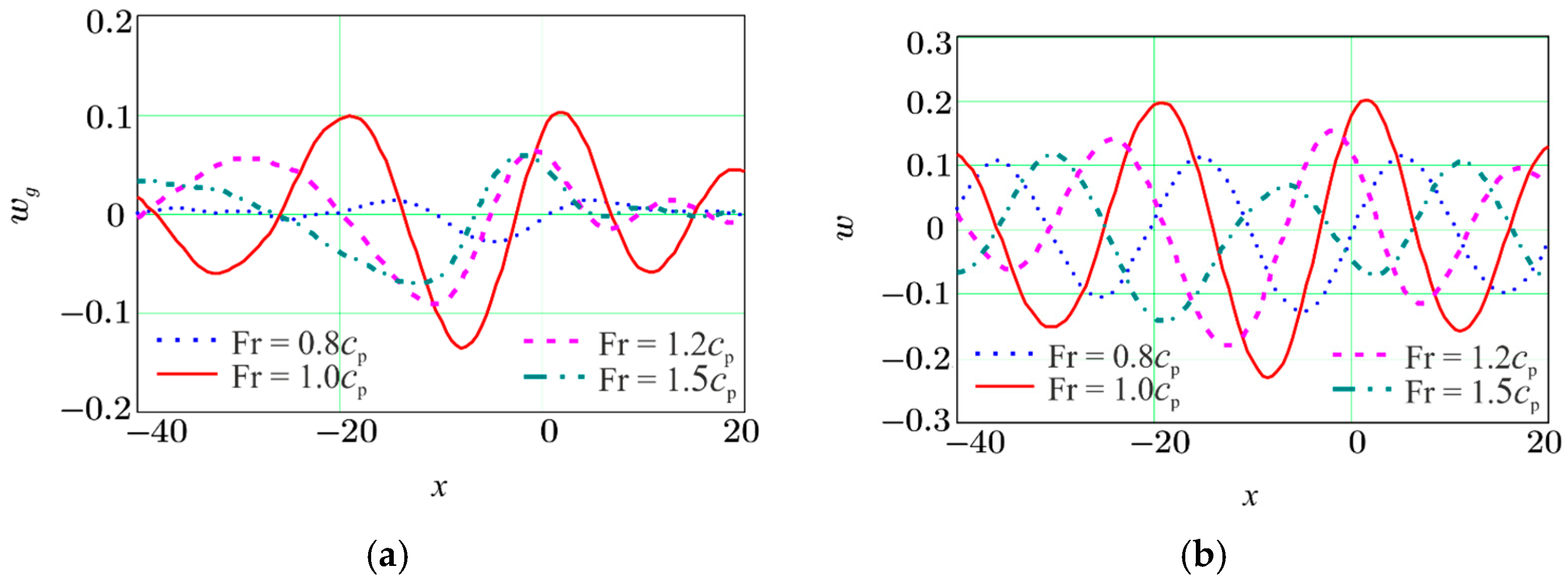
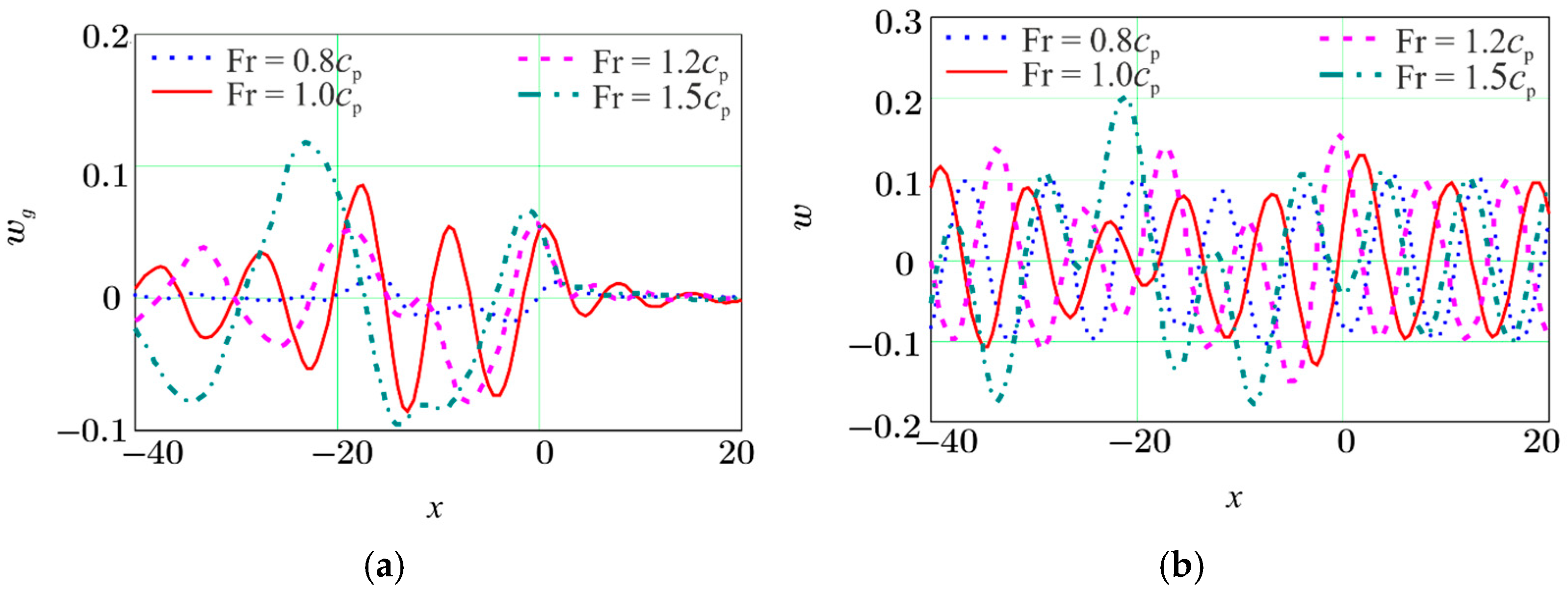
Figure 3 shows the deflection curves
and
at
y = 0, corresponding to
Figure 1 and
Figure 2. As the deflection pattern is symmetrical about the
Oy-axis,
Figure 1 and
Figure 2 display results only for positive
y-values. It should be noted that for the chosen value of the dimensionless time
t = 100, it can be assumed, according to Equation (1), that the body moves uniformly with the velocity Fr. In addition, for the given parameters κ and
L/
D, we have
in
Figure 1,
Figure 2 and
Figure 3.
Figure 1 shows only the wave system generated by the motion of a body in a fluid beneath a floating plate. The Bernoulli hump and the Kelvin wake angle are clearly visible. For the velocity Fr = 0.8
cp in
Figure 1a, the system of flexural-gravity waves is not formed. In
Figure 2, the plate deflections caused both by the progressive wave and by the body’s motion are clearly visible. The maximum wave amplitude in
Figure 2 exceeds the maximum amplitude of the wave in
Figure 1. In
Figure 2b, the body moves with the speed of the progressive wave, Fr = Fr* =
cp (the critical speed corresponding to the minimum phase speed). In this case, the humps and troughs of the wave generated by the body are superimposed on the corresponding humps and troughs of the progressive wave. The resulting wave attains its greatest amplitude when the body moves at the critical speed. For the motion of a body at supercritical speeds, as shown in
Figure 2c,d, the Kelvin wake angle disappears, and the Bernoulli hump becomes masked (hidden) by the progressive wave.
Analysis of
Figure 1,
Figure 2 and
Figure 3 shows that the presence of a progressive wave increases the amplitude of the plate deflection as the body moves beneath it. The waves attain their greatest amplitude when the body moves at the critical speed.
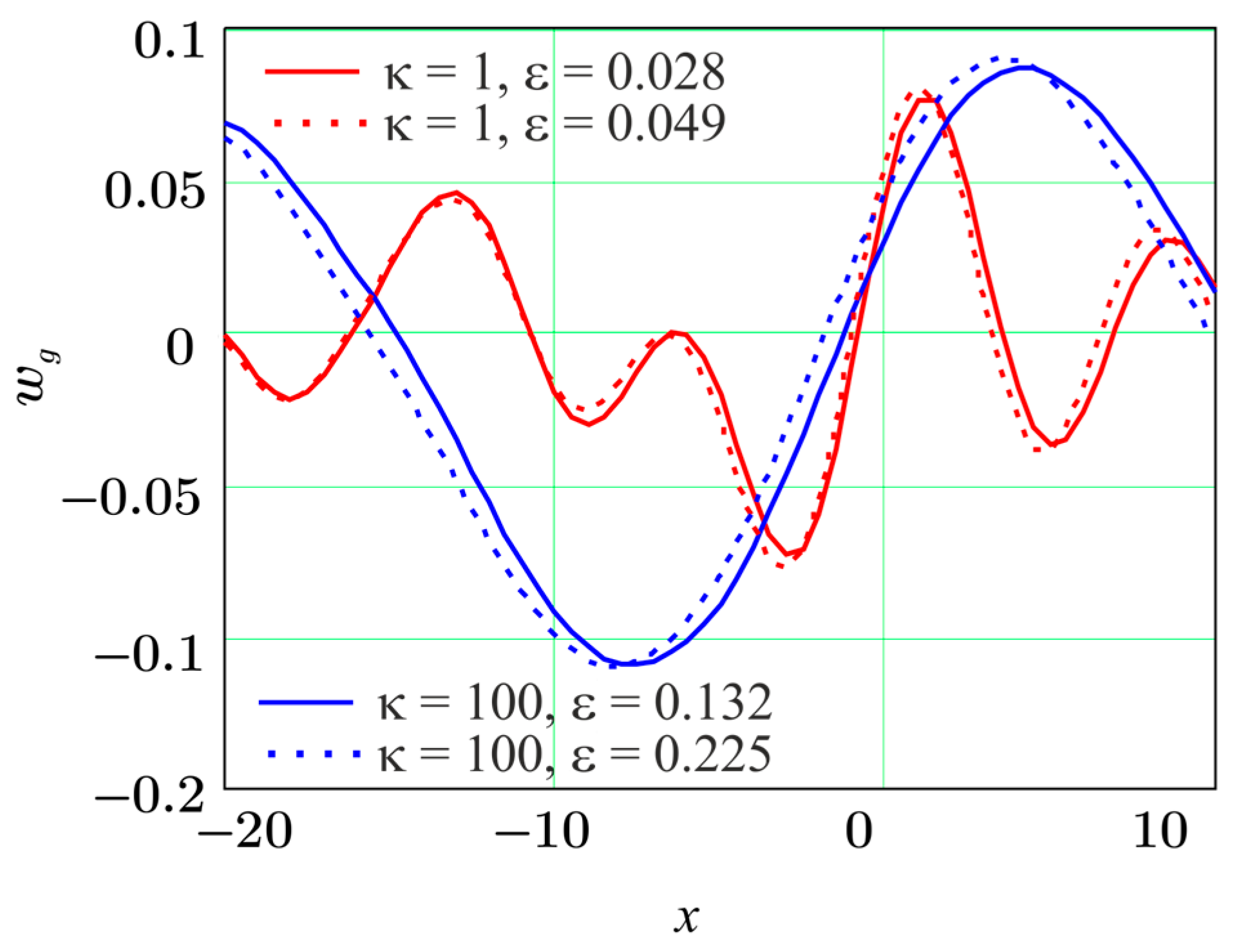
Figure 4 shows the plate deflections produced by a body moving under the plate in the case where the critical velocity of the body
differs from the minimum phase velocity
. Here L/D = 14, κ = 1, t = 100, and ε = 0.049. An analysis of
Figure 4 shows that, among all the velocities considered, the speed
yields the maximum values of the deflection amplitude during body motion in both cases (absence and presence of a progressive wave). Thus, the formula for finding the critical speed obtained in [
26] for the maximum wave resistance is also valid for the maximum amplitude of plate deflection when a body moves in a fluid, both in the absence of a progressive wave and in its presence:
Clearly, the presence of a progressive wave can lead to additional hydrodynamic loads acting on a slender body moving near the surface. Specifically, additional wave resistance arises.
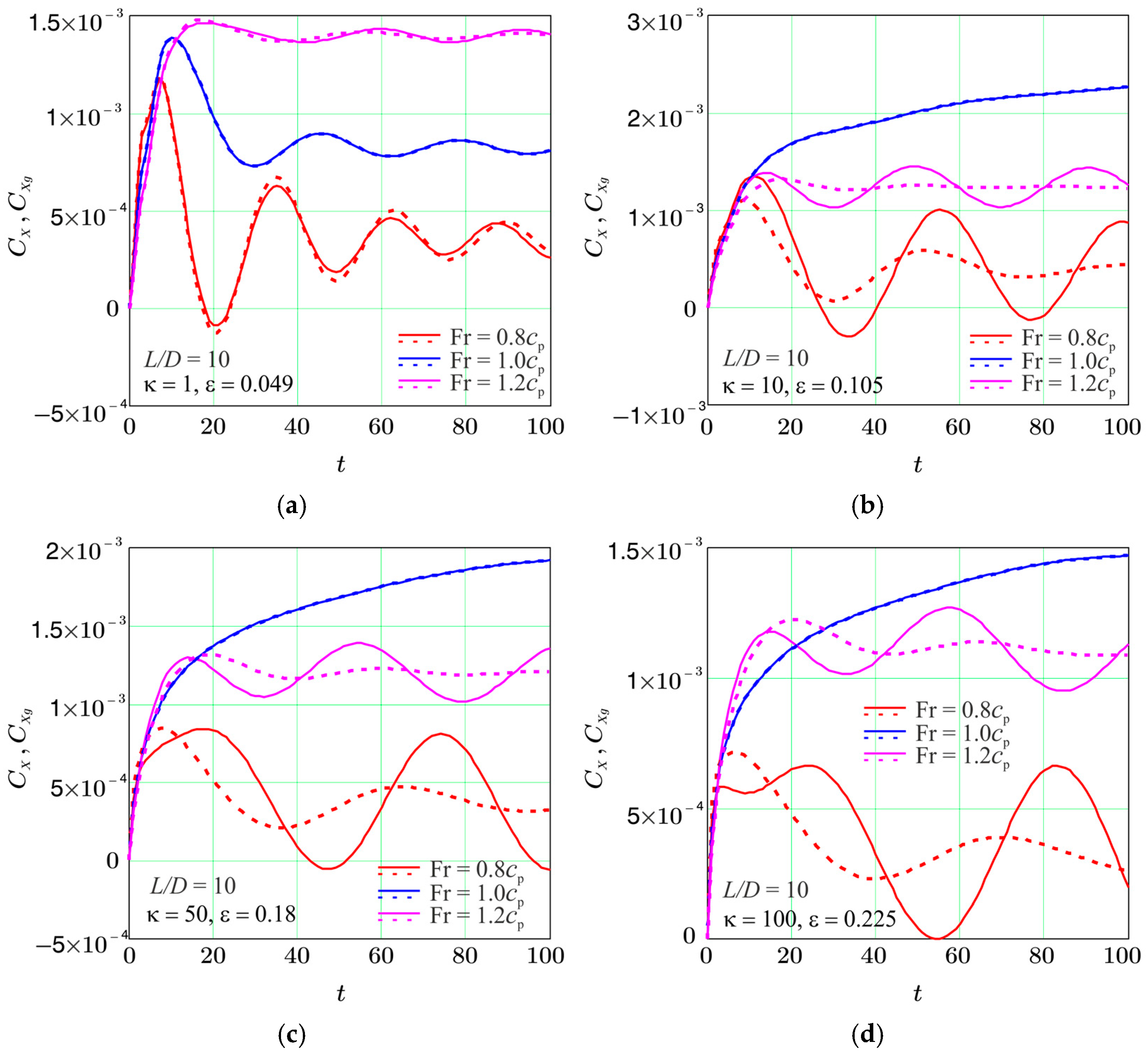
Figure 5 shows the curves of the wave resistance
and
as functions of time
t for different values of the parameter κ.
Figure 5 demonstrates that when a body moves at the speed
, the progressive wave does not exert additional wave resistance on the body for any value of the parameter κ (the solid and dashed blue curves coincide). We next try to explain this phenomenon. When a body moves at the speed of a progressive wave, from the moving body’s perspective, the progressive wave appears fixed. Each point on the body’s surface (or the entire body, depending on the body’s size and the wavelength of the wave) will constantly be at a specific point on the wave, either on a crest or in a trough, and will not experience additional pressure from the wave flow. Additional wave resistance is essentially a change in the water pressure on the body caused by the wave, which occurs if the body moves at a speed different from the wave’s velocity, or if the body is at rest. In navigation, this condition is called “following the wave.” In particular, if the speed of a boat traveling on the water’s surface exactly matches the wave’s velocity, the rudder may become ineffective (“blind”), since the flow of water around it ceases.
When moving at speeds
(
Figure 5), the presence of a progressive wave results in an oscillatory behavior of the wave resistance curves
depending on time t. For velocities
, the progressive wave has the strongest influence on the wave resistance. In this case, the total wave resistance exhibits a large oscillation amplitude. Such oscillations, with wave resistance varying from positive to negative values, may lead to unstable body motion.
An interesting phenomenon was observed when studying the wave resistance of a body in the presence of a progressive wave. In
Figure 5a, for κ = 1 and
L/
D = 10, the additional wave resistance on the body due to the progressive wave is negligible for all velocities considered. One might assume that this behavior is caused by the small value of the parameter κ. However,
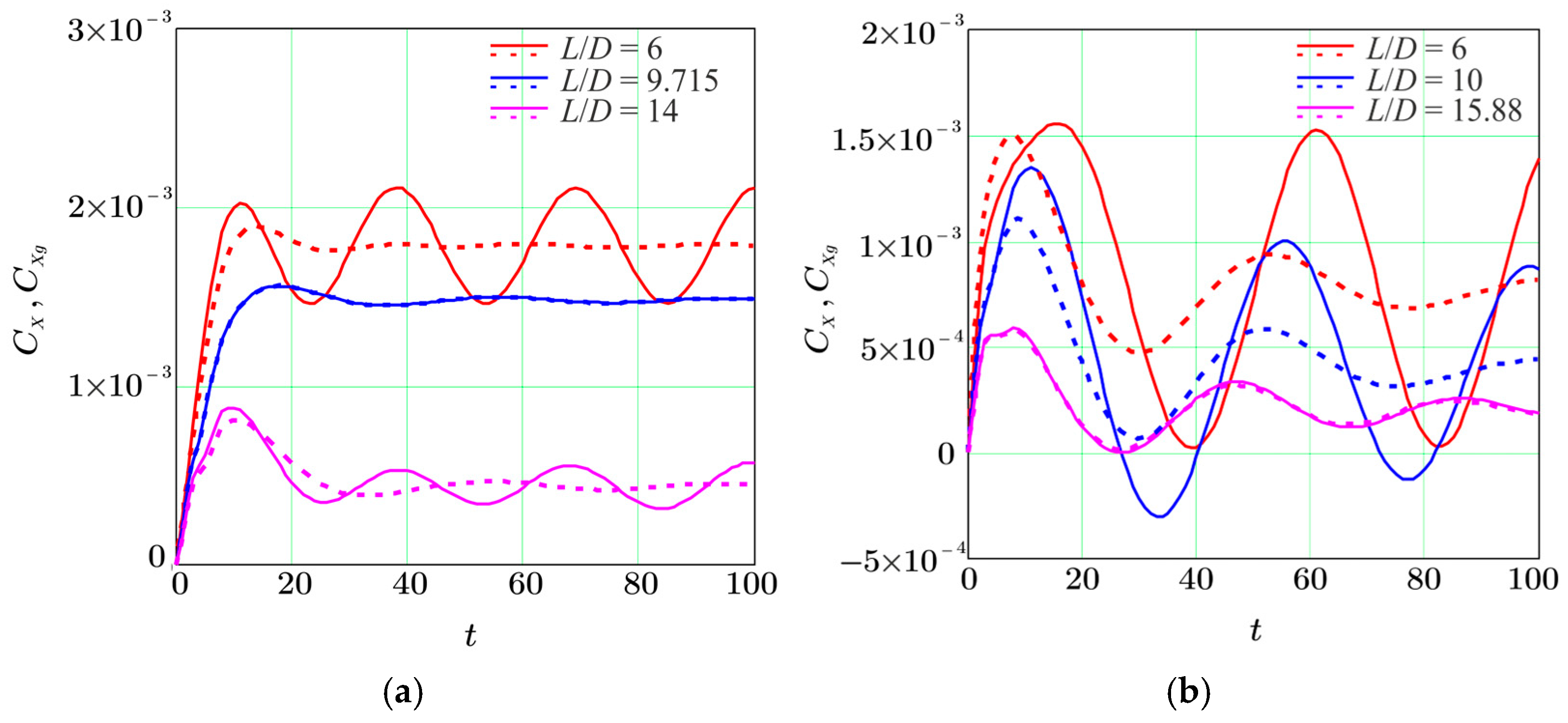
Figure 6, which shows results for κ = 1 and κ = 10 with different values of the
L/
D ratio, demonstrates that the influence of the progressive wave on the additional wave resistance of the body depends not only on the parameter κ, but also on
L/
D.
Figure 6a,b show that for κ = 1 and κ = 10, there exist unique values of the ratio
L/
D = 9.715 and
L/
D = 15.88, respectively, which correspond to the minimal effect of the progressive wave on the wave resistance of the body. Similarly, each value of the
L/
D ratio corresponds to a unique value of the parameter κ at which the influence of the progressive wave on wave resistance is minimal.
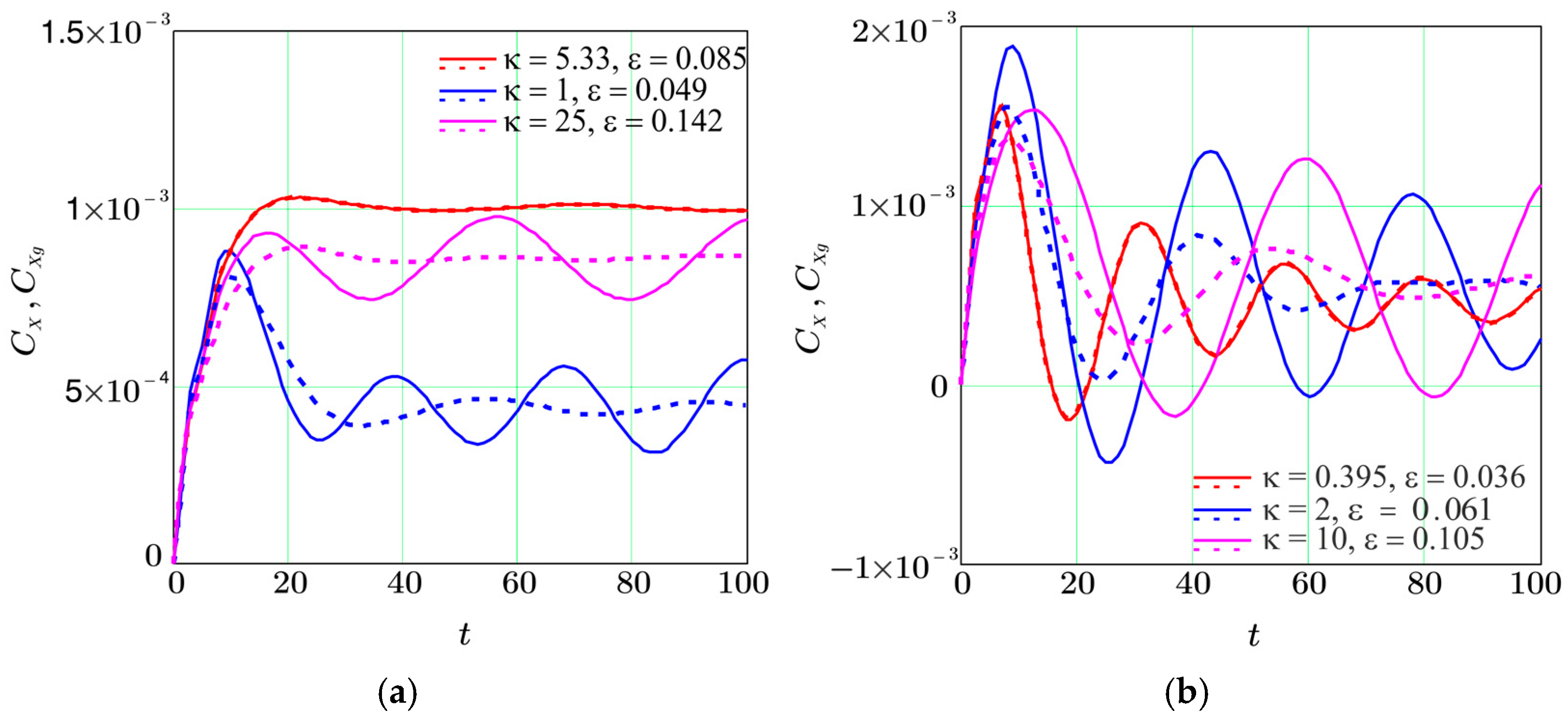
Figure 7 confirms this conclusion.
Figure 7a,b show the wave resistance coefficient of the body for
L/
D = 14 and
L/
D = 8 for different values of κ. For body velocities
, each
L/
D ratio has a unique corresponding value of κ at which the influence of the progressive wave on the body’s wave resistance is minimized.
Thus, the study of the wave resistance of bodies with different
L/
D ratios moving under plates with varying κ values in the presence of a progressive wave showed that, for each value of κ, there exists a unique
L/
D ratio at which the additional wave resistance of the body due to the presence of a progressive wave is close to zero for any speed of the body. This “ideal”
ratio for different values of the parameter κ is presented in
Table 2.
Analyzing the values of the parameters in
Table 2, it can be inferred that they are related by an approximate formula:
If we switch to the dimensionless length of the progressive wave
in Equation (17), we obtain:
where the proportionality coefficient
is close to unity and varies depending on the shape of the moving body. For the bodies considered in this study, where the stern and bow are equal to four and three radii of the cylindrical middle section, respectively, this coefficient is 1.088, which coincides precisely with Equation (17). If the lengths of the stern and bow decrease and approach zero, while the
L/
D ratio remains unchanged, then
.
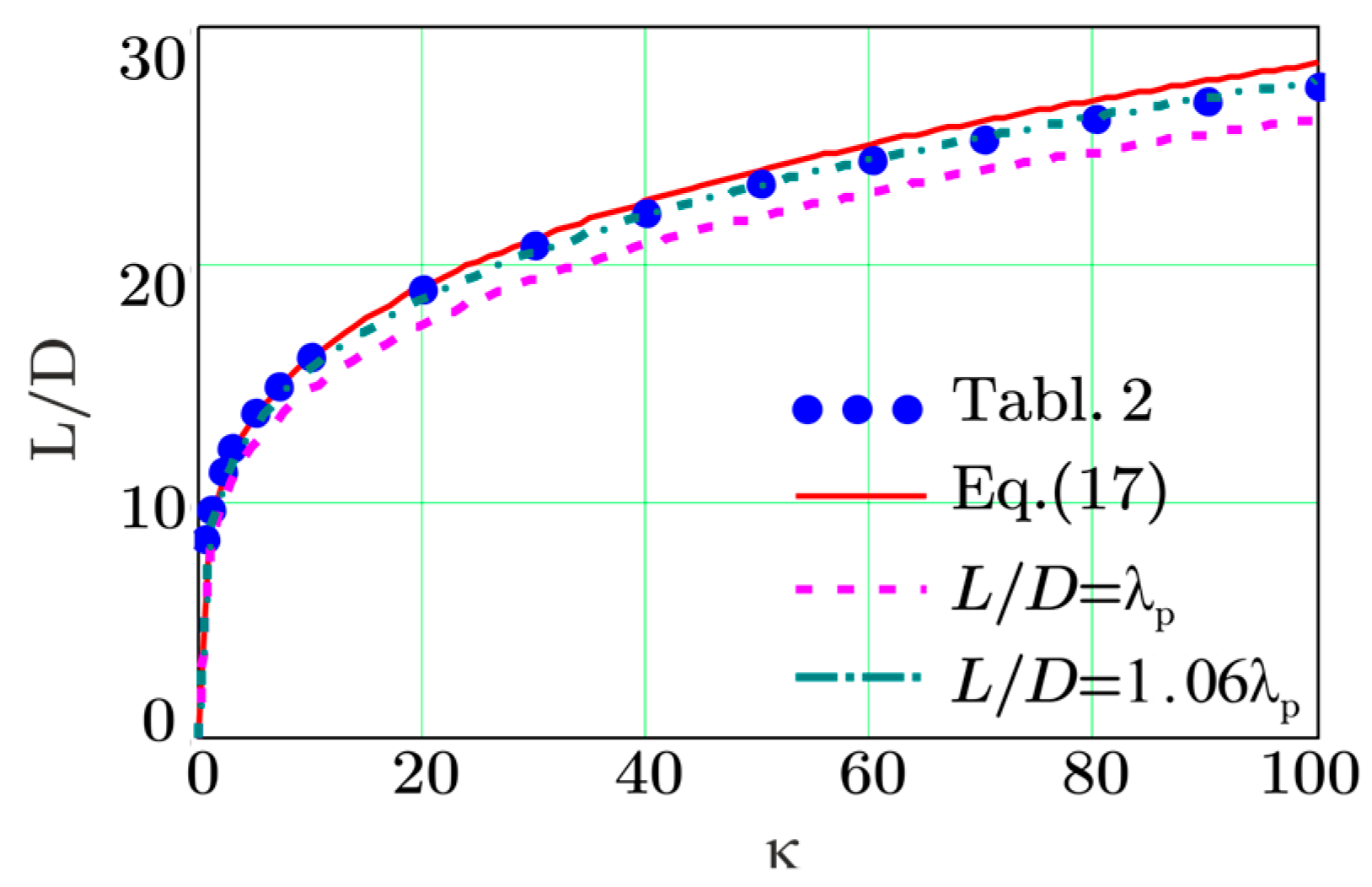
Figure 8 shows the values of
depending on the parameter κ. For clarity,
Figure 8 also presents the curves
L/
D = λ
p,
L/
D = 1.088λ
p, and
L/
D = 1.06λ
p. It is evident that for κ < 20, the data in
Table 2 are better described by the dependence given in Equation (17), whereas for κ > 20, the relation
L/
D = 1.06λ
p provides a more accurate fit. Notably, Equation (17) also applies well to slender bodies whose middle section is cylindrical and whose bow and stern have spherical contours with
na = 3–4, and
nf = 3–4.
The minimal effect of a progressive wave on the wave resistance of a body with an ideal L/D parameter for a given parameter κis, in our opinion, caused by phase synchronization of the envelope of flexural-gravity waves from the body and the progressive wave.
Thus, a body moving under a floating plate in a fluid, over which a progressive wave is propagating, experiences additional wave resistance due to the progressive wave. This additional resistance is oscillatory in nature. The additional wave resistance becomes zero when the body moves at the velocity of the progressive wave. Furthermore, the additional wave resistance is minimized at any speed if , where the coefficient is close to 1 and depends on the shape of the body.