Review

Ciliary Structures and Particle-Capture Mechanisms in Marine Filter-Feeding Bivalves

by
Hans Ulrik Riisgård
1,* and
Poul S. Larsen
2
1
Marine Biological Research Centre, Department of Biology, University of Southern Denmark, 5300 Kerteminde, Denmark
2
DTU Construct, Technical University of Denmark, 2800 Kgs. Lyngby, Denmark
*
Author to whom correspondence should be addressed.
J. Mar. Sci. Eng. 2026, 14(3), 251; https://doi.org/10.3390/jmse14030251
Submission received: 4 January 2026 / Revised: 22 January 2026 / Accepted: 22 January 2026 / Published: 25 January 2026
(This article belongs to the Section Marine Biology)

Abstract

The minimum size of particles being efficiently captured in the gills of filter-feeding bivalves differs between mussels with well-developed laterofrontal cirri (lfc) and scallops having only simple pro-laterofrontal cilia (pro-lfc). The presence of branching compound lfc increases the particle retention efficiency below the lower limit of about 4 µm for 100% retention, whereas the simple pro-lfc cilia in scallops are less efficient with decreasing retention efficiency for particles smaller than about 7 µm. To understand the particle capture mechanisms in bivalves, attention must be paid to the ciliary structures and water flow in flat gills (mussels) versus plicate gills (scallops, oysters). Here, we briefly review the literature on particle capture mechanisms in filter-feeding marine bivalves with large lfc (mussels, clams), short lfc (oysters), and with only pro-lfc (scallops), and then we describe our present understanding of these processes. This is carried out along with comments on a long-lasting and current controversy on particle-capture mechanisms in filter-feeding bivalves. We rebut the hypothesis of “hydrosol filtering” proposed by Ward et al. (1998), where the approach angle of a particle towards the gill is 30° and the particle is captured by direct interception with a gill filament, whereas lfc generate “zones of blocked through-flow”. No further test of the hydrosol hypothesis has so far been made, but nevertheless, it has been cited in many publications over the last 25 years.

1. Introduction

Filter-feeding bivalves play an important ecological role, especially in many coastal marine ecosystems, which is linked to the bivalves’ ability to capture suspended food particles, not only large phytoplankton, such as diatoms and dinoflagellates, but also tiny phytoplankton (2 to 20 µm) and free-living bacteria (0.5 to 2 µm) [1,2]. Therefore, there has been a long-lasting interest in knowing the particle retention efficiency of the gills in marine filter-feeding bivalves and in understanding the underlaying ciliary particle capture mechanisms [3,4,5,6,7,8,9,10,11,12].
This has led to experimental techniques employing video-microscope recording of water motion and particle capture, microscope studies of cilia movements on the gills of intact bivalves, and studies on isolated gill-filament preparations observed through high-powered microscopes and studies on intact bivalves by means of endoscopy, e.g., [3,4,13,14,15,16]. Further, particle retention spectra have been obtained by several methods, e.g., [6,10,11,17,18,19,20,21], and the literature on experimentally measured particle retention efficiencies in filter-feeding bivalves continues to expand. However, more attention should be paid to the activity of the ciliary structures to understand the particle capture mechanisms in marine filter-feeding bivalves.
Here, we briefly review the literature on particle capture mechanisms in filter-feeding marine bivalves along with comments on a long-lasting controversy. We give a synthesis of research, with a focus on rebutting the ‘hydrosol filtration model’ proposed by Ward et al. [3]. We argue for a bio-mechanical interception model, and our review serves as a corrective to the literature, especially for early-career researchers. Thus, the review is not only a synthesis but a critical comment on the hydrosol filtration model.
We use the following definition of particle retention efficiency: RE = (1 − C1/C0) × 100, where C1 is the concentration of a certain particle size in the exhalant current and C0 the simultaneous concentration of the same particle size in the inhalant water [6].

2. Ciliary Structures in Bivalves

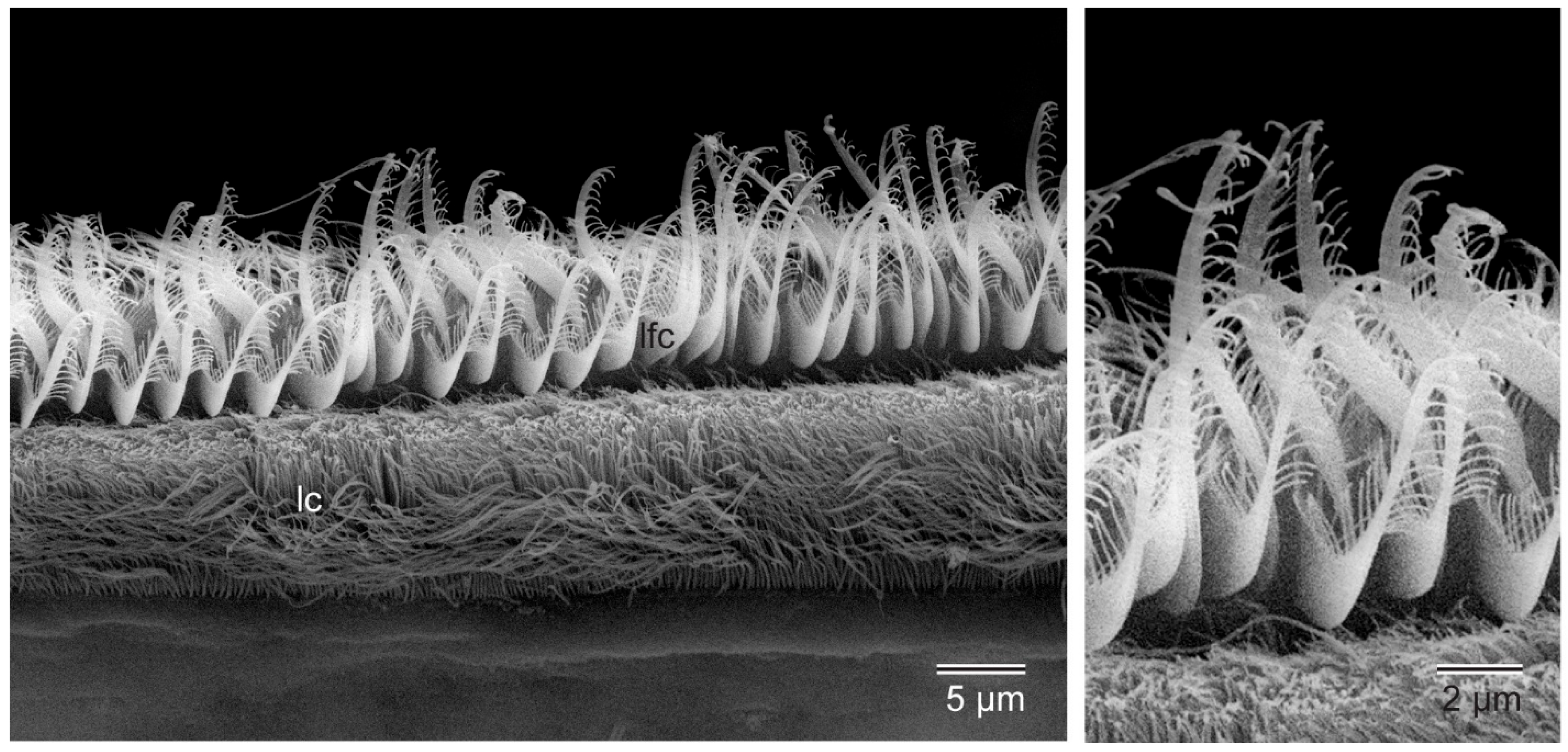
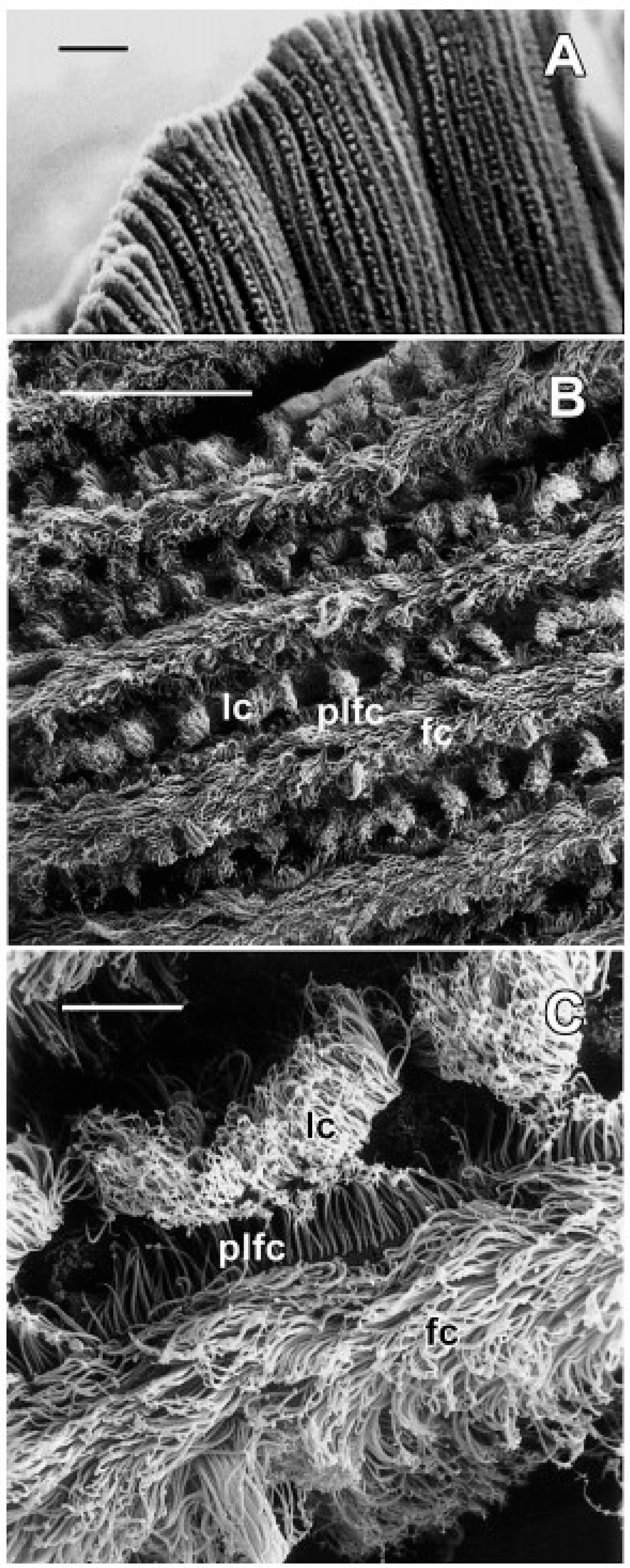
Filter-feeding bivalves may have rows of two types of laterofrontal ciliary tracts on the gills, namely compound laterofrontal cirri (lfc) and pro-laterofrontal cilia (pro-lfc), or they may only have rows of pro-lfc, because the lfc have been lost in the families Pectinidae (scallops), Anomiidae, and Pteriidae [5]. Both lfc and pro-lfc are found in most suspension-feeding bivalves such as mussels (Figure 1 and Figure 2), cockles, oysters, and clams, but only pro-lfc are found in scallops (Figure 3), and therefore, the particle capture mechanism in scallops (pectinids) is different from that in filter-feeding bivalves possessing both lfc and pro-lfc, see Riisgård and Larsen [22] (mini-review therein).
The particle retention efficiency in relation to various ciliary particle-capture mechanisms in marine filter-feeding bivalves has been measured many times (e.g., [6,11,17,21,23,24]). A common feature appears to be that bivalves with well-developed lfc (e.g., mussels, clams) are more efficient than bivalves with small lfc (oysters) or those having only pro-lfc (e.g., scallops).
Here, ref. [6] studied the efficiency of particle retention in 13 species of suspension-feeding bivalves. Samples of water entering and leaving the bivalve were taken by means of the “suction method”, where a glass tube with a fitting was placed in front of the inhalant and exhalant apertures, respectively. The colleting rate of water was adjusted to rates far below the pumping rate of the bivalve, thus ensuring that only 100% exhalant water was collected. Using an electronic particle counter, it was found that particles above 4 µm were completely absent in the sampled exhalant water, i.e., the particle retention efficiency was 100% for particles larger than 4 µm. In case of the blue mussel, Mytilus edulis, and other bivalves that possess well developed lfc, the retention efficiency below 4 µm decreased only slightly down to 2 µm, where it was between 75 and 90%, becoming about 50% for 1 µm particles. However, in the oyster Ostrea edulis with small lfc, the retention efficiency of 2 µm particles was only about 30%, becoming only about 5% for 1 µm particles. In Pecten opercularis and P. septemradiatus, both lacking lfc, the particle retention efficiency was found to decrease below 7 µm to reach only 20% at 1 µm [6]. Likewise, Monia squama, which lacks lfc, fits into this pattern [23], with a decrease below 6 µm and reaching about 0% at 2 µm.
In a more recent study by [21], the retention efficiency was measured in Mytilus edulis, the oyster Crassostrea virginica, and in the giant scallop Placopecten magellanicus. The measured retention efficiencies largely agree with earlier findings by [6,17]. Finally, ref. [11] measured, in situ, the capture efficiency of naturally occurring planktonic cells by five bivalve species in the oligotrophic Red Sea and eastern Mediterranean Sea. Three species (two mytilid, one spondylid) captured micron and submicron cells with 60–90% efficiency. In contrast, two species (one scallop, one oyster) captured mainly particles >10 µm.
Based on this brief review, it seems reasonable to conclude that bivalves with well-developed lfc have a higher retention efficiency of smaller particles than oysters with short lfc and scallops lacking lfc, relying only on pro-lfc for capturing particles. Therefore, it seems appropriate to examine the particle capture mechanisms for these different cases.

3. Particle Capture Mechanisms in Mussels

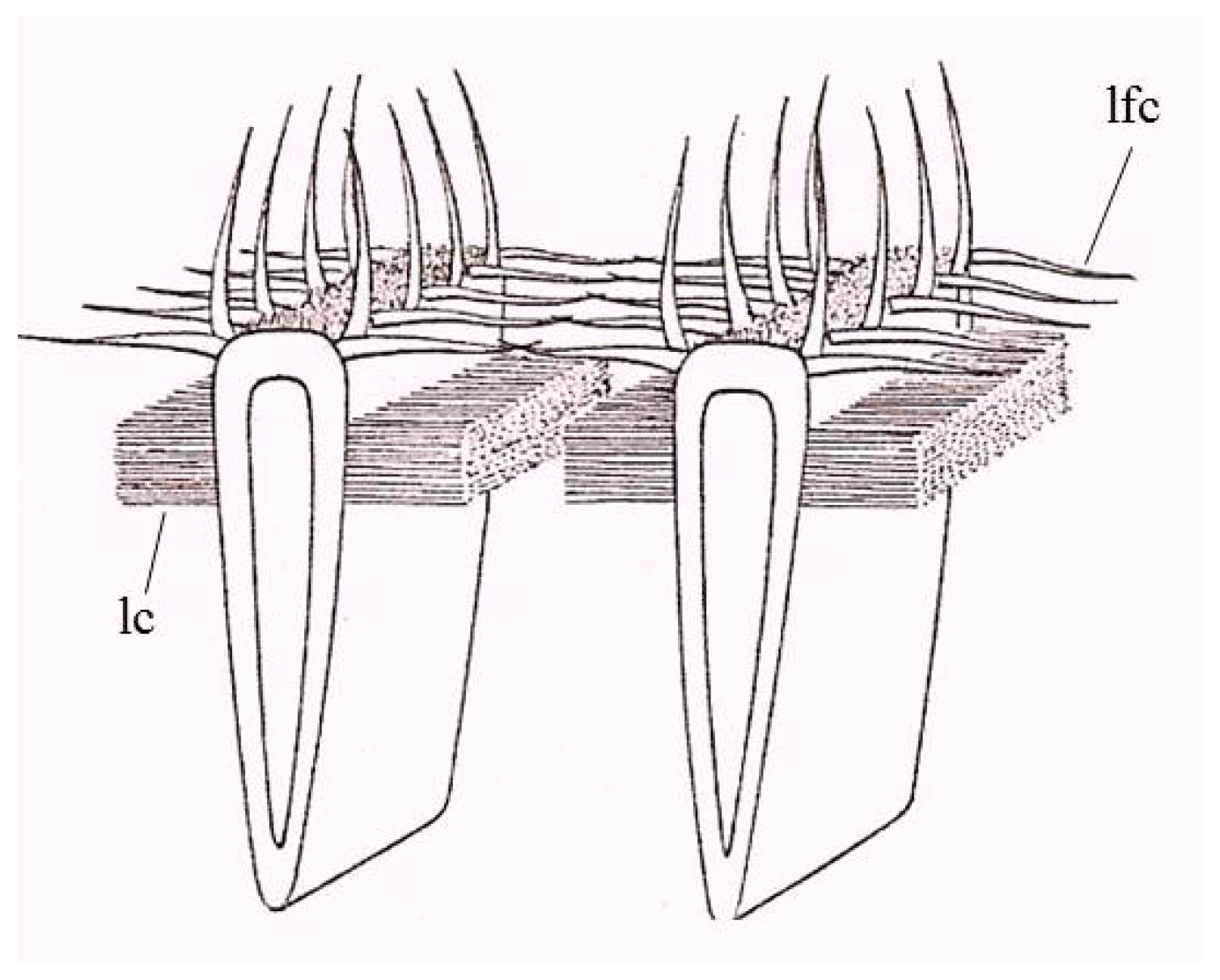
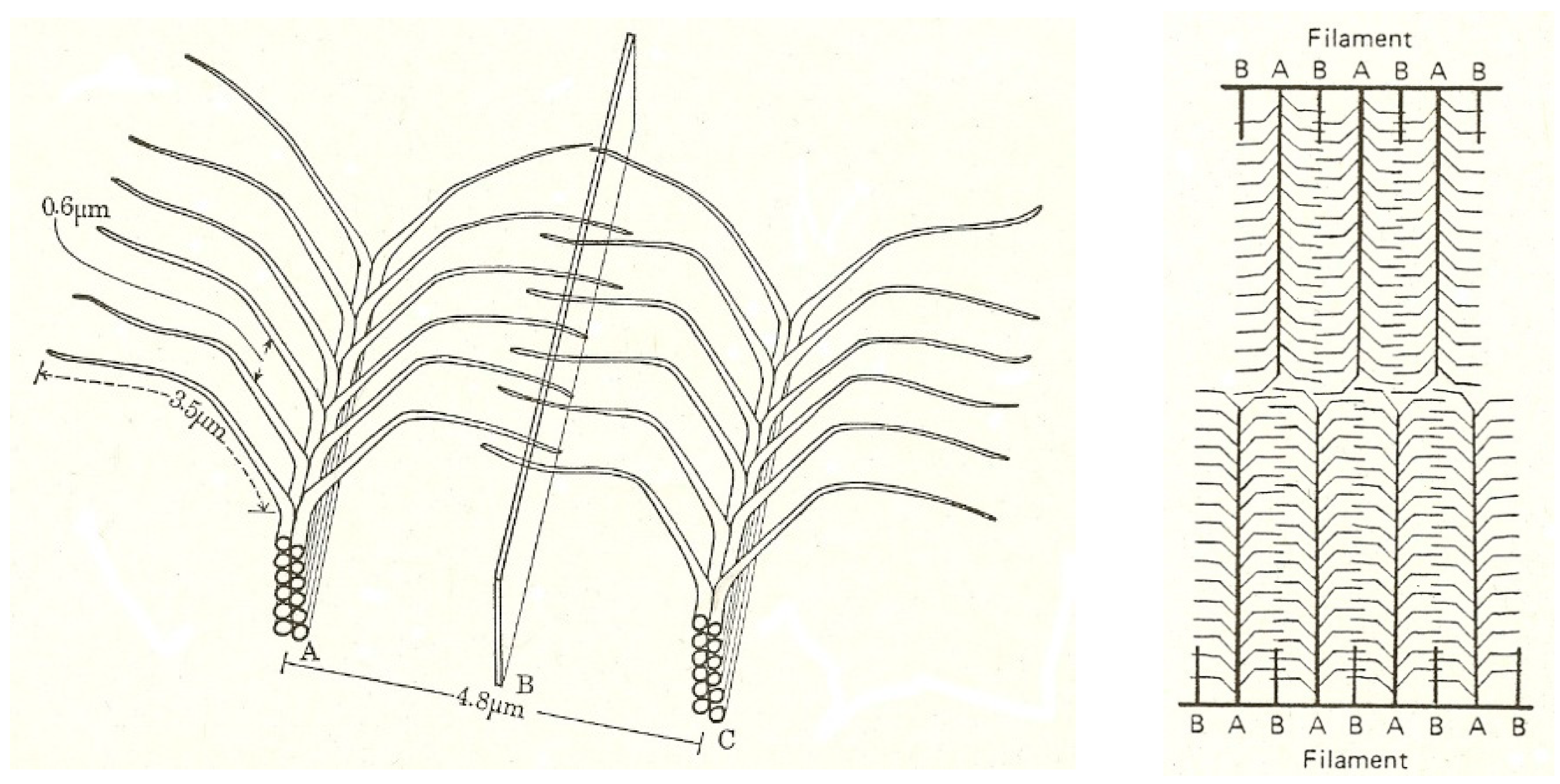
A classical study on movements of cilia on the gills of intact, transparent young Mytilus edulis was conducted by [4], who described the movements of the lfc and the mechanism of particle retention (Figure 4). In particular, ref. [4] observed that particles tended to stick to the lfc and that this accounted for the high retention of small particles <4 µm. However, refs. [5,7,25,26,27] showed that the individual cilia constituting each compound lfc form a filter across the inter-filament space, which could explain the high particle retention efficiency (Figure 5). However, as noticed by [27], the distance between branching cilia of the lfc in M. edulis was less than indicated in filtration studies with mussels, where 2 µm particles were cleared with about 50% efficiency compared to 100% for particles larger than 4 µm. Therefore, ref. [27] suggested that particle retention in M. edulis “may not be simply determined by mesh sizes in some kind of filter”. Later, ref. [28] developed a “velocity gradient hypothesis” to explain particle retention in the mussel gill. Thus, instead of acting as a sieve-like filter, the lfc “presumably moves water”, and the main function of the lfc was suggested to “contribute to the surface currents” [1,28,29,30,31]. However, subsequent studies by [14,15] showed that the particle capture mechanism is more mechanistic, in agreement with [4,7,16,26,32,33]. Likewise, refs. [14,15] noticed that particles in the through-current are stopped at the entrance to the gill interfilament canal and subsequently reversed 180° to be transferred to the frontal side of the gill filament and carried by frontal cilia towards the marginal food groove. Capture of particles is accomplished by the compound lfc as they beat against the current through an angle of 90°. Particles larger than 4 μm, which is the distance between two alternate lfc (Figure 5), are stopped and transferred to the frontal side, whereas smaller particles either follow the flow around the lfc and are lost or they are stopped by the lfc’s branching cilia. Later, ref. [8] supplemented this understanding of particle capture in mussels with a re-examination of gill preparations. However, it remains unknown how the decreasing retention efficiency of particles < 4 µm may be correlated with the branching structure of the lfc where the distance between the branches is only 0.6 µm [26]. By using laser confocal microscopy, which revealed the individual free ciliary tips on an extended cirrus, Silverman et al. [16,33] observed that the ciliary tips formed a “net”, which “physically trap or deliver 0.75–1.0 µm particles” to the frontal surface of the gill filament. However, the periodic and alternating beat of lfc on opposite sides of the inlet to the interfilamental canal could perhaps leave openings and, hence, space for particles to escape capture. More recently, ref. [11] measured, by using flow cytometry, a high capture efficiency of picophytoplankton (≤2 µm) in two mytilids from oligotrophic waters, which were found to remove about 70% of the ~1.0 µm cells.

4. Particle Capture Mechanisms in Scallops

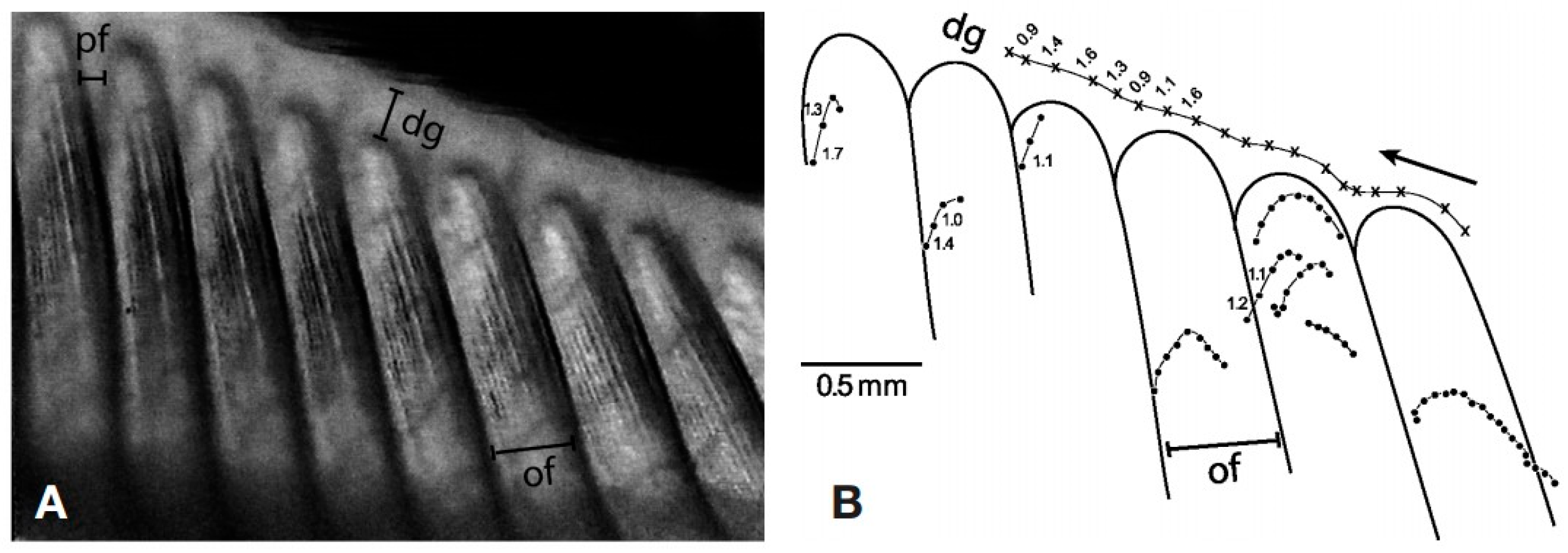
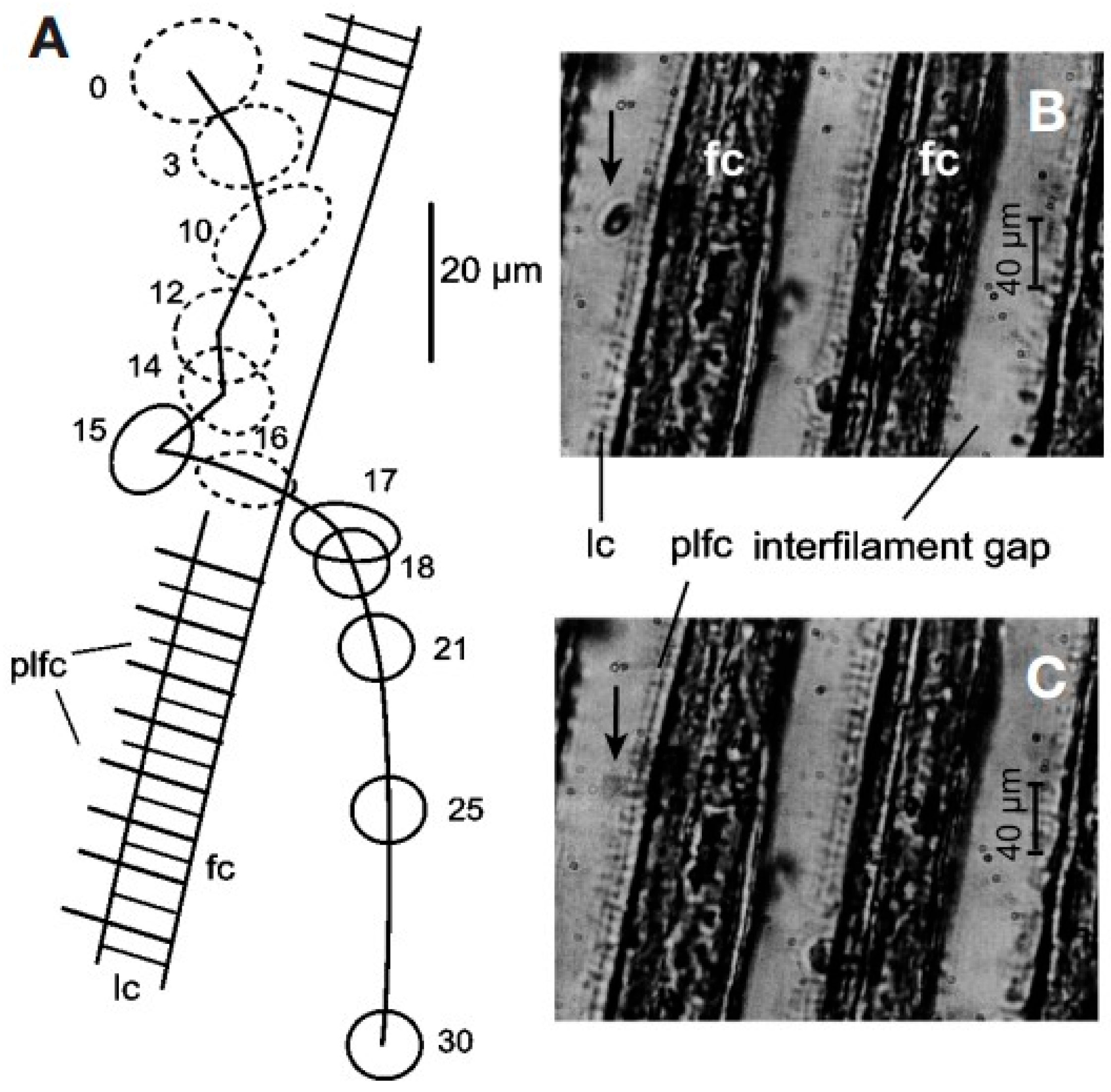
A video-microscope study made on intact gills of the scallop Aequipecten opercularis was undertaken by Riisgård and Larsen [22] to clarify how scallops with only pro-lfc efficiently capture particles > 7 µm. Thus, it was of interest to clarify the role of pro-lfc located between the lateral and frontal cilia. The observations of particles movements showed that particles within the flow approach the frontal side of the ordinary gill filaments at angles close to 90° and that particles may be deflected to “jump” down across these filaments towards the principal filament (Figure 6). Further, observations of isolated gill filaments showed that the pro-lfc may “push” particles back against the current (Figure 7), either onto the frontal side of the filament or out into the downward-directed water flow in the funnel between two crests. The distance between two alternate pro-lfc was about 7 µm, in agreement with 100% retention for particles > 7 µm in scallops [6].
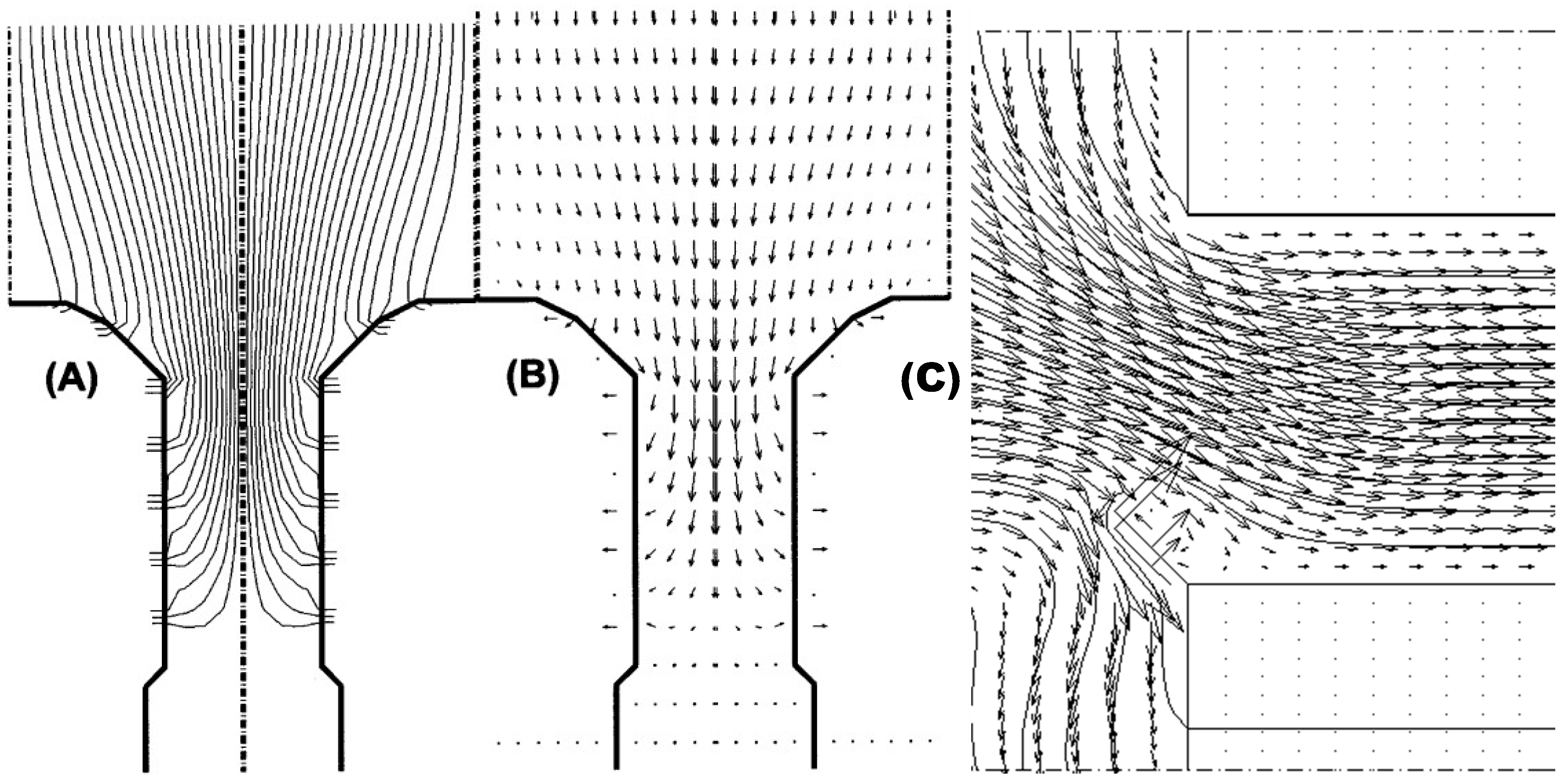
Earlier endoscopic video observations made by Ward [34] and Ward et al. [3] provided information on particles approaching a bivalve gill, and although their interpretations of particle capture mechanisms differ from those made by Riisgård and Larsen [8,22,35], many observations are identical. However, the flow patterns observed in A. opercularis [22] revealed that the paths of particles approaching the gill surface were always curved and did not approach at a low angle of 30°, as suggested by [3] for a plicate gill. However, here, the particle paths are curved because of the parallel arrangement of the water-pumping lateral cilia on the gill filaments, as also shown by numerical calculations of such flows (Figure 8). Although observations using the video-endoscope system with low resolution are difficult, it is possible that particles far from the entrance to interfilamental canals appear to approach a low angle of 30°, while the change to a final approach of 90° cannot be observed. Figure 2 of [35] shows that the particle paths observed in an undisturbed intact mussel were always curved to become 90° immediately above the gill surface. This observation agrees with the streamline pattern observed in a model of a channel with porous walls subject to suction, as shown in Figure 3 in [35].

5. Particle Capture Mechanisms in Oysters

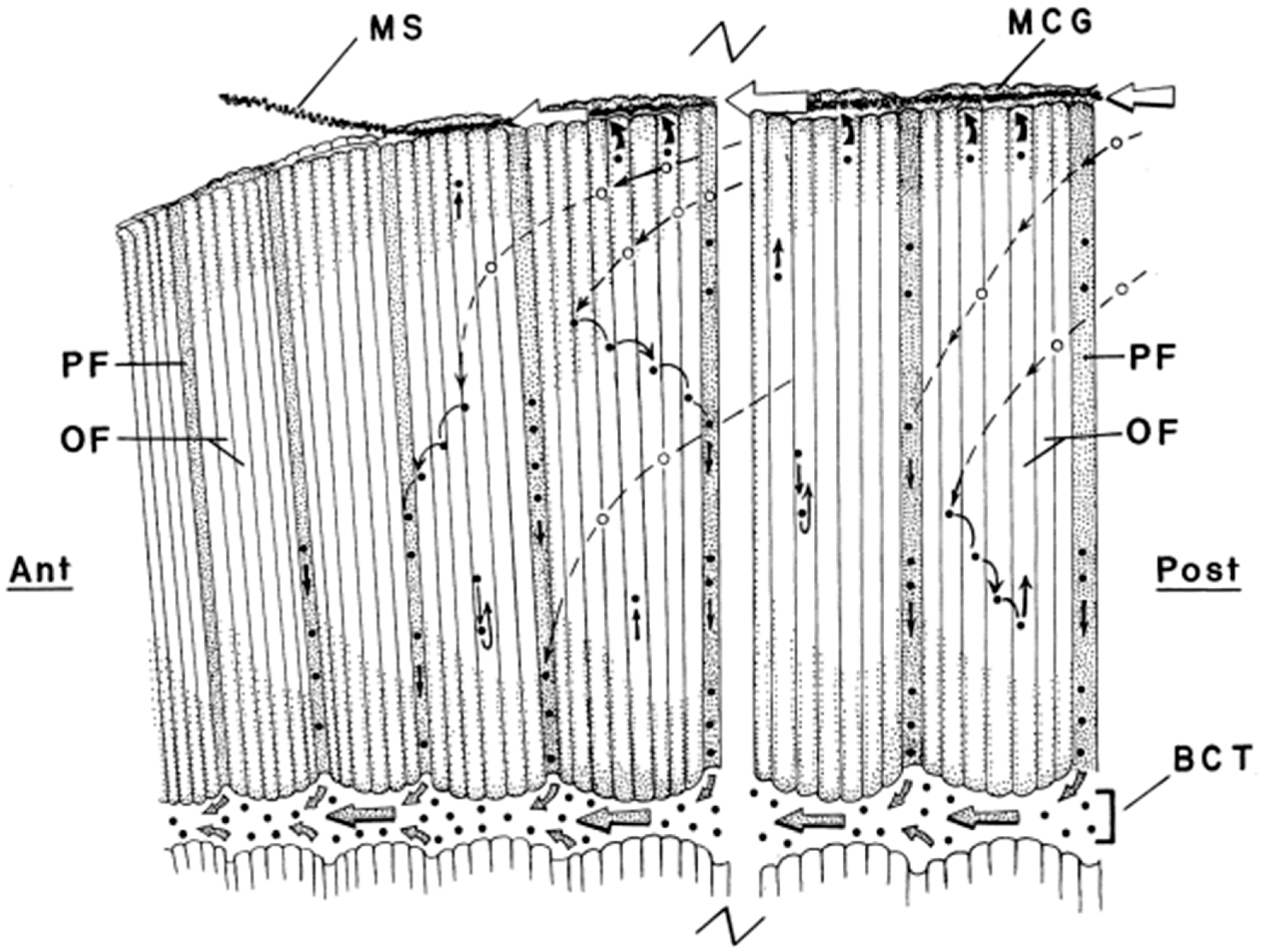
Bivalves with well-developed lfc have a higher retention efficiency of smaller particles than oysters with short lfc. The capture mechanism in oysters has so far been unknown, but the measured retention efficiency spectrum resembles that found for scallops (e.g., [6]), and a common feature with scallops is plicate gills. Thus, oysters have plicate gills composed of principal filaments at the bases of the plicae, which are composed of 10 to 12 ordinary filaments [36]. Therefore, in principle, particle capture in oysters could be accomplished by the mechanism described for scallops [22] and in agreement with endoscope observations [3,37] showing that particles in the plicate gill were “bouncing” from filament to filament, often ending at the principal filament grove (Figure 9), which appears to be similar to observations made by [22] in the scallop Aequioecten opercularis (Figure 6). However, ref. [3] suggested that the individual gill filament is the fundamental particle processing unit in bivalves. However, studies on plicate gills [5,13,22,36] clearly show that not all filaments play a similar role in the particle capture process. Thus, as stated by [36] the filaments of the plicate gill “perform cooperative functions” so that the gill filaments cannot be “considered individually from a functional standpoint.”

6. Hydrosol Filtration Theory and Alternative Capture Mechanism

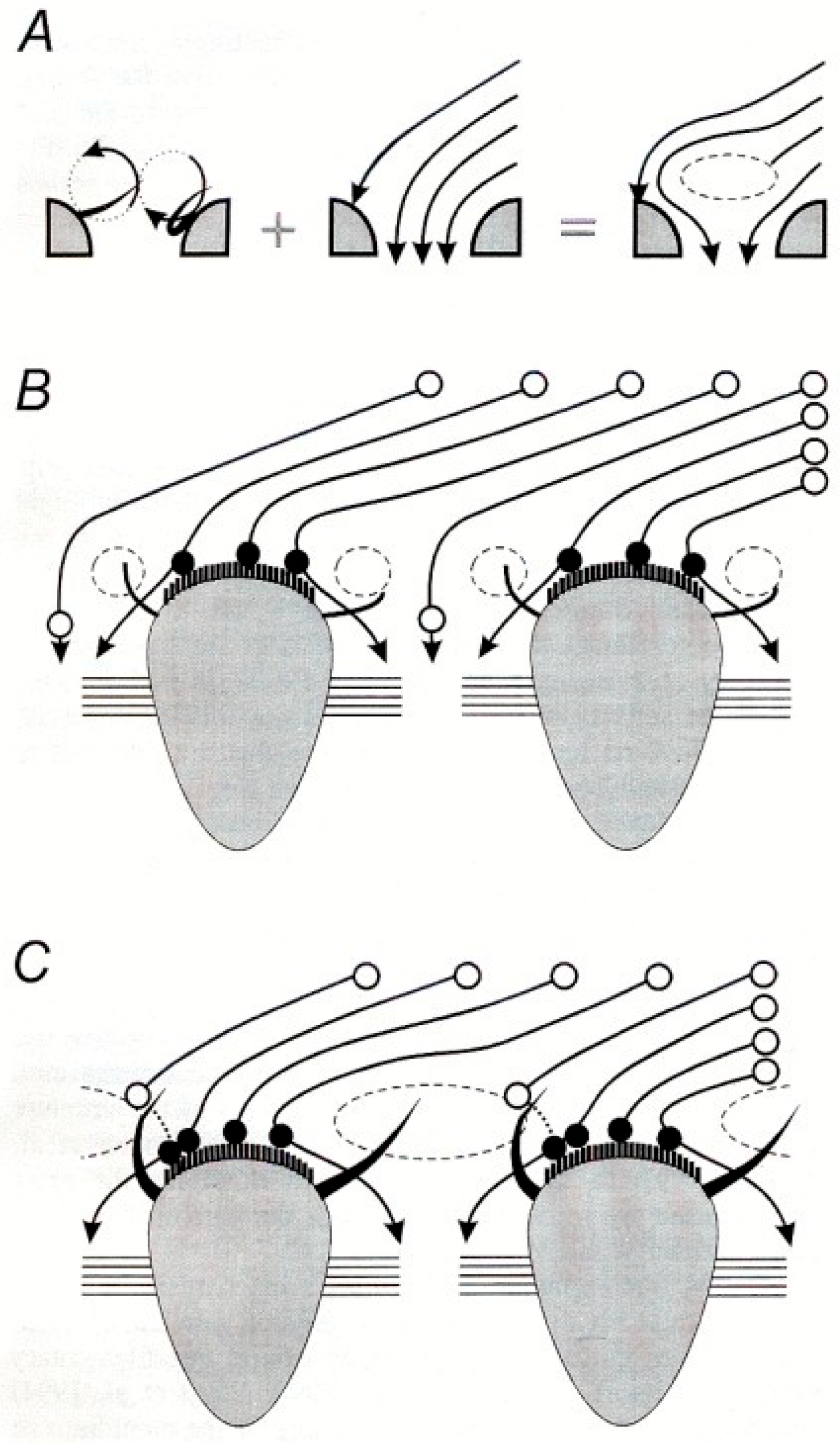
As an alternative to the particle capture mechanisms in bivalves explained in the previous sections, there is the “new model” based on “accepted principles of hydrosol filtration” that was presented by [3], where the approach angle of a particle towards the gill is 30° and the particle is captured by direct interception with a gill filament, whereas lfc act as “solid paddles” generating “zones of blocked through-flow”. Objections to the study [3] were advanced by [33,35,38]. One may also note that [3] observed a reduction in particle retention when adding serotonin, which would imply that normally active lfc play a key role in transferring particles to fc bands, which does not seem to support the hydrosol theory. Nevertheless, in their reply comment [39], they claimed that the critical comments did “not undermine the main points”. Later, based on water flow analysis and particle capture in scallops, ref. [22] could not find support for the “new” hydrosol model. Likewise, based on re-examination of the mussel gill, ref. [8] did not find support for the hydrosol particle capture model. Nevertheless, the “new explanation” still seems to be the preferred model by some investigators, e.g., [10,12,19,21]. Thus, observations of a seasonally variable retention efficiency size distribution by [19] lean on the hydrosol mode, and [10] supports [3] because “a mechanical sieving mechanism” was not compatible with their observations of particle retention efficiency. Likewise, studies such as [12] on the plasticity of particle capture, surface properties, selective capture, and changes in temperature by Rosa et al. [12,20,40,41] and Steeves et al. [21] lend support to the theory of the hydrosol filtration mechanism of Ward et al. [3]. However, this “new” model appears to have shortcomings, builds on questionable ideas, and ignores or rejects observations by others, as explained in the following.
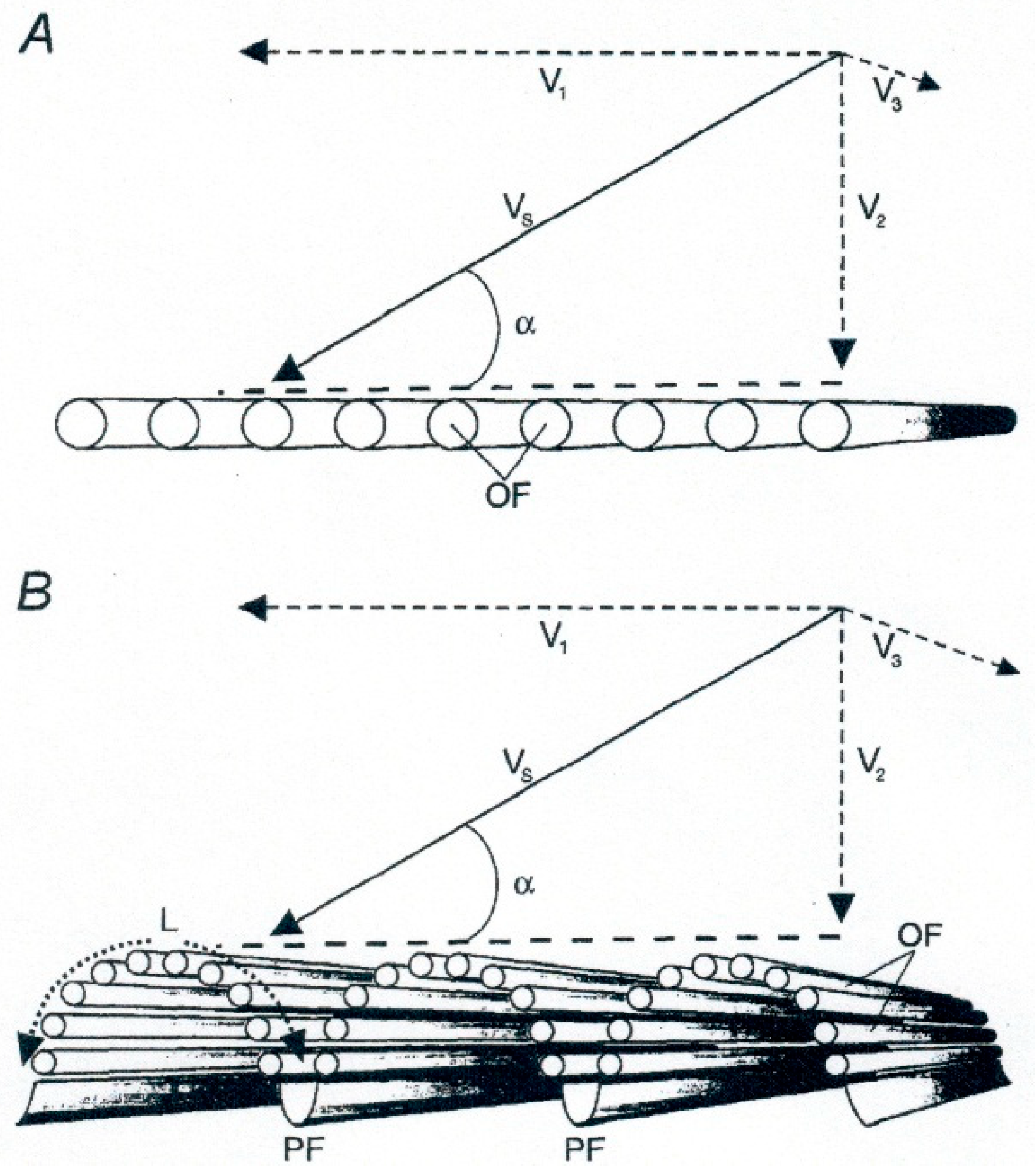
According to [3], the approach angle of a particle towards the gill is about 30° (Figure 10), and “zones of blocked through-flow” caused by the beating laterofrontal cirri or laterofrontal cilia (Figure 11) are suggested to block through-flow, hence aiding the “direct interception” on the front of gill filaments. A modification to the direct interception is termed “trap and flip”, which was frequently observed and agrees with the role of lfc in stopping particles, as shown by [14,15] in their video-microscope observations of particle capture on isolated gill filaments. Ward et al. [39] discarded these results, being concerned about “possible inaccurate information from isolated gill preparations” and therefore just regarded the observations as artifacts. However, refs. [14,15] showed that when 10−6 M 5-HT (serotonin) was added to a vessel with a gill preparation, normal activity of water-pumping lateral cilia and lfc was re-established. Using a submerged microscope objective in front of the gill filaments, the capture of particles could clearly be seen and was documented by their video recordings. The observations were later repeated and confirmed by [8]. The observation of “trap and flip” capture of particles reported by [3] can be explained by the cirri-tapping mechanism described by [8], whereas there is no evidence for the suggested “direct interception” of particles with the gill filaments, as claimed by [3], and the idea that cirri generate vortices that block the motion of particles is speculative. One of the fundamental points of [3] is a suggested 30° angle of particle approach to the gill plane. Further, PIV velocities of inhalant flow in Mytilus galloprovincialis show sink flow that develops into rather symmetric parabolic profiles (see [42] Figure 2A therein), and the water flow in the mantle cavity has been described by [43] using phase-contrast magnetic resonance imaging analysis.

7. Discussion

As it appears from the present account, the minimum size of particles being captured with 100% efficiency differs between bivalves with well-developed lfc and bivalves with only pro-lfc, but in both cases, it is the distance between alternate lfc and pro-lfc, respectively, that determines the lower limit for 100% retention. Further, the presence of branching compound lfc increases the particle retention efficiency below this limit, while the small cirri in oysters seem to be less efficient. However, the capture mechanism of smaller particles in scallops and other bivalves with only pro-lfc still remains unknown.
Mucus is not involved in the particle retention process [8], but high concentrations of particles elicit secretion of mucus, and particles that become entangled in mucus are transported to the mouth palps to be converted into pseudofeces and expelled from the mantle cavity close to the exhalant opening [44]. Mucociliary mechanisms only serve to clean the gills for excess particulate material, and undisturbed mussels produce little or no mucus [1,45]. However, ref. [46] suggested that mucociliary mechanisms may minimize particle loss and optimize particle transport efficiency, as also proposed by [3] to be “essential for holding particles on the frontal surface”. Therefore, Rosa et al. [20] designed a study on how physicochemical surface properties of particles may “affect their interactions with mucus” and, thus, their potential capture by direct interception on gill filaments according to the hydrosol model in [3], where a “fine layer of mucus” was proposed to “be essential in holding particles” on the frontal surface of the gill filament. However, ref. [20] did not confirm this theory.
Studies of particle capture efficiency focus on particle size, but other parameters may be important, such as shape, structure, and surface properties of particles [47]. Furthermore, velocity, i.e., pumping rate, and temperature might affect the capture process. Here, only the effect of seasonal change in temperature has been studied, however inconclusively, by [12]. However, in [48], it is shown that the viscosity of seawater controls the beat frequency of water-pumping lateral cilia in mussels such that the filtration (pumping) rate of Mytilus edulis increases with increasing temperature. However, it is not known how temperature affects the lfc and their role in the particle capture process, and no theory about the possible effect of temperature on particle capture efficiency has yet been proposed.
A more rigorous approach to learning more about particle capture mechanisms would be to use methods of advanced computational fluid mechanics, as performed, for example, in the description of the choanocyte pump in a demosponge [49]. However, so far, only [22] has presented flow calculations for a two-dimensional model of the plicate gill crests of a scallop (Figure 8). In this study, steady and unsteady simulations, including models of beating pro-lfc, illustrate flows approaching the inlet to filament canals, which in some cases include small unsteady regions of recirculating flow (vortices). However, the results show that the blocking of through-flow postulated by [3] and illustrated in Figure 11C will not occur.
Using an in-situ technique, Yahel et al. [18] determined the retention efficiencies of natural particles using flow cytometry analysis of water inhaled and exhaled by the tropical mytilid Lithophaga simplex. The photosynthetic bacterium Synechococcus (0.9 µm) and larger algae (<10 µm) were preferentially retained by the bivalve with up to 90% efficiency, whereas only a small proportion of non-photosynthetic bacteria were retained. The authors suggested that particle retention is not strictly size-dependent in L. simplex but is probably dependent on cell surface properties and motility. Further, the observation by [11] of high retention efficiencies of submicron particles in bivalves with lfc living in oligotrophic waters is a new challenge to theories of particle capture mechanisms. However, ref. [31] presented laser confocal video images of a branching laterofontal cirrus on a living gill filament of Mytilus edulis. The beat of the cirral tip was toward the frontal surface of the gill filament, and the individual ciliary tips on one side of the cirrus were clearly seen. The bending power stroke of the cirrus moved toward the frontal surface of the gill filament, and the cirri appeared to ‘‘trap’’ and transfer 0.75–1.0 µm fluorescent beads to the frontal surface of the gill filament. This observation agrees with the lfc particle capture mechanism presented here and further shows that particles ≤1 µm may also be stopped by the lfc and subsequently transferred to the gill filament surface current and thus captured by the biological gill filter. The distance between the cilia of the branching lfc is 0.6 µm (Figure 5), and it may therefore, as a working hypothesis, be predicted that particles < 0.6 µm may not be captured by mussels.

8. Concluding Remarks

Amit et al. [11] found it tempting to conclude that the presence of lfc is responsible for “enhanced capture efficiency of picoplankton” because bivalves that possess lfc (e.g., mytilids) capture smaller plankton more efficiently compared to bivalves that do not possess lfc (e.g., pectinids). However, below the threshold of efficient capture, ref. [11] stated that the capture mechanism was inefficient for all bivalves and therefore suggested that the smallest particles may be “simply absorbed” onto mucus present on the gills. In the present review, we have emphasized that to understand the particle capture mechanisms in bivalves, attention must be paid to the ciliary structures and water flow in flat gills (mussels) versus plicate gills (scallops, oysters). Thus, the minimum size of particles being efficiently captured differs between bivalves with lfc and bivalves with only pro-lfc, and further, it is the distance between alternate lfc and pro-lfc, respectively, that determines the lower limit for efficient retention, but the presence of lfc increases the retention efficiency, and even particles ≤ 1 µm may be stopped by the lfc and captured [31]. However, the possible influence of particle surface properties and whether the cells are photosynthetic or non-photosynthetic [11,18] are still challenges to bio-fluid mechanical theories of particle capture mechanisms in marine filter-feeding bivalves.
In their reply to comments by [33,35,38] on various aspects of the paper [3], Ward et al. [39] responded to the criticism. Here, we have rebutted the hypothesis of hydrosol filtering proposed by [3,39], where particles are captured by direct interception with gill filaments and lfc act as “solid paddles” generating “zones of blocked through-flow” (Figure 11). We wonder why no further test of the hypothesis has so far been made, but nevertheless, it has been cited in many publications over the last 25 years.

Author Contributions

Conceptualization and writing original draft: H.U.R. and P.S.L. All authors have read and agreed to the published version of the manuscript.

Funding

This research received no external funding.

Data Availability Statement

Data are contained within the article.

Acknowledgments

We thank the three anonymous reviewers for their helpful comments.

Conflicts of Interest

The authors declare no competing or financial interests.

References

  1. Jørgensen, C.B. Bivalve Filter Feeding: Hydrodynamics, Bioenergetics, Physiology and Ecology; Olsen & Olsen: Fredensborg, Denmark, 1990. [Google Scholar]
  2. Gosling, E. Marine Bivalve Molluscs, 2nd ed.; John Wiley & Sons, Ltd.: Hoboken, NJ, USA, 2015; p. 524. [Google Scholar]
  3. Ward, J.E.; Sanford, L.P.; Newell, R.I.E.; MacDonald, B.A. A new explanation of particle capture in suspension-feeding bivalve molluscs. Limnol. Oceanogr. 1998, 43, 741–752. [Google Scholar] [CrossRef]
  4. Dral, A.D.G. The movement of the latero-frontal cilia and mechanism of particle retention in the mussel (Mytilus edulis L.). Neth. J. Sea Res. 1967, 3, 391–422. [Google Scholar] [CrossRef]
  5. Owen, G.; McCrae, J.M. Further studies on the latero-frontal tract of bivalves. Proc. R. Soc. Lond. Ser. B 1976, 194, 527–544. [Google Scholar] [CrossRef]
  6. Møhlenberg, F.; Riisgård, H.U. Efficiency of particle retention in 13 species of suspension-feeding bivalves. Ophelia 1978, 17, 239–246. [Google Scholar] [CrossRef]
  7. Silvester, N.R.; Sleigh, M.A. Hydrodynamic aspects of particle capture by Mytilus. J. Mar. Biol. Assoc. UK 1984, 64, 859–897. [Google Scholar] [CrossRef]
  8. Riisgård, H.U.; Funch, P.; Larsen, P.S. The mussel filter-pump—Present understanding, with a re-examination of gill preparations. Acta Zool. 2015, 96, 273–282. [Google Scholar] [CrossRef]
  9. Cranford, P.J.; Ward, J.E.; Shumway, S.E. Bivalve filter feeding: Variability and limits of the aquaculture biofilter. In Shellfish Aquaculture and the Environment; Shumway, S.E., Ed.; Wiley-Blackwell: Chichester, UK, 2011; pp. 81–124. [Google Scholar]
  10. Cranford, P.; Strohmeier, T.; Filgueira, R.; Strand, Ø. Potential methodological influences on the determination of particle retention efficiency by suspension feeders: Mytilus edulis and Ciona intestinalis. Aquat. Biol. 2016, 25, 61–73. [Google Scholar] [CrossRef]
  11. Amit, T.; Moskovich, R.; Jacobi, Y.; Shumway, S.E.; Ward, J.E.; Beninger, P.; Yahel, G.; Loya, Y. Feeding on the smallest cells: An in situ study of picoplankton capture by bivalve molluscs from oligotrophic waters. Front. Mar. Sci. 2023, 10, 1184773. [Google Scholar] [CrossRef]
  12. Rosa, M.; Capriotti, M.; Austin, K.; Shumway, S.E.; Ward, J.E. Effect of seasonal changes in temperature on capture efficiency in the blue mussel, Mytilus edulis, fed seston and microplastics. Invertebr. Biol. 2024, 143, e12446. [Google Scholar] [CrossRef]
  13. Beninger, P.G.; St-Jean, S.D.; Poussart, Y.; Ward, J.E. Gill function and mucocyte distribution in Placopecten magellanicus and Mytilus edulis (Mollusca: Bivalvia): The role of mucus in particle transport. Mar. Ecol. Prog. Ser. 1993, 98, 275–282. [Google Scholar] [CrossRef]
  14. Nielsen, N.F.; Larsen, P.S.; Riisgård, H.U.; Jørgensen, C.B. Fluid motion and particle retention in the gill of Mytilus edulis: Video recordings and numerical modelling. Mar. Biol. 1993, 116, 61–71. [Google Scholar] [CrossRef]
  15. Riisgård, H.U.; Larsen, P.S.; Nielsen, N.F. Particle capture in the mussel Mytilus edulis: The role of latero-frontal cirri. Mar. Biol. 1996, 127, 259–266. [Google Scholar] [CrossRef]
  16. Silverman, H.; Lynn, J.W.; Dietz, T.H. Particle capture by the gills of Dreissena polymorpha: Structure and function of laterofrontal cirri. Biol. Bull. 1996, 191, 42–54. [Google Scholar] [CrossRef]
  17. Riisgård, H.U. Efficiency of particle retention and filtration rate in 6 species of Northeast American bivalves. Mar. Ecol. Prog. Ser. 1988, 45, 217–223. [Google Scholar] [CrossRef]
  18. Yahel, G.; Marie, D.; Beninger, P.; Eckstein, S.; Genin, A. In situ evidence for pre-capture qualitative selection in the tropical bivalve Lithophaga simplex. Aquat. Biol. 2009, 6, 235–246. [Google Scholar] [CrossRef]
  19. Strohmeier, T.; Strand, Ø.; Alunno-Bruscia, M.; Duinker, A.; Cranford, P.J. Variability in particle retention efficiency by the mussel Mytilus edulis. J. Exp. Mar. Biol. Ecol. 2012, 412, 96–102. [Google Scholar] [CrossRef]
  20. Rosa, M.; Ward, J.E.; Frink, A.; Shumway, S.E. Effects of surface properties on particle capture by two species of suspension-feeding bivalve molluscs. Am. Malacol. Bull. 2017, 35, 181–188. [Google Scholar] [CrossRef]
  21. Steeves, L.; Vimond, C.; Strohmeier, T.; Casas, S.; Strand, Ø.; Comeau, L.A.; Filgueira, R. Relationship between pumping rate and particle capture efficiency in three species of bivalves. Mar. Ecol. Prog. Ser. 2022, 691, 55–68. [Google Scholar] [CrossRef]
  22. Riisgård, H.U.; Larsen, P.S. Water flow analysis and particle capture in ciliary filter-feeding scallops (Pectinidae). Mar. Ecol. Prog. Ser. 2005, 303, 177–193. [Google Scholar] [CrossRef]
  23. Jørgensen, C.B.; Kiørboe, T.; Møhlenberg, F.; Riisgård, H.U. Ciliary and mucus net filter feeding, with special reference to fluid mechanical characteristics. Mar. Ecol. Prog. Ser. 1984, 15, 283–292. [Google Scholar] [CrossRef]
  24. Stuart, V.; Klumpp, D.W. Evidence for food-resource partitioning by kelp-bed filter feeders. Mar. Ecol. Prog. Ser. 1984, 16, 27–37. [Google Scholar] [CrossRef]
  25. Moore, H.J. The structure of the latero-frontal cirri on the gills of certain lamellibranch molluscs and their role in suspension feeding. Mar. Biol. 1971, 11, 23–27. [Google Scholar] [CrossRef]
  26. Owen, G. Studies on the gill of Mytilus edulis: The eu-latero-frontal cirri. Proc. R. Soc. Lond. Ser. B 1974, 187, 83–91. [Google Scholar] [CrossRef]
  27. Jørgensen, C.B. On gill function in the mussel Mytilus edulis L. Ophelia 1975, 13, 187–232. [Google Scholar] [CrossRef]
  28. Jørgensen, C.B. A hydromechanical principle for particle retention in Mytilus edulis and other ciliary suspension feeders. Mar. Biol. 1981, 61, 277–282. [Google Scholar] [CrossRef]
  29. Jørgensen, C.B. Fluid mechanics of the mussel gill: The lateral cilia. Mar. Biol. 1982, 70, 275–281. [Google Scholar] [CrossRef]
  30. Jørgensen, C.B. Fluid mechanical aspects of suspension feeding. Mar. Ecol. Prog. Ser. 1983, 11, 89–103. [Google Scholar] [CrossRef]
  31. Jørgensen, C.B. Water processing in ciliary feeders, with special reference to the bivalve filter pump. Comp. Biochem. Physiol. 1989, 94, 383–394. [Google Scholar] [CrossRef]
  32. Silverman, H.; Lynn, J.W.; Beninger, P.G.; Dietz, T.H. The role of latero-frontal cirri in particle capture by the gills of Mytilus edulis. Biol. Bull. 1999, 197, 368–376. [Google Scholar] [CrossRef][Green Version]
  33. Silverman, H.; Lynn, J.W.; Dietz, T.H. In vitro studies of particle capture and transport in suspension-feeding bivalves. Limnol. Oceanogr. 2000, 45, 1199–1203. [Google Scholar] [CrossRef]
  34. Ward, J.E. Biodynamics of suspension-feeding in adult bivalve molluscs: Particle capture, processing, and fate. Invert. Biol. 1996, 115, 218–231. [Google Scholar] [CrossRef]
  35. Riisgård, H.U.; Larsen, P.S. A comment on experimental techniques for studying particle capture in filter-feeding bivalves. Limnol. Oceanogr. 2000, 45, 1192–1195. [Google Scholar] [CrossRef]
  36. Beninger, P.G.; Cannuel, R.; Jaunet, S. Particle processing on the gill plicae of the oyster Crassostrea gigas: Fine-scale mucocyte distribution and functional correlates. Mar. Ecol. Prog. Ser. 2005, 295, 191–199. [Google Scholar] [CrossRef]
  37. Ward, J.E.; Newell, R.I.E.; Thompson, R.J.; MacDonald, B.A. In vivo studies of suspension-feeding processes in the eastern oyster, Crassostrea virginica (Gmelin). Biol. Bull. 1994, 186, 221–240. [Google Scholar] [CrossRef]
  38. Beninger, P.G. A critique of premises and methods in a recent study of particle capture mechanisms in bivalves. Limnol. Oceanogr. 2000, 45, 1196–1199. [Google Scholar]
  39. Ward, J.E.; Sanford, L.P.; Newell, R.I.E.; MacDonald, B.A. The utility of in vivo observations for describing particle capture processes in suspension-feeding bivalve molluscs. Limnol. Oceanogr. 2000, 45, 1203–1210. [Google Scholar] [CrossRef]
  40. Rosa, M.; Ward, J.E.; Ouvrard, M.; Holohan, B.A.; Pales Espinosa, E.; Shumway, S.E.; Allam, B. Examining the physiological plasticity of particle capture by the blue mussel, Mytilus edulis (L.): Confounding factors and potential artifacts with studies utilizing natural seston. J. Exp. Mar. Biol. Ecol. 2015, 473, 207–217. [Google Scholar] [CrossRef]
  41. Rosa, M.; Ward, J.E.; Shumway, S.E. Selective capture and ingestion of particles by suspension-feeding bivalve molluscs: A review. J. Shellfish Res. 2018, 37, 727–746. [Google Scholar] [CrossRef]
  42. Uslu, F.E.; Pekkan, K. Mytilus galloprovincialis as a smart micro-pump. Biol. Open 2016, 5, 1493–1499. [Google Scholar] [CrossRef]
  43. Seo, E.; Ohishi, K.; Maruyama, T.; Imaizumi-Ohashi, Y.; Murakami, M.; Seo, Y. Magnetic resonance imaging analysis of water flow in the mantle cavity of live Mytilus galloprovincialis. J. Exp. Biol. 2014, 217, 2277–2287. [Google Scholar] [CrossRef]
  44. Riisgård, H.U.; Egede, P.P.; Saavedra, I.B. Feeding behaviour of mussels, Mytilus edulis, with a mini-review of current knowledge. J. Mar. Res. 2011, 2011, 312459. [Google Scholar] [CrossRef]
  45. Jørgensen, C.B. Feeding and cleaning mechanisms in the suspension feeding bivalve Mytilus edulis. Mar. Biol. 1981, 65, 159–163. [Google Scholar] [CrossRef]
  46. Ward, J.E.; Macdonald, B.A.; Thompson, R.J.; Beninger, P.G. Mechanisms of suspension feeding in bivalves: Resolution of current controversies by means of endoscopy. Limnol. Oceanogr. 1993, 38, 265–272. [Google Scholar] [CrossRef]
  47. Ward, J.E.; Shumway, S.E. Separating the grain from the chaff: Particle selection in suspension- and deposit-feeding bivalves. J. Exp. Mar. Biol. Ecol. 2004, 300, 83–130. [Google Scholar] [CrossRef]
  48. Riisgård, H.U.; Larsen, P.S. Viscosity of seawater controls beat frequency of water-pumping cilia and filtration rate of mussels Mytilus edulis. Mar. Ecol. Prog. Ser. 2007, 343, 141–150. [Google Scholar] [CrossRef]
  49. Asadzadeh, S.S.; Larsen, P.S.; Riisgård, H.U.; Walther, J.H. Hydrodynamics of the leucon sponge pump. J. R. Soc. Interface 2019, 16, 20180630. [Google Scholar] [CrossRef]
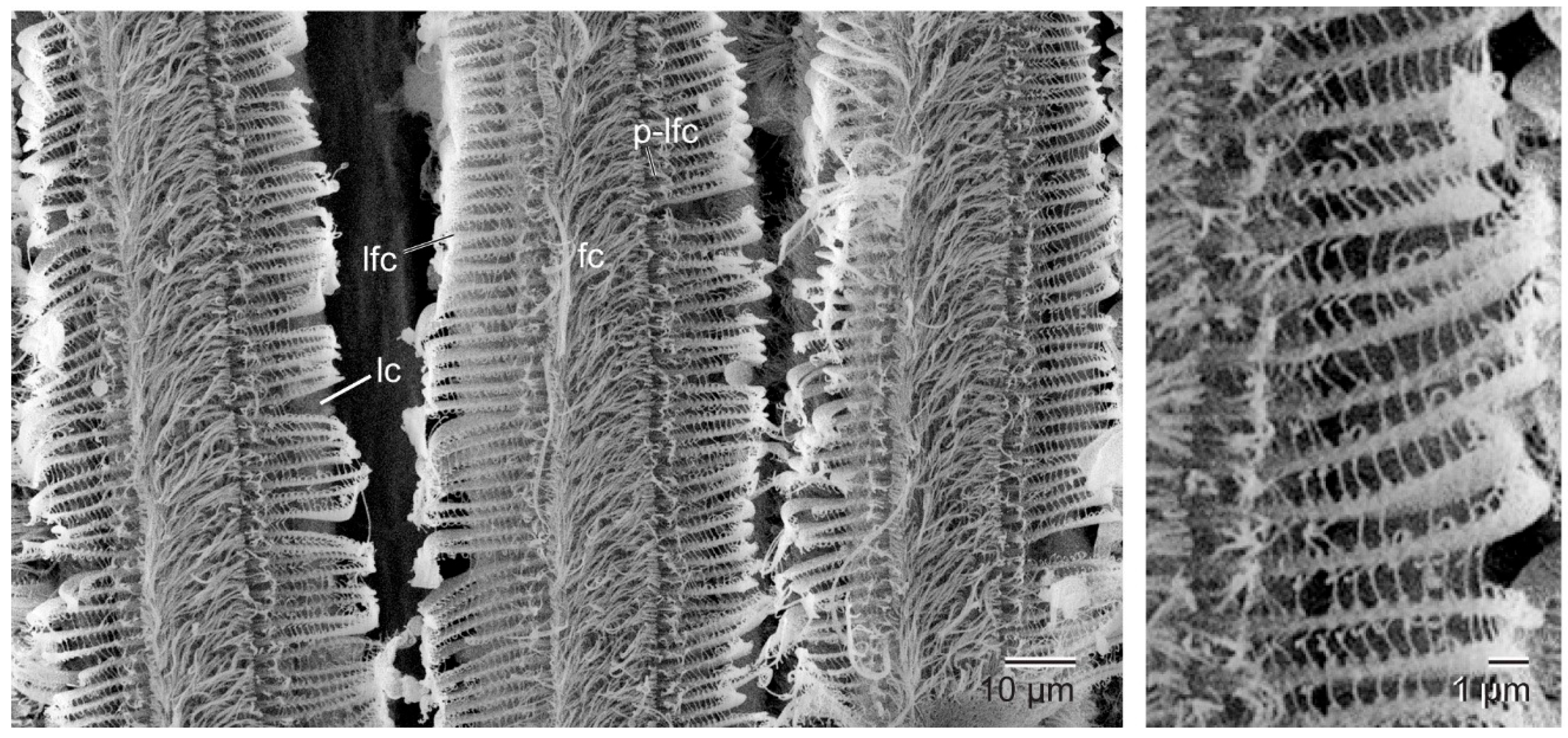
Figure 1. (Left) SEM picture of 3 mussel Mytilus edulis gill filaments with inactive lateral cilia (lc), rows of inactive laterofrontal cirri (lfc), frontal cilia (fc), and pro-laterofrontal cilia (p-lfc). In gill preparations with nerves cut, the lc become inactive and the activity of lfc becomes sporadic. However, addition of 10−6 M serotonin (5-HT) can immediately activate both the lc and the lfc to beat normally. (Right) Close-up of lfc. From [8], with permission from John Wiley and Sons.
Jmse 14 00251 g001
Figure 2. (Left) SEM picture showing side view of single non-5HT-stimulated mussel Mytilus edulis gill filament with a band of non-beating lateral cilia (lc) and a row of beating laterofrontal cirri (lfc). It is seen how every second cirri are beating out of phase with the two neighboring cirri by half a beat. It is notable that the lfc during their recovery stroke is twisted so that the friction of the collapsible feather-like structure becomes minimal. (Right) Close-up of lfc. From [8], with permission from John Wiley and Sons.
Jmse 14 00251 g002
Figure 3. SEM pictures of frontal side of quick-freezed gill of scallop Palliolium (Pecten) furtivum composed of filaments with ciliary tracts. (A) Part of gill showing ventral bend and 3 crests composed of ordinary filaments. Scale bar = 100 µm. (B) Filaments separated by interfilamental gaps with lateral cilia (lc) organized in ‘frozen’ metachronic waves. Scale bar = 100 µm. plfc: pro-laterofrontal cilia; fc: frontal cilia. (C) Close-up of a small part of filament with a row of plfc seen between lc and fc. Scale bar = 20 µm. From [22], with permission from Inter-Research.
Jmse 14 00251 g003
Figure 4. Mytilus edulis. Cross-section of two gill filaments of mussel; lfc = laterofrontal cirri (alternating cirri beat synchronously and differ half a phase with the two adjacent ones); lc = lateral cilia. From [4], with permission from Elsevier.
Jmse 14 00251 g004
Figure 5. Mytilus edulis. (Left) Diagrammatic representation of two alternate laterofrontal cirri (A and C) and the adjacent cirrus (B), which is out of phase with cirri A and C by half a beat. From Owen [5], with permission from The Royal Society (U.K.). (Right) Frontal view of the interfilament space at the level of the laterofrontal cirri. Alternate cirri (A) are extended across the space, while intervening cirri (B) are bent towards the frontal surface. From [7], with permission from Cambridge University Press.
Jmse 14 00251 g005
Figure 6. Particle movements on plicate gill of a scallop (Aequipecten opercularis). (A) Video graphic print of plicate gill (of: ordinary filaments; pf: principal filament) and dorsal groove (dg). (B) Paths of suspended particles (dots) approaching the gill surface from the right are shown together with an example of a captured particle (crosses) being transported to the left in the dorsal groove (arrow). Time interval between each dot or cross is 0.1 s. Estimated velocity (mm s−1) and direction (arrow) is indicated. From [22], with permission from Inter-Research.
Jmse 14 00251 g006
Figure 7. Aequipecten opercularis. (A) Scallop gill filament, only left side boundary indicated, in which a particle is transferred from the entrance of the interfilament canal (frame 0 to 15) to the band of frontal cilia (fc) (frame 17 to 30) by the pro-laterofrontal cilia (plfc), which are seen above a band of inactive lateral cilia (lc) (because no serotonin [5-HT] was added to the surrounding water). Time interval between circles symbolizing particles is expressed in number of video frames from the start at 0 (time interval between frames = 0.02 s). Particles seen in focus on the microscope video recordings are indicated by unbroken circles; blurred particles partly out of focus are indicated by broken circles. (Right) Video graphic picture of frames (B) 15 and (C) 16 showing capture of algal cell (arrow) as indicated. From [22], with permission from Inter-Research.
Jmse 14 00251 g007
Figure 8. (A) Computed streamlines and (B) velocity vector plot of flow into funnel between 2 plicate gill crests of a scallop (Chlamys varia). The two-dimensional model assumes that 99.2% of flow is drawn into 7 interfilamental canals on each side, while the remaining 0.8% leaves at the bottom, which simulates the dorsally directed flow driven by cilia on the principal filament. (C) One frame from simulated unsteady inflow to one canal with one beating pro-lfc. From [22], with permission from Inter-Research.
Jmse 14 00251 g008
Figure 9. Sketch of oyster Crassostrea virginica gill showing particle capture and transport. Dashed lines indicate the path of particles before being captured (open circles), and solid lines indicate movement of particles after capture (solid circles). Note that particles “bounce” from one ordinary filament to another and deflect into a plical trough with a principal filament at the base. Particles in the basal tracts are transported in a slurry (stippled arrows), while those in the marginal grooves are transported in a mucous string (open arrows). BCT = basal ciliated tract, MCG = marginal ciliated groove, MS = mucous string, OF = ordinary filament, PF = principal filament, Ant = anterior, Post = posterior. From [37], with permission from University of Chicago Press—Journals.
Jmse 14 00251 g009
Figure 10. Cross-sectional diagrams of bivalve gill filaments in a flat gill (A) and in a plicate gill (B). V1, V2, and V3 = vector components of flow resulting in Vs = particle approach velocity with angle α. OF = ordinary filaments; PF = principal filaments. Particles approach gill filaments at a low angle of α ≈ 30°, and the process of particle capture is similar among species. From [3], with permission from John Wiley and Sons.
Jmse 14 00251 g010
Figure 11. (A) Suggested interplay between beating laterofrontal cilia and flow creating a blocked zone (dashed ellipse). (B,C) Cross-sectional diagrams of gill filaments showing streamlines, particle capture (open circles), captured particles (black circles) and “zones of blocked through-flow” (dashed ellipses) caused by the simple laterofrontal cilia or by small laterofrontal cirri (B) or by large compound laterofrontal cirri (C). From [3], with permission from John Wiley and Sons.
Jmse 14 00251 g011
Disclaimer/Publisher’s Note: The statements, opinions and data contained in all publications are solely those of the individual author(s) and contributor(s) and not of MDPI and/or the editor(s). MDPI and/or the editor(s) disclaim responsibility for any injury to people or property resulting from any ideas, methods, instructions or products referred to in the content.