Article

The Pelagic Laser Tomographer for the Study of Suspended Particulates


by
M. Dale Stokes
1,*,
David R. Nadeau
2,† and
James J. Leichter
3
1
Marine Physical Laboratory, Scripps Institution of Oceanography, University of California, La Jolla, CA 92037, USA
2
San Diego Supercomputer Center, University of California, La Jolla, CA 92037, USA
3
Integrative Oceanography Division, Scripps Institution of Oceanography, University of California, La Jolla, CA 92037, USA
*
Author to whom correspondence should be addressed.
Retired.
J. Mar. Sci. Eng. 2026, 14(3), 247; https://doi.org/10.3390/jmse14030247
Submission received: 8 December 2025 / Revised: 20 January 2026 / Accepted: 21 January 2026 / Published: 24 January 2026
(This article belongs to the Section Ocean Engineering)

Abstract

An ongoing challenge in pelagic oceanography and limnology is to quantify and understand the distribution of suspended particles and particle aggregates with sufficient temporal and spatial fidelity to understand their dynamics. These particles include biotic (mesoplankton, organic fragments, fecal pellets, etc.) and abiotic (dusts, precipitates, sediments and flocks, anthropogenic materials, etc.) matter and their aggregates (i.e., marine snow), which form a large part of the total particulate matter > 200 μm in size in the ocean. The transport of organic material from surface waters to the deep-sea floor is of particular interest, as it is recognized as a key factor controlling the global carbon cycle and hence, a critical process influencing the sequestration of carbon dioxide from the atmosphere. Here we describe the development of an oceanographic instrument, the Pelagic Laser Tomographer (PLT), that uses high-resolution optical technology, coupled with post-processing analysis, to scan the 3D content of the water column to detect and quantify 3D distributions of small particles. Existing optical instruments typically trade sampling volume for spatial resolution or require large, complex platforms. The PLT addresses this gap by combining high-resolution laser-sheet imaging with large effective sampling volumes in a compact, deployable system. The PLT can generate spatial distributions of small particles (~100 µm and larger) across large water volumes (order 100–1000 m3) during a typical deployment, and allow measurements of particle patchiness over spatial scales to less than 1 mm. The instrument’s small size (6 kg), high resolution (~100 µm in each 3000 cm2 tomographic image slice), and analysis software provide a tool for pelagic studies that have typically been limited by high cost, data storage, resolution, and mechanical constraints, all usually necessitating bulky instrumentation and infrequent deployment, typically requiring a large research vessel.

1. Introduction

Organic material transport is a key factor controlling the global carbon cycle and, therefore, a critical process influencing carbon dioxide sequestration. The settling of organic and inorganic particulates and aggregates from the surface waters acts as a “biological pump” dependent upon the sinking velocity and remineralization rates of the particulates (i.e., [1,2,3,4,5]). The particles, including the elements within, are constantly recycled through oceans and lakes mediated by a variety of physical and biogeochemical processes. The size and density distributions of particles are key properties of aquatic systems, affecting the transmission of light, controlling trophic interactions, and the downward transport of nutrients by sedimentation. To accurately quantify the spatial and size distribution of these particulates requires instrumentation, like that described here, with sampling volumes large enough to distinguish particle patch heterogeneity and to capture the relatively rare, large aggregates, as well as having a resolution fine enough to quantify small individual particles [6,7].

1.1. Instrumentation for In Situ Particle Analysis

There have been numerous instruments developed to either optically or acoustically estimate particle size and abundance spectra in pelagic waters (e.g., see reviews in [8,9,10,11,12,13]). Active acoustic techniques, for example, using single beam, split, multibeam, and with single and multiple frequencies and other custom configurations of transponders have been used for decades to study larger-sized (>>1 mm) zooplankton and ichthyoplankton populations (see review [14]). Some large and complex, combined optical/acoustic systems have been developed, including BIOMAPPER, OASIS, and others (i.e., [15,16,17,18,19]). All these acoustic systems, depending on the frequencies used, can have long working distances and large sample volumes, but they lack the fidelity of optical systems and are outside the scope of this research.
As early as the 1950s, it was recognized that the large size of most particles relative to light wavelengths suggested that in situ optical sensing techniques might alleviate the time-consuming need for microscopic sampling that limited the scaled study of particle distributions [20,21,22]. It was also widely recognized that remote techniques, including satellite observations that estimate surface water particle size distributions, are critical to understanding broad processes ranging from relative species abundance to carbon export (e.g., [23,24,25,26]). At a much smaller scale than satellite observations, optical plankton counters configured for remote and towed platforms offered the potential to provide both continuous and real-time information on the abundance and size–frequency distribution of particles in open-ocean and lake environments [27,28,29]. These systems were initially intended to complement sample information obtained by more traditional net sampling and to potentially provide taxonomic identification through coupling to automated and semi-automated image analysis systems. Optical plankton counters have aided the identification of meso and macrozooplankton and historical samples from the California Cooperative Fisheries Investigation (CalCOFI) program [30,31,32], in identifying vertical behaviors of copepods in the North Atlantic [33,34], and in lake systems for identifying plankton size distributions [35,36]. Time-series estimates of plankton size spectra have also provided information used to estimate their growth and mortality [37,38,39]. The ability to distinguish particle sizes and to estimate particle abundance has even been used in environments with high detritus abundance [40].
Mapping particle distributions in 3D is challenging with these traditional techniques. Because optical plankton counters operate on the principle of measuring the cross-sectional area of particles passing through discrete sensing beams, the technology is limited in those instances when two or more particles simultaneously occupy the beam path, which occurs at high plankton densities [41,42,43].
The majority of existing optics-based instrumentation for in situ particulate study tends to use small sample volumes, often optimized for the detailed image capture of individual particles that can then be used for automated identification. This includes the highly successful Video Plankton Recorder (VPR) underwater microscope system by Davis et al. (i.e., [44,45,46]) and its varied deployment iterations, ZooVis [47,48,49], ISIIS [50,51], and the whole suite of flow cytometry, laser, and holographic particle counters (i.e., [42,43,52,53,54,55,56,57,58,59,60,61,62,63]). These small-volume, high-resolution devices excel at particle discrimination and mesoplankton identification, particularly with advancements in computer-aided analysis (i.e., [49]), but they lack the higher-fidelity particle spatial distribution and abundance information from instruments that sample a larger image volume.

1.2. Large Volume Optical Instrumentation

The Pelagic Laser Tomographer (PLT) instrument described herein is within the class of optical systems that sequentially analyze a comparatively large sample volume to tabulate its particle content. Whereas the above optical plankton counters look at very small water volumes to identify individual particulates, the PLT scans and analyzes much larger volumes to obtain a synoptic view of the distribution of particulates within the column of water that it traverses. Further analysis that combines the data from multiple water column samples aims to provide a more synoptic understanding of spatial distributions across a region. The small size (60 cm length) and light weight (<6 kg) of the instrument are of particular importance as they enable easy, rapid deployment across a much wider range of localities than is practical for much of the currently available instrumentation.
Of relevance to the evolution of the PLT are several established optical instruments designed to characterize suspended particulate size distributions and spatial organization within thin sections of the water column, most notably the commercially available underwater video/vision profiler (UVP; Hydroptic) developed by Gorsky, Picheral, and colleagues (e.g., [64,65,66]), and the OSST/PILF/FIDO-Φ instruments developed by Jaffe and Franks (e.g., [67]). These systems have demonstrated the scientific value of planar optical sampling along vertical profiles but are subject to trade-offs among sampling volume, spatial resolution, platform complexity, and cost.
The UVP5 is a widely used monochromatic (red LED) imaging system with a mass of approximately 30 kg that is typically winch-deployed or integrated into a CTD rosette and controlled from the surface [65]. It images a 22 × 18 cm illuminated area (396 cm2) using a 1280 × 1024 pixel sensor at sampling rates up to 10 Hz (corresponding to ~20 cm vertical spacing). UVP data products support real-time particle counting and post-processed automated plankton classification (e.g., ZooProcess), and the instrument has been extensively deployed to study particle and mesoplankton size spectra larger than ~200 µm [68,69,70,71,72,73,74,75,76,77,78]. More recent UVP6 variants have reduced instrument size and power consumption and are optimized for long-duration autonomous platforms, albeit at lower sampling rates (UVP6-LP) or with performance characteristics that have not yet been fully reported (UVP6-HF) [66].
The PLT is also an intellectual descendant of the planar laser imaging approaches pioneered by the Optical Serial Section Tomography (OSST) system and its later free-falling implementations, including the PILF/FIDO-Φ instruments developed by Jaffe and Franks [79,80,81]. These systems employed monochromatic laser illumination and narrowband optical filtering to image fluorescent particulate backscatter within planar sections of the water column, achieving spatial resolutions on the order of ~300 µm. While highly innovative, these instruments were large, operationally complex free vehicles (>1000 kg), and limited in vertical profiling depth and deployment flexibility.
In contrast to these earlier systems, the PLT was designed to emphasize high spatial resolution over substantially larger effective sampling volumes within a compact, self-contained, and cost-effective platform. Key quantitative differences in sampling volume, spatial resolution, deployment depth, and platform requirements between the PLT and representative prior instruments are summarized in Table 1.

2. Pelagic Laser Tomographer

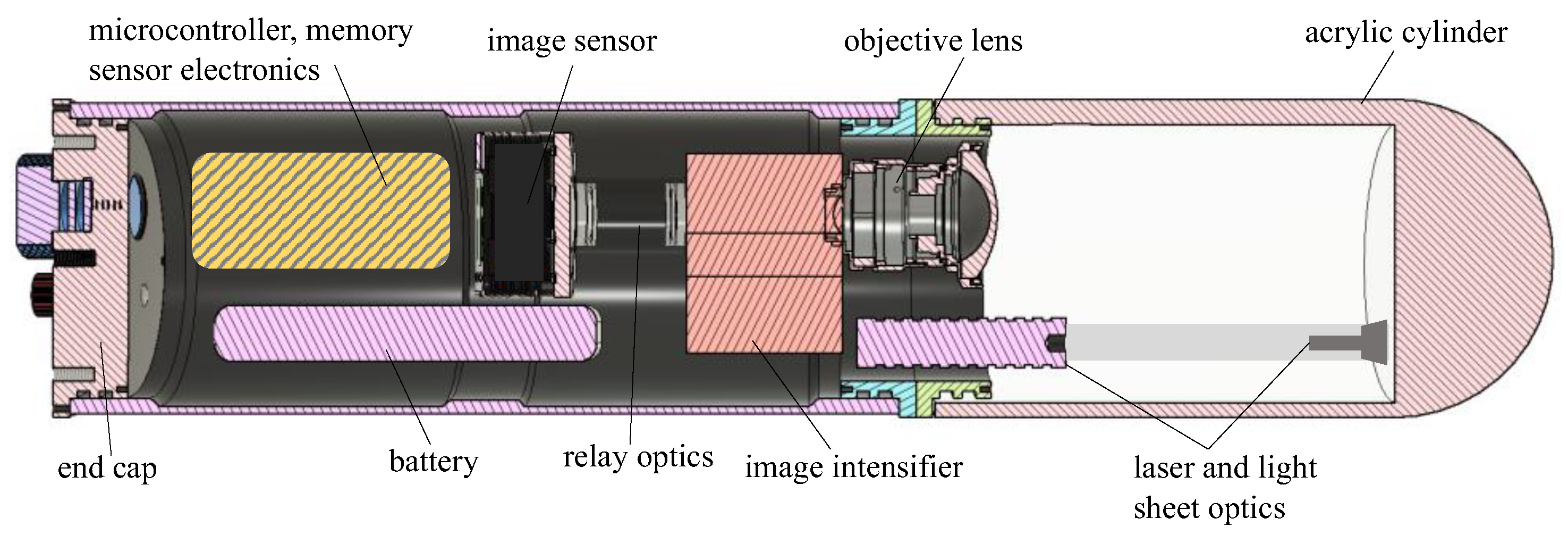
The PLT has been designed primarily using off-the-shelf components with some custom-fabricated mechanical hardware and custom control/data management software (Figure 1).
The PLT principle of operation is similar to that of other large area imaging devices; the PLT continuously scans an approximately 0.35 m radius horizontal section of the water column to create a series of consecutive thin, volumetric slices at the imaging frame rate as the instrument is lowered from the sea surface or as the water flows past the instrument if it is mounted to a stationary mooring or moving vehicle. The repeated scanning records the pelagic particle density and distribution within the water column to create a 3D dataset. Specialized tomographic software then assembles this data into a 3D model that can be visualized and analyzed. The small size and autonomous operation of the PLT allow it to be deployed from a small boat by hand or incorporated into a larger suite of oceanographic instrumentation, such as a CTD or water sampling rosette. Completely assembled, the PLT is approximately 60 cm in length and weighs approximately 6 kg.
The tomographic ‘slice’ spacing produced by the PLT light sheet is a function of the speed of the PLT as it moves through the water column and the frame rate of the captured images. Slower instrument movement speeds (i.e., 0.2 m/s) allow closer slice spacing and a greater spatial resolution and minimal image smearing. With a 2.5 mm light sheet thickness and a 30 Hz recording rate, the system is capable of recording 5.5 m of continuous overlapping image frame data per minute and greater than 1000 m in on-camera storage with a 256 GB memory card. Higher instrument speeds (i.e., 1 m/s) or slower frame rates create larger interframe spaces between image slices. The relatively short shutter interval of the PLT (0.6 ms) helps reduce image smearing even at elevated rates of instrument motion. By selecting an appropriate frame rate, PLT data can recreate a higher spatial resolution data volume over a shorter pathlength or deployment period (at high frame rates) or a longer interframe interval to maximize deployment time or path length (with a concomitant decrease in volume resolution). This capability allows the PLT to estimate particulate distributions in 1000’s of cubic meters of the water column, depending on the chosen sampling rate and memory storage, which is much greater than other instruments currently available.

2.1. PLT Hardware

The tomographic image slices are acquired using a 15 Mpixel Sony Exmor-RS CMOS image sensor (Sony, Yamagata, Japan) (1.55 µm pixel size) and Ambarella A9SE7 Dual Core Cortex ARM A9 SoC (Sony, Yamagata, Japan)with a 4k image processor, recording at up to 30 Hz, taken from a modified commercial camera (SONY RX1, Tokyo, Japan). In order to directly access the image sensor, the enclosure of the camera was opened, and the protective glass window, internal lenses, and the IR filter were all removed. To allow coupling of the exposed sensor to exterior imaging optics, a 25 mm diameter, female-threaded aluminum adapter ring was mounted in place of the original protective window. PLT image frame illumination is provided by a 532 nm laser diode module projecting a Gaussian beam through an axicon (Thorlabs, Mölndal, Sweden) and conical reflector (Edmunds Optics, Bengaluru, India) to create a 2 mm thick toroidal light sheet oriented normal to the optical axis of the imager and pulsed in synchrony with the image shutter. Scattered light from any objects within the light sheet is focused onto the objective end of an image intensifier tube (NVision LRS2, Sofia, Bulgaria) by a 6 mm, f 1.8 lens (Kowa, Nagoya, Japan), filtered by a 532 nm narrow bandpass filter (Edmunds Optics) in order to minimize background illumination. The intensifier tube has a working gain of up to 3000x and a resolution greater than the Exmor-RS sensor (Sony, Yamagata, Japan), so no image resolution is lost in the amplification stage. The inclusion of the intensifier allows the imaging sensor to function at a lower gain setting to decrease photon shot noise. It also allows the PLT to record with shorter shutter speeds (0.6 ms) to reduce image smearing due to instrument motion. The image intensifier tube is attached via a relay lens doublet (Thorlabs) for coupling to the Sony CMOS sensor using the threaded adapter attached to the modified camera. Utilizing the imaging engine from the Sony camera allows the PLT to use the gain, exposure, memory, and power functions of the Sony system, which has been optimized for efficient low-power operation in a compact package. With the new optics in place, each PLT sensor image has 3840 × 2160 pixels, spanning an approximately 300-degree field of view aimed perpendicular to the frame illumination.
The PLT logs its orientation (gyro, accelerometer, and magnetic heading) via an LSM9DS1 solid-state IC (ST, Calamba, Philippines) and depth (via a Measurement Specialties MS5837-30BA 24-bit pressure sensor, Wayne, USA) at 5 Hz intervals, and this position data is time-stamped in conjunction with the imager to rectify camera rotation and tilt during data post-processing. A temperature-compensated real-time clock (Maxim DS3231, Dallas Semiconductor, Dallas, TX, USA) with 2 ppm accuracy, or 0.007 s drift per hour (which is well within the max frame rate, 30 fps), provides data synchronization. Additional data acquired during operation includes battery voltage levels, internal and external temperature (from a Measurement Specialties TSYS01, TE Connectivity, Wayne, NJ, USA), and metadata of the system state. All sensor data is recorded onto a removable SD memory card. Power for all the PLT subsystems is provided by a voltage-regulated lithium-ion battery pack (22,000 mAh, Voltaic, Madhav Puram, India), providing power for more than 20 h of continuous operation (available memory and the sampling rate dictate deployment longevity). Transient peak loads are approximately 5 W during PLT system start-up and approximately 1 W during operation. All PLT operations, including data logging and downloading, imaging functions, laser and intensifier control, power management, and frame capture, are managed using an ATmega32u4 microcontroller running custom firmware that can be accessed after deployment using a USB connection to an external laptop computer.
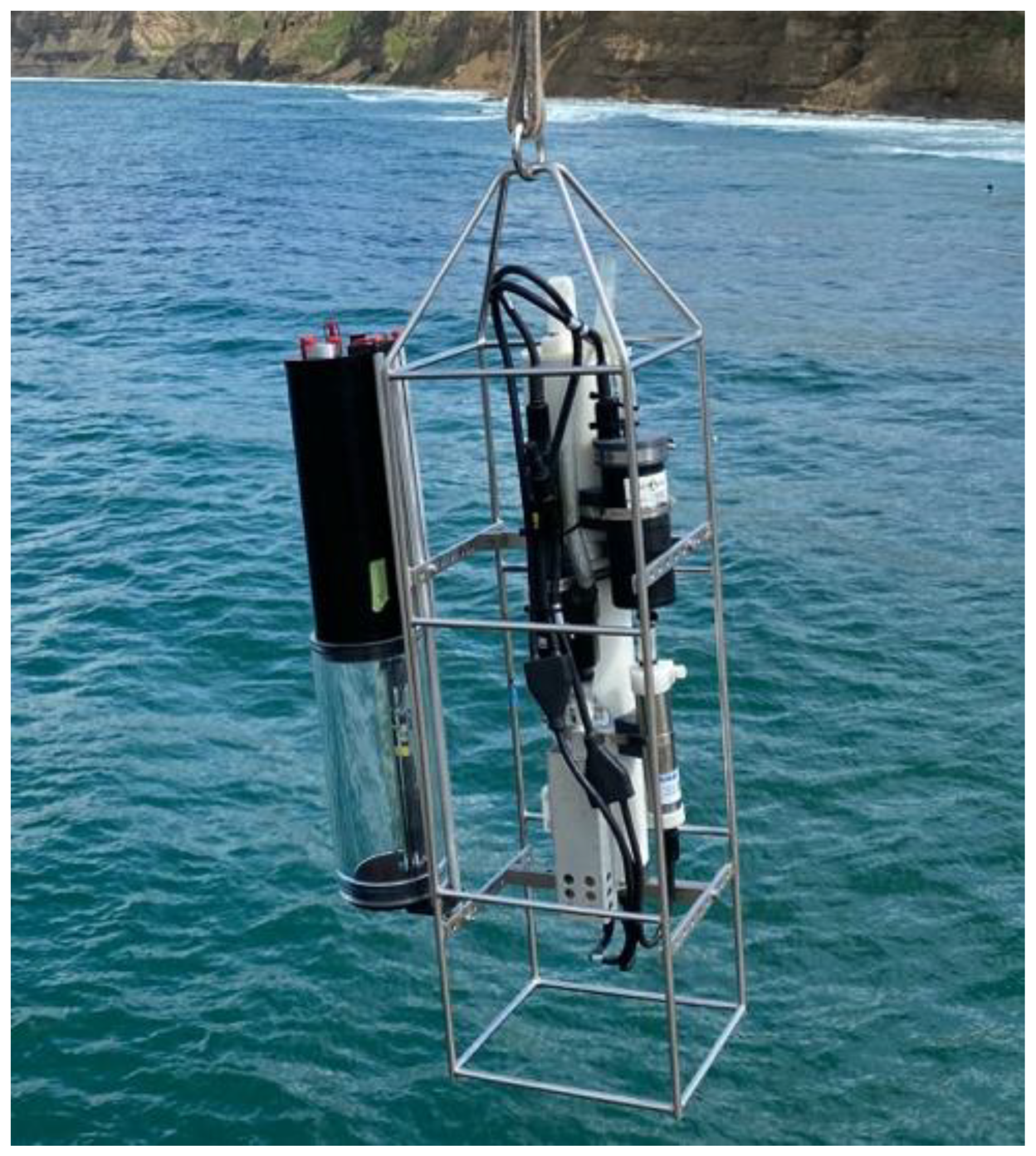
The PLT system is protected within an off-the-shelf, O-ring sealed pressure-resistant housing (Blue Robotics, 101 mm diameter, St. Torrance, CA, USA), which limits its operational depth to 400 m. However, a thicker-walled aluminum or titanium tube is available for a greater depth range. System controls are accessed through ports in the housing end cap and allow USB access for data downloading, PLT control programming, as well as ports for battery charging and downloading image data. A vacuum port is present to allow testing of the O-ring seal integrity before deployment. A cylindrical acrylic imaging port (30 cm long, 12 cm diameter, and 2 cm wall thickness) is attached to the anterior end of the pressure housing using an O-ring-sealed flange and houses the laser-sheet-generating optics, and provides a 360-degree free optical pathway for imaging the surrounding water. In practice, an approximately 60-degree wedge of the toroidal imaging plane is masked from analysis because the laser optics are in the field of view, and if the PLT is mounted against another structure (i.e., Figure 2), the region that obstructs the water flow and the view field are also eliminated from analysis.

2.2. Control System and Software

The PLT microcontroller is operated using custom software written in C++ and uploaded into the microcontroller using an external computer. The control software provides a complete text-based user interface with an integrated help system and internal diagnostics to check the status of the instrument, program its functionality for deployment, and download collected sensor and image data. The PLT interface can be operated with an Apple, Windows, or Linux-based computer. PLT image data appears as a separate mass storage drive on the control computer. If it is necessary to alter the imaging sensor settings (i.e., gain, shutter interval), it is done using Sony control software (version 3.0.00.06250) provided by the manufacturer.

2.3. Processing PLT Data

The PLT processing workflow converts raw camera and sensor data from each instrument deployment into a calibrated, depth-resolved record of particulate distributions. During each deployment, the PLT records continuous images synchronized with depth, temperature, and inertial measurements logged at 1 Hz. The processing pipeline begins by automatically identifying individual “drops” or winch casts within the shipboard sensor log and assigning each image to its corresponding cast based on timestamp alignment. For every cast, the associated subset of full-resolution raw images is staged into sequentially numbered symbolic links, enabling efficient processing without duplicating multi-gigabyte datasets. These staged image sequences are passed to a custom C++ filtering engine that performs median denoising, adaptive thresholding, mask-based background exclusion, and morphological filtering to isolate individual particulate “dot” signatures. The software extracts dot positions, size metrics, and depth metadata from each frame, producing both per-image CSV files and aggregated summaries (e.g., radius, area, and depth histograms). The resulting particulate catalogs form the basis for downstream analyses, such as vertical particle-size distributions, stratified microstructure, and comparisons across successive casts. This automated and extensible processing framework ensures reproducibility across large field datasets while maintaining compatibility with high-level scientific analysis in Python, MATLAB, or other computational environments.
After deployment, data and raw format images are downloaded for error checking, analysis, and visualization. Custom software (utilizing Python, C++, as well as open-source code using the OpenCV (4.8.0) image processing library) performs analysis and visualization in a semi-automated workflow. This includes reformatting, denoising, structural image masking, and clustering to compute final statistics correlated with depth and other sensor data to create a principal tabular data product that shows particulate sizes, densities, spatial clustering, and other attributes, as they vary with depth at the time and GPS location of each PLT profile. The visualizations shown of the PLT example datasets herein were created using the interactive ParaView (6.0.1) application [82] built atop the Visualization Toolkit (VTK) [83] or using the graphic processing functions of MATLAB on the tabulated PLT data. ParaView and VTK are both open source and extensible to support customized visualization techniques. The PLT workflow software runs on PCs and Macs running Windows, Linux, or macOS. Because the image processing software is platform-independent and can run on computers with different clock speeds and computational power, the amount of time to process and visualize a PLT dataset will vary. For example, a 16-core, 3.2 GHz, Intel Xenon processor requires less than 2 s to process a PLT data frame.
It is critical to note that the three-dimensional reconstructions derived from PLT data are based on depth and orientation measurements and represent the relative spatial organization of particles in the instrument reference frame. In the absence of an independent horizontal velocity measurement, lateral platform motion and evolving particle fields cannot be uniquely separated, a limitation common to vertically profiling optical instruments. Accordingly, reconstructed structures are interpreted as indicators of relative patchiness and spatial heterogeneity rather than as absolute inertial-frame geometries.
A more detailed description of the software workflow follows (note: all software scripts written in Python and C++ are available via a GitHub repository):
(1)
Segment data structures: Processing begins by importing the engineering log and applying a depth-based segmentation algorithm to identify all individual casts within a deployment. Depth is smoothed with a short median filter to remove ship heave and sensor jitter, and contiguous intervals exceeding a user-defined threshold (typically ≥3 m and ≥20 s duration) are labeled as discrete casts. For each cast, only those images whose timestamps fall within the corresponding depth interval are retained for further analysis. The processing pipeline then writes a per-drop metadata file containing start/end times, depth bounds, and the row indices required for image frame-by-frame association with the engineering data log.
(2)
Image sequencing: To preserve efficiency when handling multi-gigabyte datasets, the image sequence for each drop is staged into a local processing directory using symbolic links rather than copying. The images are renumbered sequentially (PLT000001.ARW, …) to provide a consistent and robust interface to the downstream C++ image processing engine. This staging step ensures that processing is reproducible and independent of the original camera folder structure, which often spans multiple camera file directories during long field operations.
(3)
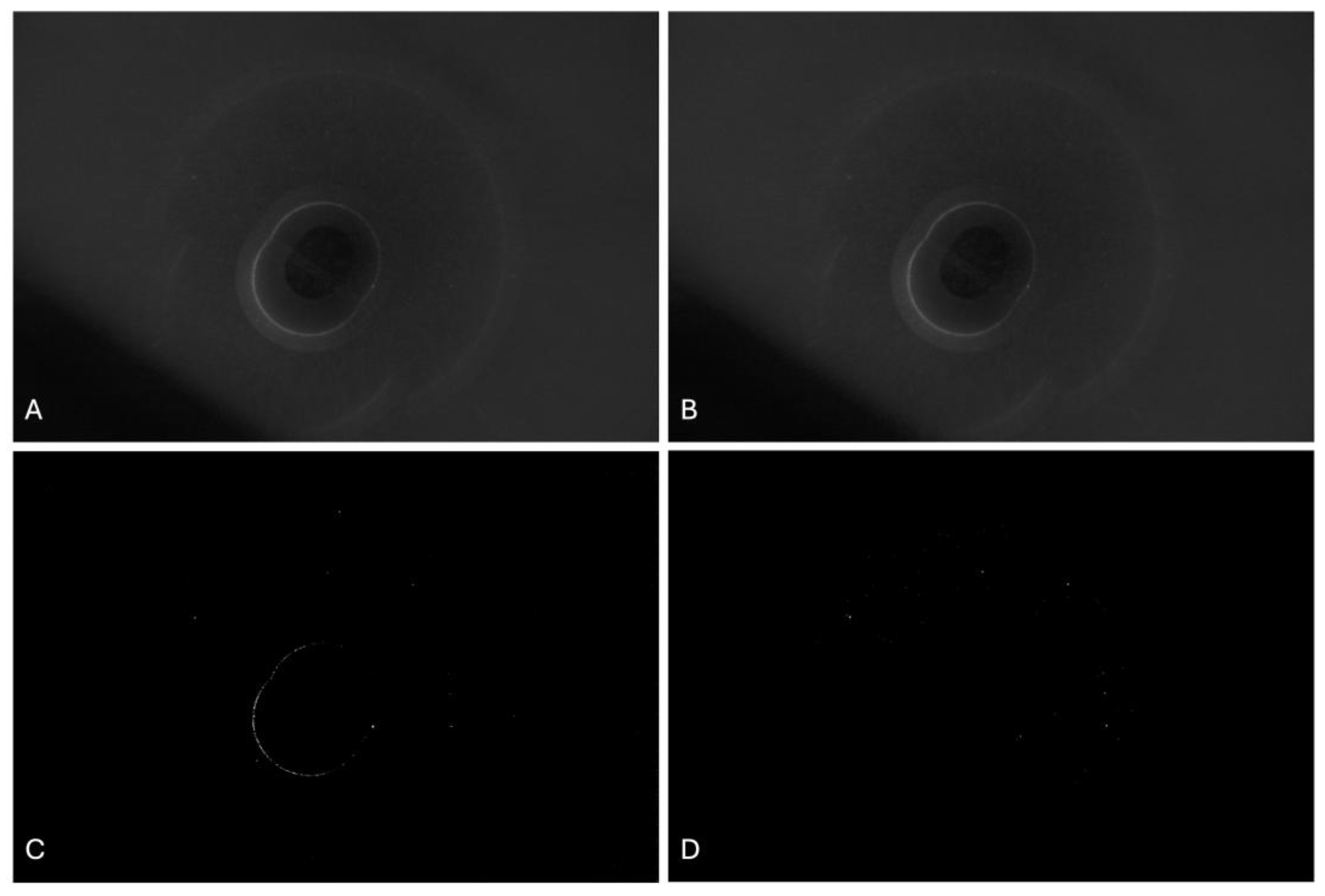
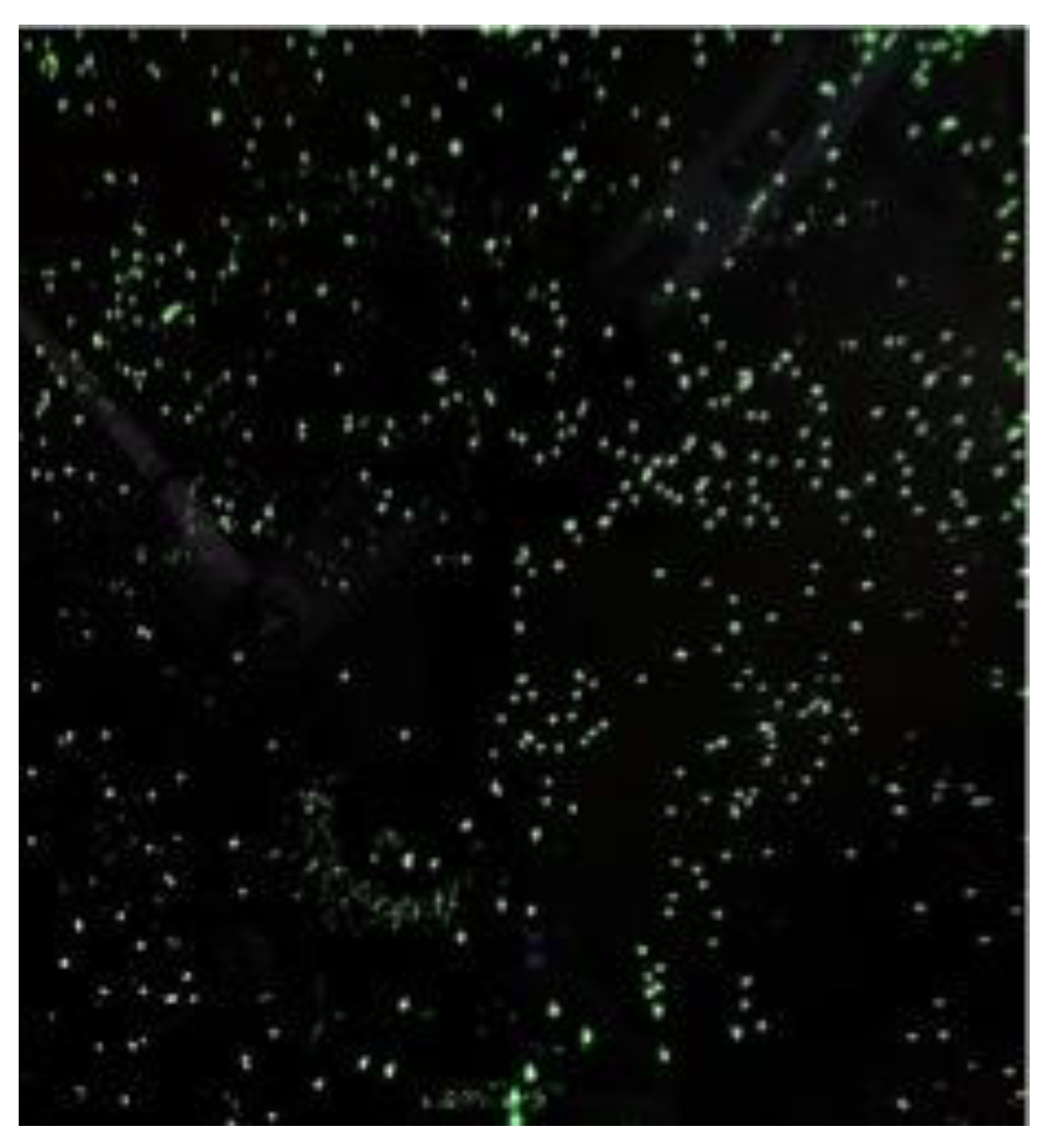
Particle detection and counting: Particle extraction is performed by a standalone C++ application (pltfilter), orchestrated by the Python script. For each image, pltfilter first applies a user-configurable median filter to suppress sensor noise, followed by adaptive thresholding within a 31 × 31-pixel window to isolate bright particulate returns from ambient background illumination. A static mask removes the lower portion of the image corresponding to the interior of the PLT pressure housing. Connected-component analysis and morphological filtering are then applied to identify bright, approximately circular particulate “dots.” Detections are constrained by minimum and maximum pixel radius and area thresholds to suppress noise and non-physical artifacts. Each detection is stored as a row in a per-image comma-separated value (CSV) file containing pixel coordinates, subpixel centroids, dot area, morphological properties, and the image index. Some of the individual steps in the C++ pltfilter are discussed further below (see Figure 3).
(4)
Convert to grayscale: Because the Sony sensor uses color, the green channel is extracted and used as a grayscale image, and red and blue channels are ignored (a result of Bayer mask pixel density). In addition, the recorded image from the intensifier is shaded green from the phosphor of the intensifier amplification tube.
(5)
Median filter: Image sensor noise is present even at low gain and leads to single-pixel speckles or “salt and pepper” noise. Fortunately, at the shutter speeds and gain settings of the camera, and with high-gain amplification from the intensifier stage, the laser illumination makes the particulate ‘dots’ large and bright compared to any single-pixel noise. A median filter (3 pixels in width) removes any potential noise and makes thresholding (below) yield cleaner results.
(6)
Adaptive threshold: Thresholding maps grayscale pixel values to just black or white based upon whether the gray value is above or below a threshold value. While simple thresholding uses a single fixed value, adaptive thresholding uses a value based on the mean of the set of nearby values within a window around the pixel. Adaptive thresholding is used because raw images captured by PLT include ambient light that varies with depth and surface conditions. Ambient light may also vary across an individual image because of the wide-angle lens used for slice capture and the resulting different viewing directions for different parts of the image. The adaptive thresholding used has a window of 31 pixels and a bias of −9.
(7)
Dilate and erode. A pair of dilate and erode operations helps to fill in jagged borders around particulate dots or other shapes. This also compensates for any thresholding jitter where pixels just barely pass or don’t pass a threshold. Dilate and erode can also connect adjacent groups of dots that are part of the edge of a continuous shape, such as a piece of kelp or a fish. Once connected, the smoothed edge is more easily rejected during contour filtering (below). By using a pair of dilate and erode passes, the size of particulate dots does not change; the edges just become smoother. A single dilate-erode pair is done during processing.
(8)
Mask: The grayscale image is masked to remove portions of the image that cannot contain data or have potentially problematic data. For instance, masking removes the camera’s view of the PLT cylinder bottom in the center of each image, along with portions of each image containing laser optics and instrument mounting. Masking also removes portions of each image prone to internal reflections in shallow water that are caused by sunlight reflecting through the thick portion of the cylinder’s clear acrylic sidewalls.
(9)
Contour: The contouring step identifies bright regions surrounded by dark pixels. A particulate dot or the edge of a piece of kelp or other potential target all create contours. Each contour has a series of (x, y) pixel coordinates for a path around the edge of the bright region. This defines a 2D shape in the image slice. Each particulate dot or other target has its own contour.
(10)
Contour filter: The set of contours pulled from an image is filtered to remove contours that are unreasonably large, such as those for the edge of a piece of kelp or fish or extreme lighting artifacts, like sunlight glints when the PLT is at or near the surface. Filtering removes contours where the radius is too large or where the area within the contour is too large.
(11)
Integrate sensor log: The time-stamped sensor log containing PLT depth, orientation, temperature, pressure, internal state, etc., per image slice is read and integrated with image contours.
(12)
Save contours to a CSV file: The image’s contours are saved to a CSV file for the image slice. Each row in the CSV file is a contour and, presumably, a target of interest (i.e., particulate).
(13)
Aggregate CSV files for all images: Each image’s CSV contour file is concatenated to create a single AllParticles.CSV file. Columns in the file indicate the image slice, water depth, and other device sensor data for each particle contour found during the cast.
Because the processing steps above are fully parameterized, they can be modified for specific applications. For example, increasing the thresholds of the contouring filter allows the retention of larger features, like kelp, shown in Section 3.2. After the creation of the tabulated CSV file, the PLT data can then be visualized and further analyzed using commercial or open-source software (i.e., for the creation of secondary statistics as in the nearest neighbor analysis shown in Section 3.4.). This modular architecture enables the entire workflow—from raw shipboard data to depth-resolved particle catalogs—to be executed reproducibly, automatically, and at scale. The separation of staging, filtering, and summary generation simplifies debugging, supports batch processing over multiple casts, and ensures that the PLT data product is consistent across cruises, platforms, and evolving field configurations.

3. Testing and Field Deployment

3.1. Laboratory Testing

The PLT has been tested in a 1500 L laboratory tank, within the large 8 m deep Kelp Tank at the Stephen Birch Aquarium of Scripps Institution of Oceanography (SIO), in deployments off the SIO pier, and from both small watercraft and the R/V Beyster in the coastal waters off San Diego. In the laboratory tank, coastal water was mixed with varying densities and sizes of potential particulate targets (including plankton and biological fragments collected from the nearshore, brine shrimp in various life history stages, polystyrene microspheres, and terrigenous dust and sand particles).
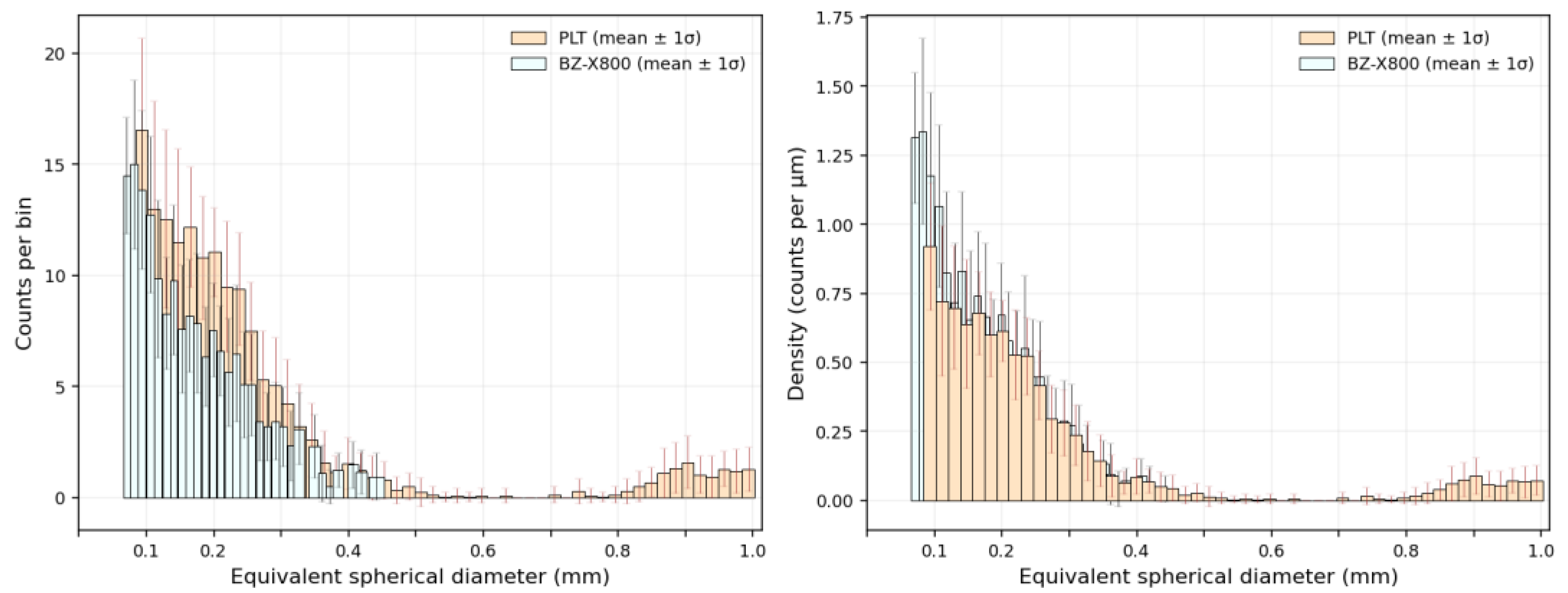
Tank water aliquots were manually analyzed for particle size frequency distribution using an automated fluorescence microscope (BZ-X800, Keyence, Osaka, Japan) and Keyence image analysis software (BZ-X800 Analyzer Ver. 1.1.30). These manual density estimates (n = 20) were compared to estimates obtained from the PLT suspended within the test tank (e.g., Figure 4) showing similar particle counts (note: the histogram bin sizes are not equal; PLT bins are quantized with pixel dimension, the microscope counts are in 10 µm bins and extend beyond the resolution of the PLT optics (~80 µm) and do not include the large particles imaged by the PLT). This laboratory comparison between PLT-derived particle counts and microscope measurements was intended as a qualitative validation of consistency rather than a formal calibration exercise. Differences between the two approaches are expected due to particle orientation effects, differences in effective sampling volume and depth-of-field, and threshold sensitivity near the lower detection limit (~100 µm). These factors contribute to larger relative uncertainty for smaller particles and improved agreement for larger size classes. Within these constraints, the PLT and microscope measurements exhibited comparable size-dependent trends and particle abundances. In addition to comparisons with manual microscope-counted estimates of particle size density, in order to repeatedly verify image focus, as well as the position and variation in laser sheet illumination across the PLT image slice, reusable ‘volumetric targets’ with a fixed distribution of particles of known size and position were used. These targets (3 cm thick and 20 cm square) were cast from transparent acrylic resin, with embedded polystyrene microspheres, and the microsphere distribution was digitized after the resin had cured (see Figure 5). Suspended in the test tank, the transparent volumetric targets were illuminated by the PLT laser sheet and easily movable to test and verify the optical performance of the system.
The toroidal light sheet generated by the axicon and conical reflector produces a spatially non-uniform illumination field within each imaged slice, with intensity varying as a function of distance from the illumination axis and azimuthal angle. In practice, this non-uniformity does not significantly affect particle detection or sizing. The PLT operates with high instantaneous irradiance, and particle identification relies on locally adaptive thresholding and binary contour extraction rather than absolute intensity values. As a result, particles remain well above the detection threshold (CCD sensor noise floor) across the imaged volume, and the measured particle size is determined by geometric contour area rather than brightness. Potential self-shadowing effects at elevated particle concentrations are expected to be negligible given the thin illuminated slice and the particle concentrations encountered in both laboratory and field deployments. Consistent with this expectation, no systematic spatial bias in particle counts or size distributions was observed. In addition, raw images were examined for evidence of sensor saturation or image-intensifier blooming, and none was observed under the exposure and gain settings used in this study. The image intensifier employs a fast-decay phosphor with a decay time much shorter than the 33 ms frame interval at the maximum 30 Hz sampling rate. Under the exposure and gain settings used in this study, no evidence of phosphor persistence, afterglow, or frame-to-frame contamination was observed in raw image sequences, even following strongly scattering particles or regions of elevated particle concentration.
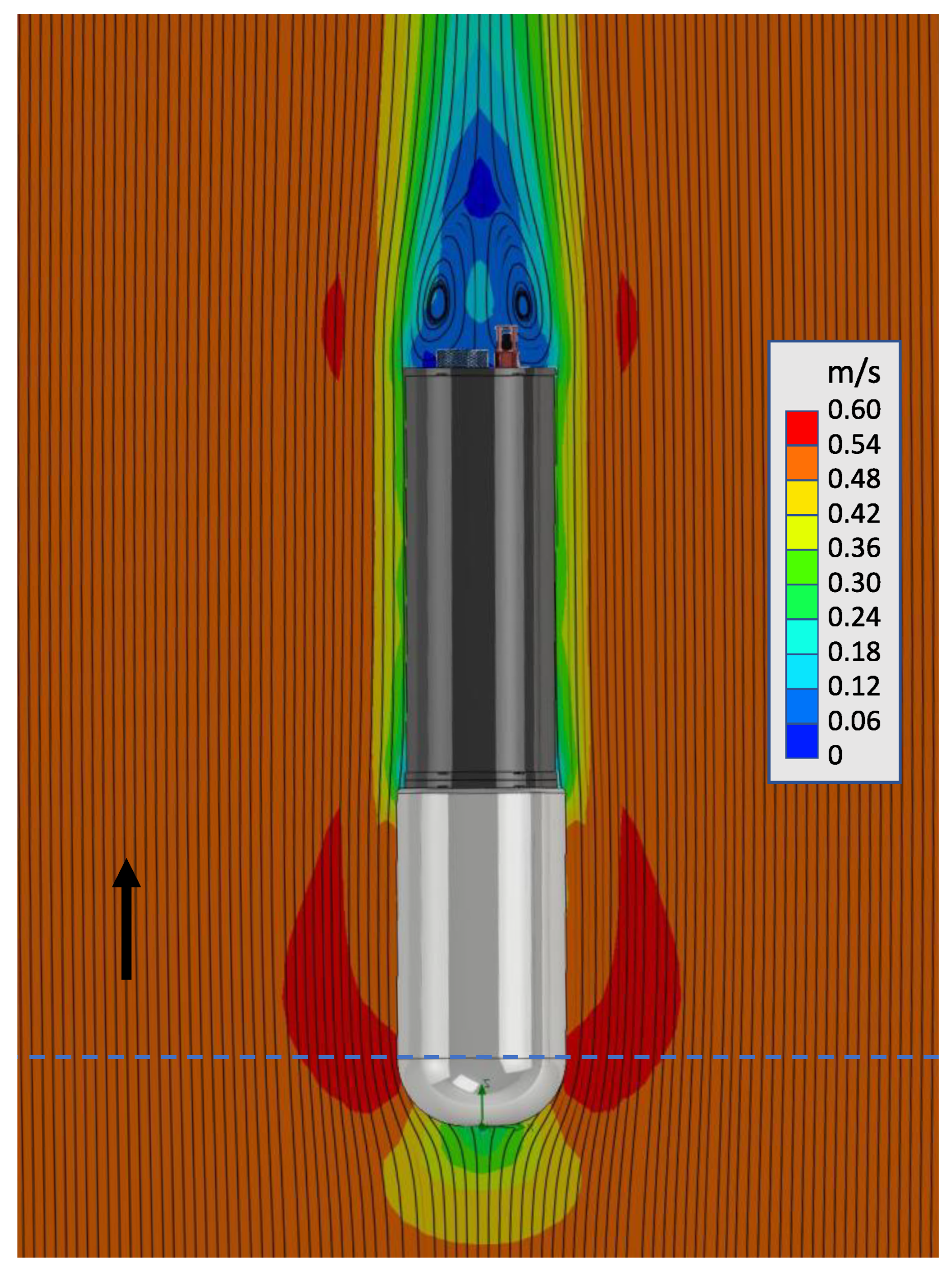
The PLT was designed to be deployed attached to the end of a lowered line, fixed alongside an oceanographic sensor package, or attached to a stationary mooring or submerged structures. Because the PLT imaging plane projects perpendicularly from its housing and the particles imaged can be influenced by fluid flow around the instrument, it is important that the PLT is positioned in unobstructed flow or near the leading edge of a moving body. The streamlined shape of the PLT helps reduce fluid turbulence in the imaging volume. Figure 6 shows a simulation of flow velocities and streamlines around the PLT moving at a moderate cast speed (0.5 m/s) using the computational fluid dynamics module within the SolidWorks (version 2025 SP1) engineering software package [84]. The flow around the instrument remains relatively laminar within mm of the optical window sidewall at flow speeds up to about 1.5 m/s, and as expected, forms low velocity eddies in its wake. Even at relatively high speeds (i.e., during a 60 m/s downcast from an oceanographic winch), the PLT is able to acquire in-focus imagery and data, due to the high, 0.6 ms, shutter speed of its image sensor.

3.2. Aquarium Testing

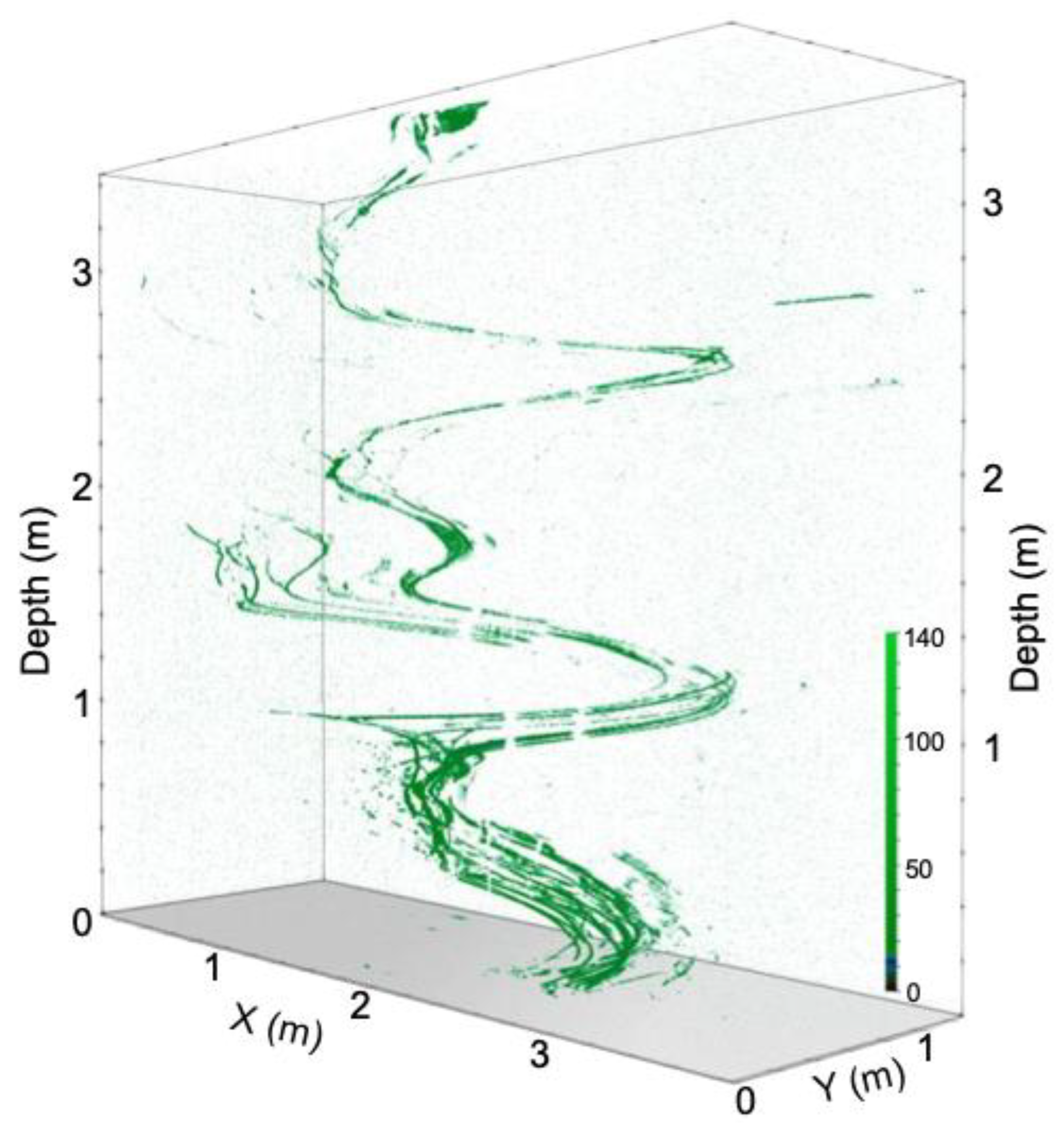
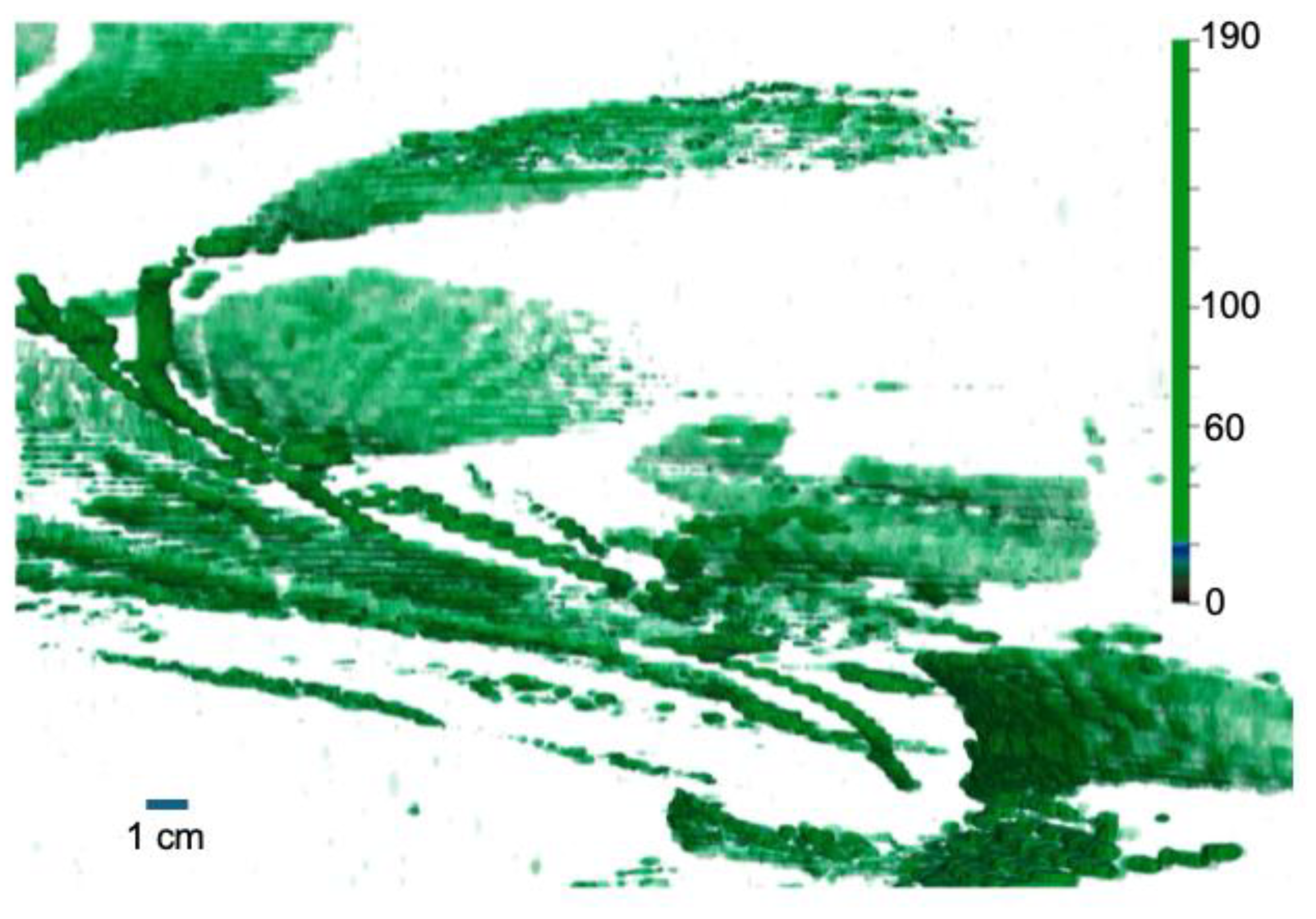
Figure 7 shows a 3D reconstruction from PLT data through one section of the kelp tank exhibit at the Birch Aquarium at SIO. The PLT was lowered by hand, and image data were recorded at 30 Hz. The central swirling rings are blades and stipes of Macrocystis kelp swaying within the tank as the PLT moved past. The surrounding haze shows suspended particulate matter. A close-up of the kelp blade detail is shown, reconstructed from a side view in Figure 8, illustrating the blade exterior structure and nearby particulate.

3.3. Field Testing (Fixed Mooring)

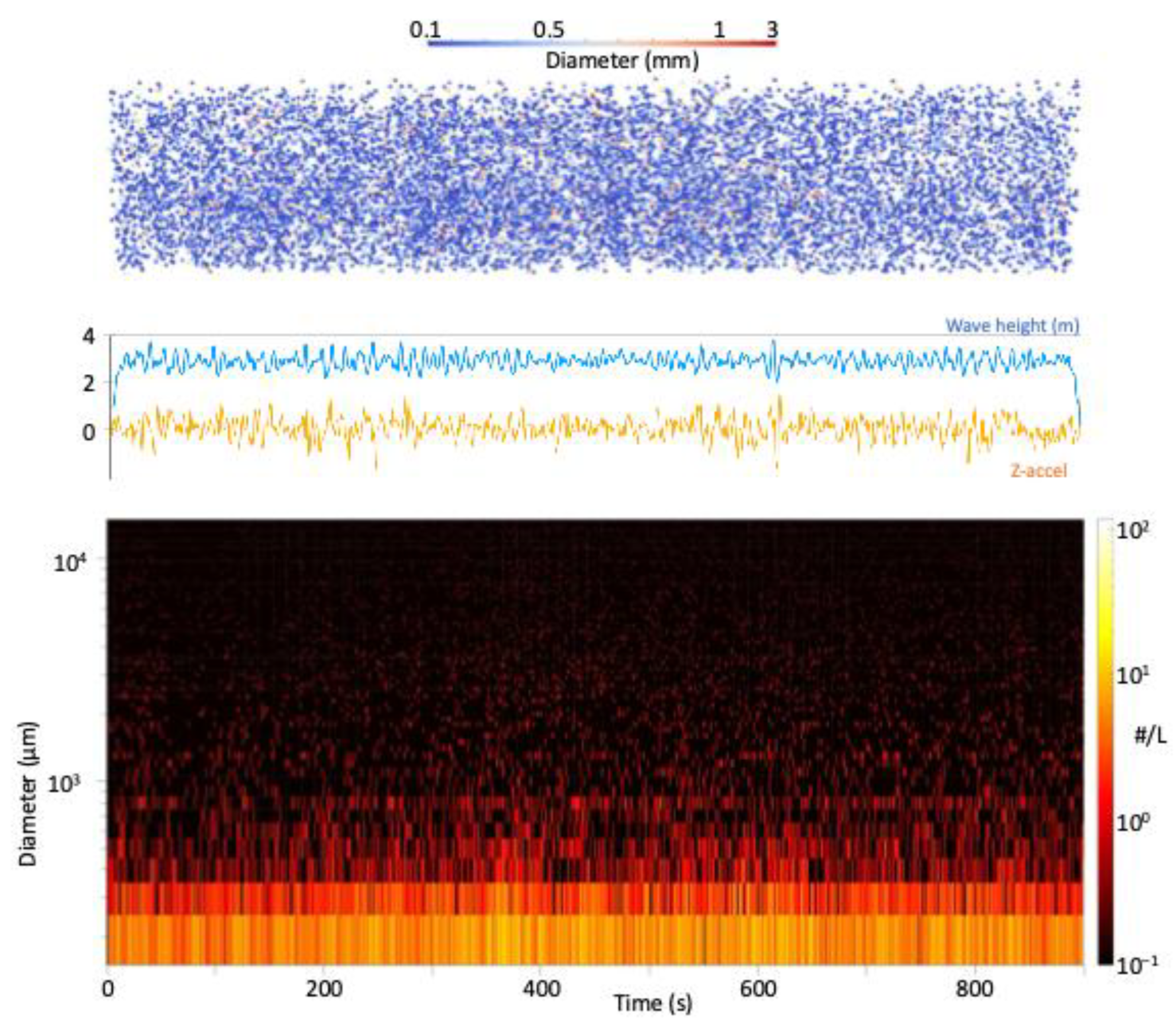
Figure 9 shows a PLT data excerpt sampling at 0.5 Hz from a stationary deployment at 8 m depth in the well-mixed water, approximately 100 m west of the breaking surf zone off the SIO pier. In the top panel, the well-mixed and small-size-dominated particulate (≤200 µm diameter) is evident, as it is in the number-size spectrogram in the bottom panel. The central panel illustrates some synchronized PLT environmental sensor metrics during the time series, including wave height (calculated from the PLT pressure sensor) and the z-axis acceleration (relative to 1 g). The uniformity of the water column particulate size spectrum is expected in the turbulent and stirred water adjacent to the breaking surf zone with a 3 m swell. It should be noted that because the PLT uses a relatively large plexiglass imaging port, it is susceptible to biofouling, and any long-term deployment will require some mechanism for biofouling mitigation.

3.4. Field Testing (Open Ocean)

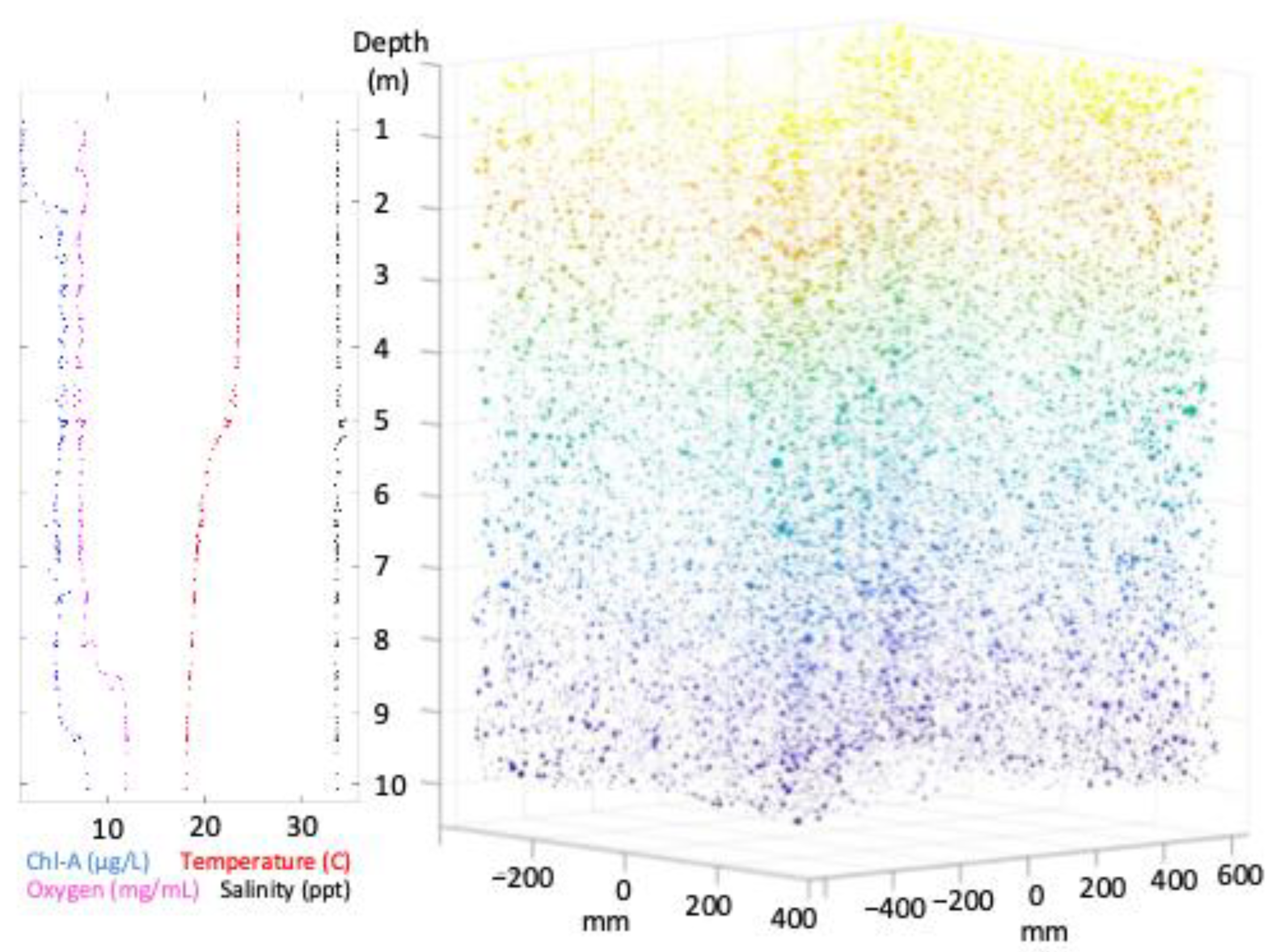
A higher sampling rate (30 Hz) data reconstruction in well-mixed surface waters offshore the SIO pier to 10 m depth is shown in Figure 10. The right panel illustrates the distribution of suspended particles within the 3D volume traversed by the PLT. The number of particles illustrated has been decimated by a factor of 25 to differentiate the particles in the plot and allow the data to be visualized (the total number of counted particles is >>106). The rendered dot size represents the equivalent spherical radius of the particulate and varies with the size of the particle (scaled by a factor of 5) from 102 to 104 µm. A color gradient (yellow near the surface to violet at 10 m) has been added to aid visualization. The left panel shows coincident sensor data from the PLT mounted alongside a typical CTD (Sea-bird Electronics SBE-19, SBE-43 oxygen sensor, ECO fluorometer, Bellevue, USA), illustrating chl-A (µg/L), oxygen concentration (mg/mL), salinity (ppt), and temperature (C) vs. depth (m). Although large targets are usually excluded during image processing through contour filtering, occasional incidental targets can be preserved and may be identified. For example, on several occasions, the pelagic red crab, Pleuroncodes planipes, was imaged accidentally by the PLT during water column profiling. With the ability to adjust the contour thresholding, there is potential for using the PLT to study suspended particulate distributions and interactions around biogenic and other structures (i.e., Figure 7 and Figure 8) or for the study of comparatively slow-moving, larger pelagic organisms. Potential targets that are difficult to image with standard video techniques may be imaged using the laser backscatter from the PLT, with the possibility to render structures and targets composed of translucent or gelatinous materials, like coral polyps and gelatinous macrozooplankton.
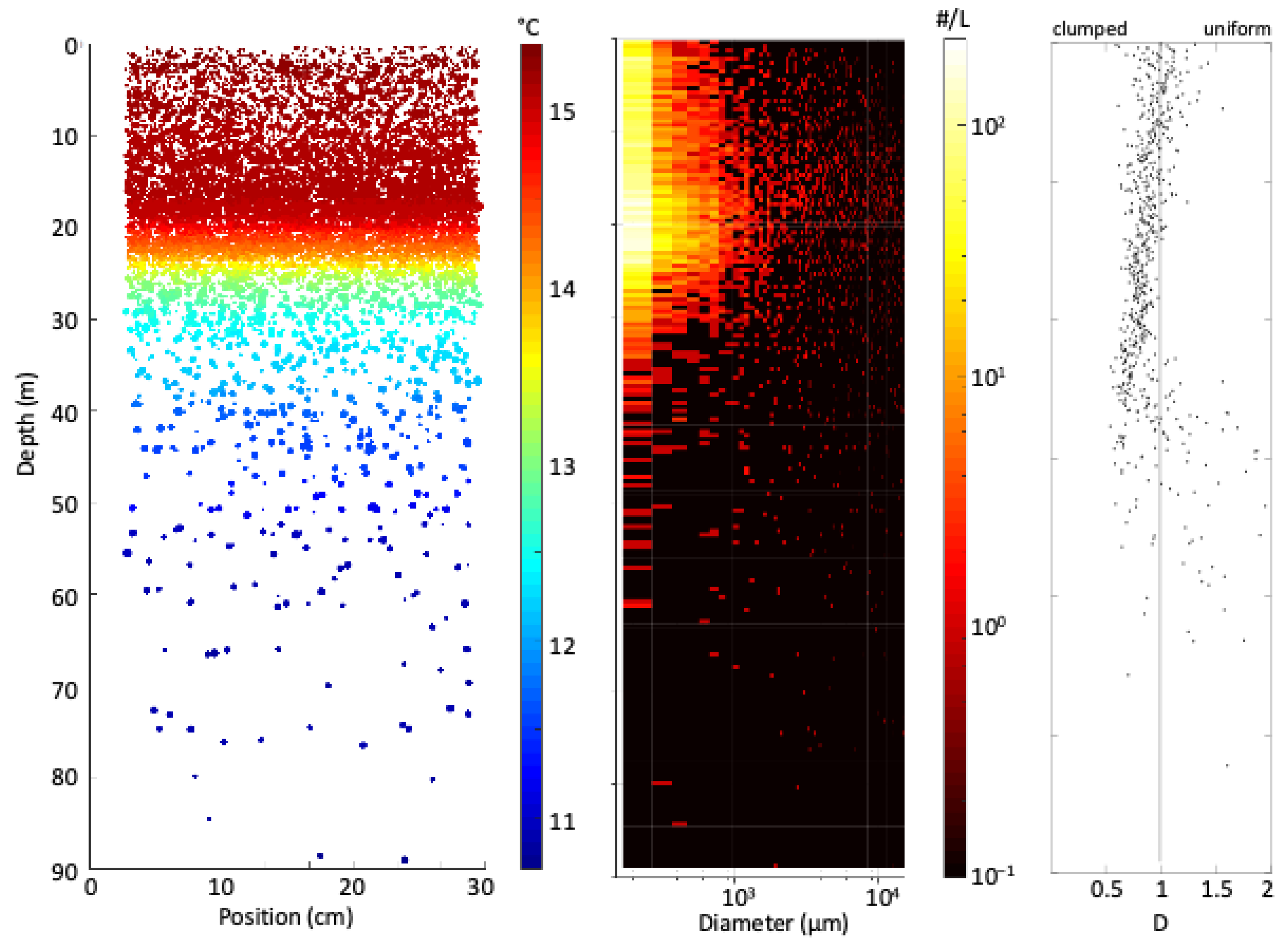
PLT data from a 90 m deep cast off-shore San Diego from the R/V Beyster is shown in Figure 11. The left panel illustrates the particulate density variation with depth and temperature. The increasing concentration of suspended particles through the thermocline is evident. The number of particles visualized has been decimated (plotting all data creates an illegible figure), and particles are plotted as their scaled equivalent spherical radius. The Cartesian plotting of the particle data in this view is a result of ‘unwrapping’ the raw PLT coordinate data from the original toroidal image and plotting them as a radial position from the central axis vs. the depth of the sample image slice. The center panel shows the number concentration spectrogram emphasizing the dominance of small particles < 1 mm above and within the thermocline. The right panel shows a secondary spatial statistic, D (nearest neighbor ratio analysis [85]), calculated from PLT data, which describes the degree of particle patchiness vs. depth in each tomographic slice. The dimensionless ratio < 1 indicates clumping in particle distributions and >1 suggests more uniform spatial distributions. Open ocean testing has validated the utility of the PLT as a tool for examining the dynamics of particle distributions in a more complex oceanographic setting.

3.5. Additional Modifications

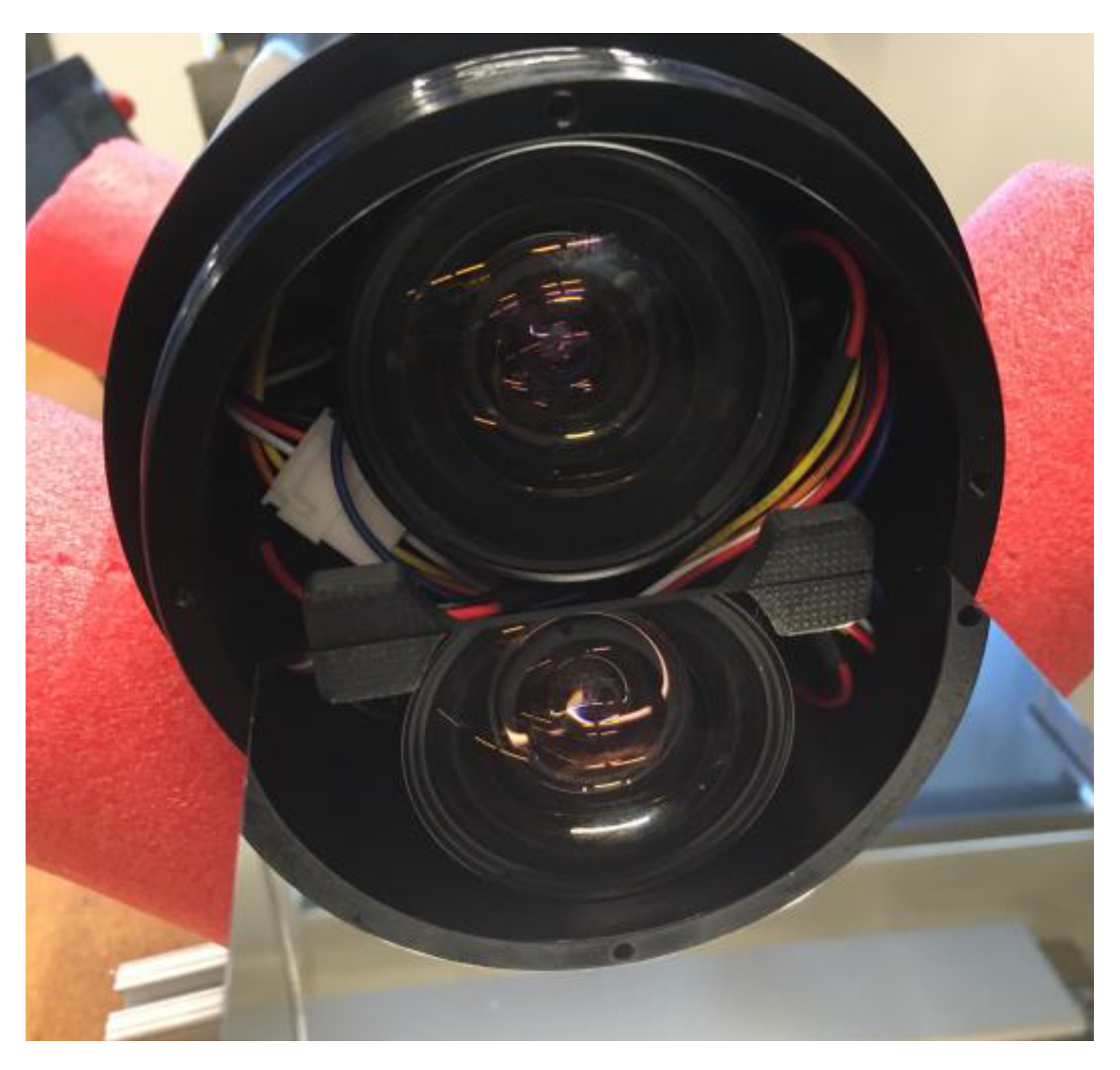
The PLT design is being modified and tested to extend its capabilities. A first-surface mirror can be inserted into the optical pathway within the acrylic cylinder, typically masked from analysis. Positioned perpendicular to the objective lens, it provides a reflective overlapping view of a quadrant of the primary imaging plane (Figure 12) and effectively forms a potential second channel of image data. Replacing the 532 nm laser illumination with a 405 nm laser source and appropriately filtering the reflected virtual image allows the detection of, for example, the fluorescence emission of chlorophyll a at 695 nm. This would bring the fluorescence capabilities of PILF/FIDO-Φ and the ability to further differentiate particle type into a much more compact and versatile device.

4. Discussion

Like the UVP5, 6, and other previous optical instruments, the PLT provides a tool for marine scientists to study the dynamics of suspended particulate matter [86]. Unlike instrumentation designed for more detailed imaging and identification of individual plankton, the small and lightweight PLT can provide an estimate of the particle size distribution (larger than about 80 µm diameter) of comparatively large volumes of water (O 1000’s m3). Even though the PLT was designed to study small, suspended particles, it is also capable of imaging larger targets in the water column because it captures backscattered laser light from anything reflective passing through the illuminated tomographic sampling volume. Used in this way, it could facilitate the study of particle flux around stationary objects on the sea floor (like rocks, corals, or kelps, for example) or study the distribution of some of the larger, slow-moving plankton or gelatinous organisms. Although it is limited by its present power supply to ~20 h of continuous operation, it is well suited for autonomous operation alongside a CTD and for short-duration (<24 h) moored deployments, or short-duration AUV or ROV missions with high sampling rates. Its small size and form factor enable the PLT to be easily deployed for shallow (400 m max depth) casts of the water column, providing estimates of suspended particle size distributions with depth and temperature, or incorporated into more complex suites of oceanographic instrumentation, and its compact size allows it to be positioned close to submerged structures. In contrast to the PLT, the ultralow power operation of the UVP6-LP allows long-duration deployments from remote systems like Argo and other profiling floats. In the future, it would be instructive to perform a synchronous PLT deployment alongside a UVP, or other commercial instrument, to compare its measured density data with a more established observational methodology. Together, these new tools will allow researchers to develop new classes of scientific questions around the flux of particulates among water masses, particle vertical distributions and stratification in lakes, rivers, coastal and open ocean settings, and particle export and export carbon flux, all with a spatial and temporal resolution not previously possible.

Author Contributions

Conceptualization, M.D.S. and D.R.N.; methodology, M.D.S. and D.R.N.; software, M.D.S. and D.R.N.; validation, M.D.S. and J.J.L.; investigation, M.D.S. and J.J.L.; data curation, M.D.S.; writing—original draft preparation, M.D.S. and D.R.N.; writing—review and editing, M.D.S., J.J.L., and D.R.N.; All authors have read and agreed to the published version of the manuscript.

Funding

This research was funded by the National Science Foundation, grant OTIC 1924467, and support from the Seaver Institute to the authors for the design and construction of the PLT.

Data Availability Statement

The raw data supporting the conclusions of this article will be made available by the authors on request. All software, firmware and CAD designs used by the PLT are open source and available in a GitHub repository at https://github.com/dstokes-SIO/Pelagic-Laser-Tomographer (accessed on 10 January 2026).

Acknowledgments

The authors would like to thank Captain Brett Pickering for his assistance with PLT deployments from the R/V Beyster, Robert Kildy, and the staff at the SIO Marine Science Development Center, and Grant Deane for help with PLT fabrication and conceptualization.

Conflicts of Interest

The authors declare no conflicts of interest. The funders had no role in the design of the study; in the collection, analyses, or interpretation of data; in the writing of the manuscript; or in the decision to publish the results.

Abbreviations

The following abbreviations are used in this manuscript:
PLTPelagic Laser Tomographer
SIOScripps Institution of Oceanography
CTDConductivity Temperature Depth
AUVAutonomous Underwater Vehicle
ROV Remotely Operated Vehicle
VPRVideo Plankton Recorder
UVPUnderwater Vision Profiler
PILFPlanar Imaging Laser Fluorometer
GPSGlobal Positioning System
VTKVisualization ToolKit
CSVComma-Separated Values

References

  1. Anderson, R.F.; Hayes, C.T. Characterizing marine particles and their impact on biogeochemical cycles in the GEOTRACES program. Prog. Oceanogr. 2015, 133, 1–5. [Google Scholar] [CrossRef]
  2. Broecker, W.S. Ocean chemistry during glacial time. Geochim. Cosmochim. Acta 1982, 46, 1698–1705. [Google Scholar] [CrossRef]
  3. Jeandel, C.; Rutgers van der Loeff, M.; Lam, P.J.; Roy-Barman, M.; Sherrell, R.M.; Kretschmer, S.; German, C.R.; Dehairs, F. What did we learn on the oceanic particle dynamic from the GEOSECS–JGOFS times? Prog. Oceanogr. 2015, 133, 6–16. [Google Scholar] [CrossRef]
  4. Nowald, N.; Iversen, M.H.; Fischer, G.; Ratmeyer, V.; Wefer, G. Time series of in-situ particle properties and sediment trap fluxes in the coastal upwelling filament off Cape Blanc, Mauritania. Prog. Oceanogr. 2015, 137, 1–11. [Google Scholar] [CrossRef]
  5. Fowler, S.W.; Knauer, G.A. Role of large particles in the transport of elements and organic compounds through the oceanic water column. Prog. Oceanogr. 1986, 16, 147–194. [Google Scholar] [CrossRef]
  6. Stemmann, L.; Eloire, D.; Sciandra, A.; Jackson, G.A.; Guidi, L.; Picheral, M.; Gorsky, G. Volume distribution for particles between 3.5 to 2000 µm in the upper 200 m region of the South Pacific Gyre. Biogeosciences 2008, 5, 299–310. [Google Scholar] [CrossRef]
  7. Stemmann, L.; Boss, E. Plankton and particle size and packaging: From determining optical properties to driving the biological pump. Annu. Rev. Mar. Sci. 2012, 4, 263–290. [Google Scholar] [CrossRef] [PubMed]
  8. Benfield, M.C.; Grosjean, C.; Culverhouse, P.F.; Irigolen, X.; Sieracki, M.; Lopez-Urrutia, A.; Dam, H.; Hu, Q.; Davis, C.; Hanson, A.; et al. Rapid: Research on automated plankton identification. Oceanography 2007, 20, 172–187. [Google Scholar] [CrossRef]
  9. Blondel, P. Bio- and fishery acoustics. In Applied Underwater Acoustics, 1st ed.; Bjorno, L., Neighbors, T., Bradley, D., Eds.; Elsevier: Amsterdam, The Netherlands, 2017; pp. 809–855. [Google Scholar]
  10. Boss, E.; Guidi, L.; Richardson, M.; Stemmann, L.; Gardner, W.; Bishop, J.K.; Anderson, R.F.; Sherrell, R.M. Optical techniques for remote and in-situ characterization of particles pertinent to GEOTRACES. Prog. Oceanogr. 2015, 133, 10–26. [Google Scholar] [CrossRef]
  11. McDonnell, A.M.; Lam, P.J.; Lamborg, C.H.; Buesseler, K.O.; Sanders, R.; Riley, J.S.; Bishop, J.K. The oceanographic toolbox for the collection of sinking and suspended marine particles. Prog. Oceanogr. 2015, 133, 17–31. [Google Scholar] [CrossRef]
  12. Sieracki, M.E.; Benfield, M.; Hanson, A.; Davis, C.; Pilskaln, C.H.; Checkley, D.; Lopes, R. Optical plankton imaging and analysis systems for ocean observation. In Proceedings of the OceanObs’09, Venice, Italy, 21–25 September 2009. [Google Scholar]
  13. Wiebe, P.H.; Benfield, M.C. From the Hensen net toward four-dimensional biological oceanography. Prog. Oceanogr. 2003, 56, 11–19. [Google Scholar] [CrossRef]
  14. Foote, K.F.; Stanton, T.K. Acoustical methods. In ICES Zooplankton Methodology Manual; Harris, R.P., Wiebe, P.H., Lenz, J., Skjodal, H.R., Huntley, M., Eds.; Academic Press: London, UK, 2000. [Google Scholar]
  15. Jaffe, J.S.; Franks, P.J.S.; Leising, A.W. Simultaneous imaging of phytoplankton and zooplankton distributions. Oceanography 1998, 11, 24–29. [Google Scholar] [CrossRef]
  16. Jaffe, J.S.; Reuss, E.; McGehee, D.; Chandran, G. FTV: A sonar for tracking macrozooplankton in three dimensions. Deep-Sea Res. I 1995, 42, 1495–1512. [Google Scholar] [CrossRef]
  17. Jaffe, J.S.; Ohman, M.D.; De Robertis, A. OASIS in the sea: Measurement of the acoustic reflectivity of zooplankton with concurrent optical imaging. Deep-Sea Res. II 1998, 45, 1239–1253. [Google Scholar] [CrossRef]
  18. Wiebe, P.H.; Stanton, T.K.; Benfield, M.C.; Mountain, D.G.; Greene, C.H. High-frequency acoustic volume backscatter in the Georges Bank coastal region and its interpretation using scattering models. IEEE J. Ocean. Eng. 1997, 22, 445–464. [Google Scholar] [CrossRef]
  19. Wiebe, P.H.; Stanton, T.K.; Greene, C.H.; Benfield, M.C.; Sosik, H.M.; Austin, T.C.; Warren, J.D.; Hammer, T. BIOMAPER-II: An integrated instrument platform for coupled biological and physical measurements in coastal and oceanic regimes. IEEE J. Ocean. Eng. 2002, 27, 1123–1129. [Google Scholar] [CrossRef]
  20. Burt, W.V. Selective transmission of light in tropical Pacific waters. J. Mar. Res. 1958, 5, 51–61. [Google Scholar] [CrossRef]
  21. Jerlov, N. Optical Oceanography; Elsevier Oceanography Series; Elsevier: Amsterdam, The Netherlands, 1968; Volume 5. [Google Scholar]
  22. Sheldon, R.W.; Prakash, A.; Sutcliffe, W.H. The size distribution of particles in the ocean. Limnol. Oceanogr. 1972, 17, 327–340. [Google Scholar] [CrossRef]
  23. Falkowski, P.G.; Barber, R.T.; Smetacek, V. Biogeochemical controls and feedbacks on ocean primary production. Science 1998, 281, 200–206. [Google Scholar] [CrossRef]
  24. Azam, F. Microbial control of oceanic carbon flux: The plot thickens. Science 1998, 280, 694–696. [Google Scholar] [CrossRef]
  25. Buesseler, K.O.; Lamborg, C.H.; Boyd, P.W.; Lam, P.J.; Trull, T.W.; Bidigare, R.R.; Bishop, J.K.B.; Casciotti, K.L.; Dehairs, F.; Elskens, M.; et al. Revisiting carbon flux through the ocean’s twilight zone. Science 2007, 316, 567–570. [Google Scholar] [CrossRef]
  26. Kostadinov, T.S.; Siegel, D.A.; Maritorena, S. Retrieval of the particle size distribution from satellite ocean color observations. J. Geophys. Res. Oceans 2009, 114, C09015. [Google Scholar] [CrossRef]
  27. Herman, A.W. Simultaneous measurement of zooplankton and light attenuance with a new optical plankton counter. Cont. Shelf Res. 1988, 8, 205–221. [Google Scholar] [CrossRef]
  28. Herman, A.W. Design and calibration of a new optical plankton counter capable of sizing small zooplankton. Deep-Sea Res. 1992, 39, 395–415. [Google Scholar] [CrossRef]
  29. Herman, A.W. A review of the optical plankton counter and an introduction to the next generation of laser-optical plankton counters. In Report of the Optical Plankton Counter Workshop; International GLOBEC Program Report; Springer: Tromsø, Norway, 2001; pp. 4–7. [Google Scholar]
  30. Beaulieu, S.E.; Mullin, M.M.; Tang, V.T.; Pyne, S.M.; King, A.L.; Twining, B.S. Using the optical plankton counter to determine the size distributions of preserved zooplankton samples. J. Plankton Res. 1999, 21, 1939–1956. [Google Scholar] [CrossRef][Green Version]
  31. Checkley, D. Investigations of zooplankton of the California Current region by using the laboratory and in situ OPC. In Report of the Optical Plankton Counter Workshop; International GLOBEC Program Report: Tromsø, Norway, 2001; pp. 36–42. [Google Scholar]
  32. Mullin, M.M.; Checkley, D.M.; Thimgan, M.P. Temporal and spatial variation in the sizes of California Current macrozooplankton: Analysis by optical plankton counter. Prog. Oceanogr. 2003, 57, 299–316. [Google Scholar] [CrossRef]
  33. Heath, M.R. Size spectrum dynamics and the planktonic ecosystem of Loch Linnhe. ICES J. Mar. Sci. 1995, 52, 627–642. [Google Scholar] [CrossRef]
  34. Heath, M.R. The ascent migration of Calanus finmarchicus from overwintering depths in the Faroe-Shetland Channel. Fish. Oceanogr. 1999, 8, 84–99. [Google Scholar] [CrossRef]
  35. Sprules, W.G. Spatial estimates of prey consumption by Mysis relicta using an optical plankton counter. Verh. Int. Ver. Limnol. 2002, 27, 3275–3278. [Google Scholar] [CrossRef]
  36. Sprules, W.G.; Jin, E.H.; Herman, A.W.; Stockwell, J.D. Calibration of an optical plankton counter for use in fresh water. Limnol. Oceanogr. 1998, 43, 726–733. [Google Scholar] [CrossRef]
  37. Huntley, M.E.; Zhou, M.; Nordhausen, W. Mesoscale distribution of zooplankton in the California Current in late spring, observed by optical plankton counter. J. Mar. Res. 1995, 53, 647–674. [Google Scholar] [CrossRef]
  38. Zhou, M.; Huntley, M.E. Population dynamics theory of plankton based on biomass spectra. Mar. Ecol. Prog. Ser. 1997, 159, 61–73. [Google Scholar] [CrossRef]
  39. Zhou, M.; Zhu, Y.; Putnam, S.; Peterson, J.O. Mesoscale variability of physical and biological fields in southeastern Lake Superior. Limnol. Oceanogr. 2001, 46, 679–688. [Google Scholar] [CrossRef]
  40. Zhang, X.; Roman, M.; Sanford, A.; Adolf, H.; Lascara, C.; Burgett, R. Can an optical plankton counter produce reasonable estimates of zooplankton abundance and biovolume in water with high detritus? J. Plankton Res. 2000, 22, 137–150. [Google Scholar] [CrossRef][Green Version]
  41. Herman, A.W.; Beanlands, B.; Phillips, E.F. The next generation of optical plankton counter: The laser-OPC. J. Plankton Res. 2004, 26, 1135–1145. [Google Scholar] [CrossRef]
  42. Olson, R.J.; Vaulot, D.; Chisholm, S.W. Marine phytoplankton distributions measured using shipboard flow cytometry. Deep Sea Res. A 1985, 32, 1273–1280. [Google Scholar] [CrossRef]
  43. Gason, J.M.; Del Giorgio, P.A. Using flow cytometry for counting natural planktonic bacteria and understanding the structure of planktonic bacterial communities. Sci. Mar. 2000, 64, 197–224. [Google Scholar] [CrossRef]
  44. Davis, C.S.; Gallager, S.M.; Solow, A.R. Microaggregations of oceanic plankton observed by towed video microscopy. Science 1992, 257, 231–234. [Google Scholar] [CrossRef] [PubMed]
  45. Davis, C.S.; Gallager, S.M.; Marra, M.; Stewart, W.K. Rapid visualization of plankton abundance and taxonomic composition using the video plankton recorder. Deep Sea Res. II 1996, 43, 1947–1970. [Google Scholar] [CrossRef]
  46. Davis, C.B.; Thwaites, F.T.; Gallagher, S.M.; Hu, Q. A three-axis fast-tow digital video-plankton recorder for rapid surveys of plankton taxa and hydrography. Limnol. Oceanogr. Methods 2005, 3, 59–74. [Google Scholar] [CrossRef]
  47. Benfield, M.C.; Schwehm, C.J.; Keenan, S.F. ZOOVIS: A high resolution digital camera system for quantifying zooplankton abundance and environmental data. In Proceedings of the ASLO Aquatic Sciences Meeting, Albuquerque, NM, USA, 12–17 February 2001; pp. 12–17. [Google Scholar]
  48. Bi, H.; Cook, S.; Yu, H.; Benfield, M.C.; Houde, E.D. Deployment of an imaging system to investigate fine-scale spatial distribution of early life stages of the ctenophore Mnemiopsis leidyi in Chesapeake Bay. J. Plankton Res. 2012, 35, 270–280. [Google Scholar] [CrossRef]
  49. Bi, H.; Guo, Z.; Benfield, M.C.; Fan, C.; Ford, M.; Shahrestani, S.; Sieracki, J.M. A semi-automated image analysis procedure for in situ plankton imaging systems. PLoS ONE 2015, 10, e0127121. [Google Scholar] [CrossRef]
  50. Cowen, R.K.; Guigand, C.M. In situ ichthyoplankton imaging system (ISIIS): System design and preliminary results. Limnol. Oceanogr. Methods 2008, 6, 126–132. [Google Scholar] [CrossRef]
  51. Greer, A.T.; Woodson, C.B.; Smith, C.E.; Guigand, C.M.; Cowen, R.K. Examining mesozooplankton patch structure and its implications for trophic interactions in the northern Gulf of Mexico. J. Plankton Res. 2016, 38, 1115–1134. [Google Scholar] [CrossRef]
  52. Checkley, D.M.; Davis, R.E.; Herman, A.W.; Jackson, G.A.; Beanlands, B.; Regier, L.A. Assessing plankton and other particles in situ with the SOLOPC. Limnol. Oceanogr. 2008, 53, 2123–2136. [Google Scholar] [CrossRef]
  53. Colas, F.; Tardivel, M.; Perchoc, J.; Lunven, M.; Forest, B.; Guyader, G.; Danielou, M.; Le Mestre, S.; Bourriau, P.; Antajan, E.; et al. The ZooCAM, a new in-flow imaging system for fast onboard counting, sizing and classification of fish eggs and metazooplankton. Prog. Oceanogr. 2017, 166, 54–65. [Google Scholar] [CrossRef]
  54. Dominguez-Caballero, J.A.; Loomis, N.; Li, W.; Hu, Q.; Milgram, J.; Barbastathis, G.; Davis, C. Advances in plankton imaging using digital holography. In Digital Holography and Three-Dimensional Imaging; Paper DMB5; Optical Society of America: Washington, DC, USA, 2007. [Google Scholar]
  55. Espinasse, B.; Basedow, S.; Schultes, S.; Zhou, M.; Berline, L.; Carlotti, F. Conditions for assessing zooplankton abundance with LOPC in coastal waters. Prog. Oceanogr. 2017, 163, 260–270. [Google Scholar] [CrossRef]
  56. Herman, A.W.; Beanlands, B.; Chin-Yee, M.; Furlong, A.; Snow, J.; Young, S.; Phillips, E.F. The Moving Vessel Profiler (MVP): In-situ sampling of plankton and physical parameters at 12 kn and integration of a new laser/optical plankton counter. Oceanology 1998, 102, 123–135. [Google Scholar]
  57. Lombard, F.; Boss, E.; Waite, A.M.; Vogt, M.; Uitz, J.; Stemmann, L.; Sosik, H.M.; Schulz, J.; Romagnan, J.-B.; Picheral, M.; et al. Globally consistent quantitative observations of planktonic ecosystems. Front. Mar. Sci. 2019, 6, 196. [Google Scholar] [CrossRef]
  58. Hirche, H.J.; Barz, K.; Ayon, P.; Schulz, J. High resolution vertical distribution of the copepod Calanus chilensis in relation to the shallow oxygen minimum zone off northern Peru using LOKI, a new plankton imaging system. Deep Sea Res. I 2014, 88, 63–73. [Google Scholar] [CrossRef]
  59. Le Bourg, B.; Cornet-Barthaux, V.; Pagano, M.; Blanchot, J. FlowCAM as a tool for studying small (80–1000 µm) metazooplankton communities. J. Plankton Res. 2015, 37, 666–670. [Google Scholar] [CrossRef]
  60. Lunven, M.; Gentien, P.; Kononen, K.; Le Gall, E.; Danielou, M.M. In situ video and diffraction analysis of marine particles. Estuar. Coast. Shelf Sci. 2003, 57, 5–6, 1127–1137. [Google Scholar] [CrossRef]
  61. Lunven, M.; Landeira, J.M.; Lehaitre, M.; Siano, R.; Podeur, C.; Daniélou, M.M.; Le Gall, E.; Gentien, P.; Sourisseau, M. In situ video and fluorescence analysis (VFA) of marine particles: Applications to phytoplankton ecological studies. Limnol. Oceanogr. Methods 2012, 10, 807–823. [Google Scholar] [CrossRef]
  62. Romagnan, J.B.; Aldamman, L.; Gasparini, S.; Nival, P.; Aubert, A.; Jamet, J.L.; Stemmann, L. High frequency mesozooplankton monitoring: Can imaging systems and automated sample analysis help us describe and interpret changes in zooplankton community composition and size structure—An example from a coastal site. J. Mar. Syst. 2016, 162, 18–28. [Google Scholar] [CrossRef]
  63. Yourassowsky, C.; Dubois, F. High throughput holographic imaging-in-flow for the analysis of a wide plankton size range. Opt. Express 2014, 22, 6661–6673. [Google Scholar] [CrossRef] [PubMed]
  64. Gorsky, G.; Aldorf, C.; Cotta, S.; Stemmann, L.; Picheral, M. Dynamics and assessment of suspended particles in the water column. In Proceedings of the 4th National Symposium on Oceanography and Fisheries, Athens, Greece, 26–29 April 1993; pp. 318–321. [Google Scholar]
  65. Picheral, M.; Guidi, L.; Stemmann, L.; Karl, D.M.; Iddaoud, G.; Gorsky, G. The Underwater Vision Profiler 5: An advanced instrument for high spatial resolution studies of particle size spectra and zooplankton. Limnol. Oceanogr. Methods 2010, 8, 462–473. [Google Scholar] [CrossRef]
  66. Picheral, M.; Catalano, C.; Brousseau, D.; Claustre, H.; Coppola, L.; Leymarie, E.; Coindat, J.; Dias, F.; Fevre, S.; Guidi, L.; et al. The Underwater Vision Profiler 6: An imaging sensor of particle size spectra and plankton, for autonomous and cabled platforms. Limnol. Oceanogr. Methods 2022, 20, 115–129. [Google Scholar] [CrossRef]
  67. Franks, P.J.; Jaffe, J.S. Microscale variability in the distributions of large fluorescent particles observed in situ with a planar laser imaging fluorometer. J. Mar. Syst. 2008, 69, 254–270. [Google Scholar] [CrossRef]
  68. Biard, T.; Stemmann, L.; Picheral, M.; Mayot, N.; Vandromme, P.; Hauss, H.; Gorsky, G.; Guidi, L.; Kiko, R.; Not, F. In situ imaging reveals the biomass of giant protists in the global ocean. Nature 2016, 532, 504–507. [Google Scholar] [CrossRef]
  69. Forest, A.; Stemmann, L.; Picheral, M.; Burdorf, L.; Robert, D.; Fortier, L.; Babin, M. Size distribution of particles and zooplankton across the shelf-basin system in southeast Beaufort Sea: Combined results from an Underwater Vision Profiler and vertical net tows. Biogeosciences 2012, 9, 1301–1320. [Google Scholar] [CrossRef]
  70. Gorsky, G.; Picheral, M.; Stemmann, L. Use of the Underwater Video Profiler for the study of aggregate dynamics in the North Mediterranean. Estuar. Coast. Shelf Sci. 2000, 50, 121–128. [Google Scholar] [CrossRef]
  71. Gorsky, G.; Prieur, L.; Taupier-Letage, I.; Stemmann, L.; Picheral, M. Large particulate matter in the Western Mediterranean: I. LPM distribution related to mesoscale hydrodynamics. J. Mar. Syst. 2002, 33, 289–311. [Google Scholar] [CrossRef]
  72. Guidi, L.; Jackson, G.A.; Stemmann, L.; Miquel, J.C.; Picheral, M.; Gorsky, G. Relationship between particle size distribution and flux in the mesopelagic zone. Deep Sea Res. I 2008, 55, 1364–1374. [Google Scholar] [CrossRef]
  73. Jouandet, M.P.; Trull, T.W.; Guidi, L.; Picheral, M.; Ebersbach, F.; Stemmann, L.; Blain, S. Optical imaging of mesopelagic particles indicates deep carbon flux beneath a natural iron-fertilized bloom in the Southern Ocean. Limnol. Oceanogr. 2011, 56, 1130–1140. [Google Scholar] [CrossRef]
  74. Ohman, M.D.; Powell, J.R.; Picheral, M.; Jensen, D.W. Mesozooplankton and particulate matter responses to a deep-water frontal system in the southern California Current System. J. Plankton Res. 2012, 34, 815–827. [Google Scholar] [CrossRef]
  75. Ramondenc, S.; Madeleine, G.; Lombard, F.; Santinelli, C.; Stemmann, L.; Gorsky, G.; Guidi, L. An initial carbon export assessment in the Mediterranean Sea based on drifting sediment traps and the Underwater Vision Profiler data sets. Deep Sea Res. I 2016, 117, 107–119. [Google Scholar] [CrossRef]
  76. Stemmann, L.; Picheral, M.; Gorsky, G. Diel variation in the vertical distribution of particulate matter (>0.15 mm) in the NW Mediterranean Sea investigated with the Underwater Video Profiler. Deep Sea Res. I 2000, 47, 505–531. [Google Scholar] [CrossRef]
  77. Stemmann, L.; Youngbluth, M.; Robert, K.; Hosia, A.; Picheral, M.; Paterson, H.; Gorsky, G. Global zoogeography of fragile macrozooplankton in the upper 100–1000 m inferred from the Underwater Video Profiler. ICES J. Mar. Sci. 2008, 65, 433–442. [Google Scholar] [CrossRef]
  78. Taucher, J.; Stange, P.; Algueró-Muñiz, M.; Bach, L.T.; Nauendorf, A.; Kolzenburg, R.; Riebesell, U. In situ camera observations reveal major role of zooplankton in modulating marine snow formation during an upwelling-induced plankton bloom. Prog. Oceanogr. 2018, 169, 17–28. [Google Scholar] [CrossRef]
  79. Franks, P.J.; Jaffe, J.S. Microscale distributions of phytoplankton: Initial results from a two-dimensional imaging fluorometer. OSST. Mar. Ecol. Prog. Ser. 2001, 220, 59–72. [Google Scholar] [CrossRef]
  80. Zawada, D.G. Image processing of underwater multispectral imagery. IEEE J. Ocean. Eng. 2003, 28, 583–594. [Google Scholar] [CrossRef]
  81. Steinbuck, J.V.; Roberts, P.L.; Troy, C.D.; Horner-Devine, A.R.; Simonet, F.; Uhlman, A.H.; Franks, P.J. An autonomous open-ocean stereoscopic PIV profiler. J. Atmos. Ocean. Technol. 2010, 27, 1362–1380. [Google Scholar] [CrossRef]
  82. ParaView, Version 6.0.1; Kitware Inc.: Clifton Park, NY, USA, 2022. Available online: https://www.paraview.org/ (accessed on 3 December 2025).
  83. Visualization Toolkit, Version VTK 2.2; Kitware Inc.: Clifton Park, NY, USA, 2022. Available online: https://www.vtk.org/ (accessed on 3 December 2025).
  84. SolidWorks, Version 2025 SP1; Dassault Systèmes: Vélizy-Villacoublay, France, 2022.
  85. Davis, J.C. Statistics and Data Analysis in Geology, 3rd ed.; John Wiley & Sons: New York, NY, USA, 2002. [Google Scholar]
  86. Stokes, M.D.; Leichter, J.J.; Nadeau, D. Suspended Particulates at the Point Loma, California wastewater outfall. Front. Mar. Sci. 2023, 10, 1251162. [Google Scholar] [CrossRef]
Figure 1. Cartoon schematic of PLT showing primary components. The internal support frame and circuitry wiring are not shown for clarity. Total length is ~60 cm.
Jmse 14 00247 g001
Figure 2. PLT mounted (left) on support cage, alongside Seabird SBE 19-03 CTD (center of cage). The CTD and cage are optional and were used to validate and supplement PLT sensors during testing. As shown, the instruments are being deployed by winch for shallow (8 m) tests off the Scripps Institution of Oceanography pier. The PLT has been deployed singly on a cable, incorporated into a sampling rosette, and rigidly mounted on the sea floor.
Jmse 14 00247 g002
Figure 3. Example image frame during processing (note: brightness has been enhanced for publication). Frame size approximately 1400 cm2. (A) Raw image frame converted to grayscale. (B) Median filtered for noise reduction. (C) After adaptive thresholding and before frame masking. (D) Resulting masked frame with remaining particles after contouring (note: >50 particles are present in frame).
Jmse 14 00247 g003
Figure 4. PLT (orange) estimates (n = 20) of suspended particulates (equivalent spherical diameter) in a 1500 L test tank seeded with particulate and from a ‘Manual’ count from a water aliquot measured using an automated fluorescence microscope (BZ-X800, Keyence, Osaka, Japan) (blue). Error bars indicate 1 standard deviation. The left plot indicates raw particle counts per size bin, and the right plot indicates particle density (counts normalized by the diameter bin width in µm).
Jmse 14 00247 g004
Figure 5. Section of a cast volumetric test target illuminated by the PLT laser sheet. Dots represent 100- and 500-µm-diameter polystyrene microspheres.
Jmse 14 00247 g005
Figure 6. Simulation of fluid flow field surrounding PLT at 0.5 m/s, flow in the direction of the arrowhead. The PLT imaging plane is indicated by the blue dotted line.
Jmse 14 00247 g006
Figure 7. A 3D rendering from data collected during a PLT profile through the kelp forest tank at the Birch Aquarium. The swirling green structure is Giant Kelp (Macrocystis pyrifera). The dramatic zig-zag is a side-effect of kelp and instrument movement caused by the tank’s wave generator. The kelp is about 6 m tall. Axis extends ~50 cm radius. The color bar indicates the intensity of backscattered laser light, and individual particles are visible as the haze of small, green dots.
Jmse 14 00247 g007
Figure 8. Rendered close-up from Figure 6, showing a portion of the 3D model from the Birch Aquarium kelp forest tank, focusing on kelp stipes, fronds, and pneumatocysts. Water-column particulates and small kelp fragments are visible as green dots. The color bar indicates the intensity of the backscattered laser illumination. Image is approximately 0.3 m in horizontal dimension.
Jmse 14 00247 g008
Figure 9. Data from a stationary PLT deployment, 8 m depth off the SIO Pier. The top panel indicates particulate positions relative to the PLT optical window, spanning approximately 0.5 m over time. Particle diameter is color-coded from 0.1 to 3 mm. In this example, most particles are <0.5 mm in diameter. The middle panel indicates wave height (m) and z-axis accelerometer data (arbitrary units) synchronized with PLT particulate data as measured by the onboard accelerometers and pressure sensor. The lower panel indicates the time-varying particle number concentration size spectrum (in particle number per L) from 100 µm to 10 mm diameter.
Jmse 14 00247 g009
Figure 10. Rendered 3D PLT data continuously sampled at 30 Hz from the surface through 10 m depth offshore San Diego (right). As explained in the text, the data has been decimated and a color gradient added (yellow near the surface, violet at depth) to aid interpretation. The spatial distribution of particles within approximately 600 mm radius of the PLT is shown, with increasing equivalent spherical radius indicated by increasing rendered dot size. (Left) shows coincident CTD data collected with the PLT showing the relatively mixed upper water column with respect to chlorophyll and oxygen concentration, temperature, and salinity.
Jmse 14 00247 g010
Figure 11. Data rendered from a 90 m depth cast offshore San Diego using PLT. The (left panel) illustrates particle density vs. depth and temperature. As in Figure 9, the total number of particles rendered has been decimated, scaled by particle equivalent spherical radius, and colored by water temperature. The temperature (°C) is shown by the color bar. The (center panel) shows the particle number concentration size spectrogram (number of particles per L) from 100 µm to 10 mm, and the (right panel) indicates the nearest neighbor statistical analysis (dimensionless D statistic) versus depth, indicating the degree of particle patchiness within each tomographic image slice [85].
Jmse 14 00247 g011
Figure 12. PLT primary objective lens and lower, reflected ‘virtual’ objective lens viewed with cylindrical acrylic window removed.
Jmse 14 00247 g012
Table 1. Comparison of representative optical instruments for suspended particle imaging. Spatial resolution values reflect practical particle-detection limits reported for each instrument. Sampling rates and deployment depths correspond to typical operational configurations described in the literature. Additional details for other instruments and their performance can be found in Lombard et al. [57].
InstrumentImaging ModalityIllumination SourceSample Volume per ImageSpatial ResolutionImaged Area or Slice GeometrySampling RateMaximum Deployment DepthDeployment Configuration
PLT (this study)Planar laser tomography532 nm laser (toroidal light sheet)0.60–0.75 L~100 µmToroidal slice, ~2–2.5 mm thickness, radius ~0.35 mUp to 30 Hz400 mCompact, self-contained profiler
UVP5Planar optical imagingRed LED~1.0 L~100–200 µm396 cm2 (22 × 18 cm)Up to 10 Hz6000 mWinch-deployed or CTD-mounted
UVP6-LPPlanar optical imagingRed LED~0.6 L~100 µm270 cm2 (18 × 15 cm)≤1.3 Hz6000 mAutonomous platforms (floats, gliders, moorings)
OSSTPlanar laser-induced fluorescence imagingMonochromatic laserNot explicitly reported~300 µm~1000 cm2 planar section~0.5 Hz~100 mShip-tethered profiler
PILF/FIDO-ΦPlanar laser-induced fluorescence imagingMonochromatic laserNot explicitly reported~300 µm~1000 cm2 planar section~0.5 Hz~90 mLarge free-falling vehicle
Disclaimer/Publisher’s Note: The statements, opinions and data contained in all publications are solely those of the individual author(s) and contributor(s) and not of MDPI and/or the editor(s). MDPI and/or the editor(s) disclaim responsibility for any injury to people or property resulting from any ideas, methods, instructions or products referred to in the content.