Hybrid Explicit-Implicit FEM for Porous Media Multiphase Flow with Possible Solid-Phase Decomposition


Abstract
1. Introduction
2. Mathematical Model
2.1. Model Assumptions
- The wetting phase fluid intrinsic density is considered constant, which takes the common value of 1000 .
- The gas obeys the ideal gas law. Here, instead of the subscript “g”, we use “nw” to denote the gas phase, which makes the description also suitable for the Buckley-Leverett problem. Therefore, the gas intrinsic density , where p is the gas pressure; is the gas molar mass, which takes g/mol for methane, J/mol/K is the universal gas constant; and is the temperature, which takes K in this study.
- Capillary pressure is not considered in this work. Thus we only have single fluid pressure field p. Without causing any ambiguity, sometimes p is simply known as the pressure field.
2.2. Porosity Evolution Equations
2.3. Mass Balance Equations
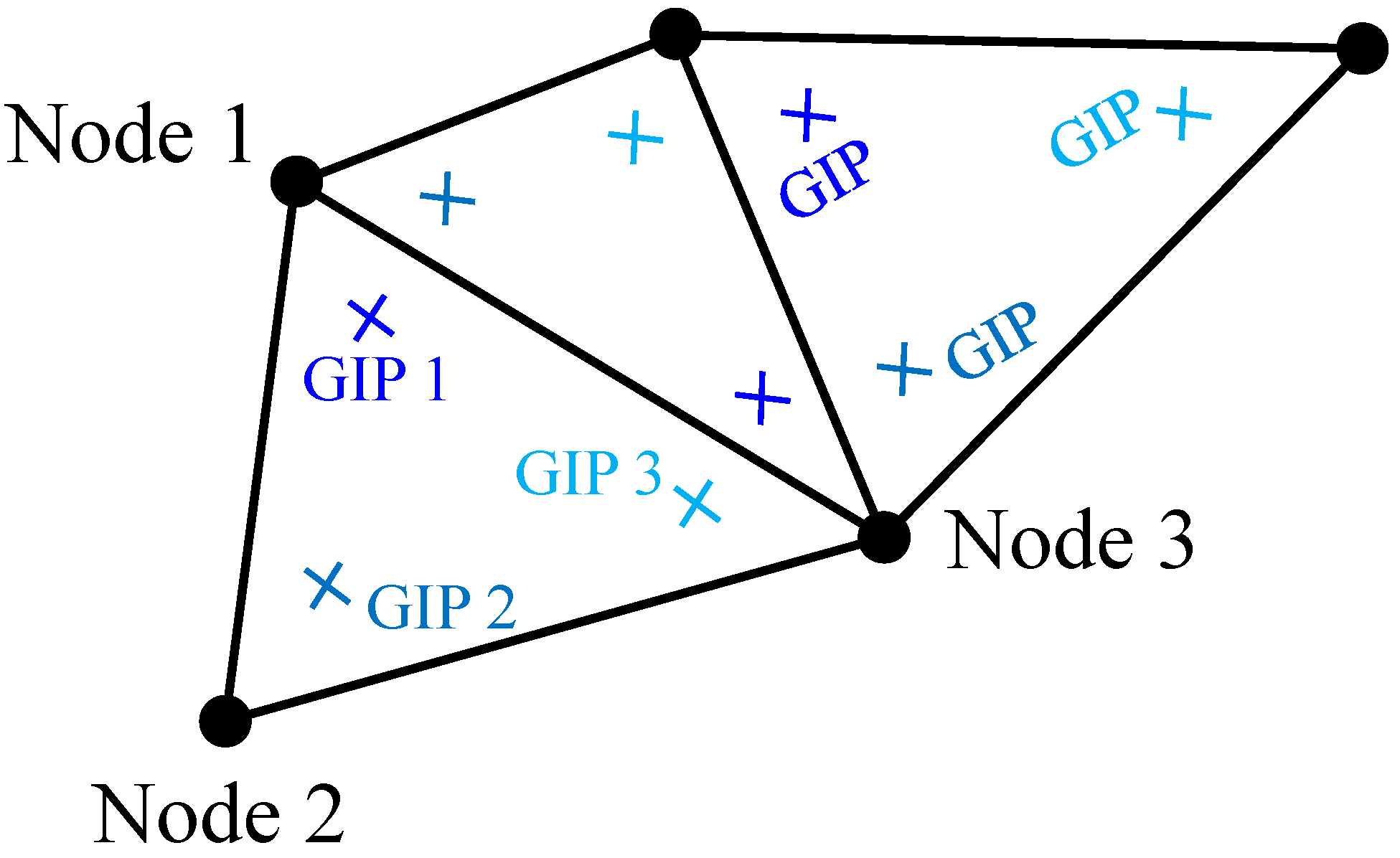
3. Hybrid Explicit-Implicit FEM
4. Model Simulation and Verification
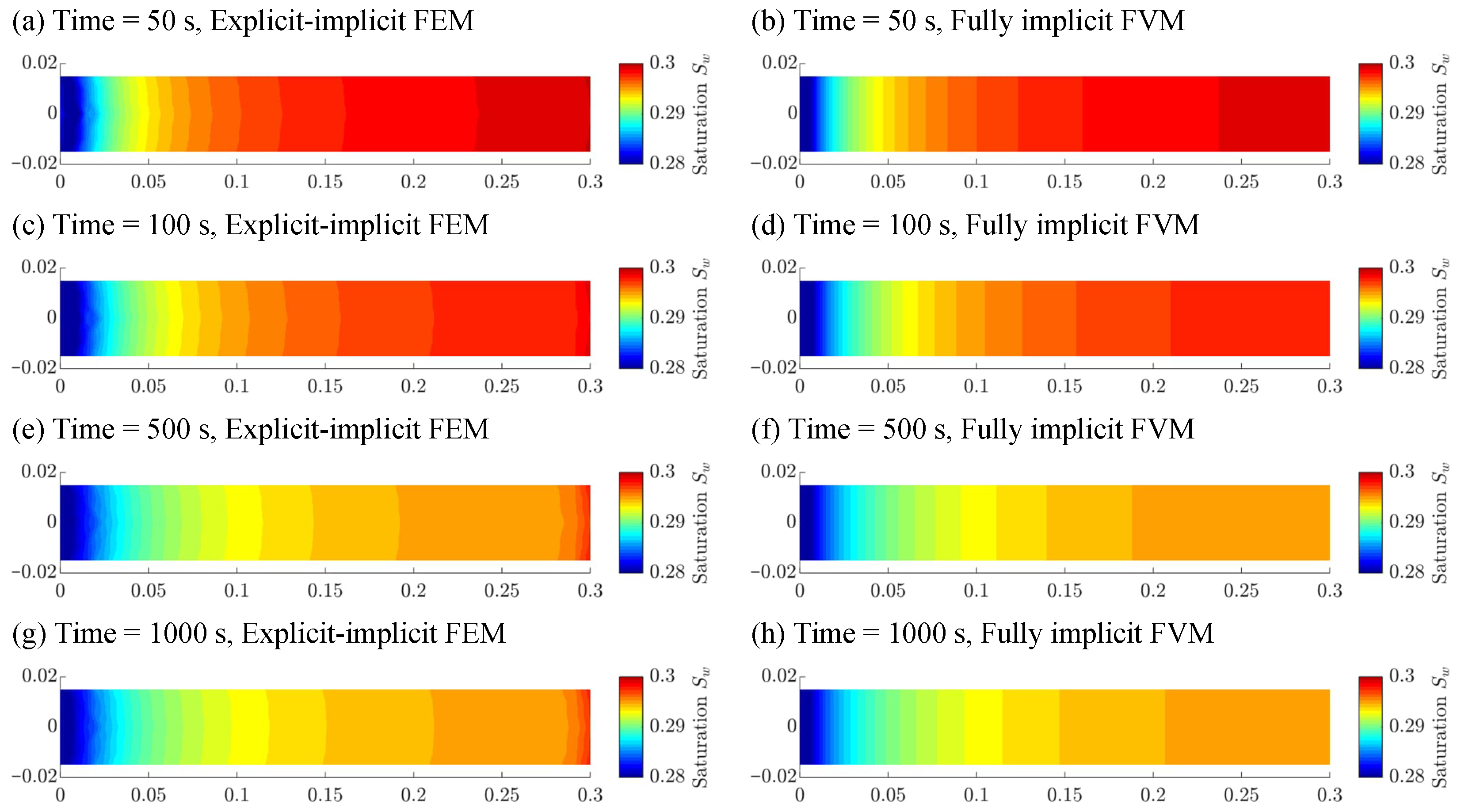
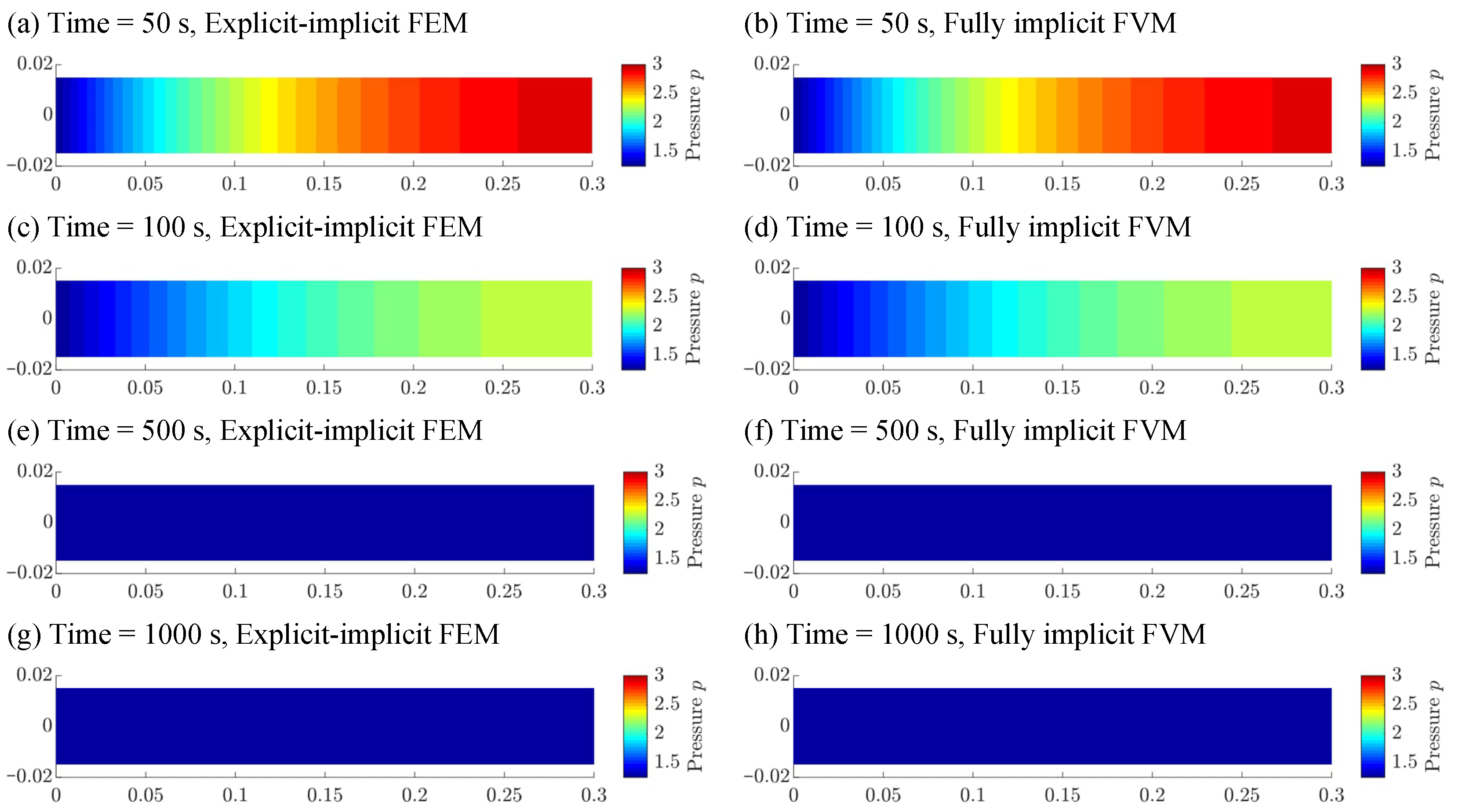
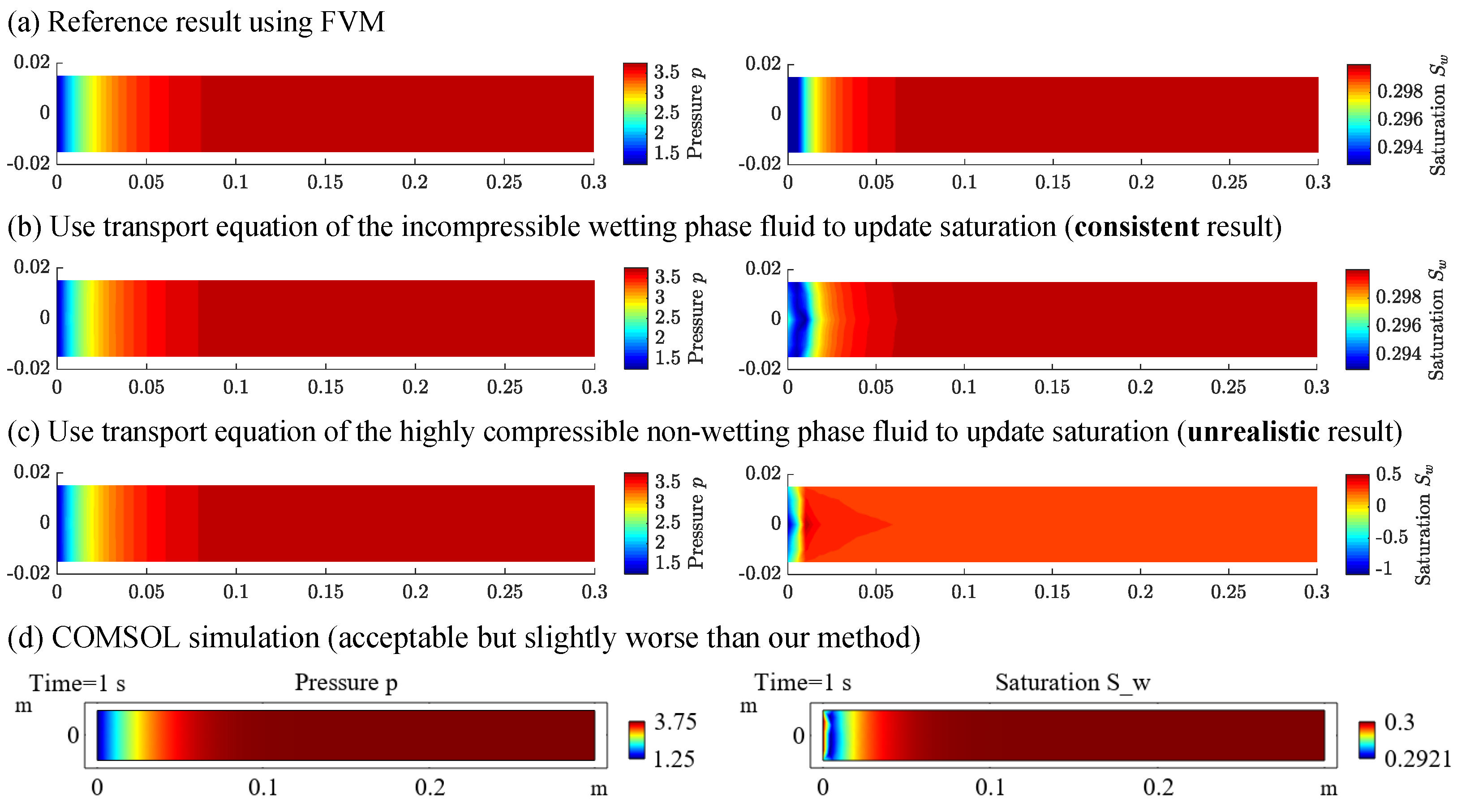
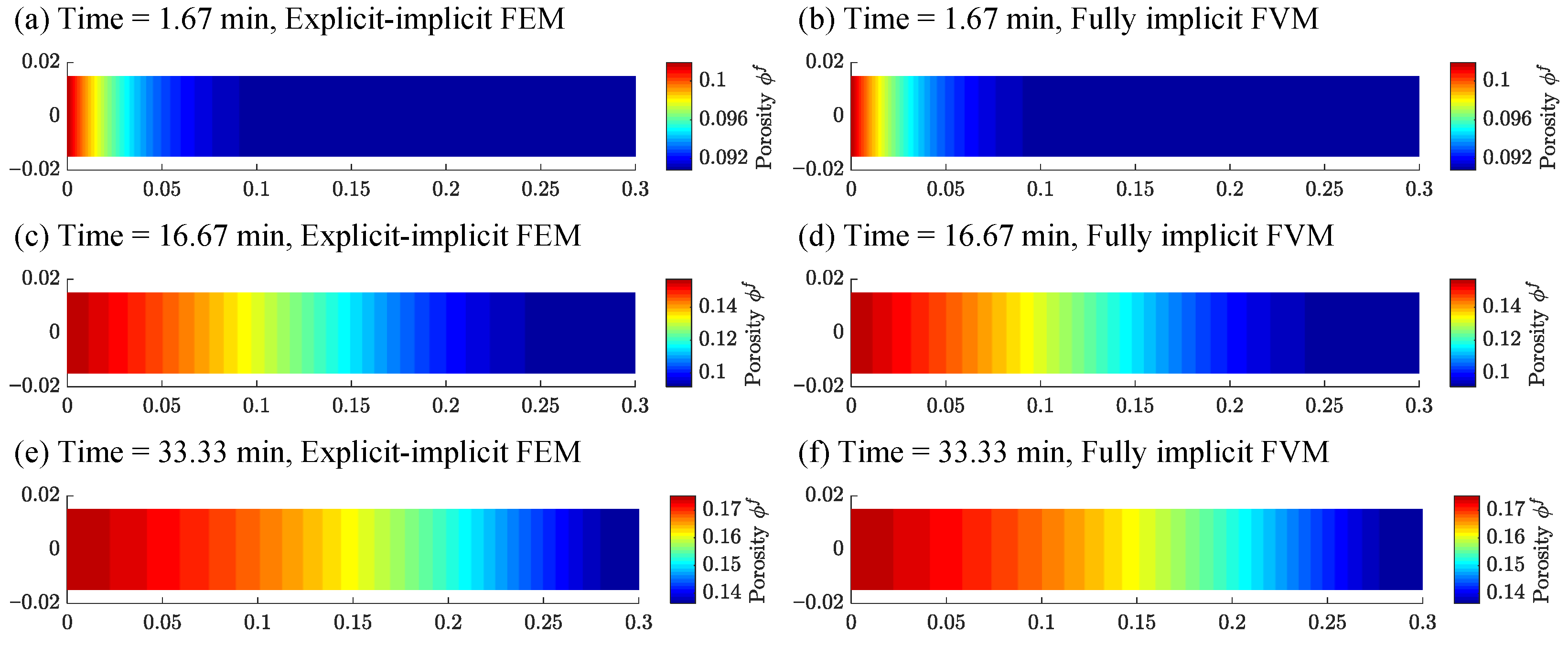
4.1. Multiphase Flow Under Depressurization
4.1.1. Constant Porosity Case (No Solid Decomposition)
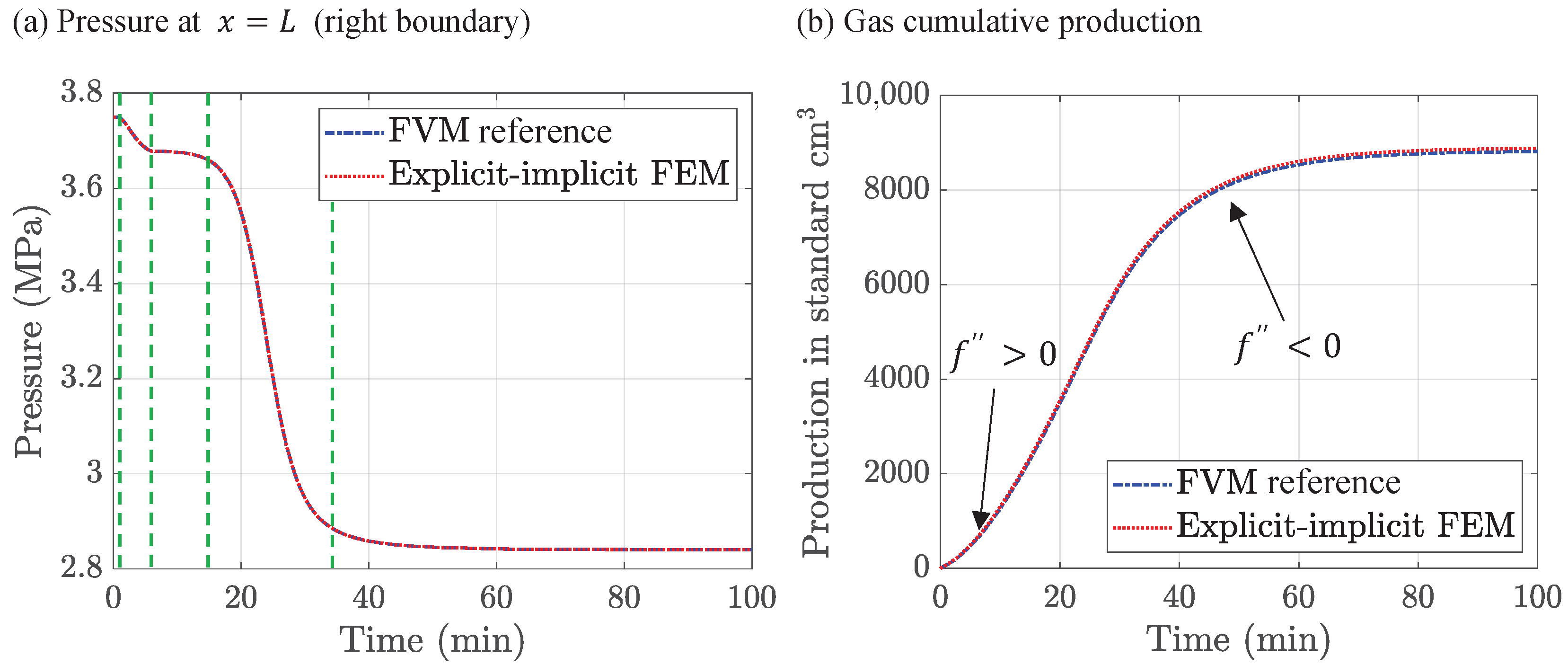
4.1.2. Variable Porosity Case (With Solid Decomposition and Phase Change)
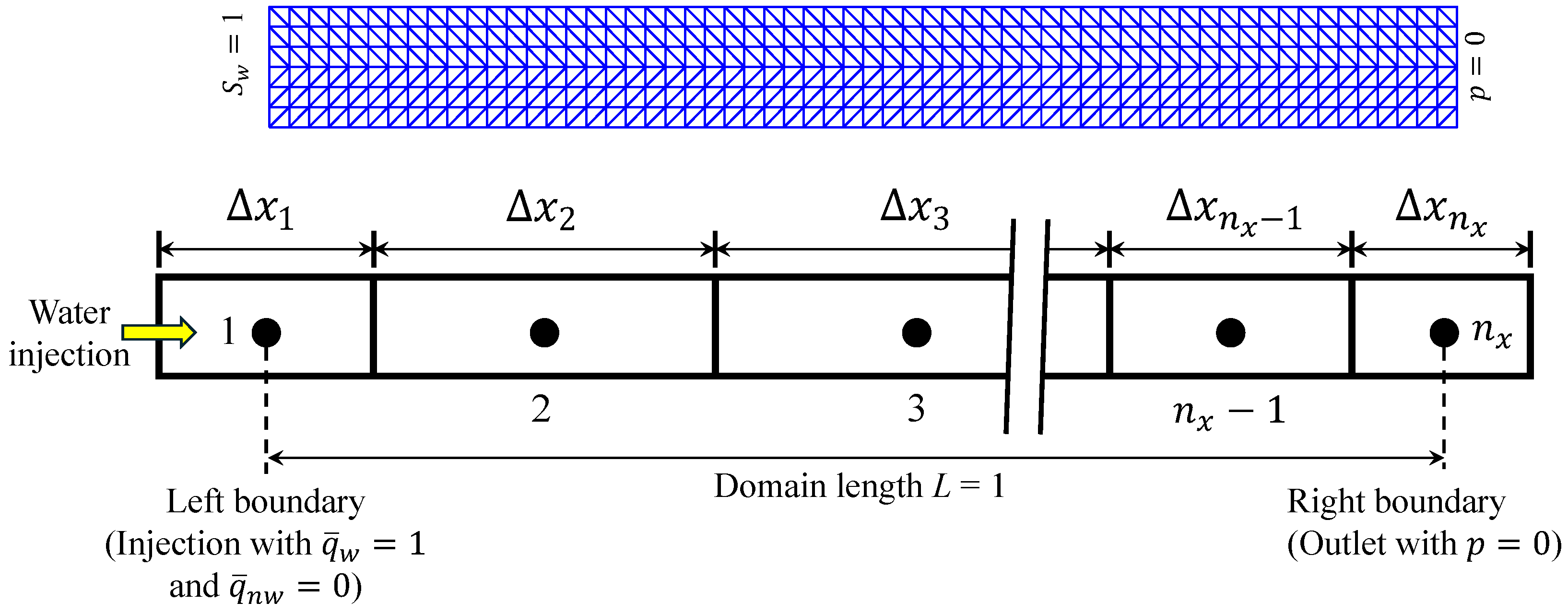
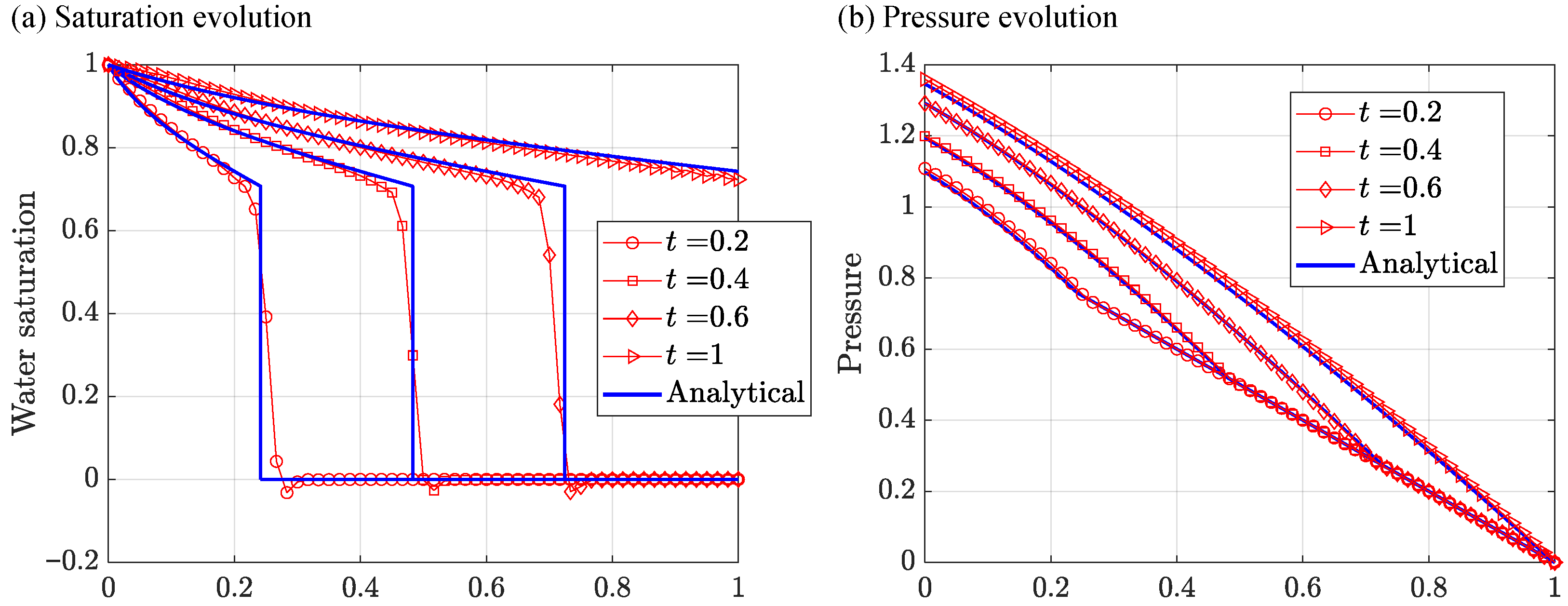
4.2. Buckley-Leverett Problem
5. Conclusions
Author Contributions
Funding
Data Availability Statement
Conflicts of Interest
Appendix A. Recovery of Nodal Variables from Values at Integration Points

References
- Yan, X.; Huang, Z.; Yao, J.; Li, Y.; Fan, D.; Sun, H.; Zhang, K. An Efficient Numerical Hybrid Model for Multiphase Flow in Deformable Fractured-Shale Reservoirs. SPE J. 2018, 23, 1412–1437. [Google Scholar] [CrossRef]
- Liu, L.; Liu, Y.; Yao, J.; Huang, Z. Efficient Coupled Multiphase-Flow and Geomechanics Modeling of Well Performance and Stress Evolution in Shale-Gas Reservoirs Considering Dynamic Fracture Properties. SPE J. 2020, 25, 1523–1542. [Google Scholar] [CrossRef]
- Hitchmough, D.; Blanco-Davis, E.; Spiteri, A.; Seddighi, M.; Yuksel, O.; Shagar, G.V.; Wang, J. The Modelling of the Multiphase Flow Mechanics in Air Lubrication Systems and Their Interaction with Appendages: A Review. J. Mar. Sci. Eng. 2025, 13, 2238. [Google Scholar] [CrossRef]
- Wan, Y.; Wu, N.; Chen, Q.; Li, W.; Hu, G.; Huang, L.; Ouyang, W. Coupled thermal-hydrodynamic-mechanical–chemical numerical simulation for gas production from hydrate-bearing sediments based on hybrid finite volume and finite element method. Comput. Geotech. 2022, 145, 104692. [Google Scholar] [CrossRef]
- Song, R.; Feng, X.; Wang, Y.; Sun, S.; Liu, J. Dissociation and transport modeling of methane hydrate in core-scale sandy sediments: A comparative study. Energy 2021, 221, 119890. [Google Scholar] [CrossRef]
- Li, X.; Wan, Y.; Lei, G.; Sun, J.; Cheng, W.; Dou, X.; Zhao, Y.; Ning, F. Numerical investigation of gas and sand production from hydrate-bearing sediments by incorporating sand migration based on IMPES method. Energy 2024, 288, 129556. [Google Scholar] [CrossRef]
- Sun, X.; Nanchary, N.; Mohanty, K.K. 1-D Modeling of Hydrate Depressurization in Porous Media. Transp. Porous Media 2005, 58, 315–338. [Google Scholar] [CrossRef]
- Cao, S.C.; Cao, M.; Yuan, Y.; Jung, J.; Li, X. Experimental and Numerical Investigation of Fines Migration Mechanisms in Porous Media: Implications for Marine Gas Hydrate Production. J. Mar. Sci. Eng. 2025, 13, 2002. [Google Scholar] [CrossRef]
- Xu, B.; Zhang, K. GPSFlow/Hydrate: A New Numerical Simulator for Modeling Subsurface Multicomponent and Multiphase Flow Behavior of Hydrate-Bearing Geologic Systems. J. Mar. Sci. Eng. 2025, 13, 1622. [Google Scholar] [CrossRef]
- Borja, R.I.; Chen, W.; Odufisan, A.R. A constitutive framework for rocks undergoing solid dissolution. J. Mech. Phys. Solids 2023, 173, 105198. [Google Scholar] [CrossRef]
- Chen, W.; Zhao, Y.; Borja, R.I. Solid–fluid interaction in porous materials with internal erosion. Acta Geotech. 2023, 18, 5147–5164. [Google Scholar] [CrossRef]
- Yang, J.; Yin, Z.Y.; Laouafa, F.; Hicher, P.Y. Hydromechanical modeling of granular soils considering internal erosion. Can. Geotech. J. 2020, 57, 157–172. [Google Scholar] [CrossRef]
- De Boer, R. Theory of Porous Media; Springer: Berlin/Heidelberg, Germany, 2000. [Google Scholar] [CrossRef]
- White, J.A.; Castelletto, N.; Klevtsov, S.; Bui, Q.M.; Osei-Kuffuor, D.; Tchelepi, H.A. A two-stage preconditioner for multiphase poromechanics in reservoir simulation. Comput. Methods Appl. Mech. Eng. 2019, 357, 112575. [Google Scholar] [CrossRef]
- Yan, X.; Sun, H.; Huang, Z.; Liu, L.; Wang, P.; Zhang, Q.; Yao, J. Hierarchical Modeling of Hydromechanical Coupling in Fractured Shale Gas Reservoirs with Multiple Porosity Scales. Energy Fuels 2021, 35, 5758–5776. [Google Scholar] [CrossRef]
- Yan, X.; Lin, J.; Ju, Y.; Zhang, Q.; Zhang, Z.; Zhang, L.; Yao, J.; Zhang, K. A finite-volume based physics-informed Fourier neural operator network for parametric learning of subsurface flow. Adv. Water Resour. 2025, 205, 105087. [Google Scholar] [CrossRef]
- Lin, J.Q.; Yan, X.; Wang, E.Z.; Zhang, Q.; Zhang, K.; Liu, P.Y.; Zhang, L.M. A layer-specific constraint-based enriched physics-informed neural network for solving two-phase flow problems in heterogeneous porous media. Pet. Sci. 2025, 22, 4714–4735. [Google Scholar] [CrossRef]
- Yan, X.; Huang, Z.; Yao, J.; Li, Y.; Fan, D. An efficient embedded discrete fracture model based on mimetic finite difference method. J. Pet. Sci. Eng. 2016, 145, 11–21. [Google Scholar] [CrossRef]
- Shen, B.; Riviere, B. A sequential discontinuous Galerkin method for two-phase flow in deformable porous media. Comput. Methods Appl. Mech. Eng. 2022, 399, 115266. [Google Scholar] [CrossRef]
- Joshaghani, M.; Riviere, B.; Sekachev, M. Maximum-principle-satisfying discontinuous Galerkin methods for incompressible two-phase immiscible flow. Comput. Methods Appl. Mech. Eng. 2022, 391, 114550. [Google Scholar] [CrossRef]
- Tang, Z.Q.; Zhou, X.W.; Jin, Y.F.; Yin, Z.Y.; Zhang, Q. A novel coupled bES-FEM formulation with SUPG stabilization for thermo-hydro-mechanical analysis in saturated porous media. Comput. Geotech. 2024, 173, 106454. [Google Scholar] [CrossRef]
- White, M.; Kneafsey, T.; Seol, Y.; Waite, W.; Uchida, S.; Lin, J.; Myshakin, E.; Gai, X.; Gupta, S.; Reagan, M.; et al. An international code comparison study on coupled thermal, hydrologic and geomechanical processes of natural gas hydrate-bearing sediments. Mar. Pet. Geol. 2020, 120, 104566. [Google Scholar] [CrossRef]
- Zhang, L.; Wu, B.; Li, Q.; Hao, Q.; Zhang, H.; Nie, Y. A fully coupled thermal-hydro-mechanical-chemical model for simulating gas hydrate dissociation. Appl. Math. Model. 2024, 129, 88–111. [Google Scholar] [CrossRef]
- Sun, X.; Luo, H.; Soga, K. A coupled thermal–hydraulic–mechanical–chemical (THMC) model for methane hydrate bearing sediments using COMSOL Multiphysics. J. Zhejiang Univ.-Sci. A 2018, 19, 600–623. [Google Scholar] [CrossRef]
- Sun, X.; Wang, L.; Luo, H.; Song, Y.; Li, Y. Numerical modeling for the mechanical behavior of marine gas hydrate-bearing sediments during hydrate production by depressurization. J. Pet. Sci. Eng. 2019, 177, 971–982. [Google Scholar] [CrossRef]
- Yu, J.; Zhao, J.; Soga, K.; Zhao, S.; Liang, W. A fully coupled THMC-MPM framework for modeling phase transition and large deformation in methane hydrate-bearing sediment. J. Mech. Phys. Solids 2026, 206, 106368. [Google Scholar] [CrossRef]
- Zhang, F.; Nghiem, L.; Chen, Z. A novel approach to solve hyperbolic Buckley-Leverett equation by using a transformer based physics informed neural network. Geoenergy Sci. Eng. 2024, 236, 212711. [Google Scholar] [CrossRef]
- Rodriguez-Torrado, R.; Ruiz, P.; Cueto-Felgueroso, L.; Green, M.C.; Friesen, T.; Matringe, S.; Togelius, J. Physics-informed attention-based neural network for hyperbolic partial differential equations: Application to the Buckley-Leverett problem. Sci. Rep. 2022, 12, 7557. [Google Scholar] [CrossRef]
- Selim, M.S.; Sloan, E.D. Heat and mass transfer during the dissociation of hydrates in porous media. AIChE J. 1989, 35, 1049–1052. [Google Scholar] [CrossRef]
- Kimoto, S.; Oka, F.; Fushita, T. A chemo-thermo-mechanically coupled analysis of ground deformation induced by gas hydrate dissociation. Int. J. Mech. Sci. 2010, 52, 365–376. [Google Scholar] [CrossRef]
- Klar, A.; Uchida, S.; Soga, K.; Yamamoto, K. Explicitly Coupled Thermal Flow Mechanical Formulation for Gas-Hydrate Sediments. SPE J. 2013, 18, 196–206. [Google Scholar] [CrossRef]
- Cao, P.; Liu, J.; Leong, Y.K. A fully coupled multiscale shale deformation-gas transport model for the evaluation of shale gas extraction. Fuel 2016, 178, 103–117. [Google Scholar] [CrossRef]
- Zhao, Y.; Borja, R.I. Anisotropic elastoplastic response of double-porosity media. Comput. Methods Appl. Mech. Eng. 2021, 380, 113797. [Google Scholar] [CrossRef]
- Yang, D.; Moridis, G.J.; Blasingame, T.A. A fully coupled multiphase flow and geomechanics solver for highly heterogeneous porous media. J. Comput. Appl. Math. 2014, 270, 417–432. [Google Scholar] [CrossRef]
- Pryor, R.W. Multiphysics Modeling Using COMSOL®: A First Principles Approach; Jones & Bartlett Publishers: Sudbury, MA, USA, 2009. [Google Scholar]
- Borja, R.I.; Choo, J. Cam-Clay plasticity, Part VIII: A constitutive framework for porous materials with evolving internal structure. Comput. Methods Appl. Mech. Eng. 2016, 309, 653–679. [Google Scholar] [CrossRef]
- Liu, Y.; Borja, R.I. Time scales in the primary and secondary compression of soils. Int. J. Numer. Anal. Methods Geomech. 2022, 46, 1383–1408. [Google Scholar] [CrossRef]
- Zhang, Q.; Yan, X.; Shao, J. Fluid flow through anisotropic and deformable double porosity media with ultra-low matrix permeability: A continuum framework. J. Pet. Sci. Eng. 2021, 200, 108349. [Google Scholar] [CrossRef]
- Zhang, Q.; Wang, Z.Y.; Yin, Z.Y.; Jin, Y.F. A novel stabilized NS-FEM formulation for anisotropic double porosity media. Comput. Methods Appl. Mech. Eng. 2022, 401, 115666. [Google Scholar] [CrossRef]
- Zhang, Q.; Yan, X.; Wang, X. Numerical modeling of gas flow and solid deformation in unconventional anisotropic shale. Comput. Geotech. 2025, 187, 107441. [Google Scholar] [CrossRef]
- Fuks, O.; Tchelepi, H.A. Limitations of Physics Informed Machine Learning for Nonlinear Two-Phase Transport in Porous Media. J. Mach. Learn. Model. Comput. 2020, 1, 19–37. [Google Scholar] [CrossRef]
- Choo, J. Large deformation poromechanics with local mass conservation: An enriched Galerkin finite element framework. Int. J. Numer. Methods Eng. 2018, 116, 66–90. [Google Scholar] [CrossRef]
- Choo, J. Stabilized mixed continuous/enriched Galerkin formulations for locally mass conservative poromechanics. Comput. Methods Appl. Mech. Eng. 2019, 357, 112568. [Google Scholar] [CrossRef]
- Kadeethum, T.; Lee, S.; Ballarin, F.; Choo, J.; Nick, H. A locally conservative mixed finite element framework for coupled hydro-mechanical–chemical processes in heterogeneous porous media. Comput. Geosci. 2021, 152, 104774. [Google Scholar] [CrossRef]
- Sheng, X.; Zhang, Q.; Shi, H. A micromechanical study of shear-weakening characteristics of granular flow in a torsional shear cell. Comput. Geotech. 2026, 189, 107591. [Google Scholar] [CrossRef]
- Wu, X.H.; Zhang, Q.; Feng, W.Q.; Yin, Z.Y.; Fang, H. Enhanced THM coupling for anisotropic geomaterials and smoothed-FEM simulation. Int. J. Mech. Sci. 2025, 290, 110087. [Google Scholar] [CrossRef]
- Zhang, Q.; Yin, Z.Y.; Yan, X. Material Constants of Anisotropic Poroelasticity and Its Impacts on Shale Gas Production. Energy Fuels 2023, 37, 18722–18734. [Google Scholar] [CrossRef]
- Zhang, Q.; Yin, Z.Y.; Yan, X. Anisotropic continuum framework of coupled gas flow - adsorption - deformation in sedimentary rocks. Int. J. Numer. Anal. Methods Geomech. 2024, 48, 1018–1045. [Google Scholar] [CrossRef]
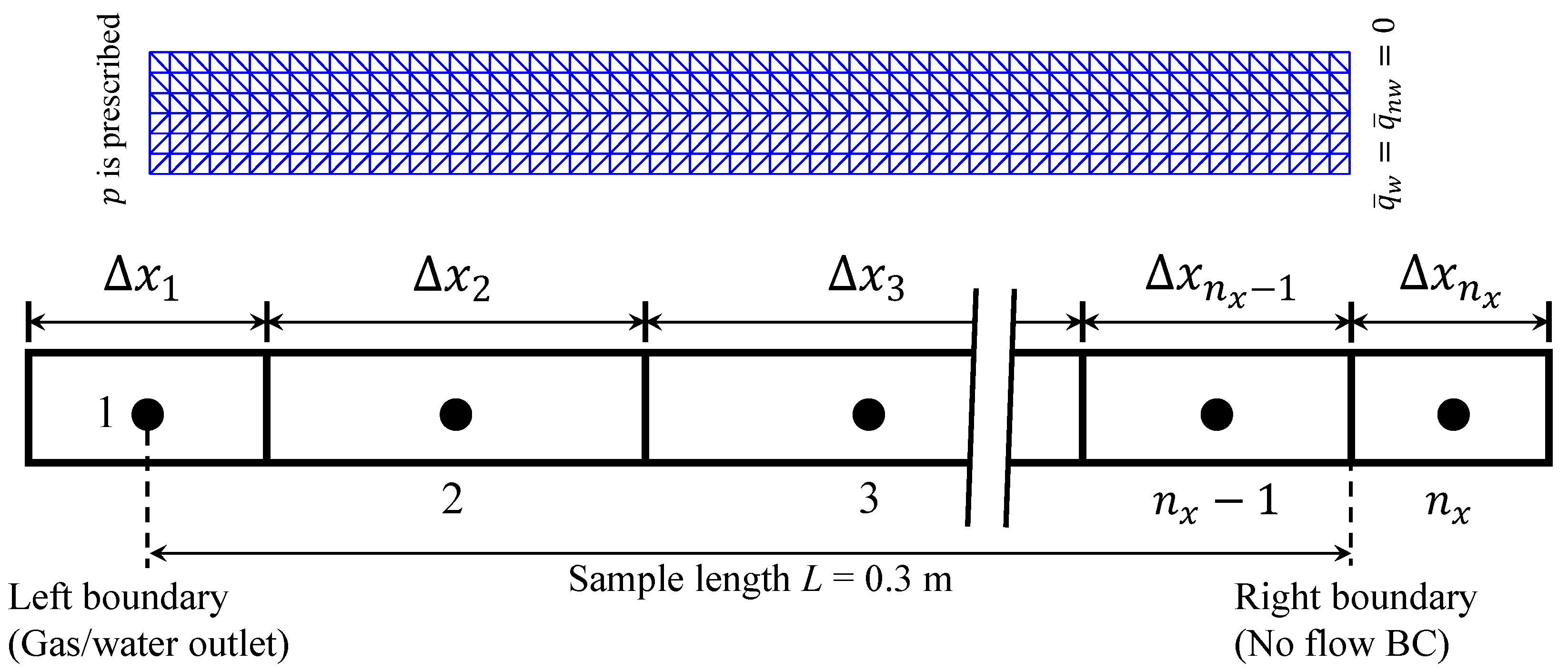


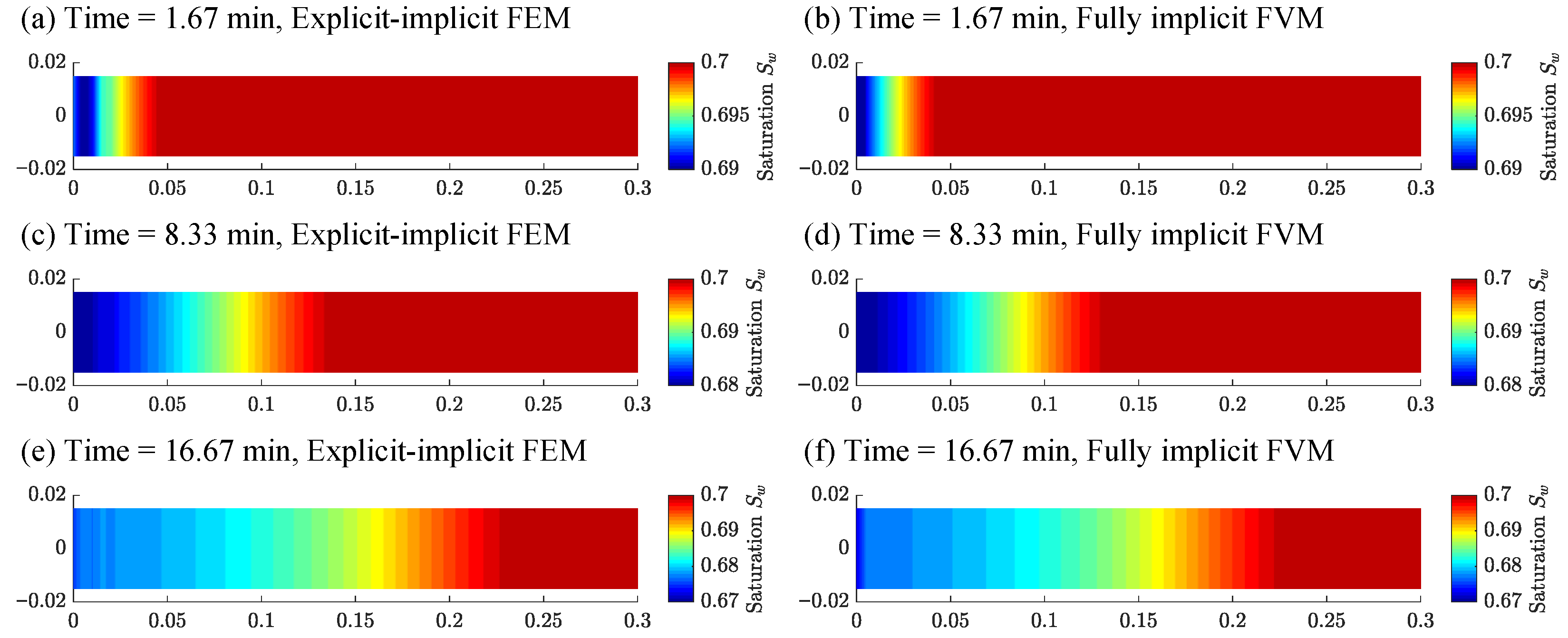


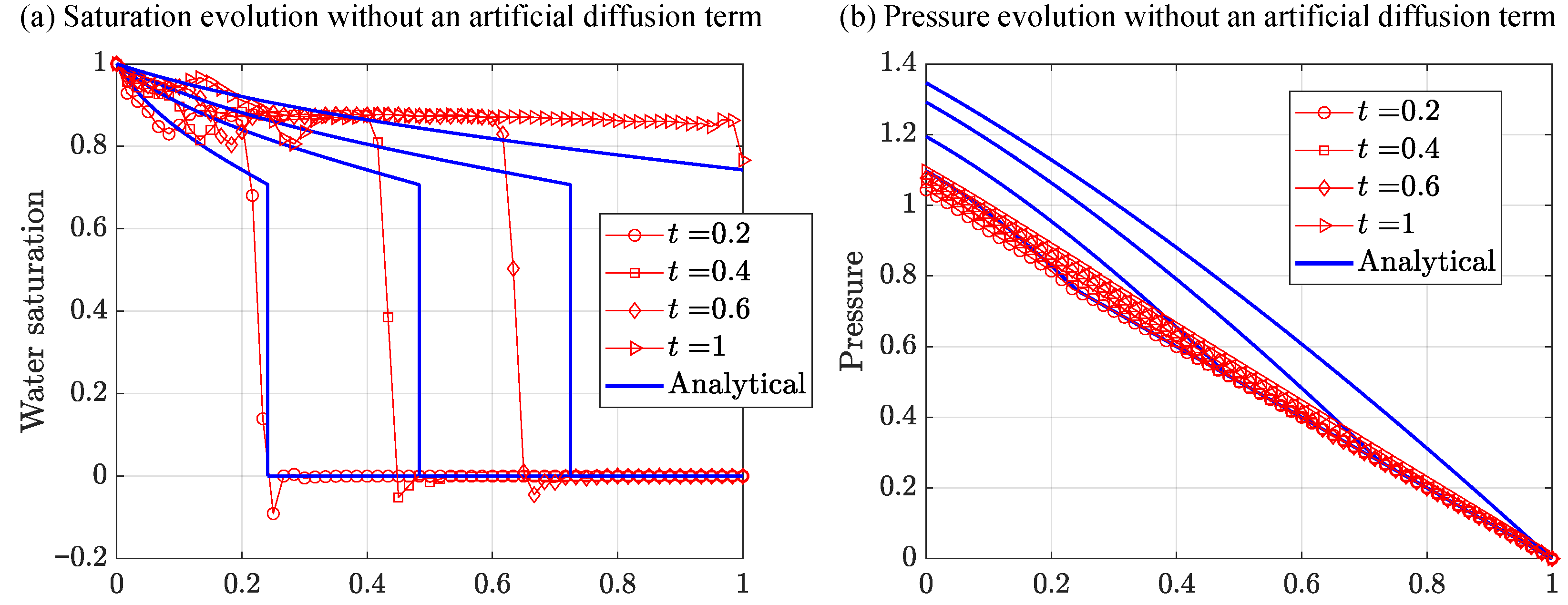

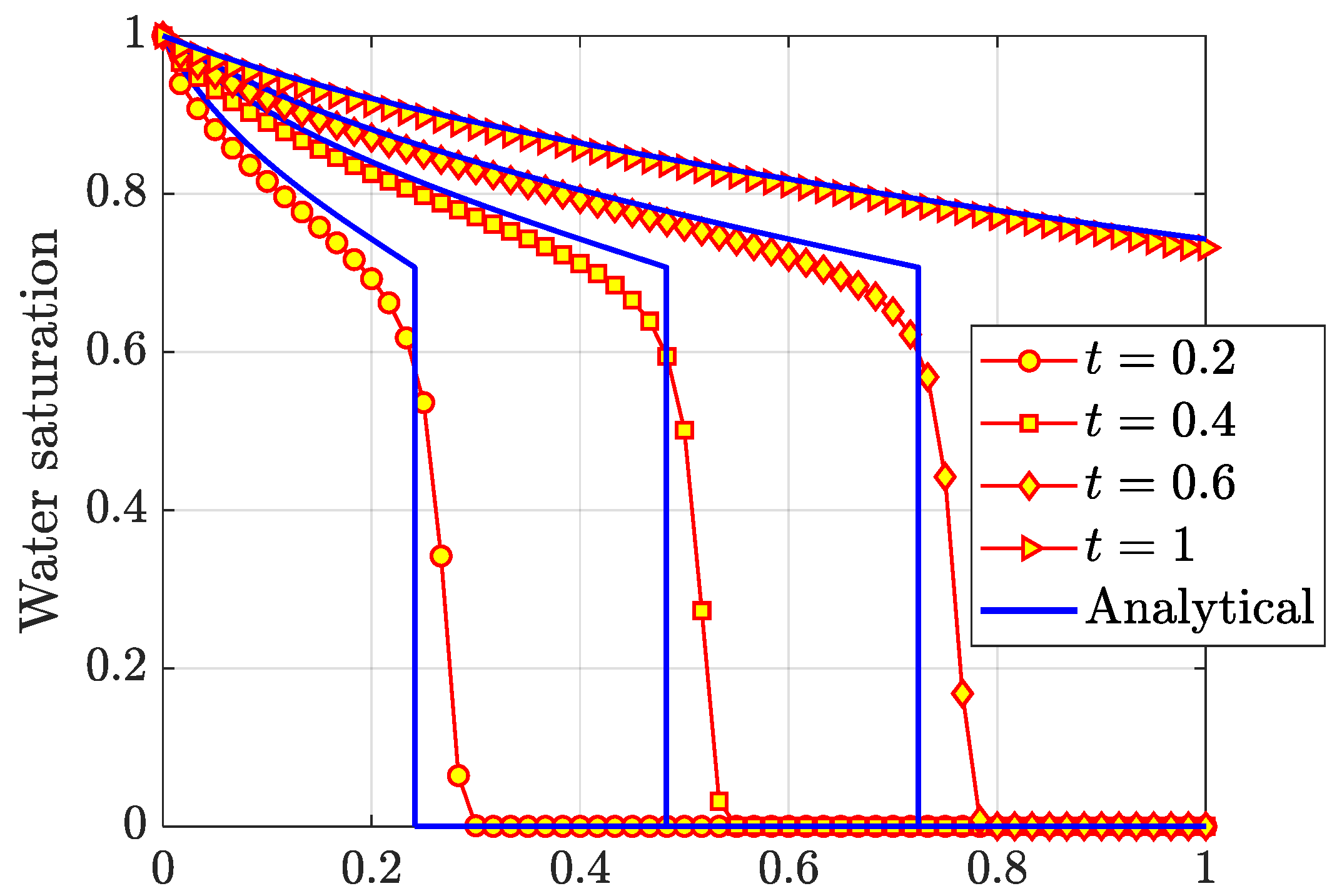

| Parameter | Value | Unit |
|---|---|---|
| Porosity evolution: | ||
| Constant porosity | 0.182 | 1 |
| Hydraulic: | ||
| Constant permeability | ||
| Non-wetting phase fluid viscosity | Pa·s | |
| Wetting phase fluid viscosity | 0.001 | Pa·s |
| Relative permeability exponents and | 1.5, 2 | 1 |
| Irreducible saturations and | 0, 0 | 1 |
| Initial wetting phase saturation | 0.3 | 1 |
| Others: | ||
| Constant temperature | 275.45 | K |
| Model length | 0.3 | m |
| Model width | 0.03 | m |
| Initial fluid pressure | 3.75 | MPa |
| Outlet fluid pressure | 1.25 | MPa |
| Time step size | 1 | s |
| Number of time steps | 1000 | 1 |
| Characterisic mobility in estimating of (14) | ||
| Coefficient in Equation (14) | 0.25 | 1 |
| Parameter | Value | Unit |
|---|---|---|
| Porosity evolution: | ||
| Initial porosity | 0.0908 | 1 |
| Limit value | 0.182 | 1 |
| Solid decomposition constant | 1/Pa/s | |
| Decomposition equilibrium pressure | 3.678778 | MPa |
| Decomposable solid density | 910 | |
| Production fraction () | 0.12923 | 1 |
| Hydraulic: | ||
| Reference permeability | ||
| Permeability change exponent N | 10 | 1 |
| Non-wetting phase fluid viscosity | Pa·s | |
| Wetting phase fluid viscosity | 0.001 | Pa·s |
| Relative permeability exponents and | 4, 2 | 1 |
| Irreducible saturations and | 0.1, 0 | 1 |
| Initial wetting phase saturation | 0.7034 | 1 |
| Others: | ||
| Constant temperature | 275.45 | K |
| Model length | 0.3 | m |
| Model width | 0.03 | m |
| Initial fluid pressure | 3.75 | MPa |
| Outlet fluid pressure | 2.84 | MPa |
| Time step size | 0.1 | s |
| Number of time steps | 60,000 | 1 |
| Parameter | Value |
|---|---|
| Porosity evolution: | |
| Constant porosity | 1‡ |
| Hydraulic: | |
| Constant permeability | 1 |
| Non-wetting phase fluid viscosity | 1 |
| Wetting phase fluid viscosity | 1 |
| Relative permeability exponents and | 2, 2 |
| Irreducible saturations and | 0, 0 |
| Initial wetting phase saturation | 0 |
| Others: | |
| Model length | 1 |
| Model width | 0.1 |
| Initial fluid pressure | 0 |
| Outlet fluid pressure on the right boundary | 0 |
| Injection total flux | 1 |
| Injection wetting phase fraction | 1 |
| Time step size | 0.001 |
| Number of time steps | 1000 |
Disclaimer/Publisher’s Note: The statements, opinions and data contained in all publications are solely those of the individual author(s) and contributor(s) and not of MDPI and/or the editor(s). MDPI and/or the editor(s) disclaim responsibility for any injury to people or property resulting from any ideas, methods, instructions or products referred to in the content. |
© 2026 by the authors. Licensee MDPI, Basel, Switzerland. This article is an open access article distributed under the terms and conditions of the Creative Commons Attribution (CC BY) license.
Share and Cite
Zhang, Q.; Sheng, X. Hybrid Explicit-Implicit FEM for Porous Media Multiphase Flow with Possible Solid-Phase Decomposition. J. Mar. Sci. Eng. 2026, 14, 217. https://doi.org/10.3390/jmse14020217
Zhang Q, Sheng X. Hybrid Explicit-Implicit FEM for Porous Media Multiphase Flow with Possible Solid-Phase Decomposition. Journal of Marine Science and Engineering. 2026; 14(2):217. https://doi.org/10.3390/jmse14020217
Chicago/Turabian StyleZhang, Qi, and Xiaoran Sheng. 2026. "Hybrid Explicit-Implicit FEM for Porous Media Multiphase Flow with Possible Solid-Phase Decomposition" Journal of Marine Science and Engineering 14, no. 2: 217. https://doi.org/10.3390/jmse14020217
APA StyleZhang, Q., & Sheng, X. (2026). Hybrid Explicit-Implicit FEM for Porous Media Multiphase Flow with Possible Solid-Phase Decomposition. Journal of Marine Science and Engineering, 14(2), 217. https://doi.org/10.3390/jmse14020217