Article

Experimental Study on Onboard Hydrogen Production Performance from Methanol Reforming Based on Novel Spinel

1
Marine Engineering College, Dalian Maritime University, Dalian 116026, China
2
Faculty of Maritime and Transportation, Ningbo University, Ningbo 315832, China
*
Authors to whom correspondence should be addressed.
J. Mar. Sci. Eng. 2026, 14(2), 188; https://doi.org/10.3390/jmse14020188
Submission received: 9 December 2025 / Revised: 29 December 2025 / Accepted: 15 January 2026 / Published: 16 January 2026
(This article belongs to the Special Issue Alternative Fuels and Emission Control in Maritime Applications)

Abstract

The green transformation of the shipping industry urgently requires zero-carbon power, and hydrogen-powered ships such as hydrogen fuel cell ships face bottlenecks in in situ hydrogen production and storage and transportation. Methanol steam reforming (MSR) online hydrogen production is suitable for ship scenarios, reducing costs and increasing efficiency while helping achieve zero carbon throughout the entire lifecycle, which has important practical significance. The key technology for MSR technology is the performance of the catalyst. A series of Cu1−xMnxAl2O4 catalysts were successfully synthesized and applied for hydrogen production in this study. The catalyst structure was characterized using physicochemical techniques including XRD, SEM, and EDS. Hydrogen production performance was evaluated in a fixed-bed reactor under the following conditions: a liquid hourly space velocity (LHSV) of 20 h−1, a water-to-methanol molar ratio of 3:1, and a reaction temperature range of 275 °C–350 °C. The results demonstrate that A-site Mn substitution significantly enhanced the catalytic performance. In addition, XRD analysis revealed that Mn incorporation effectively suppressed the formation of segregated CuO phases. However, excessive substitution (x is 0.9) led to the generation of an MnAl2O4 impurity phase. Finally, the Cu0.7Mn0.3Al2O4 catalyst achieved a methanol conversion of 68.336% at 325 °C, with a hydrogen production rate of 5.611 mmol/min/gcat, and maintained CO selectivity below 1%. The results demonstrate that the hydrogen production catalyst developed in this study is a promising material for meeting the requirements of online hydrogen sources for ships.

1. Introduction

Hydrogen fuel cell ships are key to the low-carbon transformation of shipping, and the safety risks of hydrogen storage and transportation on board are prominent. The temperature range for online hydrogen production through methanol steam reforming is matched with the ship’s waste heat, which can efficiently recover waste heat for the energy supply and avoid the hidden dangers of high-pressure hydrogen storage. This is of great significance for improving the safety of hydrogen use on ships and promoting the establishment of hydrogen-energy shipping [1,2,3].
In recent years, researchers worldwide have conducted extensive research on hydrogen production technology from methanol. This technology offers multiple advantages: methanol-based hydrogen production generates minimal pollutant emissions, demonstrating strong environmental benefits, and methanol is widely available and cost-effective as a common industrial raw material, producible from both fossil resources and biomass processing. Most importantly, methanol exhibits stable physicochemical properties, high safety, and low volatility, making it well-suited for fuel cell applications [4,5].
Within current methanol-to-hydrogen systems, three mainstream methods dominate: methanol steam reforming (MSR), methanol partial oxidation (POX), and methanol autothermal reforming (ATR) [6,7]. Among these, methanol steam reforming is the most widely adopted. This process generates 3 mol of hydrogen from 1 mol of methanol and 1 mol of water [8]. Additionally, MSR operates under relatively mild reaction conditions and yields a hydrogen-rich product stream with low CO concentration. However, MSR has its drawbacks. As a highly endothermic process, it requires a substantial external heat input for both reactant vaporization and the reaction itself, thereby potentially reducing the efficiency of the system. In contrast, partial oxidation of methanol is an exothermic reaction, eliminating the need for external heating and potentially improving overall process efficiency under certain conditions.
Its major disadvantage, however, is the difficulty in precisely controlling the reaction temperature [9], which can easily lead to localized overheating within the reaction tube.
This poses significant risks, including catalyst sintering and even potential rupture of the reaction tube. The drawbacks of methanol autothermal reforming for hydrogen production are even more pronounced. Although the technology shows promise in other fields, the hydrogen-rich gas it produces contains a very high concentration of CO, thereby rendering it unsuitable for most direct applications [10,11,12].
This paper focuses on methanol steam reforming (MSR) technology. Three reactions are mainly involved [13]:
C H 3 O H + H 2 O C O 2 + 3 H 2 H = + 50   k J · m o l 1
C H 3 O H C O 2 + 2 H 2 H = + 91   k J · m o l 1  
C O 2 + H 2 C O + H 2 O H = + 41   k J · m o l 1
Among non-precious metal catalysts, copper stands out as one of the few metals exhibiting catalytic activity toward both water dissociation and 1C molecules like methanol. Consequently, copper-based catalysts are the most widely employed for MSR. Compared to noble metal catalysts, copper-based systems offer advantages including lower cost, reduced CO selectivity, and higher catalytic activity at lower reaction temperatures [10,14,15]. However, they suffer from poor thermal stability [14]. Currently, among the commonly studied catalyst structures that exhibit both high activity and good stability are perovskites and spinels. Compared to the perovskite structure, the spinel structure is inherently more stable, corrosion-resistant, and less susceptible to surface reconstruction. Moreover, by adjusting the cation composition, it is more straightforward to optimize its bifunctional or even trifunctional catalytic properties for oxygen reduction and evolution, demonstrating greater practical potential [16].
To address this limitation, recent studies have optimized copper-based catalysts by fabricating them into spinel-type oxide structures, thereby enhancing thermal stability and improving resistance to sintering. Spinel oxide, a high-efficiency ceramic material with the formula AB2O4, exhibits tunable catalytic performance and robust stability. These properties originate from the relative displacement of its tetrahedral and octahedral subunits, as well as structural deformations and cation inversion induced by the substitution of its constituent A-site or B-site cations [17,18,19]. In such catalysts, copper atoms are confined within the spinel lattice, resulting in highly dispersed metallic copper. This structural confinement endows copper-based spinel catalysts with superior catalytic activity and sintering resistance compared to conventional copper-based catalysts.
There are several methods for catalyst synthesis: Liao et al. [20] successfully prepared Mn-doped CuAl2O4 spinel catalysts via solution combustion synthesis and coated them onto copper foam substrates to construct monolithic catalysts for microreactor-based MSR systems. This demonstrates how cationic substitution strategies can precisely tune spinel physicochemical properties, offering stable and low-toxicity catalytic solutions for mobile fuel cell hydrogen supply systems. The sol–gel method, meanwhile, has attracted significant research attention due to its advantages such as excellent homogeneity, low cost, low processing temperature, and simple operating procedures [21]. Chen et al. [22] utilized a sol–gel method with citric acid–EDTA (CAE) and urea (UR) as complexing agents to synthesize CuGa2O4 spinel catalysts. These findings confirm that the CuGa2O4 spinel achieves efficient low-temperature hydrogen production with complete CO suppression through optimized structural and surface properties. Fukunaga et al. [23] prepared Cu-Mn spinel oxides and non-spinel mixed oxides from the same precursor calcined at different temperatures via the sol–gel method. In the methanol steam reforming reaction, the Cu-Mn spinel oxide exhibited higher activity at 210 °C, which was attributed to its higher dispersion of metallic Cu.
This study employs sol–gel synthesis to prepare copper-based spinel catalysts for methanol reforming. By substituting different proportions of Mn at the A-sites of CuAl2O4 spinel, the synthesized catalysts are evaluated on an MSR experimental platform to investigate the effects of substitution ratios and operational parameters on hydrogen production performance. Physicochemical characterization techniques including XRD, SEM, and SEM-EDS are utilized for comprehensive analysis of the samples.

2. Experimental Section

2.1. Sample Preparation

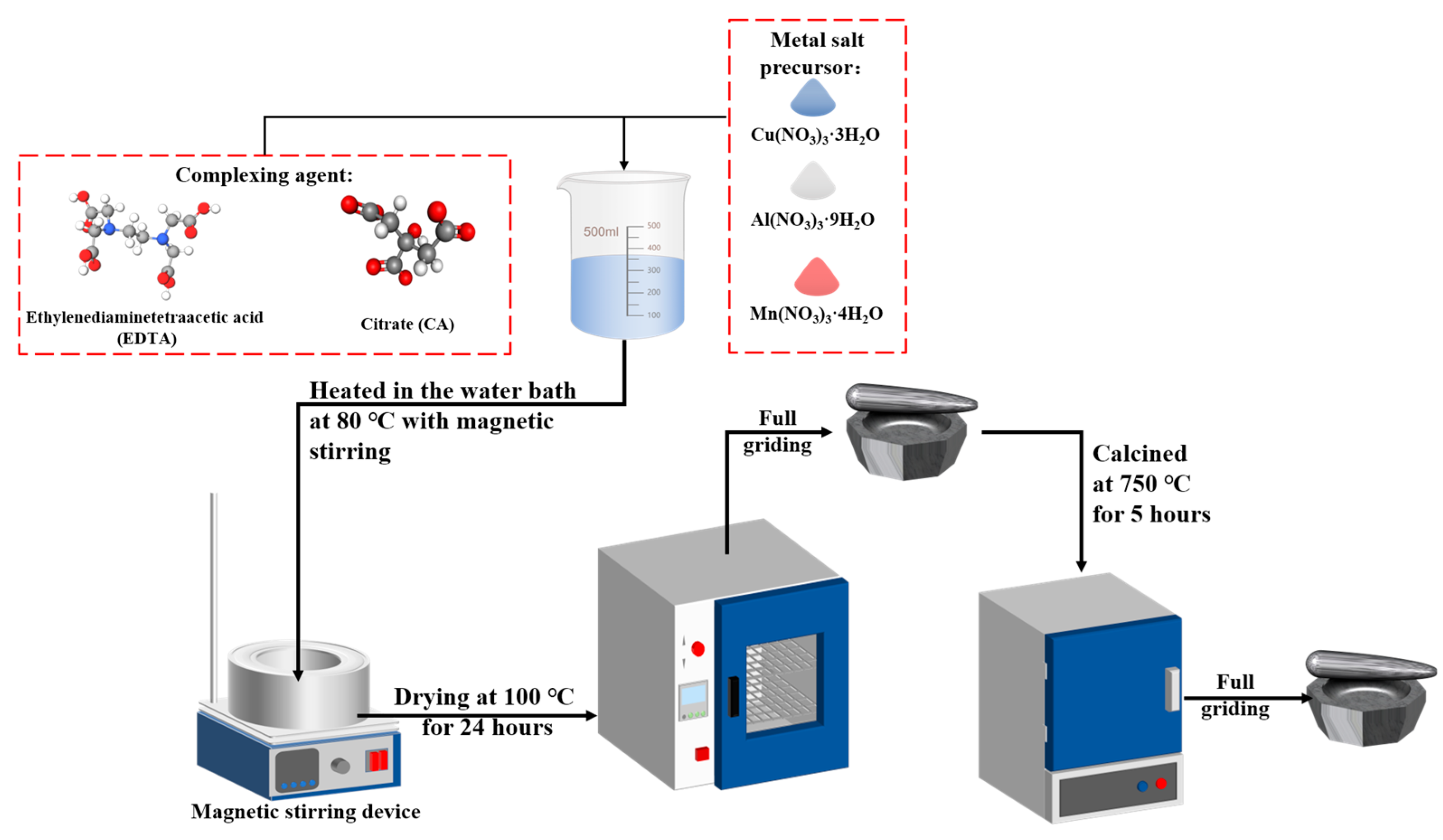
The copper-based spinel oxide catalysts used in this study were synthesized via a sol–gel method. The metal salt precursors employed were Cu(NO3)3·3H2O, Al(NO3)3·9H2O, and Mn(NO3)2·4H2O. Among these, Cu(NO3)3·3H2O and Al(NO3)3·9H2O were of analytical reagent grade, while Mn(NO3)2·4H2O had a purity ≥ 98%. Ethylenediaminetetraacetic acid (EDTA) and citric acid (CA) were additionally selected as complexing agents. All material were purchased from Shanghai Aladdin Biochemical Technology Co., Ltd., Shanghai, China.
Figure 1 shows the detailed preparation procedure for Cu1−xMnxAl2O4 catalysts (x is 0, 0.3, 0.5, 0.7, 0.9): First, quantitatively weigh the nitrate metal precursors and dissolve them in 150 mL deionized water to form a precursor solution. Subsequently, add complexing agents according to the molar ratio, total metal ions: CA:EDTA is 1:1.5:1. After stirring the mixture until sufficiently homogeneous, place it in a magnetic stirring apparatus and stir magnetically at 80 °C until complete evaporation to obtain a gel. Then, put the wet gel into the drying oven and dry it at 100 °C for 24 h. Then take out the dry gel and grind it, and finally calcine it in a muffle furnace at 750 °C for 5 h. Grind it to obtain the final powder catalyst.

2.2. Samples Characterization

The surface morphology and elemental composition of the catalysts were analyzed using a SUPRA 55 SAPPHIRE (ZEISS, Jena, Germany) field-emission scanning electron microscope equipped with an energy dispersive spectrometer.
X-ray diffraction patterns were obtained on a Rigaku D/MAX-Ultima+ diffractometer (Rigaku, Tokyo, Japan) with Co-Kα radiation (λ is 1.7902 Å). Scans were performed from 10° to 90° (2θ) at a step width of 0.02°, with the X-ray tube operating at 40 kV and 40 mA.

2.3. Performance Test

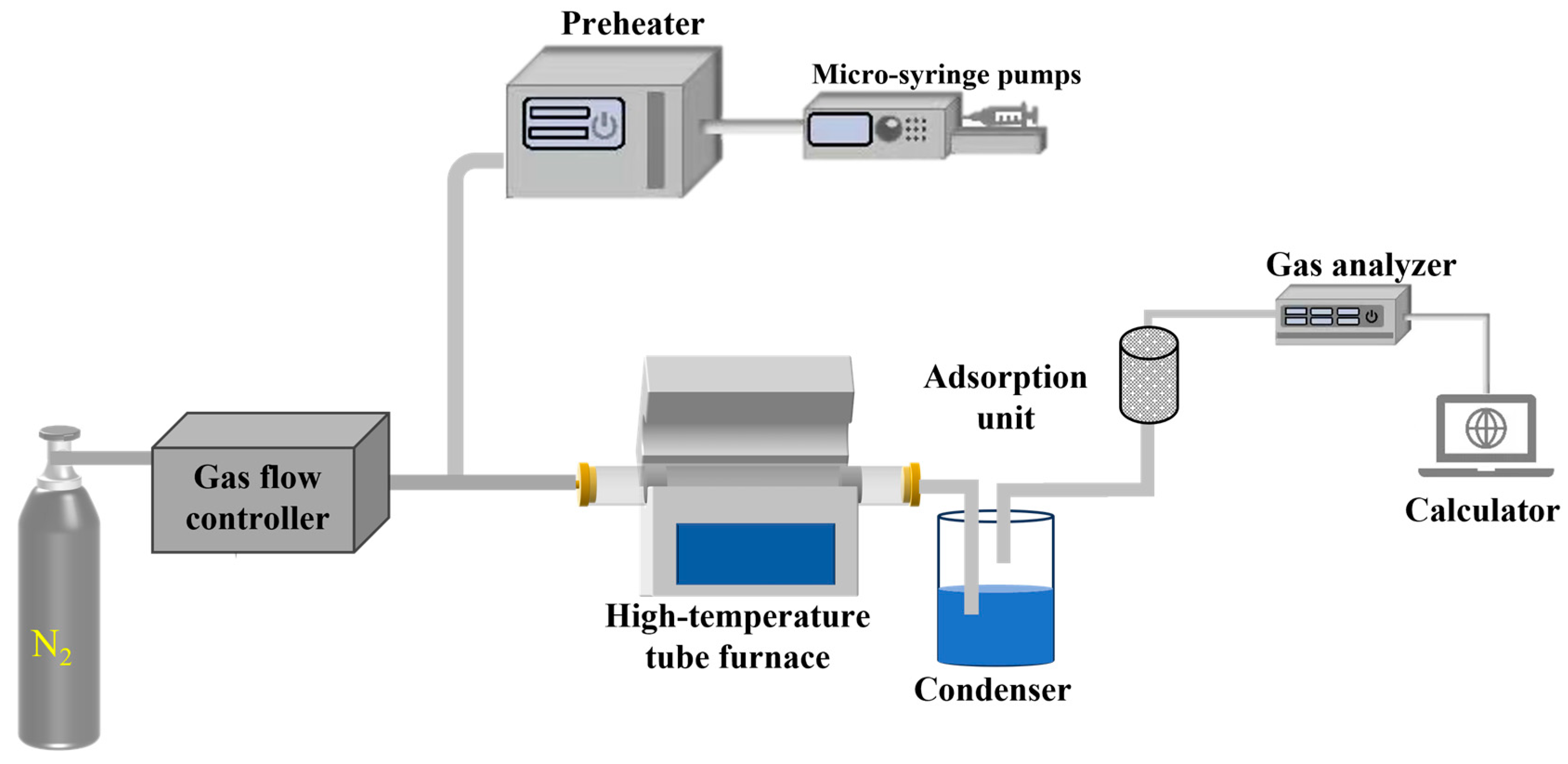
The catalytic performance was evaluated on a fixed-bed reactor set-up, as shown in Figure 2. The specific testing steps are as follows: First, check the air tightness of the entire experimental set-up. Then, weigh out 0.2 g of the catalyst, evenly spread the catalyst sample in a quartz boat, and place the quartz boat in the center of the tube furnace. After mixing deionized water and methanol in a molar ratio of 3:1, load them into a micro-injection pump to produce a methanol–water-vapor premixed liquid. Here, the temperature of the steam generator is set to 130 °C. The reaction process uses nitrogen as the carrier gas, with the flow rate controlled at 40 mL/min. Unreacted methanol and water in the resulting gas mixture are removed through a condenser and a drier, respectively. Then, the exhaust gas is detected online by an online gas analyzer.
In this study, methanol conversion rate, hydrogen production per unit time per unit mass, and carbon monoxide selectivity are used as evaluation indicators to measure the hydrogen production performance of the synthesized catalysts. According to the experimental data recorded by the computer data acquisition system, the calculation formulas for each performance indicator are as follows:
X m e t h a n o l = 1 n m e t h a n o l o u t n m e t h a n o l i n × 100 %  
S C O = F C O F C O + F C O 2 + F H 2 × 100 %
P H 2 = F H 2 m c a t
where Xmethanol is methanol conversion (%); P H 2 is hydrogen production per unit time per unit mass of catalyst (mmol/min/gcat); SCO is CO selectivity; n methanol out is methanol feed flow rate per unit time (mol/s); n methanol in is methanol outlet flow rate per unit time (mol/s); Fi (i is H2, CO, and CO2) is the molar flow rate of H2/CO/CO2 per unit time (mol/s); and mcat is the mass of catalyst used in the methanol-reforming hydrogen production performance test (g).

3. Results and Discussion

3.1. XRD

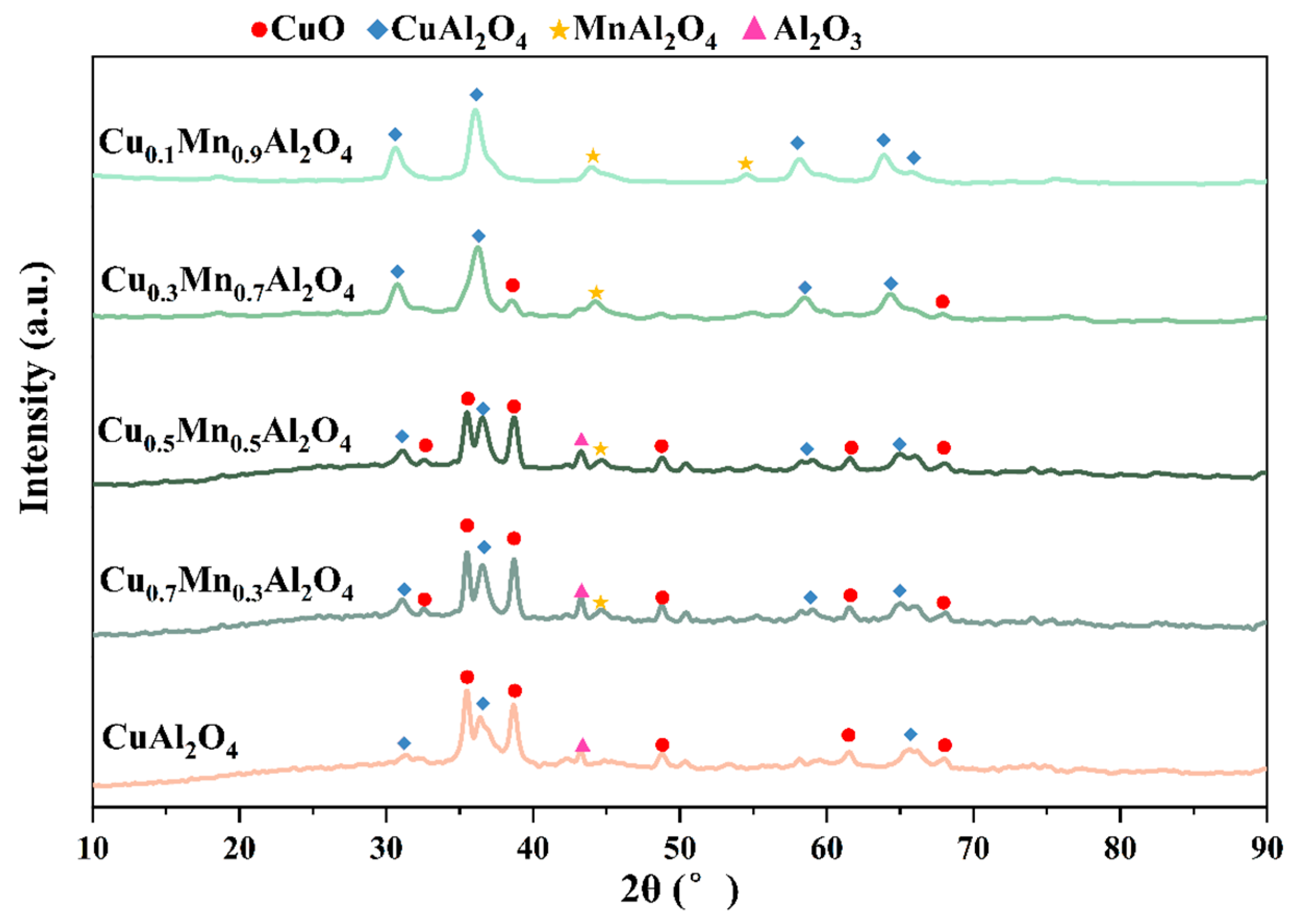
The XRD patterns of the fresh Cu1−xMnxAl2O4 (x is 0, 0.3, 0.5, 0.7, 0.9) catalysts are shown in Figure 3. Distinct characteristic peaks can be observed in the patterns. Additionally, some characteristic peaks correspond to the CuO phase. Results show that as the content of doped Mn elements increases, the characteristic peaks begin to shift toward lower angles while the peak width increases, indicating that Mn doping induces adjustments to local parameters of the lattice structure where Cu elements at A-sites are doped by Mn elements [24]. When the ratio of substituted Mn to Cu elements reaches 9:1, the characteristic peaks of CuO completely disappear, which demonstrates that copper elements in the reaction have fully entered the spinel lattice. This simultaneously indicates that substituting with a certain content of Mn elements can effectively promote the spinalization reaction. However, with increasing Mn content, weaker characteristic peaks of MnAl2O4 begin to appear, suggesting that some Mn elements start to locally enrich. As Mn content further increases, the characteristic peaks of MnAl2O4 gradually intensify. The prepared samples may exhibit catalytic performances different from the unsubstituted CuAl2O4 spinel under high-concentration Mn substituting.
Crystallite size and lattice distortion of Cu1−xMnxAl2O4 (x is 0, 0.3, 0.5, 0.7, 0.9) catalysts were calculated using the Scherrer formula, as shown in Table 1. The presence of Mn may alter the decomposition temperature of the precursors or the diffusion rates of cations, potentially leading to enhanced crystallite growth.
Scherrer Formula:
D = k λ β cos θ
ε = β 4 tan θ
where D is the crystallite size, k is the Scherrer constant (taken as 0.89 in this work), λ is the X-ray wavelength (0.15405 nm), β is the full width at half maximum of the diffraction peak, θ is the diffraction angle, and ε is the micro strain.

3.2. SEM-EDS

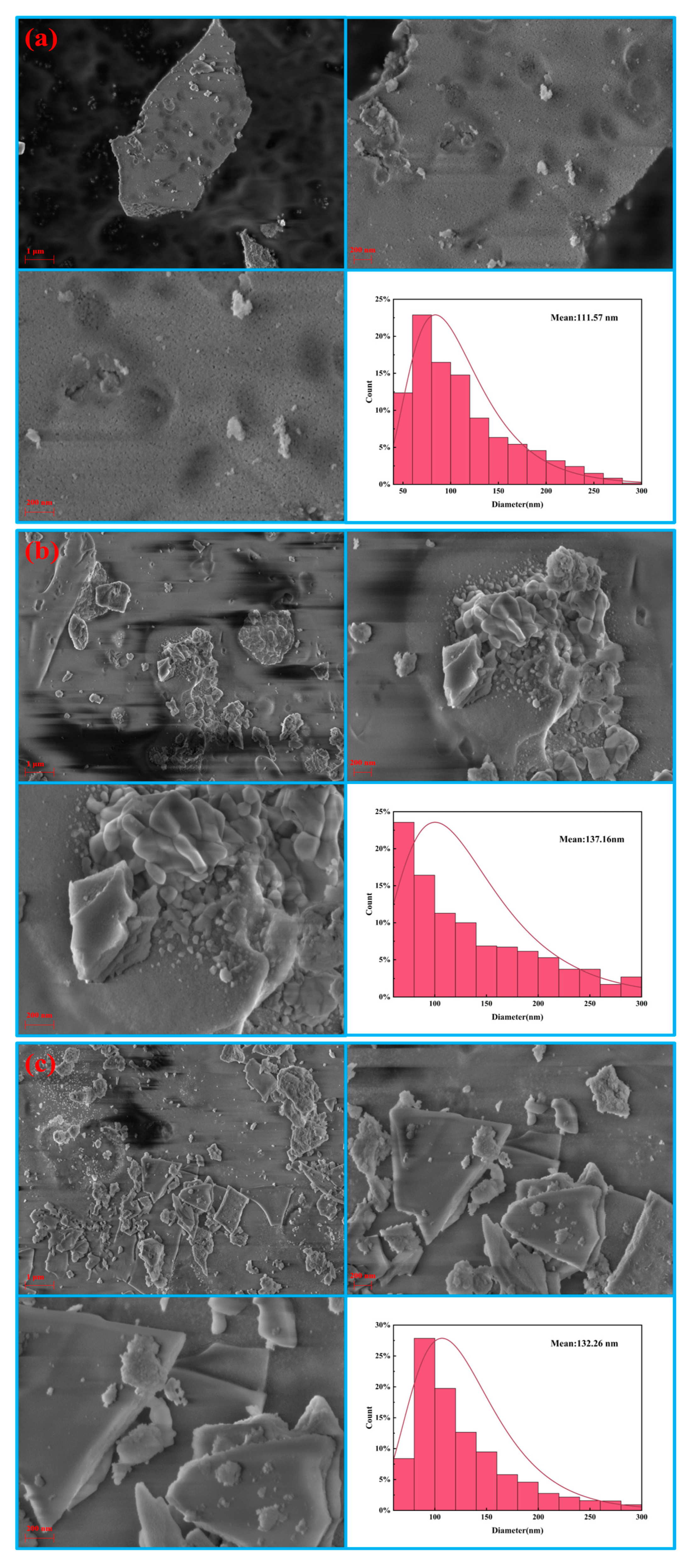
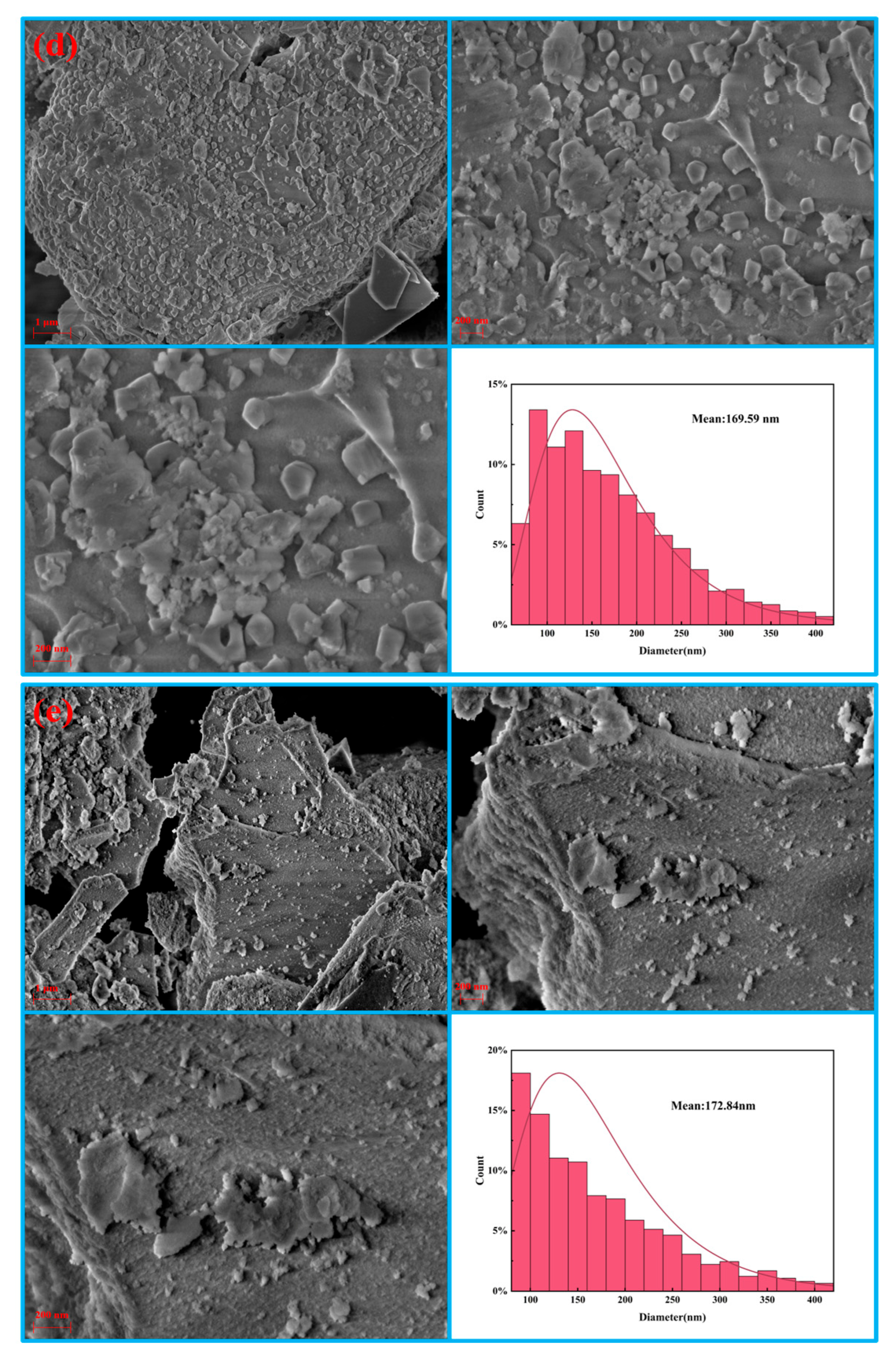
To further analyze the prepared catalysts, SEM analysis was conducted on the synthesized samples. The results are shown in Figure 4a–e. All prepared samples exhibit rough morphologies with numerous wrinkles. The catalyst displays a rough, wrinkled morphology that may enhance its reactive surface area with methanol. Furthermore, the presence of small particles attached to larger aggregates, particularly in samples with low manganese content (x ≤ 0.7), is likely responsible for the CuO phase detected by XRD.
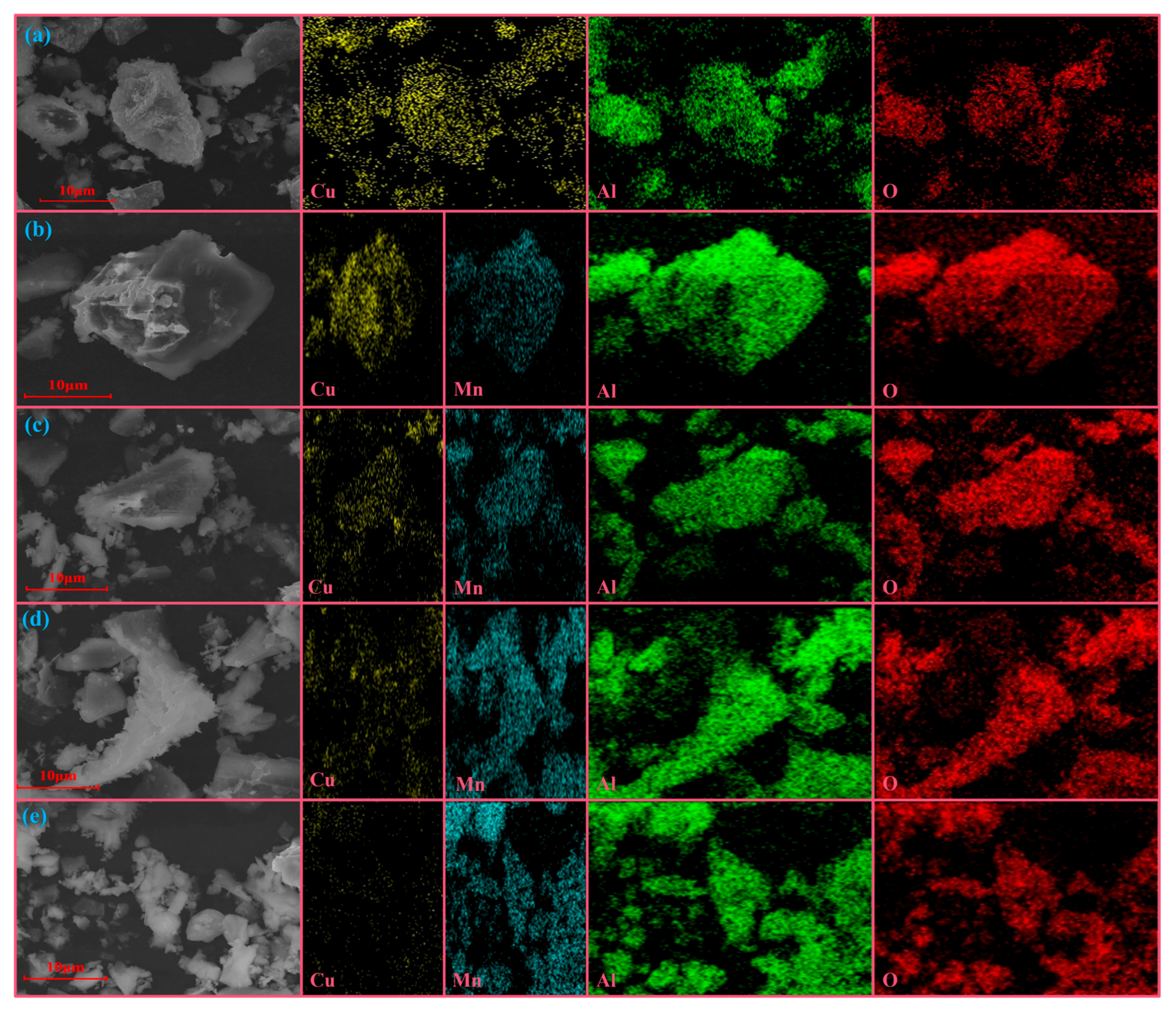
EDS characterization was further conducted on the synthesized catalysts. Results confirm that all elements detected correspond to the designed composition, with homogeneous distribution throughout the catalysts, indicating successful synthesis. Figure 5 displays selected EDS spectra, elemental composition, and elemental mapping for all five catalysts. The atomic percentages of major elements are summarized in Table 2. It is noteworthy that the measured oxygen content of the as-prepared samples consistently exceeds the theoretical stoichiometry of the pure spinel phase. We speculate that a fraction of other metal oxide phases exists in the samples, which is also consistent with the XRD results.

3.3. Catalytic Performance

This experiment established four temperature groups (275 °C, 300 °C, 325 °C, and 350 °C) to investigate the MSR performance of prepared catalysts. The reaction feedstock was self-prepared methanol aqueous solution with deionized water: the methanol molar ratio was 3:1, at a liquid hourly space velocity of 20 h−1.
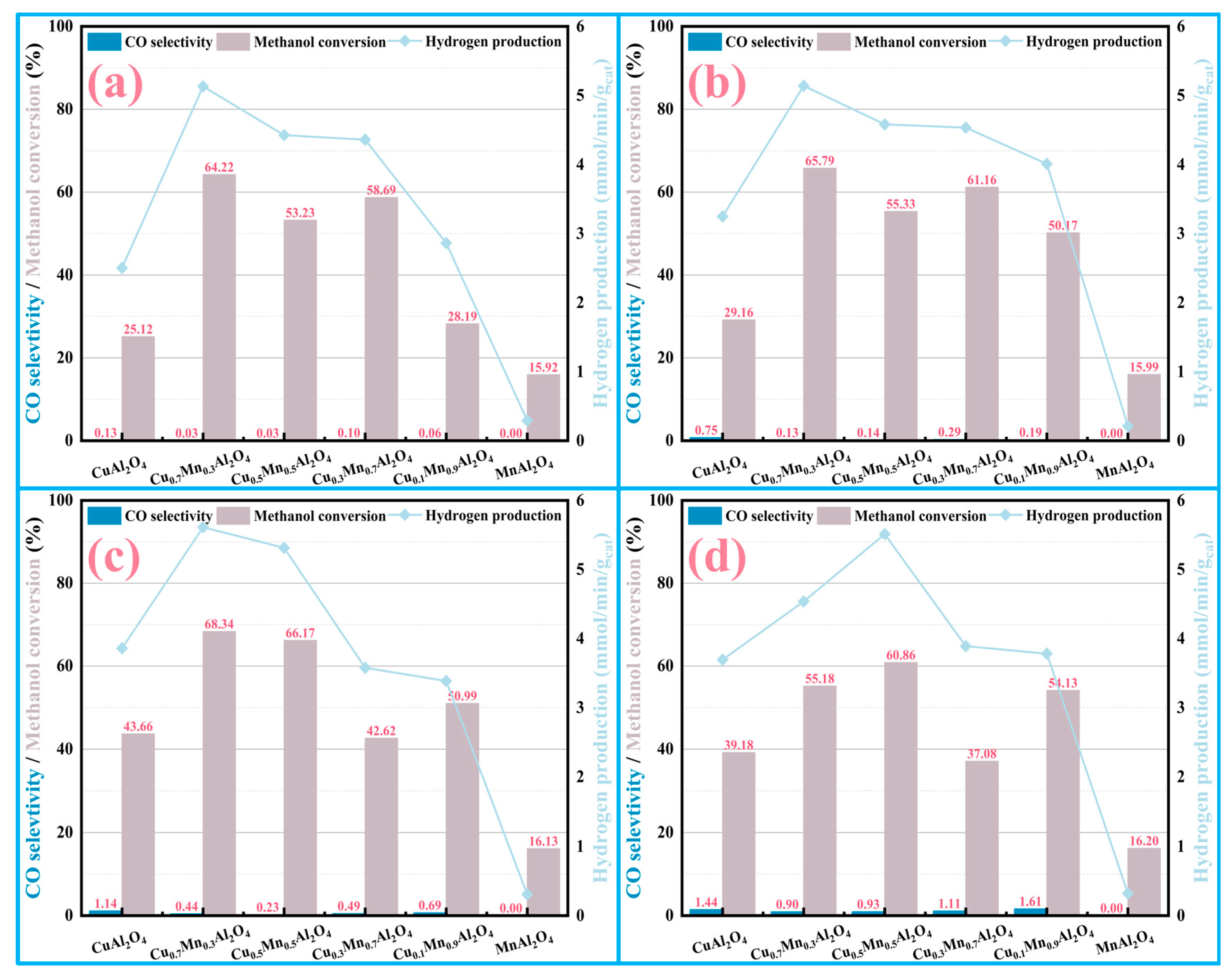
From Figure 6a, it can be observed that at 275 °C, compared with CuAl2O4 catalysts, all catalysts substituted with Mn exhibited better catalytic hydrogen production performance. Furthermore, with the increasing of the Mn substituting ratio, the hydrogen production amount first increased then decreased. Among the catalysts, Cu0.7Mn0.3Al2O4 showed the best catalytic performance, with a hydrogen production per unit time per unit mass of 5.130 mmol/min/gcat, CO selectivity of 0.029%, and methanol conversion of 64.224%.
From Figure 6b, it can be observed that at 300 °C, the unsubstituted CuAl2O4 showed the poorest performance across all indicators. The overall performance trend was similar to that at 275 °C. However, with further temperature increases and higher Mn content in the catalyst, the catalytic performance gradually changed. Nevertheless, the best catalytic performance was still achieved by Cu0.7Mn0.3Al2O4 with a Cu:Mn substitution ratio of 7:3.
As can also be seen from Figure 6c, the overall performance trend was essentially consistent with those at 275 °C and 300 °C. As the temperature further increased, Cu0.7Mn0.3Al2O4 still demonstrated the optimal comprehensive catalytic performance, exhibiting the highest hydrogen production per unit time per unit mass (5.611 mmol/min/gcat), highest methanol conversion (68.336%), and relatively low CO selectivity (0.436%). This indicates that catalysts with Mn and Cu substituted at a 7:3 ratio facilitate better catalytic performance, and this operating temperature is also relatively mainstream in industrial catalysis.
As shown in Figure 6d, the overall performance trend was essentially consistent with other temperatures. With further temperature increases, the catalytic performance of Cu0.5Mn0.5Al2O4 with higher Mn content began to surpass Cu0.7Mn0.3Al2O4. Its hydrogen production per unit time (5.512 mmol/min/gcat) and methanol conversion (60.859%) were the highest at this temperature, with good CO selectivity (0.927%). Considering all three indicators, its catalytic performance was optimal at this temperature.
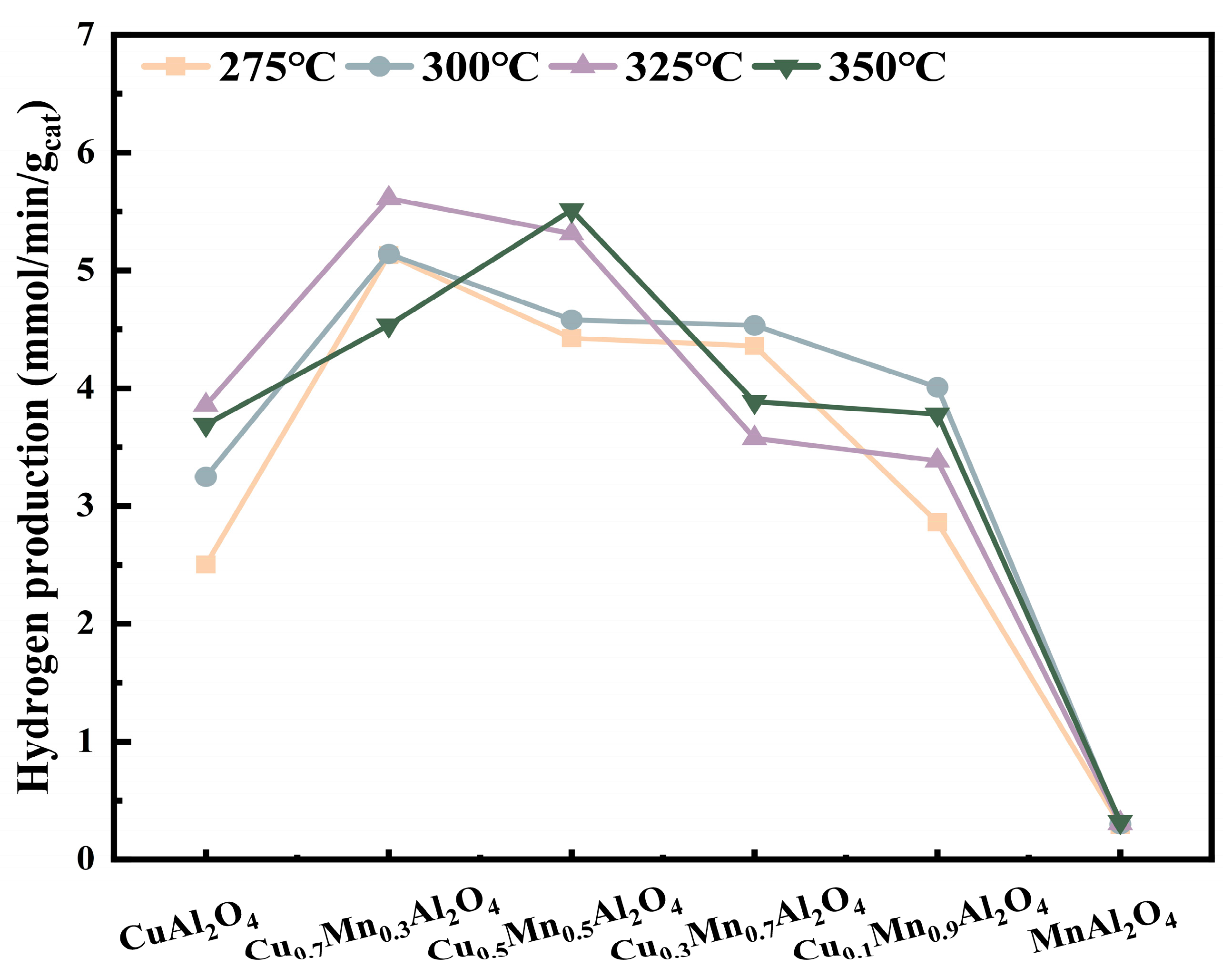
From the above analysis, it can be concluded that Cu0.7Mn0.3Al2O4 exhibited the best comprehensive performance at 325 °C. This may be due to the fact that doping with an appropriate proportion of manganese enhances the diffusion of active copper sites, enriches Mn3+ species, and generates abundant oxygen vacancies. Together, these effects promote CH3OH activation and water–gas shift coupling, while suppressing the methanol decomposition pathway to CO [25]. MnAl2O4 exhibits negligible activity for methanol decomposition within the 275 °C–350 °C range. Furthermore, the methanol conversion trend of MnAl2O4 as a function of temperature closely mirrors that of Cu0.1Mn0.9Al2O4. Since it performs well across temperatures with low CO selectivity, copper-based spinel modified with a Cu:Mn ratio of 7:3 is more suitable for industrial applications, posing minimal threat to downstream equipment requiring pure hydrogen sources.
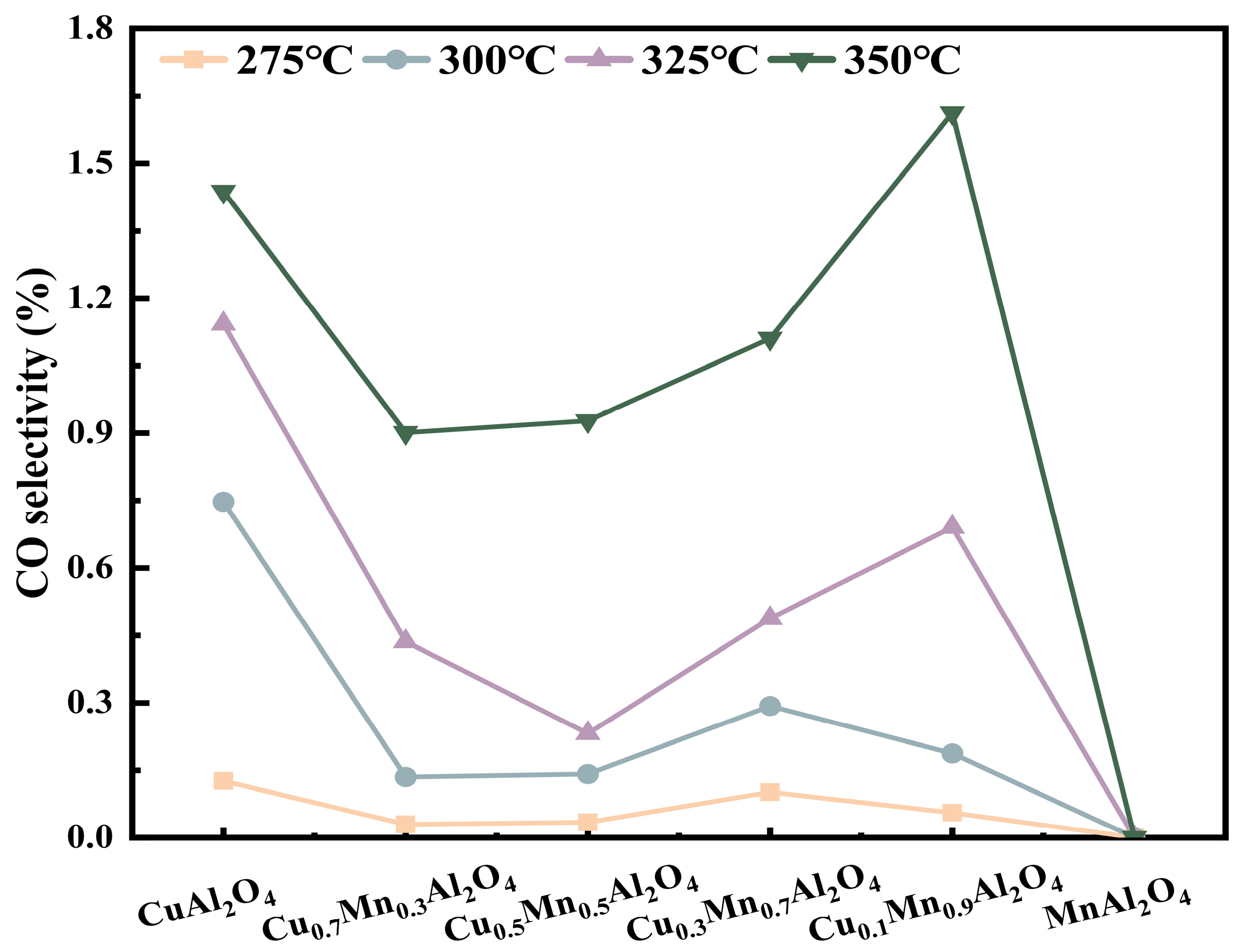
Figure 7 compares the CO selectivity of six catalysts at different temperatures. It can be concluded that CO selectivity increased significantly with temperature. All catalysts reached maximum CO selectivity at 350 °C. The temperature increases from 325 °C to 350 °C caused a relatively significant increase in CO selectivity.
Figure 8 display the comparison of hydrogen production rates over six catalysts at varying temperatures. Results show that the peak hydrogen production per unit time per unit mass occurred at 325 °C for Cu0.7Mn0.3Al2O4. Except for Cu0.5Mn0.5Al2O4 (when Cu:Mn was 1:1) which showed continuously increasing hydrogen production with temperature, other substituted catalysts exhibited first increase then decrease trends.
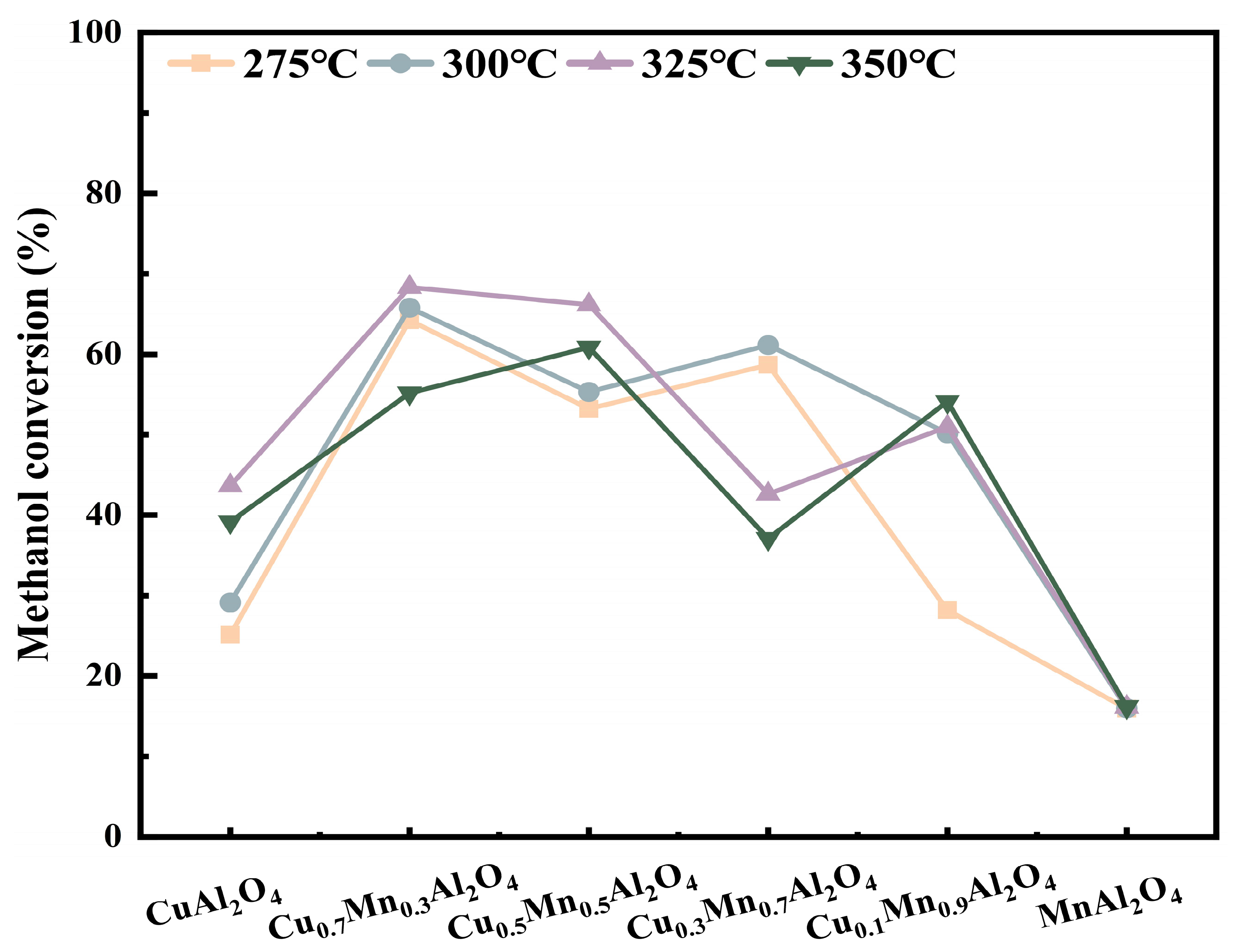
From Figure 9, it can be observed that when the substitution amount of Mn was less than 0.7, the methanol conversion rate showed a clear trend of first increasing and then decreasing (though temperature ranges for the decline differed). On the contrary, when the substitution amount of Mn in the A-site was greater than 0.7, methanol conversion increased continuously with temperature but showed limited increase above 300 °C.
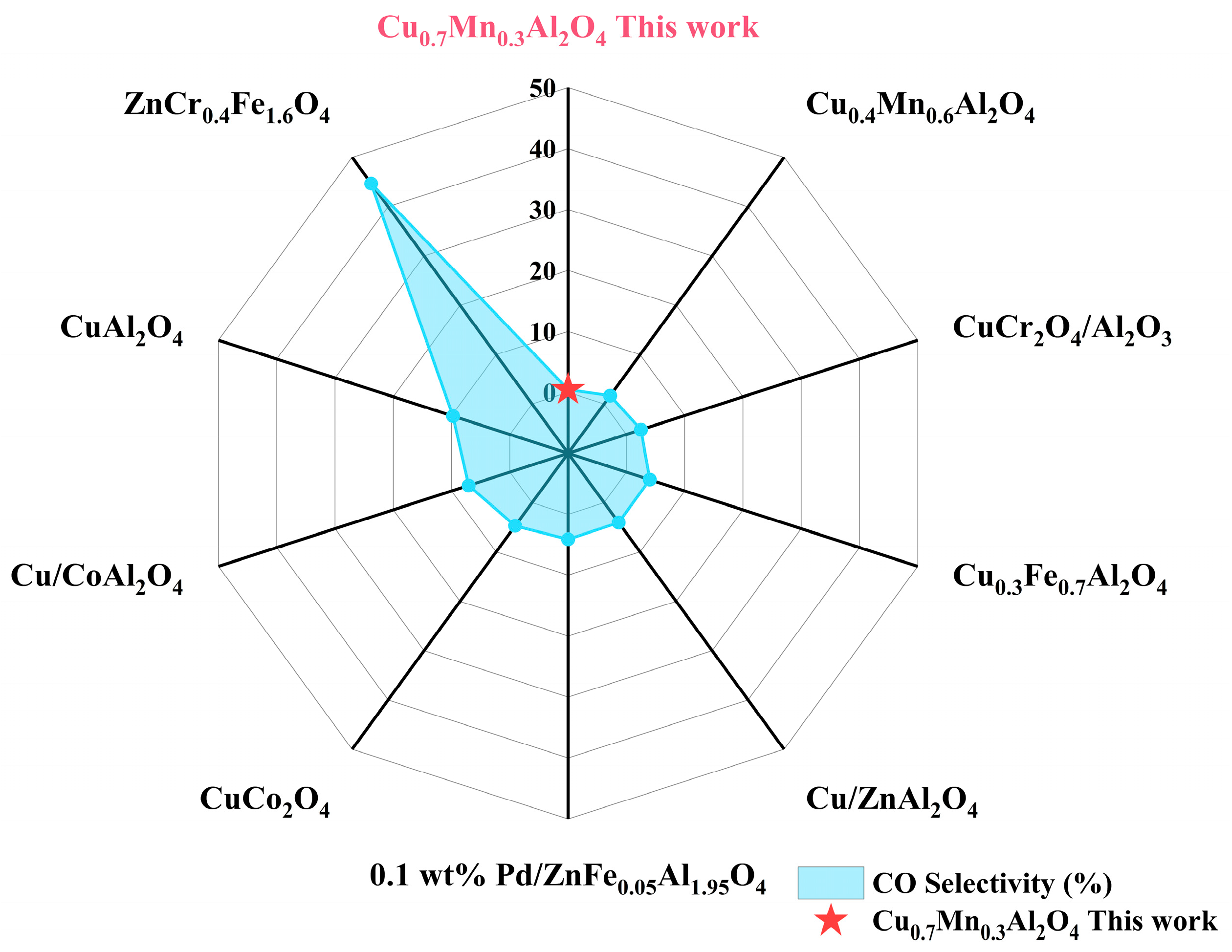
In addition, this study compared the CO selectivity (which significantly affects downstream fuel cell performance) of the developed catalyst with catalysts in the other literature, as shown in Figure 10. The catalyst marked with a pentagonal red star is the one developed in this study, which exhibits low CO selectivity compared to catalysts in the other literature, proving that this catalyst is a promising MSR catalyst that can be applied to high-purity hydrogen source scenarios such as fuel cells.
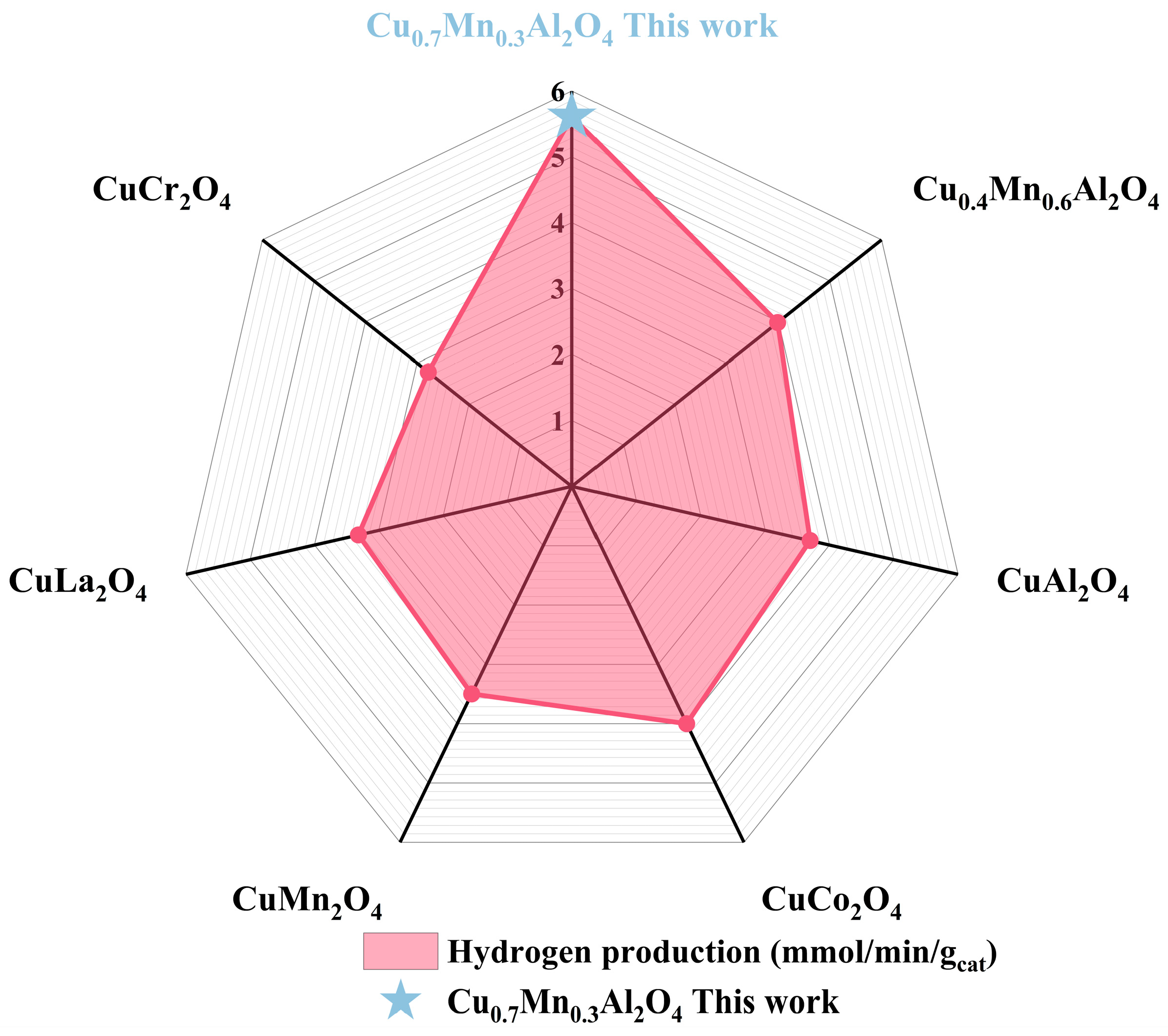
We also compared the hydrogen production yield of the catalyst with those reported in other studies, with the results shown in Figure 11. The hydrogen production yield of the catalyst developed in this work is represented by the blue pentagram in the figure. Its relatively high hydrogen production yield further demonstrates the promising application potential of this catalyst.
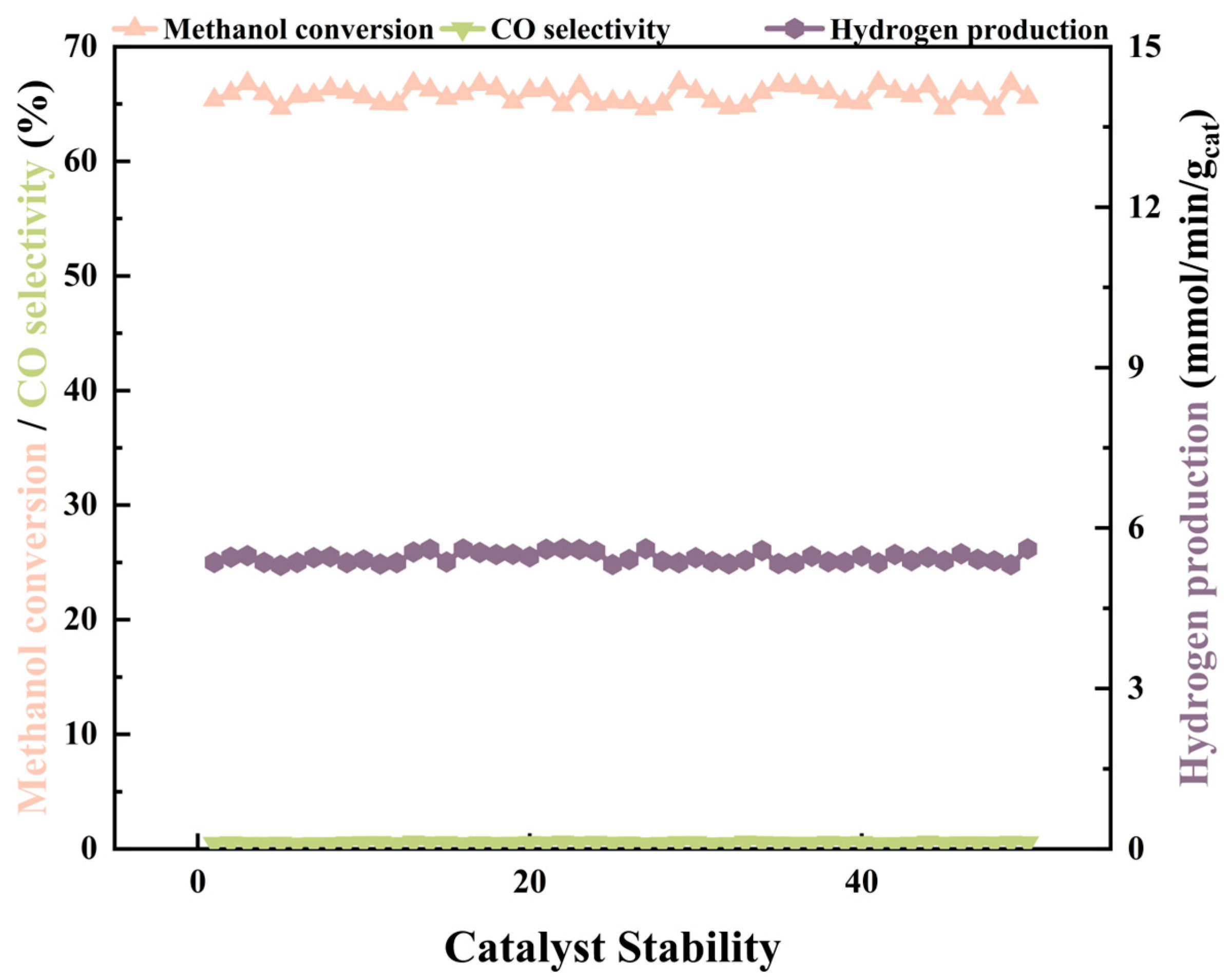
A 50 h stability test was performed on the developed catalyst as shown in Figure 12. The results demonstrate that during the 50 h test, the methanol conversion remained stable at around 65.8%, the hydrogen production rate stabilized at approximately 5.442 mmol/min/gcat, and the CO selectivity stayed around 0.513%. These data confirm that the catalyst did not exhibit significant deactivation during prolonged operation.

4. Conclusions

In this study, the effects of catalytic reaction temperature and elemental substitution ratio on methanol steam reforming performance over copper-based spinel oxides Cu1−xMnxAl2O4 (x is 0,0.3,0.5,0.7,0.9) were experimentally investigated. The prepared samples were characterized by XRD analysis, and their micro-morphologies were analyzed using scanning electron microscopy. The main conclusions are as follows:
Results indicate that unsubstituted copper-based spinel CuAl2O4 exhibits poor catalytic performance. Moderate Mn substitution generally improves catalytic activity of the copper-based spinel, though catalysts with specific substitution ratios show performance degradation at higher temperatures (above 300 °C).
XRD analysis demonstrates that Mn substitution (e.g., Cu0.7Mn0.3Al2O4) effectively suppresses formation of free CuO and promotes copper incorporation into the spinel lattice. However, further increase in Mn content (e.g., Cu0.1Mn0.9Al2O4) leads to formation of MnAl2O4 impurity phases.
SEM analysis reveals that all samples display rough morphologies with numerous wrinkles. This structure increases the contact area between the catalyst and reactants during catalytic reactions, facilitating the reaction process.
Experiments with different Mn substitution ratios identified the optimal substitution ratio and reaction temperature: Cu0.7Mn0.3Al2O4 at 325 °C shows best performance, achieving a methanol conversion of 68.336%, hydrogen production per unit time per unit mass of 5.611 mmol/min/gcat, and CO selectivity of 0.436%.
Future work should further extend the stability testing time to better explore the industrial application potential of this catalyst. We will also design simulated real ship operating conditions, such as simulating the impact of continuous hydrogen production by MSR during ship start-up and shutdown.

Author Contributions

Conceptualization, Q.S. and H.M.; Methodology, Y.S.; Validation, H.M.; Formal analysis, Y.S.; Investigation, Y.S.; Data curation, Y.S.; Writing—original draft, Y.S.; Writing—review and editing, Q.S., S.L. and H.M.; Visualization, Q.S.; Supervision, Q.S. and S.L.; Funding acquisition, S.L. All authors have read and agreed to the published version of the manuscript.

Funding

This work was supported by the National Natural Science Foundation of China (No. 52001045).

Data Availability Statement

The original contributions presented in the study are included in the article; further inquiries can be directed to the corresponding authors.

Conflicts of Interest

The authors declare that they have no known competing financial interests or personal relationships that could have appeared to influence the work reported in this paper.

References

  1. Hegazy, R.; Olabi, A.G.; Mohammad, A.A.; Ali, A.; Enas, T.S. Maximizing green hydrogen production from water electrocatalysis: Modeling and Optimization. J. Mar. Sci. Eng. 2023, 11, 617. [Google Scholar] [CrossRef]
  2. Li, Y.; Shen, Q.; Zhao, T.; Li, S. Hydrogen production by methanol reforming catalyzed by copper gallium-based spinel using B-site doping strategy. Int. J. Appl. Ceram. Technol. 2025, 22, e15178. [Google Scholar] [CrossRef]
  3. Li, S.; Yang, Z.; Shen, Q.W.; Yang, G.G. A Parametric Study on the Interconnector of Solid Oxide Electrolysis Cells for Co-Electrolysis of Water and Carbon Dioxide. J. Mar. Sci. Eng. 2023, 11, 1066. [Google Scholar] [CrossRef]
  4. Kuc, J.; Neumann, M.; Armbrüster, M.; Yoon, S.; Zhang, Y.; Erni, R.; Weidenkaffe, A.; Matam, S.K. Methanol steam reforming catalysts derived by reduction of perovskite-type oxides LaCo1−x−yPdxZnyO3±δ. Catal. Sci. Technol. 2016, 6, 1455–1468. [Google Scholar] [CrossRef]
  5. Jiang, X.; Nie, X.; Guo, X.; Song, C.; Chen, J.G. Recent Advances in Carbon Dioxide Hydrogenation to Methanol via Heterogeneous Catalysis. Chem. Rev. 2020, 120, 7984–8034. [Google Scholar] [CrossRef]
  6. Wang, Y.; Wu, Q.; Mei, D.; Wang, Y. A methanol fuel processing system with methanol steam reforming and CO selective methanation modules for PEMFC application. Int. J. Energy Res. 2021, 45, 6163–6173. [Google Scholar] [CrossRef]
  7. Xu, J.B.; Zhao, T.S.; Yang, W.W.; Shen, S.Y. Effect of surface composition of Pt-Au alloy cathode catalyst on the performance of direct methanol fuel cells. Int. J. Hydrogen Energy 2010, 35, 8699–8706. [Google Scholar] [CrossRef]
  8. Li, Y.; Bai, X.; Yuan, D.; Zhang, F.; Li, B.; San, X.; Liang, B.; Wang, S.; Luo, J.; Fu, G. General Heterostructure Strategy of Photothermal Materials for Scalable Solar-Heating Hydrogen Production without the Consumption of Artificial Energy. Nat. Commun. 2022, 13, 776. [Google Scholar] [CrossRef]
  9. Huang, R.-J.; Sakthinathan, S.; Chiu, T.-W.; Dong, C. Hydrothermal Synthesis of High Surface Area CuCrO2 for H2 Production by Methanol Steam Reforming. RSC Adv. 2021, 11, 12607–12613. [Google Scholar] [CrossRef]
  10. Palo, D.R.; Dagle, R.A.; Holladay, J.D. Methanol Steam Reforming for Hydrogen Production. Chem. Rev. 2007, 107, 3992–4021. [Google Scholar] [CrossRef] [PubMed]
  11. Lindström, B.; Pettersson, L.J.; Menon, P.G. Activity and characterization of Cu/Zn, Cu/Cr and Cu/Zr on γ-alumina for methanol reforming for fuel cell vehicles. Appl. Catal. A Gen. 2002, 234, 111–125. [Google Scholar] [CrossRef]
  12. Peppley, B.A.; Amphlett, J.C.; Kearns, L.M.; Mann, R.F. Methanol–steam reforming on Cu/ZnO/Al2O3 catalysts. Part 2. A comprehensive kinetic model. Appl. Catal. A Gen. 1999, 179, 31–49. [Google Scholar] [CrossRef]
  13. Shen, Q.; Shao, Z.; Cai, Z.; Yan, M.; Yang, G.; Li, S. Enhancement of hydrogen production performance of novel perovskite LaNi0.4Al0.6O3-δ supported on MOF A520-derived λ-Al2O3. Int. J. Energy Res. 2022, 46, 15709–15721. [Google Scholar] [CrossRef]
  14. Takezawa, N.; Iwasa, N. Steam reforming and dehydrogenation of methanol: Difference in the catalytic functions of copper and group VIII metals. Catal. Today 1997, 36, 45–56. [Google Scholar] [CrossRef]
  15. Xu, X.; Shuai, K.; Xu, B. Review on Copper and Palladium Based Catalysts for Methanol Steam Reforming to Produce Hydrogen. Catalysts 2017, 7, 183. [Google Scholar] [CrossRef]
  16. Flores-Lasluisa, J.X.; Huerta, F.; Cazorla-Amorós, D.; Morallón, E. Transition Metal Oxides with Perovskite and Spinel Structures for Electrochemical Energy Production Applications. Environ. Res. 2022, 214, 113731. [Google Scholar] [CrossRef]
  17. Li, P.; Wang, S.; Wang, S. Unravelling the synergistic promotion effect of simultaneous doping Fe and Cr into Cu-based spinel oxide on methanol steam reforming. Int. J. Hydrogen Energy 2023, 48, 18731–18743. [Google Scholar] [CrossRef]
  18. Baseri, J.; Naghizadeh, R.; Rezaie, H.R.; Golestanifard, F.; Golmohammad, M. A comparative study on citrate sol-gel and combustion synthesis methods of CoAl2 O4 spinel. Int. J. Appl. Ceram. Technol. 2020, 17, 2709–2715. [Google Scholar] [CrossRef]
  19. Shen, Q.; Chen, G.; Ren, J.; Yan, M.; Andersson, M.; Li, S. Highly stable CuFe1.2Al.8O4 catalyst with low CO selectivity for hydrogen production in HT-PEMFCs application. Int. J. Appl. Ceram. Technol. 2024, 21, 2896–2905. [Google Scholar] [CrossRef]
  20. Liao, M.; Xiang, R.; Zhou, X.; Dai, Z.; Wang, L.; Qin, H.; Xiao, H. Enhancing effect of Mn2+ substitution in CuAl2O4 spinel for methanol steam reforming in a microreactor. Renew. Energy 2024, 230, 120815. [Google Scholar] [CrossRef]
  21. Shen, Q.; Cai, Z.; Zhang, X.; Chen, G.; Yang, G.; Li, S. Novel spinel oxide catalysts CuFexAl2−xO4 with high H2 selectivity with low CO generation in methanol steam reforming. J. Alloys Compd. 2023, 951, 169878. [Google Scholar] [CrossRef]
  22. Chen, G.; Shen, Q.; Zhang, X.; Zhao, T.; Zhu, K.; Li, S. High purity H2 resource from methanol steam reforming at low-temperature by spinel CuGa2O4 catalyst for fuel cell. Ceram. Int. 2024, 50, 49759–49769. [Google Scholar] [CrossRef]
  23. Fukunaga, T.; Ryumon, N.; Ichikuni, N.; Shimazu, S. Characterization of CuMn-spinel catalyst for methanol steam reforming. Catal. Commun. 2009, 10, 1800–1803. [Google Scholar] [CrossRef]
  24. Danks, A.E.; Hall, S.R.; Schnepp, Z. The evolution of “sol–gel” chemistry as a technique for materials synthesis. Mater. Horiz. 2016, 3, 91–112. [Google Scholar] [CrossRef]
  25. Zhang, Q.; Qiu, S.; Zheng, Y.; Huang, Y. Effect of Mn/Cu Ratio on the Structure–Performance Relationship of Spinel-Type Mn–Cu/Al2Ox Catalysts for Methanol Steam Reforming. Catalysts 2025, 15, 1091. [Google Scholar] [CrossRef]
  26. Maiti, S.; Das, D.; Pal, K.; Llorca, J.; Soler, L.; Colussi, S.; Trovarelli, A.; Priolkar, K.; Sarode, P.; Asakura, K.; et al. Methanol steam reforming behavior of sol-gel synthesized nanodimensional CuxFe1−xAl2O4 hercynites. Appl. Catal. A Gen. 2019, 570, 73–83. [Google Scholar] [CrossRef]
  27. Kamyar, N.; Khani, Y.; Amini, M.M.; Bahadoran, F.; Safari, N. Copper-based catalysts over A520-MOF derived aluminum spinels for hydrogen production by methanol steam reforming: The role of spinal support on the performance. Int. J. Hydrogen Energy 2020, 45, 21341–21353. [Google Scholar] [CrossRef]
  28. Liao, M.; Huang, W.; Wang, L.; Zhou, X.; Dai, Z.; Qin, H.; Xiao, H. Insight into the methanol steam reforming behavior of Cu-containing spinels CuB2O4 (BCo, Al, Mn, La, Cr). Int. J. Hydrogen Energy 2024, 49, 1361–1374. [Google Scholar] [CrossRef]
  29. Zhang, L.; Wang, J.; Zhang, B.; Lin, Z.; Liu, L.; Zhang, X.; Wang, S.; Lin, J.; Xiong, H.; Wu, C.; et al. ZnFexAl2−xO4 spinel supported PdZnβ bifunctional catalyst for methanol steam reforming. Chem. Eng. J. 2023, 475, 146334. [Google Scholar] [CrossRef]
Figure 1. The synthesis of catalysts via the sol–gel method.
Jmse 14 00188 g001
Figure 2. Schematic diagram of the MSR experimental set-up.
Jmse 14 00188 g002
Figure 3. XRD patterns of fresh Cu1−xMnxAl2O4.
Jmse 14 00188 g003
Figure 4. SEM images of fresh Cu1−xMnxAl2O4: (a) CuAl2O4; (b) Cu0.7Mn0.3Al2O4; (c) Cu0.5Mn0.5Al2O4; (d) Cu0.3Mn0.7Al2O4; (e) Cu0.1Mn0.9Al2O4.
Jmse 14 00188 g004aJmse 14 00188 g004b
Figure 5. SEM-EDS mapping images of Cu1−xMnxAl2O4: (a) CuAl2O4; (b) Cu0.7Mn0.3Al2O4; (c) Cu0.5Mn0.5Al2O4; (d) Cu0.3Mn0.7Al2O4; (e) Cu0.1Mn0.9Al2O4.
Jmse 14 00188 g005
Figure 6. Comparative catalytic performance of six catalysts at different temperatures: (a) performance of six catalysts at 275 °C; (b) performance of six catalysts at 300 °C; (c) performance of six catalysts at 325 °C; (d) performance of six catalysts at 350 °C.
Jmse 14 00188 g006
Figure 7. CO selectivity of catalysts at different reforming temperatures.
Jmse 14 00188 g007
Figure 8. Hydrogen production performance of catalysts at different reforming temperatures.
Jmse 14 00188 g008
Figure 9. Methanol conversion of catalysts at different reforming temperatures.
Jmse 14 00188 g009
Figure 10. Comparison of CO selectivity between Cu0.7Mn0.3Al2O4 and other catalysts [20,26,27,28,29].
Jmse 14 00188 g010
Figure 11. Comparison of hydrogen production between Cu0.7Mn0.3Al2O4 and others [20,28].
Jmse 14 00188 g011
Figure 12. 50 h stability study of Cu0.7Mn0.3Al2O4.
Jmse 14 00188 g012
Table 1. Crystallite size and lattice distortion of synthesized catalysts.
SampleCrystallite Size (nm)Lattice Distortion (%)
CuAl2O4692.254
Cu0.7Mn0.3Al2O41191.433
Cu0.5Mn0.5Al2O41321.693
Cu0.3Mn0.7Al2O41570.277
Cu0.1Mn0.9Al2O42410.441
Table 2. Atomic percentages of elements in the synthesized Cu1−xMnxAl2O4.
SampleElementsAtomic Percentages (%)
CuAl2O4Cu15.04
Al27.62
O57.34
Cu0.7Mn0.3Al2O4Cu9.67
Mn4.23
Al27.54
O58.56
Cu0.5Mn0.5Al2O4Cu8.02
Mn7.74
Al26.73
O57.51
Cu0.3Mn0.7Al2O4Cu4.52
Mn9.89
Al27.67
O57.92
Cu0.1Mn0.9Al2O4Cu1.79
Mn12.83
Al26.91
O58.47
Disclaimer/Publisher’s Note: The statements, opinions and data contained in all publications are solely those of the individual author(s) and contributor(s) and not of MDPI and/or the editor(s). MDPI and/or the editor(s) disclaim responsibility for any injury to people or property resulting from any ideas, methods, instructions or products referred to in the content.