1. Introduction
As the global energy structure transitions towards green and low-carbon sources, offshore wind power, a major contributor to renewable energy, is entering a critical period of large-scale development. China, with its long coastline and abundant offshore wind resources, has seen rapid growth in installed capacity in recent years, driven by strong national policies. Furthermore, the industry is technologically advancing towards deeper waters and larger turbine capacities [
1]. In this process, the foundation of the wind turbine, a key component supporting the entire structure and transferring complex environmental loads to the seabed, has its reliability and economy directly impacting the whole-life-cycle cost and safety of the project. Among various foundation types, the suction bucket foundation stands out for its advantages such as convenient installation, relatively low cost, and strong recyclability, demonstrating significant application potential in deep-water floating offshore wind projects [
2].
In the harsh marine environment, foundations are subjected to long-term combined cyclic loads from wind, waves, and currents. The resulting local scour around the foundation has become a key geohazard threatening its stability [
3,
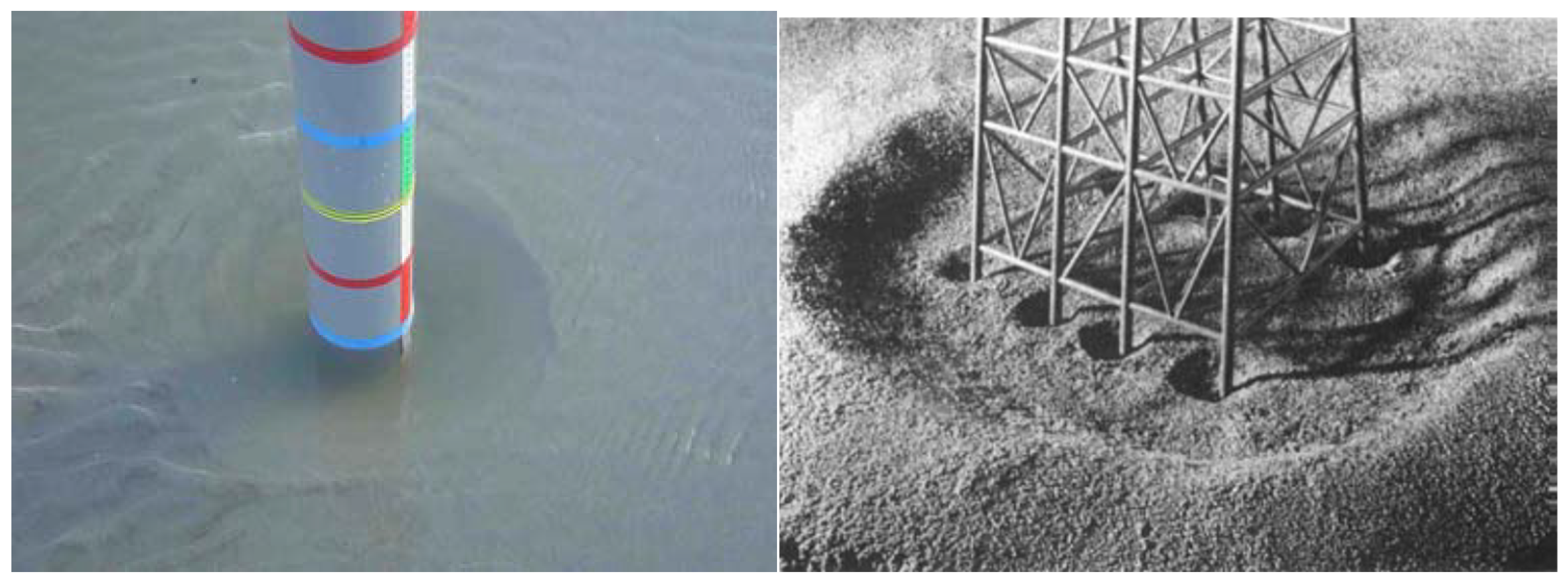
4]. As waves and currents flow around the foundation structure, they alter the local flow field, leading to the erosion and transport of seabed soil and the formation of a local scour hole around the foundation (see
Figure 1 [
5]). Scour not only directly reduces the effective embedment depth and lateral support for the foundation but also profoundly alters the initial stress state of the foundation soil and the potential failure mechanism, consequently degrading the ultimate bearing capacity of the foundation [
6]. Studies indicate that severe local scour can reduce the horizontal and moment capacity of suction buckets by over 30% [
7]. Therefore, accurately predicting the evolution of the bearing capacity of suction bucket foundations under scour conditions is an indispensable aspect of the safety design for deep-water wind turbine projects.
To investigate the bearing behaviour of suction bucket foundations, researchers worldwide have extensively employed methods such as centrifuge testing [
8,
9,
10], small-scale physical model testing [
11,
12,
13,
14] and field testing [
15,
16,
17,
18,
19]. Although experimental methods provide valuable physical insights, they are often costly, time-consuming, and struggle to cover all complex loading conditions and soil types. In this context, numerical simulation methods, particularly the Finite Element Method (FEM), have become vital tools for studying soil–structure interactions due to their cost-effectiveness, repeatability, and adaptability to various scenarios. For instance, Achmus et al. [
20] used ABAQUS to develop 3D FEM models to analyse the response of suction buckets in sand under combined vertical (
), horizontal (
), and moment (
) loading; Liu et al. [
21] used FEM to reveal the bearing characteristics of wide-shallow suction buckets in silty sand; Sorensen et al. [
22] used an in-house finite element code to numerically compare fully coupled and quasi-static responses of suction buckets in sandy soil under different tensile loading rates; and Gao et al. [
23] employed a coupled Finite Element–Finite Difference (FE–FD) approach combined with a cyclic mobility constitutive model to analyse the dynamic response of suction buckets in liquefiable sand layers under seismic loading. Peng et al. [
24] used a novel hydro-mechanical interface to investigate the uplift of suction buckets at various rates.
However, the reliability of FEM predictions depends critically on the ability of the constitutive model to capture realistic soil behaviour [
25]. The conventional Mohr–Coulomb (MC) model, despite its simplicity and clear parameter definition, cannot represent essential features such as stress-dependent stiffness and dilatancy [
26]. In practice, soil stiffness increases with confining pressure, and dense sands exhibit shear-induced volume expansion—mechanisms that strongly affect foundation capacity and deformation. Moreover, for bucket foundations embedded in dense or crushable sands, particle breakage may occur under high stress levels, especially near the skirt tip or during large overturning moments [
27,
28,
29,
30]. To address these limitations, the Hardening Soil (HS) model was developed. This model represents a significant milestone in advanced constitutive modelling for soils. It incorporates a ‘yield cap’ to account for plastic hardening behaviour during compression and shearing, and can accurately describe the stress-dependency of soil stiffness and the dilatancy/contractancy of frictional materials [
31]. Unlike the MC model, which treats both loading and unloading as linearly elastic, the HS model uses different moduli (e.g., triaxial loading modulus
, unloading/reloading modulus
) to simulate primary loading, unloading, and reloading separately. This allows for more accurate prediction of foundation settlement and displacement accumulation when simulating the entire lifecycle of a foundation from installation to service (including bearing capacity tests and wave cyclic loading).
Despite its theoretical advantages, the potential of the HS model for the specific problem of seabed scour has not been fully explored or systematically validated. In essence, Scour involves a drastic change in the geometry and boundary conditions of the foundation soil, triggering large-scale stress relief and redistribution. The HS model, through its stress-dependent stiffness formulation, can naturally capture the softening of soil stiffness resulting from the reduction in confining pressure around the bucket due to scour hole formation. Simultaneously, its advanced plastic hardening mechanism can more realistically reflect the progressive failure process and the ultimate 3D failure envelope shape of the foundation under the new, scour-weakened soil configuration. Currently, most studies on the impact of scour on foundation capacity remain limited to the MC mode [
7,
32,
33,
34,
35,
36,
37,
38], potentially leading to deviations in peak capacity estimates or misinterpretations of failure modes. For example, while the study by Guo et al. [
36] systematically analysed the influence of scour geometry on the failure envelopes of monopiles and suction buckets, the inherent limitations of their constitutive model in simulating nonlinear soil hardening behaviour might affect the precision of their predictions regarding capacity degradation rates and the contraction pattern of the failure envelope.
It is noteworthy that among key scour parameters (depth, width, slope angle), scour depth is widely recognized as the most dominant factor affecting bearing performance [
32]. As scour depth increases, the effective lateral restraint area for the foundation decreases, and the moment arm resisting overturning shortens, leading to a significant reduction in horizontal and moment capacity. However, this degradation is non-linear. Preliminary studies have indicated that when the relative scour depth (
, where
is the bucket diameter) exceeds a certain critical value (e.g., 0.3), the rate of attenuation capacity accelerates markedly [
7]. Nevertheless, a systematic and quantitative investigation of this non-linear degradation law, based on an advanced constitutive model, is still lacking, particularly regarding how the
H–
M failure envelope evolves with scour depth under different levels of vertical load. Specifically, the mechanism of how vertical load influences the combined bearing capacity after scour—whether it partially compensates for the capacity loss induced by scour or accelerates failure in the horizontal direction by altering the soil stress field—remains a key scientific question requiring clarification.
Although the influence of seabed scour on offshore foundations has been widely investigated, most existing studies focus on isolated loading components or simplified failure descriptions. Against this background, this study employs a refined three-dimensional numerical framework incorporating the stress-dependent Hardening Soil (HS) model to systematically quantify the effects of seabed scour on the combined horizontal–moment (H–M) bearing behaviour of suction bucket foundations for offshore wind turbines. A high-fidelity 3D suction bucket–soil interaction model is established in PLAXIS 3D (Edition V22) and verified through mesh sensitivity analysis and experimental validation. The bearing response within the H–M load plane is then investigated under different scour depths, enabling quantitative characterisation of failure envelope evolution and identification of critical scour depths associated with accelerated capacity degradation.
2. Finite Element Modelling Framework
In this part, the numerical simulation of suction bucket foundation in sand is introduced. Simulation using the commercial finite element program PLAXIS 3D. Firstly, the grid-dependent simulation experiment was carried out by using the parameters used in the finite element simulation of the bearing capacity of the suction bucket foundation by Jin et al. (2019) [
39], and the soil hardening (HS) parameters were selected according to the field experiment [
40,
41,
42]. It should be noted that although some of the referenced experimental and numerical studies were conducted in clay, they are cited here primarily to demonstrate the robustness and general applicability of the Hardening Soil (HS) modelling framework for suction bucket foundations under combined
V–
H–
M loading, rather than for direct validation of sand behaviour.
2.1. Representation of Local Scour and Boundary Conditions
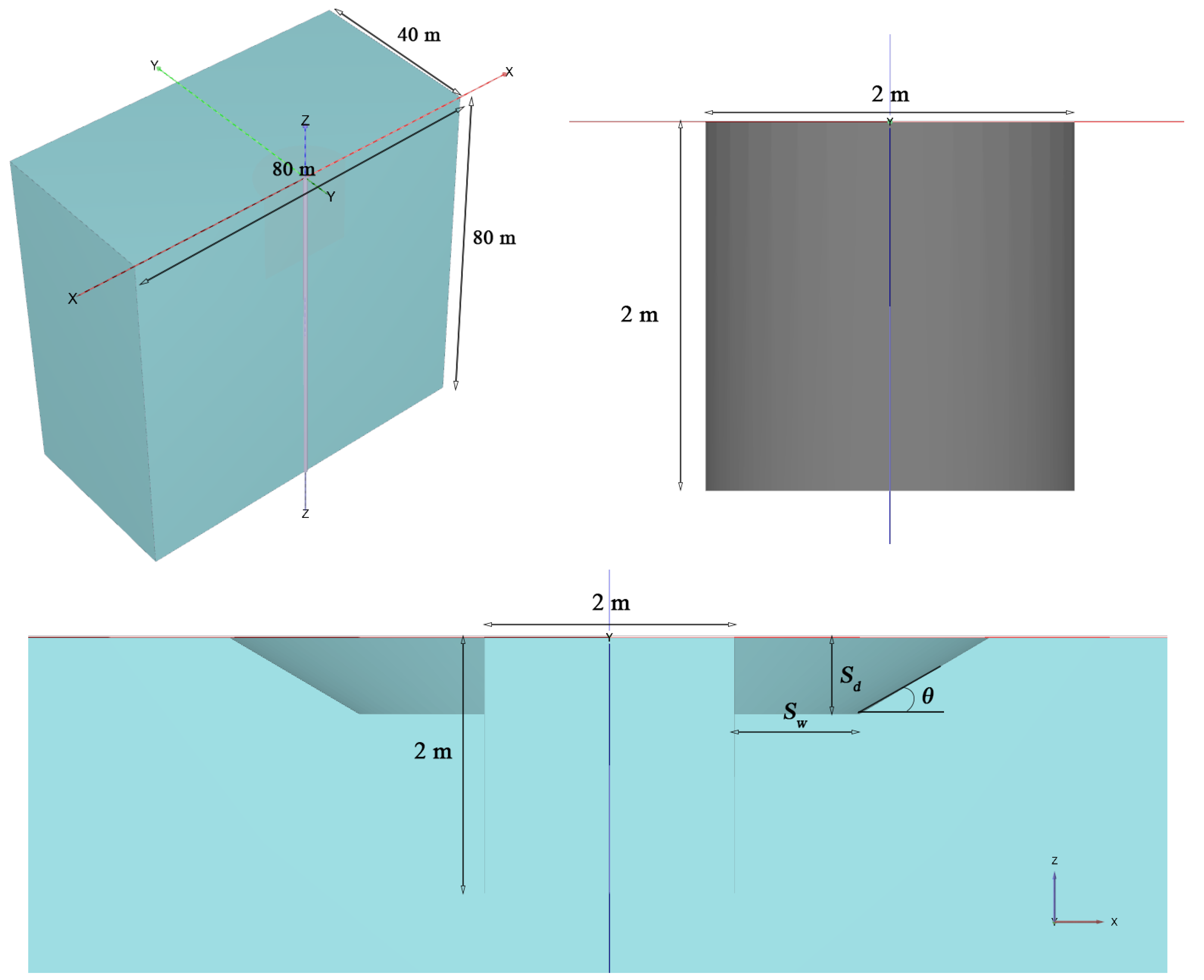
This study established a numerical model for the interaction between a suction bucket foundation and the seabed in sand using the PLAXIS 3D finite element platform. To reasonably simulate the influence of seabed scour on the foundation’s bearing performance, the model dimensions were designed to minimize boundary effects, with the soil domain extending 40 times the bucket diameter in both the radial and vertical directions. The specific geometry is shown in
Figure 2. To enhance computational efficiency while maintaining accuracy, a symmetric modelling strategy was adopted, modelling only one-half of the soil and suction bucket along the symmetry plane. This reduced the overall model size from the original 80 m × 80 m × 80 m (Length × Width × Height) to 80 m × 40 m × 80 m [
43]. To replicate the real marine environment, a water layer was defined surrounding the soil mass. By setting the phreatic level in PLAXIS 3D to 1 m above the mudline, both the suction bucket and the surrounding soil were maintained in a saturated state.
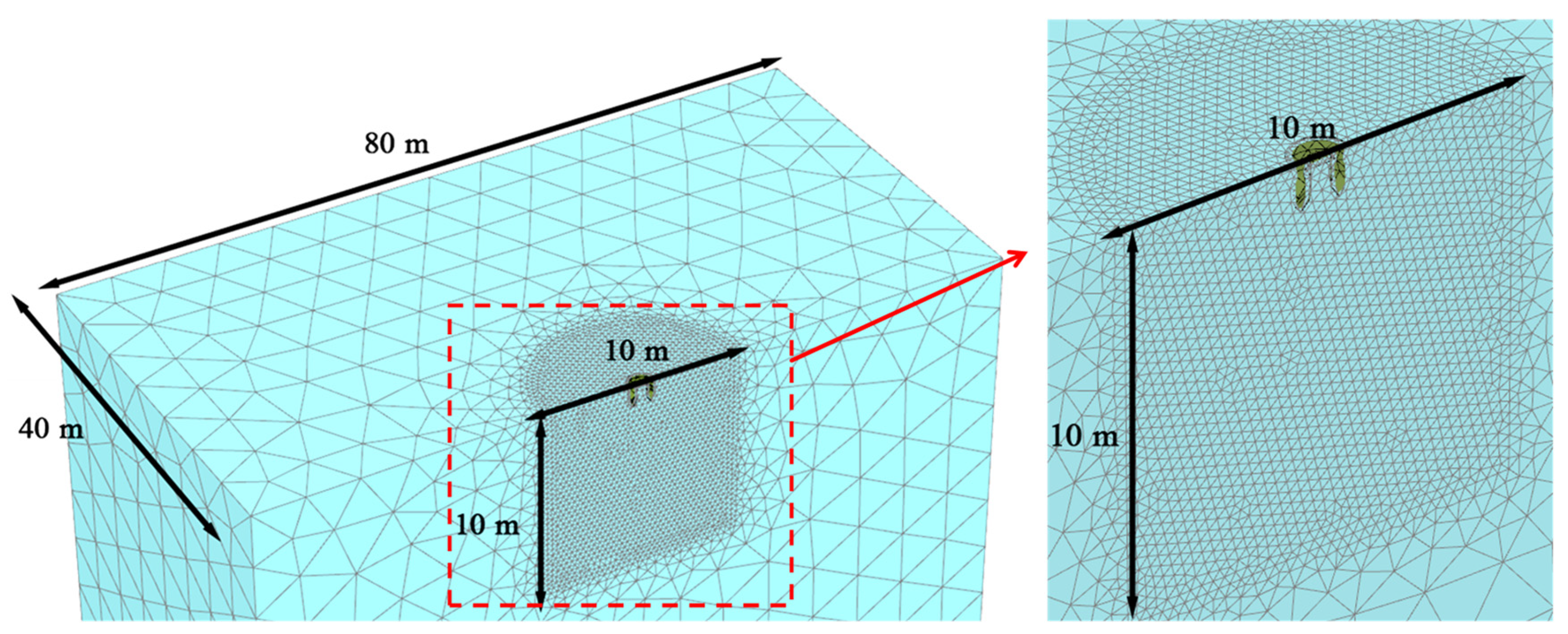
The suction bucket was modelled as a rigid body, neglecting its own deformation to focus on the soil–structure interaction mechanism. The model configuration featured an open-bottomed bucket with rigid walls and top plate. The coordinate point (0, 0, 0) was defined as the Load Reference Point (LRP) for applying external loads and extracting displacement responses. To enhance computational accuracy around the bucket, leveraging PLAXIS 3D’s meshing capabilities, local mesh refinement was implemented around the bucket using auxiliary surfaces. These surfaces extended radially 2–3 times the bucket diameter and to a depth of 10–12 times the diameter (corresponding to a radius R = 5 m and depth = 20 m), ensuring a finely discretized soil mesh in the critical zone.
Among scour parameters, scour depth is recognized as the dominant factor affecting bearing capacity [
32]. Consequently, this study focuses on analysing the effects of different scour depths, set at 0 m, 0.2 m, 0.6 m, 1.0 m, 1.4 m and 1.6 m, corresponding to
(without scour), 0.1
D, 0.3
D, 0.5
D, 0.7
D, 0.8
D of the bucket diameter, respectively. Other scour parameters were held constant: the bottom scour width
was 1 m, and the slope angle
was 30°. The scour pit morphology was generated by locally removing the corresponding soil elements, ensuring consistent bucket embedment depth and boundary conditions across scenarios. By systematically varying the scour depth, the influence on the evolution of the suction bucket foundation’s bearing capacity was analysed based on the Hardening Soil model. The parameters for each scour case are summarized in
Table 1.
2.2. Mesh Sensitivity Analysis
The finite element analysis of the suction bucket foundation primarily consisted of two stages: geostatic stress balance and subsequent loading, with both phases employing plastic analysis. In PLAXIS 3D, the overall mesh generation follows a relatively fixed pattern, with the specific mesh configuration shown in
Figure 3. To evaluate the influence of mesh density on the computational results, this study adopted the Mohr–Coulomb model sand parameters used in the research by Jin et al. [
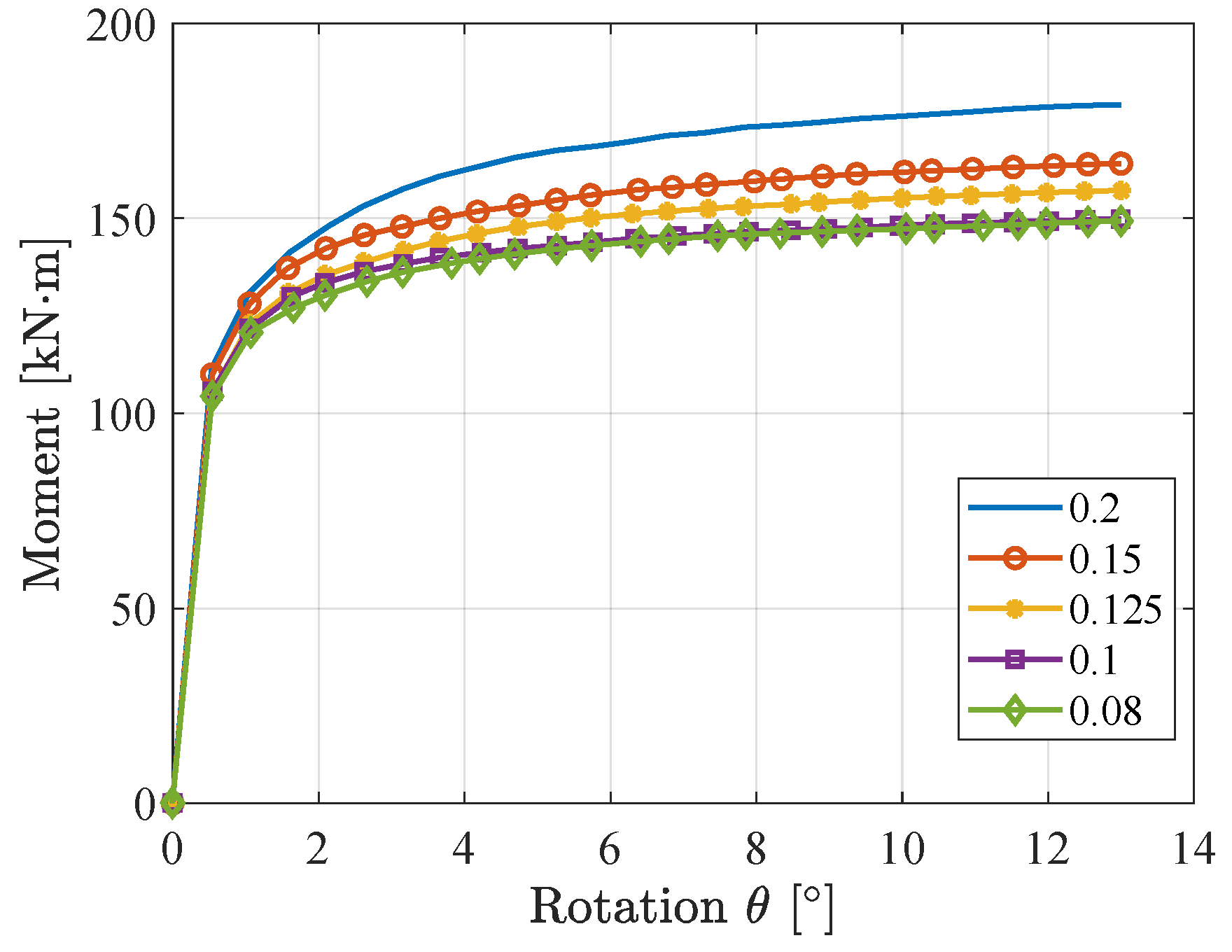
39] for comparative analysis. The model utilized a medium-density global mesh, with local refinement implemented in the region of the suction bucket and the adjacent soil. Local element sizes were set to 0.200 m, 0.150 m, 0.125 m, 0.100 m, and 0.080 m, respectively.
Figure 4 presents the computed overturning moment results for these different local element sizes. The corresponding numbers of elements, nodes, and the calculated overturning moment values are summarized in
Table 2. The analysis results indicate that as the local mesh was progressively refined, the computed value of the overturning moment gradually decreased and converged when the element size reached 0.100 m and 0.080 m, with the difference between these two cases being minor. Considering the balance between computational accuracy and efficiency, this study selected the medium-density global mesh scheme and adopted a local element size of 0.100 m in the bucket and surrounding soil region. This mesh configuration ensures the stability of the computational results while effectively managing computational resource demands, thereby establishing a reliable basis for the subsequent numerical simulations.
2.3. Calibration of Model Parameters
The accuracy of this numerical simulation hinges on the faithful representation of the non-linear mechanical behavior of sand under complex loading. Consequently, the conventional Mohr–Coulomb model was abandoned in favor of the more advanced Hardening Soil (HS) model as the soil constitutive model. The Hardening Soil (HS) model is adopted in this study because it can realistically capture the stress-dependent stiffness, dilatancy, and plastic hardening behaviour of soils under different stress paths. Seabed scour significantly alters the confinement and stress paths around suction caisson foundations, effects that cannot be adequately represented by conventional linear or perfectly plastic models. Owing to this capability, the HS model is particularly suitable for simulating the entire lifecycle of a suction bucket foundation, from installation and in-service loading to ultimate failure, while maintaining a good balance between physical realism and computational efficiency. The determined material parameters and physical properties for the Hardening Soil model are presented in
Table 3.
The soil in the model was assigned drained conditions, simulating the characteristic of sand that does not generate excess pore water pressure during static loading. The saturated unit weight, is 26.4 kN/m3, and the initial void ratio, , is 0.7. The core of the HS model captures the soil’s mechanical response through three distinct stiffness moduli:
Triaxial Compression Secant Modulus (): Used to model the stress–strain relationship during primary deviatoric loading, with a reference value set at 60,000 kPa.
Oedometric Tangent Modulus (): Governs one-dimensional compression behavior, with a reference value of 120,000 kPa.
Unloading/Reloading Modulus (): Describes soil rebound during unloading and reloading paths, with a reference value of 180,000 kPa.
All these stiffness moduli are defined at a fixed reference confining pressure, = 100 kPa, and vary with confining pressure according to a power-law function, for which the exponent, PowerM, is set to 0.5. The unloading/reloading Poisson’s ratio, , is 0.25.
Regarding strength parameters, the effective friction angle, , is set to 41°, reflecting the high shear strength of the sand. Tensile strength was disabled in the model. For the initial stress field, the geostatic equilibrium ( procedure) was established by manually specifying the coefficient of lateral earth pressure, as 0.5. Furthermore, soil–structure interaction was considered by defining an interface reduction factor, , to simulate the potential slip behavior at the interface between the suction bucket and the surrounding soil.
The determination of the aforementioned parameters synthetically referenced studies by [
41,
42] on similar soil models. For parameters not directly obtainable from laboratory tests, this study adopts an optimization-based identification approach following Jin et al. [
44,
45,
46]. In this context, the calibration of the Hardening Soil (HS) model parameters is carried out through a systematic optimisation procedure. Physically reasonable parameter ranges are first defined based on soil index properties and reported site data. Three-dimensional finite element simulations are then performed to reproduce the reference load–displacement response, and an objective error function is constructed to quantify the deviation between simulated and experimental (or benchmark) curves. A hybrid optimisation strategy combining an improved Backtracking Search Algorithm and Differential Evolution is employed to iteratively minimise the error function. The resulting parameter set is finally validated against independent segments of the response curves to ensure robustness. This method provides stable, physically reasonable parameter estimates even without complete test data, ensuring reliable inputs for subsequent scour and bearing capacity analyses. Preliminary validation was conducted using the built-in geotechnical test simulation features in PLAXIS 3D, confirming the reasonableness of the parameter set in simulating triaxial compression and oedometric consolidation tests. This process establishes a reliable soil constitutive basis for the subsequent scour and bearing capacity analyses.
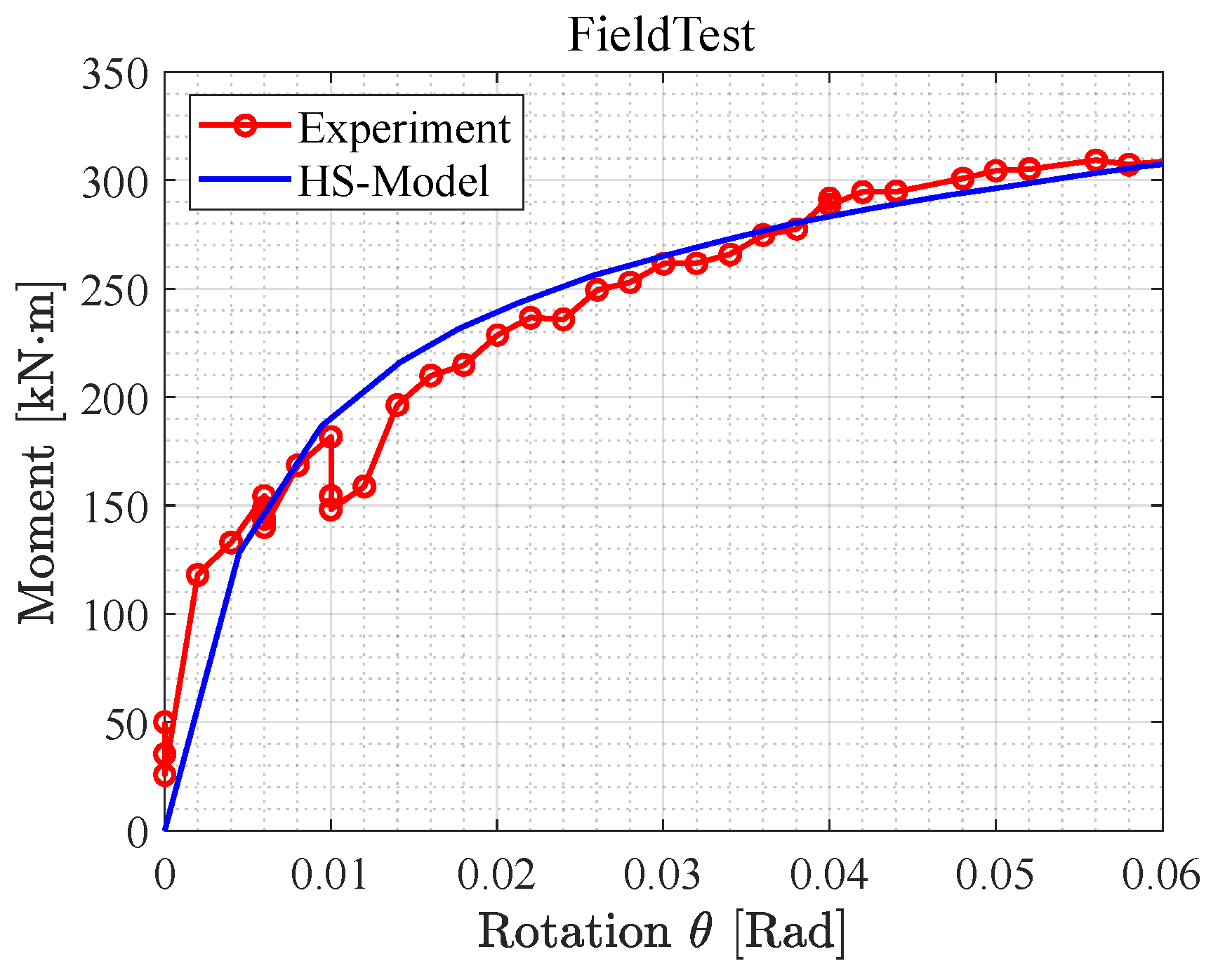
2.4. Model Validation
To validate the rationality of the established finite element model, the numerical results were compared and analyzed against the field test data reported by Houlsby et al. [
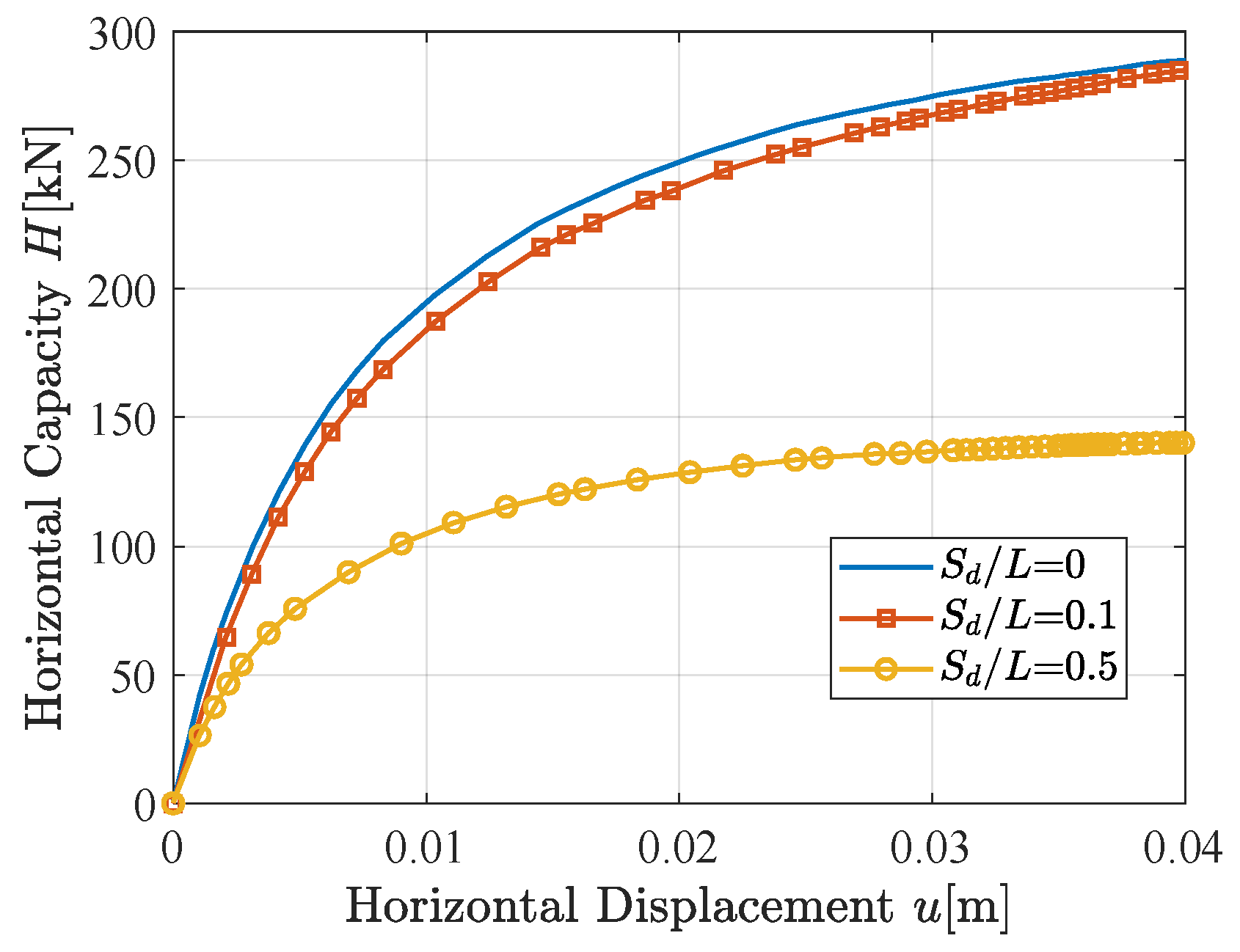
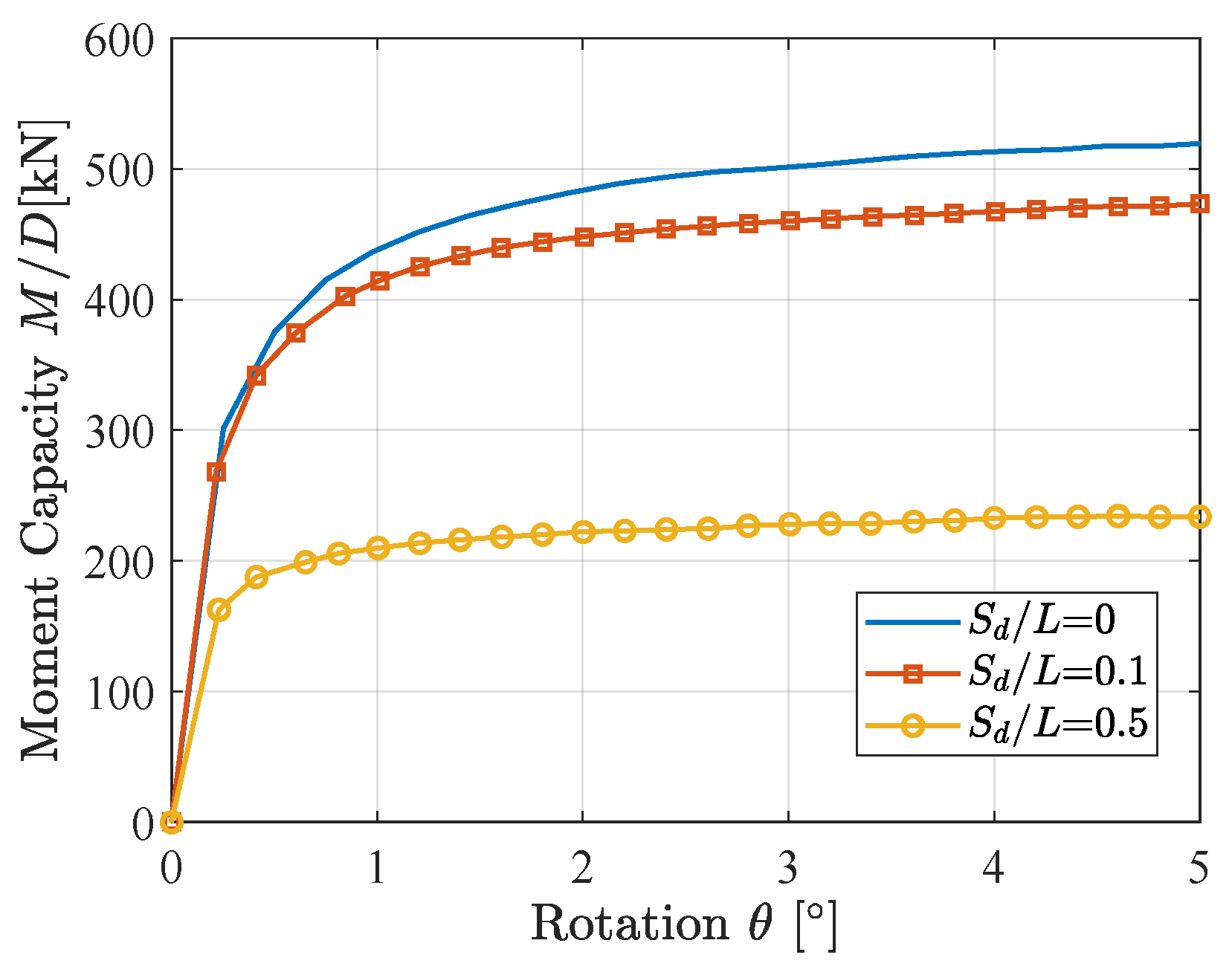
47]. Under identical loading conditions, the horizontal and moment load–displacement curves for the suction bucket obtained from the numerical simulation and the field test are presented in
Figure 5.
The comparison results demonstrate good agreement between the finite element simulation and the measured data. Specifically, the ultimate overturning moment calculated by the numerical model is 305 kN·m, while the measured value from the field test is 306 kN·m, resulting in a relative error of only 3.3% (see
Table 4). This comparison validates that the finite element model, based on the Hardening Soil model, effectively captures the deformation behavior and bearing capacity of the suction bucket foundation in sand.
Consequently, the numerical model developed in this study demonstrates satisfactory reliability in simulating the interaction between the suction bucket foundation and the soil, providing a credible computational tool for the subsequent analysis of bearing capacity evolution under scour conditions.
3. Bearing Behaviour and Failure Mechanisms Under Scour Conditions
3.1. Combined Loading Scheme and Failure Envelope Evaluation Method
To systematically investigate the failure envelope characteristics of the suction bucket foundation under local scour conditions, this study employs the radial displacement loading method to analyze its bearing performance. This method refers to the two types of displacement-controlled paths proposed by Gottardi et al. [
48]: the first is a swipe test, which involves gradually increasing the horizontal displacement after applying a certain vertical load to obtain the horizontal capacity under different vertical load levels; the second is a radial displacement test, which maintains a constant ratio between horizontal displacement and rotational displacement to capture failure state points via radial loading.
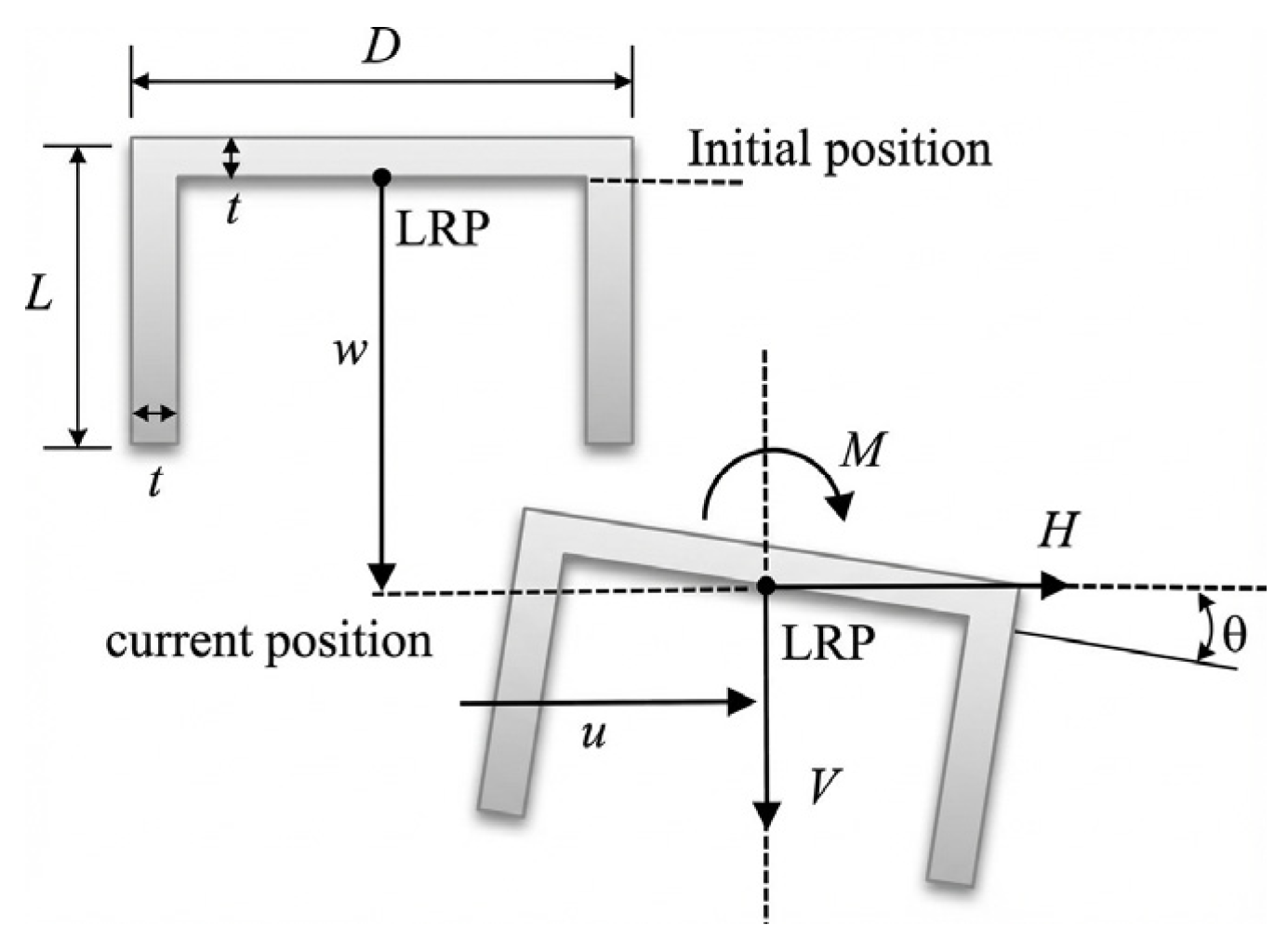
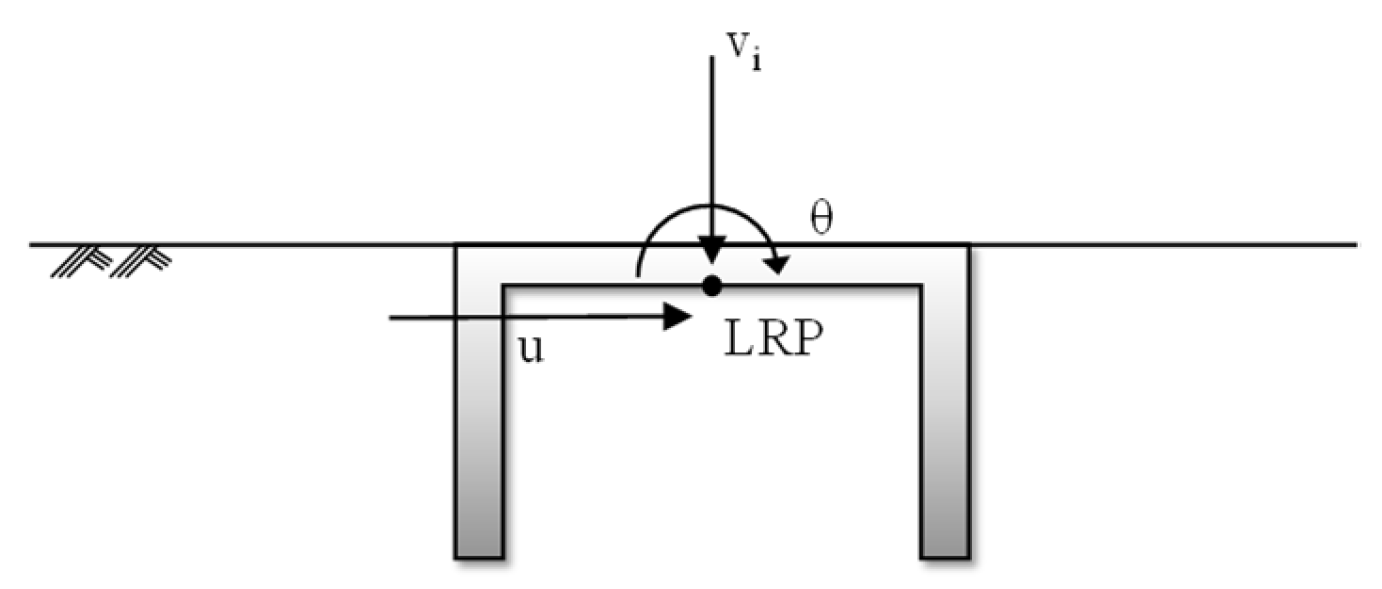
This study adopts the second method. Combined loads comprising horizontal force (
H), moment (
M), and vertical force (
V) are applied at the Load Reference Point (LRP) of the suction bucket foundation, as shown in
Figure 6 and
Figure 7, where
denotes the bucket diameter and
denotes the embedment depth. To achieve a controlled loading path, a vertical displacement is first applied at the LRP to bring the foundation to its ultimate vertical bearing capacity,
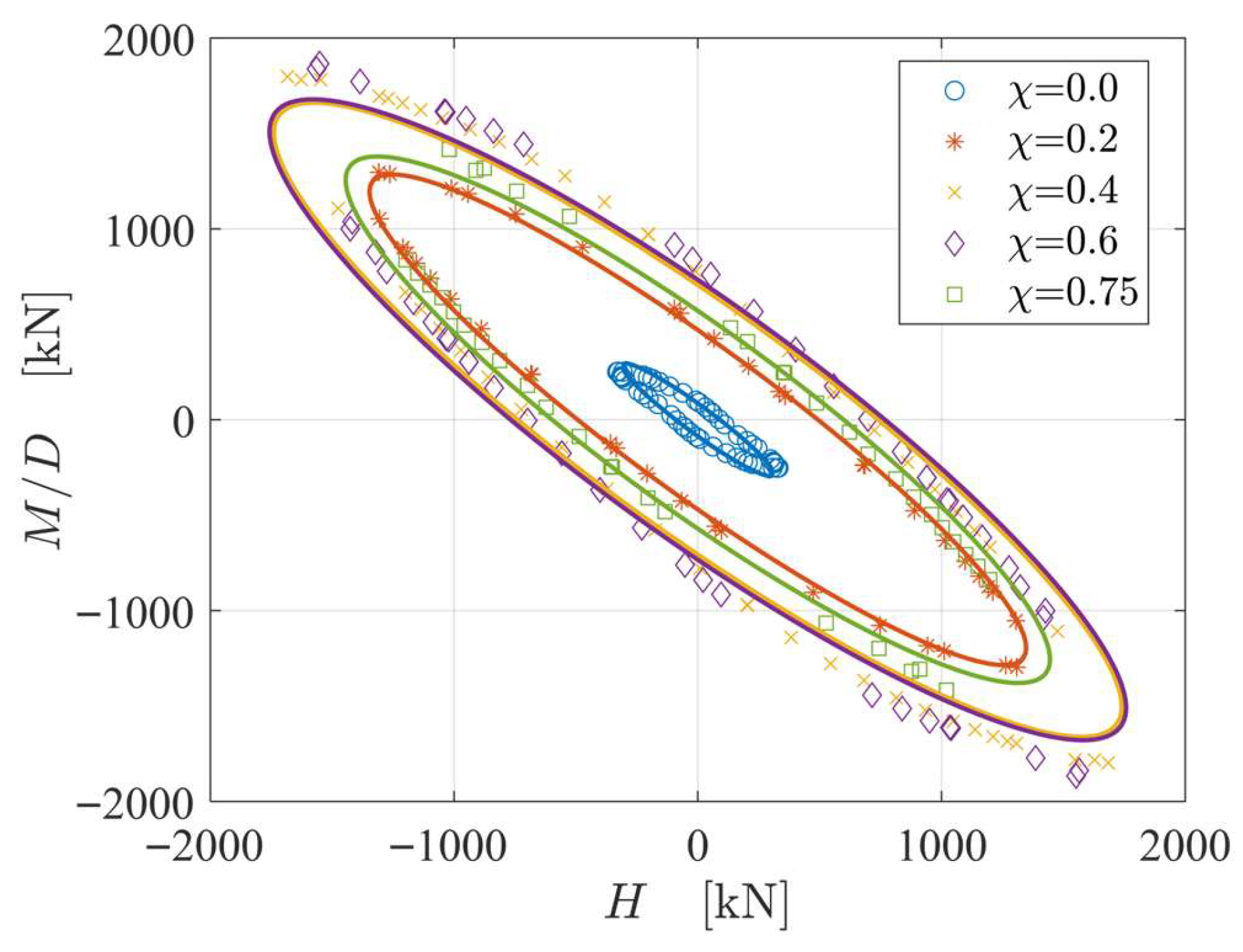
Vult. Subsequently, under different vertical load levels, expressed in terms of the normalised vertical load ratio χ =
V/
Vult (corresponding to 0, 0.2, 0.4, 0.6, and 0.75), sufficiently large horizontal displacement and rotation about the y-axis are applied synchronously until the system reaches a yield state. This procedure allows for the determination of failure points under various vertical load conditions, enabling the plotting of the corresponding failure envelopes in the
plane.
Furthermore, while maintaining a constant vertical load, horizontal displacement and rotation are applied simultaneously at a fixed ratio. This systematic approach is used to obtain the failure envelope surface in the load space for the suction bucket foundation under different scour conditions, thereby revealing the influence mechanism of scour on its combined bearing behavior.
3.2. Failure Envelope Characteristics Without Scour: Baseline Behaviour
For comparison with the results under scour conditions, the failure envelope surface of the suction bucket foundation in intact soil (i.e., without scour) was first determined through numerical simulation, following the loading procedure described in
Section 2.1. According to existing research, the failure envelope of a suction bucket foundation in the
plane typically exhibits an inclined elliptical shape, which can be mathematically expressed as [
49]:
The shape of this curve is defined by the parameters
,
, and
. Here,
and
represent the intercepts of the ellipse on the
and
axes, respectively, and
is the eccentricity of the ellipse. This equation can be further transformed into the following general implicit form for an ellipse:
The coefficients
to
in this equation can be determined from the geometric parameters of the failure envelope surface—specifically, the semi-major axis
, semi-minor axis
, center coordinates (
,
), and rotation angle
—using the following relationships:
Given that the fitted failure envelope in the
plane must pass through the origin (0, 0), the coefficients
,
, and
must satisfy:
By simultaneously solving Equations (1) and (2), the expressions for the parameters
,
, and
are derived as:
This leads to the elliptical fitting procedure for the failure envelope surface: first, the general ellipse equation is fitted to the numerical results to obtain the envelope’s semi-major axis , semi-minor axis , and rotation angle ; these values are then substituted into Equation (5) to compute the numerical solutions for , and .
Building on this foundation and further incorporating the influence of scour on the bearing performance, the failure mechanism of the suction bucket foundation in realistic marine environments can be more comprehensively revealed.
Figure 8 presents the fitted failure envelope in the
plane for the intact soil condition. The envelope exhibits an overall inclined elliptical shape, consistent with findings in existing literature [
39], thereby validating the reliability of the numerical model and the fitting methodology employed in this study.
3.3. Evolution of Foundation Failure Mechanisms Under Monotonic Loading
To further interpret the degradation trends identified from the baseline failure envelope, it is necessary to examine how scour alters the internal deformation patterns and failure mechanisms of the soil–bucket system. While
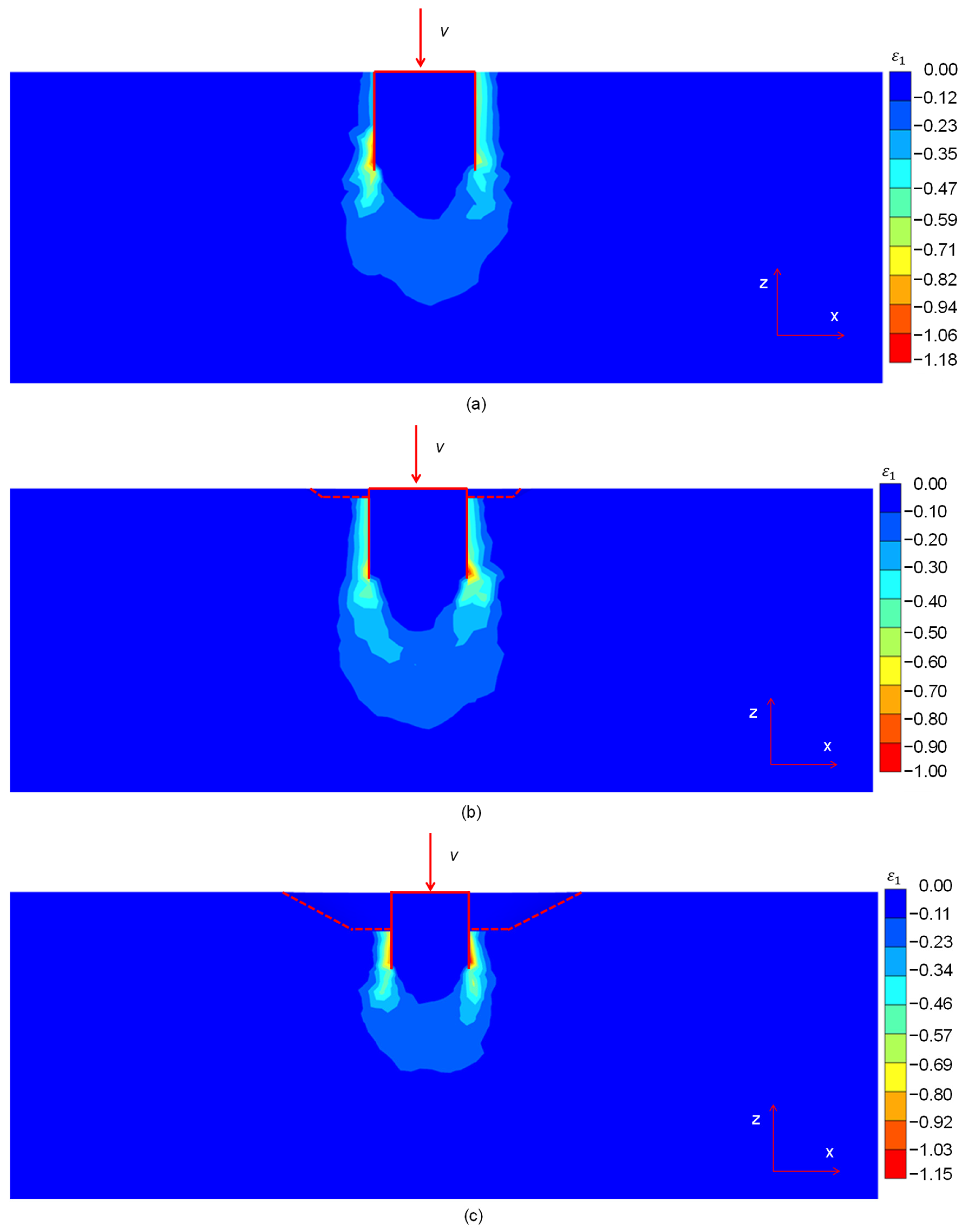
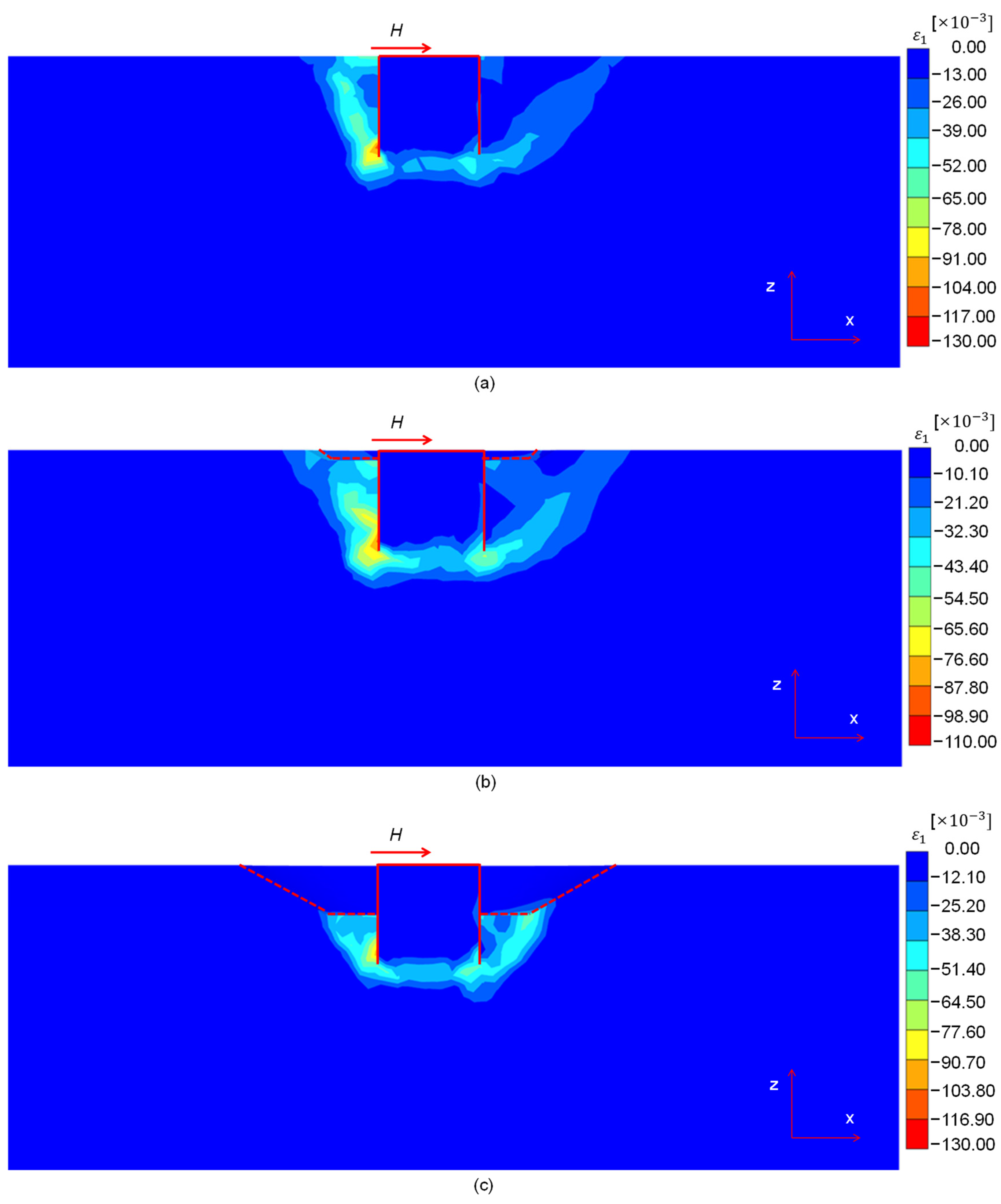
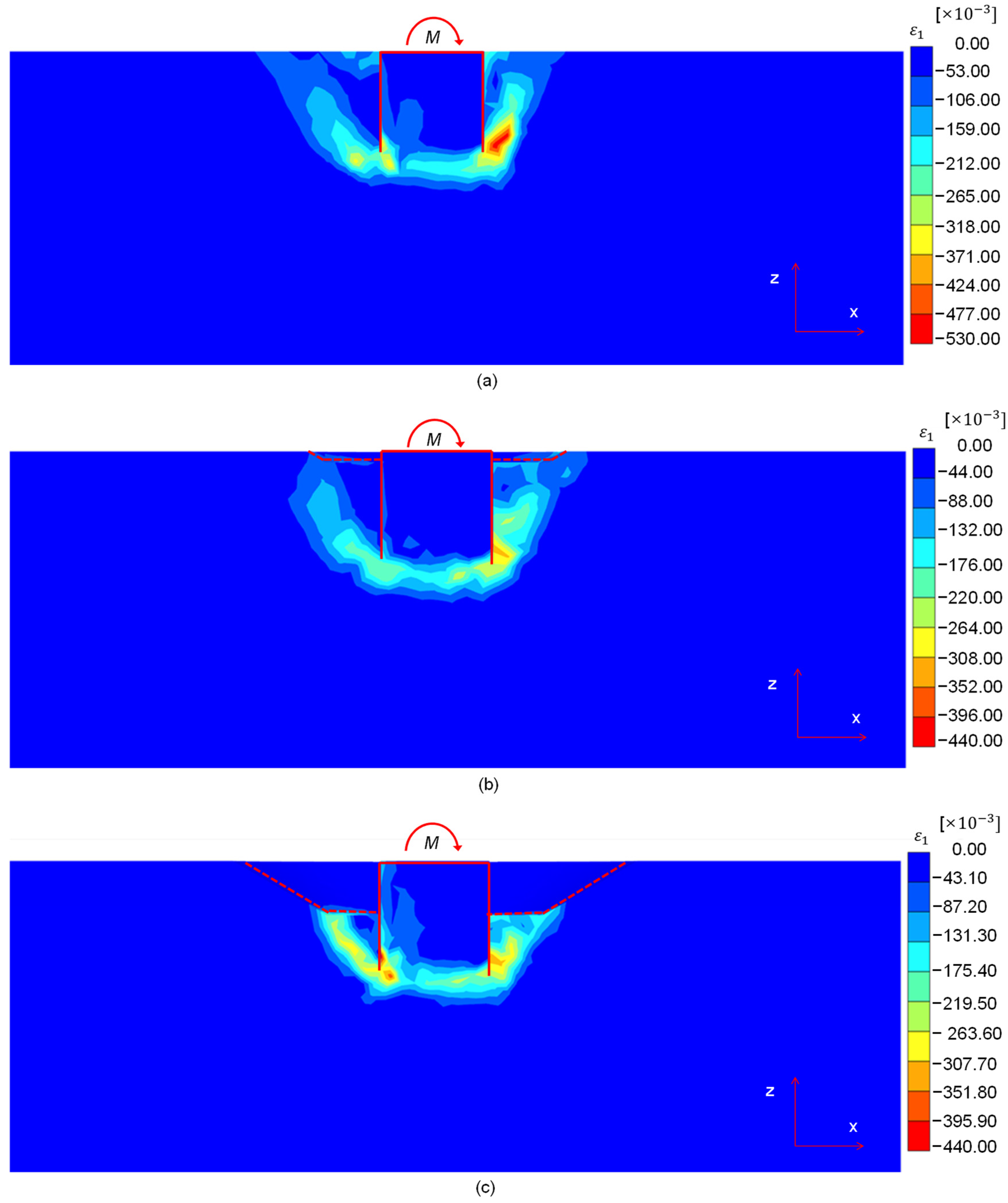
Section 3.2 established the reference response under intact seabed conditions, understanding the evolution of plastic zones and strain paths under varying scour depths provides essential insight into the physical mechanisms driving capacity loss. This section therefore analyzes the monotonic loading response in terms of major principal strain distributions to reveal how scour modifies local stress transfer, failure localization, and the overall collapse mechanism of the suction bucket foundation. We first preliminarily computed the major principal strain (
) contours under three loading directions for the no-scour condition (
), a scour depth of
, and a scour depth of
, as shown in
Figure 9,
Figure 10 and
Figure 11, respectively. In these figures, the red solid lines represent the contour of the suction bucket, while the dotted lines indicate the boundary of the scour pit.
Under vertical loading, with no scour, soil plastic strain is primarily concentrated near the external skirt wall and the bucket tip, exhibiting a localized shear failure mode. The strain nephogram is essentially symmetrical about the central axis of the bucket. The maximum plastic strain occurs within a depth of approximately 2–3 times the bucket diameter below the tip. At a scour depth of ( = ), although the upper soil around the bucket is partially removed, the vertical bearing capacity is mainly provided by the internal soil plug and the side friction along the internal and external walls. Consequently, the strain distribution pattern shows little change, still demonstrating symmetrical localized shear failure, with only a slight downward migration of the strain concentration zone. When the scour depth increases to ( = ), the loss of surrounding soil is more pronounced. However, the strain nephogram remains symmetrical, indicating that the failure mechanism under vertical loading does not fundamentally change. Only the extent of the plastic zone contracts somewhat, further corroborating the relative insensitivity of vertical bearing capacity to scour. This finding is consistent with the conclusion “scour has the least impact on vertical capacity” reported in existing studies.
Under horizontal loading, with no scour, soil plastic strain concentrates on the compressive side of the external bucket wall, forming a typical wedge-shaped plastic zone accompanied by slight heaving near the mudline. This matches the failure mode reported by Jin et al. [
39]. At a scour depth of
(
=
), due to the absence of upper surrounding soil, the plastic strain zone shifts significantly downward towards the bucket base, showing a banded concentration with the maximum strain located at the bottom of the compressive side. This trend becomes more pronounced at a scour depth of
(
=
). The plastic zone is further compressed towards the base, and strain distribution becomes more concentrated in the lower part of the foundation. This reflects the reduction in bearing capacity and the upward shift in the failure mechanism due to the decreased soil support area under horizontal loading. Furthermore, the strain nephogram maintains good symmetry after scour, indicating that the strain distribution under horizontal loading follows a clear, regular pattern under symmetrical scour conditions.
Under pure moment (rotational) loading, with no scour, plastic strain mainly concentrates on the compressive side of the bucket tip in the direction of the applied moment, also showing a wedge-shaped distribution. In the presence of scour (, ), the plastic strain zone distinctly transfers from the upper part of the bucket to the base region. The strain concentration position is closer to the inner edge of the bucket wall and does not extend outwards. As scour deepens, the strain nephogram shows a further contraction of the plastic zone towards the bucket tip, and the overall strain level decreases significantly. This indicates a degradation of moment capacity with increasing scour depth, albeit at a rate slower than that for horizontal capacity. Notably, under pure moment loading, the strain distribution remains symmetrical about the direction of the applied moment. Scour does not cause a significant change in the morphology of the strain distribution but primarily affects the development depth and extent of the plastic zone.
Synthesizing the above analyses, the following conclusions can be drawn: The influence of local scour on the strain distribution and failure mode of suction bucket foundations exhibits significant load-direction dependency. The strain distribution under vertical loading is the least sensitive to scour, with the failure mechanism remaining a symmetrical localized shear mode. Under horizontal loading, the strain concentration zone migrates noticeably downward with increasing scour depth, reflecting a significant weakening of the soil’s lateral support capacity. Under pure moment loading, the strain zone also shifts downward, but the magnitude of change lies between that for vertical and horizontal loading. Furthermore, under symmetrical scour conditions, the strain nephograms for all loading cases maintain symmetrical distributions. This suggests that scour depth primarily affects the spatial position and extent of the plastic zone, without altering the fundamental failure mechanism of the foundation under individual load types. These strain distribution characteristics are consistent with and corroborate the observed variations in bearing capacity.
3.4. Effect of Scour Depth on Bearing Capacity
Building on the deformation patterns identified in
Section 3.3, this section quantifies the influence of scour depth on the directional bearing response of the suction bucket foundation.
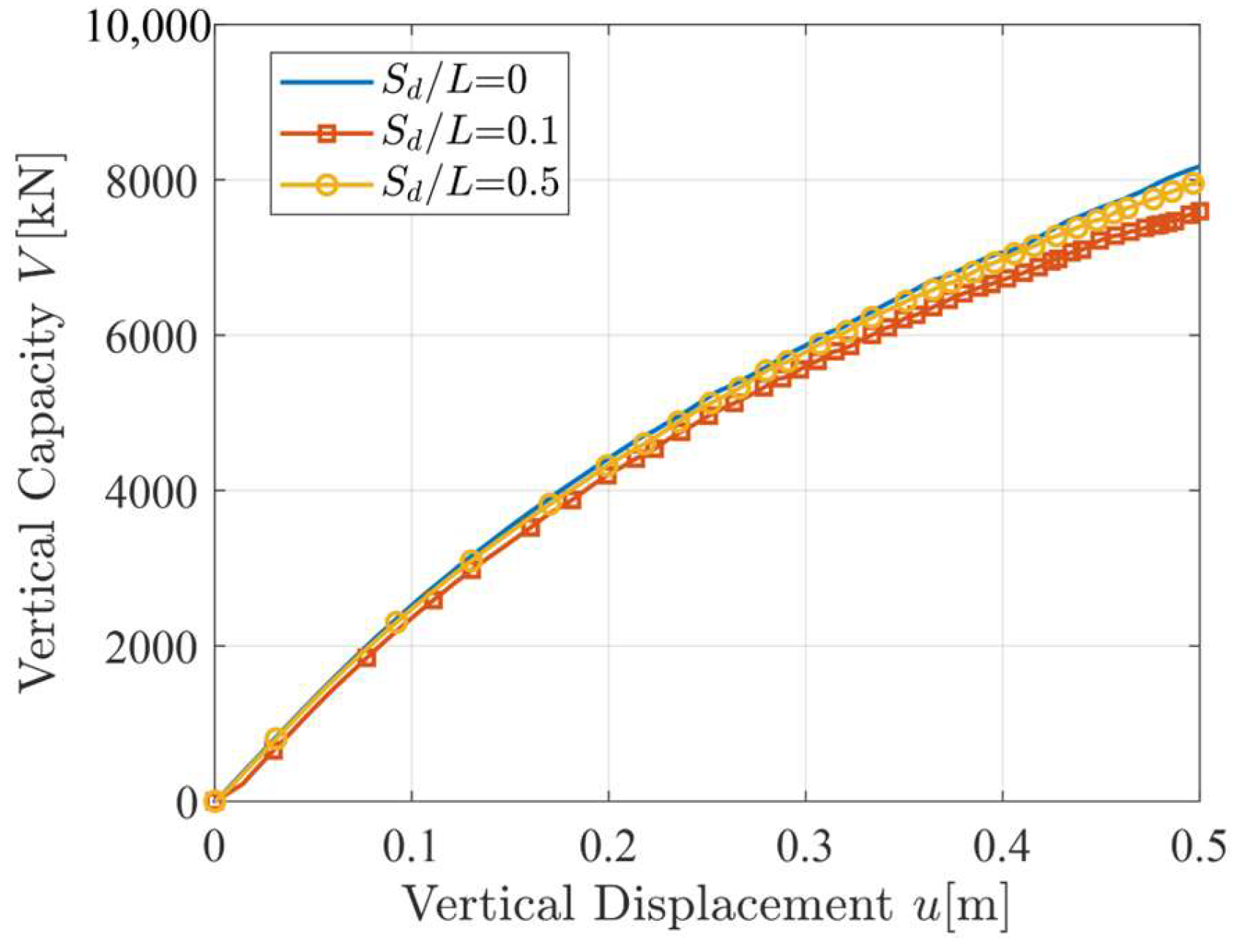
Figure 12,
Figure 13 and
Figure 14 present the load–displacement responses under vertical, horizontal, and overturning moment loading for different scour depths (
). The results indicate a clear degradation of bearing performance with increasing scour depth, while the sensitivity varies markedly among different loading directions.
Under vertical loading (
Figure 12), the load–displacement curves shift slightly downward as scour depth increases, indicating a gradual but relatively limited reduction in vertical bearing capacity. This is attributed to the dominant contribution of the internal soil plug and wall friction, which are less affected by external soil loss. In contrast, the horizontal bearing response (
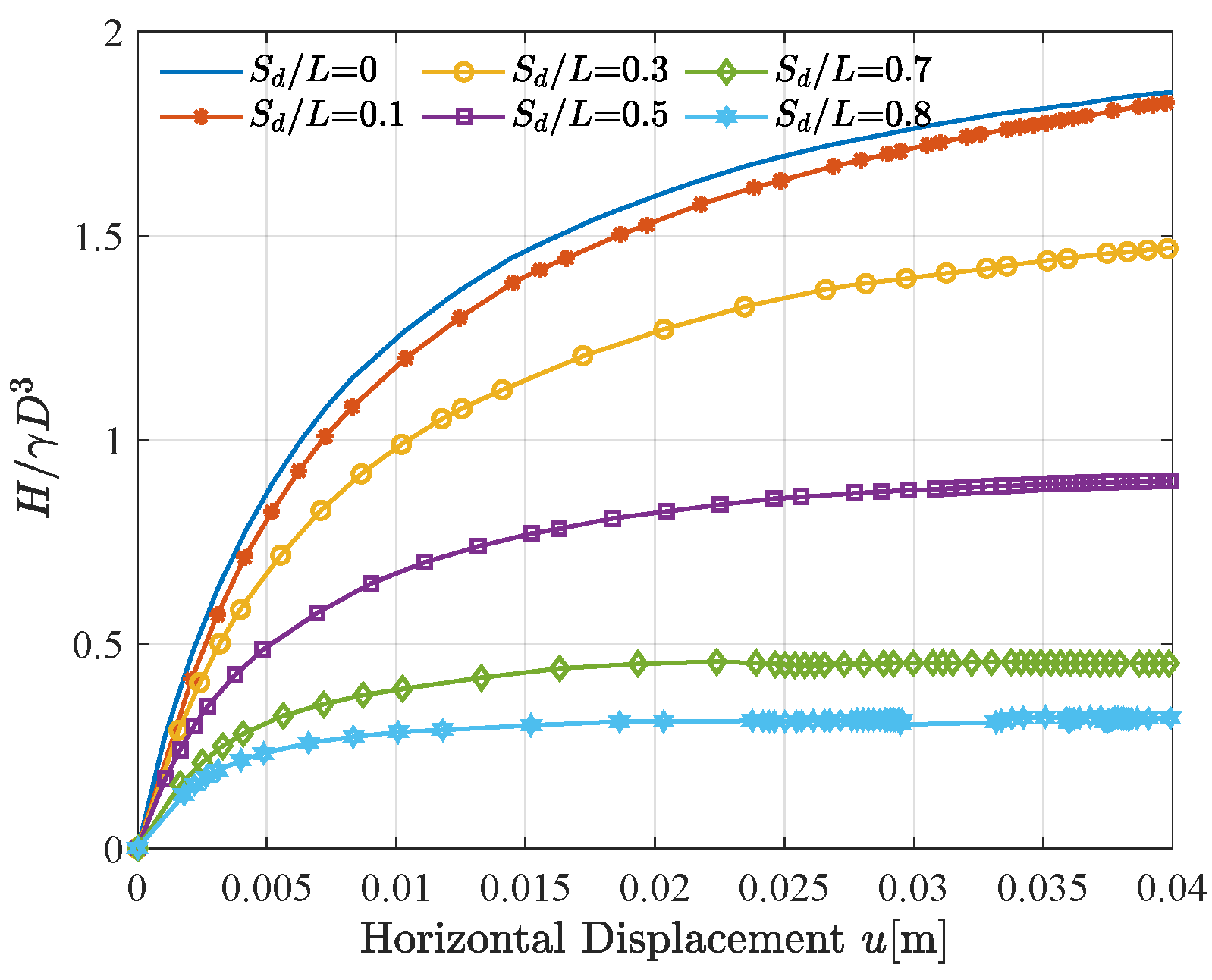
Figure 13) exhibits a pronounced degradation, with both initial stiffness and ultimate capacity decreasing significantly as scour depth increases, reflecting the strong dependence of lateral resistance on surrounding soil confinement. A similar degradation trend is observed under overturning moment loading (
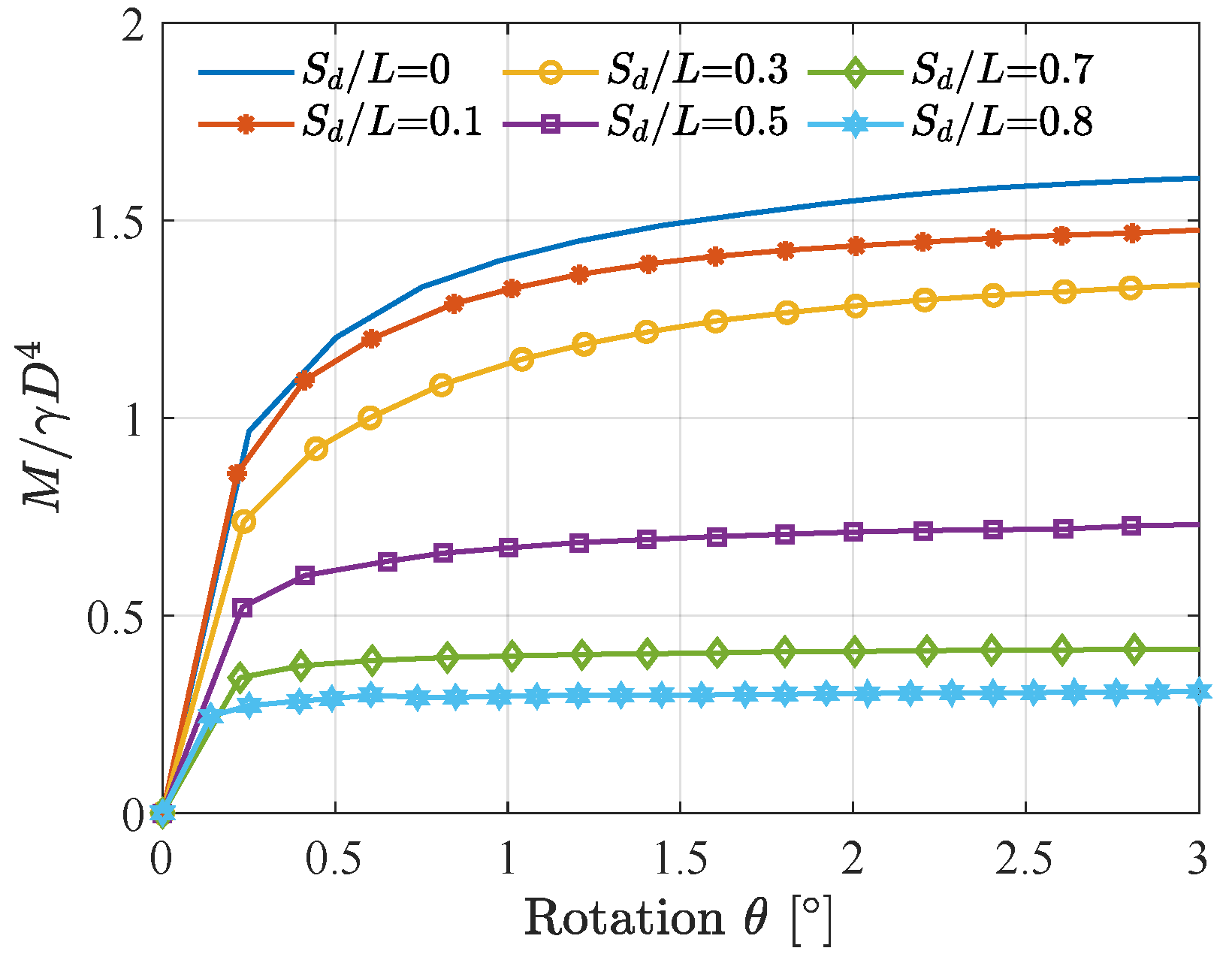
Figure 14), although the rate of capacity reduction tends to stabilise beyond a certain scour depth, suggesting a transition in the governing resistance mechanism under deep scour conditions.
Overall, the influence of local scour on bearing capacity is strongly direction-dependent, with horizontal resistance being the most sensitive, followed by overturning moment, while vertical capacity is least affected. Notably, when the relative scour depth approaches approximately 0.5L, the degradation rates of both horizontal and moment capacities decrease markedly, consistent with observations reported in existing studies. These findings highlight the necessity of explicitly accounting for scour effects on lateral and overturning performance in the design of marine foundations.
Figure 15 presents the horizontal load–displacement responses of the suction bucket foundation under different relative scour depths. The results indicate a clear and progressive reduction in horizontal bearing capacity with increasing scour depth. Under the unscoured condition, the response exhibits a typical hardening behaviour with sustained load mobilisation. Minor scour (0.1
L) results in only a marginal reduction in capacity, whereas more pronounced decreases in both initial stiffness and ultimate capacity are observed as the scour depth increases to 0.3
L and 0.5
L. Under deep scour conditions (0.7
L–0.8
L), the response shows evident post-peak softening, reflecting a significant degradation of soil–structure interaction due to the loss of lateral confinement and effective embedment.
Figure 16 illustrates the overturning moment–rotation relationships under different scour depths. A similar degradation trend is observed, with rotational stiffness and ultimate overturning capacity decreasing progressively as scour depth increases. While the unscoured foundation shows an almost linear moment–rotation response, deeper scour levels lead to pronounced nonlinearity and the development of plateau regions, indicating progressive plastic mobilisation of the surrounding soil and reduced overturning resistance.
To further quantify these effects,
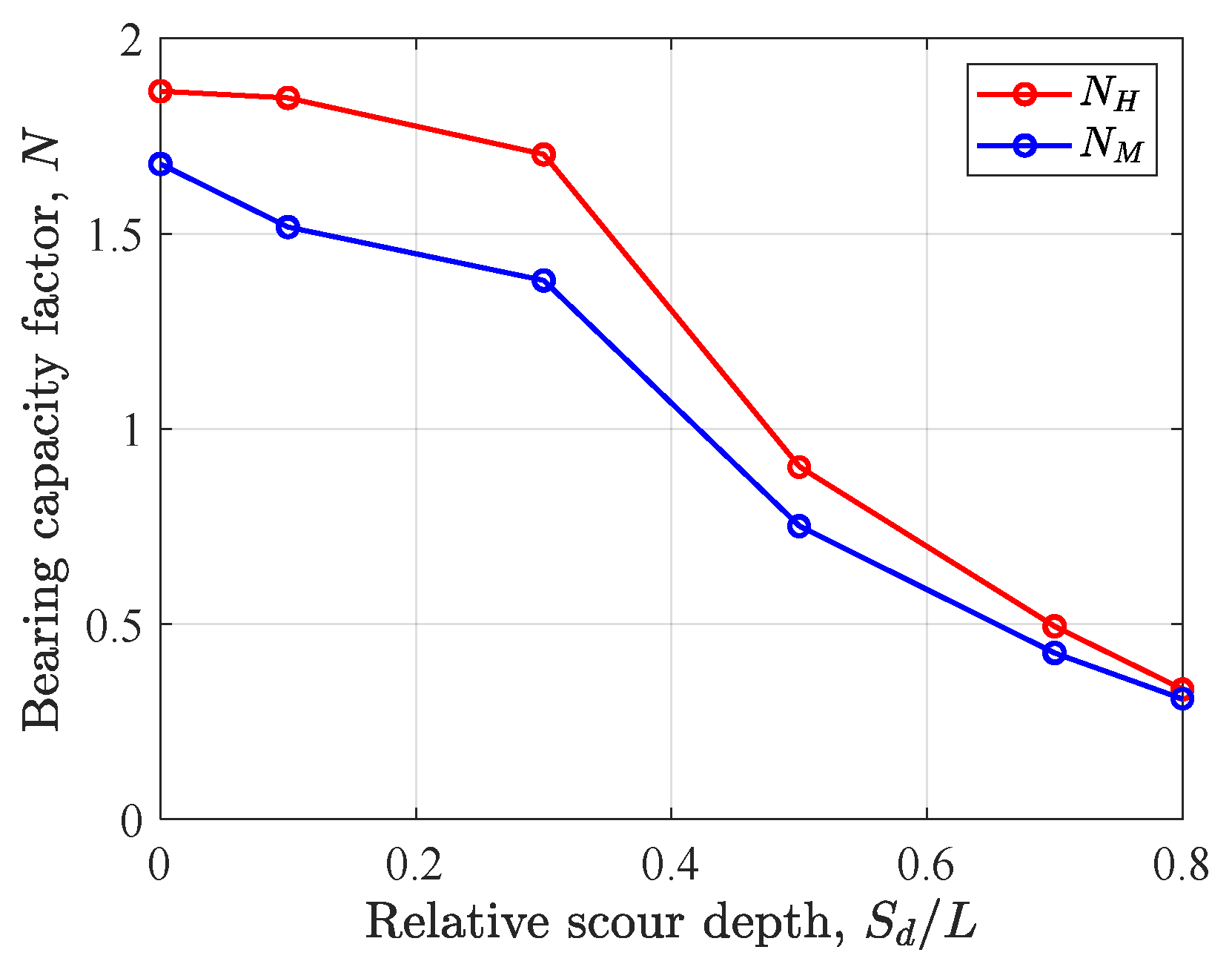
Figure 17 presents the normalised bearing capacity coefficient as a function of relative scour depth. The results are normalized as
and
The coefficient decreases monotonically with increasing scour depth, with reductions exceeding 40% under deep scour conditions (0.7
L–0.8
L) compared with the unscoured case. This trend confirms that seabed scour substantially impairs the combined horizontal and moment bearing efficiency of suction bucket foundations.
Overall, seabed scour has a markedly detrimental effect on the bearing performance of suction bucket foundations, particularly when the relative scour depth exceeds approximately 0.5L. The observed degradation is primarily attributed to the loss of surrounding soil, which weakens lateral confinement and reduces effective embedment. These findings provide a quantitative basis for assessing scour-induced performance deterioration and highlight the importance of considering scour effects in the design and assessment of offshore wind turbine foundations.
3.5. Influence of Local Scour on the H–M Failure Envelope
While
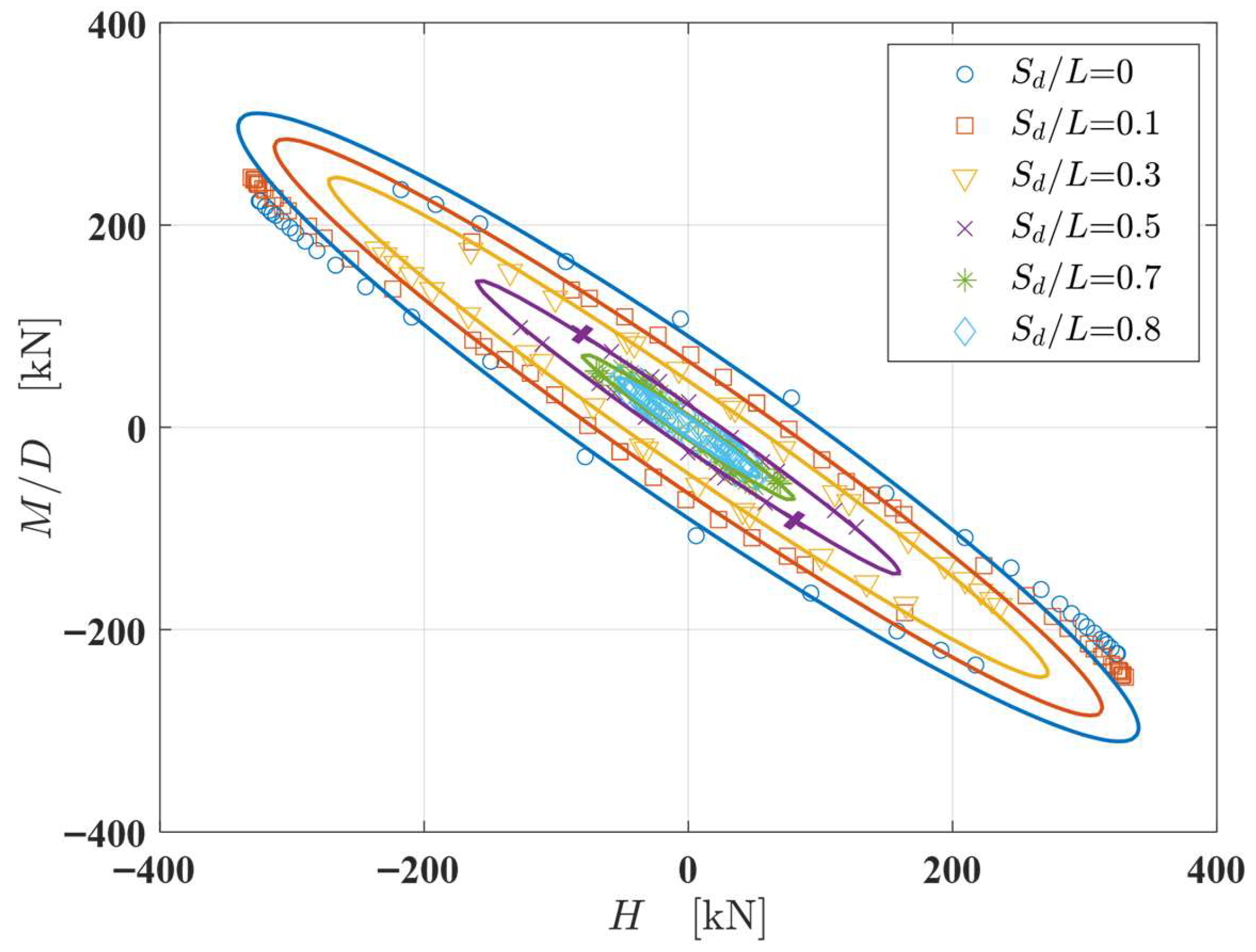
Section 3.4 detailed the directional resistance degradation caused by scour, offshore foundations are typically subjected to combined horizontal–moment loading rather than isolated load components. Therefore, evaluating how scour reshapes the H–M failure envelope is essential for capturing the full implications of scour on overall structural stability. This section extends the analysis to combined loading, illustrating how the envelope contracts, flattens, and evolves with scour depth, and establishes quantitative relationships that describe the governing degradation laws. We calculated the failure envelopes under various scour conditions without applying vertical load, and the consolidated results are presented in
Figure 18. Under the no-scour condition (
), the failure envelope exhibits the largest range and a relatively full shape, indicating that the soil around the bucket foundation is under complete constraint, providing sufficient lateral support and bending stiffness to the structure. The envelope shows a typical asymmetric characteristic in the horizontal force–moment plane, reflecting the different mechanical responses of the soil under tensile and compressive states, which also verifies the rationality of the Hardening Soil model in simulating complex loading paths. When the scour depth reaches
, a slight but discernible inward contraction of the envelope appears, especially in the region of larger bending moments, indicating an initial decline in bearing capacity. Although the change is limited at this stage, it suggests that shallow scour has disturbed the stress distribution in the surrounding soil and weakened the frictional and lateral constraints provided by the surface soil to the bucket wall.
As the scour depth increases to and , the contraction trend of the failure envelope becomes significantly more pronounced. The envelope shrinks notably in the region combining large bending moments and small horizontal forces, indicating that scour has considerably weakened the anti-overturning capacity of the bucket foundation. At this stage, although the lower part of the soil still provides some embedment effect, the reduced contact area between the soil and the bucket wall alters the load transfer path, leading to a decrease in the overall stiffness of the bucket foundation. The shape of the envelope gradually transitions from full to flat, and the change in curvature of the curve reflects that plastic development in the soil occurs more rapidly, with a clear reduction in the load combinations corresponding to the structural limit state.
When the scour depth reaches and , the failure envelope further contracts toward the origin of the coordinates, particularly in the bending-moment-dominated loading region, where the bearing capacity decreases by more than 50%, demonstrating the severe impact of deep scour on the stability of the bucket foundation. The envelope exhibits a distinct “collapse” shape, indicating a significant loss of effective soil constraint around the bucket, a notable reduction in the soil hardening effect, and a gradual shift in the behavior of the bucket foundation toward that of a shallow foundation. Moreover, as scour deepens, the asymmetry of the envelope under positive and negative bending moments weakens, suggesting that the scour-induced weakening of soil constraint on both sides of the bucket becomes more uniform, further confirming that reduced soil cover leads to a simplification of the structural response.
From a mechanistic perspective, the increase in scour depth directly reduces the contact area between the bucket wall and the surrounding soil, decreasing the side friction and lateral soil resistance. Simultaneously, the effective embedment depth of the bucket is reduced, weakening its anti-overturning moment. The correlation between soil stiffness and stress level in the Hardening Soil model also means that the altered stress state of the soil after scour further affects its hardening behavior and bearing capacity. Additionally, the stress release and redistribution induced by scour may lead to localized softening or strength degradation of the soil around the bucket, accelerating the development of plastic zones and resulting in a significant contraction of the failure envelope under deep scour conditions.
To further quantify the influence of scour depth on the bearing capacity envelope, the fitting parameters
,
, and
for the failure envelope under different relative scour depths were determined using Equation (5) from
Section 2.2. The results are summarized in
Table 5. It can be observed that the inclination angle of the failure envelope remains essentially constant as the scour depth varies; in other words, the eccentricity
of the ellipse remains unchanged. Therefore, to quantitatively describe the effect of scour depth on the failure envelope, it is only necessary to establish the relationship between the relative scour depth and the parameters
and
. Based on computational analysis, the variation in parameters
and
with scour depth can be expressed by the following equation:
In Equation (6), and represent the parameters defining the fitted ellipse of the envelope surface without local scour (i.e., ).
Table 5.
Intersection and eccentricity parameters for various scour depths.
Table 5.
Intersection and eccentricity parameters for various scour depths.
| Sd/L | a | b | φ (°) | hi | mi | e |
|---|
| 0.0 | 523 | 68 | 42.4 | 0.195 | 0.093 | 0.94 |
| 0.1 | 485 | 56 | 42.4 | 0.172 | 0.081 | 0.94 |
| 0.3 | 388 | 31 | 42.4 | 0.143 | 0.074 | 0.94 |
| 0.5 | 235 | 16 | 42.4 | 0.116 | 0.058 | 0.94 |
| 0.7 | 132 | 8 | 42.4 | 0.082 | 0.042 | 0.94 |
| 0.8 | 92 | 7 | 42.4 | 0.071 | 0.036 | 0.94 |
4. Conclusions
This study employed a three-dimensional finite element model incorporating the Hardening Soil (HS) constitutive framework to investigate the effects of seabed scour on the combined bearing behaviours of suction bucket foundations in sand. The major findings are summarized as follows:
- (1)
As the relative scour depth increases, the lateral confinement and effective embedment of the suction bucket are progressively weakened. Both horizontal and moment capacities decrease systematically, and their load–displacement curves exhibit significant stiffness softening. A critical scour threshold is observed at Sd/L = 0.3, beyond which the degradation rate of the ultimate capacity accelerates sharply.
- (2)
Analysis of principal strain fields shows that scour induces downward migration and increasing localization of plastic zones under horizontal and moment loading. Vertical loading is comparatively insensitive to scour because the internal soil plug and side friction remain the primary load-carrying mechanisms. In contrast, horizontal and moment resistance are strongly dependent on the integrity of the surrounding soil, which is significantly weakened as scour deepens.
- (3)
The study formulates functional relationships linking relative scour depth to the key parameters of the H–M failure envelope. These relationships capture the observed nonlinear degradation process and can be directly employed for preliminary capacity assessment and design checks in offshore engineering practice.
Overall, the results highlight that scour significantly compromises the combined horizontal–moment capacity of suction bucket foundations. Accurate consideration of maximum potential scour depth is essential for foundation design, safety assessment, and long-term performance prediction for offshore wind turbines. The present study is subject to several limitations, including the assumption of monotonic loading, idealised scour geometry, and homogeneous sand properties. Future research should extend the analysis to cyclic and fatigue loading, soil parameter variability, time-dependent scour evolution coupled with soil–structure interaction, and the effectiveness of scour protection strategies, in order to improve reliability assessment under realistic marine conditions.
Beyond design considerations, the results of this study suggest that installation engineers should place particular emphasis on pre-installation seabed assessment, ensuring sufficient embedment depth, and conducting early post-installation monitoring in scour-prone environments. Where significant scour is expected, installation planning should be coordinated with appropriate scour protection measures.