Article

Age and Growth of Pointhead Flounder, Cleistenes pinetorum, in the West Sea of Korea

1
West Sea Fisheries Research Institute, National Institute of Fisheries Science, Incheon 22383, Republic of Korea
2
Fisheries Resources Research Center, National of Institute of Fisheries Science, Tongyeong 56034, Republic of Korea
*
Author to whom correspondence should be addressed.
J. Mar. Sci. Eng. 2026, 14(13), 1254; https://doi.org/10.3390/jmse14131254
Submission received: 3 May 2026 / Revised: 24 June 2026 / Accepted: 25 June 2026 / Published: 7 July 2026
(This article belongs to the Section Marine Biology)

Abstract

To investigate the age and growth characteristics of the pointhead flounder (Cleisthenes pinetorum) in the West Sea (Yellow Sea) of Korea, samples were collected from bottom trawl vessels throughout 2019. A total of 1116 individuals (1015 females and 101 males) were analyzed. Because specimens were obtained from commercial landings, only fish of approximately 20 cm or larger were available due to marketability constraints. The body weight (BW) − total length (TL) relationships were BW = 0.00001TL3.3443 (R2 = 0.9279) for females and BW = 0.000002TL3.2659 (R2 = 0.9347) for males. The observed sex ratio (male:female = 1:10) was strongly female-biased; however, this likely reflected the underrepresentation of smaller males in commercial catches rather than the natural population structure. Females also exhibited larger body lengths than males. Otoliths were generally round, with a slightly elongated anterior region, and measurements were taken along the longest axis from the core to the margin. The relationship between TL and otolith radius (R) was expressed as TL = 8.0342R + 5.6218 (R2 = 0.8408). Growth equations were estimated for both sexes; however, because older males were poorly represented, the male von Bertalanffy growth function was fitted with the asymptotic length fixed to 43.3 cm (110% of the observed maximum male TL). Annuli were formed annually in November, and the spawning season was identified as September–November, suggesting a close association between annulus formation and the spawning period. The von Bertalanffy growth equations were Lt = 57.66(1 − exp[−0.1865(t + 0.46)]) for females and Lt = 43.3(1 − exp[−0.2679(t + 0.5490)]) for males.

1. Introduction

The Yellow Sea is a shallow continental shelf sea surrounded by China and the Korean Peninsula, where strong seasonal and regional circulation occurs under the influence of monsoon winds and terrestrial runoff [1,2]. In addition, the Yellow Sea Cold Water Mass (YSCWM), which forms along the central trough of the Yellow Sea, expands and contracts seasonally and plays an important role in the productivity of coastal marine ecosystems [1,3]. In particular, the YSCWM regulates thermal stratification and water mass structure, thereby influencing nutrient supply and biological productivity in the region [3,4]. However, recent studies have suggested that long-term changes in the intensity and spatial distribution of the YSCWM may weaken nutrient transport and current-driven dispersal processes, raising concerns about potential changes and declines in fisheries resources inhabiting the frontal zone associated with the YSCWM [4].
The pointhead flounder (Cleisthenes pinetorum) is a benthic flatfish belonging to the family Pleuronectidae and is widely distributed along the coasts of Korea and Japan, as well as in the Bohai Sea and the East China Sea [5]. This species primarily inhabits sandy or muddy bottoms at depths of approximately 100–250 m [5]. In the Yellow Sea, C. pinetorum accounts for more than 60% of the total flatfish catch, making it a commercially important species in the region. However, recent reports indicate a decline in the overall catch of flatfish in the Yellow Sea, highlighting the increasing importance of effective resource management for this species [6]. Ecologically, C. pinetorum functions as either a mesopredator or an upper-level predator depending on habitat conditions, thereby contributing to the structure of benthic food webs [7]. Moreover, variability in the Yellow Sea Cold Water Mass (YSCWM) may alter bottom-water temperature structure and benthic habitat conditions in the Yellow Sea, potentially influencing the distribution and habitat characteristics of C. pinetorum [3,4]. Therefore, continuous resource assessment and management are required to address potential environmental changes affecting this species. Recent increases in the variability of the YSCWM may lead to changes in frontal habitat conditions, potentially influencing the growth, maturation, and age structure of key fisheries resources such as C. pinetorum.
Age and growth parameters are fundamental biological inputs for stock assessment models, playing a critical role in determining the uncertainty associated with stock biomass estimation and management strategies. In regions with high environmental variability, shifts in age structure may serve as an early indicator of stock fluctuations, highlighting the importance of accurate age estimation and growth parameter determination. Various calcified structures, including otoliths, scales, and vertebrae, can be used for age determination in fish; however, otoliths are the most widely used structure because they continue to grow throughout the lifetime of an individual and record environmental and physiological changes. Furthermore, verification of the periodicity and seasonality of annulus formation is essential for ensuring the accuracy and precision of age determination, thereby improving the reliability of age readings [8,9,10,11].
Despite the high catch proportion of C. pinetorum in the Yellow Sea, studies quantitatively describing the age and growth characteristics and the seasonal formation of annuli for the Yellow Sea population remain limited. Previous studies have mainly focused on populations from the Japanese coast or the East Sea (Sea of Japan), and thus regional differences in growth characteristics have not been sufficiently considered [12,13,14]. Because the specimens used in this study were obtained from commercial landings, the samples mainly consisted of marketable-sized individuals, and smaller fish, particularly males, may have been underrepresented. Therefore, the results of this study should be interpreted with consideration of the potential sampling bias associated with size-selective commercial catches. Therefore, the present study aimed to estimate the age of C. pinetorum based on otolith annuli using samples collected from the Yellow Sea in 2019, to derive sex-specific von Bertalanffy growth equations, and to examine the relationship between the timing of annulus formation and the spawning season. The results of this study are expected to provide fundamental biological information for understanding the ecological characteristics of C. pinetorum in the Yellow Sea and to support future stock assessment and fisheries management strategies.

2. Materials and Methods

2.1. Sample Collection and Otolith Extraction

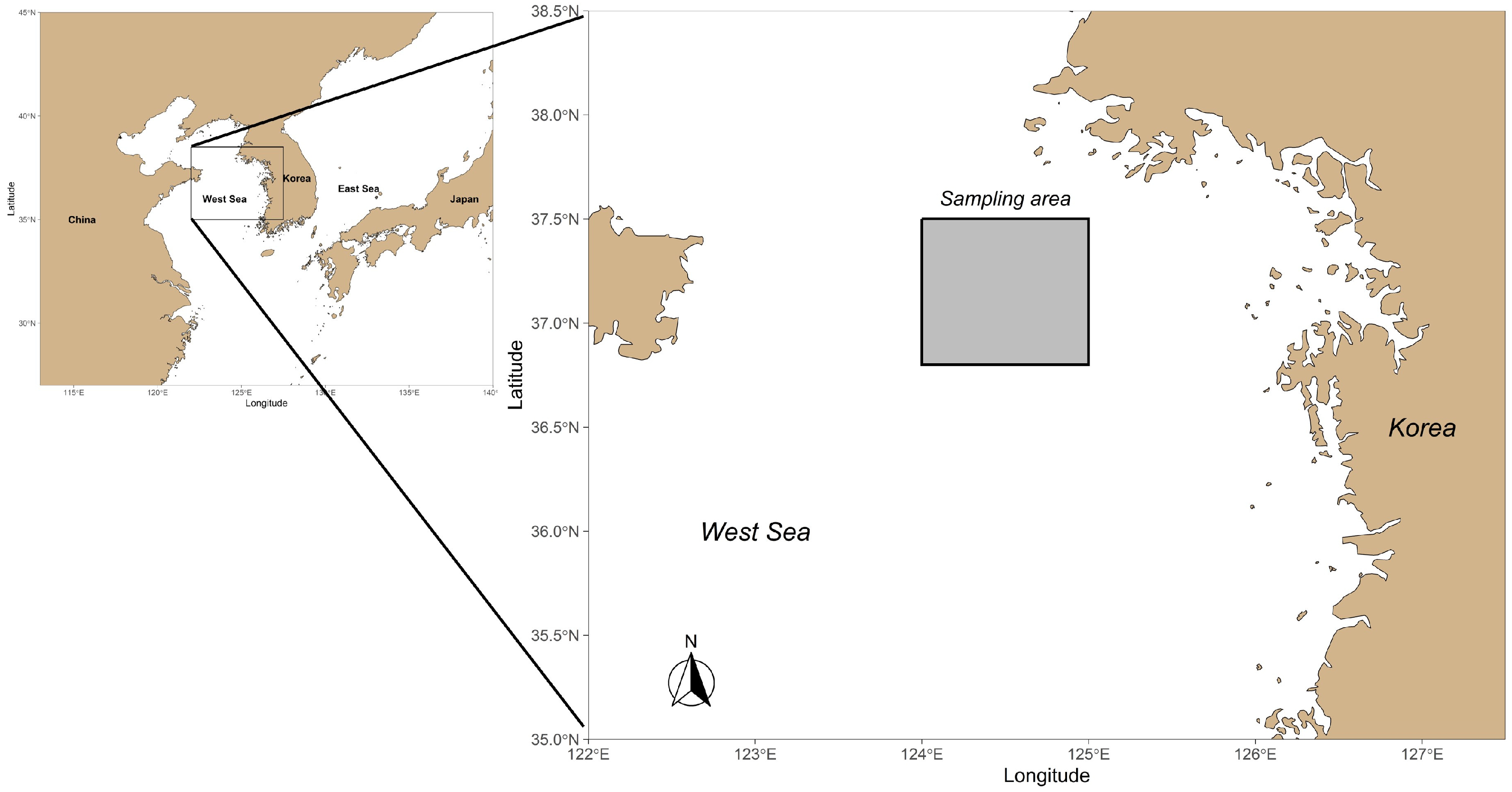
Specimens of C. pinetorum used in this study were obtained from local fish markets between January and December 2019. The fish originated from pair trawl fisheries operating in the West Sea of Korea. The pair trawl gear had a net opening width of approximately 30–50 m and was typically towed at speeds of 3.5–4.5 knots for 1–4 h. Because the samples consisted of commercially marketed individuals, the minimum total length (TL) was approximately 20 cm, which restricted the size range of the specimens (Figure 1). The collected specimens were transported to the laboratory, where total length (TL, cm) and body weight (BW, g) were measured. Each fish was dissected to determine sex and gonadal maturity stage, and gonad weight (GW, g) was recorded. For otolith extraction, the skull was cut vertically behind the eyes, and a pair of sagittal otoliths was carefully removed. Foreign material adhering to the otolith surface was manually removed, after which the otoliths were immersed in a 4% KOH solution for 24 h to clean the surface.

2.2. Otolith Preparation and Analysis

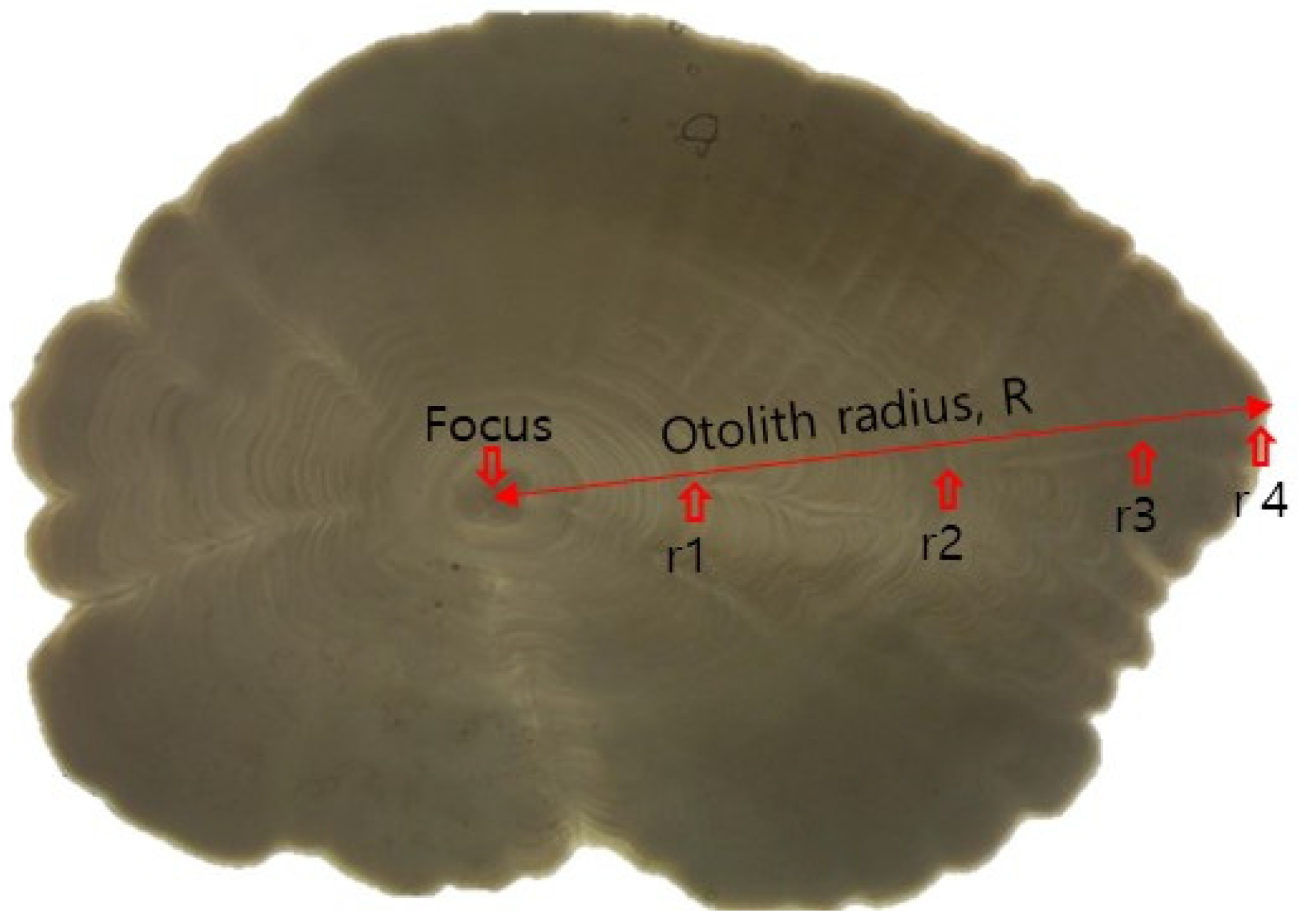
After removing foreign materials, the otoliths were air-dried at room temperature. To facilitate annulus reading, the otoliths were embedded in silicone molds using a resin mixture composed of EpoThin™ 2 Epoxy Resin and EpoThin™ 2 Epoxy Hardener (Buehler) at a 6:4 ratio. The embedded otoliths were allowed to cure for more than 24 h in a dry environment. Once fully cured, the otoliths were polished along the transverse section from the core toward the margin using a low-speed grinder (ISOMET 1000, Buehler) and abrasive papers of progressively finer grit (Carbimet™, p320, p400, p1600). The polished surfaces were further refined with micron polishing powder (Micropolish 0.05 µm, Buehler) to enhance clarity and were subsequently mounted on slide glasses. Polishing was continued until both the core and the marginal annuli were clearly visible. The annuli were defined as the boundary between translucent and opaque zones, and images were captured using a stereomicroscope equipped with an image analysis system (Figure 2). The otolith radius (R) was measured along the longest axis from the focus to the most distant margin of the otolith, and annular radii (r1, r2, etc.) were measured as the distance from the focus to each annulus. The otolith radius and annular increments were measured along the longest axis from the core. For annulus interpretation, only annuli that were clearly visible across the overall structure—not solely in the polished section—were considered. Otoliths with poor readability were excluded from the analysis. To enhance reading accuracy, each otolith was examined twice by two independent readers. The precision of age estimates for each individual was quantified using the Index of Average Percent Error (IAPE) [8,15,16]. The IAPE serves as an indicator of the reliability of otolith readings, with values below 5% considered highly precise, values between 5% and 10% regarded as acceptable, and values exceeding 10% indicating a need for improvement:
I A P E = 100 N j = 1 N 1 R i = 1 R | Y i j Y j ¯ | Y j ¯
where R is the number of readings, N is the number of fish, Yij is age estimate of the i-th fish by the j-th reader and Ȳi is average age of the i-th fish. To assess the validity of the annuli as true annual marks, the relationships between successive annular increments were analyzed, and annular correspondence was examined. Furthermore, the marginal index (MI) was calculated monthly to estimate the timing and frequency of annulus formation, using the following formula [17,18]:
M I = R r n r n r n 1
where R is otolith radius, rn is distance from the focus to the n-th annulus and rn−1 is distance to the (n−1)-th annulus. Differences in total length distributions between sexes were tested using one-way ANOVA in Microsoft Excel (Microsoft, Redmond, WA, USA).

2.3. Spawning Season

To determine the timing of the first annulus formation, the spawning season was analyzed. This was achieved by examining the monthly gonadosomatic index (GSI) and gonadal development stages of female specimens. The gonadal development stages were assessed through both macroscopic observation and histological analysis; in cases of uncertainty in stage identification, histological methods were prioritized.
For histological analysis, gonadal tissues were fixed in 10% neutral buffered formalin, dehydrated in a graded ethanol series, embedded in paraffin, and sectioned. The sections were stained with hematoxylin and eosin (H&E), and the prepared slides were examined using an image analysis system (i-works 2.0, i-works). Oocyte diameters were measured from the stained tissue sections. Gonad weight was recorded to two decimal places to ensure precision. The gonadosomatic index (GSI) was calculated using the following equation:
G S I =   G W B W   × 100
Here, GW is the gonad weight (g), BW is body weight (g).

2.4. Growth Equation

The initial growth trajectory was reconstructed using back-calculated lengths derived from the relationship between total length (TL) and otolith radius (R). Based on these back-calculated early-age lengths, the growth of C. pinetorum was estimated using the von Bertalanffy Growth Function (VBGF) [19,20,21]. To determine the initial parameter estimates for the model (asymptotic length L∞, growth coefficient K, and theoretical age at zero length t0), the R packages FSA (v.0.9.4) [22], nlstools [23], tidyverse [24], and car [25] were used in the R environment (v.4.4.1) with RStudio.
Because older males were poorly represented, the male VBGF was fitted using a constrained approach by fixing L to 110% of the observed maximum male TL (Lmax), while estimating K and t0 by nonlinear regression [19].
The von Bertalanffy growth equation is expressed as:
L t = L ( 1 e k t t 0 )
where Lt is total length at age t, L is theoretical maximum length, K is growth coefficient and t0 is theoretical age when length is zero. To compare the estimated growth rates with those from previous studies, the growth performance index (Φ) was calculated using the following formula [26]:
Φ = l o g K + 2 l o g L

3. Results

3.1. Body Composition and Relative Growth

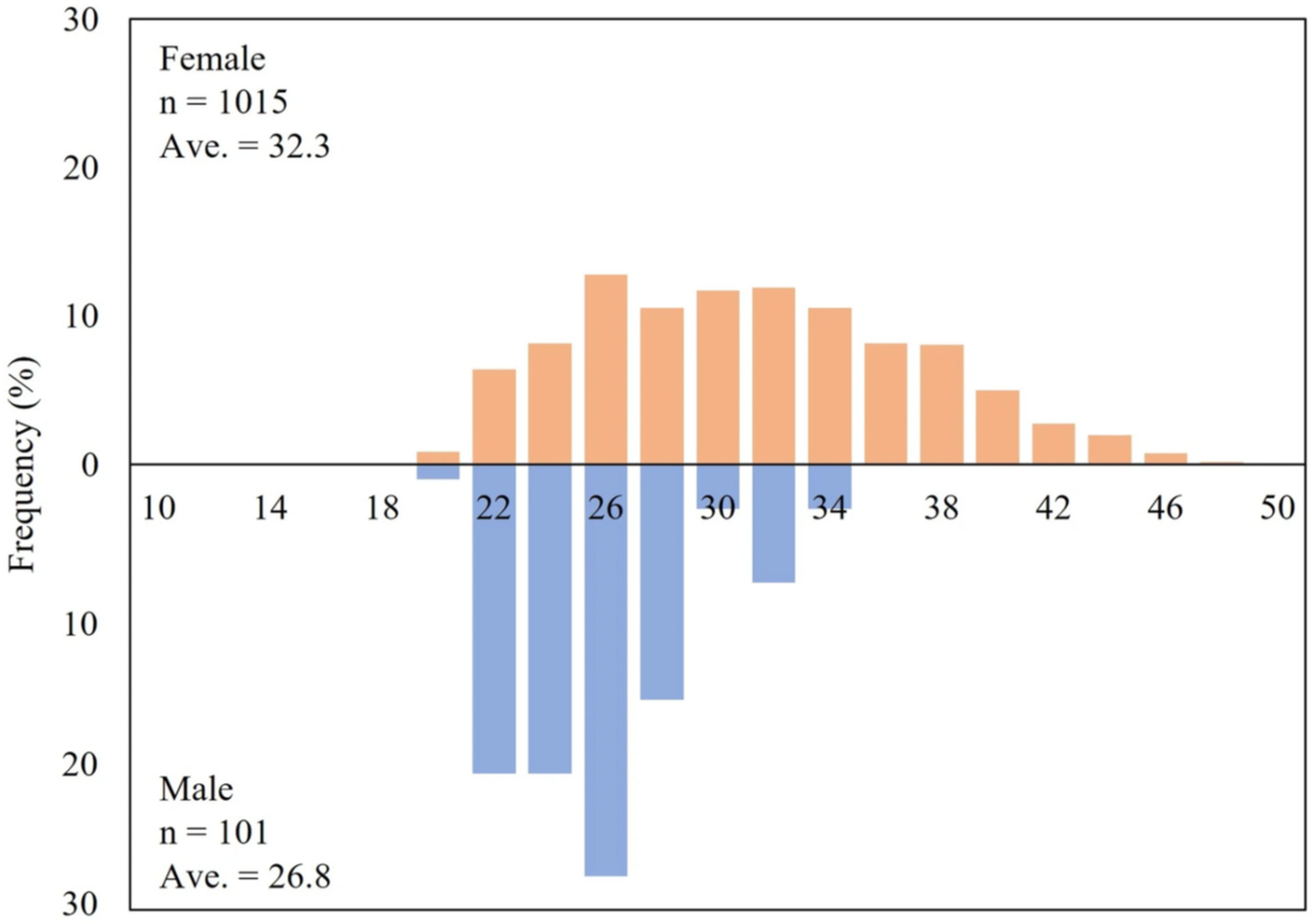
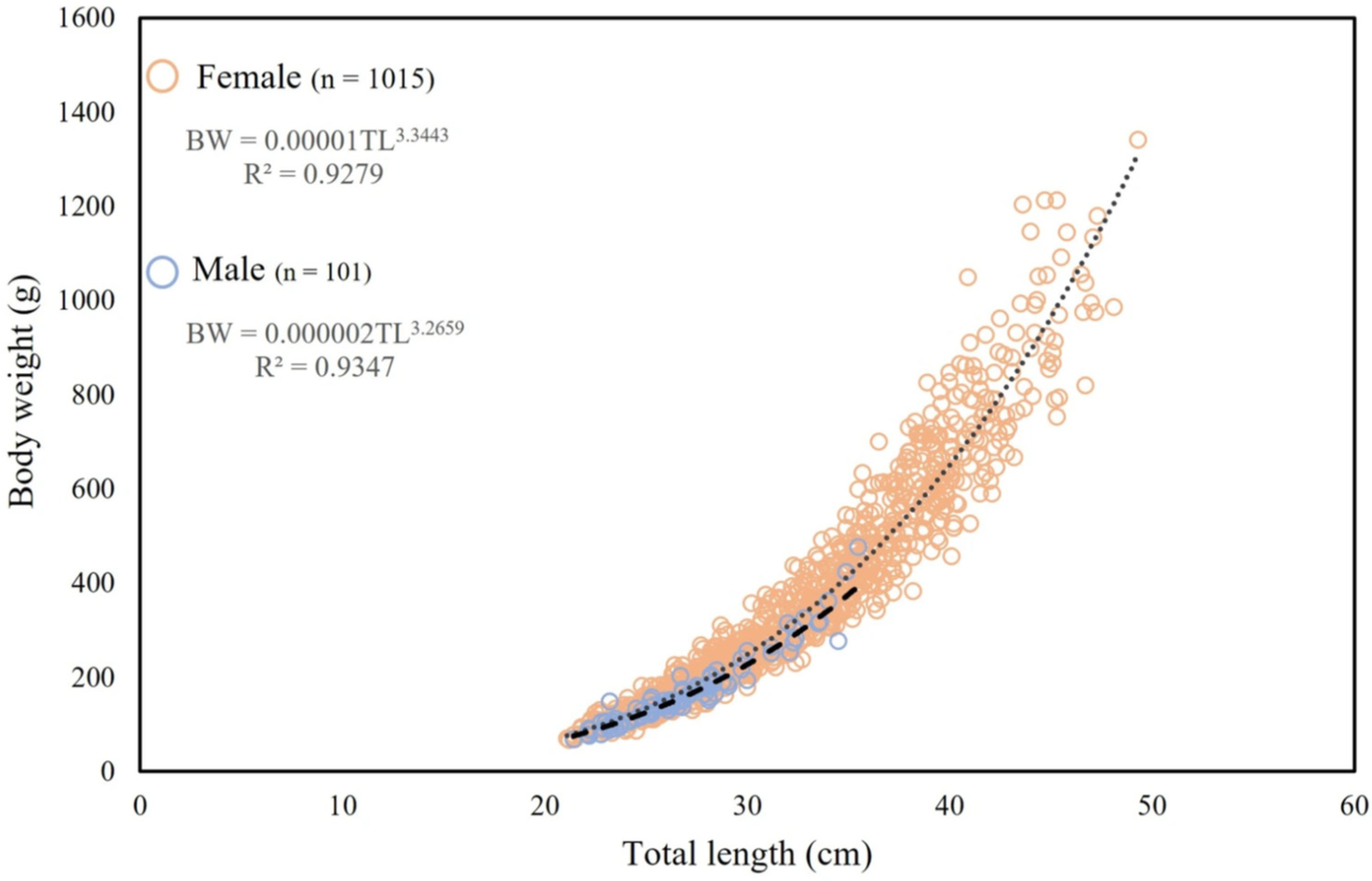
A total of 1116 individuals of C. pinetorum were analyzed, consisting of 1015 females and 101 males. As noted in the Materials and Methods, the study targeted commercially distributed individuals, and thus specimens above a certain size were predominantly collected. Consequently, the overall sex ratio was strongly biased toward females, approximately 10:1, and this deviation from the expected 1:1 ratio was statistically significant (χ2 = 748.56, p < 0.001). The total length (TL) of female individuals ranged from 21.1 to 49.3 cm, with an average of 32.3 cm. Males ranged from 21.4 to 35.5 cm, with an average of 26.8 cm. The size frequency distribution of females showed the highest proportions in the 25–30 cm and 30–35 cm size classes, accounting for 28.6% and 29.2%, respectively. In contrast, males were most frequently found in the 20–25 cm size class, representing 55.4% of the male population (Figure 3). The length–weight relationship (LWR) for females was described by the equation (Figure 4):
F e m a l e : B W = 0.0001 T L 3.3443 ( n = 1015 ,   R 2 = 0.9279 )
M a l e : B W = 0.000002 T L 3.2659 ( n = 101 ,   R 2 = 0.9347 )

3.2. Annulus Reading and Annulus Formation Time

To assess the reliability of annulus interpretation in otoliths, the Index of Average Percent Error (IAPE) was calculated based on the readings of two independent readers [8]. The resulting IAPE was 4.8%, which was below the reference threshold of 5.5%, indicating a high level of precision in age determination. When substantial discrepancies occurred between readers, the annuli were re-examined and the final age was determined through consensus.
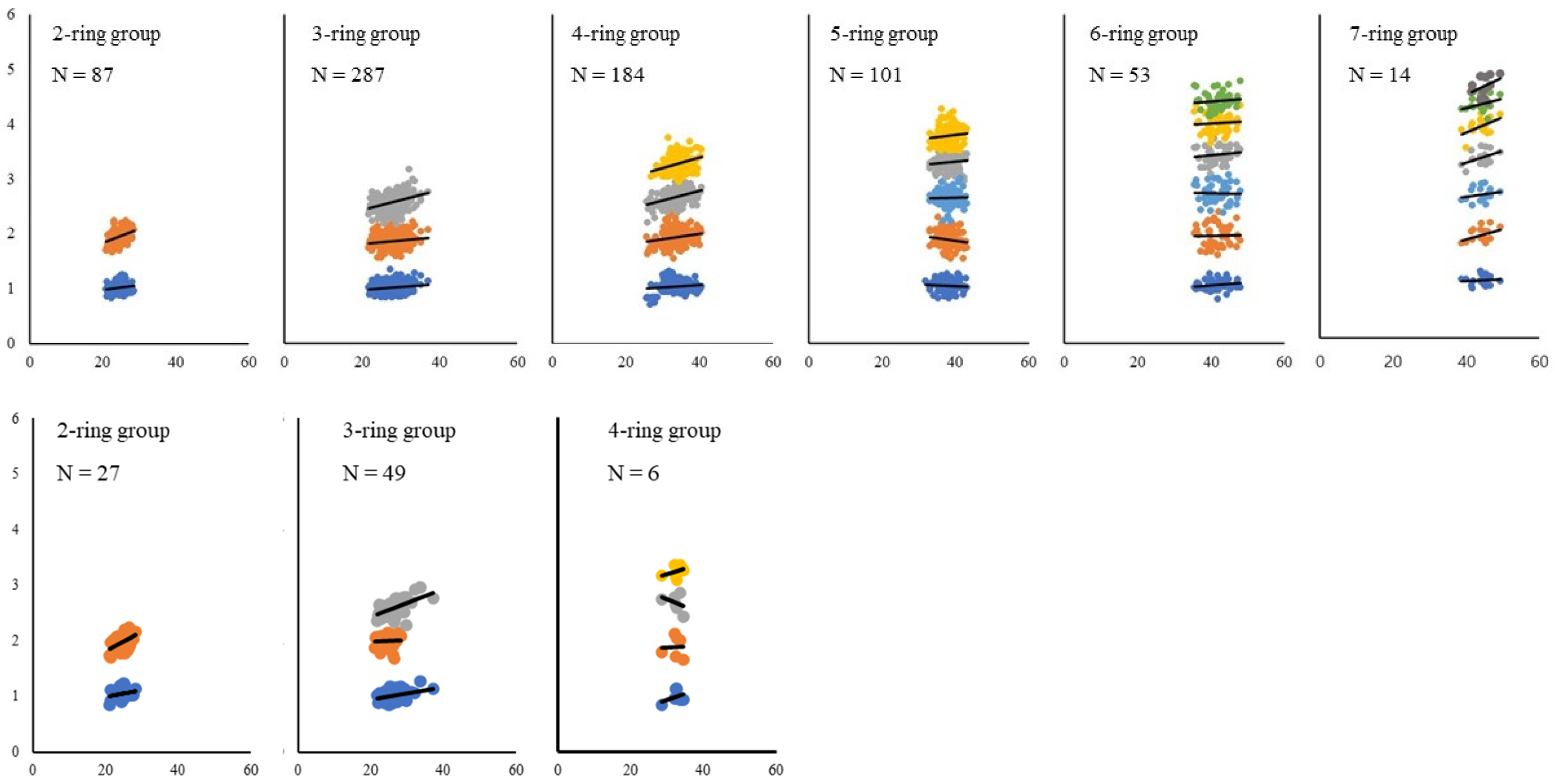
To evaluate the validity of annuli as indicators of growth, the relationship between ring radius and otolith radius was analyzed across ring groups. A minimum of two and a maximum of eight ring groups were identified (Figure 5). The annuli observed in the otoliths were clearly distinguishable from adjacent ones. In specimens with the same number of annuli, the distance between successive annuli increased with increasing otolith radius, confirming that annulus formation occurred consistently in relation to otolith growth.
Otoliths were extracted from 101 males and 1015 females. After excluding specimens lost during the polishing process or those that were difficult to interpret, 85 males and 728 females were ultimately used for age determination. Because the number of male specimens was limited, the asymptotic length was fixed during growth model fitting to improve the stability of the growth parameter estimation, as described in the Section 2.
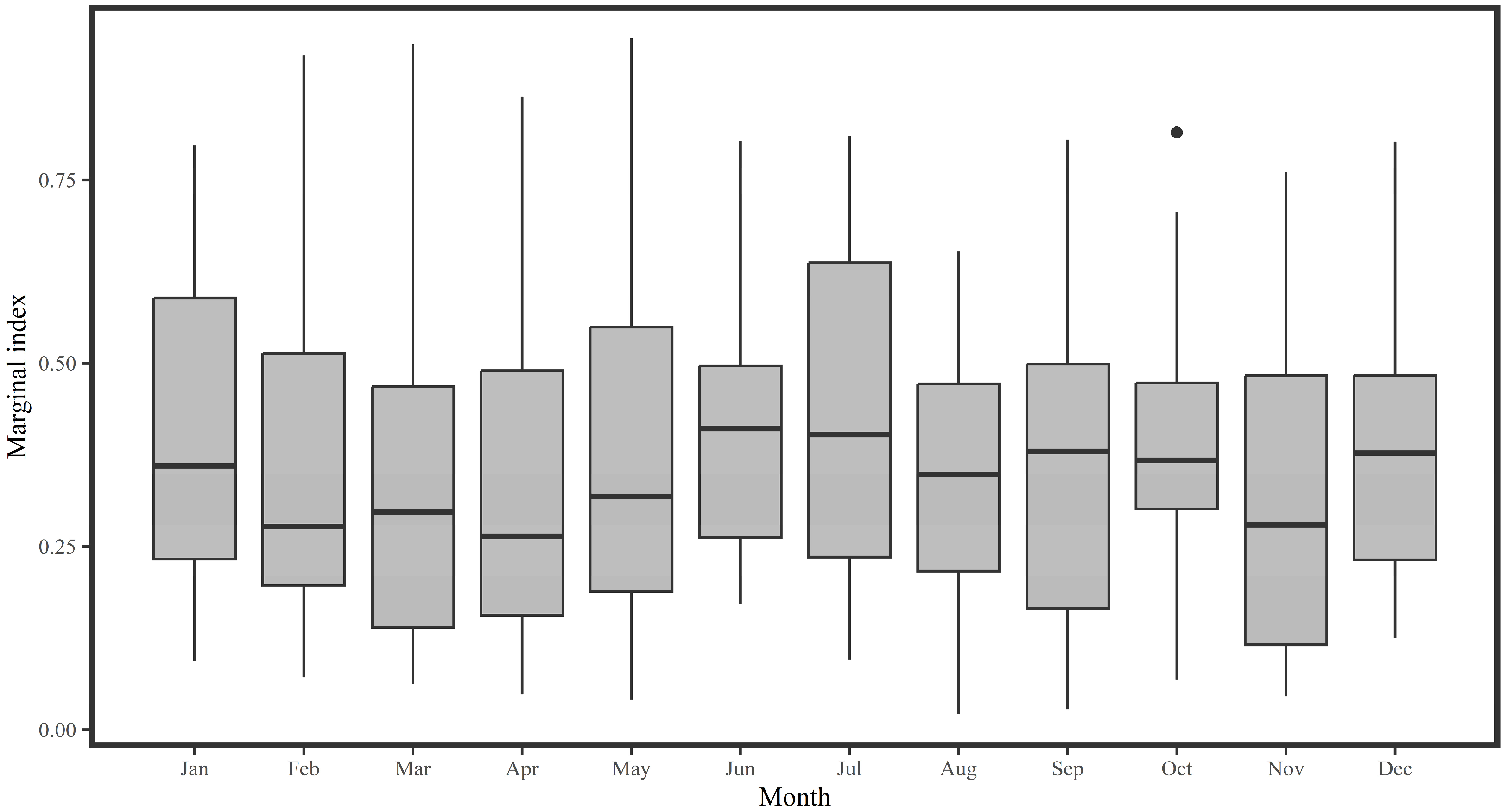
To determine the timing of annulus formation, monthly variations in the marginal index (MI) were analyzed (Figure 6). The lowest value was observed in November, suggesting that annulus formation is likely associated with the spawning period.

3.3. Estimation of the Spawning Season

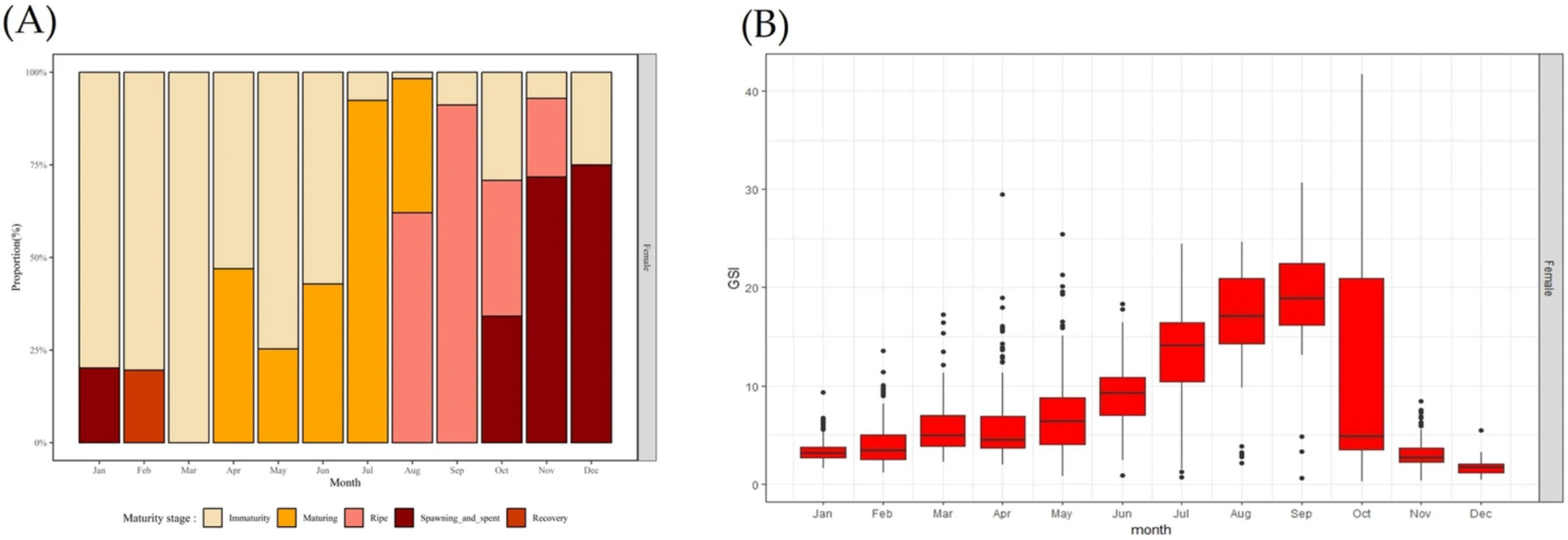
To elucidate the timing of annulus formation in the otoliths of C. pinetorum, the spawning period was estimated. Monthly gonadal maturation stages were assessed through both macroscopic and histological examinations, and the gonadosomatic index (GSI) was also analyzed. Individuals at the fully mature stage (ripe) were first observed in August, whereas spawning and spent individuals were recorded from October to January (Figure 7A). The GSI reached its peak in September, showed the most significant decline in October, and continued to decrease until December. Afterward, it gradually increased again (Figure 7B).
Histological analysis of the ovaries revealed the following developmental stages:
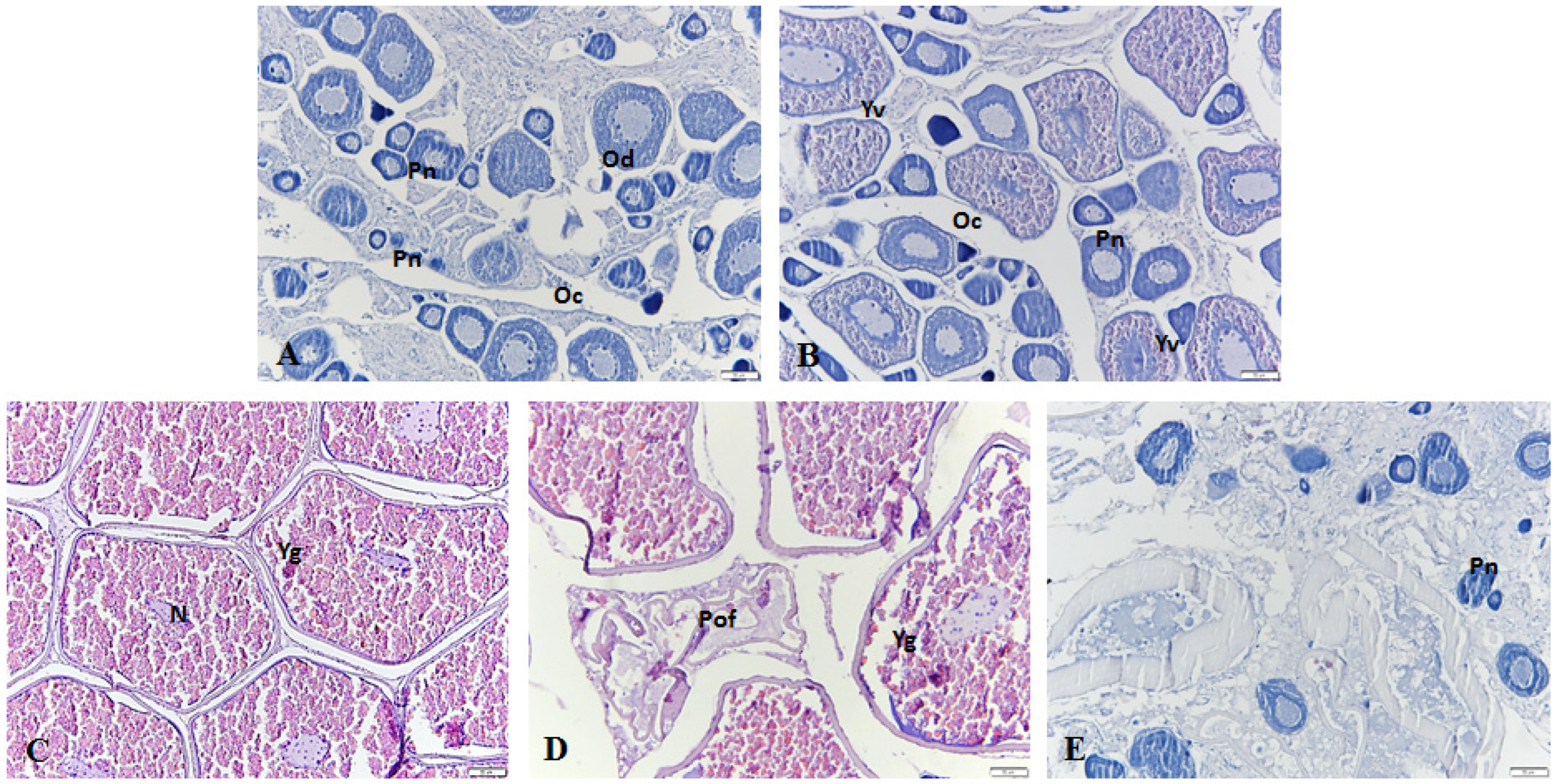
In the immature stage, the ovarian lobules were mostly occupied by chromatin nucleolus oocytes (approximately 10 µm in diameter) and perinucleolar oocytes (20–70 µm) (Figure 8A).
In the early maturation stage, yolk vesicle oocytes (120–160 µm) appeared, with yolk vesicles dispersed throughout the cytoplasm (Figure 8B).
In the advanced maturation stage, oocytes grew to 250–400 µm, formed a zona radiata, and multiple yolk globules were evenly distributed in the cytoplasm; the nucleus migrated toward the animal pole (Figure 8C).
In the spawning stage, mature oocytes measured 450–600 µm, and some individuals showed signs of ovulation (Figure 8D).
In the recovery stage, the ovarian epithelium was reorganized, and small oocytes (20–60 µm) were observed along the germinal epithelium (Figure 8E).
Based on macroscopic and histological observations, female gonadal development was classified into five stages. Mid-mature individuals began to appear in April, while fully mature individuals were observed from August to November. Spawning commenced in October and continued until January of the following year, with recovery-stage individuals appearing in February.

3.4. Estimation by Growth Equation

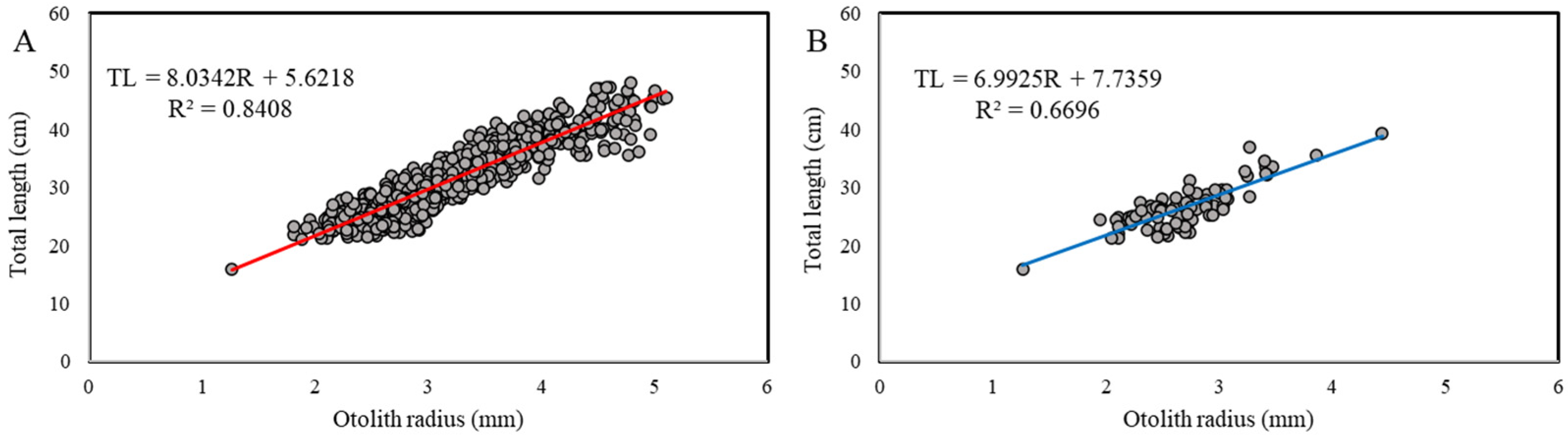
To verify the validity of otolith analysis as an age indicator in this study, the relationship between total length and otolith radius was examined using specimens of C. pinetorum. The regression equation was as follows (Figure 9):
F e m a l e : T L = 8.034 R + 5.6218 ( R 2 = 0.8408 )
M a l e : T L = 6.992 R + 7.7359 ( R 2 = 0.6696 )
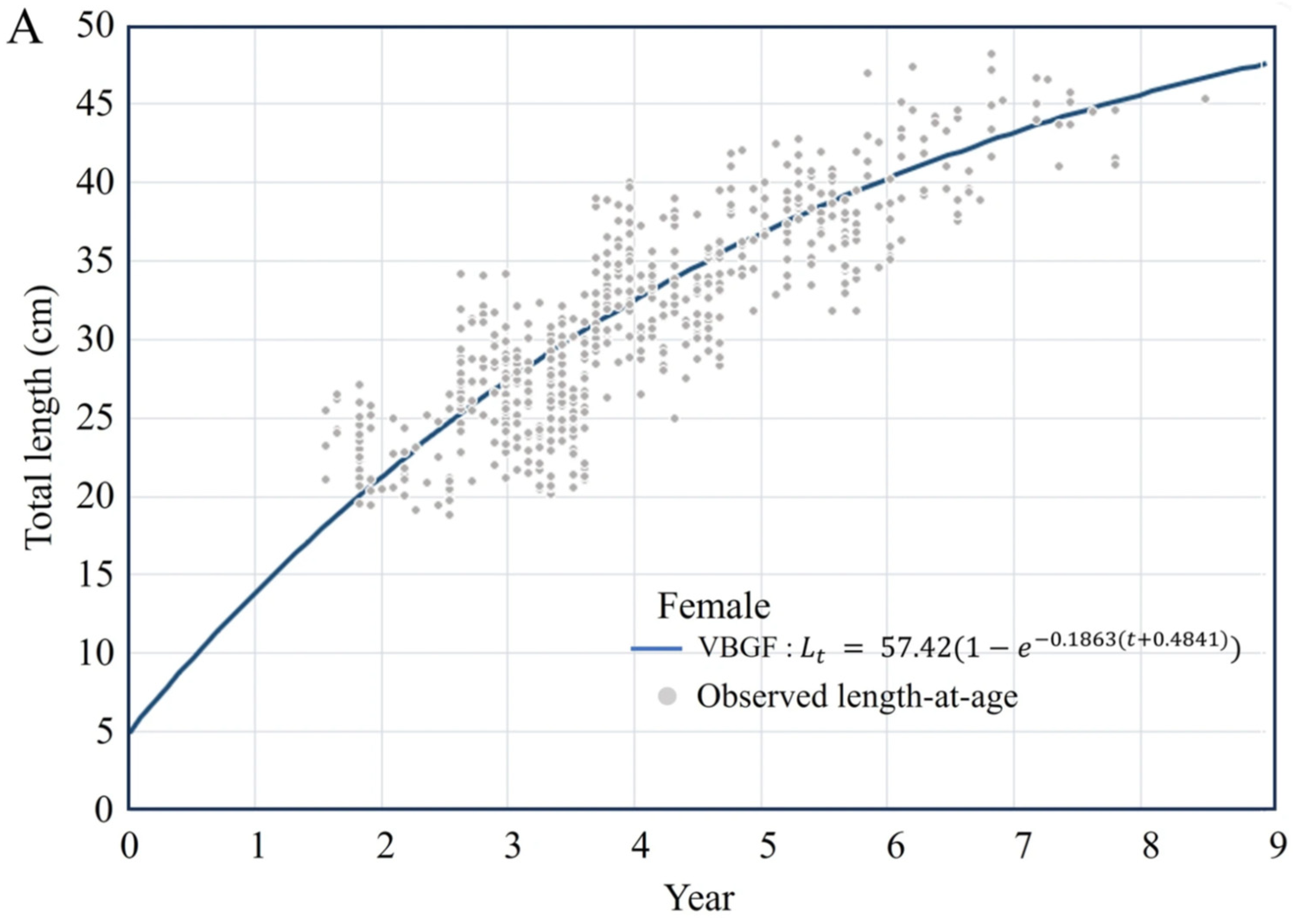
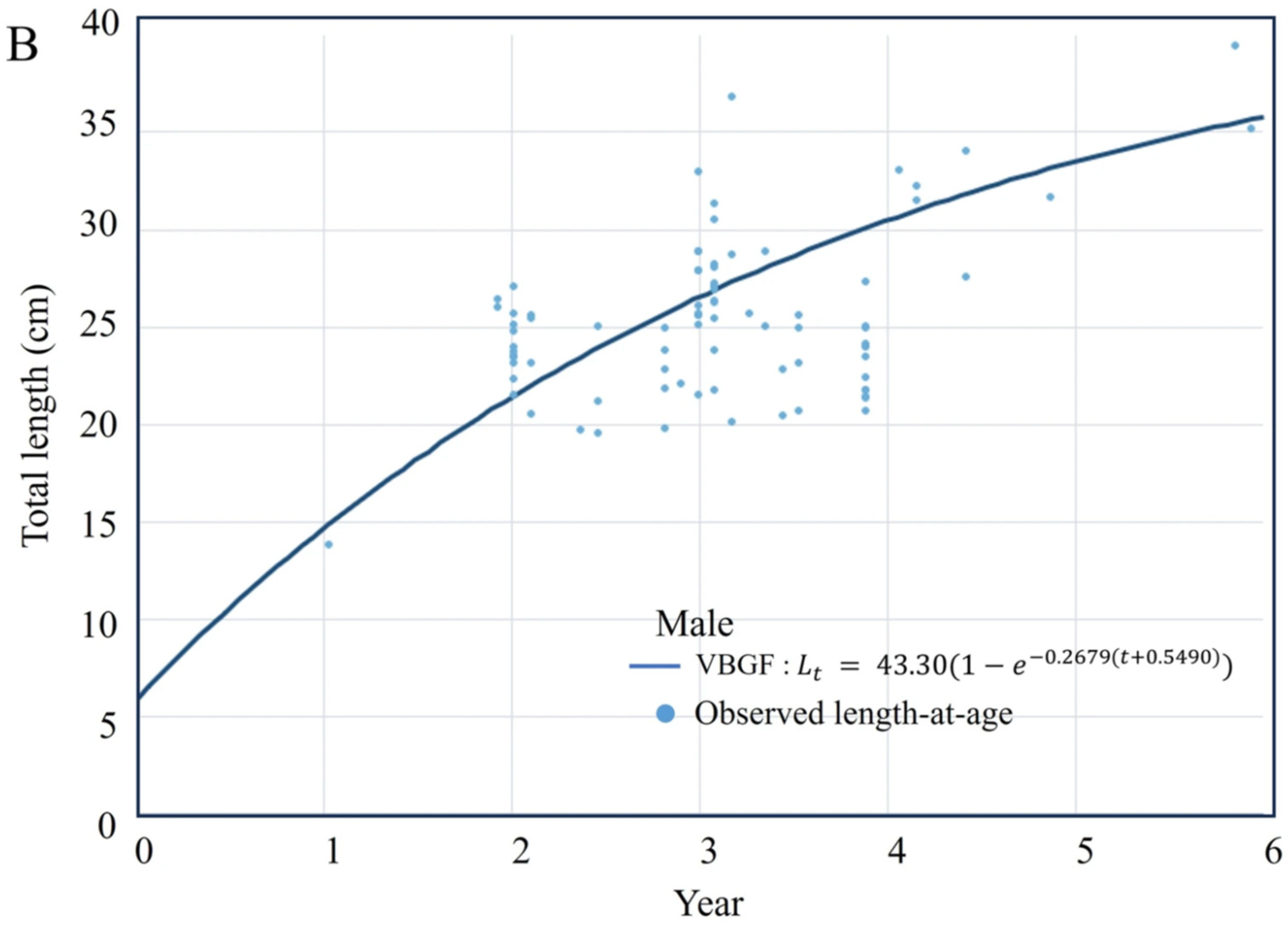
Assuming that spawning of C. pinetorum is completed in December, it was estimated that approximately 0.91 years (11 months) were required until the formation of the first annulus in the following year. Accordingly, in January, the estimated age of individuals with two annuli was 2.08 years, and those with three annuli were 3.08 years. In February, individuals with three annuli were estimated to be 2.17 years old, while those with four annuli were 3.17 years old. Using this approach, the ages of all individuals were calculated, and the growth equation was subsequently estimated. The number of annuli counted ranged from 2 to 8 in females and from 1 to 5 in males. The mean diameter of the first annulus was 1.03 mm, and the spacing between successive annuli showed a decreasing trend with increasing age. The growth equation is as follows
F e m a l e : L t = 57.42 ( 1 e 0.1863 ( t + 0.4841 ) )
M a l e : L t = 43.30 ( 1 e 0.2679 ( t + 0.5490 ) )
Using the relationship between otolith annulus radii and total length, the back-calculated mean lengths at age were estimated. The estimated mean back-calculated lengths were 14.17 ± 1.09 cm at age 0.9, 21.06 ± 1.75 cm at age 1.9, and 26.88 ± 2.18 cm at age 2.9, and increased to 43.48 ± 1.49 cm at age 7.9 (Figure 10). Based on these back-calculated lengths, the von Bertalanffy growth parameters for female C. pinetorum were estimated as follows: the asymptotic total length (L∞) was 57.42 cm (95% confidence interval: 53.04–61.80 cm), the growth coefficient (K) was 0.1863 year−1 (95% confidence interval: 0.1528–0.2198 year−1), and the theoretical age at zero length (t0) was −0.4841 years (95% confidence interval: −0.7079 to −0.2603 years).
For males, the estimated mean back-calculated lengths were 14.94 ± 1.24 cm at age 0.9, 21.38 ± 2.16 cm at age 1.9, 25.48 ± 2.56 cm at age 2.9, and 31.47 ± 1.94 cm at age 3.9, and were 36.07 ± 2.63 cm at the maximum observed age of 4.9 years. Based on these back-calculated lengths, the von Bertalanffy growth parameters for male C. pinetorum were estimated with the asymptotic length fixed at 43.3 cm (110% of the observed maximum male TL) due to the limited representation of older males. The estimated growth coefficient (K) was 0.2679 year−1 (95% confidence interval: 0.2185–0.3172 year−1), and the theoretical age at zero length (t0) was −0.5490 years (95% confidence interval: −1.0326 to −0.0653 years).

4. Discussion

Accurate identification of the first annulus is critical for reliable age determination in fish, as misinterpretation can bias age estimates by ±1 year, thereby reducing precision and introducing systematic error [27]. To minimize such bias, two experienced readers independently examined each otolith twice; however, annulus interpretation may still vary depending on species-specific otolith characteristics and preparation quality. In this context, the mean radius of the first annulus estimated in the present study was 1.03 mm, which was comparable to that reported for the East Sea (0.92 mm) but slightly larger than that reported for Japanese waters (0.79 mm). In both the present study and the East Sea, the first annulus was formed approximately one year after spawning, whereas in Japanese waters, it was formed within less than one year. Therefore, differences in the timing of annulus formation are likely responsible for the observed regional variation in the radius of the first annulus [13,14].
In pleuronectid flatfishes, annuli are generally formed during periods of reduced somatic growth driven by environmental conditions, reproductive activity, and feeding intensity [8]. In the present study, annulus formation in C. pinetorum occurred shortly after spawning, which is likely attributable to reduced somatic growth following energy allocation to reproduction and decreased feeding activity. A similar post-spawning pattern has been reported for the East Sea population; however, studies from Japanese waters indicate that annulus formation occurs prior to spawning, suggesting regional differences [13,14]. Despite C. pinetorum being considered a single stock with no significant genetic differentiation across the East China Sea, Korean waters, and adjacent Japanese regions [28], such variation is more likely driven by environmental factors rather than stock-specific differences [8,29,30]. In particular, while the present study and the East Sea study were conducted at similar latitudes, the Japanese study area is located at a relatively higher latitude, where environmental conditions such as water temperature and photoperiod differ. Furthermore, as a benthic species with limited large-scale migration, C. pinetorum is strongly influenced by local environmental conditions. Among these, depth-related variation in water temperature plays a key role in determining spawning timing and, consequently, the timing of annulus formation [31,32].
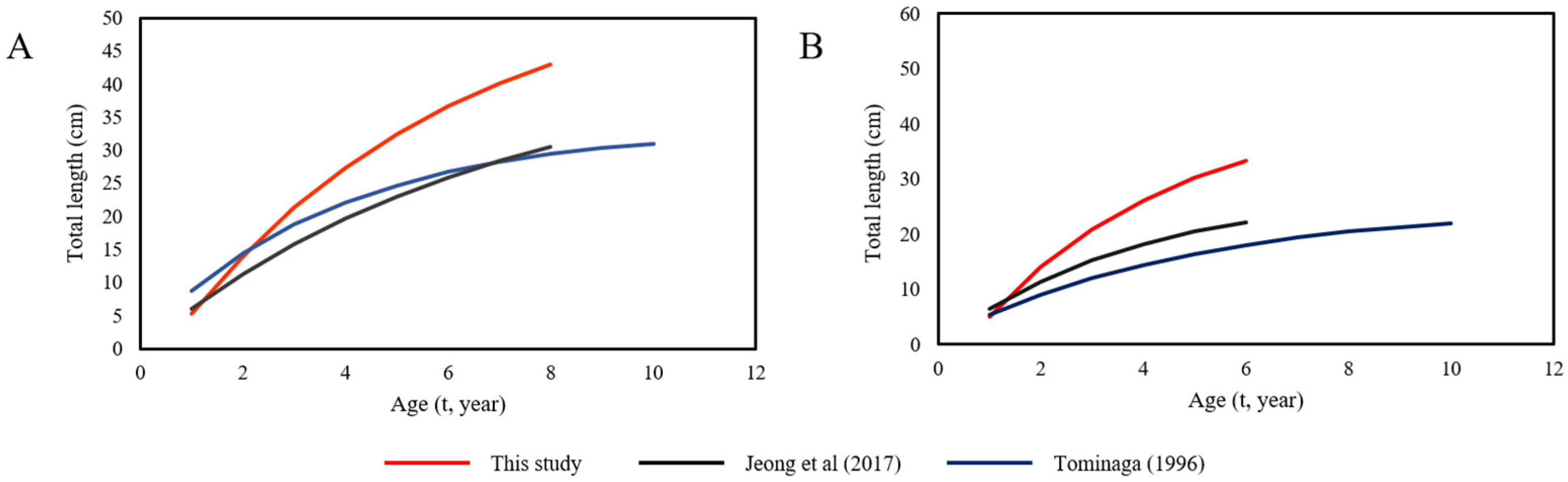
Consistent with these environmentally driven differences in life-history traits, the growth parameters estimated in this study indicated that the maximum total length exceeded previous reports by more than 10 cm, whereas the growth coefficient (K) remained comparable (Table 1, Figure 11). Accordingly, the growth rate was higher than that reported from other regions. Because growth rate is a relative metric, its evaluation requires comparison across multiple regions based on accumulated ecological studies [26]. Comparative studies have shown that populations of shotted halibut (Eopsetta grigorjewi) and Pacific cod (Gadus macrocephalus) in the West Sea exhibit higher growth rates than those in other regions [31,33]. This pattern is likely associated with the distinct environmental characteristics of the West Sea. Specifically, the region is relatively shallow, warmer, and highly productive, conditions that may favor rapid growth. In particular, the influence of the Yellow Sea Cold Water Mass and elevated primary productivity likely enhance food availability, thereby promoting faster growth of predators [3,4]. Furthermore, the occurrence of individuals exceeding previously reported maximum sizes suggests that this population may attain a larger asymptotic length (L∞). However, because the present study was based on commercial catch data, smaller individuals were underrepresented, which may have introduced bias in the estimation of early growth. Therefore, caution is required when interpreting growth patterns in younger age classes. Growth patterns are closely linked to maturation processes, as faster growth can lead to earlier attainment of maturity.
The length at 50% maturity (L50) of shorthead halibut in the West Sea has been reported as 18.9 cm, and when applied to the growth estimates from the present study, individuals are inferred to reach this size at approximately 2.3 years of age [34]. In contrast, populations in the East Sea and Hokkaido have been reported to require approximately 2–4 years to reach this size [13,14], indicating that the West Sea population matures earlier than those in other regions. This earlier maturation may be attributed to the relatively rapid growth observed in the West Sea; however, it may also reflect deterioration in stock status due to overfishing or environmental changes [35,36,37,38]. However, because the present study was based on data collected during a single year, it was not possible to directly evaluate the relationship between environmental conditions and early maturation. Therefore, long-term monitoring and further studies are required to clarify the effects of environmental change on the population dynamics and resource status of C. pinetorum. Because there are no previous studies available for direct comparison within the same population, it is not possible to assess changes in L50 over time. Therefore, the present study provides a basis for evaluating the current stock status and may contribute to the development of effective resource management strategies. Continuous ecological monitoring is required to assess population status and support sustainable management.
Finally, the estimates presented here are based on indirect methods and are therefore subject to uncertainty. In particular, the limited representation of small individuals may have influenced both growth and maturity estimates. Despite these limitations, this study provides important baseline information on the growth and maturation of this species in the West Sea. Future studies should include direct sampling of juvenile stages to improve the accuracy of growth models and to better resolve life-history characteristics in this species.

Author Contributions

Conceptualization, D.H.C. and S.J.L.; methodology, D.H.C. and S.L.; software, D.H.C. and S.L.; validation, D.H.C. and S.L.; formal analysis, D.H.C. and S.L.; investigation, D.H.C., S.L. and S.J.L.; resources, D.H.K. and S.J.L.; data curation, D.H.C.; writing—original draft preparation, D.H.C.; writing—review and editing, S.J.L. and D.H.K.; visualization, D.H.C.; supervision, S.J.L.; project administration, D.H.K. and S.J.L. All authors have read and agreed to the published version of the manuscript.

Funding

This research was a part of the project titled “Survey of coastal fisheries resources and marine environmental ecology in the Yellow Sea” (R2026010), which was funded by the National Institute of Fisheries Science (NIFS), Republic of Korea.

Institutional Review Board Statement

The study was conducted in accordance with the regulations on research ethics of the National Institute of Fisheries Science. We only used specimens from the fish market that were already dead.

Data Availability Statement

The datasets generated and analyzed during the current study are available from the corresponding author on reasonable request.

Acknowledgments

This work was funded by the National Institute of Fisheries Science (R2026010). We would like to thank the researchers at the West Sea Fisheries Research Institute for their assistance in analyzing the sample and the anonymous reviewers and editors who provided comments to improve the quality of the paper.

Conflicts of Interest

The authors declare no conflicts of interest.

References

  1. Naimie, C.E.; Blain, C.A.; Lynch, D.R. Seasonal mean circulation in the Yellow Sea—A model-generated climatology. Cont. Shelf Res. 2001, 21, 667–695. [Google Scholar]
  2. Lie, H.J.; Cho, C.H.; Lee, J.H.; Lee, S.; Tang, Y. Seasonal Variation of the Cheju Warm Current in the Northern East China Sea. J. Oceanogr. 2001, 56, 197–211. [Google Scholar]
  3. Wei, C.; Tang, X.; Ge, K.; Xu, A.; Li, Y.; Jiang, Y.; Rong, Z.; Yu, F. Observed Seasonal Evolution and Origins of the Western Yellow Sea Cold Water Mass. Front. Mar. Sci. 2025, 12, 1556069. [Google Scholar] [CrossRef] [Scilit]
  4. Li, H.; Zhai, F.; Dong, Y.; Liu, Z.; Gu, Y.; Bai, P. Interannual-decadal variations in the Yellow Sea Cold Water Mass in summer during 1958-2016 using an eddy-resolving hindcast simulation based on OFES2. Cont. Shelf Res. 2024, 275, 105223. [Google Scholar]
  5. National Fisheries Research and Development Institute (NFRDI). The Study on Fisheries Regulation for Aquatic Plants and Animals Species; National Fisheries Research and Development Institute: Busan, Republic of Korea, 2009; pp. 17–27.
  6. Korean Statistical Information Service (KOSIS). Fishery Production Survey. 2025. Available online: http://kosis.kr (accessed on 8 August 2025).
  7. Choi, D.H.; Youn, B.I.; Kim, M.J.; Lee, S.H.; Kwon, D.H.; Han, K.H.; Lee, S.J. Feeding habits of the pointhead flounder (Cleisthenes pinetorum) in the West Sea in Korea. Korean J. Ichthyol. 2021, 33, 273–277. [Google Scholar] [CrossRef] [Scilit]
  8. Campana, S.E. Accuracy, precision and quality control in age determination, including a review of the use and abuse of age validation methods. J. Fish Biol. 2001, 59, 197–242. [Google Scholar] [CrossRef] [Scilit]
  9. Beamish, R.J.; McFarlane, G.A. The forgotten requirement for age validation in fisheries biology. Trans. Am. Fish. Soc. 1983, 112, 735–743. [Google Scholar] [CrossRef] [Scilit]
  10. Campana, S.E.; Annand, M.C.; McMilan, J.I. Graphical and Statistical Methods for Determining the Consistency of Age Determinations. Trans. Am. Fish. Soc. 1995, 124, 131–138. [Google Scholar] [CrossRef] [Scilit]
  11. Campana, S.E.; Thorrold, S.R. Otoliths, increments, and elements: Keys to a comprehensive understanding of fish populations. Can. J. Fish. Aquat. Sci. 2001, 58, 30–38. [Google Scholar] [CrossRef] [Scilit]
  12. Stewart, J.; Broadhurst, M.K.; Tolhurst, D.J. Using otolith weights to estimate age for eastern sea garfish, Hyporhamphus australis. Front. Fish Sci. 2024, 2, 1518118. [Google Scholar] [CrossRef] [Scilit]
  13. Tominaga, O.; Watanabe, Y.; Takahashi, T. Age and growth of pointhead flounder Hippoglossoides pinetorum in Ishikari Bay, Hokkaido. Fish. Sci. 1996, 62, 215–220. [Google Scholar] [CrossRef] [Scilit]
  14. Jeong, Y.K.; Kim, S.T.; Yoon, S.C.; Yang, J.H.; Jung, K.M.; Oh, T.Y.; Choi, K.H. Reconfirmation of age and growth of the pointhead flounder Hippoglossoides pinetorum in the coastal waters of the East Sea off Gyeongbuk. J. Korean Soc. Fish. Technol. 2017, 53, 363–375. [Google Scholar] [CrossRef] [Scilit]
  15. Beamish, R.J.; Fournier, D.A. A method for comparing the precision of a set of age determinations. Can. J. Fish. Aquat. Sci. 1981, 38, 982–983. [Google Scholar] [CrossRef] [Scilit]
  16. Chang, W.Y.B. A statistical method for evaluating the reproducibility of age determination. Can. J. Fish. Aquat. Sci. 1982, 39, 1208–1210. [Google Scholar] [CrossRef] [Scilit]
  17. Okamura, H.; Punt, A.E.; Semba, Y.; Ichinokawa, M. Marginal increment analysis: A new statistical approach of testing for temporal periodicity in fish age verification. J. Fish Biol. 2013, 82, 1239–1249. [Google Scholar] [CrossRef] [Scilit] [PubMed]
  18. Krusic-Golub, K.; Sutrovic, A.; Barrow, J. Catch-at-Age Data for Southern Bluefin Tuna in the New Zealand Longline Fishery, 2019–2021; New Zealand Fisheries Assessment Report 2023/23; Fisheries New Zealand: Wellington, New Zealand, 2023.
  19. von Bertalanffy, L. Quantitative laws in metabolism and growth. Q. Rev. Biol. 1957, 32, 217–231. [Google Scholar] [CrossRef] [Scilit] [PubMed]
  20. Francis, R.I.C.C. Are growth parameters estimated from tagging and age-length data comparable? Can. J. Fish. Aquat. Sci. 1988, 45, 936–942. [Google Scholar]
  21. Kimura, D.K. A comparison of von Bertalanffy and polynomial functions in modeling fish growth data. Can. J. Fish. Aquat. Sci. 1980, 37, 702–706. [Google Scholar]
  22. Ogle, D.H.; Doll, J.C.; Wheeler, P.; Dinno, A. FSA: Fisheries Stock Analysis. R Package Version 0.9.4, 2023. Available online: https://cran.r-project.org/package=FSA (accessed on 10 March 2026).
  23. Baty, F.; Ritz, C.; Charles, S.; Brutsche, M.; Flandrois, J.P.; Delignette-Muller, M.L. A Toolbox for Nonlinear Regression in R: The Package nlstools. J. Stat. Softw. 2015, 66, 1–21. [Google Scholar]
  24. Wickham, H.; Averick, M.; Bryan, J.; Chang, W.; McGowan, L.; Francois, R.; Grolemund, G.; Hayes, A.; Henry, L.; Hester, J.; et al. Welcome to the tidyverse. J. Open Source Softw. 2019, 4, 1686. [Google Scholar] [CrossRef] [Scilit]
  25. Fox, J.; Weisberg, S. An R Companion to Applied Regression, 3rd ed.; Sage: Thousand Oaks, CA, USA, 2019; Available online: https://cran.r-project.org/package=car (accessed on 10 March 2026).
  26. Munro, J.L.; Pauly, D. A Simple Method for Comparing Growth of Fishes and Invertebrates. ICLARM Fishbyte 1983, 1, 5–6. [Google Scholar]
  27. Basilone, G.; Barra, M.; Ferreri, R.; Mangano, S.; Pulizzi, M.; Giacalone, G.; Fontana, I.; Aronica, S.; Gargano, A.; Rumolo, P.; et al. First annulus formation in the European anchovy; a two-stage approach for robust validation. Sci. Rep. 2020, 10, 1079. [Google Scholar] [CrossRef] [Scilit] [PubMed]
  28. Xiao, Y.; Zhang, Y.; Yanagimoto, T.; Li, J.; Xiao, Z.; Gao, T.; Xu, S.; Ma, D. Population genetic structure of the point-head flounder, Cleisthenes herzensteini, in the Northwestern Pacific. Genetica 2011, 139, 187–198. [Google Scholar] [PubMed]
  29. Velikanov, A.Y. Spatial differences in reproduction of capelin (Mallotus villosus socialis) in the coastal waters of Sakhalin. ICES J. Mar. Sci. 2002, 59, 1011–1017. [Google Scholar] [CrossRef] [Scilit]
  30. Mantini, L.; Hoyer, M.V.; Shireman, J.V.; Canfield, D.E., Jr. Annulus validation, time of formation, and mean length at age of three sunfish species in north central Florida. In Proceedings of the Annual Conference Southeastern Association of Fish and Wildlife Agencies; Southeastern Association of Fish and Wildlife Agencies: Tallahassee, FL, USA, 1992; Volume 46, pp. 357–367. [Google Scholar]
  31. Choi, D.-H.; Youn, B.-I.; Han, K.-H.; Kwon, D.-H.; Lee, S.-J. Age and Growth of Shotted Halibut, Eopsetta grigorjevi (Herzenstein, 1890), in the West Sea of Korea. J. Mar. Sci. Eng. 2023, 1, 2242. [Google Scholar]
  32. Hong, P.; Katayama, S.; Yamamoto, M.; Ishii, M.; Baba, T.; Saeki, M.; Suzuki, M.; Nakaya, M.; Yagi, Y. Comparison of Age and Growth of the Marbled Flounder Pseudopleuronectes yokohamae (Günther, 1877) in the Coastal Waters of Japan. Asian Fish. Sci. 2019, 32, 72–80. [Google Scholar] [CrossRef] [Scilit]
  33. Kim, H.; Kim, S.; Im, Y.; Hwang, H.J.; Huh, S. Growth characteristics of Pacific cod (Gadus macrocephalus) in the West Sea of Korea. J. Korean Soc. Fish. Technol. 2013, 49, 261–269. [Google Scholar] [CrossRef] [Scilit]
  34. Choi, D.H.; Youn, B.I.; Lee, S.H.; Kwon, D.H.; Kim, M.J. Maturity and spawning of pointhead flounder (Cleisthenes pinetorum) in the West Sea of Korea. Korean J. Fish. Aquat. Sci. 2022, 55, 575–582. [Google Scholar]
  35. Law, R. Fishing, selection, and phenotypic evolution. ICES J. Mar. Sci. 2000, 57, 659–668. [Google Scholar] [CrossRef] [Scilit]
  36. Olsen, E.M.; Heino, M.; Lilly, G.R.; Morgan, M.J.; Brattey, J.; Ernande, B.; Dieckmann, U. Maturation trends indicative of rapid evolution preceded the collapse of northern cod. Nature 2004, 428, 932–935. [Google Scholar] [CrossRef] [Scilit] [PubMed]
  37. Jørgensen, C.; Enberg, K.; Dunlop, E.S.; Arlinghaus, R.; Boukal, D.S.; Brander, K.; Ernande, B.; Gårdmark, A.G.; Johnston, F.; Matsumura, S.; et al. Managing evolving fish stocks. Science 2007, 318, 1247–1248. [Google Scholar] [CrossRef] [Scilit] [PubMed]
  38. Sharpe, D.M.T.; Hendry, A.P. Life history change in commercially exploited fish stocks: An analysis of trends across studies. Evol. Appl. 2009, 2, 260–275. [Google Scholar] [CrossRef] [Scilit] [PubMed]
Figure 1. West Sea of Korea (Yellow Sea), where the Cleisthenes pinetorum specimens were collected.
Jmse 14 01254 g001
Figure 2. Ocular side otolith (×1.25) from 32.5 cm female Cleisthenes pinetorum measured a whole otolith age of 4 years.
Jmse 14 01254 g002
Figure 3. Length frequency distribution by sex of the studied sample of Cleisthenes pinetorum in West Sea of Korea.
Jmse 14 01254 g003
Figure 4. Relationship between Total length and body weights of Cleisthenes pinetorum in the West Sea of Korea.
Jmse 14 01254 g004
Figure 5. Relationships between otolith radius (OR) and ring radius (rn) at each ring group of Cleisthenes pinetorum in the West Sea of Korea ((top) female, (bottom) male). Colors indicate annulus number: blue = first annulus, orange = second annulus, light blue = third annulus, gray = fourth annulus, yellow = fifth annulus, green = sixth annulus, and dark gray = seventh annulus).
Jmse 14 01254 g005
Figure 6. Monthly changes in the mean marginal index (MI) of Cleisthenes pinetorum in the West Sea of Korea. Vertical line (whiskers), the upper and lower whiskers represent scores outside the middle 50%; the top of box (upper quartile), seventy-five percent of the scores fall below the upper quartile; the bottom side of box (lower quartile), twenty-five percent of scores fall below the lower quartile, bold line (the median), the median marks the mid-point of the data and is shown by the line that divides the box in to two parts. Black dots indicate outlying observations outside the whisker range.
Jmse 14 01254 g006
Figure 7. (A) Monthly changes in maturity stages of female Cleisthenes pinetorum. (B) Monthly changes in maturity stages of female Cleisthenes pinetorum in the west Sea of Korea. (Vertical lines (whiskers) represent values outside the middle 50% of the data; the red box represents the interquartile range (25th–75th percentiles); the horizontal line within the box indicates the median; and black dots indicate outlying observations outside the whisker range).
Jmse 14 01254 g007
Figure 8. Developmental stages in the ovary of Cleisthenes pinetorum. (A) Ovary of the growing stage. (B) Ovary of the early mature stage; (C) Ovary of the mature stage; (D) Ovary of the ripe and spawning stage; (E) Ovary of the recovery stage. N, Nucleus; Oc, Ovarian cavity; Od, Oil droplet; Pn, peri-nucleulus, Pof, postovulatory follicle; Yg, Yolk globule. Yv, Yolk vesicle.
Jmse 14 01254 g008
Figure 9. Relationship between total length and otolith radius of Cleisthenes pinetorum in the West Sea of Korea ((A) female, (B) male);Red line represent female’s regression line, Blue line represent male’s regression line, grey circles represent obseved data points).
Jmse 14 01254 g009
Figure 10. Von Bertalanffy growth curves in total length estimated using a nonlinear regression method of Cleisthenes pinetorum in the West Sea of Korea ((A) female, (B) male).
Jmse 14 01254 g010aJmse 14 01254 g010b
Figure 11. Comparison of von Bertalanffy growth curves of Cleisthenes pinetorum by different authors [13,14] ((A) Female, (B) Male).
Jmse 14 01254 g011
Table 1. Comparison of growth parameters and growth performance index of Cleisthenes pinetorum reported by different authors.
AuthorsFemaleMaleSize Range (cm)Survey Area
L∞ (cm)KΦL∞ (cm)KΦ
This study57.420.18632.78833943.30.26792.70094921.1~49.3West Sea, Korea
Tominaga et al. (1996) [13]31.50.222.33904425.20.262.2177745.1~30.0Hokkaido, Japan
Jeong et al. (2017) [14]43.590.152.45486528.130.262.31331313.5–38.0East Sea, Korea
Disclaimer/Publisher’s Note: The statements, opinions and data contained in all publications are solely those of the individual author(s) and contributor(s) and not of MDPI and/or the editor(s). MDPI and/or the editor(s) disclaim responsibility for any injury to people or property resulting from any ideas, methods, instructions or products referred to in the content.