1. Introduction
Breakbulk cargo, comprising non-standardized, individually handled units such as project cargo, machinery, and bagged commodities, remains a distinct category within maritime logistics, both in its operational characteristics and its macroeconomic relevance. While containerization dominates modern supply chains, break-bulk continues to serve industrial corridors and developing economies where cargo geometry, weight, or port infrastructure constraints preclude full containerization [
1]. Despite accounting for a meaningful share of the approximately 90% of world trade carried by sea [
2], break-bulk operations have received considerably less research attention than their containerized counterparts. This asymmetry has significant implications: the inherent heterogeneity of break-bulk cargo amplifies operational variability, leading to longer vessel turnaround times, higher demurrage risk, and reduced port competitiveness [
3,
4].
Central to the performance of any cargo terminal is vessel turnaround time (VTT), defined as the total elapsed time from a vessel’s arrival at port anchorage to its final departure after completing all cargo operations [
5,
6]. VTT is conventionally decomposed into waiting time before berthing (WTB) and vessel service time (VST), the latter encompassing cargo handling, equipment downtime, documentation clearance, labor shift transitions, and weather-related interruptions [
7]. In break-bulk terminals, VST is not merely the dominant component of VTT but also the most variable, as each cargo unit may require individualized rigging, stowage planning, and handling sequences that resist standardization [
8]. Reducing VST therefore constitutes the primary operational lever for improving turnaround performance and, by extension, terminal competitiveness.
Despite the operational relevance of break-bulk terminals, the literature has yet to jointly apply lean diagnostics and discrete-event simulation (DES) to evaluate vessel service time in this segment, despite both methodologies having demonstrated utility in port contexts individually. This paper addresses that gap by proposing an integrated lean-informed simulation framework for evaluating VST at DP World Lirquén, a multipurpose terminal in Chile. The framework sequences three analytical stages: Value Stream Mapping (VSM) paired with Ohno’s waste taxonomy to diagnose non-value-adding activities, a DES model built in Simio to quantify their impact on VST and assess alternative operational scenarios, and Sobol sensitivity analysis to decompose VST variability and identify the dominant drivers of service time performance. The principal contribution is threefold: (i) the first documented integration of lean diagnostics, DES, and variance-based sensitivity analysis applied to break-bulk cellulose terminal operations, a segment explicitly identified as absent from the lean port literature (
Section 2.3); (ii) a structured three-stage analytical pipeline in which each phase feeds its outputs into the next, enabling waste identification to directly shape simulation scenario design; and (iii) empirical evidence that coordination-related interventions outperform resource-addition strategies as VST reduction levers in multipurpose terminals.
The remainder of this paper is structured as follows.
Section 2 surveys the relevant literature on break-bulk operations, discrete-event simulation in port systems, and lean methodologies in terminal logistics.
Section 3 outlines the proposed methodology.
Section 4 characterizes the operational context at DP World Lirquén.
Section 5 describes the simulation model and computational experiments.
Section 6 presents model validation, system behavior characterization, and the evaluation of alternative operational scenarios.
Section 7 concludes with managerial implications, limitations, and avenues for future research.
3. Methods
This study adopts a simulation-based research methodology grounded in the framework proposed by Law and Kelton [
36], adapted to the particular characteristics of break-bulk cellulose operations. The methodology is articulated through three sequential phases, each feeding its outputs into the next: (i) process documentation and data gathering, (ii) integrated lean-DES model development and experimental design, and (iii) an analytical framework for the interpretation of results.
3.1. Phase 1: Process Documentation and Data Gathering
The research focuses on break-bulk cellulose export operations at DP World Lirquén, a strategic node in Chile’s forestry industry. From August 2024 to November 2025, a longitudinal field study was conducted, combining direct observation, shadowing of dispatch and pier zone supervisors, exploration of terminal information systems, and semi-structured interviews with supervisors, machinery operators, and the continuous improvement team. This fieldwork identified and documented two primary subsystems: the Cellulose Warehouse process (cargo transfer from storage to trucks) and the Vessel Loading process (cargo lifted into ship holds).
Quantitative characterization relied on two complementary data sources: digital logs from terminal management systems and direct chronometry through manual time studies. The digital dataset comprised approximately 1.2 million truck dispatch records and 20 vessel-loading cycles, capturing historical operational behavior across the study period. In addition, 50 manual observations were collected for each principal operational activity to characterize processes not recorded by the information systems. The two sources served distinct purposes and were not statistically merged. Digital records were used to estimate aggregate cycle durations, truck transit times, and system-level performance indicators, while manual time studies parameterized micro-level activities such as hooking, stowage, and cargo-handling operations. Consequently, no weighting procedure between sources was required. Where both sources provided information on related activities, consistency checks were conducted to verify that manually observed durations fell within the range implied by historical operational records. Manual observations were collected across multiple shifts and crews to reduce observer-specific effects and mitigate potential Hawthorne bias.
This phase produced the process maps, time distributions, and operational constraints that serve as inputs to the simulation model. The case study is described in detail in
Section 4.
3.2. Phase 2: Integrated Lean-DES Model Development and Experimental Design
Prior to constructing the simulation model, a lean diagnostic was conducted to characterize the current-state operational flow and identify non-value-adding activities across the end-to-end cellulose handling process. The diagnostic followed two stages. First, a current-state Value Stream Map (VSM) was developed by combining on-site observation with structured interviews and historical records from the terminal operating system, tracing material and information flows along the entire cargo path. Second, the activities identified in the VSM were classified according to Ohno’s seven-waste taxonomy, revealing three dominant waste categories: waiting, unnecessary motion, and overproduction. The outputs of this diagnostic informed the specification of processing time distributions, identified bottleneck resources and operational constraints, and guided the design of experimental scenarios. The DES model was constructed using Simio version 15 [
37] to replicate the terminal’s physical layout and operational synchronization. Building on the lean diagnostic, the computational experiments pursued two complementary objectives: evaluating alternative terminal policies derived from the waste analysis, and examining the relationship between resource allocation and VST performance under varying conditions. The model construction and experimental design are detailed in
Section 5 and
Section 5.4, respectively.
3.3. Phase 3: Analytical Framework for Results Analysis
The analysis of simulation outputs follows a three-stage framework designed to progressively deepen the understanding of VST behavior. Stage 1 employs descriptive statistics to summarize the distributional properties of VST across all simulated scenarios. Stage 2 constructs a unified association matrix to quantify bivariate relationships between input factors and VST, combining Pearson’s correlation for numeric pairs, the correlation ratio
for mixed pairs, and Cramer’s V for categorical pairs [
38]. Stage 3 conducts a variance-based global sensitivity analysis using Sobol indices [
39,
40,
41] to decompose VST variance across the full input space, identifying which factors and factor interactions dominate service time variability. The progressive structure ensures that broad patterns are identified before computational resources are allocated to the full sensitivity decomposition. Technical details of the analytical procedures are presented alongside the results in
Section 6.
4. A Case Study at DP World Lirquén
This study examines the case of DP World Lirquén, a multipurpose maritime terminal located in southern Chile that serves as a key export hub for the region’s industrial sector, handling substantial volumes of break-bulk cargo, particularly cellulose and wood products. Unlike standardized container shipping, break-bulk cellulose export operations are characterized by inherent variability and require close synchronization among warehouse machinery, transport fleets, and ship cranes. This complexity creates opportunities to improve Vessel Service Time (VST) through better coordination of resources and elimination of non-value-adding activities, with direct implications for port costs and regional competitiveness.
The analysis focuses on the two core processes involved in vessel operations. The first is the cellulose warehouse process, encompassing the internal movement, staging, and preparation of cellulose bales prior to dispatch, including lifting equipment handling, inventory allocation, and the loading of trucks destined for the quay. The second is the vessel loading process, covering the transfer of cargo from the quay onto the ship through the coordination of inbound trucks, ship cranes, and stevedoring crews until the cargo is stowed on board.
4.1. Cellulose Warehouse Operations
The warehouse dispatch cycle coordinates the flow of cellulose cargo from four independent warehouses to the five holds of the vessel. The process is supported by a team comprising a supervisor, truck drivers, and crane operators, with a transport fleet of three to six trucks depending on the operational scenario. The operational sequence proceeds as follows: the supervisor receives the vessel plan folder specifying the lots, warehouses, and operations programmed for the shift; a physical inspection of assigned lots confirms their location, availability, and accessibility; truck drivers then log into the traffic management system through mobile devices, enabling real-time tracking of the transport fleet. Once a truck is available, lifting equipment transfers cellulose units from storage onto the truck, the supervisor records the transaction in the management system, a physical ticket is issued authorizing transit to the pier, and compressed air is applied to remove dust before departure.
Two types of lifting equipment are available: Model 1 (high capacity, four units per lift) and Model 2 (conventional, two units per lift). Trucks are loaded with 12, 14, or 16 units, the latter being the maximum density used to minimize the number of trips between warehouse and pier.
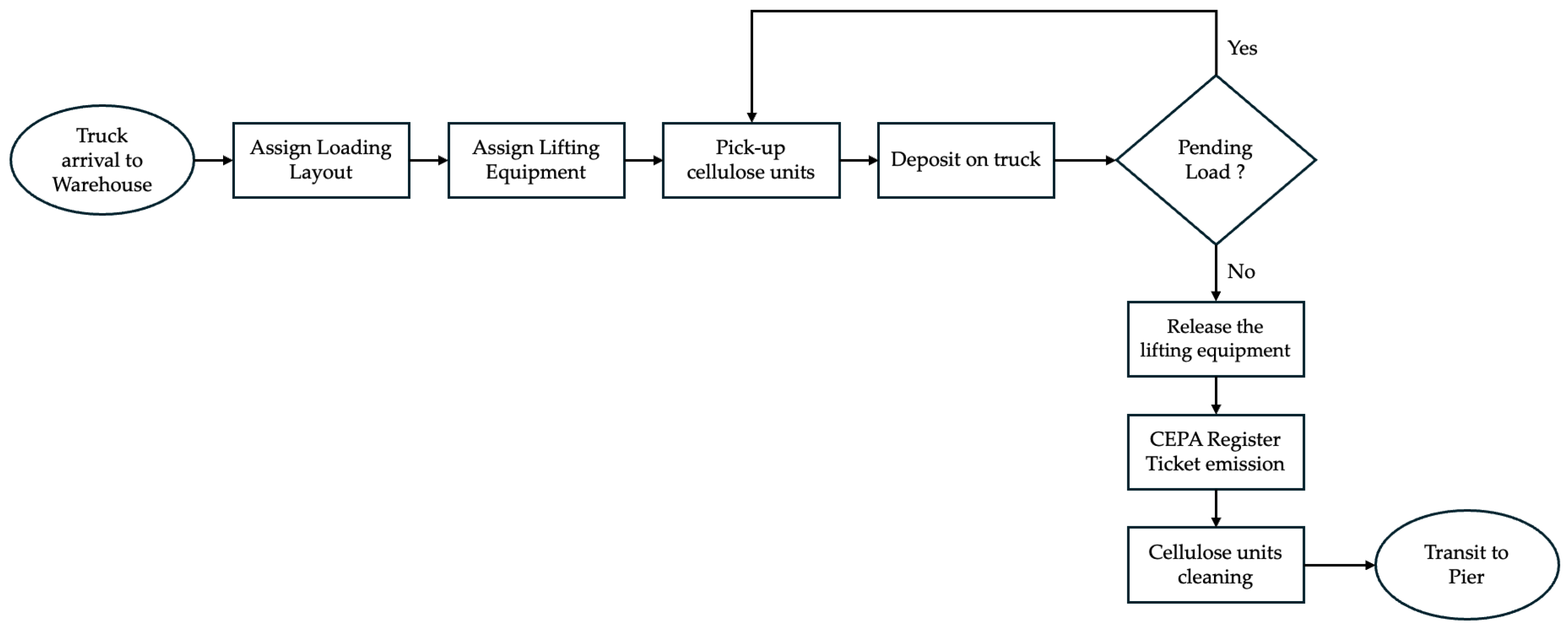
As shown in
Figure 1, the dispatch cycle begins when a truck arrives at the warehouse and is registered at the entry node. Before any cargo movement takes place, two attributes are defined that govern the remainder of the operation. First, the
Load Composition establishes the total number of units to be loaded (12, 14, or 16), with the 16-unit configuration preferred to minimize trips. Second, the truck is assigned a
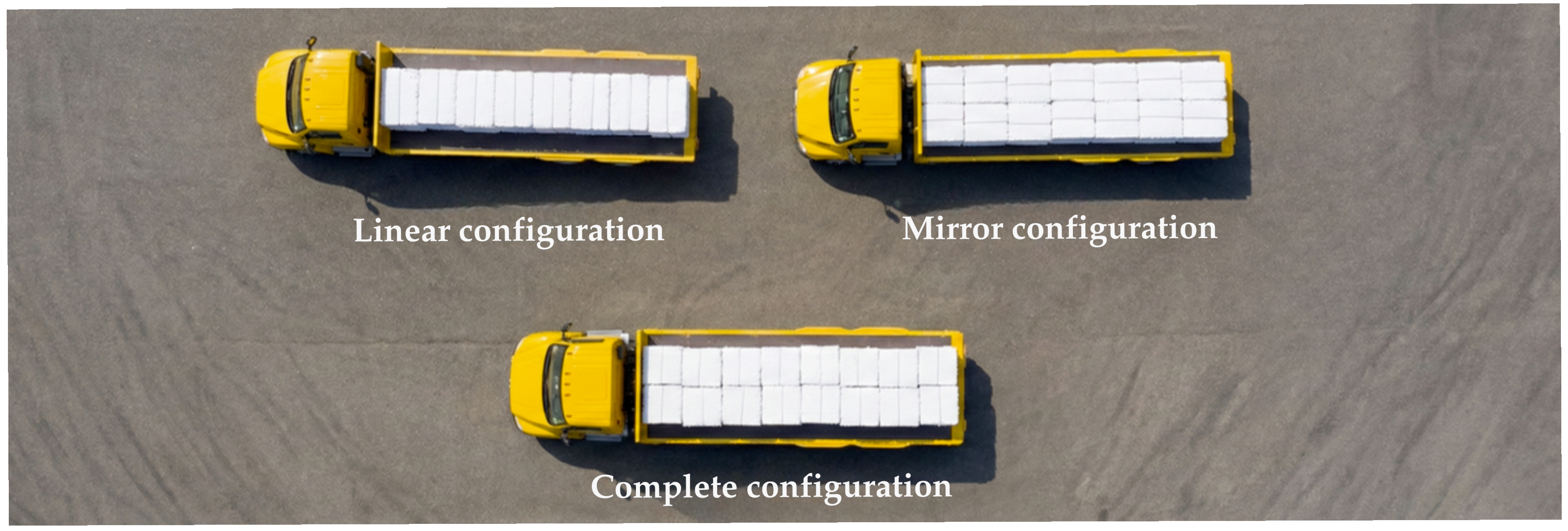
Loading Layout based on the shift’s stowage plan, which may follow a Linear, Complete, or Mirror arrangement as illustrated in
Figure 2. This attribute captures the technical complexity of the maneuver and has a direct impact on service time; the Mirror configuration is approximately 41% slower than a standard Linear arrangement. Once the layout is defined, a lifting equipment unit is assigned to the truck and remains dedicated to it for the entire loading operation, preventing the interruptions that would otherwise extend service time.
The loading proceeds as an iterative cycle between the storage area and the truck. In each iteration, the lifting equipment travels to the stock zone to pick up cellulose units according to its capacity, then returns to the truck to deposit them. The cycle repeats until the truck reaches its assigned load, with the number of iterations depending on both the load size and equipment capacity. Once the target is reached, the lifting equipment is released and becomes available for the next truck in the queue. The supervisor records the transaction and issues a physical ticket authorizing transit to the pier. Before departing, the truck passes through the cleaning station where compressed air is applied to the cellulose units and the cargo is marked with stencil and paint according to the stowage plan. The truck then departs toward the pier, where the vessel loading process takes over.
4.2. Vessel Loading Operations
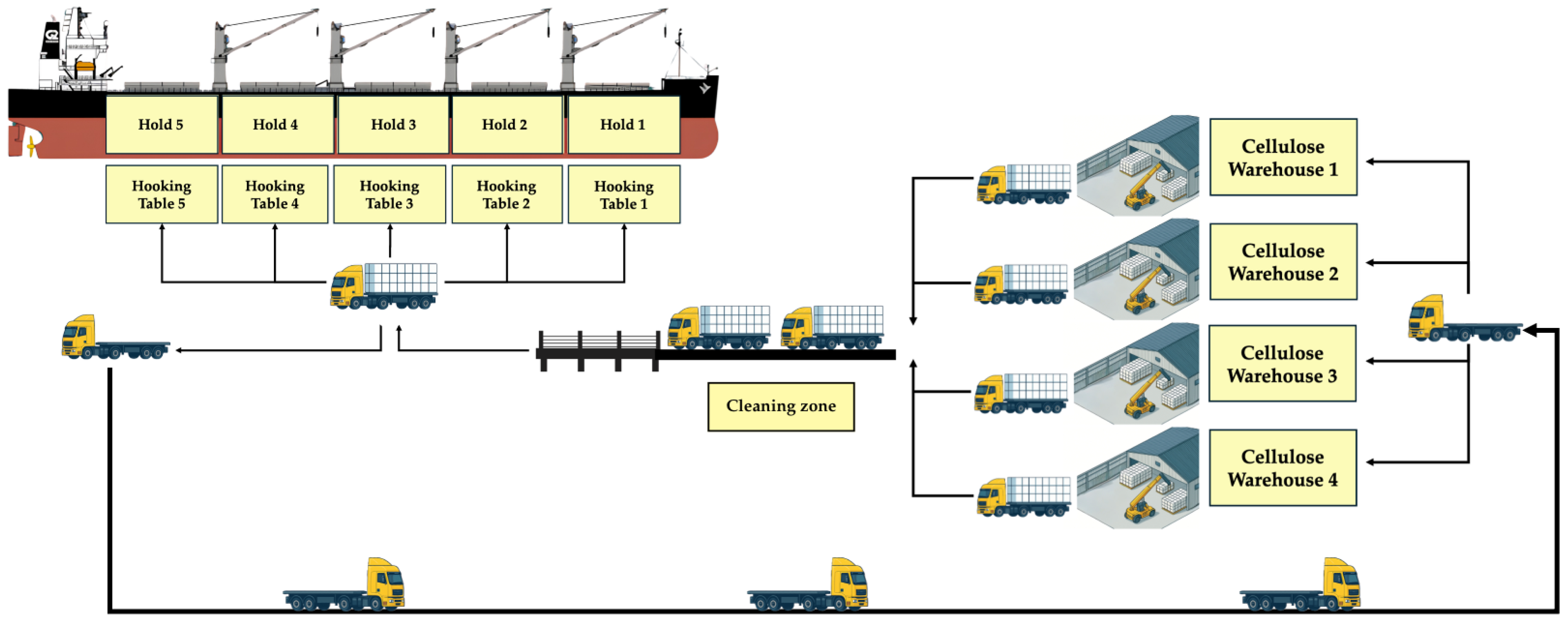
The vessel loading process manages the transfer of cellulose from the quay onto the ship. The reference vessel for the study is the Cypress Arrow (class Nack’s 61 Semi-open), with a total deadweight of 61,000 tons distributed across five independent holds. The vessel is equipped with four onboard cranes of 36 tons each; for simulation purposes, an additional mobile port crane is assumed to achieve higher efficiency. Personnel are organized in crews, each consisting of two ship crane operators, five stevedores working inside the hold, four hookers on the pier, and one supervisor. The analysis focuses on a dedicated loading campaign for a single vessel. During the simulated operation, the warehouse machinery, truck fleet, loading crews, and berth-side handling resources assigned to the cellulose operation are assumed to be exclusively allocated to the focal vessel. Consequently, competition for resources arising from simultaneous vessel calls was excluded from the model scope. This assumption allows the study to isolate the effects of operational coordination and resource allocation policies on vessel service time.
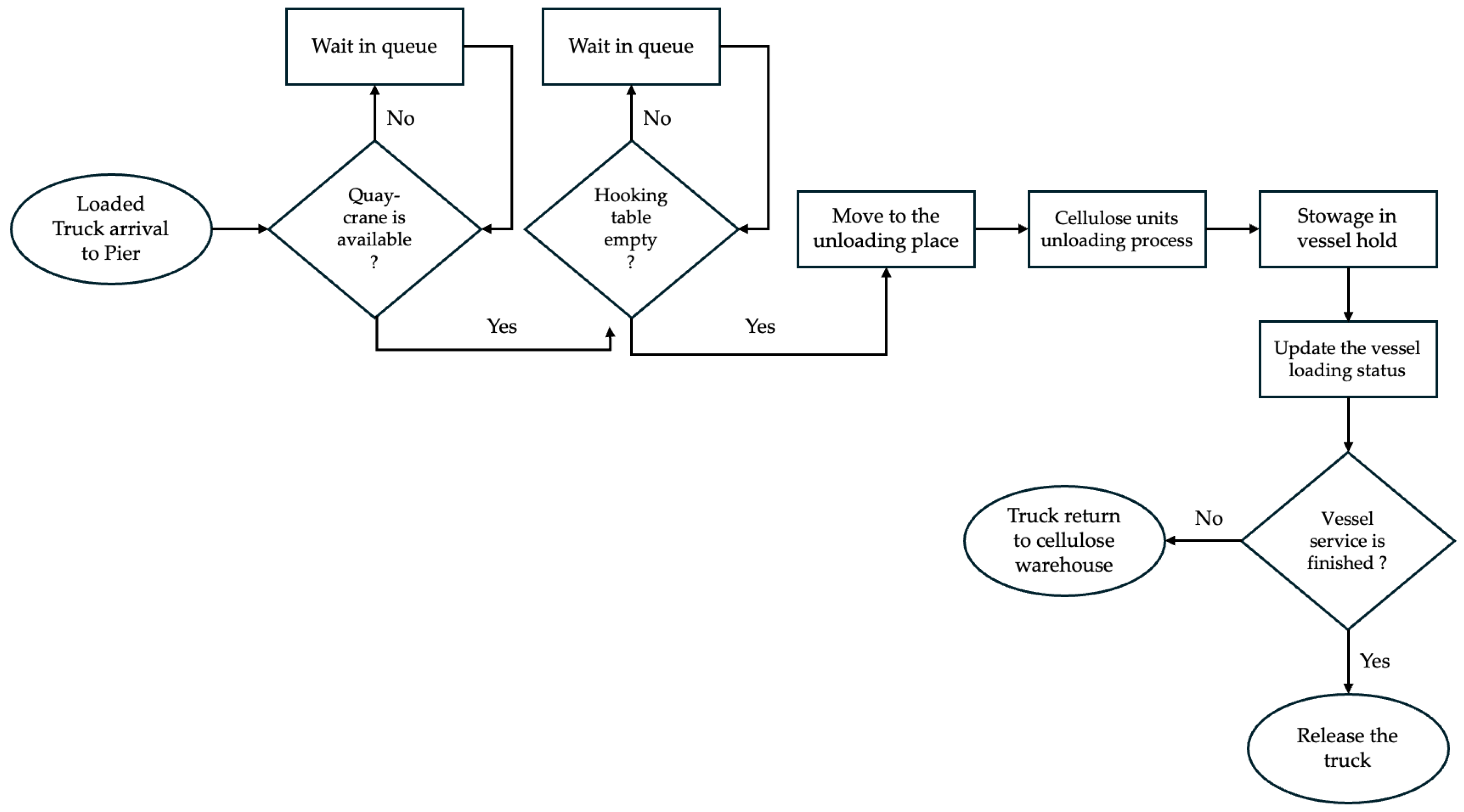
As shown in
Figure 3, the cycle begins when a loaded truck arrives at the pier from the warehouse. Access to the loading area is regulated by two sequential synchronization gates that prevent congestion and ensure the safe handover of cargo. First, the truck can only advance if the quay crane assigned to its production line is available; otherwise, it remains in a waiting queue. Second, even when the crane is free, the truck can only proceed to the unloading position if the hooking table of the same line is empty, since access is restricted to one truck per hooking table. Once both conditions are met, the truck positions itself at the unloading place, the hooking table is registered as occupied, and the transfer begins.
The transfer of cellulose units from the truck to the vessel hold is executed in two sequential stages. In the first stage, stevedores at the hooking table secure the units to the crane’s spreader, a manual operation whose duration depends on the configuration of the load and crew experience. In the second stage, the crane lifts the cargo, swings it over the vessel, and lowers it into the assigned hold, where a second team of stevedores positions and arranges the units according to the stowage plan. Once the cargo is placed, the vessel loading status is updated.
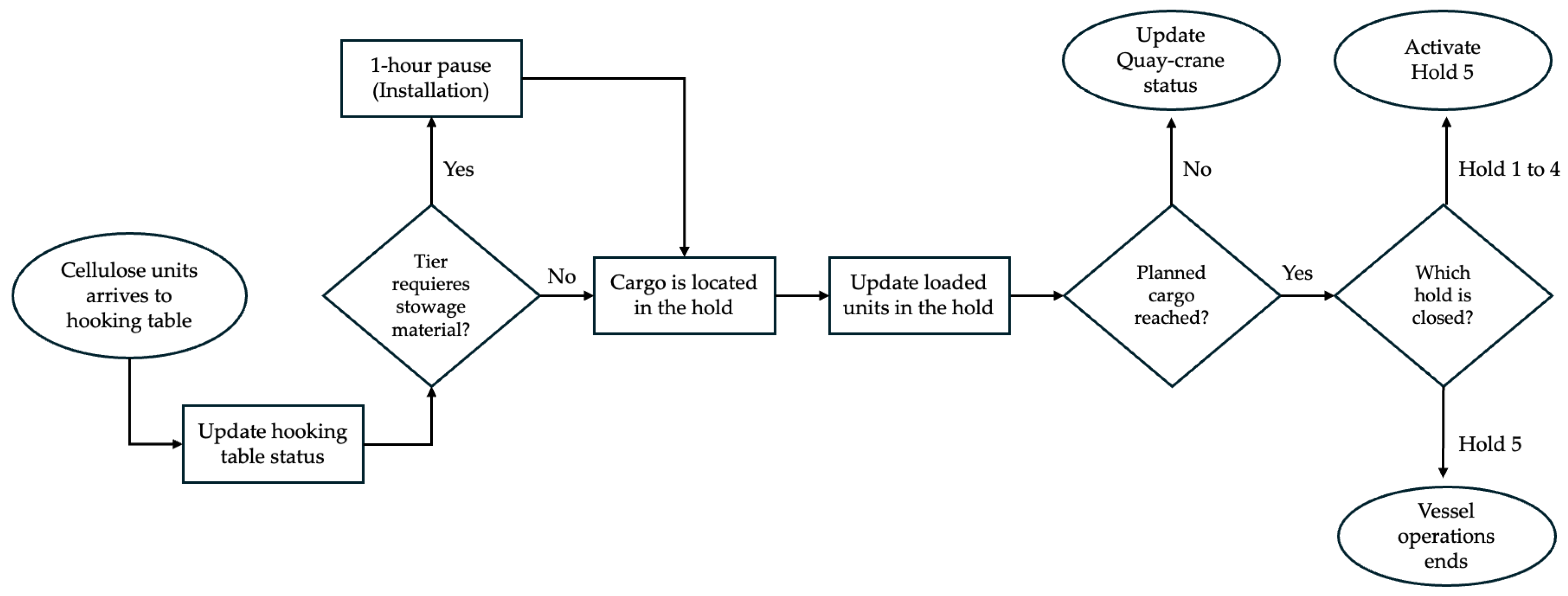
Before cargo is placed in the hold, the filling plan is consulted to determine whether the current level requires stabilization. At specific tiers defined by the vessel’s technical specifications, loading is interrupted to install stowage material (paper, air bags, or steel plates), an operation that takes approximately one hour and ensures structural stability during transit. Once the material is in place, loading resumes and the hold inventory is updated.
Figure 4 shows the detailed flowchart for this process.
After each loading cycle, the accumulated cargo is compared against the planned capacity to determine whether the hold has reached its target. If the target has not been reached, the quay crane status is updated and the truck returns to the warehouse to begin a new cycle. When a hold reaches its planned capacity, a dynamic priority mechanism governs the transition: if the closed hold is one of the primary holds (1 through 4), the corresponding supply line is redirected to feed Hold 5, ensuring that all resources remain productive; if the closed hold is Hold 5, the vessel operation ends, the pier is cleared, and the remaining trucks are released from the system.
4.3. Data Gathering: Analysis and Statistical Modeling
The operational processes were characterized through a combination of manual time studies and historical records extracted from the terminal operating system and truck management systems. Exploratory data analysis was performed on the collected samples, and probability distributions were fitted to each process. Goodness-of-fit was validated using Anderson-Darling (AD) tests. Two modeling approaches were adopted:
- 1.
Simulation Model 1: The cellulose warehouse is modeled as a single exponential server with s, isolating its aggregate behavior from operational decisions derived from the stowage plan (load composition, load layout, and machine assignment). By abstracting internal complexities into a single stochastic process, this approach enables a focused evaluation of the macro-level effects of policies identified through the lean diagnostic.
- 2.
Simulation Model 2: The cellulose warehouse is modeled as a disaggregated sequence of granular machinery movements, capturing the operational detail summarized in
Table 1. This level of granularity places emphasis on the decisions derived from the stowage plan, enabling a detailed analysis of how resource allocation strategies affect warehouse performance and, consequently, VST.
Pier and vessel operations were parameterized from direct chronometry and remained consistent across both modeling approaches.
The two simulation models were developed to address different analytical questions and therefore operate at different levels of detail. Simulation Model 1 represents the warehouse as a single exponential server, abstracting from stowage-plan decisions such as load composition, layout, and machine assignment. This simplified representation allows the effects of coordination-related interventions, including shift synchronization and load-density policies, to be evaluated without the additional variability generated by detailed machinery operations.
Simulation Model 2, in contrast, explicitly represents warehouse machinery and material-handling activities. This level of detail is required to examine how machine type, fleet size, and loading configuration influence Vessel Service Time (VST). These operational factors cannot be adequately captured through an aggregated warehouse representation, whereas incorporating them into the policy-focused analysis would introduce unnecessary complexity.
Both models share the same representation of pier operations and vessel loading and were validated against the same historical VST observations. As a result, the two modeling approaches remain consistent with one another while providing the level of detail required for their respective analytical purposes.
The continuous distributions fitted to the stochastic processes—Machinery Travel Speed, Hooking Process, Vessel Stowage, and Stowage Material Delay—were assessed using the Anderson–Darling goodness-of-fit test to confirm their adequacy in representing the observed data (p-values above the 0.05 threshold). The discrete distributions (Load Composition and Load Layout) were specified as empirical discrete distributions, in which the possible values and their associated probabilities were defined directly from the observed historical behavior of the operation rather than fitted to a parametric family.
The quantity of cellulose units loaded onto each truck is governed by Load Composition and Load Layout. Load Composition specifies the number of units per truck, while Load Layout captures the arrangement difficulty through a multiplier applied to machinery service times. Once a layout is assigned, the corresponding penalty factor scales the processing time: 1.0 for Linear, 1.274 for Complete, and 1.41 for Mirror. Both variables were calibrated from historical operational data. The layout multipliers were estimated from the manual time-study dataset. Loading-cycle durations were first grouped by layout configuration and averaged across observations. The Linear layout served as the baseline condition, and the coefficients were obtained as empirical mean ratios relative to the Linear configuration. The resulting factors (1.274 for Complete and 1.41 for Mirror) reflect the additional maneuvering and positioning effort required by more complex loading arrangements.
5. Simulation Model Development
The DES model was developed using Simio version 15 [
37], a commercially available simulation platform that supports object-oriented modeling. The model replicates the terminal’s physical layout and the operational synchronization between the cellulose warehouse zone and the vessel loading process. This section provides an in-depth description of
Simulation Model 2, which incorporates a granular representation of each functional area to capture actual material flows and resource interactions. The following subsections describe the infrastructure layout, the entity and resource definitions, and the specialized operational logic embedded in the model.
5.1. Infrastructure and Facility Layout
The terminal’s physical infrastructure was replicated to reflect the spatial and functional characteristics of the real system. On the terrestrial side, four independent server objects are designated as Warehouses (W1, W2, W3, and W4). Each warehouse server is internally decomposed into two functional zones: a Storage Area, where cargo is staged, and a Loading Zone, where material-handling machinery interacts with trucks to execute the loading process. This dual-zone architecture allows the model to capture the internal movement patterns and machinery seizure dynamics that govern loading times.
Unlike the warehouse servers, which operate as four parallel and independent loading lines, the cleaning zone constitutes a single shared facility through which every truck must pass before proceeding to the pier, regardless of its originating warehouse. It is modeled as a single-capacity server with a fixed processing time of 3 min (by protocol), where compressed air is applied and the cargo is marked with stencil and paint. Because the four warehouse lines converge at this single node, the cleaning zone introduces a potential point of contention: when a truck arrives while the server is still occupied by a preceding vehicle, it is held in a first-in-first-out queue until the cleaning operation completes and the server is released. This shared-resource behavior merges the four independent supply lines into a single downstream flow toward the pier, allowing convergence-related congestion to emerge endogenously. Truck seizure and release follow standard first-in-first-out server semantics, with no preemption or priority among lines.
The pier is represented by five distinct
Hooking Table servers, each corresponding to a specific crane and vessel hold combination. These hooking tables function as the critical transfer interface where cargo units are secured to crane spreaders for lifting into the ship. At the terminal end of the maritime chain, the vessel is modeled through five independent sink objects, each representing one of the ship’s holds (Holds 1 through 5), as shown in
Figure 5. Each hold is assigned a unique planned capacity, ranging from 4764 to 5725 units, in accordance with the vessel’s actual stowage plan. The use of independent sinks allows the model to track the filling progress of each hold separately and to trigger hold-specific operational events.
5.2. Entities and Mobile Resources
Cargo movement through the terminal is driven by entity objects and worker resources. The internal transport fleet consists of truck entities that circulate continuously between the warehouse zone and the pier through a closed loop: loading at warehouses, cleaning, transferring cargo at the hooking tables, and returning for reloading. This cycle continues until the vessel’s total planned capacity is satisfied.
Two categories of lifting equipment are modeled as resources. Model 1 (high-capacity machinery) lifts 4 units per cycle, while Model 2 (conventional machinery) lifts 2 units per cycle. Both types follow a triangular speed distribution (see
Table 1) to capture the variability of movement within the confined warehouse environment, including the effects of aisle congestion, load geometry, and operator behavior on intra-warehouse cycle times.
5.3. Operational Logic
Achieving close correspondence between simulated and observed loading times required several advanced logical routines beyond standard server-based processing. These routines address the fill-on-demand behavior of the warehouses, synchronization constraints at the pier, and dynamic truck routing to balance hold utilization.
5.3.1. Fill-on-Demand Warehouse Logic
The warehouse servers depart from the conventional Simio paradigm of fixed or stochastic processing times. Instead, processing time is set to zero, and each truck’s dwell time is determined endogenously by an iterative machinery-loading loop. Upon arrival, the system initializes two state variables: a cycle counter tracking machinery round-trips, and a pending cargo indicator storing the truck’s required cargo capacity.
Before the loop begins, a difficulty multiplier is applied to the per-cycle loading time based on the cargo’s spatial layout within the truck. Three categories are defined: Linear (base case, factor 1.0), Complete (27.4% time penalty for full-width loading patterns), and Mirror (41% penalty for the most geometrically constrained configuration). Within the loop, the machinery worker is seized, travels from the stock zone to the loading zone, deposits the load (decrementing the pending cargo indicator by the machine’s lift capacity), and returns. This cycle repeats until the pending cargo indicator reaches zero, at which point the truck is released.
5.3.2. Pier Synchronization and Hold Management
Pier operations are governed by resource-availability constraints derived from the vessel’s stowage plan. An access restriction ensures that a truck may only enter a hooking table server once the corresponding hold accumulation server has completed its previous discharge cycle, preventing cargo buildup beyond the crane’s processing capacity and maintaining one-to-one synchronization between the pier transfer rate and the hold filling rate. This constraint directly reproduces the waiting waste identified in the lean diagnostic, where idle trucks queue at the pier awaiting crane availability. This logic also captures operational congestion at the quayside. Trucks cannot access a hooking table while it is occupied by another vehicle, causing queues to form whenever cargo arrival rates exceed crane-handling capacity. Consequently, congestion effects emerge endogenously through resource-availability constraints rather than through explicit vehicle-following or road-network traffic models.
The stowage plan further imposes material-installation pauses at predefined filling levels. When a hold’s cargo count reaches a tier threshold, the accumulation server triggers a pause of approximately 1 h to simulate the installation of stowage materials required to secure cargo within the hold. These conditional delays interrupt normal entity flow and are essential for reproducing the stepwise filling pattern observed in practice.
5.3.3. Dynamic Hold 5 Routing
A structural asymmetry in the terminal layout creates a routing challenge: four warehouse supply lines feed five vessel holds. The model resolves this through a dynamic routing mechanism governed by a global flag variable. When the first warehouse exhausts its allocated cargo, the flag identifies it, and its trucks are immediately redirected with priority to supply Hold 5. This ensures continuous cargo flow to Hold 5 without a dedicated fifth warehouse line, replicating the terminal’s operational protocol for managing the warehouse-to-hold mismatch.
5.3.4. Execution, Validation, and Statistical Stability
The simulation clock was initialized at 08:00, consistent with the observed shift start time. No fixed time horizon was imposed; instead, the simulation ran until all five holds reached their planned capacity, allowing total duration to emerge as an output rather than a constraint.
Each scenario was executed with 50 independent replications to mitigate stochastic noise. Quantitative validation was conducted against historical vessel calls recorded in the terminal operating system; the simulated mean VST of 136.13 h compared to a historical mean of 136.96 h, yielding a percentage error of 0.61%. A hypothesis test confirmed no statistically significant difference between simulated and observed means. Additionally, qualitative validation was conducted through structured review sessions with terminal supervisors, who confirmed that queuing patterns, hold-filling sequences, and shift transition behavior were consistent with observed operations.
5.4. Experimental Design
The experimental design is organized around two targets, each addressing a specific dimension of VST and employing a different simulation model.
5.4.1. Target 1: Lean-Informed Policy Evaluation
The first target examines the system’s sensitivity to non-value-adding activities identified through the lean diagnostic. This target employs
Simulation Model 1, which abstracts each warehouse as a single exponential server (
s), isolating aggregate warehouse behavior from individual loading configurations. The scenarios are constructed directly from the waste categories identified by the VSM and Ohno’s taxonomy (see
Section 6.1).
5.4.2. Target 2: Resource Allocation Analysis
The second target employs Simulation Model 2 to analyze how resource allocation strategies affect VST. Four experimental factors are varied:
Lifting Equipment Mix: The quantity of high-capacity machinery (Model 1) versus conventional machinery (Model 2) is varied between 0 and 3 units per warehouse.
Loading Layout Stress: The proportion of layout configurations assigned to the fleet is varied across six scenarios ranging from common to complex arrangements, as defined in
Table 2.
Loading Composition Stress: The proportion of loading composition configurations is varied across six scenarios, as defined in
Table 3.
Transport Fleet Size: The truck fleet is varied between 3 and 6 units per line to identify the saturation point beyond which additional transport resources generate warehouse queues without improving vessel throughput.
Each scenario is executed with 50 independent replications to ensure statistical stability. The analytical framework for interpreting simulation outputs, comprising descriptive statistics, unified association analysis, and Sobol sensitivity decomposition, is described in
Section 3.
6. Results
6.1. Lean Diagnostic and Scenario Evaluation
The current-state Value Stream Map was analyzed by classifying each process step as value-added, non-value-added, or necessary non-value-added, and computing the corresponding time contributions.
Table 4 summarizes the results for the two core processes.
Both processes share similar structural characteristics, each consisting of ten steps with the same proportions of value-added, non-value-added, and necessary non-value-added activities. Nevertheless, the vessel loading process has a markedly longer total lead time (147 min versus 86 min for warehouse dispatch), mainly due to its nearly threefold increase in non-value-added time (45 min compared with 16 min). Warehouse dispatch attains a value-added ratio of 58.1%, whereas vessel loading is slightly lower at 55.8%, accompanied by a waste ratio of 44.2%. Collectively, these findings indicate that both processes offer substantial opportunities for improvement.
To identify the specific nature of the inefficiencies detected in the VSM, each non-value-added and necessary non-value-added activity was classified according to Ohno’s seven-waste taxonomy (
Appendix A).
Table 5 presents the aggregated results by waste type for both processes.
Three waste categories were identified across the two processes, accumulating 101 min of non-value-added time per operational cycle. Waiting emerges as the most pervasive category, contributing 51 min across both processes through delays at synchronization gates, shift handovers, and equipment queuing. Motion waste is concentrated entirely in the vessel loading process, accounting for 40 min associated with redundant cargo repositioning and crane reorientation maneuvers at the pier. Overproduction, contributing 10 min, appears exclusively in the warehouse dispatch process, linked to preparatory activities executed ahead of actual demand.
Building on these findings, four simulation scenarios were designed to test the operational impact of reducing or eliminating each identified waste category. Scenario 1 (Shift Synchronization) targets waiting waste by enforcing strict schedule adherence and eliminating transition delays during crew handovers. Scenario 2 (Stowage Material Delay) also addresses waiting waste by reducing the mandatory installation time for stabilization materials at tier thresholds from 60 to 30 min, reflecting potential gains from pre-staging materials or deploying additional crew. Scenario 3 (Fleet Scalability) targets motion waste by increasing the transport fleet from 5 to 6 trucks per production line. Scenario 4 (Load Density Maximization) addresses overproduction waste by replacing the stochastic load assignment (12, 14, or 16 units per trip) with a fixed policy of 16 units, eliminating unnecessary dispatch cycles.
Scenario Results
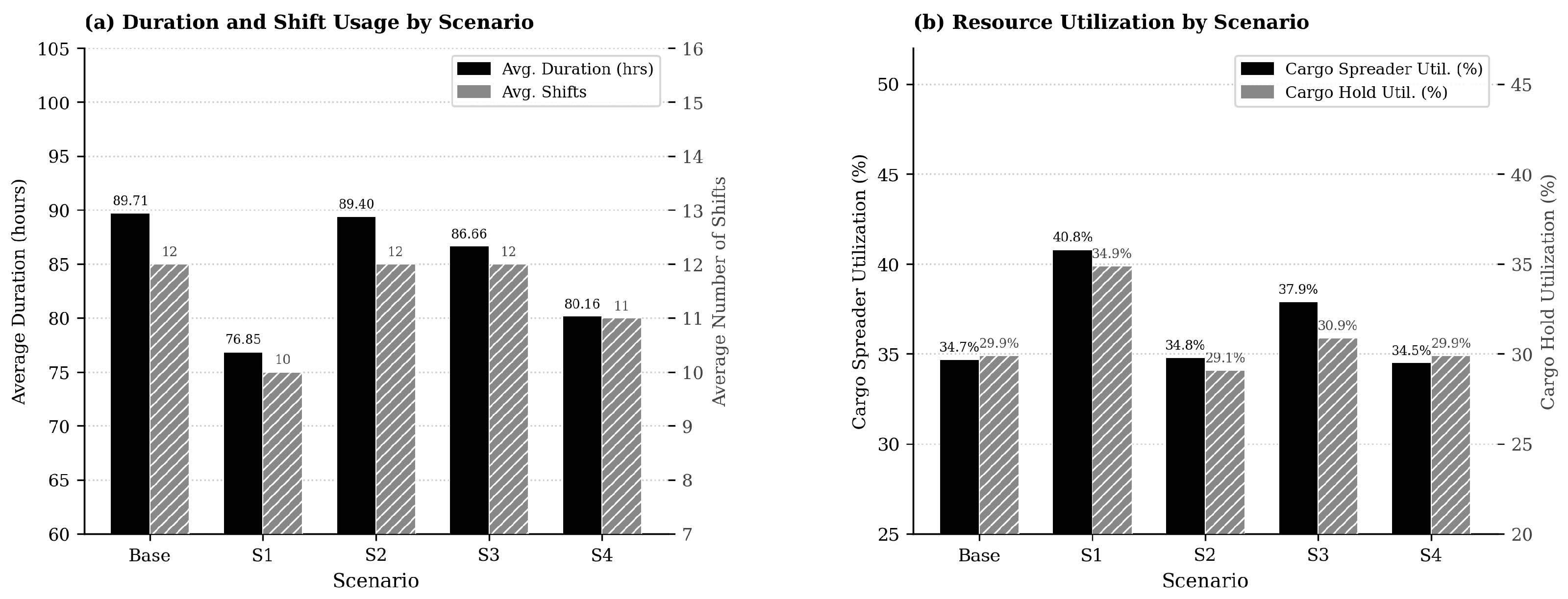
Figure 6 presents the simulation results for the four lean-driven scenarios compared against the baseline configuration, reporting average VST duration, number of shifts required, and resource utilization rates for the cargo spreader and cargo hold.
Under the baseline configuration, the average VST is 89.71 h, requiring 12 shifts to complete the vessel loading operation, with cargo spreader and cargo hold utilization rates of 34.7% and 29.9%, respectively.
Shift Synchronization (S1) yields the largest improvement under controlled simulation conditions, reducing VST to 76.85 h—a 14.3% reduction relative to the baseline. This figure represents an upper bound on the achievable gain, as the simulation excludes external sources of variability such as weather disruptions and labor efficiency fluctuations that would moderate the improvement in practice. This reduction is accompanied by a decrease from 12 to 10 shifts, confirming that the elimination of dead time during crew handovers translates directly into fewer required shift cycles. This scenario also produces the highest resource utilization rates, with cargo spreader utilization rising to 40.8% and cargo hold utilization increasing to 34.9%. The simultaneous improvement in both duration and utilization indicates that the baseline shift transition delays were not merely idle periods but actively constrained the productive use of available equipment.
Load Density Maximization (S4) delivers the second-largest improvement, reducing VST to 80.16 h (10.6% reduction) and decreasing the number of shifts from 12 to 11. Resource utilization remains close to baseline levels at 34.5% and 29.9%. The reduction in VST without a corresponding increase in utilization reflects the nature of this intervention: by fixing the load composition at 16 units per trip, the total number of dispatch cycles is reduced, shortening the overall operation without intensifying equipment usage within each cycle.
Fleet Scalability (S3) achieves a moderate VST reduction to 86.66 h (3.4% improvement) while maintaining 12 shifts. The cargo spreader utilization increases to 37.9% and cargo hold utilization rises to 30.9%, indicating that the additional truck enables a more continuous flow of cargo to the pier. However, the modest magnitude of the improvement suggests that the system is approaching a saturation point where truck availability is no longer the binding constraint.
Reducing the Stowage Material Delay (S2) produces a marginal effect, reducing VST from 89.71 to 89.40 h (less than 0.4%). The number of shifts remains fixed at 12, and resource utilization stays essentially at baseline levels. While the stowage material installation introduces a localized interruption at specific tier thresholds, its overall contribution to total VST is limited relative to other sources of waste.
Taken together, the scenario results reveal a clear hierarchy of intervention effectiveness. Shift synchronization and load density maximization emerge as the two highest-impact levers, reducing VST by 14.3% and 10.6%, respectively. Fleet expansion offers a moderate but limited contribution, while stowage material delay reduction in isolation produces negligible gains. These findings confirm that coordination-related waste, particularly shift transition inefficiencies and suboptimal load composition policies, constitutes the primary driver of excessive VST.
6.2. Resource Configuration and Operational Factor Analysis
To complement the scenario-based evaluation, a systematic exploration of resource configurations and operational factors was conducted using Simulation Model 2. This analysis examines the sensitivity of VST to four key dimensions: transport fleet size, warehouse machinery assignment, load composition policy, and loading layout complexity.
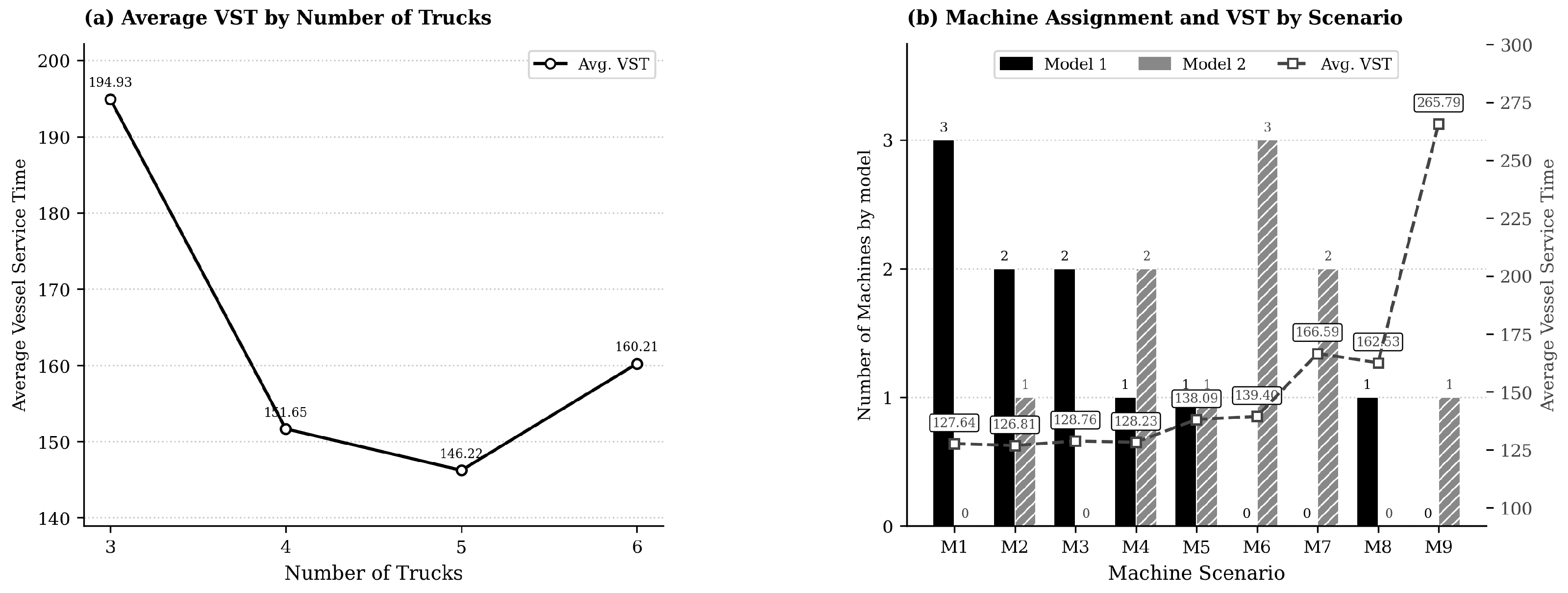
Figure 7 and
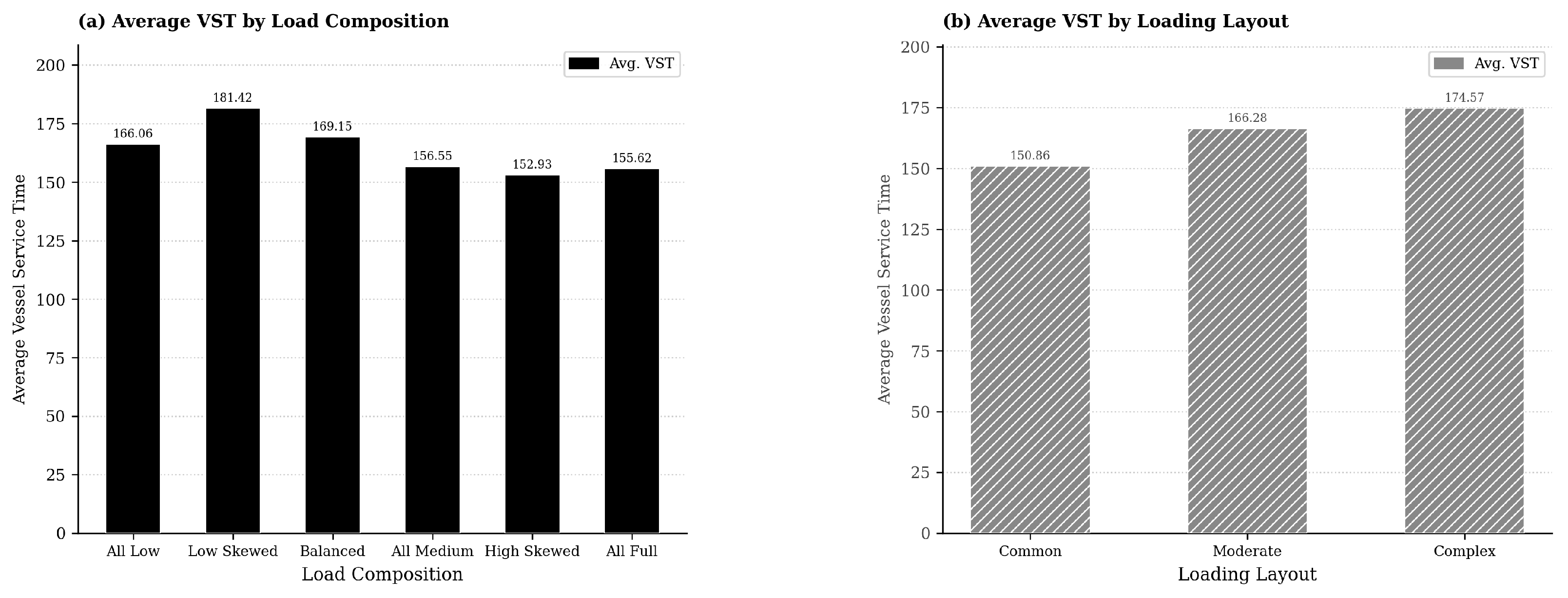
Figure 8 present the aggregated results. Because these descriptive comparisons do not control for confounded effects across factors, the patterns identified here are further disentangled through the bivariate association and global sensitivity analyses presented in the following subsections.
6.2.1. Transport Fleet Size
Figure 7a reveals a non-linear relationship between the number of trucks and the average VST. Reducing the fleet from 5 to 3 trucks produces a sharp increase in VST, from 146.22 to 194.93 h, indicating that below a critical threshold the transport fleet becomes a binding constraint. The minimum average VST of 146.22 h is observed at 5 trucks, beyond which performance deteriorates to 160.21 h at 6 trucks. However, since these averages aggregate across varying machinery assignments, load compositions, and loading layouts, the observed increase at 6 trucks cannot be attributed solely to pier-side congestion; it may also reflect the composition of scenarios allocated to that fleet level.
6.2.2. Warehouse Machinery Assignment
Figure 7b presents the effect of alternative machinery configurations on VST. Scenarios M1 through M4, which deploy combinations of two or three machines including at least one Model 1 unit, achieve the lowest VST values, ranging from 126.81 to 128.76 h with minimal variation among them. This plateau suggests that within this configuration band the warehouse is not the bottleneck, and marginal additions or substitutions yield negligible returns. Performance begins to deteriorate in scenarios M5 and M6, where the total number of machines drops to two units or the fleet composition shifts toward Model 2 units, raising VST to approximately 138 to 139 h. The degradation becomes pronounced in scenarios M7 and M8, where a single Model 2 unit is introduced alongside one Model 1, increasing VST to 162 to 166 h. Scenario M9, relying on a single Model 1 unit with no support, produces the highest VST at 265.79 h, more than double the best-performing configurations, confirming that a minimum machinery threshold is critical for sustaining continuous cargo flow.
6.2.3. Load Composition
Figure 8a shows the effect of load composition policy on average VST across six configurations. Configurations skewed toward lower unit counts per trip produce the highest VST values at 166.06 and 181.42 h, as they require a greater number of dispatch cycles. As the composition shifts toward higher unit counts, VST decreases progressively: All Medium achieves 156.55 h, High Skewed reaches the minimum at 152.93 h, and All Full settles at 155.62 h. The slight increase from High Skewed to All Full suggests that forcing every trip to maximum capacity may introduce minor inefficiencies, potentially related to longer loading times per cycle or reduced flexibility in cargo allocation.
6.2.4. Loading Layout
Figure 8b illustrates the relationship between loading layout complexity and average VST across three difficulty categories. The effect is monotonic and substantial: Common layouts yield 150.86 h, Moderate layouts increase to 166.28 h, and Complex layouts produce 174.57 h, a 15.7% increase relative to the simplest configuration. Each step up in layout complexity adds approximately 12 h to average VST, reflecting the additional maneuvering, repositioning, and coordination required at the warehouse loading stage. Unlike fleet size or machinery assignment, loading layout complexity is largely determined by the vessel’s stowage plan and cargo characteristics, limiting the terminal’s ability to control this factor directly.
6.3. Bivariate Association Analysis
To disentangle the pairwise relationships between input factors and VST prior to the global sensitivity decomposition, a unified association matrix was constructed.
Table 6 reports association strength in the upper triangle and corresponding
p-values in the lower triangle.
Among the numeric inputs, the total number of machines exhibits the strongest association with VST (, ), confirming that machinery availability is a primary determinant of vessel service time. This aggregate effect is driven predominantly by Model 1 units (, ), whereas Model 2 units display a weak and non-significant relationship (, ). This asymmetry suggests that the two machine types are not interchangeable: Model 1 units are substantially more effective at sustaining the cargo dispatch rate required to minimize VST. The number of trucks shows a moderate negative association (, ), indicating that transport fleet size contributes to performance but with a weaker marginal effect than machinery assignment.
The two categorical factors, load composition and loading layout, exhibit association values with VST of and , respectively, both with p-values above the conventional significance threshold (). While the descriptive analysis revealed visible differences in average VST across levels of these factors, the bivariate associations do not reach statistical significance at the 5% level, suggesting that their individual effects are modest relative to variability introduced by other factors.
The matrix also reveals notable dependencies among the input factors themselves. The number of Model 1 and Model 2 machines are strongly negatively correlated (, ), reflecting the substitution logic embedded in the experimental design. The number of trucks shows moderate associations with load composition () and loading layout (), both statistically significant. These inter-factor dependencies underscore the importance of the variance-based sensitivity analysis presented next, which accounts for both individual and joint contributions to VST variability.
6.4. Global Sensitivity Analysis
To decompose the variance of
across the full input space and isolate the individual and joint contributions of each factor, a variance-based global sensitivity analysis was conducted using Sobol indices.
Table 7 reports the first-order (
), total-order (
), and interaction (
) indices for all five input variables, computed from a quadratic polynomial metamodel with a 5-fold cross-validated
of 0.819. A cross-validated
of 0.819 is considered adequate for factor ranking in metamodel-based sensitivity analysis, where the objective is to identify the relative importance of inputs rather than to predict absolute output values with precision [
42,
43]. More details confirming the absence of systematic bias are presented in
Appendix B.
The number of Model 1 machines is the single most influential factor, with a first-order index of , meaning that this variable alone accounts for approximately 32% of the total variance in . Its total-order index rises sharply to , indicating that when interaction effects are included, Model 1 machinery is involved in over 86% of the output variability. The gap between these two indices () reveals that the majority of Model 1’s influence operates through joint effects with other variables rather than in isolation.
The number of Model 2 machines exhibits a contrasting profile. Its first-order contribution is modest (), suggesting a limited direct effect on VST. However, its total-order index reaches , with an interaction term () nearly identical to that of Model 1. This pattern indicates that Model 2 machines exert their influence primarily through interactions, most likely with Model 1 units given the strong substitution relationship identified in the association matrix (). The effect of adding or removing a Model 2 unit on VST depends heavily on how many Model 1 units are simultaneously available. The two machine types function as a coupled system rather than as independent resources.
The number of trucks presents a markedly different sensitivity profile. Its first-order index () and total-order index () are virtually identical, yielding an interaction contribution of effectively zero. The truck fleet influences VST through its direct effect alone, with no meaningful amplification or attenuation through interactions with other factors. While fleet size matters, as demonstrated by the sharp performance degradation observed at low truck counts, its contribution to overall VST variance is small relative to machinery assignment and its effect is independent of other resource configurations.
The two categorical factors occupy the lower end of the sensitivity ranking. Load composition contributes and , with a moderate interaction term suggesting some joint effects. Loading layout has the smallest influence (, ), confirming that while layout complexity produces visible differences in average VST at the descriptive level, its contribution to overall system variability is limited once resource configuration effects are accounted for.
The Sobol decomposition reveals a system dominated by machinery assignment and its interaction effects. The combined interaction terms of Model 1 and Model 2 machines account for the vast majority of non-additive variance, underscoring that resource allocation decisions in the warehouse cannot be evaluated in isolation. This finding carries direct managerial implications: optimizing VST requires joint consideration of machine type and quantity rather than incremental adjustments to individual resource pools.
6.5. Managerial Insights
The integrated lean-informed simulation framework yields several actionable insights for terminal management.
First, the lean diagnostic and scenario evaluation indicate that the largest reductions in VST arise from addressing coordination-related waste rather than from incremental resource additions. Simulation results suggest that eliminating shift-transition delays could reduce VST by up to 14.3% under the controlled operating conditions represented in the model, making this the most effective procedural intervention evaluated. In practice, these improvements could be pursued through standardized handover procedures, limited overlap between outgoing and incoming crews, and closer synchronization of activities across shifts. Similarly, standardizing load composition at maximum density reduced VST by 10.6% by eliminating unnecessary dispatch cycles. This result suggests that operational policy redesign may generate substantial efficiency gains before additional equipment investments are considered. Second, the sensitivity analysis identifies machinery composition, specifically the number and type of lifting equipment units, as the primary determinant of VST variability. The strong interaction between Model 1 and Model 2 machines indicates that resource allocation decisions should be evaluated jointly rather than independently. Consequently, machinery planning should consider both equipment types simultaneously, with particular attention to maintaining adequate Model 1 availability. Third, while the truck fleet remains an important operational resource, its influence on VST is largely independent of the other factors examined. This finding simplifies planning decisions because fleet sizing can be evaluated separately from machinery allocation. For the operating conditions considered in this study, a fleet of five trucks per production line provides a balance between transport capacity and quay-side congestion. Finally, the results highlight the distinction between controllable and contextual drivers of vessel service performance. Resource allocation, dispatch policies, and shift coordination are directly manageable by terminal operators and therefore represent the most immediate opportunities for improvement. By contrast, loading-layout complexity is largely determined by vessel stowage requirements and cargo characteristics. For these factors, managerial efforts should focus on mitigation strategies such as operator training, specialized handling procedures, and advance planning of complex loading configurations. Because external disruptions such as weather conditions, labor shortages, and vessel arrival variability were not represented in the model, the estimated performance improvements should be interpreted as upper-bound gains achievable under relatively stable operating conditions.
7. Conclusions
The lean diagnostic, grounded in Value Stream Mapping and Ohno’s seven-waste taxonomy, identified 101 min of non-value-added time per operational cycle distributed across three waste categories: waiting, motion, and overproduction. These findings provided the empirical basis for the simulation experiments, shaping both the specification of processing time distributions and the design of improvement scenarios. The four lean-driven scenarios demonstrated that coordination-related interventions, particularly the elimination of shift transition delays and the standardization of load composition, yield the largest VST reductions, achieving improvements of 14.3% and 10.6% respectively, without requiring capital investment in additional equipment.
The resource configuration analysis, supported by a unified association matrix and Sobol sensitivity decomposition, revealed that warehouse machinery composition is the dominant determinant of VST variability at the studied terminal. The strong interaction between Model 1 and Model 2 lifting equipment demonstrated that the two machine types operate as a coupled system whose joint configuration governs the warehouse’s effective throughput ceiling. By contrast, the truck fleet exhibited no interaction effects with other factors, simplifying its sizing as an independent decision.
From a methodological standpoint, this study illustrates the value of coupling lean diagnostics with simulation-based analysis in a break-bulk port context. The lean component ensures that simulation scenarios are grounded in observed operational waste, while the simulation provides the controlled experimental environment needed to quantify the impact of interventions that cannot be tested on a live terminal. The addition of global sensitivity analysis further extends this framework by revealing the interaction structures that govern system behavior.
Several limitations should be acknowledged. The simulation model was calibrated and validated against a single terminal and a specific cargo type (cellulose), which limits the direct generalizability of the numerical results to other break-bulk facilities or commodity flows. The methodological framework, however, is designed to be transferable: its three-phase structure—lean diagnostic, DES scenario evaluation, and Sobol decomposition—can be applied to any break-bulk terminal by substituting terminal-specific operational parameters. Multi-terminal replication studies would constitute the most direct path toward establishing generalized VST benchmarks for break-bulk operations. Furthermore, the model assumes exclusive allocation of operational resources to a single vessel-loading campaign. Resource competition generated by simultaneous vessel calls was not represented and may influence service times in more congested terminal environments.
Also, unlike manufacturing environments, break-bulk terminal operations involve spatially distributed activities, multiple interacting resources, and vessel-specific cargo configurations. Consequently, Value Stream Mapping was adapted from its traditional product-flow perspective to an operational-flow perspective, where the unit of analysis is the cargo dispatch and loading cycle rather than a production line. Similarly, Ohno’s waste categories were interpreted in relation to port operations, allowing waiting, motion, and overproduction waste to be identified through operational synchronization failures, cargo repositioning requirements, and unnecessary transport cycles.
Future research could extend the framework by applying the methodology to other break-bulk terminals and cargo types, incorporating stochastic vessel arrival patterns and weather-related interruptions, and extending the lean diagnostic to assess the remaining Ohno waste categories. The development of higher-fidelity metamodels could improve the precision of the sensitivity decomposition. Most promisingly, the framework could be coupled with optimization algorithms that dynamically adjust resource allocation in response to evolving operational conditions, extending its role from a diagnostic and evaluation tool to a real-time decision support system. Also, a higher-fidelity metamodel, such as a Gaussian process surrogate, could improve the precision of the sensitivity decomposition and better capture higher-order nonlinearities, particularly the interaction structure between equipment types.




 ,
,