Article

Field Evaluation of a Non-Conventional Mobile Square Cylinder Fish Enclosure with Variable Aft-End Constriction

1
Seafood Technologies, Plant & Food Research Group, The New Zealand Institute for Bioeconomy Science Limited, Nelson 7010, New Zealand
2
Cawthron Institute, Nelson 7010, New Zealand
*
Author to whom correspondence should be addressed.
J. Mar. Sci. Eng. 2026, 14(12), 1122; https://doi.org/10.3390/jmse14121122
Submission received: 27 April 2026 / Revised: 2 June 2026 / Accepted: 15 June 2026 / Published: 18 June 2026
(This article belongs to the Special Issue Infrastructure for Offshore Aquaculture Farms)

Abstract

This study presents field measurements for a non-conventional mobile square cylinder fish enclosure, with permeable ends, evaluated under both towed and moored conditions at a semi-open ocean test site. Novelty lies within the enclosure design that enables both mobility and control of internal flow through the incorporation of an adjustable aft-end perimeter constriction to regulate internal flow and support fish welfare by enabling control of swimming conditions. Enclosure motion, internal flow speeds and hydrodynamic loads were measured for three constrictions (0%, 40% and 60%). The primary objective was to assess the effectiveness of aft-end constriction in regulating internal flow to levels compatible with sustainable swimming speeds for finfish culture. The enclosure remained stable at approximately 9 m depth across all vessel speeds and constriction settings in both towed and moored scenarios. During towing, increasing constriction to 40% reduced time-averaged internal flow by up to 24% without a significant increase in hydrodynamic load. A 60% constriction achieved a larger reduction (~51%) but resulted in a substantial load increase (~90% relative to 0% constriction), indicating a trade-off between flow control and towing resistance. Under moored conditions, aft-end constriction had minimal influence on both internal flow and hydrodynamic load. Mooring loads showed no clear relationship with wave height and only a weak correlation with ambient current speed. Overall, the results demonstrate that aft-end constriction is an effective mechanism for controlling internal flow during towing, but has limited impact when moored. The enclosure’s stability and controllability highlight its potential advantages over conventional gravity cages for mobile open-ocean finfish aquaculture applications.

1. Introduction

Global mariculture finfish production has increased considerably within the past decade, reaching approximately 35.3 million tonnes in 2022 [1], with total aquaculture production (inland and marine) now surpassing wild capture fisheries for the first time [1]. This rapid growth underscores the increasing demand for sustainable food systems, yet it coincides with accelerating environmental pressures. Ocean warming and marine heatwaves have intensified in frequency, duration, and spatial extent, producing well-documented biological and socioeconomic consequences that include aquaculture mortality events [2,3]. In Aotearoa, New Zealand, for example, recent marine heatwaves have been linked to operational disruption and substantial losses in salmon aquaculture, highlighting the sensitivity of coastal finfish systems to acute thermal anomalies [4].
Given limited capacity to expand production in sheltered coastal waters due to space competition, environmental constraints, and social license pressure, the sector has turned toward offshore aquaculture to access more space, improved water exchange and cooler conditions; however, the transition to exposed sites is technologically demanding and capital intensive [5,6]. Submergence of conventional cages has been proposed as an adaptation strategy for warming surface waters; for example, Mediterranean studies recommend submerging pens to ~15–20 m to remain below summer welfare thresholds for seabass and seabream [7]. However, gravity-type net cages, which rely on weighted collars to maintain geometry, are prone to deformation under waves and currents, reducing effective cage volume and potentially compromising fish welfare [8,9]. Full-scale towing tests show substantial volume reductions with increasing current speed and highlight the importance of hydrodynamic design to limit drag-induced deformation [10,11]. Field towing tests of a full-scale Atlantic salmon cage (12 m diameter, 6 m depth) further demonstrate nearly linear cage volume loss as vessel speed increases and document corresponding drag–deformation relationships [12]. Importantly, many escape events in sea cage aquaculture have been traced to structural/operational failures during high loads, motivating standards and improved materials/operations [13,14,15,16].
In response, mobility has emerged as a promising direction for open-ocean aquaculture. Mobile enclosures capable of being towed or strategically repositioned offer the potential to track cooler, better oxygenated waters, avoid extreme weather, and tune internal flow to match fish swimming physiology during transport, thereby reducing stress and improving welfare relative to static systems [17]. The viability of mobility can be strengthened by seasonal forecasting of marine heat extremes (0–2-month lead times), enabling proactive route/depth decisions that minimize thermal exposure [18,19]. Recent flume and computational fluid dynamics (CFD) studies of a non-conventional flexible square cylinder have quantified design trade-offs between drag (priority when towing) and dissolved oxygen (priority when moored), showing how geometry (e.g., length–width ratio) and slot/boundary features can be tuned to balance these priorities [20,21].
Building on this earlier work [20,21], the present study provides a field evaluation of a non-conventional flexible mobile square cylinder enclosure with permeable ends and adjustable aft-end opening (Figure 1), achieved by reducing the aft-end opening perimeter. The enclosure was tested under controlled towing and extended moored conditions at a semi-open ocean test site. Specifically, the study aimed to:
  • Quantify the effect of aft-end constriction on towing loads (drag) and internal flow speed in the enclosure across target vessel speeds between 0.26 and 2.06 m/s and assess whether load-speed-constriction trends are consistent with findings from previous field experiments and CFD studies [8,21].
  • Evaluate the effectiveness of aft-end constriction through reduction in the aft-end perimeter on regulating internal flow speed relative to ambient currents under moored conditions for 0–60% constriction [20].
The main contribution lies in the enclosure design, which provides the mobility as needed and the ability to regulate internal flow speed through the aft-end constriction for fish welfare constraints.

2. Materials and Methods

2.1. The Enclosure

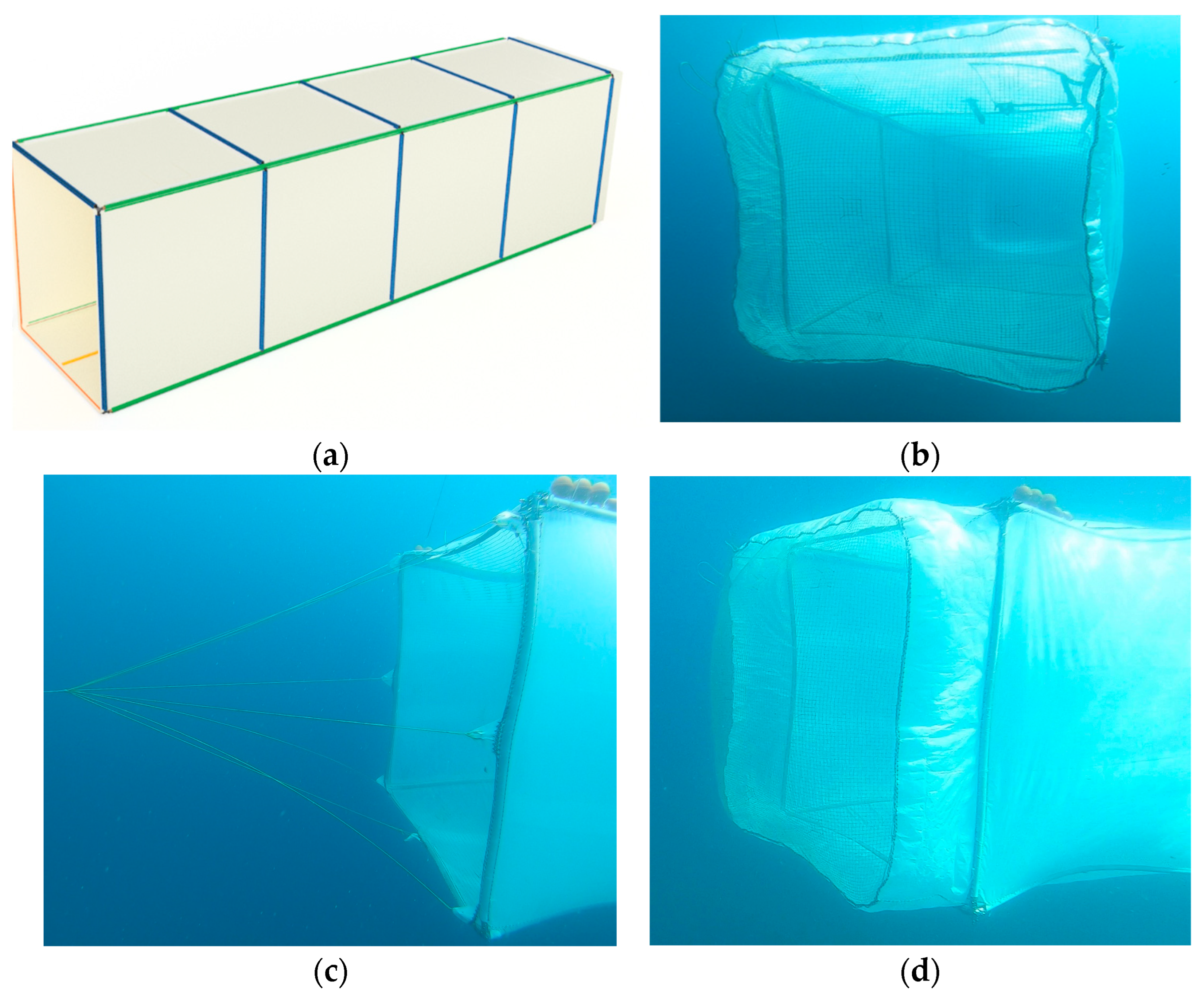
The enclosure tested in this study is a non-conventional flexible square cylinder (Figure 1). It comprises a skeletal frame constructed from reinforced flexible tubing, covered with an impermeable fabric variant of ultra-high molecular weight polyethylene (UHMWPE). Each end is fitted with Dyneema netting with a 40 mm mesh size. The enclosure measures 3.5 × 3.5 m in cross-section and 15 m in length, giving a total volume of 184 m3. The aft end of the enclosure can be constricted to reduce the net exit perimeter by 0%, 40% or 60% (see Table 1). This was achieved by extending fabric past the last skeletal frame by 1 m, as shown in Figure 1b,d. The extension had 70 stainless steel rings, placed at 200 mm apart along the perimeter of 14 m, fastened to the aft edge with 6 mm nylon rope threaded through the rings. This enabled the pursuit of the extension by shortening the rope to predetermined lengths, corresponding to the required constriction percentage.
Eight 4 m long bridles were attached to the perimeter of the front face of the enclosure–specifically at the four corner points and the mid-points of each side. The bridles then merged to a single point connection (Figure 1c). To provide flotation and keep the enclosure level, 3 × 150 mm 5M-12 plastic floats, each with 1.65 kg buoyancy, were attached to each corner of the enclosure. In addition, 2 × 90 mm × 145 mm 5G-3 floats, each with 0.52 kg buoyancy, were also attached beside the 5M-12 floats. Total buoyancy provided by the floats was about 60 kg.

2.2. Towed Trials

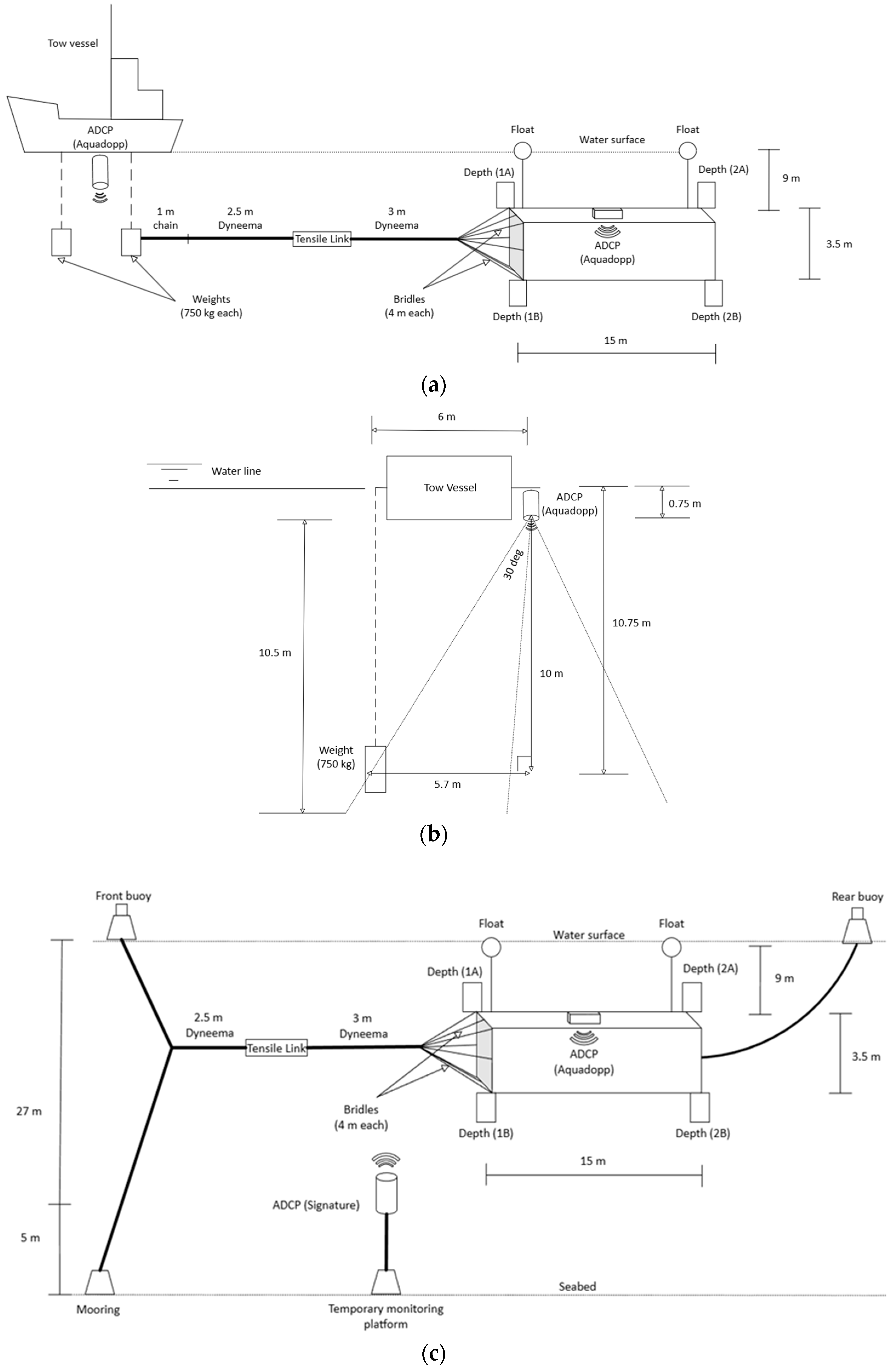
All towed trials were carried out approximately 4 km from the nearest shore in Tasman Bay, New Zealand, on 10 February 2023, using Pelorus, a 16.5 m × 6 m vessel owned by Nelson-based Diving Services New Zealand Ltd. Towing was conducted in a general NNE direction in depths ranging from 28 to 33 m, ensuring no disturbance by blockage effects. Weather conditions were calm with minimal swell (≤0.2 m) and a Beaufort force of 1 (approximate wind velocity of 0.3–1.5 m/s) based on observation of small ripples on the water surface without breaking waves. The enclosure was mounted via the bridle to the aftend of the vessel, and the distance between the enclosure and the vessel was approximately 10.5 m (see Figure 2a).
The bridle was connected to a tensile link SUBD 2.0 (Dynamic Load Monitoring Ltd., Southampton, UK) (Figure 2a), recording at 1 Hz to measure load on the enclosure during the towed trials. The factory calibration of the tensile link was used to calculate forces in newtons. The tensile link had a maximum load capacity of 2 tonnes and a resolution of 1 kg (9.81 N). All tow measurements were conducted with the vessel operating at steady forward speed. The influence of the vessel hull on the enclosure was assumed to be minimal, given that the enclosure was towed at 9 m depth and approximately 10.5 m behind the vessel.
Preliminary trials showed that additional ballast was required to maintain the enclosure at the desired depth at the higher target vessel speeds. To achieve this, two 750 kg lead weights linked by a chain were lowered to the target tow depth (9 m) from the vessel’s two portside hydraulic winches, with the rearmost weight also connected to the rope leading to the tensile link unit. The diameter (D) of the cylindrical lead weights was approximately 0.5 m. Given that the towing line was 10.5 m long, the enclosure was located outside the recirculation bubble (1-3D) and strong vortex wake (5-15D) (as described in [22]) of the weights.
Six target towing speeds (0.26, 0.51, 0.77, 1.03, 1.54 and 2.06 m/s) were tested for each aft-end constriction configuration (0%, 40% or 60%). Preliminary trials demonstrated that internal current speed at 20% constriction was comparable to that at 0% constriction, leading to the decision to omit the 20% constriction from further testing.
Vessel speeds were recorded using a vertically orientated bottom-looking Acoustic Doppler Profiler (Nortek Aquadopp, 2 MHz; Nortek AS, Vangkroken 2, 1351 Rud, Norway), hereafter referred to as Aquadopp. It was housed in a casing and mounted vertically by securing it to the side of the vessel, opposite to where the lead weights were located (see Figure 2b). Vessel speed data was recorded at 15 s intervals and covered 10.5 m water column divided into 20 × 0.5 m bins with a blanking distance of 0.5 m. In addition, vessel speeds were also manually recorded at 30 s intervals over 5 mins for each target towing speed; however, from 1.54 m/s onwards, the recording period was reduced to 3 min. Each speed trial was replicated three times to account for random errors. It is noteworthy that achieving a target vessel speed of 2.06 m/s was difficult when towing against the tide for both the 40% and 60% constriction configurations.
Internal current speed was measured within the enclosure using a horizontally oriented side-looking Aquadopp, which was mounted horizontally on the underside of the enclosure roof at mid-length, facing downward into the enclosure. The Aquadopp was set to measure current speed every 15 s in a 3 m water column inside the enclosure, divided into 0.2 m bins with a blanking distance of 0.2 m.
In addition, four RBR global TR-1060F duo depth loggers (RBR Ltd., Ottawa, Canada) were mounted on the enclosure, with sensors located at the top and bottom of both forward and aft faces to monitor the depth and movement of the enclosure. Sensors were set to record depth at 0.5 Hz. All instruments were factory-calibrated by the manufacturers prior to deployment, with new batteries installed.

2.3. Moored Trial

For the moored trial, the enclosure was connected via a single bridle to a fixed mooring system at a 32 m depth (mean low tide) and deployed for 41 days between 10 February and 26 March 2023 (Figure 2c). The aft-end constriction was adjusted from 0% to 40% on day 16 of the trial and from 40% to 60% on day 35.
Measuring sensors and their setup were the same as those used during the towed trials (Aquadopp mounted on the enclosure, four RBR pressure sensors positioned at the enclosure corners, and a tensile link installed between the bridle and mooring), except for the Aquadopp sampling setting, which was set to record at a 10-min period every 10 min with an averaging interval of 1 min.
In addition, waves and currents were measured using a Nortek Signature 1000 acoustic Doppler current profiler (ADCP; Nortek AS, Rud, Norway), bottom-mounted and oriented vertically upward. The ADCP was housed in a purpose-built, slightly conical subsurface buoy (Nortek AS, Rud, Norway) and attached to the temporary monitoring platform. The distance between the ADCP and the seabed was around 5 m (see Figure 2b). The ADCP measured current velocity every 10 min, sampled at 4 Hz, using 1 m bins spanning a 27 m water column with a blanking distance of 10.5 m. For wave measurements, the ADCP operated in wave burst mode with 17-min burst durations every 2 h, sampled at 4 Hz, using 1 m bins over the same 27 m profiling range and blanking distance. All instruments were factory-calibrated by the manufacturers prior to deployment, with new batteries installed.

2.4. Data Processing

For the towed trial measurements, RBR depth loggers directly provided depth time series. Aquadopp measurements were converted to MATLAB-compatible output via NORTEK Ocean Contour software. A time series of internal flow speed was extracted, and values with a correlation of less than 70% were omitted from the analysis. The data was then depth averaged to obtain a single representative internal flow speed. The tensile link also provided a direct load time series output.
Although vessel speed was recorded manually during the tow trial, these values did not reflect conditions at towing depth and were therefore excluded from further analysis. Aquadopp-derived speeds were used instead. For comparison, Table A1 (Appendix A) presents both manually recorded vessel speeds and Aquadopp-derived tow speeds for the full trial (three replicates for each of the six target towing speeds and constriction settings).
Lead weights suspended 10 m below the vessel (Figure 2b) may have interfered with the Aquadopp measurements; consequently, deeper bins (17th–20th; 8.75–10.25 m depth) were excluded.
The remaining Aquadopp data (bins 1–16) were filtered and depth-averaged to produce a single flow speed time series. This series was then subsampled by target vessel speed, corresponding to each 5-min trial (three replicates per constriction; Table A1).
Differences in Aquadopp-derived speeds between constrictions were small (<10%), so speeds were averaged across constrictions to generate a single representative dataset for each target vessel speed (Table 2). This simplification enables direct comparison of internal flow and load across constrictions without materially affecting results.
Measured load, internal flow velocity and depth time series were processed identically to ensure consistency and data were grouped by actual vessel speed using these averaged values.
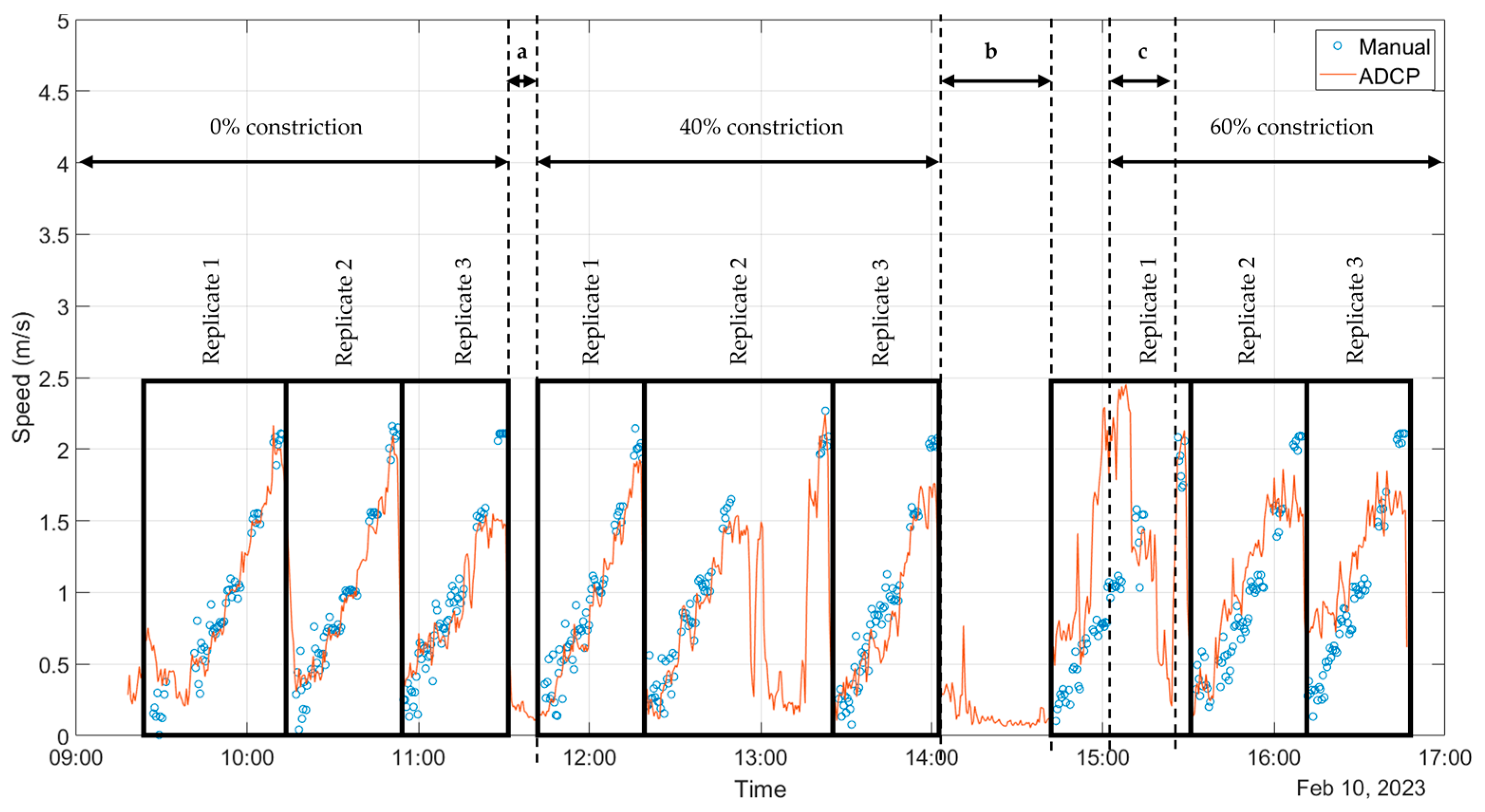
Data from replicate 1 at 60% constriction was excluded for all bins. During period C of the tow trial (Figure 3; 15:08–15:26 p.m.), the vessel towed against the tide, producing elevated speeds consistent with the outgoing tide; this pattern trend was observed across all 20 Aquadopp bins. The sudden change in Aquadopp speed (Figure 3; 12:49–13:17 p.m.) was because of the pause in towing due to not getting sufficient speed and checking with the Remotely Operated Vehicle (ROV).
All data processing was conducted in MATLAB R2024a. The fore top sensor (1A) was excluded due to faulty readings.
For the moored trial, depth data from the RBR depth loggers, internal flow speed data from the Aquadopp and load data from the tensile link were processed using the same procedures as for the towed trials to ensure consistency between datasets. Similarly, ADCP wave and current measurements were converted to MATLAB-compatible output via NORTEK Ocean Contour software. Root mean square (RMS) data for significant wave height were calculated based on an 8-h sliding window to characterize wave-energy variability. Similarly, tensile load data was averaged over an 8 h moving window to smooth short-term fluctuations while retaining the underlying load trend. RMS data for both internal and ambient flow speeds were computed based on a 12 h sliding window to average out the effect of individual waves, while retaining mean current energy variations. The rationale for choosing a 12 h moving window length was to filter instantaneous fluctuations of current speeds while preserving the overall trend, which was not achieved with an 8 h window length. All data were processed using MATLAB R2024a.
After processing the results, it was found that the aft bottom sensor (2B) recorded faulty readings, so it was omitted from the analysis.

3. Results

3.1. Towed Trial

3.1.1. Effect of Aft-End Constrictions on Enclosure’s Depth at Different Vessel Speeds

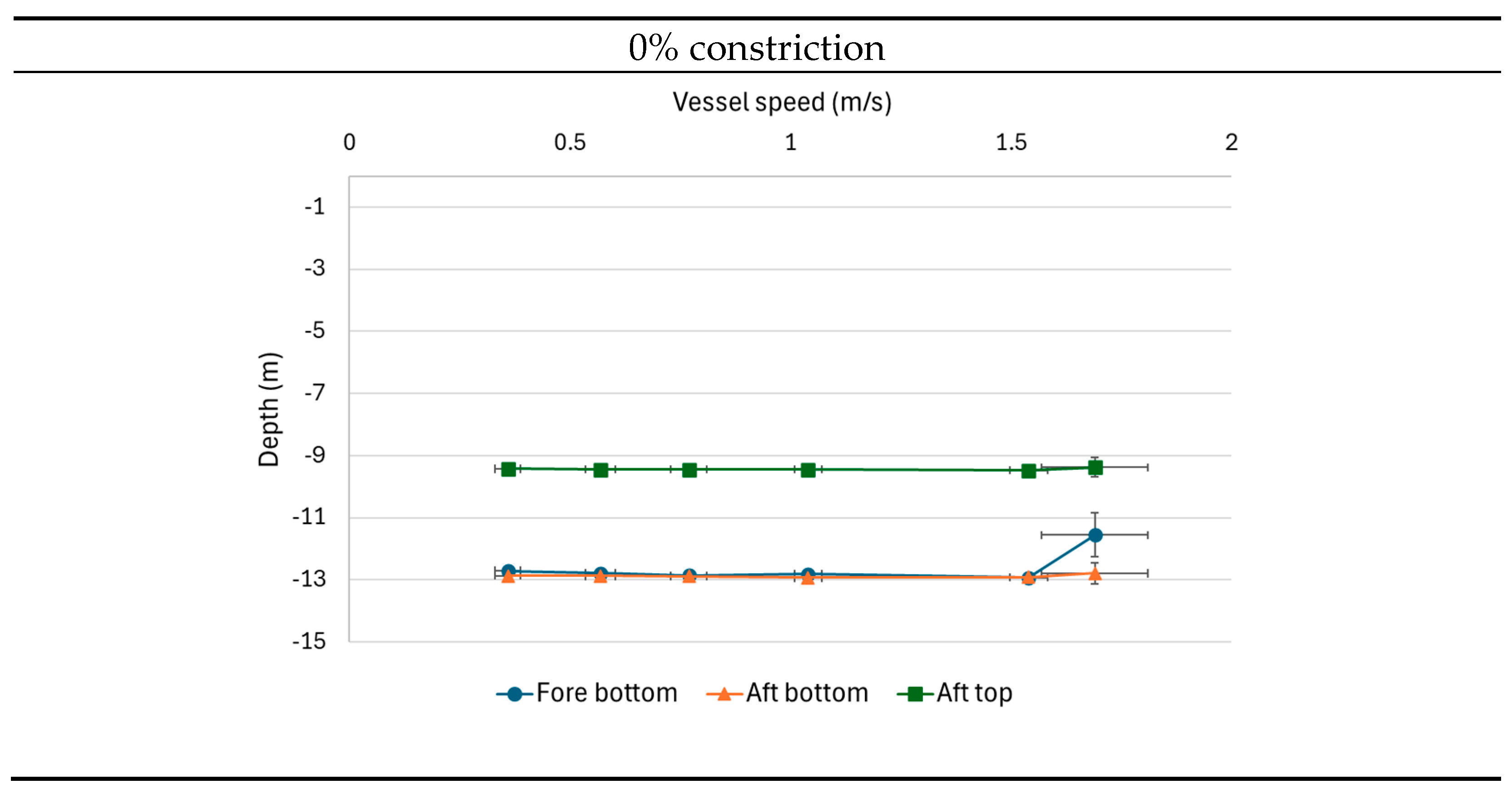
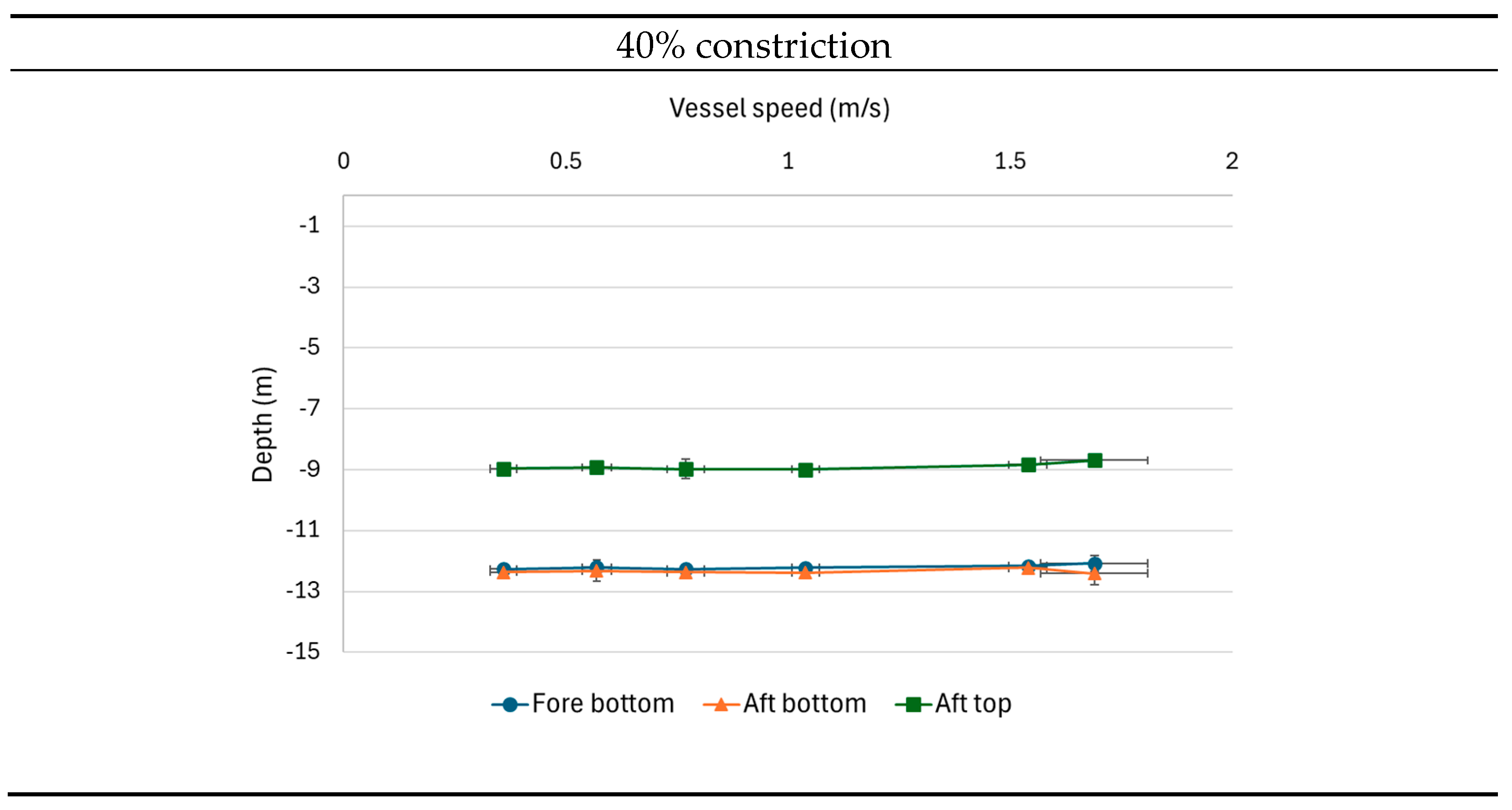
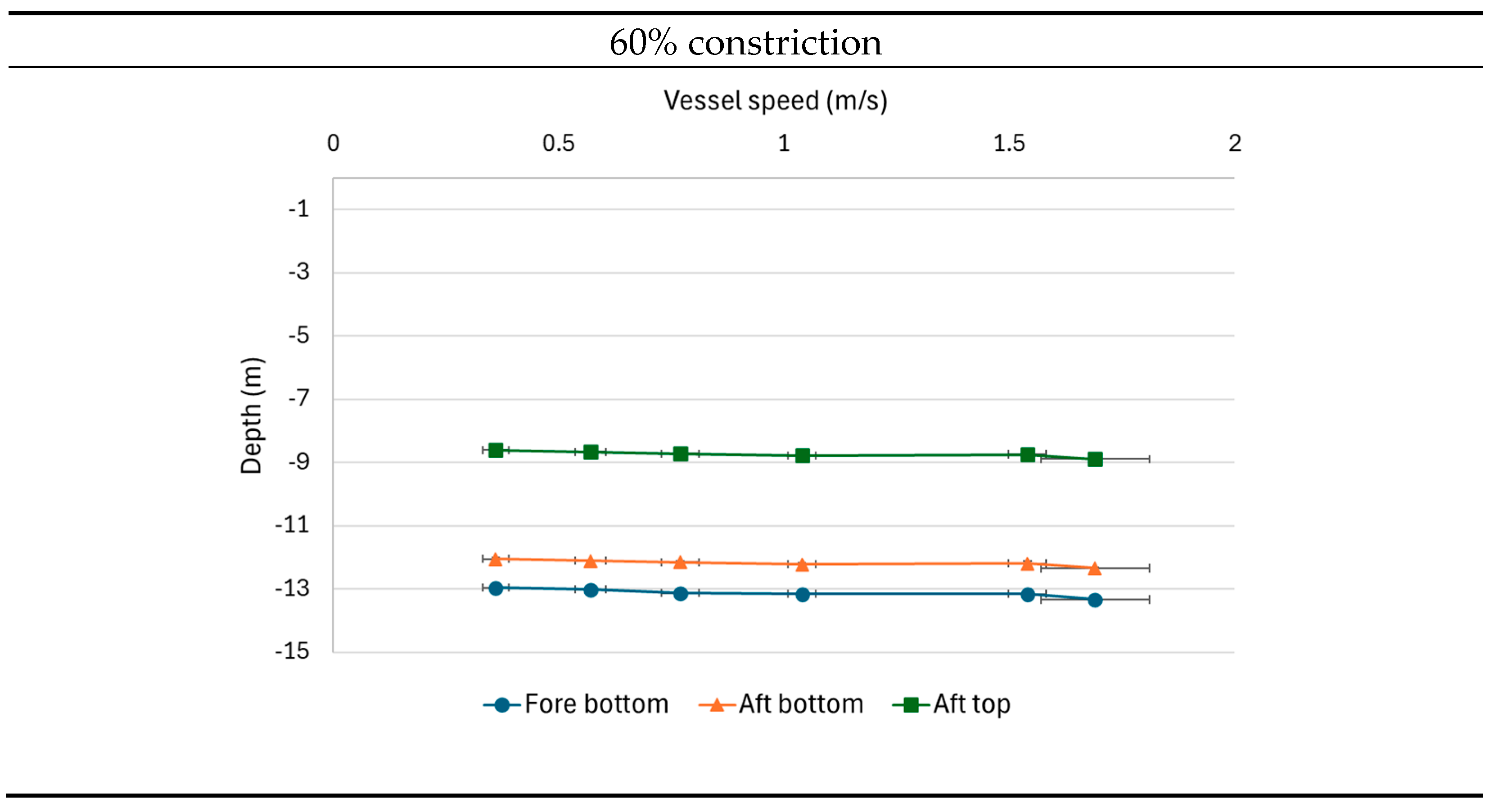
Figure 4, Figure 5 and Figure 6 present time-averaged enclosure depth as a function of vessel speed, with error bars indicating variability in vessel speed and depth. Depth measurement uncertainty remained below 3% for all cases, except for 0% constriction, where it increased with vessel speed to ~6%, particularly at the fore bottom sensor.
At 0% constriction (Figure 4), the enclosure remained stable across most vessel speeds. However, at 1.69 m/s, the fore bottom sensor rose by up to 1.8 m, while the aft bottom and top sensors remained approximately constant at ~13 m and ~9 m, respectively.
At 40% constriction (Figure 5), the enclosure showed minimal movement across all speeds, indicating stable depth profiles.
For 60% constriction (Figure 6), the fore bottom sensor was consistently ~1 m deeper than the aft bottom sensor at all vessel speeds, indicating a persistent tilt in the enclosure.
Detailed depth variability for each vessel speed and constriction level is provided in Appendix B.

3.1.2. Effect of Aft-End Constrictions on Internal Flow Speed at Different Vessel Speeds

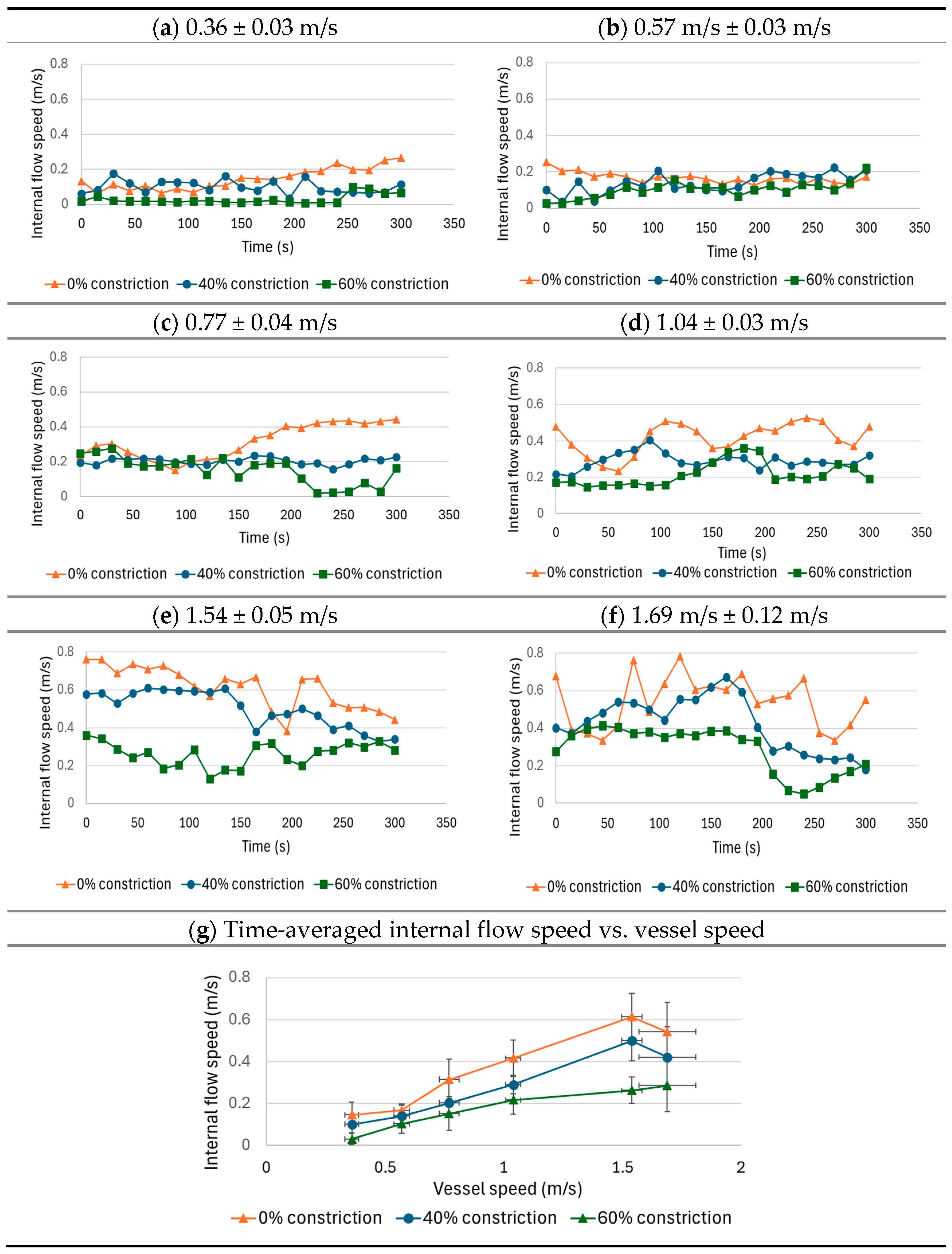
Variability in the internal flow was observed across both vessel speed and constrictions, with distinct differences between the three configurations (Figure 7a–f). Internal flow speeds were consistently lower than vessel speed across all constrictions. On average, internal flow was ~60% lower than vessel speed at 0% constriction, with larger reductions at 40% and 60% constrictions.
At 0% constriction, internal flow speed ranged from 0.1 to 0.3 m/s at a vessel speed of 0.36 m/s (see Figure 7a). As vessel speed increased, this range widened to 0.2–0.5 m/s (see Figure 7b–d) and further to 0.35–0.8 m/s at 1.54 and 1.69 m/s (see Figure 7e,f). Despite the increase in variability, no meaningful increase in internal flow speed was observed at vessel speeds of 1.54 and 1.69 m/s.
At 40% constriction, internal flow speeds were consistently lower than at 0% constriction. This reduction relative to 0% constriction was <10% at 0.36 m/s, increasing to ~35% at 1.69 m/s (see Figure 7f). Flow speed ranged from 0.05 to 0.2 m/s at 0.36 m/s and 0.57 m/s vessel speed (see Figure 7a,b), increasing to 0.2–0.4 m/s at intermediate speeds (see Figure 7c,d), and 0.2–0.6 m/s at 1.54 and 1.69 m/s (Figure 7e,f).
At 60% constriction, internal flow was further reduced relative to 40% constriction across all vessel speeds. Flow speeds ranged from 0.05 to 0.3 m/s at 0.36 m/s vessel speed (Figure 7a), increased to 0.15–0.5 m/s at intermediate speeds (Figure 7b–d), and reached 0.35–0.8 m/s at 1.54 and 1.69 m/s (Figure 7e,f).
Figure 7. Measured internal flow speed within the enclosure during towed trials for a range of vessel speeds (0.36, 0.57, 0.77, 1.04, 1.54 and 1.69 m/s) and aft-end constriction levels (0%, 40% and 60%) for panels (af). Panel (g) shows the time-averaged internal flow speed vs. the vessel speed, with values presented as mean ± standard deviation.
Jmse 14 01122 g007
For a clearer comparison, the transient internal flow speeds from Figure 7a–f were averaged to produce a single time-averaged value for each vessel speed (Figure 7g). Time-averaged internal flow speed generally increased with vessel speed, with a slight (non-significant) decrease at the highest speed (1.69 m/s) for 40 and 60% constrictions. Relative to 0% constriction, 40% and 60% constrictions reduced time-averaged internal flow by approximately 24% and 51%, respectively.
Vessel speed error bars represent the standard deviation of processed speed data (Section 2.4) and reflect ambient flow variability during towing. Variability was similar across speeds from 0.36 to 1.54 m/s for all constrictions, but increased markedly at 1.69 m/s. Internal flow error bars represent the standard deviation over the 5 min (300 s) averaging period and capture flow fluctuations within the enclosure. Unlike vessel speed, internal flow variability varied with both speed and constriction level. The highest variability occurred at 1.69 m/, where internal flow fluctuations reached 24% across all constrictions.

3.1.3. Effect of Aft-End Constrictions on Load at Different Vessel Speeds

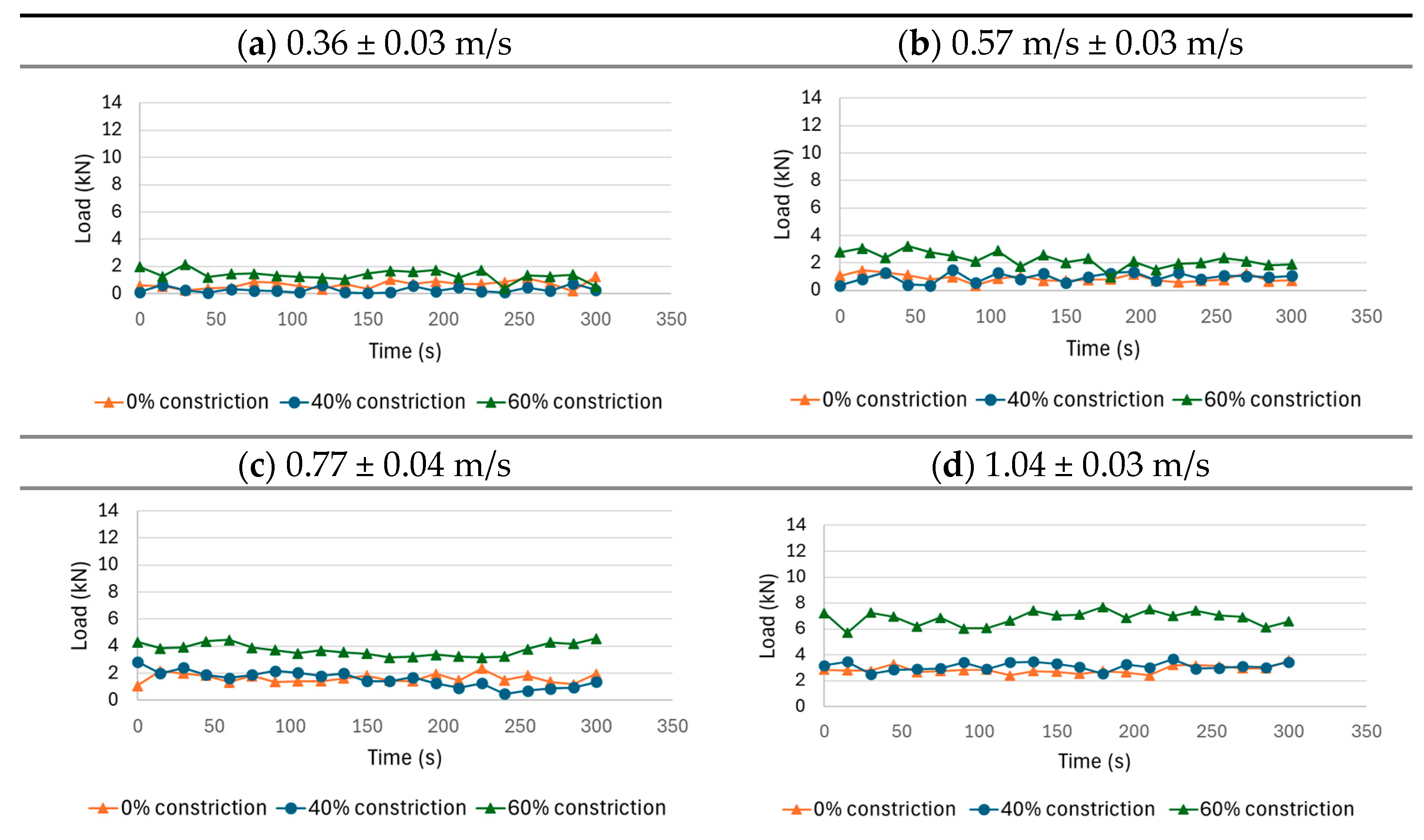
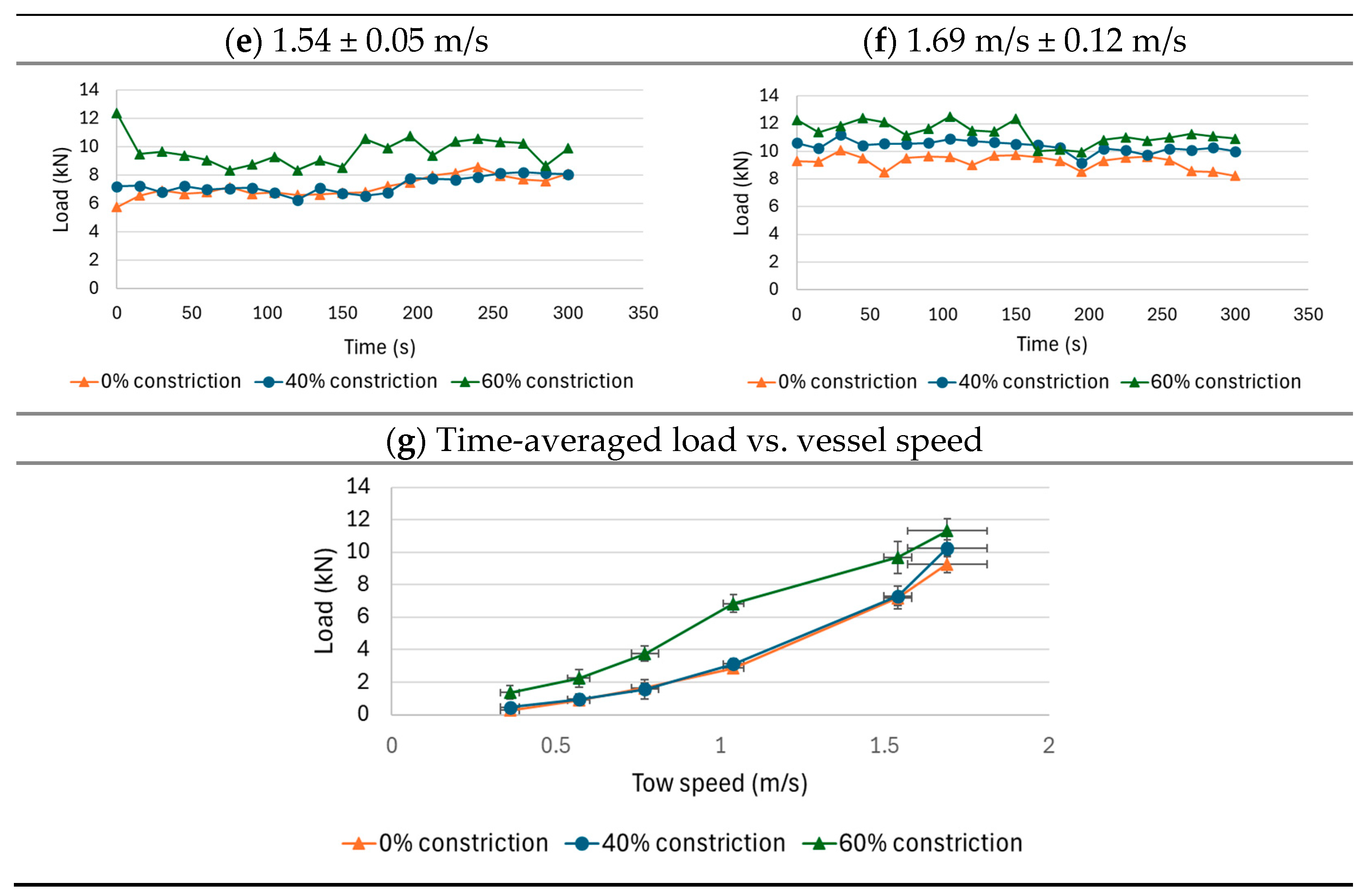
Overall, towing loads increased with both vessel speed and constriction level (Figure 8a–f). Loads for 0% and 40% constriction were generally similar, differing by <15% across most vessel speeds. Exceptions occurred at 0.36 and 1.69 m/s, where loads at 0% constriction were approximately twofold and 25% higher, respectively (see Figure 8a,f). In contrast, the 60% constriction consistently produced higher loads than both 0% and 40% constrictions at all vessel speeds. Maximum loads remained below 3 kN at vessel speeds ≤0.57 m/s, increasing to ~12 kN at 1.69 m/s. At this highest speed, differences between constriction levels narrowed, with all loads falling within 37% of each other.
Time-averaged loads (Figure 8g) increased with vessel speed and showed strong dependence on constriction. The 60% constriction increased mean load by ~90% relative to 0% constriction, whereas the 40% constriction produced no significant change compared with 0%.
Error bars are included for both vessel speed and load. On average, load variability (standard deviation over the 5 min tow period) remained relatively consistent across speeds and constrictions, within ~27%, even at 1.69 m/s when vessel speed variability was highest.
Figure 8. Measured loads on the enclosure during towed trials for a range of vessel speeds (0.36, 0.57, 0.77, 1.04, 1.54 and 1.69 m/s) and aft-end constriction levels (0%, 40% and 60%) for panels (af). Panel (g) shows the time-averaged load vs. the vessel speed, with values presented as mean ± standard deviation.
Jmse 14 01122 g008aJmse 14 01122 g008b

3.2. Moored Trial

Waves and currents were measured to characterize the ambient hydrodynamic conditions, assess their influence on enclosure loads and motion, and provide environmental context for interpreting the moored-trial observations.

3.2.1. Site Conditions

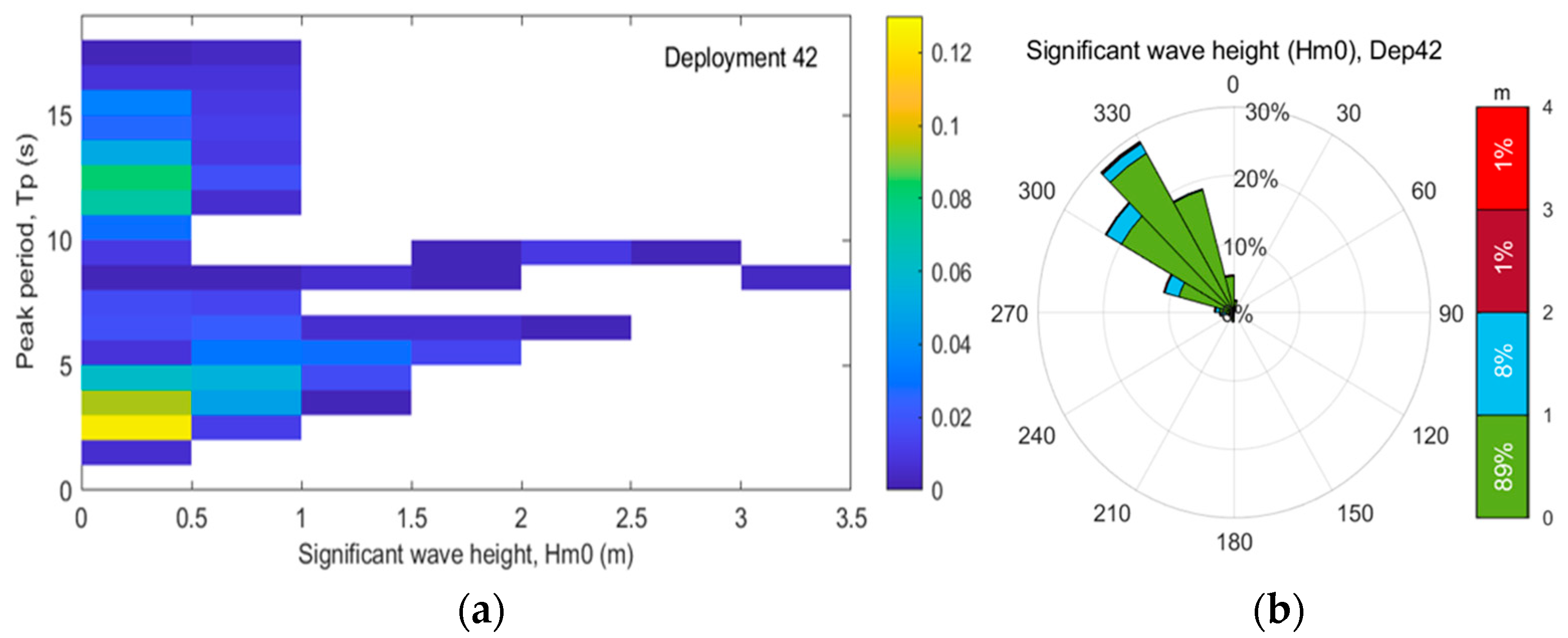
Figure 9a shows the probability distribution of peak wave period. The majority of the measured waves exhibited short peak periods (Tp), mostly below 10 s. A longer period swell, with periods between 10 and 15 s, was also observed but with much lower probability. Wave directions were predominantly north-westerly, ranging between 300 and 330°, accounting for approximately 90% of all measurements (Figure 9b). Significant wave height remained below 2 m for 97% of the deployment; however, wave heights exceeding 3 m were recorded near the end of the moored trial period.
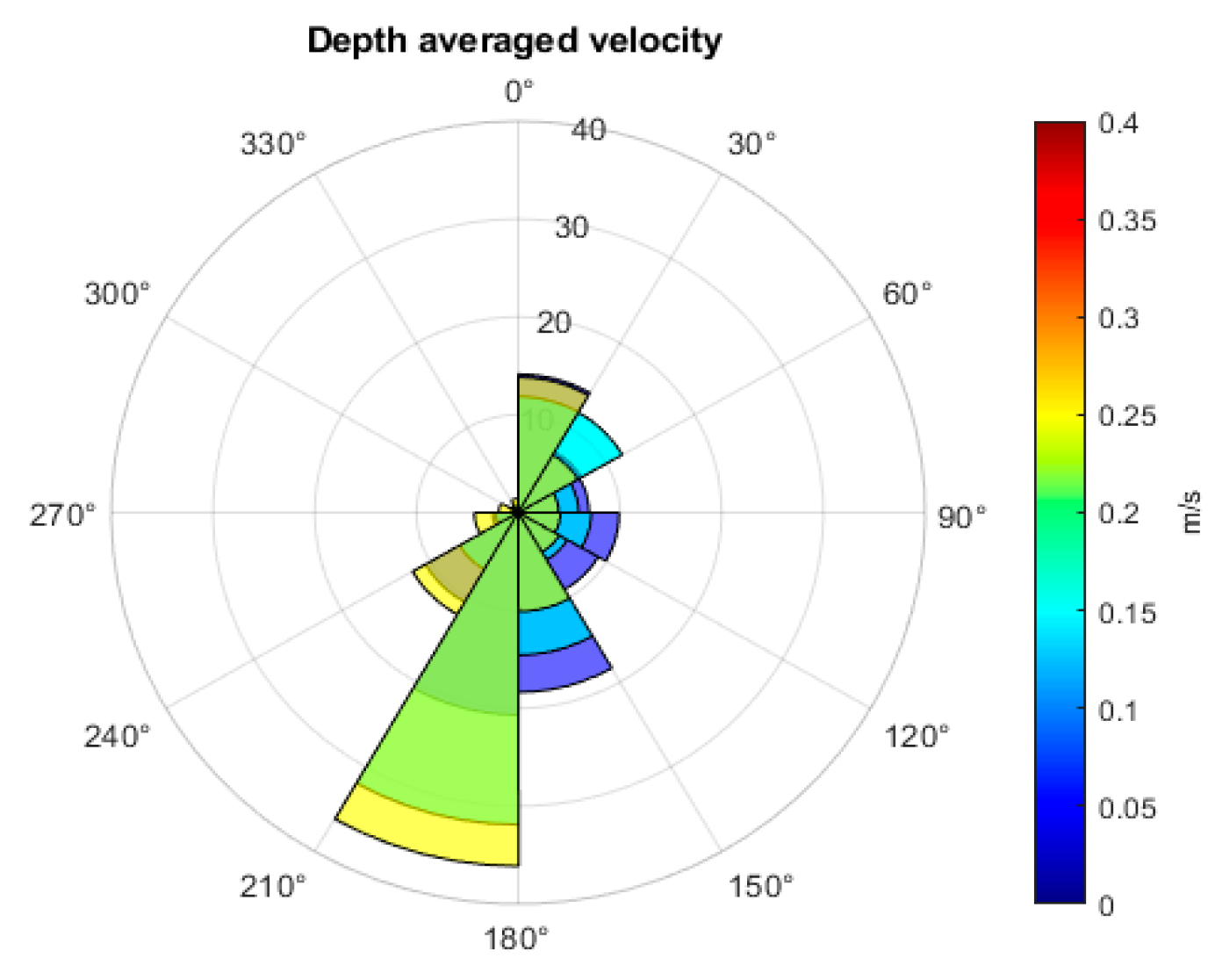
Figure 10 shows the dominant current direction and associated current speeds based on the percentage distribution. The polar histogram indicates that the site is tidally dominated, with currents flowing bi-directionally along a north-east (NE) axis between 0 and 30° and a south-west (SW) axis between 180 and 210. Averaged current speeds were mainly between 0.1 and 0.25 m/s, accounting for approximately 85% of all observations. The maximum current speed recorded was 0.28 m/s at 9 m depth, where the enclosure sat.

3.2.2. Effect of Wave and Current Profiles on Loads

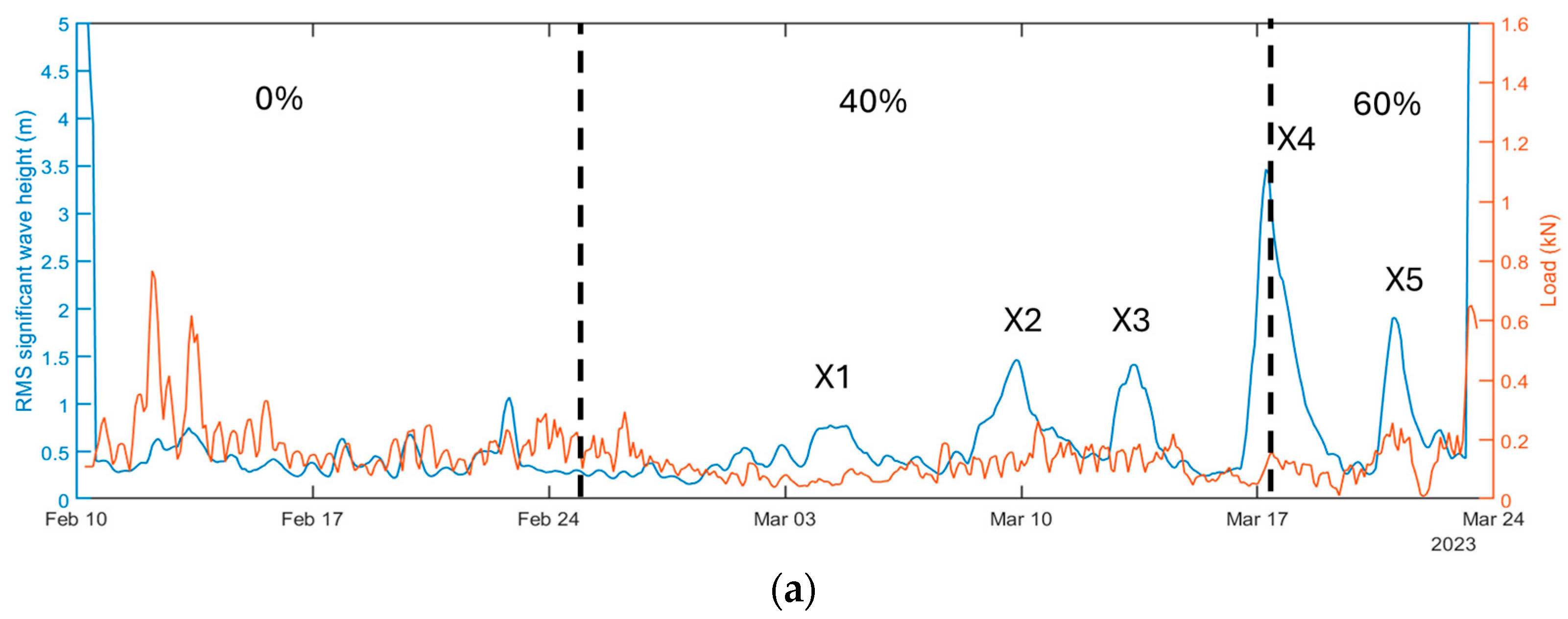
Figure 11a shows the root mean square (RMS) significant wave height plotted against the moving average tensile load. Across the deployment, RMS significant wave height events (X1-X5) did not show a consistent relationship with the measured loads.
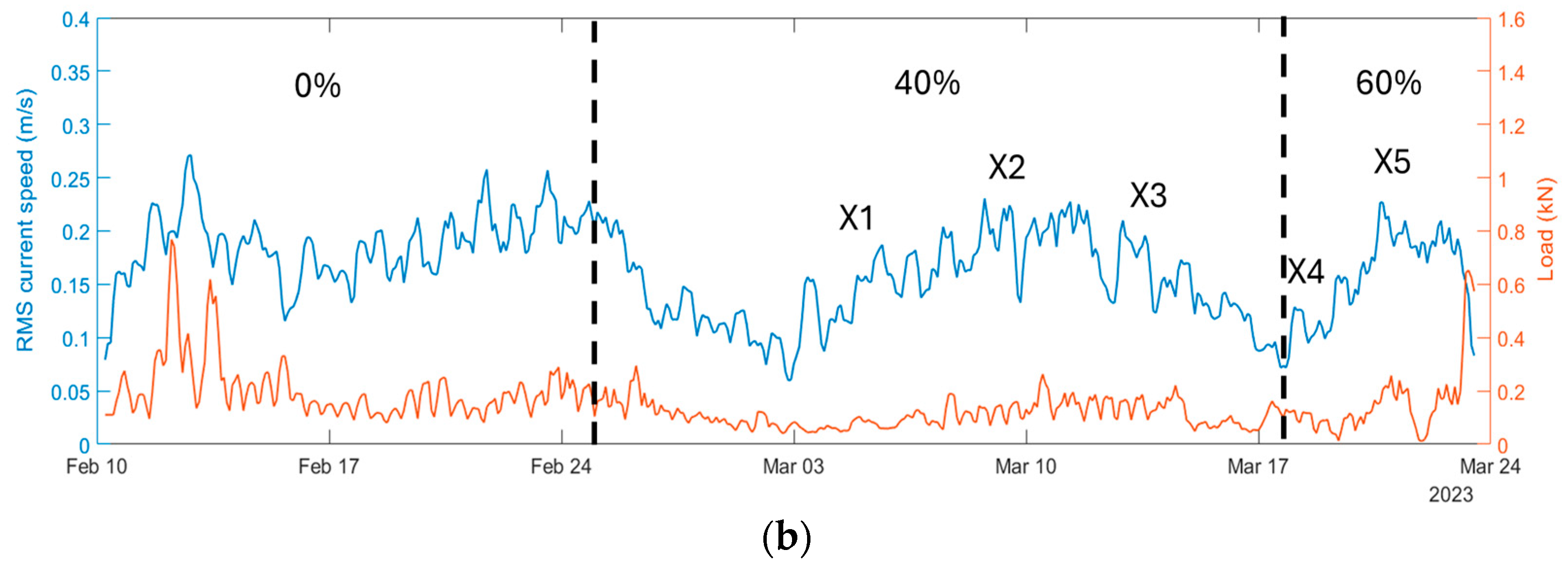
Loading on the moored structure, positioned at an approximate depth of 9 m, appears to be influenced more by currents than waves. Figure 11b shows RMS current speed at 9 m depth plotted against the moving average tensile load. Temporal variations in current speed were generally weakly aligned with changes in loads throughout the trial (events X1–X5, corresponding to the wave events shown in Figure 11a). Overall, these observations indicate that structural loading is weakly related to ambient current speed, while no clear relationship with wave conditions was observed.
Figure 11. (a) Measured load and RMS wave height; and (b) measured load and RMS current speed at 9 m depth at the enclosure position. Dotted lines indicate changes in aft-end constriction (0, 40 and 60%).
Jmse 14 01122 g011aJmse 14 01122 g011b

3.2.3. Effect of Constriction on Internal Flow Speed of Enclosure

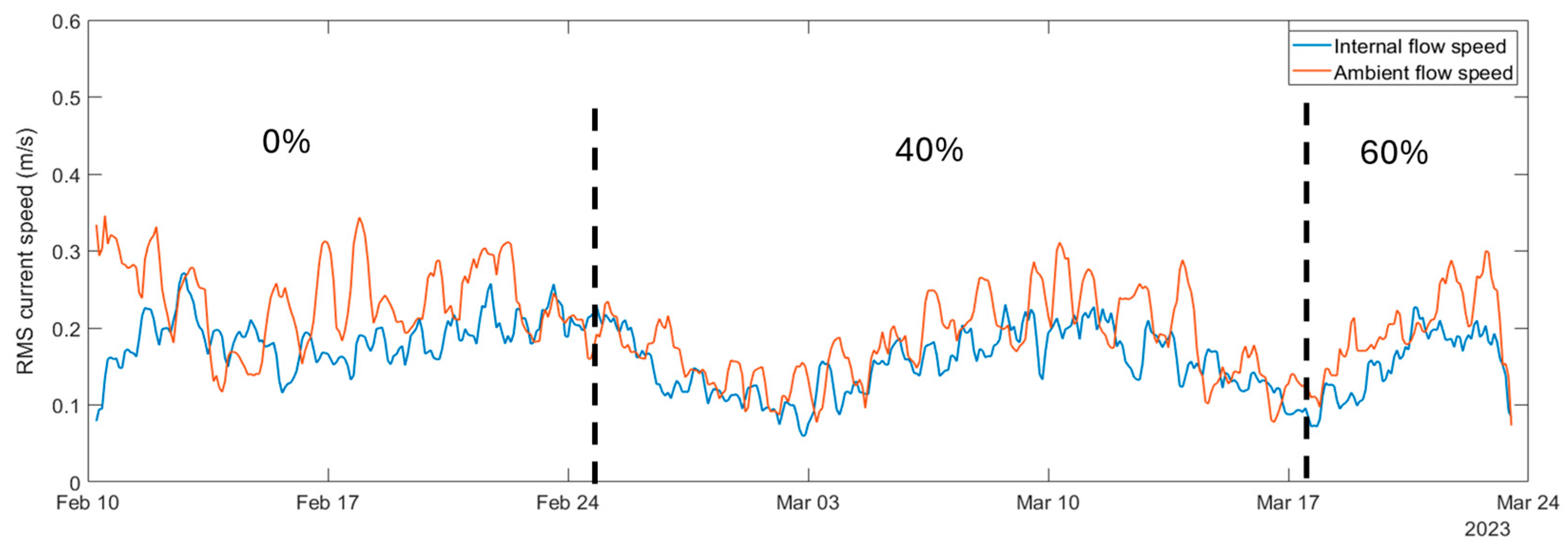
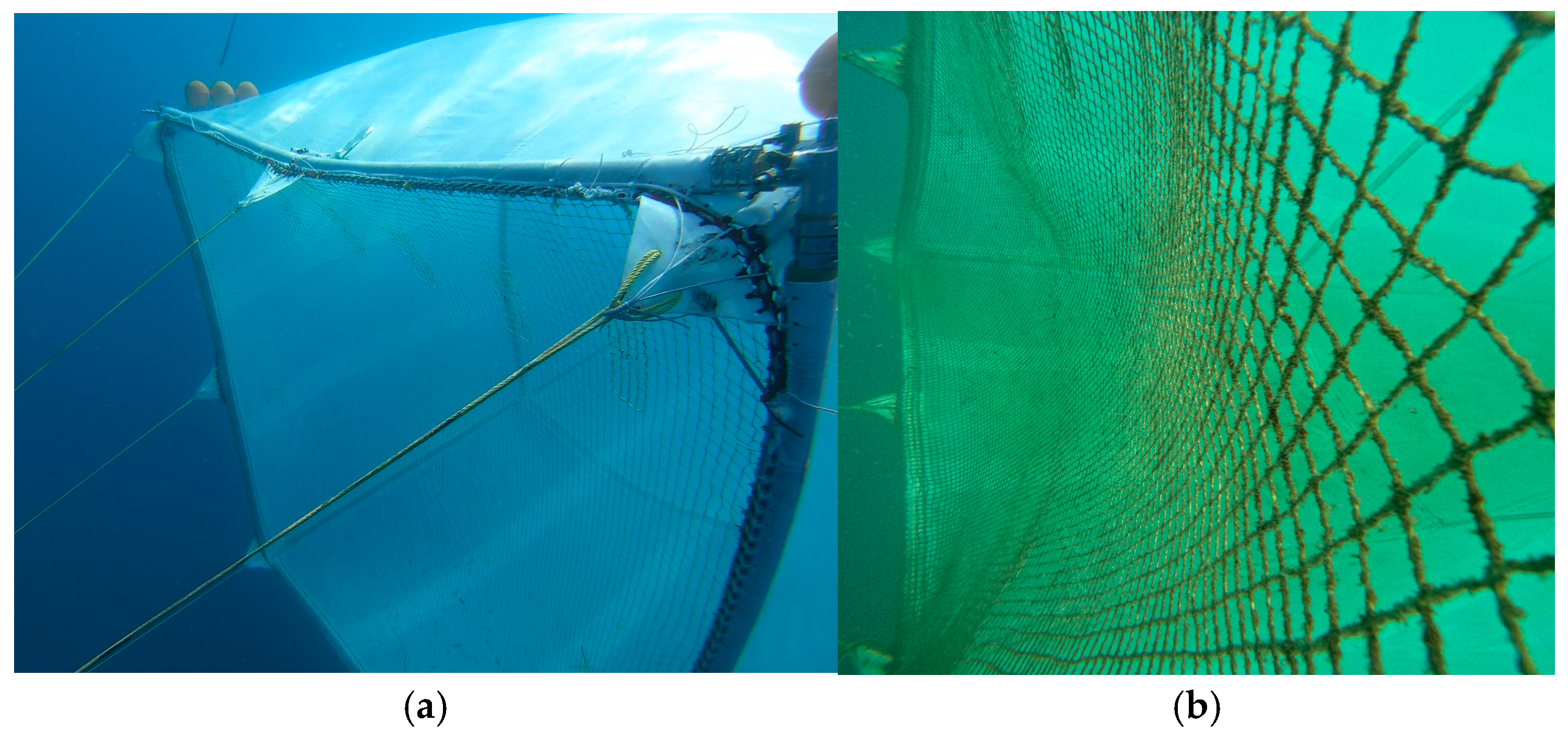
Figure 12 shows depth-averaged maximum current speeds inside and outside the enclosure throughout the duration of the moored trial. Ambient currents showed a typical tidal signal associated with the spring-neap cycle. Maximum speeds reached approximately 0.3 m/s with flow predominantly orientated along the x- and y-directions. Internal flow was consistently slower than the external current speed. Increasing the aft-end net constriction from 0 to 60% had little effect on the internal flow, as can be seen in Figure 12 and in the average ambient current speeds of 0.28, 0.21 and 0.24 m/s for 0%, 40% and 60% constrictions, respectively. Minimal biofouling growth was observed during the trial, as shown in Figure 13a,b, illustrating the front-mesh condition on 17 February and 16 March.

3.2.4. Depth and Movement of the Enclosure

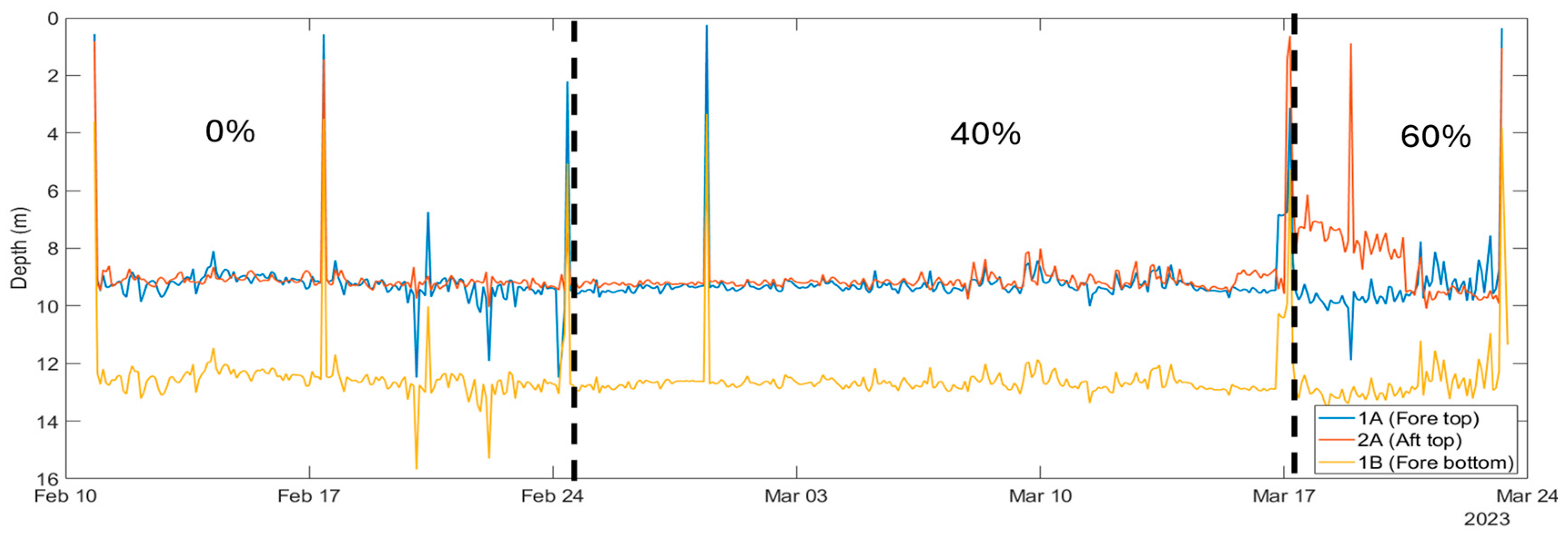
After processing the results, the data from the fore-top sensor (Figure 2, 1A) were found to be corrupted and were therefore omitted from the analysis. Figure 14 shows depth measurements from the RBR pressure sensors located at the top of the forward and aft ends of the enclosure, with the black dashed lines indicating changes in constriction. Throughout most of the deployment, the enclosure remained level at an average depth of approximately 9 m, with minimal vertical movement associated with operational lifts for routine checks and constriction changes. A brief deviation occurred during the final phase of the deployment (60% constriction), when the aft-top sensor recorded a temporary increase in depth to 7.4 m. The enclosure subsequently returned to its nominal depth of 9 m toward the end of the trial. Short-duration decreases in depth were also observed throughout the deployment (Figure 14), but no clear relationship with the load data (Figure 11a,b) was evident.

4. Discussion

4.1. Overview and Objectives

This study evaluates whether aft-end constriction can be used as a practical mechanism to regulate internal flow in a mobile, flexible square cylinder fish enclosure without incurring excessive hydrodynamic loads. The Discussion focuses on how constriction influences internal flow and structural loading under towed conditions, where enclosure-induced flow dominates, and whether similar effects persist under moored conditions dominated by ambient currents and waves. The results are interpreted in terms of their implications for operational feasibility and design optimization of mobile open-ocean aquaculture enclosures.

4.2. Towed Trials

4.2.1. Enclosure Attitude and Depth Stability Under Tow

During towed trials, the enclosure remained largely stable across all vessel speeds and constriction percentages, indicating adequate buoyancy, bridle balance, and structural stiffness to resist deformation and pitch/roll issues at the deployed depth. An exception to this was at 0% constriction under tow at 1.69 m/s, where a reduction in fore-bottom sensor’s depth relative to aft sensors (Figure 4) indicated a change in inflow angle of attack at the entrance. This behavior is consistent with an increase in dynamic loading at higher speeds and indicates a sensitivity of the entrance flow to enclosure attitude [23]. At 60% constriction, the persistent offset between fore- and aft-bottom depths reflects a slight ‘nose-down’ orientation, likely induced by increased aft-end constriction (Figure 6), which increased the enclosure pressure and promoted flow separation at the front end’s edge. Overall, however, the enclosure exhibited adequate depth control and attitude stability during towing, providing a robust basis for interpreting the measured internal flow and load responses.

4.2.2. Internal Flow Regulation Under Towing

Under all towing conditions, internal flow speeds were consistently lower than the corresponding towing speeds, demonstrating that the enclosure did not behave as a freely ventilated structure. For the 0% constriction configuration, internal velocities were reduced by approximately 60% on average relative to vessel speed, with progressively stronger attenuation observed at 40% and 60% constrictions. This behavior indicates that internal flow during towing was governed primarily by enclosure-induced pressure gradients and resistance at the permeable end boundaries, rather than by the ambient current directly passing through the enclosure [24]. The decrease in internal flow speed when vessel speed increases from 1.54 to 1.69 m/s (Figure 7g) could be due to variation in inflow angle of attack, likely induced by external current direction, which reduced the front enclosure opening (as indicated by a decrease in fore bottom sensor depth in Figure 4 and Figure 5) and resulted in reduced internal flow speed. However, this effect was not observed for 60% constriction, likely due to the dominance of vessel speed over external currents.
Increasing aft-end constriction proved to be an effective means of regulating internal flow under tow, particularly at moderate towing speeds. The 40% constriction consistently produced lower and more stable internal velocities than the 0% configuration across the tested speed range, while the 60% constriction yielded further reductions but with increased variability at higher vessel speeds. These results demonstrate that aft-end constriction can be used as a controllable mechanism to tune internal hydrodynamic conditions during towing, although the effectiveness and stability of this control diminish as towing speed increases and flow becomes more unsteady.
For mariculture, the ability to control flow velocity within an enclosure is important from a biological perspective, particularly in high-energy environments such as the open ocean. Although there is evidence that moderate exercise (typically 0.5–1.5 body lengths per second) can enhance growth in many species [25], exceeding these sustainable swimming speeds forces fish to divert limited energy away from growth to fuel high-intensity locomotion [26,27].

4.2.3. Load Response and Operational Balance

Towing loads increased consistently with both vessel speed and constriction percentage, as expected for increased blockage and flow resistance [28]. No major oscillations in load data were observed during the tow trials, indicating that any variation in water flow (whether it be from the vessel hull, the 750 kg weight below the vessel, or the vessel speed itself) had little impact on load measurements.
At lower and intermediate vessel speeds, differences in load between 0% and 40% constriction configurations were relatively small, indicating that moderate aft-end constriction did not impose a substantial load penalty. At the highest vessel speed, loads across constriction states converged, suggesting a change in hydrodynamic response associated with enclosure deformation or reduced shape stability under increased drag. While these observations are consistent with towing studies of conventional aquaculture cages [8], the flexible-walled square cylinder geometry of the present enclosure allows different modes of resistance and deformation, particularly through controlled permeability and longitudinal pressure gradients.
When considered alongside the internal flow measurements, the load results highlight a clear operational trade-off. In particular, the 40% aft-end constriction represents a favorable configuration, achieving reductions in internal flow speed of up to 24% without a commensurate increase in towing load. This balance between flow control and hydrodynamic loading is central to the operational feasibility of mobile enclosures, as it enables regulation of internal conditions during transport or repositioning while maintaining manageable towing forces. Together, the towed-trial results demonstrate that aft-end constriction can function as a practical, low-complexity control mechanism for internal flow regulation under towing, provided that constriction levels remain within a stable operational envelope.

4.3. Moored Trials

4.3.1. Environment and Loads

During the moored trial, the enclosure was exposed to a tidally dominated current regime with relatively low ambient current speeds and intermittent wave forcing. The majority of measured waves at the trial site were typical of coastal conditions with short peak periods below 10 s and wave height predominantly less than 2 m with increases during weather events.
Throughout the deployment, measured loads showed no clear or consistent relationship with significant wave height, reflecting the attenuation of wave-induced velocities at the deployment depth. Variations in load were only weakly aligned with changes in ambient current speed, indicating that structural loading under moored conditions was modest and primarily controlled by background currents rather than wave action. This response contrasts with the towed trials, where enclosure-induced flow dominated loading behavior, underscoring the fundamentally different hydrodynamic forcing regimes acting on the enclosure when moored versus towed.

4.3.2. Depth Stability and Enclosure Motion

The enclosure remained close to its target deployment depth of approximately 9 m for the majority of the moored trial, with only minor vertical movement associated with operational handling or isolated energetic wave events. No systematic relationship was observed between loading fluctuations and changes in enclosure depth, indicating that the buoyancy distribution and bridle configuration were sufficient to maintain vertical stability under the prevailing environmental conditions. Compared to the towed trials, where enclosure attitude directly influenced entrance flow behavior, the moored enclosure experienced low-frequency positional variability associated with tidal current reversals rather than sustained directional forcing.

4.3.3. Internal Flow Behavior Under Moored Conditions

In contrast to the towed trials, aft-end constriction had little effect on internal flow speed during the moored deployment. Although ambient currents exhibited clear tidal variability, internal velocities remained consistently lower than external flow and showed no systematic reduction with increased constriction from 0% to 60%. This indicates that, under moored conditions, internal flow was not governed by enclosure-induced pressure gradients or exit resistance, but instead by the alignment of the enclosure with the ambient current and resulting entrance flow characteristics.
The limited effectiveness of aft-end constriction in the moored regime likely reflects the sensitivity of internal flow to instantaneous angle of attack and enclosure orientation as it oscillated through the tidal cycle [20,23]. Small changes in alignment can significantly alter upstream flow separation and infiltration at the entrance [23], thereby dominating internal hydrodynamic conditions regardless of aft-end geometry. The minimal biofouling observed during deployment further suggests that changes in internal flow were not masked by progressive increases in mesh resistance [29].

4.3.4. Implications of Regime Contrast

Taken together, the moored trial results demonstrate that aft-end constriction is not an effective mechanism for regulating internal flow when ambient currents, rather than enclosure motion, control the internal hydrodynamic environment. This stands in clear contrast to the towed trials, where internal flow was dominated by enclosure-generated pressure gradients and could be systematically reduced through constriction. The contrasting behavior between regimes highlights an important physical limitation: aft-end constriction is most effective when the enclosure itself drives the flow, but offers limited control when flow direction and magnitude are externally imposed. Recognizing this distinction is critical for defining the operational envelope of mobile aquaculture enclosures and for informing when active flow control strategies are likely to be effective.

4.4. Comparison with Previous Studies

The increase in hydrodynamic load with towing speed observed in this study is consistent with field and laboratory investigations of conventional aquaculture cages, which report rising drag forces with increasing flow speed and progressive structural deformation [8,9,10,11]. These similarities indicate that, despite differences in geometry, the overall load–speed response of the enclosure follows established hydrodynamic behavior for flexible aquaculture structures subjected to imposed flow.
In contrast, the internal-flow behavior and the role of aft-end constriction distinguish the present enclosure from conventional gravity cages. Whereas reductions in internal flow in traditional net pens are largely governed by deformation-induced blockage, the semi-enclosed square cylinder geometry with controlled permeability enables internal flow to be actively moderated under towing through enclosure-induced pressure gradients. The regime-dependent effectiveness of this mechanism—effective under towing but limited under moored conditions—highlights a key physical distinction between mobile enclosures and stationary systems and underscores the importance of mobility in enabling practical internal-flow control.

4.5. Implications for Design and Operations

The results of this study demonstrate that the effectiveness of internal flow regulation in mobile aquaculture enclosures is strongly regime-dependent. Under towing, aft-end constriction provides a simple and effective means of moderating internal hydrodynamic conditions by exploiting enclosure-induced pressure gradients, whereas under moored conditions, internal flow is largely governed by ambient currents and enclosure alignment. This distinction indicates that constriction-based flow control is primarily relevant for mobile operations such as transport and repositioning, rather than for stationary deployment.
From both design and biological perspectives, the identification of a moderate aft-end constriction (approximately 40%) as an operationally favorable configuration is significant. This setting achieved reductions in internal flow speed of up to 24% without a commensurate increase in towing load, enabling towing efficiency to be maintained while reducing internal velocities to levels more compatible with sustainable swimming performance of cultured finfish. The ability to limit excessive internal flow during towing is particularly important for maintaining fish welfare, as sustained exposure to high swimming speeds can increase energetic costs and physiological stress.
Operationally, these findings suggest that aft-end constriction could be used as an adjustable control parameter during towing to tune internal flow conditions in response to vessel speed and environmental forcing, with the aim of balancing hydrodynamic loads, towing efficiency, and fish welfare constraints. However, the convergence of load responses and increased variability observed at higher vessel speeds also indicates the existence of a stable operational envelope beyond which constriction-based control becomes less predictable due to changes in enclosure shape response. Overall, the results highlight the advantage of mobile, semi-enclosed geometries in enabling deliberate control of internal hydrodynamics during towing, while also defining the physical limits of this approach under moored conditions.

5. Conclusions

This study presents a field evaluation of a non-conventional mobile fish enclosure with variable aft-end constriction, tested under both towed and moored conditions at a semi-open ocean site. The novelty lies within the enclosure design, enabling both mobility and control of internal flow through adjustable constriction, offering a potential tool for managing fish welfare.
During towing, the enclosure maintained a stable depth of approximately 9 m across all vessel speeds and constriction levels. Increasing aft-end constriction to 40% reduced time-averaged internal flow by up to 24% without a significant increase in hydrodynamic load. In contrast, a 60% constriction achieved a greater reduction (~51%) but resulted in a substantial load increase (~90% relative to 0% constriction), highlighting a clear trade-off between flow regulation and towing resistance.
Under moored conditions, the enclosure also remained stable at ~9 m depth across all constrictions when subjected to waves and currents. Mooring loads showed no clear relationship with wave height and only a weak association with ambient currents. Unlike the towing case, aft-end constriction had minimal influence on both internal flow and hydrodynamic loading.
Overall, the results demonstrate that the aft-end constriction is an effective mechanism for regulating internal flow during towing, but has limited influence under moored conditions. The enclosure exhibited consistently stable depth with minimal vertical motion in both modes, supporting operational reliability, structural integrity, and stable conditions for dissolved oxygen exchange. Future work will focus on improving sensor reliability, testing in more energetic environments with stronger currents (a limitation of the current study), and progressing to trials with fish to evaluate biological performance.

Author Contributions

Conceptualization: S.B.; methodology, R.V., S.B., P.B., G.K. and R.J.; formal analysis, M.S., R.V. and S.T.P.; investigation, G.A., P.B., S.F., G.K., R.J., S.R. and B.C.; data curation, S.T.P., M.S., P.B., B.C. and L.K.; writing—original draft preparation, S.T.P., L.K. and S.B.; writing—review and editing, S.T.P., L.K. and S.B.; funding acquisition, S.B. All authors have read and agreed to the published version of the manuscript.

Funding

This study was part of the research program ‘Whakapōhewa ki ahumoana–Reimagining Aquaculture’, funded by New Zealand’s Ministry of Business, Innovation and Employment Endeavor fund, grant number C11X1903.

Data Availability Statement

The original contributions presented in this study are included in the article. Further inquiries can be directed to the corresponding author.

Acknowledgments

We thank Alistair Jerrett, Gerard Janssen, Denham Cook and Damian Moran for their contribution in developing the mobile finfish aquaculture concept.

Conflicts of Interest

The authors declare no conflicts of interest. The funders had no role in the design of the study; in the collection, analyses, or interpretation of data; in the writing of the manuscript; or in the decision to publish the results.

Appendix A

Table A1 shows full sets of data for the towed trial with 0, 40 and 60% constrictions along with associated timestamps, target vessel speeds and processed Aquadopp vessel speeds (i.e., depth-averaged over 16 bins and subsampled to match timestamps).
Table A1. Replicated towed trial dataset for 0% constriction with six target towing speeds.
ConstrictionTimestampsDurationTarget SpeedsAquadopp Speeds
Replicate 10%9:27–9:325 mins0.26 m/s0.45 m/s
 0%9:41–9:465 mins0.51 m/s0.53 m/s
 0%9:47–9:525 mins0.77 m/s0.74 m/s
 0%9:53–9:585 mins1.03 m/s1.19 m/s
 0%10:01–10:065 mins1.54 m/s1.64 m/s
 0%10:09–10:145 mins2.06 m/s1.88 m/s
Replicate 20%10:17–10:225 mins0.26 m/s0.38 m/s
 0%10:23–10:285 mins0.51 m/s0.49 m/s
 0%10:29–10:345 mins0.77 m/s0.71 m/s
 0%10:35–10:405 mins1.03 m/s0.96 m/s
 0%10:42–10:475 mins1.54 m/s1.57 m/s
 0%10:50–10:555 mins2.06 m/s1.79 m/s
Replicate 30%10:54–10:595 mins0.26 m/s0.38 m/s
 0%11:00–11:055 mins0.51 m/s0.55 m/s
 0%11:06–11:115 mins0.77 m/s0.73 m/s
 0%11:12–11:175 mins1.03 m/s1.08 m/s
 0%11:20–11:255 mins1.54 m/s1.52 m/s
 0%11:28–11:335 mins2.06 m/s1.69 m/s
Replicate 140%11:44–11:495 mins0.26 m/s0.33 m/s
 40%11:50–11:555 mins0.51 m/s0.54 m/s
 40%11:56–12:015 mins0.77 m/s0.83 m/s
 40%12:02–12:075 mins1.03 m/s1.06 m/s
 40%12:09–12:145 mins1.54 m/s1.49 m/s
 40%12:15–12:205 mins2.06 m/s1.64 m/s
Replicate 240%12:21–12:265 mins0.26 m/s0.33 m/s
 40%12:27–12:325 mins0.51 m/s0.46 m/s
 40%12:33–12:385 mins0.77 m/s0.78 m/s
 40%12:39–12:445 mins1.03 m/s0.94 m/s
 40%12:46–12:515 mins1.54 m/s1.69 m/s
 40%13:20–13:255 mins2.06 m/s1.83 m/s
Replicate 340%13:27–13:325 mins0.26 m/s0.31 m/s
 40%13:33–13:385 mins0.51 m/s0.48 m/s
 40%13:39–13:445 mins0.77 m/s0.79 m/s
 40%13:45–13:505 mins1.03 m/s0.96 m/s
 40%13:52–13:575 mins1.54 m/s1.37 m/s
 40%13:59–14:045 mins2.06 m/s1.58 m/s
Replicate 160%14:43–14:485 mins0.26 m/s-
 60%14:49–14:545 mins0.51 m/s-
 60%14:56–15:015 mins0.77 m/s-
 60%15:02–15:075 mins1.03 m/s-
 60%15:11–15:165 mins1.54 m/s-
 60%15:26–15:315 mins2.06 m/s-
Replicate 260%15:32–15:375 mins0.26 m/s0.35 m/s
 60%15:40–15:455 mins0.51 m/s0.64 m/s
 60%15:46–15:515 mins0.77 m/s0.73 m/s
 60%15:52–15:575 mins1.03 m/s1.09 m/s
 60%16:00–16:055 mins1.54 m/s1.62 m/s
 60%16:06–16:115 mins2.06 m/s1.73 m/s
Replicate 360%16:12–16:175 mins0.26 m/s0.38 m/s
 60%16:18–16:235 mins0.51 m/s0.62 m/s
 60%16:24–16:295 mins0.77 m/s0.76 m/s
 60%16:30–16:355 mins1.03 m/s0.97 m/s
 60%16:36–16:415 mins1.54 m/s1.51 m/s
 60%16:43–16:485 mins2.06 m/s1.69 m/s

Appendix B

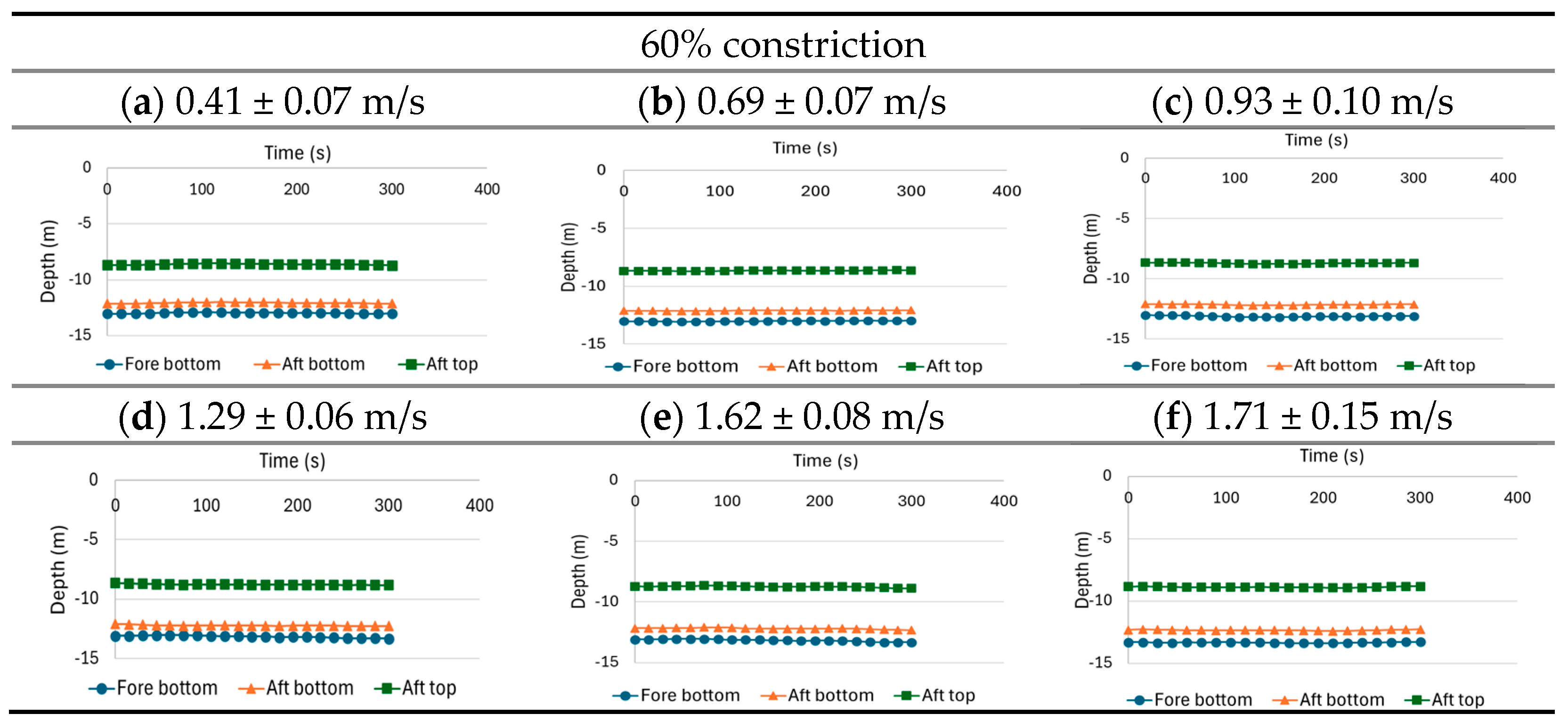
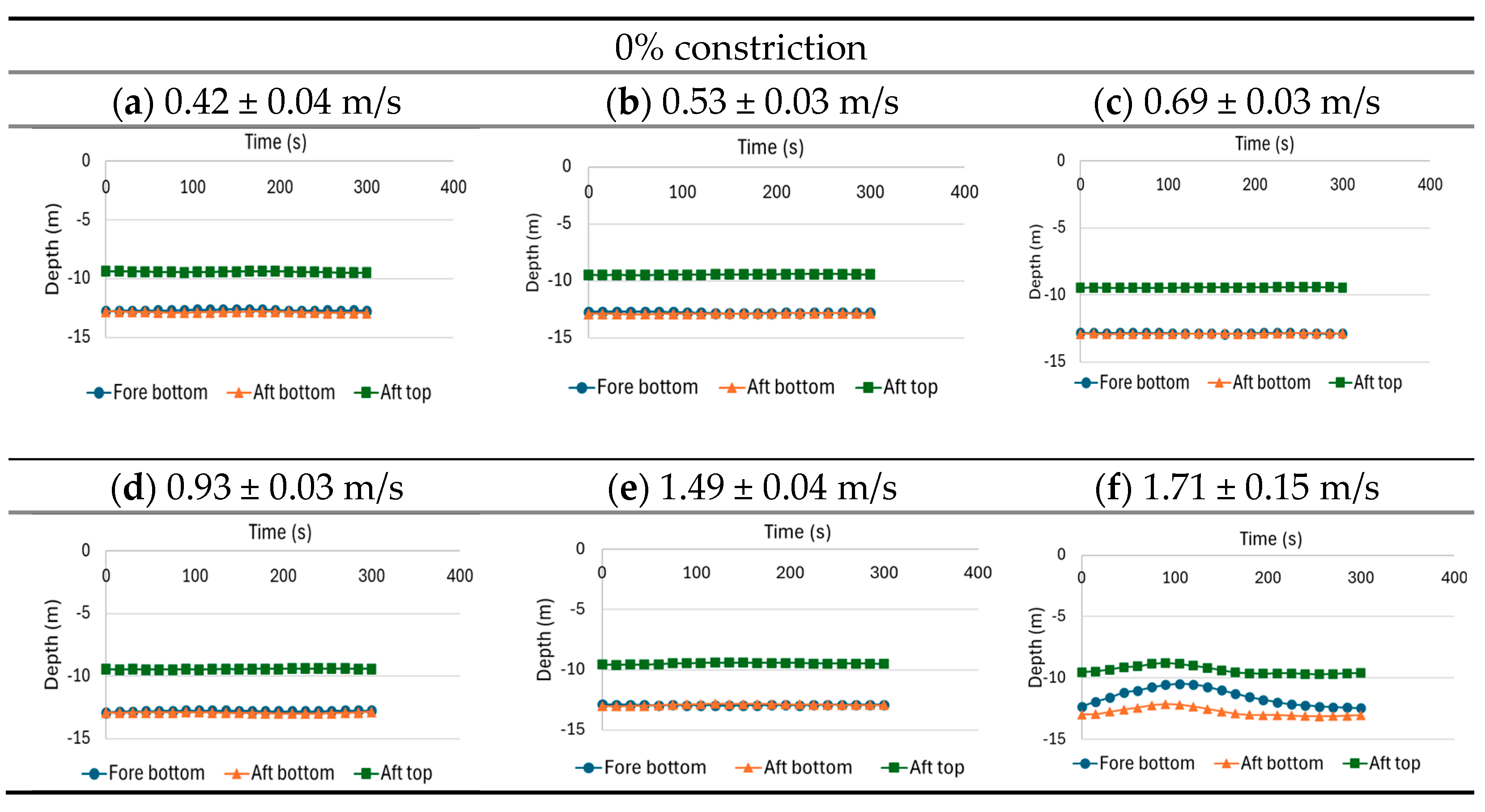
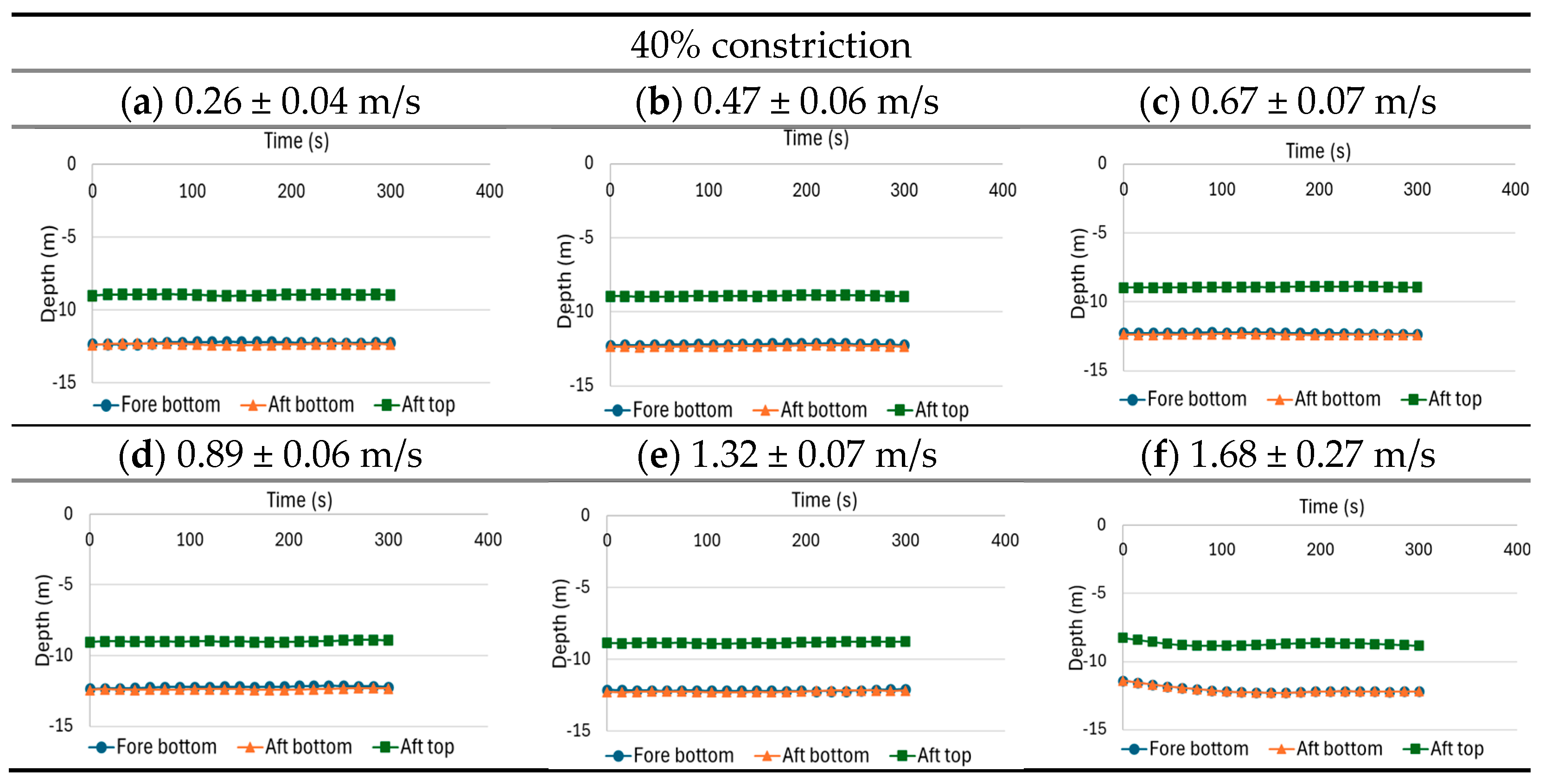
Figure A1, Figure A2 and Figure A3 show enclosure movement at 0, 40 and 60% constrictions during towed trials across six vessel speeds. As can be seen from Figure A1 and Figure A2, no change in enclosure movement was observed for the 0% and 40% constrictions across all vessel speeds. The fore and aft bottom pressure sensors remained at approximately 12 m depth, while the aft top sensor remained at around 9 m. The only exception occurred for the 0% constriction at a vessel speed of 1.71 m/s (Figure A1f). For this case, a decrease of up to 1.8 m in depth of the fore bottom sensor was observed, while the aft bottom and top sensors remained at fairly constant depths (changes of less than 0.6 m). For 60% constriction (Figure A3), the fore bottom sensor remained 1 m lower than the aft bottom sensor for all vessel speeds.
Figure A1. Fore and aft enclosure movement at 0% constriction during towed trials across six vessel speeds (0.42, 0.53, 0.69, 0.93, 1.49 and 1.71 m/s).
Jmse 14 01122 g0a1
Figure A2. Fore and aft enclosure movement at 40% constriction during towed trials across six vessel speeds (0.26, 0.47, 0.67, 0.89, 1.32 and 1.68 m/s).
Jmse 14 01122 g0a2
Figure A3. Fore and aft enclosure movement at 60% constriction during towed trials across six vessel speeds (0.41, 0.69, 0.93, 1.29, 1.62 and 1.71 m/s).
Jmse 14 01122 g0a3

References

  1. FAO. The State of World Fisheries and Aquaculture, Fisheries and Aquaculture Department; Food and Agriculture Organization of the United Nations (FAO), Publishing Policy and Support Branch, Office of Knowledge Exchange, Research and Extension: Rome, Italy, 2020. [Google Scholar] [CrossRef]
  2. Oliver, E.C.; Donat, M.G.; Burrows, M.T.; Moore, P.J.; Smale, D.A.; Alexander, L.V.; Benthuysen, J.A.; Feng, M.; Sen Gupta, A.; Hobday, A.J.; et al. Longer and more frequent marine heatwaves over the past century. Nat. Commun. 2018, 9, 1324. [Google Scholar] [CrossRef] [PubMed]
  3. Holbrook, N.J.; Scannell, H.A.; Sen Gupta, A.; Benthuysen, J.A.; Feng, M.; Oliver, E.C.; Alexander, L.V.; Burrows, M.T.; Donat, M.G.; Hobday, A.J.; et al. A global assessment of marine heatwaves and their drivers. Nat. Commun. 2019, 10, 2624. [Google Scholar] [CrossRef] [PubMed]
  4. Cardwell, H. Marine Heatwaves: How Is Aquaculture Adapting to Climate Change? RNZ. Available online: https://www.rnz.co.nz/news/national/470344/marine-heatwaves-how-is-aquaculture-adapting-to-climate-change (accessed on 5 July 2022).
  5. Chu, Y.I.; Wang, C.M.; Park, J.C.; Lader, P.F. Review of cage and containment tank designs for offshore fish farming. Aquaculture 2020, 519, 734928. [Google Scholar] [CrossRef]
  6. Morro, B.; Davidson, K.; Adams, T.P.; Falconer, L.; Holloway, M.; Dale, A.; Aleynik, D.; Thies, P.R.; Khalid, F.; Hardwick, J.; et al. Offshore aquaculture of finfish: Big expectations at sea. Rev. Aquac. 2022, 14, 791–815. [Google Scholar] [CrossRef]
  7. Atalah, J.; Ibañez, S.; Aixalà, L.; Barber, X.; Sánchez-Jerez, P. Marine heatwaves in the western Mediterranean: Considerations for coastal aquaculture adaptation. Aquaculture 2024, 588, 740917. [Google Scholar] [CrossRef]
  8. Lader, P.F.; Enerhaug, B. Experimental investigation of forces and geometry of a net cage in uniform flow. IEEE J. Ocean. Eng. 2005, 30, 79–84. [Google Scholar] [CrossRef]
  9. Cifuentes, C.; Kim, M.H. Hydrodynamic response of a cage system under waves and currents using a Morison-force model. Ocean. Eng. 2017, 141, 283–294. [Google Scholar] [CrossRef]
  10. Lader, P.; Dempster, T.; Fredheim, A.; Jensen, Ø. Current induced net deformations in full-scale sea-cages for Atlantic salmon (Salmo salar). Aquac. Eng. 2008, 38, 52–65. [Google Scholar] [CrossRef]
  11. DeCew, J.; Fredriksson, D.W.; Lader, P.F.; Chambers, M.; Howell, W.H.; Osienki, M.; Celikkol, B.; Frank, K.; Høy, E. Field measurements of cage deformation using acoustic sensors. Aquac. Eng. 2013, 57, 114–125. [Google Scholar] [CrossRef]
  12. Gansel, L.C.; Oppedal, F.; Birkevold, J.; Tuene, S.A. Drag forces and deformation of aquaculture cages—Full-scale towing tests in the field. Aquac. Eng. 2018, 81, 46–56. [Google Scholar] [CrossRef]
  13. Jin, C.; Kim, H.; Kim, M.H.; Kim, K. Monitoring-system development for a bottom-set gillnet through time-domain dynamic simulations. Appl. Sci. 2019, 9, 1210. [Google Scholar] [CrossRef]
  14. Jin, C.; Choi, J.; Kim, M.H. Response prediction and monitoring feasibility of a stow net system using measured environmental data in the southwest coast of korea. Appl. Sci. 2018, 8, 1517. [Google Scholar] [CrossRef]
  15. Kim, H.; Jin, C.; Kim, M.; Kim, K. Damage detection of bottom-set gillnet using Artificial Neural Network. Ocean. Eng. 2020, 208, 107423. [Google Scholar] [CrossRef]
  16. Jensen, Ø.; Dempster, T.; Thorstad, E.B.; Uglem, I.; Fredheim, A. Escapes of fishes from Norwegian sea-cage aquaculture: Causes, consequences and prevention. Aquac. Environ. Interact. 2010, 1, 71–83. [Google Scholar] [CrossRef]
  17. Black, S.; Vennell, R.; Kregting, L.; Moran, D.; Cook, D.; Janssen, G. Designing for the animal: Reimagining offshore fish structures. In Proceedings of the International Conference on Offshore Mechanics and Arctic Engineering, Singapore, June 2024; ASME: New York, NY, USA, 2024. [Google Scholar] [CrossRef]
  18. De Burgh-Day, C.O.; Spillman, C.M.; Smith, G.; Stevens, C.L. Forecasting extreme marine heat events in key aquaculture regions around New Zealand. J. South. Hemisph. Earth Syst. Sci. 2022, 72, 58–72. [Google Scholar] [CrossRef]
  19. Pillai, A.C.; Ashton, I.G.; Johanning, L.; Cook, D.G.; Vennell, R.; Black, S.E. Navigating the future: Strategic management of a mobile aquaculture system with receding-horizon control. In Proceedings of the International Conference on Offshore Mechanics and Arctic Engineering, Singapore, June 2024; ASME: New York, NY, USA, 2024. [Google Scholar] [CrossRef]
  20. Nguyen, D.; Wakes, S.; Vennell, R.; Paing, S.T.; Rhone, S.; Kregting, L.; Black, S. A computational fluid dynamics (CFD) study on changes in dissolved oxygen levels during a tidal cycle in a non-conventional finfish aquaculture structure. Ocean. Eng. 2025, 323, 120553. [Google Scholar] [CrossRef]
  21. Nguyen, D.; Paing, S.T.; Wakes, S.; Vennell, R.; Rhone, S.; Kregting, L.; Black, S. The influence of length–width ratio of an unconventional mobile finfish structure on the drag force and dissolved oxygen: Laboratory experimentation and Computational Fluid Dynamics (CFD). Aquac. Eng. 2025, 110, 102538. [Google Scholar] [CrossRef]
  22. Zdravkovich, M.M.; Bearman, P.W. Flow Around Circular Cylinders—Volume 1: Fundamentals, 1st ed.; Oxford University Press: Oxford, England, 1997; pp. 19–243. [Google Scholar] [CrossRef]
  23. Nguyen, D.; Paing, S.T.; Wakes, S.; Vennell, R.; Rhone, S.; Kregting, L.; Black, S. Influence of angle of attack on hydrodynamic performance and its implications for designing semi-mobile aquaculture structures: A CFD study. Biosyst. Eng. 2026, 262, 104363. [Google Scholar] [CrossRef]
  24. Nguyen, D.; Wakes, S.; Vennell, R.; Paing, S.T.; Rhone, S.; Kregting, L.; Black, S.; Janssen, G. The influence of slot design and biofouling on the hydrodynamics and Dissolved Oxygen exchange through a finfish open ocean aquaculture structure. In Proceedings of the International Conference on Offshore Mechanics and Arctic Engineering, Singapore, June 2024; ASME: New York, NY, USA, 2024. [Google Scholar] [CrossRef]
  25. Rodgers, E.M.; Gomez Isaza, D.F. The growth-promoting effects of exercise in finfish: A systematic review and meta-analysis. Rev. Aquac. 2024, 16, 942–953. [Google Scholar] [CrossRef]
  26. Hvas, M.; Folkedal, O.; Oppedal, F. What is the limit of sustained swimming in Atlantic salmon post smolts? Aquac. Environ. Interact. 2021, 13, 189–198. [Google Scholar] [CrossRef]
  27. Palstra, A.P.; Planas, J.V. Swimming Physiology of Fish: Towards Using Exercise to Farm a Fit Fish in Sustainable Aquaculture, 1st ed.; Springer: Berlin/Heidelberg, Germany, 2013; pp. 172–202. [Google Scholar] [CrossRef]
  28. Dong, S.; Park, S.G.; Kitazawa, D.; Zhou, J.; Yoshida, T.; Li, Q. Model tests and full-scale sea trials for drag force and deformation of a marine aquaculture net cage. Ocean. Eng. 2021, 240, 109941. [Google Scholar] [CrossRef]
  29. Paing, S.T.; Kregting, L.; Black, S. Effect of non-uniform biofouling distribution on the drag coefficient of aquaculture nets. Aquac. Eng. 2025, 112, 102653. [Google Scholar] [CrossRef]
Figure 1. Non-conventional flexible square cylinder fish enclosure: (a) CAD drawing; (b) actual enclosure (aft view); (c) eight bridles at the front of the enclosure merged to a single point connection; and (d) aft-end constriction which can be adjusted to achieve 0–60% opening by altering the perimeter.
Jmse 14 01122 g001
Figure 2. The sensor locations for: (a) Towed trial operation; (b) Towed trial operation (Front view: Potential Aquadopp signal interference from lead weights) and (c) Moored trial operation.
Jmse 14 01122 g002
Figure 3. Time series of manually recorded vessel speed versus the Aquadopp-derived tow speed (1–16th bin average) during the towed trial (a: Paused for 40% constriction change; b: Paused for 60% constriction change; c: Towed against the tide).
Jmse 14 01122 g003
Figure 4. Time-averaged depth of enclosure vs. vessel speed during towed trials for the range of vessel speeds at 0% aft-end constriction. Values are the mean ± standard deviation.
Jmse 14 01122 g004
Figure 5. Time-averaged depth of enclosure vs. vessel speed during towed trials for the range of vessel speeds at 40% aft-end constriction. Values are the mean ± standard deviation.
Jmse 14 01122 g005
Figure 6. Time-averaged depth of enclosure vs. vessel speed during towed trials for the range of vessel speeds at 60% aft-end constriction. Values are the mean ± standard deviation.
Jmse 14 01122 g006
Figure 9. Probability distributions of (a) peak wave period and significant wave height; and (b) wave direction and significant wave height.
Jmse 14 01122 g009
Figure 10. Polar histogram plot indicating dominant current direction and magnitude based on percentage distributions.
Jmse 14 01122 g010
Figure 12. Depth-averaged maximum current speeds internal and external of the enclosure for 0%, 40% and 60% aft-end constriction.
Jmse 14 01122 g012
Figure 13. Biofouling growth on the front mesh opening (a) mesh condition on 17 February, and (b) mesh condition on 16 March, illustrating conditions during the moored trial deployment.
Jmse 14 01122 g013
Figure 14. Measured depth data from RBR pressure sensors 1A, 2A and 1B located at the fore top, aft top and fore bottom positions of the enclosure. The dotted lines represent the change in aft-end constriction.
Jmse 14 01122 g014
Table 1. Reduction in aft-end perimeter to achieve 0%, 40% and 60% constriction.
ConstrictionFront-End PerimeterAft-End Perimeter
0%14 m14 m
40%14 m8.4 m
60%14 m5.6 m
Table 2. Data processing step to obtain final Aquadopp vessel speeds.
Target Vessel Speeds0.26 m/s0.51 m/s0.77 m/s1.03 m/s1.54 m/s2.06 m/s
Aquadopp speeds (Average of three replicates)
0% constriction0.39 m/s 0.55 m/s0.73 m/s1.08 m/s1.52 m/s1.69 m/s
40% constriction0.33 m/s0.49 m/s0.80 m/s0.99 m/s1.52 m/s1.68 m/s
60% constriction 0.36 m/s0.63 m/s0.74 m/s1.03 m/s1.57 m/s1.71 m/s
Aquadopp speeds (Average of three constrictions)
Final0.36 m/s0.57 m/s0.77 m/s1.04 m/s1.54 m/s1.69 m/s
Disclaimer/Publisher’s Note: The statements, opinions and data contained in all publications are solely those of the individual author(s) and contributor(s) and not of MDPI and/or the editor(s). MDPI and/or the editor(s) disclaim responsibility for any injury to people or property resulting from any ideas, methods, instructions or products referred to in the content.