Article

Spatial Distribution Characteristics of Dissolved Oxygen Saturation and Chlorophyll a Concentration in the Central Arabian Sea Based on the 2024 Cruise Observations


1
Key Laboratory of Fisheries Remote Sensing, Ministry of Agriculture and Rural Affairs, Shanghai 200090, China
2
East China Sea Fisheries Research Institute, Chinese Academy of Fishery Sciences, Shanghai 200090, China
*
Authors to whom correspondence should be addressed.
J. Mar. Sci. Eng. 2026, 14(11), 1046; https://doi.org/10.3390/jmse14111046
Submission received: 30 March 2026 / Revised: 24 May 2026 / Accepted: 26 May 2026 / Published: 2 June 2026
(This article belongs to the Section Marine Ecology)

Abstract

The Arabian Sea is a key region for global marine biogeochemical research, yet the distribution characteristics and influencing factors of dissolved oxygen and chlorophyll a concentration in its central oxygen minimum zone still require further in-depth investigation. Based on survey data and reanalysis data from 2024, this paper analyzes the distribution characteristics and underlying causes of chlorophyll a concentration and dissolved oxygen using empirical orthogonal function (EOF) decomposition of chlorophyll a concentration and dissolved oxygen saturation along the depth direction, combined with the distribution of the barrier layer, Ekman pumping induced by wind fields, and the diagnostic vertical velocity distribution calculated from ADCP-observed flow velocities. Taking approximately 10° N as the boundary, the chlorophyll a concentration in the layer shallower than 35 m exhibits a distribution pattern of high in the northwest and low in the southeast, while the water layer between 45 m and 95 m shows a pattern of low in the northwest and high in the southeast. A thick barrier layer exists in the southeastern region, whereas the barrier layer in the northwestern region is thinner or absent, resulting in lower surface chlorophyll a concentration in the southeast. ADCP observations indicate that horizontal flow velocities are higher in the south, bringing oxygen-rich water from the south, which leads to higher dissolved oxygen saturation in the southern region compared to the northern region in water shallower than 45 m. At the 65 m water layer, the higher chlorophyll a concentration in the south may result in relatively low dissolved oxygen. The hypoxic zone (dissolved oxygen saturation less than 30%) begins to appear at depths below 105 m, with its southern boundary located between 9° N and 11° N, and this boundary gradually shifts northward as depth increases. The diagnostic vertical velocity between 9° N and 11° N is higher than that in other regions, which may hinder the northward movement of oxygen-rich water from the south. In the southern region, influenced by wind stress, the vertical water movement induced by Ekman pumping is relatively significant, which may lead to a slight increase in dissolved oxygen saturation in water layers with a depth below 125 m.

1. Introduction

The Arabian Sea, located in the northwestern Indian Ocean, has a closed northern boundary and an open southern boundary, with its main body situated within tropical and subtropical zones. The region experiences northeast monsoons from December to February and southwest monsoons from June to August. These seasonally reversing monsoons alter the physical, biological, and chemical characteristics of the upper ocean. The direct influence of Ekman transport induced by wind stress and turbulent mixing caused by wind fields is typically limited to several tens of meters. However, Ekman pumping driven by wind fields can affect depths of up to several hundred meters [1,2]. Influenced by monsoons, the upper ocean circulation exhibits significant seasonal variations. In winter, the basin-scale flow field shows a cyclonic pattern, with the northward-flowing West India Coastal Current in the east and the southward-flowing East Arabian Current in the west. In summer, these currents reverse direction [3,4,5,6]. Sea surface height between 6° N and 10° N undergoes strong seasonal variations, which are associated with the westward-propagating Rossby waves originating from the southwest coast of the Indian Peninsula [7,8,9,10]. The anomalous anticyclonic/cyclonic wind curls in the eastern Arabian Sea often excite westward-propagating downwelling/upwelling Rossby waves, which can suppress or enhance upwelling. This, in turn, reduces or increases the influx of nutrient-rich waters into the mixed layer, thereby decreasing or increasing chlorophyll concentrations [11].
The hypoxic water layer is typically located within the thermocline layer (100–1000 m) and mainly occurs in the eastern Pacific, the northern Indian Ocean, and the western Atlantic Ocean. The northern Indian Ocean is one of the three major permanent hypoxic regions in the world’s oceans [12]. Hypoxia refers to oxygen levels in water below what is suitable for organisms. In fisheries and biology, a dissolved oxygen concentration of 62.5 μmol/L (dissolved oxygen saturation of approximately 30% saturation) is generally considered the upper limit for hypoxic water bodies [13]. The combination of restricted northward water transport in the northwestern Indian Ocean and strong seasonal surface algal blooms together forms and maintains the Arabian Sea oxygen minimum zone (OMZ, O2 < 60 μmol/L), one of the most intense open-ocean hypoxic zones. It is roughly located north of 10° N, between 55–70° E, below the 150 m water layer [14]. This hypoxic zone significantly impacts fishery resources and ecosystems [15]. Eddy distributions are more numerous and mixing is more sufficient in the western coastal Arabian Sea, whereas they are fewer in the central-western region, indicating less vertical motion induced by eddies within the hypoxic zone [16,17]. Upwelling and downwelling caused by Rossby wave activity can influence the southern boundary of the OMZ [10].
There are coastal upwelling systems off Oman and Somalia in the northwestern Indian Ocean, where Ekman pumping and Ekman transport driven by the southwest monsoon significantly enhance chlorophyll concentrations in the upwelling regions [18,19]. In the central Arabian Sea, the Indian Ocean Dipole (IOD) and El Niño-Southern Oscillation (ENSO) play opposing roles in driving chlorophyll a concentration anomalies in the 0–50 m and 50–100 m layers [20]. In the southeastern Arabian Sea, surface chlorophyll maxima are associated with upwelling and slightly lower sea surface temperatures [21]. A persistent subsurface chlorophyll maximum layer exists between 40 and 100 m depth in the southeastern Arabian Sea, located near the top of the thermocline and the base of the euphotic zone [22]. In the eastern Indian Ocean, chlorophyll a concentrations propagate westward with Rossby waves during winter [23].
The vertical structures of dissolved oxygen saturation and chlorophyll a concentration differ markedly in the central Arabian Sea. However, the scarcity of synoptic observations in this region hinders fine-scale analysis relying on climatological or sparse data. This study analyzes the actual distribution characteristics of chlorophyll a concentration and dissolved oxygen saturation from December to January using synoptic survey data and reanalysis data from 2024. Preliminary analysis of the underlying causes is conducted by integrating concurrent wind field and current data.

2. Data and Methods

2.1. Data Resources

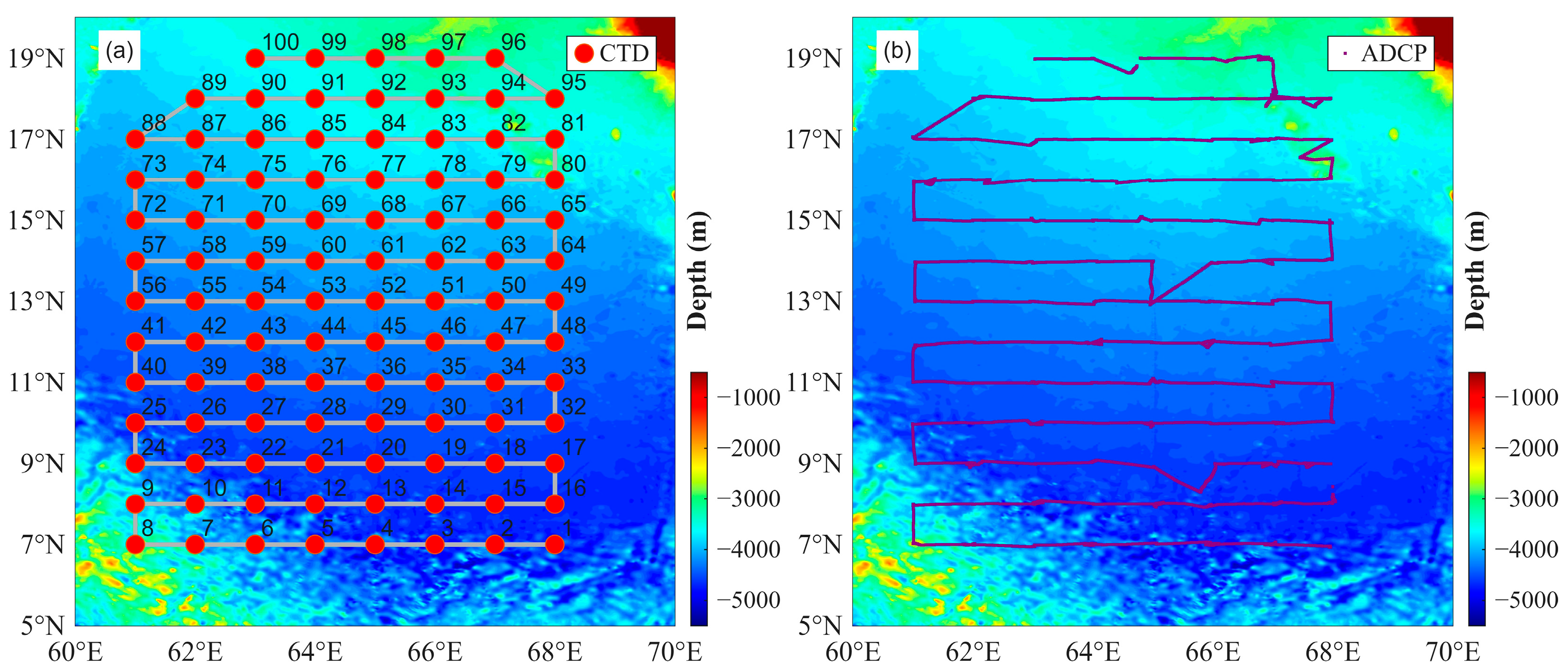
The in situ environmental data were obtained from real-time survey data collected during a resource survey in the northwestern Indian Ocean from 5 December 2024 to 31 January 2025. The survey methods included CTD fixed-point observations, ADCP fixed-point and underway observations, and an atmospheric observation system. The sampling stations were mainly concentrated in the northwestern Indian Ocean within the range of 60° E–70° E and 5° N–20° N. A total of 100 CTD observation stations were occupied, measuring parameters including temperature, salinity, chlorophyll a concentration, dissolved oxygen saturation, turbidity, and depth (see Figure 1a). The valid range for temperature is 0–32 °C, salinity is 30–40, and chlorophyll a concentration is 0–4.0 mg/m3 (μg/L). A total of 8050 ADCP data points were collected (see Figure 1b). The vertical first layer is at approximately 22 m depth, divided into 60 layers with 8 m intervals, down to a maximum depth of 494 m. The data include eastward/northward velocity and current speed/direction. The atmospheric observation system provided wind speed and wind direction data for each station.
The background field data utilizes seawater salinity and temperature data from the global ocean 3D gridded reanalysis dataset provided by CMEMS, which assimilates various in situ and satellite observations. The data has a daily temporal resolution and a spatial resolution of 1/12°. The background field data for chlorophyll a concentration comes from a numerical model analysis dataset provided by CMEMS that assimilates satellite observation data, with a daily temporal resolution and a spatial resolution of 1/4°. The CMEMS data can be downloaded from: https://data.marine.copernicus.eu/products (accessed on 2 February 2026). Due to the lack of three-dimensional data, the arithmetic mean of the 100 observed values within each water layer was used as a substitute for the background field of dissolved oxygen saturation. The data used in the analysis presented in this paper are higher-precision three-dimensional data fields obtained by merging the measured values into the background field through optimal interpolation. In the covariance matrix calculation formula for optimal interpolation, the influence radius and empirical constant were set to 4 times and 2 times the grid step size, respectively, while the observation error was set according to different variables. After comparing the pre-interpolation values, post-interpolation values, and measured values at the 100 survey points, it was found that the interpolated three-dimensional data field was closer to the actual measured true values.

2.2. Empirical Orthogonal Function (EOF) Analysis

Data from nine depth layers [5, 25, 50, 65, 75, 100, 150, 200, 300] m were selected for analysis. These nine layers correspond to the predefined depths of the CTD observations. EOF decomposition was performed on this data in the vertical direction to analyze the variation characteristics of the variable with depth. Empirical Orthogonal Function (EOF) analysis was conducted using Singular Value Decomposition (SVD) [24]. The SVD decomposition formula is as follows:
X ( m × n ) = U ( m × n ) Σ ( n × n ) V ( n × m ) T
where X has been de-centered, m is the number of spatial grid points, and n is the number of vertical layers. The matrix U represents the eigenvectors of the EOF, and the column vectors of U represent the spatial modes of the EOF. The eigenvalues Λ of the EOF are equal to the square of the singular values Σ divided by the degrees of freedom n − 1, i.e., Λ = 1 n 1 Σ 2 . Both the singular values and the eigenvalues are sorted in descending order. The principal components (PC) of the EOF, given by PC = , represent the coefficients obtained by projecting the original data onto each spatial mode of the EOF. The variance contribution rate of each mode obtained by EOF decomposition is λ k i = 1 n λ i , k = 1,2 , , p ( p n ) , The cumulative variance contribution rate is i = 1 p λ i i = 1 n λ i ,   k = 1,2 , , p ( p n ) . Here, k is the mode number, p is the number of eigenvalues, n is the number of vertical layers, and λ k represents the k-th eigenvalue. The eigenvalue error estimation [25] was used to determine whether the modes obtained from EOF decomposition are statistically separable. The sampling error of the eigenvalue is λ k = λ k 2 N k * . Here, λ k is the k-th eigenvalue (sorted in descending order), λ k is the estimated error of the k-th eigenvalue, and N k * is the effective sample size for the k-th mode, which is set to the number of depth layers in this paper. For the k-th and (k + 1)-th modes, if λ k λ k > λ k + 1 + λ k + 1 , it indicates that these two modes are separable.

2.3. Calculation Method for Barrier Layer Thickness

Calculating the mixed layer depth (or pycnocline) and thermocline requires the vertical resolution to ideally be less than 5 m. Therefore, temperature and density profiles were first interpolated vertically onto a 3 m interval grid before subsequent calculations. The depths of the thermocline and pycnocline were determined using the threshold method [26,27], with T = 0.2 °C and ρ = 0.03 kg/m3. The temperature difference between layers was calculated, and the depth corresponding to the temperature below 10 m depth that first meets the temperature threshold was recorded as MLDT. Seawater density, which is a function of temperature, salinity, and pressure, was calculated using the seawater equation of state (TEOS-10). The density difference between layers was calculated, and the depth below 10 m that first meets the density threshold was recorded as MLDD. The barrier layer thickness was then calculated using the formula [28]: BLT = MLDT-MLDD.

2.4. Calculation of Ekman Pumping Vertical Velocity

The flow directly driven by wind stress is confined to a relatively thin surface layer (the Ekman layer). At the base of the Ekman layer, the convergence or divergence of Ekman transport generates a vertical velocity. This vertical velocity acts as a “boundary condition”, transmitting the influence of the wind field from the surface into the ocean interior, a process referred to as Ekman pumping. The starting point of the Ekman pumping effect induced by the wind field is at the base of the Ekman layer. The Ekman pumping velocity calculated here refers to the velocity at the base of the Ekman layer. The formula for calculating the vertical velocity induced by Ekman pumping using wind field data in a spherical coordinate system is [1]: w e k = 1 R c o s φ τ y θ c o s φ τ x φ 1 ρ f , where ρ is the seawater density, f is the Coriolis parameter ( f = 2 Ω s i n φ , with Ω being Earth’s rotational angular velocity (7.292 × 10⁻⁵ rad/s)), R is Earth’s radius, φ and θ are the latitude and longitude, respectively, and τ x and τ y are the eastward and northward components of the wind stress current velocity, respectively.

2.5. Calculation of Diagnostic Vertical Velocity

Calculating vertical velocity using the continuity equation is a fundamental and important diagnostic analysis method in physical oceanography. Considering the depth-integrated effect of diagnostic vertical velocity, the ADCP observations were interpolated onto a three-dimensional grid with a spatial resolution of 0.1° × 0.1° and a vertical spacing of 5 m before calculation. The original depth range of 22–494 m was adjusted to 0–500 m after interpolation. The formula for calculating diagnostic vertical velocity in spherical coordinates is as follows [1]: w z = w e k 0 z 1 R c o s φ ( c o s φ v φ + u θ ) d z , where w e k is the vertical velocity of Ekman pumping induced by the wind field, z denotes the depth, and the other variables have the same meanings as described above.

3. Results

3.1. Temperature and Salinity Distribution Characteristics

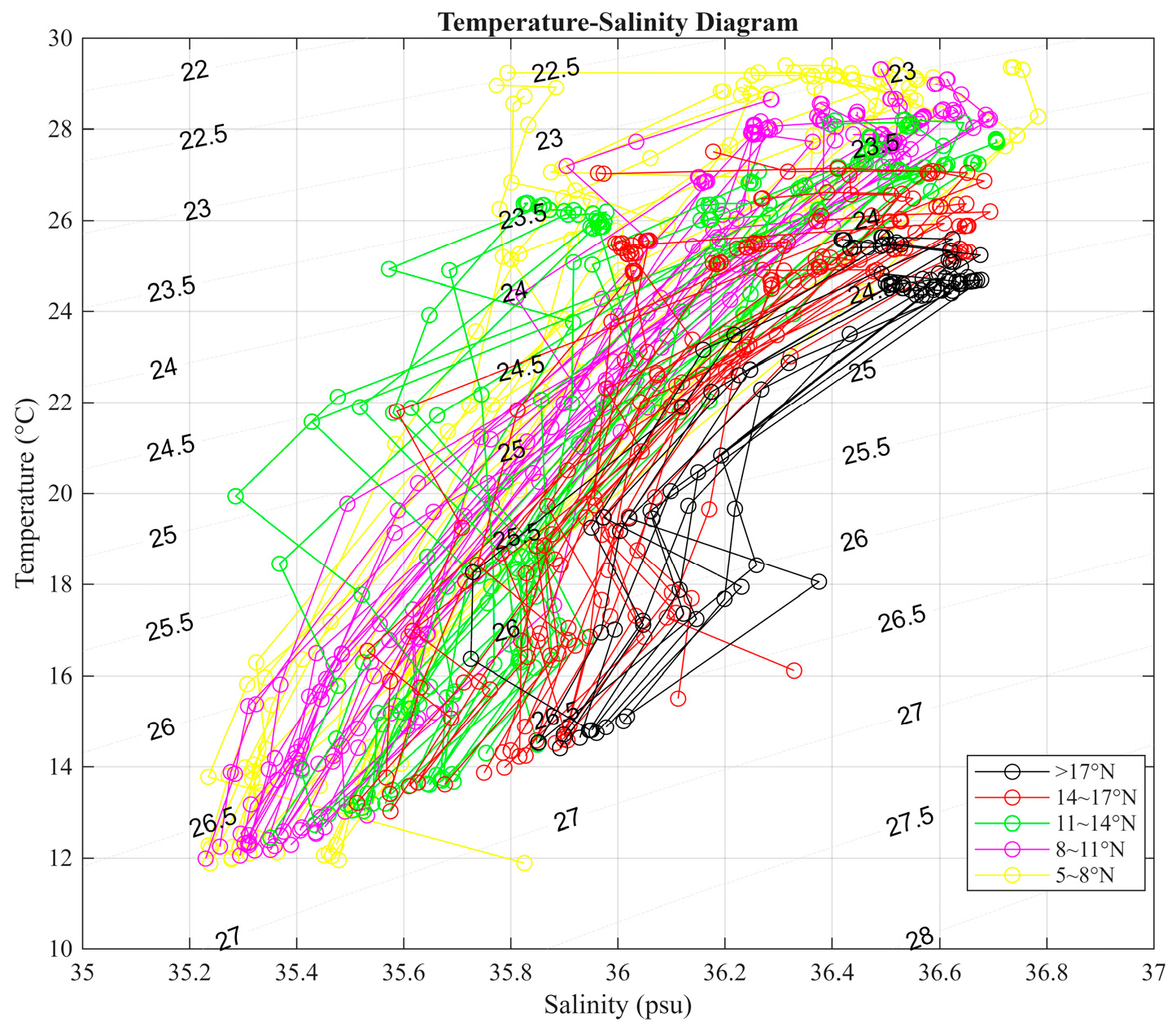
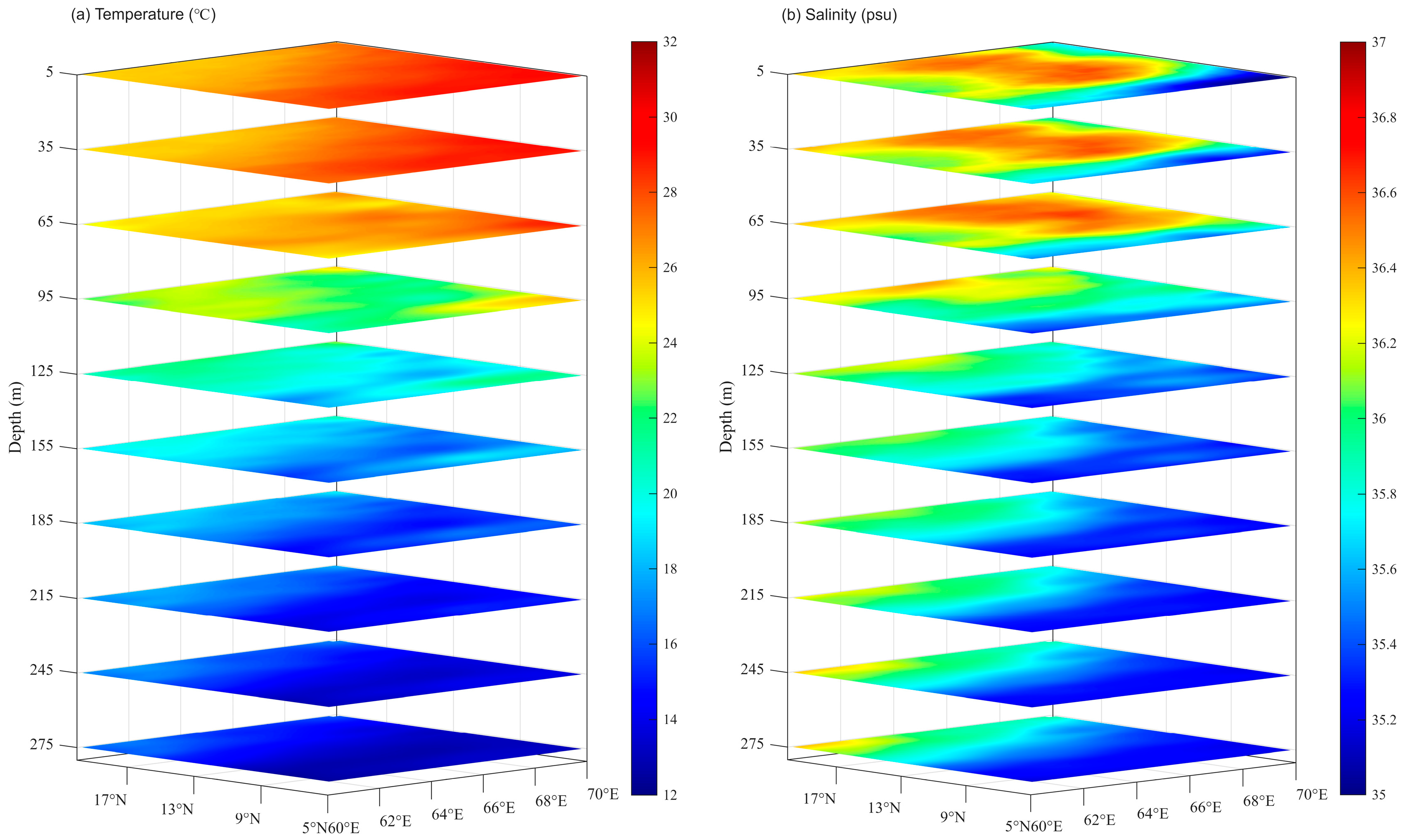
In the layer shallower than 65 m, the temperature in the southeast is higher than that in the northwest. In the water layer between 95 m and 155 m, the temperature in the southeast gradually decreases and becomes lower than that in the northwest (Figure 2a). In the layer shallower than 65 m, salinity is higher in the central and northern parts, and lower south of approximately 9° N. Below 95 m, the high-salinity area gradually shrinks northwestward (Figure 2b). The CTD measured data are from nine depth layers: 5, 25, 50, 65, 75, 100, 150, 200, and 300 m. Figure 3 is a T-S diagram based on the CTD measured data, from which the characteristics of water masses from different latitudes can be analyzed. At the same depths within the 150, 200, and 300 m layers, the water in the south is characterized by low temperature and low salinity, while the water in the north is characterized by high temperature and high salinity. The water mass characteristics in the 5–100 m layer gradually change: in the 5–8° N region, the water is characterized by relatively high temperature and low salinity, while in the region north of 17° N, it is characterized by relatively low temperature and high salinity. From south to north, the water gradually transitions from relatively high temperature and low salinity to relatively low temperature and high salinity. Figure 3 shows that as the water depth becomes shallower, the water in the south warms up faster than in the north, while its salinity increases more slowly than in the north.

3.2. Distribution Characteristics of the Pycnocline Top Depth, Thermocline Top Depth, and Barrier Layer Thickness

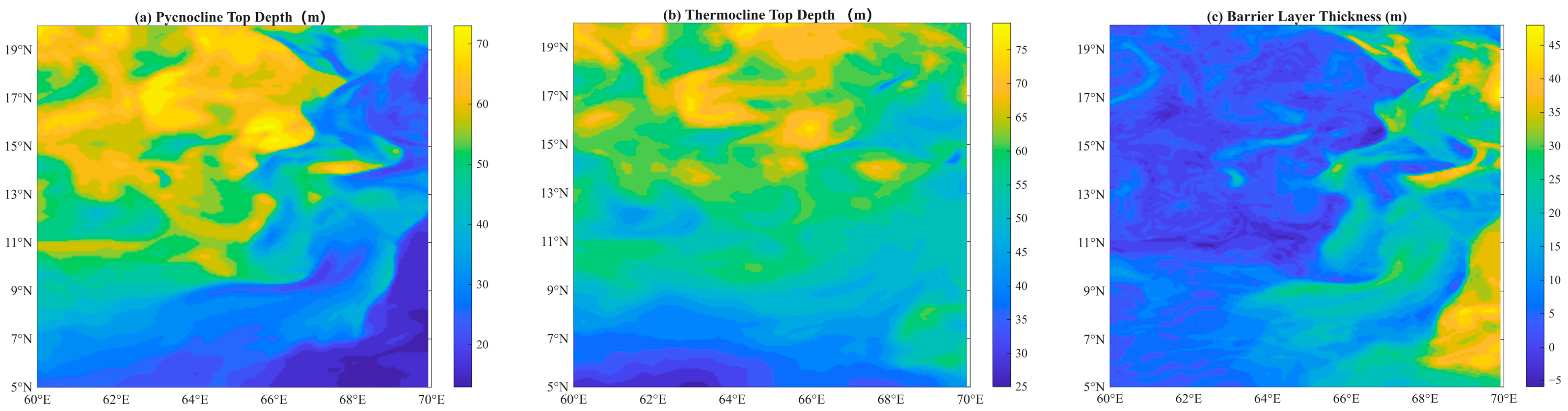
Based on the three-dimensional temperature and salinity data that assimilated the CTD observations, the mixed layer depth (pycnocline top depth), thermocline top depth, and barrier layer thickness were obtained, as shown in Figure 4. The mixed layer thickness is greater in the northwest, approximately 60–70 m, and shallower in the south, approximately 10–40 m. The thermocline top depth is deeper in the northwest, reaching approximately 60–70 m, and shallower in the south, at approximately 40 m. The barrier layer thickness is thinner or even absent in the northwest, mostly around 3 m, while it is thicker in the east and southeast, approximately 10–30 m.

3.3. Distribution Characteristics of Chlorophyll a Concentration

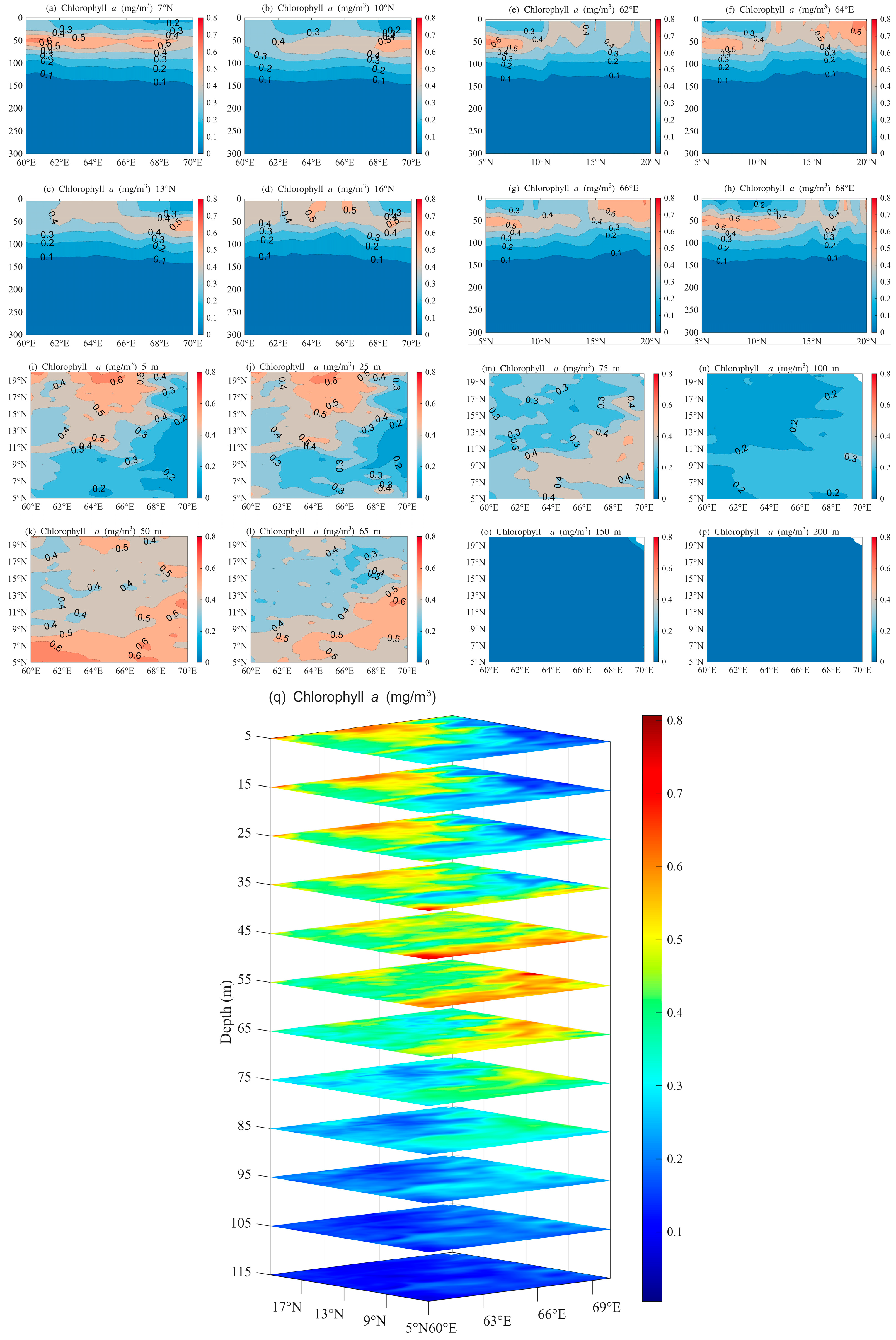
The three-dimensional chlorophyll a concentration data were interpolated at 10 m intervals in the vertical direction to more clearly illustrate its variation with depth in the three-dimensional diagram, as shown in Figure 5q. The two-dimensional diagrams show the detailed distribution of the variable over large areas or cross-sections, as shown in Figure 5a–p. In the layer shallower than 35 m, chlorophyll a concentration is distributed with higher values in the northwest and lower values in the southeast. High chlorophyll a concentrations (>0.50 mg/m3) are mainly located in the western part of the region north of 13° N, while low values (<0.30 mg/m3) are primarily distributed in the southeastern part. In the water layer below 45 m to 115 m, the distribution shows higher values in the south and lower values in the north, with high chlorophyll a concentrations (>0.50 mg/m3) mainly located in the eastern part of the region south of 13° N. Below 115 m, chlorophyll a concentration is generally low overall, with most values below 0.20 mg/m3.
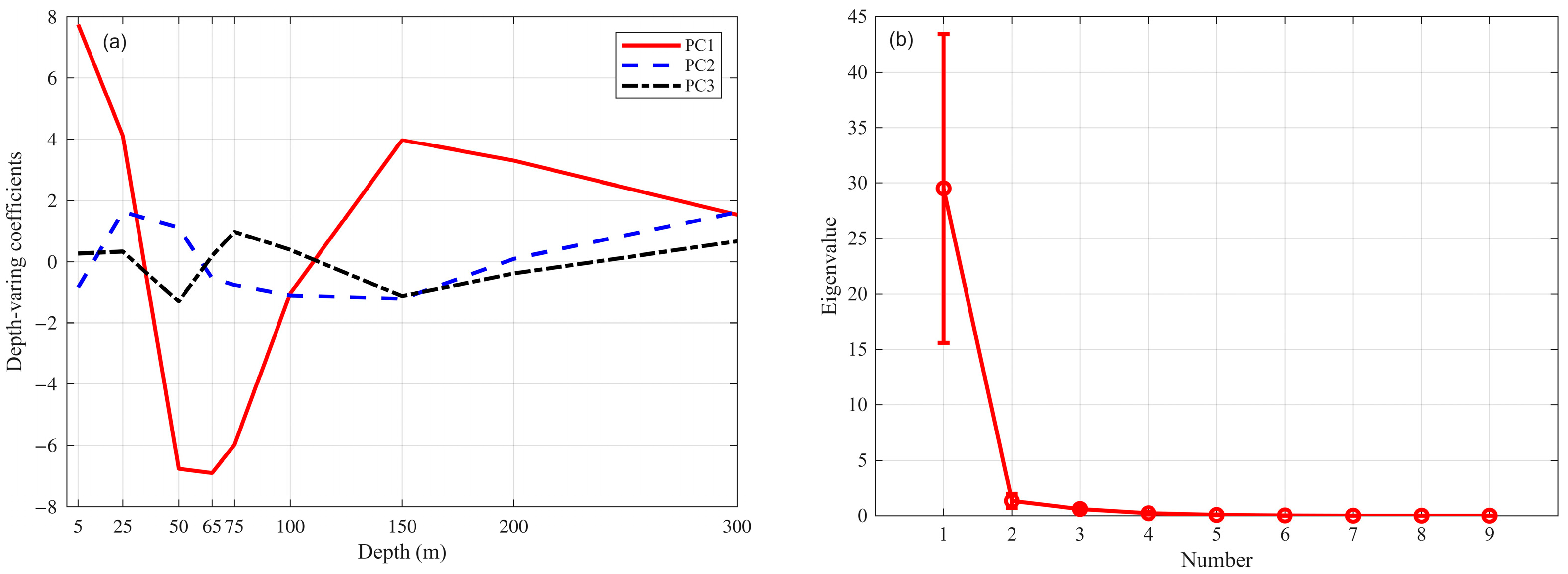
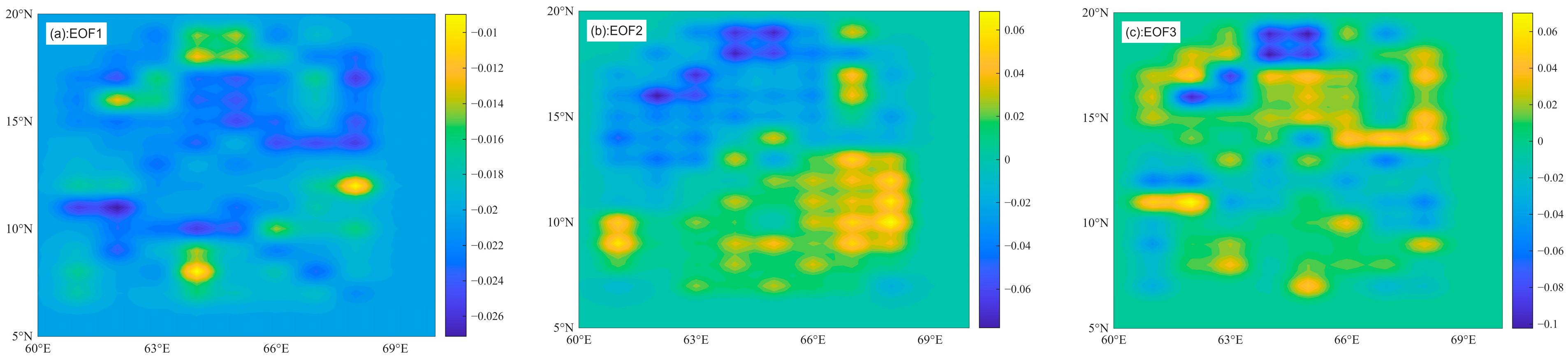
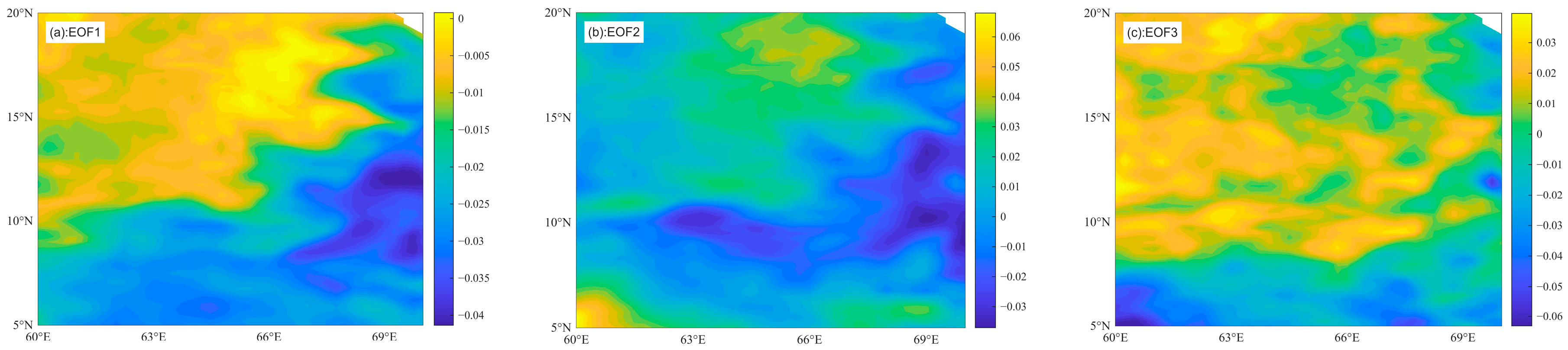
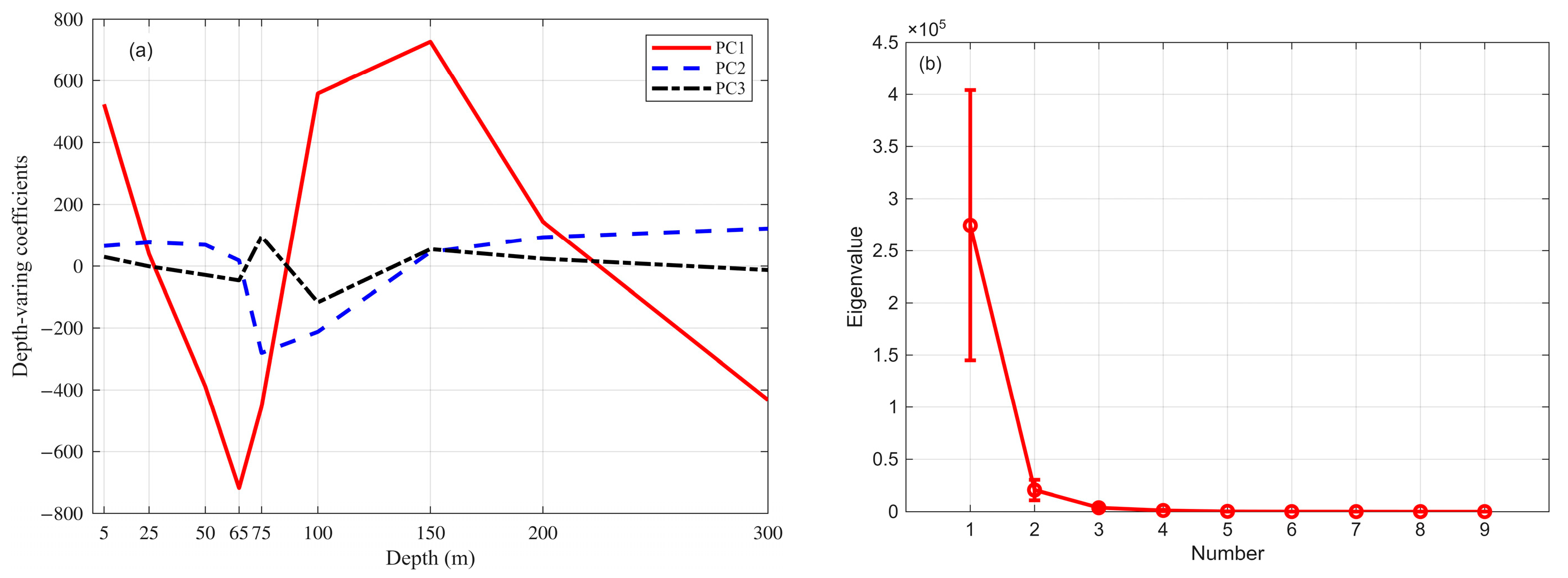
The first three modes obtained from the EOF decomposition of the three-dimensional chlorophyll-a concentration data are presented in Figure 6. They account for 92.78%, 4.23%, and 1.90% of the total variance, respectively, and all have passed the significance test (see Figure 7b).The first mode from the EOF decomposition of chlorophyll a concentration exhibits a distribution pattern with higher values in the northwest and lower values in the southeast (see Figure 6a), which is quite similar to the distribution characteristics of chlorophyll a concentration in the layer shallower than 35 m. The second mode shows a distribution pattern similar to the first mode (see Figure 6b). The third mode mainly shows a pattern with lower values in the south and higher values in the north, which is opposite to the distribution characteristics of chlorophyll a concentration in the 45–115 m layer (see Figure 6c). At the 5 m and 25 m layers, the principal component of the first mode, PC1, is positive, and its value at the 25 m layer is lower than that at the 5 m layer (see Figure 7a). The reconstructed field obtained by multiplying the first mode with its corresponding principal component reflects the distribution pattern of higher chlorophyll a concentration in the northwest and lower in the southeast at these two layers, with this feature weakening as depth increases. The principal component values at the 50 m, 65 m, 75 m, and 100 m layers are negative, with the absolute value being the smallest at the 100 m layer. This indicates that the distribution of chlorophyll a concentration at the 50 m, 65 m, and 75 m layers exhibits a pattern opposite to that of the first EOF mode, mainly characterized by higher values in the southeast and lower values in the northwest, while this distribution feature is not particularly evident at the 100 m layer.

3.4. Distribution Characteristics of Dissolved Oxygen Saturation

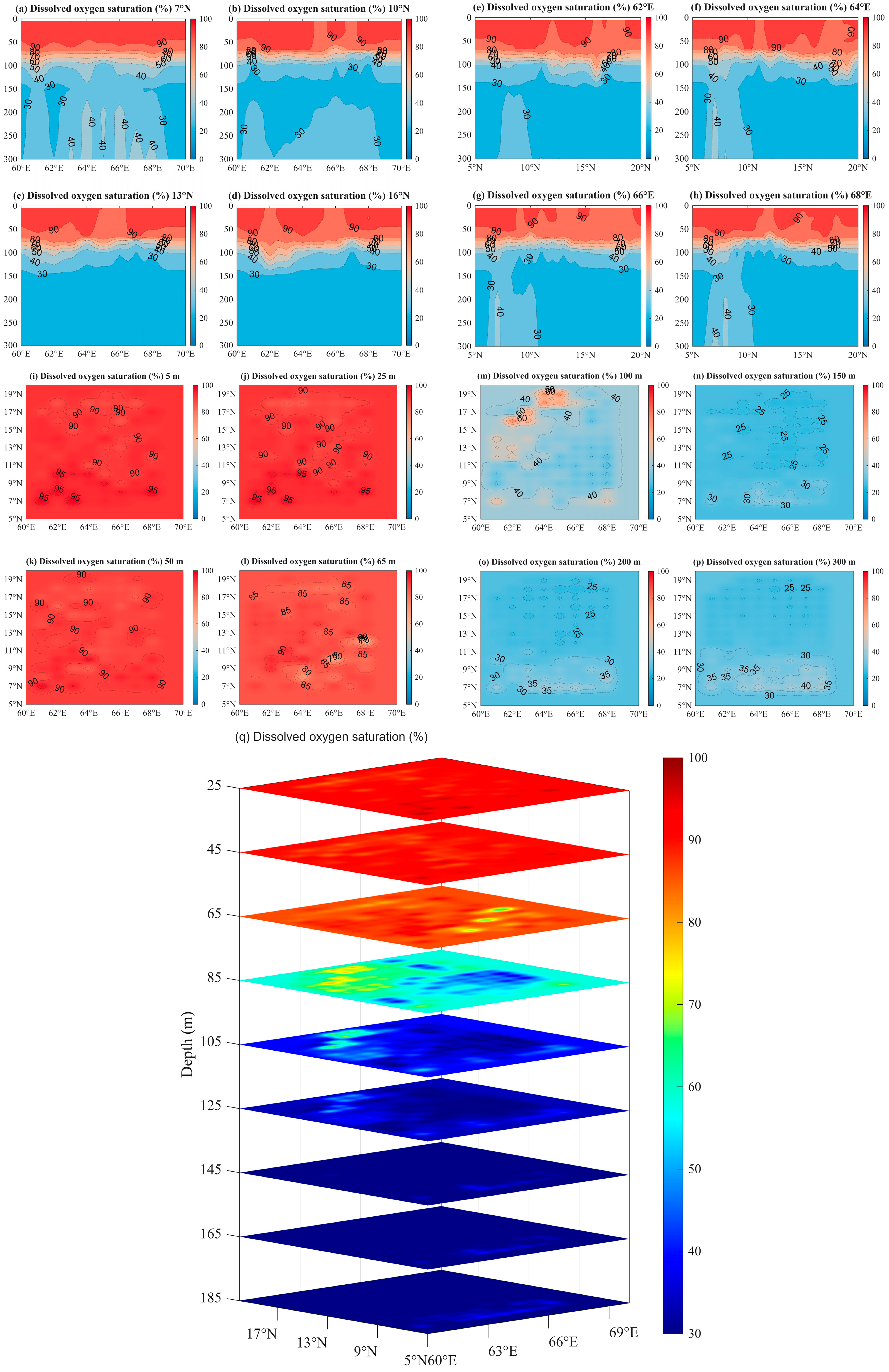
In the layer shallower than 45 m, dissolved oxygen saturation is slightly higher in the south than in the north. At the 65 m layer, values are relatively lower in parts of the north and southeast. Between 85 and 125 m, dissolved oxygen is higher in the northwest and south, while a distinct area of relatively low dissolved oxygen saturation exists in the central-southeastern region; as depth increases, this low-oxygen area expands (Figure 8q). At 100 m depth, dissolved oxygen saturation in the relatively low region is about 30–40%, and the southern boundary of the 40% saturation isopleth lies between 5° N and 9° N (Figure 8m). At the 150 m layer, dissolved oxygen saturation is below 30% north of 9° N, while only a small area south of 9° N exceeds 30% (Figure 8n). Between 150 and 300 m, the 30% saturation isopleth in the south gradually shifts northward from approximately 9° N to near 11° N. This indicates that with increasing depth, the area with dissolved oxygen saturation greater than 30% in the south expands slightly, while the hypoxic zone (saturation < 30%) tends to deepen with increasing latitude.
EOF decomposition was applied to the three-dimensional dissolved oxygen saturation data. The spatial distributions of the first three modes are shown in Figure 9. These three modes explain 91.32%, 6.87%, and 1.27% of the variance, respectively, and all have passed the significance test (see Figure 10b). EOF1 exhibits a pattern of low values in the center and higher values in the northwest and south, which is quite similar to the distribution characteristics of dissolved oxygen saturation at the 100 m layer (see Figure 9a). EOF2 shows a pattern of low values in the northwest and high values in the southeast (see Figure 9b). The principal component of the first mode, PC1, has relatively large positive values at the 5 m, 100 m, and 150 m layers. The reconstructed field obtained by multiplying the first mode by its corresponding principal component reflects the distribution characteristics of dissolved oxygen saturation at these three layers, characterized by relatively low values in the center and relatively high values in the northwest and southeast.
PC1 has relatively large negative values at the 50 m, 65 m, and 75 m layers, indicating that dissolved oxygen saturation in the central region is relatively high at these layers, while it is lower in the south and north, which is consistent with the actual observations. At the 50 m, 65 m, and 75 m layers, chlorophyll a concentrations are higher in the north and south, leading to increased oxygen consumption and consequently lower dissolved oxygen saturation, whereas chlorophyll a concentration in the central region is relatively low, resulting in higher dissolved oxygen saturation (see Figure 10a). PC2 has a slightly positive value at the 300 m layer, corresponding to the distribution characteristic of relatively higher dissolved oxygen saturation in the south.

3.5. Ekman Pumping

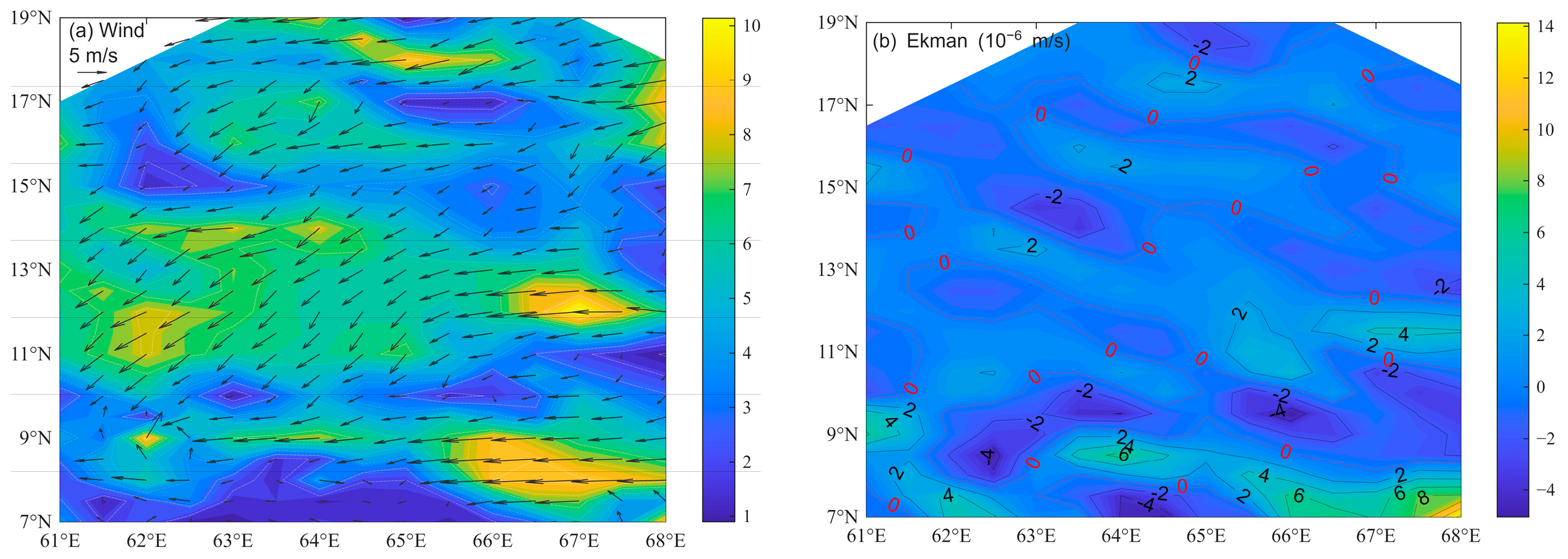
During the period from 5 December 2024 to 31 January 2025, the Indian Ocean north of 9° N was dominated by northeasterly winds, while the region south of 9° N was primarily characterized by easterly winds, as shown in Figure 11a. The Ekman pumping induced by wind stress exhibits distinctly different characteristics between the areas south and north of 11° N, as illustrated in Figure 11b. South of 11° N, the contours of Ekman pumping velocity are relatively dense, indicating significant spatial variations in vertical velocity, which are typically found at ocean current boundaries and eddy peripheries. This pronounced variation in vertical velocity suggests the presence of notable upwelling or downwelling in this region, often accompanied by regions of dense isotherms and isohalines (see Figure 2). North of 11° N, the contours of Ekman vertical velocity are relatively sparse, with velocity magnitudes slightly smaller than those in the south, implying that vertical water exchange is less active in this northern region compared to the south.

3.6. Horizontal Velocity and Diagnostic Vertical Velocity

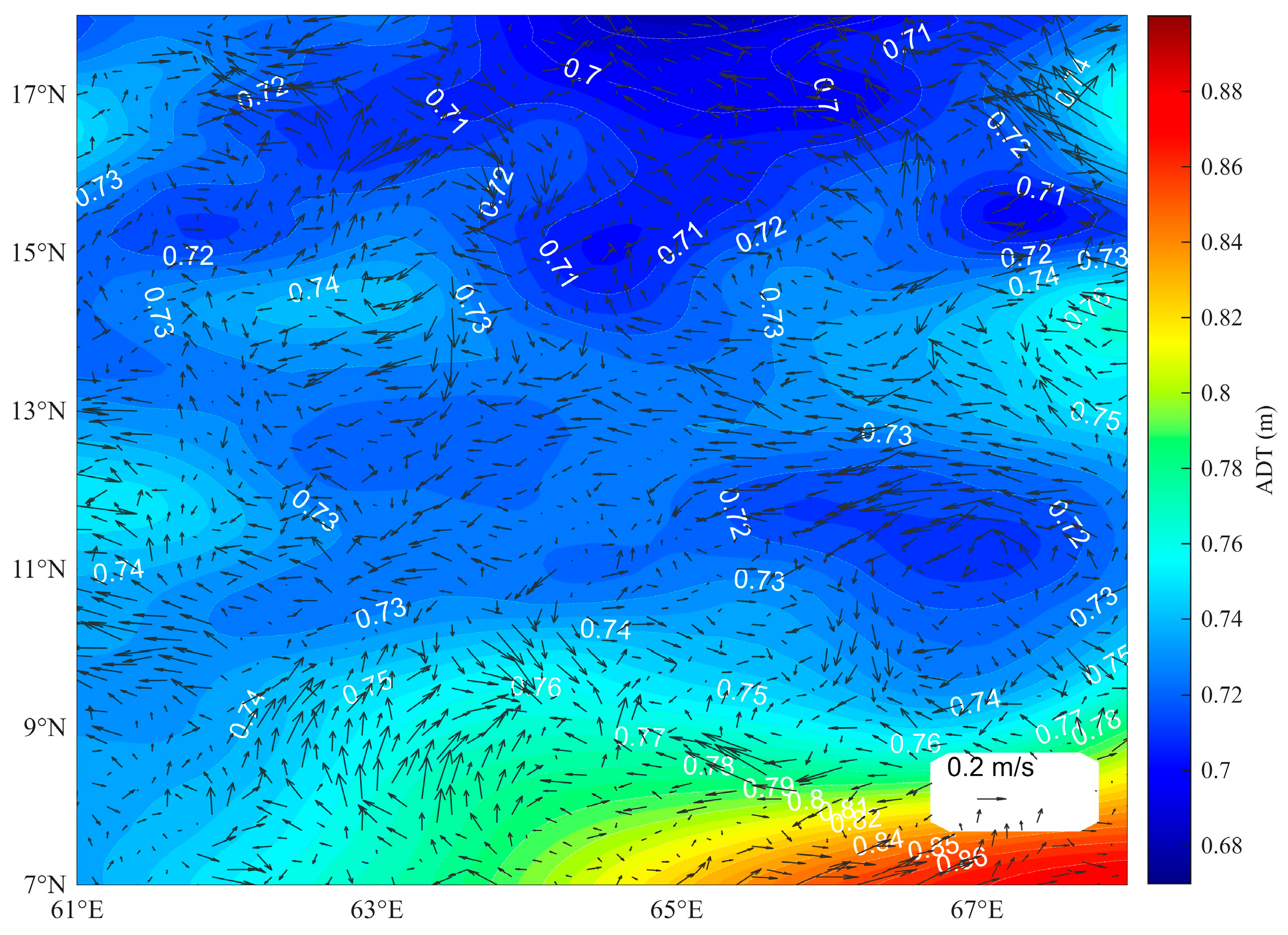
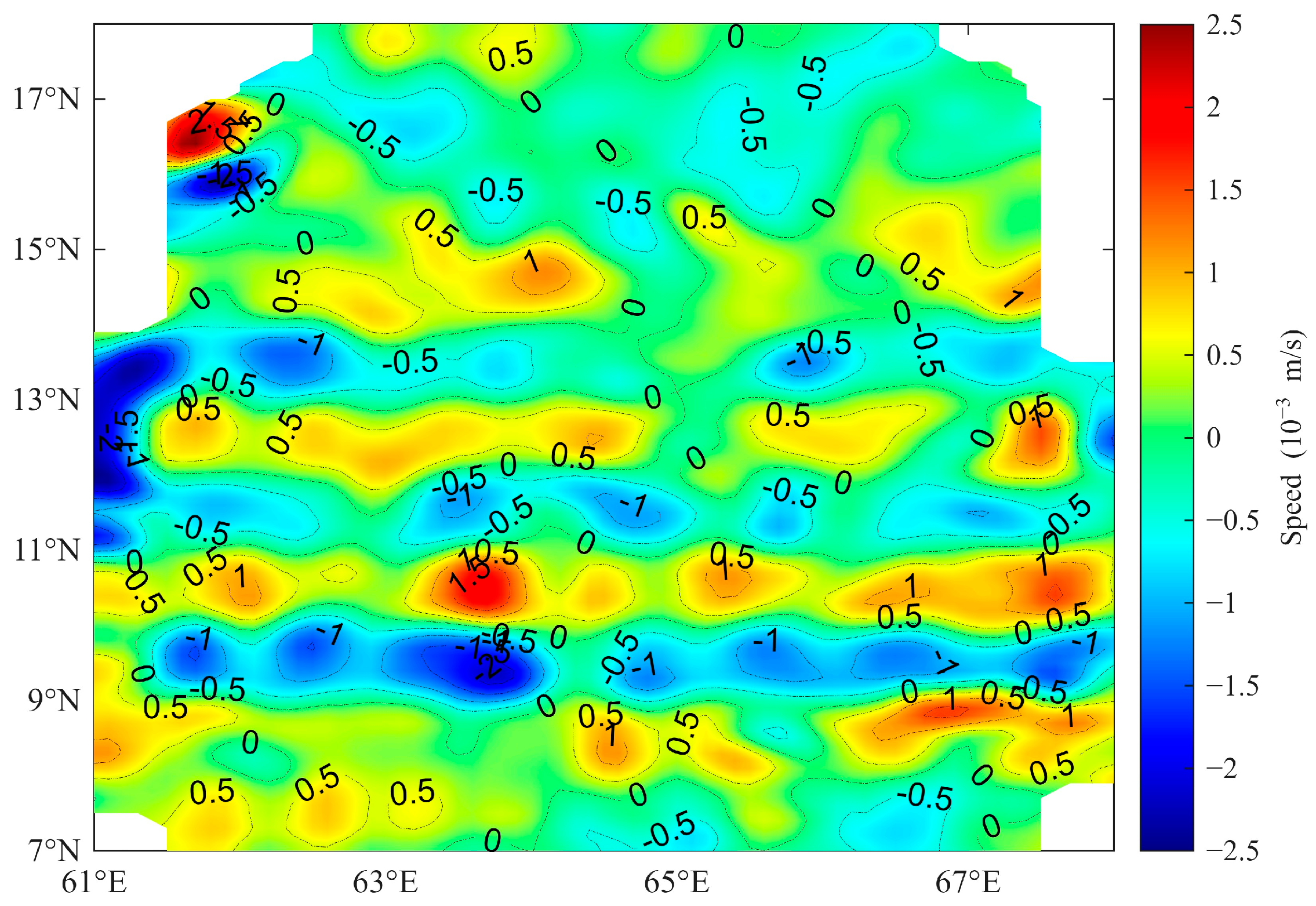
In winter, the circulation in the Arabian Sea basin is cyclonic (counterclockwise), so the sea surface height is generally lower in the center and higher at the periphery (Figure 12). Horizontal current velocities are relatively low in the central-northern region, where the low dissolved oxygen saturation zone below 100 m is located. Horizontal current velocities are relatively higher in the southern region, where the relatively high dissolved oxygen saturation zone below 100 m is located.
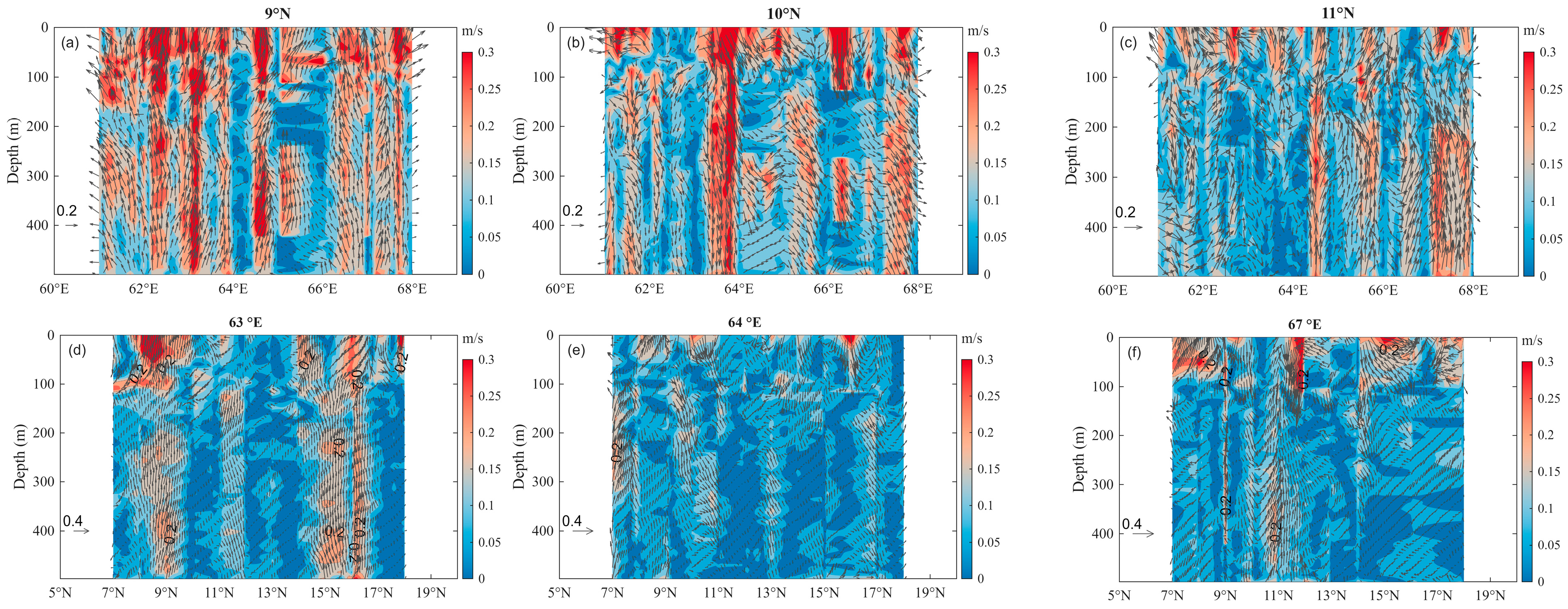
At the 63° E longitudinal section, the current velocity near 9° N is mainly northward, while near 11–12° N it is mainly southward, suggesting the presence of downwelling in the region between 9° N and 11° N (Figure 13a). A similar analysis indicates that downwelling may also exist between 9° N and 10° N at the 64° E section (Figure 13b). At the 67° E longitudinal section, the current velocity between 9° N and 11° N transitions from southward to northward, indicating the possible presence of upwelling in this region (Figure 13c). At the 9° N latitudinal section, the current velocity is predominantly northward, while at the 10° N section it is mainly southward, suggesting downwelling between these two latitudes (Figure 13d). At the 10° N section, the current velocity is mainly southward, whereas at the 11° N section it is predominantly northward, indicating possible upwelling between 10° N and 11° N (Figure 13e). Similarly, analysis shows that downwelling exists between 11° N and 12° N (Figure 13f).
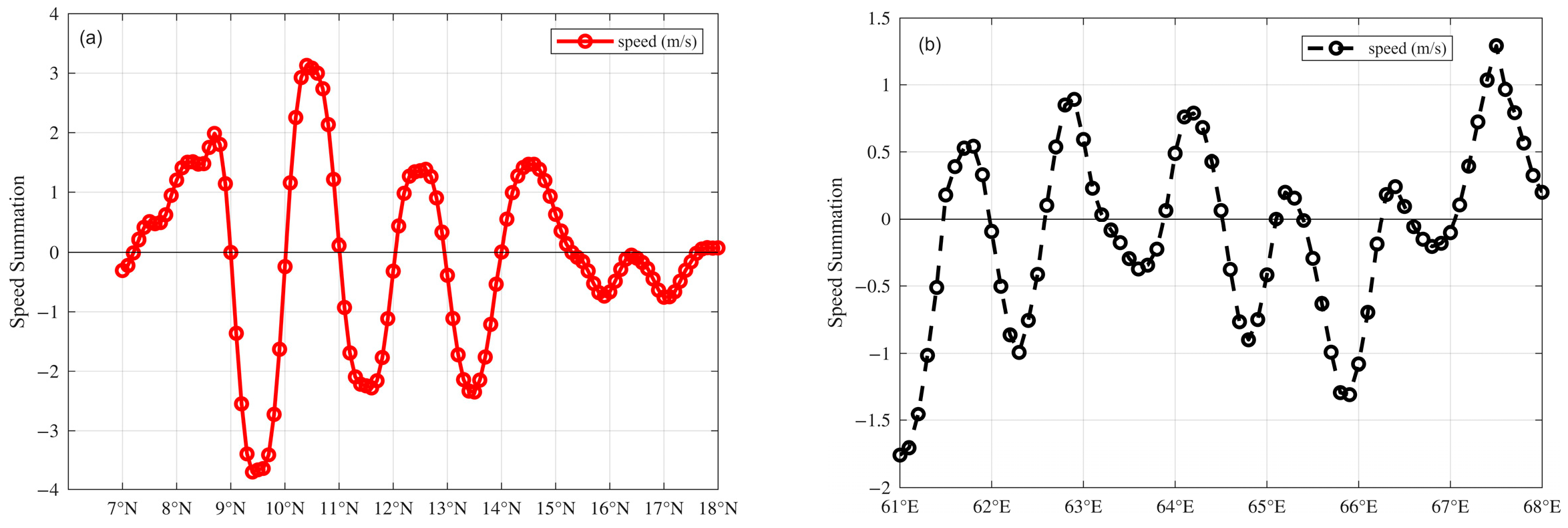
The diagnostic vertical velocity derived from the continuity equation represents the mass compensation velocity due to horizontal flow and can be used to analyze large-scale vertical ocean motions and seawater mass transport. The diagnostic vertical velocity is an integrated mass compensation quantity; its magnitude increases with integration depth. In this study, the integration is carried out from the surface to 500 m depth. Figure 14 shows the distribution of the diagnostic vertical velocity at 500 m depth, where a notable vertical flow is observed between 9° N and 11° N. Figure 15a presents the latitudinal distribution of the vertically integrated diagnostic vertical velocity (0–500 m), indicating relatively large values between 9° N and 11° N. Specifically, strong downwelling exists between 9° N and 10° N, while strong upwelling exists between 10° N and 11° N. When vertical flow is pronounced between 9° N and 11° N, horizontal exchange between the region north of 9° N and the region south of 11° N is restricted. This suggests that nutrient-rich waters from the south seldom reach the north, and oxygen-deficient waters from the north seldom reach the south. The longitudinal distribution of the vertically integrated diagnostic vertical velocity (0–500 m) exhibits a transition from negative to positive values (Figure 15b), indicating downwelling in the west and relatively strong upwelling in the east, while vertical exchange in the central region is less active than on either side.

4. Discussion

Based on CTD and ADCP data from the 2024 Indian Ocean survey and reanalysis data, this paper analyzes the physicochemical environmental characteristics of the Arabian Sea, focusing on the distribution characteristics of the hypoxic zone and chlorophyll a concentration, with a preliminary analysis of the underlying causes. In the layer shallower than 65 m, salinity is lower in the southeastern part of the southern region (south of approximately 9° N), indicating the intrusion of low-salinity water, which facilitates the formation of a pronounced barrier layer in the southeast. The barrier layer is the water layer located between the base of the mixed layer and the base of the isothermal layer. As shown in Figure 4c, the barrier layer is thicker in the southeastern region and thinner or absent in the northwestern region. During the northeast monsoon, low-salinity cold water enters the southeastern Arabian Sea from the Bay of Bengal primarily via the East India Coastal Current and the Northeast Monsoon Current along the western boundary of the Bay of Bengal [29,30]. A barrier layer exists perennially in the eastern North Indian Ocean, but occurs less frequently in the western region, with a thicker barrier layer in the southeastern Arabian Sea [26,27]. Rossby waves in the southeastern Arabian Sea deepen the isothermal layer, thereby increasing the barrier layer thickness [31,32]. The barrier layer thickness in the southeastern Indian Ocean exhibits a strong seasonal correlation, being thicker in autumn and winter in the southeastern Arabian Sea [3]. During positive Indian Ocean Dipole events, the mixed layer depth decreases, leading to a thickening of the deep barrier layer in the southeastern Arabian Sea, located in the region 60–70° E, 0–10° N [33,34], which is consistent with the location of the barrier layer obtained in this study. Due to the presence of the barrier layer, a small warm pool forms on the sea surface in the southeastern Arabian Sea [35]. In the present study, in the water layer shallower than 50 m, the southeastern region exhibits higher temperatures, while seawater temperatures are lower at the 100 m layer. The barrier layer may hinder the vertical exchange of heat and nutrients. Sea surface temperature cannot be transmitted downward through the barrier layer, resulting in higher sea surface temperatures while the water below the barrier layer remains cooler.
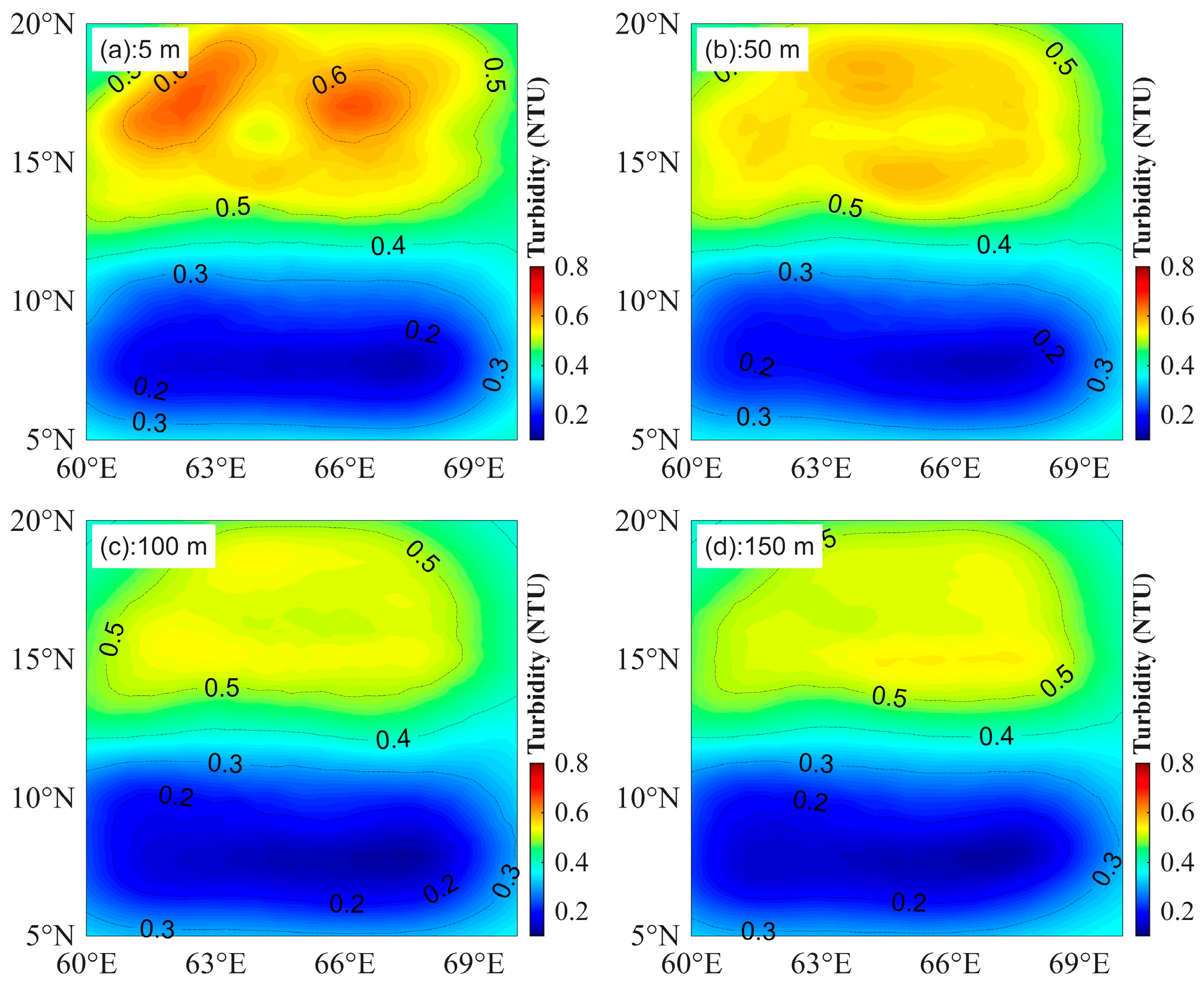
In this survey, chlorophyll a concentration in the Arabian Sea at depths shallower than 35 m was higher north of 13° N than south of it. Related studies [36,37] indicate that surface chlorophyll a concentration in the north is higher than in other regions of the Arabian Sea. In the Arabian Sea, chlorophyll a concentration is higher in the northwestern region due to upwelling induced by the summer monsoon and strong convection induced by the winter monsoon [38]. Eddies are more abundant along the western coast and in the northern region [39], leading to more active vertical water exchange. Although surface chlorophyll a concentration in the southeast is lower than in the northwest, its concentration between 50 and 75 m is higher than that in the northwest. The study by George et al. [40] also showed that high chlorophyll a concentrations south of 8° N occur between 30 and 70 m. Low surface chlorophyll a concentration is associated with downwelling or stable stratification [41]. Relevant studies suggest that the controlling factors for chlorophyll a concentration differ between the 0–50 m and 50–100 m layers: the surface layer is primarily limited by nutrients, while the subsurface layer, rich in nutrients, is more constrained by temperature and light [42]. The barrier layer hinders the upward supply of deep nutrients to the euphotic zone, resulting in nutrient depletion in the surface layer, which leads to low chlorophyll a concentration in the surface layer and higher concentration in the subsurface layer [43]. The relatively low chlorophyll a concentration in the layer shallower than 25 m and the relatively high concentration in the layer deeper than 55 m may be influenced by the presence of a barrier layer, as a relatively thick barrier layer exists in the southeastern region. Combining Figure 5 and Figure 12, it can be observed that in the southern region, where chlorophyll a concentration is lower, surface current velocities are higher. It is inferred that the higher current velocities in the south may disperse and transport some surface chlorophyll away, thereby reducing chlorophyll a concentration to some extent. In the southern part of the survey area, seawater turbidity is low, allowing sunlight to penetrate the water column and promote phytoplankton growth in deeper water layers. In the northern part of the survey area, seawater turbidity is higher, limiting sunlight penetration. Therefore, around the 50 m water layer, chlorophyll concentration in the northern waters is lower than that in the south (see Figure 16).
In the surface layer shallower than 45 m, dissolved oxygen saturation is higher in the south than in the north. Chlorophyll a concentration is relatively high in the northern region, where more oxygen is consumed, which may lead to relatively lower dissolved oxygen saturation. From Figure 12, it can be seen that the sea surface height is low in the center and high around the periphery. This low sea surface height corresponds to the cyclonic large-scale eddy during winter [44]. Generally, horizontal current velocities are higher at the edges of an eddy and lower at its center. The area south of 9° N is located at the boundary of this cyclonic large-scale eddy, where horizontal current velocities are relatively high, indicating active horizontal exchange that can bring in more oxygen-rich water, resulting in relatively higher dissolved oxygen saturation in the southern Arabian Sea. The study by Amol et al. [45] indicates that in the southeastern Arabian Sea, horizontal flow is more significant than vertical flow, bringing a large amount of oxygen-rich water to the region. At the 65 m layer, relatively low dissolved oxygen appears in the southeast, which is attributed to the increase in chlorophyll a concentration at this layer, where more dissolved oxygen is consumed by biological activity. In the water layer between 85 and 150 m, a hypoxic region (30%) gradually begins to appear in the central-southeastern area, and as depth increases, the hypoxic zone expands northward and westward. The southern boundary of the 30% dissolved oxygen saturation isopleth between 85 and 150 m remains around 9° N, while between 150 and 300 m, this isopleth gradually shifts northward to around 11° N. As shown in Figure 14 and Figure 15, the vertical velocity of the water body between 9° N and 11° N is relatively high, the horizontal velocity north of 11° N is relatively low, and the horizontal velocity south of 9° N is relatively high. It is speculated that the northward movement of nutrient-rich water from the south in the upper 500 m may be obstructed. During the survey period, oxygen-rich water extended northward to approximately 11° N. The study by Teng et al. [46] shows that seasonal variations in salinity are also influenced more by zonal advection than by meridional advection. The study by Shetye et al. [47] indicates that the region north of 10° N is influenced by monsoons and is significantly affected by them. In the region south of 10° N, the dominant feature is westward zonal flow. Near 5° N, there is the westward-flowing North Equatorial Current [4]. The study by Ernst et al. [48] shows that Rossby waves propagate westward along 8° N in March. Upwelling induced by Rossby waves can affect the physicochemical characteristics of seawater as far north as 15° N [22]. Oxygen-rich water in the central Indian Ocean can intrude northward to 16° N in the 200–500 m layer during the northeast monsoon [49]. In the south, the 30% dissolved oxygen saturation isopleth between 150 and 300 m shifts northward with increasing depth, indicating that the bottom of the hypoxic layer is shallower in the south and deeper in the north. The study by Sarma et al. also shows that the hypoxic layer in the Arabian Sea is thinner in the south and thicker in the north [50]. Ekman pumping begins to act at the base of the Ekman layer, approximately 75–100 m (at 15° N) [1]. In the southern Arabian Sea, the isopleths of Ekman-induced vertical velocity are more densely distributed (see Figure 11), indicating more active vertical water exchange, which can transport oxygen-rich water from the surface to deeper layers, resulting in the expansion of the area with relatively higher dissolved oxygen saturation in the 150–300 m layer as depth increases.
This paper is mainly based on physicochemical data obtained during the 2024 cruise survey, which imposes constraints on depicting the seasonal and interannual evolution of dissolved oxygen and chlorophyll a concentration in the region. Subsequent studies should incorporate a broader time series of observational data to elucidate their long-term trends.

5. Summary

The characteristics and formation mechanisms of the hypoxic zone and chlorophyll distribution in the Arabian Sea are complex. This study has two main conclusions. First, the distribution characteristics of chlorophyll a concentration are closely related to the barrier layer. In the southeastern region, the barrier layer is thicker, hindering the upward transport of nutrients to the surface, resulting in lower surface chlorophyll a concentration. Second, the distribution of dissolved oxygen saturation is influenced not only by chlorophyll a concentration but also by the horizontal and vertical flow fields in the region. During the survey period, the southern boundary of the hypoxic zone was located between 9° N and 11° N, overlapping with the area of higher vertical velocity. The stronger horizontal flow south of 9° N brought oxygen-rich water from the south, while Ekman pumping induced by the wind field promoted active vertical exchange beneath the Ekman layer, facilitating the transport of dissolved oxygen to deeper layers. This study attempts to analyze the distribution characteristics of dissolved oxygen concentration and chlorophyll a concentration and their possible influencing factors, providing a foundation for subsequent research on the distribution of biological resources in the Arabian Sea.

Author Contributions

L.L. was responsible for conceptualization. X.F. was responsible for conceptualization, programming, and writing the article. Y.S. was responsible for data collection and organization. H.Z., W.C., Z.L., C.L., Z.Z. and C.W. participated in the review and editing of the article. All authors have read and agreed to the published version of the manuscript.

Funding

This study was funded by the Program on the Survey of Pelagic Fishery Resources, sponsored by the Ministry of Agriculture and Rural Affairs, Program on the Survey, Monitoring and Assessment of Global Fishery Resources (comprehensive scientific survey of fisheries resources at the high seas) sponsored by the Ministry of Agriculture and Rural Affairs.

Data Availability Statement

The reanalysis data were obtained from CMEMS. The data can be downloaded from: http://marine.copernicus.eu/services-portfolio/access-to-products/ (accessed on 2 February 2026). Other data are available upon request from the corresponding author.

Acknowledgments

We express profound gratitude to the Copernicus Marine Environment Monitoring Service (CMEMS) and AVISO (Archiving, Validation, and Interpretation of Satellite Oceanographic Data) for data provision, and sincerely appreciate peer reviewers for their constructive suggestions and expert comments.

Conflicts of Interest

The authors declare no conflict of interest.

References

  1. Stewart, R.H. Introduction to Physical Oceanography; Texas A & M University: College Station, TX, USA, 2008; pp. 133–147. Available online: https://oer.usk.ac.id/items/show/414 (accessed on 25 March 2026).
  2. John, C.B.; Charles, R.M. Interannual Variability in Phytoplankton Blooms Observed in the Northwestern Arabian Sea During the Southwest Monsoon. J. Geophys. Res. Ocean. 1992, 97, 733–750. [Google Scholar] [CrossRef]
  3. Resplandy, L.; L’evy, M.; Bopp, V.; Echevin, V.; Pous, V.V.S.S.; Kumar, D. Controlling factors of the oxygen balance in the Arbian Sea’s OMZ. Biogeosciences 2012, 9, 5095–5109. [Google Scholar] [CrossRef]
  4. Schott, F.A.; Xie, S.P.; McCreary, J.P., Jr. Indian Ocean circulation and climate variability. Rev. Geophys. 2009, 47, RG1002. [Google Scholar] [CrossRef]
  5. Peter, B.N.; Sreejith, M.; Siswanto, E. Variability of Arabian Sea surface circulation and chlorophyll distribution: A remote sensing estimation. Terr. Atmos. Ocean. Sci. 2022, 33, 22. [Google Scholar] [CrossRef]
  6. Hood, R.R.; Beckley, L.E.; Wiggert, J.D. Biogeochemical and ecological impacts of boundary currents in the Indian Ocean. Prog. Oceanogr. 2017, 156, 290–325. [Google Scholar] [CrossRef]
  7. Subrahmanyam, B.; Robinson, I.S. Sea Surface Height Variability in the Indian Ocean from TOPEX_POSEIDON Altimetry and Model Simulations. Mar. Geod. 2000, 23, 167–195. [Google Scholar] [CrossRef]
  8. Prasad, T.G.; Ikeda, M. Spring evolution of Arabian Sea High in the Indian Ocean. J. Geophys. Res. Ocean. 2001, 106, 31085–31098. [Google Scholar] [CrossRef]
  9. Feng, J.Q.; Bai, X.Z.; Chen, Y.L.; Hu, D.X. Effect of low-frequency Rossby wave on thermal structure of the upper southwestern tropical Indian Ocean. Chin. J. Oceanol. Limnol. 2010, 28, 344–353. [Google Scholar] [CrossRef]
  10. Brandt, P.; Stramma, L.; Schott, F.; Fischer, J.; Dengler, M.; Quadfasel, D. Annual Rossby waves in the Arabian Sea from TOPEX/POSEIDON altimeter and in situ data. Deep Sea Res. 2002, 49, 1197–1210. [Google Scholar] [CrossRef]
  11. Ma, J.F.; Du, Y.; Zhan, H.G.; Liu, H.L.; Wang, J. Influence of oceanic Rossby waves on phytoplankton production in the southern tropical Indian Ocean. J. Mar. Syst. 2014, 134, 12–19. [Google Scholar] [CrossRef]
  12. Liu, J.A.; Wu, Y.H.; Liu, S.F.; Qiao, S.Q.; Tao, Q.; Qi, W.Q.; Liu, J.H. Changes in bottom water oxygen level of the Arabian Sea and the driving factors since the Last Glacial Period. Mar. Geol. Quat. Geol. 2024, 44, 189–201. [Google Scholar] [CrossRef]
  13. Xie, L.P.; Wang, B.D.; Xin, M. Spatial Distribution and Seasonal Variation of Hypoxic Zone in the Eastern Equatorial Indian Ocean. J. Ocean Univ. China 2023, 22, 918–929. [Google Scholar] [CrossRef]
  14. Vallivattathillam, P.; Lachkar, Z.; Lévy, M. Shrinking of the Arabian Sea oxygen minimum zone with climate change projected with a downscaled model. Front. Mar. Sci. 2023, 10, 1123739. [Google Scholar] [CrossRef]
  15. Rixen, T.; Cowie, G.; Gaye, B.; Goes, J.; Gomes, H.D.; Hood, R.R.; Lachkar, Z.; Schmidt, H.; Segschneider, J.; Singh, A. Reviews and syntheses: Present, past, and future of the oxygen minimum zone in the northern Indian Ocean. Biogeosciences 2020, 17, 6051–6080. [Google Scholar] [CrossRef]
  16. Sun, C.J.; Wang, X.D.; Zhang, A.M.; Zhang, L.X.; Shao, C.X.; Wang, G.S. Statistical characteristics and mechanisms of mesoscale eddies in the North Indian Ocean. Acta Oceanol. Sin. 2022, 41, 27–40. [Google Scholar] [CrossRef]
  17. Cui, W.; Zhou, C.J.; Li, Y.; Yang, J.G. Remote sensing investigation and validation of mesoscale eddies in the Indian Ocean. Digit. Ocean Underw. Warf. 2024, 7, 29–36. [Google Scholar] [CrossRef]
  18. Xu, H.B.; Yang, F.C.; Wang, Y.M.; Wang, L.L. Comparative study of the variability of the phytoplankton biomass in two upwelling zones of the western Arabian Sea from 2003 to 2020. Mar. Pollut. Bull. 2025, 212, 1175822. [Google Scholar] [CrossRef] [PubMed]
  19. Wang, Y.T.; Ma, W.T.; Zhou, F.; Chai, F. Frontal variability and its impact on chlorophyll in the Arabian Sea. J. Mar. Syst. 2021, 218, 103545. [Google Scholar] [CrossRef]
  20. Hu, Q.W.; Chen, X.Y.; He, X.Q.; Bai, Y.; Jiang, T.C.; Huan, Y.; Liang, Z.L. Impacts of IOD and ENSO on the phytoplankton’s vertical variability in the Northern Indian Ocean. Front. Mar. Sci. 2025, 12, 1523434. [Google Scholar] [CrossRef]
  21. Nagendra Jaiganesh, S.N.; Sarangi, R.K.; Shukla, S. Satellite-based observation of ocean productivity in southeast Arabian Sea using chlorophyll, sea surface temperature and wind datasets. J. Earth Syst. Sci. 2021, 130, 5. [Google Scholar] [CrossRef]
  22. Ravichandran, M.; Girishkumar, M.S.; Riser, S. Observed variability of chlorophyll a using Argo profiling floats in the southeastern Arabian Sea. Deep Sea Res. 2012, 165, 15–25. [Google Scholar] [CrossRef]
  23. Amol, P. Impact of Rossby waves on chlorophyll variability in the southeastern Arabian Sea. Remote Sens. Lett. 2018, 9, 1214–1223. [Google Scholar] [CrossRef]
  24. Huang, J.Y. Methods of Meteorological Statistical Analysis and Forecasting, 4th ed.; Meteorological Press: Beijing, China, 2016; pp. 121–141. [Google Scholar]
  25. North, G.R.; Bell, T.L.; Cahalan, R.F. Sampling errors in the estimation of empirical orthogonal functions. Mon. Weather Rev. 1982, 110, 699–706. [Google Scholar] [CrossRef]
  26. Liu, Y.; Yan, Y.F.; Ling, Z. Preliminary analysis on climatological and seasonal variation of barrier layer thickness in the northern Indian Ocean and it‘s mechanism. J. Trop. Oceanogr. 2020, 39, 98–108. [Google Scholar]
  27. Sun, Z.Y.; Liu, L.; Yu, W.D. Seasonal variations of mixed layer depth in the tropical Indian Ocean derived from Argo float data. Adv. Mar. Sci. 2007, 25, 280–288. [Google Scholar] [CrossRef]
  28. Xing, X.B.; Jia, Y.J.; Wang, B.; Li, Y.W.; Dang, C.Q.; Hu, J.G.; Wu, B.Q.; Zhu, X.D. Analysis of spatiotemporal variations of mixed layer depth and barrier layer thickness in the global ocean. Mar. Forecast. 2024, 41, 62–76. [Google Scholar] [CrossRef]
  29. Nyadjro, E.S.; Subrahmanyam, B.; Murty, V.S.N.; Shriver, J.F. The role of salinity on the dynamics of the Arabian Sea mini warm pool. J. Geophys. Res. Ocean. 2012, 117, C09002. [Google Scholar] [CrossRef]
  30. Jinadasa, S.U.P.; Pathirana, G.; Ranasinghe, P.N.; Centurioni, L.; Hormann, V. Monsoonal impact on circulation pathways in the Indian Ocean. Acta Oceanol. Sin. 2020, 39, 103–112. [Google Scholar] [CrossRef]
  31. Xuan, L.L.; Qiu, Y.; Xu, J.D.; Zhang, X.S.; Shao, C.X. Seasonal variations of upper-layer water masses in eastern tropical Indian Ocean explored by Argo floats. J. PLA Univ. Sci. Technol. Nat. Sci. Ed. 2015, 16, 188–194. [Google Scholar] [CrossRef]
  32. Agarwal, N.; Sharma, R.; Parekh, A.; Basu, S.; Sarkar, A.; Agarwal, V.K. Argo observations of barrier layer in the tropical Indian Ocean. Adv. Space Res. 2012, 50, 642–654. [Google Scholar] [CrossRef]
  33. Liu, Y.; Yan, Y.F. Seasonal variations in the barrier layer and its formation mechanism in the northern Indian Ocean. J. Geophys. Res. Ocean. 2024, 129, e2024JC020877. [Google Scholar] [CrossRef]
  34. Guo, F.Y.; Liu, Q.Y.; Zheng, X.T.; Shan, S. The role of barrier layer in southeastern Arabian Sea during the development of positive Indian Ocean Dipole events. J. Ocean Univ. China 2013, 12, 245–252. [Google Scholar] [CrossRef]
  35. Li, J.D.; Han, D.; Liao, G.H.; Zhang, T.; Ding, T.B.; Song, X.S. Dynamics of the Barrier Layer Dipole in the Equatorial Indian Ocean. J. Geophys. Res. Ocean. 2024, 129, e2023JC020479. [Google Scholar] [CrossRef]
  36. Koné, V.; Aumont, O.; Lévy, M.; Resplandy, L. Physical and Biogeochemical Controls of the Phytoplankton Seasonal Cycle in the Indian Ocean: A Modeling Study. Geophys. Monogr. Ser. 2009, 185, 147–166. [Google Scholar] [CrossRef]
  37. Liu, L.; Feng, L.; Yu, W.D.; Wang, H.W.; Liu, Y.L.; Sun, S.W. The Distribution and Variability of Simulated Chlorophyll Concentration over the Tropical Indian Ocean from Five CMIP5 Models. J. Ocean Univ. China 2012, 12, 253–259. [Google Scholar] [CrossRef]
  38. Wang, T.; Du, Y.; Liao, X.; Xiang, C.H. Evidence of Eddy-Enhanced Winter Chlorophyll a Blooms in Northern Arabian Sea: 2017 Cruise Expedition. J. Geophys. Res. Ocean. 2020, 125, e2019JC015582. [Google Scholar] [CrossRef]
  39. Ni, Q.; Zhai, X.; Wang, G.; Hughes, C.W. Widespread Mesoscale Dipoles in the Global Ocean. J. Geophys. Res. Ocean. 2020, 125, e2020JC016479. [Google Scholar] [CrossRef]
  40. Huang, H.; Huang, K.; Yang, L.; Liang, Z.L.; Song, W.; Wang, D.X. Negative Surface Chlorophyll Concentration Anomalies in the Southeast Arabian Sea During Summer in 2015 and 2019. J. Geophys. Res. Ocean. 2024, 129, e2024JC021154. [Google Scholar] [CrossRef]
  41. George, J.V.; Nuncio, M.; Chacko, R.; Anilkumar, N.; Noronha, S.B.; Patil, S.M.; Pavithran, S.; Alappattu, D.P.; Krishnan, K.P.; Achuthankutty, C.T. Role of physical processes in chlorophyll distribution in the western tropical Indian Ocean. J. Mar. Syst. 2013, 113–114, 1–12. [Google Scholar] [CrossRef]
  42. Hu, Q.W.; Chen, X.Y.; He, X.Q.; Bai, Y.; Gong, F.; Zhu, Q.K.; Pan, D.L. Effect of El Niño-related warming on phytoplankton’s vertical distribution in the Arabian Sea. J. Geophys. Res. Ocean. 2021, 126, e2021JC017882. [Google Scholar] [CrossRef]
  43. Patra, P.K.; Kumar, M.D.; Mahowald, N.; Sarma, V.V. Atmospheric deposition and surface stratification as controls of contrasting chlorophyll abundance in the North Indian Ocean. J. Geophys. Res. Ocean. 2007, 112, C05029. [Google Scholar] [CrossRef]
  44. Vic, C.; Roullet, G.; Carton, X.; Capet, X. Mesoscale dynamics in the Arabian Sea and a focus on the Great Whirl life cycle: A numerical investigation using ROMS. J. Geophys. Res. Ocean. 2014, 119, 6422–6443. [Google Scholar] [CrossRef]
  45. Amol, P.; Bemal, S.; Shankar, D.; Jain, V.; Thushara, V.; Vijith, V.; Vinayachandran, P.N. Modulation of chlorophyll concentration by downwelling Rossby waves during the winter monsoon in the southeastern Arabian Sea. Prog. Oceanogr. 2020, 186, 102365. [Google Scholar] [CrossRef]
  46. Teng, H.; Qiu, Y.; Lin, X.Y.; Zhou, X.W. Characteristics and mechanisms of the intraseasonal variability of sea surface salinity in the southeastern Arabian Sea during 2015–2020. Acta Oceanol. Sin. 2023, 42, 25–34. [Google Scholar] [CrossRef]
  47. Shetye, S.R.; Gouveia, A.D.; Shenoi, S.S. Circulation and water masses of the Arabian Sea. Proc. Indian Acad. Sci. 1994, 103, 107–123. [Google Scholar] [CrossRef]
  48. Ernst, P.A.; Subrahmanyam, B.; Trott, C.B. Lakshadweep High Propagation and Impacts on the Somali Current and Eddies During the Southwest Monsoon. J. Geophys. Res. Ocean. 2022, 9, e2021JC018089. [Google Scholar] [CrossRef]
  49. Shenoy, D.M.; Suresh, I.; Uskaikar, H.; Kurian, S.; Vidya, P.J.; Shirodkar, G.; Gauns, M.U.; Naqvi, S.W. Variability of dissolved oxygen in the Arabian Sea Oxygen Minimum Zone and its driving mechanisms. J. Mar. Syst. 2020, 204, 103310. [Google Scholar] [CrossRef]
  50. Sarma, V.V.S.S.; Bhaskar, T.V.S.U.; Kumar, J.P.; Chakraborty, K. Potential mechanisms responsible for occurrence of core oxygen minimum zone in the north-eastern Arabian Sea. Deep Sea Res. Part I 2020, 165, 103393. [Google Scholar] [CrossRef]
Figure 1. Distribution of survey stations in the northwestern Indian Ocean from December 2024 to January 2025. Figure (a) and (b) are the distribution of observation stations for CTD and ADCP, respectively.
Jmse 14 01046 g001
Figure 2. Spatial distribution of (a) temperature and (b) salinity.
Jmse 14 01046 g002
Figure 3. Temperature–Salinity (T-S) diagram.
Jmse 14 01046 g003
Figure 4. (a) Depth of the pycnocline top, (b) thermocline top, and (c) barrier layer thickness.
Jmse 14 01046 g004
Figure 5. Spatial distribution of (aq) chlorophyll a concentration.
Jmse 14 01046 g005
Figure 6. Spatial distribution of (ac) the first three modes from EOF decomposition of chlorophyll a concentration.
Jmse 14 01046 g006
Figure 7. Principal components and eigenvalues from EOF decomposition of chlorophyll a concentration. (a) The principal components corresponding to the first three modes, and (b) the eigenvalues from the EOF decomposition and their errors.
Jmse 14 01046 g007
Figure 8. (aq) Spatial distribution of dissolved oxygen saturation.
Jmse 14 01046 g008
Figure 9. (ac) Spatial distribution of the first three modes from EOF decomposition of dissolved oxygen saturation.
Jmse 14 01046 g009
Figure 10. Principal components and eigenvalues from EOF decomposition of dissolved oxygen saturation. (a) The principal components corresponding to the first three modes, and (b) the eigenvalues from the EOF decomposition and their errors.
Jmse 14 01046 g010
Figure 11. Distribution of (a) wind speed and (b) vertical velocity induced by Ekman pumping.
Jmse 14 01046 g011
Figure 12. Distribution of absolute dynamic topography and surface current velocity observed by ADCP.
Jmse 14 01046 g012
Figure 13. Cross-section current velocity distribution from ADCP observations (upward arrows indicate northward direction, rightward arrows indicate eastward direction). (af) represent the velocity cross-sections at 9° N, 10° N, 11° N, 63° E, 64° E, and 67° E, respectively.
Jmse 14 01046 g013
Figure 14. Spatial Distribution of Diagnostic Vertical Velocity at the 500 m Depth.
Jmse 14 01046 g014
Figure 15. Distribution of cumulative diagnostic vertical velocity in the 0–500 m water layer along latitude and longitude. (a) and (b) show the distributions of the cumulative diagnosed vertical velocity along the latitudinal and longitudinal directions, respectively.
Jmse 14 01046 g015
Figure 16. Spatial distribution of turbidity in the surveyed area of the northwestern Indian Ocean from December 2024 to January 2025.
Jmse 14 01046 g016
Disclaimer/Publisher’s Note: The statements, opinions and data contained in all publications are solely those of the individual author(s) and contributor(s) and not of MDPI and/or the editor(s). MDPI and/or the editor(s) disclaim responsibility for any injury to people or property resulting from any ideas, methods, instructions or products referred to in the content.