1. Introduction
Reliable estimation of ship-added resistance in real operating conditions is a key component in evaluating the actual performance and sustainability of maritime transport. From 2023, it became mandatory for all ships to calculate their attained Energy Efficiency Existing Ship Index (EEXI) to measure their energy efficiency and to initiate the collection of data for the reporting of their annual operational carbon intensity indicator. With increasing regulatory pressure from the IMO (International Maritime Organization) and other maritime authorities to reduce greenhouse gas emissions and enhance energy efficiency, there is a growing need to refine performance models and develop innovative strategies for minimizing resistance and fuel consumption [
1].
Through the literature review process, numerous publications were identified that address weather margins and ship power prediction under varying weather conditions. These studies employ a broad range of methodologies, including numerical modelling, statistical regression, empirical and data-driven approaches based on real operational data. However, to the best of the authors’ knowledge, none of the reviewed papers provide explicit decomposition of the individual contributions of each resistance component to the total added resistance while underway in varying conditions.
The motivation for this study was to develop a framework for predicting total added resistance by using well-established methods, recommended by the latest regulatory standards [
2] for calculating individual resistance components. To achieve this, methods that require only reasonable and accessible input data were selected for each component and their combined results were compared with measurements from a case study ship. The data from the case study ship also contained wind and current data. Weather data, including wind, current and wave, were also collected from Copernicus Marine Services and wind and current data were compared with ship measurements. The two datasets show similar overall trends, particularly for current variation, although larger discrepancies were observed for wind, indicating that further research on the comparison between onboard measurements and Copernicus Marine Environment Monitoring Service (CMEMS) data would be beneficial.
The framework presented in this paper is a practical and applicable approach with future use in energy efficiency assessment, route optimization, and research into new technologies, particularly wind-assisted propulsion systems (WAPS), where environmental conditions play a major role.
As a first step in the literature review, to ensure methodological consistency and alignment with established industry practices, several key guidelines and recommended procedures issued by [
3,
4,
5,
6,
7] were reviewed. The DNV (Det Norske Veritas) Recommended Practice [
4] proved particularly valuable in the approach to modelling wave-added resistance in terms of practical guidance that supported the selection and application of the Liu and Papanikolaou [
8] model for estimating added resistance in waves. Being a “closed-form” method, it is especially valuable compared to alternatives because it is applicable to arbitrary ship-to-wave heading. The International Towing Tank Conference (ITTC) recommended procedures [
9] provided insight into standardized approaches for estimating added resistance and power increase due to environmental factors and calm water resistance. Both ITTC and DNV documents offered methodological direction and inspiration for exploring and adapting specific methods for calculating the individual components of ship resistance.
The reviewed literature can be broadly grouped into four related themes: route- and weather-margin-based performance assessment, validation of ship performance prediction methods against full-scale or higher-fidelity data, semi-empirical modelling of wind- and wave-added resistance, and the reliability of environmental input data.
To better understand the effects of weather on ship resistance, a literature review was conducted, and the following studies were identified. In [
10,
11] a physical model is presented for calculating mean statistical service speed on real shipping routes, introducing a refined definition and computation of the sea margin. Ship added resistance is calculated depending on mean statistical parameters of wave and wind occurring on a given shipping route. In [
12], the authors link Voluntary Observing Ships (VOS) voyage data with ERA5 and hindcast weather data and apply multiple regression models to estimate speed loss due to weather on a ship-by-ship basis and conclude that the formulation for speed loss estimation needs updating. Another study [
13], investigated a machine learning approach trained on real-world operational and ERA5 weather data to predict required engine power in calm and rough conditions. The hypothesis for this data-driven approach is that the industry standard of 15–20% extra installed engine power for weather margin is not based on precise calculations. The authors present a more accurate method with machine learning and subsequently calculate calm water resistance.
Several studies have evaluated ship performance prediction methods by comparing model-based estimates with full-scale measurements, experimental data, and numerical simulations. Two different ship performance prediction models are compared against full-scale operational data in [
14], fuel consumption is calculated with two different models focusing on ship performance in Arctic conditions. While this paper does not deal with polar conditions, the methodology in [
14] gave insight into methods to consider for calm water, wind and wave resistance. In [
15], speed-power performance analysis was conducted for an 8600 TEU (Twenty-Foot Equivalent Unit) container ship analyzing operation data from a ship monitoring system and weather data compared with experimental model tank tests and CFD (Computational Fluid Dynamics) simulations. It was concluded that modelling of the air resistance based on the coefficients in the Fujiwara [
16] regression formula (and CFD simulation) provided a sufficient level of accuracy in speed-power performance analysis. Another study [
17] was conducted with Fujiwara regression calculations, where verification was conducted with CFD simulations and an open wind test. The comparison between CFD and empirical methods for ship resistance was carried out in [
18], empirical calculations based on [
19] were analyzed and the results indicate that the empirical formulations offer reasonably accurate predictions while requiring significantly fewer computational resources.
According to [
20], while comparing the results of estimated ship speed loss due to wind and waves, it was found that at mild seas, the effect of wind on the ship speed loss was higher than that of waves; however, at more severe sea conditions the speed loss due to waves was larger than that due to wind.
In [
8], wave added resistance was calculated by implementing these formulations across a range of operational sea states using directional wave spectra, specifically the JONSWAP (Joint North Sea Wave Project) spectral from [
21]. In [
21] several semi-empirical approaches were evaluated for modelling added resistance in short-crested seas using monitoring data from container vessels, with a focus on methods suitable for real-time or large-scale analysis. The study proposed a directional spectral integration approach, combining the JONSWAP wave spectrum to estimate mean added resistance using vessel-specific operational data.
Since the reliability of the wind, wave, and current information directly affects the quality of the resistance and power predictions, a further group of studies focused on the accuracy, variability, and practical limitations of environmental input data is analyzed below.
In [
22], the authors examined the spatial and temporal variability of ERA5 sea state parameters along virtual shipping routes and assessed the effect of different interpolation methods on wave data accuracy. The study found that spatial variation in sea state parameters can be significant, and recommended the use of bilinear interpolation over the nearest neighbour to improve the data accuracy in route-based ship performance evaluations. The study presented in [
23] compared onboard anemometer wind measurements with wind data from various weather providers, showing systematic differences in reported values across a 20-month operational dataset. It was observed that the anemometer-based wind speeds were generally higher than those derived from remote weather models, particularly in low and moderate wind regimes. The authors conclude that weather provider wind speeds exhibit significant variation from anemometers in changing weather conditions, and the choice of the data source may affect overall true performance analysis. This proved to be the case in this study as well. The quality of European Centre for Medium-Range Weather Forecasts (ECMWF) ERA data was discussed in [
24]. In this paper, a comparison has been made between the current and wind measured on the ship by a Doppler device and anemometer, and the data available from CMEMS.
Finally, a methodological framework was developed, and presented in this paper for assessment of ship performance using a relatively small number of (easily obtainable) input parameters. The paper combines a practical procedure for ship performance assessment as its applied component, while the scientific contribution lies in the validation of this procedure, the quantification of associated errors, and the application of ERA5 reanalysis weather data with an emphasis on the comparison between reanalysis data and onboard ship measurements.
This paper is divided into five sections. The Introduction provides an overview of relevant literature regarding the subject. In Data Analysis, onboard data and Copernicus weather data are analyzed and compared. In Methodology, the resistance calculation procedures and methods for calm water, wind, and wave resistance are described. In Results/Analysis part of the paper, outcomes of the methodology were presented and discussed for the case study ship along the selected route. Final remarks, conclusions, key findings and future work are summarized in Conclusion.
2. Data Analysis
2.1. Case Study Ship
The ship analyzed is a Q-flex LNG (Liquid Natural Gas) carrier with its particulars shown in
Table 1. It is an LNG tanker of membrane type with a reliquefication plant. The main engines are electronically controlled two-stroke engines with MCR (Maximum Continuous Rating) of 17,300 kW each, limited to 10,400 kW to comply with the EEXI (Energy Efficiency Existing Ship Index) regulation. The vessel is equipped with a ship Performance Monitoring System (PMS) for continuous monitoring of engine and propulsion performance data. The system continuously measures the torque, thrust and revolutions of a rotating shaft. Shaft torque and thrust are measured using strain gauges, and speed is measured by sensing magnets on the shaft ring. The absolute accuracy of the measured torque is within 0.5%, of the revolutions 0.1%, and of the thrust 5.0% according to the manufacturer’s system manual. The power is calculated from torque and revolutions. The PMS communicates with other ship systems and sensors (anemometer, Doppler, various fuel flowmeters, draft gauges, IAS (Integrated Automation System), etc.) and stores the data every 15 s. This data was used as the validation for the conducted analysis. As the vessel is equipped with 2 independent main engines (2 shafts, propeller, rudder, etc.), all parameters related to shaft and main engine performance are normally monitored and recorded separately. For the purposes of the analysis, they were added together and evaluated accordingly.
Above-water projected areas for wind-resistance calculations are obtained from ship drawings using a semi-automated polygon-tracing tool. Following image calibration (based on the bow, stern, and design waterline), closed polygons are interactively traced around relevant exposed structures. These polygons are converted into physical areas using the calibrated scale, while centroids and characteristic heights are determined concurrently. The obtained parameters include overall length, beam, lateral projected area of the hull below deck, projected area of the superstructure above deck, projected area of deck cargo, overall above-deck area, frontal projected area, length of the perimeter of the hull lateral projection, horizontal distance from the bow to the centroid of the hull lateral projected area, longitudinal distance of the lateral centroid from the midship, vertical distance of the lateral centroid above the waterline, height to the centre of the lateral projected area, distance from the midship to the centre of the superstructure area, height of the superstructure, and the number of masts or vertical structures.
Sea trial data was available as a reference to extract the baseline calm water resistance, but its validity required verification for several reasons: propeller geometry had been altered during previous dry docking to comply with new post-EEXI power limitations. Additionally, both the propeller and the hull were cleaned during the last dry docking, which occurred 2 years prior to the voyage data extracted for the analysis, suggesting that some degree of fouling likely developed in the interim.
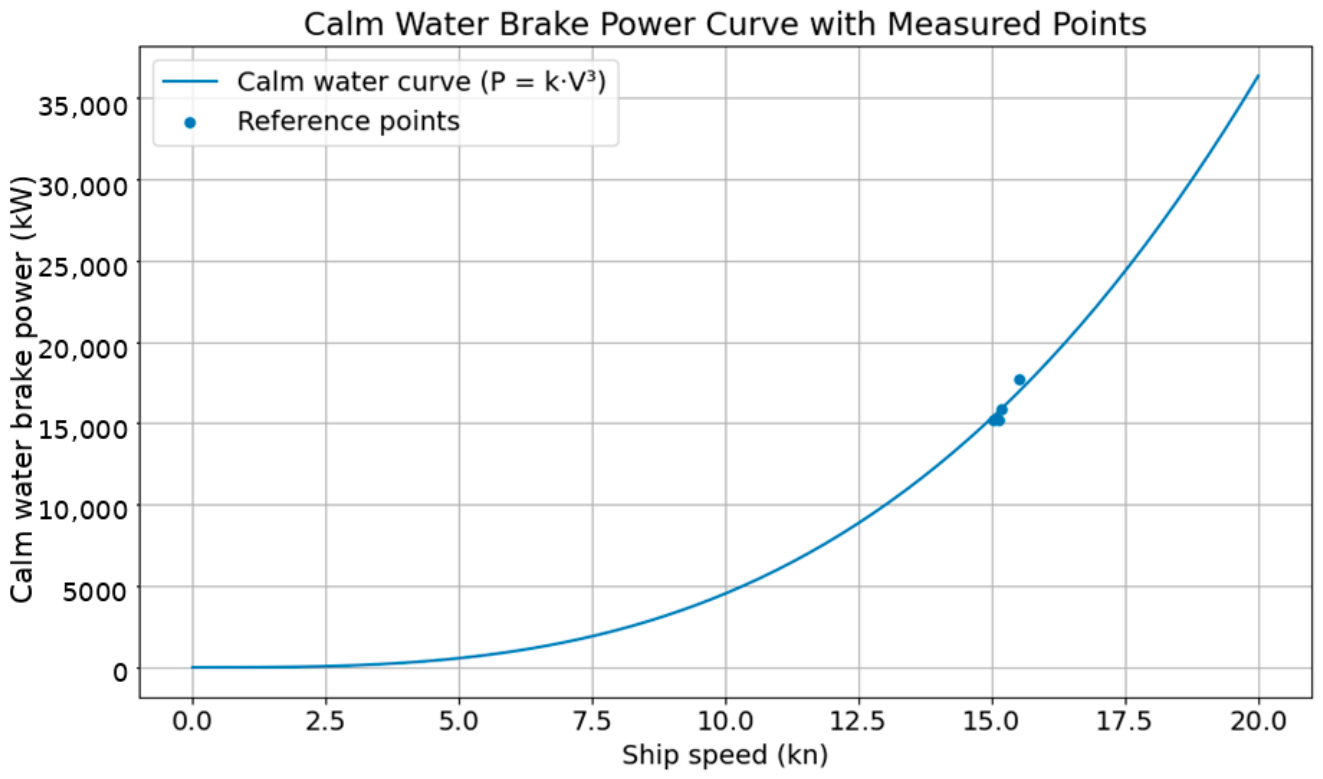
To construct a baseline calm water resistance curve, operational data was filtered to include only periods with the lowest environmental influence. An exponential power-speed relationship was then fitted to the selected data points.
2.2. Analyzed Voyage
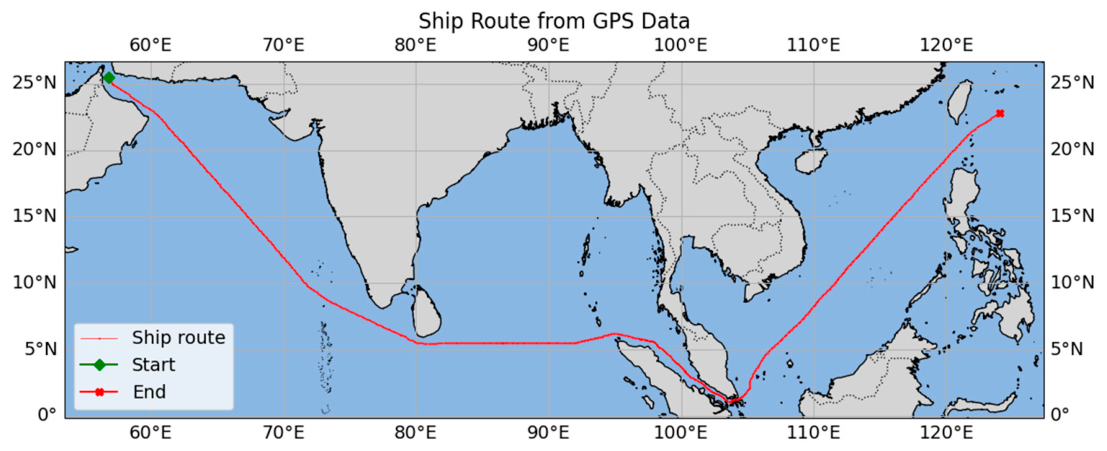
In
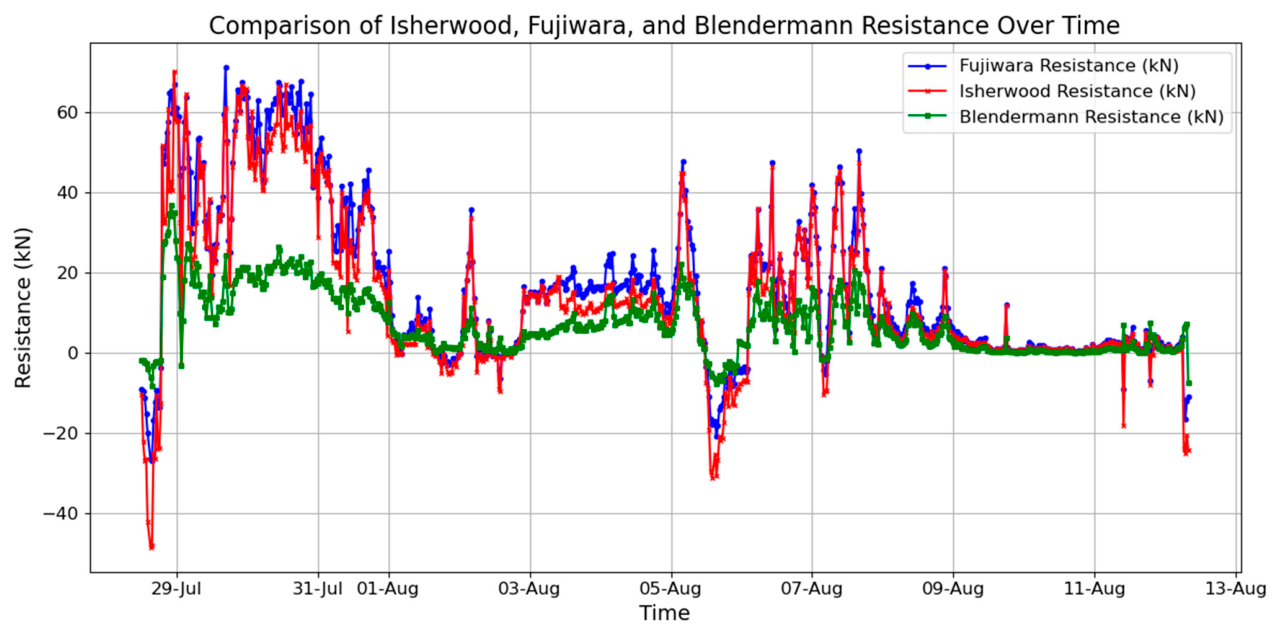
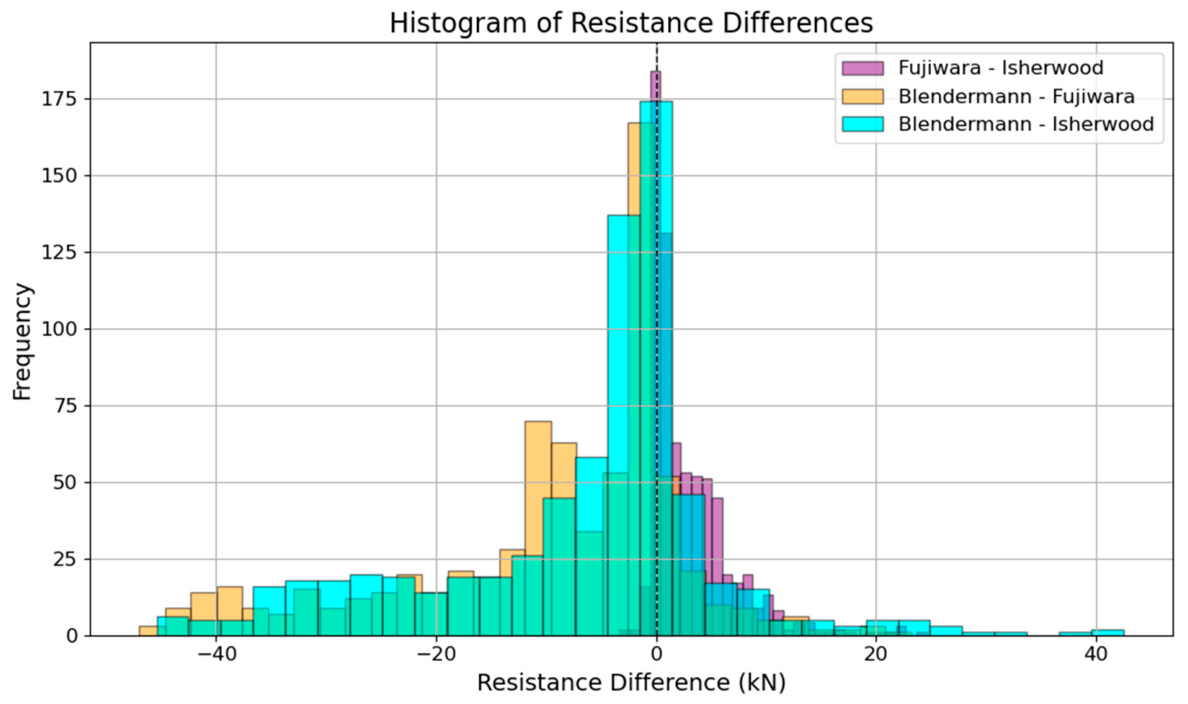
Figure 1, a ship route is presented. A 24-day voyage was used for the analysis: Ras Laffan, Qatar, to Sakai, Japan (maneuvering excluded). All ship data, in 15 s resolution, was averaged to half-hour intervals to synchronize with the CMEMS weather data intervals and reduce the computing power requirements. The ship was loaded and had a draft of approximately 12.5 metres. All projected areas and lengths required in the calculation methods for the wind added resistance (Fujiwara, Blendermann, Isherwood) were determined on the basis of ship drawings.
The presented study was intentionally based on data realistically available from a commercial upper-tier ship performance monitoring system. The analyzed 24-day voyage was selected because it represented a relatively steady operational period with only limited changes in ship operating conditions, while harbour maneuvering periods were excluded from the analysis. During the analyzed period, the main engines operated in constant-RPM mode, so variations in shaft power primarily reflected changes in environmental and hydrodynamic loading.
2.3. Environmental Conditions During Voyage
In
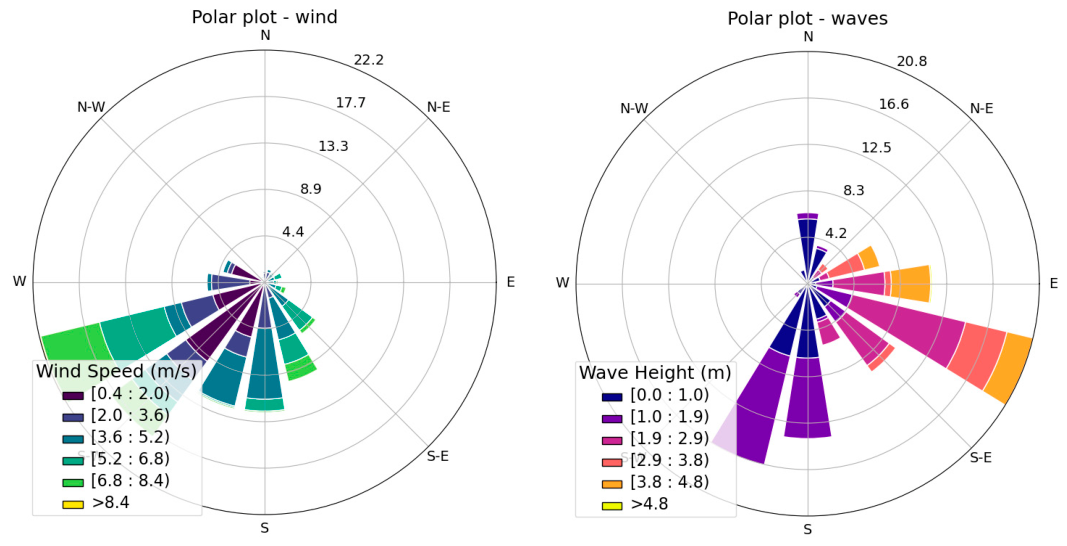
Figure 2 the wind rose diagram shows the distribution of apparent wind and wave direction and intensity throughout the voyage. From the diagram it is evident that the prevailing winds and waves are from the stern quadrant.
Since the data was available, added resistance caused by currents and wind was evaluated using both the direct shipboard measurements and the remote sensing oceanographic data provided by CMEMS. Wave data was not measured on board, the only information on waves from the ship was from the officers of the watch report, manually recorded in 4 h intervals, and as this data interval was not dense enough and included a visual estimate, potentially subjective and biased, it was dismissed from this research, and only CMEMS data was used for the wave analysis.
From ship data, the current-induced added resistance was calculated as the difference between the Speed Over Ground (SOG), as obtained from the GPS system, and Speed Through Water (STW), measured by onboard sensors. This difference corresponds to the longitudinal component of the ocean current opposite to the vessel’s heading and directly affecting propulsion resistance. For the purpose of this framework this was found sufficient in order to estimate the effective current velocity acting on the vessel. This approach neglects the effect of side drift which can induce a secondary added resistance effect in terms of rudder compensation.
STW is measured onboard using a Doppler speed log. A transducer is located in the forward section of the hull from which ultrasonic waves are transmitted in 2 axes. By comparing the received signals and averaging the Doppler shift in both directions. The transducer head contains five acoustic elements (four 540 kHz elements for the 2-axis log function and one 270 kHz element for the auxiliary echo sounder function). The uncertainty associated with the speed-through-water (STW) measurements obtained from the Doppler log is acknowledged. In this study, no direct recalibration or advanced correction of the STW signal was possible retrospectively. Instead, a consistency-based “sanity check” of the recorded data was performed to identify and exclude clearly unrealistic values.
Onboard wind was measured by an onboard anemometer installed on the top of the mast. The anemometer is a three-armed cup anemometer using optical scanning measures for wind speed and a windvane, while an opto-electronically scanned coded disc is used to determine the wind direction.
2.4. CMEMS Weather Data
Historical weather data for wave, current, and wind were extracted from the CMEMS numerical hindcast database for each half-hourly position and timestamp to serve as a basis for analysis alongside the wind and head current data measured onboard. An overview of the CMEMS hindcast data used in this paper is presented in
Table 2. Since the available resolution of the historical data was 1 h for wind and currents and 3 h for waves, the required data were acquired by spatial interpolation using inverse distance weighing (to follow the ship’s route) and by temporal linear interpolation (to obtain 30 min readings). According to [
22], it is recommended to rely on bilinear interpolation rather than nearest neighbour. To match the spatial and temporal positions of the vessel along its route, the CMEMS data were interpolated in both time and space. Bilinear spatial interpolation was applied to extract weather data values at the ship’s precise geographic location, while linear interpolation in time ensured alignment with the timestamp of the navigational records. For each point along the ship’s route, the vessel’s course over ground (COG) was compared with the wind, wave, and current direction. The wind data were obtained as true wind (direction relative to North). Apparent wind was calculated by combining the true wind vector with the vessel’s speed and heading according to [
25]. This transformation is necessary since aerodynamic forces acting on the vessel depend on the apparent wind (airflow experienced by the ship) rather than the true wind. As the current added resistance is calculated with the longitudinal component, trigonometric correction was applied to account for the angle between the ship’s heading and the direction of the current.
Table 2.
Summary of CMEMS weather data.
Table 2.
Summary of CMEMS weather data.
| Parameter-Product Name | Source | Resolution | Components/Variables |
|---|
| Wind-Global Ocean Hourly Sea Surface Wind and Stress from Scatterometer and Model [26] | CMEMS (ECMWF-derived) | Spatial: 0.125° × 0.125°
Temporal: Hourly | u, v (eastward and northward wind components) [m/s] |
| Current-Global Ocean Physics Analysis and Forecast [27] | CMEMS
(Operational Mercator global ocean analysis) | Spatial: 0.083° × 0.083°
Temporal: Hourly | uo, vo (eastward and northward current components) [m/s] |
| Wave-Global Ocean Waves Analysis and Forecast [28] | CMEMS (Météo-France) | Spatial: 0.083° × 0.083°
Temporal: 3 Hourly | Sea surface wave mean period from variance spectral density inverse frequency moment [s], Sea surface wave period at variance spectral density maximum [s], Sea surface wave significant height [m]
Sea surface wind wave from direction [°] |
Although the use of CMEMS wave data have inherent uncertainties, they remain the most practical and suitable source available for studies like this, and the relevant discussions of CMEMS data validation can be found in [
22,
23,
24].
2.5. Comparison of Ship Measured Weather Data with CMEMS Data
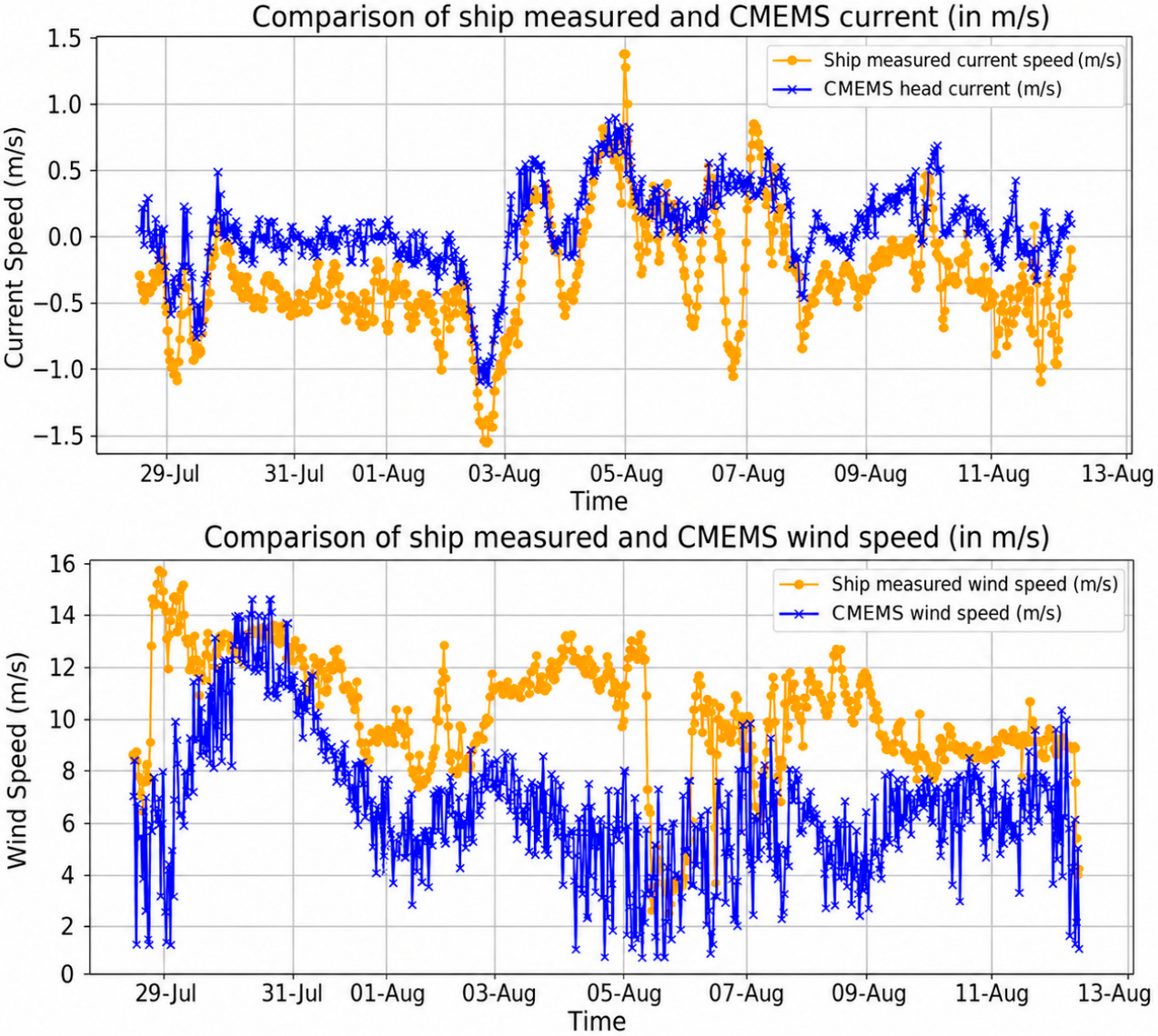
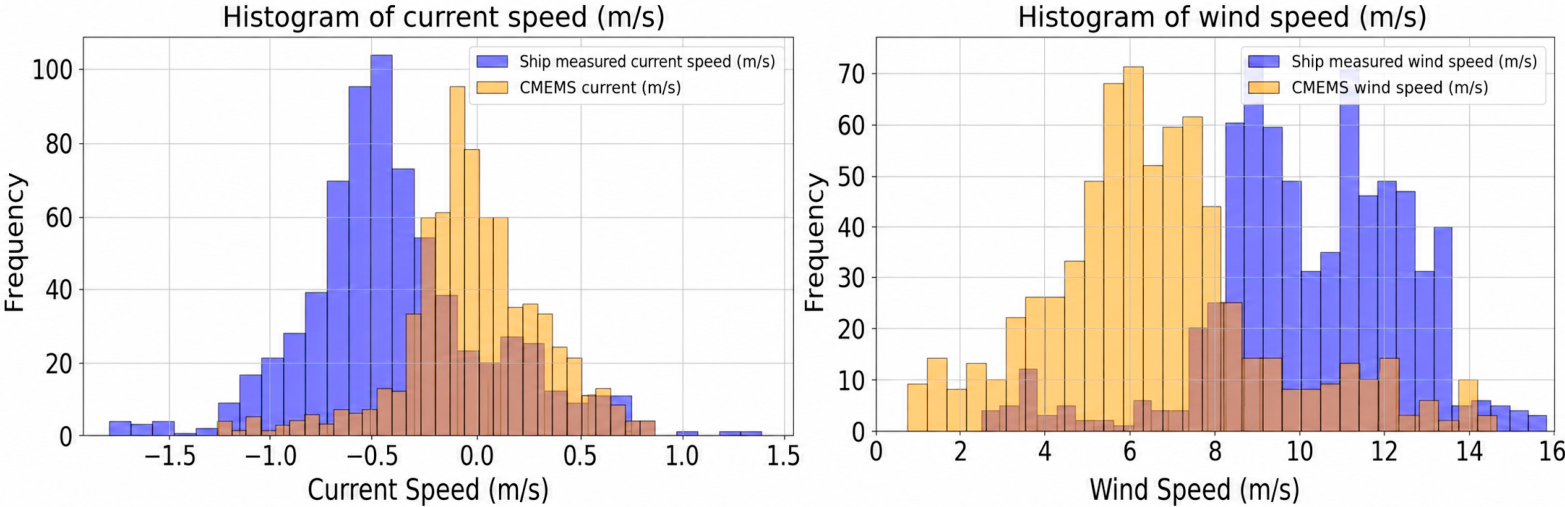
As shown in
Figure 3 and
Figure 4, a comparison has been made between the current and wind measured on the ship by a Doppler Velocity Log (DVL), anemometer and data available from CMEMS. For the current data, the two data sets follow the same trend most of the time, but have a difference in value. The Root Mean Square Error (RMSE) between the ship-measured and CMEMS-derived head current speeds is 0.48 m/s. This could be considered a moderate overall difference between the two data sources. The bias of 0.38 m/s reveals that the CMEMS data generally overestimates the current compared to the actual onboard measurements. Additionally, the standard deviation of the error, calculated as 0.29 m/s, suggests a relatively consistent discrepancy across the dataset. It can be concluded from these results that CMEMS data captures the general trend of current variation; however, it does not fully represent current conditions. This may be sufficient depending on the type of research conducted, but this information could be important when modelling added resistance or optimizing energy-efficient routing.
Regarding the wind data, the RMSE between the datasets is 4.56 m/s, indicating a more substantial difference than observed for currents. The bias of 3.63 m/s reveals that the CMEMS data consistently underestimates wind speed compared to the ship’s onboard anemometer. The standard deviation of error during the examined voyage, calculated as 2.76 m/s indicates a relatively large discrepancy throughout the measurement period. This, again, suggests that while CMEMS wind data captures general weather trends, it does not show temporary wind conditions experienced by the vessel with sufficient accuracy. A comparison of onboard measurements and reanalysis data of global weather was partially covered in [
22,
23,
29], but in the opinion of the authors, further research on this topic would be beneficial for studies like this one.
4. Results/Analysis
The response of the case study vessel to wind and wave forces under varying approach angles and wavelengths is first examined to provide context for the route-based analysis.
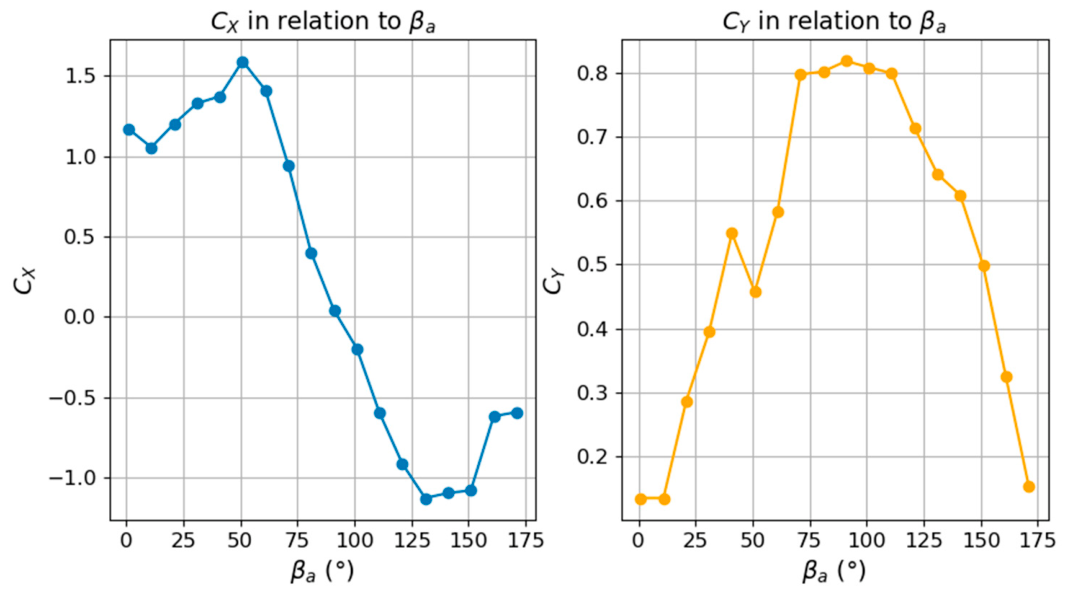
Figure 8 shows a plot illustrating wind resistance coefficients for the case study ship. Longitudinal (
Cx) and lateral (
Cy) aerodynamic forces as functions of the apparent wind angle βa. The coefficient
Cx, representing resistance in the direction of ship motion, shows a nonlinear trend: it reaches a maximum at headwind conditions (up to around βa = 50°) and decreases rapidly as the wind shifts towards the beam and stern angles. The lateral force coefficient
Cy increases steadily with the angle of attack, peaking in beam conditions as expected.
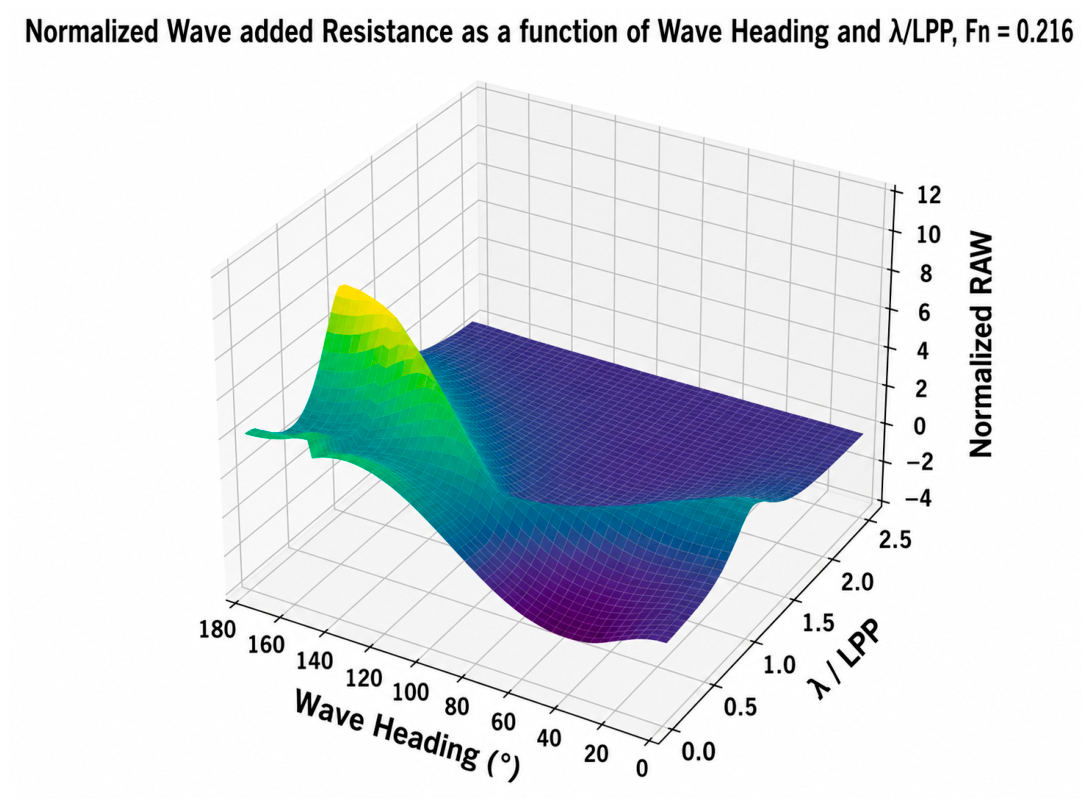
Figure 9 shows the normalized wave added resistance (
RAW) of the case study ship as a function of wave heading angle and the dimensionless wavelength ratio (
λ/LPP). The parameter
λ/LPP expresses the ratio between the wavelength and the ship length between perpendiculars. In this normalized form, the figure represents the transfer-function-type hydrodynamic response of the ship, rather than absolute added resistance for a specific sea state. The surface illustrates how wave resistance varies with both the angle of incoming waves and their relative wavelength, based on semi-empirical calculations derived from [
8]. The resistance is normalized to allow comparison across different conditions, in the presented figure for Froude number (
Fn) 0.216, derived from ship operational speed.
The analysis of the case study ship was performed using environmental conditions along the described route with a power-based formulation of the resistance decomposition framework. In the final resistance decomposition and power reconstruction presented in this section, CMEMS-derived environmental data were used as inputs for the wind, wave, and current resistance calculations. Resistance components were calculated for wind, wave, and current, and converted into equivalent power demand, enabling a direct comparison with measured shaft power. In Equation (10) [
2], where
Ri is the individual resistance component (in
kN),
V is the ship speed (STW) and
Pi is the specific component resistance power (
kW). This approach is suitable for operational analyses, as onboard monitoring systems primarily provide power measurements rather than thrust forces.
The sum of the resulting power components represents the effective power required to overcome hydrodynamic resistance at the hull. To enable a comparison with measured shaft power, as shown in Equation (11), the total effective power was divided by the overall propulsive efficiency (
ηt).
As tank tests were not available for the case study ship,
ηt was assumed constant and approximated with Equation (12) from [
2] where
nt is the propeller shaft speed, expressed in revolutions per second:
Presented in
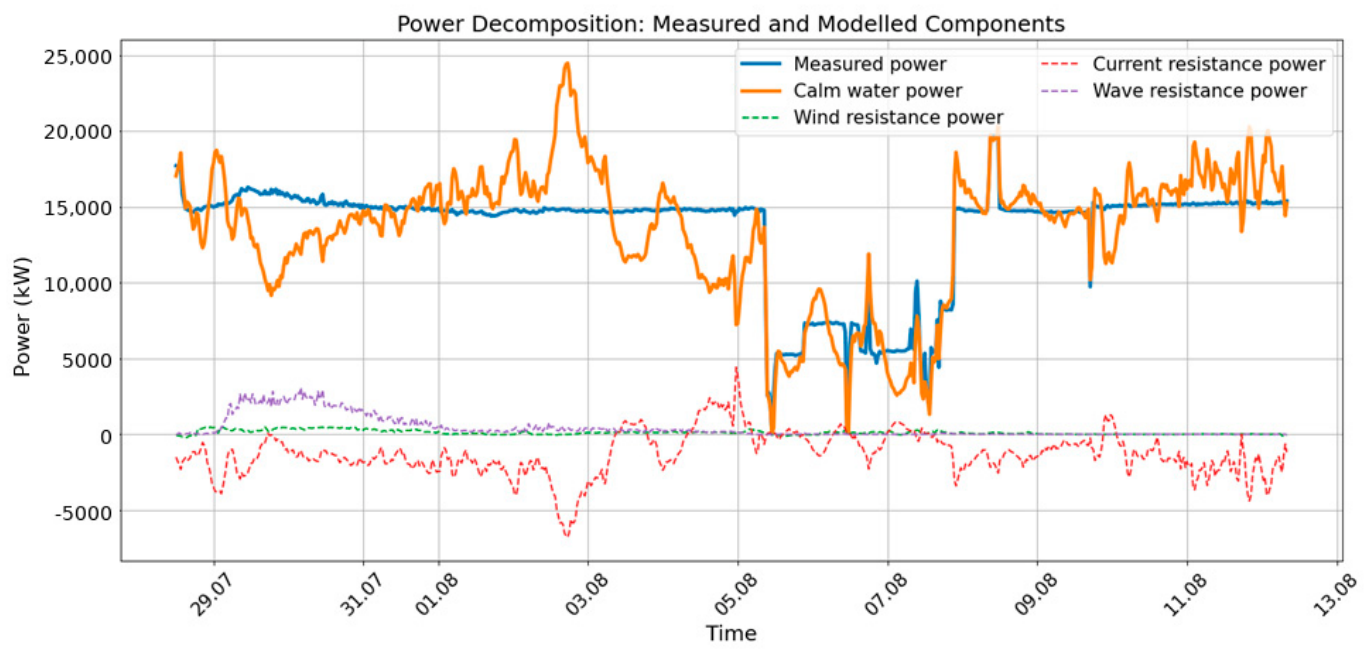
Figure 10, the full decomposition of the ship’s shaft power into calm-water power and individual weather-induced added power components calculated throughout the voyage. The measured shaft power represents the actual power measured and serves as the reference for evaluating the performance of the power-based modelling framework. The remaining curves show the separate contributions from calm water (varying due to speed change), wind, current, and wave-induced resistance power. The negative added-power values represent favourable environmental conditions, i.e., assistance from following wind, current, or waves, which reduce the propulsion power required. The figure provides a clear insight into how each environmental factor contributes to the total power. The vessel operated for most of the analyzed period under relatively stable propulsion conditions, consistent with constant-RPM operation, except for the period from 05.08 to 08.08, when a marked reduction in ship speed and calm-water power is observed. The main discrepancies between measured and modelled power appear to be associated primarily with environmental loading, with the current-resistance component showing the largest variability.
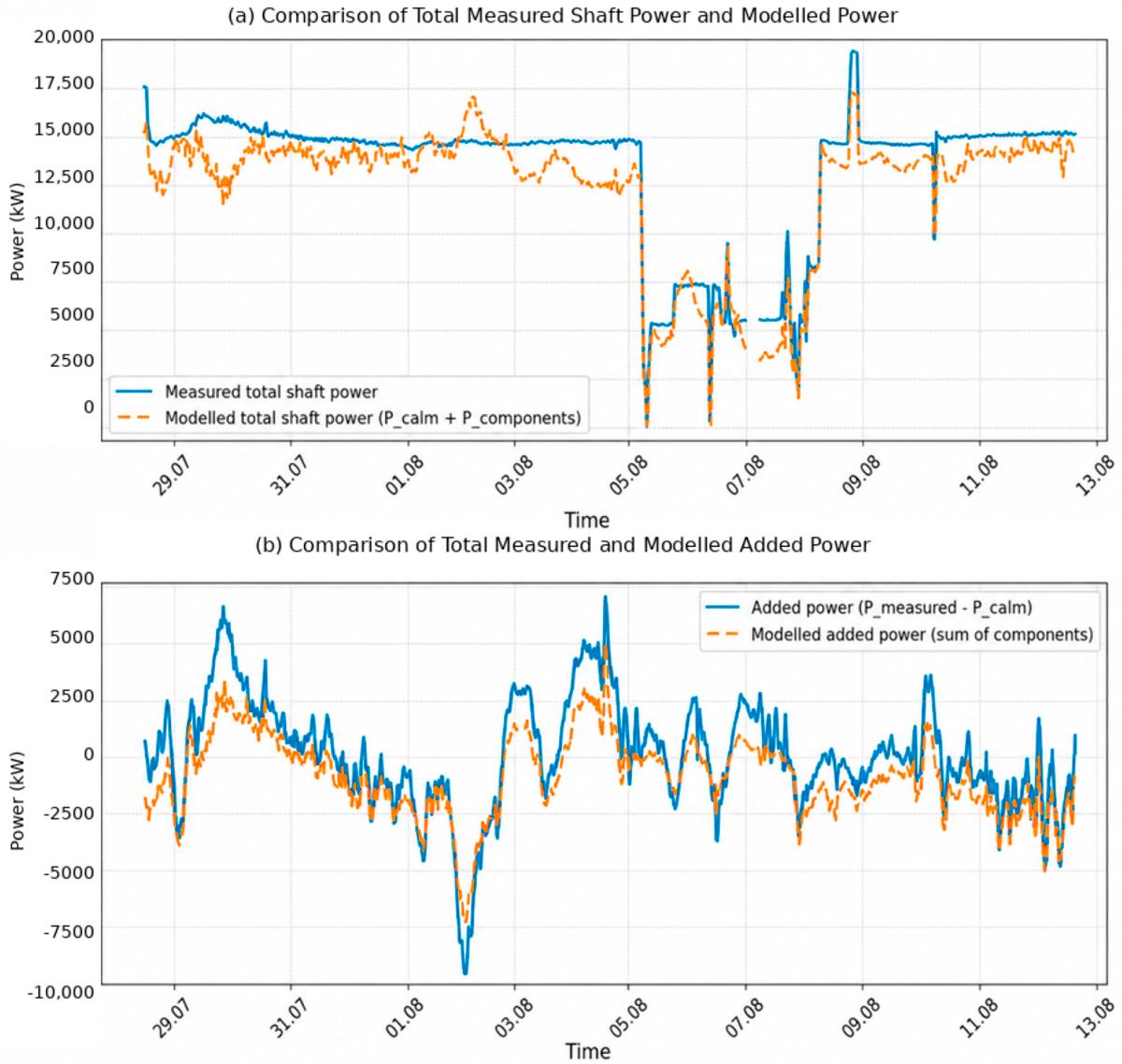
Comparison between measured and calculated power is depicted in
Figure 11. In the upper panel, the measured total shaft power (blue line) serves as the benchmark for validating the framework, while the modelled curve (orange line) represents the reconstructed power as a sum of calm-water resistance power and weather-induced power components. The lower panel shows the same values but viewed from an added resistance power perspective, where the blue line depicts the added power calculated as the difference between measured total shaft power and calm-water brake power and the orange line modelled added power derived from the sum of wind, wave, and current resistance power components. The model deviation is most clearly visible in the lower panel as the difference between the 2 lines.
Periods of increased discrepancy can be linked to specific environmental conditions, with current-induced effects showing the largest influence (visible in
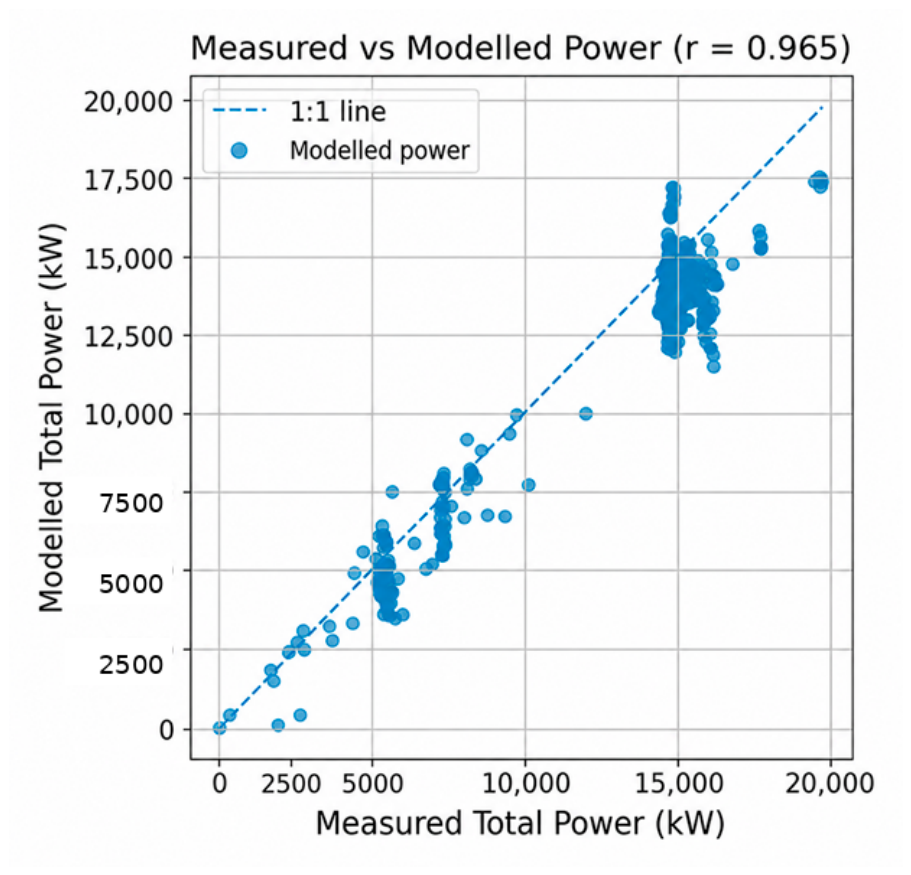
Figure 10). The difference between the two power time series was analyzed using standard statistical error metrics, Mean Absolute Difference (MAD) and Root Mean Square Error (RMSE). The comparison reveals that the model accuracy corresponds to 8.36% MAD of measured shaft power and RMSE of 1258.3 kW, the normalized RMSE, defined here as RMSE divided by the mean measured shaft power, was 9.29%. The Pearson correlation coefficient between the measured and modelled total shaft power was 0.965, indicating that the model reproduced the temporal variation and overall trend of the shaft power well. This trend agreement is also visible in
Figure 12, where the data points generally follow the 1:1 relationship. However, a large proportion of the points are located below the 1:1 line, which is consistent with the mean bias of −988.14 kW and indicates that the model tends to underestimate shaft power. The clustering of points also suggests that the vessel operated within a limited number of dominant power regimes during the analyzed voyage.
The relatively small difference between MAD and RMSE indicates that the model errors are not dominated by isolated extreme outliers but are instead distributed relatively consistently over time. These results demonstrate that the presented framework captures the dominant trends in shaft power demand with good accuracy.
The conducted analysis is subject to several limitations, predominantly from the restricted volume of input data. This restriction was introduced deliberately in order to maintain methodological accessibility and applicability, as the use of more complex and potentially more accurate models would require substantially larger and more detailed input datasets and computation resources. Another limitation is that ηt was assumed constant due to the fact that the tank tests were not available. Furthermore, the study was limited to a single case study ship and a selected route. Uncertainties also include potential inaccuracies in speed-through-water measurements due to limitations of Doppler-based sensors, uncertainties associated with thrust measurements, and the reliance on calm-water reference data clustered around a single operating speed. In particular, the use of cubic extrapolation beyond this range introduces additional uncertainty in the predicted resistance at off-design conditions. Nevertheless, the overall consistency of the results suggests that the proposed framework remains robust for practical applications.
5. Conclusions
The primary goal of this paper was to assess the applicability and performance of existing, standardized, and recommended engineering methods for the decomposing ship resistance along a specific route using historical weather conditions and operational data, while requiring only easily attainable input data.
Weather data was obtained from CMEMS and compared with measurements from ship sensors. Regarding the current data, it can be said that the two data sets generally follow the same trend, but with a small difference in value. The difference between wind measured on the ship and from CMEMS was bigger, CMEMS data consistently underestimates the wind speed compared to the ship’s onboard anemometer. It was concluded that further research on the comparison of remote and onboard measurements would be beneficial for studies like this one. Correct environmental inputs are essential for quality ship hydrodynamic response analysis.
Regarding the results for the resistance calculation framework; the physical model results demonstrated agreement between the measured and calculated data for the larger part of the voyage, confirming the model’s applicability and quantifying this case study’s accuracy. However, deviations observed in high current scenarios reveal that the current resistance calculation component requires refinement and further research.
In conclusion, the results obtained for this single LNG carrier and voyage indicate that the applied methodology can provide a practically useful approximation of operational power decomposition. The results also reveal the magnitude and direction of the associated modelling error for this specific case. Rather than establishing a generally validated framework for operational performance prediction, the study was intended to assess how accurately existing standardized engineering methods, particularly those recommended by ISO 15016:2025 [
2], reproduce full-scale operational measurements when applied with realistically available input data. In this sense, the contribution of the paper lies in the case-study assessment of method applicability, the quantification of associated errors, and the comparison of reanalysis-based environmental inputs with onboard measurements.
The uncertainties discussed in the results are primarily associated with the deliberate use of a limited input dataset, the assumption of constant propulsive efficiency, and the focus on a single case study ship and route. Additional sources of uncertainty arise from the limitations of Doppler-based speed measurements and the reliance on calm-water reference data clustered around a single operating speed. These limitations will be addressed in future work through the inclusion of additional vessels, routes, and extended datasets, with the aim of improving the robustness and applicability of the proposed framework.
Accordingly, the resulting approach should be understood as a practical case-study procedure whose broader applicability remains to be tested on additional vessels, voyages, and operating conditions, including future applications related to the assessment of wind-assisted propulsion technologies.