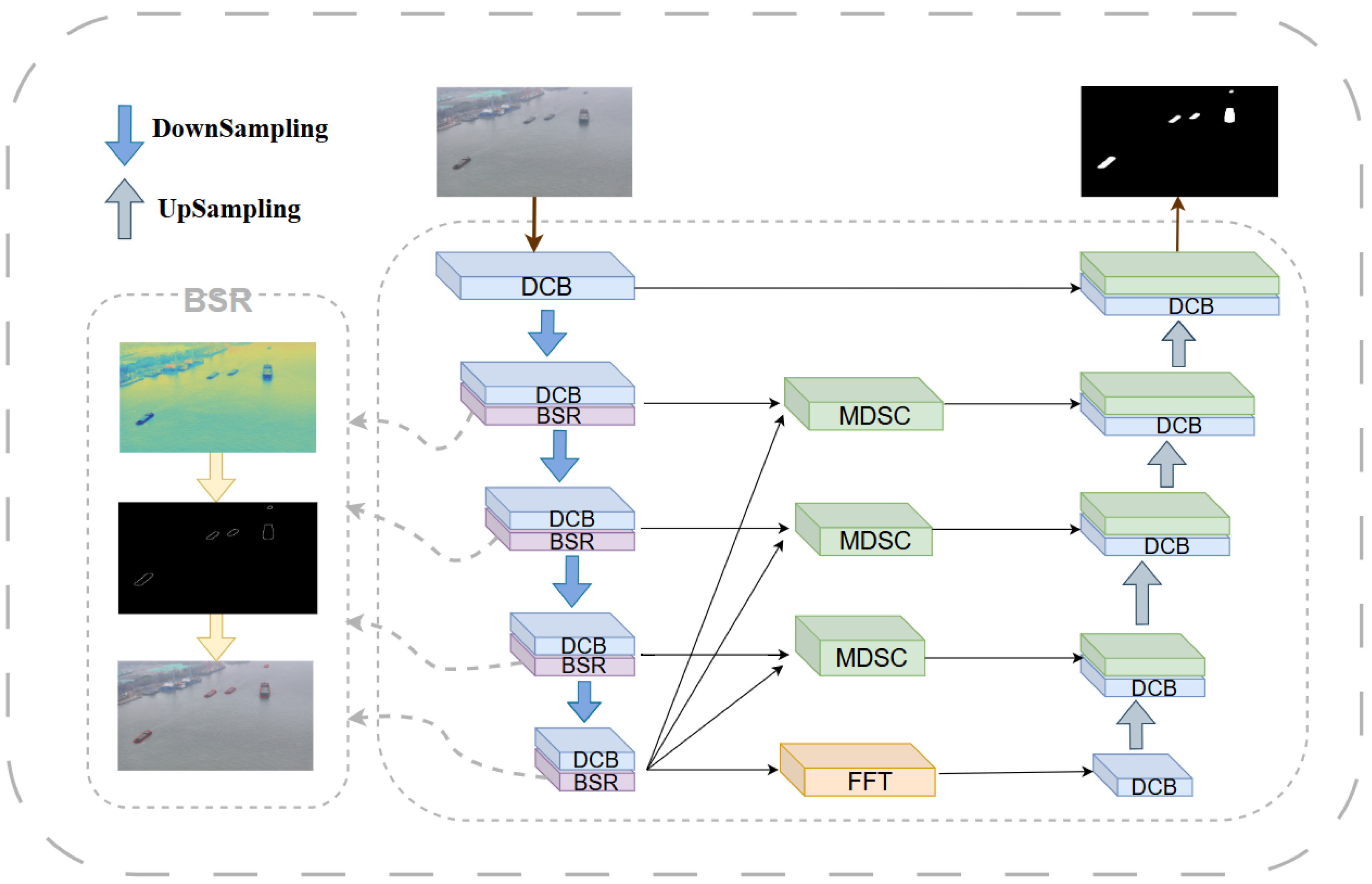
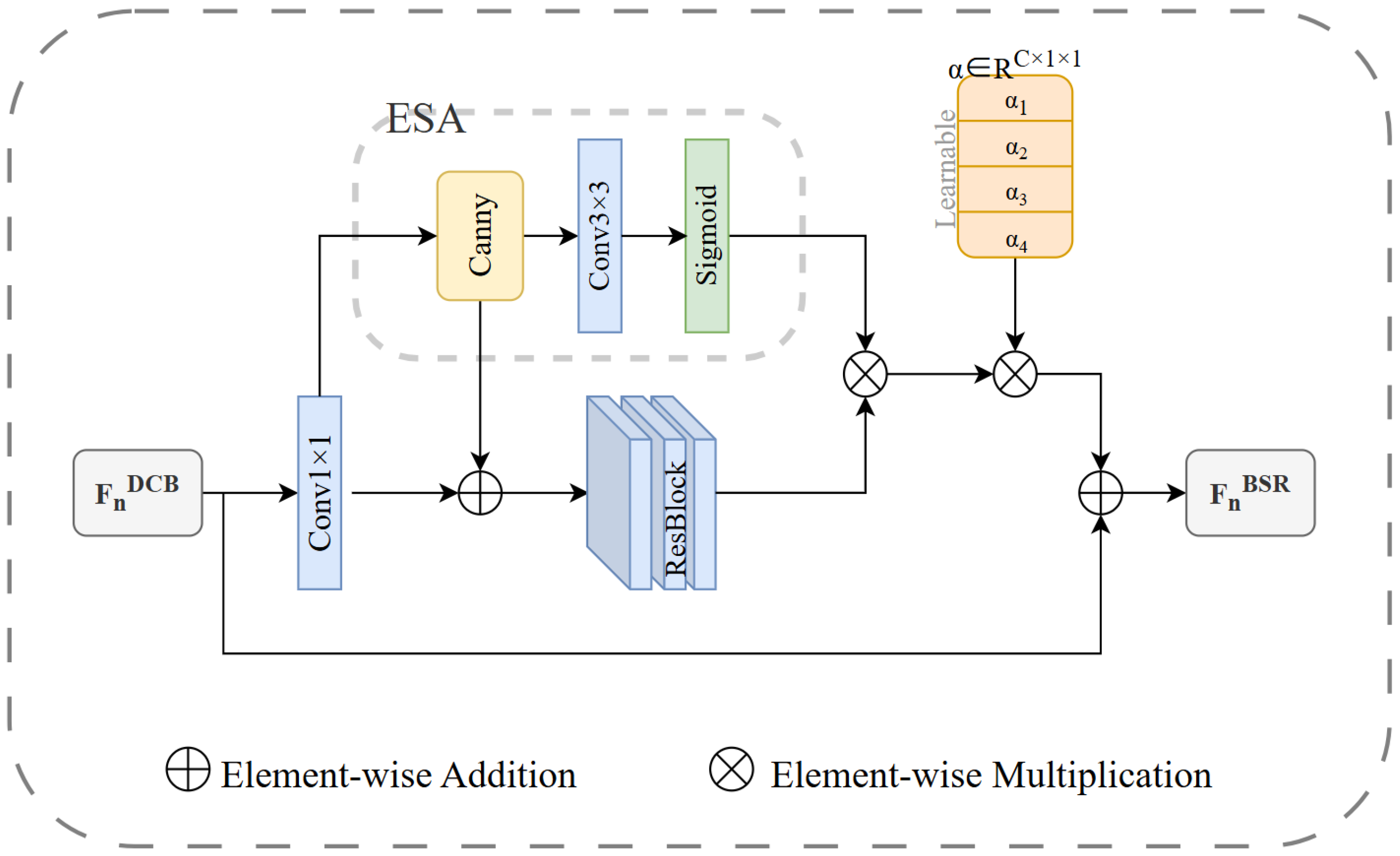
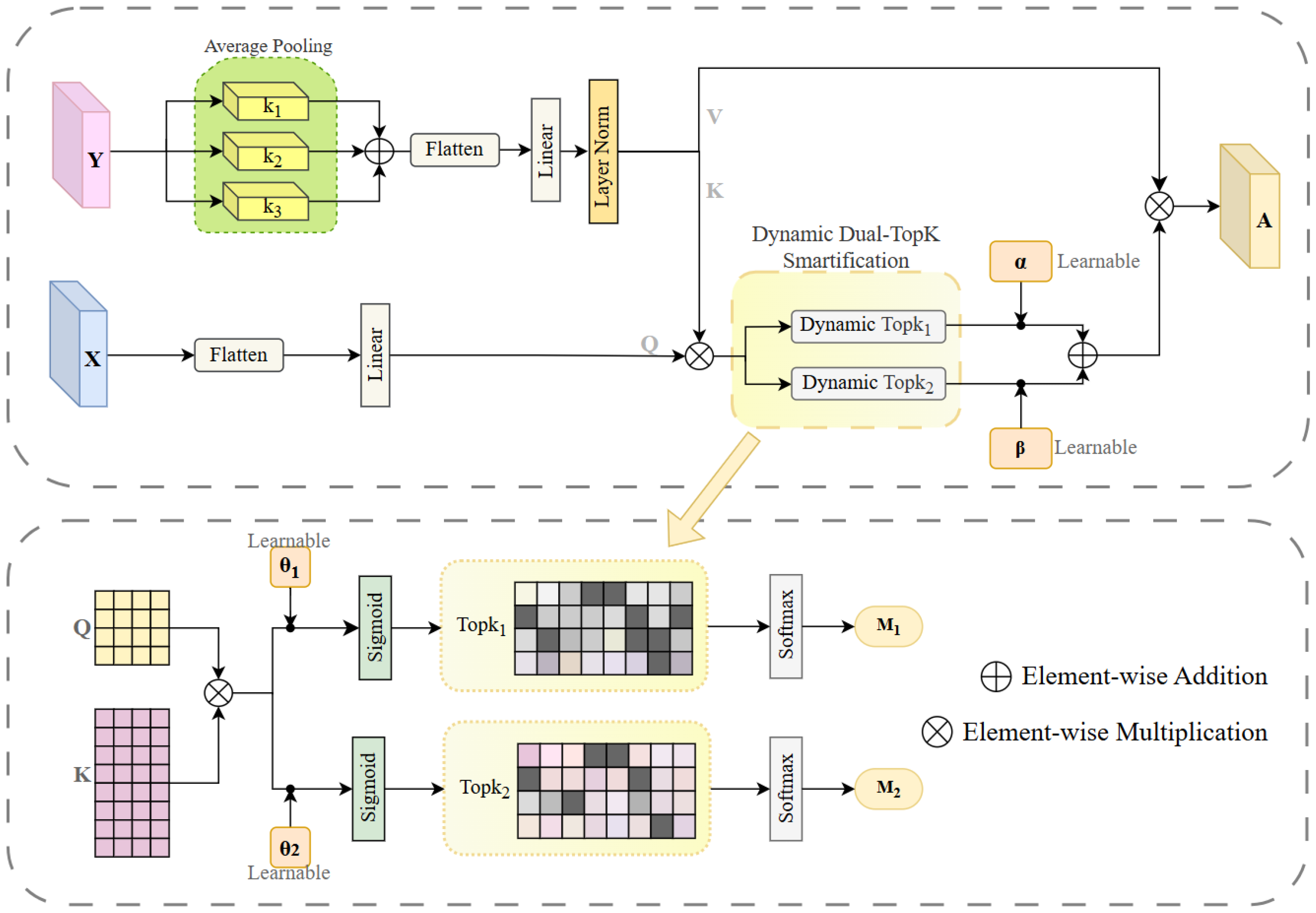
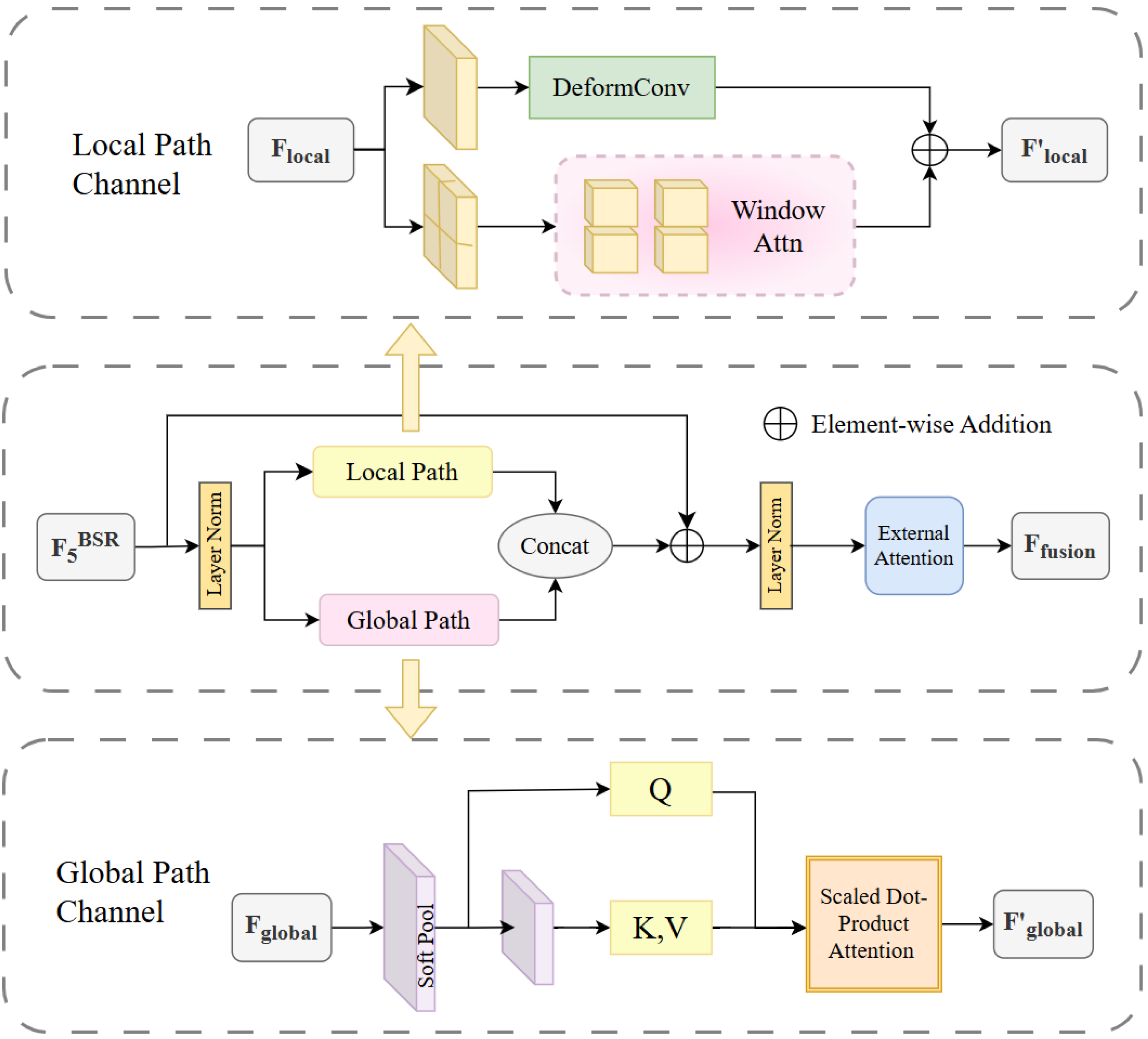
MPFT-UNet: A Boundary-Refined and Multi-Scale Dynamic Fusion Network for UAV-Based Port Ship Segmentation

Abstract
Share and Cite
Shi, M.; Qiu, X.; Li, A.; Yang, Y.; Ke, Y.; Chen, Y. MPFT-UNet: A Boundary-Refined and Multi-Scale Dynamic Fusion Network for UAV-Based Port Ship Segmentation. J. Mar. Sci. Eng. 2026, 14, 945. https://doi.org/10.3390/jmse14100945
Shi M, Qiu X, Li A, Yang Y, Ke Y, Chen Y. MPFT-UNet: A Boundary-Refined and Multi-Scale Dynamic Fusion Network for UAV-Based Port Ship Segmentation. Journal of Marine Science and Engineering. 2026; 14(10):945. https://doi.org/10.3390/jmse14100945
Chicago/Turabian StyleShi, Mengna, Xiulin Qiu, Ang Li, Yuwang Yang, Yaqi Ke, and Yilan Chen. 2026. "MPFT-UNet: A Boundary-Refined and Multi-Scale Dynamic Fusion Network for UAV-Based Port Ship Segmentation" Journal of Marine Science and Engineering 14, no. 10: 945. https://doi.org/10.3390/jmse14100945
APA StyleShi, M., Qiu, X., Li, A., Yang, Y., Ke, Y., & Chen, Y. (2026). MPFT-UNet: A Boundary-Refined and Multi-Scale Dynamic Fusion Network for UAV-Based Port Ship Segmentation. Journal of Marine Science and Engineering, 14(10), 945. https://doi.org/10.3390/jmse14100945